Author: Aparna Arul

  • The Do’s and Don’ts of Georgia Tech

    Written by Aparna Arul and Ayushee Kalura

    As rising 4th years reflecting on our time at Georgia Tech, we were curious about other students’ experiences and the advice they would give the past version of themselves who were entering college bright-eyed for the first time. While we have enjoyed our college experience so far, there are a lot of things we’d do differently given the chance. 

    Reflecting On Our Own College Experiences

    Ayushee: For the first 18 years of my life, I was used to a routine that remained unchanged daily. I would wake up, go to school, attend classes for 8 hours, come home, do homework, sleep, and repeat. I thought that routine would last me throughout college, and that is when I was in for a rude awakening. College was very different from high school and for the first couple months I had a hard time establishing a routine. Even now, my routine depends on my semester schedule, which is always changing. My first and greatest piece of advice to incoming college students is to create a schedule and stick to it. Admittingly, giving up is very easy and skipping classes is a slippery slope that is very hard to climb up. Take time to familiarize yourself with campus and add in times to eat, sleep, and work accordingly. Balance is very important and it’s really easy to overdo yourself with school and neglect self-care. Personally, ‘me time’ is very important because I need time away from work. Tech’s campus is located in Midtown, meaning there are plenty of places outside campus to explore. Atlanta is a very diverse city, and a lot of it is a walkable distance, so I would recommend taking time for yourself to explore the campus and city. 

    In these past 3 years, while I do wish I did some things differently, there are a couple opportunities I took that have made college much more enjoyable. I joined Alpha Omega Epsilon my first semester, freshman year and I have met some of my best friends from it. I was initially opposed to the idea of joining Greek life, however I wanted to take risks in college to put myself out there, and it ended up being one of the best decisions of my life. College is a fresh start and you’re going to be surrounded by people you’ve never met. This is the time to take the leap of faith and put yourself out there, join new organizations, and even try out things you thought you’d never try. Most of my regrets stem from not taking advantage of opportunities earlier on and feeling like I missed out on a lot. Finding a niche in college really gives you a space of comfort and identity, and for me, that is AOE. While I didn’t heavily involve myself in many other student organizations, AOE is like my home on campus, where I can go to escape from my college work. I think it’s important to have a space in college outside of academics and your major, some place where you can unwind and relax with friends who share similar interests as you. Again, I think that the most important aspect of college is having a work-life balance that incorporates enough time to study, explore academic endeavors and rest, hang out with friends and have fun. 

    Aparna: The best opportunities I took advantage of in college are the extracurricular organizations and resources available at GT. For the first 18 years of my life, I learned to prioritize classes and grades above almost everything else, but in my opinion it’s important to reevaluate this principle during college, especially if you’re planning to enter the workforce immediately after graduation and not considering higher education and paths within academia. College, for me, is the stepping stone from education to my career, and I wish I had prioritized things like internship hunting and personal projects relevant to my career goals, even at the expense of my grades. 

    One student organization I joined is Bits of Good, where teams of students develop software for local nonprofits for free to promote social good. Through Bits of Good, I got to become friends with like-minded peers and get exposed to projects that have real-world impact. On the other hand, I briefly joined other student organizations that were not particularly beneficial experiences, and my time would have been better spent elsewhere. So I would recommend consciously recognizing the intent behind committing your time to each organization, whether it’s for career development or for fun, which is also important. 

    Georgia Tech offers VIPs, Vertically Integrated Projects, that are an in-between club and course, that can be valuable to take advantage of. VIPs tend to be smaller groups that work on real projects, and allow for having a closer connection to professors and meeting peers in different majors with similar interests. Becoming a teaching assistant, aside from looking amazing on a resumé, also lets you build connections with upperclassmen and professors. GT has free 1-on-1 peer tutoring if you are struggling in class, and GT Library offers workshops to explore software you may be interested in. Taking advantage of these opportunities also builds confidence in yourself to meet your goals.

    Finally, I want to emphasize the importance of being organized, because it really does make your life easier. When you start college, plan out your courses for your entire degree and per semester until graduation in a spreadsheet at the very beginning and keep updating it as things change so that as registration rolls around each semester you have a good idea of what classes you’ll be taking. Having this degree map written out helps you optimize your degree so you can try graduating early, adding a minor, studying abroad, doing an internship/co-op, working an on-campus job, doing research, or doing a BS/MS. With BS/MS I am able to finish my Bachelor’s in 3 years and add a Master’s degree immediately after. Without my degree map, applying for my BS/MS wouldn’t have been such a smooth process. Being organized with your time and selective with your commitments also lets you use your spare time for your social life, which everyone needs to prioritize at college.

    Our Survey and Results

    We surveyed 29 students across different majors about their experience at Georgia Tech.
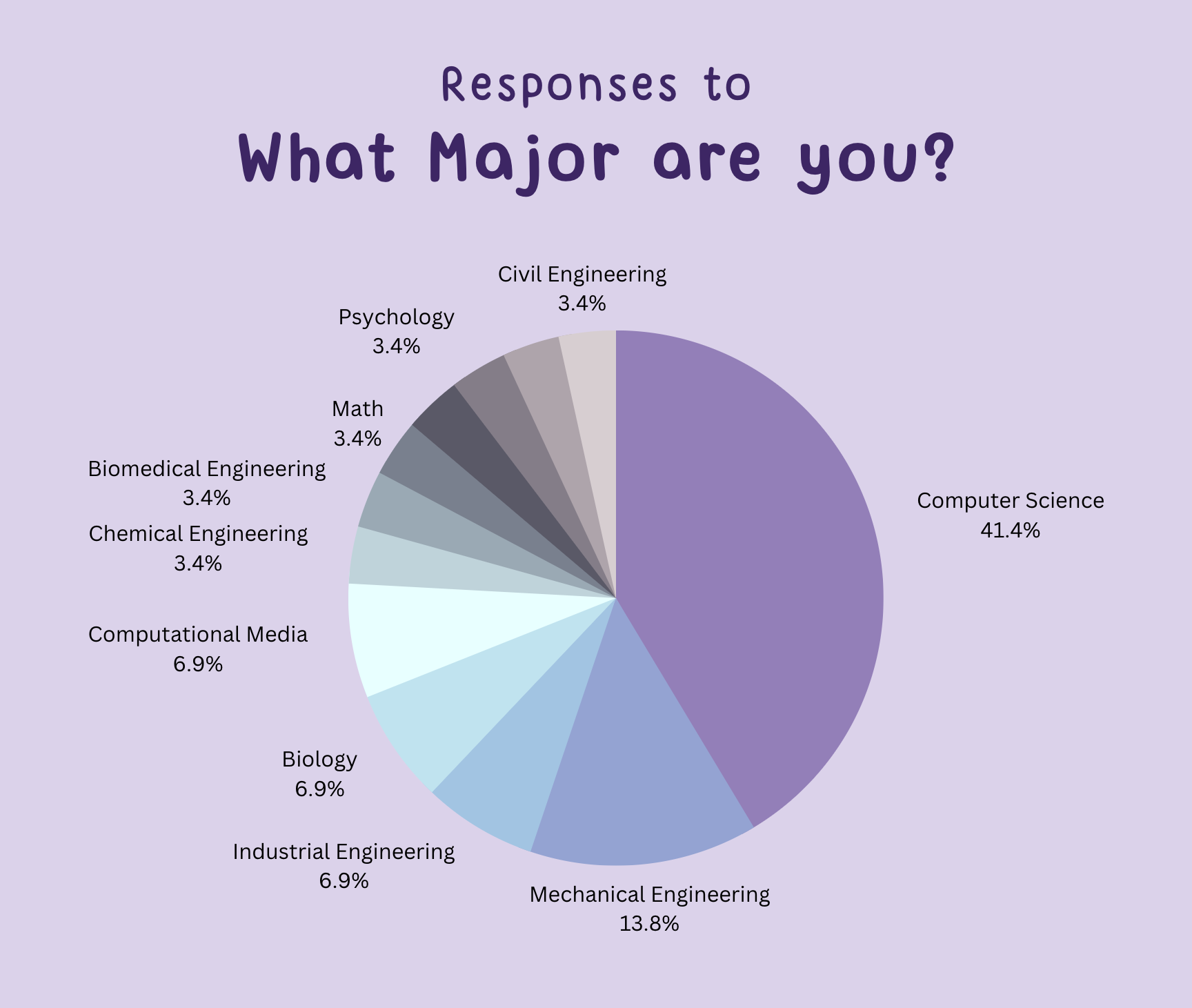
    The first pie chart shows a breakdown of the majors of the students surveyed. A large proportion of the students major in Computer Science, followed by Mechanical Engineering, which happen to be the two most popular majors at Georgia Tech.
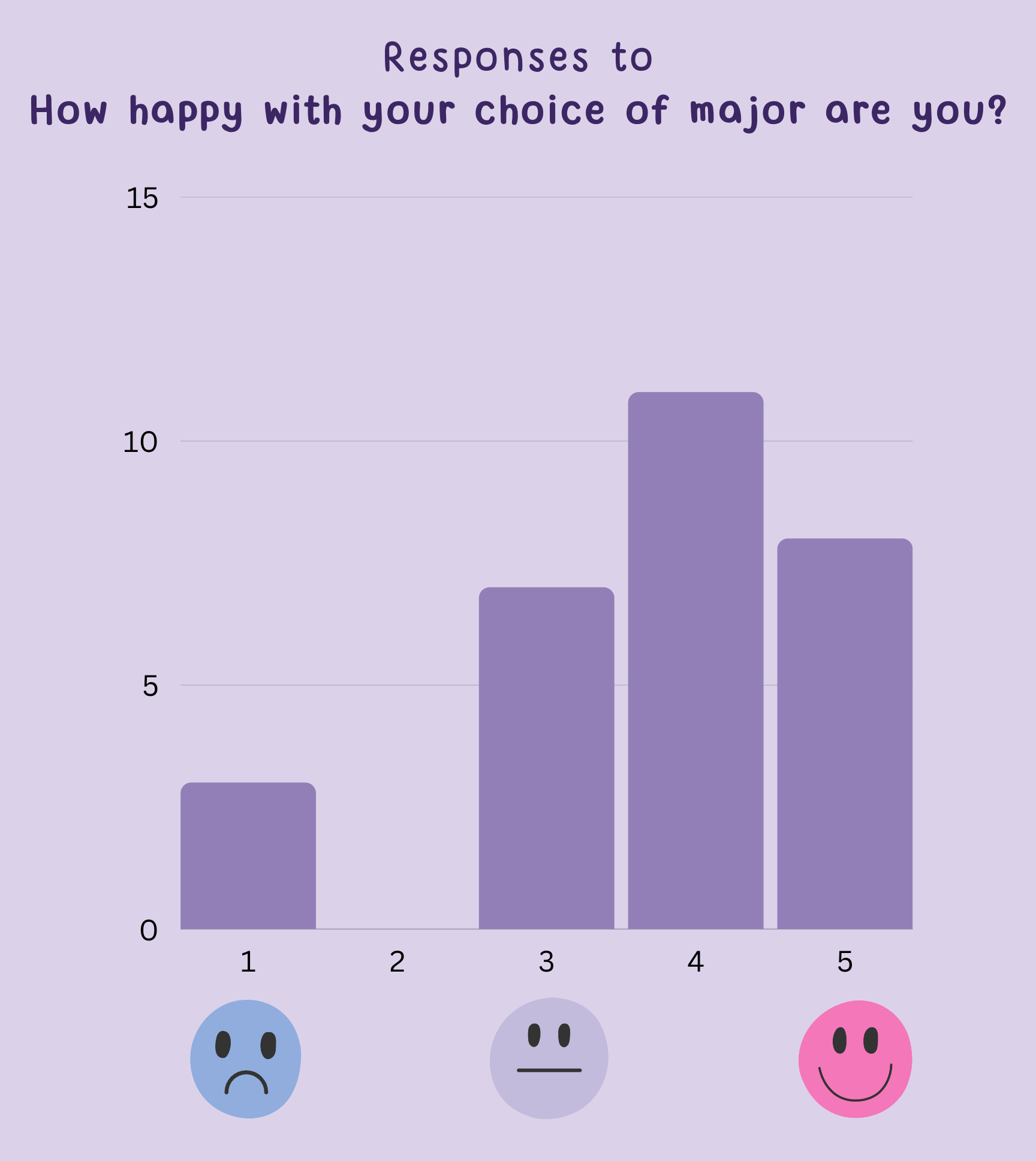
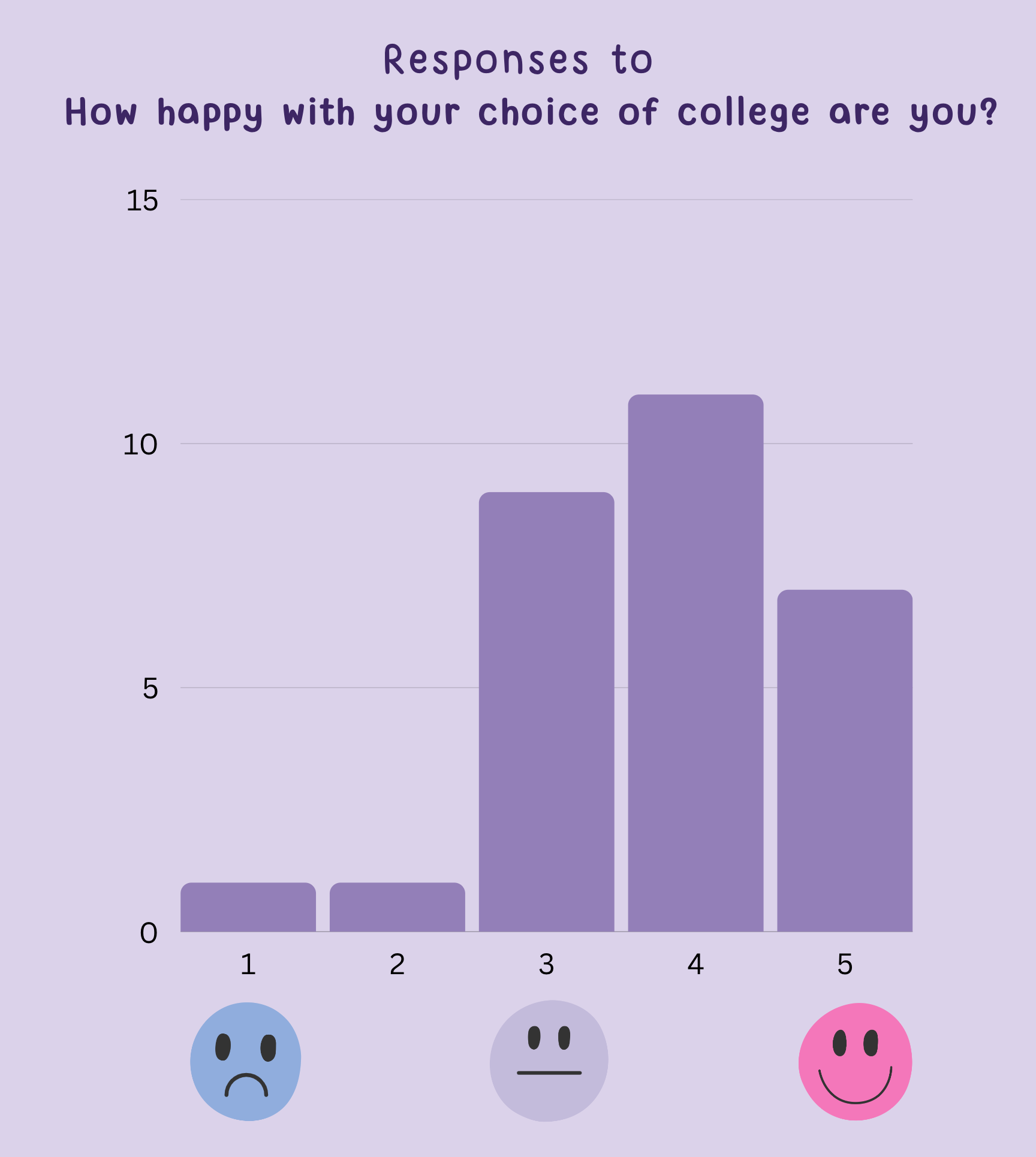
    We asked how happy students felt with their choice of major and school, as shown in the two histograms. When we compared the answers of both to each other, we found that the ratings of both generally went hand-in-hand. If someone felt unhappy with their major, they’d also be more likely to be unhappy with the choice of school, while if someone felt happy with one, they’d be more likely to feel happy with the other as well.
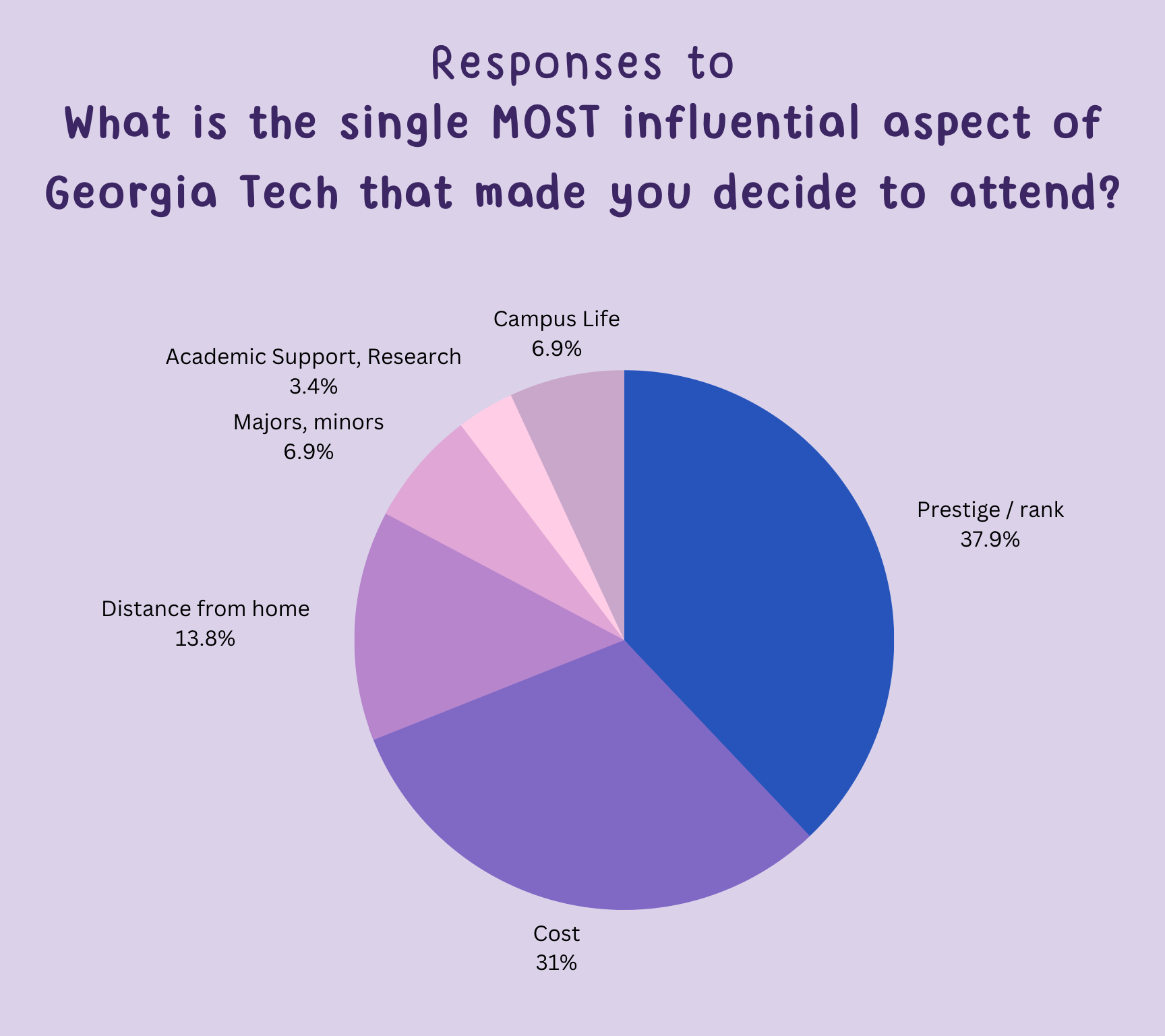
     

    We also asked what aspects of Georgia Tech students found appealing, and of those, prestige/rank, distance from home, and majors/minors offered were the three highest ranked factors. When asked what was the single most influential aspect in attending Georgia Tech, prestige/rank ranked first, followed by cost, and distance from home. 

    Advice compiled from all responses to the following questions:

    1. What are some tips you would give to an incoming student?
    2. What are some opportunities you took advantage of that made your college experience better?
    3. What are some things you would do differently if you started college over?
    • Plan out the semester early and don’t fall behind
    • Get involved to make friends and destress. You are more competent than you think.
    • Be yourself
    • Don’t feel like you don’t belong
    • Don’t be afraid to ask for help. Ask questions even if you think they’re stupid.
    • Be disciplined with your routine so you can have a social life
    • Don’t rush your degree
    • If the rigor college has negatively impacted your self-esteem, it’s not a reflection of your ability
    • Apply for things even if you don’t feel qualified
    • If you feel like you’re on the wrong path, look at your options immediately and don’t be afraid to change your path (including major, career goals etc.). Don’t put it off and regret just going with the flow later
    • Prioritize mental health, sleep, having fun, and exploring Atlanta. Take pictures for memories
    • Set boundaries with your commitments and spend time on your hobbies so you don’t burn out
    • Take it slow for your first semester since you’re getting adjusted to a new environment, so don’t commit to too many things
    • Use freshman year to explore your interests
    • Make upperclassmen friends in your major to learn about what it’s actually like
    • Use resources for academic support, like the tutoring center, academic advisors, office hours etc. and reach out for help early
    • Don’t compare yourself to others
    • Go to class. Study effectively.
    • Worry less about grades and more about learning
    • Make more connections with professors
    • Stay in touch with people
    • Join student organizations both related and unrelated to your major.
    • Take advantage of on-campus facilities/events such as the CRC, Stamps Health Services, and career fairs.
     

  • An Infinitely Dimensional Orange: A Slice of Machine Learning

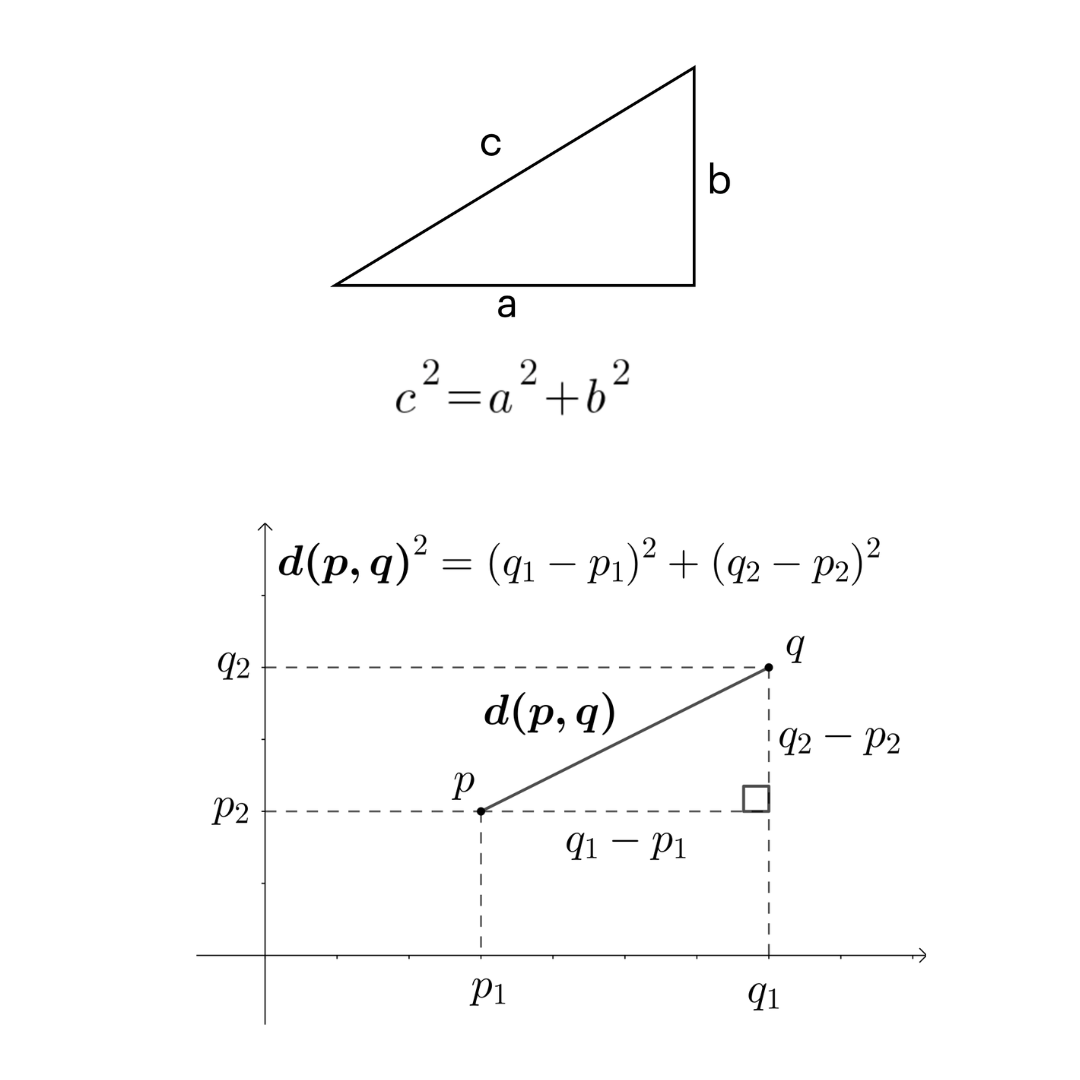
    What does the Pythagorean Theorem have to do with machine learning? The Pythagorean Theorem is a formula to measure the hypotenuse of a triangle, which also allows us to calculate the distance between the origin and another point on a coordinate plane.

    The Pythagorean Theorem can be rearranged to result in the Euclidean distance formula, to calculate the straight-line distance between any two points. The Euclidean distance metric is one of several distance metrics used in machine learning. One type of machine learning is clustering, where objects related to each other are grouped together. We can model how related objects are to each other by essentially assigning them to coordinates and calculating the distance between them; the further apart they are, the less related they are to each other. 

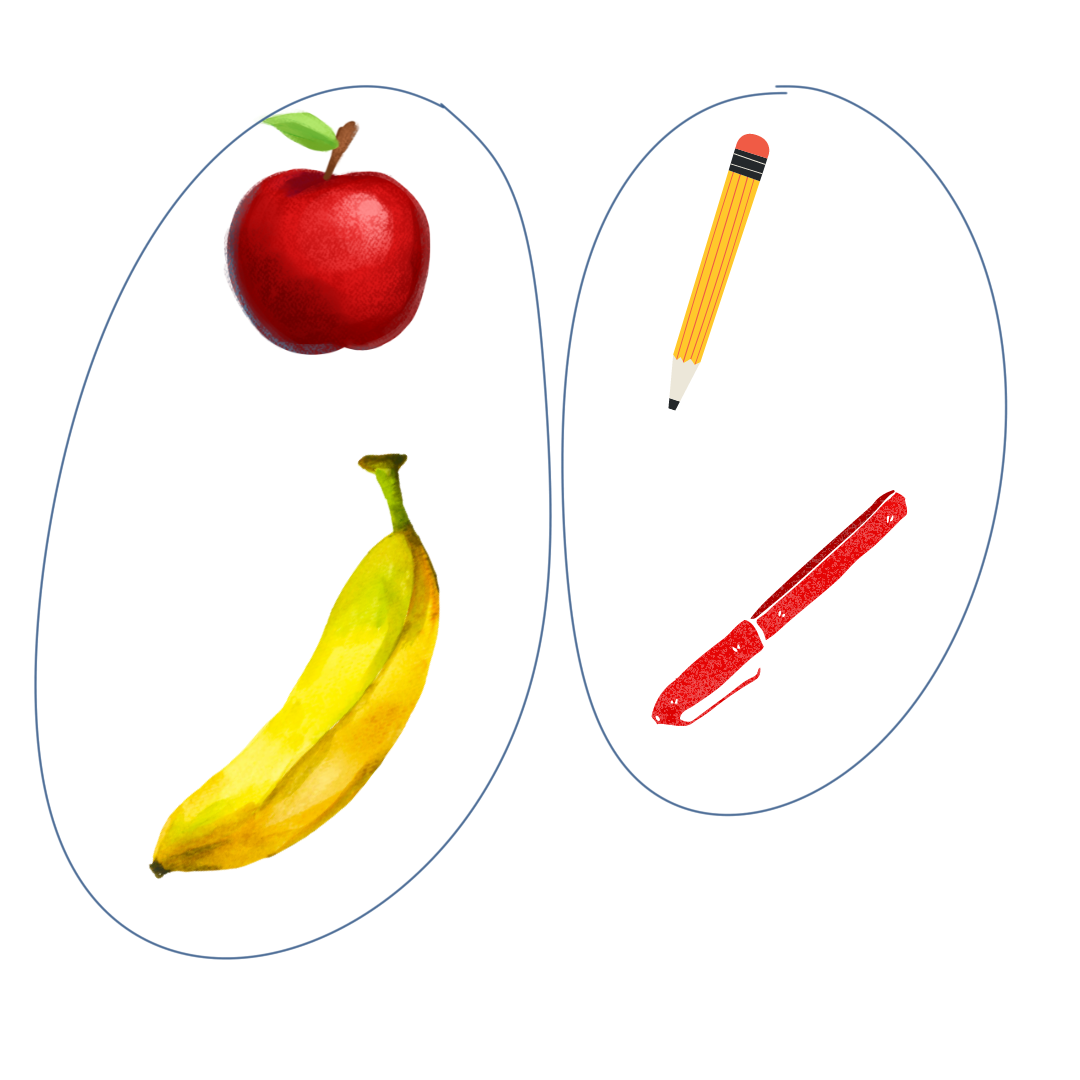
    Objects can be related to each other in many different aspects. For example, say you have a red apple, a banana, a red pen, and a Number 2 pencil. How would you group these objects into two groups? You could say the apple and banana go together because they are both fruits, and the pen and pencil go together because they are both writing instruments. But you could also say that the apple and pen should go together because they are both red, and the banana and the pencil should go together because they are both yellow. In this case, you could group by type of object or by color. Grouping by type of object might make more sense in this example.

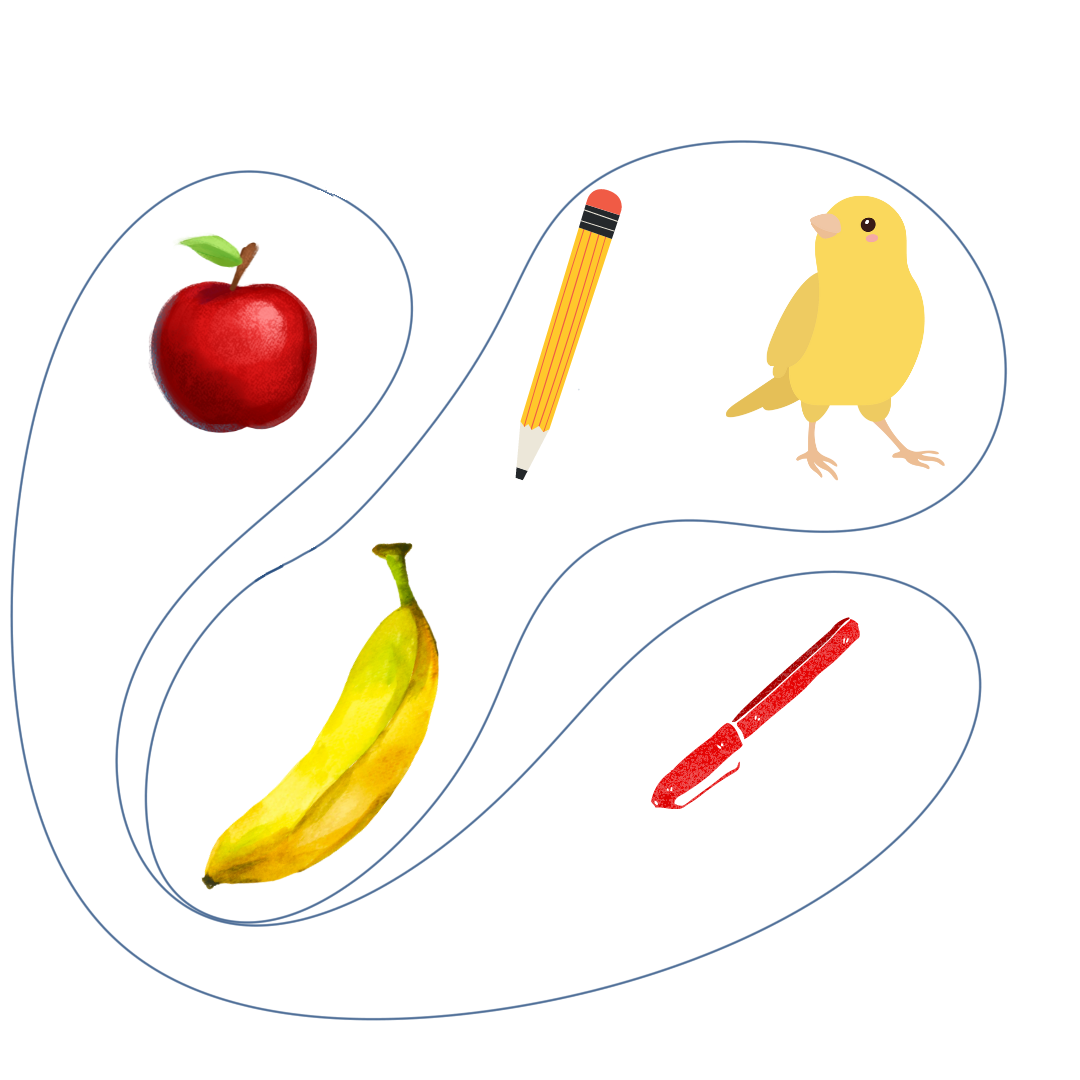
    But what if we add in a canary to the things to be grouped? We want to make as many of the objects fit in the groups as possible, so the addition of a canary, which is yellow, would cause the grouping by color to make more sense.

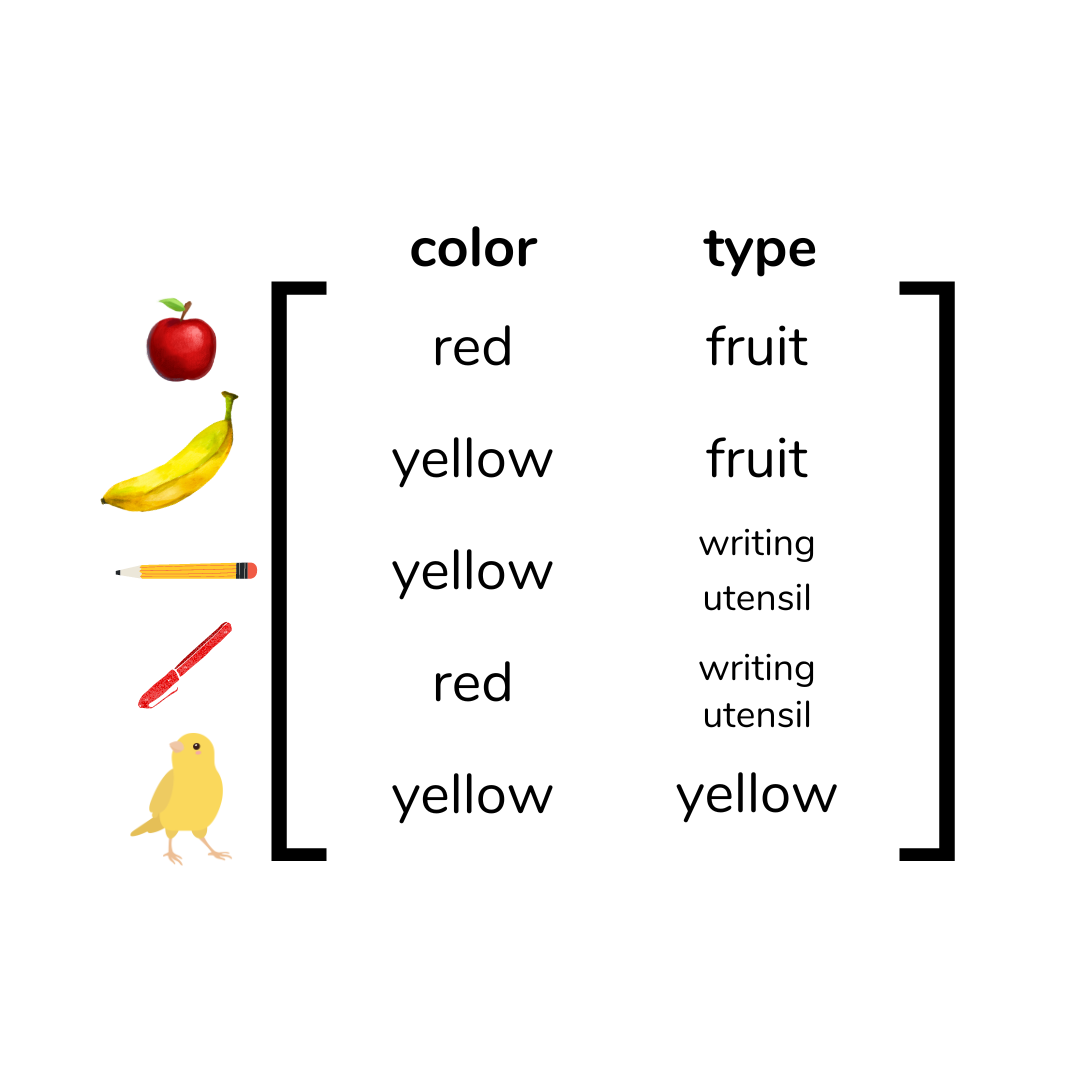
    In clustering, each of these objects would be a data point, and each aspect, such as type, color, size, and texture, would be a dimension of these objects. We call these different aspects features of the data. We can store this data in a matrix so that a computer can read and process the data.

    It might seem that if we add more features to the data, we would be able to group the objects better. Intuitively, we think we have more choices of what to group by. However, as we add more and more features, the majority of features would be irrelevant and actually make it more difficult to group. This is called noise in our model. For example, one feature of the data set we had earlier could be “does it have a beak?” But since the canary is the only object that has a beak, that doesn’t help us cluster the objects together. When considering the distance between data points, adding features adds a dimension to our model, which increases the distance between points. Also, adding “does it have a beak?” as a feature would actually just increase the amount of data we have to store, making our algorithms run slower.

    When a computer clusters data points, points within the same cluster are similar and points in different clusters are not as similar. We quantify similarity using distance metrics. There are some properties of similarity that have to hold true for clustering to make sense:

    • Symmetry: The distance from A to B is equal to the distance from B to A. This makes sense because if A is similar to B, B must be similar to A. Similarity goes both ways.
    • Positive Separability: The distance from X to X is equal to 0, and the distance from X to any other point does not equal 0. This rule is needed because a data point cannot be different from itself, and if data points are different, they have to have a distance between them representing that difference.
    • Triangle Separability: The distance from X to Y is less than or equal to the sum of the distance from X to Z and Y to Z. This makes sense because if Y is similar to Z, and X is similar to Z, then X must be similar to Y.

    Euclidean distance is the straight-line distance from point A to point B, but here’s an example of another distance metric. Manhattan distance measures around blocks, resembling the route a car in a city would take around ceilings. 

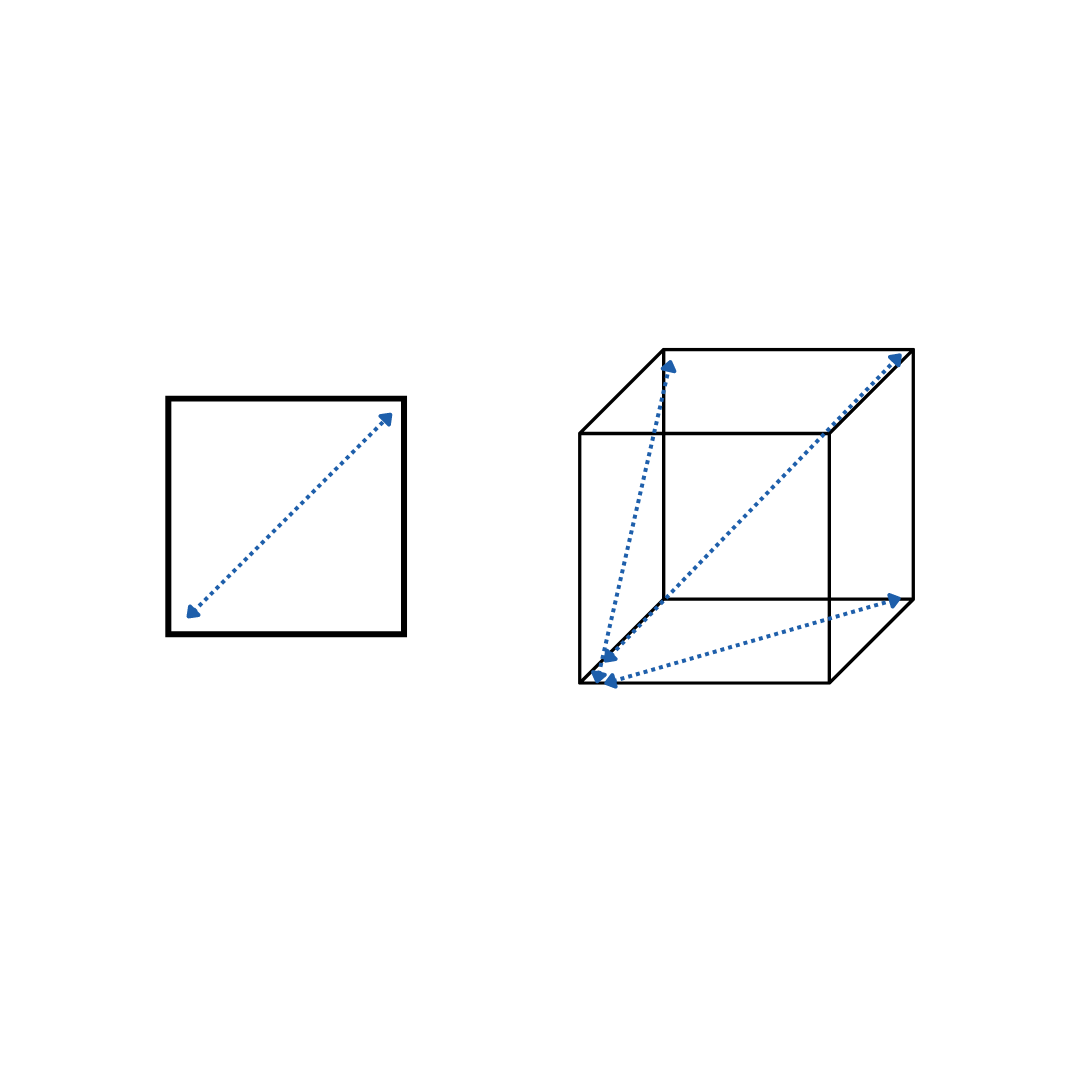
    An interesting phenomenon related to distance metrics is how they lose their meaning in higher dimensions. When we add features to our dataset and increase the number of dimensions, the average distance between points increases. Think about how in one dimension when we are looking at one feature, point A and B would be on a straight line, x units apart. But in two dimensions when we added another feature, if the second feature is just as far apart as the first for points A and B respectively, A and B would be sqrt(2)*x units apart. The same pattern continues when we add more and more dimensions.

    As we increase dimensions and distance between points increases, the points also migrate towards the edges of the space. This is because the ratio of the limits of the space to the core of the space increases as the number of dimensions increases. Think about how a square with sides of length x has a perimeter of 4x and an area of x^2. A cube, on the other hand, with sides of length x has a surface area of 6x^2 and a volume of x^3. Let’s substitute 1 as x to compare these values. 

    Square perimeter = 4x = 4

    Square area = x^2 = 1

    Perimeter to area ratio = 4/1 = 4

    Cube surface area = 6x^2 = 6

    Cube volume = x^3 = 1

    Surface area to volume area = 6/1 = 6

    When the number of dimensions increased from 2 to 3, the ratio increased from 4 to 6. Once again, this pattern continues in higher dimensions.

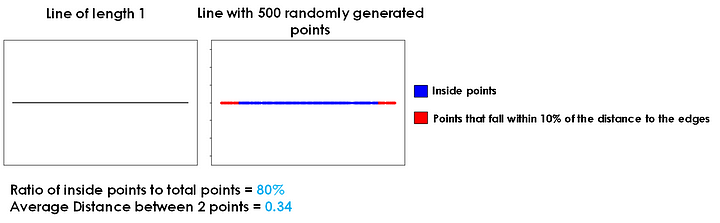
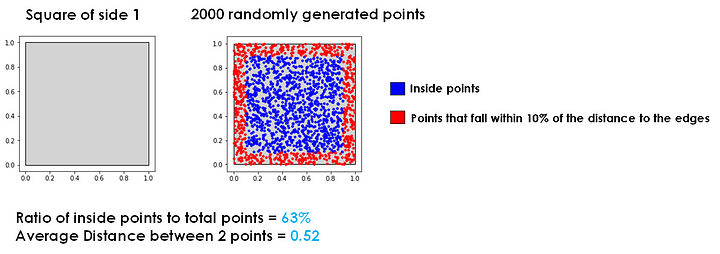
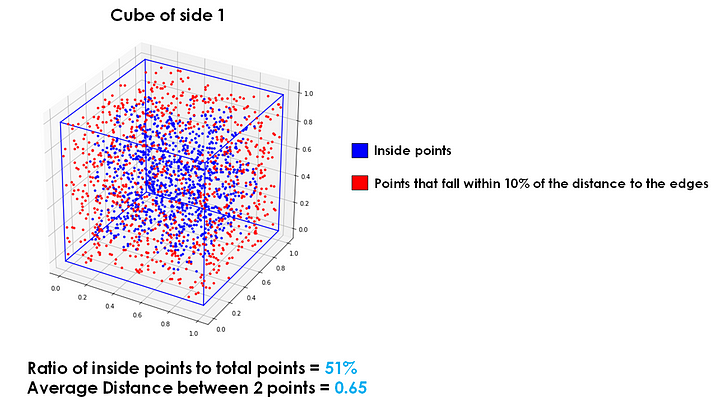
    Let’s visualize a model with points randomly distributed around the model space.

    In one dimension, approximately 20% of points will be within the outer 10% of the space. In two dimensions, approximately 37% of points will be within the outer 10% of the space. In three dimensions, approximately 49% of points will be within the outer 10% of the space.

    Continuing on to dimensions of degrees that are essentially impossible for us to visualize, approximately 60% of points in four dimensions, 68% in five dimensions, 74% in six dimensions, and 80% in seven dimensions will be within the outer 10% of the space.

    This concept brings us to the titular “infinitely-dimensional orange” concept; if we had an orange with infinity dimensions and points randomly distributed across the space, all the points would be on the peel of the orange, with no points spread around in the interior.

    Using more features allows each data point to become more different from each other, which makes them more sparsely distributed. This makes it harder to cluster the points accurately! In machine learning models, we address this issue using feature selection and dimensionality reduction techniques to find the most relevant features and reduce the number of dimensions we utilize to cluster data points. Not only does this reduce the processing power a computer would need to run the algorithm, but accuracy in clustering generally also increases by preventing the “infinitely-dimensional orange” phenomenon.

    Reference

  • The Science of Plan B

    After Roe v. Wade was overturned this past summer, I saw a spark of online discussions about access to birth control, as well as misinformation online on how different contraceptive methods work. Plan B has many misconceptions surrounding it, and seeing as the misuse of the pill can result in life-altering (and life-creating) consequences, it’s critical that people who use it understand how it works.

    Plan B is known as a “morning after” pill to prevent pregnancy after unprotected intercourse or failed contraceptive methods (which would be Plan A). As opposed to abortion pills (that we can think of as Plan C), which terminate a preganancy that has already started, Plan B prevents a pregnancy from beginning by preventing the process of ovulation, fertilization, and implantation that causes a pregnancy. Compared to other forms of birth control pills, Plan B is only used as an emergency treatment after intercourse instead of being taken regularly, and is available over the counter instead of by prescription.

    An Overview of How Pregnancy Occurs

    Before talking about how Plan B prevents a pregnancy, we have to cover how pregnancy actually happens. Let’s put on our scientist thinking-caps and see if we can notice any details about the process that might be helpful to develop a way of preventing it.

    Ovulation is when a mature egg is released from an ovary into a fallopian tube where the egg moves towards the uterus. The egg will move around the fallopian tube for 12-24 hours. Also during ovulation, the uterus is prepared for a potential pregnancy by the inner layer becoming spongy and thick, the ideal environment for a fertilized egg to implant.

    There are a few hormones involved in the ovarian and menstrual cycles: FSH (follicle-stimulating hormone), LH (luteinizing hormone), estrogen, and progesterone. Estrogen causes FSH and LH to spike right before ovulation, and the high levels of LH trigger ovulation. After ovulation, progesterone levels rise and inhibit the development of another egg (a mystery tool that will help us later!) to give the released egg time to travel through the fallopian tubes and get fertilized.

    If semen is released into the vagina during intercourse, sperm cells can swim into the cervix towards the fallopian tubes. If it encounters an egg, the egg and sperm will join together in a process called fertilization. This is what we are trying to prevent. Sperm can stay active in the uterus and fallopian tubes for up to six days after it is released. Therefore, fertilization can occur up to six days after intercourse. If fertilization does not occur, the thick lining of the uterus is released during menstruation, and progesterone levels fall to allow for another ovulation.

    A fertilized egg will move into the uterus while dividing into a cluster of cells called a blastocyst. The blastocyst will reach the uterus 3-4 days after fertilization and will stay in the uterus for 2-3 days. If the blastocyst attaches to the lining of the uterus, this is called implantation and signifies conception. The process of implantation takes 3-4 days. If a blastocyst does not implant in the uterus, it is released out of the vagina during menstruation, along with the thick lining of the uterus.

    How the Pill Works

    The Plan B pill is 1.5 milligrams of levonorgestrel, a synthetic form of progesterone (remember her?), and is currently sold over the counter at drugstores. The person at risk of an unwanted pregnancy takes one pill. Compared to other forms of birth control pills which are taken regularly, Plan B is a one-dose pill that is only taken once, after intercourse within 72 hours. The pill works using three main methods: delaying ovulation, preventing fertilization, and preventing implantation.

    Plan B delays ovulation to prevent the mature egg from even encountering sperm. This happens by the synthetic progesterone inhibiting the spike of FSH and LH, and therefore preventing ovulation. This is the primary way that the pill is effective.

    If the egg has already been released into the fallopian tubes, Plan B can still be effective by preventing fertilization. The pill prevents fertilization by slowing down the movement of both the egg and sperm by triggering the growth of cervical mucus, to reduce the probability that the two will meet to fertilize the egg. 

    Finally, Plan B also claims to prevent implantation by thinning the lining of the uterus so that a fertilized egg will be unable to attach to the uterine lining. However, scientific studies have not proven this effect.

    These three methods prevent conception from occurring, as opposed to an abortion pill (our Plan C), which would terminate a pregnancy that has already started by causing a miscarriage.

    This is why Plan B needs to be taken within 72 hours, and as soon as possible for maximum effectiveness, because it will not terminate a pregnancy and will only target the factors that cause a pregnancy to prevent one from occurring in the first place.

    Effectiveness of Plan B

    The Plan B pill of 1.5 milligrams of levonorgestrel is only effective for those under 165 pounds. The options for those over 165 pounds include a copper IUD, which reduces the movement of sperm to prevent fertilization, and the ella morning after pill, which functions similarly to Plan B but contains 30 milligrams of ulipristal and is only available by prescription. IUDs that are implemented within 5 days of intercourse are 99% effective, whereas the ella pill is 98% effective.

    Plan B is proven to be 87% effective at preventing pregnancy when taken within 72 hours of intercourse for those under 165 pounds. The sooner the pill is taken, the more effective it is, since the pill has the best chance of working when ovulation has not occurred yet. Effectiveness decreases if ovulation has occurred and decreases further if fertilization has occurred. Compared to other forms of contraception, Plan B is less effective. 

    Cost and Accessibility

    Other birth control pills need to be taken before intercourse regularly and other methods of birth control need to be implemented prior to intercourse, whereas Plan B is taken after intercourse if no birth control methods were used or other forms of contraception failed. Plan B can cost $50-$60 whereas generic levonorgestrel pills range from $15-$40. 

    Plan B was previously only available by prescription, but was approved by the FDA to be over the counter for ages 18+ in 2006 and then expanded to all ages in 2013.

    References

    • planb.ca/en/how-plan-b-works/
    • npr.org/sections/health-shots/2012/02/06/146358069/the-morning-after-pill-how-it-works-and-who-uses-it
    • plannedparenthood.org/learn/pregnancy/how-pregnancy-happens#:~:text=The%20sperm%20and%20uterus%20work,an%20egg%2C%20it’s%20called%20fertilization.
    • plannedparenthood.org/learn/birth-control/iud
    • plannedparenthood.org/learn/morning-after-pill-emergency-contraception/whats-plan-b-morning-after-pill
    • webmd.com/sex/birth-control/plan-b 
    • britannica.com/science/levonorgestrel
    • organismalbio.biosci.gatech.edu/growth-and-reproduction/animal-reproduction-ii-reproductive-structure-and-function/ 


  • The Little Engineer That Could: Turning Data Into Fashion

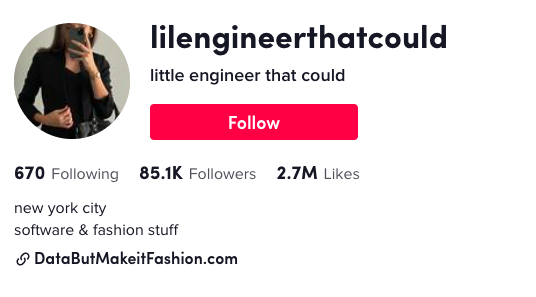
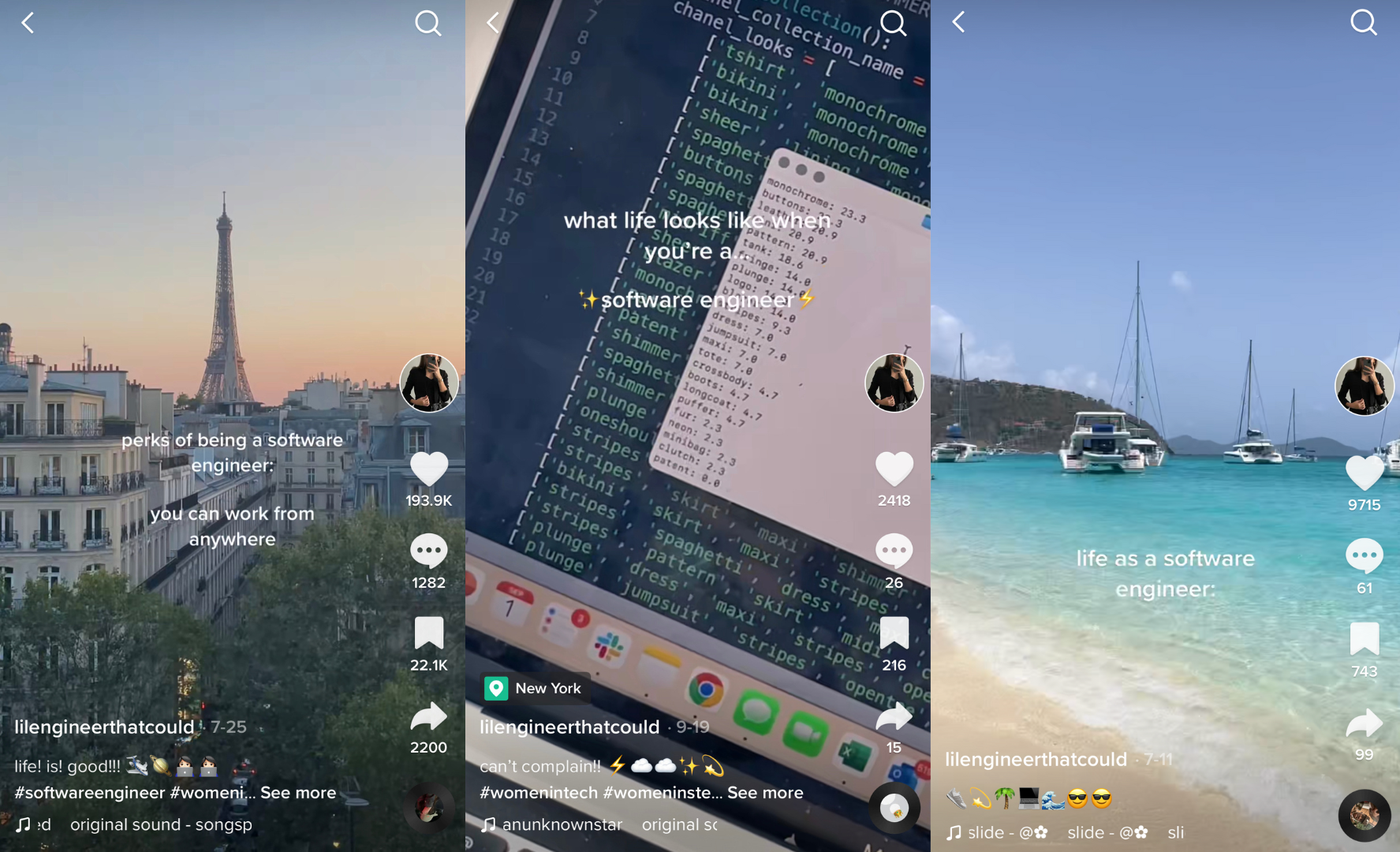
    I found Madé Lapuerta’s TikTok account (@lilengineerthatcould) a few months ago, and as a computer science major who, like many others, doesn’t necessarily want to be working in a stuffy corporate office every day glued to a monitor, I immediately became anticipatorily jealous. Her videos feature her life as a software engineer, but instead of an apartment in Silicon Valley as one would imagine, her TikToks show picturesque photographs of iced lattes in front of the Eiffel Tower, magazines and perfume bottles laid out on her desk, airplane window sunset photos, and clips of her walking around the Louvre.

    Madé Lapuerta is a Harvard graduate, published author, and developer expanding the definition of what it means to work in software engineering and countering “tech bro” stereotypes. She wrote The Little Book of Big Fashion Data, which compiles the high-fashion trends from runway photos by using data analytics to recognize patterns in images with Python code along with Google Vision AI models. Her work fits in the intersection of fashion, machine learning, and computer vision. 

    Let’s take a second to break down those buzzwords.

    Data analytics is defined as the systematic analysis of data using computational methods – basically using computers to go through data and draw out insights such as trends, anomalies, and anything we find interesting to know. We tend to think of data as sophisticated statistics stored on our computer and in fancy data servers, but really any information is data: words written on a sheet of paper, your zip code as you type it into an online shopping form, and even cave paintings with every brushstroke. Without data analytics, all that data would stay as pure information, but to gain knowledge from the data, and interpret it so that the information becomes useful to us, we use either our brains, or recently, computers to help us! It’s estimated that in 2020, the amount of digital data that existed in the world was 59 trillion gigabytes.

    Computer vision focuses on automating computers to do the job of our eyes and brain; recognizing shapes and colors, and identifying objects. For example, in a black-and-white image made out of pixels, a computer can recognize an edge by comparing the contrast in value of pixels across a range. This might lead to the computer outlining an object as separated from the rest of the background. A computer could use photographs of fashion runway shows to recognize the clothing within the image, and identify the types of clothing the runway model wears or color palette of the outfit, which can be used in conjunction with machine learning to identify trends in hundreds or thousands of images.

    Machine learning is a subfield of artificial intelligence that is focused around building models and training algorithms to analyze data so that we don’t have to do it ourselves!. Machine learning makes data analytics faster, more accurate, and more precise. Bringing it back to fashion, some practical applications of machine learning are how retailers use it to plan what clothes to produce for each season, how much to produce, and how to price those clothes to maximize profits.

    Madé Lapuerta’s website, “Data, But Make It Fashion,” at www.fashionabledata.com gathers her findings in a cleanly designed presentation website. The home page features statistics such as “ballet flats – up 71% in popularity,“ a statement evidenced by her machine learning models, along with a link to an online shop. She writes, “I can go from a folder of hundreds of runway photos to quantifying the outfits’ colors, detecting palettes, and aggregating fashion trend insights” (Lapuerta, 2021). She also writes monthly blog posts about recent trends, surprises within them, and personal anecdotes about her experience in college and as an industry professional.

    Madé Lapuerta has quickly become a role model for me as someone in computer science with vastly contrasting interests, including art, fashion, and film. Her advice and encouragement on finding a niche within the broad field of computer science inspire me to stick with it and not be (too) worried about ending up hunched over my laptop from 9-5 every day of my professional life. Maybe I too can be the Little Software Engineer That Could.

    References:

  • The Sound of Calm

    This meme made the rounds on the internet, claiming that a song can significantly reduce anxiety.

    The song was even named one of Time Magazine’s 50 top inventions of 2011, quoting,

    “Could this be the sleeping pill of the future? British ambient band Marconi Union has drummed up the world’s most relaxing song: “Weightless” is 8 min. 10 sec. of aural bliss, proved to reduce anxiety by 65% and slow heart rates by 35% as the listener’s body rhythm syncs with the song’s. Indeed, “Weightless” is so successful at inducing somnolence that scientists caution drivers not to listen to it while behind the wheel.”

    What is cortisol?

    Cortisol is a hormone released when your evolutionary stress response is triggered. 

    A release of cortisol means there will be more glucose in the bloodstream as well as substances that repair tissues, in case of a threat. Cortisol also suppresses the digestive and reproductive systems so that those do not impede you when you are facing an “enemy.”

    Can music really affect blood pressure and cortisol levels?

    One study from Deutsches Arzteblatt International found that listening to classical music actually did reduce blood pressure and cortisol levels in all participants, so music specifically engineered to calm people down from a state of anxiety could very well achieve its claims.

    Another study analyzed the song Weightless specifically, finding that “‘Weightless’ by Marconi was able to induce greater relaxation levels in participants than a massage (increase of 6%). ‘Weightless’ also induced an 11% increase in relaxation over all other relaxing music tracks.” (British Academy of Sound Therapy).

    The song has even apparently been used to calm patients before surgery, in a study published in the journal Regional Anaesthesia & Pain Medicine journal that showed that the song was just as effective as a anxiety-relieving drug.

    It might be worth it to give the song a listen the next time you feel anxious and stressed!

    What is Sound Therapy?

    The band Marconi Union worked with sound therapists to formulate as calm of a sound as possible, but what is a sound therapist?

    Sound therapy is another trend that is takes inspiration from ancient rituals, with dubious scientific backing. Therapists guide patients with individual tones or music, along with controlled breathing, to elicit an energetic or calmed emotional response. “Common sound therapy instruments include Tibetan sound bowls, crystal bowls, gongs, tuning forks, chimes, and voice. Sounds can also be pre-recorded, like white noise, ambient music, or guided instructions. ” (Prevention.com)

    Sound therapy has been compared to a massage, where instead of a practitioner’s hands, the vibration of the sounds produce the sensations. 

    A research study titled, “Sound Therapy Induced Relaxation: Down Regulating Stress Processes and Pathologies,” outlines a proposition that nitric oxide produced in the body when undergoing sound therapy is responsible for the physiological effects in the body, providing a potential scientific basis for how sound therapy could be effective.

    Even a quick YouTube search shows that videos claiming to be sounds appropriate for sound therapy have millions of views.

    While it seems unlikely that sound therapy could be a significant treatment for mental illness, in combination with other therapy it may be a viable option, due to its non-invasive and accessible nature.

    References


  • One TA is Not Like the Others

    If your teacher was AI, would you notice? Would you feel duped that you weren’t being taught by a real human? Or would you be awestruck by advanced technology’s capabilities? Perhaps a mix of both.

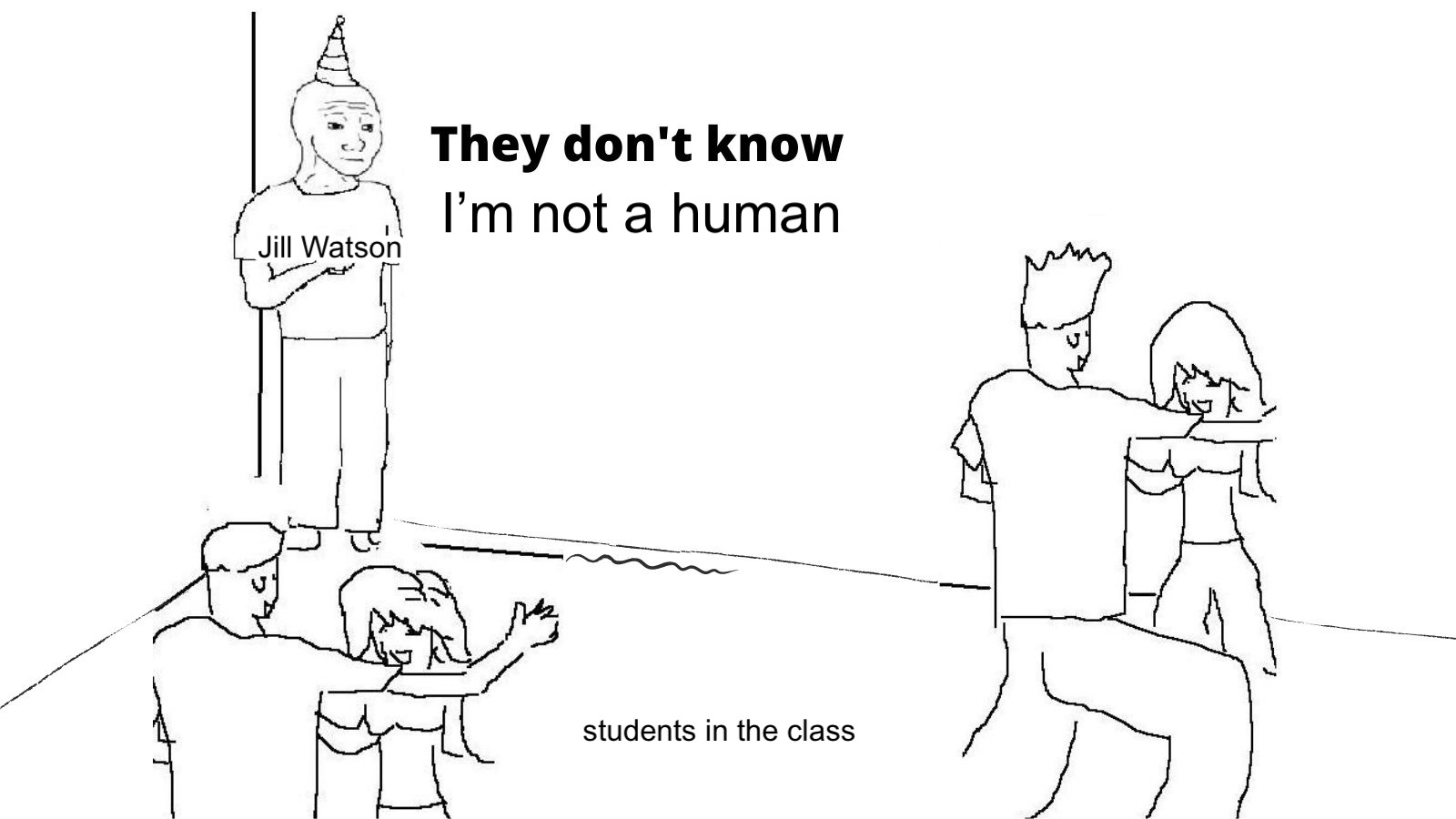
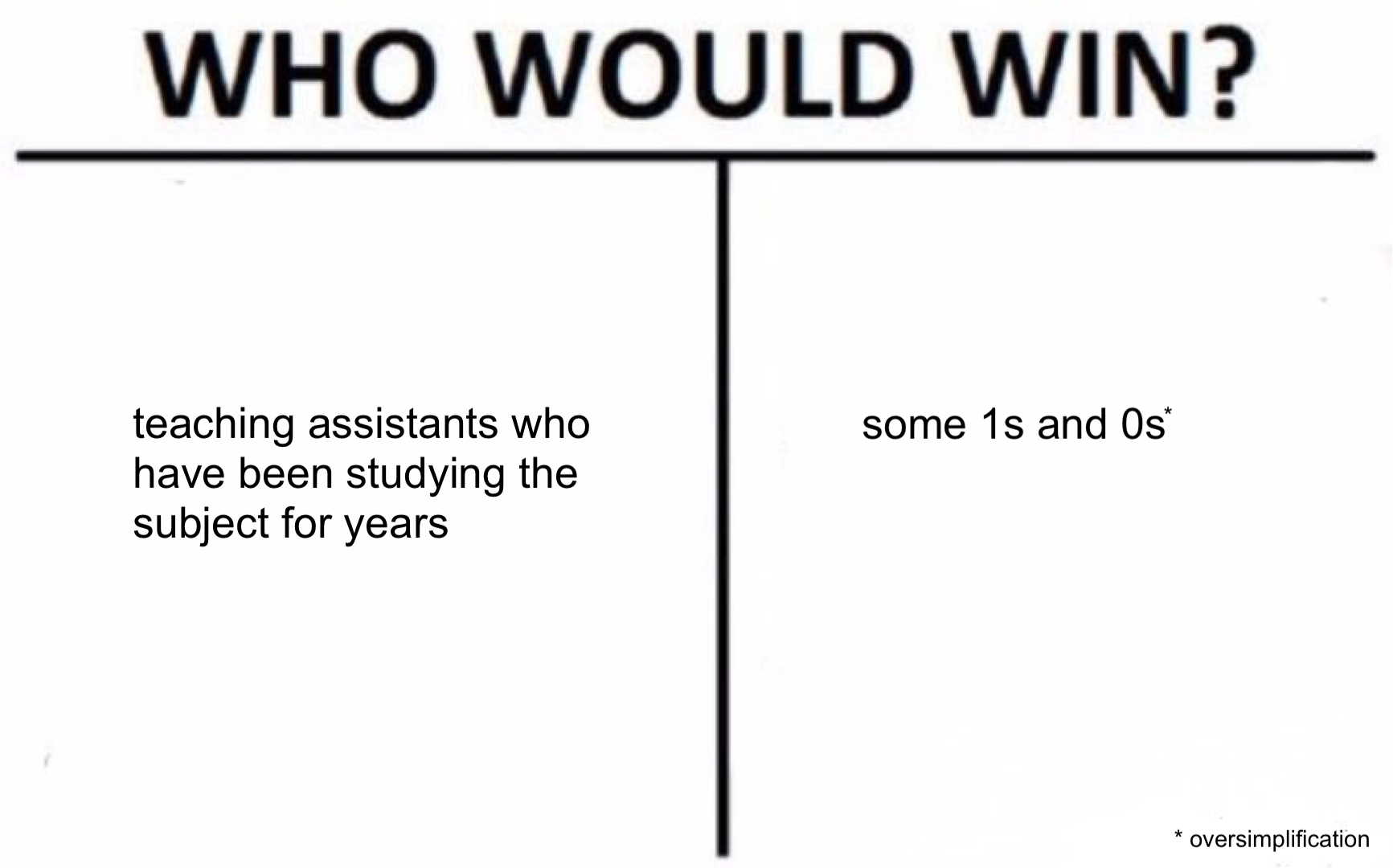
    In spring of 2016, Georgia Tech professor Ashok Goel’s course about Artificial Intelligence had nine teaching assistants. One of them was not like the others; unknown to students, one of them was not human. 

    Jill Watson, an artificial intelligence program implemented on IBM Watson’s platform, was fed 40 thousand forum posts from prior semesters. While students change, the questions they ask often repeat semester after semester, and Jill wouldn’t get tired of answering them as many times as needed. 

    At first, Jill wasn’t very good at her job; she would use the keywords in the question but assumed wrongly what the context of the question was. Her answers weren’t released to the students until she began to answer with 97% accuracy, due to modifications of her algorithm. 

    At the end of the semester, Goel finally spilt the beans, much to the awe of students who had been interacting with an AI TA for most of the semester. Only one student had guessed at the secret. Over following semesters, Goel renamed Jill with many different names and didn’t tell his students who was human and who was AI, revealing the mystery at the end of each semester. 

    This experiment raised questions about whether AI will replace labor, reducing job opportunities for humans who need them. Could AI like Jill cause colleges to hire less professors and TAs to save money? In Goel’s case, he still had 8 other TAs who answered questions that Jill couldn’t. Goel hopes that in the future, as AI becomes more prevalent in education and other fields, AI will allow humans to choose creative careers instead of monotonous jobs, and fill in jobs that have a shortage of humans applying for them. 

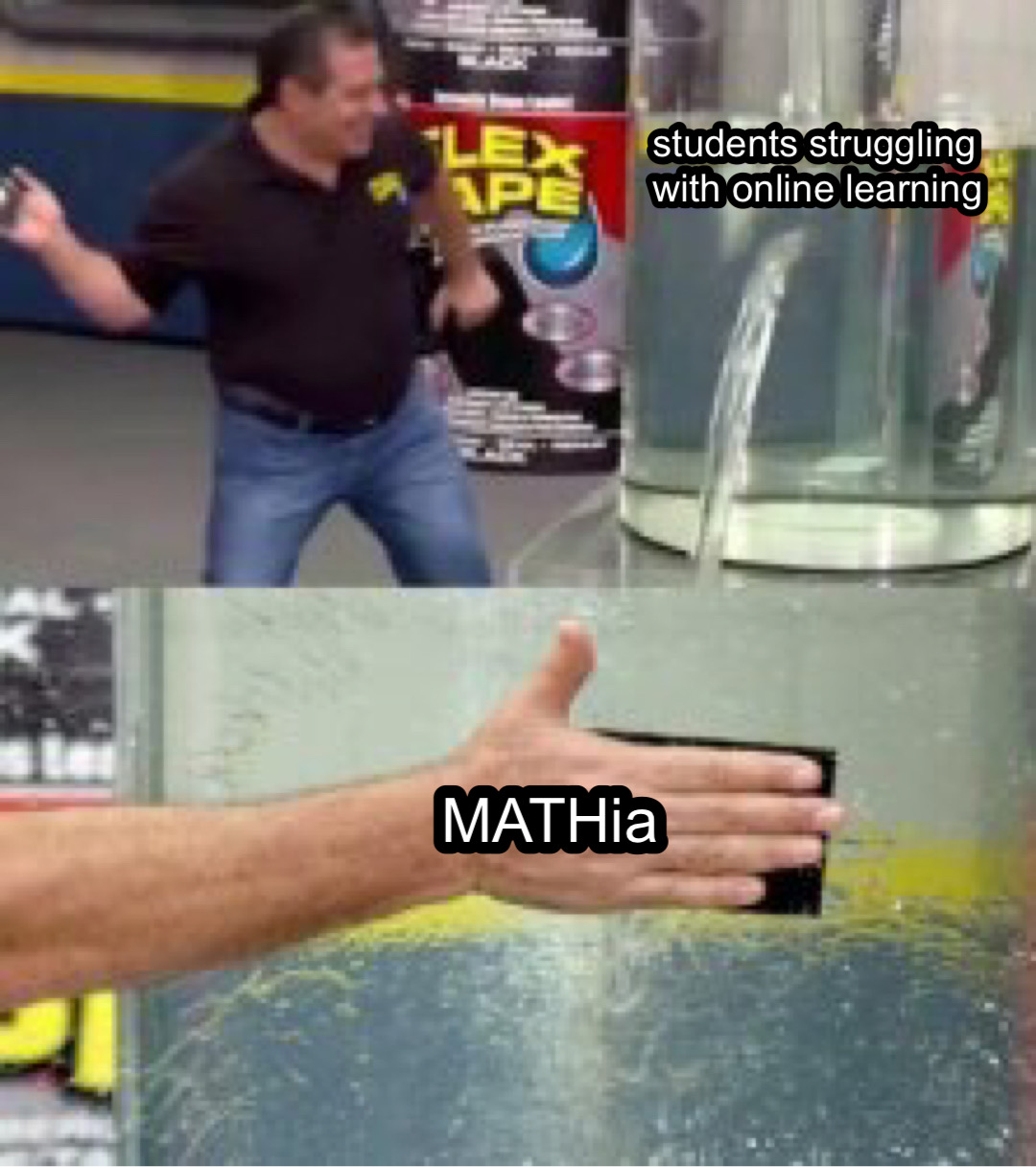
    In 2020, Carnegie Learning, an organization founded by a professor at Carnegie Mellon University, won an award for their program MATHia, an AI that offers personalized algebra tutoring. MATHia can not only guide students on a math problem, it can also predict why a student may not be understanding the concept, and target their specific misunderstanding, as well as adapting to the student’s pace and level. MATHia supported students during the pandemic, when many students were struggling with the switch to online learning. According to a study, students who used MATHia had grade averages of about 8 points greater compared to those who did not. 

    This shows how AI has the potential to be a valuable addition in the classroom compared to human teachers who may not be able to tailor lessons to each student or spend one-on-one time with students who need extra support. Do you think the future of education is Artificial Intelligence? 

    References

    Boland, A. (2020, May 13). Mathia® by Carnegie Learning Wins “Best Artificial Intelligence Solution” in the edtech awards 2020. Business Wire. Retrieved February 18, 2022, from https://www.businesswire.com/news/home/20200513005646/en/MATHia%C2%AE-by-Carnegie-Learning-Wins-%E2%80%9CBest-Artificial-Intelligence-Solution%E2%80%9D-in-The-EdTech-Awards-2020

    Griswold, A. (2014, March 6). This cognitive tutor software is already having a revolutionary effect. Business Insider. Retrieved February 18, 2022, from https://www.businessinsider.com/cognitive-models-and-computer-tutors-2014-3

    Maderer, J. (2016). TALK OF TECH: MY TA IS AN AI. Georgia Tech Alumni Magazine. Retrieved February 18, 2022, from https://www.gtalumni.org/s/1481/alumni/17/gt-magazine.aspx?sid=1481&gid=21&pgid=6668

    Maderer, J. (2016, May 9). Artificial Intelligence Course creates AI Teaching assistant. Georgia Tech News Center. Retrieved February 18, 2022, from http://news.gatech.edu/news/2016/05/09/artificial-intelligence-course-creates-ai-teaching-assistant

    Stirgus, E. (2017, January 31). She has quite a brain, but this teaching assistant is just not human. ajc. Retrieved February 18, 2022, from https://www.ajc.com/news/local-education/she-has-quite-brain-but-this-teaching-assistant-just-not-human/ZD8NiCkbgWOM4XaXkZ6cBL/