Author: Amy Kanchibhatla

  • Health Shot: Vitamin Overdose

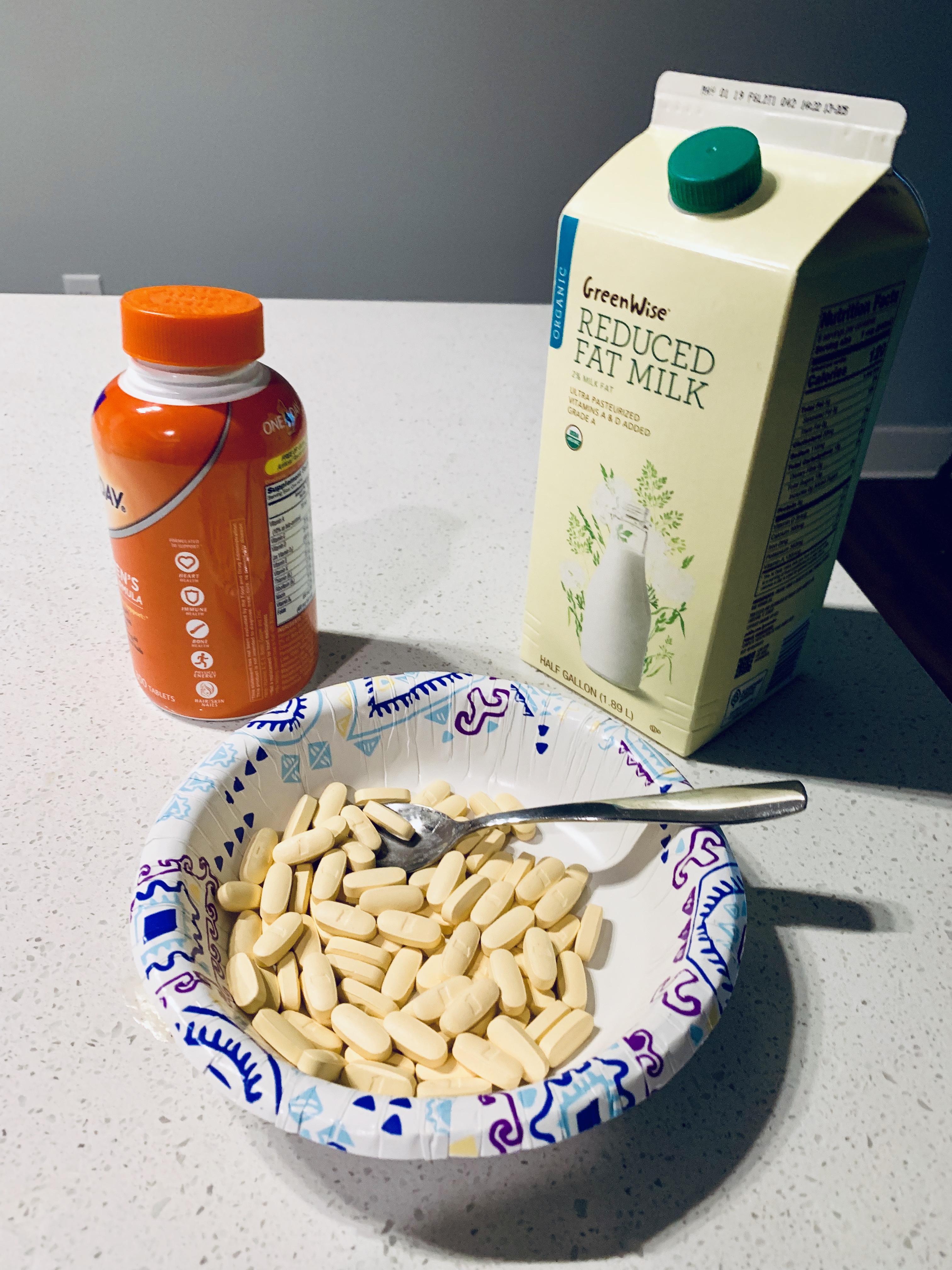
    Too much of a good thing is even better? Right? Wrong. Turns out with vitamins, this is not the case. The Vitamin market is a $23.3 Billion industry, and we are increasingly turning to these convenient capsules for a quick fix. The effect of vitamins is a U curve – too little has negative effects, but so does too much. A moderate amount has the best effects on the body – but this can be hard to achieve with vitamin supplements. Vitamins usually have 1-10x the recommended daily allowance in their pills, and people take these without question. With public opinion largely being that vitamins are a revolution, I want to shed some light on how overdosing on some of the most popular supplements can have detrimental effects.
    Vitamin D

    Vitamin D manages calcium in your blood, bones and gut and helps cells all over your body to communicate properly. Since the rise of sedentary lifestyles, many have been turning to Vitamin D supplements over being outside in the sun. Large overdoses of vitamin D (100x the daily allowance for many months) can cause calcium buildup in the blood, called Hypercalcemia This buildup can result in persistent nausea and frequent vomiting. Additionally, the calcium buildup in the blood can cause kidney damage when the calcium binds with phosphate and forms crystals in tissues. In a case series conducted in Kashmir, India, researchers found that the Vitamin D prescribed by physicians to treat deficiencies was far exceeded the required daily amount, and pushed patients to hyperclacemia. In their conclusions, the researchers cautioned against taking a seemingly innocuous vitamin in large doses.

    Vitamin A

    Vitamin A is important for eye heath and helps prevent eye diseases like Age-related macular degeneration. However, Acute Vitamin A toxicity can occur when a single excessively high dose and chronic toxicity when 10x the recommended daily amount is taken over a long period. Side effects can include headaches, vision disturbances, joint pain, and skin irritation. Worse, toxicity can impact fetal health and even cause birth defects of the  eye, skull, lungs, and heart. The national institutes of health warns pregnant women about taking high dose Vitamin A supplements.

    Vitamin E

    Vitamin E is important to important to vision, reproduction, and the health of your blood, brain and skin. In a clinical trial called SELECT (Selenium and Vitamin E Cancer Prevention Trial), 35,000 men 50 years and older took Vitamin E  and Selenium supplements for 5.5 years and then were observed for 1.5 years following. Men tho took Vitamin E supplements alone had a 17% increased risk of prostate cancer compared to men on the placebo pill. Men taking vitamin E and selenium both also had an increased risk of prostate cancer, but in lower amounts. After analyzing the results, the SELECT team concluded that the vitamin dose (400IU/day) given was far too high based on the U shaped curve. The recommendation from the SELECT team was that men should not take vitamin supplements for cancer prevention.

    The Takeaway

    As the negative repercussions of vitamin overdoses continue to come to light, researchers are starting to question the practice of prescribing vitamins to those with deficiencies in high doses. As consumers of vitamins, we have the responsibility to ensure that we are getting our vitamins in reasonable quantities through vitamins or sticking to natural sources. Next time you decide to pop a pill, you might want to flip the bottle around and get a better look at what you’re having!


    Sources:

    Nicastro, H. L., & Dunn, B. K. (n.d.). CHAPTER 25. The Selenium and Vitamin E Cancer Prevention Trial (SELECT): Prevention of Prostate Cancer Using Selenium and/or Vitamin E in the SELECT Cancer Prevention Trial. Food and Nutritional Components in Focus Selenium,428-457. Retrieved from https://epi.grants.cancer.gov/Consortia/members/select.html.

    Office of Dietary Supplements – Vitamin A. (n.d.). Retrieved from https://ods.od.nih.gov/factsheets/VitaminA-HealthProfessional/

    Penniston, K. L., & Tanumihardjo, S. A. (n.d.). Vitamin A in dietary supplements and fortified foods: Too much of a good thing? Journal of the Academy of Nutrition and Dietetics. Retrieved from https://www.ncbi.nlm.nih.gov/pubmed/12963949.

    Trend Insights: Vitamins & Supplements. (n.d.). Retrieved from https://www.fona.com/trend-insights-vitamins-supplements/.


  • Health Shot: Vaccines


    I’m sure we can all remember that dreaded moment at the doctor’s office when they say “Time for some shots!”. Much crying later (maybe that’s just me) , we leave the office with a brightly colored band aid – and sometimes a sticker for the road. But what exactly goes on in these shots we receive from such a young age? What do these vaccinations do in our bodies? Moreover, what explains the origins of the the anti-vax movement?

    What happens when we get sick?

    When bacteria and viruses enter the body, immune cells called help fight off these invaders, which are called antigens. These antigens trigger the response by the body to fight them off with T Cells and B Cells. B Cells make antibodies, which are proteins produced by our immune system that help attack the antigens. Each antibody fits like a puzzle piece with a particular antigen and blocks off the antigen from communicating with other cells. This causes the antigen to die off. T Cells secrete chemical signals in the body that let other immune responses know to activate. Once the body has begun to eliminate the microbes faster than they reproduce, and the disease is eliminated, some of the T and B cells convert into memory cells can recognize the infectious microbe if it appears again and appropriately release antibodies. This offensive cycle of recognize, react, and remember allows our body to be very effective in responding to bacteria and viruses we interact with every day.

    How do vaccines help?

    Vaccines allow the body to be exposed to an illness and developed the memory cells, so that when we are exposed again to the microbe, we can quickly react. The vaccine contains a weakened form of the virus that does not cause the disease or reproduce very well – but this enough to get our bodies into action. Following the same cycle as above, the body fights off this weakened disease and is left with the memory T and B cells that cause future protection. Since the disease is in weakened form, many vaccines require more than one dose. In the case of the flu vaccine, the CDC recommends a vaccination every year since the vaccination is updated each year to include the strains that research suggests would be most pervasive that flu season.

    Where did the Autism-Vaccine link come from?

    In 1998, Andrew J Wakefield along with 12 co-authors published a study suggesting that from 12 cases, they found links between the MMR vaccination and autism in The Lancet. Though the paper could not support a causal relationship between the MMR vaccination and autism, in a video Wakefield suggested that the risk of autism was developing with the combined MMR vaccines. The press reaction to the publication and Wakefields statements were immediate, and parents in Britain and the United States began to delay vaccinations for their children.

    Ideas Debunked:

    In 2004, the editor of the Lancet revealed that the Wakefield has been paid by attorneys looking to file lawsuits against vaccine manufacturers, demonstrating a clear conflict of interest and ulterior motive. In 2010, after many of the co-authors had redacted their statements in the paper, The Lancet redacted the paper itself.

    In 2011, The British Medical Journal published a report by Brian Deer who investigated how Wakefield could have made the statements he did in the 1998 paper. Deer found that while the paper claimed eight children showed autism-like symptoms days after the vaccination, in fact only two showed symptoms that they had even before the vaccine was administered. With all this evidence, researchers agree that the original study should not have been published as the results could be categorized as research fraud.

    After the MMR-Autism hypothesis was no longer held, critics cited thimerosal, a preservative containing mercury as a possible cause for autism. In the late 1990’s concern for eating mercury present in a different form in fish heightened, and people turned their eyes to the mercury used in vaccines. A final report published in 2004 by the Institute of Medicine rejected an association between thimerosal and autism. However, today most childhood vaccines no longer contain thimerosal.

    Since autism rates have continued to increase since the onset of routine vaccination, critics continue to question vaccines. Research from the Autism Speaks associate reveals that autism is causes by both genetic and environmental factors. The exact reason why autism develops is still unclear, but vaccinations have been currently ruled out as a cause.

    The Anti-Vax Movement:

    In 2007, celebrity Jenny McCarthy’s son was diagnosed with Autism, and she blamed the diagnosis on the effect of vaccinations. This essentially kickstarted the recent anti-vax movement again, though the movement has been in existence since vaccines were widespread. The recent advent of Facebook and twitter has increased the spread of misinformation and has increased vaccines refusal across America. With the popularity of the anti-vax movement, the herd immunity of our population is threatened. For highly contagious diseases, herd immunity is achieved when 90-95% of the population is vaccinated. For less contagious diseases, like polio, 80-85% is enough. Herd immunity is precisely why anti-vax movement affect those who still choose to get immunized. Turning into a Tragedy of the Commons, one  misinformed individual can affect the health safety of their surrounding community. For this reason, staying informed with well established facts, rather than opinions, is important when dealing with medical issues.

    Sources:

    Vaccines Protect Your Community. (2017, December). Retrieved March 10, 19, from https://www.vaccines.gov/basics/work/protection

    How Do Vaccines Work? (2019, April 09). Retrieved from https://www.niaid.nih.gov/research/how-vaccines-work

    Understand how Vaccines work. (2018, July). Retrieved from https://www.cdc.gov/vaccines/hcp/conversations/downloads/vacsafe-understand-color-office.pdf

    Do Vaccines Cause Autism? (n.d.). Retrieved from https://www.historyofvaccines.org/content/articles/do-vaccines-cause-autism

    Wakefield, A. J. (1999). MMR vaccination and autism. The Lancet,354(9182), 949-950. doi:10.1016/s0140-6736(05)75696-8