Author: April McLane

  • Summer Nostalgia: Why are Scientists Studying how Fireflies Glow?

    Introduction:

    You step outside on a warm summer night to see a dark sea with little, intermittent flashes of light. Catching fireflies is a nostalgic childhood memory for people all across the globe. But what allows these bugs to produce this soft glow? 

    Fireflies produce their light through bioluminescence, an efficient light production process resulting from a chemical reaction. While the light comes naturally from fireflies, scientists are trying to understand how to replicate this process for medical research applications with the same ease as fireflies.

    How does this chemical reaction work?

    While the chemical reaction itself is relatively straightforward, fireflies have to carefully control when to light up. This bioluminescent process takes place in a special light producing organ in the abdomen. Within this organ, adenosine triphosphate (ATP), which stores energy in living cells, combines with oxygen, calcium, and luciferin with luciferase, the fireflies emit light (Branham, 2005).
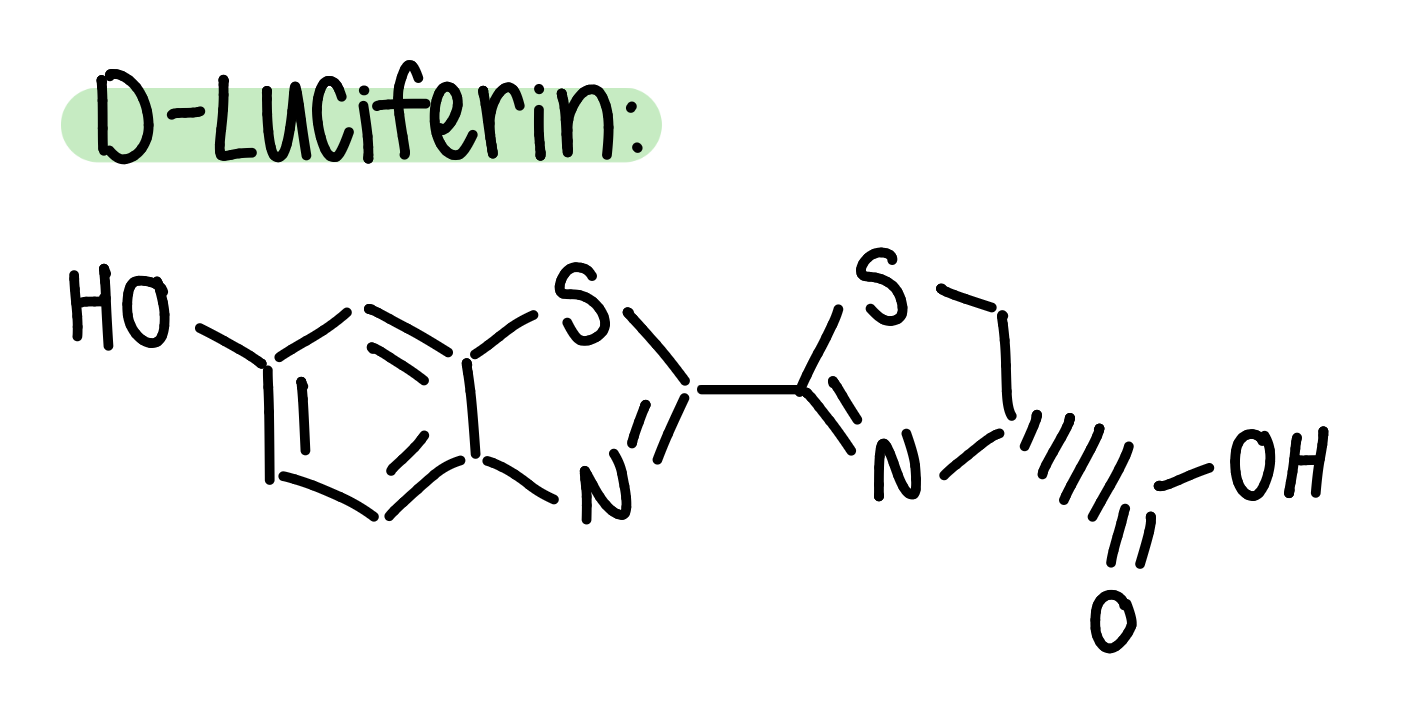
    Fireflies can control the flow of oxygen into the photocytes, which is part of the light-producing organ. When oxygen enters the photocytes, it reacts with the luciferin in the presence of luciferase, an enzyme, and ATP and produces light (Martin, n.d.). When oxygen is allowed to flow into the photocytes, light is emitted.

    Recent studies suggest that fireflies evolved to have biochemical pathways for the production of luciferin and the regulation of the reaction (Zhang et al., 2020). This allows for the fireflies’ bioluminescent system to be highly effective as the energy dissipated from this reaction is emitted as light instead of heat (Zhang et al., 2020). This efficiency has proven to be difficult to replicate without these adaptations, which is why scientists are trying to recreate the process in a laboratory.

    How does this Chemical Reaction Work in the Lab?

    Researchers at Nagoya University in Japan have created a six-step synthesis for D-Luciferin, which is the specific stereoisomer, or orientation, of luciferin that binds with luciferase to produce light using p-benzoquinone, L-cysteine methyl ester, and D-cysteine (Kato et al., 2025). 

    This synthesis is designed to replicate the natural production of luciferin with greater efficiency and lower costs. The synthesis is done in a one-pot reaction to streamline the process and make it applicable on a larger scale (Kato et al., 2025). While this synthesis has successfully yielded D-luciferin, creating an artificial version of the full biological system of fireflies, especially with the control of oxygen flow, remains a challenge. 

    The efforts of the researchers at Nagoya University show the complexity of replicating a naturally optimized biochemical process. But why are scientists investing so much into recreating firefly bioluminescence? 

    Why are Scientists Studying this Process?

    Scientists have investigated the mechanism of the bioluminescent process of fireflies due to the emission’s application in medical imaging, including cancer research as a way to locate tumors (Martin, n.d.). However, the cost of producing the same reaction that fireflies do every night, every summer for free is quite expensive, driving the motivation for scientists to create the most efficient, cost and time-wise, synthesis for D-Luciferin (Kato et al., 2025). 

    Conclusion

    What appears to be a piece of summer nostalgia is actually a highly optimized biochemical process. By controlling the reaction between luciferin, luciferase, ATP, and oxygen, fireflies are able to make a chemical reaction a mesmerizing scene. 

    Scientists are studying the process of firefly light production to make the synthesis of D-luciferin more accessible for research and medical applications. The same soft glow that lights  up a warm summer night is now contributing to science and medicine, showing how even the smallest of animals and insects can lead to scientific progress. 

    References:

    Branham, M. (2005, September 5). How and why do fireflies light up? Scientific American. Retrieved April 17, 2026, from https://www.scientificamerican.com/article/how-and-why-do-fireflies/

    Kato, M., Tsuchihashi, K., Kanie, S., Oba, Y., & Nishikawa, T. (2025, December 25). A practical, biomimetic, one-pot synthesis of firefly luciferin. Nature Science Reports, 14(1). https://doi.org/10.1038/s41598-024-82996-2

    Martin, K. (n.d.). Everything About Luciferin and Luciferase. GOLDBIO. Retrieved April 17, 2026, from https://www.goldbio.com/blogs/articles/everything-about-luciferin-luciferase?srsltid=AfmBOoo5RwdWL6Aa1C7Lu7UK2e9LLM0KLTmjIYMHJmoU7DI5741Ww0Qa

    Zhang, R., He, J., Dong, Z., Liu, G., Yin, Y., Zhang, X., Li, Q., Ren, Y., Yang, Y., Liu, W., Chen, X., Xia, W., Duan, K., Hao, F., Lin, Z., Yang, J., Chang, Z., Zhao, R., Wan, W., … Li, X. (2020, September 28). Genomic and experimental data provide new insights into luciferin biosynthesis and bioluminescence evolution in fireflies. Nature Science Reports, 10(1). https://doi.org/10.1038/s41598-020-72900-z


  • Is My Nail Kit Causing an Allergic Reaction?

    Introduction

    DIY nail-art kits have skyrocketed in popularity since the Covid-19 pandemic, but what happens when your beloved nails and hobby turn into an allergy? Nail artists and people doing their nails for fun have started noticing their fingers becoming dry, red, and itchy after continuous use of gel-nail polish. Gel-nail polish, especially when left undercured, can lead to contact dermatitis, an allergic reaction causing itchy skin and a rash (Contact Dermatitis – Symptoms and Causes, 2024). Recent studies have shown that the materials used in gel-nail polish, specifically acrylates, have led to an uptick in contact dermatitis.

    What is in my nail kit?

    Gel nail-polish is a thin polish that is applied to the nail and then cured under UV-light. The main materials in gel-nail polish are acrylates (Baek & Adler, 2024). Acrylates are the salt form of acrylic acid, which is a type of carboxylic acid with a conjugated pi system, meaning there are alternating double bonds within the molecule (Acrylates, n.d.).

    Acrylates are known to cause allergic reactions when left uncured, partially uncured, and over multiple uses even if cured (Home of Nail Organization, n.d.). However, cases of contact dermatitis resulting from gel-nail polish use typically involve polishes that include isobornyl acrylate (IBOA) (Baek & Adler, 2024). Despite being present in just 1.5% of gel-nail polish, many polishes don’t list IBOA as an ingredient despite studies proving IBOA is in the polish (Baek & Adler, 2024). As stated previously, acrylates in general are known to cause allergic reactions, but the prevalence of allergic reactions to gel-nail polishes containing IBOA and the lack of proper ingredient reporting may be causing more people to develop contact dermatitis (Baek & Adler, 2024).

    What is the solution?

    There may be another solution to avoiding this allergy other than giving up on gel-polish. Methacrylates, which is the salt form of methacrylic acid, are similar to acrylates except for the additional methanol group in place of a hydrogen (Acrylates, n.d.). 

    Although methacrylate-base gel-polish cures more slowly, it causes less allergic reactions, and is being used in more polishes as an alternative to acrylates (Home of Nail Organization, n.d.). A dermatological study from Sweden has shown that gel-polishes made with methacrylates led to less positive patch tests than gel-polishes made from acrylates (Dahlin et al., 2016). A patch-test is a test for a skin-based allergic reaction. A patch with a small amount of a potential allergen is applied to the skin for a period of time and then removed to see if the patch contained an allergen (Patch Testing for Skin Allergies: Procedure & Results, 2025). 

    There were still cases of contact dermatitis occurring from methacrylate-based gel-nail polish. While some of these cases were tied to small methacrylates, many of them were caused by polymerized methacrylates, which is a larger chain of methacrylates, specifically di-hydroxyethylmethacrylates (HEMA). Despite these cases, acrylates may still be the culprit to contact dermatitis in gel-olish as the study did not investigate the purity of these polishes, especially for the containment of acrylates in the polish (Dahlin et al., 2016). 

    Conclusion:

    Gel-nail polish usage has caused contact dermatitis in nail artists and non-professionals alike. Acrylates and methacrylates can both cause these unwanted allergic reactions, but research has shown a stronger correlation between acrylates and contact dermatitis. Additionally, specific acrylates, ones known to cause higher rates of contact dermatitis, have been left unreported by manufacturers. Manufacturers don’t report the purity of the ingredients used in home-nail kits either, making you wonder what’s really in your nail polish and how you can protect your skin from allergies. 

    References:

    Acrylates. (n.d.). Safe Cosmetics. Retrieved April 10, 2026, from https://www.safecosmetics.org/chemicals/acrylates/

    Baek, P., & Adler, B. L. (2024, July). Allergic contact dermatitis to isobornyl acrylate in a home nail glue. Contact Dermitis, 91(1), 64-66. https://doi.org/10.1111/cod.14541

    Contact dermatitis – Symptoms and causes. (2024, May 2). Mayo Clinic. Retrieved April 9, 2026, from https://www.mayoclinic.org/diseases-conditions/contact-dermatitis/symptoms-causes/syc-20352742

    Dahlin, J., Berne, B., Duner, K., Hosseiny, S., Matura, M., Nyman, G., Tammela, M., & Isaksson, M. (2016, September). Several cases of undesirable effects caused by methacrylate ultraviolet-curing nail polish for non-professional use. Contact Dermatitis, 75(3), 151-156. https://doi.org/10.1111/cod.12608

    Home of Nail Organization. (n.d.). The Difference Between Acrylates & Methacrylates in the Nail Formulas. Home of Nail Organization. https://www.homeofnailart.com/blogs/knowledge-hub/understanding-acrylates-and-methacrylates-in-the-nail-industry-more-than-just-a-name?srsltid=AfmBOoq1e_vC7XlGEZpMAGF27cLzBMSHEsosthYFAWRRzrgMu6EICJS0

    Patch Testing for Skin Allergies: Procedure & Results. (2025, April 21). Cleveland Clinic. Retrieved April 10, 2026, from https://my.clevelandclinic.org/health/diagnostics/patch-test

  • Forged in Fire: The Discovery of Bronze

    Introduction:

    Imagine living in a world where your toughest tool could shatter against a rock. For early human communities, stone, bone, and wood tools were the limits of technology until people discovered metals could be made stronger with fire. For societies used to only simple tools, a remarkable material reshaped societal and economic structures: bronze, the alloy of tin and copper. An alloy is a mixture of at least two metals that differs in properties from the metals it is made out of. When copper and tin was first alloyed, bronze was harder, easier to cast, and more durable than its original components. The discovery of bronze was more than just a new metal for tools and weapons, but an impactful change in trade networks, power structures, and artisanal traditions.

    Uncovering the Origin of Bronze:

    Bronze was not simply “discovered” one day. Scientists and archaeologists have spent decades researching how bronze was the result of incremental innovations in smelting, alloying, and forging during a time of great social and economic change. It is genuinely agreed upon amongst researchers that bronze was first discovered around 3300 BCE in Anatolia, Mesopotamia, and Iran, before spreading across Central Asia and then to the Mediterranean and Europe. One study from Central Asia shows that the sourcing of copper and tin was deeply involved in trade and cultural exchange (Berger et. al., 2023). Scientists are still researching to uncover how bronze was first made, and what it meant to the early-age civilizations.

    What Scientists Are Doing:

    Researchers in the archaeometallurgy field are digging in ancient smelting sites and analyzing the chemical and isotopic fingerprints of these early bronze materials. An isotopic fingerprint is essentially a geological signature. Metals from different regions may have slightly different isotope ratios than naturally occurring isotopes. Scientists measure these isotope ratios to match artifacts to the places their materials originally came from. 

    At the Khirbat Hamra Ifdan copper metal-production site in Southern Jordan, scientists have discovered an extensive copper smelting, alloying, and casting system dating all the way back to 3600 BCE – 2000 BCE (Levy et. al., 2002). Researchers found furnace remains and unfinished metal pieces at this site, supporting that this location had large-scale industrial production. This serves as one of the earliest examples of industrial metallurgy. 

    Another study at the Bactria-Margiana Archaeological Complex (BMAC) in Central Asia found that tin and lead isotopes at this site changed over time. The earlier metal objects used Iranian tin pieces, while later objects used Tian Shan (mountain range) sources, which was determined by analyzing the isotopic fingerprints of these metals (Berger et. al, 2023). This shift in metal sources shows that trade networks expanded over centuries as communities adapted their technology based on what tin sources were accessible or politically controlled. These early metal and bronze creations have left behind chemical fingerprints for scientists to encode. 

    Impact:

    A forged bronze ax or sword not only offered increased functionality, but also an elevated social status. Metal smiths became significantly more vital to society, allowing trade to spread for the supply of tin and distribution of bronze to far away places.

    However, there were many challenges associated with the discovery of bronze. Tin is relatively scarce, so long-distance and dangerous trading was necessary for the alloying of bronze. Copper smelting was also difficult for the time due to the high temperatures it required. Archaeological research from the Polish Przybyslaw region allowed researchers to simulate the difficult process of how craftsmen poured the molten bronze, shaped it, and controlled the cooling (Garbacz-Klempka et. al., 2022). These simulations showed that artisans used controlled airflow and clay molds to regulate the temperature during casting, which are advanced techniques requiring practical skill and knowledge all before formal metallurgical science even existed. 

    Conclusion: 

    The discovery of bronze paved the way for many more innovations through developed trade, specialized crafts, and new social hierarchies. Scientific research in archaeometallurgy, particularly through isotopic analysis, allows for the recreation of history. Many aspects of the early bronze discovery and usage are debated, especially how and where copper and tin were extracted, the innovation of bronze marked a new era for human development. 

    References:

    Berger, D., Kaniuth, K., Boroffka, N., Brügmann, G., Kraus, S., Lutz, J., Teufer, M., Wittke, A., & Pernicka, E. (2023). The rise of bronze in Central Asia: New evidence for tin and copper source dynamics. Frontiers in Earth Science, 11, 1224873. https://www.frontiersin.org/journals/earth-science/articles/10.3389/feart.2023.1224873/full 

    Levy, T, E. (2002). Early Bronze Age metallurgy: A newly discovered copper manufactory in southern Jordan. Antiquity, 76(292), 425-437, https://www.cambridge.org/core/journals/antiquity/article/early-bronze-age-metallurgy-a-newly-discovered-copper-manufactory-in-southern-jordan/B857CC0B56441B8FD7D31FB92616108A 

     Garbacz-Klempka, A., Piękoś, M., Perek-Nowak, M., Kiełbus, A. (2002). Reconstruction of the Late Bronze Age Foundry Process in Greater Poland: Analyses and Simulations. Archives of Metallurgy and Materials, 67(3), 1125-1136. https://www.imim.pl/files/archiwum/Vol3_2022/43.pdf

  • How Science is Reinventing What it Means to “Stay Cool”

    Introduction:

    On a hot July day, what you wear to stay cool matters. There are common remedies to help you stay cool: wearing cotton and light colors to allow for air circulation and light reflection. Some textiles, like wool, insulate heat to help you stay cool during the winter months and others, like polyester, prevent sweat from absorbing into its fibers. As global temperatures rise and daily heat records are broken more often, these traditional “summer” fabrics can only do so much to keep you cool because of their one big drawback: they trap the body’s infrared radiation induced heat (Tang, 2025).

    The body is always emitting infrared radiation, but this radiation typically is let off into the air. However, fabrics like wool, polyester, and cotton, absorb or reflect this radiation back to your body and trap heat. This problem is exactly what scientists studying radiative cooling textiles hope to combat (Yu et al., 2025). 

    What Scientists are Doing:

    Researchers are reengineering textiles at the molecular level to design radiative cooling textiles that release the infrared radiation the body lets off instead of reflecting it back to the body like traditional textiles (Tang, 2025). These thermoregulating textiles focus on the movement of heat and light through fibers rather than just controlling airflow and moisture retention. Through the careful design of specific polymers, coating fibers, and embedding of nanoparticles, how radiation interacts with fabric can be manipulated. For example, some of these textiles have been made from engineering polyethylene that reflects visible light but is transparent to infrared radiation, allowing for heat to escape from the body (Yu et al., 2025). 

    Outside of science labs, early prototypes of these thermal textiles are being tested by research teams and companies. Specifically, several research teams, like brrro and IRCool textiles at Stanford University, are testing radiative cooling textiles that appear to lower body temperature by a few degrees even in the direct sun, which is a major development as extreme heat events become more common (Yu et al., 2025). Additionally, these thermal textiles are being tested for use as athletic wear and for architectural purposes (Tang, 2025). 

    Not Quite Cool Enough, Yet:

    Despite major developments in the use of these thermal textiles, there are still several challenges that textile researchers are facing. One of the major problems is that polyethylene, the main polymer being used in these thermal textiles, is difficult to recycle, receiving criticism from environmental activists (Tang, 2025). Additionally, these polymers are difficult to dye due to their amorphous structure, limiting their aesthetic uses in industry. While radiative cooling textiles offer a promising improvement in keeping you cool in the warmer months, their presence remains primarily in the researching and prototype phases rather than the mass-market clothing industry (Yu et al., 2025). 

    Conclusion:

    As temperatures continue to rise, the fabrics we wear have an ever important role in keeping us cool and safe. Radiative cooling textile advancements show how science intersects design to create clothing that works with the body’s heat flow for maximized comfort and functionality. While there is a long road ahead of these textiles becoming commercially available, their innovation marks a step towards cooler clothing. 

    References:

    Tang, B. (2025). Recent progress in the development of radiative cooling textiles. Nanomanufacturing, 5(2), 22. https://www.mdpi.com/2673-7248/5/2/22 

    Yu, Z., Zhang, L., & Li, Y. (2025). Next-generation passive cooling textiles for personal thermal management. Nano Research Energy, 4(1), 713-725. https://link.springer.com/article/10.1007/s40820-025-01713-4