Author: Diemmy Dang

  • Procrastination Reflection

    Have you ever questioned yourself why it felt so natural to delay things that need to be done? This happens to everyone at all ages. Children want to finish chores later. Adults want to put off cleaning the houses in the next few days instead. Most, if not all, people have done something similar. In particular, it’s the most obvious for students. For example, it’s me. Since Spring break, I have been completing tasks very near the end of the deadlines. Eventually, I ran out of time for the charged articles that I put off until the last week before finals. As I’m writing this article, I was very confident this is the consequence of “procrastination” (which I am not exactly happy about). Or perhaps it wasn’t just procrastination?


    What Exactly is Procrastination?

    According to educators Ramadhani and others, procrastination is defined as “the tendency to delay important tasks despite knowing the negative consequences” (Ramadhani et al., 2026). It is an occurrence where people delay doing what they want to do or what they have to do by a certain deadline, potentially leading to loss of productivity, poor performance, and increased stress (Rad et al., 2025). Psychology Today, the world’s largest mental health and behavioral science destination online, added to the definition that procrastinators may deliberately look for distractions and it tends to reflect a person’s struggles with self-control. These definitions explain what happened to me.


    What Leads to Procrastination?

    Students procrastinate for different reasons. Based on 27 studies, procrastination might be contributed by fear of failure, perfectionism, test anxiety, low motivation, and difficulties with emotional regulation (Ramadhani et al., 2026). In a different study in Iran, procrastination is a behavior observed in 80-95% of the 290 students (Rad et al., 2025). The study concluded that academic procrastination is correlated with academic self-efficacy and emotional regulation. Students who had better academic self-efficacy show less academic procrastination, and vice versa for those who had problems regulating their emotions. Other reasons include we do not enjoy doing the tasks, want to avoid making ourselves unhappy, or we fear that we won’t do them well (“Psychology Today”, n.d). In contrast, I found these hard to apply on myself. During my first year in college, I experienced all these feelings, yet I don’t think procrastination occurred to me until later semesters. This made me wonder whether submitting assignments just minutes or seconds before the deadline had given me the impression that I was doing things “right” under pressure.

    Others suggested that procrastinators believe they perform better under pressure. However, research shows otherwise; instead, procrastinators form “habit of last-minute work to experience the rush of euphoria at seemingly having overcome the odds.” (“Psychology Today”, n.d) This is true on a personal level as I convinced myself the same thing. 


    Why is It Not Just Procrastination?

    What happens when there are too many tasks at hand? We make a priority queue (CS joke). Clémence Prosen, a French educator and creative worker, believed it is not procrastinating when a person chose to prioritize certain tasks, rest, and finish all those delayed tasks later (2021). This is true for Georgia Tech students. I have heard how students taking too many classes weigh their coursework and prioritize some over the others. For example, if one project is worth 10% in a course and a homework assignment worth 5% in a different course due the same night, students prioritize the first one. However, if they need a better grade in the second class, the latter might be prioritized. This ends up with basically sacrificing those with low priority. Unless, they are perfectionists and want to keep both.  

    Historically, I used to work on my assignment over the breaks to have an easier time with deadlines. However, over the last Spring break, I made the decision to not work on my coursework, believing I will have enough time for them. I ended up catching up with deadlines as soon as we came back to school. Everything would have been fine if not for more tasks to come up unexpectedly outside of schoolwork. So, a cycle began. I have to catch up on delayed tasks in the queue. According to Psychology Today, “habitual procrastinators can experience reduced well-being in the form of insomnia or immune system and gastrointestinal disturbance.” Those late-night sleeps catch up and tire me out, causing my body to seek rest. Then, as I took my sweet time to rest (or eventually being distracted), the next tasks are due. It is worse when I try to perfect those works (draw it versus using a pre-existing image) and end up spending too much time on one assignment. This puts a strain on my body, leading to me needing even more time to rest. 


    Personal Reflection

    I figured the reason was due to my change in responsibilities in recent semesters. Procrastination with or without the priority queue wasn’t a problem before when my other responsibilities have a fixed schedule. Now, I cannot predict my schedule for next week. My rest time might have taken more time than needed as I got too comfortable with delaying work at a reasonable pace. Changes are needed to my time management and bad habits on account of these unexpected tasks.  Hopefully I can work this out over the summer and you will not see another procrastination reflection in the next few months. Finally, I have found a few strategies that might keep me going forward:

    1. Set soft deadlines a day before the real one (or even earlier for time-consuming projects)
    2. Use time-block for coursework periods with limited access to distracting sources
    3. Allow daily daily buffer time for unpredictable responsibilities outside of coursework


    References:

    Hassan, M. M. (n.d.). Time Management. Public Domain Pictures. Retrieved 2026, from https://www.publicdomainpictures.net/en/view-image.php?image=613653&picture=time-management.

    Prosen, C. (2021, February 3). Resting or procrastinating? that is the question. Clémence Prosen. https://www.clemenceprosen.com/post/resting-or-procrastinating?srsltid=AfmBOorvKggPmnD-5vCd8JBgnmNg09V8y7uZvyOMvY4vBrSrSOk3eoac

    Rad, H. F., Bordbar, S., Bahmaei, J., Vejdani, M., & Yusefi, A. R. (2025). Predicting academic procrastination of students based on academic self-efficacy and emotional regulation difficulties. Scientific Reports, 15(1). https://doi.org/10.1038/s41598-025-87664-7

    Ramadhani, E., Setiyosari, P., Indreswari, H., Setiyowati, A. J., & Putri, R. D. (2026). Academic procrastination: A systematic review of causal factors and interventions. Journal of Behavioral and Cognitive Therapy, 36(1), 100552. https://doi.org/10.1016/j.jbct.2025.100552

    Sussex Publishers. (n.d.). Procrastination. Psychology Today. https://www.psychologytoday.com/us/basics/procrastination
     

  • Your All In One Companion

    Regardless of time or location, entertainment has always thrived because people instinctively seek ways to take care of their mental well-being. Unlike robots, humans need to rest. It’s not just about physical relaxation, but also emotional recovery. Some people empty their minds through sports. Others escape into alternative reality in books, movies, or games. Some enjoy spending their time alone, while others seek kinship and companionship. However, what happens when other people (even family and friends) are the sources of their problems?

    For many, the answer is pets! Pets offer different types of comfort through companionship. But how did this relationship start?


    The First Pets

    According to National Geographic, domestication first started around 10,000-12,000 years ago in the Middle East; humans started to grow wild plants that are useful for food and clothing (‘National Geographic”, n.d). As the idea spread across Europe, Africa, and other continents, useful animals were chosen to be bred and domesticated. Dogs and horses helped in hunting and transportation. Sheep, goats, and cows provide high-valued products. Domestication makes life easier – and not so long later, survival is no longer the only goal.

    As civilization advanced, the relationship between humans and animals shifted. Aside from those still used in wars like horses and elephants, domesticated animals such as dogs moved from hunting tasks to guarding home. Cats, interestingly, might have chosen humans first. Around 7,500 years ago, cats moved into human villages because they liked the good source of rodents. Eventually, humans embraced the idea because they found cats less destructive than previous pest control animals such as weasels or stoats (Holz, 2021). In some cultures such as ancient Egypt, cats (and their relatives) were even associated with divinity, royalty, or nobility. In a way, it feels like cats domesticated humans, not the other way around. 


    Pets in Recent Decades

    With urbanization and advanced technology, humans no longer need animals for survival tasks. We have security technology instead of dogs, traps against rodents work as efficiently as cats, and mail delivery which works with more accuracy than messenger birds. Yet, why would pets still be found around the neighborhood and inside houses? Pets remain for their companionship and emotional support.

    In general, continuity plays a role. If someone’s great-grandparents, grandparents, and parents have been growing up with pets, they likely will too. The descendants of those pets likely become that person’s siblings. In a study done by Leora Lawton, a researcher from University of California, 97% of pet owners in the United States see their pets as family members (2025). Humans have lived with them for way too long to part ways. After thousands of years together, pets are now part of the family.


    Pets in 20th Century and Beyond

    Today, pets can fill in the absence of household members. They can substitute for the lack of a partner, children, siblings, or guardians as social companions and emotional support (Lawton, 2025). This is rather important as different types of households only get more diverse over time. Among pet owners, many of them are families with children where pets can comfort, protect, and teach them just like an older sibling or a guardian. However, when raising children has become an expensive luxury, pets are the affordable substitutions (but not exactly without parenthood duties!). In particular, households without children such as single adults or couples cannot have children treat pets as children or an understanding companion (Lawton, 2025). The boundary between human and pet is now blurry.

    As more humans view pets as family, the concern about their wellness has grown. Surprisingly, this idea has been going around for a while. Just like humans, there are clinics, shelters, and adoption centers for pets. There were an increasing number of spaces designated for pets, such as streets and dog parks (Lawton, 2025). Grocery stores and even restaurants now allow pets to be inside and offer healthy food options. Pet (usually cat) cafes are also gaining popularity. First store opened in Taiwan in 1998, then to Japan, other Asian countries and spread to the rest of the world (Lawton, 2025). They are cafes that provide interactions with pets, and for some, work as an adoption center. Pets’ health is being taken care of by those that love them, and their presence always has a place in society.


    Pets and Their Owners

    Research also suggests that pets improve physical and mental health. Martins and colleagues from Portugal researched how pets improve quality of life. Data from 49 of their studies conclude that pets influence their owners’ physical activity. In particular, owners show a higher frequency of physical activity than non-owners (Martins et al., 2023). Increasing physical activities are strongly linked with improving the owners’ mental wellness.

    Different pets have different lifestyles. Dogs are social animals, so they fit well in families with children or individuals who participate in regular activities. Most cats are independent and like to be indoors, leaving owners with flexible career choices (Lawton, 2025). Mixed-pet households (most common is cat and dog), usually happen when two households with pets become one family. These pets and their interaction bring enormous joy to other family members.

    Unfortunately, many people cannot own pets due to career, finance, housing, or not having energy to take care of another living being. Much like children, pets cannot take care of themselves and require a fitting environment. Pets have personalities and preferences too! For these people, they can cope by different means. Alternative choices are pet cafes, caring for stray animals, or even watching animal videos. Some studies suggest that pet videos and images may influence mental health via modulation of emotion processing (Zhu et al., 2026). In fact, there are many young people who were inspired by these contents to adopt pets. Fortunately, educational videos help introduce responsibilities of pet owners, reducing the risk of pet negligence and abandonment.


    Afterthought

    Every semester, Georgia Tech hosts a pet therapy event in collaboration with GT parents and their pups. That was a very considerate gesture to students with stressful academic life who cannot keep pets in dorms. These events highlight how pets are powerful contributors to mental wellness.

    Though dogs and cats are the most common companions, nowadays pets can be any legal animals – birds, reptiles (snake, lizards), fish, horse, or even spiders! The list went on and there’s always at least one that would surprise you. The bonding between the human and that animal can be formed not just based on their species, but rather their connection and understanding of one another. If you ever own a pet, or if a pet chooses you, which one do you imagine it would be?


    References:

    Holz, S. (2021, March 23). Animal House: Pets of the ancient world. Sarah Holz. https://sarahholz.com/2021/03/23/animal-house-pets-of-the-ancient-world/

    Lawton, L. E. (2025). All in the family: Pets and family structure. Populations, 1(2), 8. https://doi.org/10.3390/populations1020008

    Martins, C. F., Soares, J. P., Cortinhas, A., Silva, L., Cardoso, L., Pires, M. A., & Mota, M. P. (2023). Pet’s influence on humans’ daily physical activity and Mental Health: A meta-analysis. Frontiers in Public Health, 11. https://doi.org/10.3389/fpubh.2023.1196199

    National Geographic. (n.d.). Domestication origins. Education. https://education.nationalgeographic.org/resource/domestication-origins/

    YukiKoKo. (2010). Dog and Cat. Wikimedia Commons. Retrieved from https://commons.wikimedia.org/wiki/File:Dog_and_cat_(4985392932).jpg.

    Zhu, X., Shi, X., Liang, J., Sun, B., Lin, W., & Lin, J. (2026). The impact of pet videos on emotional face processing. European Journal of Investigation in Health, Psychology and Education, 16(2), 21. https://doi.org/10.3390/ejihpe16020021


  • Ghost Fishing – Small Action Big Impact

    Have you ever gone fishing and got something that is not a fish? I’m not talking about shrimps, squids, or seaweed. If I could get a dollar every time I fish a hook, I would have gotten 3 dollars. Three dollars is not a lot, but weirdly it happened three times, and I only go fishing like once a year! 

    Not that it was entangled with another angler’s hook. The hooks were abandoned in the water, attached to a long fishing line (cord). It’s nothing but an annoying occurrence. One can simply spend at most 5 minutes removing it. However, this is nothing but the tip of an iceberg that implies a bigger problem. What if it wasn’t a hook, but something bigger? Something that is way more difficult to remove, like a net? And it wasn’t your hook that was entangled, but rather tons of marine creatures were trapped?

    What is Ghost Fishing?

    Ghost fishing was defined as “the ability of fishing gear to continue fishing after all control of that gear is lost by the fisherman.” (Matsuoka et al., 2005) Specifically, fishing gear (either recreational or commercial) can become a derelict fishing gear (DFG) where the equipment continues to capture the intended targets or non-intended marine animals, potentially endangering protected species (Lively & Good, 2019). One uncontrolled piece of equipment can continue to fish from days to years, and it can reach as shallow as less than 1 meter, or as deep as 900+ meters. According to World Wild Life, fishing gear accounts for roughly 10% of 12 million tons of plastics that end up in the oceans every year. In the most recent update, 46% of the Great Pacific Garbage Patch is made up of discarded nets, lines, and ropes (World Wild Life). This doesn’t just happen within a single patch: it’s a worldwide issue!

    Impacts of Ghost Fishing

    Fishing gear used to be made of natural materials like wood and cotton.The introduction of highly durable fishing gear made of long-lasting synthetic materials makes the matter worse (NOAA Marine Debris Program, 2019). As technology advances, new fishing equipment uses stronger and long-lasting materials like plastics, vinyl coated steel, etc. These equipment now take years to bio-degrade, and hence started to accumulate within the oceans. Ghost fishing started to pose a threat to the marine ecosystem. As the 20th century progressed, it started to become a more widespread issue. By the 1970s, The International Maritime Organization Convention for the Prevention of the Pollution from Ships (MARPOL) prohibited the abandonment or dumping of fishing gear in the oceans (Lively & Good, 2019). 

    By late 1980s, more researches worked on the total number of mortality per gear after gear loss for gillnets and trammel-nets (Matsuoka et al., 2005). Traps continue to ghost fish as long the bait remains. Nets can ghost fish way longer due to their scale and property of getting things entangled when attached to natural marine traps like corals (Lively & Good, 2019). There were an increasing number of reports on incidental catch of non-fishery animals such as marine mammals, reptiles and seabirds along with fishing gear entangled on seabed (Matsuoka et al., 2005). Marine protected areas now accumulate a large number of DFG. These regions are designated and managed by laws and regulation for the long-term conservation of marine resources, ecosystems services, or cultural heritage.

    According to the Marine Debris Program, overseen by the National Oceanic and Atmospheric Administration (NOAA), ghost fishing can impose a variety of harmful impacts to marine ecosystems. The impacts are not limited to “killing target and non-target organisms, including endangered and protected species; causing damage to underwater habitats, such as coral reefs and benthic fauna; economic losses from target species mortalities and replacement costs; and contributing to marine pollution” (NOAA Marine Debris Program, 2019). According to Lively and Good (2019), between 1991 to 2008, the red king crab caught in derelict nets may account for 1%–3% of the local red king crab population per year in Women’s Bay Kodiak Island, Alaska. Some studies estimate that over 90 percent of species caught in DFG are of commercial value, which can contribute to a significant loss of revenue for jobs surrounding marine species such as fishermen. 

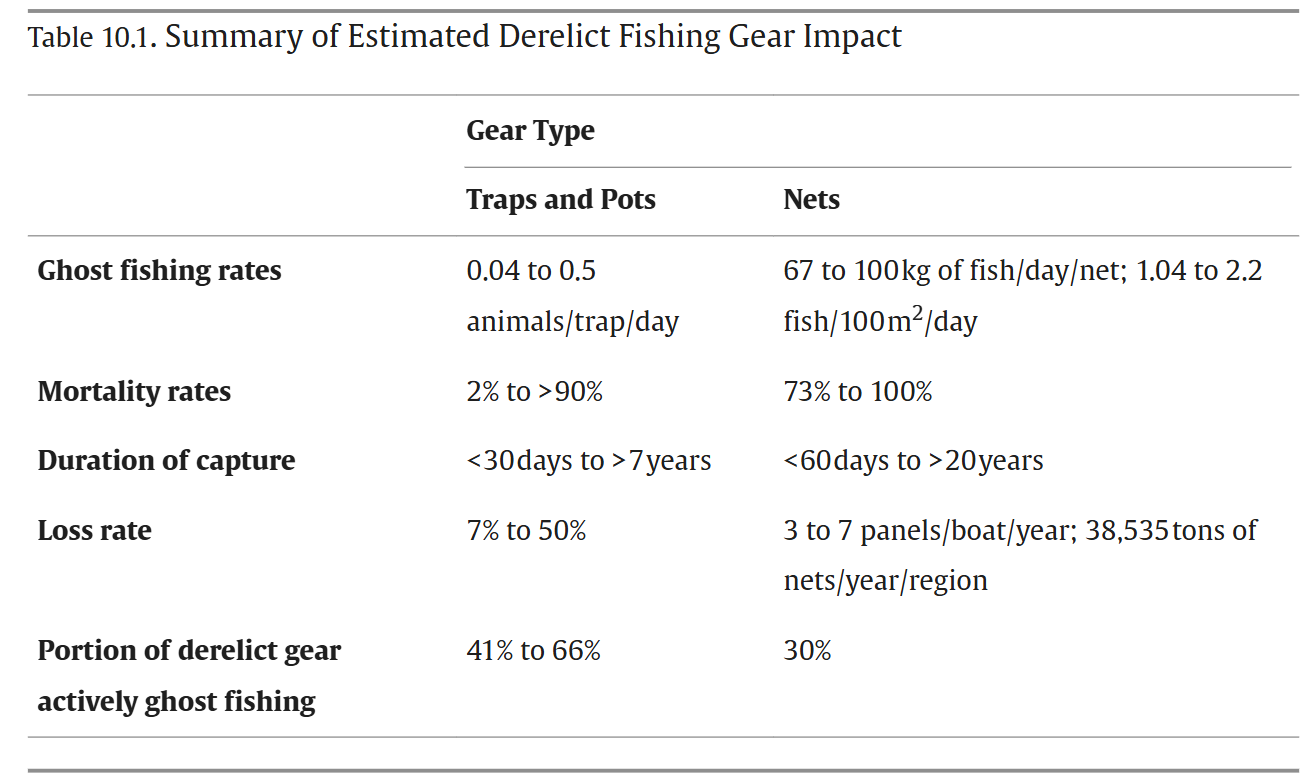
    Below is a comparison table between major types of fishing gears and their impacts regarding ghost fishing (Lively & Good, 2019) .

    Prevention & Mitigation

    Unfortunately, these DFG might not just be the consequences of abandonment of vandalism. Environmental factors such as storms, floods, or hurricanes can contribute as well (Lively & Good, 2019). Prevention is difficult to implement, but better gear management can help reduce the impacts.

    Around the world, World Wild Life joined hands with fishers, government agencies, and others to remove abandoned nets from the water. They increased establishments for gear collection and recycling programs. Better technology for tracking and recovery of gear are under development (World Wild Life). GPS and bottom mapping technology can identify obstructions that might result in accidental loss of gears. A cost-free solution is provided to fishermen to dispose of unusable fishing equipment (NOAA, 2011). Others suggest encouraging arts to monetize unused gears at proper disposal. The NOAA Marine Debris Program has collected more than 1,814,369.48 kilograms (4 million pounds) of gear from 56 locations across the United States. Everyone is working to recover the marine ecosystem.

    What Can YOU Do?

    Individuals cannot contribute much to the grand scale of technology and initializing these programs. However, every effort counts! Raising awareness is very important. Word should travel that everyone should try their best to minimize the garbage and gears that can make their way to the ocean freely. Otherwise, these beautiful creatures might go extinct. And before you know, the King Crabs will become protected species.

    References:

    Lively, J. A., & Good, T. P. (2019). Ghost fishing. World Seas: An Environmental Evaluation, 183–196. https://doi.org/10.1016/b978-0-12-805052-1.00010-3

    Matsuoka, T., Nakashima, T., & Nagasawa, N. (2005). A review of Ghost Fishing: Scientific Approaches to evaluation and solutions. Fisheries Science, 71(4), 691–702. https://doi.org/10.1111/j.1444-2906.2005.01019.x

    NOAA. (2005). Turtle entangled in marine debris (ghost net). Wikimedia Commons. Retrieved from https://en.wikipedia.org/wiki/File:Turtle_entangled_in_marine_debris_(ghost_net).jpg.

    NOAA. (2011, September 27). What is ghost fishing?. NOAA’s National Ocean Service. https://oceanservice.noaa.gov/facts/ghostfishing.html

    NOAA. (2019, February 24). What we know about “ghost fishing” | marine debris program. NOAA Marine Debris Program. https://marinedebris.noaa.gov/what-we-know-about-ghost-fishing-0

    World Wild Life. (n.d.). Ghost fishing gear: Ocean’s Silent killer | world wildlife fund. https://www.worldwildlife.org/resources/explainers/ghost-fishing-gear/

  • Children Response to Conflicting Information

    <Featuring image is drawn by the author>

    Ghost Tour Observation

    Recently, the STEMComm VIP team took part in the Atlanta Science Festival in March 2026. We presented the Ghost Tour, featuring scientists who have died because of their inventions, passion, or major founding respective to their science field. I was part of the Zenith hot air balloon tragedy team as a NPC ghost actor. If you are interested, you can look up the three main characters: engineer Joseph Crocé-Spinelli, navy officer Théodore Sivel, and Gaston Tissandier. Two of them died on their flight into the death zone (high altitude), while Gaston survived to tell the story with the price of being deaf. 

    Our team was assigned a big room. As guests come in from the door, they will be blocked by a big board sign of “death zone”, suggesting the death zone is ahead. The guide of the tour – Einstein, will lead them to the sign and leave them there. In the meantime, the NPC ghost will sneak in between the tour group, surprise the guests, and walk them past the sign, closer to the actual scene featuring the actors.

    <Picture is taken by the author>

    However, a small issue arised.There was a mix of reactions when the NPC ghost took the lead to walk over the Death Zone sign. Most people stayed still behind the sign, some hesitated to walk over, and very few actually followed the ghost.


    Mixed Behaviors to Conflicting Information

    Apparently, at first, the guide – Einstein, told the guests to not cross over the death zone. Then, the ghost NPC told them “follow me” as the ghost moved past the sign. Even with the actual dead scientists signaling and inviting the guests to come closer, it takes some time for them to actually move.

    • First information: Do not cross the death zone – Guide Einstein said
    • Second information: Follow me (crossing death zone) – NPC ghost moved
    • Third information: Come closer – Dead scientists in the death zone, with obvious hand signals to come closer

    There were different tour groups. The reactions are also mixed between these groups. Groups with more children tend to follow the NPC ghost at first, with young children being the first to move. In groups with more adults, the hesitation is very obvious. Even when children start walking over, they are stopped by the guardians. It takes the three actors’ effort to invite them over.


    How Children Reaction to Conflicting Sources

    Lili Ma and Patricia Ganea (2009) suggest that children often learn about the world through direct observation, but their knowledge can also be acquired through others’ testimony. This is validated as children often trust what they see, but they also recognize adults as trustworthy sources. Furthermore, some experiments suggest that children might accept false testimony that contradict their first-hand observation. This aligns with the classic Asch study where adults’ judgement was influenced by the social pressure and testimony of others, even though their visual perception suggests otherwise (Ma & Ganea, 2009). This explains why young children who were ready to walk over stopped along with their guardians. Parents are the more trustworthy source of information.

    In addition, the three studies done by Ma and Ganea (2009) confirms that children can outweigh one source of information more than another. This aligns with another study by Baer and others (2025), suggesting that children endorse confident informants over hesitant ones when faced with conflicting testimony. The intention of one ghost to walk over might not have been as clear compared to a group of familiar adults staying in place. On a side note, in the age of the Internet, even if the confident informants previously gave false testimony, it is unlikely they will lose credibility. This is true for both children and adults as they still follow Einstein the guide after the hot air balloon room (Guerrero et al., 2020). 

     Interestingly, studies also show that young children can accept both sources, even if there is a contradiction (Ma & Ganea, 2009). Over time, children learn to distinguish reliable sources over misleading testimony. This is crucial to their development of selective trust and skepticism. At one point, children can conclude new understanding of the situations based on contradiction sources. This might happen around the age of 8 (Baer et al., 2025). With the second piece of information contradicting the first (and their trustworthy informants), then the last information supporting the second, the young guests were able to resolve the tricky situation and take the lead to start the scene.


    Afterthought

    Adults tend to apply the situation in their thought process. Given it was a Ghost Tour, they might assume to not just listen to the wandering ghosts. In addition, did Einstein’s credibility as the guide play in his favor? Einstein was the original source of information for the guests.  Guests might assume the ghosts are just acting out the script. What would you do in their shoes?


    References:

    Baer, C., Engelmann, J. M., & Kidd, C. (2025). Children use the relative confidence of people with conflicting perspectives to form their own beliefs. Developmental Science, 28(4). https://doi.org/10.1111/desc.70027

    Guerrero, S., Sebastián-Enesco, C., Morales, I., Varea, E., & Enesco, I. (2020). (in)sensitivity to accuracy? children’s and adults’ decisions about who to trust: The teacher or the internet. Frontiers in Psychology, 11. https://doi.org/10.3389/fpsyg.2020.551131

    Ma, L., & Ganea, P. A. (2009). Dealing with conflicting information: Young Children’s reliance on what they see versus what they are told. Developmental Science, 13(1), 151–160. https://doi.org/10.1111/j.1467-7687.2009.00878.x 


  • Music Influence in Daily Life

    Have you ever heard that one’s emotions can be greatly influenced by music alone? Music can be used to manipulate the philosophy of a person from a young age. It can calm down or bring discomfort to an adult. Music is encoded into human traditions and cultures. 

    Patriotism in Culture

    It is known that since our ancestors’ time, education has been a fundamental part of the culture to nurture children into responsible and dependable adults. Borea’s area in the left hemisphere of the brain links to language and speech production. This is where music resides, hence music can evoke powerful emotions (Pianka, 2012). Professor Pianka (2012), an evolutionary ecologist, also criticized that music was exploited by leaders to arouse their people into wars, using national anthems to evoke patriotism and inflame tribal instincts. In fact, this does not only apply to soldiers, but also young children and working adults.

    In the book “Patriotism and Nationalism in Music Education”, many music education philosophers agree that music education is a medium of instilling patriotism in children (Hebert & Kertz-Welzel, 2016, p. 11). Take Taiwan for example, national identity is a sensitive issue that is strongly reflected in school curricula. The music curriculum is designed to promote students’ personal and national identities in the new Taiwan (Hebert & Kertz-Welzel, 2016, p. 67). In the past, corrupted politicians wanted to strengthen the relationship between citizens and their own country, which in turn would support their position in power. Fortunately, Hebert and Kertz-Welzel (2016, p. 40) noted that with the lesson from Germany, the time for music education as a means for nationalistic or patriotic education is over.

    In modern days, this situation occurs more in culture than politics. For example, Pianka (2012) suggests sports fans in opposing groups using their team’s theme song to elicit passion is a form of conflict influenced by music.

    Nature in Music

    Aside from childhood education, religion is part of many people’s lives, which feels incomplete without listening to the music and singing. Patrick Whelan, a Harvard Medical School lecturer, suggested that church music “puts everyone in the same emotional space” (Eck, 2024). 

    Whelan suspects this is due to evolutionary biology. Earliest nocturnal mammals had to rely on being hyperfocused and hyperattentive for survival, which likely adapted into live music today (Eck, 2024). The human brain can tag acoustic cues as familiar or unfamiliar. Church attendants have been listening to choir since their childhood, so indeed the music is familiar to them. Eck (2024) stated that “the valence of the music, which signals whether the music feels positive, negative, or somewhere in between, influences the autonomic nervous system (ANS)”, which can also be influenced by the familiarity of the music. This is the reason why a person can feel discomfort from listening to infamous or heavy metal music if they are growing up not familiar with the genre.

    Additionally, a study (Song et al., 2023) revealed that music familiar to nature sounds bring comfort, relaxation, and lower negative mood. The study suggests that despite most people now residing in urban areas, participants are more at rest with nature sounds than urban sounds. Song and others (2023) believe that the reason is due to how the ancestors have long been living with nature, while the accelerated industrialization and urbanization only occur in recent centuries. There’s a suggestion of inheritance involving music familiarity, though family environment can be a larger factor as Whelan suggests.

    Healing of the Brain

    Sometimes, music can be a cure. According to Eck (2024), there is growing evidence that “listening to Mozart’s Sonata for Two Pianos in D Major can reduce the frequency of seizures in some people with epilepsy”. Eck suggested that “by identifying the exact type of music able to provoke a particular cognitive, motor, or emotional response, there could be progress toward healing, improving, or compensating for disrupted brain function in various diseases.” However, further knowledge about this topic requires more research and may not provide concrete evidence in a few upcoming years. 

    Meanwhile, adults deal with a lot of stress nowadays. However, there is a lack of free mental healing resources. Relaxing music would be the best choice for most people. Interestingly, ASMR-triggering music is found to reduce stress equally as relaxing sounds like nature (Paszkiel et al., 2020). Visiting a natural environment is also a good option to relieve stress (Song et al., 2023). Since traveling is not a choice for busy people within cities, nature sounds (in addition to relaxing music) can easily be accessed through various platforms on the Internet.  


    References

    Eck, A. (2024, March). How music resonates in the brain. Harvard Medicine Magazine. https://magazine.hms.harvard.edu/articles/how-music-resonates-brain

    Hebert, D. G., & Kertz-Welzel, A. (2016). Patriotism and nationalism in music education. Routledge.

    Paszkiel, S., Dobrakowski, P., & Łysiak, A. (2020). The impact of different sounds on stress level in the context of EEG, cardiac measures and subjective stress level: A pilot study. Brain Sciences, 10(10), 728. https://doi.org/10.3390/brainsci10100728

    Pianka, E. R. (2012). Can Human Instincts Be Controlled?. Human instincts. http://www.zo.utexas.edu/courses/thoc/HumanInstincts.html

    picryl. (2017). Music melody musical note, music. picryl. Retrieved November 28, 2025, from https://picryl.com/media/music-melody-musical-note-music-93af15. Creative Commons CC0 1.0 Universal Public Domain Dedication license

    Song, I., Baek, K., Kim, C., & Song, C. (2023). Effects of nature sounds on the attention and physiological and psychological relaxation. Urban Forestry & Urban Greening, 86, 127987. https://doi.org/10.1016/j.ufug.2023.127987

  • Strange Insect Encounter: The Human Instinct

    Labor Day Encounter

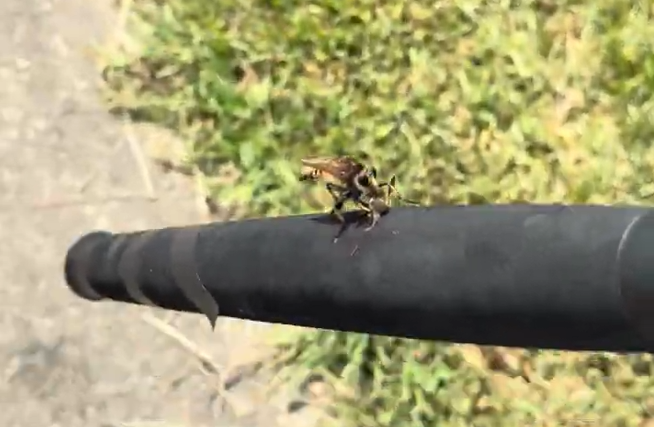
    On Labor Day this year, I visited West Point Dam, Georgia for a small family picnic. It’s supposedly a good spot for fishing, but I didn’t catch any. However, an uninvited guest took a liking to my fishing rod. It was a fellow Yellow Jacket, or so I thought!


    Figure 1. Encounter at West Point Dam, Georgia. Video by Diemmy Dang, 2025.

    From my survival instinct, half of me wanted to shoo the strange-looking guest away; The other half of me took over and let the guest take the free ride. Perhaps sensing my intense glare, the guest left after approximately fifteen minutes. I guessed it is a bee based on the obvious appearance traits: the black and yellow stripes. The surrounding withered flower fields also contribute to this thought. However, what is it to be exact? Surely, there are so many species of them. 

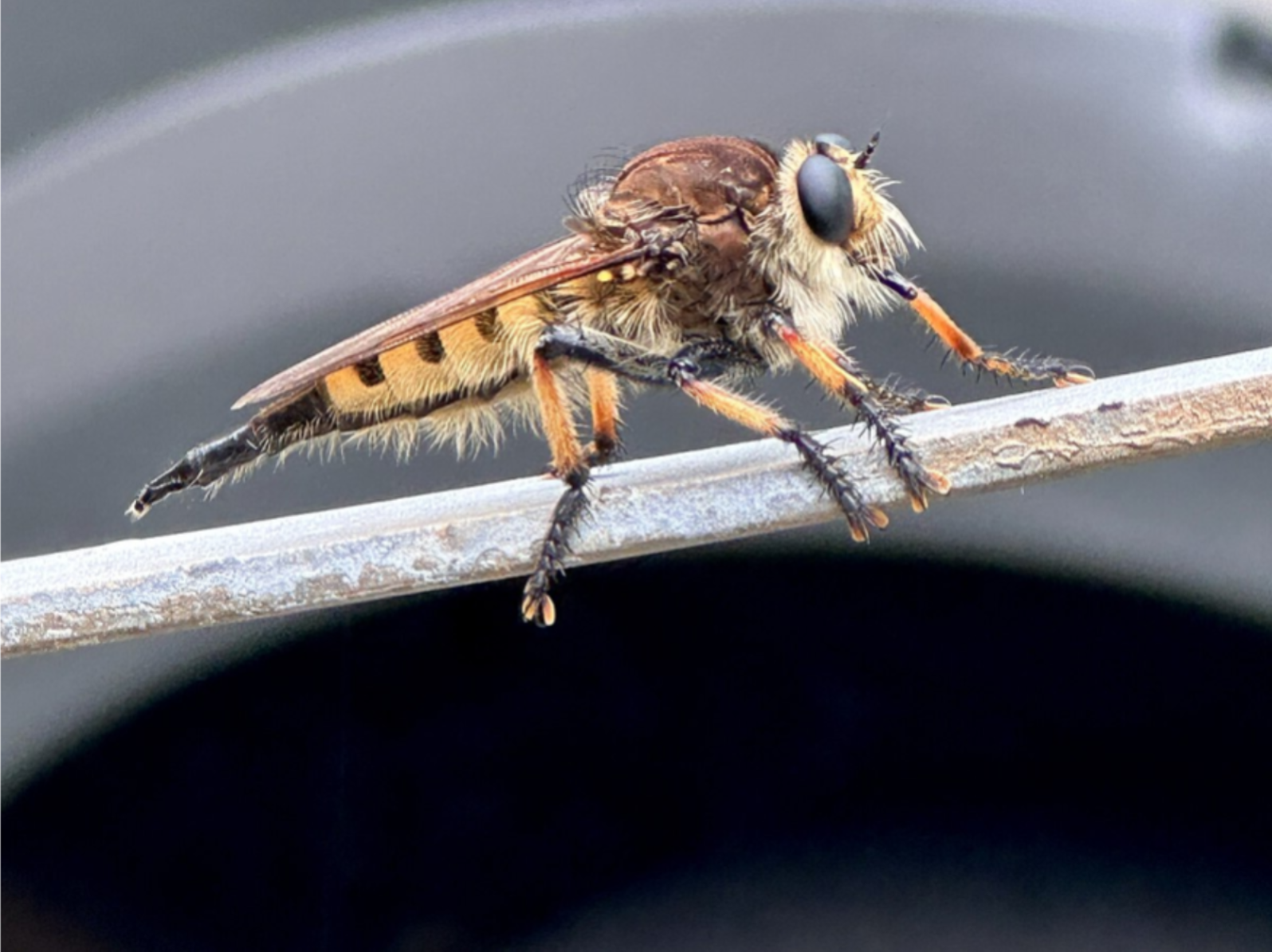
    Figure 2. Zoomed in Image of Encounter at West Point Dam, Georgia. Image by Diemmy Dang, 2025.

    A Small Investigation

    My best friend – Google, helped me get started on the investigation. I used the inefficient and brute-force way to search for “bee” and keep looking at the ones that strike the familiarity. The closest one I have gotten to is Hoverfly (flower fly). Hoverfly is a beneficial insect for ecosystems, pollinating plants and eating pests. As their round shapes suggested, Hoverfly are friendly and harmless to humans, and they are unable to sting. However, the guest never struck me as a friendly type.

    As the investigation continued, Kayla – a fellow member of STEMComm VIP team, introduced me to Google Lens. Surprisingly, it gave me a solid answer right away – Robber fly. To be more exact, the guest belongs to the species Promachus rufipes (red-footed cannibalfly).

    Figure 3. Flipped image horizontally from File:Promachus rufipes 314724260.jpg by Anne, 2023, Wikimedia Commons. CC0 1.0 Universal Public Domain Dedication.

    Despite the rhyme names with Hoverfly, Robber fly is an insect hunter. They are beneficial to the ecosystem by controlling pest populations, but they are also aggressive predators. Robber flies can cause painful bites if they feel threatened by humans. 

    As the fun investigation came to an end, I was left with curiosity. Why did I have conflicted reactions and emotions that day?

    The Negative Human Emotion

    A potential cause is that human instincts regarding insects have been passed down from ancestors. Fear of contamination, fear of being bitten, and fear of infestation can manifest into disgust as an emotional adaptation to help humans increase likelihood of survival (Jose, 2019). Small stings and bites can trigger an unknown allergy to a minority of people, threatening a good health body. 

    Growing up in the countryside, I was once chased by a group of wasps (?) when I was a child. Though the painful experience doesn’t last long in my memory, I have learned to avoid messing with bee kinds. Lockwood (2013) stated that “people consistently overestimate the likelihood that fear-relevant stimuli (e.g, an image of a spider) will be associated with a painful experience (e.g, an electric shock) compared to neutral stimuli” (p. 23). Humans survive by learning to avoid dangers. Survival of the fittest theory is still holding strongly.

    Surprisingly, appearances can also contribute to human’s negative emotions toward insects. In cartoons, dangerous wild animals are commonly represented as cute creatures. Unlike them, small and harmless insects are usually depicted as ugly, visually unappealing, and sometimes villainous (Jose, 2019). According to psychologists, fear can be triggered by visual cues: “the ugliness of antennae … the oddly proportioned eyes and bodies, … discomfort of hairiness and sliminess … the more divergent a creature is from the human form, the greater its capacity to evoke fear” (Lockwood, 2013, p. 23). Jose (2019) suggests this has something to do with rejection response, which is a mechanism to keep human safe. The presence of insects has been associated with the threat of sickness, and disgust seems to be an evolutionary response to disease’s prevention. This idea is tied back to the survival of fitness theory.

    The Positive Human Reaction

    So, was my decision of letting the guest stay purely due to fear and disgust?

    Despite the fear of an unknown insect, my original impression of the guest is a bee – an insect providing well known benefits. An experiment with different age groups, with the youngest in elementary school, and expert beekeepers found that all subgroups perceive bees as useful and worthy of conservation (Schönfelder & Bogner, 2017). Bee products and the importance of pollination for the ecosystem are remarked upon. Perhaps I was just letting a friendly insect take a break on Labor Day.

    Final thoughts

    Human instincts can be contributed by many factors. Although it’s not fair to fear insects differently from other wild animals, it’s important to keep oneself safe and healthy. Insect allergy can be severe, so if anyone is planning a trip to somewhere with a potential of bee family mass attack, wearing white or light-colored clothing might reduce the risk (Greene & Breisch, 2005).

    As I conclude this article, it happens to be Thanksgiving as well. Happy holidays and stay safe out there!


    References

    Anne. (2023). File:Promachus rufipes 314724260.jpg. [Photograph] Wikimedia Commons. Wikimedia Foundation. Retrieved November 27, 2025, from https://commons.wikimedia.org/wiki/File:Promachus_rufipes_314724260.jpg.

    Greene, A., & Breisch, N. L. (2005). Avoidance of bee and wasp stings: An entomological perspective. Current Opinion in Allergy &amp; Clinical Immunology, 5(4), 337–341. https://doi.org/10.1097/01.all.0000173781.58154.53

    Jose, V. (2019). Why are humans so afraid of insects. International Journal of Trend in Scientific Research and Development, 3(2), 1027–1029. https://doi.org/10.31142/ijtsrd21564

    Lockwood, J. A. (2013). Chapter 2: Evolutionary Psychology: Survival of the Scaredest. In The infested mind: Why humans fear, loathe, and Love insects (pp. 20–34). essay, Oxford University Press.

    Schönfelder, M. L., & Bogner, F. X. (2017). Individual perception of bees: Between perceived danger and willingness to protect. PLOS ONE, 12(6). https://doi.org/10.1371/journal.pone.0180168

  • Misophonia: The Unofficial Common Neurobehavioral Disorder

    For sure most people have already experienced some ‘disliking’ sounds before. For example, the emergency sirens, high-pitched yellings, public space noises, etc. What’s about daily life sounds? From the snoring, sniffling, heavy breathing, a few people might be triggered into intense negative emotion such as rage or disgust (Salamon, 2023). This is a sign of misophonia.

    What is Misophonia? 

    According to Kumar et al (2021), “misophonia is a common disorder characterized by the experience of strong negative emotions of anger and anxiety in response to certain everyday sounds” (para. 1). Most of the known triggers for misophonia are human-orofacial actions such as eating and chewing, including images and silent videos (Kumar et al, 2021). 

    Patients and causes

    The cause of misophonia remains unknown, but an experiment with 15 members of the same family suggests a possible hereditary factor (Sanchez & Silva 2017). These 15 Caucasians with misophonia span across 3 generations, with more than half being women. The younger generations reported to have misophonia earlier than their parents, with the youngest starting at age 2. Surprisingly, 80% of the women with misophonia have all of their children also diagnosed with misophonia, suggesting this is a genetic disorder. According to a study published in 2023 by journal PLOS One, nearly one out of five adults experience similar conditions, with women responding more intensely than men (Salamon, 2023).

    A separate research focusing more on severe cases of misophonia suggest that the disorder involves brain regions, including the mirror neuron system, orofacial motor area, and both auditory and visual cortex. These areas seem to respond to sensory stimulation associated with the production of trigger sounds, potentially causing the patients to unknowingly mirror the perceived action (Kumar et al, 2021). The study further suggests that extreme negative reactions occur in misophonia possibly due to a sense of loss of control, invasion of personal space, or interference with current goals and actions. Kumar et al (2021) also highlight that automatic mimicry of eating behavior is commonly learned within families since young age, which may explain why a family member usually becomes the initial source of sound triggers developing misophonia. This finding is consistent with Sanchez and Silva’s study (2017), where younger generations tend to experience misophonia earlier than their parents – suggesting environmental factors contribute to the disorder.

    According to Cleveland Clinic, a worldwide nonprofit academic medical center and healthcare provider, about 50%-80% of reported misophonia patients are women (Cleveland Clinic, n.d.) The information page suggests brain structure differences, family history or genetics are causes of the disorder. 

    Cure and Prevention

    Even though most people reported that misophonia has zero to minimal effect on their life (Sanchez & Silva 2017), many might encounter daily life struggles as residents in busy areas. There are people who cannot eat out at restaurants due to the eating noises, feeling uncomfortable in dark spaces which enhance hearing functions like in movie theater, etc – in some cases, misophonia can become socially impairing (Salamon, 2023). For the few severe situations, body reactions can include blood pressure increases, chest pressure or tightness, goosebumps, heart rate increases, or sweating (Cleveland Clinic, n.d.). As misophonia is a lifelong condition, it could worsen or introduce chronic diseases.

    Unfortunately, as the exact sources and causes of misophonia remain uncertain, there is no exact cure for it and therefore it is not officially recognized as a medical condition (Cleveland Clinic, n.d.). Many patients are able to manage the condition using sound aversion methods like wearing earplugs or headphones, listening to white noise, practicing deep breath or muscle relaxation (Salamon, 2023). 

    It’s very important to not criticize behavioral symptoms (Salamon, 2023) as chances are that they are experiencing some medical conditions. Much of the older generation lived with misophonia all their life without getting treatment. Sadly, they resist going to doctors because of the stigma surrounding mental disorders. Although misophonia is still an unofficial disorder, many experts recognize the patterns. If you ever encounter someone potentially experiencing misophonia and thinking they have gone mad, it would be nice to tell them about the disorder, and suggest ways to manage the condition in daily life.  

    References

    • Kumar, S., Dheerendra, P., Erfanian, M., Benzaquén, E., Sedley, W., Gander, P. E., Lad, M., Bamiou, D. E., & Griffiths, T. D. (2021). The motor basis for Misophonia. The Journal of Neuroscience, 41(26), 5762–5770. https://doi.org/10.1523/jneurosci.0261-21.2021 
    • Misophonia: What it is, triggers, symptoms & treatment. Cleveland Clinic. (n.d.). https://my.clevelandclinic.org/health/diseases/24460-misophonia
    • Salamon, M. (2023, September 1). When everyday noises upset you. Harvard Health. https://www.health.harvard.edu/diseases-and-conditions/when-everyday-noises-upset-you 
    • Sanchez, T. G., & Silva, F. E. (2018). Familial misophonia or selective sound sensitivity syndrome : Evidence for autosomal dominant inheritance? Brazilian Journal of Otorhinolaryngology, 84(5), 553–559. https://doi.org/10.1016/j.bjorl.2017.06.014 
  • How to Publish a HTML and JavaScript Game on GitHub

    Recently, I took part in the Atlanta Science Festival 2025 STEM edition. The STEMcomm VIP team organized a version of Scavenger Hunt, and I was part of the CyberQuest Team. I was responsible for the Scavenger Hunt game, which needed an online interactive site. I figure that GitHub Page is a good free platform to do this. However, GitHub Page has had quite a few updates in recent years and the guide sites have not updated accordingly. I spent quite some time trying to figure it out, and here I am wanting to share how I did it.

    In the past week I published an article about how to beat the popular 2048 game. You can take a look if you are interested!

    https://2026.chargedmag.org/2025/04/how-to-become-an-expert-at-2048/

    So, in this example, we are publishing a variant of 2048. Credit the codes to

    https://www.geeksforgeeks.org/design-a-2048-game-in-javascript/

    1. Install a code editor like Visual Studio Code. If you already have one then just use yours. Choose the best one for your Operating Systems (OS). I’m using Windows for this tutorial.

    https://code.visualstudio.com/

    2. Create a GitHub account and make a public repository. You can choose or use alternative platforms that are able to host an HTML site.

    https://github.com/

    https://github.com/ddang37/ChargedMagazineGame2

    3. Clone this repository onto your local computer. There are alternative ways to do it. I recommend using GitHub Desktop which makes things easier. Follow the corresponding guide below if you are new to GitHub.

    https://docs.github.com/en/repositories/creating-and-managing-repositories/cloning-a-repository

    If you use GitHub Desktop:

    https://docs.github.com/en/desktop/adding-and-cloning-repositories/cloning-a-repository-from-github-to-github-desktop

    4. Open the local repository folder in your Code Editor.

    Create a HTML, CSS, and JavaScript file. Let’s name them game.html, style.css, and dynamic.js. You can change the names and have additional files for more complicated games.

    5. Write the codes into the files. HTML with elements, CSS with stylings, and JavaScript with animation and interaction. 

    For starters, you can search online for sample code and modify from there (make sure to credit the sources!). There are plenty of variants and implementations. You can also create your own!

    You can also fork from the original popular 2048 code:

    https://github.com/gabrielecirulli/2048

    The codes we are using is a much simpler implementation, but still difficult:

    https://www.geeksforgeeks.org/design-a-2048-game-in-javascript/

    6. If your codes are not original from scratch, make sure your game.html file is referring to the correct style.css and dynamic.js. 

    7. Save the codes. Double click the HTML file from file explorer, it should open a chrome site of your HTML game.

    8. When you are satisfied with the result, commit your changes to the online repository. You can do this multiple times, even after you publish the site.

    https://github.com/git-guides/git-commit

    If you use GitHub Desktop:

    https://docs.github.com/en/desktop/making-changes-in-a-branch/committing-and-reviewing-changes-to-your-project-in-github-desktop

    9. When you are ready to publish your code, go to your repository online. Go to Setting > Pages > Build and deployment > Branch, change None to main. An option for the folder will appear, just keep the default. Click Save.

    10. After a few minutes the page will go live. It will show up at the top under GitHub Pages.

    11. Click on the URL or Visit site. Add the extension of the HTML file name and the game will show up!

    https://ddang37.github.io/ChargedMagazineGame2/game.html

    For this 2048, the game do not autogenerate a tile of 2 or 4 upon making a move, but rather based on time. The random generated tiles can be 2, 4, 8, or higher based on the current tiles on the board. This make the game much harder to win.

    Fun fact: If you left this game alone, except for sliding, the game could play by itself!!!

    [iframe src="https://ddang37.github.io/ChargedMagazineGame2/game.html" width="1000" height="600" ]

    Note: The website might take up hours to update if you commit new changes after publication. If CSS stylings are not working like it did locally, double check if there’s any Chrome extension blocking it. If the website takes forever to update, try making the repository private and then public again. Refer to GitHub information sites if otherwise.

    https://docs.github.com/en/pages/getting-started-with-github-pages/github-pages-limits

    References:

  • How to become an expert at 2048!

    Have you ever heard of 2048? If you memorize the powers of 2, then you would know this is simply 2 to the power of 11. However, that’s not how most people react. My first impression was “What’s with this random number? A satisfying number with even digits?” Soon, I learned it’s a game. Not long later, I got addicted to beating it.

    About 2048

    2048 was released back in 2014. It is a single-player sliding tile puzzle video game written by Italian web developer Gabriele Cirulli over the weekends (Wikipedia). 2048 has an easy concept with great animation and a goal where players can beat, and even surpass. It soon became a global hit! The first time I heard about the game was a decade ago when I was in Vietnam. I fell in love with it. Thanks to that, I actually memorized the powers of 2 before I actually learned about the concept of exponents in school! 2048 is a great educational game by all means.

    In an interview with Hey.gg, 19-year old Gabriele revealed that 2048 was influenced by Saming’s 1024. The gameplay is similar except that 2048 has initial tiles of 2 and 4, while 1024 only has 2s. If we dig in further, the 1024 game was influenced by Threes, a game with the goal of sums or multiples of 3, starting with 1 and 2 tiles. Threes was also influenced by Drop7, which in turn was influenced by… (Wikipedia) Let’s stop here since it could go forever. It’s amazing how game development can be about creativity and improving your childhood games.

    2048 Gameplay

    The game has a simple and clean design with 4 x 4 tile board. Initially, the player is given two randomly placed tiles. There is a 90% chance of a  2 and a 10% of a 4. In total there are 3 combinations; (2, 2), (2, 4), or (4, 4). Players can use the four arrow keys to slide the tiles in the corresponding direction. When a tile collides with an identical tile, they merge and become a new tile with a higher power of 2. One single move can merge many tiles, but tiles can only merge once in a move. This can be confusing, so let’s look at an example. 

    If there are 4 tiles of number 2 at the bottom, and the player presses <-, then there are 2 tiles of 4 on the bottom rows to the left, and an additional new tile can be anywhere. In order to get a new tile of 8, another move needs to be made. The goal is to reach 2048, but players can continue if they want to beat the game. The maximal tile is 2^17 = 131072 if the last new tile is 4 (Goel, 2017). I actually had the honor to see someone achieve this a decade ago! Now it’s time for the math behind the game!

    Mathematical Induction

    Mathematical induction is a method to prove a statement or formula is true for all natural numbers or integers. It first proves this is true for the lower bound, i.e the base case number. Then it proves that if it is true for arbitrary numbers k where k >= base case, then it also is true for any k + 1. The latter is called an inductive step. According to Hoang Le, a Vietnamese Mathematics enthusiast, we can use mathematical induction to prove why 2048 always and only has tiles of power of 2.

    Problem: In 2048, the new tiles are either 2 or 4, and two identical tiles can sum and merge into one new tile. Using mathematical induction, prove that 2048 can only have tiles of power of 2.

    Tiles are either randomly generated or merged. The randomly generated tiles are the base cases.

    Base case 1: the new tile 2 = 2^1.
    Base case 2: the new tile 4 = 2^2.
    The base cases hold true.

    Induction: Assume that at any moment there are tiles in the form of 2^k, where integer k >= 1 (because smallest tile is 2), then after the next move the new tiles are still power of 2.

    There are 2 cases.
    1. There is no merge, then the board still has the existing tiles with power k and the new tile 2 = 2^1 or 4 = 2^1. The new board state still only has power of 2 tiles.
    2. There are merges, then for each tile 2^k that could merge, 
    2^k + 2^k = 2 * (2^k) = 2^(k+1). 
    Some of the existing tiles merge into a new tile with a higher power of 2, and the newly generated tiles of 2 or 4 are also powers of 2.

    By mathematical induction, when 2048’s randomly generated tiles are 2 and/or 4, and tiles can only merge if they are identical as a sum, then the board can only contain tiles that are powers of 2.

    Markov Chain and Markov Decision Processes

    Overleaf is a London-based startup that builds collaborative authoring tools for scientists, including support for the LaTeX language that allow users to present mathematical symbols. Today we are not talking about Overlead, but rather John Lees-Miller, a Cofounder and CTO at Overleaf. John studied 2048 and published an article series about how Markov Chain and Markov Decision Processes can be used to understand the game. 

    Based on the concepts of Markov Chain, through complex mathematical samplings and calculation, John concludes that the average number of moves to win the game is 939. This aligns with Bhargavi Goel’s, a student from Delhi Public School Vasant Kunj, India, conclusion about the move range to win the game [519, 1032]. The bounds are for extreme lucky cases with all tiles of 4 or extreme unlucky with just tiles of 2 (Goel, 2017). However, since the game also involves human’s decisions when facing the probabilities and random location of the tiles, Markov Chain is a better approximation. In addition, John works with Markov Decision Processes to find the optimal way to play 2048.

    He divided the game into three dynamic concepts: states, actions, and transition probabilities (Lees-Miller, 2018). States refer to the current tiles and their positions. Actions are named after the 4 choices of directions. There are different probabilities of getting 2 or 4 at different positions, hence transition probabilities.

    Another three concepts are rewards, values, and policies which are used to understand a player’s goal and how to achieve that goal (Lees-Miller, 2018). Rewards refer to the goal of achieving the state that has a 2048 tile. At each state, there is a value assigned to represent how close the current tile board is to reaching 2048. In addition, to win the game, the player needs to play optimally, in which John called the set of optimal states the optimal policy.

    Below is the image of John’s formula and the states the computer generated to get to the losing or winning state.

    Please refer to John’s article series for more details if you are interested about what these symbols stand for and how to use them.

    After various chains of states with 2×2 and 3×3 boards, John figures that in order to arrive at the winning state, the optimal way is to minimize the direction choices to 3, so that the tiles are ordered and do not go all over the place. This will end up looking like a snake filling the tile board.

    Topology for optimal strategy

    Not only John, other 2048 enthusiasts also agree to some degree. In order to merge tiles as soon as they are identical, the tiles need to be adjacent before the merge move. If there is a sequence of merging continuously, like 64, 32, 16, 4, 2, followed by a new tile of 2, the biggest tiles after merging (multiple turns) would be 128. In order to minimize the moves, they need to be adjacent in order from largest to smallest. Hoang says that there are alternative paths where the head can be anywhere as long as the tiles are ordered (Le, 2014). Bhargavi concludes the optimal path is a snake line through the tiles with the largest tile at the corner and the next largest adjacent to it, continuing to all tiles (Goel, 2017). Hence, the optimal strategy is to have the largest at the corner and order from largest to smallest tiles in the snake-like line. This can only be done by playing with three directional moves (unless you are very unlucky). This is actually the only way to achieve 131072! 

    https://www.youtube.com/watch?v=MDkZkweB5lM&list=LL&index=1

    AI attempts at 2048

    In 2019, Stanford University’s students Yun Nie, Wenqi Hou, and Yicheng An attempted Machine Learning with 2048. They program an AI to play 2048 using different advanced approaches, and record the scores of 100 trials for each approach. The difference between average and highest scores was significiant. They conclude at the end that the randomness of 2 and 4 make it hard for AI to beat the game.

    Afterword

    At first 2048 looks like a simple game, but once you get to know it from an academic perspective, it’s pretty complicated. Do not feel bad if you find the game hard to win. You see, even AI could not beat the game easily. If you’ve never played the game — give it a try — I promise you will like it (and become addicted to it). What are the chances that you come across this article? Here is your chance to apply what you learned and show off to your friends how to reach 131072!

    https://play2048.co/

    References