Author: Dhruv Kulkarni

  • What’s in a ‘species’? Discussing the Colossal Dire Wolf

    April 2025. Did Colossal bring back the dire wolf?

    Short answer, not really.

    The long answer is a bit more complicated and goes into what ‘species’ actually means.

    Earlier in April, the biotech company Colossal put out a press release announcing the first de-extinction. They’ve genetically engineered a dire wolf out of extinction—and now, for the first time in 10,000 years, they’re back in their natural habitat (or so Colossal says).

    De-extinction is the process of bringing back extinct species, or modern-day analogs to extinct species. This can be done through cloning DNA from preserved specimens or by gene editing their closest related surviving species to make them resemble their extinct kin. While this used to be an unlikely science-fiction dream, the development of CRISPR-Cas9 and other gene editing techniques has made it a possibility.

    Colossal says their team used DNA sourced from a 13,000 year old tooth & 72,000 year old skull to analyze the dire wolf’s genome. They used this as the basis for their edits, which they carried out on three gray wolf embryos.

    What is a species?

    If you’ve taken a biology class, you’ve probably heard the term “species” tossed around before. The conventional definition of species is a group of organisms in which two individuals can reproduce & create fertile offspring. It’s generally a good rule of thumb definition, but there’s a lot of edge cases where the topic becomes muddy.

    What happens when you look at critters that only reproduce asexually, like bacteria? What about cases where two species hybridize, and remain fertile?

    These outlier cases have led some scientists to propose alternate definitions for species. Colossal’s Chief Science Officer (CSO) Beth Shapiro said in an interview with ABC:

    “I think that the best definition of a species is if it looks like that species, if it is acting like that species, if it’s filling the role of that species then you’ve done it.”

    This definition of species depends on its phenotype, behavior, and niche. A phenotype is a species’ physical expression of its genes. For instance, your eye color is a phenotype and is the observed effect of the genes behind your eye color. Shapiro said that their analysis of ancient dire wolf DNA suggested that they had light fur, which is why Colossal edited their gray wolf skins to be an eye-catching white. But instead of editing the pigment genes actually responsible for fur color, the team instead disabled two genes whose absence in dogs & other canids is known to cause a white coat. Colossal avoided the actual edits because they were linked to increased risks of deafness, blindness, and albinism—traits that the team didn’t want to take chances on.

    What about behavior? Does the dire wolf behave like a real dire wolf? Well, they’ve been extinct for thousands of years, and we lack any actual evidence as to their behavior, so we can’t actually test that point.

    What about their niche? A niche refers to the ecological role a species carries in its environment. For example, owls occupy the niche of eating small animals such as mice in woodland areas. The dire wolf was a carnivore that likely scavenged & hunted large megafauna. It was a species adapted for life in Pleistocene, and part of why it went extinct is thought to have been the extinction of its typical prey. If a dire wolf was to be de-extincted & rewilded today, it would be in unfamiliar territory—there are no more megaherbivores. Additionally, the three wolves Colossal has bred are living in a fenced-off lot and aren’t actively contributing to their environment.

    Following Shapiro’s definition of a species, Colossal’s dire wolf checks the phenotype box but doesn’t meet the behavior/niche ones. Is that enough to consider it a species?

    At the end of the day, the idea of what a species is is complicated. Ambiguity & argument around definitions like this can hold back science. This linguistic debate is no trifling matter—it can impact real world legislation and policy! For example, as soon as the news of Colossal’s ‘de-extinction’ broke, the Secretary of the Interior Doug Burgum tweeted out a statement suggesting that now that de-extinction technology is viable, the Endangered Species List is on the chopping block. De-extinction might be used to devalue the importance of conservation, instead shifting the mindset of preservation to one of “we can just bring them back!”

    If you look at the news, you’ll notice a lot of the reporting around the Dire Wolf story focuses on the miracle of “listening to the howls of a dire wolf pup brought back from extinction for 10,000 years.” By focusing on the info that brings the best headline, science can sometimes be shifted out of focus.

    Whenever new technologies come out, it’s important to approach them with a critical mind. What do you think defines a species? Do you think Colossal has revived the dire wolf?

    Works Cited

    https://www.technologyreview.com/2025/04/08/1114371/game-of-clones-colossals-new-wolves-are-cute-but-are-they-dire/

    https://abcnews.go.com/US/dire-wolf-revived-biotech-companys-de-extinction-process/story?id=120558562

    https://evolution.berkeley.edu/evolution-101/speciation/defining-a-species/

    https://x.com/SecretaryBurgum/status/1909345951069651032

    Picture credit Colossal

  • Friendly Fires

    As climate change gets worse, more and more reports of disastrous forest fires have been hitting the news. But not all fires in the woods are bad—some of them can actually be instrumental in keeping an ecosystem healthy!

    Fire ecology is the study of how wildfire interacts with the environment. The field acknowledges the idea that fire is a natural part of the ecosystem and promotes change. It can clear away leaf litter and plants to provide nutrients and space for new growth.

    One of the best and most well documented examples of a fire-dependent species is the longleaf pine. Once covering over 92 million acres across the US, heavy logging had reduced it to just 3% of its natural range by 1992. The pine grows fast, thin, and tall, and has evolved to rely on fire to give it a start.

    longleaf pine | Roads End Naturalist
    Young longleaf pines burned in a fire

    In order for its seeds to germinate, the tree relies on starting on a forest floor free of any leaf litter. After the seed germinates, it grows a into a dense cluster of pine needles, low to the forest floor. These needles help provide fire resistance to the plant, protecting its bud from any fires. Its bud grows rapidly, allowing it to quickly grow above typical flame heights.

    Fire enables its growth by clearing the forest of competition from hardwoods and other pines. It maintains conditions best suited for longleaf growth and recycles nutrients into the soil. Fire also allows helps clear out insects and pests that can impede plant growth.

    Longleaf pines aren’t fireproof—they can still burn in its early stages of growth. But they are incredibly fire resilient. Mature longleaf pines have thick, plated sheets of bark that protect the trunk from fire. The canopy is usually high above the forest floor, enabling it to avoid fire altogether.

    Nowadays, the US Forest Service encourages and carries out controlled burns to ensure our remaining longleaf forests remain healthy. But this wasn’t always the case. When America was being colonized, early settlers and loggers didn’t know about the role of fire in longleaf ecosystems, and ignored indigenous knowledge that touted its benefits. Fire prevention became the forestry ethic to live by, because it felt paradoxic to burn the forest on purpose to keep it healthy. But as soon as they began preventing fires, they realized that naturally occurring forest fires became more disastrous.

    Because there weren’t frequent, little fires clearing out the forest, the fuel load, or flammable content, of the forest floor would keep growing. When it hit critical mass and finally caught fire, the fires would be massive and even harder to control. A lack of fires also led to a lower biodiversity. The fire habits of longleaf ecosystems leads to one of the highest species-per-acre densities—it’s been known to reach 40 species in a single square meter! Red-cockaded woodpeckers, indigo snakes, Bachman’s sparrow, flatwoods salamanders, sandhill lilies, and Sherman’s fox squirrel are just a few species that rely on longleaf ecosystems, which wouldn’t be possible without fire.

    To see a really cool visual of a longleaf pine stand’s growth over a year, check out this story map created by the Longleaf Alliance.

    Works Cited

    https://www.fireinthepines.org/learn/the-longleaf-ecosystem/

    https://longleafalliance.org/what-is-longleaf/restoration-management/prescribed-fire/

    https://www.nclongleaf.org/burningLongleaf.html

    https://www.nature.org/en-us/about-us/where-we-work/united-states/north-carolina/stories-in-north-carolina/north-carolina-role-of-fire-in-longleaf-pine-forests/

    https://bittersoutherner.com/feature/2024/burning-the-forest-for-the-trees-longleaf-pine-controlled-burn-janisse-ray

    https://www.nps.gov/articles/learning-about-fire-ecology-basics.htm

    https://longleafalliance.org/what-is-longleaf/the-ecosystem/built-by-fire/

  • Origami & Bio-inspired Design

    You’ve probably seen pictures of origami before, or even folded some yourself! Origami is an ancient art form that originated in China in the 2nd century AD. It made its way to Japan around the 6th century, where it became an art for both recreation & decorating shrines. In the centuries since, it’s evolved into a complicated craft that produces beautiful art from a very simple medium—a single sheet of square paper. What you might not realize, however, is how closely origami is linked with science and math.

    The Mathematical Basis of Origami

    Whenever you fold a piece of paper, you’re performing an action that’s incredibly mathematical. The rules of geometry govern origami, and you can describe all possible folds in six axioms. These axioms tell you what kinds of geometric constructions & proofs are possible with origami and can be used to determine if a set of folds is even physically possible. If you want to learn more about these axioms, check out this webpage by origamist Robert J. Lang!

    Bio-inspired design is an interdisciplinary approach to design that takes inspiration from nature to design new technologies. You can combine the mathematical principles of origami with bio-inspired design to create novel robot inventions. Today, we’ll go through a few examples that span a wide spectrum of species!

    Worms, Snakes, and Other Slithery Ones

    Engineers are currently trying to develop better rescue robots that can navigate complex terrain. Worms, snakes, and other slithering & slinking creatures cross crazy (relative to them) terrain on a day-to-day basis, and are a great source of inspiration for scientists.

    Some robotics labs have taken inspiration from the movements of snakes, and have created robot origami snakes that slither around and replicate the moving patterns of their natural counterparts. These multi-segment robot prototypes have a versatile range of movement.

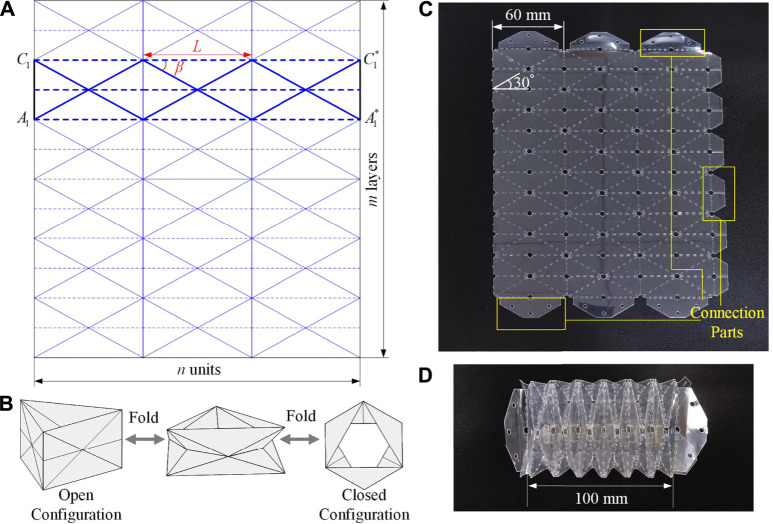
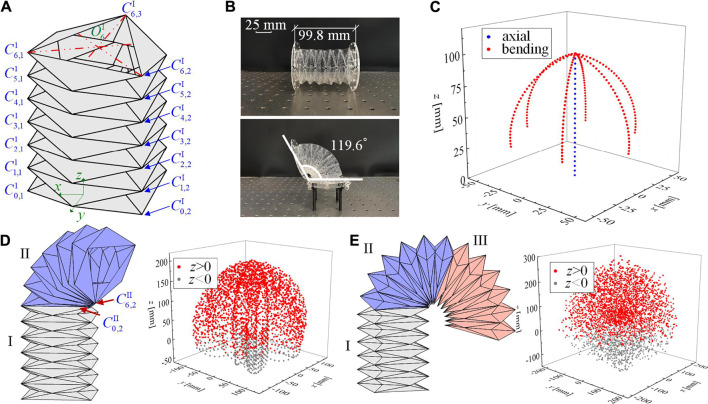
    Other labs have also mimicked the slinking movement of worms! Each of the segments in these worm-bots is made up of Yoshimura-Ori folds. You can see the crease pattern below in (A) of figure 1. The Yoshimura-Ori fold is a series of repeating triangles that can be collapsed into a cylindrical structure. They can be folded into an “open” or “closed” configuration which determines how compressed the unit is. A sequence of these folds is highly compressible & deformable while still maintaining its rigidity. It allows for a wide range of motion, which you can see in figure 2 of the movement of an earthworm inspired robot.

    Creaese diagram for yoshimura-ori folds, with diagrams of it expanded/contracted.
    Figure 1. Crease pattern of yoshimura-ori earthworm robot
    sequence of diagrams and photos showing the degree of motion of the worm robot
    Figure 2. Range of motion of yoshimura-ori folds

    The Yoshimura-ori structure allows the robot to mimic both the crawling motion that earthworms take as well as sharp directional turns. This technique holds a lot of promise for the future of all-terrain robots!

    Jellyfish & Aquatic Robots

    The land isn’t the only place origami is impacting robotics. The undulating motions that jellyfish swim with are both pretty and inspire researchers to develop new modes of underwater movement.

    Jellyfish are a type of organism called a medusa, which means that their body is umbrella shaped. Medusae are recognized to be the earliest multicellular organisms to have evolved muscular swimming, and while jellyfish generally float along ocean currents wherever they might go, they can use their hydrostatic skeleton to control vertical movement in a pinch. Prolate (long) medusae use jet propulsion to rapidly accelerate and avoid predators.

    They do this by contracting a water pouch in their bodies. The water expelled propels them in the opposite direction. They then expand their pouch and fill it with water again, ready to repeat for another burst of movement.

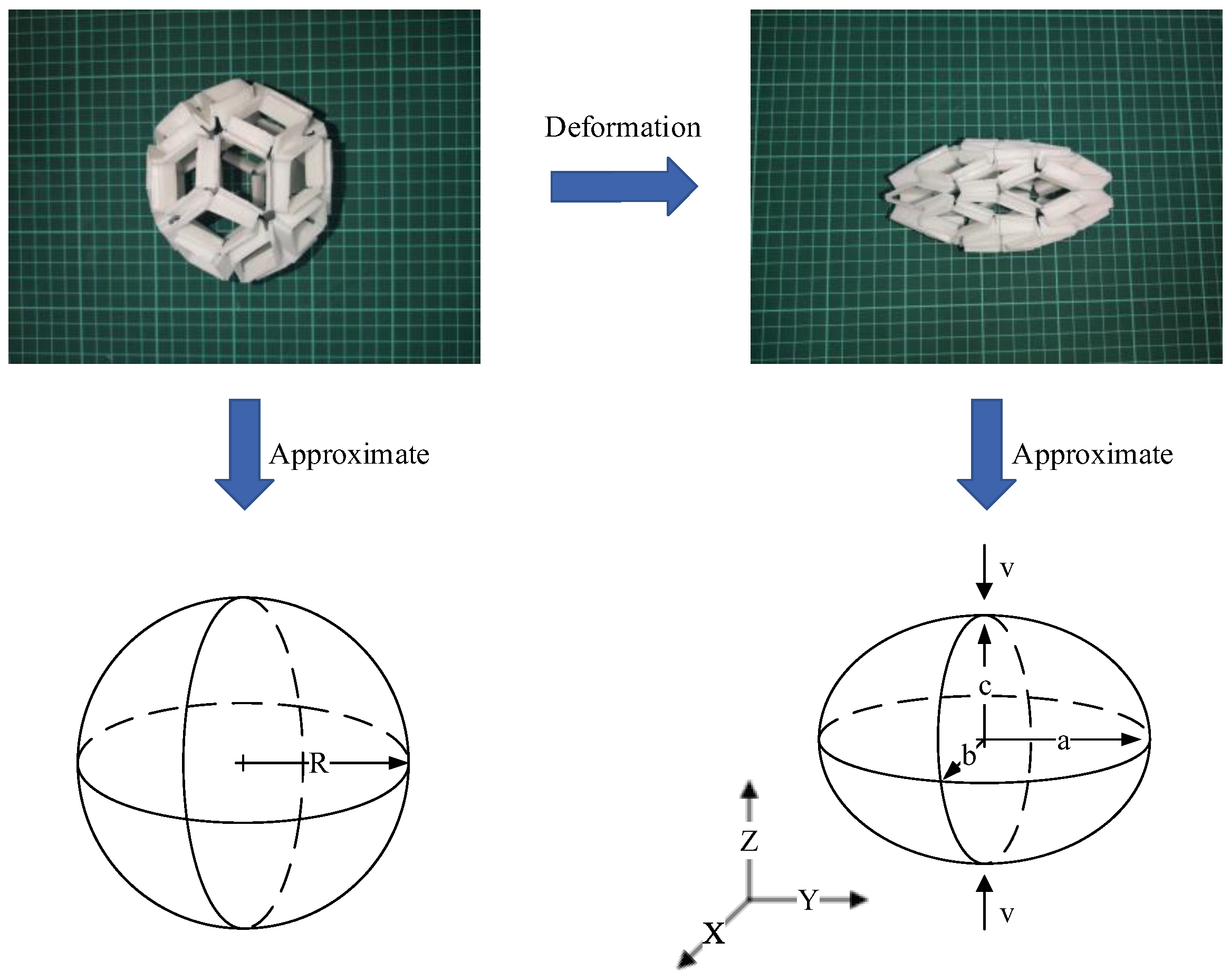
    Researchers are attempting to mimic this motion by combining soft-body robotics and origami engineering. The idea is that by creating a flexible origami polyhedral (a flexiball) they can motorize it in the same way medusae use jet propulsion underwater. The resulting flexiball they went with is known as a rhombic triacontahedron, and has 30 faces.

    Below is a picture of their 3D printed flexiball and how it changes shape after contraction.

    a before and after image of a 3d printed flexible triacontahedron being deformed
    Figure 3. Rhombic triacontahedtron flexiball

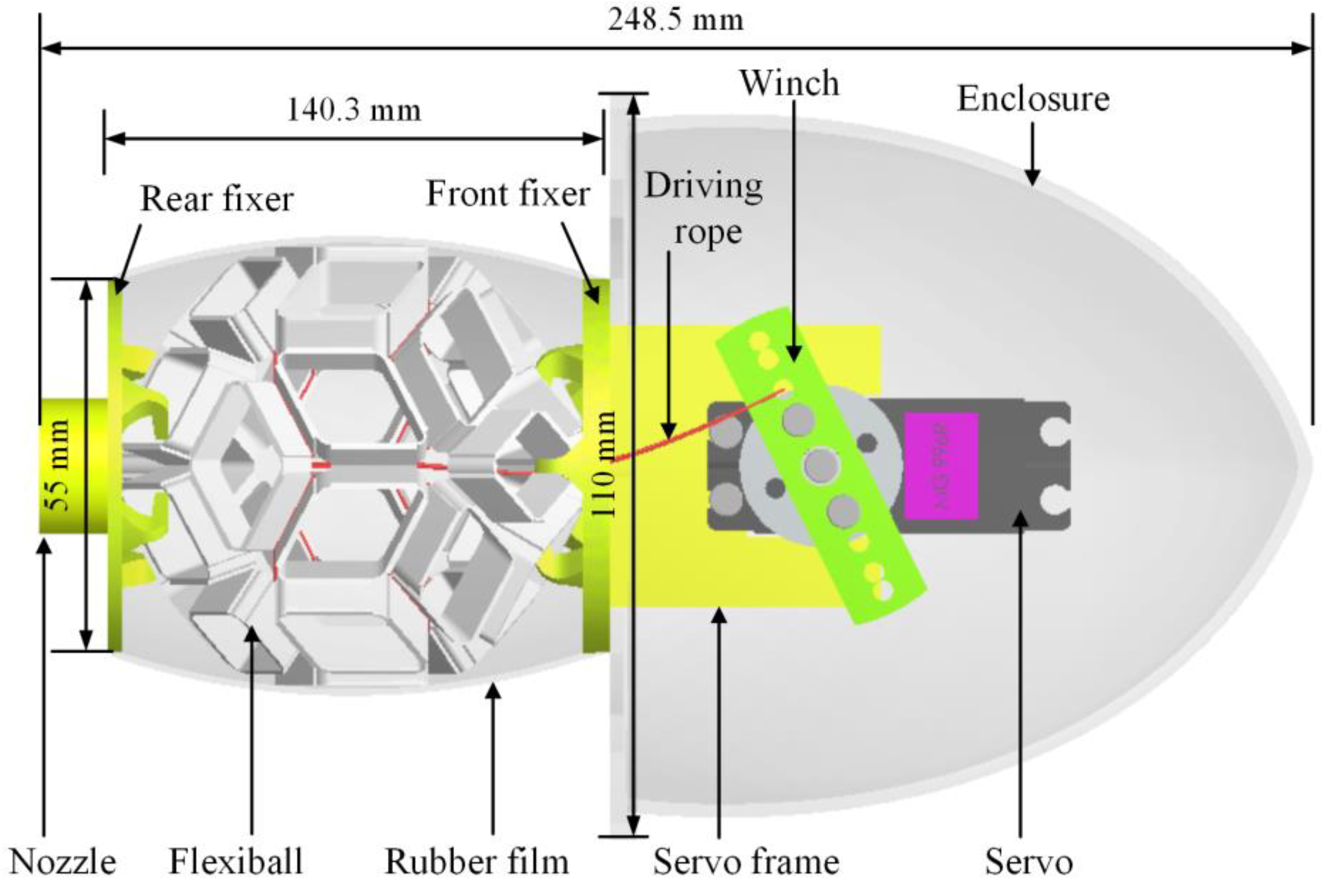
    The researchers then designed a lightweight, waterproof enclosure for the flexiball. The flexiball is contracted using three ropes connected to the grooves of the polyhedra’s edges.

    side profile diagram of jellyfish robot
    Figure 4. Side profile of jellyfish bot mechanisms

    Make your own!

    You don’t have to be an engineer to explore origami & science yourself! Try folding your own tessellation using the template below! Fold all the blue/dashed lines in one direction, and the red/dotted lines in the opposite direction.

    miura ori crease pattern
    Miura ori template! Try folding it yourself
    gif of miura ori fold expanding and contracting
    What your miura ori fold should do!


    Sources:

    Hu et al., “An Origami Flexiball-Inspired Soft Robotic Jellyfish.”

    Qiu et al., “Design and parameter optimization of a biomimetic jellyfish origami mechanism (BJOM) based on waterbomb tessellation.”

    Luo et al., “OriSnake: Design, Fabrication, and Experimental Analysis of a 3-D Origami Snake Robot.”

    Zhang et al., “Yoshimura-origami Based Earthworm-like Robot With 3-dimensional Locomotion Capability.”

    Schroeder, et al., “An electric-eel-inspired soft power source from stacked hydrogels.”

    Miura-ori crease pattern & GIF from Wikipedia Commons

  • Daguerreo-what? The Chemistry Behind Early Photography!

    Before smartphones and DSLRs were everywhere, photography was a physical, hands-on process. I’ll give you a quick overview of the chemistry behind the first type of photograph, the daguerreotype!

    Daguerreotype of Junius Booth, an actor, in theatrical garb
    Example of a daguerreotype

    Daguerreotypes were invented by Louis-Jacques-Mandé Daguerre in France in 1839. They consist of a picture developed on a silver-plated copper sheet. Each daguerreotype is a direct positive, meaning its image is created directly from the exposure without an intermediary negative. This contrasts with film, where your pictures are taken on a negative (a filmstrip) and then exposed as needed to create a positive. Because of this, the only way to replicate a daguerreotype is to rephotograph it, making each image incredibly unique!

    When preparing to take a daguerreotype, you would need to first polish a silver sheet until it was reflective like a mirror. Traditionally, to save resources photographers would use copper sheets plated with silver. Next, they would expose the plate to halide vapors to make the surface photosensitive Ag halides.

    When Louis Daguerre first invented the daguerreotype, he used iodine vapors. Iodine halides weren’t actually very photosensitive, and after a year of experimentation and innovation, people began to use more reactive halides such as chlorine and bromine as substitutes.

    The chemical formula for this step can be written down as:

    2Ag(s) + 1I2(g) à 2AgI

    2Ag(s) + 1Cl2(g) à 2AgCl

    2Ag(s) + 1Br2(g) à 2AgBr

    Once the plate is prepared, the photographer would set up the camera, pose their subject, and focus the lens. After their shot was composed, they would insert the plate into the camera’s plateholder, and begin taking the photograph. Because exposure times were so slow, instead of having a mechanical shutter, they would simply take the lens cap off to start the exposure and put it back on to stop it. While the plate is exposing, it would react with light:

    10AgX + 10hv à 2Ag5(s) + 5X2(g) (x being the halide)

    After the exposure is taken, portions of the plate that reacted to light consist of just Ag, while nonreactive ones remain AgX. At this point, the picture would still be invisible, and needs to be developed to be seen.

    Next, photographers would develop it using mercury vapor. This causes an amalgam (a mercury alloy) to form with the silver.

    11Ag5 + 45Hg(g) à 5Ag11Hg9 & 3Ag5 + 20Hg(g) à 5Ag3Hg4

    While this developed the image, it left the image in a highly reactive state. It could literally be wiped off by your hand! In order to fix the image to the plate, they would wash it with water and sodium thiosulfate. It would react with the thiosulfates to remove unreacted Ag halides and prevent the mercury amalgams from tarnishing.

    2Na2S2O3 + AgX à Na3[Ag8S2O3] + NaX

    This is where the traditional daguerreotype process finished! For display, they would be placed in a frame under glass to keep the picture safe. Further innovations to the technique included adding a layer of protective gilding & manually coloring the image.

    What makes the daguerreotype so cool is that it’s accurate down to the molecular level. Unlike digital cameras limited by pixels and film stock limited by crystal grain, daguerreotypes are direct exposures to light. If you look at a daguerreotype, you’ll notice they’re incredibly sharp images.

    Recently, there’s been a revival of traditional photographic techniques. Tons of practitioners have been experimenting with daguerreotype and other similar techniques such as wet-plate collodion, and many have been hosting workshops to introduce the public to them.

    Hopefully, this has sparked an interest in the daguerreotype. I’d encourage you to explore it more! It’s a really cool form of photography, and learning about it helps you appreciate the point-and-click cameras we take for granted today!

    Works Cited

    https://www.metmuseum.org/essays/daguerre-1787-1851-and-the-invention-of-photography

    https://medium.com/@mert.kty81/unveiling-the-past-daguerreotypes-and-the-legacy-of-mercury-fumes-a81f09398841

    https://daguerreiansociety.org/Making-a-Daguerreotype

    https://doi.org/10.3390/s23094341

    Picture credit Library of Congress

  • Penitentes

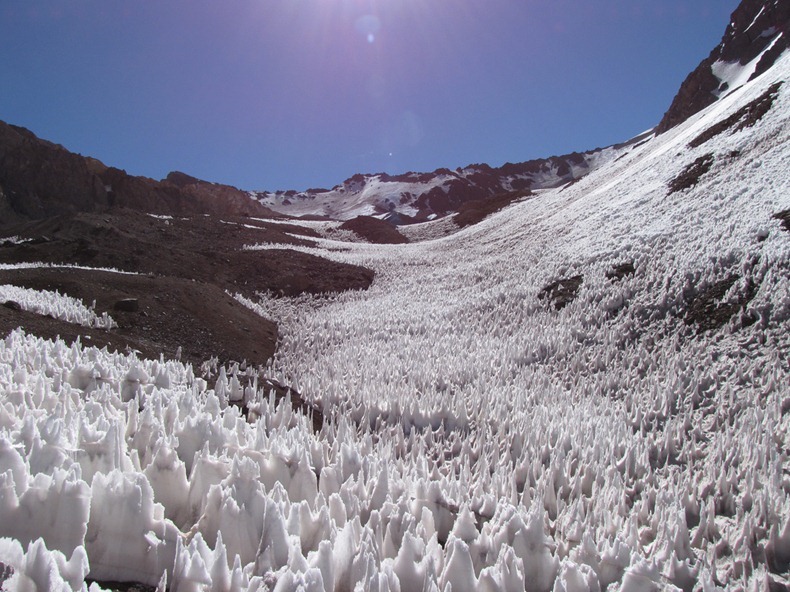
    If you wander over to the high-altitude regions of the Andes, you might spot fields of white figures, kneeling as if in prayer. Known as penitentes (based on the Spanish for penitent, one in penance), these are snow formations in the form of tall spikes.

    penitentes-13

    First described in literature by Charles Darwin in his book *The Voyage of the Beagle*, penitentes are structures that form at altitudes higher than 4,000 meters in snow-covered regions of the Dry Andes. He encountered them on his way from Santiago to Mendoza, and reported the local belief that these eerie formations were caused by the winds.

    This belief persisted while scientists came up with many alternative explanations such as electromagnetic orientation of snow, thermal eddies, and the descent of snow from landslides, none of which had proper backing until Lliboutry published his seminal “The Origina of Penitents” in the Journal of Glaciology. Lliboutry studied a region of penitentes and hypothesized that differential ablation was the cause of the structures.

    Ablation refers to the combined processes removing ice from a glacier surface. The main loss of ice is a result of sunlight hitting it. Although it feels like a fair assumption that sunlight hits the ground evenly, because of the way light reflects, certain regions of the snow cover receive more light and conversely energy than others.

    The crests remain cool enough to maintain their structure, but the valleys and spaces between individual penitentes have concentrated sunlight, causing them to wear down and melt over time. What starts off as random differences in the speed of melting snow cover accelerates into a spiky formation as more and more concentrated regions begin to melt over time.

    Penitentes are an eerie sight to look at, and could potentially impact our travels in space too!

    A 2018 paper by Hobley et al. theorized the presence on penitente-like structures on the surface of Europa, one of Jupiter’s moons. Europa is a promising target for astrobiology research due to its presence of a subglacial ocean, and the news of penitentes on its surface creates challenges for aerospace engineers designing landing gear. While the penitentes on Earth reach a meter or so tops, the modeled structures on Europa would be 15 meters tall!

    Discussion and design of Europa landers has now shifted to consider penitentes, but their presence on Europa is still hotly contested. In a 2023 study, Warren goes in depth why the Hobley study might be incorrect. He contests that Hobley misrepresents Lliboutry’s statements, and that the evidence Hobley sites can be reattributed to subsurface irregularities.

    The court is still out on whether or not penitentes are a hazard for flying to Europa, but they could still pose benefit to astrobiology research. A study in 2017 identified communities of microbes living at the tips of penitentes, sometimes giving them a reddish tint. This visual feature is something prominent in painted depictions of the structures. Studying the distribution of microbes here can be a valuable source of data for understanding the presence of bacteria in extreme environments.


    Works Cited

    Hobley, Daniel E. J., et al. “Formation of Metre-Scale Bladed Roughness on Europa’s Surface by Ablation of Ice.” Nature Geoscience, vol. 11, no. 12, 8 Oct. 2018, pp. 901–904, https://doi.org/10.1038/s41561-018-0235-0. Accessed 20 Apr. 2024.

    Kaushik Patowary. “Penitentes: Peculiar Spikey Snow Formation in the Andes.” Amusing Planet, 25 May 2012, www.amusingplanet.com/2012/05/penitentes-peculiar-spikey-snow.html.

    Kristine De Abreu. “Natural Wonders: Penitentes» Explorersweb.” Explorersweb, 11 Dec. 2022, explorersweb.com/natural-wonders-penitentes/.

    Lliboitry, Louis. “The Origin of Penitents.” Journal of Glaciology, vol. 2, no. 15, 1954, pp. 331–338, www.cambridge.org/core/journals/journal-of-glaciology/article/origin-of-penitents/FACAAF8EF9A38B0F14AE85DC6805B8C7/core-reader, https://doi.org/10.3189/s0022143000025181. Accessed 20 Apr. 2024.

    Solon, Adam J., et al. “Microbial Communities of High-Elevation Fumaroles, Penitentes, and Dry Tephra “Soils” of the Puna de Atacama Volcanic Zone.” Microbial Ecology, vol. 76, no. 2, 5 Jan. 2018, pp. 340–351, https://doi.org/10.1007/s00248-017-1129-1. Accessed 20 Apr. 2024.

    Warren, Stephen G. “Snow Spikes (Penitentes) in the Dry Andes, but Not on Europa: A Defense of Lliboutry’s Classic Paper.” Annals of Glaciology, 23 Mar. 2023, pp. 1–5, https://doi.org/10.1017/aog.2023.12. Accessed 20 Apr. 2024.

  • Growing Red Gold

    Saffron is the world’s most expensive spice. Its rich red stigmas and the difficulty in growing and harvesting it lend it the name of “red gold.”

    Nowadays, saffron’s biggest use is as a spice for flavoring. Historically, saffron has been used as a medicinal plant, treating a plethora of ailments. Today we’ll take a look at the process it takes to grow and harvest saffron, and its medicinal uses– both historical and contemporary.

    —

    Saffron comes from the flower crocus sativus. The spice itself is made up of the bright red threads known as stigmas that grow as the flower blooms. I’ll be using the term saffron interchangeably with the flower from now on– but know that it isn’t the entire flower that produces spice.

    undefined

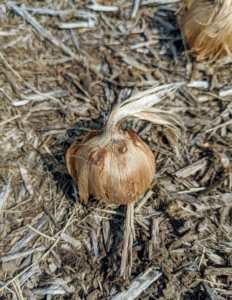
    Saffron corms are planted in late summer. You often use a tool known as a dibber to make a hole in the ground for the corm to rest. Corms look a lot like bulbs but aren’t the same. Although both are energy storage for plants, bulbs are a layered base from which a plant stem grows; whereas corms are solid, and are where the flower stem grows from.

    Here is a closer look at one of the corms. The compact corms are small, brown globules that can measure as large as two-inches in diameter, have a flat base, and are shrouded in a dense mat of parallel fibers referred to as the “corm tunic”. Do you know the difference between a corm and a bulb? Both corms and bulbs are parts of the plant that store food to help it grow and bloom. A bulb is a plant stem and leaf that grows underground in layers. A tiny version of the flower is at the center of the bulb. Tulips, lilies, iris, daffodils and onions are examples of bulbs. A corm is an underground stem that serves as the base for the flower stem and is solid, not layered.

    By early October, saffron sprouts become visible. Saffron has thin, blade-like leaves that splay out once flowers bloom. The flowers themselves are a rich lilac color, and bloom for about three weeks. As the flowers begin to bloom, they can be picked and you can start to harvest saffron. Three stigmas grow in each bloom, and are best harvested in the middle of the morning on a sunny day, right when the flowers are open and fresh.

    Pretty much as soon as the flowers are picked, you need to process it to remove the stigma. Waiting longer than a day will cause it to crumble, making it a time-sensitive process. Harvest season lasts around two to three weeks, and means all hands on deck for saffron farmers. It takes about 250,000 flowers for a single pound of saffron.

    Once the strands are picked, they have to be dried. The spice is heated over a small fire. Heating it preserves both its color and aroma, but also shrinks its down to a fifth of its original weight. Once they’ve been processed and stored in the dark, saffron keeps for several years with no problems.

    Because of how delicate the flower is, every part of the process is a manual task. The sheer number of blooms it takes for a usable amount of spice means an intense amount of labor.

    —

    So what have people used saffron for?

    Saffron has been used by several nations as a spice, a dye, and perfume. Across the past four millennia, it has had the most number of applications across all medicinal plants, and has been used in the treatment of over 90 different conditions. The table below shows a list of several historical treatments involving saffron.

    A table listing common medicinal applications of saffron

    As you can see, the spice can help aid a plethora of conditions. How does it actually achieve this?

    Let’s take a look at its chemical structure to find out. A chemical composition of saffron reveals over 150 individual components in the stigmas, but there are three dominant ones- crocetin esters, picrocrocin, and safranal. These are responsible for its color, taste, and aroma respectively, and all are contributors to its medical effects.

    Crocetin esters have been shown to aid the gastrointestinal, cardiovascular, endocrine, reproductive and immune systems. It’s believed this is due to its properties relieving oxidative stress, which occurs due to an imbalance between free radicals and antioxidants in your system. Free radicals are oxygenated molecules with an uneven amount of electrons, which allows them to react easily with other molecules in your body. This propensity can set off large, potentially harmful oxidation reactions.

    Oxidative stress can be a cause of several degenerative diseases such as diabetes, cardiovascular diseases, epilepsy, and cancer. Antioxidants are able to neutralize free radicals, and safranal and crocin are incredibly effective ones.

    —

    Although medicinal usage of saffron has dropped off recently due to the advent of newer medicines, there’s been a recent resurgence in research about its medicinal effects. As scientists find more novel uses for the spice, however, climate change is rapidly reducing the viability of saffron farming.

    Declining rainfall and a lack of irrigation networks has drastically reduced the amount of viable harvest. Take a look at Kashmir, where changing climate conditions have reduced harvest down to 13-15 pounds per year. For reference, forty to fifty years ago, the harvest from the same area was 90-110 pounds.

    Saffron is more than just a spice to the people who grow them, it’s also their economy and culture. Over 19,000 families in Pampore, Kashmir are dependent on the spice. It’s integrated into cultural food and drink, and harvesting the stigmas is a family activity. It was once unimaginable for a saffron farmer to have any jobs outside of farming. But the reality of shifting weather patterns means that the labor-intensive practice of growing the spice is simply unsustainable.

    Saffron is a rich and varied spice, with medicinal applications still being discovered. But if we don’t take better care of our planet, it’ll soon be impossible to continue growing.


    Works Cited

    Bashir, Aliya. “The World’s Finest Saffron Is in Danger of Disappearing.” _Saveur_, 4 June 2019, www.saveur.com/worlds-finest-saffron-is-in-danger-disappearing/.

    Dai, Rong-Chen; Nabil, Wan Najbah Nik; Xu, Hong-Xi. The History of Saffron in China: From Its Origin to Applications. Chinese Medicine and Culture 4(4):p 228-234, Oct–Dec 2021. | DOI: 10.4103/CMAC.CMAC_38_21

    “Growing and Harvesting Saffron at My Farm – the Martha Stewart Blog.” _The Martha Stewart Blog | It’s a Blog about Martha Stewart and Her Daily Adventures._, 17 Nov. 2022, www.themarthablog.com/2022/11/growing-and-harvesting-saffron-at-my-farm.html.

    José Bagur, María et al. “Saffron: An Old Medicinal Plant and a Potential Novel Functional Food.” _Molecules (Basel, Switzerland)_ vol. 23,1 30. 23 Dec. 2017, doi:10.3390/molecules23010030

    Khazdair, Mohammad Reza et al. “The effects of Crocus sativus (saffron) and its constituents on nervous system: A review.” _Avicenna journal of phytomedicine_ vol. 5,5 (2015): 376-91.

    Nanda, Sanju, and Kumud Madan. “The role of Safranal and saffron stigma extracts in oxidative stress, diseases and photoaging: A systematic review.” _Heliyon_ vol. 7,2 e06117. 10 Feb. 2021, doi:10.1016/j.heliyon.2021.e06117

    Mousavi SZ, Bathaie SZ. Historical uses of saffron: Identifying potential new avenues for modern research. Avicenna J. Phytomed 2011;1:57-66