There is some truth to the phrase “waking up on the wrong side of the bed.” When I don’t sleep very well, I will probably be much more affected by seemingly minor mistakes than other times. For example, I might be particularly self-critical of a research presentation, ruminating on the negative aspects and failing to acknowledge anything positive. The recurrent thought of poorly answering a question might leave me feeling disappointed. In contrast, I will probably fail to retrieve the memories about the questions that were answered well or the clarity of concepts explained. Cognitive neuroscientists have linked poor sleep to poor psychological health at the neural level, particularly involving a brain structure called the amygdala.
The amygdala is an almond-shaped brain structure that modulates emotional reactivity. When sleep deprived, amygdala function is perturbed and becomes over-reactive during the waking day (1). In other words, sleep deprivation can lead to a heightened sensitivity of the amygdala. For example, your roommate’s incessant pencil tapping that normally seems bearable when not sleep deprived, may be particularly annoying after a night of little to no sleep.
Sleep deprivation may reduce attentional focus on positive materials.
Moreover, sleep deprivation may influence emotional memory. For example, researchers gave participants a series of positive, negative, and neutral words to study. They found that those who were sleep deprived remembered fewer positive words than those who were well-rested (1). This suggests that sleep deprivation may reduce attentional focus on positive materials. Furthermore, it has also been found that connectivity between the amygdala and control center of the brain, the prefrontal cortex, is reduced when sleep deprived (2). Reduced feedback from the prefrontal cortex may lead to amygdala overactivity when sleep deprived.
Sleeping through the night or over several nights gradually reduces one’s response to feel upset when recalling a negative experience.
Considering that sleep deprivation impairs the ability to remember positive information, it is closely linked with depression. It is thought that obtaining sufficient sleep causes reductions in the emotional response to negative memories by reducing the response of the amygdala. In other words, sleeping through the night or over several nights gradually reduces one’s response to feel upset when recalling a negative experience. For example, after sleeping, you may be able to remember when your first pet passed away, or when you scored poorly on an exam, without feeling emotionally crippled by the memory. Sleep reduces emotional reactivity to memories.
Experimental research found that sleep deprivation caused a near 30% increase in anxiety symptoms.
In addition to an increased susceptibility to negative emotion, sleep deprivation is closely linked with anxiety. Indeed, recent experimental research found that sleep deprivation caused a near 30% increase in anxiety symptoms (3). For example, suddenly hearing a loud noise, such as an alarm, leads to fear as an initial reaction. You may feel your heart pound through your chest; your pupils may dilate; and you might look around to locate the noise. However, once you realize that it is only a test for the warning alarm systems, you will quickly resume to your work. However, if you’re sleep deprived, this process may happen a bit more slowly. It may take longer for your brain to process the fact that it’s only a warning alarm. Your increase in heart rate may persist, and you may feel anxious for longer than someone who is not sleep deprived. Thus, anxious feelings will likely be intensified when you are in a sleep-deprived state.
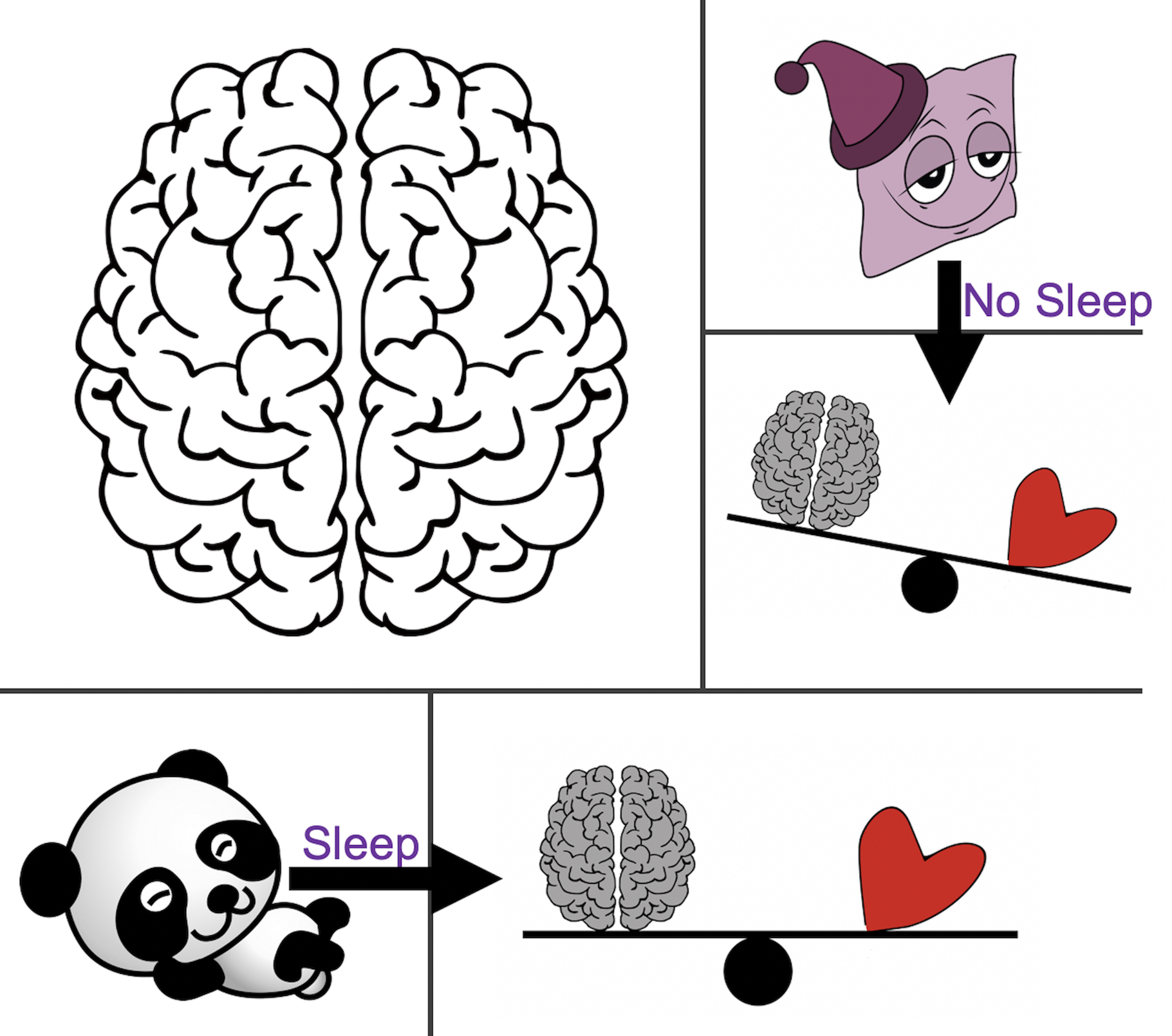
Failing to sleep intensifies emotional responses at the neural level. Brain structures involved in emotional processing and cognitive control, particularly the amygdala and prefrontal cortex, are functionally altered by sleep deprivation. Although the life of a student is a demanding one, sleep should be prioritized in order to thrive and function with peak psychological health. So if you’re feeling crappy, try getting a good night’s sleep.

References
1.Walker, M. P., & van der Helm, E. (2009). Overnight therapy? The role of sleep in
emotional brain processing. Psychological Bulletin, 135(5), 731–748.
https://doi.org/10.1037/a0016570
2.Yoo, S., Gujar, N., Hu, P., Jolesz, F. A., & Walker, M. P. (2007). The human emotional
brain without sleep – a prefrontal-amygdala disconnect. Current Biology, 17(20), 1–8.
https://doi.org/10.1016/j.cub.2007.08.007
3. Anwar, Yasmin. “Chronically anxious? Deep sleep may take the edge off.” Retrieved from: https://news.berkeley.edu/2018/11/06/chronically-anxious/