Author: Emmaly Nguyen

  • All About the April 2024 Eclipse

    Eclipses are captivating astronomical phenomena that occur when the alignment of celestial bodies results in one object obscuring another, either partially or entirely. This article explores the two main types of eclipses – lunar and solar – and delves into the scientific principles behind them. It also examines the recent eclipse event in April, highlighting its unique characteristics compared to past occurences.

    What is an Eclipse?

    NASA considers an eclipse to be when a heavenly body, such as a planet, star, or nebula, moves into the shadow of another. There are two types of eclipses: lunar and solar. A lunar eclipse occurs when the Earth is between the Moon and the Sun. The Moon blocks light from the Sun and casts a shadow on Earth. Lunar eclipses can either be Total or Partial. On the other hand, a solar eclipse occurs when the Moon is between the Earth and the Sun. Solar eclipses can either be Total, Partial, or even Annular. 


    The 2024 Solar Eclipse

    The total eclipse in April serves as a recent example of this celestial phenomenon. This eclipse offered some unique characteristics compared to previous events.

    Wider Path of Totality

    The path of totality, the region of Earth where the Moon entirely covers the Sun, was significantly wider in 2024 compared to the 2017 eclipse, encompassing a larger geographical area.

    Increased Visibility

    The wider path resulted in the eclipse being observable by a larger population, with an estimated 31.6 million residents residing within the path of totality ocmpared to 12 million in 2017.

    Extended Totality Duration

    The 2024 eclipse offered a longer period of totality, lasting approximately 4 minutes and 28 seconds, compared to 2 minutes and 42 seconds in 2017.

    Heightened Solar Activity

    The 2024 eclipse coincided with a period of heightened solar activity, with the Sun approaching solar maximum. This potentially increased the visibility of solar prominences and coronal streamers during totality.


    What was the perspective from Atlanta, Georgia?

    Atlanta experienced ~82% of the eclipse’s totality with the peak viewing time at 3:04 PM.

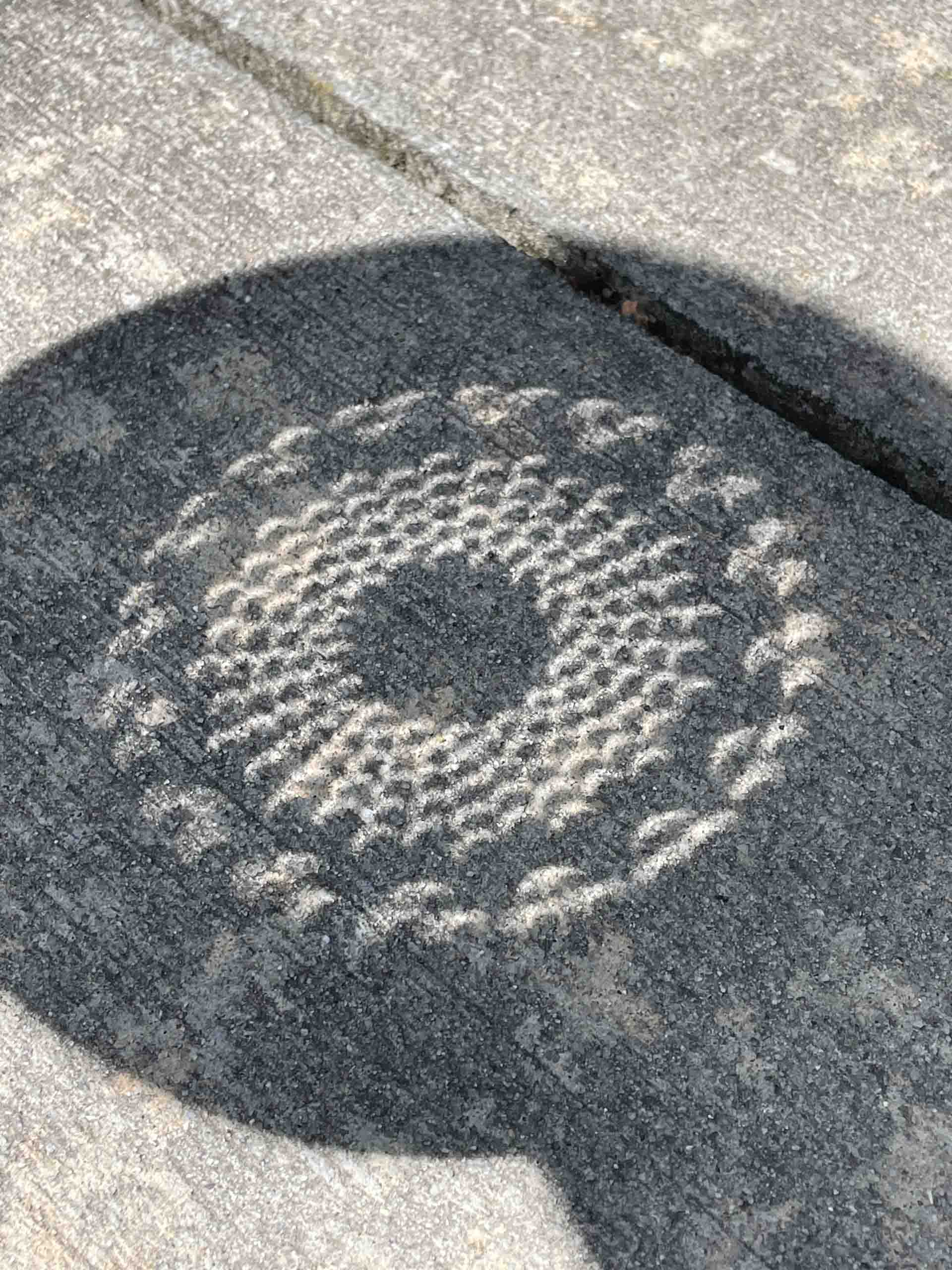
    Many Georgia Tech students were outside to view the solar eclipse (including myself). Not many people had access to eclipse glasses, but those who did shared them with people around them. Some students also used a colander to view the eclipse indirectly.

    We had students travel to see the eclipse as well. 50 of GT’s Astronomy Club traveled to Ozarks, Missouri on April 7 – 9 to see the eclipse in the path of totality.

    Viewing the Eclilpse Safely

    You can’t look directly at an eclipse because the concentrated solar rays will burn through any other filter (camera lens, telescope, binoculars) and cause serious eye energy. Your pupils are more dilated as the eclipse occurs, allowing more harmful rays to enter your eyes than on a normal sunny day.

    If you decide to view an eclipse without safety gear, you risk the following:

    1. Acute solar retinopathy (eye retina is severly damaged by looking straight at the Sun)
    2. Blurry Vision
    3. Headache
    4. Blind Spot
    5. Increased Sensitivity to Light
    6. Distorted Vision
    7. Dyschromatopsia

    If you would like to view the eclipse safely, use safe solar viewing glasses or safe handheld solar viewers. To verify that you have the appropriate safety gear, make sure it complays with the ISO 1231202 international standard.


    When’s the next eclipse?

    The next total solar eclipse is on August 23, 2044. The next total lunar eclipse will be on Marh 14, 2025. Remember, make sure you keep your eyes safe when you’re looking at these amazing scientific phenomenons!


    References

    “Eye Safety During a Total Solar Eclipse.” NASA, n.d., https://science.nasa.gov/eclipses/future-eclipses/eclipse-2024/safety/

    “What is an eclipse?” The European Space Agency, n.d., https://www.esa.int/Science_Exploration/Space_Science/What_is_an_eclipse

    “Why is a solar eclipse dangerous to look at without proper eyewear? What to know.” NBC Chicago, April 8, 2024, https://www.nbcchicago.com/news/local/why-is-a-solar-eclipse-dangerous-to-look-at-without-proper-eyewear-what-to-know/3404331/

    Bressler, Neil M. “Safely Viewing a Solar Eclipse.” JAMA Ophthalmology, 2024, https://doi.org/10.1001/jamaophthalmol.2024.0401.

    Fulco, Charles. “Eclipses and Eye Safety: Dispelling Myths about Viewing Eclipses.” Science and Children, vol. 54, no. 7, 2017, pp. 58–61.

    Interrante, Abbey. “How the 2024 Total Solar Eclipse Is Different than the 2017 Eclipse.” NASA, Jan 30, 2024, https://science.nasa.gov/solar-system/skywatching/how-is-the-2024-total-solar-eclipse-different-than-the-2017-eclipse/
  • Green Spaces on Georgia Tech – Our Thoughts as Undergrad Students

    Listen in on our thoughts as regarding the wonderful green spaces on campus and how they contribute to our study habits and mental health.

    Watch the video on our YouTube channel here! This video was made in collaboration with Rachel Weng and Christie Lin.


    If you would like to know more about green spaces, check out the references below:

    van den Berg, Magdalena, et al. “Health Benefits of Green Spaces in the Living Environment: A Systematic Review of Epidemiological Studies.” Urban Forestry & Urban Greening, vol. 14, no. 4, 2015, pp. 806–16, https://doi.org/10.1016/j.ufug.2015.07.008.

    Vidic, Zeljka, and Nicholas Cherup. “Mindfulness in Classroom: Effect of a Mindfulness-Based Relaxation Class on College Students’ Stress, Resilience, Self- Efficacy and Perfectionism.” College Student Journal, vol. 53, no. 1, 2019, pp. 130–44.

    Vleet, Zayden Van, et al. “The Effects of Green Space on College Students’ Mood.” Journal of American College Health, 2023, pp. 1–9, https://doi.org/10.1080/07448481.2023.2252931.

    Rakowska, Scarlett B., et al. “Examining the Effects of Green Space Accessibility on School Performance for 3421 Elementary Schools.” Landscape and Urban Planning, vol. 234, 2023, pp. 104731-, https://doi.org/10.1016/j.landurbplan.2023.104731.

  • Updates on the Ray-Hybrid Phenomenon

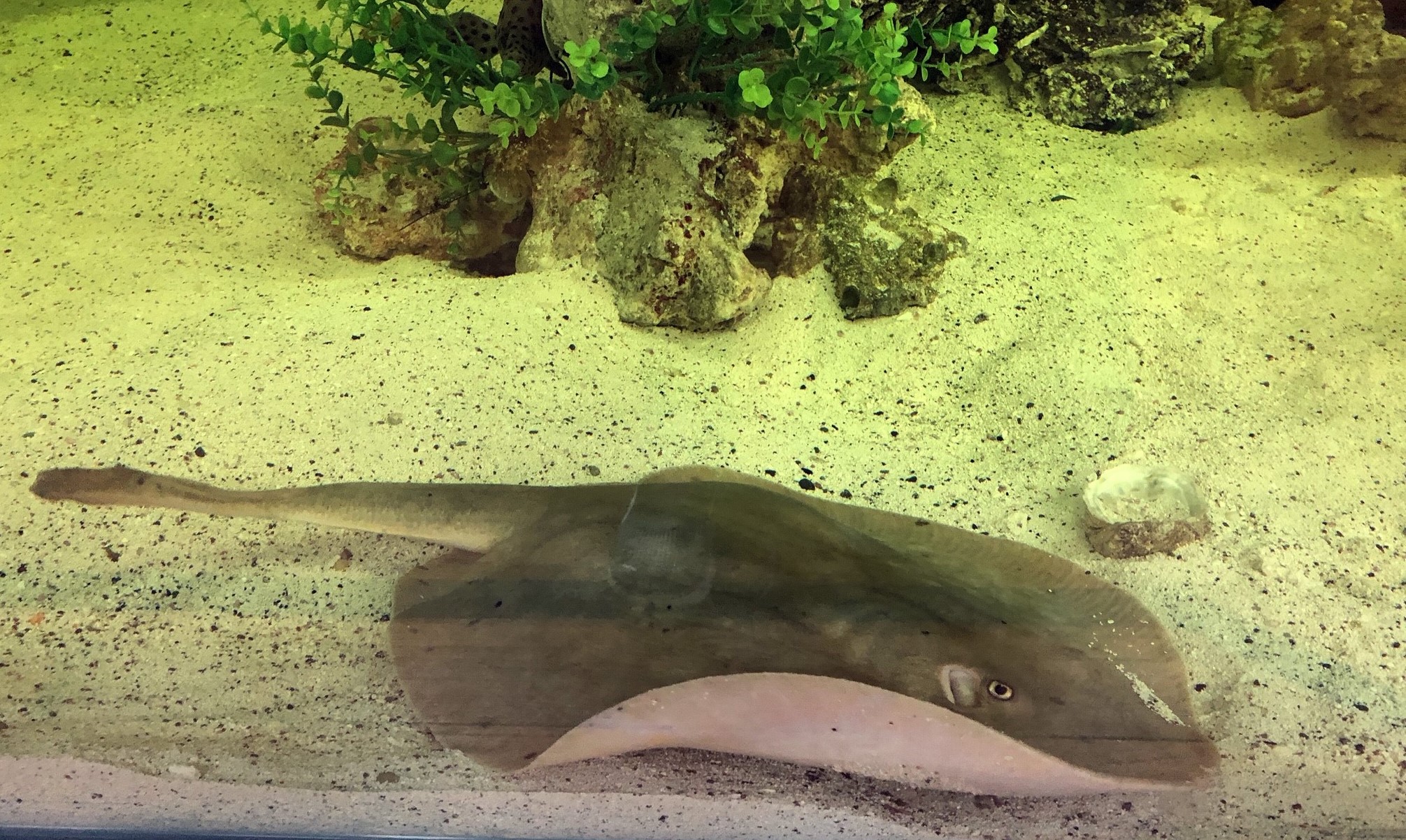
    In the Aquarium and Shark Lab of Team ECCO in North Carolina, there is a mystery in the water: Charlotte the California round stingray has become pregnant with three or four pups despite the lack of male rays!

    Before we get into this mystery, let’s learn a little more about Charlotte. She is a round stingray with brown and yellow muddled spots. This type of stingray can be anywhere from 20 to 55 centimeters in length. Most round stingrays are found near California or in the eastern Pacific Ocean. They like to eat all types of invertebrates, like shrimps and crabs. Round stingrays are usually pregnant for 3-4 months before giving birth to up to six pups. Now that we know more about Charlotte, let’s get back into uncovering this scientific phenomenon.


    The news of Charlotte’s pregnancy caught the attention of many online and it continued to snowball when the head of the aquarium suggested that the stingray could have been impregnated by one of their sharks. 


    While this was a very popular theory amongst those on social media, there are actually a few more scientifically reasonable ways for a ray to become pregnant without males.


    The director of Team ECCO, Brenda Ramer, explained that while some rays can store sperm, there is no chance Charlotte could be pregnant this way, because no male stingrays have ever been in her tank. But wait, there were male sharks in her tank. There were two white spot bamboo sharks that had shared the tank with Charlotte last year. For some male sharks, they mate with females by biting them, so when the team found that Charlotte had some bite marks, the whole scenario just got more confusing. 


    If you’re still wondering if a shark can actually breed with a stingray, think about it ilke this: according to Dr. Noah Bressman, “sharks and rays are as distantly related as humans and snakes, so a snake knocking up a human is just as likely as a shark knocking up a ray” (Bluesky). In short, their DNA is simply incompatible. 


    So knowing that cross-species hybrids are plausible but extremely rare, we turn to a more likely explanation. While sexual reproduction is the norm for rays, some can occasionally pull off something different. They have this asexual reproduction method called parthenogenesis, which means “virgin birth.” This uncommon method lets them develop embryos without needing sperm. It’s not unheard of, though – this phenomenon “has been observed in more than 80 vertebrate species, many of which are fish and reptiles (Forbes).  


    As of right now, there are not any updates from Team Ecco regarding Charlotte’s pregnancy. They’ve posted an image of her ultrasound on their Instagram and some other cute videos as well. Hopefully Charlotte has a smooth delivery!


    Sources:

    Hobson, M. (22 February 2024). This stingray is about to have a ‘virgin birth’. Scientists explain how. Discover Wildlife. https://www.discoverwildlife.com/news/stingray-virgin-birth-parthenogenesis

    Large, H. (13 February 2024). Shark-Ray Hybrid? Aquarium Suggests Shark May Have Impregnated Its Lone Stingray. IFL Science. https://www.iflscience.com/shark-ray-hybrid-aquarium-suggests-shark-may-have-impregnated-their-lone-stingray-72919

    Murray, C. (14 February 2024). No, Sharks Cannot Impregnate Stingrays – As North Carolina Aquarium Investigates Mysterious Pregnancy. Forbes. https://www.forbes.com/sites/conormurray/2024/02/14/no-sharks-cannot-impregnate-stingrays-as-north-carolina-aquarium-investigates-mysterious-pregnancy/?sh=6b7774aa28ed

    Whitehead, B., Berger, J. (17 February 2024). ‘Miraculous birth’ expected from stingray with no mate, possible impregnated by shark. ABC 13 News. https://wlos.com/news/local/stingray-miracle-birth-expected-team-ecco-shark-lab-hendersonville-aquarium-parthenogenesis-possibly-impregnanted-shark-no-male-mate-clone-female-charlotte-jurassic-park#

  • The Art of Cheese-Making

    Cheese represents a blend of artistry and scientific precision. Behind every delectable wedge lies a complex world of microbial alchemy, enzymatic processes, and carefully curated environmental conditions. In this exploration, we unravel the intricate science that transforms milk into the myriad of flavors and textures we savor in cheeses. 

    Crafting Curds and Draining Whey

    The journey begins with the artful coagulation of milk proteins. Whether through the addition of rennet or the work of lactic acid bacteria, proteins, primarily casein, clump together to form curds. The subsequent drainage of whey is a crucial step, determining the cheese’s texture and moisture content.

    Microbial Ecosystem

    Beyond the visible curds and whey, cheese carries a microbial terroir, a unique microbial fingerprint influenced by the local environment. From the caves of Roquefort to the fields of Brie, distinct microbial communities contribute to the regional flavors that define each cheese.

    Aging and Maturation

    As the cheese embarks on its aging journey, a symphony of biochemical changes unfolds. Proteins undergo proteolysis, breaking down into savory peptides and amino acids, while fats experience lipolysis, contributing to the rich mouthfeel. Factors like temperature and humidity orchestrate these reactions, shaping the final flavor and texture.

    Cheese Varieties and Microorganisms

    Cheese varieties boast their own microbial entourage. Bacterial cultures like Lactococcus and Streptococcus contribute to the tanginess, while mold strains such as Penicillium create the characteristic veins in blue cheeses. Each microbe plays a vital role in the complexities of fermentation and maturation.

    Enzymes

    Enzymes take center stage in the development of cheese. Proteolysis and lipolysis, the breakdown of proteins and fats, are enzymatic processes that give rise to the myriad flavors and textures found in aged cheeses. The by-products of these processes contribute to the nuanced and complex profiles cherished by cheese enthusiasts.

    Final Thoughts

    The making of cheese is a fascinating journey where science and art intertwine. From the initial coagulation of milk to the carefully orchestration of microbes and enzymes during aging, each step contributes to a diverse and delightful world of cheeses. As we peer into the future, the science of cheese promises to unfold new chapters, ensuring that this ancient craft continues to captivate our taste buds and scientific curiosity alike.

  • Exploring the Scientific Credibility of Personality Tests and Astrology

    What Harry Potter house are you? What’s your mbti? What’s your zodiac? What kind of fruit are you? What are your big three? 

    I’ve asked and been asked these questions time and time again. I’ve always enjoyed categorizing myself and compartmentalizing aspects of my personality to fit into aesthetic groups. I’m personally a Hufflepuff, an INFP, and a Taurus. I’ve never thought about whether or not there was any real science behind these types of classifications. Is there any scientific or data-driven backing for these? Why do we spend so much time thinking about what our MBTI is or what kind of personality type we have? 

    Let’s first dive into the history and of some of these. 

    History of MBTI or Myers-Briggs Type Indicator

    Briggs and Myers, a mother-daughter team, aspired to delve into the intricacies of diverse personality types by integrating Carl Jung’s concepts into their own framework. Myers held the conviction that through their assessment, individuals could enhance their comprehension of one another’s personalities, fostering improved collaboration and minimizing conflicts.

    What stands out prominently is that neither Briggs nor Myers possessed formal training in psychology. Briggs, with a keen interest in children’s psychology, aimed to develop a tool for early childhood education and specialization. Her daughter, Myers, adopted this perspective and envisioned using the indicator as a means to assist individuals in finding happiness.

    History of Astrology

    Prior to astrology, divination held sway, involving the interpretation of the influence exerted by stars and planets on earthly matters and human destinies. The roots of astrology can be traced back to Mesopotamia, traversing through India, Greece, China, Islamic culture, and Arabic learning.

    According to Greek tradition, the heavens are delineated by the 12 constellations of the zodiac, each believed to possess a spiritual influence on human affairs. Astrology has permeated various cultures, and many contemporary individuals adhere to the notion that horoscopes wield control or significant influence over our lives.

    Now, we confront a pivotal question: is there any scientific substantiation for these beliefs? Can they be deemed reliable in any capacity?

    Fact or Fiction: MBTI

    As previously noted, the foundation of MBTI is rooted in Carl Jung’s theoretical exploration of psychological types, focusing on different states of consciousness rather than distinctly defined personality types. 

    For a personality assessment to be considered a meaningful measurement tool, it must exhibit both reliability and validity—qualities notably absent in MBTI. Many individuals experience inconsistent outcomes when taking the test multiple times, raising questions about the assessment’s significance. Clearly, the answer is in the negative.

    Despite its lack of credibility, MBTI remains widely embraced, primarily due to the Barnum or Forer effect. This phenomenon reflects people’s tendency to readily accept vague and generic personality descriptions as personally insightful. While the scientific evidence supporting this personality test is limited, it may still be enjoyed for amusement purposes.

    Fact or Fiction: Astrology

    Starting with the foundation, astrology relies on celestial bodies such as the sun, moon, planets, and constellations. It utilizes the positions and movements of these heavenly bodies to formulate predictions and explanations for various aspects of human life, events, and personality traits.

    Similar to the MBTI, astrology encounters comparable challenges, notably in the tendency to generate overly broad expectations, allowing interpretations that can apply to almost any outcome. Consequently, astrology lacks testability, and the available evidence fails to substantiate the validity of its concepts. In the scientific realm, ideas undergo modification based on compelling evidence, a principle not embraced by astrology, which remains unchanged despite contradictory evidence.

    Furthermore, astrology faces criticism within the scientific community regarding the dissemination of research. Typically, published astrological articles lack the scrutiny of peer review, a fundamental practice in scientific inquiry. Additionally, there is an absence of documented instances where astrology has contributed to significant scientific discoveries.

    Final Thoughts

    In conclusion, while personality frameworks like MBTI and astrological concepts such as horoscopes and zodiacs have garnered widespread popularity and cultural significance, their scientific foundations remain highly debated and often contested. The lack of empirical evidence, inconsistent test-retest reliability, and the tendency for generalized statements to resonate with a broad audience raise skepticism about the validity of these systems from a scientific standpoint. While these frameworks may provide personal insights or entertainment for some, it’s essential to approach them with a critical mindset and acknowledge their limitations in terms of scientific rigor and empirical support. As our understanding of psychology and the universe continues to evolve, a cautious and discerning approach is advisable when considering the scientific legitimacy of such personality assessments and astrological beliefs.

  • Matcha Magic

    What is matcha? 

    Matcha is high-grade green tea grounded into powdered form. It comes from the leaves of the Camellia sinensis plant.

    Compared to other teas, matcha is a little quirky, due to the fact that it is shade grown, then steamed or stone ground.

    Shade grown means that it is made from shade-grown tea leaves where tea bushes are proteced from sun and light is filtered in a controlled manor. Shading boosts chlorophyll production, which gives the leaves a richer green color. The lack of sun reduces the plant’s photosynthesis of the leaves, which alters the naturally occurring levels of caffeine, flavanols, sugars, antioxidants, and theanine.

    The leaves are then treated with steam heat within to halt the oxidation process and bring out the color even more. Doing this creates a unique flavor profile of sweet and vegetal.

    Matcha can also be stone ground; this is when the leaves are laid flat to dry and become tencha (leaves from which matcha is made). The tencha leaves are stripped of their stems and venins with the remaining ground in slow-turning mills to yield a smooth green tea powder.

    How do you make matcha?

    To make a delicious matcha drink, whisk the powder into hot water to form a frothy drink. Whisking promotes aeration, allowing the matcha powder and water to mix with air to give it a thick head of foam on top. The matcha can be a tea, latte, or even a smoothie!

    Does matcha have caffeine?

    Yes, matcha does have cafeeine! It has less caffeine than brewed coffee, but more than green tea. The tea leaves retain more of their caffeine content. Consuming matcha means you’re consuming the ground tea leaf, which means you’re ingesting more caffeine content than youw ould from the extraction of tea leaves.

    What’s the difference between Green Tea and Matcha?

    Green tea uses brewed tea leaves with a light, grassy flavor. Matcha, on the other hand, is the pulverized version of green tea leaves. It has a stronger concentration of some key nutrients and antioxidants.

    References

    • https://www.teatulia.com/tea-varieties-101/what-is-matcha.html 
    • https://www.medicalnewstoday.com/articles/matcha-vs-green-tea#summary
    • https://www.sugimotousa.com/blog/how-to-whisk-matcha#:~:text=to%20Enjoy%20Matcha-,Why%20Whisk%20Matcha%3F,head%20of%20foam%20on%20top.


  • Stem-Tober 2023 | Cereal or a Rock?

    StemComm’s Fall 2023 event was Stem-tober Block Party! We invited everyone to join us for a fun evening with science-based activities, prizes, and more! We had our event near where the physics students have their annual pumpkin drop. 

    Ideation & Brainstorming: 

    In the ideation process, we split into groups to come up with some ideas for what we wanted our fall event to be. We came up with over 10 ideas. To narrow them, I made a google form that had everyone rank their top 3 choices. After looking at the results, we decided on these activities:

    Group 1: Liquid Nitrogen Ice Cream and dragons Breath Candy

    Group 2: Gene-Tic-Tax

    Group 3: Dragon’s Beard Candy

    Preparation:

    I was part of Group 1, so we got together and discussed what some of the materials were required. We originally wanted to do ice cream, so we made this list:

    • Materials Needed for Ice Cream
      • Liquid Nitrogen from Chem Department
      • Gloves
      • Ice Cream Base
        • Milk (4 cups)
          • Oat milk
        • Sugar (1 cup)
        • Vanilla extract (1 teaspoon)
        • Corn Starch (3 tablespoons plus 2 teaspoons)
      • Metal Bowl (large)
      • Hand mixer

    We quickly decided not to do the liquid nitrogen ice cream and to just focus on the dragons breath candy because it would be easier to make as people came up to our table.

    We had some options as to what we wanted to dip into the liquid nitrogen that would give participants “dragon breath.” We were thinking of dipping cereal, so we requested to order large spherical cereal, but it wasn’t going to come on time, so we ordered regular Fruit Loops and marshmallows instead. We also ordered bamboo skewers and contacted a professor to get access to liquid nitrogen canisters. 

    The last thing we had to get ready was our poster. We had a poster designed on Figma with a fun dragon and fire visual. We also had some more informational posters that would describe what liquid nitrogen was and how we were using it in our experiment demonstration. 

    Day of the Event:

    Before the event, I went to the library to print out the poster. After, I met up with all the StemComm people near the Howey building where our event was taking place and helped set up the table, liquid nitrogen setup, and posters. It was a little slow in the beginning, some people who came up to our table were just students passing by, or people who were trickling in for the Pumpkin Drop event. Soon, more people pulled up to our event and we were dipping cereal in liquid nitrogen to give to as many people as we could. 

    It was really fun to see people’s reactions to the texture, taste, and density of the liquid nitrogen-dipped cereal. After trying it myself, I found the cereal to be almost the same density as a rock. It was tougher to bite on and made a really big crunch sound. 

    If I could change one thing about what we did for the event, it would be make it more apparent that the usage of liquid nitrogen can be hazardous and to partake in our activity at your own risk.

  • The Devil Wears Science: My Experience!

    Since it was my first semester in the StemCOMM VIP, I was a little nervous to be taking part in organizing a Fashion Show for the 2023 Science Festival. Luckily, I met some great people who were helpful and encouraging the whole process through.

    In the beginning, I was on the team that would cover the Additive Armor section of the show, but I started to become more involved with the Sustainable Team. We worked with the Kendeda Sustainability Fellows to compile research regarding textiles, fast fashion, and the clothing life cycle. Below is some of the information we found through research!

    Fast fashion is the quick production of low-cost clothing, that is often trendy and not built to last. We wanted to talk about how the production, sale and eventual disposal of fast fashion items has a significant impact on our environment, and our communities. Many of the materials used to make our clothes have a heavy impact on the environment. For instance, it takes 2,700 liters of water to produce a single cotton t-shirt. Every year, the dyeing of fabrics consumes about 5 trillion liters of water. These chemicals used to clean and dye the clothes are often washed out into natural sources of water, causing harm to local ecosystems. It takes a lot of resources to get a piece of clothing to a consumer. But what happens when the trend is over and fast fashion is no longer fashionable? The average American throws away 81 pounds of clothing each year. The EPA estimates that only 15% of unwanted clothing is recycled. What can we do? The most sustainable thing we can do is use what we already have. We can do this by reusing and upcycling unwanted clothes. By breathing life into garments that have already been made, we can reduce the demand for new clothing production and break the cycle of wasteful fashion practices. 

    We met multiple times before the show to flesh out who was speaking, who would model, etc. We also visited the Kendeda Revolving Closet, where anyone can drop off clothes and shoes for donation! The closet is an initiative located in the basement for community members to donate their unwanted clothes for other to community members to use again. People are also welcome to take from the closet at no cost! When I visited the Closet, I was surprised by some of the clothes there. We were able to find some outfits for the fashion show. With three sustainable outfits planned out, we also needed 3 models. The models ended up being VIP members, and a Kendeda Fellow was our speaker/presenter. We ended up merging this section with the Additive Armor section, so we included a fourth model to wear the dress.

    I also worked on creating a pamphlet/event program for guests to look through and learn more about each exhibit.

    Devil Wears Science Program

    On the day of the event, things were starting to come together and time was moving fast. Steven and I went to print out QR codes that would link to the event program, as well as print out physical copies to staple together. Before the show started, all of us changed into our model outfits and got ready to strut the runway.

    The show was a success! Here are some photos from the event:

    Sustainability Models
    Steven Yang Model
  • AI, Font Pairing, and Font Psychology

    To me, choosing what font to use is the most fun part of a design process. However, it’s almost sometimes the most difficult. Your choice of typography sets the tone of the app and matters as much as the rest of interface layout. In most cases, when I’m designing an app or web interface, I’ll decide to use two fonts, one for titles and headers, and one for text. I’ll then find myself scrolling for hours trying to decide which fonts go together, whether I should use sans-serif fonts and no serif-fonts, etc. Once I heard there was a way to use Artificial Intelligence (AI) to pair fonts for me, I could only imagine the time I would save. Before we dive into the AI method, let’s go over some font basics. 

    There’s many different types of fonts: serif, sans-serif, script, decorative, and monospace. These are commonly found categories when you’re looking at a font library.

    Serif

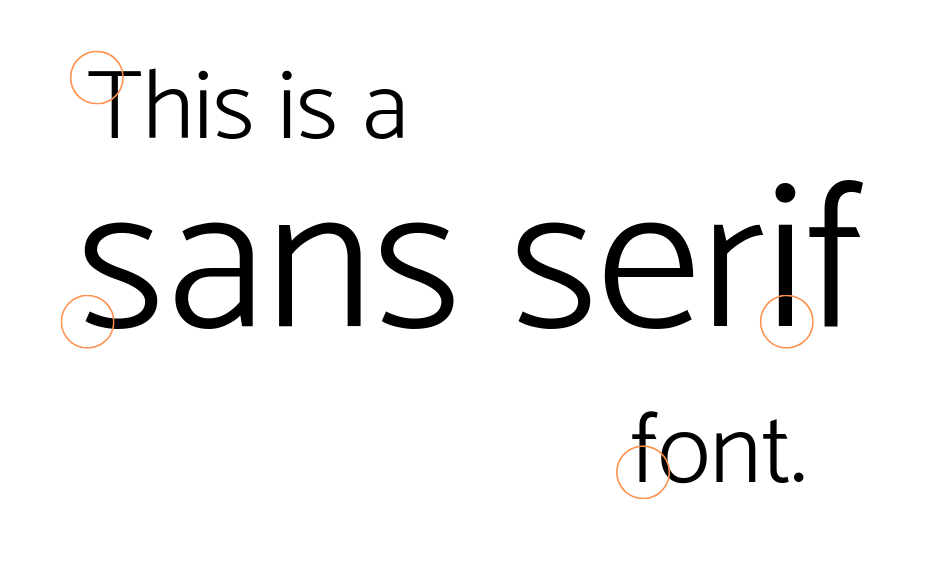
    Serif fonts have strokes on the end of each character. It makes the font look ~fancy~ 

    Sans-Serif

    Sans-serif fonts don’t have extra strokes on the end. These usually provide the most legible reading experience for users. 


    Script

    Script fonts are in a more handwritten style  that includes varied and fluid strokes.

    Decorative

    Decorative fonts have the biggest personalities. They have unique looks and are used to grab the users’ attention. They’re much more dramatic and have distinct letter shapes. 

    Monospace

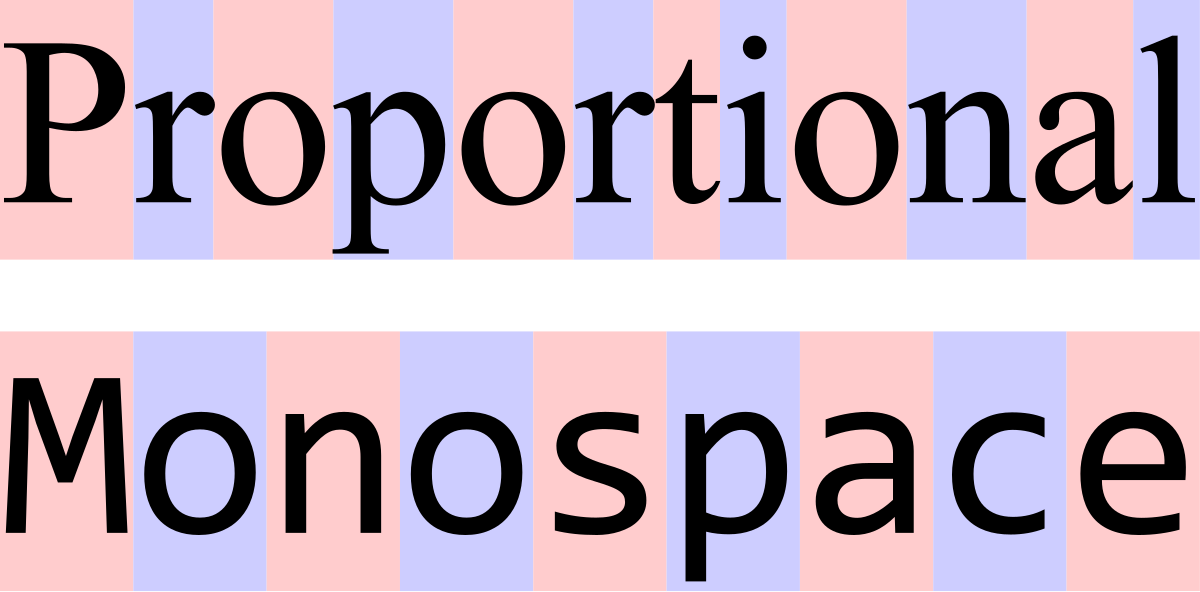
    Like the picture says, Monospace fonts have characters that are the same width/each character takes up the same amount of space horizontally. This font gives your designs a very simplistic and computer-y vibe. 

    As you can see, we have all these different types of fonts, and each of these has subcategories of fonts. You might wonder, how do I know which font to use with which? How do I know what looks good with what? That’s where AI can help! There are programs like FontJoy and Monotype that use machine learning to choose font pairs that look the best together. Some parameters AI can take into account to pair are the weight of the font, the obliqueness of the font, the style, and so on and so forth. Monotype also compares the levels of harmony and contrast between fonts. 

    You might be wondering: Why do we care about font pairing or how fonts look?  

    When it comes to visual design, font psychology has to be accounted for. Font psychology is the visual and emotional reaction you have to the font you’re seeing, according to 99 Designs. According to Albert Mehrabian’s Rule of Personal Communication, 93% of personal connection is non-verbal, meaning ideas and values need to get across in the simplest way possible. Because people will only take a couple of seconds at a design, there is a short chance to capture their attention with font. We can look at the Kolenda Font Model to evaluate how we perceive fonts and what we associate with them. There is also shape and color psychology. Certain geometric forms elicit certain emotions or feelings for the viewer, as do colors. If a font is rounder, it makes the viewer feel more bubble, relaxed, and fun, whereas a sharper more rigid font elicits a  more professional and serious tone. 

    Next time you’re using a font for a design, pay close attention to the style, shape, and color if you’re trying to convey a certain message!