Author: Isabella Areiza

  • Plastic Straws and What to DO

    The global warming clock says we have 15 years left before we reach a temperature point of no return. Will I be alive by the time I’d be 40? I want to grow up and live a full life. I want a career, a husband, and kids of my own. Will our planet continue to be viable by then? Am I ever going to get the future I want? Oh god, I need to do something. What could I possibly do to prevent the death of my home?


    Looking back now, Action has always been my go-to weapon. I despise feeling helpless. Author and Holocaust survivor Elie Wiesel once said, “The opposite of love is not hate, it’s indifference.” His words have become my mantra as I continue to address the indifference we as a human race are posing on Earth: Pollution. More specifically, plastic pollution.


    While plastic in general is an important predicament in the race to save Earth, most of it can be and is being recycled. However, It’s a specific use given to plastic that appears to be causing trouble. Plastic straws. I remember the first time I heard about the ban on plastic straws, and how absurd it sounded at the time. Plastic straws? Couldn’t they simply be recycled? Evidently, no. Recycling facilities don’t take them because their small size is a risk to the function of the big machines, as they often fall into the cracks. As I had predicted, the number of plastic straws produced and distributed barely decreased after the straw ban. They’re too practical to get rid of so hastily. This was not enough for me. If my planet, my home was dying, then something had to be done. 
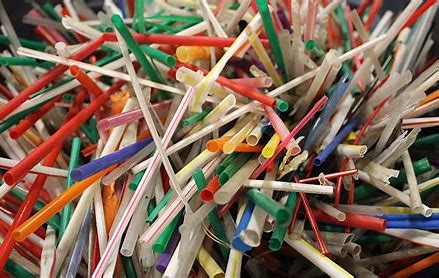
    For a long time, I continued to ask myself how I can reuse, and possibly, improve the use of these dilapidated pieces of plastic. It wasn’t until my father suggested I teach myself some basic programming to build robots, such as an RC car that the idea seemed to be right there, screaming right in my face. Yes, learning how to program was a great idea, but using that programming to think outside of the box became the goal. I wanted, no, needed to find a way to help this worldwide dilemma; my desire for Action had to be fulfilled. While a single plastic straw may seem insignificant, it’s the billions of straws that truly impact the environment. Using some of my creativity, I decided I was going to build a remote control car made out of plastic straws.
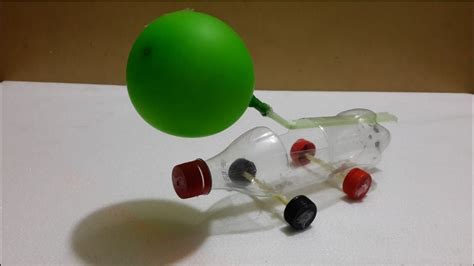
    After extensive research, I learned everything I needed to build my prototype. Due to my lack of knowledge in the field of computer programming, I commenced my project by making one with only an on-and-off switch. I melted my straws using nothing but some baking paper and a clothes iron, hot glued all of my melted pieces together and built my very first straw car. It was a start, and I hoped to eventually make the car durable and physically appealing enough for a child to play with. But this is only the beginning. 


    Making a more durable car starts by transforming the straws into a more durable material. Straws are made out of polypropylene which warps easily. Suppose I could learn to blend polymers effectively and convert polypropylene into a stronger material. In that case, the straws’ plastic could be repurposed into infinite recycled possibilities–much like my car. Our ancestors have always wanted a better future for the following generations, and we should want the same for our descendants.

  • Why Design?

    One of the most challenging questions I am asked as a designer is why I chose the study path I chose. I am often asked Isn’t that just the same as being an art major? or Why not choose something more useful like Computer Science or Engineering? Sometimes, I ask myself those same questions. What exactly is it that I am doing?

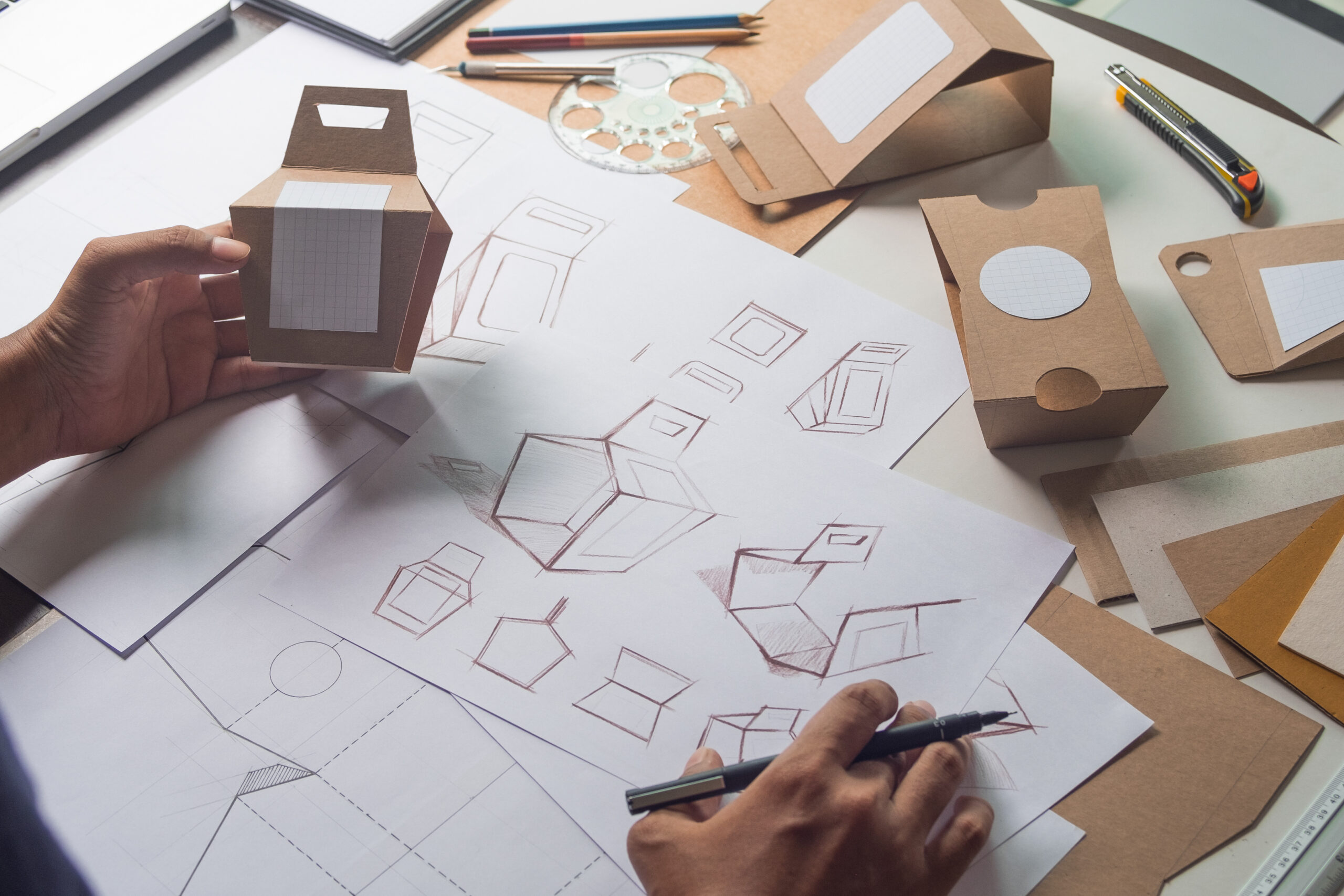
    In my mind, the word “design” brings up many different images. Often I will picture a fashion designer with measuring tape and a model in front of her, or a car manufacturer sitting in a dark room with only a lamp as a source of light sketching the future of the automotive industry. I even picture a mad painter brushing frantically across a canvas creating a new masterpiece. The word “designer” meant so many different things that it was nearly impossible for me to know the true definition. All I knew was that all designers shared a common trait: their creativity. And, as luck would have it, I would spend my first several years of life developing my creative side, leading me to where I am today.

     For as long as I can remember, I have loved making things. It sounds cliche, but it’s true. I used to collect scraps of paper, out-of-shape paper clips, and many other things considered “trash” and assembled them into tiny sculptures as gifts for my friends and family. I was especially guilty of trash collection in school. My 2nd-grade teacher constantly criticized my never-ending mess, until the end of the year came. She chose to look beyond the mess inhabiting my tiny desk and focused on the small figures. From there, she deemed me the “Class Creator”. It was one of the first memories I had where my art was recognized by someone who wasn’t a relative or a  friend of my parents. Of course, the support of my parents played a significant role in my decision. They were the ones to shine the light for me, guiding me to where I needed to go.

    Fast forward several years and it’s finally time to apply to colleges. As a Junior in High School, I was expected to have already a list of schools I wanted to visit and, possibly, apply to. Like many others before me, I was completely lost on where I wanted to go, let alone study. I couldn’t decide if I wanted to go to a big or smaller school, out of state or in the state, and traditional or technical. This indecisiveness led me to begin my college search more locally because “it makes the most sense” as my mom put it. And she was right. I was enchanted by the schools neighboring my home: UGA, Emory, and Georgia Tech.

    While filling out my applications, I was unsure what I wanted to study. In the end, I decided to apply for mechanical engineering programs. At the time, it seemed like a sensible choice, given that it involved the creation of things. However, engineering focused on the more technical aspects of design, the “mechanics” if you will. As cool as that sounded, the thought of performing primarily calculus as a career for the rest of my life terrified me. My life would become mathematics. My creativity would be confined to the laws of physics and thermodynamics. As much as I tried to convince myself that that was what I wanted, it wasn’t. 

    Stumbling across the School of Industrial Design’s webpage was a godsend. It looked like what I imagined I would be doing as a mechanical engineer, only more eye-catching. I saw the beautiful designs that other students had developed and the effort they put into the aesthetics of the designs. It was everything I had been searching for. It was exactly what I wanted to do.


    Industrial Design. The second I decided to scroll through the Launchpad Portfolio on this secret website I had just discovered, I fell in love. Hard. Seeing students take their artistic abilities and create new things for people not just to enjoy, but use? Everything changed for me there. No longer was I doubting the decision to transfer to Georgia Tech, I simply changed the way I went about it.  I finally understood what being a designer meant. My choice to become a designer has been one of my best.

    Works Cited

    https://www.degreequery.com/wp-content/uploads/2019/01/industrial-vs-eng-smart-660×445.png

    https://th.bing.com/th/id/OIP.zXqHiS3fKQLuQQCC5Q9-IQHaCl?w=293&h=122&c=7&r=0&o=5&dpr=2&pid=1.