During the planning for the science fashion show, I found myself feeling a bit behind. I am not typically great at outreach and that was a huge part of this project. I really got to put my skills to work in planning out the actual layout and small details of the event. Troubleshooting some last-minute tech issues, organizing the scene, and handing out little complementary trinkets that I made to the audience and participants is how I allowed my skills to shine.
During the planning for this event, I got to learn a lot about different campus resources and maker spaces. The Invention Studio at GT has so many different machines and tools needed for making just about anything you can set your mind to. It is also run almost entirely by mechanical engineering students!
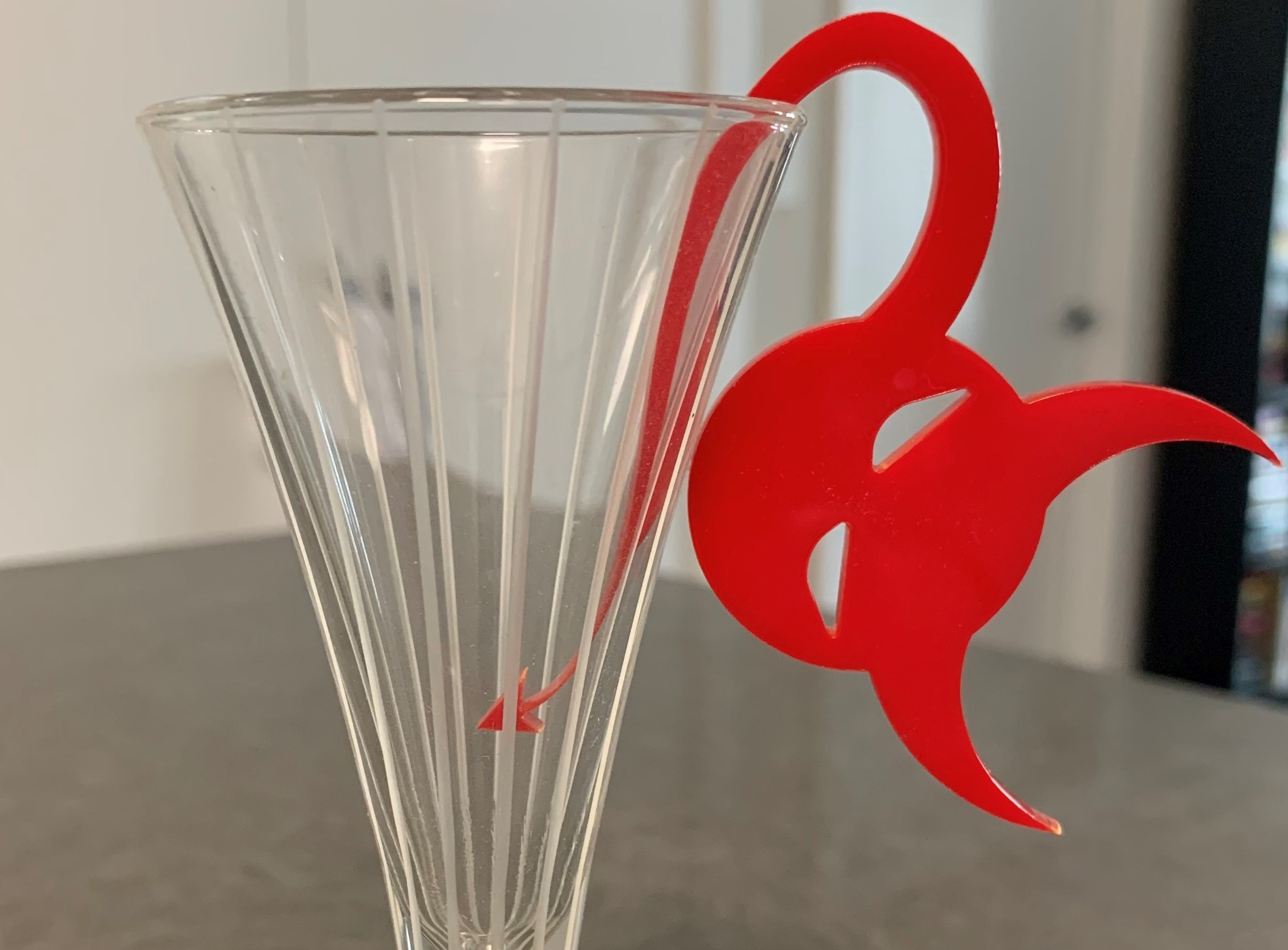
I learned how to use the laser cutter/engraver while I was there. I used this to make some complimentary devil charms for attendees of the fashion show. These charms were originally meant to be decorations that go on people’s glasses of champagne.
It really wasn’t all that complicated to do. All I did was find a vector image that I liked on Canva, edit it a bit in Adobe Illustrator, place it on a flash drive, and take it up to the invention studio. I learned how to use the software needed to use the laser cutter and it was really fun! I won’t get into all the technical details here, so let’s move on to showing you what I actually made.
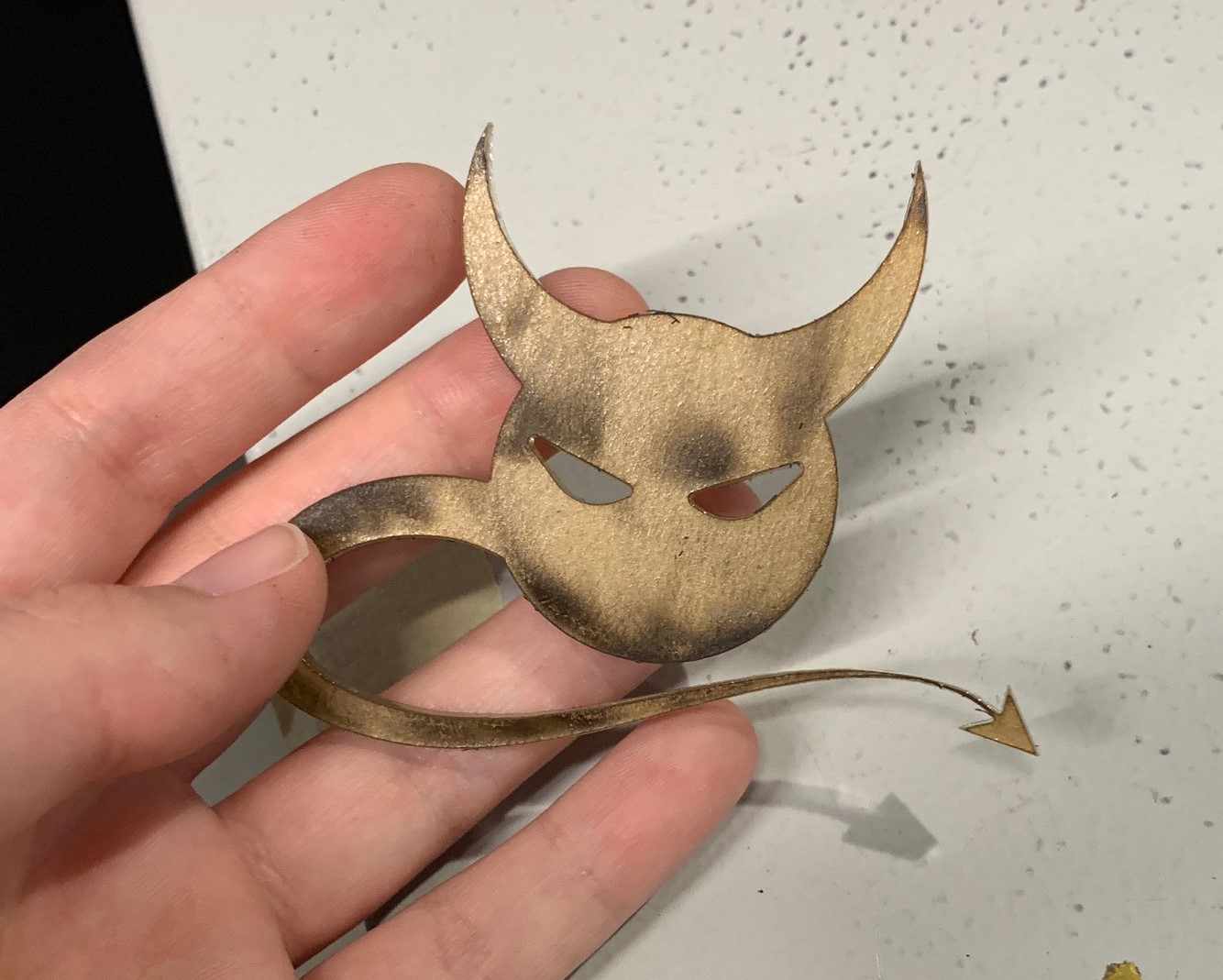
We started with an acrylic prototype, made from leftover scraps from the invention studio, first to ensure the desired size and parameters for the laser.
Acrylic prototype
Then, we tweaked a few things to ensure that our final product on our red acrylic would be perfect.
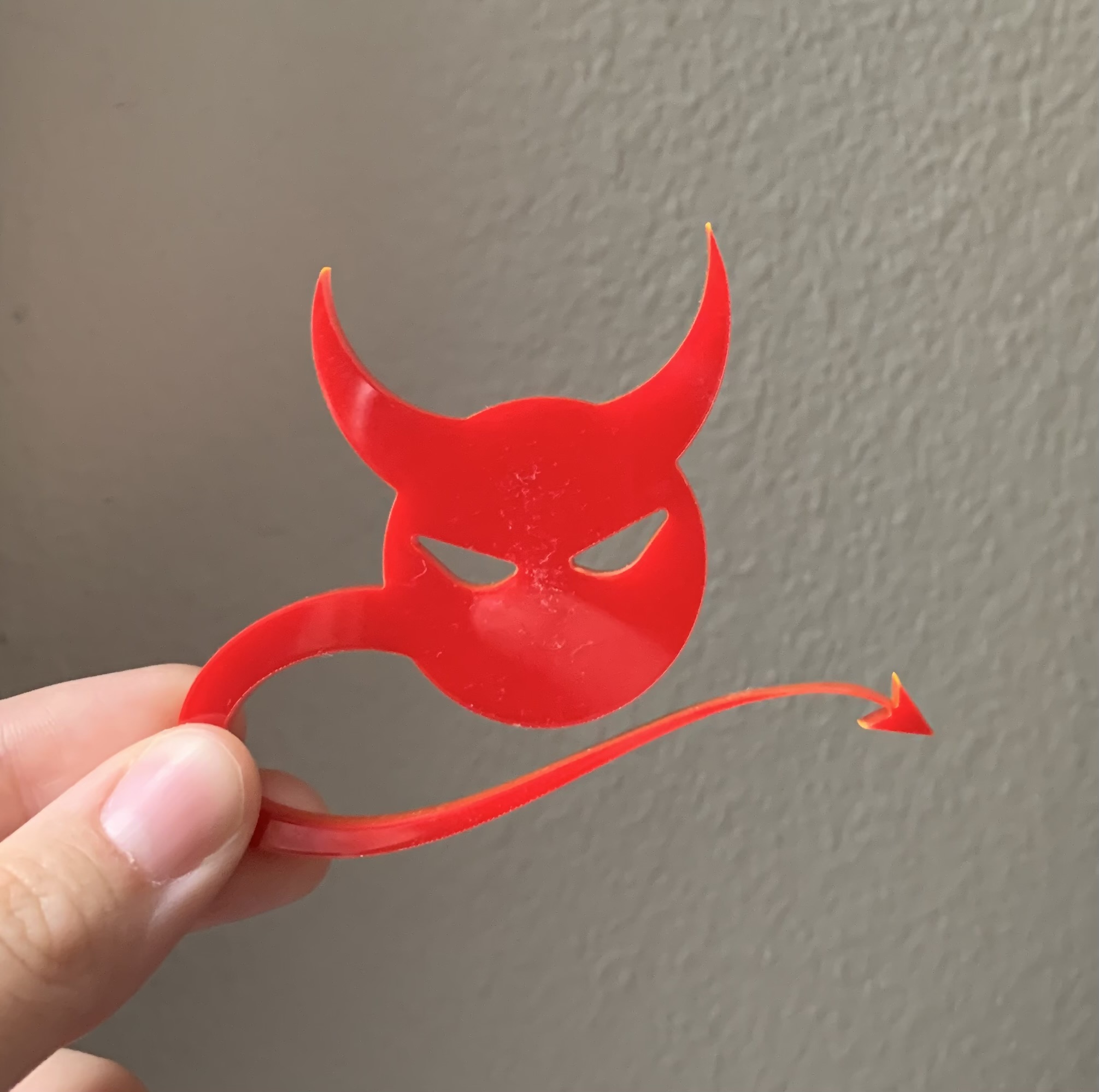
Here’s the final product from start to finish!
Picture of the red acrylic from the very beginning of the laser-cutting processpicture of the finished productPicture of the charm on a glass
When you think of a T. rex, you think of scary sharp teeth sticking out of a giant mouth. While they did have some scary teeth, they might’ve been covered by lizard-like lips.
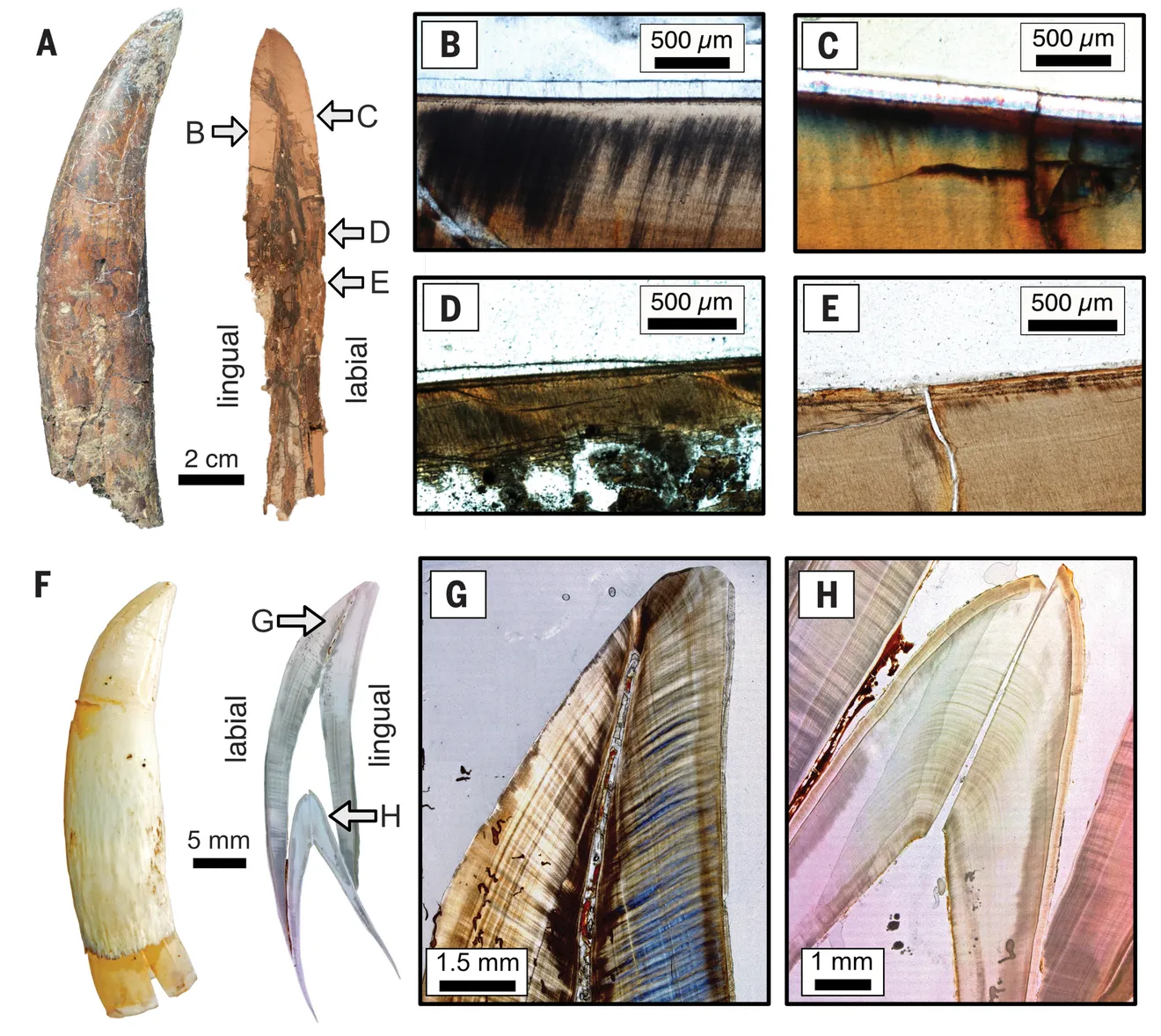
A study was done by the University of Portsmouth that revealed it is likely that carnivorous dinosaurs had lips that covered their fangs. These lips were a barrier between their fangs and the elements. This means these teeth have less wear and tear than a tooth that was exposed to the elements throughout the life of the organism.
“After embedding the Daspletosaurus tooth in resin an slicing into it with a diamond-studded saw, scientists discovered that is lacked significant degradation -signaling that it hadn’t been exposed to try air in a lip-free mouth” (Fine, USAToday, 2023)
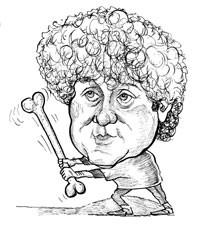
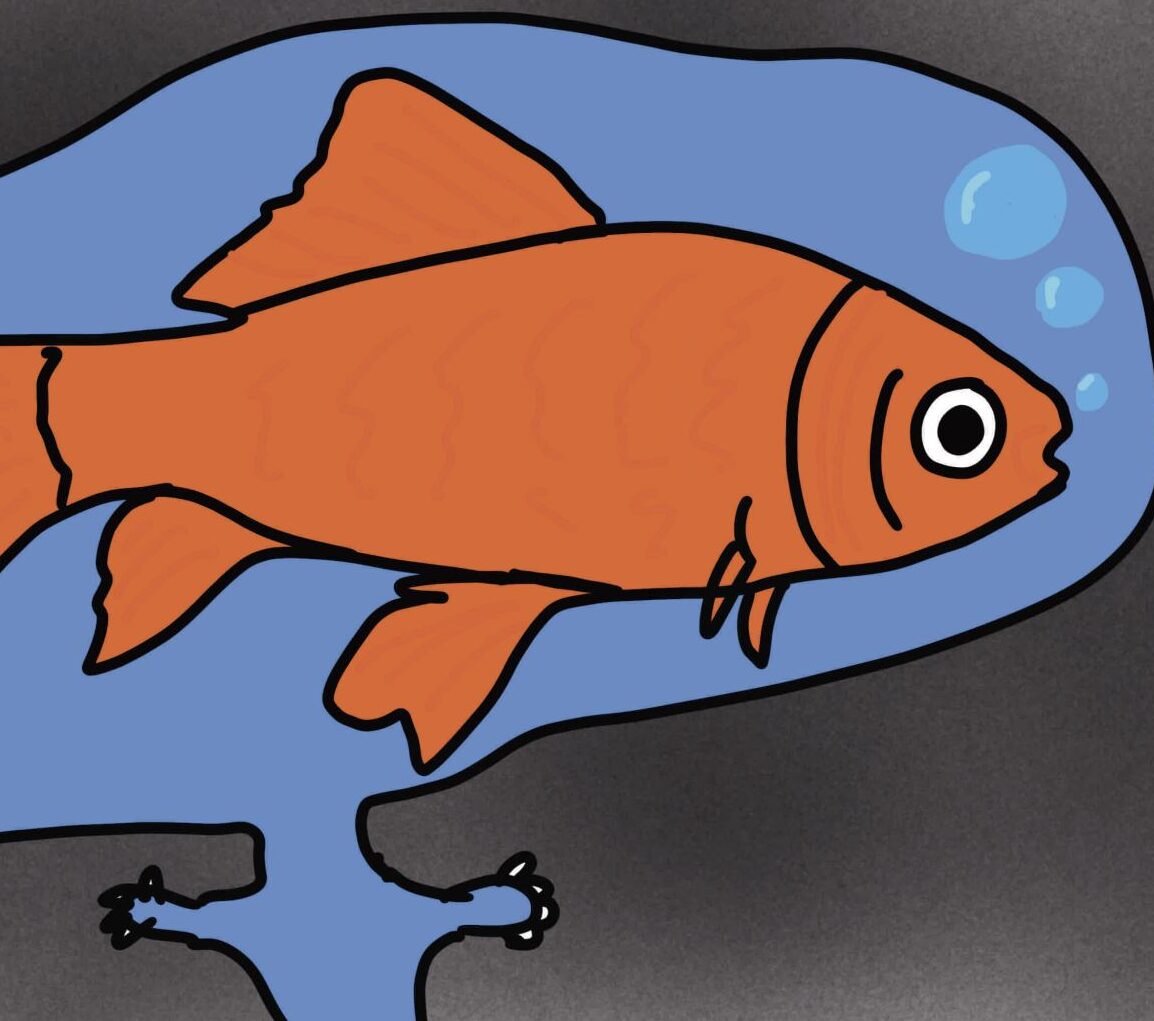
Here’s a fun drawing I did to add a little humor to this scientific idea.
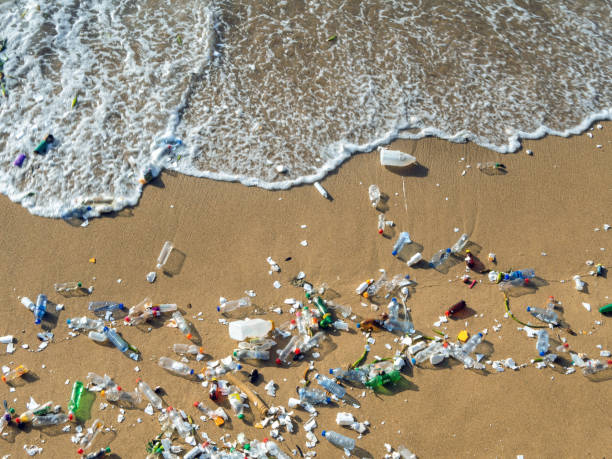
A pressing issue our world is facing is “The Plastic Problem.” Humans have been creating harmful, non-biodegradable plastics and other materials for hundreds of years and polluting the planet with them. Scientists have been working to come up with reasonable solutions to waste management. While creating environmentally friendly alternatives is instrumental in preserving our planet, something must be done about the waste produced in years past.
A natural solution?
Who could have guessed that the Earth has been working to solve this itself? Some microorganisms have evolved and adapted to consume different types of plastic and convert their components into something good for the environment.
Plastic-Eating Bacteria
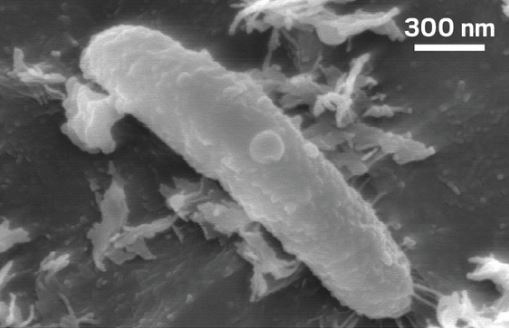
Ideonella Sakaiensis is a bacteria discovered in Osaka, Japan. It secretes enzymes that break down harmful PET plastics into biodegradable PHB plastics. This bacteria could break down plastics in around 6 weeks when studied in a lab setting.
Plastic-Eating Fungi
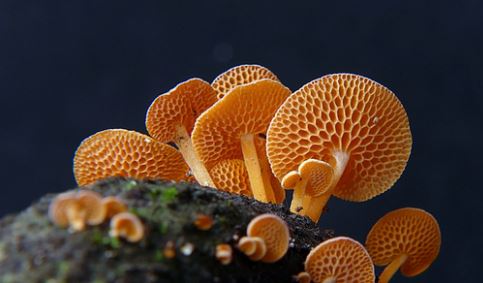
Aspergillus Tubigensis, a naturally occurring fungus, was discovered by scientists at a waste disposal site in Islamabad, Pakistan. This fungus is also capable of breaking down plastic by secreting special enzymes. These enzymes destroy the bonds between molecules in the plastic.
Plastic-Eating Larvae
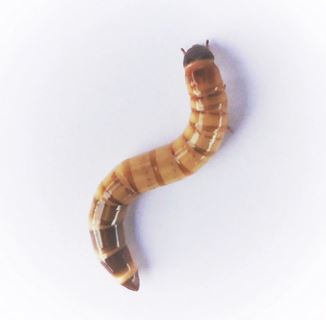
Zophobas Morio, or “super worms”, are larvae of the darkling beetle. This creature can decompose polystyrene (AKA Styrofoam) through its digestion. The larvae’s gut microbiome is being studied to learn how to replicate the process of breaking down plastics and learn how to produce more efficient larvae.
Is This Sustainable?
For something to be sustainable, it must account for three things: ecology, equity, and economy. In other words, something must be good for people, nature, and the economy.
While these organisms are all naturally-occurring, they are not the most efficient. In order for these organisms to become viable solutions to our plastic problem, they must be bio-engineered to be hundreds of times more efficient. Large-scale commercial use would be very expensive. The “willingness to pay” philosophy addresses how people will only choose sustainable products if they are willing to pay for them. More expensive endeavors are backed less by the average person. These organisms are only sustainable as long as researchers are given proper funding.
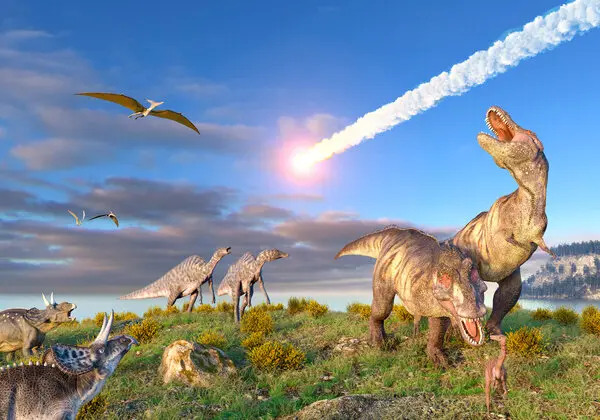
What was the true cause of the infamous mass extinction at the end of the Cretaceous period? In this article, we will be evaluating two rival theories.
Impact Theory VS. ______?
The most currently accepted asteroid impact theory basically says: “A giant asteroid wiped out the dinosaurs”. In 1980, Nobel Prize-winning physicist Luis Walter Alvarez and his geologist son Walter published a theory that a historic layer of iridium-rich clay was caused by a large asteroid colliding with Earth. There is another notable theory by Gerta Keller, a professor of paleontology and geology at Princeton. Despite numbers of other theories proposed by other scientists, Alvarez’s theory has triumphed all others in the field since its inception.
Deccan Traps Theory
However, a crucial part of Alvarez’s theory actually supports Gerta Keller’s opposing “Deccan Traps Theory”. Alvarez’s main evidence for his impact theory, the layer of iridium-rich clay, wasn’t just one layer, but multiple separate layers. Alvarez defended his theory against the opposition who highlighted this hole in his theory and explained the extra layers at different depths by saying that it wasn’t just one asteroid, but multiple. While this is possible, I think Keller’s theory is much more plausible.
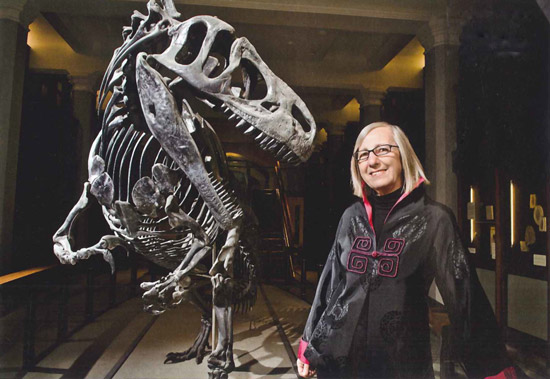
Image of Gerta Keller
We must recognize that Gerta Keller is a woman in science. Intellectual women have been undermined and had their ideas stolen by men for years. I believe that the lack of popularity of Keller’s theory can be attributed to the fact that she was a woman.
What are the Deccan Traps?
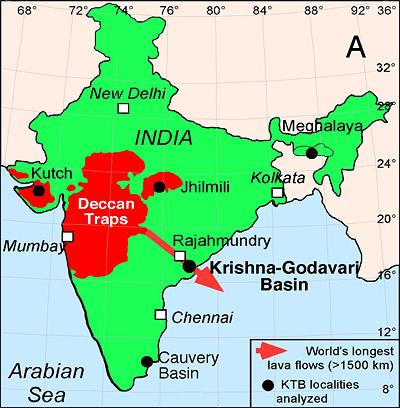
Here we can see the plateau formed by the volcanic eruptions in western India.
The Deccan Traps are a plateau that was formed by molten lava around 66 million years ago. The Deccan Traps cover around 500,000 square kilometers of western India.
Deccan Volcanism
Keller’s theory involves the concept of “Deccan Volcanism”. Deccan Volcanism refers to 4 or 5 volcanic eruptions in the Deccan Traps that occurred before the KTB(Cretaceous–Tertiary) mass extinction. Each of these eruptions created massive flows of lava that can be seen in the fossil record.
In this image you can see layers of iridium-rich earth formed from these eruptions.
These eruptions also likely caused intense climate change, along with releasing tons upon tons of toxic gases into the atmosphere. The destruction of the global environment led to the eventual extinction of countless species.
Combo Theory?
Many believe that this environmental destruction contributed to the decline of many species in this period but didn’t “wipe them out”. Some scientists believe after all of the destruction, some sort of impact was the final nail in the proverbial coffin. This combined Deccan traps-impact theory has grown in popularity in recent years as more evidence surfaces to support it.
Breaking news! Playing isn’t just for vertebrates!
In a recent study at Queen Mary University of London, researchers Hiruni Samadi Galpayage Dona, Cwyn Solvi, Amelia Kowalewska, Kaarle Mäkelä, HaDi MaBouDi, and Lars Chittka discovered that bumblebees are very far from emotionless, unfeeling worker drones. In fact, the bees have been observed playing with balls and exhibiting positive feelings when playing.
What was the study?
Researchers constructed a small, enclosed area with two options for the bumblebees. They could either get a treat by walking through an empty path, ignore the treat for a time and play with the surrounding wooden balls outside of the path.
Although there was no obvious incentive to rolling the balls, the bees rolled the balls around 1-117 times during the experiment.
In another experiment, the path the same as before but was colored two distinct colors. The initial activity was similar to the first run of the experiment. However, after removing the balls, the bees still showed an interest in the color that was associated with the wooden balls.
This is a crucial discovery, as it shows that the bees are interested in the balls for no other reason but to play with them!
Bumblebees and Their Playfulness
During the researchers’ experiments, they discovered many interesting things about the which bees were playing and why. They found out that, much like human children and other baby animals, younger bees were more likely to play with the balls than older bees. Also, adult male bees played for longer than their adult female counterparts.
Why do they do this? What do they get out of rolling the balls? The researchers claim that bees have no need to roll the balls for anything other than enjoyment. This means that the bees are genuinely playing just to have fun! They come back to the balls repeatedly to continue their play, even with real incentive from doing so. This is groundbreaking in the understanding of insect minds and how insects may feel a lot more than we give them credit for.
Conclusion
This study has allowed us to see that other living beings on Earth experience positive emotions and feel much more than we may think they do. I hope that this is the kick-starter for much more research into the brains/thought processes of other living beings. I am sure after hearing all of this, you want to see the incredible cuteness of bees playing.
If you would like to read more about this discovery, below is a link to the full study:
In a recent article written by Freda Kreier, I learned about a very interesting phenomenon that some researchers have discovered. Many different species of seabirds have had their behavior studied during typhoons in the seas around Japan.
What’s going on?
Let’s get straight to the point. Some seabirds are flying directly into storms! The observations of the birds’ behavior differed greatly when a storm was present and when one was not. It’s as if the birds sense the storm coming, and head to the center. An example of this behavior can be seen in the following video:
In this video, the various colorful paths are flight paths of streaked shearwaters and the black path is the path of storm “Soulik” and typhoon “Jebi” respectively. You can see that as Soulik approaches, many of the birds alter their course directly into the direction of the storm. Then, right after Soulik, Jebi appears and the birds nearest to the typhoon engage in similar behavior.
Now, let us discuss why on Earth this would be happening! As discussed by Emily Shepard, a contributor to the previous research article, during a storm, birds at sea have nowhere to go. Their options to choose from are not ideal in the slightest. Birds can either go inland if they are close enough, or stay out on the ocean.
Two Choices:
Go Inland
Even though going inland may seem like an obvious safe option, it is often much safer for these birds to stay out in the ocean. If a bird were to stay near shore during a storm, it runs the risk of being blown onto land or hit by debris carried by the strong winds.
Remain At Sea
Being at sea during a storm instinctively sounds dangerous to most people. However, it might be the safest option! If a bird were to go towards the storm, it has the ability to coast along, riding on the winds of the storm. An analogous situation might be when a person gets swept out to sea by a riptide. In that scenario, the best course of action is to float and allow yourself to be carried by the current. If you fight it, you will become tired and possibly drown. I believe this is why the birds do this. It makes sense to just float along with the winds and preserve your energy until its over.
It is also important to note that the birds already inland do not seem to participate in this behavior. I believe it is more of a “spur of the moment” type of situation. If a bird is out on the sea, they have the choice to exert themselves fight the storm to get to shore, or ride the storm through.
Although this whole situation seems outlandish, when we dive in and really think about the birds’ choices, it ends up making a lot of sense!
A question bugging palentologists for years: Why did T. Rex evolve to have short arms? Why was it beneficial for them to have shorter arms? Intuitively, one might think that longer forelimbs would be much more advantageous. However, out of all the hypotheses, one by Kevin Padian struck me as quite interesting!
Introducing Kevin Padian:
Kevin Padian is a professor of integrative biology at UC Berkeley. He recently authored an article that gives one of his hypotheses for why Tyrannosaurus Rex evolved to have such short forelimbs.
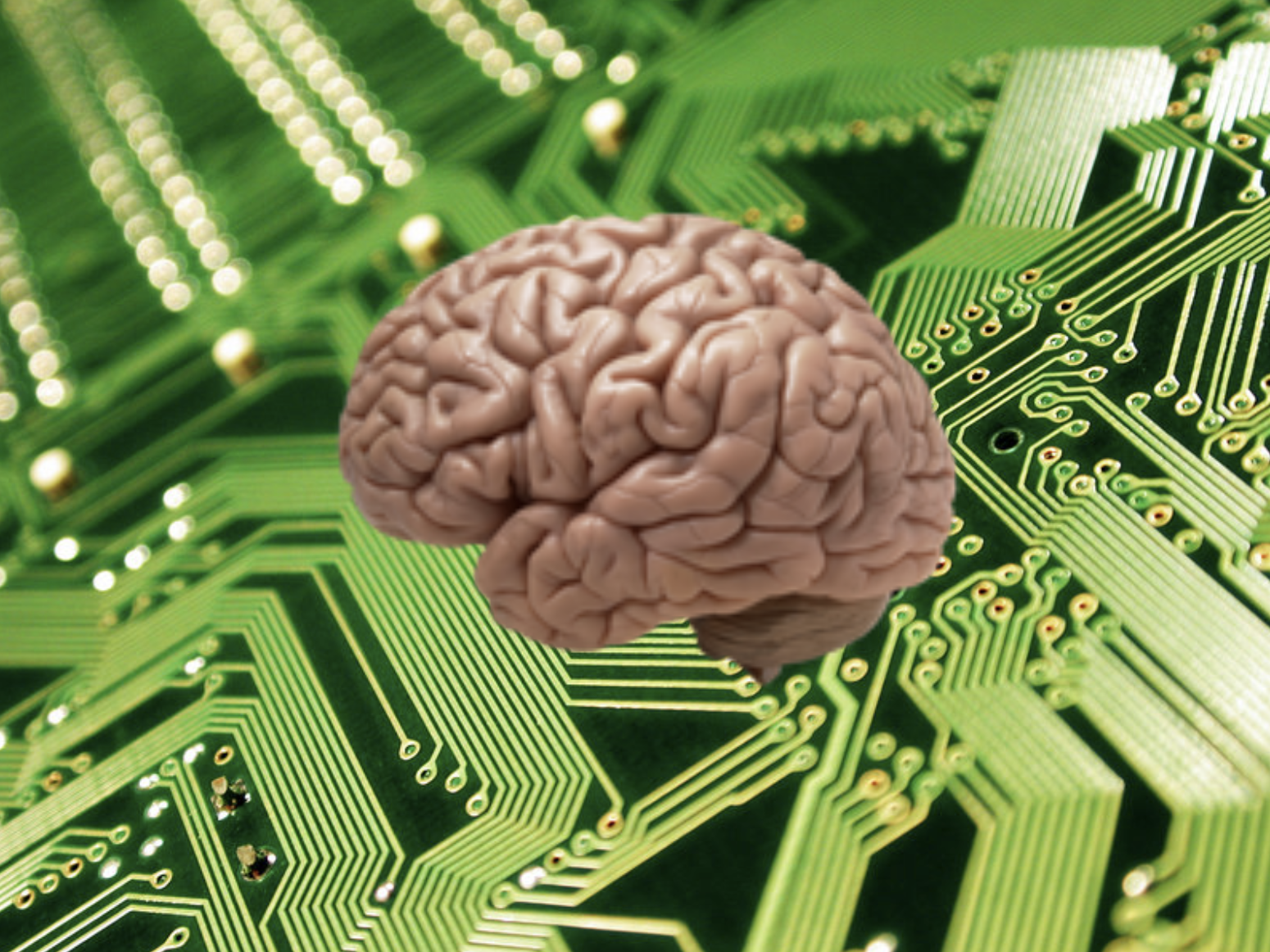
A comparison of the human brain and modern computer!
How are the human brain and a computer similar?
Function:
The human brain and a computer are both devices for processing information, making decisions, completing tasks, and solving problems. They are also both comprised of many unique components, each with their own responsibility.
Component comparisons:
First, let us loosely define some computer parts:
CPU: (Central Processing Unit) sends and receives data and instructions
Hard Drive: information storage, management, and organization
RAM: (Random-Access Memory) short term memory, only stored while in use
GPU: (Graphics Processing Unit) creation of images / rendering graphics from given information
Now, we will loosely define some parts of the human brain:
Thalamus: takes sensory input and distributes it to the proper areas of the brain, “relay station”
Hypothalamus: temperature regulation (among many other functions)
Hippocampus: short term memory storage
Visual cortex: located in the occipital lobe, processes visual input in the form of electrical impulses
It is not ideal to compare many of these parts due to the differences in their makeup/ability. Even so, in order to gain a better understanding, we will make some loose comparisons between them below:
Function
Brain component
Computer component
General processing (both sending and receiving instructions)
Thalamus
CPU (Central Processing Unit)
Short term memory
Hippocampus
RAM (Random-Access Memory)
Long term memory
Frontal lobe, temporal lobe
Hard drive
Visual input processing/ rendering visual information
Visual cortex (input from eyes)
Camera (input) & GPU (processing)
Temperature regulation
hypothalamus
Internal fans
Maintaining function/power
Brain stem
Power cord/battery
input/output
Sensory organs
Keyboard, mouse, camera, microphone, speakers
How do they differ?
Composition & Communication:
There are some very fundamental differences between the brain and the computer. For instance, the brain consists of neurons and synapses that use and transmit information in the form of electrical and chemical impulses. However, we know that the brain largely differs from this, as it consists of transistors, diodes, capacitors, and all kinds of mechanical hardware that transmit information in the form of bits (binary).
It is important to recognize the distinction between computer memory and human memory. When we look at a computer memory, we see RAM and a hard drive in most cases. These are just, in simplistic terms, temporary (short-term) and permanent (long-term) memory storage that consists of information (saved data, files, images/videos, etc.) that is largely simplistic and mechanical in nature. However, if we take a look at the human brain, we see that memory consists of much more than just short-term and long-term memory.
Modern neuroscience has discovered that we have:
“Spatial memory”: a mental map of space – this is why you can walk around familiar places with your eyes closed!
“Episodic memory”: playing a scene/experience back in your head
“Emotional memory”: stored in the amygdala – instinctual emotional reactions based on past experiences
“Procedural memory”: stored in the motor cortex – muscle memory
“Semantic memory”: stored in the frontal/temporal lobes – general knowledge and long-term memories from the hippocampus
There is also a distinct difference in how computers and humans learn. Computers use “distributive learning” which is essentially learning from information residing in memory. Humans use “heuristic learning” which means that they learn from experience.
Overall, brains and computers differ in many ways. A computer may be better at one task that the brain is less suited for, and vice versa. Below we will explore some of the benefits of each in different scenarios.
Where do computers excel?:
Computers are capable of learning, processing, and working without risk of exhaustion (given they are connected to a proper power source). They also do not encounter many common roadblocks that humans do, such as illness, burnout and other prohibitors of function.
Computers have permanent, reliable memory that remains unchanged unless deleted. Computer hard drives can be upgraded and made to have more storage, given appropriate technological advances. Memory on a hard drive can also be physically transferred from one computer to another.
Computers have incredibly high processing speeds/power compared to a human brain. This means that they can complete “objective tasks” (repetitive checks, multiple choice, structured problems) very quickly and efficiently.
Where do human brains excel?:
The human brain is a marvelous organic creation that to this day has not been able to fully comprehend itself. It is 10 times more energy efficient compared to modern technology. A human brain is comprised of 10 billion neurons that communicate via electrical impulse and somehow it only uses 10 watts! The brain also is comprised of many different parts which are all interconnected and run parallel to each other to achieve processing, problem solving, etc. It is also inherently
At its base level, with no additions, the brain can process sound, sight, smell, touch, and taste. A computer requires additional parts such as sensors and processors in order to achieve similar ability. The human brain is also one that can process emotions and energy(“vibes”), which are essential for understanding certain situations.
Lastly, the brain is able to heal itself. Let’s say a person has a head injury. They are likely to heal and regain most, if not all, of their previous cognitive function if the injury was not too severe. On the other hand, let’s say a computer is “injured” in a similar fashion. If the computer hardware is damaged, it must be repaired or replaced. A computer cannot heal itself, and therefore the brain has an advantage here.
Conclusion & Citations
One can’t truly say that brains or computers are superior to one another. Their individual strengths and weaknesses must be highlighted in order to properly compare them! Overall, I think the question should not be “Which is better?” but instead, we should ask “How can they work together to be the most efficient?”.
This silly comic is a comedic representation of a young adult brain experiencing daily life with depression. The depiction is based on my own and some of my peers’ personal experiences.
The science behind the Neurotransmitters and brain functionality comes from my own basic neuroscience as well as some of the sources listed below!
“Depression in Young Adults.” Sandstone Care, https://www.sandstonecare.com/resource-library/mental-health/young-adults-and-depression.
Schimelpfening, Nancy. “What Is the Chemistry behind Depression?” Verywell Mind, https://www.verywellmind.com/the-chemistry-of-depression-1065137.