Author: Jeslyn Kitti

  • Lament of a Musician’s Hearing

    Cover image was taken by the author and edited in Picsart.

    Sometimes, what is most important to us is what we take for granted. For a musician, that is their hearing, although most of us don’t take many steps to preserve it, often going to rehearsal or lessons without any form of hearing protection. For a school musician, this means going a few hours a week being exposed to loud noises without any way to block them, and for a professional, this duration is even longer. If we don’t want to lose our hearing to the piercing sound of a piccolo in our ears, it’s possible we might have to make some changes to the way we rehearse.

    Hearing Loss in Musicians Compared to Other Professions

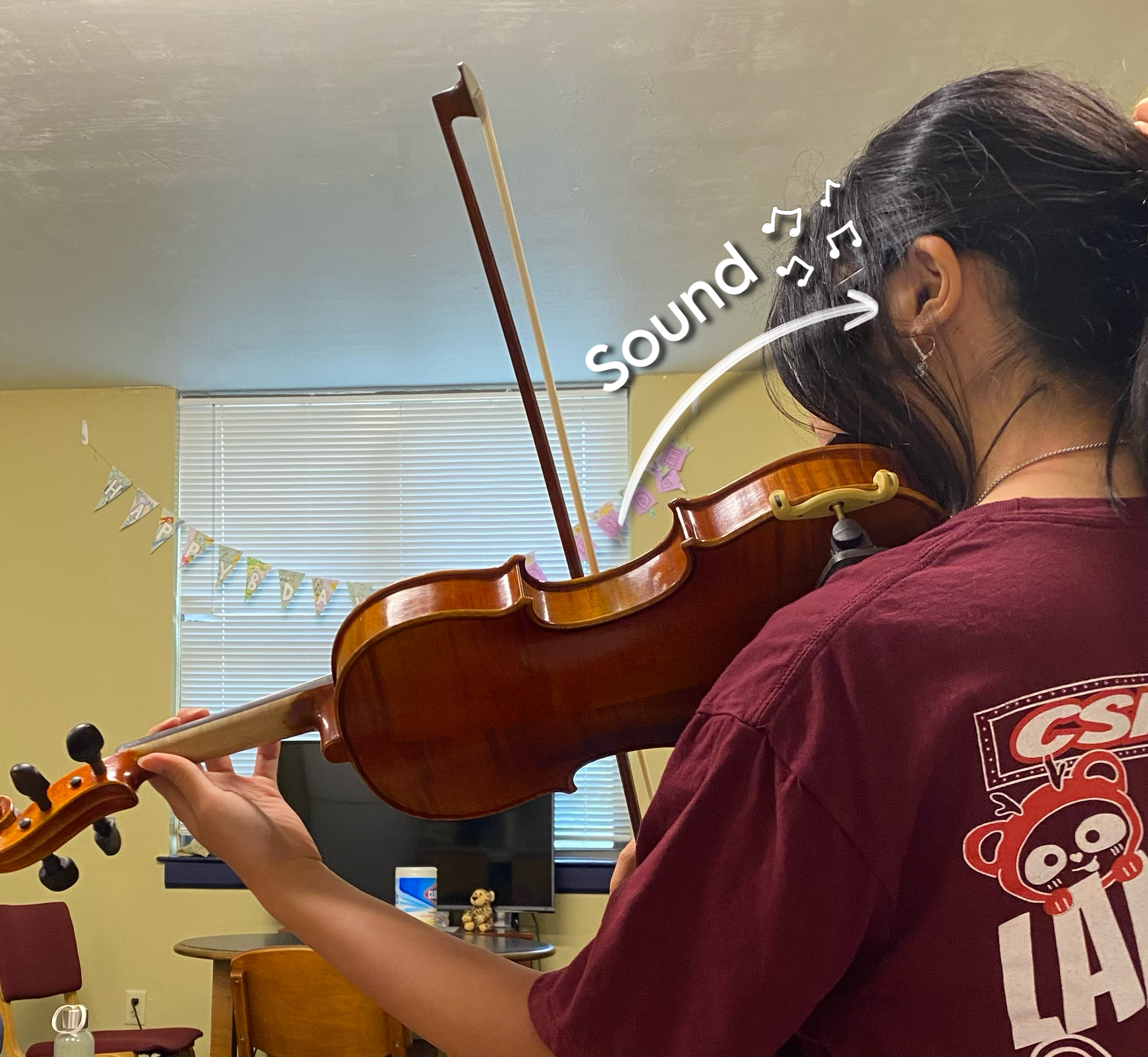
    Some might question whether playing an instrument actually increases hearing loss or if there is a larger outside factor at play. To investigate this, a study was conducted comparing the hearing loss of people with a variety of different backgrounds and found that professional musicians were 3.51 times more likely to have noise induced hearing loss and 1.45 times more likely to have tinnitus (Schink et al., 2014), which suggests that the job that someone works in has a large impact on that person’s hearing. This makes sense considering the significant amount of time the average adult spends working. Musicians tend to get the short end of the stick here as a good portion of that time is spent listening to loud music, which oftentimes when playing is right in your ear.
    Source: taken by author and edited in Picsart.

    Reducing Ear Damage

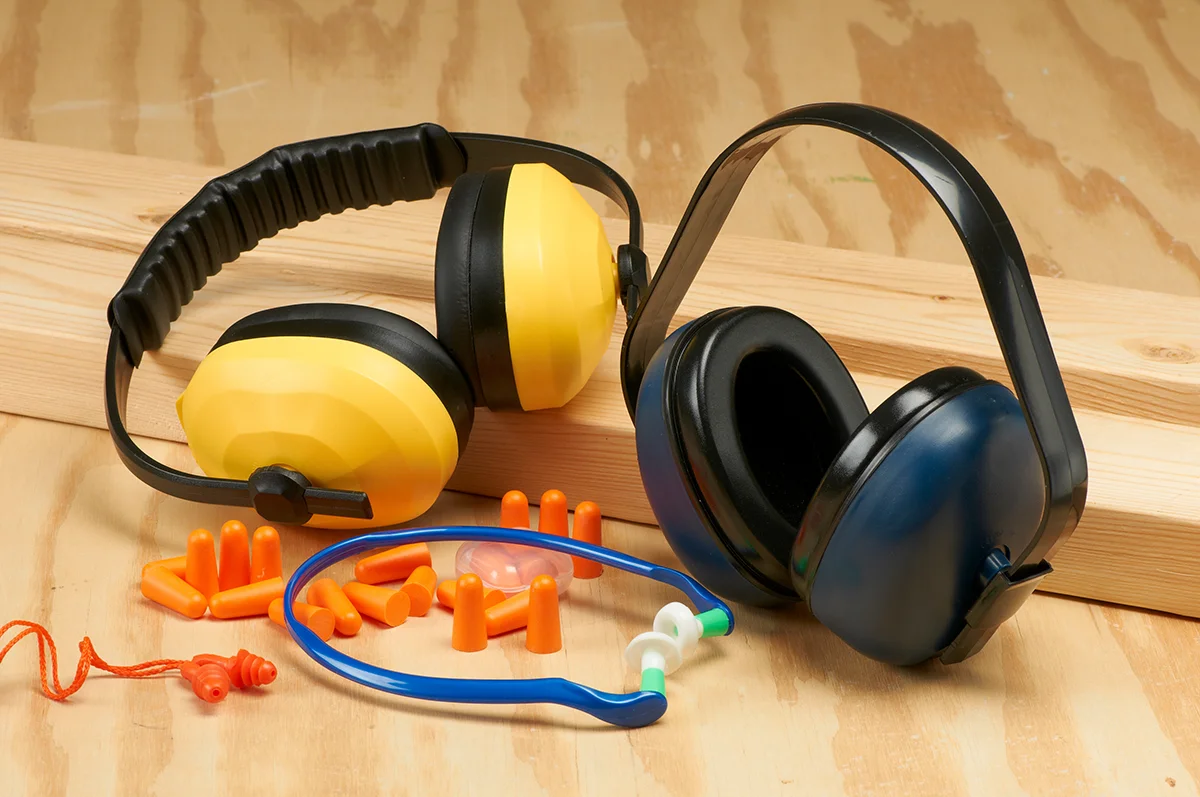
    Since the consequences of continued exposure to loud noise can become severe over time, it is important to take steps in order to prevent excessive damage. First and foremost, musicians should be aware of the risks that long periods of practice can have on their hearing; they should be able to watch for warning signs and know what safe sound levels are (85 dB TWA (time-weighted average) for eight hours in one day, which is around the noise level of a food blender, heavy traffic, busy restaurant, or movie theater (How Loud Is 85 Decibels | What Does 85 DB Sound Like, 2021)). It is also beneficial to get an audiogram and have access to a sound-level meter to make sure you aren’t exceeding the safe sound levels (Chesky, 2008). Also, most students have some sort of hearing protection device or HPD (around 69% percent according to one study) that they can use during rehearsal to block some of the sound (Olson et al., 2016).
    Source: (Lowery, 2023)

    The Great Balance

    If the measures to be taken are seemingly so obvious and simple, why aren’t they more common? Even if the resources are readily available, it turns out that protecting one’s hearing still comes with its downsides. According to several music students, even though there are clear advantages to using things like HPDs, such as hearing preservation, reduction in noise exposure, and the ability to play longer without taking breaks, there are also significant disadvantages to consider like decreased auditory perception, issues with communication, less comfort, and many reported improved performance when not using HPDs (Olson et al., 2016). The goal of an ensemble is to make music that sounds good (well, and have fun, hopefully), so naturally, the musicians in an ensemble would not want to sacrifice their sound to protect their hearing, which is something they might not even be conscious of because damage happens gradually.

    So how do we balance the desire to play well with the desire not to go deaf before we get old? Perhaps this will be a question better answered in the future, maybe even by someone reading this article, and we’ll have a device that still lets us hear everything we need to without all of the damage. Maybe we’ll have a way to reverse hearing loss that’s as easy as drinking medicine to cure a cold. But for now, while maybe not during performances, we can just do what we can, however little it may seem, to protect one of our precious senses. We only have five, after all.

    References

    Chesky, K. (2008). Preventing Music-Induced Hearing Loss. Music Educators Journal, 94(3), 36–41. https://www.jstor.org/stable/4623689

    How Loud Is 85 Decibels | What Does 85 dB Sound Like. (2021, November 18). Decibel Meter App | Best Digital Sound Level Meter for Your Smartphone. https://decibelpro.app/blog/how-loud-is-85-decibels/

    Lowery, K. (2023). How to choose the best hearing protection [Online Image]. In audibel.com. https://www.audibel.com/preventative-care/the-best-hearing-protection/

    Olson, A. D., Gooding, L. F., Shikoh, F., & Graf, J. (2016). Hearing Health in College Instrumental Musicians and Prevention of Hearing Loss. Medical Problems of Performing Artists, 31(1), 29–36. JSTOR. https://www.jstor.org/stable/48714485

    Schink, T., Kreutz, G., Busch, V., Pigeot, I., & Ahrens, W. (2014). Incidence and relative risk of hearing disorders in professional musicians. Occupational and Environmental Medicine, 71(7), 472–476. JSTOR. https://www.jstor.org/stable/43869897
  • Why Is Math So Hated?

    “What’s your favorite subject?”

    “I’m not sure… just definitely not math. What’s yours?”

    “Oh, funny story…”

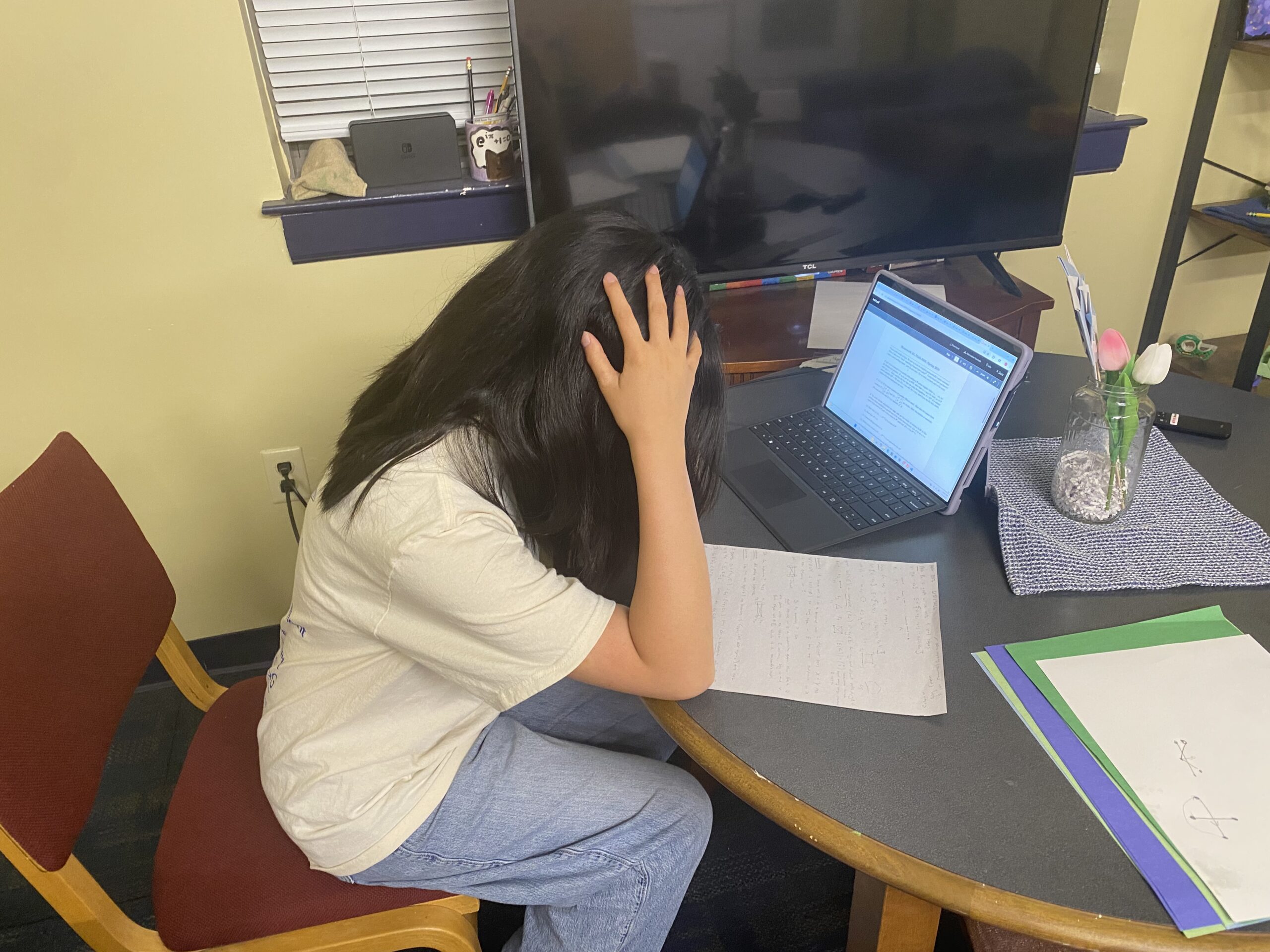
    Ah yes, math, the subject notorious for being one of the hardest subjects in school, with “math anxiety” being the term coined for the fear of math. If you’re reading this, you’ve most likely been through the agony of a difficult math class or teacher that just didn’t understand you. As a math major and someone who loved math as a child (but also had their share of math difficulties), I sought out to understand why math is so hated, and if there is anything we can do to change that. After all, I was able to see firsthand how cool math is and my hope is that more and more people will be able to as well.

    How Math is Taught in School

    Many students point to the difficulty of math when asked why they dislike it, as shown from this table, where math being hard was listed as a reason almost twice as much as it being boring (Stodolsky et al., 1991). Therefore, we should look to how math is taught in school to see why students are struggling so much. In general, many math educators teach in a more computationally-focused way, prioritizing students’ abilities to memorize concepts and algorithms to be able to complete a problem set, rather than letting them discover the math on their own or letting the students know the “why” behind what they are doing (Stodolsky et al., 1991). This was certainly my experience in some of my classes, where when asked why something works the teacher would just say “don’t worry about it.” This can cause students to be confused on how to follow the steps given to them to solve a problem or give them difficulty when trying to memorize them for a test. If students knew all of the derivations to the formulas they were using, I think they would be more likely to remember it and boost their problem-solving skills than if they regurgitate a step-by-step process given to them.

    Gender Stereotypes Regarding Math Ability

    If you’re a girl, you may have heard it at least once in your life: “You’re a girl? You can’t possibly be good at math or science, you belong in humanities (or the kitchen).” Or perhaps, you’ll be the only girl, or one of a few, in some advanced STEM class. One study was held testing children in a few different categories: math performance, math anxiety, and test anxiety, collecting data over different grades for boys versus girls. The study found that higher math anxiety had more of a negative effect on girls than for boys (Erturan & Jansen, 2015). This is likely due to the aforementioned  stereotypes that boys are better than girls at STEM related subjects such as math, putting more pressure on girls when testing. Even if they might know the content, these stereotypes can put doubt into girls’ minds about whether or not they are capable of doing well in math.

    Intergenerational Effects on Math Anxiety

    Math anxiety has existed for a long time, not just in this generation, but in those of our parents and grandparents as well. As a result, it makes sense to consider the possibility that it gets passed down from generation to generation, not necessarily through genetics, but through parents’ attitudes towards math rubbing off on their children. Another study on math anxiety investigated the role that parents played pertaining to their children’s levels of math anxiety, by testing students’ reading and math performance and giving parents questionnaires to determine their levels of math anxiety. The study revealed that there was a negative correlation between a parent’s math anxiety and their child’s performance, but only when the parent was significantly involved with helping the child with their homework (Maloney et al., 2015). It is speculated that the cause of this is the parents letting out their own negativity towards the subject to the child, expressing their frustration which caused their children to also have higher levels of math anxiety and do poorer on their tests.

    What To Do?

    It is clear there are many outside factors that can cause a child to dislike math, so  how do we combat this? Even if we don’t like math that much ourselves, we can try our best not to project that mindset onto young minds and instead, encourage students to develop a growth mindset (Mendoza, 2025). With some work, it would also be beneficial to make a few changes to the way math is taught in school by making learning more interactive and prioritizing understanding over memorization. And hopefully, maybe one day, math will not be considered the “hated” subject but simply just a subject that more people enjoy.


    References

    Erturan, S., & Jansen, B. (2015). An investigation of boys’ and girls’ emotional experience of math, their math performance, and the relation between these variables. European Journal of Psychology of Education, 30(4), 421–435. https://www.jstor.org/stable/24763249

    Maloney, E. A., Ramirez, G., Gunderson, E. A., Levine, S. C., & Beilock, S. L. (2015). Intergenerational Effects of Parents’ Math Anxiety on Children’s Math Achievement and Anxiety. Psychological Science, 26(9), 1480–1488. https://www.jstor.org/stable/24544088

    Mendoza, K. (2025, February 28). 9 Strategies to Help Students Love Math – Oxford Learning. Oxford Learning. https://oxfordlearning.com/9-strategies-to-help-students-love-math/

    Stodolsky, S. S., Salk, S., & Glaessner, B. (1991). Student Views about Learning Math and Social Studies. American Educational Research Journal, 28(1), 89. https://doi.org/10.2307/1162880