Author: Joshua Suber

  • Origami: Art or Science

    “OrIgami Engineering is a thing?

    – JOshua Suber (ME)

    This semester I had the opportunity to join and participating in the Origami Club at the Georgia Institute of Technology. Each Friday, students from all majors, come together and attempt a variety of origami challenges. Our faculty advisor, Glaucio H. Paulino, teaches CEE 4803 Origami Engineering, and would often give insight on various real-world applications of origami. The Origami Engineering course introduces students to the history, art, and applications of origami, and attracts students from every major, much like the club.

    What is origami?

    “Origami has shown To be one of the most natural and effective techniques to teach math?

    – Professor Paulino

    Modern origami is characterized by “open access patterns and sequences” created by a diverse background of individuals. Many origami techniques are even copyrighted and considered intellectual property.

    Although many view Origami as an artful past time, our modern understanding of the craft as evolved past mere paper folding. Our knowledge of origami basis in geometry and mathematics has allowed many researchers to find new and unique applications within complex mechanical and programmable materials. Origami has become the solution to many technological problems. It is truly amazing, when a craft can serve as both a calming afternoon activity, and the foundation to an evolving technological approach.
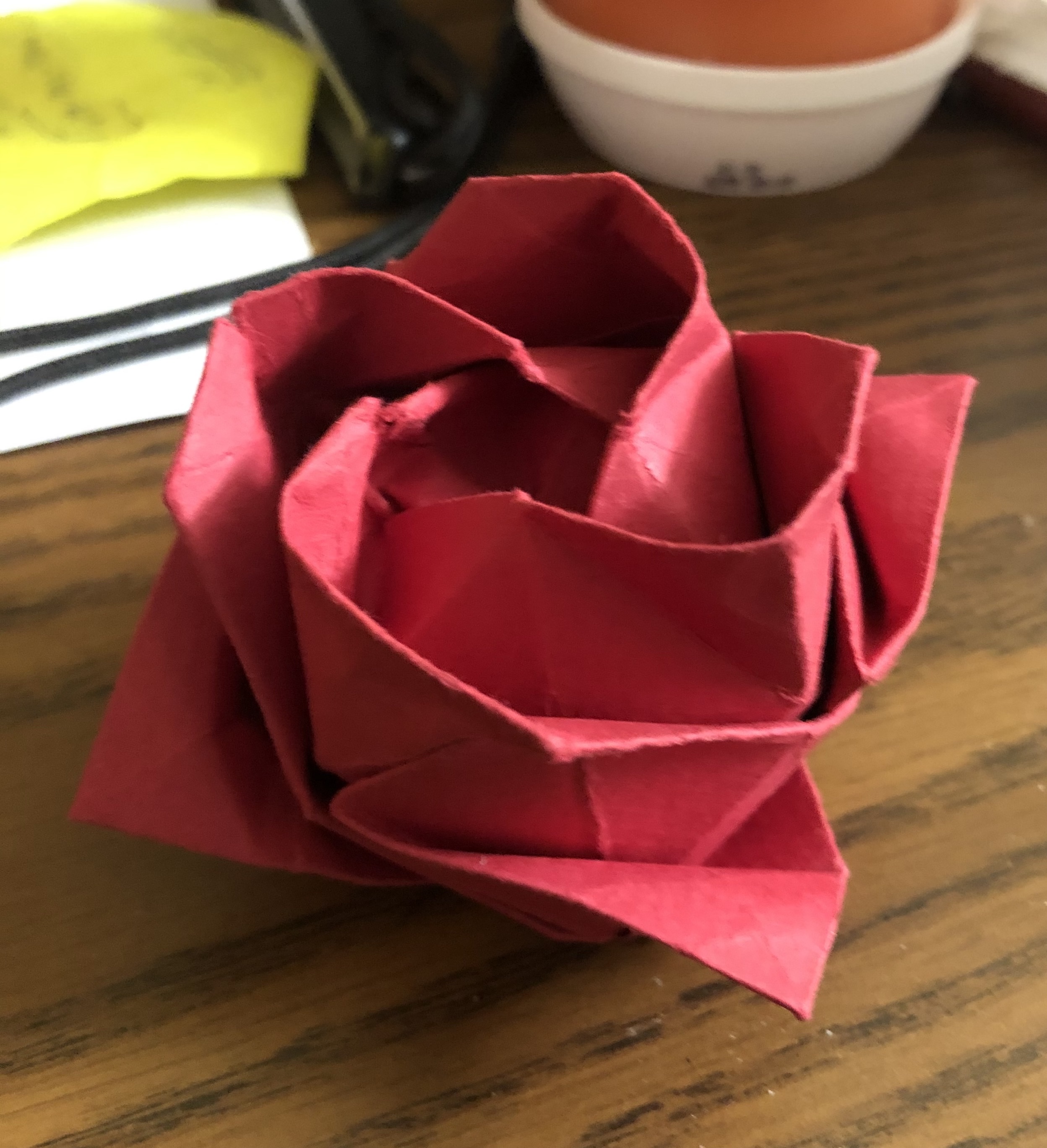
    Origami Rose


    Origami Engineering?

    Much of the recent development in origami research is supported by Professor Pualino. While serving as a program director for the National Science Foundation he introduced the idea of origami engineering as a topic for the NSF’s Emerging Frontiers in Research and Innovation. Professor Paulino’s research focuses on the advancements of material science with the goal to create a positive influence in the world.

    A great example of origami in practice is the Miura-Ori structure. The Miura-Ori is one of the most famous patterns in origami engineering, and is one of the technique Professor Paulino introduced to Origami Club members. It is a compact tube structure that is easily able to transported, combined, and layered. It helps demonstrate many of the key components of origami, while also being easy to fold.

    Professor Paulino, along with Tomohiro Tachi and Evgueni Filipov, have even developed a unique new origami tube structure based on the Miura-Ori pattern.

    Miura-Ori

    I’ve learned so much during my short time at orgami club, and I wanted to share it with you! Hopefully you see the art of origami is a extremely versatile medium. I’m passionate about the intersections of art andtechnology, and the innovations this combination can bring to the world. This also proves there there is always something in STEM that you can find that could interest you!
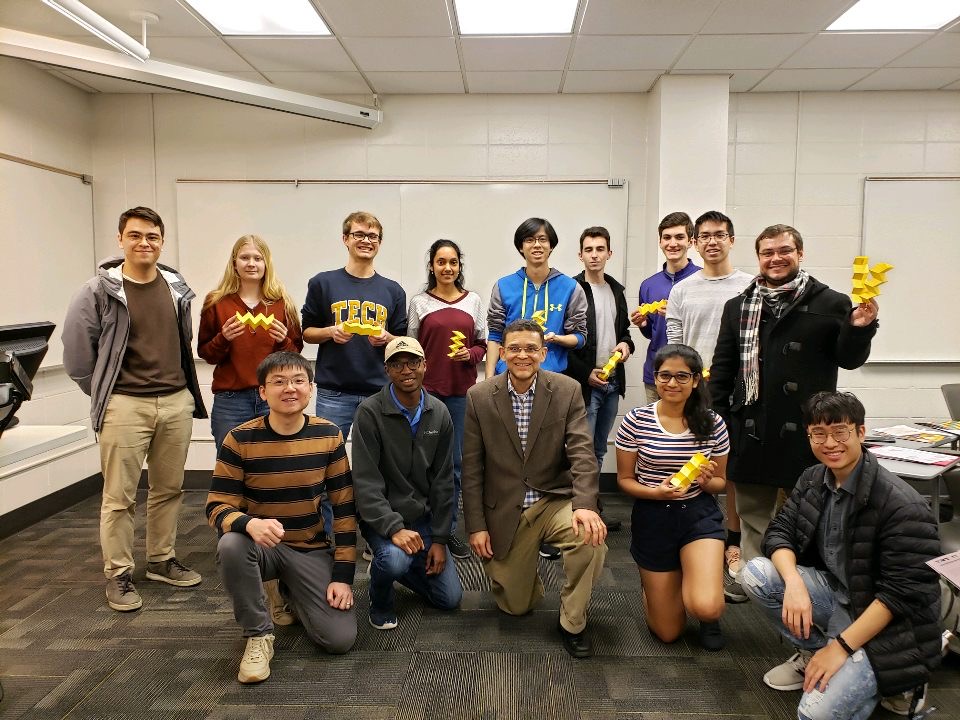
    Origami Club group picture.


    Sources

    (n.d.). Retrieved from https://engineering.nd.edu/spotlights/1BusEng1st20004000TurnerApplicationPackageComplete.pdf

    BETWEEN THE FOLDS | History of Origami | Independent Lens. (n.d.). Retrieved from https://www.pbs.org/independentlens/between-the-folds/history.html

    Purby , T. (n.d.). The Class, The Art, The Future .
     

  • Making Bad Decisions: The Science of Decision-Making

    MAKING BAD DECISIONS

    Ever wonder why you make such bad decisions. We make around 35,000 decisions every day, and they can’t all be good. There are many perspectives and exercises that we can explore as to why we make certain decisions, and, more importantly, why we think they are right!

    NEUROLOGY AND ECONOMICS?

    Our decision-making process has some innate problems. One of the major goals of neuroscientists is to better understand how information is represented in the brain, and how that information is interpreted and used for decision making. The brain is a powerful organ and requires the most amount of energy within the body. Because the brain performs so many mechanisms simultaneously. The efficient coding hypothesis is the process of the brain making predictions that allow neurons to better interpret and transmit information. Economists have spent many years studying the mechanisms behind irrational choices. With the emergence of books like Freakonomics, economic theory has been applied to a wide array of subjects.

    Exercise #1: Picking a candy bar

    Try this experiment with one of your friends.

    1. Go to the store, and get a variety of different candy bars. Make sure to get your friend’s favorite
    2. Place your friend’s favorite candy bar, and three other candy bars.
    3. Ask your friend to choose one of them. And record their choice.
    4. Now place all of the candy bars you have on the table.
    5. Ask your friend to choose the one they want. And record their choice.
    6. Now place your friend’s first choice and second choice on the table. See if they are the same or different.

    This is an actual experiment that was done to see how people make decisions. When presented with a few options, participants would most often pick their favorite candy bar. However, when presented with over 20, they would often pick a candy bar that was not their favorite. When presented with their two choices, they would wonder why their decision variety between the two scenarios. This variability in decision making is what neuroscientists and economists seek to explore more of.

    IRRATIONAL PSYCHOLOGY AND PHILOSOPHY

    Exercise #2: Sellers and Choosers

    Here is a game you can play with your friend.

    1. There are two mugs, one for you, and one for your friend.
    2. The mug is really nice, but you also have the option to sell it. Write down the price at which you are willing to sell your beautiful mug. You are the seller.
    3. Your friend can have the option of having a mug or the money for the mug. They write down a price they think the mug is worth. They are the chooser. If their price is higher than your price, then they get your mug.

    This exercise is probably pretty confusing, but it shows something pretty cool

    You may be wondering going with this and what it has to do with irrational decision-making.    Here’s the thing,  if we played this a thousands of times and put people in different roles – sometimes the role of Seller and sometimes in the role of a Chooser, we would find people who are in the role fo the seller who place the prices significantly higher than the chooser. This means that if the mug is already yours, thank you think it is worth a lot more than a similar mug that isn’t yours. This showcases the irrational logic that plagues our every decision.

    STUPID TECHNOLOGY

    Technology is currently taking a greater and greater role in our lives. Due to its presence, actions that were previously done analog or by hand, have now been replaced with technical substitutes. This has impacted much of how we make decisions. One of the key components of technology is its ability to collect large amounts of data, which outmatches the brain. But, just like we have difficulties making decisions based on the information gathered by our brain, this problem increases substantially with the data collection done by technology. While on the surface it appears more data available leads to better decisions, research has shown that this is not the case.

    Exercise #3:

    This exercise is simple. You probable are dependent on navigation tools to get you to point A and B. Pick a destination, and without look at provided directions list out the route someone would need to take. The destination very short! Now give this to your friend, and wait for them at the destination. See if the decisions that you made helped them get to the destination!

    IT’S OK, WE AREN’T PERFECT

    Making bad decisions is a part of our life experiences. I find it fascinating that within all our efforts to portray ourselves as rational beings, we are forever consumed by irrational decisions. Hopefully these exercises allow you to explore your decision making mechanisms, and gain new insight on how you think…and all the bad decisions you make!!

    Sources:

    https://dzone.com/articles/technology-and-decision-making-a-complex-relations

    https://www.philosophytalk.org/blog/irrationality-human-decision-making

    https://www.quantamagazine.org/the-neuroscience-behind-bad-decisions-20160823/

  • A World with New Plastic

    THE PROBLEM

    Plastic pollution continues to be a growing environmental issue. Around 79% of plastic is gathered in either landfills or natural environments. Due to its inability to biodegrade, plastic has the power to damage natural resources and wildlife over and over again. Many people aim to recycle, but many plastic products can’t be repurposed due to combined additives. There have been many attempts at creating sustainable alternatives. Researcher at our very own Georgia Institute of Technology are researching ways to utilize crab shells and tree fibers, but few attempts provide actionable solutions that could be integrated into society. What if there was a new way to make plastic eco-friendly?

    WHAT IS PLASTIC?

    Plastic was never made to be recycled! The majority of plastic products are produced using crude oil which consists of polymers (chains of hydrogen and carbon). Once separated into lighter components called “fractions”, it is then separated again into “naphthas”. There are also two main types of plastic: Thermoplastic and Thermosets.  Thermoplastic can be softened when exposed to heat and hardened when cooled. Thermosets are polymers that cannot be changed once molded. Because there are so many different types of plastic with various materials, and specific properties, you can imagine the difficulties that come when trying to contain them in a sustainable way.

    NEW PLASTIC CHANGES EVERYTHING!!

    New Plastic is a new polymer material developed by Lawrence Berkley National Laboratory that has the ability to be recycled continuously! While many thermoplastics can be melted down, the array of additives used in them prevent them from being reused. This is why the majority of plastic is “downcycle”, which means it can’t be used for important utility items.

    However, a new material called polydiketoenamine, or PDK has been developed. With the aid of a highly acidic solution, additives can be separated from their polymer. This leaves behind high-quality monomers that can be “up-cycled”, and be reused for products of importance.

    COULD WE MAKE A NEW PLASTIC WORLD? MAYBE NOT

    New PDK products and applications are being explored by researchers, but could this process even be adopted. Reusing plastic has been deemed not profitable enough for companies, and conventional plastic is one of the cheapest materials to produce. With the other 18 billion pounds of plastic waste still in circulation, trying to sort the PDK plastic from different types of plastic poses even greater systematic problems. There are also many cultural and societal barriers that prevent sustainable change. The typical person doesn’t know which plastic is recyclable or may not even care.  It’s for time to tell if new sustainable practices like New Plastic stand a chance in our modern landscape.

    SOURCES:

    Soderstrom, A. (2018, August 7). Georgia Tech creates sustainable plastic from crab shells, tree fibers. Retrieved from https://www.ajc.com/business/georgia-tech-creates-sustainable-plastic-from-crab-shells-tree-fibers/pWetPwmYUp0BS33wwtk6RI/.

    Daley, J. (2019, May 8). This New Plastic Can Be Endlessly Recycled. Retrieved from https://www.smithsonianmag.com/smart-news/new-plastic-can-be-recycled-endlessly-180972130/.

    Statistics of the Year 2018: Winners announced. (0AD). Retrieved from https://www.statslife.org.uk/news/4026-statistics-of-the-year-2018-winners-announced.

  • Legend of Sumeria – Exploring science in a new way

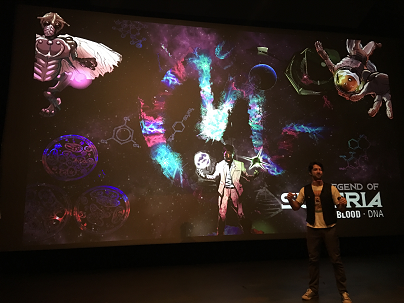
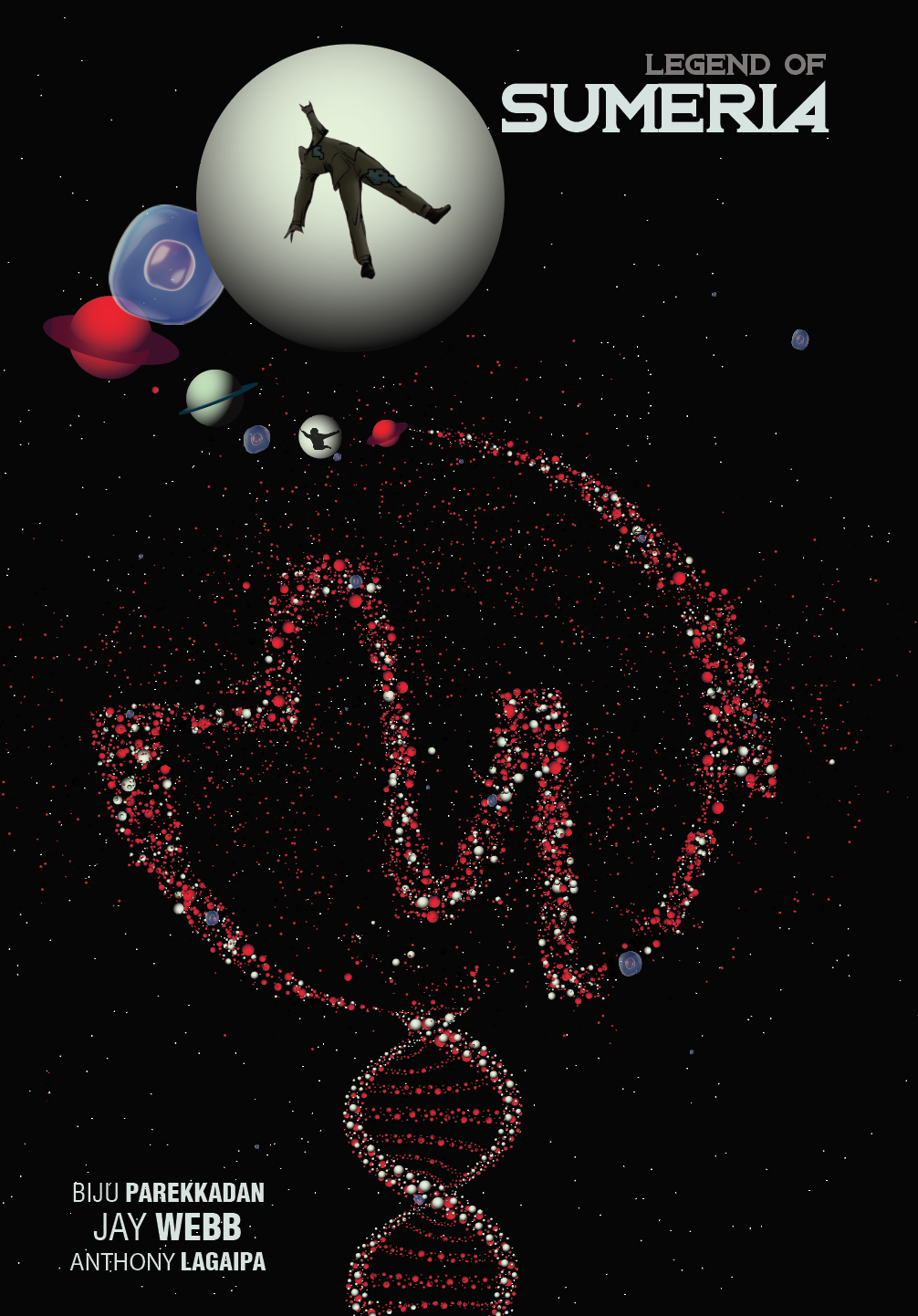
    I had the privilege to interview Biju Parakkeden; one of the co-creators of Legend of Sumeria, a thrilling new sci-fi graphic novel. Biju is a professor of bioengineering, and along with co-creator Jay Webb, and many of their illustrators,  they brought to life their views of modern development in science and how a possible future may play out.

    Add this to your summer reading list!
    Add this to your summer reading list!


    Ok, so a good place to start off would be a summary. For someone unfamiliar with Legend of Sumeria what would you tell them?

    A brief summary: Sumeria asks the question of what happens to society if powerful technology gets into the wrong hands. We use real science to dramatize current events so that readers understand that the innovations of today can potentially be the source of our own demise, without ethical and moral guidance by the public.

    Why did you decide to take on this project? How was the idea created?

    It started as a fun exploration of the question, what would happen to society if there was a cure-all treatment for the one thing that provides evolutionary pressure on the human species: infectious disease. With the help of Jay, who has experience with film production, we broadened the story greatly and made a set of characters with relatable struggles as they navigate through this alternate reality where technologies (especially genetic technologies) have become extremely pervasive. We hope it can spur public discussion about the ethics of these futuristic projects before they really become engrained in society by the might of those who are pushing these limits.

    In that initial phase, did you have a target audience? If so how did that shape your decisions?

    We wanted to target scientists and cerebral readers given the topics. These folks are inherently visual learners and are embracing the story. Moreover, we are finding great enthusiasm from the bioethics and philosophy community and this looks like a great niche for us to be.

    What were some of the challenges in communicating science in this art form?

    We wanted to balance real science with something that was understandable to a non-scientific audience. In many cases there were story arcs that needed a scientific theory to drive it and we couldn’t come up with a viable theory then we moved on. We really wanted to stay true to the science as much as possible and not provide fluff.

    How did your partnership with Jay Webb come about, and how was that collaboration?

    Jay and I are best friends and have always written creatively though independently. This was our first venture together and his contribution really enriched the story and characters with a unique world view and exciting plot twists that I myself did not have experience in. I balanced his artistic vision with instilling modern, current events on the technology side and we had many great discussions to marry the two in a narrative way.


    IMG_4992


    What are your thoughts on educating others in this way? (In regards to communicating science)

    We are highly motivated to work with other professors and scientists to take this concept of making science fiction and embed it within educational programs. I continue to be encouraged by the interest in the bioethics community to use this approach as a tool to introduce a bioethics case for students to then discuss in class. There are clearly a lot of creative scientists out there and we would like to support them with a professional illustration and narration team to have their stories come to life through partnering with Dream Novels LLC, our publishing entity.

    Was there anything you had to exclude, or what was your process in deciding what should/should not be included?

    We excluded areas that were not supported by a viable scientific theory. Furthermore, we tried to not alienate any group and created a diverse set of characters to be inclusive of all. These technologies and diseases in our story are agnostic to race, creed, or religion so we made sure that we showed how many backgrounds reacted to this new society.

    Science fiction of today is like the science of tomorrow? Do you feel like some of the ideas explored in sci-fi and the ideas explored in Legend of Sumeria are possible? And what is the benefit of exploring science fiction in this way?

    Absolutely, many are rooted in real technologies of today. I think the benefit of science fiction is that it enables creativity to really broaden what is possible. In many ways, it is the starting point of many the projects in my lab that start with a “sci-fi” idea and then reduce it to practice through a series of experiments.


    IMG_5001

    In your opinion, what is the future of using art or other creative media as a way to communicate and educate others about science?

    I strongly believe that artists and scientists should come together more to communicate complex ideas. By their nature, artists are story tellers in ways that spark an emotional response in their audience and I feel the science community can benefit from this fact rather than purely a factual presentation that lacks that human touch.

    Do you have any future plans? (Another graphic novel or a follow up to Legend of Sumeria)

    This first book is one of a trilogy. Once we understand our fan base, we are excited to do the next book hopefully with the support of a large publishing group who recognizes the opportunity here.

    What is the main concept you would want your audience to take away from Legend of Sumeria?

    Before asking “can I do this?”, be mindful and first ask “should we do this?”


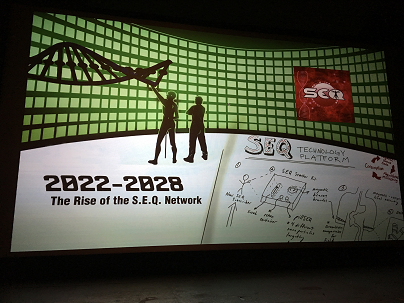
    Parakkeden advises individuals in science-based fields to find new and inventive ways to communicate information. Zyndo, a product he developed, displays an augmented digital reality of the book. Parakkeden and Webb’s work shows the potential of science being communicated effectively to the mainstream, and hopefully inspiring people to learn more about the subject.


  • Can Sound Be Used As a Weapon?

    IMG_0249

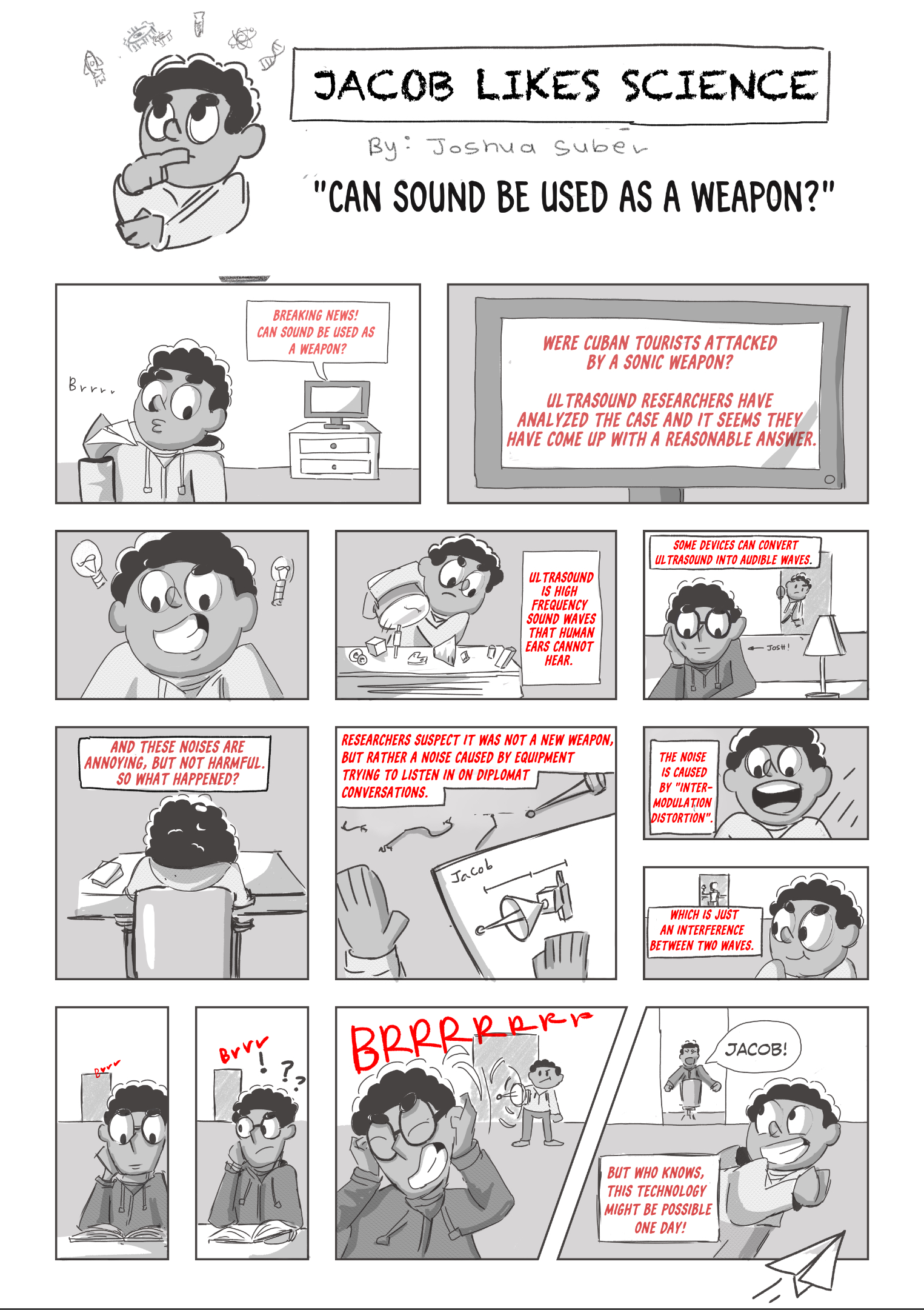
    Want to learn more about sonic weapons? Read this!

    Fu, K. (2018, March 01). Can Sound Be Used As a Weapon? Retrieved March 05, 2018, from https://www.livescience.com/61904-can-sound-be-a-weapon.html