Author: Kelsey Brew

  • Collaboration is Key!

    As a senior in college, about to graduate with an engineering degree, I’ve come to actually appreciate the dreaded “group project” – and trust me, working with others can be very challenging. But on reflection, I can really see how they also build key skills in collaboration and communication, that are especially important in STEM fields believe it or not.

    In classes: working with different people, even if you all have the same major, can offer different perspectives, ideas, ways of thinking that you wouldn’t have thought up alone. The benefits of working in a group are not just division of labor – although that’s also important, as you quickly learn that one person can’t do everything without burning out – Group projects also teach the art of compromise (and it is a tough one to learn).

    One of my biggest projects in my undergrad has been my senior Capstone project: a more practical application of the things we’ve learned in our undergraduate classes. For me in particular, working in an interdisciplinary group and coming up with our own idea for a product, even with all my experience working in groups, it was a bit mind-opening to see what could be done with everyone offering different skills.

    It let me see how other majors approach the same sort of problem from different angles, with different concerns. It also opened my eyes to how you never really know where which skills will come into play, going into a project. Despite being an engineer myself, I learned to lean a lot more on my colleages who had deeper expertise or were more comfortable with actual manufacturing – instead, I found myself unexpectedly using a lot of my intersocial and organizational skills; understanding that this was an area that I excelled in, that my teammates in turn had less experience with.

    For our group in particular, our chosen project of making a new device and app that would potentially be brought to market required a large range of skills: some people were devoted to marketing and aesthetic design, some were focused on the coding of the app and device itself, some were focused on customer outreach and feedback, while others focused more on making the device itself.

    Everyone did their part, but communication was absolutely key to make sure the rest of the team was kept up to date on your own progress, as well as making sure your aspect’s concerns were known. For example, if someone on the coding team knows that it’d be practically impossible to code for some function, then it’s key that they communicate that to the marketing team before they claim that function is an important feature. Or if someone conducting interviews with customers learns that they absolutely won’t want a product that’s too heavy, it’s important that that gets passed along to the group members handling manufacturing so they know not to use heavy materials.

    Outside of normal class projects, like for this group, STEMComm and Charged Magazine, I’ve seen how through collaboration you can learn and be exposed to so much more than you would normally – from reading the articles on new topics from my teammates, to learning about the varied projects research labs completely removed from my field are making, and presenting that to the public.

    And even outside of a school environment, out in the real world, you can find some pretty nifty examples of science happening from collaboration.
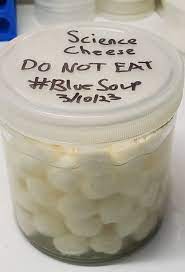
    Take the ongoing “#BlueSoup” saga over on microbiology-Twitter, where a microbiologist shared her amazement at how some old soup she had in the back of the fridge had turned blue – then, through encouragement of her fellow scientists, decided to take a sample of the soup to take back to the lab, to find out just what bacteria or microbe caused the color change. And from there, other labs requested samples, different experiments were conducted, DNA is being sequenced, and now several researchers are involved and collaborating on this interesting little question – potentially even working towards publishing their findings in the future!

    Collaboration is so very important for many things in life, and especially in STEM fields – so for any aspiring scientists, try not to shy away from learning it!
  • The Flower Power Behind Gene Silencing

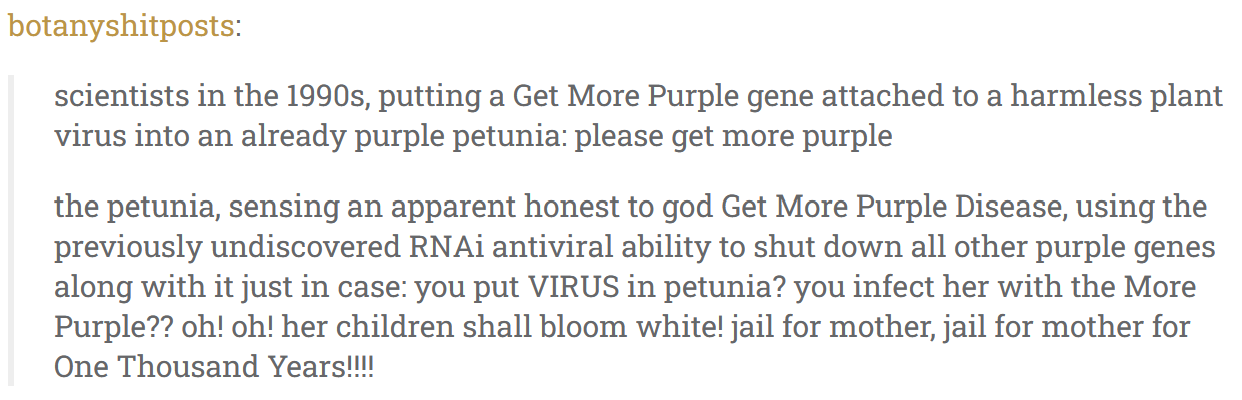
    Have you heard the story about some scientists trying to turn purple petunias more purple, and instead the petunias threw a tantrum and turned white?

    The theory I heard was that because the method to insert new genes into an organism usually involves using a modified virus, when the plant was “infected” with the extra purple, it’s “immune system” treated the gene like an attack and as a result just it shut down all together – and thus, white flowers.

    Textpost that reads: "scientists in the 1990s, putting a Get More Purple gene attached to a harmless plant virus into an already purple petunia: please get more purple the petunia, sensing an apparent honest to god Get More Purple Disease, using the previously undiscovered RNAi antiviral ability to shut down all other purple genes along with it just in case: you put VIRUS in petunia? you infect her with the More Purple?? oh! oh! her children shall bloom white! jail for mother, jail for mother for One Thousand Years!!!!"

    IT TURNS OUT THOUGH, it’s a bit more complex than even that – and eventually, this little failed experiment led to the discovery of a major gene editing tool.

    So back in the 90’s, the scientist who tried to purple-fy the petunias (Richard Jorgensen) actually added the gene through transfection instead of transduction – essentially meaning they got the gene into the cell by non-viral means.

    HOWEVER, despite not actually being exposed to a virus, those petunias did respond like they were being attacked. This is because inserting foreign genetic material is exactly how viruses work, and in response, most organisms’ from plants to worms to humans, have developed protections against it.

    And this is especially true for RNA, since that’s what most viruses are made of – and what most cells need to defend against.

    A quick overview of RNA, for the unfamiliar. It’s a nucleic acid like DNA (“ribonucleic acid”), and it’s essentially DNA’s little brother. If DNA holds the blueprints for all the different proteins and things a cell needs to make, RNA is the way those instructions are translated and then messaged to the rest of the cell – AKA mRNA. This comes into play with viruses, because they function essentially like spam mail – they attack cells and add their own RNA instructions, which tricks and hijacks the host cell into making whatever the virus wants (usually more of itself). So cells have a defense to combat this.

    For one, mRNA on the job only has one strand (instead of 2 like DNA), so that it’s instructions can be read easily. However, nucleic acids come in pairs, so if another strand of RNA happens to come along that has the right matching pair, the two strands can get stuck together like legos – blocking the instructions and stopping the expression of that gene/protein. This is what researchers figured happened with the petunias, and several similar experiments with worms. However, another surprise occurred when researchers Andrew Fire and Craig Mello tried to do a control experiment where they inserted cells with a strand of mRNA that was supposed to have no effect – they still saw gene silencing! 

    Looking deeper into it, they found that the cause was actually double strands of RNA that accidentally formed before injection. Apparently these pre-paired RNA strands were even better at stopping gene expression than a single strand – which raised more questions as to why.

    And here’s where viral defense come in. Double strands of RNA (dsRNA) don’t really occur normally in cells, but they ARE common in certain viruses. So what these researchers discovered (and won a Nobel Prize for), was that plant and animal cells have a naturally occurring enzyme call Dicer that (as you might guess) finds and dices these dsRNA into little parts; and then it goes even further and takes those un-paired parts and uses them to hunt down and deactivate their partners – effectively erasing whatever virus, protein, or gene that was encoded in the targeted RNA. This is called the RNA interference pathway, or RNAi.

    Now it was known at this point that, at least in mammals, introducing long strands of dsRNA for potential gene therapies/medicines wasn’t really possible, since they often triggered a larger immune response. However, learning about this silencing method inside cells allowed scientists to determine that very small strands of dsRNA could be used to reduce and effectively erase a gene or protein. And these small interfering RNA (siRNA) have become key to creating groundbreaking new gene therapies, like treatments for debilitating genetic diseases, HIV, and potentially even cancer. 

    Quite a lot, to come from a seemingly failed flower experiment!


    https://en.wikipedia.org/wiki/Virus#cite_note-Collier9699-73

    https://www.independent.co.uk/news/science/how-an-experiment-to-change-the-colour-of-a-petunia-led-to-a-breakthrough-in-the-treatment-of-cancer-and-aids-5547175.html

    https://www.genengnews.com/insights/plucking-rnai-from-the-gene-silencing-nettle/

    https://faseb.onlinelibrary.wiley.com/doi/10.1096/fj.06-6014rev

  • Carcinization: Evolution’s Favorite Shape is Crab

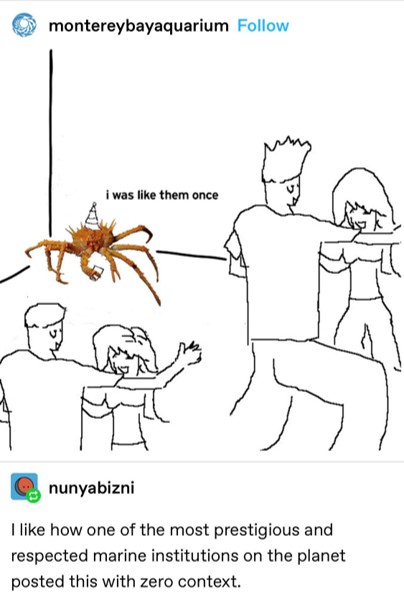
    Evolution is a very complicated field – and one of the bigger long-standing questions is crabs! Specifically, why animals keep evolving into them!

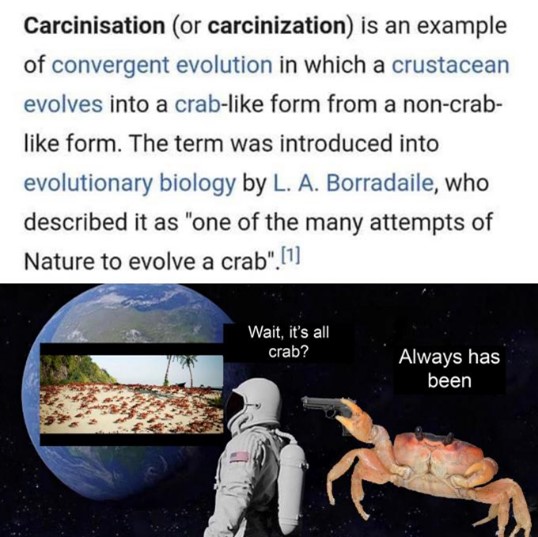
    The phenomenon of animals, or specifically crustaceans, evolving into a crab-like shape has occurred so often it has a name: carcinization. The term was coined way back in 1916, by evolutionary biologist Lancelot Borradaile, and today it has risen back into public vocabulary through the power…of memes.


    “Either die a hero, or live long enough to become crab”

    But memes aside, this phenomenon raises several questions:

    Question 1: What is a crab?

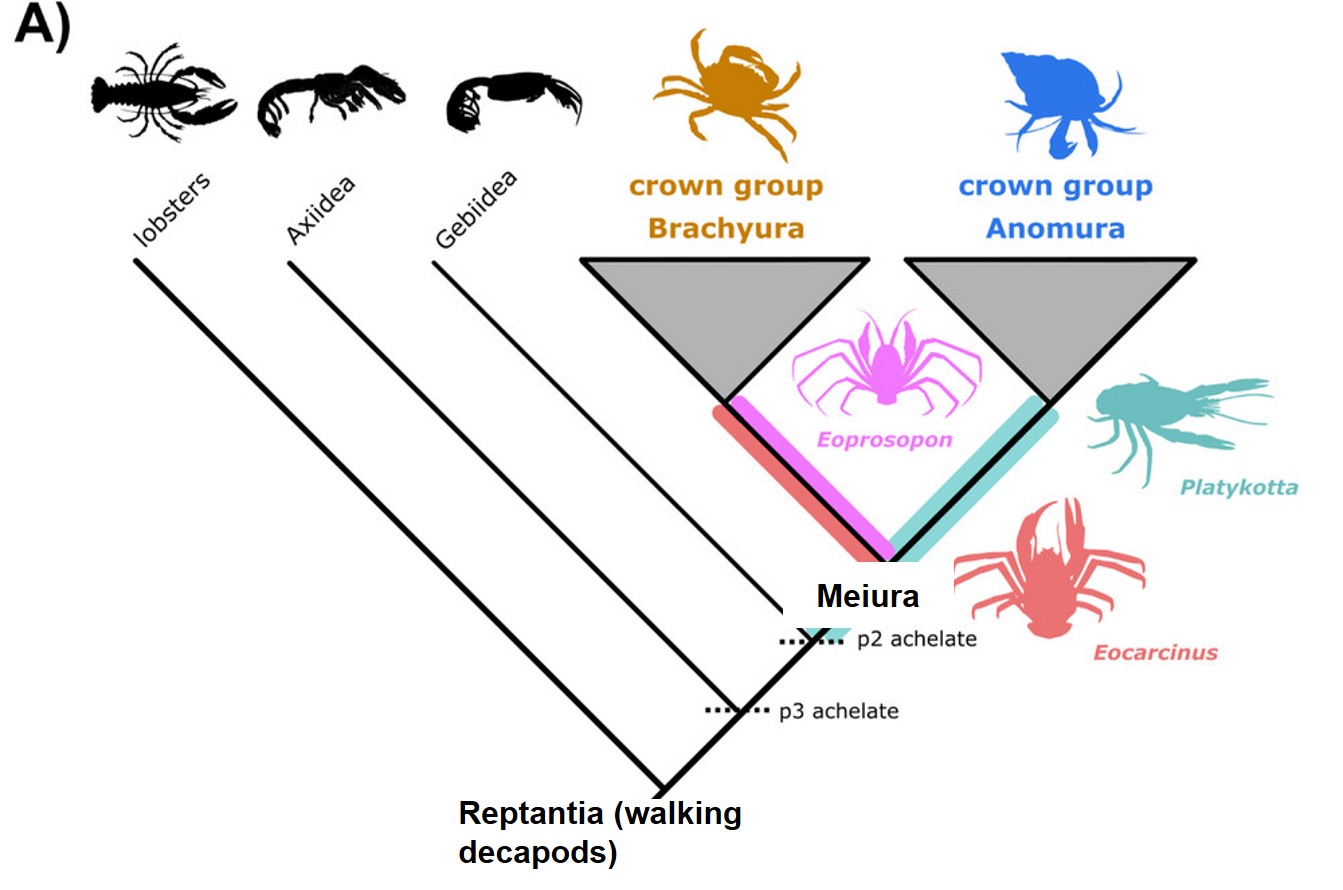
    (Wolfe et al., 2021)

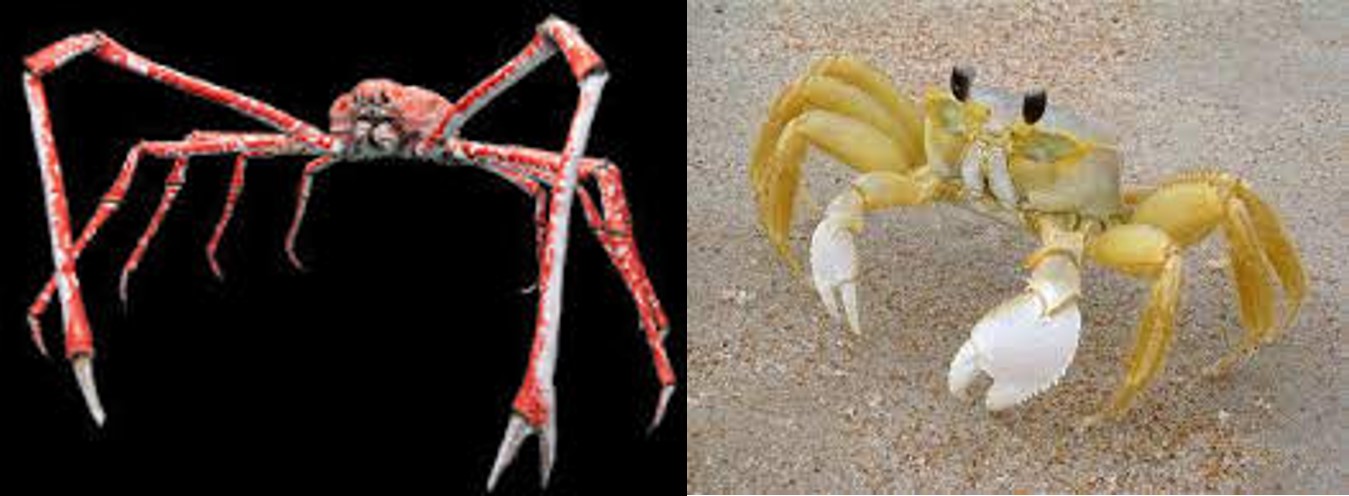
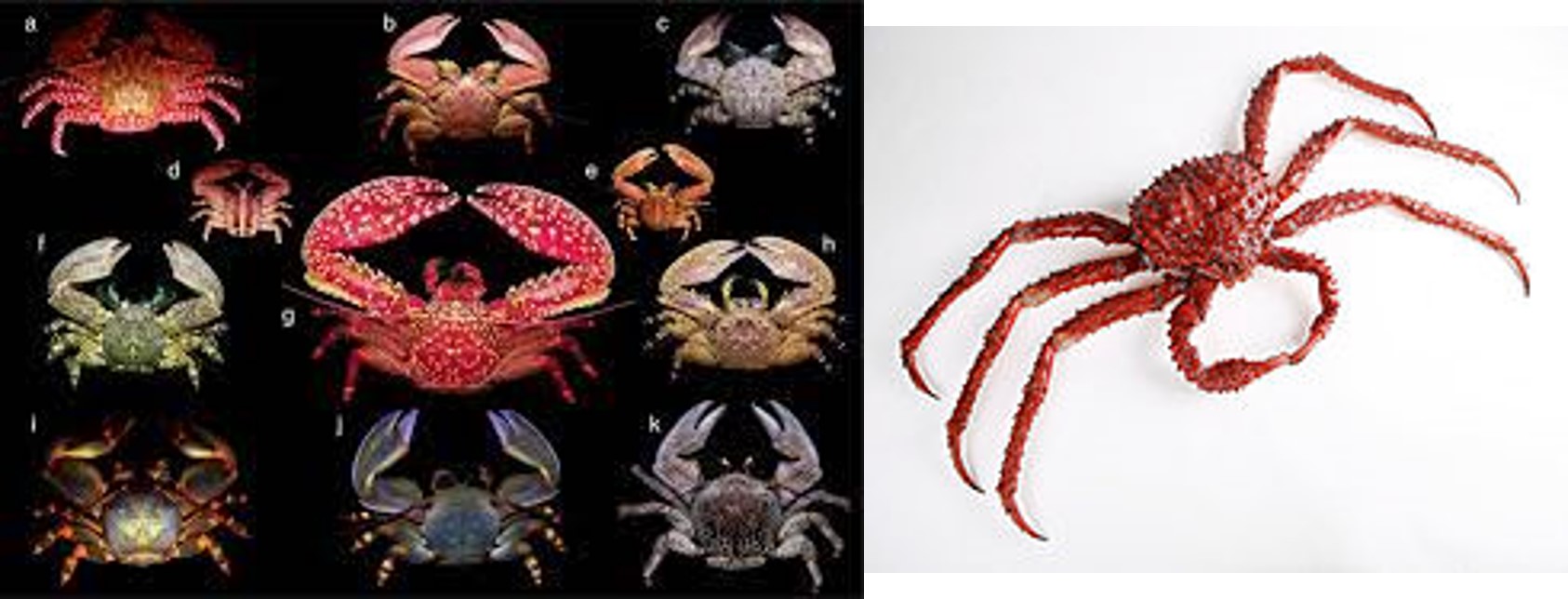
    Crabs – the animals we call crabs at least – are all a part of the evolutionary order Decapoda (meaning literally “ten feet”), under the phylum Arthropoda, subphylum Crustacea, and clade Meiura (Kazlev, 2022). “True crabs” all fall under the infraorder Brachyura. They include species such as the Japanese spider crab, blue land crabs, ghost crabs, snow crabs, etc., and can be most easily differentiated by having 4 pairs of walking legs.

    Question 2: What is not a crab?

    Or at least, who are the fakes?

    “False crabs” are largely on the neighboring Anomura branch – hermit crabs, porcelain crabs, coconut crab, king crabs even, are all false crabs. They tend to have 3 visible pairs of walking legs, with the 4th pair often smaller or hidden under their shell.

    To put it shortly, these are crabs:

    These are not:

    Get it? Nope

    Question 3: How does one become a crab?

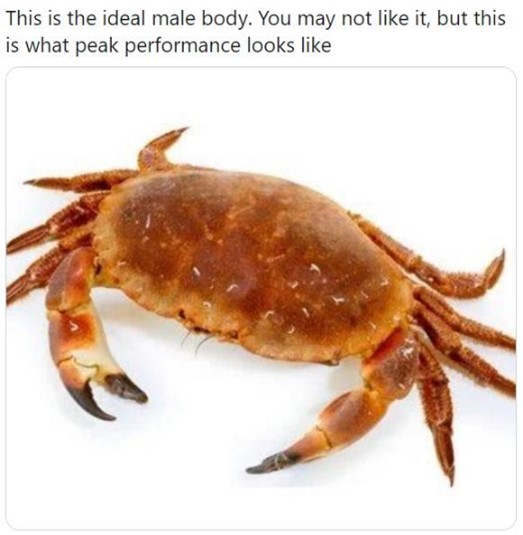
    The process of carcinization is characterized by the crustacean’s carapace becoming flat and wide, while it’s abdomen or “pleon” shorten and curves underneath. The appendages that would normally form the tail of a lobster either shrink or disappear. Additionally, the plates that make of the underside, or ventral, part of the animal’s shell become fused into one. It’s important to note too, that not all these steps have to occur – many undergo “partial” carcinization, such as the hermit crab, who keeps their tail (Wolfe et al., 2021).

    Final question: Why?

    Why become a crab? Potentially, the crab form provides more protection and, surprisingly, flexibility for crustaceans (Green, 2020). With the pleon tucked under the carapace, there’s less surface area for predators to grab; and with a more compact body, crabs can scuttle around pretty quickly. They can get into smaller cracks than their more lobster-like compatriots.

    Why are scientists studying this? Right now, carcinization serves as a frequent and recognizable pattern of evolution – AKA convergent evolution, where animals of a similar niche evolve similar features. For evolutionary biologists, this provides a potential wealth of data for seeing trends in how several species evolved, and predicting how even more may evolve in the future. Additionally, as noted by Wolfe et al., the fact that the widening of the carapace and curling of the abdomen evolves together so frequently implies that the two phenotypes may be linked developmentally, or even genetically!

    Why is this a meme???

    To be frank, this quirk of evolution is just…funny! Crabs are such a random, funky little animal – they alone are a sort of meme! So when people find out that this strange little creature, for some reason, keeps popping up in nature, it surprises them. Not only does a seemingly random process like evolution apparently have a pattern – the pattern is crabs; and it’s happened so often that there’s a name for it!

    So in short:

    Sources:

    C_Mill24. (2022, October 20). Carcinization. Know Your Meme.  https://knowyourmeme.com/memes/carcinization

    Green, H. (2020). Why Do Things Keep Evolving Into Crabs? PBS Eons. YouTube. https://www.youtube.com/watch?v=wvfR3XLXPvw.

    Kazlev, M. A. (n.d.). Decapoda: Anomura. Palaeos Arthropods: Crustacea: Decapoda: Meiura. http://palaeos.com/metazoa/arthropoda/decapoda/meiura.html

    Wikimedia Foundation. (2022, November 20). Carcinisation. Wikipedia. https://en.wikipedia.org/wiki/Carcinisation#:~:text=Carcinisation%20(or%20carcinization)%20is%20an,Nature%20to%20evolve%20a%20crab%22.

    Wolfe, J. M., Luque, J., & Bracken‐Grissom, H. D. (2021). How to become a crab: Phenotypic constraints on a recurring body plan. BioEssays, 43(5), 2100020. https://doi.org/10.1002/bies.202100020

  • Math is Friend, Not Foe

    Today I’d like to talk about everyone’s favorite, least-favorite subject in school: Math

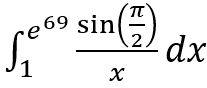
    Math can seem very scary and complicated. And this feeling is very valid to have – math does get more complicated the more you learn. When faced with a problem like:one can really long for the days of “If Sally has 5 apples and gives away 3 how many apples remain?”.

    But the beautiful thing about it, is that all math can be simplified. It builds up into complicated equations and problems, but it can always be broken back down to simple things!

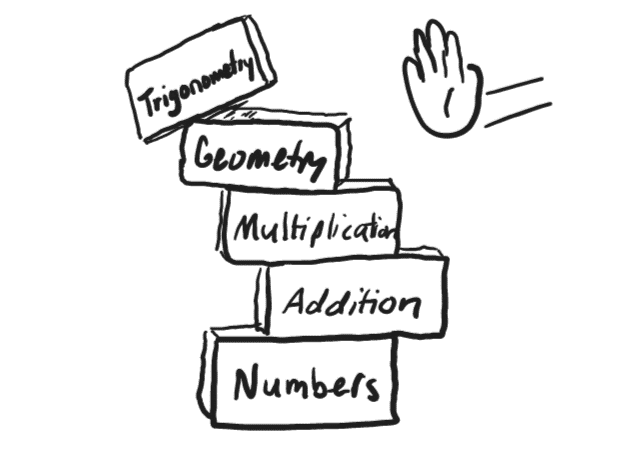
     For example, if you know that sin(π/2) = 1, and how integrals work, you can solve this problem pretty easily – BUT therein lies the rub. Math is all just building blocks, but the key is knowing and sometimes memorizing what blocks to use (which is never fun). Just like it’s hard to understand 5 – 3 if you’re not familiar with counting, it’s almost impossible to answer that question if you’ve never been taught an integral or what sine is. 

    People place so much fear, stigma, and weight on doing math that it becomes so intimidating. So when faced with something strange and hard seeming, they panic and assume “I can never understand this”. BUT THEY CAN!

    We often don’t think about it, but back in elementary when everything about numbers and addition was new, it seemed so confusing then too.

    When I was in high school, I once tutored a fifth grader who needed help with long division, and I found myself having to relearn some key concepts that I’d forgotten and hadn’t thought about in years! I noticed the student was adding the large numbers incorrectly as they worked, so I said, “Oh you have to carry the one here.” To which they responded: “Why?”

    And I had to pause, and then think about because, why DO we do that? I knew it was something to do with numbers no longer being the same category but how did I explain that to someone unfamiliar? Which led me down a bit of a rabbit hole of looking up elementary school textbooks and lesson plans. Because without understanding something like “place values” (ones, tens, hundreds) it’s really hard to understand why you need to “carry a one” in long multiplication and division!

    Even something as retroactively simple as division was once completely baffling – but once you learn it, it becomes instinct. The same can be said for the most complex of mathematics: once you understand its rules, nothing can stop you! 

    If you can remember the rules of a triangle, you can remember sine. If you can understand a grid, you can build up to calculus and beyond.

    Now the hard part is learning all of this for the first time – especially when many people have been burnt out from math, or set at a disadvantage in the past by bad explanations and inattentive teachers who never helped them understand. That is the true tragedy of math, and admittedly makes the subject a lot harder for most. 

    But I’m here to say, never doubt yourself! Even old dogs can learn new tricks, and you can always learn the blocks and break it down when facing “complex” math!

    Think like a gamer: there are challenges, but with enough effort, grinding, and practice you can overcome it (and there’s nothing wrong with coming back later)!

    Math is all just building blocks at the end of the day: simple individual concepts on their own, but you can assemble them into complex structures – amazing but confusing, equations that can describe the way our world and universe work – that can be very intimidating. However, I think it’s very comforting to remember from time to time that even the most intricate towers are still made of individual bricks; and with enough time and effort, you CAN break it back down!