Author: Kayla Dang

  • The Dangers of Dye

    Today, one of the most common issues someone will find scrolling through social media is with fashion. One of the problems lies in overconsumption, where people are buying way more clothes than they need, and throw out perfectly good pieces because they no longer like them.

    However, it is also important to consider the processes that it takes to make those clothes and the effect that those processes may have on the environment as well.


    Dyes in Textiles: Why is it an Issue?

    Clothes sold in stores can come in a plethora of colors. However, it is quite obvious that the fabric does not always start off that color. Fabrics must be dyed to be made into clothing, but the dying process can actually be harmful to the planet.

    However, dying fabric requires its own process; color is not simply added to a garment. First, the fabric must be stripped of its impurities and prepared with a chemical solution to ensure that the fabric can maintain an even color (Khattab, Abdelrahman, & Rehan, 2020). Only then can dye be added to the product, where it is later finished to ensure that the clothing maintains its color. 

    How is this possibly an issue? Well, not only is the dye in fabrics harmful to the planet, but it is directly harmful to consumers as well. While some customers have reported irritated skin due to their clothing, others who work as employees in the textile industry have reported developing contact dermatitis and asthma from prolonged exposure to the dye materials (Khattab, Abdelrahman, & Rehan, 2020). Additionally, the amount of water used in the fabric dyeing process has also resulted in a large amount of wastewater, which has found its way into streams. This has caused harmful chemicals to spread to the soil, which in return has caused harm to plants and animals in these areas. (Khattab, Abdelrahman, & Rehan, 2020).


    Dyeing with Algae

    One of the main solutions to this issue involve the use of algae, a group of photosynthetic organisms commonly found in the water. This means that they are capable of making their own food, consuming the carbon dioxide in the environment and releasing oxygen as a byproduct.

    According to one research article, algae reproduces rather quickly, taking mere hours to produce large populations (Ayyanar et al., 2023). Additionally, algae would not compete for the same resources that typical plants would, since it can grow in sea water and waste water. This means that producing algae could possibly take fewer resources than the typical agriculture used for textiles. 

    The article also writes about how algae has a large number of uses, so producing a large amount would not go to waste. Not only can algae be used to screen the waste water that is so harmful to our environment, but it can also be used to make plastics, yarn, fertilizers, and even cosmetics (Ayyanar et al., 2023). Moreover, algae is biodegradable, decomposing at a rate that is even faster than the cotton that is traditionally used to make fabrics (Ayyanar et al., 2023). This means that farming algae could serve as a potential solution to reducing the major environmental effects of the clothing industry in today’s world.

    Although it does not hold the answer to all of the problems with the industry, it can be a great stepping stone towards progress.


    Works Cited

    Khattab, T.A., Abdelrahman, M.S. & Rehan, M. (2020). Textile dyeing industry: environmental impacts and remediation. Environ Sci Pollut Res 27, 3803–3818. https://doi.org/10.1007/s11356-019-07137-z 

    Ayyanar, I., Bharathi, S.J. G., Ravindran, A., Rajendran, R., Arulprakasam, A., Vellaisamy, B. (2023) Chapter 14 – Algae materials for textile industries,In Developments in Applied Microbiology and Biotechnology, Algae Materials, Academic Press, 231-246, ISBN 9780443188169, https://doi.org/10.1016/B978-0-443-18816-9.00018-6. 
  • Gacha or Gambling?

    When someone tells you that they have a gambling addiction, what is the first thing you think of? The most stereotypical image would be a person in the casino, playing on slot machines. Perhaps the first thing that comes to mind is online sports betting instead. But has anyone considered video games?


    Rising in Popularity: GACHA

    One of the most popular genres of games that have developed throughout the past few years include a “gacha” system. The term stems from the Japanese word “gachapon”, which refers to small machines where people can exchange coins for a random toy capsule (Reyes, 2025). 

    According to Epic Games, some of their most popular games include Genshin Impact, Honkai Star Rail, Wuthering Waves, Zenless Zone Zero, and Where Winds Meet all employ a gacha system. While these games are free to play, they often include gacha systems as a way to win prizes such as playable characters, weapons, or cosmetics. Users can either play the game and earn in-game currency or pay real money to buy “pulls” for these games. The “pulls” are then used in the gacha system, where players try their chances at getting the prize that they need. These are often characters or cosmetics that are quite rare, incentivizing players to keep playing or spending money to get the prizes that they want. 

    In a way, this can be seen as gambling. Players are often paying real money for the random chance at winning a prize that is not guaranteed to them. Although real money is not required, some games make it difficult to earn pulls through gameplay only. 


    The Psychology of Addiction

     Addiction lacks a universal definition in psychology, making it difficult to determine what is truly an addiction or not. According to one article, some have defined addiction as “continual, excessive use and ‘loss of control’” of something to the point of dependence (Wanigaratne, 2006). In other words, addiction can be defined as the use of something to the point where it is no longer controllable for a person. They simply keep going back to it, as if they are dependent on it. With this definition, anything can be an addiction, not just substances. Sure, things like drugs and alcohol are some of the most common ideas associated with addiction, but with this definition, recreational activities such as games or gambling can be addictive as well.

    There are several different theories that psychologists have come up with to try and explain addiction. Some have theorized that it is a result of conditioning, where the results of the addictive behavior can act as positive reinforcers the same way food or sex have been used in the conditioning process (Wanigaratne, 2006). For example, gacha games often offer the most desirable prizes as the rarest ones, making it quite difficult for players to get the item that they want. However, these games often have a “pity system”, where there is a guaranteed chance of receiving a rarer item based on the number of times a player has already pulled (Reyes, 2025). Although the specific item that the player wants is not guaranteed, they are given a reward for continuing to feed into the behavior more and more. Additionally, once the player receives the item that they want, the event can act as a positive reinforcer, conditioning players to continue to buy more pulls as they did before. 


    Issues with Gambling on the Internet

    As always, enjoying mobile games or betting does not always equal addiction. However, it is important to understand how making such games available to the general public can be dangerous. For instance, the games on the Internet have certainly made gambling much more accessible, which can make it easier for people to develop harmful habits. Some studies have noted that mobile app users typically visit the apps on their phone on a frequent, habitual basis, putting those who gamble on the Internet at a higher risk than those who do not (James, O’Malley, & Tunney, 2016). Most of the games mentioned before are available on mobile devices as well, making them extremely easy to play at any time, anywhere. Although this does not necessarily mean that they can result in harmful habits, it is certainly easy for a person to play the game every single day and regularly come back to paying for more pulls whenever they want.

    This does not mean that gacha games should be banned overall, but it is important for parents and players to be careful when playing. Make sure to take breaks and think before making any big purchases on a game!


    Wanigaratne, S (2006). Psychology of addiction. Psychiatry, 5(12), 455-460. https://doi.org/10.1053/j.mppsy.2006.09.007 

    James, R.J.E., O’Malley, C., Tunney, R.J. (2016). Understanding the psychology of mobile gambling: A behavioral synthesis. British Journal of Psychology, 108(3), 608-625. https://doi.org/10.1111/bjop.12226 

    Reyes, J. (2025). Gacha games explained: Banners, pulls, pity systems, and more. Epic Games. https://store.epicgames.com/en-US/news/gacha-games-explained-banners-pulls-pity-systems-and-more 

  • A New Bumpy Buddy in the Deep Sea

    People often say that humans have only discovered 5% of the ocean to this day. While this exact number is often argued, it is no secret that much of the ocean is unknown to us. However, scientists have recently made a discovery of a new fish in the depths of the sea: the bumpy snailfish. 


    What is a snailfish?

    The bumpy snailfish, also known as Careproctus colliculi, belongs to the Lipradae family, which is one of the only few species on Earth that have adapted to live between what are considered the “abyssal deep” and “hadal deep” parts of the ocean (Scharzans & Gerringer, 2023). These parts of the ocean are typically extremely difficult to live in due to the immense water pressure, darkness, and lack of food. However, it seems that these depths are where snailfish (fish in the Lipradae family) thrive. 

    There are currently 450 accepted species of snailfish. Scientists identify them through their lack of scales along with a suction disk on their pelvis, which allow them to attach to other surfaces (Gerringer et al., 2025).


    Discovery of the Bumpy Snailfish 

    According to the Monterey Bay Aquarium Research Institute, the fish have large heads, while the rest of the body is made up of a jelly-like substance (Nava, 2025). Snailfish are given their name because they have a disk on their bellies that allow them to attach to the ocean floor, much like a snail would (Nava, 2025). This newly discovered version of the snailfish is a light pink color, a round head, large eyes, and a bumpy texture on its skin. Thus, it was named the bumpy snailfish. 

    Researchers describe the hadal trenches as depths greater than 6000 meters below sea level, where it is easier to study snailfish that father around bait falls (Gerringer et al., 2025). However, it is more difficult to find them in the abyssal depths, which are around 3000 to 5000 meters deep in the ocean (Gerringer et al., 2025). This is what makes the bumpy snailfish special, as it is a new lifeform in the abyssal depths of the ocean for researchers to study.

    In order to determine if these were a new species of fish, clips of the fins were collected from dissected snailfish. These tissues were used for DNA extraction, where researchers were able to compare the DNA sequences of previous snailfish to this one (Gerringer et al., 2025). 


    Works Cited

    Gerringer, M. E., Suplicz, S., Palmeri, J.L., Fregosi, L., Woodworth, B.H., McMahon, E., Shepard, M., Peoples, L.M., Drazen, J.C. (2025). Descriptions of Three Newly Discovered Abyssal Snailfishes (Liparidae) from the Eastern Pacific Ocean. Ichthyology & Herpetology, 113 (3), 487-506. https://doi.org/10.1643/i2024069 

    Nava, R. (2025). MBARI’s advanced underwater technology reveals a new species of deep-sea snailfish. Monterey Bay Aquarium Research Institute. https://www.mbari.org/news/mbaris-advanced-underwater-technology-reveals-a-new-species-of-deep-sea-snailfish/ 

    Scharzhans, W.W., Gerringer, M.E. (2023). Otoliths of the deepest-living fishes. Deep Sea Research Part I: Oceanographic Research Papers, 198. https://doi.org/10.1016/j.dsr.2023.104079 

  • Tech is in Bloom for Spring!

    It’s currently spring at Georgia Tech, which means tons of flowers are in bloom. Around the end of March and beginning of April, students, staff, and visitors can all take a walk around campus to take in the natural beauty of Georgia Tech. 

    Here are some of the plants that they may run into:

    Piedmont Azaleas: 

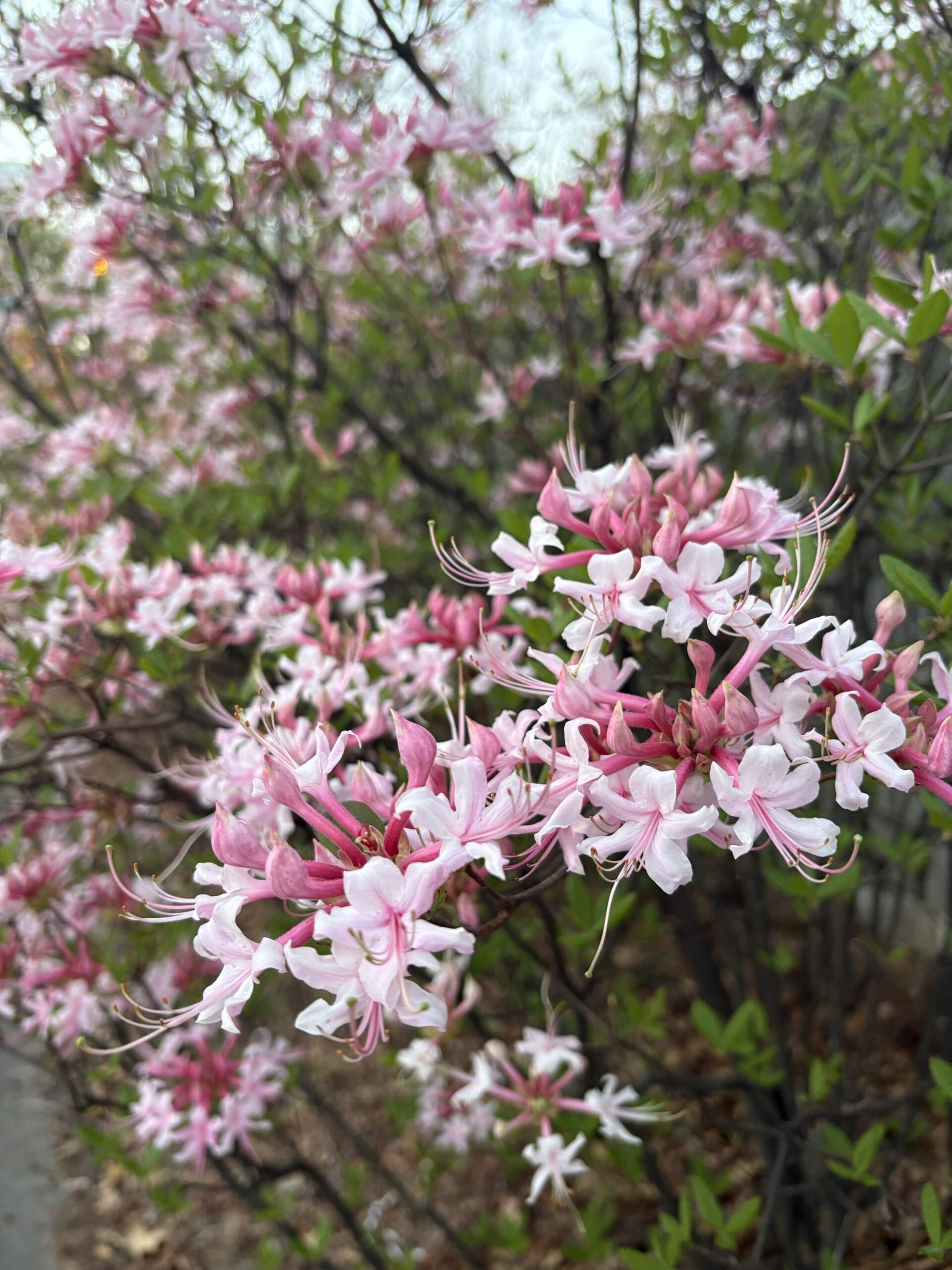
    One of the first few flowers that one might notice around Tech are the Piedmont Azaleas, which often grow in bushes on the walkway up to the Howey Physics building.

    The Piedmont Azalea, also known as Rhododendron canescens, is a flower native to Georgia. These azaleas bloom early in the spring, from mid-February through March (Wade, Braman, & Woodward, 2022).

    They tend to grow in the earlier parts of spring and produce a sweet, musky scent in the air. (Yadav et al., 2019). These flowers often attract a number of pollinators, including butterflies, bees, and hummingbirds. 


    Flowering Dogwood:

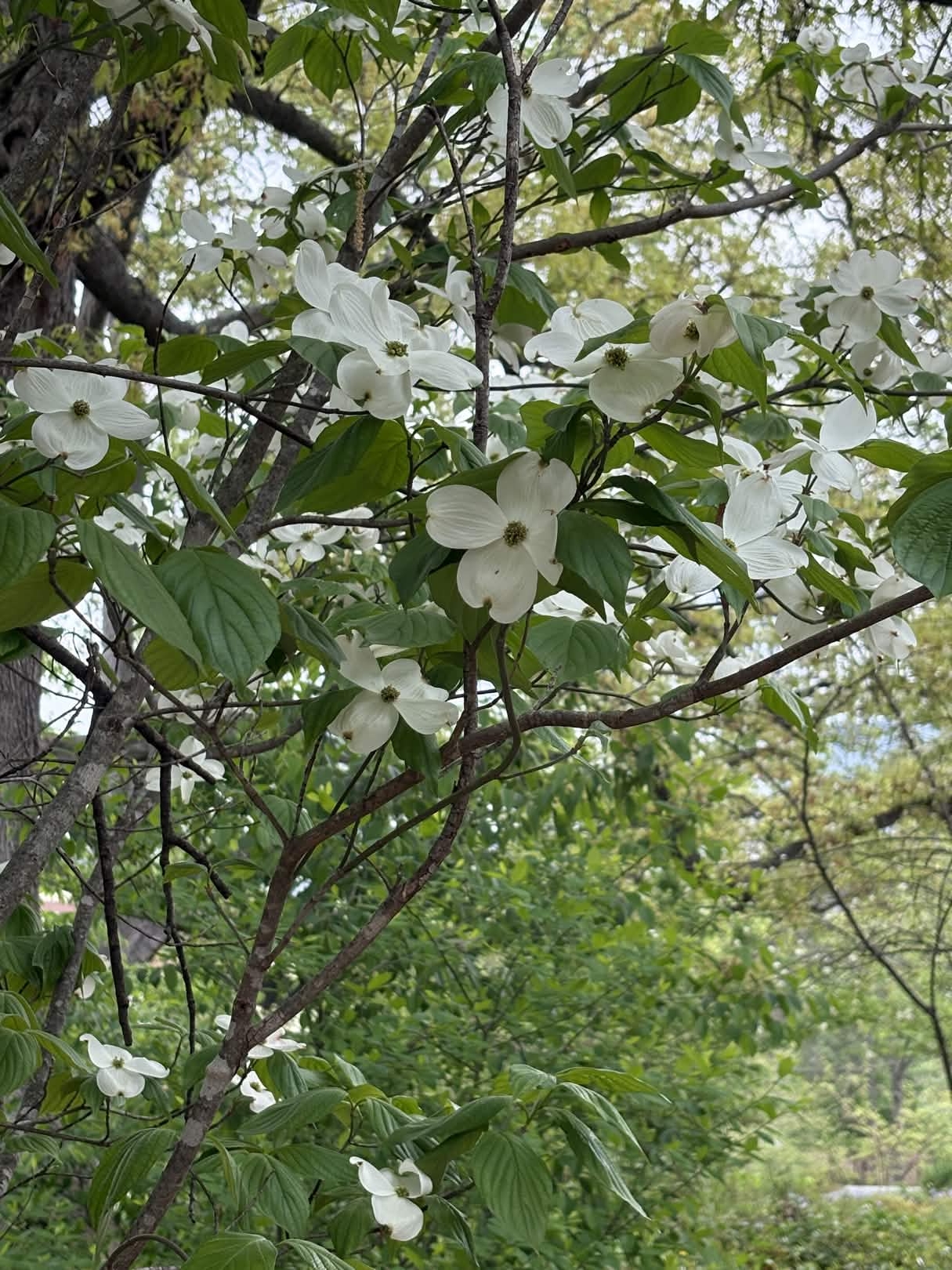
    Outside the Kendeda building also lies flowering Dogwood trees, which are known as the Cornus florida.

    These trees are often planted throughout Georgia as ornamental trees. This means that the trees are mainly planted for display rather than a more practical function. 

    However, the species can be extremely beneficial to the environment. Dogwood trees produce leaf litter that decomposes rather quickly, which can improve the soil quality (USDA). Additionally, the plant is an extremely important part of calcium cycling. Plants need calcium to survive, as it is extremely important to the structure of cell walls and plasma membranes. Flowering dogwood trees draw calcium from the soil, cycling it into a more usable form for other plants. (Borer, Sapp, & Hutchinson, 2013).


    Philadelphia Fleabane:

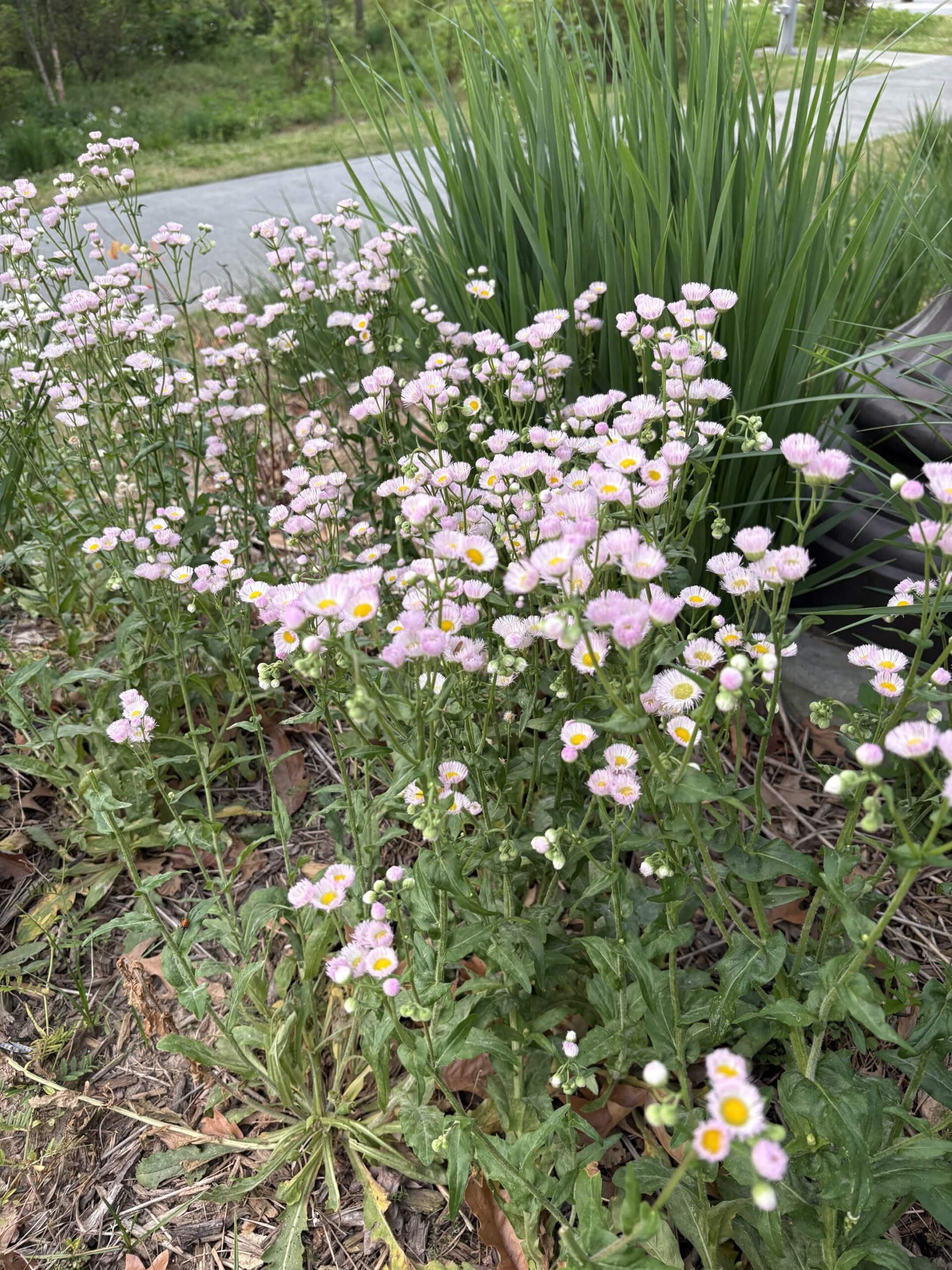
    Around the Center Street South apartments are the Philadelphia Fleabane, which are also known as the Erigeron philadelphicus.

    These are common wildflowers that grow in moist regions of the United States. They are often considered as weeds if they are not managed properly. This does not mean that they are invasive, but rather that the plant can grow in unwanted spaces if they are not managed properly. 

    They most commonly bloom during the spring. The flowers will remain open throughout the day time and close back up during the night.

    Throughout history, these flowers have had a number of uses, especially in Native American populations. The Philadelphia Fleabane has been made into tea, burned as incense, or simply chewed to treat the common cold in the past (USDA). 


    Oakleaf Hydrangea:

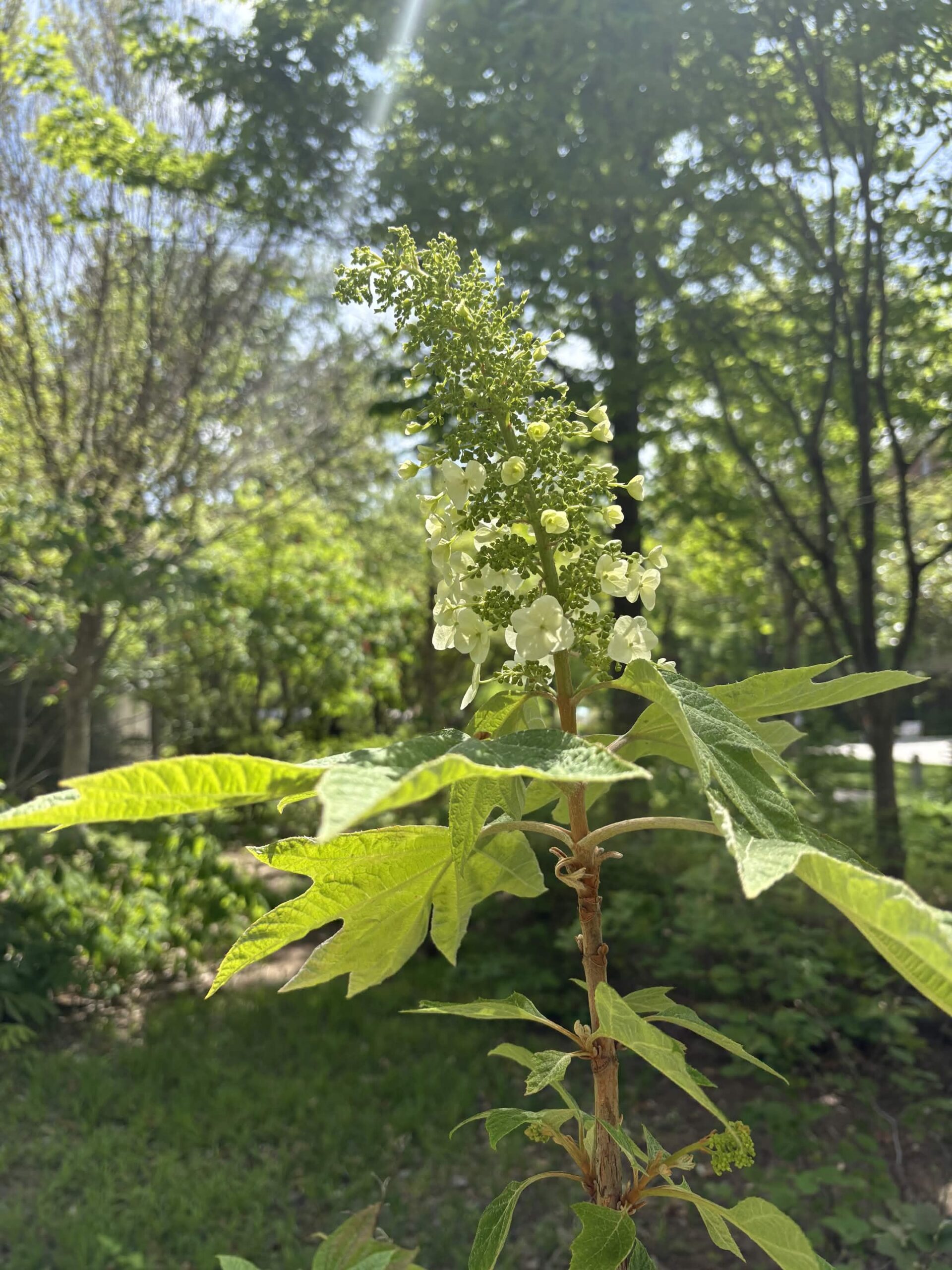
    Finally, we have the Oakleaf hydrangeas, which are generally grown in shrubs near the Klaus and Van Leer buildings towards late spring or early summer. These are also known as Hydrangea quercifolia, and they can be found blooming throughout campus. The flowers are native to the southeastern parts of the United States, where they begin to bloom in the early parts of summer.

    The plants grow in shrubs, with many cone-like structures that eventually bloom with cream-colored flowers. They are more known to be planted for ornamental purposes.

    Although the hydrangea pictured is native to Georgia, there are other species of Oakleaf hydrangeas that were specifically bred for their looks. For example, universities from multiple states in the southeast came together to cultivate the Ruby Slipper Oakleaf. It is a hybrid that starts off white just like the flower pictured and later turns a deep red color as it ages (Reed, 2010).


    Works Cited:

    Borer, C.H., Sapp, S.G. & Hutchinson, L.H. (2013). Flowering dogwood (Cornus florida L.) as mediator of calcium cycling: new insights are revealed by analysis of foliar partitioning. Trees 27, 841–849 https://doi.org/10.1007/s00468-012-0838-9 

    Georgia Native Plant Society. (n.d.). Piedmont Azalea (rhododendron canescens). GNPS https://gnps.org/plant/piedmont-azalea-rhododendron-canescens-2/ 

    Reed, S. M. (2010). ‘Ruby Slippers’ and ‘Munchkin’ Oakleaf Hydrangeas. HortScience, 45(12), 1908–1909. https://doi.org/10.21273/HORTSCI.45.12.1908 

    United States Department of Agriculture National Resources Conservation Service, USDA. (n.d.). PHILADDELPHIA FLEABANE Erigeron philadelphicus L.. https://plants.sc.egov.usda.gov/DocumentLibrary/plantguide/pdf/cs_erph.pdf 

    United States Department of Agriculture National Resources Conservation Service, USDA. (n.d.). FLOWERING DOGWOOD Cornus Florida L. https://plants.sc.egov.usda.gov/DocumentLibrary/plantguide/pdf/pg_cofl2.pdf 

    Wade, G. L., Braman, K., Woodward, J. W., (2022) Selecting and Growing Azaleas. UGA Cooperative Extension Bulletin 670. https://fieldreport.caes.uga.edu/wp-content/uploads/2025/08/B-670_6.pdf 

    Yadav, L. K., McAssey, E. V., & Wilde, H. D. (2019). Genetic Diversity and Population Structure of Rhododendron canescens, a Native Azalea for Urban Landscaping. HortScience, 54(4), 647–651. https://doi.org/10.21273/HORTSCI13840-18 


  • The Magic of Cake Mix

    When I was first learning to bake, I always wondered what was so special about ready-made mixes. In my mind, cake really wasn’t that complicated. Most cake recipes that I found online always called for some combination of flour, sugar, eggs, salt, and butter. So, why was it that the boxed cake mix always resulted in the same, consistent success, while baking from scratch yielded uncertain results?

    What is in Cake Mix?

    Cake mix is a box of conveniently measured out dry ingredients. All the baker needs to do is add eggs, some kind of fat, like oil, and a liquid, like water or milk. But what exactly makes up those dry ingredients?

    According to the Betty Crocker website, their yellow cake mix consists of quite recognizable ingredients, including flour, sugar, corn syrup, baking soda, and corn starch. These match the ingredients one could think of in a normal recipe. The flour makes up most of the cake, while the sugar and corn syrup are for sweetness. The baker would add in the water, eggs, and fat (vegetable oil) on their own, so the question lies in the rest of the ingredients. 

    The Extra Additives

    The rest of the ingredients of the Betty Crocker yellow cake mix make up less than 2% of the ingredients. However, they are extremely important to the stability of the cake. According to the label, these ingredients are monoglycerides, dicalcium phosphate, sodium stearoyl lactylate, xanthan gum, and cellulose gum. These ingredients are additives that help maintain the texture, stability, and shelf life of the mix. 

      • For instance, dicalcium phosphate is a tasteless, odorless additive that is usually included along with flour. It is meant to break up the ingredients evenly in the baking process and improve the consistency of the flour (Enax et al., 2022).
      • Additionally, sodium stearoyl lactate is an additive that is also used as a stabilizer and emulsifier in processed foods (FAO & WHO, 1996). As a stabilizer, its job is to make sure that the food’s texture and taste maintain their quality during extended times on the shelf. As an emulsifier, its job is to allow ingredients like oil and water to mix together.
      • Xanthan gum is also an ingredient commonly used in both food, polishes, and cleaners. Its job is to act as a stabilizer and thickener in convenience foods. More specifically, its job is to retain moisture in bakery goods and trapping gas in ready-made cake mixes so that they bake better (Katzbauer, 1997). 

    These are just a few of the extra ingredients that make cake mixes as consistent and convenient as they are today. They hold the ingredients together, enhance the taste and texture of the cake, and ensure that the results are similar each time. So, while, yes, cake mix is essentially the same mixture of flour and sugar than one might expect to find in a regular cake, there is a bit of science involved to help make sure it’s a bit easier each time!


    References

    Betty Crocker (n.d.). Betty Crocker Favorites Super Moist Yellow Cake Mix, Holiday Baking, 13.25 oz https://www.bettycrocker.com/products/betty-crocker-baking-and-cake-mixes/yellow 

    Enax, J., Meyer, F., Schulze Zur Wiesche, E., & Epple, M. (2022). On the Application of Calcium Phosphate Micro- and Nanoparticles as Food Additive. Nanomaterials (Basel, Switzerland), 12(22), 4075. https://doi.org/10.3390/nano12224075 

    FAO & WHO. (1996). SODIUM STEAROYL-2-LACTYLATE. Joint FAO/WHO Expert Committee on Food Additives (JECFA) Monographs. https://www.fao.org/fileadmin/user_upload/jecfa_additives/docs/Monograph1/Additive-424.pdf 

    Katzbauer, B. (1997). Properties and applications of xanthan gum. Polymer Degradation and Stability, Vol, 59, Iss. 1–3, https://doi.org/10.1016/S0141-3910(97)00180-8 

    Maehasi, N (2020). My very best Vanilla Cake – stays moist 4 days! https://www.recipetineats.com/my-very-best-vanilla-cake/ 

  • A Spritz of Sperm Whale

    When you think of perfume, what kinds of ingredients come to mind? Some people may think about flowery scents like rose, cherry blossom, or jasmine. Others may think of sweet notes vanilla, cinnamon, or honey. For some, the note “ambergris” may come to mind, but what is it? It can be described as a unique, musky scent with hints of the ocean. The original scent is actually derived from the intestines of sperm whales. How in the world would part of an animal’s digestive system end up in a perfume bottle?

    History of Ambergris

    According to the Smithsonian Museum, ambergris is a waxy substance that can only be found in the bowels of sperm whales, and it can only be collected if the whale regurgitates or defecates it (Brito, Jordão & Pierce, 2016). In other words, the scent comes directly from sperm whale intestines, where food is digested and turned into waste. The idea of the substance coming from intestines can certainly be off-putting. After all, the substance comes from the same place that feces are made in the whale. 

    Despite such an unappealing origin, ambergris was actually beloved throughout history. It was used by a multitude of cultures, ranging from Egypt to Europe. Ancient Egyptians burned the substance as incense to ward off evil spirits, Arabic regions used it as medicine, and some people in medieval Europe even consumed it in luxury dishes (Olson, 2024). Evidently, ambergris had many different uses throughout history. It was even described to have a sweet, musky scent with “notes of tobacco, sandalwood, and ocean” that got better with age (Olson, 2024). Thus, it makes sense that the fatty gold somehow found its way into the perfume industry. 

    Animal Products in Perfume

    At first glance, hearing about animal parts in perfume may sound alarming. However, animal products were commonly used in perfumes before chemists could synthetically recreate those scents. For instance, many common perfumes found in beauty stores will often have “musk” listed as one of the key notes. Musk actually comes from a sac in the musk deer, which is then removed and excreted to make perfume. (Fortneau, 2004). Thus, it was not necessarily a strange practice to implement the secretions of different animals into perfume. In fact, the same ambergris was originally used in Chanel No.5, utilizing the ambrein alcohol found within ambergris to help enhance the other scents within the perfume (Olson, 2024). 

    Is it Still Used Today?

    If there are any perfumes that contain the scent of ambergris in modern times, chances are the scent is synthetic. This is due to the fact that whale poaching is now illegal in most countries. In fact, it is illegal to even sell the ambergris in certain countries because the sperm whale is considered an endangered species due to the over hunting of the animal in the past (Olson, 2024). In order to emulate the same scent while keeping wildlife safe, chemists have found ways to replicate similar scents to those made with animals synthetically. 

    For instance, it was previously discussed that the scent “musk” originally came from the musk deer. However, it would likely cause harm to the population if the deer were to be hunted to satiate the demand of the perfume industry. Thus, chemists can replicate the scent by creating synthetic compounds that are chemically similar to what gives each note its specific scent. For musk, the main component that gives it its scent is called muscone. This was replaced by “musk Baur”, a scent that was discovered by Albert Baur when experimenting with trinitrotoluene (TNT) and “tert-butylhalides” to create new explosives (Fortneau, 2004). Today, chemicals like musk Baur are used much more often because they are much cheaper than hunting the animal themselves.

    This way, endangered species can be kept safe from hunting, while people can still enjoy the scents they love – even if they do come from the innermost parts of a whale.


    References

    Brito C, Jordão VL, Pierce GJ. (2016). Ambergris as an overlooked historical marine resource: its biology and role as a global economic commodity. Journal of the Marine Biological Association of the United Kingdom. https://doi.org/10.1017/S0025315415000910 

    Fortneau, AD. (2004). Chemistry Perfumes Your Daily Life. Journal of Chemical Education. American Chemical Society. https://doi.org/10.1021/ed081p45 

    Olson, D. (2024). The Mystery of Ambergris. Smithsonian National Museum of Natural History. https://ocean.si.edu/ocean-life/marine-mammals/mystery-ambergris 

  • The Pot That Keeps on Giving: Perpetual Stew

    Image adapted from “Perpetual stew laughing” taken by Annie Rauwerda is CC BY-SA 4.0.

    Would you eat stew from a pot that’s been cooking for over 45 years?For most people, the concept of eating food that has existed for such a long time sounds concerning to say the least. Surely, no one has kept a pot of stew for years.

    Well, it is a very real thing, and it is called perpetual stew! The idea is to keep a pot of stew simmering over a certain temperature at all times to prevent harmful microorganisms from growing. In theory, it is safe, and there are even restaurants around the world serving it to customers. So, would you try perpetual stew?

    Perpetual Stew: What is it?

    Perpetual stew can be known as forever soup or hunter’s stew. Essentially, it is a pot of stew that is constantly kept cooking over heat. Over time, people can take from the stew, eat it, and replenish it with water and more ingredients (Murashima, 2025). In this case, “time” could range anywhere from a number of days to even years. 

    In modern days, the concept has gained a good deal of traction all over the internet after some influencers have tried their hand at making the stew themselves. One blog writes about how Rauwerda, an influencer online, created her own perpetual stew over the course of 2 months, inviting friends, family, and even strangers to add to the stew (Martinko, 2024). The idea certainly draws a lot of attention, but how safe is this practice in reality?

    Is it Safe to Eat?

    Naturally, there is a cause for concern when consuming something that has been left “out” for such a long period of time. Most people would be concerned about the food spoiling if it was left out for a few days, not to mention a couple years.

    Food spoilage is generally caused by a large number of different microorganisms like protists, fungi, and bacteria (Rawat, 2015). Although they are not visible to the human eye, microorganisms are generally found everywhere. Under the right conditions, these kinds of organisms can reproduce rather rapidly and cause harm to the human body. For instance, one research article describes how spore-forming bacteria can grow in heat-treated foods and survive at temperatures up to 55°C (Rawat, 2015). This means that despite being heated, foods like stews can still harbor harmful bacteria. Hypothetically, though, the stew may be safe to eat if it is constantly kept at around 60°C, a temperature above the threshold that those bacteria can survive (Murashima, 2025). If the stew ever dips below that temperature, though, it may be best to discard that pot and start over. After all, bacteria can appear and multiply within just a few hours.

    Not as Strange as it Sounds

    Perpetual stew isn’t something that you can just make at home either! In some parts of the world, the stew is actually sold in restaurants. One family-owned establishment in Bangkok, Thailand called Wattana Panich serves a beef noodle broth that has been cooking for over 45 years (Sullivan, 2019). The family keeps the broth cooking all day, selling it to customers from around the world. However, the practice is not as simple as keeping the pot boiling at all hours of the day. Nattapong Kaweeantawong, the owner of the restaurant, describes how the family only takes a small part of the original soup every night and keeps it over a constant simmer. The rest of the soup is then removed from the pot so that it can be cleaned, and the small bit of soup that was put aside is then used to make a new soup the next day (Sullivan, 2019). Thus, the restaurant has not kept the entire pot of soup for 45 years, but rather a small part of the old soup is kept as the “starter” for the new soup each day. 

    Although from a microbiological perspective it may not be the exact same, the concept of keeping a portion of old foods as a starter to make new ones isn’t foreign at all. Sourdough bread is made with a starter that includes a multitude of microorganisms that cause fermentation, including Lactobacillus (Corsetti & Settanni, 2007). Kombucha is fermented tea, which includes the use of bacteria and yeast. Vietnamese yogurt is made with a starter as well, where the cook will always keep a portion of the previous batch of yogurt to make a new one. 

    Therefore, perpetual stew may not be as scary as it sounds! Perhaps it is simply a cultural thing or a matter of opening your mind, but it isn’t just a pot of boiling rotten food. It may not be the best idea to try making the stew at home, since there are many ways for the stew to go wrong without the proper knowledge. However, it could be a dish worth trying when travelling abroad!

    Would you ever consider trying a stew that’s been brewing for years?


    References:

    Corsetti, A. and Settanni, L. (2007), Lactobacilli in sourdough fermentation, Food Research International, Volume 40, Issue 5, Pages 539-558, ISSN 0963-9969, https://doi.org/10.1016/j.foodres.2006.11.001. 

    Martinko, K (2024). Meet Perpetual Stew: The Medieval Soup That Became a Social Media Sensation. AllRecipes. https://www.allrecipes.com/what-is-perpetual-stew 

    Murashima, C. (2025). Want to try perpetual stew? Some tips for avoiding foodborne illness. NPR. https://www.npr.org/2025/06/11/nx-s1-5422245/perpetual-stew-safety-tips 

    Rawat, S. (2015). Food Spoilage: Microorganisms and their prevention. Asian journal of plant science and Research, 5(4), 47-56.

    Sullivan, M. (2019). Soup’s On! And On! Thai Beef Noodle Brew Has Been Simmering For 45 Years. NPR. https://www.npr.org/sections/thesalt/2019/11/03/772030934/soups-on-and-on-thai-beef-noodle-brew-has-been-simmering-for-45-years