Author: Katelyn Sturdivant

  • When Citrus Gets Lethal

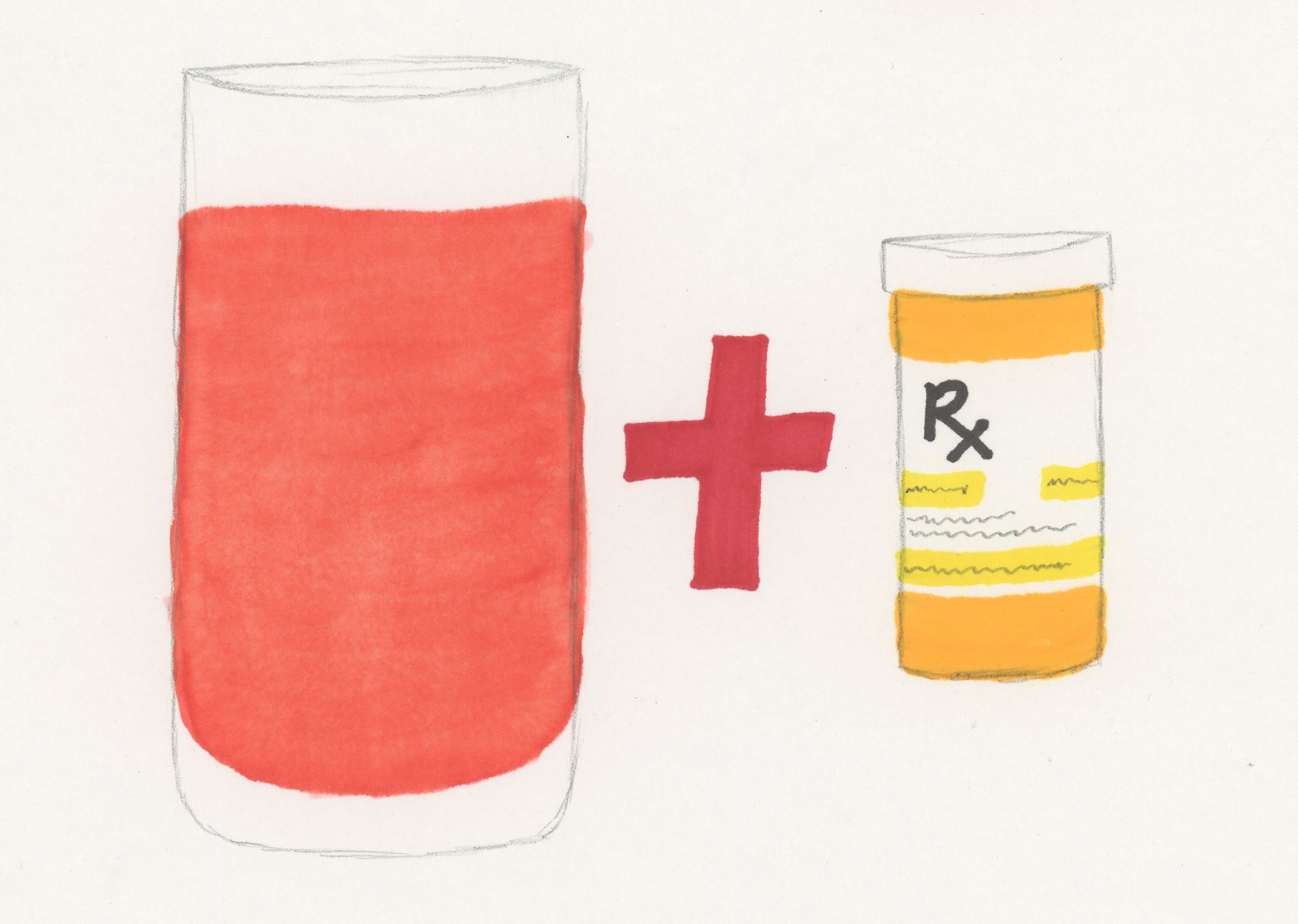
     So, the other day I got a new prescription, and as I skimmed through the 300 pages of side effect warnings (okay… maybe it was only 3 pages, but the font was ridiculously tiny), I noticed a warning about consuming grapefruit and/or grapefruit juice. “Whaaat? Why grapefruit specifically?”

    The warning is written as follows:

    “Eating grapefruit or drinking grapefruit juice while you are taking this medicine may increase the amount of this medicine in your blood, which may increase your risk for side effects. Talk with your doctor before including grapefruit or grapefruit juice in your diet.”

    I figured this warning was probably specific to drugs similar to the one I’m taking (combination hormone birth control), so I just brushed it off and made a mental note to never drink grapefruit juice again. That is until I was watching TV a few hours later and a commercial for another prescription– one for bi-polar depression– had the same warning. “Seriously! What is up with freaking grapefruit?!?” The scientist in me was intrigued, so I decided to do some digging.

    Apparently there are many drugs (85 that are known of so far) that have warnings against grapefruit consumption, including statins (for high cholesterol), anti-arrhythmics (for an irregular heartbeat), and Viagra® (sorry, fellas).

    Grapefruit juice most commonly interacts with drugs by inhibiting the metabolism of the drug by the enzyme cytochrome P450 (specifically the CYP3A4 isoform). Normally, medications are broken down in the liver and/or the small intestine and then excreted from the body, but since grapefruit juice contains compounds called furanocoumarins which inhibit the drug from being broken down in the small intestine, the drug doesn’t leave the body and is instead reabsorbed into the bloodstream. This leads to increased amounts of the drug in the bloodstream and thus an amplified risk for developing side effects.

    The more sensitive the dosing of the drug is (the lower the therapeutic index), the greater the risk of consuming grapefruit juice will be. In other words, if a slight change in the concentration of the drug in the bloodstream has a high impact on the drug’s potency, then consuming grapefruit juice will have a much greater negative impact on the person taking that drug than would be the case if the potency of the drug in question was less affected by slight changes in the drug dosage.

    The effects from grapefruit juice can last up to 24 hours, and it only takes one glass of juice for the drug metabolism of some drugs to be fully inhibited (Lilja, Neuvonen, and Neuvonen). Drinking grapefruit juice before, during, or after taking your medication can cause adverse effects. For medications taken daily, like birth control, it is recommended to minimize ingesting grapefruit/grapefruit juice during the entire duration of time the medication is being taken.

    Sources:

    Web MD

    Wikipedia

    FDA

    Lilja, J. J., Neuvonen, M. and Neuvonen, P. J. (2004), Effects of regular consumption of grapefruit juice on the pharmacokinetics of simvastatin. British Journal of Clinical Pharmacology, 58: 56–60. doi: 10.1111/j.1365-2125.2004.02095.x
  • Who doo? You do.

    **Disclaimer: This post is about poop.

    A few days ago I stumbled upon this webpage and couldn’t stop laughing. I don’t think I have ever laughed so hard in my entire life. I was crying, a stitch in my side. Any time I would regain my composure, I would lose it again within 0.237 seconds of reading another line. So of course, after struggling through the page, I decided to consult my trusty friend YouTube for some poop-themed videos. Here’s one of my favorites: 3 Types of Girlfriends Based on Pooping Habits (it’s a little vulgar). Now, I’m not entirely sure why I find these types of things so entertaining, but I think I find them funny because they are usually true. Some people don’t like to admit they poop, and they definitely don’t want to talk about it, but why is that so? Everyone poops!

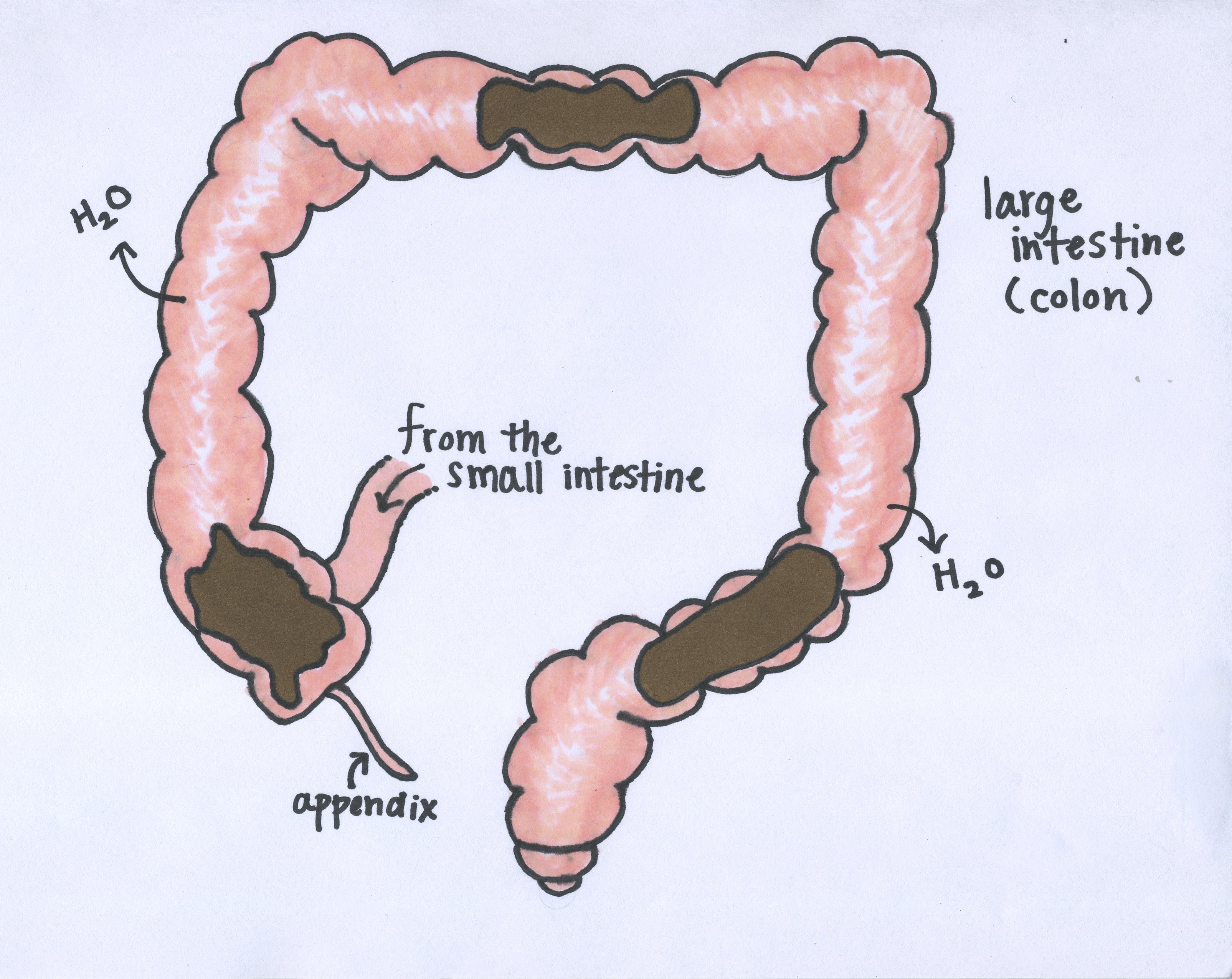
    Have you ever wondered how poop is formed, or why it comes in different shapes and sizes? Well, let me enlighten you. After food passes through the mouth, esophagus, and stomach, being digested by various amylases and gastric juices, it makes its way into the small intestine where the majority of the fluid and nutrients from the digestive process and from the food you eat are reabsorbed by the body. An additional amount of fluid is reabsorbed in the large intestine, also known as the colon.

    This is where the magic happens.

    Digested food moves through the colon via a type of smooth muscle contraction called peristalsis. As it moves along, the poop starts to take shape as the fluid (referred to as H2O in the diagram below) is drawn out. As more fluid leaves, the poop becomes more solid. During times of viral or bacterial infections, fluid may not be properly reabsorbed, causing the common side effect of diarrhea. Have you ever been constipated? This is a result of poop moving too slowly through the colon, causing too much fluid to be reabsorbed. Depending on what you eat, your poop may vary in appearance. If you eat some corn, you may see it again since our bodies can’t digest the cellulose outer layer. Ever drink a brightly colored slushy saturated with food coloring? Your poop likely changed color.

    The digestive tracts of carnivores differ from those of herbivores due to the different digestive requirements each type of animal has. Take a koala for example, whose cecum (the section of colon below the attachment point of the small intestine) is about 2 meters long! This longer cecum enables the koalas to digest leaves and provides a greater amount of surface area for nutrients to be absorbed. Check out this koala who, instead of eating leaves, is chomping on an apple. I wonder how long it took for that apple to become poop…


    Sources:

    Campbell, Neil A., and Jane B. Reece. Biology. San Francisco: Benjamin Cummings, 2002. Print.

  • Daring Descent: Having Fun with Friction

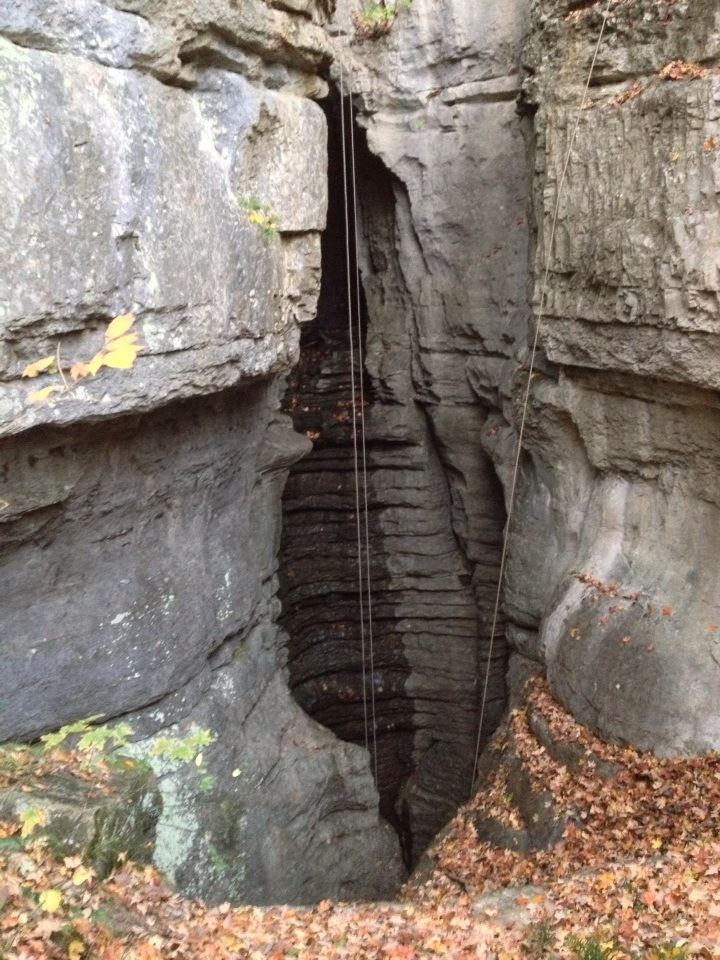
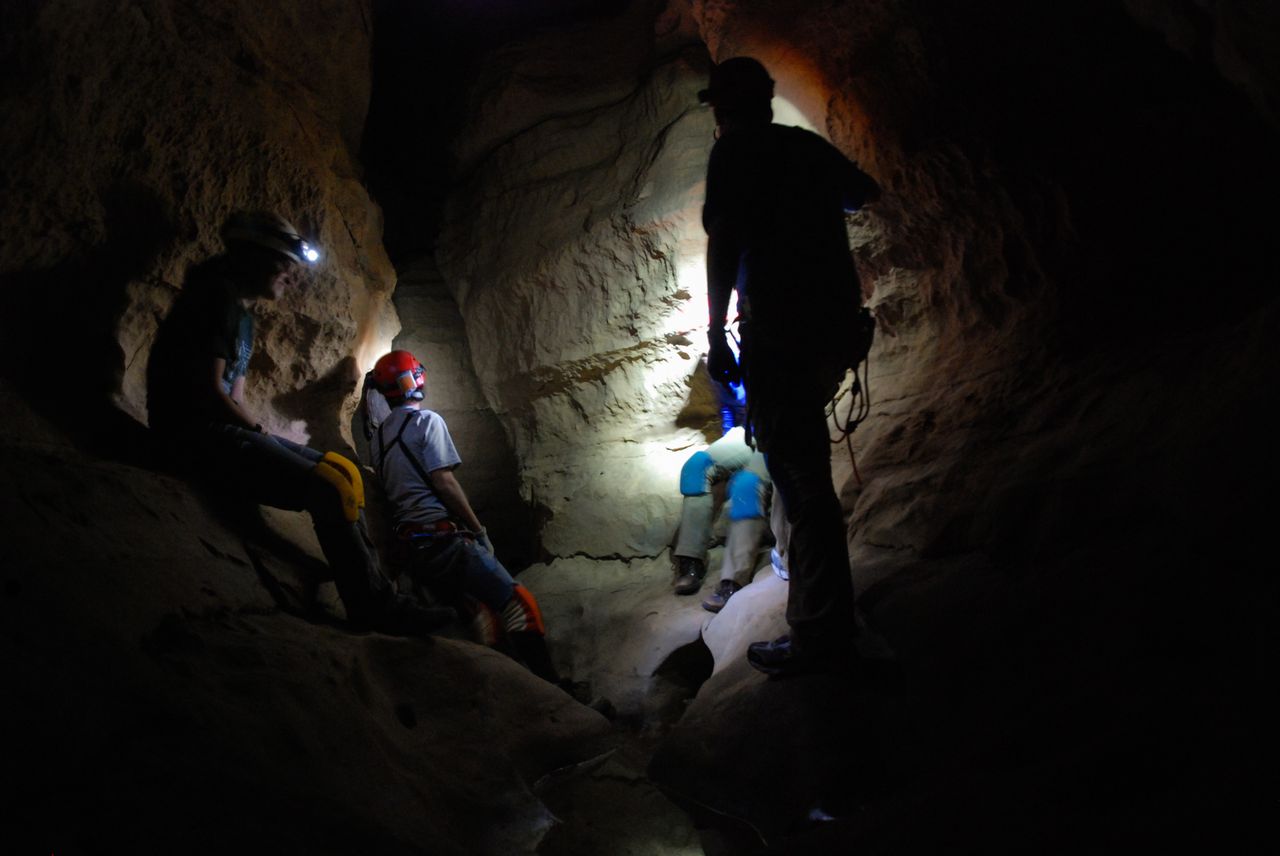
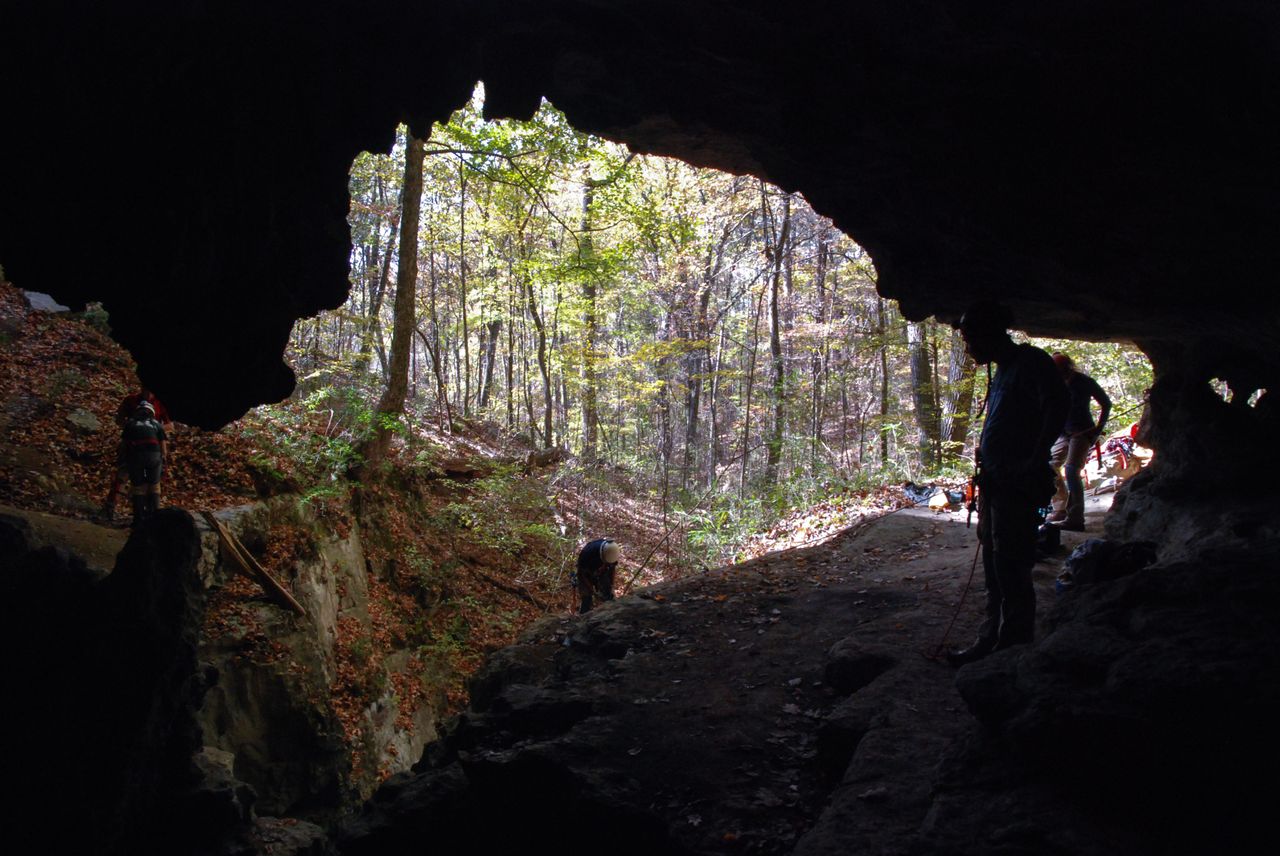
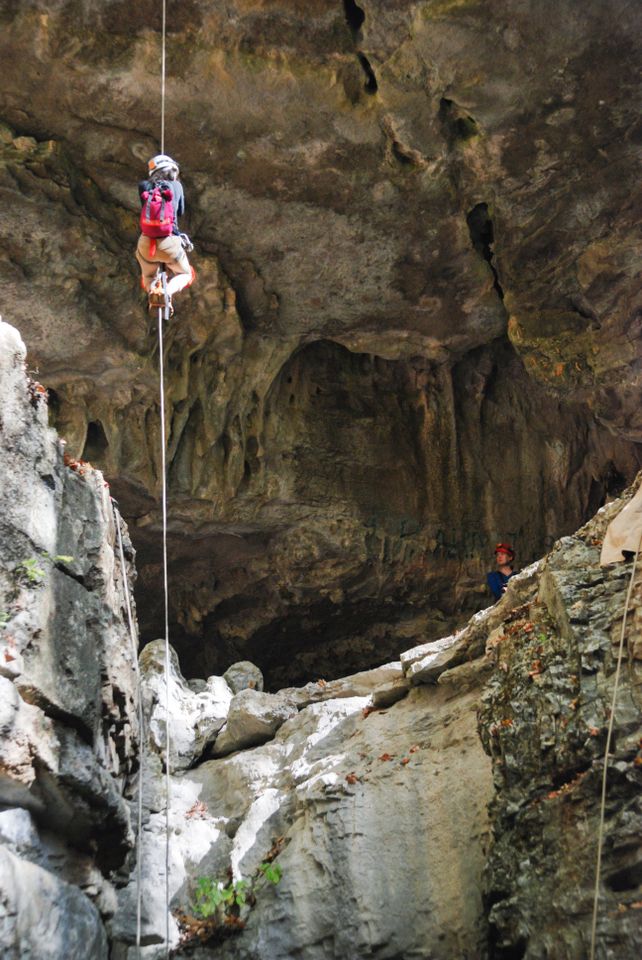
    I’ve always enjoyed having fun outdoors, and recently I’ve started to branch out of my usual “going for a walk in the park” comfort zone. My latest adventure took place in the wonderful state of Alabama at a location I wouldn’t have pictured myself being had you asked me a few months ago– a cave. Not just any old, regular cave that people wander into to make-out and spray-paint the walls, but a vertical cave with a super cool 100 ft drop called Sheldon’s Cave.

    Photo by Nima Yazdanpanah

    For the avid caver, or spelunker if you prefer, 100 ft may not be very exciting, but to me, I was stoked… and nervous. I had gone exploring in horizontal caves before, but had never done any descending (except for my days of rock climbing several years ago). We had some practice at a rock climbing wall, but I was still nervous for the real descent. It is a very uneasy feeling having to rely on a skinny rope to hold your weight as you ease over the edge of  cliff. “Oh, just lean back and trust the rope.” Trust the rope?! But we just met! So, with my left hand in a death grip on the rappel rack and my right hand in a death grip on the loose end of the rope, I (very slowly) made my way over the edge of the cave and down the side. By the time I got about half way or so, I eased up and realized how awesome it was that I was descending below ground level, about to go exploring another cave.

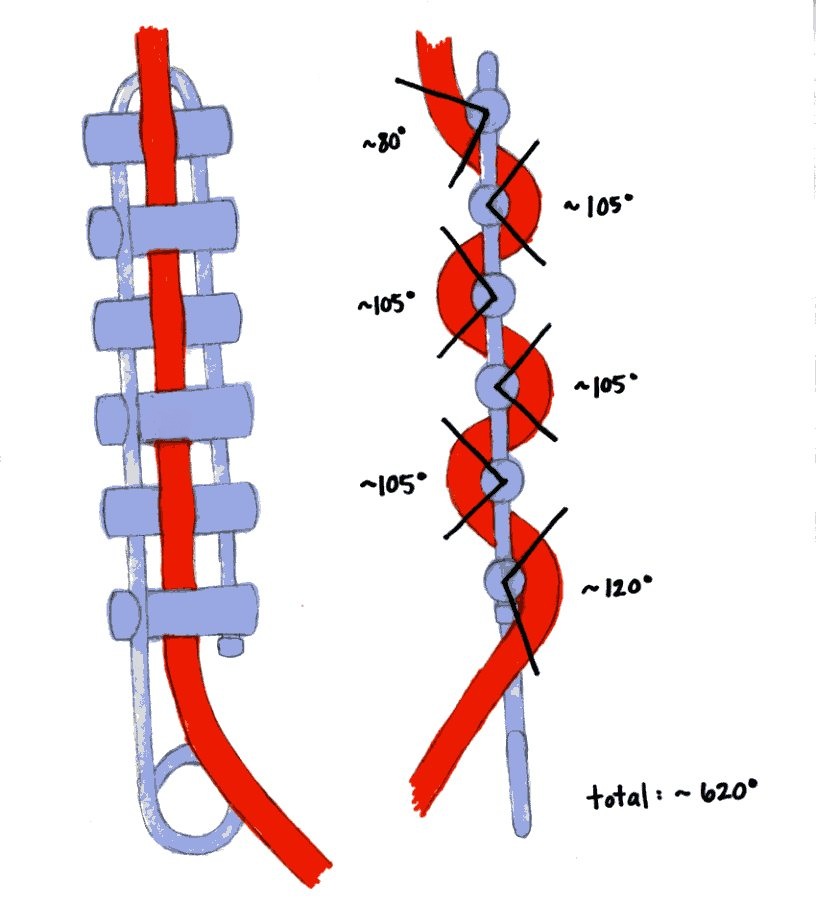
    You may be thinking, “What the heck is this rappel rack she is talking about?” A rappel rack (see one in action here) is a J-shaped device made out of aluminum and/or steel with bars running between the two sides of the device. The rope gets woven between each bar to create a friction force which counteracts the force of gravity and slows the descent. The speed of the descent can be adjusted by either adding or removing bars or by sliding the bars up or down. Adding bars increases the surface area in contact with the rope, increasing the amount of friction between the rope and the rappel rack, decreasing speed. Sliding the bars up increases the angle of contact between the rope and bars, once again increasing the amount of friction and decreasing speed. This idea of angle of contact is best exemplified in pulleys, where the tension (pull) of one side of the rope can be calculated using the tension of the other side of the rope and the degree of contact the rope has with the edge of the pulley (Capstan equation).

    The diagram above shows the amount of contact the rope has with the rappel rack for the given configuration; areas of rope within the angles shown are places where the rope is in contact with the bars and normal (contact) force is being applied. This is how I had my rappel rack set up for the descent, and being a scaredy cat, I was definitely not about to take off any bars in order go faster. I was perfectly content with my snails pace. I could have gone even slower had I slid up the bars, but I didn’t want to look TOO much like a newb.

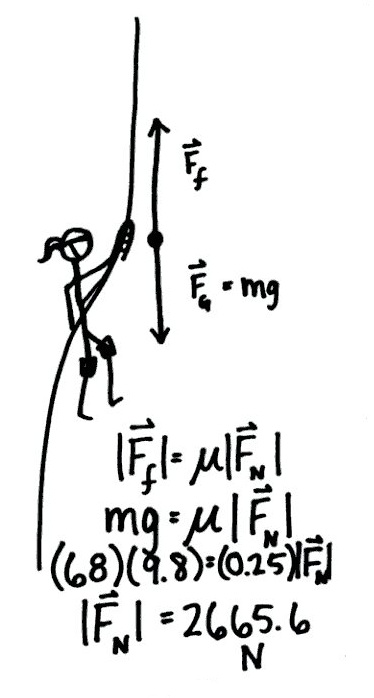
    At a stand still, the net force on the system (me and the rope) is zero, so the amount of friction supplied by the rappel rack would be equal in magnitude to the amount of gravitational force on my body (assuming an ideal situation without any deformation of the rope). Assuming the static friction coefficient for the rope against the steel rappel rack is 0.25, the minimum amount of normal force required to counteract gravity and keep the rope from sliding can be calculated. Since I weigh about 150 pounds (68 kilograms), the amount of gravitational force on my body equals about 666 Newtons. What a lucky number! Setting this equal to the amount of friction required, the amount of normal force the rappel rack must supply against the rope is 2665.6 Newtons. Dang! That’s a lot of Newtons, seeing as one Newton is about equal to the amount of weight of one apple. That’s enough apples to make a whole lot of pie!

    The rappel rack doesn’t actually supply this much normal force alone, which is why I still moved down the rope even with all of the bars on the rack. This is where my hand holding on to the rope came into play. If I ever got to going too fast, I would squeeze the rope with my right hand and would stop moving (or slow down, depending on how hard I squeezed). Just like the rappel rack, my hand supplied a normal force against the rope which created friction and counter-acted the force of gravity.

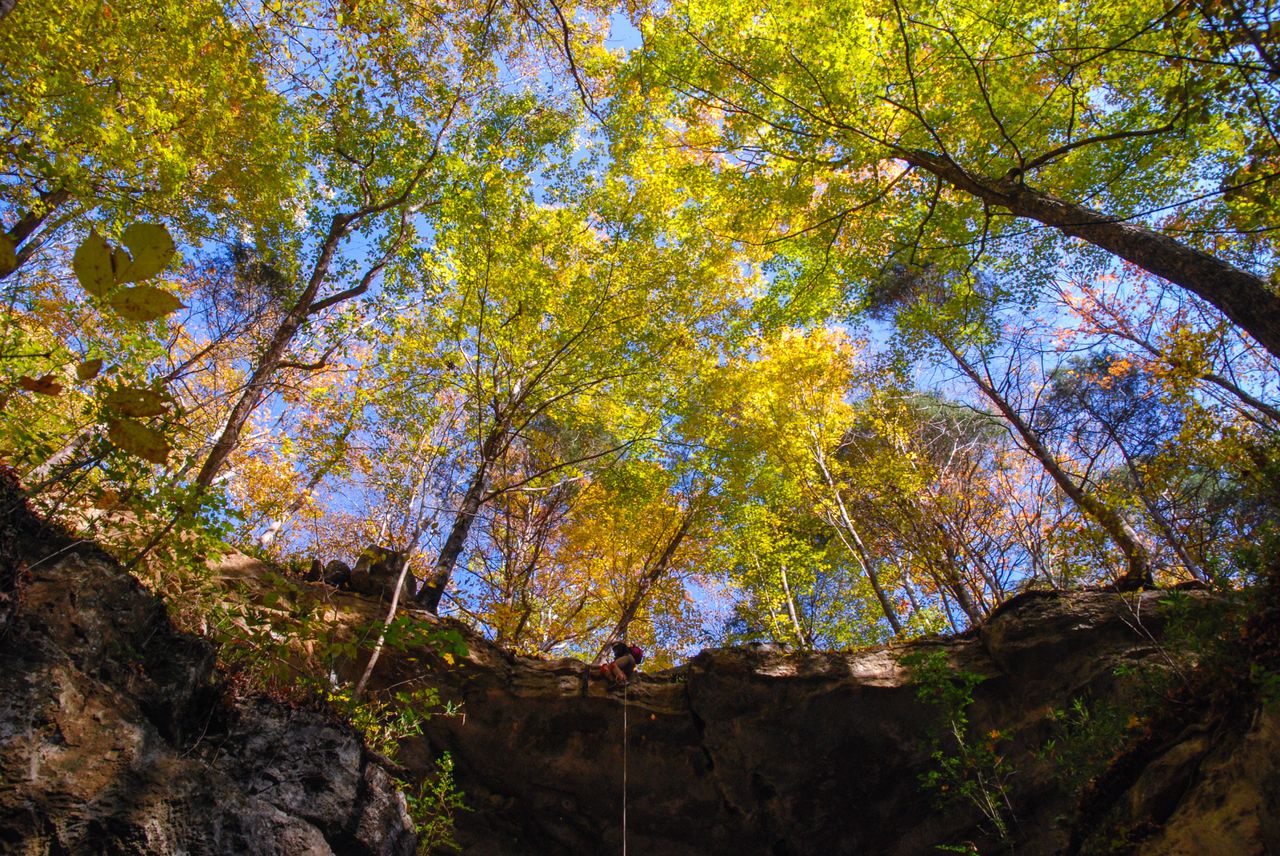
    Now that I have blown your minds with my awesome tale of caving and physics, enjoy these great pictures taken by cave master (joking), Colin Lehman:

    Pretty foliage!
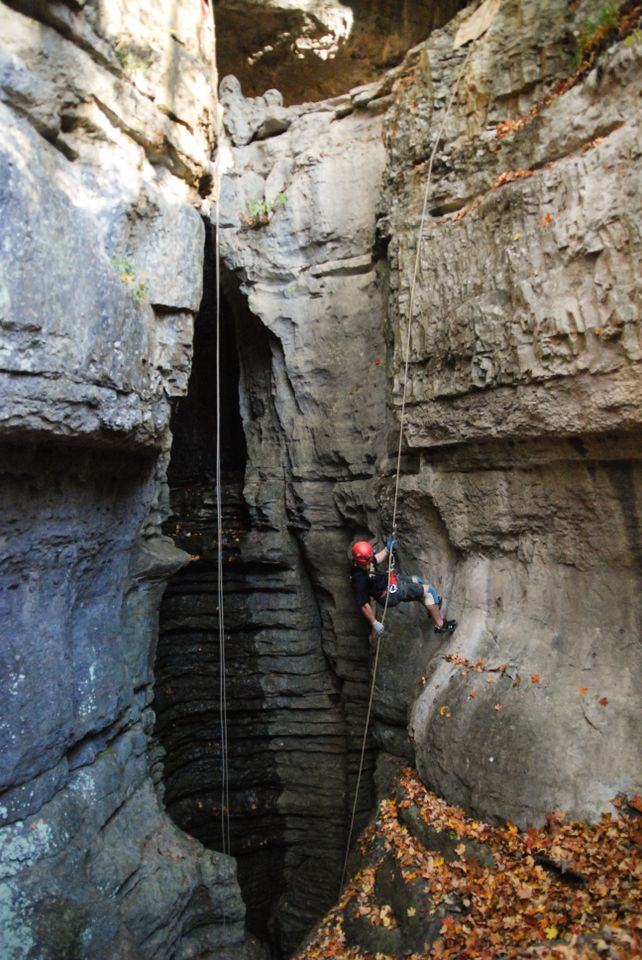
    Oh, don’t mind me! I’m just going down into this deep, dark hole!
    The inside of the majestic cave.
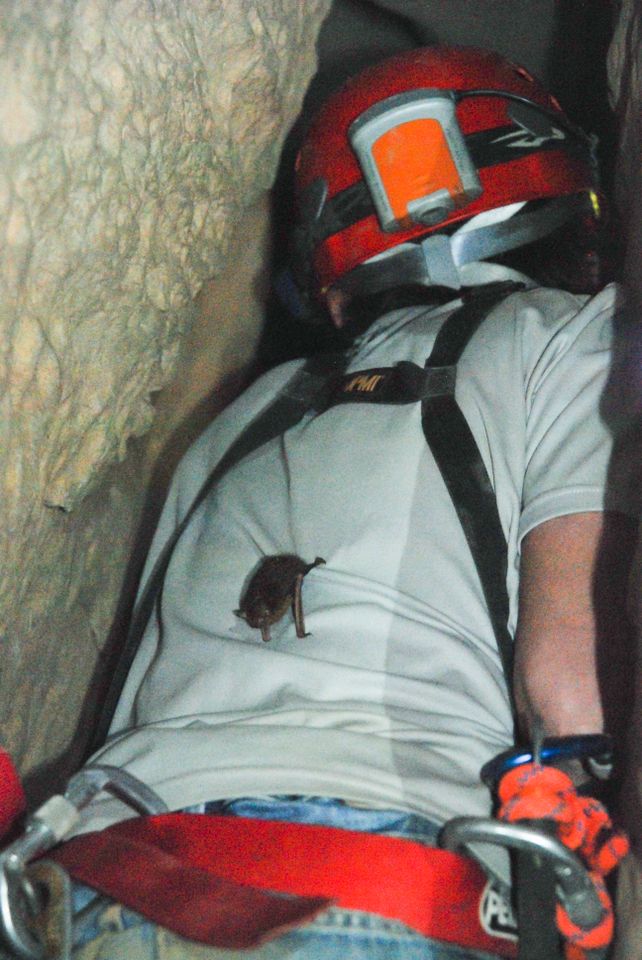
    One caver made a new friend… with a bat!
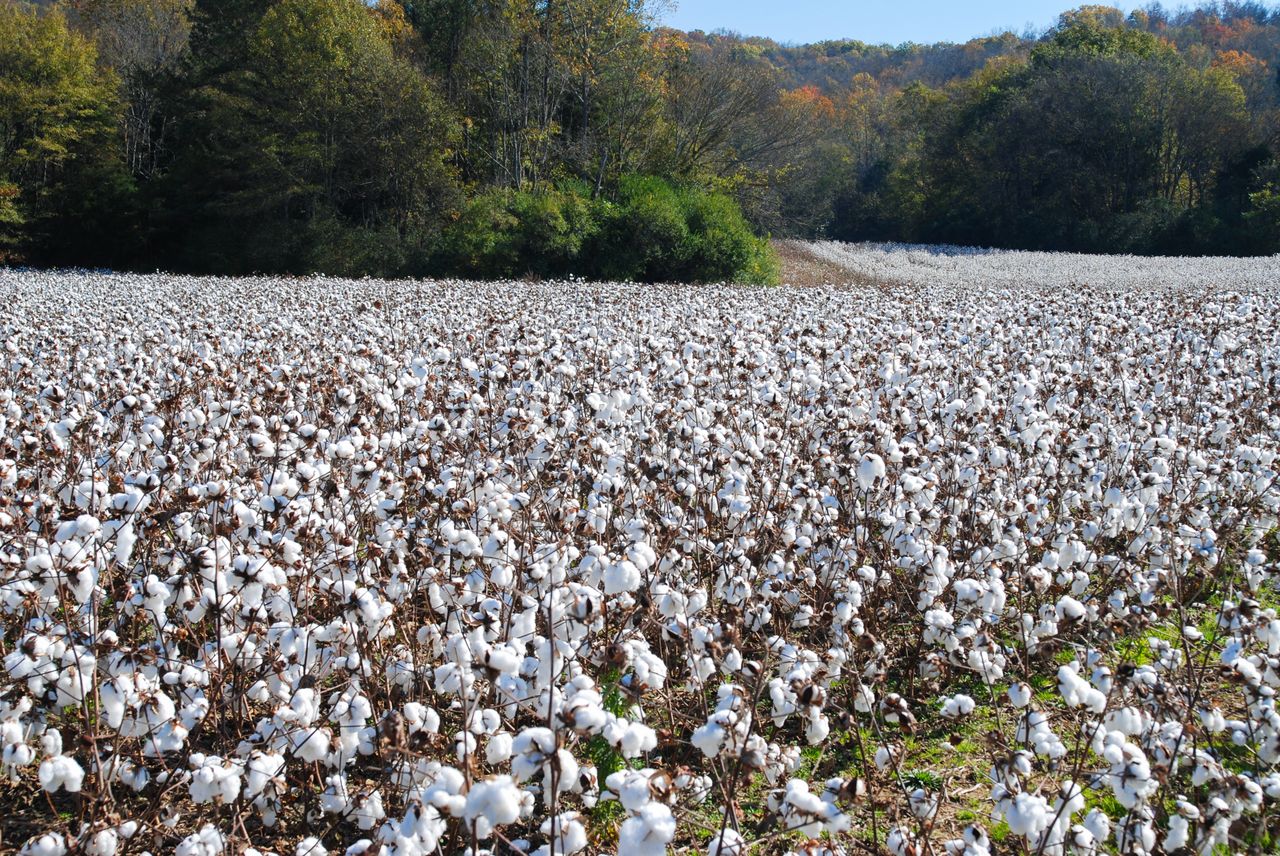
    The path to the cave was covered with cotton. It had all been harvested by the time we got back.
    The cave master making his way down.
    Sweet view!
    A fellow caver moving up!


    Source:

    The Mechanics of Friction in Rope Rescue by Stephen Attaway, Ph.D. (Find it here)

    Photos by Colin Lehman and Nima Yazdanpanah

  • Baaah Bye, Kudzu!

    Would you ever think sheep could be used in the place of a lawn mower? How could an animal do the same job as a piece of lawn equipment?! Well, in the case of managing kudzu, sheep (and goats) are doing a great job of keeping the invasive species at baaah. Uh… I mean bay.

    A couple of weeks ago, I joined a few members of my learning community on a trip to visit some live action kudzu eating. The sheep we visited were part of a company named Ewe-niversally Green (clever, eh?) which specializes in the removal of invasive plants, particularly kudzu. The company is currently working with Trees Atlanta, clearing multiple acres of kudzu from the metro area each week.

    What is an invasive species and why are they bad, you ask?

    An invasive species can be any organism (both native and non-native) in an environment which grows at a rate which impedes the natural order. Every ecosystem is comprised of multiple types of organisms in balance, and if a new species is introduced or if a native species begins to dominate the system, this balance can be thrown off. Kudzu, like other invasive species, intrudes on the naturally occurring species by out competing them for resources. Over time, if the invasive species is left to prosper, a decrease in biodiversity could result and the ecosystem could crash if the invasive species caused too much damage to the natural order of the ecosystem.

    So how are invasive plant species typically removed?

    Usually, kudzu is maintained via mowing or by the use of chemicals. By using sheep instead of traditional methods, the natural habitat is conserved in a more sustainable, “eco-friendly” fashion. The risk of funky herbicides seeping into the soil or water supply is greatly decreased, or potentially eliminated completely. Plus, the sheep are supplied with yummy vegetation which makes them quite content.

    Sheep Fun Facts:

    The sheep we visited (there were about 100 of them, including a few goats) could easily clear an acre of kudzu a day! They can also clear foliage off trees up to about seven (7) feet from the ground!

    One sheep dog (a super cute Border Collie where we went) can herd around 1,000 sheep/goats by itself. The shepherd uses different whistle patterns to direct the well trained pup where to go and what to do. It’s quite spectacular!

    And poison ivy? They love it! It’s their equivalent of a tasty candy bar! Azaleas and rhododendrons, though, are poisonous to the sheep.


    If you would like to learn more about the sheep we visited, check out Ewe-niversally Green’s website here, or find them on Facebook here.


    Sources:

    Brian Cash at Ewe-niversally Green

    http://eweniversallygreen.com/home

    http://www.treesatlanta.org/SheepProgram.aspx

    http://en.wikipedia.org/wiki/Invasive_species

    Photos taken by Taylor James

  • Ultraviolet radiation: what you can’t see can still hurt you

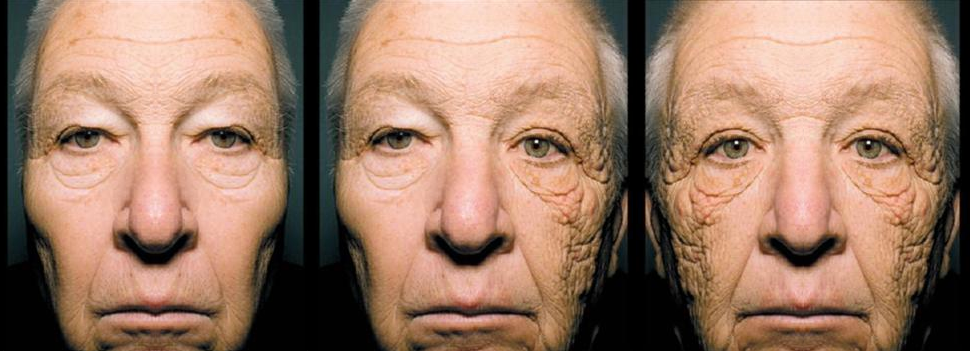
    A few weeks ago, a friend of mine showed me an article on MSN about a man whose face was obviously more wrinkled on one side than the other. Mr. McElligott, the gentleman featured in the article, drove a delivery truck for 28 years, exposing the left side of his face to the sun for several hours each day. I have heard several times throughout the years about the importance of sun protection, but hadn’t ever dwelled on the topic for much time. Once I read about Mr. McElligott, though, I was quite intrigued and started thinking about the whys and hows of sun damage, UV radiation, and wrinkles.

    In the pictures above, you can see Mr. McElligott’s original picture in the middle with an altered image on either side. I transposed one side of his face to that of the same side in an attempt to make the difference between the two sides of his face more apparent.

    Here you can find an “up-close and personal” version of the center picture. (How cool are his eyes?!?)

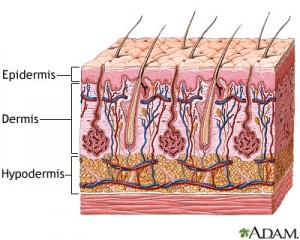
    As you may already know, skin is made up of three major layers: the epidermis, dermis, and subcutis (also known as the subcutaneous layer or the hypodermis). As in the diagram below, the epidermis is on top, then the dermis, and lastly the hypodermis. Freckles and moles, as well as sunburns, appear in the epidermis. The dermis houses the structural elements in skin which keep it firm and elastic. This is the section of skin where wrinkles form.

    Sunlight is known to negatively affect skin. This is because UV radiation (part of sunlight) can suppress the immune system, damage DNA, and alter skin texture, blood vessels and skin pigment. While conditions like thin skin and easy bruising are usually associated with old age, they are often lasting effects from UV damage as the majority of skin damage comes from the sun and not from Father Time.

    The Sun emits three types of ultraviolet radiation: UVA, UVB, and UVC, with wavelengths of ~315 to 400 nm,  ~290 to 315 nm, and ~100 to 290 nm, respectively. UVC radiation is absorbed by the ozone layer and doesn’t reach ground level. UVB radiation makes its way through the ozone layer and is the type of UV that hits the epidermal layer of skin and causes sunburns or tans; it is also known to cause skin cancer. Unlike UVA radiation which is relatively constant all year long, UVB radiation is stronger during the summer months. UVA is unique in its ability to pass through glass. Thinking back to Mr. McElligott, UVA radiation’s ability to penetrate glass led him to have a build up of UVA damage of the course of his career. Even on days when he drove with his window up, he would have been protected from UVB rays, perhaps not getting a sunburn or tan, but would have still received the negative effects of UVA. UVA rays cause damage to the dermis, destroying elasticity and potentially causing mutations in DNA. Out of all of the UV radiation that reaches us from the Sun, there is over 20 times more UVA than UVB.

    Harm to the skin caused by the Sun’s UV radiation is often referred to as photoaging, or dermatoheliosis. Photoaging is caused when UVA and UVB rays enter the skin, negatively affecting two of skin’s structural proteins, elastin and collagen. Radiation damages elastin and causes a build-up of altered metalloproteinase enzyme. Normally, metalloproteinases (also known as collagenases) help reverse skin damage by creating new collagen. Unfortunately, the metalloproteinase from the damaged elastin does the exact opposite— it breaks down collagen, leaving the skin with a broken collagen structure and wrinkles. (For a study on the effects of metalloproteinase,  check out this article.)

    Exposure to UV radiation in sunlight, in addition to air pollution and smoking/second-hand smoke, can also subject the skin to free radicals. Free radicals are molecules (or atoms) with a single, unpaired electron. Because a free radical lacks the second electron, it is unstable and thus seeks out another electron. When it reaches another molecule, the free radical takes an electron, completing its electron pair while leaving the second molecule with an unpaired electron (a new radical). This snowball effect continues throughout the skin, activating altered metalloproteinase and causing damage to collagen.

    Jeanne (left) and Susan (right), identical twin sisters, serve as a great example of how lifestyle choices can determine a person's skin aging. As children, the two women had an uncanny resemblance, but now it's easy to see that Susan's decision to sunbathe and smoke led her skin to age more rapidly. (Department of Plastic Surgery, University Hospitals Case Medical Center)

    Well, I hope you enjoyed learning more about wrinkles and UV radiation! Remember, prevention is key! Make sure to slather up in some good ol’ broad spectrum SPF 70 next time you go shoot some hoops (or do whatever it is that you do) and enjoy this fine video about why we need the Sun (even though it hurts us sometimes):


    Sources:

    Heather Brannon, MD (About.com)

    Jennifer R.S. Gordon, MD and Joaquin C. Brieava, MD (The New England Journal of Medicine)

    De Gruijl, Frank R. “Photocarcinogenesis: UVA vs. UVB Radiation.” Skin Pharmacology and Physiology 15.5 (2002): 316-20.  <http://www.ncbi.nlm.nih.gov/pubmed/10907526>.

  • Supermassive Black Hole Causing a Stir in the Milky Way

    Have you ever wondered what goes on in outer space, especially around black holes? I know as a kid, viewing black holes as giant vacuum-like structures, I wondered about the kind of things that might be getting sucked into them while drifting through space. Well, a few weeks ago, I heard a talk by Dr. David Ballantyne about what is actually happening in space around supermassive black holes (SMBHs). (cue Twilight soundtrack)

    Black holes are categorized based on their number of solar masses, where one solar mass is equal to 1.989×1030 kg. In order for a black hole to be considered supermassive, it must be greater than 105 solar masses. Goodness gracious! That’s the equivalent of several million or, in some cases, several BILLION suns. A BILLION suns?!? Yes, folks. A billion. And while the formation of black holes isn’t completely understood, it’s possible for black holes to add to one another and form new, supermassive black holes (known as merging).

    One location of particular interest is the center of the Milky Way galaxy at Sagittarius A* (pronounced “Sagittarius A star”) where a SMBH potentially resides. Abbreviated Sgr A*, this radio source is about 2.5×10⁴ light years away from our solar system. It can be hard to see due to the murky clouding around it, but with advancements in adaptive optics and the use of telescope arrays, astrophysicists have been able to track young stars orbiting around the area— a key indicator that a black hole is present. In the animation below, you can see various stars orbiting around Sgr A* (the stationary star shape). Star S0-2 is particularly cool to watch as it can be seen making a complete orbit:


    Another interesting thing scientists have found is a dense cloud of gas which is moving directly toward this same SMBH. As the gas nears the black hole, part of its structure gets sucked inside. As you can see in the video below (at around 3:22), the cloud will have its closest encounter with the black hole in 2013. That’s next year! As the gas gets sucked into the SMBH, the black hole will gain energy and begin to glow brighter.


    Black holes are typically found at the center of galaxies organized in structures referred to as active galactic nuclei (AGNs), which are comprised of the black hole and any surrounding material, in addition to any gas or radiation present. As the material near the black hole swirls around, it creates what is known as the accretion disk. Like our sun, whose corona emits x-rays, black holes can also emit various forms of radiation, including x-rays. What?! Yessir! In a process called magnetic reconnection, magnetic field lines interact and reconnect with one another, causing (x-ray radiating) plasma to be emitted. These x-rays are then dispersed into space, some of which hit the accretion disc and create a ‘reflection spectrum’ which scientists can study.


    Now, while supermassive black holes weigh millions (sometimes billions) of suns and have the ability to tear apart nearby objects in space, you don’t have to worry about being sucked into one any time soon. Unless you’re this guy, in which case you may have some issues…


    MUSE’s “Supermassive Black Hole”:


    Sources:

    UCLA Galactic Center Group (http://www.astro.ucla.edu/~ghezgroup/gc/)

    Special thanks to Dr. Ballantyne