Author: Katie Zong

  • Should We Be Worried About Zombie Pathogens?

    In the summer of 2016, Arctic regions such as Siberia and Greenland were hit with an unusual heat wave. As plants grew and water levels rose, a thick layer of permafrost that had accumulated from winters prior began to thaw, revealing something extremely concerning: anthrax-infected reindeer carcasses (Fox-Skelly, 2017).

    That summer a 12-year-old boy in rural Siberia died of anthrax. Dozens of people were hospitalized for the same disease (Goudarzi, 2016). The region had not seen a surge in anthrax cases for over 75 years—so what brought on the sudden outbreak?

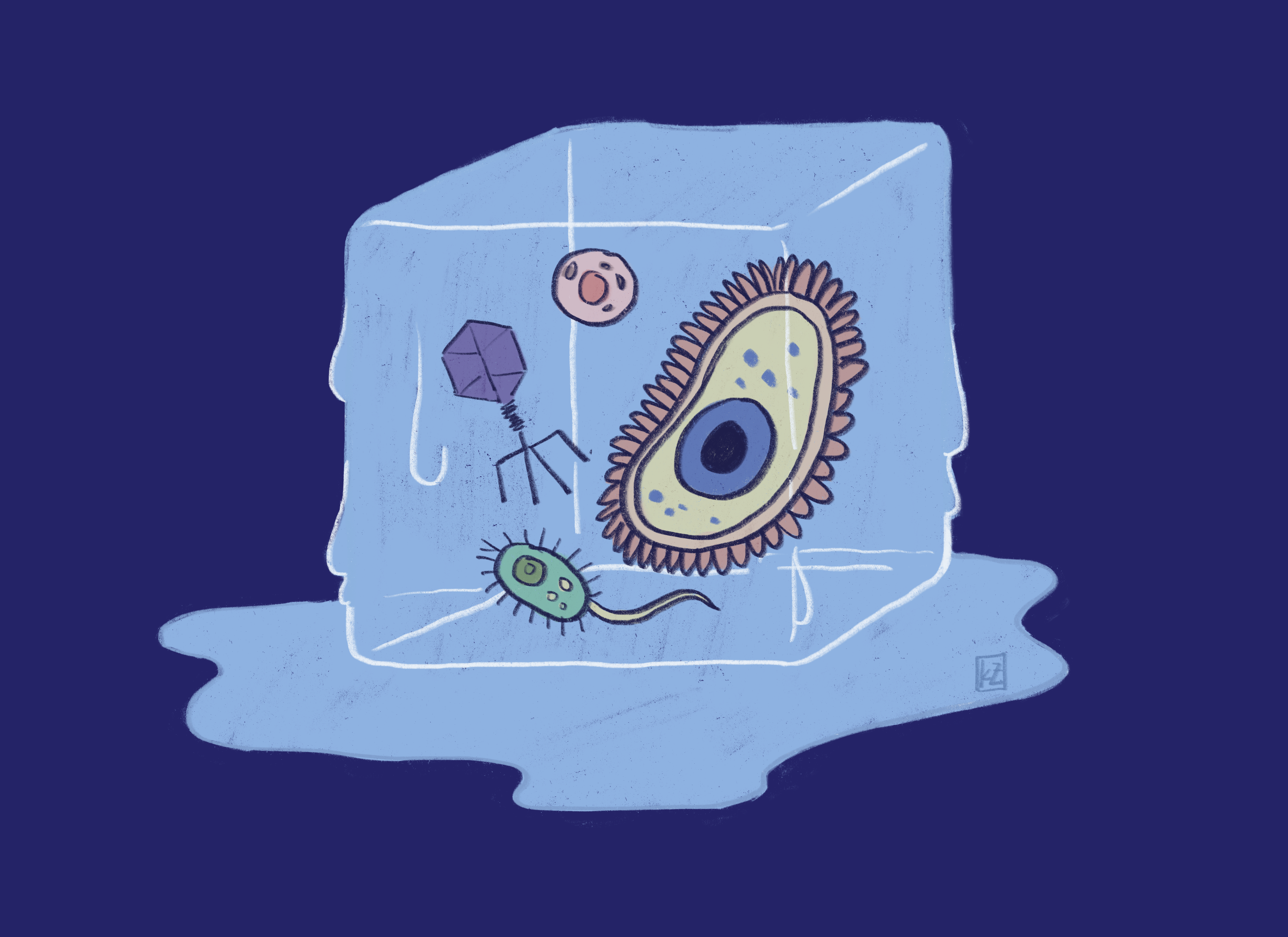
    The consensus amongst researchers and Russian officials was that it was caused by the thawing of permafrost (the frozen layer of soil underneath ice and snow) induced by unusually high temperatures. The region saw temperatures around 35 degrees Celsius that summer, or 95 degrees Fahrenheit—much warmer than the usual ten degrees Celsius (Goudarzi, 2016). The warmer the weather the deeper the thaw, potentially releasing decades-old microorganisms from the soil. These microorganisms could be anything from harmless amoeba-consuming “giant” viruses to long-eradicated pathogens such as the smallpox virus—unfortunately in this case, what was unearthed were the carcasses of reindeer that had died from anthrax, allowing the pathogen to leech into food stores and water sources.

    As soon as this story broke out, media outlets took it and ran with it. Suddenly we were faced with what seemed to be a new existential threat to humanity: ancient bacteria and viruses frozen in the ground, coming “back to life” as the earth continues to warm from climate change. “Zombie” pathogens that lied dormant in the ground would infect humans with bygone diseases such as 1918 influenza, smallpox, and bubonic plague. While the idea of dormant bacteria re-infecting humans is terrifying, how valid is it and how concerned should we really be?

    In 2014, evolutionary biologists Jean-Michel Claverie and Chantal Abergel at the Aix-Marseille University in France were able to revive a giant virus, Pithovirus sibericum, that had been dormant in ice for 30,000 years. The virus is 1.5 micrometers long—the largest ever found (Yong, 2014). While it is infectious, its preferred hosts are amoebas and are harmless to humans. This discovery has prompted both the researchers and general public alike to acknowledge the possibility that other more dangerous viruses may also be capable of resurfacing as the Arctic continues to warm.

    However, it’s important to note that Claverie and Abergel’s research pertains to viruses that target amoebas, not ones that targets humans (Doucleff, 2018). While P. sibericum may have been evolutionarily equipped to survive in frozen soil, that may not be the case for viruses responsible for influenza or smallpox that had evolved to thrive in warm human flesh.

    Another piece of information to consider is that Bacillus anthracis, the bacteria that causes anthrax infections, seeping out from the soil and infecting animals is not new. In fact, there are French accounts of anthrax-laden fields wiping out entire flocks of sheep dating back to the medieval period, until Louis Pasteur developed a vaccine against B. anthracis in 1881 (Jones, 2010).

    It’s not as if researchers haven’t tried to revive decades-old human-infecting viruses. There have been multiple attempts to revive the 1918 influenza and smallpox viruses using tissue samples from well-preserved arctic mummies, with varying degrees of success. While the attempt to isolate a living 1918 influenza virus proved unsuccessful, a Russian attempt to revive smallpox did result in their recovering parts of the virus (Taunbenberger, Hultin, & Morens, 2007; Doucleff, 2018).

    At the present moment, the threat of another outbreak of smallpox or Spanish flu is unlikely. These viruses are maladapted to the cold and unable to survive without a warm mammalian host. We may not known what the future holds as climate change uncovers more microorganisms from newly thawed soil, but perhaps we should be more concerned about what goes on in the lab with our attempts to revive long-dead viruses, rather than fixate on the idea of zombie pathogens.

    —

    References

    Doucleff, M. (2018). Are there zombie viruses in the thawing permafrost? https://www.npr.org/sections/goatsandsoda/2018/01/24/575974220/are-there-zombie-viruses-in-the-thawing-permafrost

    Fox-Skelly, J. (2017). There are diseases hidden in ice, and they are waking up. http://www.bbc.com/earth/story/20170504-there-are-diseases-hidden-in-ice-and-they-are-waking-up

    Goudarzi, S. (2016). What lies beneath. Scientific American, 315, 11-12.

    Jones, S. D. (2010). Death in a Small Package: A Short History of Anthrax. Johns Hopkins University Press.

    Taubenberger, J. K., Hultin, J. V., & Morens, D. M. (2007). Discovery and characterization of the 1918 pandemic influenza virus in historical context. Antiviral therapy, 12(4 Pt B), 581–591.

    Yong, E. (2014). Giant virus resurrected from 30,000-year-old-ice. https://www.nature.com/news/giant-virus-resurrected-from-30-000-year-old-ice-1.14801#/ref-link-1

  • Computer Programming: A Women’s History

    I always found it interesting how people tend to see computer science and coding in general as inherently a male-dominated field, despite how the very foundations of computer programming were established by a woman, Ada Lovelace. In the 60s, computer programming was considered women’s work (look at the work of Dorothy Vaughan). The code that send us to the moon was predominantly written by a woman, Margaret Hamilton. In fact, in the days of the Atari and early gaming systems, many legendary game developers were also women (Carol Shaw, Donna Bailey, and Roberta Williams, just to name a few). And today, MIT’s Katie Bouman and her team are the first to ever capture an image of a black hole. Computer science may appear to be a male-dominated field, but we can’t forget that the pioneers of the field were women. This is my tribute to just three of those extraordinary female programmers.

  • Elizebeth Smith Friedman: A Forgotten American Hero

    An illustrated tribute to the most brilliant code-breaker you’ve never heard of.

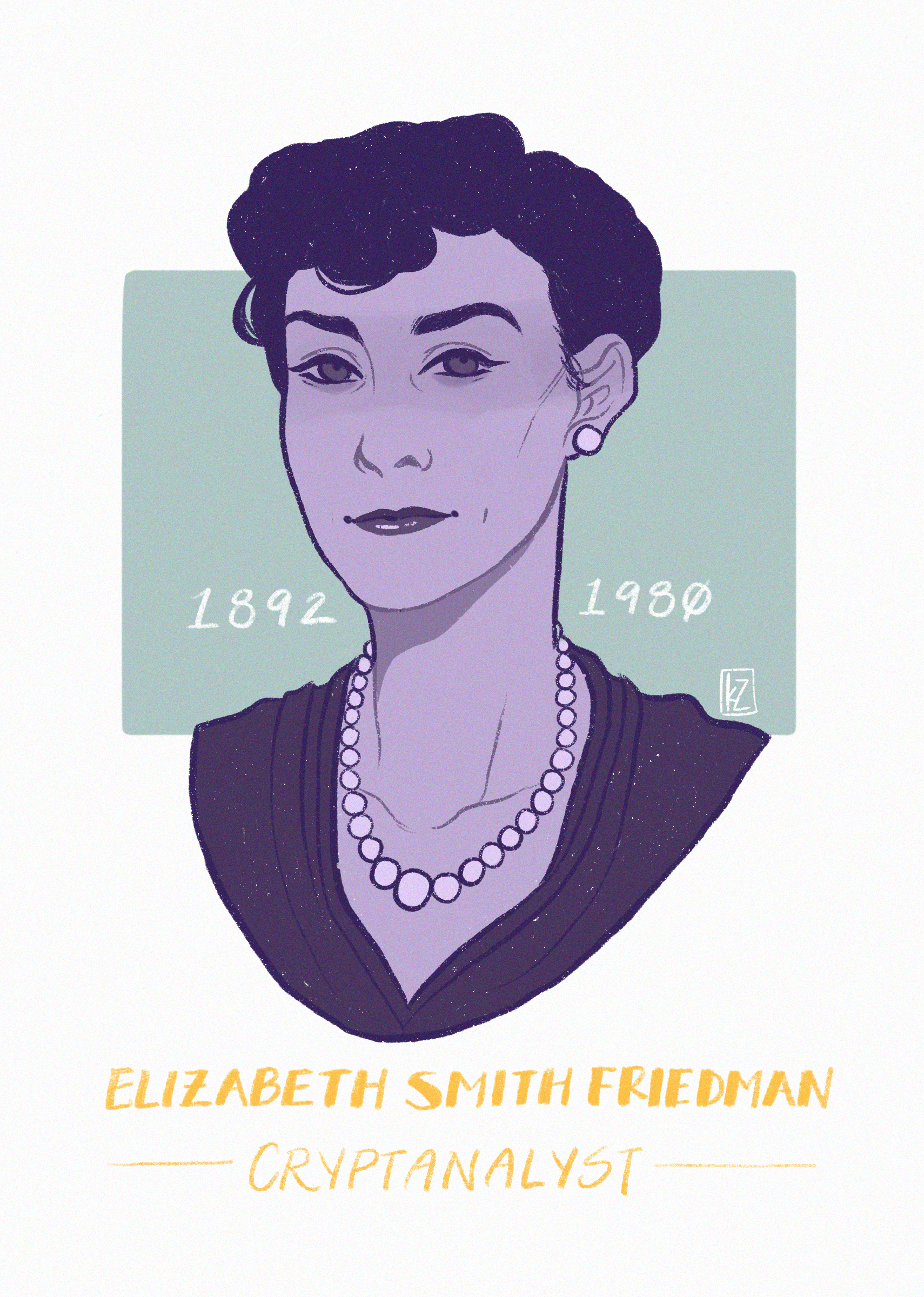
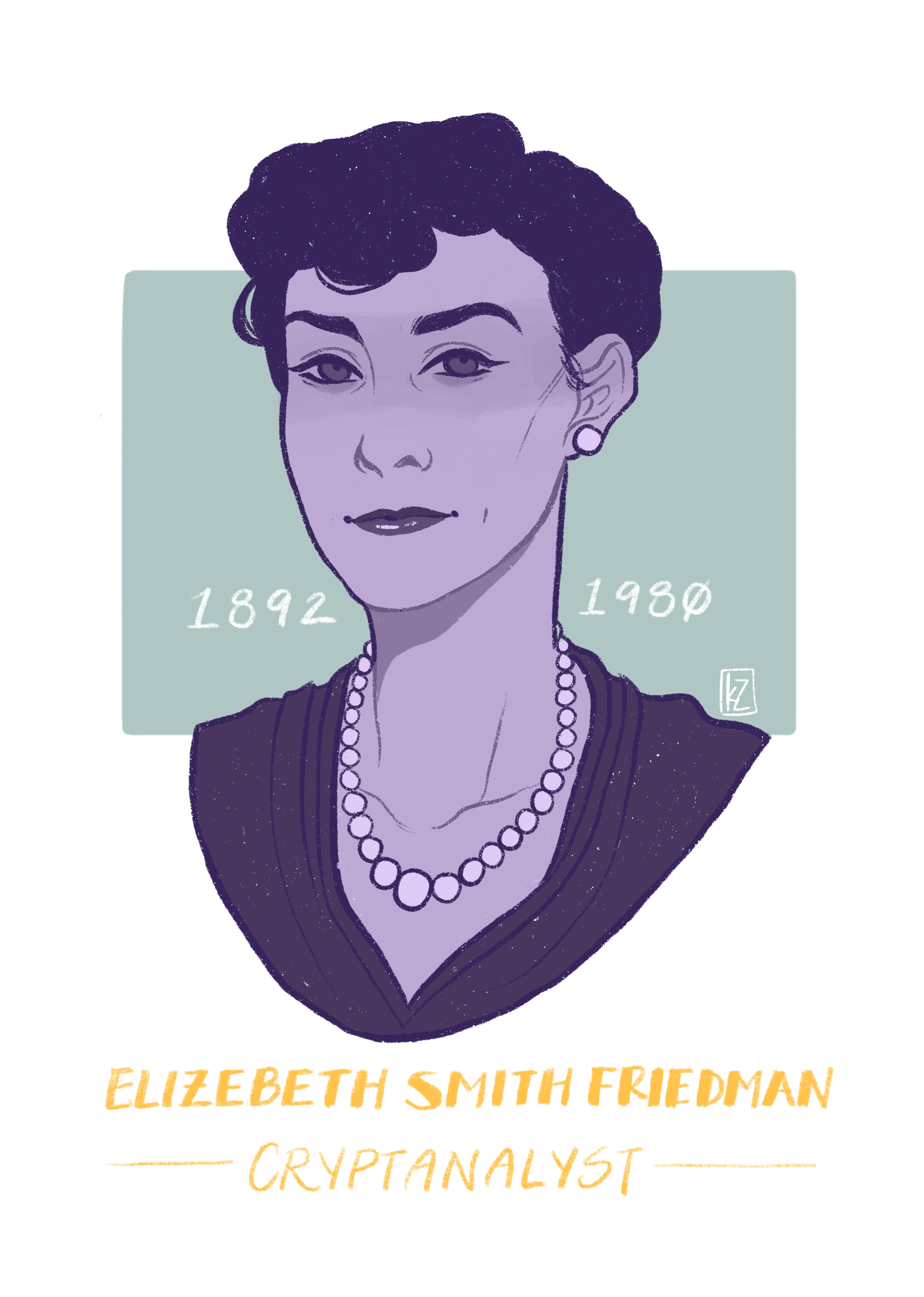
    Ever since reading The Woman Who Smashed Codes by Jason Fagone, I have been fascinated by the life of Elizebeth Smith Friedman, a woman who was by all means a pioneer and an American hero. Despite founding one of the first facilities dedicated to the study of cryptography in the U.S. and pioneering many of the foundational principles and techniques still used in code-breaking today, much of her accomplishments were overshadowed by her husband and much of her work was hidden away in government vaults. The more I learned about her and her contributions to US war efforts, espionage, and domestic crime–including cracking difficult Enigma machine and JN25 codes, decoding rum-runner messages during Prohibition, and deciphering encoded letters containing naval movement in preparation for the Pearl Harbor attacks–the angrier I felt. I felt angry for her being forgotten in the annals of history, angry as a woman. It felt reprehensible to me that, due largely in part to sexism, her incredible story had been overlooked for so long. While an illustration drawn by some random college student in Georgia is far from the praise and recognition she deserves, I hope to convey my feelings of gratitude and admiration for her brilliance, no matter how insignificant the gesture.

  • Cicada STDs, Suicidal Crickets, and the Truth About Flamingos

    IMG_0345

    In the summer of 2016, billions of periodical cicadas of the Magicicada genus appeared in the northeastern United States, erupting from the land after nearly two decades of maturing underground. As usual, they would proceed to spend the subsequent five to six weeks of their remaining lives foraging for food and having sex, calling out to mates by flicking their wings, generating distinct mating songs. Nature was taking its course—including the butt-eating, sexually-transmissible fungal pathogen, Massospora cicadina.

    Periodical cicadas are first infected by Massospora as nymphs—the “adolescent” stage of insects that undergo metamorphosis—where the spores germinate and remain dormant until their cicada hosts emerge from the soil in the summer (Duke, Steinkraus, English, & Smith, 2002). Once above ground, the spores undergo massive growth within their hosts’ abdomens, consuming their organs in the process. As the fungus grows to capacity and its host is drawing closer to its unfortunate end, the hard exoskeletal panels encasing the abdomen is shed, revealing a white plug-like structure underneath—a giant mass of Massospora spores (Kasson et al., 2018). This “plug” allows the infected host to rain down Massospora over the soil as it flies through the air, sowing the seeds of death (well, spores of death) for the next generation of cicadas that will emerge after 13-17 years underground.

    And if this phenomenon wasn’t strange enough by itself, these “flying saltshakers of death” are also hopped up on quite a variety of drugs, specifically amphetamines and psychoactive hallucinogenics produced by the fungus to control the host’s behavior (Kasson et al., 2018). While the drugs potentially explain why the cicadas seem to be totally fine despite having an entire third of their bodies consumed by a pathogenic fungus, they seem to also have another unexpected side effect: hypersexuality in males (Kasson et al., 2018). Horny and pumped with behavior-altering drugs, infected males go out into the world trying to mate with anything they can find, even other males, attracting them by mimicking female mating signals. These cicadas cannot truly mate—their genitals have either been consumed by Massospora or sloughed off with the rest of their bodies—but the physical contact during the act allow the spores to potentially find new hosts.

    Pretty terrible end of the stick for the cicada, but c’est la vie.

    Now, in case you’re sitting there wondering why I’m rambling about cicada STDs, here’s the point: “mind-controlling”—or, more accurately, behavior-altering—parasites are a fascinating, terrifying, and often morbidly entertaining existence in nature that is unapologetically absurd and brutal in how it sustains itself. Massospora cicadina is only one of the countless number of obligate parasites—parasites that depend on a host to complete its lifecycle—that upon infection can chemically manipulate a host organism to do its bidding. Unable to reach maturity or reproduce on its own, they evolved the ability to transmit themselves into host organisms, a crucial development for the survival and reproductive success of the humble parasite. As a result, they have developed intricate and shockingly complex evolutionary strategies in order to end up in the perfect host.

    At the most fundamental level, the goal of a parasite is to get from Point A to Point B. Some species—such as our dear friend, Massospora cicadina, or the infamous zombie ant fungus, Ophiocordyceps unilateralis—are perfectly happy spending the rest of their days feeding off and reproducing within a single organism, releasing their spores out into the world once they’re done with it.

    Other parasites are not so easily satisfied; rather than simply moving from A to B, their journey involves jumping from A to B to C, to perhaps even a D, going from host to host until they reach their desired environment or “final host”.

    A fascinating example of this is a class of parasitic tapeworms known as Cestoda that frequently infect Artemia parthenogenetica, or brine shrimp (you might recognize them as thoses painfully underwhelming sea monkeys that were all the rage in the 50s). Brine shrimp contain a specific type of organic pigment called a carotenoid, which they get from consuming a type of algae that naturally produce carotenoids. Carotenoids are responsible for the orange and red coloration of fruits and vegetables such as carrots, pumpkins, strawberries, etc. When infected with cestodes, the brine shrimp begin to swim closer to the surface and to each other, increasing their exposure to ultraviolet light; this activates the “photoreceptive functions” of the carotenoids within the brine shrimp, causing them to exhibit red pigmentation (Sánchez, Georgiev, & Greene, 2007).

    So why go through all this trouble to expose their hosts to predators? The answer is flamingos. Cestodes alter the pigmentation and behavior of their brine shrimp hosts to make them more vulnerable to predation by flamingos, opening up a direct pipeline to their desired destination: their guts. For these cestodes, the flamingo gut is the ideal environment for sexual reproduction, and the eventual final host.

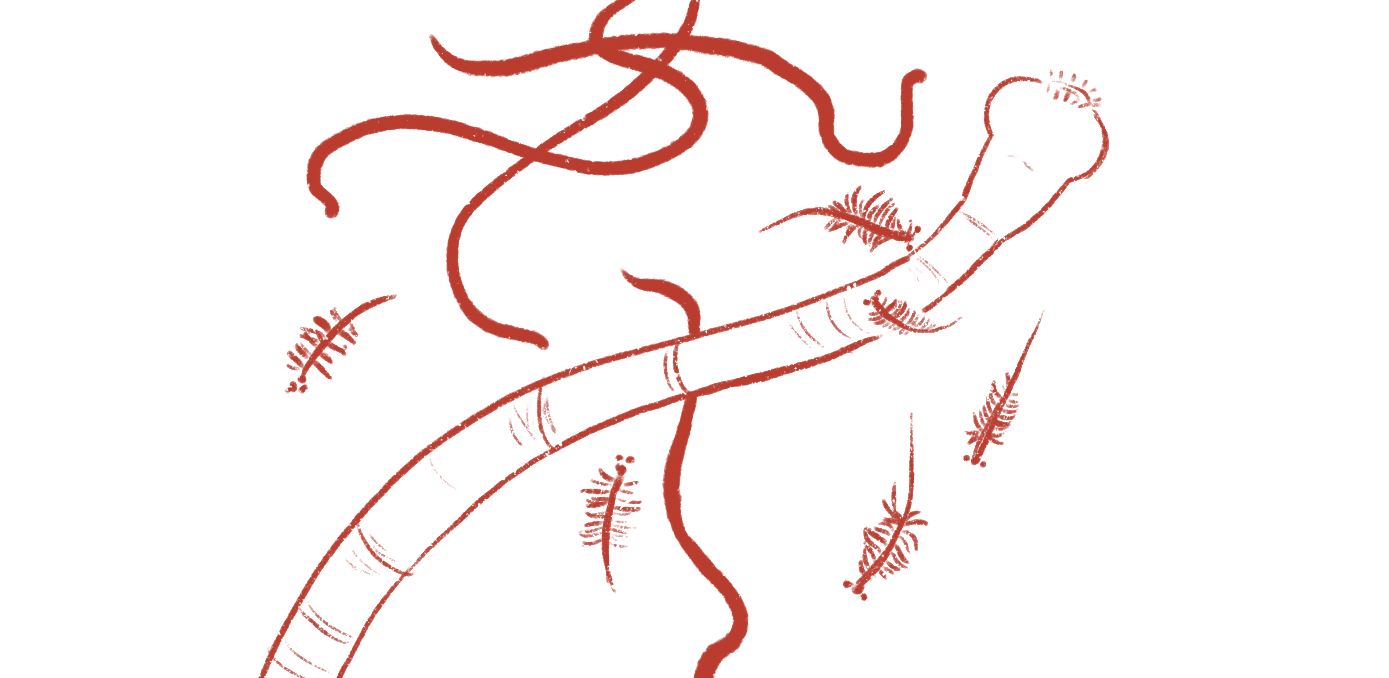
    But what if there is no final host? What if the parasite is only fixing to get from one place to another? Paragordius tricuspidatus, or the horsehair worm is one such parasite. Rather than using its host organism as a baby-making factory or an all-you-can-eat buffet, it uses its host as a means of transportation, “controlling” its mind to seek out water. When Paragoridius infects its insect host, the cricket Nemobius sylvestris—dubbed the “kamikaze cricket” for reasons you will see in a bit—it sets off a series of biochemical changes in the cricket’s brain to alter its behavior, leading it to commit “suicide” by jumping into bodies of water such as swimming pools or streams (Thomas et al., 2003). Once in the water, the worms—who have been steadily growing within the cricket’s body up until this point—exit the insect’s carcass and immediately begin mating. From then on, the worms are free-living in the water and no longer require a throwaway host to meet an untimely end.

    From mind-altering cicada STDs to suicidal cricket worms, parasitism is a vicious cycle of consumption, behavioral manipulation, and truly miserable deaths. On the surface it seems like such an ugly thing—inherently predatory, macabre, and completely unforgiving—but the truth is, they only take as much as they give. Do you recall the suicidal crickets from before? The discarded cricket carcasses eventually end up as food for fish and other aquatic animals living in the bodies of water they drowned in (Sato et al., 2011). Parasites do give back—perhaps not to their hosts, but certainly back to their ecosystems.

    Parasites are a living, breathing testament to the tenacity and adaptivity of nature. These organisms cannot think; their cognitive capabilities are primitive at best, and some don’t even possess brains or nervous systems. There is no “master plan,” no strategical meeting; it’s all the result of over millions of  years of evolution, millions of years of living and mating and dying, all of this culminating in the hope that perhaps, perhaps this species might carry on. The sheer complexity of a process that too many perceive as random trial and error (it’s not; evolution is directional and by no means random or left to chance) can regulate an entire sector of life that we as humans fail to even notice until it’s gone. It’s frightening and awe-inspiring, oft overlooked and completely humbling; this is the magic—or, the science—behind crazy, stranger-than-fiction behavior of parasites.


    Resources:

    Boyce, G., Gluck-Thaler, E., Slot, J. C., Stajich, J. E., Davis, W. J., James, T. Y., . . . Kasson, M. T. (2018). Discovery of psychoactive plant and mushroom alkaloids in ancient fungal cicada pathogens. bioRxiv. doi:10.1101/375105

    Duke, L., Steinkraus, D. C., English, J. E., & Smith, K. G. (2002). Infectivity of resting spores of Massospora cicadina (Entomophthorales: Entomophthoraceae), an entomopathogenic fungus of periodical cicadas (Magicicada spp.) (Homoptera: Cicadidae). Journal of Invertebrate Pathology, 80(1), 1-6. doi:https://doi.org/10.1016/S0022-2011(02)00040-X

    Libersat, F., Kaiser, M., & Emanuel, S. (2018). Mind Control: How Parasites Manipulate Cognitive Functions in Their Insect Hosts. Frontiers in Psychology, 9(572). doi:10.3389/fpsyg.2018.00572

    Sánchez, M. I., Georgiev, B. B., & Green, A. J. (2007). Avian cestodes affect the behaviour of their intermediate host Artemia parthenogenetica: An experimental study. Behavioural Processes, 74(3), 293-299. doi:https://doi.org/10.1016/j.beproc.2006.11.002

    Sato, T., Watanabe, K., Kanaiwa, M., Niizuma, Y., Harada, Y., & Lafferty, K. D. (2011). Nematomorph parasites drive energy flow through a riparian ecosystem. Ecology, 92(1), 201-207.

    Thomas, F., Ulitsky, P., Augier, R., Dusticier, N., Samuel, D., Strambi, C., . . . Cayre, M. (2003). Biochemical and histological changes in the brain of the cricket Nemobius sylvestris infected by the manipulative parasite Paragordius tricuspidatus (Nematomorpha). International Journal for Parasitology, 33(4), 435-443. doi:https://doi.org/10.1016/S0020-7519(03)00014-6