Skip to content

Charged 2026

    • Sample Page

Author: Lindsay Rogers

  • Anima-Toons: Cowbird Cradle

    cowbird-01

    Did you know that there’s a bird that’s considered to be a parasite? Sounds a little out there right? Well meet the brown-headed cowbird, a brood parasite. In layman’s terms this means that the female cowbird will find other species’ nests and damage one of the eggs to replace it with her own. The other species’ mother will raise the cowbird chick without ever even knowing, and these large cowbird hatchlings will often eat more of the resources even further harming the brood.

    One question you might have then, is if these cowbirds are raised as a different species, how will they ever know what they truly are? It lies in a secret passcode that all cowbirds innately know! An adult cowbird’s “chatter call” will activate the song-learning portion of the baby cowbird’s brain and allow them to identify their own species and remember other important calls and songs. Chicks as young as six days old can recognize the call of an adult cowbird.

    So here’s an ode to the Robin mother unknowingly raising a chick that was never hers only for him to leave once he’s hit with the secret cowbird password.


    SOURCES

    • https://www.allaboutbirds.org/news/if-brown-headed-cowbirds-are-reared-by-other-species-how-do-they-know-they-are-cowbirds-when-they-grow-up/#:~:text=It%20seems%20that%20cowbirds%20learn,species%2C%20especially%20the%20chatter%20call.
    • https://nestwatch.org/learn/general-bird-nest-info/brown-headed-cowbirds/#:~:text=The%20Basics,that%20are%20actively%20laying%20eggs.
    • https://www.insidescience.org/news/birds-raised-other-species-use-password-recognize-their-own-kind
    December 19, 2022
  • Anima-Toons: Koala Caper – Breaking Under

    Could a team of Koalas be masterful drug lord criminals to put Breaking Bad Walter White and Jesse to shame? Well, no, that’s probably not in the cards for these daily 20 hour sleepers, but these animals could tamper with a real-life crime scene as koalas possess fingerprints similar to those of humans!

    Just take a microscopic look at a koalas’ thumbprint and you’ll see similar loops, whorls, and arches to that of a human being’s. Scientists believe this is an example of convergent evolution (where unrelated species evolve similar abilities due to similar ecological pressures) and have used this case to investigate the true meaning behind why some animals might have detailed fingerprints in the first place.  

    It’s believed that rigid fingerprints provide a stronger grip on items by helping direct and control the moisture released by our hands’ sweat glands that provides different amounts of traction based on wet or dry conditions. Scientists also believe intricate fingerprints help increase the sensitivity of our touch by amplifying the vibrations our hands make when moving across different surfaces that are used to understand the texture of what we’re touching. 

    These two abilities give us humans an enhanced sense of touch and grip that few other animals possess, well a few including the koala! Koalas faced some similar ecological pressures of needing a good grip to climb eucalyptus trees and a sensitive touch to match their sensitive stomach that only eats eucalyptus leaves of a specific age. This is the believed reason why both koalas and humans evolved similar fingerprints even though we’re very very distantly related in the evolutionary world.

    So while we sadly may never see the cursed Koala Walter White and Jesse in real life, just know that there’s an off chance that some Australian crime scene might have koala contamination and we’d never know!


    SOURCES

    • https://www.mcgill.ca/oss/article/did-you-know/koalas-have-fingerprints-just-humans
    • https://www.pbs.org/wgbh/nova/article/koala-fingerprints/


    December 19, 2022
  • Your Water Was Poisoned – The Dupont Chemical Scandal

    Have you ever been to your grandparents’ house and looked in their kitchen cabinets? As you dove through the clutter, maybe you found an old pan or pot made by Dupont that totes itself on being non-stick. This seemingly inconspicuous kitchenware harbors a dark secret though.


    See these ‘Teflon’ pans were part of the many products Dupont produced using Perfluorooctanoic acid (PFOA or C8). PFOA makes up only one of around 4,700 similar compounds known as Perfluoroalkyl and Polyfluoroalkyl Substances (PFAS) or forever chemicals. Starting in the 1950s, Dupont began leaking these chemicals into surrounding water basins across their factory locations in West Virginia and Ohio.


    No one knew how serious the damage these chemicals could cause would be until the lawsuits from cattle farmers and local citizens revealed rotten teeth, removed colons, and a high level of cancer diagnosis from those most affected by the PFAS pollution. 


    What about PFAS chemicals’ structure makes them so dangerous though, and was this a case of Dupont not knowing better or was this a sinister cover-up years in the making? 


    Let’s dive in.


    The Structure of Forever

    PFAS chemicals have the special properties of being non-stick, oil-repellent, and water-repellent, which led to their use in a wide array of consumer products such as Teflon non-stick pans, rain jackets, furniture, cleaning liquids, makeup, cars, pesticides, etc.


    These special properties stem from their chemical structure: long chains of carbon-fluorine bonds, one of the strongest chemical bonds in existence. C-F are polar covalent bonds, where due to the high electronegativity of fluorine, electrons are unevenly shared between the carbon and fluorine. This uneven electron sharing creates an electrical dipole moment that increases the force of attraction between the two atoms thereby also increasing the energy needed to break the chemical bond apart. Because of this, only extreme heats are able to remotely possess the chance of tearing apart a PFAS. For example, in their documentation, GHD Group recommended 1100 °C (or 2012°F) for 2 seconds to break down fluorinated organic compounds.


    What happens when you mix a forever chemical with human beings?

    Starting in 2005, the C8 Science Panel began a study of possible health effects Mid-Ohio Valley communities suffered from Dupont C8 pollution into the waters of Parkersburg, West Virginia. The study concluded strong probable links between high C8 exposure:

    • diagnosed high cholesterol
    • ulcerative colitis
    • thyroid disease
    • testicular cancer
    • kidney cancer
    • pregnancy-induced hypertension 


    Many workers from the Dupont factories suffered from multiple of these diseases, with many female workers also giving birth to children with multiple birth defects during their time with the company.


    You don’t have to be directly exposed to these factories though to have PFAS in your system. Because of its incredible resistance to chemical breakdown, PFAS lasts in water for years and there are few treatment plants that can fully filter the chemical from their drinking water. And like many other toxins, PFAS chemicals also bioaccumulate (increase in concentration) in the body as individuals drink more contaminated water and eat more contaminated fish/animals. Once a PFAS is in the water, it stays in the water and bioaccumulates across seas, lakes, and rivers. Levels of PFAS have even been found in the breast milk samples of women from Indonesia, India, and the Philippines, showing just how widespread the issue is and how many people might one day be at a serious risk.   


    Just a Mistake or a Malicious Cover-Up? 

    In the 1960s, Dupont scientists ran multiple tests on the effect of PFOA on the health of mice, dogs, and monkeys and proved that PFOA was an animal carcinogen and a possible human carcinogen. However, these toxicology reports were never shown to the EPA until the class action lawsuits in the 2000s forced these documents out of the shadows. 


    Even more disturbing though is that additional internal reports were later discovered from the 1980s showing that Dupont had by then fully proved that PFOA was a human carcinogen that caused infant birth defects for their female workers and needed up to 1.5 years to clear up only half of the C8 built up in the body. Dupont executives knew without a doubt for over 20 years that they were sabotaging the health of their workers and the surrounding communities, yet it took them their victims fighting tooth and nail just to so much as release this sensitive data to the public.


    Yet at the time of the initial lawsuits, many Dupont workers and nearby communities still supported Dupont and did not believe they could purposely ignore such ominous health warnings as they saw the company as benevolent bringing jobs and prosperity to their towns. Blindness to a company’s intent can hinder reality though. Big companies such as Dupont and 3M are out to make a profit first and can hide data if that might hinder it. Dupont stole the act of choice for the consumer when their scientists and businessmen actively refuse to acknowledge that content with the public.


    Sources:

    https://www.pbs.org/newshour/science/pfas-are-everywhere-what-can-we-do-to-change-that 

    https://www.epa.gov/pfas/pfas-explained 


    November 26, 2022
  • Dressing Up as Dora for Science

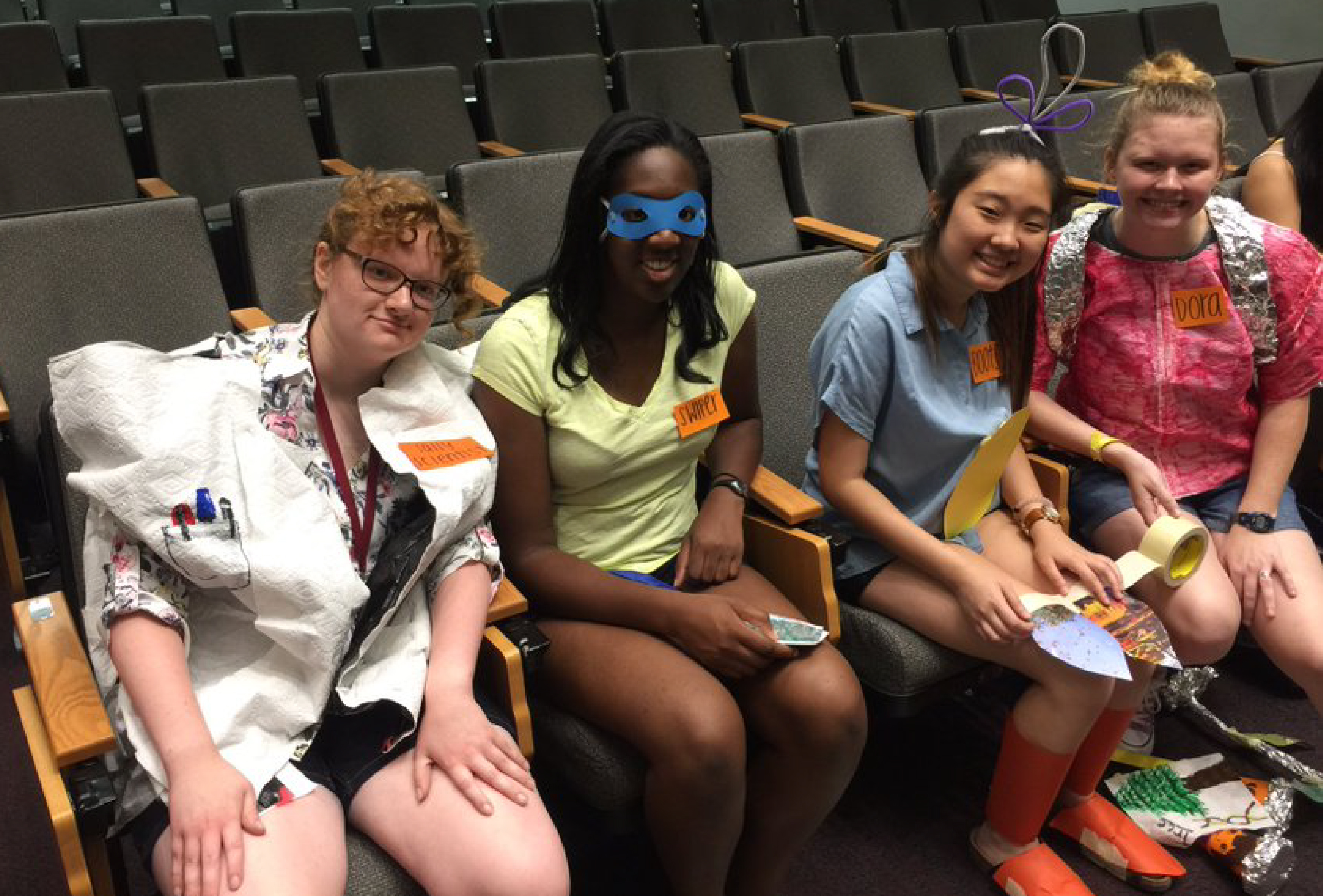
    What’s the first thing you notice about this photo? Maybe it’s the girl in the paper towel shirt with a tin foil backpack posing as Dora? Or maybe the girl with the construction paper boots or the girl with the Swiper paper mask? Or maybe you see me in the paper towel lab coat pretending to be a scientist character in the Dora cinematic universe.

    Why are we dressed as 5-minute craft Dora characters, you might ask? Well, in the name of science, of course! Specifically, as part of our team’s Presentation of Action on our solution to a Biosecurity problem scenario set 20 years in the future. Ok woah, a lot of exposition. So let’s throw it back and break down one of the most useful organizations for youth interested in STEM, Future Problem Solving! 


    Alright, what’s Future Problem Solving?

    Sounds like a bunch of buzzwords slapped together, but there is a reason for this I promise!

    Future Problem Solving (FPS) is an international program for K-12 that teaches students critical and creative problem-solving by training them in a six-step problem-solving model. A quick run-down of the steps:

    1. Identify Challenges – Given a complex, real-world scenario, what are some problems you can identify? Usually students will use a category list to try to identify problems of a diverse nature.
    2. Select an Underlying Problem – Out of all the problems identified, which problem is the most impactful on the scenario? Think – if we solved this, other problems might also be solved and the users would be the most benefited. What action verb would possible solutions need to accomplish to solve this main problem?
    3. Produce Solution Ideas – The fun part! Brainstorm creative yet realistic solutions to the underlying problem.
    4. Generate and Select Criteria – Create criteria that help you decide which solution is the best at solving the underlying problem and addressing the needs of the original scenario.
    5. Apply Criteria – Run each solution through the criteria you created and rank which one best meets all criteria overall.
    6. Develop an Action Plan – Whichever solution ranked first in step 5 will be your final solution to the problem. You need to elaborate on the who, how, what, where, why of the solution to explain how it could be implemented in the scenario and why it solves your underlying problem. (At the state and international level, teams will create a skit that describes their action plan. The limit is that for skit props, teams can only build them out of household items – hence, our makeshift Dora fits above! We created a cute Dora the Explora skit for our Presentation of Action Plan where I was a scientist explaining the research behind our action plan.)

    What makes this model unique though, is what problems are being solved (and here’s where the ‘Future’ of FPS comes in). 

    Each problem scenario is centered around a STEM-related topic, and the sky’s the limit with what areas of STEM these topics can derive from. Some of my favorites during my time included: Enhancing Human Potential, Biosecurity, Energy of the Future, Cloud Storage, Endangered Animals, and 3D Printing. Doing pre-competition research on the topic is highly encouraged, as students are given bonus points if they can describe current technology or solutions from corresponding STEM fields.

    The program throws you for another loop though by setting all these topics in a scenario that takes place 10-20 years in the future, making students not only think about the current state of the topic, but how it and its corresponding technology might possibly evolve. 

    While the program expects you to be creative with solution ideas in this field, it also expects you to understand the feasibility of current tech and how it might realistically look in the future. There are no ‘magic pill’ solutions that solve the problem with the flick of a switch allowed. You can be creative, but it’s got to be something that has a basis in our modern day to get ya points.

    So you got the basics of FPS down now. Just like with the Action Plan, let me hit ya with the WHY Future Problem Solving is an integral skill-builder for any primary school kids interested in a STEM career.


    Why You Should Force Yourself (or Force Your Child) To Join FPS

    I did FPS for 9 years before joining Georgia Tech as a Biomedical Engineering and then Computational Media major, so I speak from experience here that this six-step method of problem-solving is very similar to how both Engineers and Computer Scientists solve real-world problems in their respective fields.

    Let’s pretend we’re Biomedical/Software Engineers for a moment, and we’ve been given a specific user base that we want to design a device for that solves an issue they’ve been struggling with:

    1. To design a medical device or a computer program that’s meant to help a user base, first you need to identify what problem your users have. 
    2. Oftentimes, you’ll do user interviews and find users have MANY problems. One device can solve a few, but often due to restricted budgets and timelines, it’s not feasible to solve all the user’s problems, so you need to identify which ones are the highest priority (your underlying problem). 
    3. From then, research & design happens. You collaborate with your team on seeing what technology/systems currently exist and what are new methods/designs you can try to create that modify the current tech or are completely new from them (and you make simple prototypes of them). 
    4. Then you need to narrow down which design you want to move forward in with prototyping because there’s not enough time and money in the real-world to try to make every idea all the way from scratch to completion. 
    5. This is where you need to set up criteria to assist in deciding which device prototype you’ll choose as your action plan.
    6. Finally, once you’ve built and tested your device, you need to explain to your stakeholders and users how the device works and solves the identified problems from before. Otherwise, what was this all for besides wasting money?

    Did you see all the FPS steps in this engineering/computer science scenario? Granted, while this is a very simplified explanation, at the core, this scenario is what you do while working on projects in these fields. Even though I had no engineering or computer science experience before coming to Tech, it never felt unnatural to me when I was working on design projects because the process had already been ingrained into my being from FPS. I already knew how to critically think, so I could instead really dive into the technology I was working on and focus on coming up with solutions. Imagine starting with a leg-up at GT, and you never knew it!


    FPS, My Old Friend

    Beyond preparing me just for critical problem-solving in STEM, FPS also fostered my love for collaborating in teams. I loved the moments I shared with my teammates: Our countless recitations of topic-related vocabulary cards on the bus to the state competition in Athens, our nervous hands hovered above the face-down scenarios in a sea of international teams, the late nights of coloring absurd amounts of paper towels red, our screams when we won First Place at Internationals for our Dora skit. I wouldn’t change those moments for the world. Who thought something as educational as solving STEM problems for 2 hours could shape the best parts of my mind and life?

    To make it part of your life, check out the FPSPI website to see if you can find an active division near you. And if there are no current divisions, Future Problem Solving always welcomes the start of new ones! Get out there and solve some problems my fellow STEM kids!

    October 11, 2022
  • Anima-Toons! Baby Fever


    Anima-Toons! Baby Fever

    Did you know that a newborn kangaroo is the size of a lima bean and that echidnas lay eggs because these two sure didn’t.

    April 27, 2022
  • Why Laughing at Memes With Friends is Good For You

    You find a funny meme on the Internet. You chuckle to yourself and decide to show your friend. They start giggling which makes you only laugh harder. Your friend picks up on this and their laughter dials up and now you two are in a symphony of hilarity and you wonder if the little meme was even that funny to begin with.

    Why do we laugh, and why do we seem to laugh more around others? Well secret’s out, you’re wired to do so just like chimpanzees are wired to groom each other.


    Are Laugh Tracks… actually useful?

    Laughter plays a key role in social communication. It’s a human’s way of expressing they want to connect with others, and it can reveal how close those connections are. In a 2001 Psychological Science study, voiced laughter (think of your typical hahahaha) was reported to invoke a more positive reaction out of the listener and prompt them to be interested in meeting the speaker. We laugh to seem approachable and bond with others. That’s also why people are 30 times more likely to laugh in a group than to laugh alone regardless of how funny the actual joke is. The laugh track of older TV series mimics sitting in a social situation with other people watching the show to try to make the experience more enjoyable. 

    Not all laughter is the same though. People can pick up the subtle mannerisms of laughter and what those differences might mean. For example, a 2016 international study showed that 60% of the time people accurately can differentiate whether or not two individuals were good friends or strangers just by their laughs (So yes, you awkwardly strain laughing at a coworker’s joke does not always go unnoticed). Laughter can also distinguish power hierarchy between two individuals based on whether the person has a dominant or submissive laugh in the situations. Those with more power in a social situation will have a dominant laugh that is louder and possesses much more irregularities in pitch and tone than a submissive laugh, as the person in power feels more disinhibited during the situation.

    Even though you might never mutter a word when you laugh, you’re still subtly communicating and bonding with others. 


    Laughter is the Best Medicine. No Really.

    Is the social element of laughter not your cup of tea? There’s plenty of health-related benefits to laughing too. Laughing can:

    • Reduce stress by releasing tension in the body and helping blood to circulate and muscles to relax.
    • Improve mood through releasing endorphins
    • Increase your intake of oxygen 


    So not only are you improving your social status with laughter, but you’re strengthening your body too. Don’t feel afraid to laugh it up with someone next time! Even if it’s at some dumb meme on the Internet.

    Citations

    Mayo Foundation for Medical Education and Research. (2021, July 29). Stress relief from laughter? it’s no joke. Mayo Clinic. Retrieved April 26, 2022, from https://www.mayoclinic.org/healthy-lifestyle/stress-management/in-depth/stress-relief/art-20044456

    Michel, A. (2017, March 31). The science of humor is no laughing matter. Association for Psychological Science – APS. https://www.psychologicalscience.org/observer/the-science-of-humor-is-no-laughing-matter

    Stierwalt, S. (2020, February 9). Why do we laugh? Scientific American. https://www.scientificamerican.com/article/why-do-we-laugh/

    Winerman, L. (2006, June). A laughing matter. Monitor on Psychology, 37(7). https://www.apa.org/monitor/jun06/laughing
    April 27, 2022
  • Bananas Are Dying. Again.

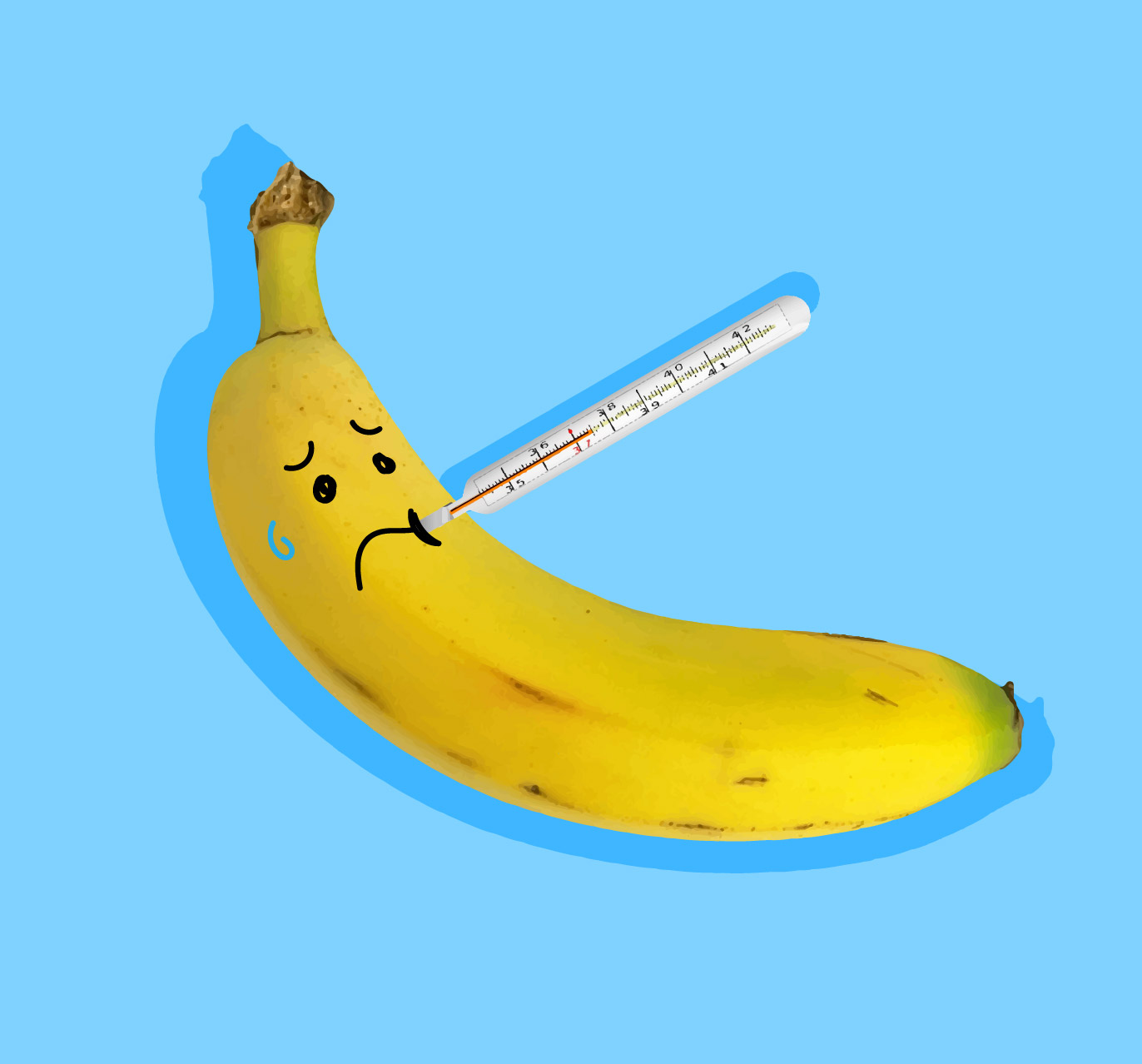
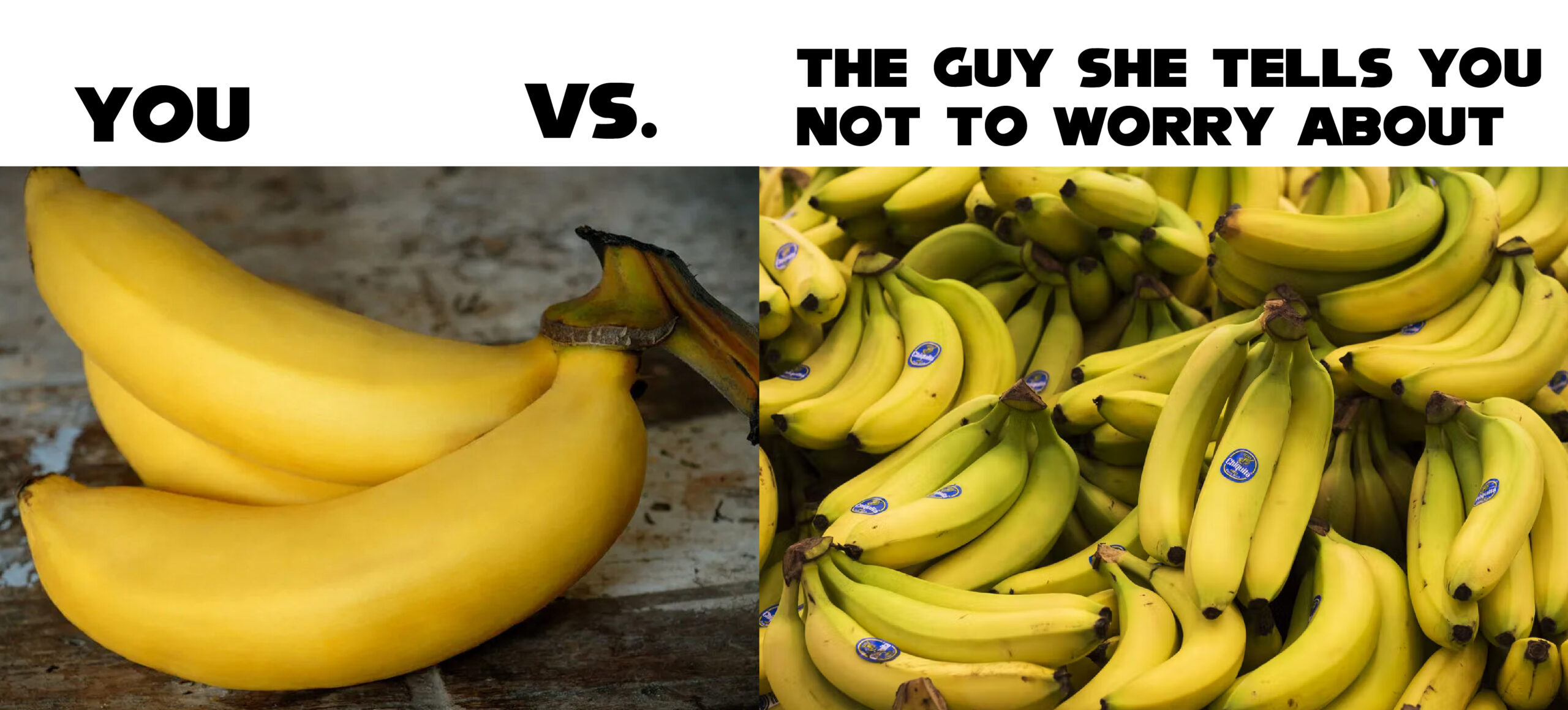
    You’ve probably eaten a banana before. You’ve probably even eaten one this week in a smoothie, in a baked good, or just by itself for a quick snack or breakfast. Bananas are a titan amongst the agricultural industry with a retail value between $20-25 billion dollars, making them a vital part of the economies of many Latin American countries like Panama and Ecuador.

    What you probably don’t know is that pretty much every single banana you’ve ever eaten is from the same variant, the Cavendish. These delicious plants replaced the Gros Michel, or Big Mike, banana as the star of the banana industry back in the 1960s when the Big Mike went nearly extinct. However, history is repeating itself and now the Cavendish banana is on the chopping block all due to the same reason: Fusarium wilt, or Panama disease.

    An Old Foe Returns for Revenge

    Fusarium wilt is a fungi that completely ravishes the soil and plants it touches. When affecting a plant, the fungi goes around 10 feet deep into the soil making it so that just removing a single affected plant to stop the spread is nearly impossible. Large areas of soil become barren, and the fungi can be easily tracked to other places on the bottom of other workers’ shoes or car tires. Tropical Race 1 of this disease began killing Gros Michel in large quantities in the early 20th century, so the resistant Cavendish took its place in the industry; however, now the Tropical Race 4 variant (TR4) has crumbled the Cavendish’s resistance.

    The deadliness of TR4 has only been heightened by the monoculture system of the banana industry. Since nearly every banana sold commercially is the Cavendish, a variant without seeds for easier consumption, Cavendish bananas must be propagated from existing growths causing them to be near genetic copies of one another. This small gene pool decreases the Cavendish’s resistance to diseases like TR4 and once one banana plant is affected, it can easily spread to other batches and destroy new ones.

    Stop the Spread!

    Can the Cavendish banana be saved or will it fall to the same fate as its predecessor, Big Mike? There have been a couple of attempts to solve the issue at hand with varying degrees of success:

    • Genetically Modified Cavendish: In 2019, Dr. James Dale successfully modified a batch of Cavendish bananas with a gene from a TR4-resistant banana. However, the fear and bans of GMOs in many countries has kept this from becoming an appealing solution.
    • Breeding Cavendish with resistant bananas: KeyGene has been attempting to traditionally breed a Cavendish with a resistant banana to try to get around the GMO dilemma. However, these resistant bananas tend to be inedible ones full of seeds, and through traditional breeding, it is difficult to get the exact results desired to produce a delicious yet TR4 disease-resistant banana.
    • Diversify the banana industry: Breaking free of monoculture to grow and sell multiple kinds of bananas would make it much more difficult for an entire breed to be fully wiped out like Big Mike was. However, the banana industry is completely modeled around monoculture and to change this would need a large sum of money and structural alterations that companies are not willing to make at this moment.
    • Biosecurity protocol: This is the one solution currently being used by most banana farms. Areas where an affected plant has been identified will be zoned off and destroyed. Workers must also walk along cement paths and utilize foot and car tire washing areas to try to diminish possible contaminated soil tracking to other locations. These measures have been working so far as to slow the spread of TR4.


    There is still a lot of uncertainty with the Cavendish banana’s future, and one day, you might not be able to taste it again. Cherish each banana you eat because just like you, they’re surviving through a pandemic right now too!


    Citations

    Abby Narishkin, S. C. (2021, July 29). Why the world’s favorite banana may go extinct, and how scientists are trying to save it. Business Insider. https://www.businessinsider.com/cavendish-banana-may-go-extinct-disease-2021-6#:~:text=Similar%20to%20humans%2C%20bananas%20are,the%20%2425%20billion%20banana%20industry.

    Kambhampaty, A. P. (2019, November 18). What we can learn from the near-extinction of bananas. Time. https://time.com/5730790/banana-panama-disease/


    April 27, 2022
  • CHOOSE YOUR POKÉMON!

     

    CHOOSE YOUR POKÉMON!

    I still remember the first time I booted up my brother’s GameBoy Color and saw that iconic title screen of Pokémon Red where each of the starters would flash by. The hardest choice as a kid (and still a difficult one now) was picking which of the three starters you wanted as your main partner. Would you choose the Fire-type, the Water-type, or the Grass-type? The one thing you knew going into this choice though was that most starter Pokémon were based off real life animals, plants, or objects. For example, in Pokémon Red, the Grass-type starter Bulbasaur is based off a mixture of frogs and onions, while the Fire-type Charmander is based off a salamander, and Water-type Squirtle is based off, well, turtles.  


    So I thought, well why not take up this trend and create my own set of starter Pokémon based on some real world counterparts! I’ll be taking three real plants/animals, designing them as Pokémon and crafting a move set based on some of their coolest ecological adaptations. Then you can choose who you’d like to start your Pokémon journey with! Welcome to the next generation of Pokémon: Generation Earth!

    Generation Earth Starters
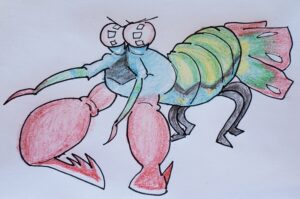
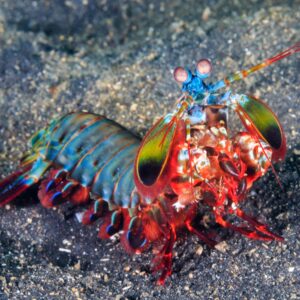
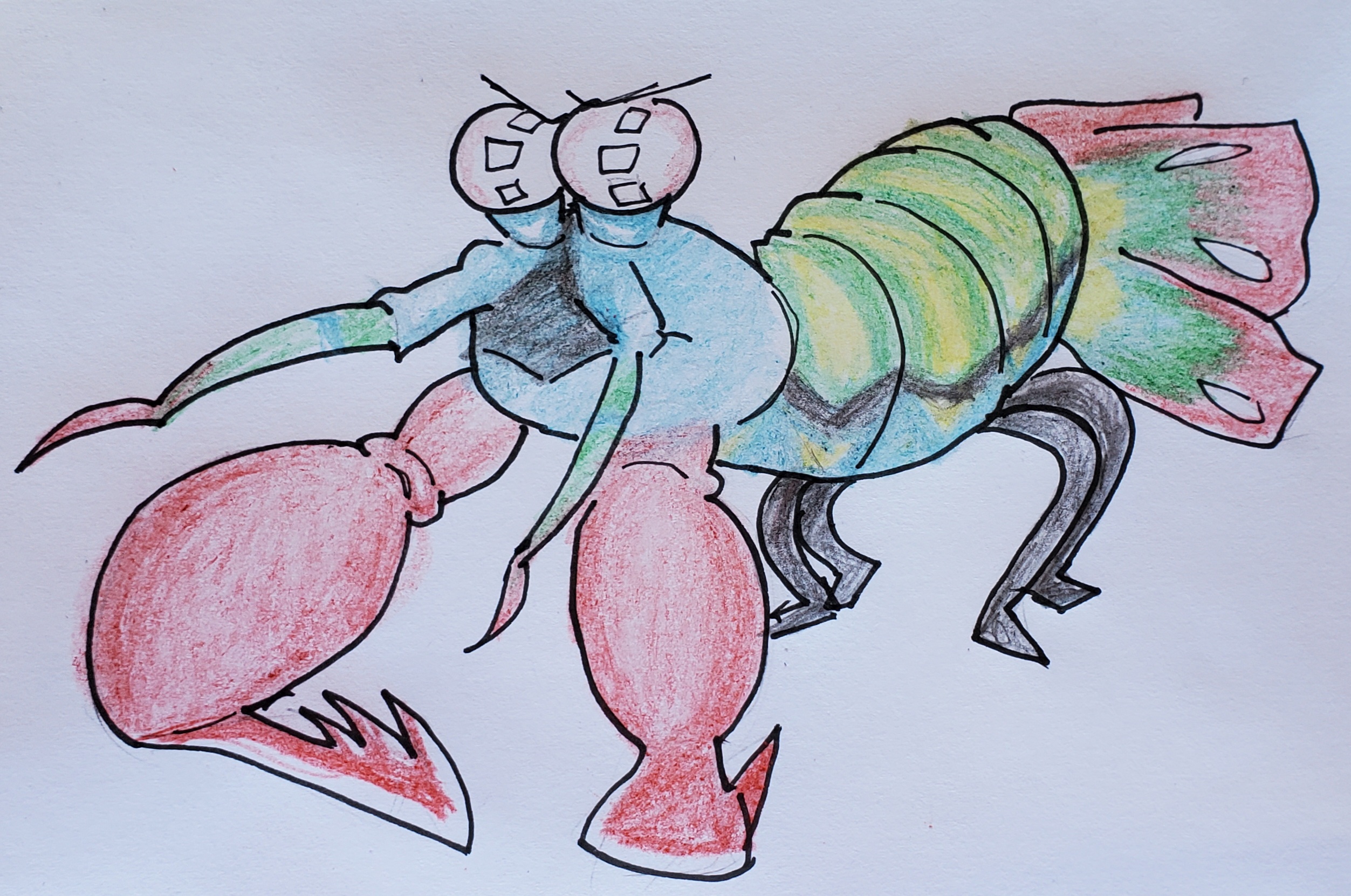
    Water-Type Starter: Stomato (Stomatopods or Mantis Shrimp)

    Dual Type: Water/Steel

    Move set:

    • Mantis Punch – releases an intense punch that stuns the foe for a turn.
      • Power: 120, Accuracy: 70  
    • Bubble Punch – punches the foe with a beam of bubbles.
      • Power: 90, Accuracy: 80
    • Triple Sight – increases accuracy by focusing on three different objects.
      • Power: —, Accuracy: 100
    • Color Burst – increases attack by allowing the user to identify more colors.
      • Power: —, Accuracy: 100

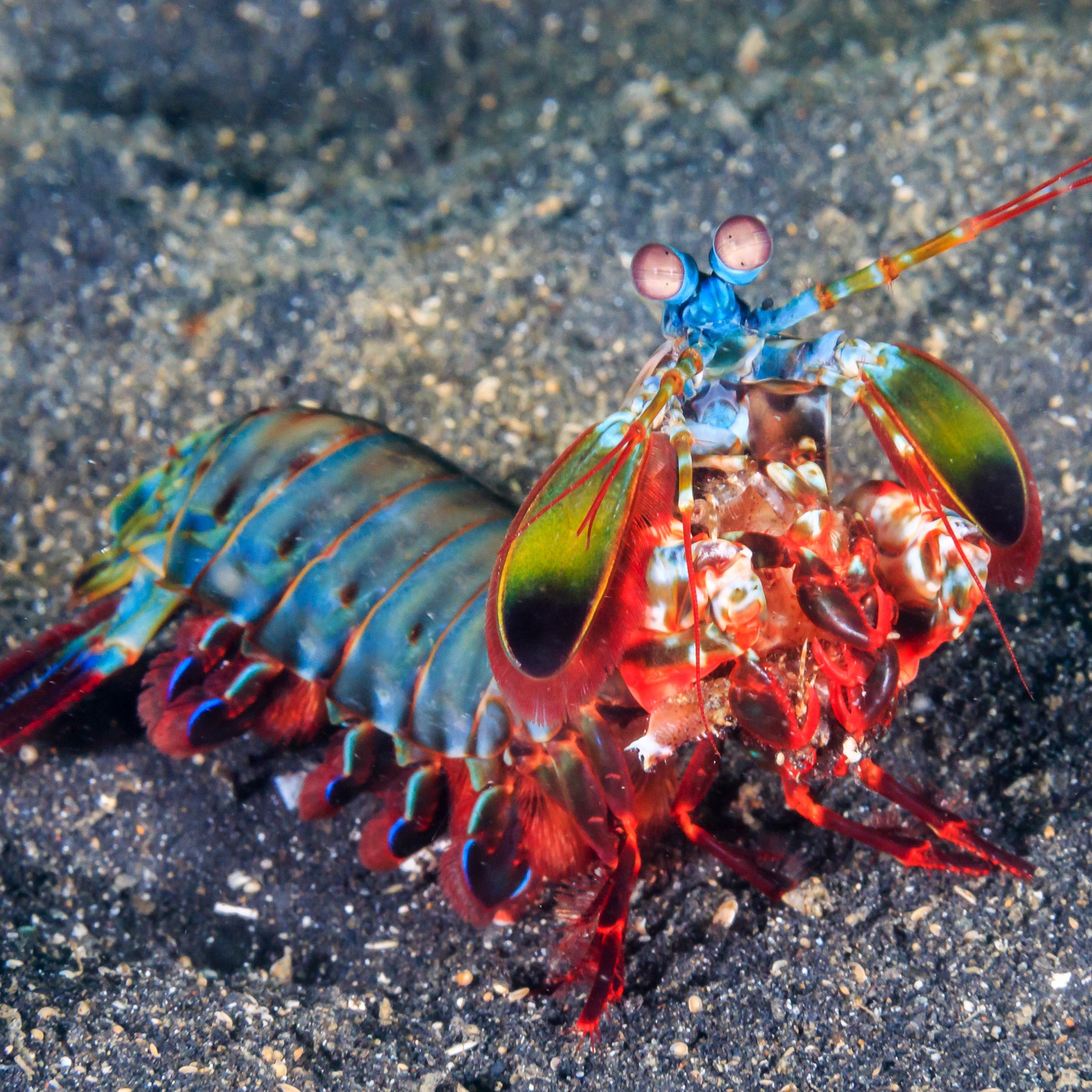
    The fierce Water/Steel hybrid, Stomato, is based on its just as fierce real world counterpart, the stomatopod, or more commonly known as the Mantis Shrimp. These carnivorous crustaceans live in most shallow, tropical regions and can be broken into two main groups based on how they catch prey: spearing and smashing. Stomato is based on the smashing group as you can see from his punching moveset. Let’s breakdown these moves:


    Mantis Punch: The Mantis Shrimp’s main claim to fame is its fantastic punch, which can reach a force over 1,500 newtons and possess an acceleration of 102,000 m/s2, which is basically as if they were shooting a .22 caliber rifle! These punches can tear through crab shells with ease, allowing the Mantis Shrimp a delicious meal. As such, Stomato’s Mantis Punch is his fiercest attack and can absolutely decimate an opponent if he lands a hit.

    Double Bubble Punch: The Mantis Shrimp doesn’t just attack in ones though. Because of how fast their punch is, they create a ‘cavitation’ of bubbles that follows their initial punch and hits their prey a second time. This cavitation of bubbles is also burning hot (almost 4,400C). If their prey isn’t killed by the first attack, they sure are killed with the second round. To only make things fair, I separated this bubble punch into a new move for Stomato, but it still delivers quite the hit! 

    Triple Sight: While the Mantis Shrimp’s eyes might look creepy to us, they have a ton of unique abilities! Mantis Shrimp possess trinocular vision, meaning that they analyze distance and depth by focusing on objects in three separate regions. This helps them get an extremely accurate understanding of the space around them and where their prey is. For Stomato, his trinocular vision allows him to easily lock onto his foe and increase the accuracy of his attacks.

    Color Burst: The Mantis Shrimp’s eyes possess another interesting feature; they contain twelve types of different photoreceptors (the part of the eye that responds to light and helps distinguish colors). That might not seem like a big deal at first but just compare that to humans who only have three types! Because of the large number of photoreceptors, the Mantis Shrimp can see a wider range of colors than a human (and most other animals on the planet). Scientists are still trying to figure out exactly why and how the Mantis Shrimp has so many, but many hypothesize the Mantis Shrimp utilizes each photoreceptor to identify and process the color (while humans need other parts of their brain besides their eyes to process colors) which is extremely helpful in the colorful coral environments the Mantis Shrimp can live in where they need to spot prey quickly. Stomato takes after this with his move, Color Burst, which lets him identify multiple colors at once to better find his target on the battlefield.
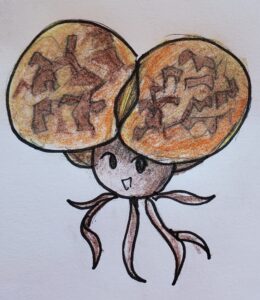

     

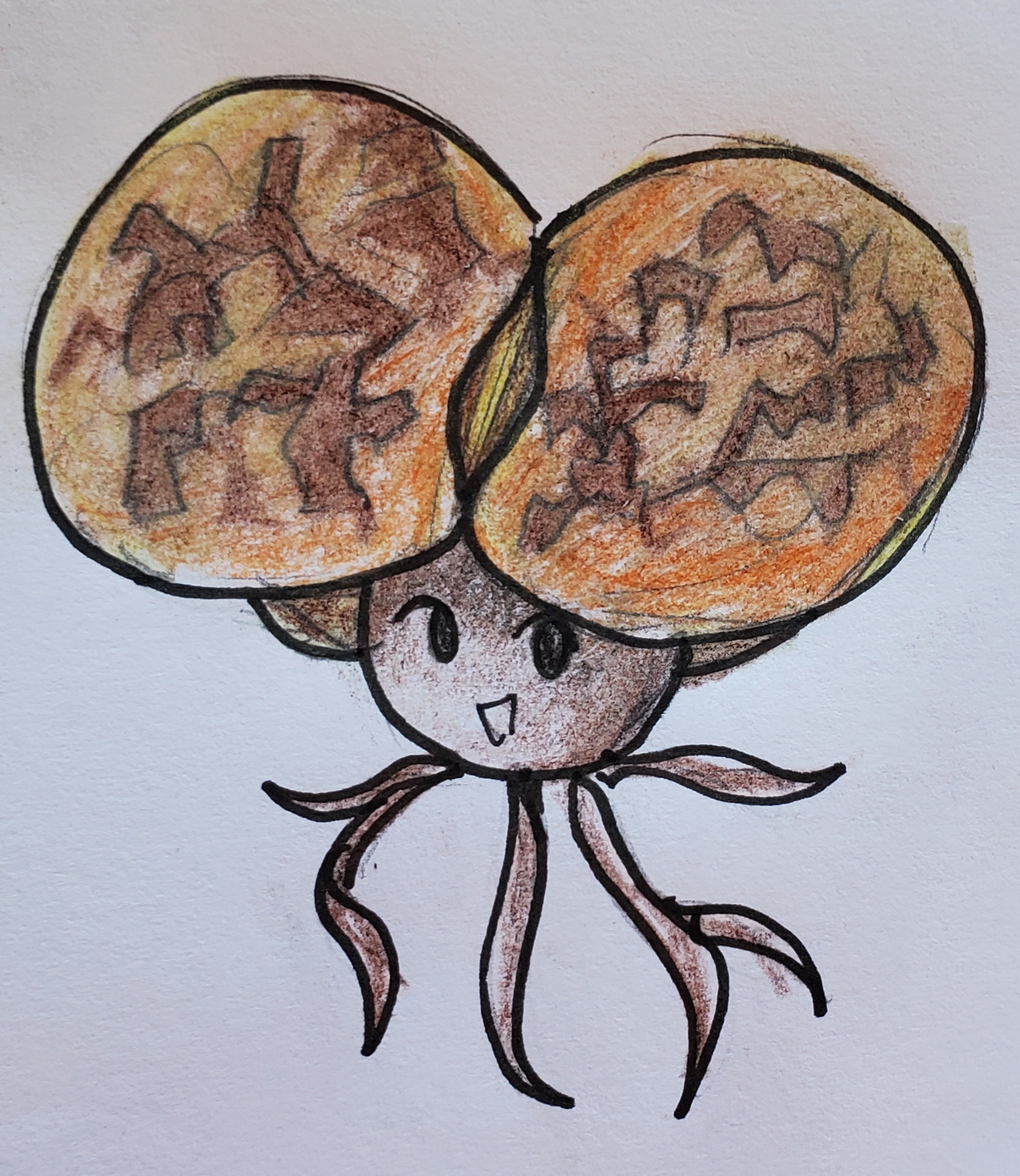
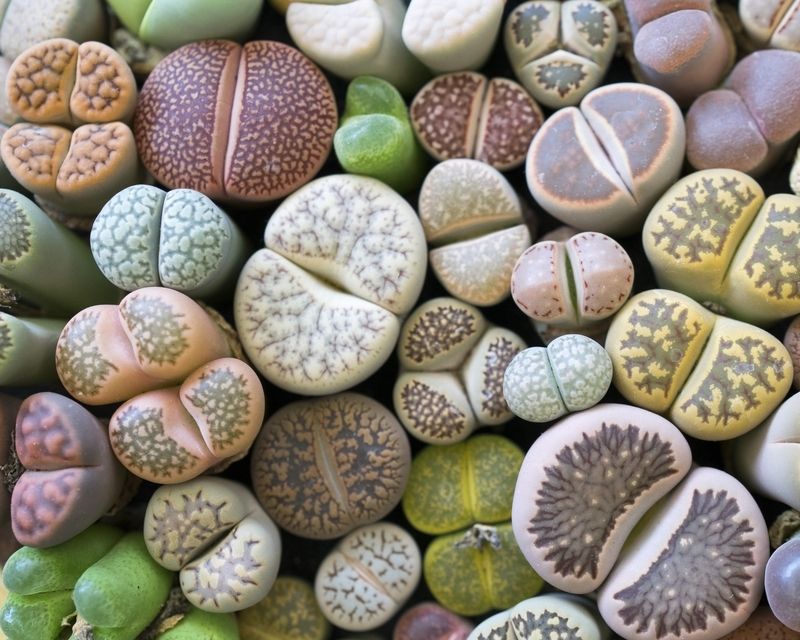
    Grass-Type: Lithop (Lithops or living stones)

    Dual Type: Grass/Ground 

    Move set:

    • Camouflage – hide as a rock to lower a foe’s accuracy.
      • Power: —, Accuracy: 100 
    • Aqua Retain – stores water for the next three turns to replenish HP.
      • Power: —, Accuracy: 100
    • Metabolic Cooling – darkens the battlefield and releases chemicals.
      • Power: 90, Accuracy: 100
    • Leaf Shield – tightens its leaf window to raise its special defense.
      • Power: —, Accuracy: 100

    Our lovely little Lithop has its name taken straight from its real world counterpart’s scientific one. Living stones, as they are more commonly known, are plants that typically reside in the drier, warmer areas of southern Africa. They’ve gained this nickname due to their appearance of stones of pebbles. To thrive in such xeric environments, lithops have forged numerous adaptations to help them conserve water and protect themselves from overheating and radiation. Let’s take a look at these adaptations and how they’ve formed Lithop’s moveset:


    Camouflage: The most obvious one; living stones keep their stems underground, only revealing two succulent leaves above the surface. Without close inspection, this pair of leaves adorned with graveled patterns give a rock-like appearance to the lithops. This appearance can fool nearby grazers to move past them. As such, Lithop utilizes its move Camouflage to hide itself from its opponents, making it harder to see within the landscape and harder for the foe to hit!

    Aqua Retrain: The two succulent leaves and below ground stem of the living stone have other benefits too. If you’ve ever seen a succulent leaf, you know it’s much fatter than most traditional green leaves you see on bushes or flowers. This is because these leaves store water in them for the plant to use during periods of drought. Living stones are especially great at this since by design, they have a low surface area to volume ratio, meaning they can store a lot of water while minimizing the amount of exposed plant surface area. Lower exposed plant surface means less water will be lost during the day due to transpiration. Because of their great water retention mechanics, our Pokemon Lithop can also store water for multiple turns and use that water bit by bit to help heal and regrow itself after damage.

    Metabolic Cooling: Lithops, like many plants found in arid environments, have to adjust their process of photosynthesis to not lose too much water. One of the ways they do this is through Crassulacean Acid Metabolism (CAM), where only at night will the plant open its stomata (think of these as plants’ pores) to collect carbon dioxide from the air. Without the sun present, the plant is less likely to lose water vapor when it opens its stomata which helps it conserve its water supply. For our Pokemon Lithop, I did a bit of a flip to make the move an attack, so instead of collecting the chemicals from the night air, it releases them to harm its foe. Sometimes in art you have to make a few adjustments for things to work!

    Leaf Shield: As you know, most of the living stone is hidden within the succulent leaves or beneath ground. To bring sunlight into the plant for photosynthesis, lithops possess a small leaf window. The exact purpose of this window mystified biologists for years (was it to directly channel sunlight into the areas for photosynthesis?) until a few studies revealed its reasoning. Within the harsh sunlight of the desert, it’s very easy for the internal parts of lithops to overheat and be damaged by UV radiation, which can dramatically reduce photosynthesis. This leaf window then shields the internal portions of the plant from sunlight and keeps its internal temperature from rising too much. Because of this, our Pokemon Lithop utilizes its leaf window as a defense mechanism to special attacks that could cause damage or status effects to it.
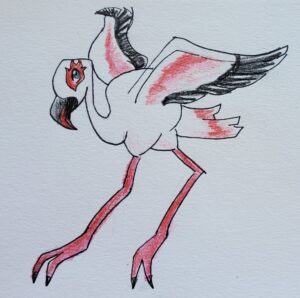

     

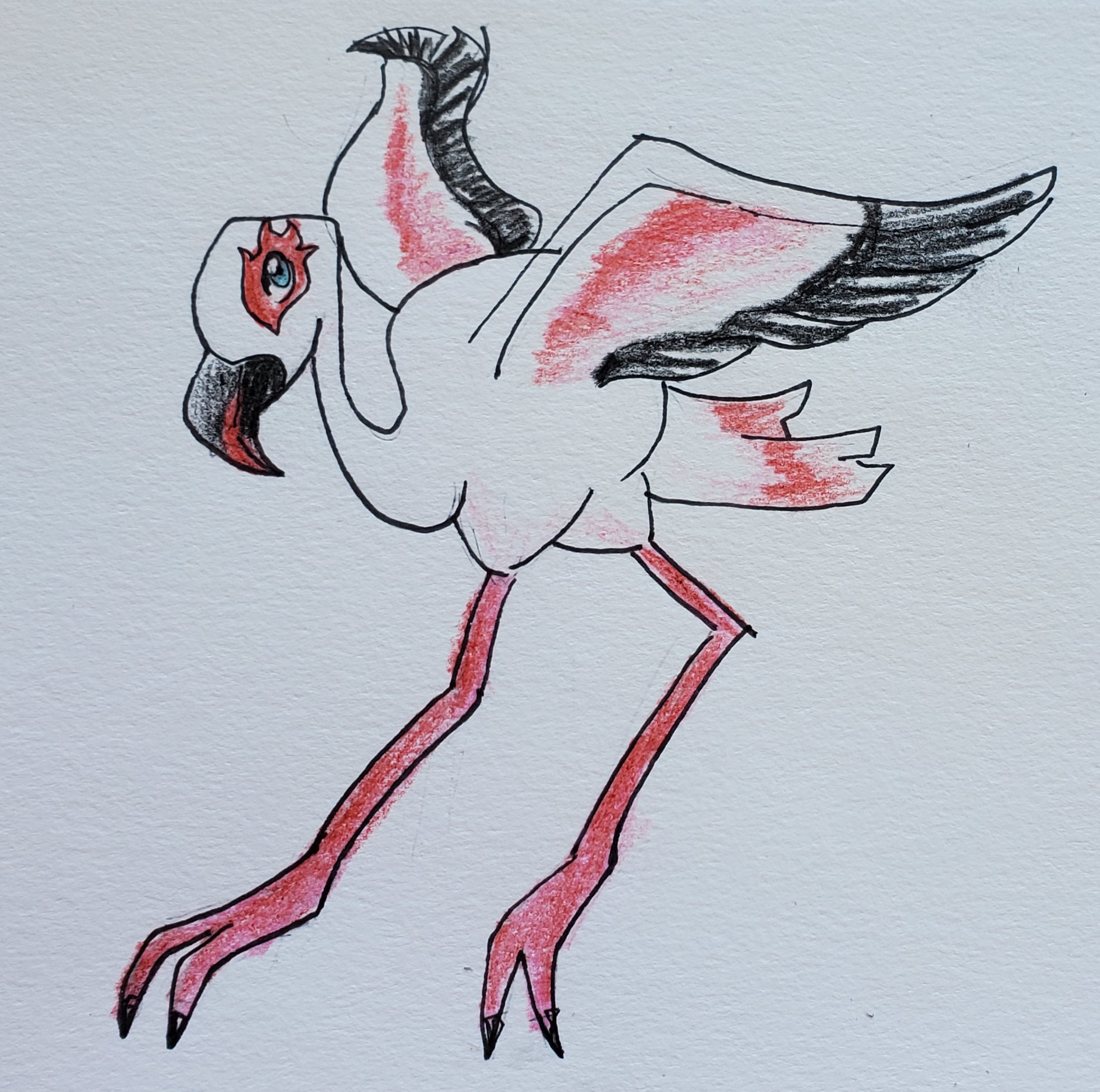
    Fire-Type Starter: Flameingo (Lesser flamingos)

    Type: Fire-Flying

    Move set:

    • Boil Spout – Squirts boiling water at foe.
      • Power: 90, Accuracy: 90
    • Purify – removes salt from water to heal the user’s HP. Effect doubled if attacked by a Water-type move the previous turn.
      • Power: —, Accuracy: —
    • Harden – raises defense; no status effect can be imposed on the user.
      • Power: —, Accuracy: 100
    • Volcanic Ash – uses wings and legs to scatter burning ash and mud at foe.
      • Power: 70, Accuracy: 100

    While a bit more of a stretch than the other two, let’s not forget our Dual Fire/Flying type, Flameingo! Flameingo is based on the phoenicoparrus minor, or more commonly known as lesser flamingos, which make their home in the volcanic waters and pockets of places such as the African Rift Valley, the Galápagos Islands, and the high Andean plateaus. These animals are extremely sturdy and have adapted to living in some of the hottest and most dangerous places on Earth, which is why Flameingo takes the spot of our fire starter. Let’s check out her moveset:


    Boil Spout: Since the lesser flamingo utilizes alkaline volcanic lakes for sustenance, they have adapted to be able to drink near boiling water without causing serious burns. Flameingo takes after this trait (with a bit of a stretch to just say boiling) and can attack her enemies through spitting boiling water back at them. Let’s see if her foes can handle the heat!

    Purify: The lesser flamingo often takes up residence in hypersaline lakes or geysers, so they must utilize different glands in their head to remove the salt from the water they drink. Once the salt is removed from the water, it drains out their nasal cavity. Our Pokemon Flameingo has this ability too, allowing her to restore her HP by making freshwater to drink. If attacked by a foe’s water-type move the previous turn, she’ll just have more to heal herself with!

    Harden: To stand in the near boiling volcanic lakes, the lesser flamingo would need to have tough skin and thankfully it does! The lesser flamingo has developed extremely scaly and leathery skin on their legs which allows them to stand in the hot salt water of their homes without getting burned. Flameingo’s move, Harden, comes from this thick skin adaptation. She can increase her defense by hardening the skin on her legs so it’s harder for other Pokemon to attack her, especially with Special Attacks!

    Volcanic Ash: The harsh volcanic environments with their deep saline mud pits keep almost all predators away from lesser flamingos’ and their eggs. While the lesser flamingo might not often get into fights, I’ve honored their habitat and its deadly effect on others in this move. Flameingo can use her leathery legs and powerful wings to kick and spray fiery ash and mud into the faces of her foes.


    Choose Wisely!

    Now that you’ve seen these three Pokemon and their basic moveset, which one will you choose on your Pokemon journey? Which real life counterpart do you think has the coolest ecological adaptations? 

    I hope you enjoyed this crossover of biology and Pokemon! 


    Sources:

    14 incredible mantis shrimp facts. Fact Animal. (2019, January 22). https://factanimal.com/mantis-shrimp/   

    Campbell, V., & Moslemi, J. (2015, June 3). Flamingos of the Altiplano, high in the Bolivian andes. All About Birds. https://www.allaboutbirds.org/news/flamingos-of-the-altiplano-high-in-the-bolivian-andes/ 

    Candeias, M. (2021, February 28). A surprising realization about leaf windows. In Defense of Plants. https://www.indefenseofplants.com/blog/2017/12/21/a-surprisng-realization-about-leaf-windows 

    Egbert, K.J., & Martin, C.E. (2002). The Influence of Leaf Windows on the Utilization and Absorption of Radiant Energy in Seven Desert Succulents. Photosynthetica, 40(1), 35-39. doi: 10.1023/A:1020129820295

    Field, KJ, George, R, Fearn, B et al. (2 more authors) (2013) Best of Both Worlds: Simultaneous High-Light and Shade-Tolerance Adaptations within Individual Leaves of the Living Stone Lithops aucampiae. PLoS ONE, 8 (10). e75671. ISSN 1932-6203

    Martin, Brandmeyer, E. A., & Ross, R. D. (2013). Ecophysiological function of leaf ‘windows’ in Lithops species – ‘Living Stones’ that grow underground. Plant Biology (Stuttgart, Germany), 15(1), 243–247. https://doi.org/10.1111/j.1438-8677.2012.00672.x

    Physical characteristics of Flamingos. SeaWorld Parks & Entertainment. (2022). https://seaworld.org/animals/all-about/flamingos/characteristics/ 

    Rose, P. (2021, November 15). Africa’s most toxic lakes are a paradise for Fearless Flamingos. The Conversation. https://theconversation.com/africas-most-toxic-lakes-are-a-paradise-for-fearless-flamin os-70817 

    Yong, E. (2021, May 3). The mantis shrimp sees like a satellite. National Geographic. https://www.nationalgeographic.com/science/article/the-mantis-shrimp-sees-like-a-satellite 

    March 5, 2022
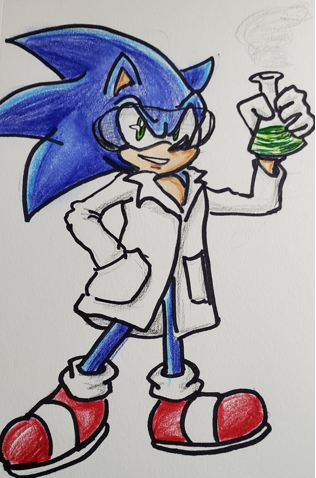
  • The Physics Behind Sonic the Hedgehog

    I remember the first time I played a Sonic the Hedgehog game. I was 8 years-old and had just bought Sonic Unleashed with my Toys R Us gift card (what a throwback). Coming home, I slapped on the Wii and was thrusted alongside the blue blur himself. As he dashed through levels, I was amazed at his speed and agility, but what really drew my attention was when he ran through one of his signature loops. By all accounts of my 8 year-old logic, that should not have been possible. Sonic should have plummeted straight to the ground at the top of the loop, yet there he was coasting through it.

    So what gives? We all know of gravity, the force of attraction, and how Earth’s gravitational pull keeps us on the surface and gives us weight. Why does it seem like Sonic is ignoring gravity through his loops? 

    The answer to that lies in another force Sonic experiences as he travels through loops, a force called the centripetal force.


    How Does Sonic Not Fall Out of a Loop?

    Even if you haven’t taken a physics class in a very long time, I’m sure you’ve at least heard of Newton and his iconic three laws of motion, especially the first one about how an object’s direction changes due to forces acting on it. In other words, by Newton’s first law, objects stay moving in one direction until another force acts on them to change their direction, which in technical terms is called inertia. This is what’s happening to Sonic. Sonic enters the loop in a straight path, and as he goes farther into it, his direction begins to change (i.e. he’s moving along the track of the loop now). A force had to have been applied to Sonic to change his direction, this altering force being the normal force. Let’s take a closer look. 

    Before Sonic dashes into the loop he builds up momentum, which is basically the energy that he’s been accumulating that keeps him moving in the same direction. Thus, as Sonic enters the loop, this momentum stays with him and the inertia causes him to continue forward. However, because the loop is curved, Sonic experiences a change in the direction of the normal force being applied to his feet causing him to also change direction. This normal force is the perpendicular component of the contact force that any object experiences when placed against the surface of another object. No matter where Sonic is in the loop, the normal force will face perpendicular from the track and point towards the center of the loop which leads to the circular path that he follows. This force is the centripetal force, and it allows our blue friend to stay on the track because of the enormous momentum that he built up before entering the loop. From Sonic’s frame of reference, he’s being pushed outwards into the track because it is rising in front of him as he is running causing him to experience what is known as the centrifugal force. But since we are not focusing on Sonic’s frame of reference, rather an outside one viewing him running in the circle, we’ll be referring to this net force causing Sonic to stray from his original path to this circular one as just the previously mentioned centripetal force (Fc).

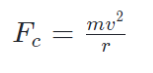
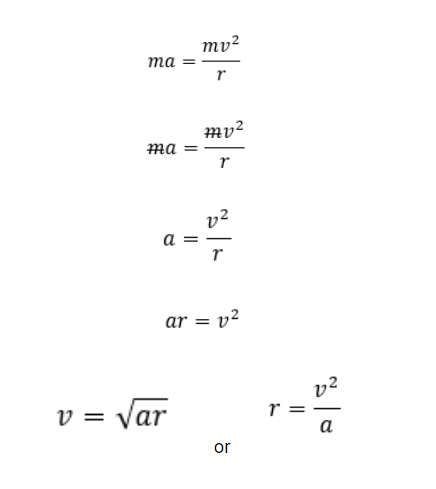
    Centripetal force is generally defined as the force that allows objects to follow curved paths, and it depends on a few things as you can see from the equation above. The mass of the moving object (m), the velocity at which the object moves at the top of the loop (v), and the size of the radius of the circular path that the object is making (r) all play a role in determining how large the centripetal force is. In our case, the moving object of interest is Sonic and the radius of the circular path is the radius of the loop he’s travelling through. Let’s do a simple calculation to see if we can get an idea of the magnitude of centripetal force that might be acting on Sonic during a loop.

    Let’s start off with defining the various variables we talked about above. Sonic’s trade calling card is his ability to travel the speed of sound and cause sonic booms, so for velocity (v), we’ll assume Sonic is running at the speed of sound or 343 m/s. For mass (m), this information was a little bit more tricky to find, but after scavenging through a few various video game guides, I found Sonic’s mass to be approximately 35 kg (or 77.1618 pounds). Now onto the radius of the circular path (r).  We’ll take a few liberties with deciding the radius of the loops he travels through since they vary heavily from game to game. If we take a look at the original Sonic the Hedgehog game (the image at the very top if you want to follow along!), Sonic’s height is said to be around 100 cm (3’3”ft). If you superpose him multiple times over the loop, the loop appears to be 5 Sonics or 500 cm tall. That means that the radius for this loop would be 250 cm or 2.5 m. If we wanted to get really technical, the radius (r) is from the center of the circular path to the center of mass of the object. Since Sonic isn’t a point mass, we would need to calculate where his center of mass is if we want to be completely accurate. However, since the distance between Sonic’s center of mass and his feet is relatively much smaller than the entire radius of the loop, we will be assuming that Sonic is sufficiently small enough to just be a point mass to make our estimation simpler.

    If we take these numbers and plug them into the equation for centripetal force, we get:

    Woah! Looks like it’ll take a lot of force for the speedy blue hedgehog to clear this small loop at the speed of sound. 


    Now, we did the calculations and found a force, but is there a way for us to find the maximum radius of a loop Sonic can travel even if we don’t know the centripetal force? In fact, there is! We’ll just need a little extra help from another concept from our friend Newton.

    Gotta Go Fast

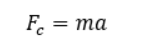
    We mentioned Newton’s First Law earlier, but now we’re going to need his second one and the very famous equation attached to it: F=ma. This equation simply means that when an object with a mass (m) experiences a net external force acting on it (F), the object will accelerate proportionally to the force applied, where acceleration (a) is just the change in velocity (the direction and speed of the object) over a set time. Let’s look at our case with Sonic. If we say the force applied to him in the loop is the centripetal force, we’ll see a proportional change in Sonic’s acceleration to match. The change in acceleration comes from the change in Sonic’s direction and speed as he’s going around the loop. Therefore, we’ll get this:

    So now we have two equations that can describe centripetal force: the one we originally mentioned and now this one from Newton’s Second Law. Since they both describe the same force, we can set them equal to one another and simplify:

    As you can see the mass of the object does not matter, as it is cancelled out since it’s on both sides of the equation. We can then rearrange to solve for the radius of the loop in terms of the acceleration on the object and the velocity of the object at the top of the loop. Now, let’s find some values!

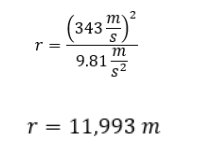
    Since we (and assuming Sonic) are on Earth, acceleration acting on Sonic  is going to be equal to the force of gravity (9.81 m/s2). If we once again say Sonic’s max speed clocks out at the speed of sound (343 m/s), we then have everything we need to solve for the maximum radius of a loop Sonic can travel through! 

    That means that Sonic can clear a loop that has a radius of 11,993 meters aka one that is 23,986 meters (or 78,694 feet) tall! Insane that this tiny blue hedgehog could do that, right? Remember that the next time you see Sonic clearing a loop in one of his games.


    Blue Blur Speeds On

    Sonic has always been one of my favorite video game characters and getting to calculate how parts of his game would work in real life is a great way to honor both him and my love for physics. You can do this with anything topic though! I implore you to pick your favorite video game, comic book, or TV character and see if you can use physics or another scientific discipline to better understand how it might be possible for that character to do what they do. Bridge the gap between your interests, and you’ll see just how fun science can be.  


    Citations

    “Sonic the Hedgehog.” Sonic News Network, sonic.fandom.com/wiki/Sonic_the_Hedgehog#Heroes.

    “What Is a Centripetal Force? (Article).” Khan Academy, Khan Academy, 2016, www.khanacademy.org/science/physics/centripetal-force-and-gravitation/centripetal-forces/a/what-is-centripetal-force.

    “What Is Centripetal Acceleration? (Article).” Khan Academy, Khan Academy, 2016, www.khanacademy.org/science/physics/centripetal-force-and-gravitation/centripetal-acceleration-tutoria/a/what-is-centripetal-acceleration. 

    April 18, 2020
  • A Revolution in Heart Transplants

    A ‘Cool’ Way to Transport or Not? 

    Since their successful conception in 1967 by Dr. Christiaan Barnard, heart transplants have been a staple in the transplant world. They have provided many individuals with end stage cardiomyopathy (weakening of the heart muscles), heart valve disease, coronary artery disease, or other cardiovascular diseases a second chance at life. However, even as medical technology rapidly progressed over the years, one part of the heart transplant procedure remained relatively the same: the process of transporting a donor heart.

    Traditionally, once a donor heart becomes available, it is removed from the donor’s body, sealed in a plastic bag, and then placed in an ice cooler. The cooler is then transported to the hospital where the heart transplant surgery will occur. While this might be the most common method for transportation, it is definitely not the most effective. On average, 8 out of 10 donor hearts don’t make it to transplant surgery. This can be due to the limited amount of time a heart can remain outside of the body, formally known as ischemic time. A heart can ideally last outside of the body for 4-6 hours. If the time goes longer than that, then the ice surrounding the heart can begin to cause irreversible damage to the heart cells, leaving it unable to be restarted. Because of this short transport time period and possibility of cellular damage, it’s very difficult to transport a heart successfully, even if the donor is a perfect match. In 2017 alone, only 3,244 hearts were transplanted when an estimated 100,000 patients needed a new heart.  

    However, a new solution to this problem is currently in the works thanks to a company called Transmedics.

    Transmedics: Heart in a Box

    In the early 2010s, Transmedics brought a new method of donor heart transportation to the table, and it came in the form of a mechanical box. Heart in a Box or the Organ Care System (OSC) Heart served a radical idea: what if we could keep a heart beating during transport? 

    And they accomplished just that! Once a donor’s heart becomes available for transport, it is placed inside the (OSC) Heart, where doctors will hook tubes into the aorta (the main artery that pumps oxygenated blood to the rest of the body) and the pulmonary vein (which transfers oxygenated blood from the lungs to the heart). These tubes are used to pump oxygenated blood sourced from the donor through the heart by mimicking the changes in pressures inside the left ventricle and left atria. From this process, the heart receives the necessary nutrients and oxygen needed to function properly, meaning that it can basically be kept alive outside of the body thus eliminating ischemic time. The OSC even comes with a portable tablet that monitors the vitals of the heart (such as rhythm and heartbeat) and allows for direct changes to be made to pump flow rate or nutrient levels to keep the heart functioning properly throughout the transport process.

    With the heart kept alive and beating, the time limit for transport is vastly increased. Current trials have shown that with OSC, donor hearts can remain viable for up to 12 hours, double what could be achieved with the cooler! With the heart being constantly monitored to maintain proper function instead of being iced and not beating, it also eases the process of restarting the heart in the recipient’s body. These changes could mean huge advancements in the number of patients that successfully receive a donor heart for transplant. The OSC Heart is still undergoing FDA clinical trials to prove its safety and benefit to heart transplant recipients before it becomes a wide scale method of transport, but so far many transplants that have occurred with the device have been successful. Transmedics is even branching out to using similar OSC for other organ transplants, such as lungs and kidneys. As of now, we’re on track for a brighter future for transportation of donor organs.  

    The Heart Beats On

    The story of Transmedics reminds us of a valuable lesson: just because a medical procedure or device is widespread doesn’t mean that it is most effective. Current methodology needs to be questioned to look for ways of improvement. Nothing is perfect. Sometimes creativity and innovation are needed to cause a paradigm shift that can completely change how the world handles a medical issue. Never stop looking for scientific improvement! You never know if your idea might end up saving someone’s life.


    Citations

    Breining, Greg. “Heart in a Box.” Medical School – University of Minnesota, 28 Mar. 2017, med.umn.edu/news-events/medical-bulletin/heart-box.

    Breining, Greg. “Transplant Transport.” Legacy, 11 Sept. 2018, discoverymag.umn.edu/stories/transplant-transport.

    “Heart Transplant.” Mayo Clinic, Mayo Foundation for Medical Education and Research, 16 Nov. 2019, www.mayoclinic.org/tests-procedures/heart-transplant/about/pac-20384750.

    “OCS Heart for Patients and Families.” Transmedics, www.transmedics.com/ocs-heart/.

    April 17, 2020
1 2
Next Page→

Charged 2026

Charged Magazine 2026

  • Blog
  • About
  • FAQs
  • Authors
  • Events
  • Shop
  • Patterns
  • Themes

Twenty Twenty-Five

Designed with WordPress