Author: Margeaux Comerford

  • Mistaken concepts: the taste buds

    OK, kids, we need to talk. No, you’re not in trouble. The people in trouble are health, anatomy, and psychology teachers who try to teach a specific concept that is WRONG.

    Any guesses about what connects those teachers? No? Well, here’s the offending diagram.

    Don’t believe images like this. EVER.

    That, my lovelies, is a picture of a tongue. But see those cool segments that tell you what flavor is tasted by each segment of the tongue? They’re completely and totally unnecessary. Your tongue doesn’t work that way, despite what so many teachers and even college professors would have you believe.

    No, don’t try to look all cute and happy, Mr. Boring. You’re on scientific trial here.

    Let’s go back a bit to Harvard University circa 1901. A psychologist, Edwin G. Boring (more like Edwin G. Mistaken-Fact-Check) misinterprets data in a German paper, leading to the belief that each region of the tongue is specialized to taste exactly one of four basic flavors.

    “OH! Cool!” he says, thinking this break-through will change the way we interact with food (or something).

    Trust me, it didn’t.

    Let’s fast forward to 1974, when Virginia Collins discovered that all tastes are distributed equally across the tongue. Case closed, right?

    NOPE! People are STILL using the tongue map to explain taste buds in 2012!

    Let’s expand your knowledge a bit, though. Why is this tongue map concept so incredibly insulting to the science of taste? Here’s three big reasons why!

    Well, first off,  it is incorrect in the count of basic flavors. The map shows the four flavors (bitter, sour, salty, and sweet) that were known in 1901, but there are at least five that we know of now. The four that are on the map DO exist; the fifth wheel of taste we use at a wine and cheese party is actually one of the most important – umami. That’s the taste of savory things like meat and cheese, and was described as early as 1908, a mere seven years after Boring made his translational mistake.

    Secondly, the map claims the receptors for each flavor only exist on the edges of the tongue, the very back, and the very tip. That leaves a HUGE bit of space that doesn’t really do much, right smack in the center… where most food hits the tongue.

    Um. Science says, “Whoops?”

    It’s an impractical model from the start, is what I’m trying to say.

    Thirdly, our sense of taste is much more important in basic development and exploration than the map allows for. From the time we are born, we explore the world through all of our senses. Senses like sight don’t fully develop until we are between 6 and 18 months of age, but we make up for what we lack by using other senses, taste, in the case of infants.

    Well, why is that particularly important, you ask? Because of chemistry. The basic correlation between chemistry and taste is that acids taste sour and bases taste bitter. The safest way of testing this is to taste a lemon, which is full of citric acid. It’s sour, right? Right.

    Since things that are bitter are not necessarily desirable as food products, it’s very difficult to find them on market shelves. Egg whites and some crackers are the closest edible things you’ll find to basic foods.

    Now, think back to childhood…. Do you think a baby would like something that tastes bitter? NO! That’s a natural response. It’s a safety precaution, too; bitter foods tend to contain deadly chemicals, like ammonia. According to the tongue map, those substances would have to hit the back of the tongue to be tasted, which probably means someone is going to have to call poison control because little Johnny has swallowed ammonia instead of spitting it back out because he tasted that bitterness immediately.

    So, lesson of the day? Don’t think of the tongue as some city planner’s way of keeping the taste bud gangs from having turf wars. It’s much more accurate to think of it as a metro area, where everybody mixes and coexists while doing their jobs.


    O’Connor, Anahad (November 10, 2008). “The Claim: The tongue is mapped into four areas of taste”. The New York Times.

    Hänig, David (1901). “Zur Psychophysik des Geschmackssinnes”. Philosophische Studien 17: 576–623.

    Wanjek, Christopher (August 29, 2006). “The Tongue Map: Tasteless Myth Debunked”. Livescience.com.


    Image sources:

    www.leavingbio.net

    www.igs.net/~pballan

     

  • Let’s Go!: Costa Rica

    As a supporter of the “Let’s stop wearing shoes” movement that seems to be taking over the mentality of both young adults and shoe manufacturers alike (that is a later story, though), I often find myself lamenting the amount of shoes I am required to pack when going on vacation with my mother. As a supporter of traveling and not destroying the environment in the process, those same trips with my mother tend to stress me out. Previous trips have found us in France and Ireland in GIANT tour buses that make me cringe when I think of the carbon emissions coming from my enjoyment of a new country.

    I have newly found faith in my mother’s traveling compulsion these days. Immediately upon finishing my first year of college, my mother and I hopped on a plane and flew to San Jose, Costa Rica to join a trip with G Adventures, an eco-friendly tour company based in Canada (and one where I was only required a pair of flimsy sandals in order to be comfortable).

    The highlights of the trip included white water rafting, ziplining, and a safari with a whole lot of monkeys. So let’s go into picture heavy post, because I very honestly cannot encompass this trip in words.

    G Adventures offers many kinds of tours. My mother and I took a YOLO trip, which is a budget-style trip kind of perfect for us. The trip style that interested me the most, and is how our tour guide Jorge started in this line of work, is a “Volontour” trip. Jorge worked at a biology research center studying leatherback sea turtles. Volunteers, through G Adventures, were able to work alongside the biologists, protecting the sea turtles as they hatched.

    I’m still a bit in awe of the fact that I got to be in Costa Rica, sharing the tree tops with howler monkeys. I’ll be back when I get over that awe and talk to you guys about college (yes, yes, it is that time).

    sciseekclaimtoken-4fd6551a0640c

  • Check it out!: SciShow

    Check it out!: SciShow

    The concept of a series of YouTube videos specifically designed to teach science is one that may scare the casual viral video watcher away. Luckily for Hank Green, one half of the vlogbrothers and creator of SciShow, YouTube is not filled solely with casual watchers.

    Hank Green’s adventures on the Internet began on January 1, 2007, when he and his brother John challenged each other to communicate only through videoblogs and the occasional phone call. The project, Brotherhood 2.0, launched one of the greatest communities on the Internet, Nerdfighteria (as a side note: Nerdfighters don’t fight nerds. They’re nerds who fight to decrease World Suck).

    In the five years since that first video of Hank explaining why every weekday included a new video from the two, the Green brothers have created an online empire of charity (Project 4 Awesome, a yearly video challenge to raise awareness of charities), DFTBA Records (home of the music of Alex Day, Charlie McDonnell, Hank Green himself, and various other YouTube musicians), and an increased following of John’s books (including Looking for Alaska, Paper Towns, and the recently released The Fault in Our Stars).

    Hank’s newest endeavor on the YouTube is his most ambitious by far. SciShow, a series of short videos posted twice weekly on various scientific concepts and events, makes the often feared world of chemistry, engineering, and generally nerdy subjects from high school and college much more approachable.

    So far, Hank has addressed non-Newtonian fluids as bullet-proof clothing, an electric aircraft, how gamers are smarter than computers, and a few other various topics. The videos are short and very to the point; they are not meant to provide a full education, but rather plant the seeds of interest in the heart of anyone and everyone.

    Along with SciShow, Hank works with his brother on a series called Crash Course, which aims to teach the fundamentals of the core classes presented in high schools and colleges. While John gets to focus on history and literature, Hank gets to go more in depth with the subjects presented in SciShow. Videos include tours of the eukaryotic cell, biological molecules, water, and an introduction to the chemical basis of biology, namely, how carbon is, in his words, “a hussy”.

    I fully recommend taking about half an hour to go through both SciShow and Hank’s episode of Crash Course (take another day to watch John’s video on early agriculture). Hopefully, these endeavors help the brothers educate the YouTube generation into incredibly wonderful members of society.

    Keep those neurons firing, kids.

  • Dive Log

    Dive Log

    In this day and age, it is so very common to lose ourself in the monotony of our daily lives, the sound as our heels hit the pavement, rustle of the leaves as we pass by the bus stop on a particularly windy day. We get so accustomed to the way our skin sloughs off the water from our shower in the morning that we don’t take the time to notice that that compound, that deliciously ever-present H2O, covers more than half of the earth, and without it, our bodies would cease to function.

    We also forget the intense beauty that exists in our oceans.

    Most people never get to experience what it is like to simply immerse themselves in an aquatic environment. Yes, aquariums, like the one in my home state of Georgia, are fantastic for getting to observe the wonderful creatures that we would otherwise never have a chance to interact with. But it’s not enough for some people.

    It’s not enough for me.

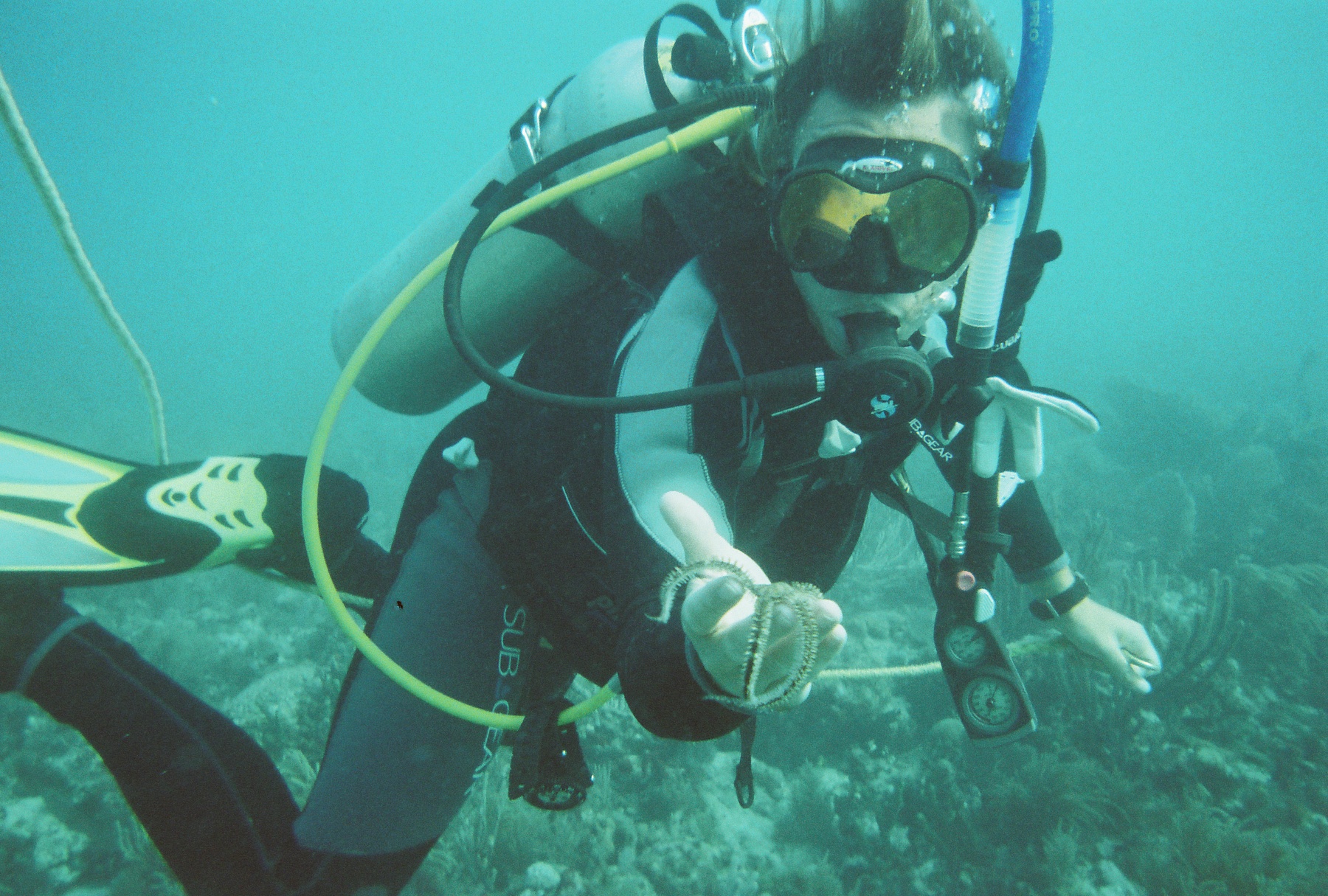
    Over my winter break, on the second to last day of 2011, I went on my first ever real dive. While I am not SCUBA certified, my mother and I were able to find an alternative called SNUBA diving. The concept of a SNUBA dive is the same as SCUBA dives; you go down with a breathing apparatus, deeper than you could while free-diving, but your air supply is a raft at the water’s surface instead of a tank on your back. It was a wonderful experience for someone unable to go on dives otherwise.

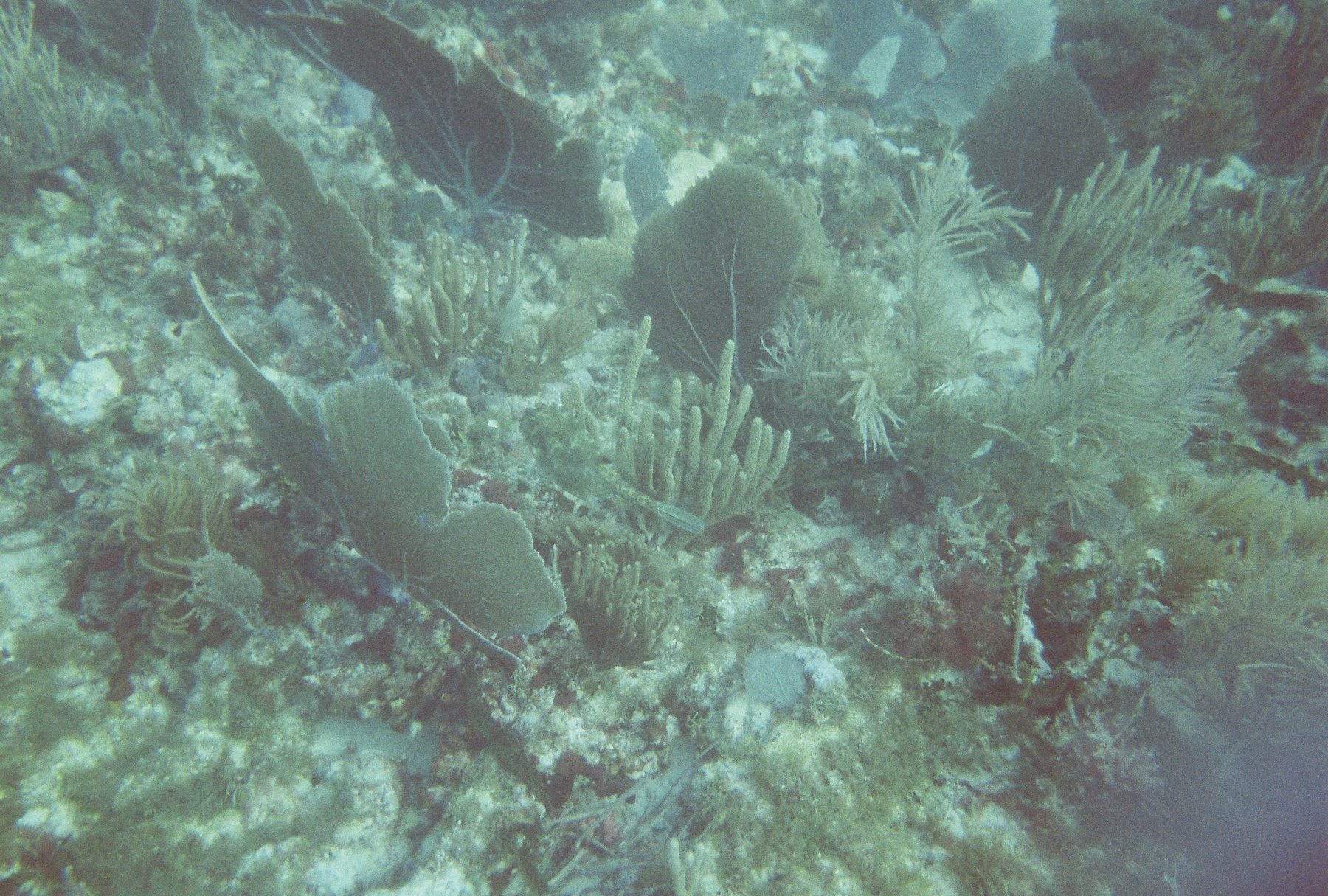
    It got me thinking, though. The reefs off of the Florida Keys were once as beautiful and vibrantly alive as those off the coast of Texas or even those in Australia. Now, though, they are sick. While fish were obviously there, they lived in very small patches of the reef. Corals of all kinds were dying, grey and fragile. The occasional nurse shark brushed by as my brother, our instructor, and I visited its home, but the ecosystem was clearly suffering. Our instructor told me later that the reefs were getting more and more sparse for observational divers like myself.

    Those reefs, and many others, are on the verge of dying. That dive made me face the death of every single small polyp in those reefs. But their dying brought to life in me a spark of inspiration. It brought to life my motivation for getting my degree in biology, for getting certified in SCUBA diving and figuring out how to spread the word of our dying reefs.

    Secretly, about to become not-so-secretly, that is my belief in this, Charged Magazine. It is my hope that you, dear reader, are not stuck listening to the ins and outs of chemical reactions, or trying to figure out how the Krebs cycle works, or why the fifth derivative of a function is actually important in the real world. It is my hope that you find something in the real world, something tangible, that makes you passionate. For me, that passion is the ocean, and how I want it to become a place of endless wonder, not endless fear, for the human race.

    On behalf of the entire Charged staff, present and future, I welcome you to a world of inspiration, a world of explaining miracles. I welcome you to the world of science.

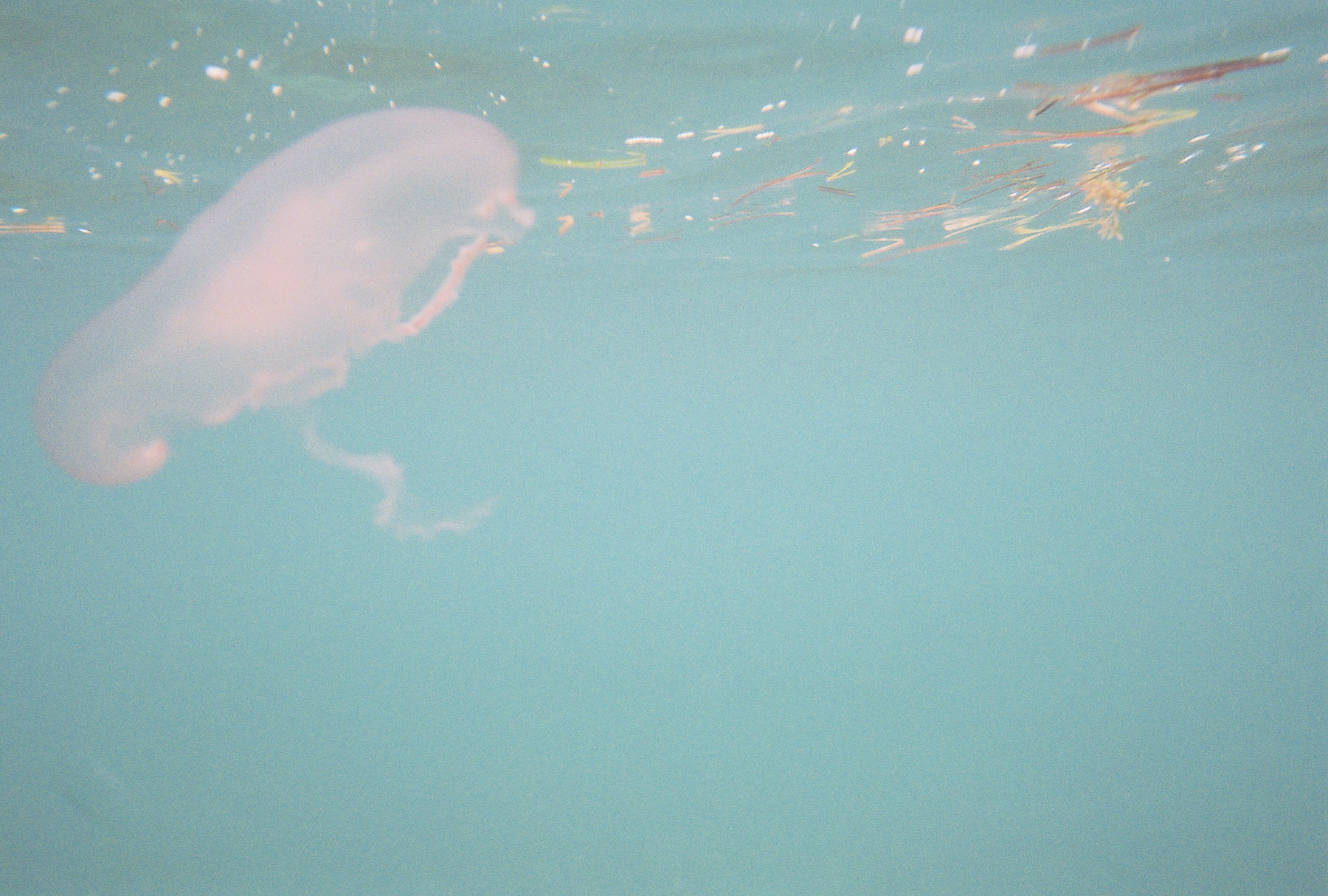
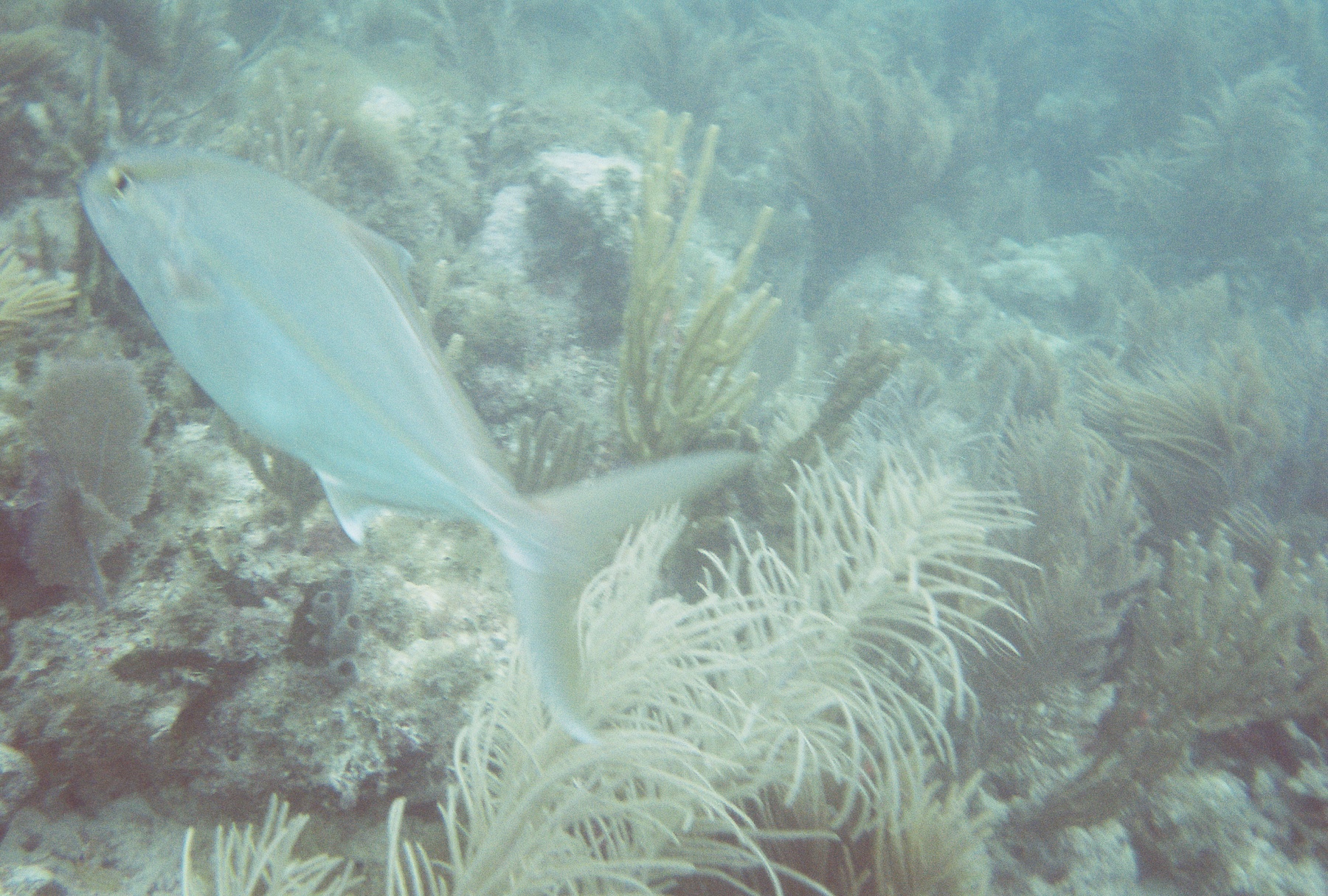
    Above are some shots from my dive.

    For more pictures from other dives, I recommend visiting www.abelic.net/