Author: Sage Kemmerlin

  • Deadly Minerals

    It’s easy to forget that some of the minerals found in the Earth can be extremely dangerous, despite the beautiful forms they can take.  These minerals can prove to be toxic and potentially deadly if mishandled. So I present to you seven minerals toxic minerals, so you can identify them if you ever (have the misfortune to) come across them:

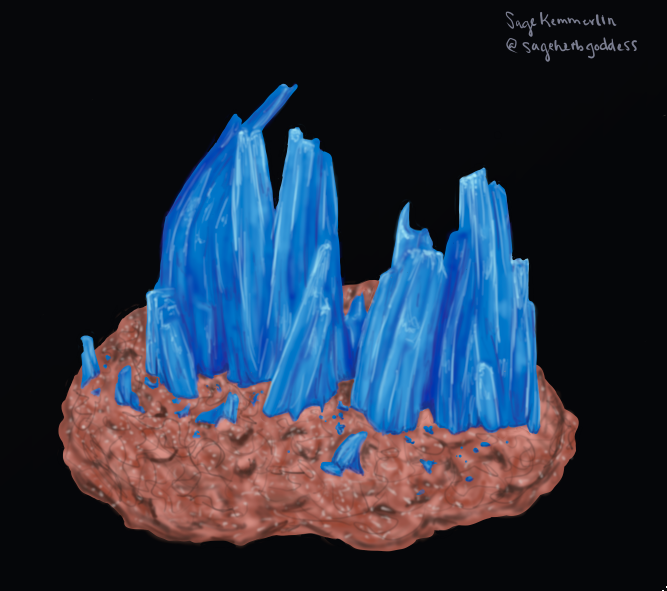
    Chalcanthite (CuSO4 • 5H2O):
    screen-shot-2016-11-02-at-5-58-06-pm

    Image Credit: Sage Kemmerlin

                The stunningly blue mineral is a natural, water-soluble copper sulfate. It is commonly found in copper deposits in arid regions. If chalcanthite touches water it easily dissolves and become hazardous because of the copper it contains. If copper is ingested, the effects of this poisoning are gastrointestinal distress, destruction of red blood cells and liver damage (sounds fun right?). If the copper poisoning is severe, these symptoms can lead to death. Chalcanthite should never be taste tested or placed in natural waters. [1][2]

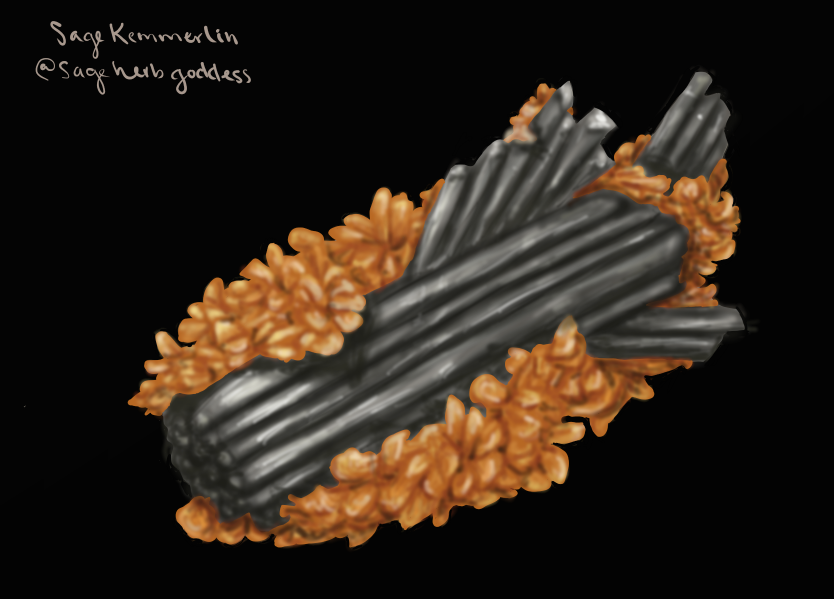
    Hutchinsonite (TIPbAs5S9):
    screen-shot-2016-11-03-at-1-09-51-pm

    Image Credit: Sage Kemmerlin

                Hutchinsonite is commonly found in ore deposits in the mountainous regions of Europe. Hutchinsonite is a mineral formed with a deadly mixture of arsenic, lead, and thallium; all three elements are toxic to humans. Thallium salts have been used in rat poison and insecticides so that alone should tell you not to mess with this mineral. If poisoned with thallium, you only have 72 hours to start treatment to avoid risk of permanent neurological damage. So maybe don’t lick it. [3]

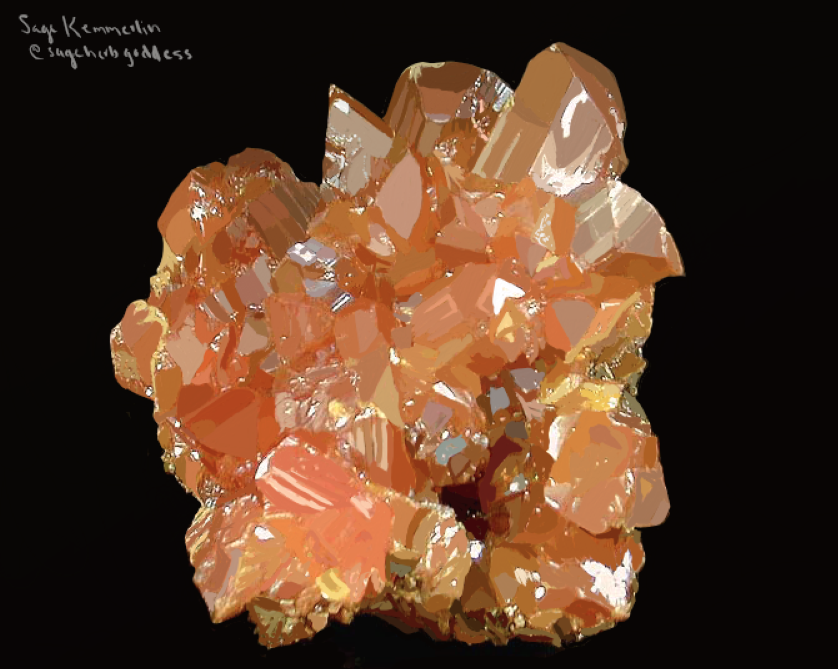
    Orpiment (As2S3):
    screen-shot-2016-11-14-at-5-11-54-pm

    Image Credit: Sage Kemmerlin

                This orange-yellow, glistening mineral is made up of arsenic and sulfur and commonly grow near hydrothermal vents, fumaroles, and hot springs. If allowed to oxidize, the arsenic powder can be deadly to humans due to its neurotoxic and carcinogenic properties. Orpiment has a powerful garlic scent due to the arsenic. If you see a pretty orange mineral that smells like garlic, make like a vampire, and get out of there. [4]

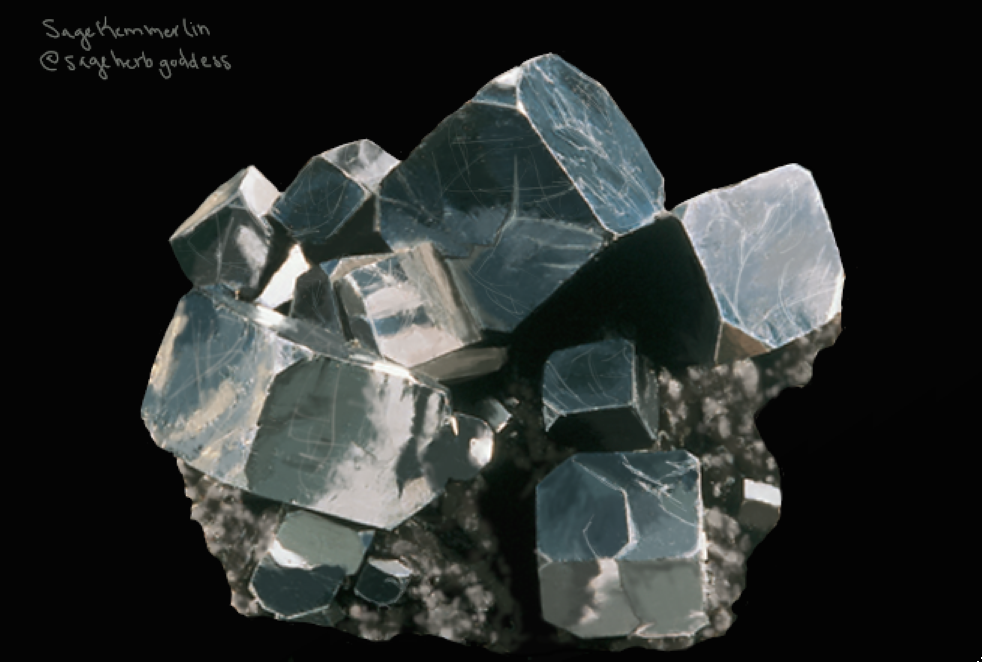
    Galena (PbS):
    screen-shot-2016-11-20-at-12-36-12-pm

    Image Credit: Sage Kemmerlin

                Galena is the primary ore mineral of lead with a signature cubic structure. Any inhalation or ingestion of Galena’s dust will likely result in lead poisoning.  Lead can effect every organ system in the human body, but the nervous system is most sensitive to lead’s toxicity sometimes causing ataxia, comas, convulsions, even death. So if you want to avoid maladies such as ataxia and death, it’s best to not lick Galena or inhale any of its dust. [5][6]

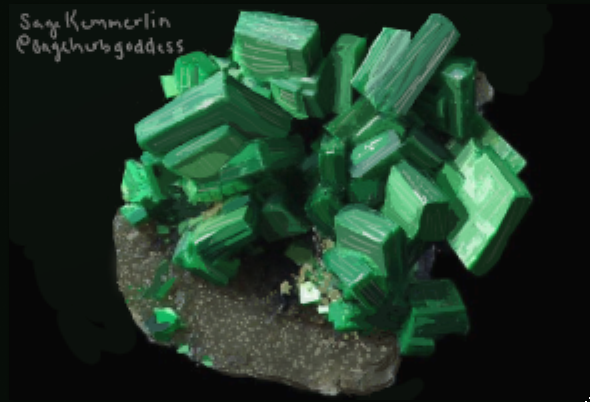
    Tobernite (Cu(UO2)2(PO4)2•12H2O):
    screen-shot-2016-11-18-at-1-36-40-pm

    Image Credit: Sage Kemmerlin        

        Tobernite is a stunningly green prism shaped mineral, found in granitic rocks. Oh and just as a side note, torbernite is radioactive due to the uranium it contains. So if you prefer not to get cancer, avoid prolonged exposure and never ever ingest or inhale it. [7]

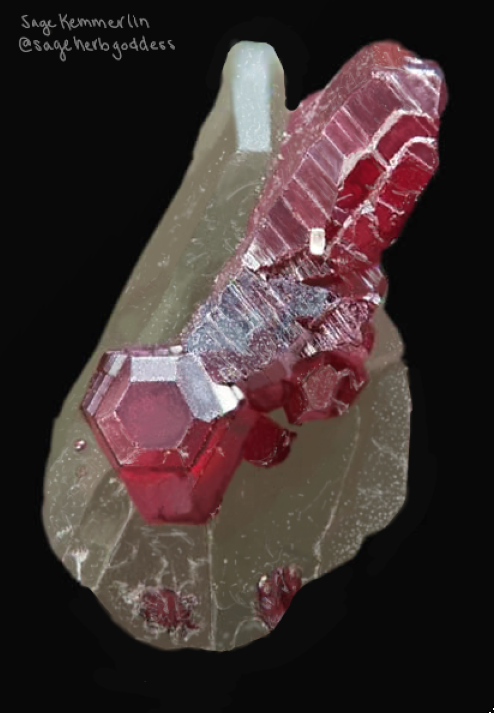
    Cinnabar (HgS):
    screen-shot-2016-11-20-at-2-04-24-pm

    Image Credit: Sage Kemmerlin

                This brilliantly red mineral is the main ore of mercury. It forms near volcanoes and sulfur deposits. It has historically been used as a coloring agent. Mercury is toxic to humans and mercury poisoning can cause tremors, muscle atrophy, and in extreme cases, respiratory failure and death. As before, don’t ingest or inhale any cinnabar. Don’t heat it in an unventilated environment, because it will emit toxic fumes.  So maybe don’t color your pottery with cinnabar (it’s not a good idea). [8][9]

    References:

    1. http://www.mindat.org/min-959.html
    2. http://des.nh.gov/organization/commissioner/pip/factsheets/ard/documents/ard-ehp-9.pdf
    3. http://www.mindat.org/min-1954.html
    4. http://www.mindat.org/min-3021.html
    5. http://www.mindat.org/min-1641.html
    6. https://www.atsdr.cdc.gov/csem/csem.asp?csem=7&po=10
    7. http://www.mindat.org/min-3997.html
    8. http://www.mindat.org/min-1052.html
    9. http://www.medicinenet.com/mercury_poisoning/article.htm
  • Volcanoes: Quick and Easy

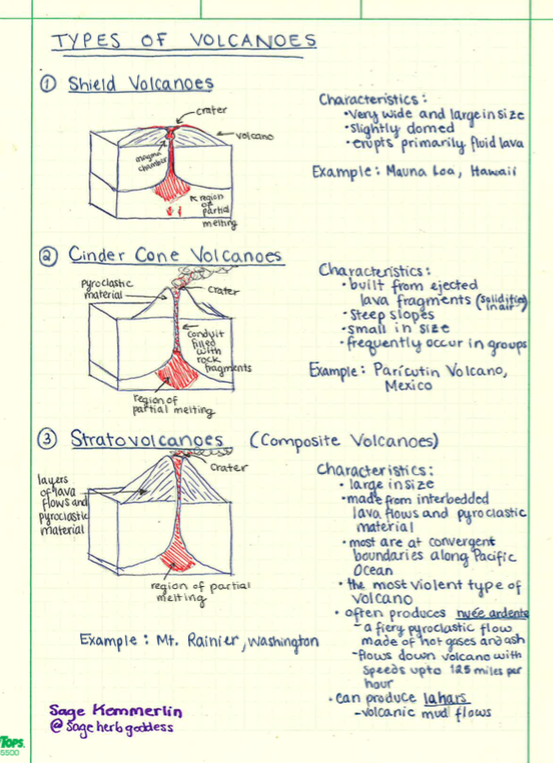
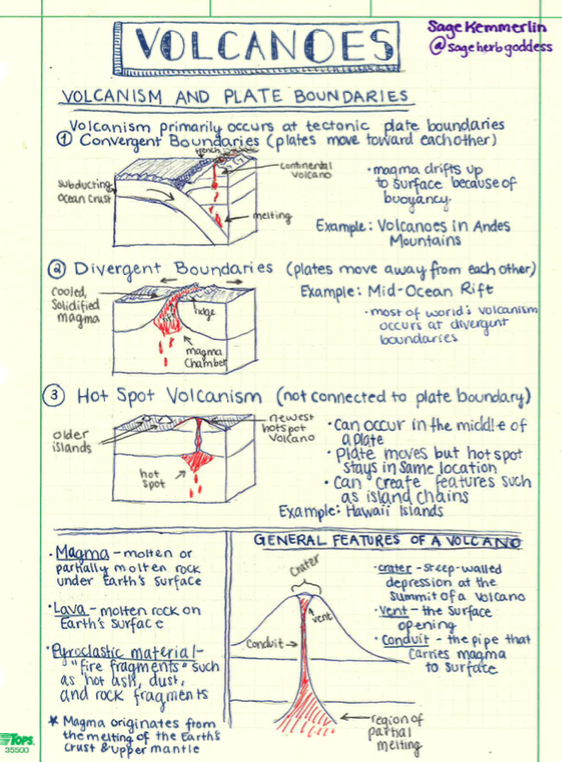
    I present to you my two page cheat sheet on volcanoes since they are one of the most fascinating and awe-inspiring features of the earth:

     screen-shot-2016-10-07-at-1-25-03-pm

    screen-shot-2016-10-07-at-1-25-49-pm

  • Could Aliens be Living in Our Solar System?

    Image Credit: NASA/JPL-Caltech

    http://www.jpl.nasa.gov/visions-of-the-future/

    Water: the ultimate resource. We depend on it to survive, but Earth is not the only place with a substantial amount of water. Buckle up, because I want to tell you about my favorite moon, Europa.

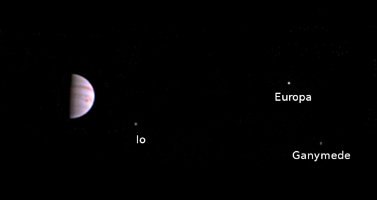
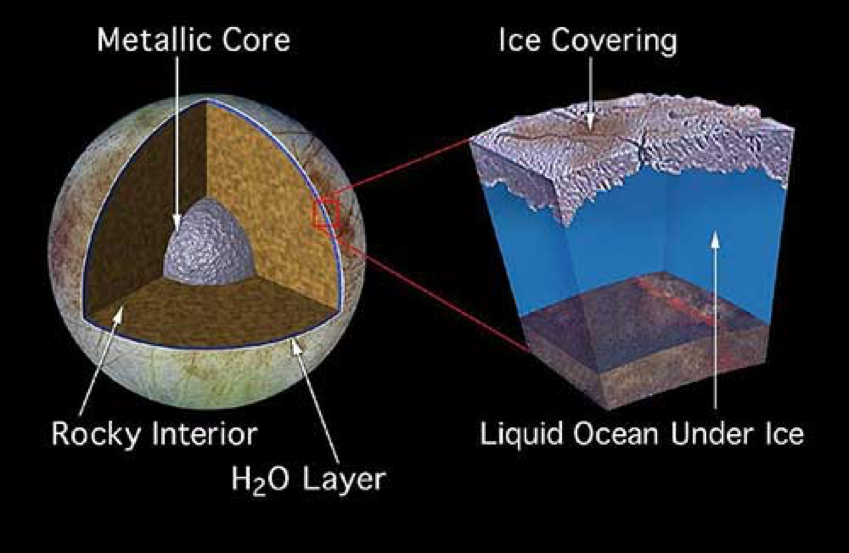
    Europa is one of the moons of Jupiter. It is approximately 4.5 billion years old (about the same age as Jupiter) and is about 485 million miles from the sun. It is the smallest of the Galilean moons with a diameter of 1900 miles (smaller than Earth’s moon but larger than Pluto). Europa looks like a dead, frozen, wasteland covered in large cracks and fractures in the ice, but it is exactly for this reason why it is so cool (literally and figuratively). These cracks are likely caused by tides in an ocean that lies buried underneath Europa’s icy surface. Europa’s tide is the result of host planet Jupiter. Jupiter’s gravity lifts and lowers the sea level causing cracking in the ice. Below the ice and ocean is a rocky interior and inside that is an iron core [1].

    pia20707_fig1_thumb

    Image Credit: NASA/JPL-Caltech/SwRI/MSSS

    http://photojournal.jpl.nasa.gov/catalog/PIA20707

    picture3

    Image Credit: NASA

    http://spaceplace.nasa.gov/europa/en/

    Ok, so you might be thinking, “that’s kinda cool, a frozen moon. Why do I care?” Well, you should care because Europa’s subsurface ocean hosts the possibility of life. That makes Europa a possibly habitable location for us humans (in the future though, cause we are no where near that yet), which is awesome.

    The ocean beneath the surface is widely believed to be salty liquid water which is a big deal (but not yet known for certain since we haven’t sent any missions directly to Europa  thus-far). In a recent study done by NASA’s Jet Propulsion Laboratory (Vance et al., Geophysical controls of chemical disequilibria in Europa), the researchers calculated the potential amount of hydrogen that could be produced from interactions of seawater with the rock below it.This process of interaction is called serpentinization. NASA also looked into oxidants in Europa’s ocean. Jupiter, being the massive gas giant that it is, bathes Europa in radiation from it magnetosphere (Earth actually has this type of radiation too called the Van Allen belts, although they are about a thousand times weaker than Jupiter’s).  This radiation can split apart water ice molecules and create oxidants. One of the lead authors of NASA’s study, Steve Vance, said, “If the rock is cold, it’s easier to fracture. This allows for a huge amount of hydrogen to be produced by serpentinization that would balance the oxidants in a ratio comparable to that in Earth’s oceans”. The balance between hydrogen and oxidants is an indicator to the energy available for life [2]. However since no spacecrafts have been sent to Europa to investigate this, it is currently unknown if serpentinization occurs (several spacecrafts have done flybys such as Pioneer 10 and 11, Voyager 1 and 2, and Galileo [1] ).

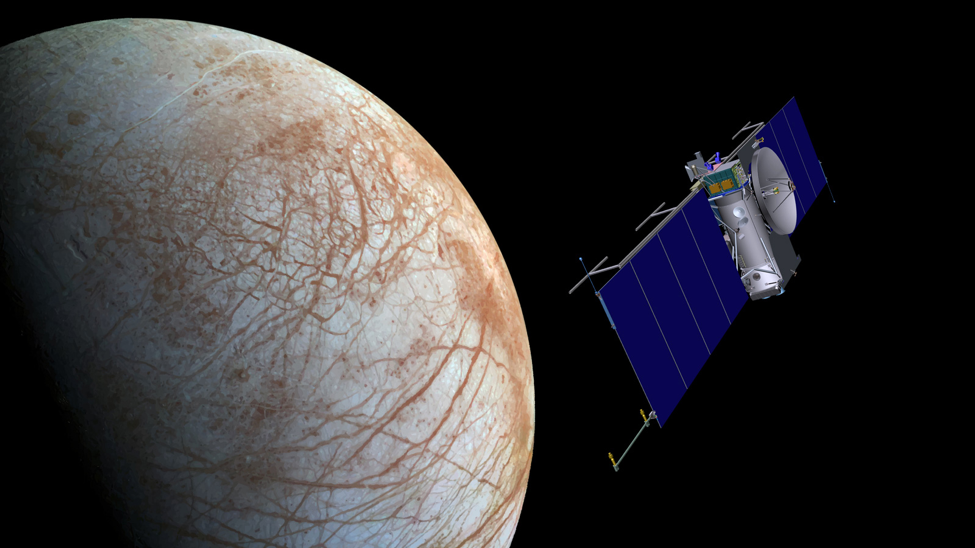
    NASA is planning an orbital reconnaissance mission of Europa called the Europa Clipper with the main goal of investigating the habitability of Europa. The Clipper will have 45 low-altitude flybys over the course of 3.5 years. The clipper will have three main objectives [3] : (1) to investigate the ice shell and ocean, (2) investigate the composition, and (3) investigate the geology of Europa. Essentially, NASA wants to confirm what they think they know about the structure and composition of Europa and how it’s layers interact (like the rocky interior, the ocean, and the icy shell) both mechanically and chemically, and determine the effect Jupiter’s radiation has on Europa. This will give insight to the habitability of Europa. There will be nine scientific instruments aboard to try meet these scientific objectives.

    picture5

    Image Credit: NASA/JPL-Caltech

    http://www.jpl.nasa.gov/news/news.php?feature=4627

    The Europa Clipper’s launch date is not yet determined, but it is likely to be in the early 2020s and would arrive 6-9 years later depending on the launch vehicle [4]. There is still A LOT of work needed to be done on the mission planning, but I’m very optimistic that it will yield in fascinating results, maybe even giving us significant insight to if we are alone in the solar system.

    Here is a NASA/JPL-Caltech video about the Clipper:

    References:

    1. Howell, E. Europa: Facts about Jupiter’s icy moon and its ocean. Retrieved September 4, 2016, from http://www.space.com/15498-europa-sdcmp.html
    2. Greicius, T. (2016, May 16). Europa’s ocean may have an Earthlike chemical balance. Retrieved September 4, 2016, from https://www.nasa.gov/feature/jpl/europas-ocean-may-have-an-earthlike-chemical-balance
    3. The Europa Clipper. (2013, June ). Retrieved September 4, 2016, from http://www.lpi.usra.edu/opag/jul2013/presentations/Clipper_Summary.pdf
    4. Europa Clipper Update. (2015, February 19). Retrieved September 4, 2016, from http://www.lpi.usra.edu/opag/feb2015/presentations/04_Clipper%20OPAG%20Feb%202015.pdf