Author: Michelle Stanek

  • Is the Dark Web a Playground for Criminals or a Tool for Good?

    Lurking beneath the surface of the normal internet lies the dark web, a labyrinthine network of hidden websites accessible only through specialized software. Often shrouded in mystery and fear, the dark web has earned a reputation as a haven for criminals, a digital underworld where illegal activities flourish like weeds in the dark. But is this image entirely accurate? Is the dark web simply a playground for the nefarious, or is there another side to the story?

    The dark web’s anonymity and encryption indeed provide fertile ground for illegal activities. Drugs, weapons, stolen data, and even child pornography find ready markets in this hidden bazaar. Hackers ply their trade, offering malware and cybercrime services to the highest bidder. Terrorist groups and extremist organizations utilize the dark web for communication and recruitment, leveraging its secrecy to spread their ideologies. These illicit activities undoubtedly paint a grim picture of the dark web, fueling the narrative of a digital underworld overrun by criminals.

    However, to solely label the dark web as a criminal haven would be a gross oversimplification.

    Beyond just illegal activities, the dark web also offers unique opportunities. It serves as a vital tool for activists and whistleblowers operating in repressive regimes, offering them a platform to expose human rights abuses and corruption without fear of reprisal – which in some regimes constitutes death [1]. Journalists, researchers, or citizens in countries with restricted internet like China and North Korea can utilize the dark web to access censored information and communicate with sources in dangerous environments. The dark web also provides a safe space for marginalized communities facing discrimination and persecution to connect and share their experiences, especially in extremely dangerous environments [2]. The dark web can literally save people’s lives.

    You could also argue the dark web fosters innovation and technological advancement. Cryptocurrencies like Bitcoin, originally conceived on the dark web, have become huge financial vehicles in the 2020s. Anonymity-preserving tools developed within the dark web have applications in cybersecurity and privacy protection. The decentralized nature of the dark web also holds promise for building more secure and resilient online platforms.

    The very features that make the dark web useful for good – its anonymity and encryption – also pose significant challenges for regulation. Traditional law enforcement methods struggle to navigate the complex network and identify illegal activity [3]. Attempts to regulate the dark web often raise concerns about censorship and the potential erosion of online freedoms. Finding the right balance between protecting individuals and restricting criminal activity remains a delicate and ongoing debate.

    The dark web is not simply a binary of good vs. evil, criminals vs. activists. It is a complex and multifaceted ecosystem, where both light and darkness coexist. While it is undeniable that illegal activities flourish within its confines, it would be a mistake to ignore the potential for positive change and innovation that the dark web also offers. The challenge lies in developing effective regulation strategies that address the legitimate concerns surrounding illegal activities without stifling the potential for good. This requires a multi-pronged approach that involves collaboration between law enforcement, technology experts, and civil society organizations, all working towards a common goal: harnessing the potential of the dark web while mitigating its harmful aspects.

    The nuances of the dark web allow it to move beyond simplistic narratives of “evil” and work towards a future where the dark web serves not as a haven for criminals, but as a tool for positive change and innovation. This truly is a testament to the human spirit’s ability to find light even in the darkest corners of the digital world.

    Sources:

    1. Bartlett, Jamie. The Dark Web: Cybercrime, Online Activism, and the Future of the Internet. John Wiley & Sons, 2016.
    2. Weimert, Gabrie. The Hidden Web: Exposing the Dark Side of the Internet. Apress, 2015.
    3. Russell, Mike W. Inside the Dark Web: Understanding the Underworld of Online Crime. Greenwood Publishing Group, 2017.

  • Privacy in the Age of Surveillance

    In the digital age, the lines between public and private have blurred. Our every click, swipe, and purchase leaves a trail of data, meticulously collected by corporations, governments, and third-party entities. This pervasive surveillance raises urgent questions: who owns our data? How is it used? And most importantly, how can we reclaim control over this vital piece of ourselves?

    The scale of data collection is staggering. Smartphones track our location, social media platforms analyze our interactions, and smart devices monitor our homes [1]. Facial recognition technology identifies us in public spaces, and even our browsing history paints a detailed picture of our interests and beliefs [2]. This data is then analyzed, packaged, and sold, shaping everything from targeted advertising to political campaigns.

    The consequences of this data-driven world are far-reaching. Algorithmic bias can perpetuate discrimination, data breaches can expose our vulnerabilities, and the erosion of privacy can stifle free expression [3]. We become not individuals, but data points, subject to manipulation and control.

    However, amidst this unsettling reality, there is hope. Reclaiming our privacy requires a multi-pronged approach, encompassing both individual action and collective advocacy.

    Taking Control of Your Digital Footprint:

    • Mindful data sharing: Be cautious about what information you share online. Consider the purpose of each platform and the potential consequences of divulging personal details. Opt-out of data sharing settings wherever possible.
    • Privacy-focused browsers and apps: Ditch data-hungry browsers like Chrome for privacy-oriented alternatives like DuckDuckGo and Firefox. Utilize secure messaging apps like Signal and Telegram for encrypted communication.
    • Strong passwords and two-factor authentication: Implement unique, complex passwords for every account and activate two-factor authentication for added security.
    • Data minimization: Limit the data you share with third-party applications and services. Regularly review and revoke unused app permissions.
    • Digital detoxing: Disconnect regularly from social media and online platforms to reclaim your mental space and reduce data trails.

    Collective Advocacy:

    • Support privacy legislation: Advocate for stronger data protection laws and regulations that empower individuals to control their data.
    • Hold corporations accountable: Demand transparency from tech companies and challenge their data collection practices.
    • Raise awareness: Educate others about the importance of privacy and encourage them to take protective measures.

    Reclaiming our privacy in the age of surveillance is not a one-time action, but an ongoing process. It requires vigilance, awareness, and a commitment to safeguarding our digital and physical selves. By adopting these practical steps, amplifying our voices, and demanding accountability, we can begin to rewrite the narrative of data ownership and reclaim control over our lives in the digital age.

    By understanding the pervasiveness of data collection, adopting practical protective measures, and advocating for stronger privacy protections, we can begin to navigate the age of surveillance with a greater sense of control and empowerment. Remember, our data is not simply a commodity; it is a fundamental part of our identity, and we have the right to decide how it is used. So, let us not surrender to the panopticon of the digital age, but rise up and reclaim our right to privacy, one click and one voice at a time.

    Sources:

    1. The Algorithmic Society: Social Theory in the Digital Age by Nick Srnicek, https://www.jstor.org/stable/j.ctv319wpvm, 2023
    2. The New Digital Age: Reshaping the Future of Business, Work, and Society by Eric Schmidt and Jonathan Rosenberg, https://www1.goramblers.org/papersCollection/Book?dataid=mTn:3008&Academia=The_New_Digital_Age_Eric_Schmidt(3).pdf
    3. The Public Option: How to Build a Better Internet by Evgeny Morozov, 2011, https://www.youtube.com/watch?v=le8Ldl5EeZA
  • Can Algorithms Deliver Justice?

    While scales of justice have long been a symbol of fairness and impartiality, that has never been completely accurate. Racial, gender, and class has always affected your experience with the justice system, however, in the 21st century, they are increasingly balanced on the shoulders of algorithms. Artificial intelligence is rapidly transforming legal systems, from predicting recidivism to analyzing evidence. These impacts can have massive ripple effects on people’s lives.

    One of the most common applications of AI in the courtroom is in risk assessment tools, which are algorithms used to predict the likelihood of a defendant re-offending if released on bail or parole. Proponents argue that these tools can help reduce crime rates by identifying high-risk individuals, while critics raise concerns about bias and lack of transparency.

    A 2016 study by ProPublica found that a widely used risk assessment tool in Wisconsin was significantly more likely to misclassify Black defendants as high-risk compared to white defendants [1]. This raises the crucial question: Are AI tools simply perpetuating existing racial inequalities within the criminal justice system?

    AI is also being used to analyze vast amounts of evidence, including video footage, DNA, and social media data. This can be a valuable tool for investigators and prosecutors, but it also raises concerns about the manipulation of evidence.

    A 2019 report by the National Academies of Sciences, Engineering, and Medicine found that AI-based facial recognition technology has significant accuracy disparities across racial and ethnic groups [2]. This raises the possibility of innocent individuals being wrongly convicted based on flawed algorithms, and these issues particularly impacting minorities.

    Another big challenge with AI is the lack of transparency. Many algorithms are opaque “black boxes,” making it difficult to understand how they reach their conclusions. This lack of transparency can undermine public trust in the justice system and make it difficult to hold algorithms accountable for errors.

    In a 2023 case in California, a judge ruled that prosecutors could not use an AI-based risk assessment tool because the algorithm’s decision-making process was not sufficiently transparent [3]. This landmark case highlighted the need for greater transparency and accountability in the development and use of AI in legal systems and slowed the impacts of AI in California.

    The potential of AI to improve the justice system is still unrealized. However, it is crucial to acknowledge and address the challenges of bias, transparency, and accountability. We must ensure that AI is used in a way that promotes fairness and equal justice for all, not simply reinforces existing inequalities.

    The use of AI in the courtroom holds immense promise for improving the justice system by removing human bias, we must also be mindful of the way AI perpetuates and is built upon human biases. By acknowledging the challenges and taking steps to mitigate them, we can ensure that AI is used in a way that upholds the fundamental principles of fairness and equal justice.

    Sources:

    1. ProPublica. (2016, October 26). “Machine Bias: There’s a Bias in Algorithmic Justice.” https://www.propublica.org/series/machine-bias
    2. National Academies of Sciences, Engineering, and Medicine. (2019). “Commercial Facial Recognition Technology.” https://www.nationalacademies.org/our-work/facial-recognition-current-capabilities-future-prospects-and-governance
    3. Reuters. (2023, February 22). “California judge bars prosecutors from using AI risk assessment tool.” https://phys.org/news/2022-11-early-artificial-intelligence-criminal-justice.html
  • Autonomous Vehicles: The Road Ahead

    Autonomous vehicles (or “self-driving cars”) was once a fantasy only seen in sci-fi shows and little kid’s drawings; but today, they are rapidly becoming a reality. There have been major advancements in technology over the last 20 years and the way we think about transportation is about to be revolutionized.

    [1]

    But how do self-driving cars drive themselves?

    Well, self-driving cars utilize a massive amount of sensors, cameras, radar, and artificial intelligence to get a map of the world around them, navigate it, and drive without human intervention. Companies like Waymo, General Motors, and – most famously – Tesla are at the forefront of this technology. They’ve all invested heavily in research and development; in fact, according to a report by McKinsey & Company, self-driving vehicles could, by 2030, account for up to 15% of auto sales worldwide [2].

    Many people – young and old – see the potential benefits of AVs. The most short-term impact is an increase in the safety of driving. The National Highway Traffic Safety Administration’s research found that human error is a factor in 94% of serious crashes [3]. Due to the fact AVs operate without distractions, impairments, or human error, they could drastically reduce accidents, saving lives and improving health outcomes. Moreover, as AVs could communicate with each other, they could significantly improve traffic efficiency by reducing congestion and optimizing driving patterns.

    There’s also, of course, the ecological angle. Self-driving cars are often electronic, presenting an opportunity for substantial reductions in emissions. A study by the International Transport Forum (ITF) at the OECD suggests that if managed properly, AVs could reduce energy consumption in urban transport by up to 50% [4].

    However, the road to widespread adoption of autonomous vehicles is fraught with challenges. A significant hurdle is legislative and regulatory. Governments around the world are grappling with how to regulate this emerging technology. Establishing universal standards for safety and performance, adapting infrastructure, and updating road laws to accommodate Self-driving cars are complex tasks that require coordinated effort and time.

    There’s also the concern about the economic impact, particularly job displacement in driving-related professions. 3.6 million Americans are truck drivers [5] and 5.6 million are Uber or Taxi drivers [6]; that’s 8.9 million workers, or 2.5% of the workforce that would become unemployed. While new jobs will be created in tech and maintenance, these will require a high level of education, proficiency in English, and other barriers that driving does not have. This will lead to a significant shift in the employment landscape that will hurt the most marginalized.

    So while autonomous vehicles have the potential to revolutionize transportation, offering numerous benefits in terms of safety, efficiency, and environmental impact, the path forward requires navigating technical, regulatory, ethical, and societal challenges. We have to steer this innovation towards a future where roads are safer, commutes are smoother, and the environmental footprint of transportation is minimized.

    Sources:

    1. “The Future of Self Driving Cars: Top Companies and Challenges.” TechAhead, 6 Nov. 2023, www.techaheadcorp.com/blog/future-of-self-driving-cars.

    2. Deichmann, Johannes, et al. “Autonomous Driving’s Future: Convenient and Connected.” McKinsey & Company, McKinsey & Company, 6 Jan. 2023, www.mckinsey.com/industries/automotive-and-assembly/our-insights/autonomous-drivings-future-convenient-and-connected.

    3. “NHTSA Estimates Traffic Fatalities Continued to Decline in the First Half of 2023.” NHTSA, 28 Sept. 2023, www.nhtsa.gov/press-releases/2023-Q2-traffic-fatality-estimates#:~:text=An%20estimated%2019%2C515%20people%20died,and%20second%20quarters%20of%202023.

    4. Cazzola, Pierpaolo, and Philippe Crist. “Assessing the Environmental Performance of New Mobility.” Itf Oecd.org, 2020, www.itf-oecd.org/sites/default/files/docs/environmental-performance-new-mobility.pdf.

    5. “Number of Truckers at All-Time High.” Census.gov, 27 July 2022, www.census.gov/library/stories/2019/06/america-keeps-on-trucking.html.

    6. Campbell, Harry. “How Many Uber Drivers Are There?” The Rideshare Guy, 17 Mar. 2023, therideshareguy.com/how-many-uber-drivers-are-there.

  • The Apple M1 Chip: A Breakthrough in Personal Computing

    The M1 chip, a custom-designed system-on-a-chip (SoC) for Mac computers, was introduced by Apple in late 2020. This chip is based on Arm architecture and uses a 5-nanometer (very small) manufacturing process, which enables a high density of transistors on the chip, resulting in high performance and low power consumption. ARM architecture is a type of instruction set architecture (ISA) that is designed for energy efficiency. It is used in a wide variety of devices, including smartphones, tablets, and laptops. The M1 chip uses ARM architecture, which is one of the reasons why it is so energy efficient. ARM architecture is a reduced instruction set computing (RISC) architecture. This means that it uses a smaller number of instructions than other types of ISAs, such as x86. This makes ARM architecture more efficient, because it takes less time to decode and execute instructions.

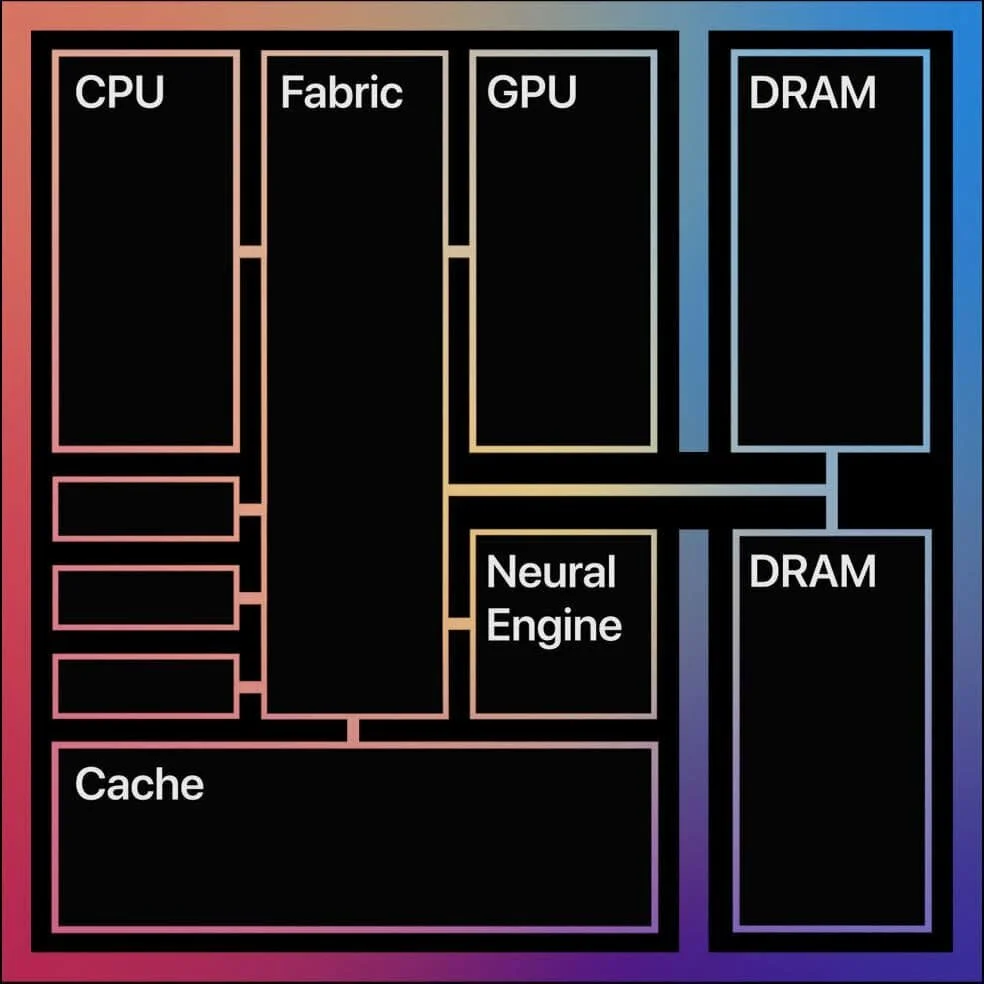
    Apple M1 Chip layout

    One of the most notable features of the M1 chip is its eight-core CPU, which comprises four high-performance cores and four high-efficiency cores. The high-performance cores operate at a higher clock speed and deliver significant computing power for demanding tasks such as video rendering and gaming. The high-efficiency cores consume less power and handle lighter workloads, such as browsing the web and checking emails. This architecture results in a balanced approach to power and performance.

    The M1 chip also provides powerful graphics processing capabilities for demanding applications such as 3D rendering and video editing. The GPU enables a seamless experience for users to render high-quality content and play graphically intensive games. Additionally, the M1 chip integrates a Neural Engine that is capable of delivering up to 11 trillion operations per second, enabling the chip to perform machine learning tasks with ease.

    Apple M1 Chip under the microscope

    Another feature of the M1 chip is its unified memory architecture. This design allows the CPU, GPU, and other components to share a single pool of memory, enabling faster data transfer and improved performance. This architecture also allows for a more efficient allocation of memory resources and a better utilization of system memory.

    Overall, the M1 chip is up to 3.5 times faster than the previous generation of Intel CPUs and is incredibly energy efficient, which allows Macs with the M1 chip to have up to 20 hours of battery life. The M1 chip’s design and implementation have been lauded for its energy efficiency, performance, and integration of key components onto a single chip. The M1 chip has reinvigorated the Mac line, delivering higher performance, longer battery life, and more efficient use of system resources.


  • Ada Lovelace: Countess, Programmer, Girlboss

    Ada Lovelace is widely recognized as the world’s first computer programmer. Her life and work paved the way for the development of modern computing, and her legacy is still celebrated today. Ada Lovelace was a brilliant mathematician and writer born in London, England in 1815, and was the only legitimate child of the poet Lord Byron and his wife Anne Isabella Milbanke.

    Ada Lovelace, painted portrait circa 1836

    Lovelace’s mother was determined to raise her daughter to be a well-educated woman, and she hired some of the best tutors in London to teach her mathematics, science, and languages. Ada’s mother, who was concerned about her daughter’s potential to inherit her father’s poetic temperament, emphasized mathematics and science in her education. Despite the fact Ada’s early education in math and science was unusual for a young woman in the early 19th century, Lovelace was incredibly intelligent and she soon surpassed her teachers in her knowledge of mathematics. by age 17, she had become fascinated with Charles Babbage’s work on his Analytical Engine, a machine designed to perform complex calculations.

    In 1833, Ada Lovelace met Charles Babbage, a mathematician and inventor, at a party. Babbage had designed the Difference Engine, a machine capable of computing mathematical tables, and was working on his Analytical Engine, a more complex machine capable of performing various calculations.

    Ada’s helped him with the design of the Analytical Engine. She wrote an article on the machine in English, adding extensive notes on how the machine could be programmed to perform complex calculations beyond mathematical tables. These notes, which came to be known as “Sketch of the Analytical Engine,” contained what is now considered the first algorithm intended to be processed by a machine. Ada recognized that the machine’s potential was not just limited to mathematical calculations but could be used for any process that could be represented by symbols and numbers.

    Ada Lovelace, painted portrait circa 1852

    Lovelace died in 1852 at the young age of 36 from uterine cancer. However, her work on the Analytical Engine had a profound impact on the development of computer science. She is considered to be one of the most important figures in the history of computing, and her legacy continues to inspire women and girls around the world.

    Ada Lovelace was a visionary woman who left a lasting mark on the field of computing. Her work on the Analytical Engine and her ideas on computing and programming were far ahead of their time, and she is now recognized as the world’s first computer programmer. Ada Lovelace’s life and legacy continue to inspire people to pursue their passions and push the boundaries of knowledge and innovation.

    Works Cited

    “Ada Lovelace.” Ada Lovelace and the Babbage Engine, Computer History Museum, 2023, https://www.computerhistory.org/babbage/adalovelace/.

  • ChatGPT’s Auto-Biography

    The creation of language models like ChatGPT is rooted in the field of artificial intelligence and its subfield of machine learning. Specifically, ChatGPT belongs to the family of models known as transformers, which were introduced in a seminal 2017 paper by Vaswani et al. titled “Attention Is All You Need” [1].

    Before we delve into transformers and attention, let’s talk about the more basic types of machine learning models: supervised and unsupervised learning.

    Supervised learning involves training a model to make predictions based on labeled data. For example, you might train a model to recognize handwritten digits by giving it many examples of handwritten digits along with their correct labels (e.g., “this is a 7,” “this is a 9,” etc.). The model then learns to recognize patterns in the data that correspond to the correct labels, and can make predictions on new, unlabeled data.

    Unsupervised learning, on the other hand, involves training a model to find patterns in data without explicit labels. For example, you might train a model to group similar news articles together based on their content, without telling the model which articles belong in which groups. The model would learn to identify common themes or topics across the articles and group them accordingly.

    Now, let’s talk about transformers. Transformers are a type of neural network that were introduced in the aforementioned 2017 paper [1]. They’re used for a variety of natural language processing (NLP) tasks, such as language translation, text classification, and text generation.

    The basic idea behind transformers is that they use “self-attention” to process input sequences. Self-attention means that the model can pay different amounts of attention to different parts of the input sequence, depending on which parts are most relevant to the task at hand [2].

    To illustrate this, let’s consider an example sentence: “The cat sat on the mat.” If we wanted to use a traditional neural network to process this sentence, we might represent each word as a vector with a 1 in the position corresponding to the word, and 0s elsewhere and feed those vectors into the network one at a time.

    But with a transformer, we represent each word as a vector that includes information about all the other words in the sentence. Specifically, for each word in the sentence, we compute a “query,” a “key,” and a “value” vector. The query vector is used to determine how much attention to pay to each of the key vectors, and the value vectors are combined based on those attention weights to produce a final output vector.

    In the case of our example sentence, the transformer might pay a lot of attention to the word “cat,” since it’s the subject of the sentence, and less attention to the word “the,” since it’s just an article. By using self-attention in this way, the transformer can process input sequences much more efficiently than traditional neural networks, since it can focus on the most important parts of the sequence at each step.

    What Is a Transformer Model? | NVIDIA Blogs

    Now, let’s talk about how ChatGPT was specifically trained. ChatGPT is based on the GPT-3 architecture, which is a highly advanced transformer model with 175 billion parameters (i.e., weights that the model has learned during training). That’s a lot of parameters – for context, the previous state-of-the-art model, GPT-2, had “only” 1.5 billion parameters.

    To train a model as large and complex as GPT-3, you need a lot of data. In fact, GPT-3 was trained on a dataset of over 45 terabytes of text, which included everything from web pages to books to Wikipedia articles. This huge amount of data allowed the model to learn a vast amount of knowledge about the structure and nuances of language.

    The training process for GPT-3 involves a technique called gradient descent. Essentially, the model starts with randomly initialized weights, and then makes predictions on the training data. The difference between the model’s predictions and the correct answers (known as the “loss”) is then used to adjust the weights slightly in the direction that would reduce the loss. This process is repeated many times, gradually fine-tuning the model’s weights to better fit the data.

    One challenge with training models as large as GPT-3 is that it requires a lot of computational power. GPT-3 was trained using a combination of both CPU and GPU computing, and the training process took several months to complete.

    So, what makes ChatGPT different from GPT-3? As I mentioned earlier, ChatGPT is a variant of the GPT-3 model that has been fine-tuned for conversational applications. This fine-tuning process involved training the model on a specific task – in this case, generating responses to user inputs in a natural-sounding way.

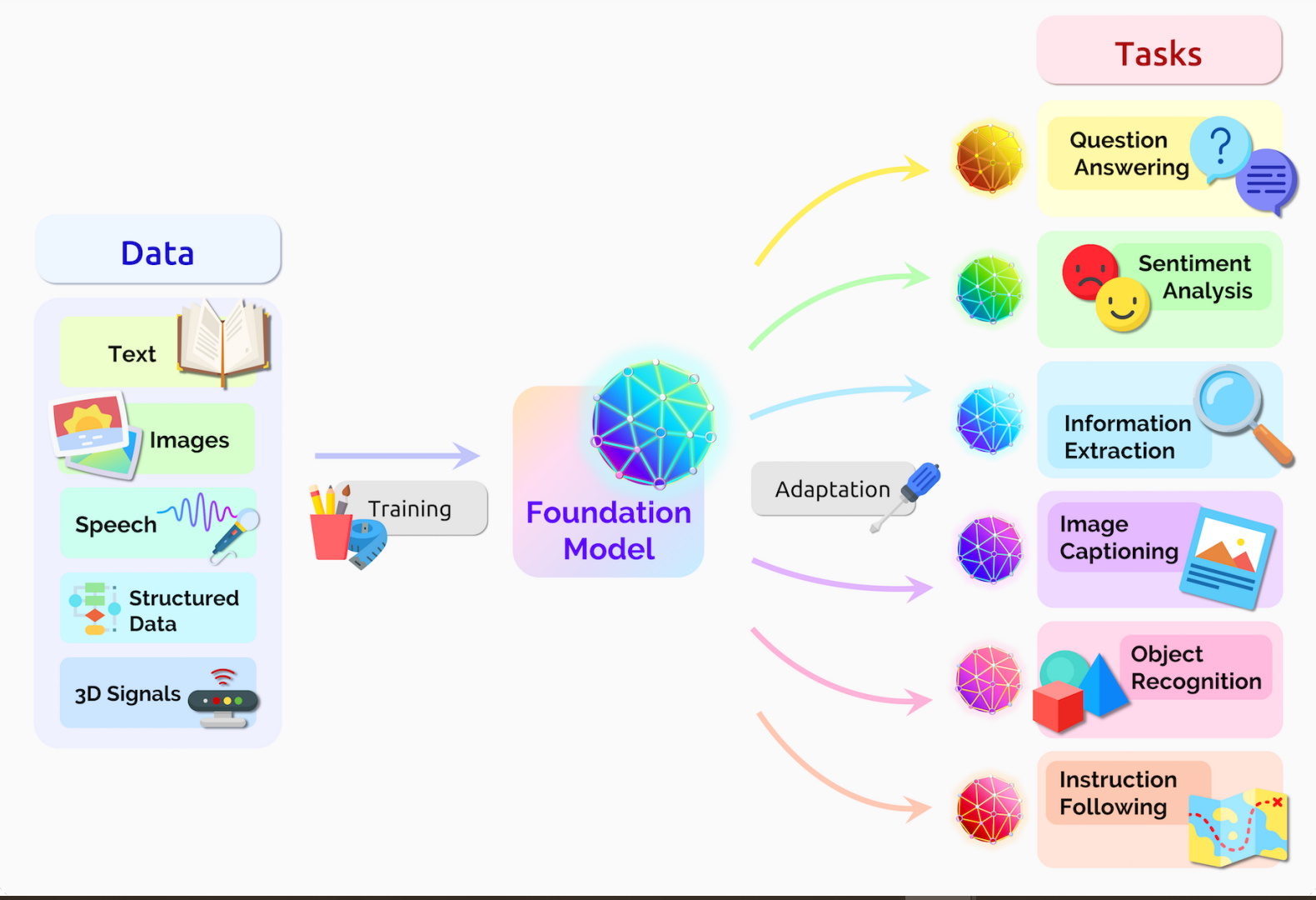
    To fine-tune the model, the researchers behind ChatGPT used a technique called transfer learning. Transfer learning involves taking a pre-trained model (like GPT-3) and re-training it on a new, related task (like generating conversational responses). The idea is that the model has already learned a lot of useful knowledge from its pre-training, and can apply that knowledge to the new task with less additional training.

    During the fine-tuning process, the researchers fed the model pairs of user inputs and responses from a large corpus of conversational data. The model then learned to generate responses that were both grammatically correct and semantically relevant to the user input.

    One interesting aspect of ChatGPT is the potential ethical implications of their use. As AI becomes more advanced and capable of generating human-like language, it raises questions about the role of AI in society, and how we should regulate its use. For example, should AI-generated text be subject to the same standards of truthfulness and accuracy as human-generated text? Should we be concerned about the potential for AI to spread misinformation or propaganda? These are complex and important questions that will require careful consideration and debate in the years to come.

    In conclusion, the science behind ChatGPT is rooted in the fields of artificial intelligence and machine learning, and specifically in the use of transformers and self-attention mechanisms for natural language processing. ChatGPT was trained on a vast amount of data using gradient descent, and was fine-tuned for conversational applications using transfer learning. As AI continues to advance, it’s likely that models like ChatGPT will become even more sophisticated and capable, raising important ethical and societal questions along the way.

    Works Cited

    1. Vaswani, Ashish, et al. “Attention Is All You Need.” ArXiv.org, 6 Dec. 2017, https://arxiv.org/abs/1706.03762.
    2. Cristina, Stefania. “The Transformer Attention Mechanism.” MachineLearningMastery.com, University of Malta, 5 Jan. 2023, https://machinelearningmastery.com/the-transformer-attention-mechanism/
  • 5G for 5IQ Individuals

    You’re wandering through the forest – lost, worried, thirsty. Your phone is at 6%. You have AT&T, so of course you have no service. You’re a 21 year old raised in the suburbs of Chicago. You’ve barely seen a tree, let alone have any survival skills. 

    When all of a sudden, your phone buzzes with a YouTube notification. Your phone just connected to a 5G tower that was disguised as a tree. You call 911. You’re saved. Thank you so much 5G!! Yet, once you return to society, you don’t return the favor to 5G; you just continue to live clueless about what 5G is or how the thing that just saved your life works. This is, of course, an extremely relatable story. We’ve all been there. So I’m here to fulfill your life debt to 5G and explain how it works.

    5G is the latest technology for mobile communication networks that promises faster internet speeds, lower latency, and greater capacity to connect more devices simultaneously.

    To put it simply, you know how your phone connects to the internet using cellular data or Wi-Fi? 5G is the next and latest version of that connection, and it’s better than previous versions. It’s like upgrading from an old bike to a faster one.

    With 5G, you’ll be able to download movies, music, and other files much faster than you do now. In fact, you’ll be able to download a full-length HD movie in just a few seconds. That’s like getting your candy bar in less than a second at the checkout counter!

    5G is a type of cellular network where the service area is divided into geographic cells. All devices with the antenna that allow them to connect to 5G wireless access the radio waves generated from these towers.  The towers also have antennas to pick up on 5G signals sent back from the devices. These radio waves transmit and accept information.

    The technology behind 5G is also more efficient, which means that it won’t drain your phone’s battery as quickly as older networks. It’s like having a phone that lasts longer before you need to charge it.

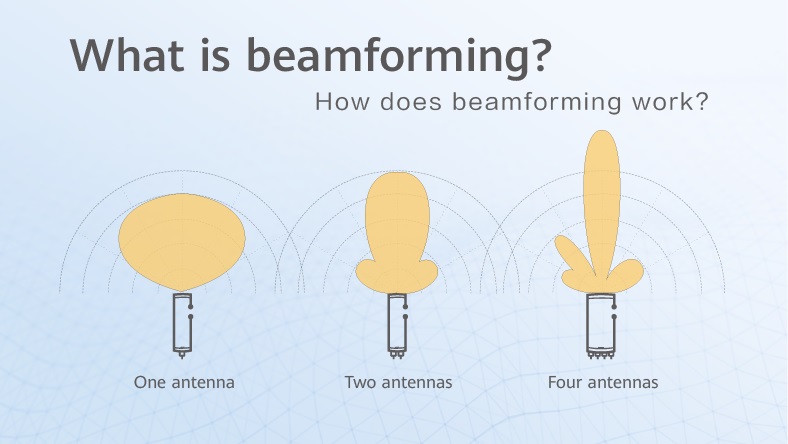
    There is also something known as “beamforming” used in 5G networks which is worth discussing in this overview. Beamforming is a way of processing signals for directional signal transmission/reception. As you can see, different antenna quantities can affect the efficiency and range of signal processing. Beamforming can be divided into two categories: digital and analog. Digital beamforming involves the transmission of data across multiple channels, while analog beamforming focuses on shaping the radio waves to be directed in a particular direction. 

    You now understand the very basics of 5G and have fulfilled your life debt. Congrats!

    —

    Hoffman, Chris (January 7, 2019). “What is 5G, and how fast will it be?“. How-To Geek website. How-To Geek LLC. Archived from the original on January 24, 2019. Retrieved January 23, 2019.

    Yibo, Wang. “What Is Beamforming?”. Info-Finder. Huawei Technologies Co., Ltd. Updated February, 4, 2022. Retrieved February 7, 2023.

  • Quantum Computing For Dummies

    If you’re even tangentially related to the tech world, you’ve probably heard an awful lot about Quantum Computing recently. But what exactly is it? Why is it useful? What is the point? And what does it mean for the future of computers for everyday people like you and me? 

    What is Quantum Computing?

    The basic idea behind quantum computing is that rather than having binary 1’s and 0 build the computer, you have a range of values between 0 and 1, determined by the superposition and entanglement of subatomic particles in the computer. Now this may sound scary, but it’s actually quite similar to what’s going on in your normal computer. The 1’s and 0’s you always hear about making up binary are actually just electrons. Electrons either flow through transistors (producing a 1) or they don’t (0). Computers have always relied on sub-atomic particles, we’re just changing which ones we rely on with quantum computing. 

    Quantum computers were proposed in the 1980s by Richard Feynman and Yuri Manin. But it wasn’t until 1998 that Isaac Chuang at Massachusetts Institute of Technology (MIT) and Mark Kubinec of the University of California at Berkeley created the first quantum computer (2-qubit) that could be loaded with data and output a solution. These computers have been theorized for a long time, but only recently are starting to become viable tools.

    What does that mean for me?

    Now, before we continue, I want to be clear that in the next 10-20 years, consumers will not be using quantum computing in their homes. There are a lot of advantages we’ve found to using the range of values that quantum provides, but those advantages are not currently applicable to daily users checking emails or watching videos; what they are good for is searching databases. 

    What is Quantum Computing useful for, then?

    Binary-based computers are particularly bad at searching for values. In fact, most search algorithms are just special tricks to get around how bad computers are at finding values in a dataset. This is because binary values have to check each value they come across one at a time and “label” each one as not the object they’re looking for. What quantum computing allows is, rather than going one-by-one, searching all (or many of the) values at the same time. 

    In a similar vein, quantum computing is quite good at modeling possible outcomes of situations because rather than having to cycle through each scenario one at a time – like a binary computer – it can process many different models at once. These advancements will be massive for many areas of scientific study by exponentially decreasing the amount of time/resources computing models takes.

    Closing thoughts

    If you are an average consumer like me, these advancements won’t affect you directly for many years, but I estimate we will be seeing faster scientific breakthroughs in coming years as computing time continues to decrease.


    Sources and Extra Reading

    Chuang, Isaac L.; Gershenfeld, Neil; Kubinec, Markdoi (April 1998). “Experimental Implementation of Fast Quantum Searching”.

    Gibney, Elizabeth (23 October 2019). “Hello quantum world! Google publishes landmark quantum supremacy claim”.

    S. J. Pauka, K. Das, R. Kalra, A. Moini, Y. Yang, M. Trainer, A. Bousquet, C. Cantaloube, N. Dick, G. C. Gardner, M. J. (2021). “A cryogenic CMOS chip for generating control signals for multiple qubits”.

    Yanofsky, Noson S.; Mannucci, Mirco (2013). Quantum computing for computer scientists. Cambridge University Press. pp. 144–147, 158–169. ISBN 978-0-521-87996-5.

  • “Coded” Language

    The use of acronyms and technical jargon in the world of software engineering is… out of control. API, IDE, entry-point, AGILE, SWE, Pandas, SGTM. These are just some of the terms thrown around at lunch with a software engineer. There is genuinely a second language used by computer scientists, but there is no Duolingo course available for “Annoying Nerd”.

    This manner of speaking obfuscates the point of what is being discussed behind layers of technicality that, for most casual discussions, is completely unnecessary. Not to mention the fact that this sort of “second language” is a major gatekeeping factor; if you cannot speak the language, you’re not going to be able to participate. And who is taught the language? Who is encouraged to become a computer programmer? I think if we examine the current biases in place in our society, we’ll see that this ocean of technical language further keeps out groups that aren’t encouraged to pursue this field in the first place. 

    Now obviously, when working in the role of Software Engineering, there are points where we must discuss the nitty gritty details of our implementations; that’s our job. My point here is not that all specialized language should be avoided or removed, but rather that we – as software engineers – have a communication issue. This issue has lasting consequences; it causes new computer scientists to feel more insecure, and that feeling can linger for years into their career. Nearly 60%[1] of computer scientists report experiencing imposter syndrome, with that number being far higher with computer scientists of minority demographics. 

    When I first joined computer science it seemed like there was so much information I couldn’t possibly conceive of, but the vast majority of the things I thought I couldn’t understand were in fact quite simple! I just didn’t yet know the jargon, which made the concepts sound significantly more complicated than they were. “Implementing a new entry point (available to users) utilizing a pre-existing API endpoint” is equivalent to the sentence “creating a button”. The first sentence is far more information dense; however, effective communication is not measured by how much information you can cram into one sentence. Not to mention the fact that if you don’t recognize one of the jargon words in that “information dense” sentence, it loses all meaning, while the second is universally understood.

     I don’t believe this is a malicious attempt by software engineers to feel or appear intellectually superior. To my knowledge, there’s no cabal intentionally pushing the over-use of complex language; I believe this is a byproduct of the fact that you must be incredibly precise with computers. One might believe, then, that it naturally follows that the language around computers should be incredibly precise, right? I’d argue no. Unlike computers, humans have the capability for abstract, generalized thought – let’s use it to make computer science more widely available and welcoming to new groups of people who want to learn the discipline. 

    I think computer science could do with a similar dichotomy of language to medicine. As an example, the medical world has the technical term “xerosis”, and the layman term ‘dry skin’. We need to get better at understanding what circumstances require what level of precision in speech. I think we’ll find if we lower the barrier to entry for computer science, the field will flourish with new ideas, perspectives, and ways of thinking that may just give us a future of new technology we cannot yet imagine.


    1.  Rosenstein, Adam, et al. “Identifying the Prevalence of the Impostor Phenomenon
      among Computer 
      Science Students: Proceedings of the 51st ACM Technical Symposium on Computer Science Education.” ACM Conferences, 11 Mar. 2020, https://dl.acm.org/doi/10.1145/3328778.3366815.