Author: Pratham Saurabh

  • Artificial Intelligence Space Travel

    Artificial Intelligence Space Travel
    In the ever-growing universe, artificial intelligence (AI) is becoming a pivotal tool for space exploration. While on Earth, the role of AI in science—most significantly through large language models (LLMs)—is transforming the pace of research and discovery, off Earth, its role is equally significant. AI is now at the cutting edge of how we explore the solar system and beyond, pushing boundaries once deemed impossible due to time, geography, and technology limitations.

    Space travel has uniquely complex issues: enormous communication delays, dangerous environments, unmapped terrain, and thin real-time monitoring. In flights spanning millions of miles, the time a signal takes to reach Earth, and back is too long to employ human micromanaging. To offset this, scientists and engineers have turned to AI as a helper, vital decision-maker, and data processor in real time.

    The Martian Testbed: Autonomy and Perseverance in Action
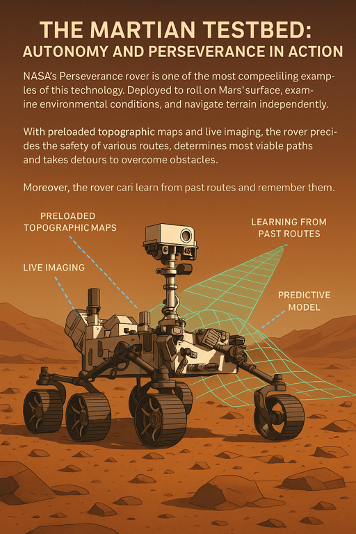
    NASA’s Perseverance rover is one of the most compelling examples of this technology. Deployed to roll on Mars’ surface, Perseverance isn’t just driving around according to commands from Earth. Its sophisticated AI system allows it to read sensor data, examine environmental conditions, and navigate terrain independently.

    With preloaded topographic maps and live imaging, the rover predicts the safety of various routes, determines the most viable paths, and takes detours to overcome obstacles. The predictive model enables the rover to optimize its mission objectives—cover more distance, sample more, and minimize risk. Perseverance can think and learn while it moves.

    Moreover, the rover can learn from its past routes and remember them. Navigation through learning like this, which conceptually is close to how LLMs train their answers to be better after repeated cycles, makes Perseverance an increasingly efficient vehicle the longer it runs.
    The Edge of Intelligence: From Mars to the Outer Moons
    Mars is just the beginning. AI is designed to play an even more significant part in the next wave of missions—to Jupiter’s frozen moon Europa, Saturn’s ethane-rich Titan, and farther out. These destinations provide more hostile and alien conditions than Mars, with more risks and fewer opportunities for in-time human interference.

    On these missions, spacecraft must do everything from data analysis and route planning to system checks and equipment deployment. AI models must determine what data to return to Earth, what anomalies are worth investigating, and even potentially re-routing missions in flight if new challenges arise.

    AI is also transforming orbital science. Space telescopes now generate more data than any human community hopes to review. AI programs trained on this information can spot patterns, remove distracting noise, and highlight phenomena, like exoplanets or black hole candidates, worthy of further investigation. As we build more capable observatories, AI’s function as a research assistant in the sky will continue to grow.

    Intelligent Exploration: The Next Generation of Intelligence Beyond the Cosmos
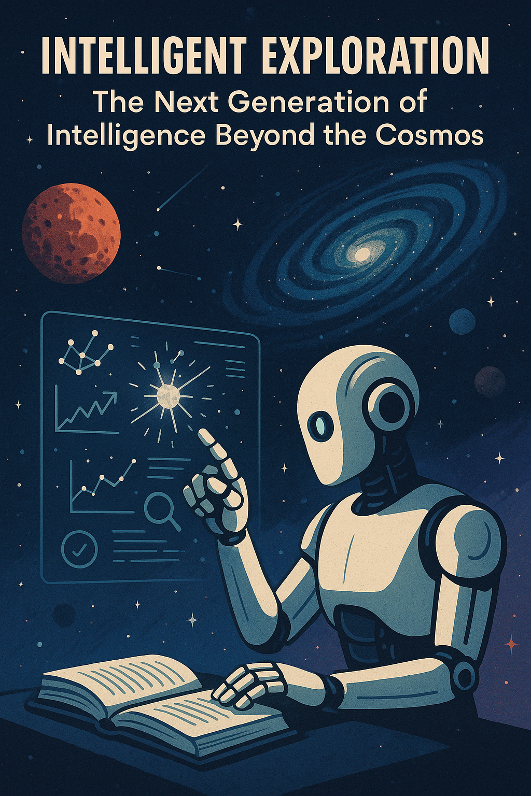
    The actual breakthrough of AI in space isn’t one of technology but philosophy. They are no longer passive tools but are becoming active agents in the pursuit of discovery. They sometimes read, predict, and act before human researchers know of a new finding.

    This is a shift in how we think about exploration. Instead of human beings at the center of every moment, we now share that place with intelligent systems that reach further than we can, respond faster than we can, and carry our curiosity into places we can’t yet go to ourselves.

    For scientists and engineers, this alliance with AI is more than a convenience—it’s a necessity. The more hazardous our destinations become, the greater our dependence on machine intelligence to light the way.
    The Future: AI as Our Celestial Colleague
    As space travel heightens and the industry of AI becomes more revolutionized, more things are to be learned when it comes to AI. Where every decision counts in extreme environments, AI systems may monitor life support, recommend maintenance, or enable communication among multicultural crews.

    Here on Earth, the same AI platform can simulate missions, train astronauts, and analyze mission outcomes at a speed and scale never imagined.

    No less than the LLMs are rewriting the way we do research in every field, from literature to biology, and autonomous AI is rewriting the rulebook for space science.

    References

    ESA. (2023, September). Artificial intelligence in space. ESA. https://www.esa.int/Enabling_Support/Preparing_for_the_Future/Discovery_and_Preparation/Artificial_intelligence_in_space

    Gómez-Pérez, J. M. (2022, October 7). Artificial Intelligence and Natural Language Processing and Understanding in Space: A Methodological Framework and Four ESA Case Studies. arXiv. https://arxiv.org/abs/2210.03640?utm_source=chatgpt.com

    Mars 2020: Perseverance Rover. (2021, February 18). NASA Science. https://mars.nasa.gov/mars2020/

    Oche, P. A. (2021, December). Applications and Challenges of Artificial Intelligence in Space Missions. ResearchGate. https://www.researchgate.net/publication/356771832_Applications_and_Challenges_of_Artificial_Intelligence_in_Space_Missions


  • Large Language Models: Transforming the Field of Scientific Discovery

    Large Language Models: Transforming the Field of Scientific Discovery

    The recent Scope Large Language Models (LLMs) have been used as powerful tools for changing the way scientific research is conducted. These models have massive amounts of data trained within them, causing human-like responses and creating queries that respond to human nature. As LLM models mature even more, they become more of a thinking space for scientists implementing literature to experiment with planning-based projects. As these models evolve, a drastic amount of scientific discovery creates more access to better research and more knowledge.

    Foundations of LLMS

    LLM models are artificial intelligence systems trained on massive datasets. Their idea is to help create and automate easy activities. ChatGPT, in which various people use this LLM model for emails and essays, has been successful in the LLM atmosphere. As the linguistics have changed, the LLM’s dataset has been applied to it.

    Scope of Scientific Discovery

    As LLMs evolve, the scientific community has been growing, helping the chemistry, physics, and biology industries. For example, Gemini and Grok AI, incubated by Google and Twitter, understand various concepts of physics, which makes them a very reputable source of information. With fantastic datasets, various scientists are beginning to use them for research and other expertise.

    Google has begun to incubate research for medicinal research. In a sense, many chemical compounds have been simulated through AI, making medicinal research easier. Various compounds are being created and put into medicine to treat patients. Many automated factories produce millions of combinations daily, allowing them to make more medicine for patients.

    Contributions to Biology

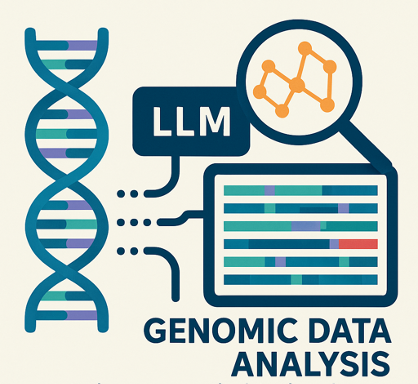
    In the scope of biology, LLMs are redefining research methodologies by assisting in fields ranging from genomics to ecology, transforming the way scientists look at research concepts within those fields. The ability of LLM models to analyze patterns and genetic sequences and summarize complex findings makes them a necessary tool for research.

    • Genomic Data Analysis: LLMs can decode massive genomic datasets, helping researchers identify rare patterns linked to traits or diseases.
    • Ecosystem and Evolution Modeling: LLMS processes environmental patterns and data to understand the impacts of climate change and how species affect environments.
    • Protein Folding: Due to the increasing sum of information passed through LLMs, various models can create vast predictions with remarkable accuracy, which creates more medicines and disease detection.

    Contributions to Physics

    LLMs make a vast contribution to physics. Various Machine Learning algorithms are used in the creation of these LLM models, which makes mathematical concepts such as linear algebra second nature to them. In Physics, various mathematical concepts and abstract reasoning methods are used by researchers, which takes a large sum of time; hence, the LLM model comes and helps mediate that issue.

    • Equation Solving and Abstract Reasoning: LLMs are trained to understand and manipulate theoretical physics models, which help with concepts such as quantum mechanics.
    • Automated Simulation: After computational simulations, physicists use LLMs to generate different simulating methods by giving different computations and suggestions.
    • Data Analysis: LLMs use different libraries of code for data analysis that are crunched into massive Excel documents or CSV files that physics can use to make equations.

    Contributions to Chemistry

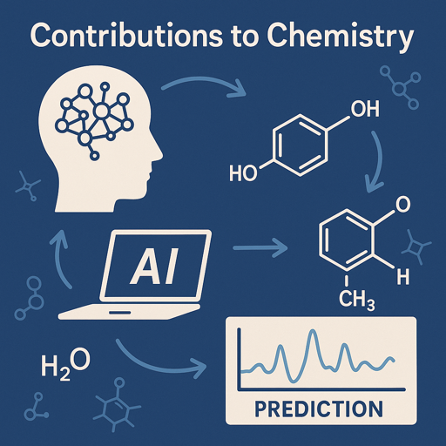
    Of all the vast fields of science, chemistry stands out as the field that actively uses LLMs to its advantage. AI is currently shaping the future of molecular science, drug discovery, and design. LLMs augment the workflow of chemistry, transforming the methods of experimentation, documentation, and simulation.

    • Medicine Discovery: LLMs assist in finding potential medications by predicting molecular interactions. This can generate thousands of outcomes, which can be used to discover more medicines to cure more diseases.
    • Chemical Reaction Prediction: LLMs predict the outcomes of chemical reactions, which helps chemists find optimal conditions and other information when experimenting.
    • Polymer Design: Currently contributing to the design of polymers, nanomaterials, and semiconductors, which can increase the chances of durability and flexibility based on the use cases of the experimenter.

    Future of LLMs’ Contribution to Science

    As more information and LLMs progress, their science scope can be expanded. Since these models have massive datasets, they can be used to give predictions and simulations rather than simple assistance and computational processing. Based on LLM’s ability to perform natural language processing, it can broadly test categories of science that cost vast amounts of money and time.

    There are still some challenges, as there are many debates about the ethics and transparency of these models, which can hinder research. However, as these models advance, they have more time to mature, which leads to vast amounts of innovation. More mature models can produce better solutions due to their vast dataset and reputability.

    Large Language Models are not only a technical term but also a shift in how research and knowledge are produced.

    References

    Alley, E. C. (2019, October 21). Unified rational protein engineering with sequence-based deep representation learning. nature methods. https://www.nature.com/articles/s41592-019-0598-1

    Gómez-Bombarelli, R. (2018, January 12). Automatic Chemical Design Using a Data-Driven Continuous Representation of Molecules. ACS. https://pubs.acs.org/doi/10.1021/acscentsci.7b00572

    Schwaller, P. (2019, August 30). Molecular Transformer: A Model for Uncertainty-Calibrated Chemical Reaction PredictionArticle link copied! ACS Publications. https://pubs.acs.org/doi/10.1021/acscentsci.9b00576

    Vaswani, A. (2017, June 12). Attention Is All You Need. arXiv. https://arxiv.org/abs/1706.03762