The following pictures were all taken at Georgia Tech on May 4th. They capture only a tiny portion of the wildlife on campus.
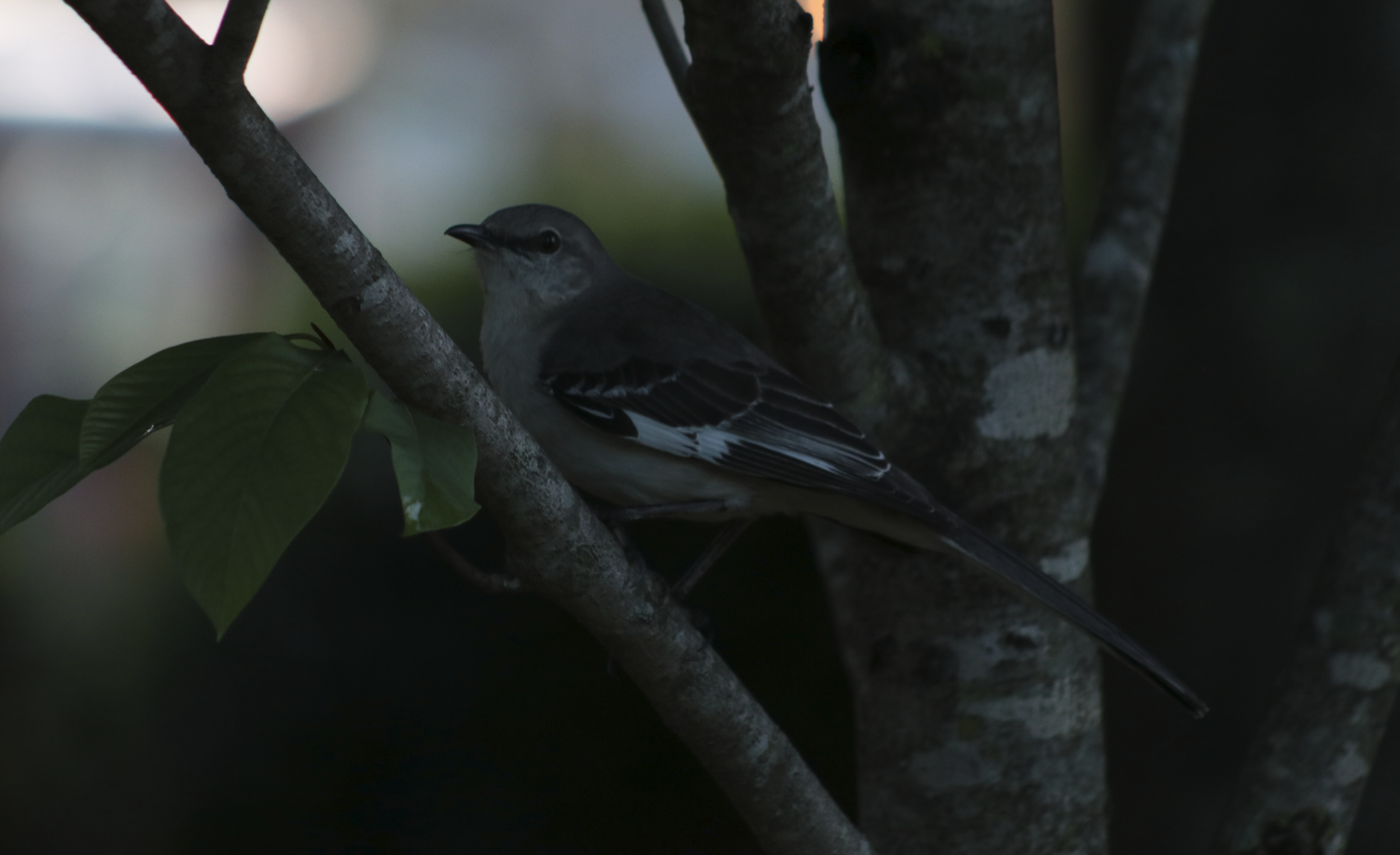
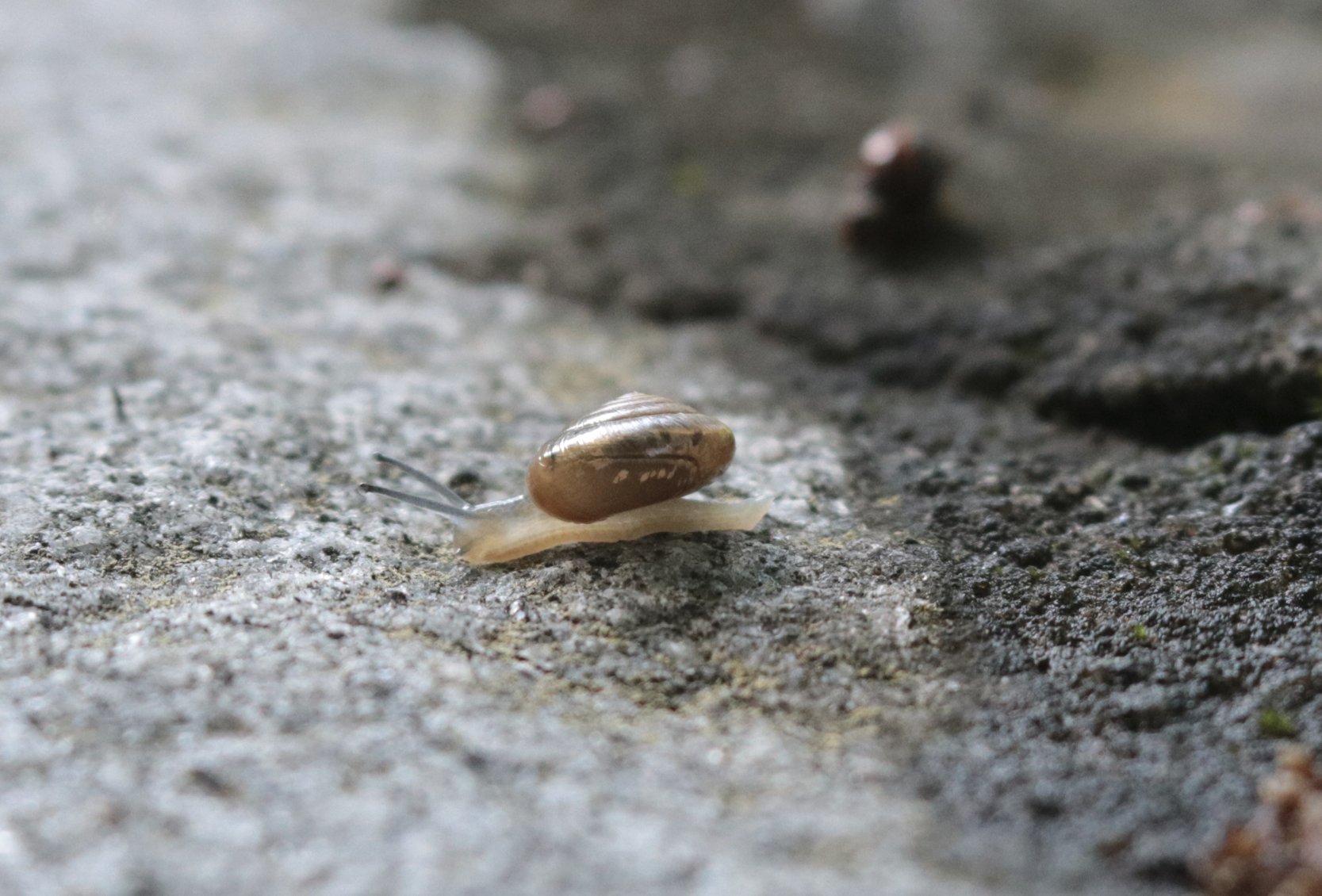
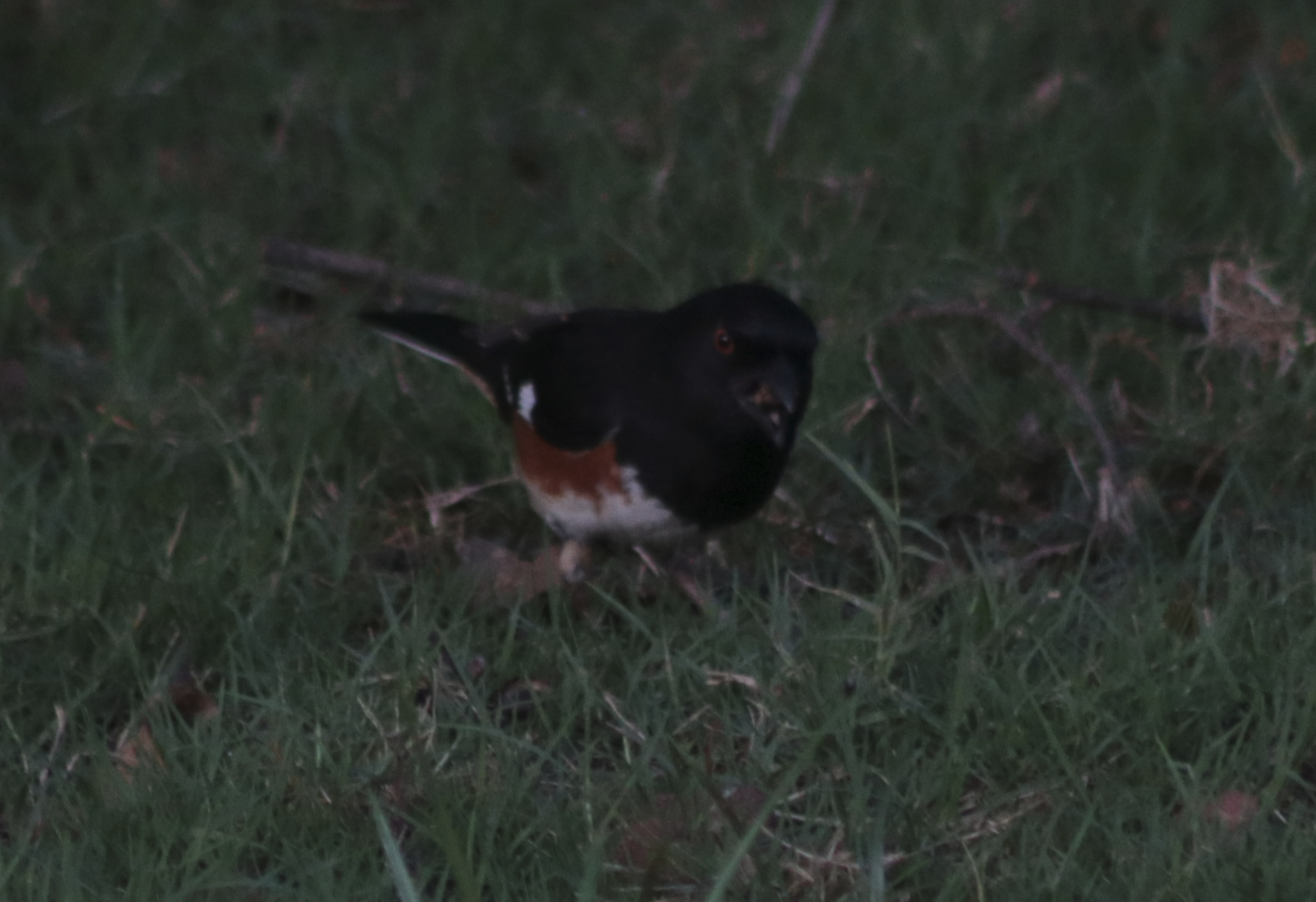

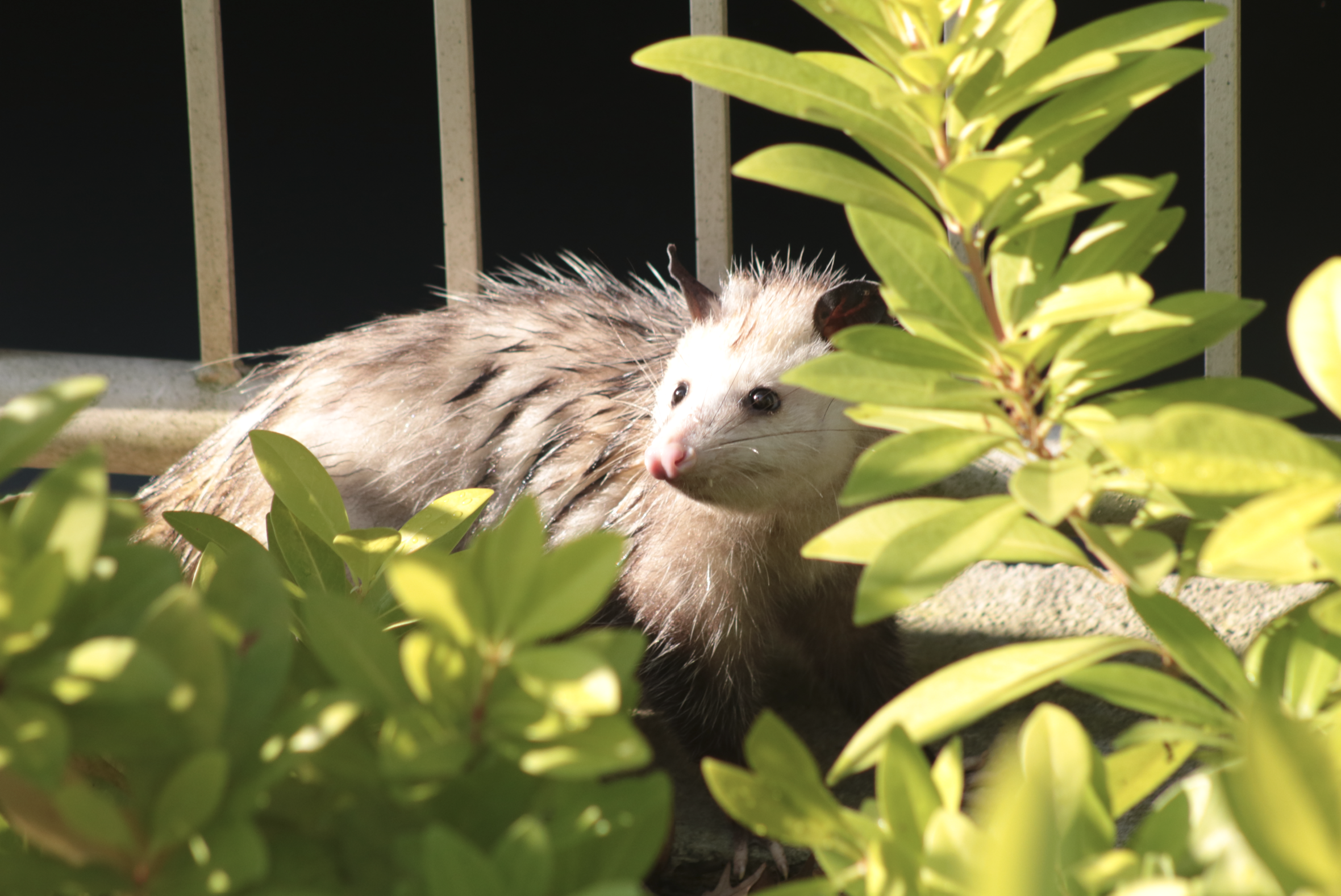

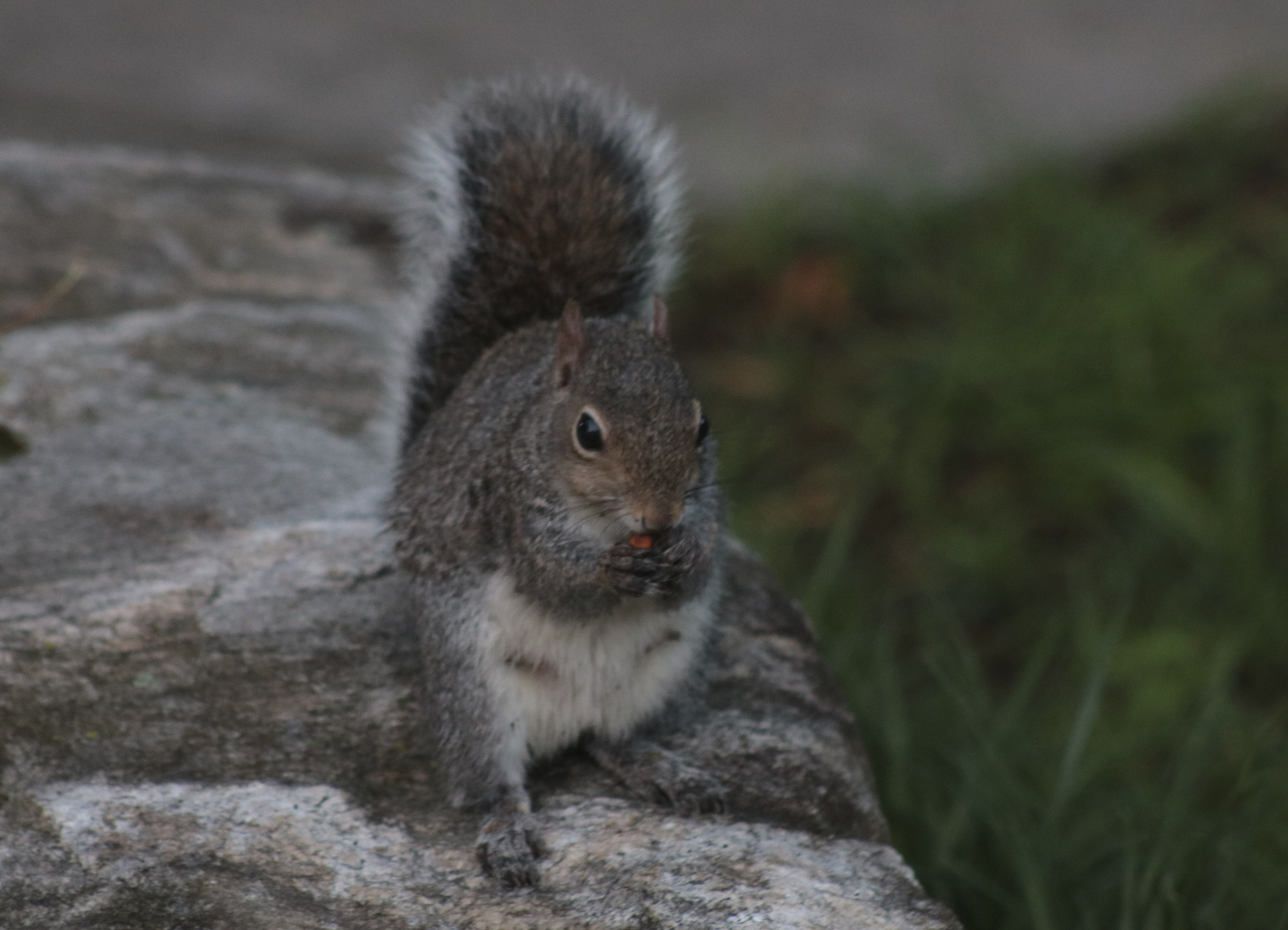
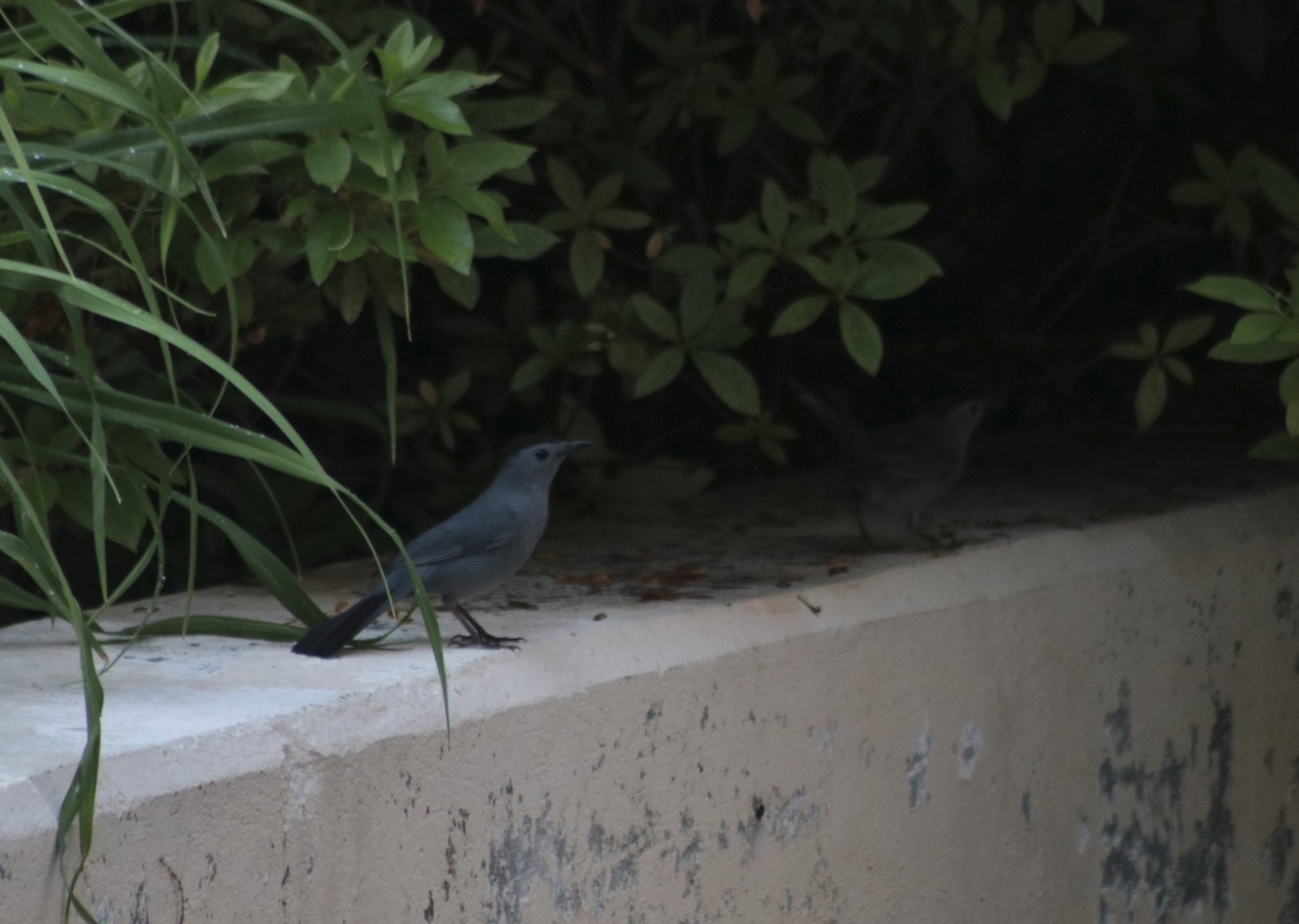
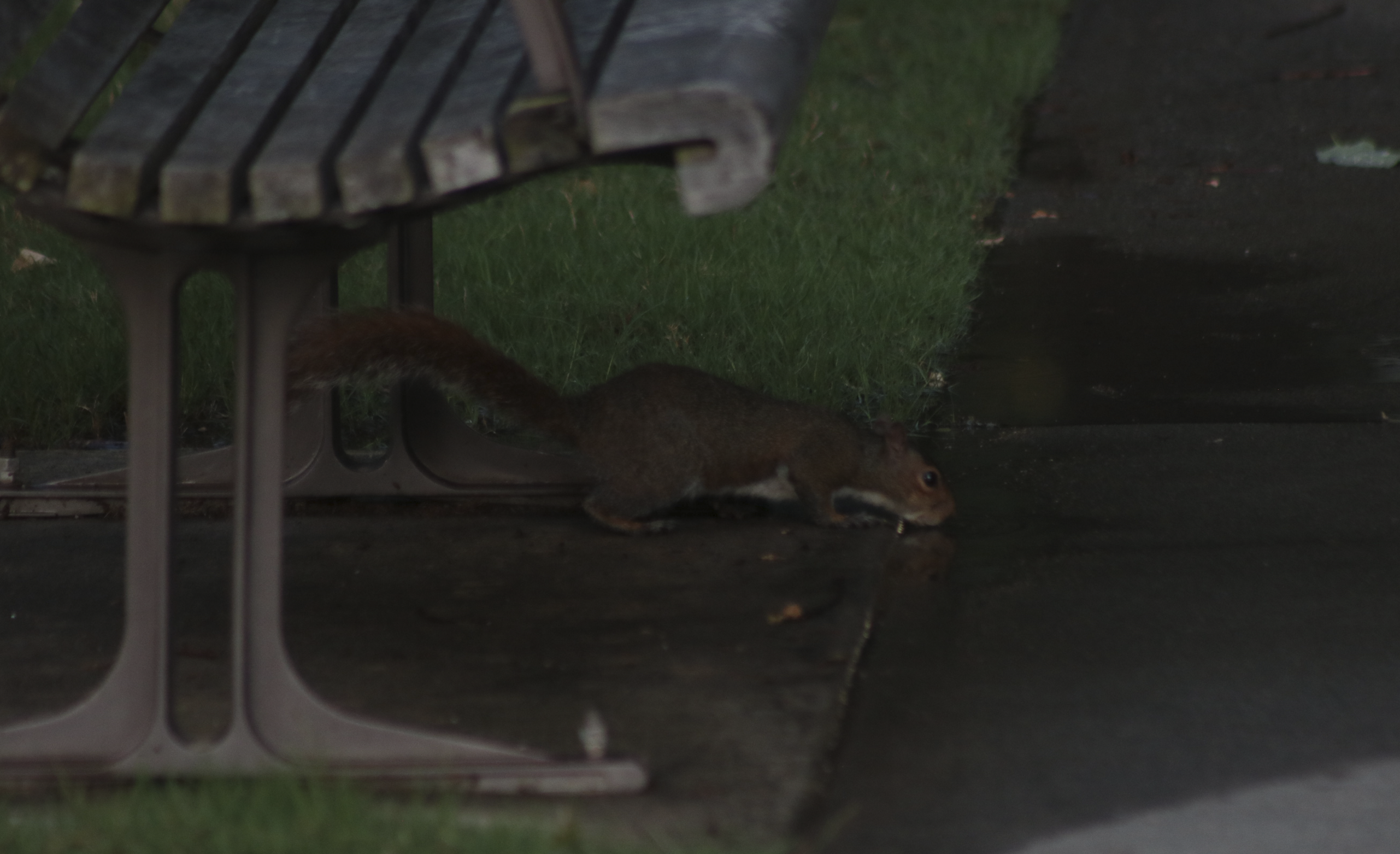

The following pictures were all taken at Georgia Tech on May 4th. They capture only a tiny portion of the wildlife on campus.
Este artículo fue escrito en el 2012 por el profesor Joe Mendelson, director de investigación en el zoológico de Atlanta e instructor en Georgia Tech. Lo he traducido lo mejor que pueda, pero siempre hay cosas subjetivas y rarezas de cada dialecto. Espero que no sufran tanto mis cantabridades.
La herpetología y el perderse. Estos son los grandes temas de mi vida. Me han dado forma a mi carrera y me han permitido descubrir especies desconocidas a la ciencia, pero también me han costado relaciones, frustrado a todos cerca de mi, y casi me han costado la vida. Sin ellos, sería otra persona, así que esto es una balada al arte perdido del perderse.
Después de la universidad, me fui de Santa Bárbara, en California, a una escuela de posgrado en Tejas para estudiar con un [mid-career hotshot] que se especializaba en la herpetología de Centroamérica. Es un gringo norteamericano que creció en Guatemala, así que para él es normal entrar y salir de esa cultura. En el primer año de mi posgrado me salió la asignatura de mis sueños. Iba a ser trasladado a una plantación de café en una región remota de Guatemala para hacer una encuesta científica de anfibios y reptiles. Tenía que hacer un transecto ecológico de la diversidad herpetológica por [la ladera/el lado] de una montaña muy pindia en la Sierra de la Minas, en el estado de Alta Verapaz. Aunque el área había sido poblada desde la era clásica de los maya, ningún biólogo había trabajado por cualquier sitio cerca de la región. Si echas un vistazo a un mapa de Guatemala, verás un lago enorme (el lago de Izabal) en el este del país. Estaba ubicado a unos treinta y dos kilómetros al oeste del lago, en el valle Polochic, a la base del [vertiente] norte del Cerro Raxón. La plantación se llamaba Pueblo Viejo, una referencia al hecho que el sitio había sido habitado por los maya desde hace miles de años. Resultaban dos problemas: 1) No hablaba ni una palabra de español; 2) aunque crecí en europa [army brat] y estaba acostumbrado a ser inmerso en culturas extranjeras, además de unos viajes de pesca, nunca había estado en latinoamérica; y 3) Guatemala estaba enrollada en una terrible guerra civil genocida (la cual, por cierto, fue instigada a propósito por la CIA en los años cincuenta).
El dia antes de ir al aeropuerto mi mentor me dio unos mapas topográficos de mi sitio de estudio y me dijo, “Si te para cualquier persona con pinta de policía o soldado, no les dejes ver estos mapas porque van a pensar que estás allí para informar a la insurrección indigena y te van a arrestar. Ah, y no traigas esas botas militares que llevas. Son las que lleva el ejército americano. Cojete algunas con pinta de turista.” Entonces pedí dinero de mis padres y me compré unas botas coloridas del REI cercano, y puse los mapas en el fondo de mi mochila.
Juro que jamás viajaré con semejante ignorancia de mi situación. Resultó que el hablar español hubiera tenido utilidad muy limitada, porque estaba en una región tan aislada que la mayoría de las personas hablaban Q’eqchi’, uno de los muchos diversos dialectos mayas en la región, y solo un poquito de español. Cada vez que aventuraba tras la parte principal de la plantación de café, encontraba [aldeanos/nativos] que dejaban todo y echaban pitando. Estaba aterrorizado. Si ellos me tenían miedo, sabía que había algo que debería temer también. Desde mi regreso, he construido una biblioteca pequeñuca sobre la historia guatemalteca, y ahora entiendo lo que no entendía cuando aquello. Resulta que los agujeritos que vi en las paredes de cemento en el pueblo cercano de Telemán eran de una masacre pocos años antes de mi llegada al país. Las guerras genocidas aún existen, y son increíblemente feas.
Tenía que hacer un transecto ecológico, y al final llegué al pueblo más alto de la vertiente de esa sierra, un pueblín Maya llamado Peña Blanca, con algún otro nombre en Q’eqchi’ que nunca pude pronunciar (los dialectos Maya tienen oclusivas glóticas a mitad de sílaba, o sea, básicamente imposibles para los hablantes que no son nativos). La gente se veía maja en Peña Blanca, y no se huían de mí. Acampe justo afuera de su pueblo, con su permiso implícito. Las primeras dos noches tuve un pequeño grupo de gente alrededor mirándome mientras hacía mi cena de campamento de mierda y preparaba mis especímenes, muestras, y notas. No nos podíamos hablar, pero logré explicar que quería acampar allí, que no les deseaba ningún daño, y que planeaba recorrer las afueras del pueblo en busca de culebras y ranas y cosas parecidas. Estaban tranquilos con eso, e incluso me trajeron las culebras que mataban en los maizales cada día (especímenes muy útiles para mi).
Después de unos días camine de vuelta a mi campamento principal en la plantación [and got read the riot act] director racista y fascista guatemalteco por haber tenido “cualquier relación con los rebeldes de la montaña” (recuerda que había un guerra civil, básicamente entre aristócratas como este tío y los maya por las montañas). Como una semana después me fui de vuelta a mi campamento, pero esta vez no se me acerba ni una persona. Estuve allí por tres días hasta que me di cuenta de que estaba haciendo algo malo – mi colección de datos egoísta para mi licenciatura estaba severamente comprometiendo su vida cotidiana.
Finding and trying (usually unsuccessfully) to pet street cats is often one of the highlights of my day. Nevertheless, it is always somewhat bittersweet to find a feline friend outdoors, as it is almost certain that it is killing local wildlife. Various studies have estimated that outdoor cats cause the deaths of billions of birds in the United States, and potentially dispatch over twenty billion mammals. However, they can hardly be held responsible for their deaths, much as we cannot be held responsible for breathing. A cat chasing a lizard or a mockingbird is simply following its instincts. These behaviors persist even if cats are well-fed, given that they will consistently seek stimulation from the outdoors, especially if neglected or under-stimulated at home.
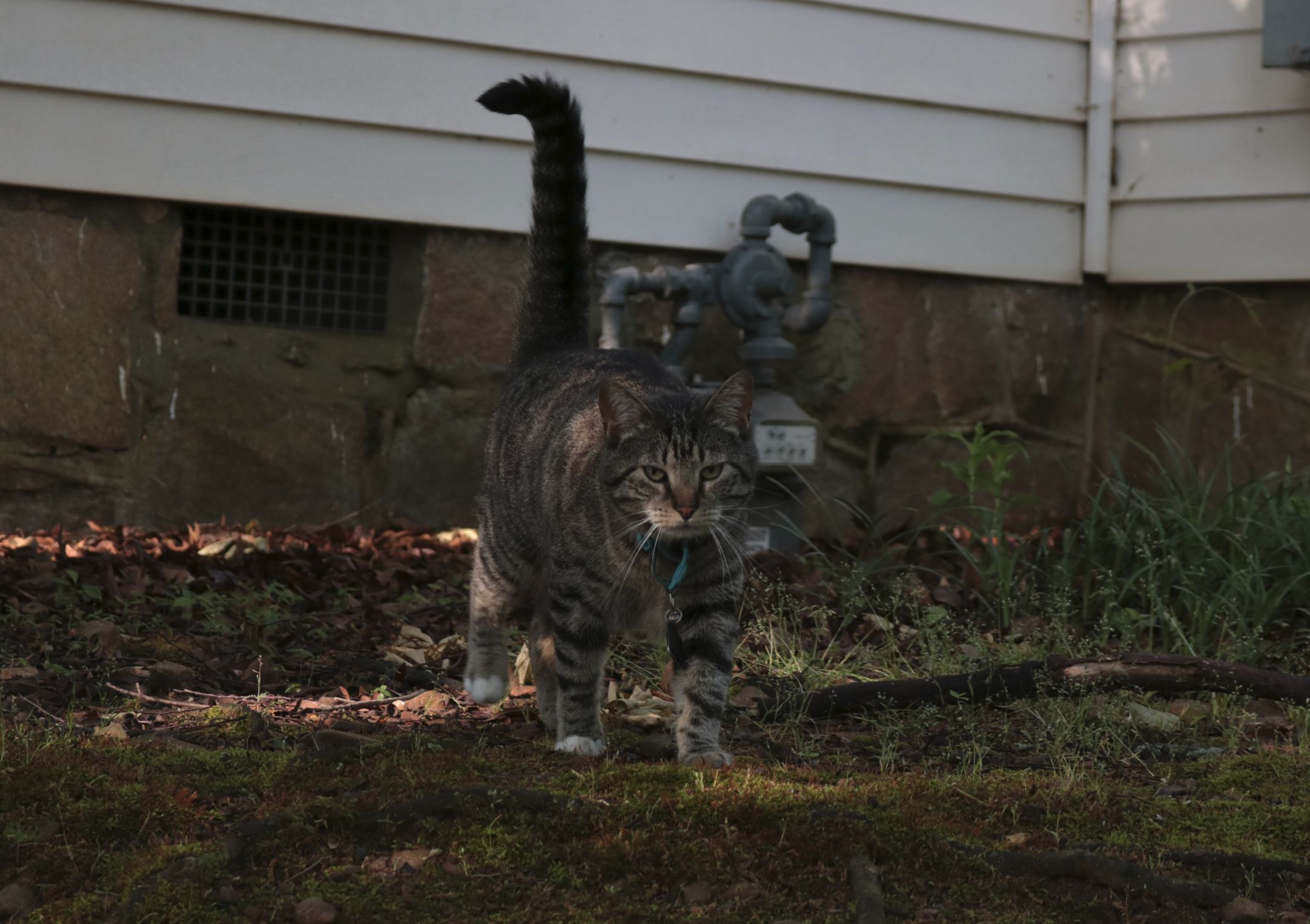
Pictured above is Mikigo, a friendly kitty which wanders around Home Park Avenue. Although I love petting her, I have seen her chasing birds around the neighborhood. It is almost certain that she kills a few every month, and even this number may very well be an underestimation of her murderous proclivities. These effects can be even more devastating in environments with endangered species, especially if said species have no predators similar to domestic cats and have not developed any sort of defense mechanisms against them.

Perhaps you don’t think that a few birds a month makes much of a difference, and if there were only a few dozen cats in the United States, I’d agree. However, a few seconds of multiplication shows the true extent of feline ecological damage. There are at least fifty million feral cats, not counting millions more house cats which are allowed to roam. Even if each feral cat killed only one bird a month, this would result in six-hundred million dead birds every year. Unfortunately, many feline-welfare programs which trap cats either neuter or spay them but release them back into the wild after the procedure, which might lead to another few years of ecological damage while the cat roams freely. The best option for wildlife is to adopt feral cats, and to keep your kitty indoors.
Loss et al. The impact of free-ranging domestic cats on wildlife of the United States. Nature Communications, 2012.

A good way to stop seizures is to simply cut the brain in half. Such a procedure isn’t performed after one or two episodes, but rather when a patient’s quality of life is starting to deteriorate considerably due to their epilepsy. After surgery, the two hemispheres of the brain are unconnected and unable to exchange information. In the 1960s, an American neuroscientist named Roger Sperry carried out a series of experiments on split-brain subjects. Trials were carried out by placing the individuals in front of a screen and a table with a variety of objects. The screen could display photographs side by side, one on the left side and another on the right. By flashing pictures at one-tenth of a second or less, the researchers ensured that only one eye would be able to incorporate the information.
A quick review of how the brain works – the left hemisphere is connected to the right hand and right eye, and contains the language centers. The right hemisphere is connected to the left hand and left eye.
Because the right hemisphere is unable to communicate verbally, subjects were unable to tell researchers which image had flashed on the left side of the screen. However, if asked to pick out the pictured object from the table, the left hand (controlled by the right hemisphere!) was able to do so with ease. Keep in mind that this is despite patients insisting that they had not seen a picture of the object which their left hands were holding. In some sense, they were correct. The left hemisphere, which controls speech, had not seen the object – only the right hemisphere had, and was unable to communicate this to the left hemisphere due to the severing of the corpus callosum, the body of fibers which joins both sides of the brain.
When the phrase “key case” was shown to the subjects, “key” on the left side of the screen, “case” on the right, the subject might guess that the experimenters were referring to a case of beer, though the left hands would pick up a key.
Even though the right side of the brain is unable to vocalize anything, it nevertheless appears to be quite distinctly human. For instance, if prompted to pick up silverware, the left hand might grasp for a fork, whereas the person would say that they are holding a knife, spoon, or fork with equal probability. Furthermore, the right side can reason abstractly. If shown a picture of a wall clock, it can sort through materials and pick out a toy watch!
What do you think the following means?
1010
One-thousand and ten, right? What if I told you that it meant four-thousand one-hundred and twelve? Or three-hundred and fifty? Or simply ten? The truth is that all of these answers are right, depending on what number system you’re using. Let me illustrate with a more abstract example. Imagine you have two symbols that you’re using to count objects. When you have no objects, you represent that with a triangle. When you have one object, you represent it with a heart. What if you have two objects? Well, we can simply box up both of our symbols and use another heart in a different position, say, slightly to the left, to indicate that we have one box of two symbols! To represent three symbols, we can write two hearts next to each other, one heart representing the original meaning–one object–and the next heart representing the second meaning–a box containing two objects. Now when we add both meanings, we get three because our symbols represent three total objects. To represent four, we can use another heart in a different position that represents a box containing two boxes, each with two objects. This is what is known as the binary system, though it is typically employed using the more familiar symbols 0 and 1. The number which we originally displayed, 1010, can be read as follows, from right to left (in our standard decimal system).
(0 * 2^0) + (1 * 2^1) + (0 * 2^2) + (1 * 2^3) = (0 * 1) + (1 * 2) + (0 * 4) + (1 * 8) = 0 + 2 + 0 + 8 = 10
The reason we multiply each number by some power of two is that we have two symbols in this number system. We would call this a base-two number system. In our more familiar decimal system, we have ten symbols–0, 1, 2, 3, 4, 5, 6, 7, 8, and 9. We would call this a base-ten number system. If we wish to represent the number ten, we write “10” to show that we have one box of the preceding ten symbols, and no extra numbers–thus ten total objects. Going back to our original example, the number 1010 in decimal just means
(0 * 10^0) + (1 * 10^1) + (0 * 10^2) + (1 * 10^3) = (0 * 1) + (1 * 10) + (0 * 100) + (1 * 1000) = 0 + 10 + 0 + 1000 = 1010
Likewise, if we want to use some strange number of symbols, like thirteen, we are more than free to do so. We could represent them as follows, the first number as the symbol in our base-thirteen system, the second as our symbol in decimal.
0 = 0, 1 = 1, 2 = 2, … (and so on up to nine), A = 10, B = 11, C = 12. Note that even though we have thirteen symbols, we don’t have a specific symbol that equals thirteen because our symbol for zero gets us up to thirteen total symbols. To represent thirteen, we would write 10 (one box of thirteen objects and zero loose objects). Thus, 1010 would mean
(0 * 13^0) + (1 * 13^1) + (0 * 13^2) + (1 * 13^3) = (0 * 1) + (1 * 13) + (0 * 169) + (1 * 2197) = 0 + 13 + 0 + 2197 = 2210
I hope that makes sense. The main point of this exercise is to show that symbols can be completely arbitrary. Zero does not need to be represented by “0,” nor does two-hundred and eighty-three need to be represented as “283.” We could represent them as a pyramid and a hippo if we wanted to, although the decimal system does a fairly good job at keeping matters concise.
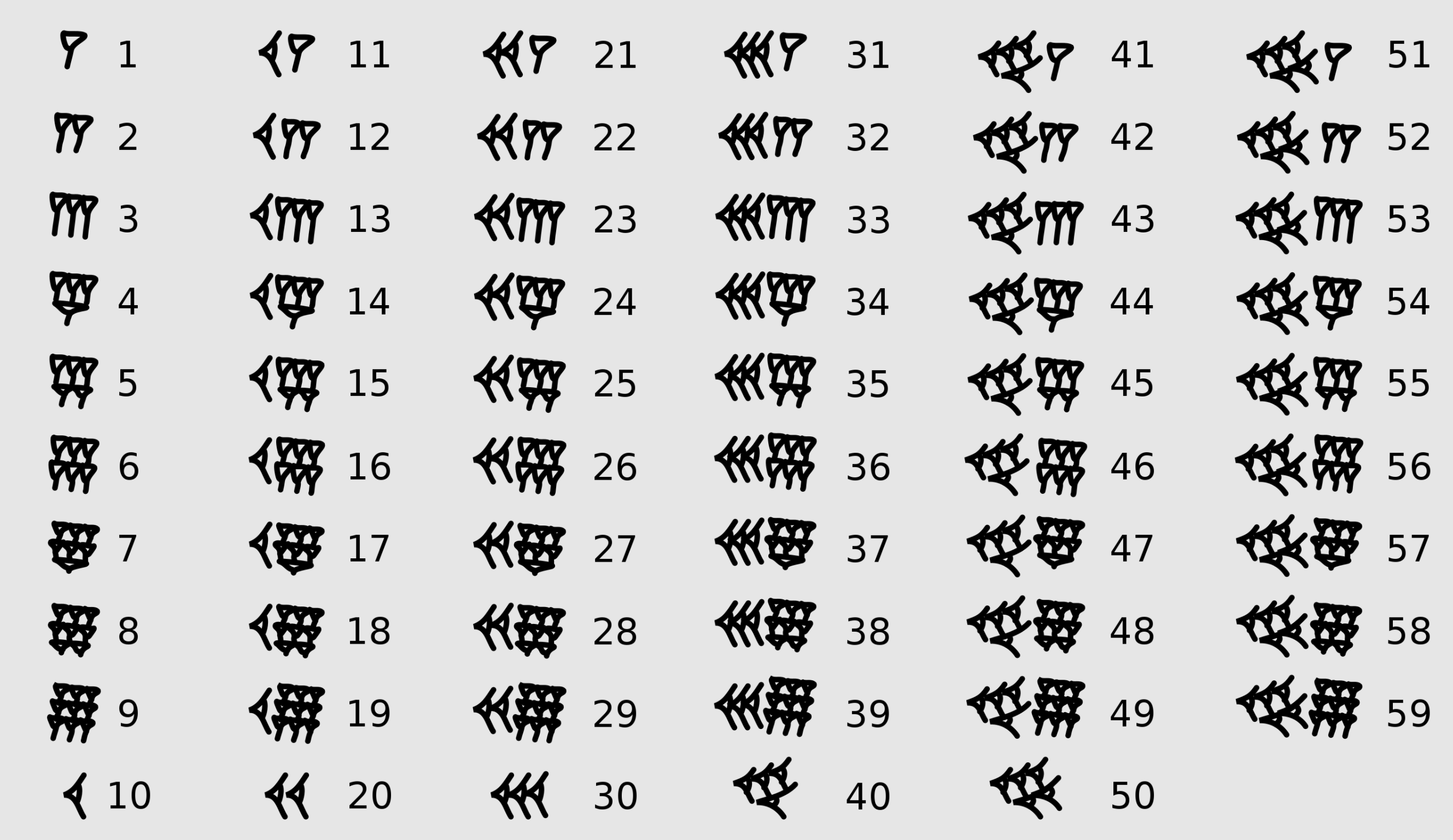
Image Credit: Babylonian numerals under GNU Free Documentation License.
What’s wrong with you humans, using us as insults? Just the other day, I heard one of you call your boss a vulture! Now, I’m not here to deny that man’s covetous proclivities, but I happen to have a friend who’s met a vulture, and I hear they’re quite lovely chaps. At any rate, they’re probably going to go extinct because of you idiots; some respect on the way out would be nice. Perhaps I’m being uncharitable. I know a lot of you are rather well-meaning, and that you study other animals to understand us better. But you have to realize, my dear apes, it’s not always the case that we can’t figure out some of these tasks you present us with, but that we don’t feel like doing them in the first place!
Anyway, let’s move on to the main subject of my little essay–a paper I found in one of your journals. Here, von Bayern and his buddies studied compound tool construction in my species–New Caledonian crows. Compound tools are made from two or more separate objects, each of which might function individually as a tool. Until recently, compound tool construction has only been observed in your family—the hominids. The most famous example of compound tool construction outside of humans occurred over a century ago when a man named Wolfgang Köhler was studying apes on an island much like mine and discovered that one of his chimpanzees, Sultan, was able to combine two bamboo sticks to reach a banana. With the increasing evidence that members of my family, the corvids, seem to possess rather impressive cognitive abilities (if I do say so myself), von Bayern and his crew decided to conduct a study in which they presented a few of my friends with a variety of tools, some of which could be combined with others to create more complex tools. They were first provided with a food reward that could be extracted with a single tool, after which the researchers introduced pieces of food that were much too far to reach without creating a compound tool. Half of the crows in the experiment (yes, yes, go ahead and laugh–I’m sure all of your friends are geniuses, aren’t they?) were able to combine the tools with no prompting from humans. Even your study concedes that my friends seemed to have created the tools for a very specific purpose and that they seemed to understand when to use the tools because the further the reward was, the more likely they were to combine the provided tools before their first attempt at reaching their treat.
I was more or less happy with the paper so far, but it was the next part that made me squawk with delight! One of my buddies, Wak-wak (I think he was called Mango in the paper–what is it with you people naming us after food? Would you like it if I called you Burger?), happened to break several tools in an effort to fit them into each other. Nevertheless, once he was able to overcome these difficulties, he repeatedly constructed 3- and 4-component tools. You see, as my forefathers took to the heavens, it made it more difficult for their progeny to engage in tool use. To put it more simply, we don’t have hands, damn it! Not one thumb! How the hell am I supposed to build a civilization when all I’ve got is this damn beak?
I will now let you in on a secret. Remember that chimp I told you about earlier? Köhler helped him make the tool. In fact, Sultan was unable to use the bamboo sticks until Köhler showed him how he could hit his finger into one, and even still, it took him over an hour to figure out the task. Moreover, he had some difficulty replicating the task the following day. Compare that to my comrades, who were able to figure the task out in at most six minutes and continued to construct new tools in successive trials. Look, I know that it’s difficult for my species to communicate with yours; hell, I’ve been scrawling this letter out for the past three months on a piece of driftwood. Ultimately, we’re quite different, and you really can’t know for sure why we do the things that we do. All that I ask is a little compassion. A little understanding. A little respect. Sure, we can’t do long division, but why would we want to? Just remember that we all share this planet, and that you can never really know what’s going on in our heads.
Citations:
Ogada et al. (2015). Another Continental Vulture Crisis: Africa’s Vultures Collapsing toward
Extinction. Conservation Letters, 9. https://doi.org/10.1111/conl.12182
von Bayern et al. (2018). Compound tool construction by New Caledonian crows. Scientific
Reports, 8. https://doi.org/10.1038/s41598-018-33458-z
Image Credit:
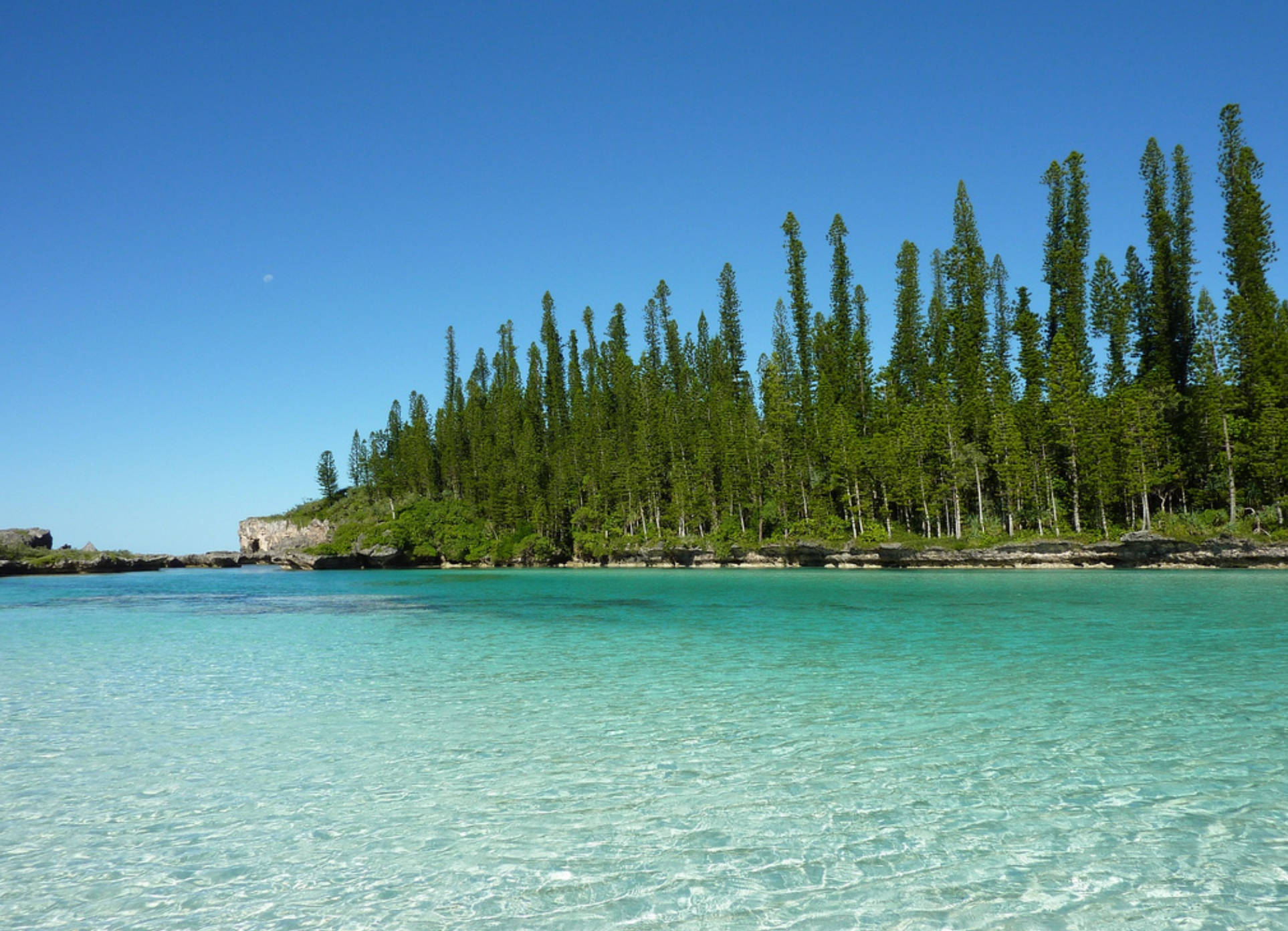
Araucaria columnaris New Caledonia via Creative Commons license.
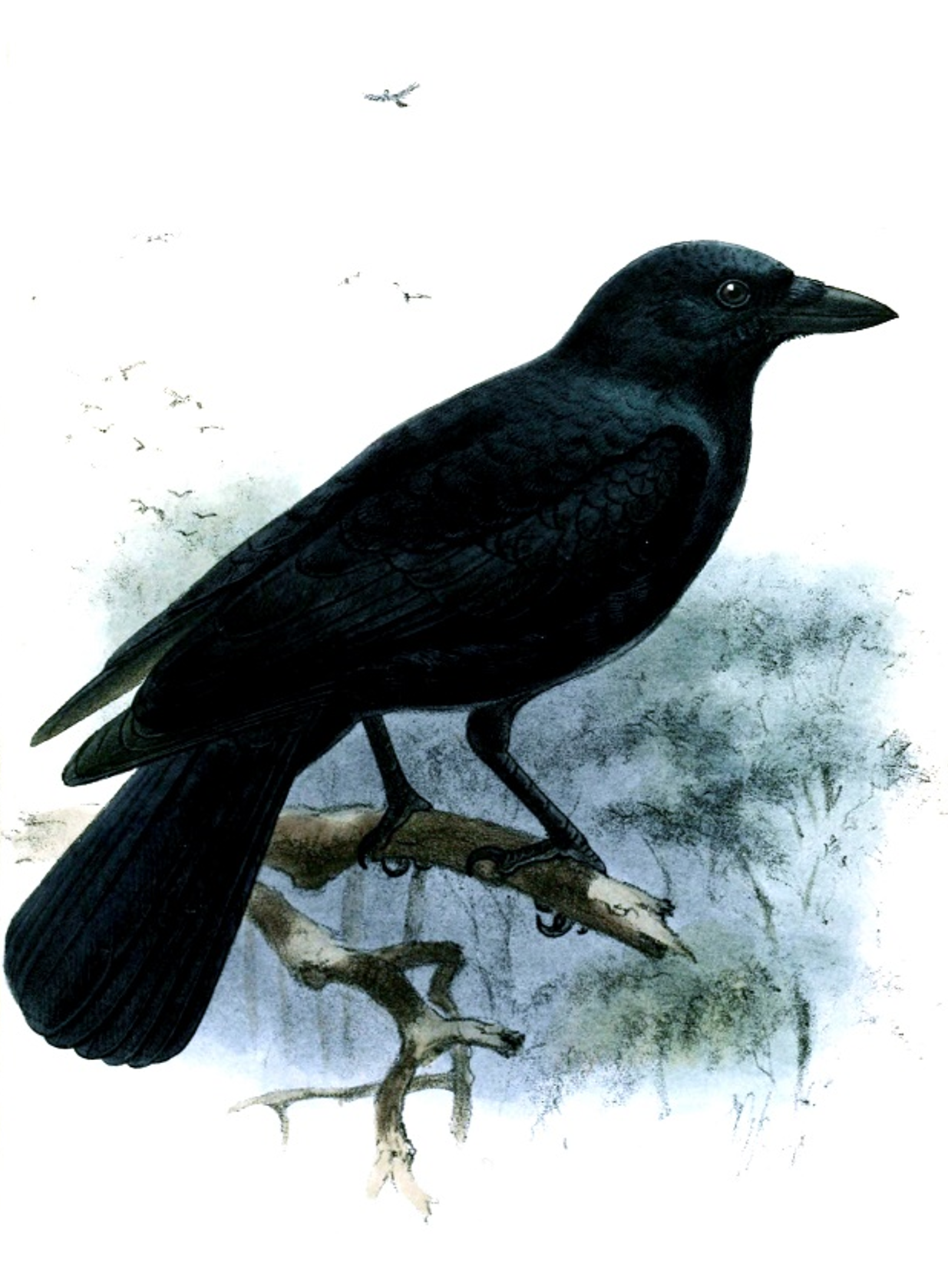
New Caledonian Crow via Wikimedia Commons.
Note: The anthropomorphism is merely a vehicle to draw light to a couple of issues. Also, please continue naming animals after food.
In 1982, forty-four percent of Americans did not accept evolution as fact. Nearly four decades later, that percentage has dropped to forty. I do not wish to list the myriad reasons for which my countrymen reject evolution. Instead, I will note that a common theme in my encounters with those who dismiss the science is that they tend to have a limited understanding of what the science says. A common argument I hear against evolution is the absence of “missing links” between species, most notoriously the supposed absence of some human-beast hybrid. The notion of a “missing link” is rather absurd, but I think it stems largely from humanity’s obsession with categorization. It makes sense. It’s a lot easier to talk about a wolf instead of “that big grey-thing over there.” Unfortunately, it is this very obsession with categorization that blinds us to some aspects of reality that seem paradoxical to beings with such a strong desire to give order to our world.
I will use the evolution of languages to illustrate why the notion of a missing link is illogical. In the Roman Empire, many citizens spoke Vulgar Latin. Let’s focus on two areas, Hispania and Italia, the modern-day Iberian (Spain, Portugal) and Italian peninsulas. Let’s imagine that you can speak Vulgar Latin and that you have a time machine. In the year 1 CE, if you time-travel to various locations across both peninsulas, you will be able to communicate perfectly well with any inhabitants who speak Vulgar Latin. Sure, you’ll hear some variations due to influences from some of the local languages, like Iberian and Basque, depending on where you are in Hispania, and likewise in Italia. If you time-travel a century into the future, there will probably be a couple of new words here and there, the kids will have some new sayings, but overall, you’ll still be able to communicate with no problem. You continue doing this for several hundred more years, until 800 CE. At this point, there will probably be some fairly significant linguistic differences in both regions. The Iberian Peninsula will be mostly conquered by Berbers and Arabs, whose linguistic influence will overshadow that of the Visigoths a few centuries earlier. The Roman Empire will no longer exist, and the Italian Peninsula will be broken up into several entities, among them the Byzantine Empire, the Papal States, and the Holy Roman Empire. Different areas of each peninsula will speak different types of Latin, but you will likely still understand parts of it, depending on where you visit. Now that the differences are much more apparent, you might start advancing into the future by decades instead of centuries. In some parts, you understand about half of what is spoken, in others, about 10%. When can you definitively say that Latin is no longer spoken? Even nowadays, there are some words that a speaker of a Romance language can guess, even though most do not speak Vulgar Latin. Is there any point in your travels during which you might discover a child that does not end up speaking as its parents or caretakers do, and instead speaks some new language? The truth is, at no point did Latin definitively switch to Spanish, Italian, Galician, Catalan, Lombard, Cantabrian, or any of the many languages descended from the central Roman tongue. We don’t know all of the dialects and changes that occurred in these languages throughout their history, and unless this time machine is ever invented, we never will. And yet we know that they happened because modern Romance languages share many similarities with Latin and many of the changes from Latin to these languages are documented. Such is the case with evolution and these “missing links.” What we have are a series of human-like fossils which look more and more like us the closer they get to our time. Are there “missing links?” Sure, if you wish to count the thousands of generations between their ancestors and them and the thousands of generations between them and us. But there was no definitive moment at which Homo erectus became Homo ergaster, no one change which made our direct ancestors become human, no singular mutation that caused the leap from one species to the next. Just as with language evolution, there is a nebulous period in the evolutionary history of each species in which it could be argued that it was one species or the preceding one. This doesn’t mean that we shouldn’t have names for different animals, or that we shouldn’t categorize things. It just shows that the world is strange, complex, and in many cases, hard to define.

https://news.gallup.com/poll/21814/evolution-creationism-intelligent-design.aspx
Image Credit: Skull evolution via Creative Commons
Here are a few of the memes I made throughout the semester for BIOS 4607, Molecular Biology of Microbes, taught by Dr. Brian Hammer. At the risk of making these worse, I have provided a brief explanation under each meme.
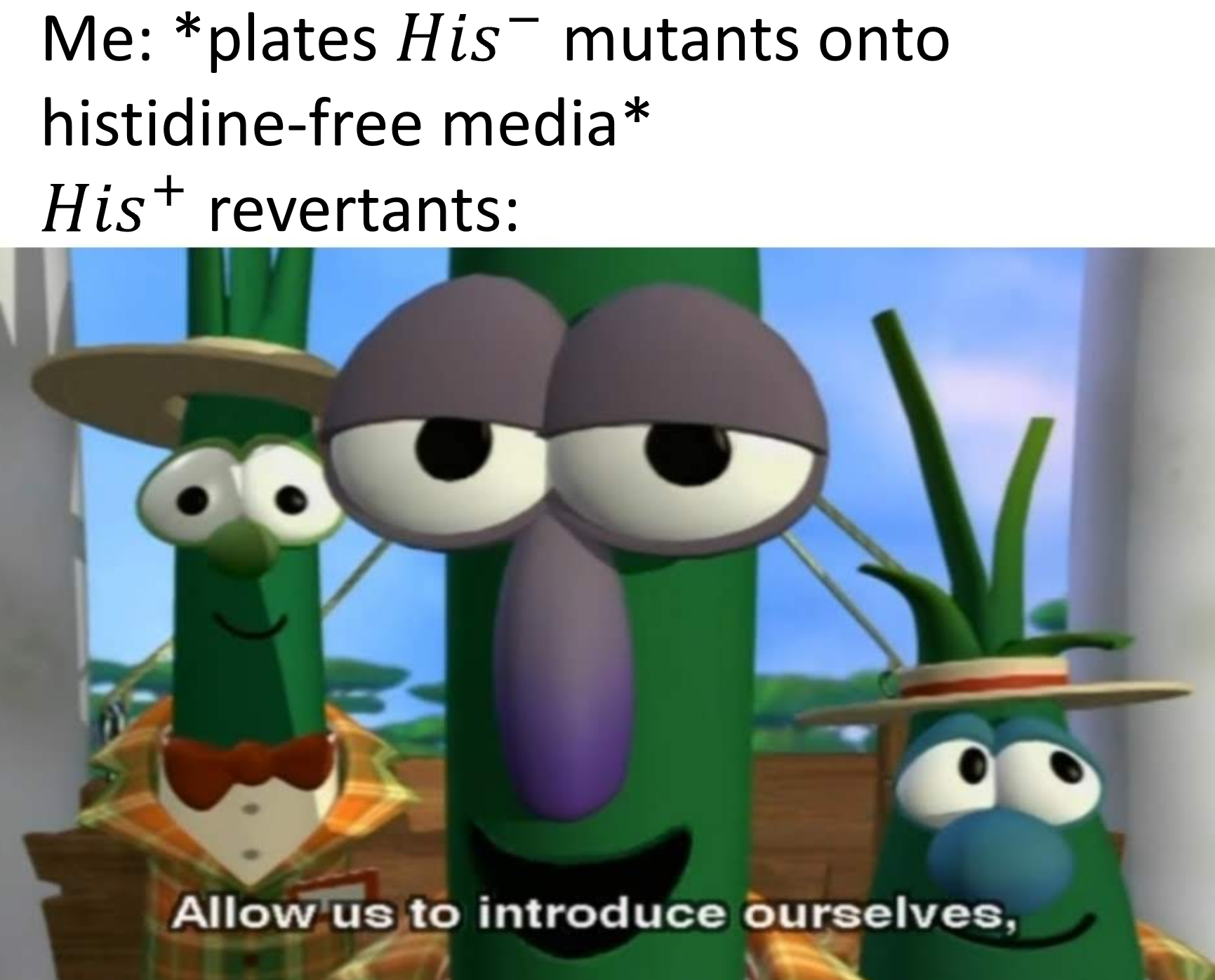
An auxotrophic mutant is one which has a mutation in a gene that produces an essential product for the organism. If the organism is plated onto media with the required substance, auxotrophs will be able to grow. A common example of this phenomenon are histidine mutants, denoted His-, which are unable to synthesize the amino acid histidine. Because histidine is essential for growth, this means that the His- mutants will only grow on media with histidine. However, by streaking auxotrophic colonies onto limiting media—in this case, media lacking histidine—the only mutants that will grow are those which somehow reverted back to a histidine-producing state. For example, if the auxotrophs were unable to produce a histidine due to a nonsense mutation—one which causes ribosomes to halt translation prematurely and is often the result of a single nucleotide change—reversal in one of the descendants of the mutant will be quite likely. However, these revertants will only be apparent once their His- friends are dead as a result of selecting against them.

Messenger RNA, or mRNA, is transcribed from DNA by RNA polymerase. The strand of mRNA is then used by ribosomes, which move along the mRNA from its 5′ end to its 3′ end as they build proteins. RNA often has secondary structures, which form when the RNA loops around and binds to itself. These patterns can be quite intricate and sometimes result in complex molecules such as enzymes, which are called ribozymes when made out of RNA. With regards to ribosomes (which are themselves partially made out of ribozymes and other types of RNA), loops which form at the 3′ end of the mRNA help knock the ribosome off the strand, at which point it will be degraded by enzymes called exoribonucleases. One enzyme which assists in this process is polyadenylate polymerase, which adds lots of adenine (A) to the end of the mRNA to allow exoribonucleases to digest the strand properly.
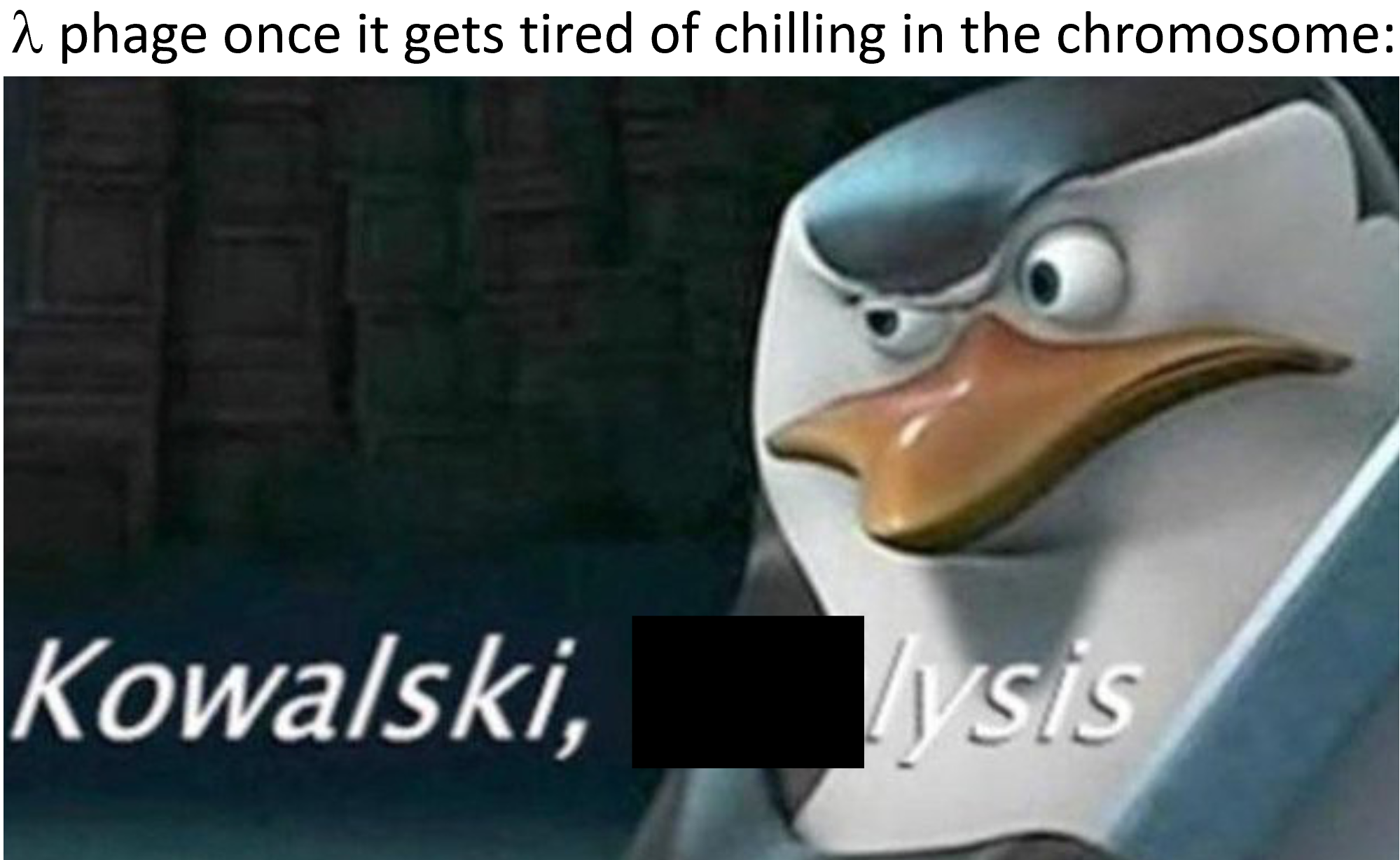
This is a play on the famous “Kowalski, analysis” meme. Lambda phage is a well-studied bacterial pathogen which, instead of replicating upon arrival in its microbial host, integrates itself into the chromosome, where it may stay indefinitely. Naturally, the virus does not decide to leave its host once it gets tired of “chilling;” rather, it is typically induced to exit its host by stressful conditions such as exposure to ultraviolet light.
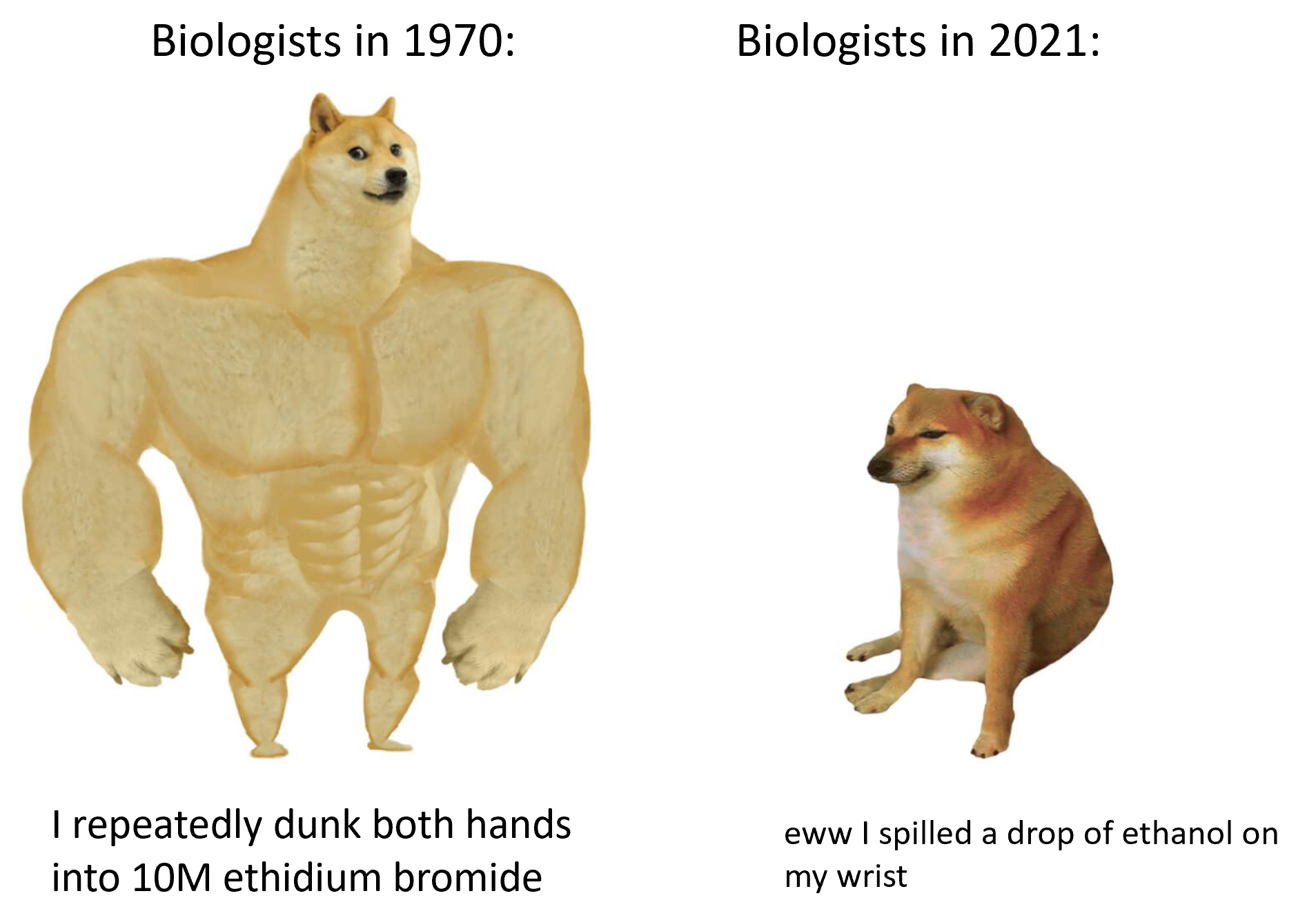
This meme was the result of a comment my professor made about how when he was a student in the 70s, he knew academics who would use their bare hands to pull electrophoresis gels out of solutions with ethidium bromide, a highly toxic mutagen. In general, safety protocols have improved significantly over the last century, to the point where certain practices seem like jokes today; for example, chemists using their mouths and a hose to pipette dangerous chemicals. Another famous example is the discovery of phenylthiocarbamide, a chemical which only certain humans can taste. This discovery was made when the chemist studying it accidentally spilled some powder into the air and tasted nothing, whereas his nearby colleague told him that whatever he was working with tasted disgusting. Because it was common to taste chemicals at the time, the chemist brought the powder to various people to see who could taste it and who could not. Fortunately, the compound isn’t terribly toxic at usual doses, though nowadays I doubt the scientific community would be so nonchalant about a scientist casually testing a chemical on civilians.
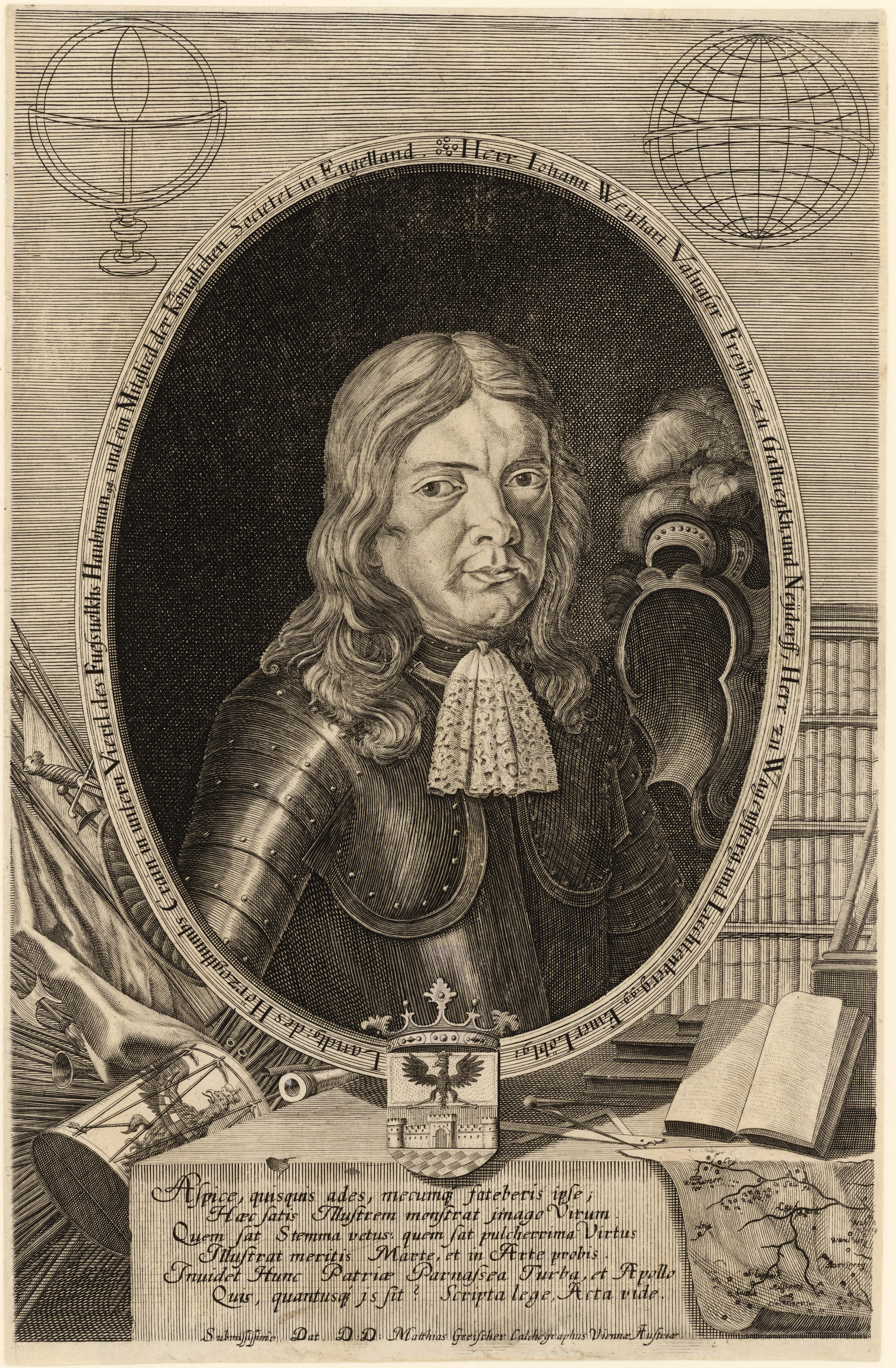
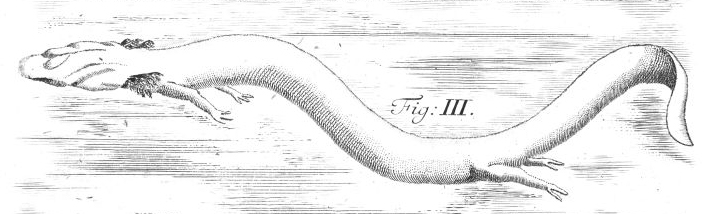
As William and Mary were crowned King and Queen of England, marking the end of the Glorious Revolution and economic dominance of the Dutch Republic, a much less momentous event was taking place. About six hundred miles from the Palace of Westminster, an encyclopedia was published by Johann Weikhard von Valvasor, a historian, scientist, and traveler from southeastern Europe. Spanning over three-thousand pages, the text contains the first known mention of both vampires and cave salamanders, the latter thought to be the offspring of dragons by locals. These legends arose after the pale, writhing creatures were washed out into the surface world by heavy storms; at the time, the existence of European cave fauna was largely unknown.
The species swept from its caverns was not described scientifically until eight decades later, when a specimen was brought to an Austrian naturalist who named the animal Proteus anguinus. The name refers to the shapeshifting, prophetic sea god Proteus of the Greeks and the Latin word for snake, anguis, though it is commonly referred to as an olm. Although Proteus could function quite well as either the name for an English Mastiff or the generic form of a blood-thinning medication, it is not the most descriptive name for Europe’s dragons. Indeed, the name’s shapeshifting implications would be better suited for a salamander species which does not exhibit neoteny—a state where the sexually mature form of a species retains characteristics from its juvenile stages of life.
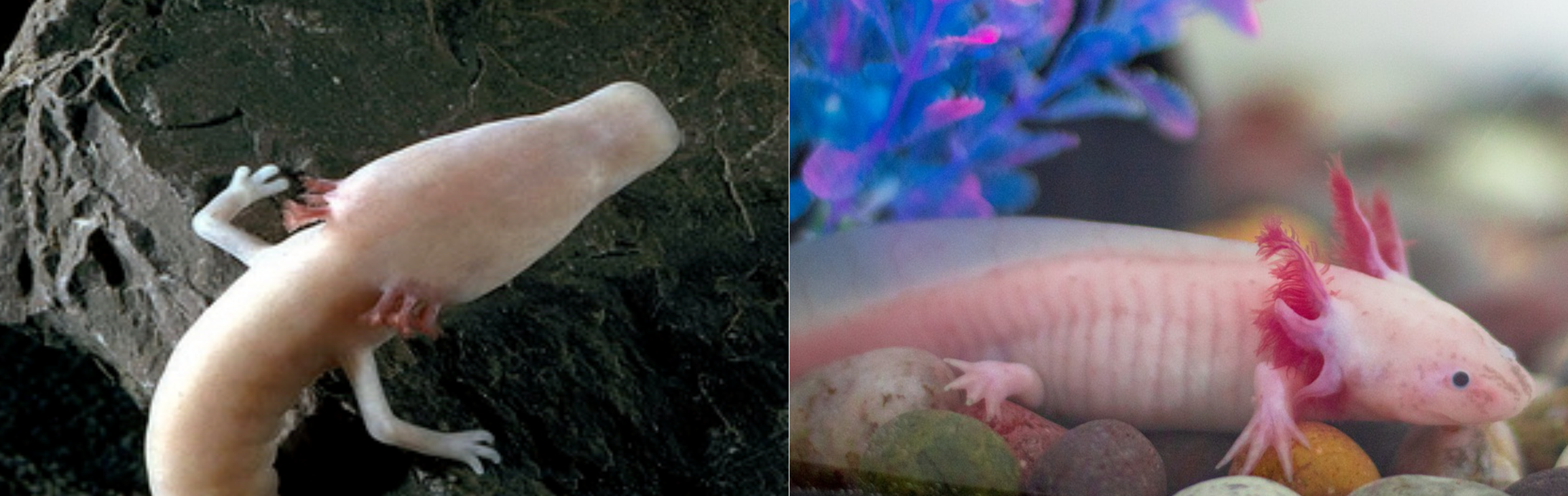
If you think back far enough, you might recall the charts your kindergarten teacher showed you describing the stages of a frog’s life cycle, beginning with an egg which becomes a tadpole, continues to a froglet phase, and ultimately achieves the mature form of the animal. A salamander’s life cycle is similar, but instead of tadpoles and froglets there exists a larval stage, an anatomical phase along a continuum from the newly hatched salamander to the terrestrial adult without a tail fin or gills. However, given that P. anguinus spends its entire life underwater, inhibition of the final stages of transformation allows the organism to remain fully aquatic. This can also be observed in its more well-known relative, the axolotl, which spends its entire life in the waters of Lake Xochimilco in central Mexico. In fact, the cute tufts on the sides of both the olm and the axolotl are their neotenic gills, which are otherwise absorbed into the body for nutrients in species that undergo metamorphosis into standard, terrestrial salamanders. However, unlike their Mexican relatives(1), the olm’s post-larval form cannot be induced by placing it in shallow water, though the reasons for this are unknown.
Given the early discovery and peculiarity of the little dragon, it has attracted a great deal of scientific attention. In the early years of olm experimentation, a cistern at the University of Vienna was used to house a small population of the slender creatures. The man in charge of the procedures, Dr. Paul Kammerer, claimed that olms were capable of giving birth in colder waters, whereas eggs would be laid in warmer ones. These assertions were backed by reports from the 19th century, including this detailed statement from a county judge:
“On June 17, 1852 I, as well as members of my family and members of my neighbor’s families, witnessed the birth of a young olm.”
-Geck von Verch
Unfortunately, Kammerer was later accused of having forged results to support an unproven hypothesis, which shed doubt on much of his previous work. Despite some reasons to believe that Kammerer was innocent, the accusations proved too much to handle; it was not long before his body was found, gun in hand, in the Austrian mountains. Thus, considering that reports for live birth are either old, dubious, or both, it is unclear whether olms are capable of doing so.
Nevertheless, the studies performed on this organism are fascinating, and one of the most recent projects hopes to sequence the entire genome of the cave salamanders. The salamander family is renowned for its immense genomes, and the olm seems to surpass all of its genomically well-endowed cousins in the surface world. Researchers claim that the olm’s cells have about fifteen times more DNA than a human’s, resulting in the largest known genomes in the animal kingdom. To highlight just how enormous this is, consider this article, around 10,000 characters long. If you can imagine what four and a half million copies would look like, you’ll have a good idea of how much genetic information is encoded in each of this subterranean creature’s cells.
Due to the high activity of retrotransposons, salamander genomes have become far larger than those of most animals. Think of retrotransposons as a genetic copy-and-paste mechanism—assuming the copy is not inserted into a functional part of DNA, the genome may continue to expand, notwithstanding the cellular costs associated with an increase in DNA. Most organisms have introns in their DNA, or regions that do not encode for proteins. The proliferation of retrotransposons can result in huge introns, which means that cells will take longer to divide. Studies of our aforementioned Mexican friends have suggested that these large genome sizes might be what allow salamanders to regrow body parts(2), as slower cellular development results in less of a distinction between different kinds of salamander tissue. Once cells are damaged, they are able to return to an embryonic state until the lost body part is regenerated. Thus, continued studies of the olm may provide valuable insight into how genomes evolve and how humans might use regeneration to grow tissue.

The olm is even mentioned in one of the most famous (or infamous, depending on your worldview) texts in human history:
“Far from feeling any surprise that some of the cave-animals should be very anomalous, … as is the case with the blind Proteus, … I am only surprised that more wrecks of ancient life have not been preserved, owing to the less severe competition to which the inhabitants of these dark abodes will probably have been exposed.”
-Charles Darwin, On the Origin of Species, 1859
Barring Charlie’s insinuation that this adorable creature is, in truth, a wreck, it is interesting that few caves boast an abundance of organisms. You’ll hear no complaints from the olm, however. Despite its small stature, it is the apex predator of its watery underworld, which consists of a variety of locations throughout Slovenia, Croatia, and Bosnia-Herzegovina, as well as a small corner of northeastern Italy. This is a considerable range for a troglobite, or cave-dwelling organism. For comparison, consider the Alabama cave shrimp, a troglobite found only a few hours from my university. The animal’s known range was confined to a few caves in the same county until a 2019 report introduced a seventh cave in the adjacent county with a whopping six shrimp. I should also mention that the discovery of this colossal population was the result of two separate surveys a year apart, each yielding two and four organisms, respectively.

Because troglobites are highly adapted to their subterranean environments, they are unable to survive on the surface, which means that travelling to other caves is impossible unless the caves are connected underground. Thus, organisms are often confined to a single cave either until the species goes extinct or until a passage to another cave opens. Due to high adaptation to their subterranean environments, troglobites are extremely susceptible to environmental change, especially from pollutants like heavy metals or pesticides. An accident in, or poor management of, an industrial facility may release enough toxins to devastate a cave’s fauna beyond repair, and given that most troglobites inhabit narrow ranges, there are few places to turn to once a cave is contaminated. Moreover, even if a connection to another cave is present, pollutants may be able to travel throughout these systems just as well as the native troglobites. As such, many cave-dwelling organisms are at risk of extinction, including our beloved olm.
Sadly, olms are far from the only amphibians in such a predicament. The International Union for Conservation of Nature, known for its Red List of Threatened Species, lists two out of every five amphibian species at risk for extinction. Despite their potential for developing medicines, many amphibians are past the point of no return, with the only hope of surviving in the hands of the species driving their extinctions. The olm is itself listed as vulnerable, the least worrisome category for a threatened species, though its specific physiological requirements could easily knock it down to the endangered or critically endangered categories should any significant changes occur to their environment. These problems are exacerbated by the fact that female olms only produce eggs every dozen years or so, and any offspring resulting from these rare clutches must survive for fifteen years to reach sexual maturity. Fortunately, conservation efforts are underway in Slovenia(3) and a large population of olms is held in a French cave for research, thus ensuring that the species can be reintroduced to its natural habitat if necessary.
An amphibian’s lifespan typically correlates with its body mass, with heavier amphibians outliving lighter ones. Ever enigmatic, the olm defies this pattern with an average life expectancy of seven decades and an estimated maximum age of over a hundred years even though it rarely exceeds twenty grams. For comparison, the iPhone 12 weighs about 164 grams, or eight large olms. The baby dragon’s closest competitor in the Amphibian Longevity Olympics, the Japanese giant salamander, fails to surpass these ages despite often weighing as much as a thousand olms. I like to imagine that as Louis Armstrong perfected his trumpeting, fascist sentiments boiled in Europe, and F. Scott Fitzgerald penned the book that would highlight the decadence of the 1920s, a little olm patiently laid her clutch of eggs in the Stygian depths of an unmarked cave. Throughout the past century, one of her offspring feasted on shrimp, explored its domain, and had a few olms of its own; now, weary from its long life, it will soon rest, all the while oblivious to the chaos of man.
Notes:
(1) Although olms have not been documented morphing into a terrestrial form, axolotls occasionally undergo this transformation. Here is an especially informative video which, other than the expected butchering of a Nahuatl word, presents an exceptionally accurate and carefully detailed overview of this process:
https://www.youtube.com/watch?v=MxA0QVGVEJw&ab_channel=Rathergood
(2) The regeneration process is depicted in the following video, released by the Postojna Cave YouTube channel:
https://www.youtube.com/watch?v=YLO8DJJgJQ0&list=LL&index=7&ab_channel=PostojnskajamaCaveGrotteH%C3%B6hle
(3) A cave system in Slovenia where many olms live, containing a tank of specimens for public viewing:
https://www.youtube.com/watch?v=HnkZFn4j4tM&ab_channel=PostojnskajamaCaveGrotteH%C3%B6hle
Image Credits:
Axolotl, photo from KinEnriquez and used under Pixabay License.
Arne Hodalič, CC BY-SA 3.0 , via Wikimedia
Commons
Joseph Nicolaus Laurenti, Public domain, via Wikimedia Commons
Niemiller ML, Inebnit T, Hinkle A, Jones BD, Jones M, Lamb J, Mann N, Miller B, Pinkley J,
Pitts S, Sapkota KN, Slay ME (2019) Discovery of a new population of the federally endangered Alabama Cave Shrimp, Palaemonias alabamae Smalley, 1961, in northern Alabama, Subterranean Biology 32: 43-59. https://doi.org/10.3897/subtbiol.32.38280,
CC0, via Wikimedia Commons
The U.S. Army, Public domain, via Wikimedia Commons
Johann Weikhard von Valvasor, Public domain, via Wikimedia Commons
Citations:
Arntzen et al. 2009. Proteus anguinus. The IUCN Red List of Threatened Species.
https://dx.doi.org/10.2305/IUCN.UK.2009.RLTS.T18377A8173419.en
Girijala, R. L., & Bush, R. L. 2018. Review of Socioeconomic Disparities in Lower Extremity
Amputations: A Continuing Healthcare Problem in the United States. Cureus, 10(10).
https://dx.doi.org/10.7759%2Fcureus.3418
Ley, Willy. 1967. Epitaph for a lonely olm. Galaxy Science Fiction, 95-104.
Mendelson et al. 2006. Confronting Amphibian Declines and Extinctions. Science, 373(5783),
48. https://doi.org/10.1126/science.1128396
More than 37,400 species are threatened with extinction. 2021. The IUCN Red List of Threatened
Species. Retrieved from https://www.iucnredlist.org/
Niemiller et al. 2019. Discovery of a new population of the federally endangered Alabama cave
shrimp, Palaemonias alabamae Smalley, 1961, in northern Alabama. Subterranean
Biology, 32, 43-59. https://doi.org/10.3897/subtbiol.32.38280
Proteus Genome Project. 2021. Retrieved from https://www.proteusgenome.com/
Romero, Aldemaro. 2009. Cave Biology: Life in Darkness. Cambridge University Press.
Sessions, S. K., & Wade, D. B. 2020. Forever young: Linking regeneration and genome size in
salamanders. Developmental Dynamics. https://doi.org/10.1002/dvdy.279
Sket, Boris. 1997. Distribution of Proteus (Amphibia: Urodela: Proteidae) and its possible
explanation. Journal of Biogeography, 24(3), 263-280.
https://doi.org/10.1046/j.1365-2699.1997.00103.x
Swingle, W. W. 1922. Experiments on the metamorphosis of neotenous amphibians. Journal of
Experimental Zoology, 36(4), 397-421. http://doi.org/10.1002/jez.1400360402
The great feat of translation Valvasor is over. 2012. Radio-Television Slovenia. Retrieved from
https://www.rtvslo.si/kultura/knjige/veliki-podvig-prevajanja-valvasorja-je-koncan/284697
Voituron et al. 2011. Extreme lifespan of the human fish (Proteus anguinus): a challenge for
ageing mechanisms. Biology Letters, 7(1), 105-107. https://doi.org/10.1098/rsbl.2010.0539