Author: Rowan Ray

  • Mann V. Ford: Colorful Contamination

    There are a variety of car brands you see on the street as you walk around Atlanta. From Acura to Telsa, you can find every make and model of just about every car you can imagine. However, one all-American car brand stands out: Ford. The Model T was one of the first cars that was accessible for the common man to purchase. However, the Ford Motor Company has a dark history as well. Some of this history is outlined in the documentary Mann V. Ford, which was released in 2011. The documentary works to outline the improper waste management of the Ford Motor Company and the lasting impact it has had on the land and the health of the nearby Ramapough Natives. This review of the documentary will hopefully convince you to watch it and hear directly from the people impacted by the unethical behavior of Ford. 

    Chief Dwayne C. Perry of the Ramapough Nation

    The Ramapough Natives are a group of indigenous Americans who live in the New York-New Jersey area of the United States. A major community of these natives live in Ringwood, New Jersey, which is also where a major landfill was located. From 1967 to 1974, Ford dumped discarded car parts, solvents, and paint into this landfill (Campbell, 2005). Much of this paint and waste contained hazardous materials such as lead and arsenic, which are incredibly toxic to humans. In fact, exposure to lead has been shown to cause damage in almost every system in the body, but most specifically the central nervous system, the kidneys, and the blood (Tong et al., 2000). These health complications were very common among the Ramapough People as a result of the negligence of Ford Motor Company. There is an increased prevalence of lung and reproductive cancer among the Ramapough people who grew up in the area around The Ringwood Landfill (Meltzer et al., 2020). 

    Image of warning outside of the Ringwood Superfund Site warning people of exposure to hazardous materials

    Now that the surrounding circumstances have been laid out, it is important to discuss the reason why the documentary is called Mann V. Ford. In 2005, Wayne Mann, a member of the Ramapough Nation, represented the people of his community in a lawsuit against the Ford Motor Company, which is where the name was born. I won’t go into enough details to spoil the outcome, but I will say that the Ramapough People are still struggling with the aftermath of their land being poisoned. Despite the EPA classifying the site as a Superfund, the land is still under surveillance for things such as heavy metals. I cannot speak on behalf of the native people, which is why I implore you to watch the documentary and listen to their lived experiences. This case is a fantastic representation of the inequality that is associated with environmental health and safety. Although it may not impact you directly, it is important to be aware of the plight thousands of people face on a daily basis. 


    Sources

    Campbell, M. B. M. (2005). Ringwood, Passaic County Ringwood Mines/Landfill Former Superfund Site Petition March 24, 2005.

    Meltzer, G., Avenbuan, O., Wu, F., Shah, K., Chen, Y., Mann, V., & Zelikoff, J. T. (2020). The Ramapough Lunaape Nation: Facing Health Impacts Associated with Proximity to a Superfund Site. Journal of Community Health, 45(6), 1196-1204. https://doi.org/10.1007/s10900-020-00848-2

    Tong, S., Schirnding, Y. E. v., & Prapamontol, T. (2000). Environmental lead exposure: a public health problem of global dimensions. Bulletin of the world health organization, 78(9), 1068-1077.
  • Fast Fashion and Greek Life: Overconsumption in Style

    As I walk around Georgia Tech’s campus, I cannot help but notice the student body’s diverse range of outfits. Many, like myself, opt for sweatpants or jeans coupled with a sweater for chillier days. The more fashionable may choose a statement piece, such as bright pants or a bold shoe. But one consistent theme I have seen is the consistency of Greek Life merchandise. A shirt bearing the phrases Alpha Delta Pi or Sigma Chi can be seen on almost every street corner. There is nothing inherently different about these stylish t-shirts until you begin to recognize how many you see. There are roughly ten variations of the exact same t-shirt from the same sorority only differing by theme. As the community becomes more aware of the plight of fast fashion, it is easier to recognize fast fashion in everyday life. This article will aim to break down the impacts of fast fashion as a whole, and how students at Georgia Tech can change our behavior patterns to limit our consumption of fast fashion.


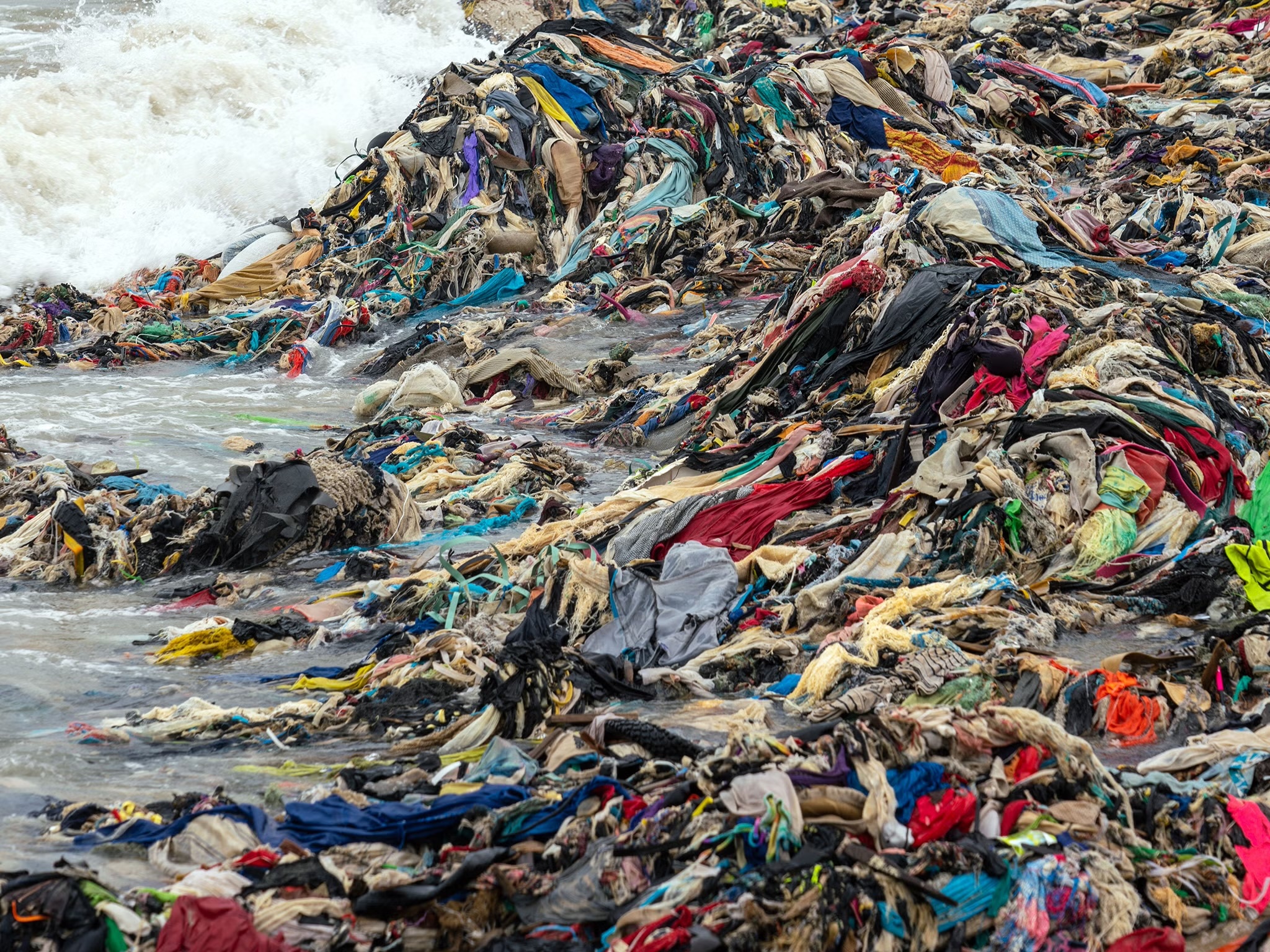
    Fast fashion as an industry has grown exponentially in recent years. Fast fashion is the business of producing low-quality and cost garments at a rapid pace in order to generate profit as trends appear. From brands such as Shein and Zara, there is a large variety of quality and prices that are classified as fast fashion. However, one theme remains consistent with fast fashion: waste. Much of the clothing purchased through fast fashion is donated or thrown in a landfill. Of the clothing donated, only about one-fifth is resold (Claudio, 2007). This means the rest of the pieces end up in the garbage further polluting the Earth. Fashion and textiles are the second most polluting industries, contributing roughly 20% of global water waste (Bailey et al., 2022). This mass amount of waste contributes heavily to the pollution of our earth and the changing climate that we experience. Additionally, the quality of fabrics has significantly decreased over time. Polyester is a very commonly used material to make clothes because it is cheap and can be mass-produced. However, polyester is made of microplastics, meaning it will not break down as easily as natural fibers (Weber et al., 2017). All of these factors contribute to the growing piles of discarded clothing in our landfills. However, fast fashion seems unavoidable in our society, as exemplified by merchandising in Greek life. 

    Fast fashion dumping site in Accra, Ghana

    I interviewed the Director of Merchandise for Alpha Omega Epsilon to collect information about consumption in Greek Life on Georgia Tech’s Campus. She says thus far this academic year she has received five t-shirts from the sorority, as well as a multitude of other merchandise, including a crewneck, a pair of sweatpants, a hoodie, and a keychain among other items. However, she also explained to me the ways that Alpha Omega Epsilon attempts to mitigate any waste they create if they order extra t-shirts or merchandise. She says that all extra merchandise is kept and offered to new members in the following years. It is great to see that these organizations have solutions to excess consumption. However, Greek life still creates a significant amount of excess waste, which as stated previously contributes significantly to the pollution of our Earth.


    Although this article focuses mostly on Greek life, it is up to us to limit our own consumption patterns in an attempt to make a difference. We are constantly given free t-shirts by the university, which inevitably end up in landfills. Every person consumes more than they need to, as it is almost impossible for an individual to remain carbon neutral. It is important to ask yourself as you purchase items: Do I need this? Do I have something similar to this? Can I purchase something like this second-hand? All of these questions may assist consumers in making smart decisions that could save them money and help save the planet.


    Sources

    Bailey, K., Basu, A., & Sharma, S. (2022). The Environmental Impacts of Fast Fashion on Water Quality: A Systematic Review. Water, 14(7), 1073.

    Claudio, L.. (2007). Waste Couture: Environmental Impact of the Clothing Industry. Environmental Health Perspectives, 115(9), A449–A454. https://doi.org/10.1289/ehp.115-a449

    Weber, S., Lynes, J., & Young, S. B.. (2017). Fashion interest as a driver for consumer textile waste management: reuse, recycle or disposal. International Journal of Consumer Studies, 41(2), 207–215. https://doi.org/10.1111/ijcs.12328