Author: Sajdah Muhammad

  • Vertigo: Living like you’re on a perpetual rollercoaster

    From ages 6-10, my uncle took my cousin and I to Navy Pier every summer. It’s July, school is out, the sun is shining, and not one multiplication table in sight! Fatty fair foods to our left and Lake Michigan to our right, the only thing missing was the adventure! Navy Pier doesn’t have many rides but there are a few that I was definitely excited for as a child. The only problem is, I can’t ride rollercoasters. And no, I am not afraid of heights. I still tried though it made my stomach hurt, but it got too much at one point and I stopped riding rollercoasters that day, and for the rest of my life. 

    This would not be a problem if it wasn’t affecting my daily life. In addition to not being able to enjoy 98% of the rides at Disney World, I have severe motion sickness. Motion sickness is a common condition so, I was not surprised that I have it.

    But my motion sickness doesn’t only affect me as a passenger. When I drive over large bumps or up steep hills, I flinch because of the stomach pain. Not only is this dangerous, but an Atlanta speed bump is nothing compared to a rollercoaster(at least it’s not supposed to be)!

    So why can’t I ride rollercoasters? Why do I need to brace for impact driving up to my parents’ house? My mom gave me my first answer because she has a similar issue: Vertigo. Vertigo, though described as the sensation of spinning that leads to dizziness, is actually a symptom of several diseases/conditions such as: chronic migraines, benign paroxysmal positional vertigo(BPPV), persistent postural-perceptual dizziness(PPPD), or Meinere’s disease.  It’s also described as “disequilibrium”, which is just the feeling of being unbalanced constantly.
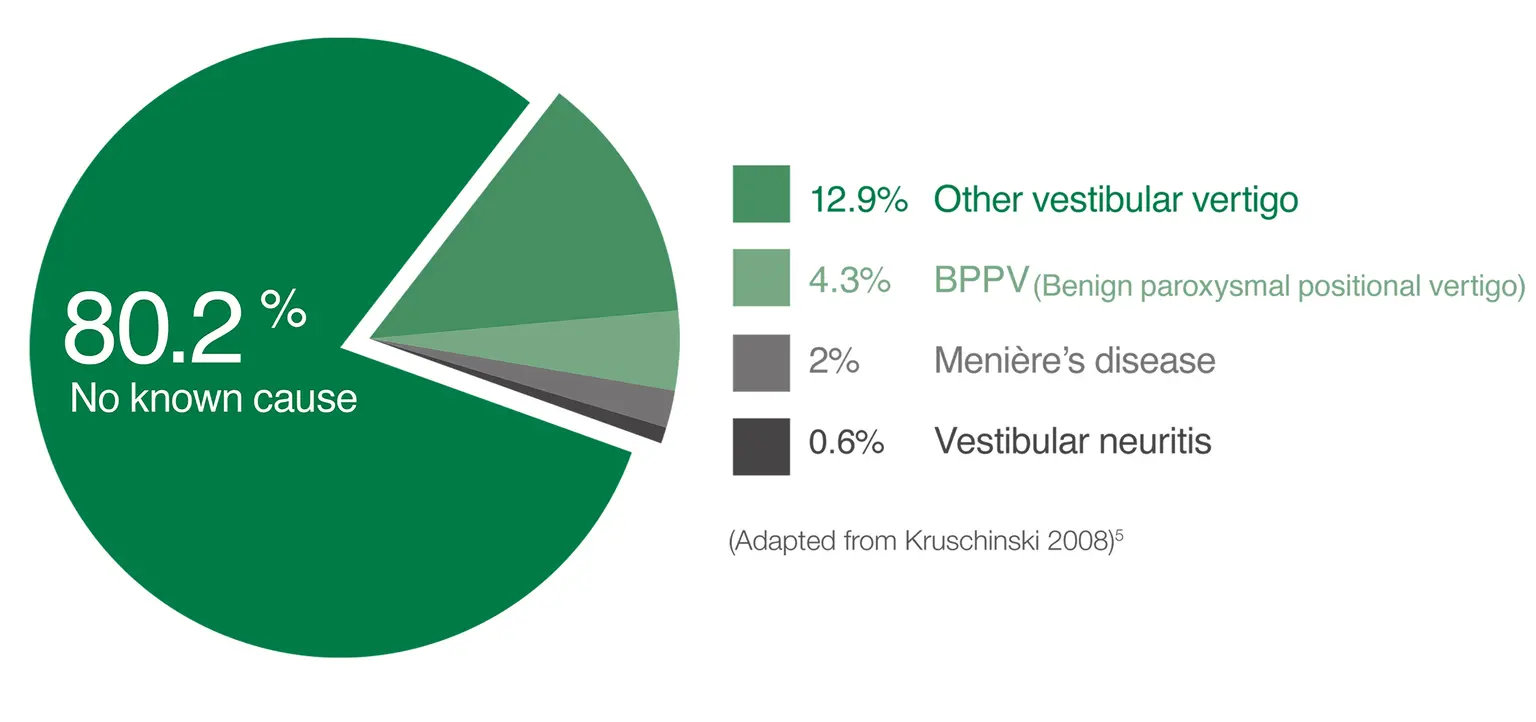
    Figure 2. Percentage of people who suffer with some variant of vertigo

    Here’s the science:

    The stomach drop that many people feel when riding coasters is because your internal organs lag behind when you fall(Berg, 2024). This slight disconnect makes you feel like you’re weightless! Your internal organs don’t move as fast as the rest of your body so that sends a signal to your brain fooling you into thinking gravity no longer exists.

    For people with Vertigo, this feeling is exhilarating. For me, it causes extreme nausea and pain. My stomach churns and my head starts aching, and then after 30 seconds it’s over. It turns out Vertigo is an inner ear problem. The inner ear is located in the vestibular system, which is a maze of canals filled with fluids and tiny crystals called otoconia.

    According to University of California San Francisco, otoconia are “composed of calcium carbonate, and help the utricle sense head tilt and acceleration by acting as a weight that will slide relative to the hair cells with head position changes”.  They can be easily displaced by external factors such as age or trauma, but it can also be a genetic mutation. 

    When the otoconia ends up in the wrong palace such as the semicircular canals, your brain thinks that there is movement of fluid throughout the inner ear when there really is not. This miscommunication of signals is what causes serious nausea, dizziness and even severe pain. Essentially, your inner ear tells your brain that you’re moving at a rapid pace but your eyes are also telling your brain that you’re not moving at all. Because the brain is receiving different signals, the rest of the body suffers the consequences. 

    For me, it depends on the activity. Yes, I can ride the kiddie rides at Six flags. No, I cannot ride “Goliath”. I am not afraid of heights or planes. But when a plane lands, I often brace myself because the speed at which we land does cause a lot of pain. I also do not get sea sick, which is interesting because many people with motion sickness also have sea sickness.

    Solutions:

    1. Motion sickness glasses. 
      1. Though they may look funny, many people have said these glasses help with car rides. The liquid inside the glasses helps balance the signal your inner ear and your eyes are sending to the brain.
      2. Antihistamines 
        1. Antihistamines can often be used to suppress the vestibular system’s hyperactivity when moving.
          1. Medicine such as Mezclizine, commonly known as Dramamine is the most popular form of medicine to help reduce motion sickness. Cinnarizine is also an antihistamine that is used for travel sickness.
      3. Surgery
        1. For people with Meniere’s disease, surgery may be required to correct the inner ear’s dysfunction.
      4. Sit in the passenger seat!
        1. Because the front wheels of responsible for the direction of the car, turns may feel less harsh. If you sit in the back, you’re farther away from the turning wheels so motion sickness is more likely. Drivers are even less likely to feel motion sickness.

    My solutions:

    1. I take iron supplements to help with dizziness/anemia, so that motion sickness doesn’t make me pass out.
    2. I don’t ride rollercoasters.

    References

    https://www.ama-assn.org/public-health/prevention-wellness/what-doctors-wish-patients-knew-about-vertigohttps://ohns.ucsf.edu/balance-falls/BPPV

    https://www.nhsinform.scot/illnesses-and-conditions/ears-nose-and-throat/vertigo/https://

    www.rd.com/article/motion-sickness-glasses/

    https://www.meandve.org.uk/information-and-support/treatment-and-management/surgery

    https://www.canva.com/design/DAG3Yocer34/Lielrs9QrT29fb-6T_CN2Q/edit?utm_content=DAG3Yocer34&utm_campaign=designshare&utm_medium=link2&utm_source=sharebutton

    https://www.google.com/url?sa=i&url=https%3A%2F%2Fwww.heel.com%2Ftherapeutic-areas%2Fvertigo%2Fvertigo&psig=AOvVaw3VWlit1xLmX4e-YTrBrPfh&ust=1762563486136000&source=images&cd=vfe&opi=89978449&ved=0CBYQjRxqFwoTCLCOsOTq3pADFQAAAAAdAAAAABAE

    https://www.warrantywise.co.uk/blog/advice/travel-advice/10-ways-to-deal-with-car-sickness/#:~:text=Sit%20in%20the%20front%20seat,further%20from%20the%20turning%20wheels.


  • GNU Privacy Guard (GPG) and the Protection of Sensitive Genetic Data

    In today’s data-driven world, few forms of personal information are as personal and revealing as genetic information. Genetic sequencing has become more widely available and used, from determining health predispositions to investigating ancestry. But this growing availability also poses significant risk. Once digital, genetic information is vulnerable to breaches, abuse, and unauthorized surveillance. In order to safeguard this critical data, robust cybersecurity measures are required—and one of the most effective solutions out there is GNU Privacy Guard (GPG). GPG is open-source, free encryption software that adheres to the OpenPGP standard, used to ensure secure data encryption and digital authentication. Its value as a vehicle for genetic data security protection has grown exponentially in recent times, particularly in the wake of widely publicized breaches against firms. Effective resources such as GPG do exist, however, and ethical considerations are still at the top of the agenda—spanning data ownership dilemmas to the dangers of genetic discrimination.

    How GNU Privacy Guard (GPG) Safeguards Genetic Data

    GPG employs public-key cryptography to allow users to securely encrypt, decrypt, and verify digital data. When genetic information is encrypted with the public key of the recipient, only their private key can unlock it—offering complete protection from misuse. GPG also utilizes digital signatures, which verify origin and integrity and ensure the genetic data remains undamaged and that it came from a reliable source. Such trust is paramount for organizations responsible for dealing with sensitive genetic information.

    How does GPG particularly serve genetic data well? It does end-to-end encryption, ensuring information is encrypted when it transits (such as between labs and providers) and when on storage. Second, as an open-source solution, GPG permits its codebase to be inspected by communities—leading to quicker vulnerability recognition and closure than that from closed-source counterparts. Third, GPG aids in compliance with rigorous privacy policies and protocols such as the Health Insurance Portability and Accountability Act (HIPAA), General Data Protection Regulation (GDPR), and NIST recommendations. No encryption technique is completely secure, however. Handling of private keys in a mishandled fashion, inadequate operation security, or system setting faults can cause confidentiality to be compromised. Encryption must be part of a comprehensive security plan not one huge blob. Perhaps the most significant ethical difficulty in the processing of genetic information is that no informed consent exists. Most consumers of genetic test services do not know that their information can be retained forever or used as research data.

    Infographic on Cybersecurity Created by Sajdah Muhammad

    Ethical Implications and Breaches

    23andMe and AncestryDNA, some of the most popular DNA testing service providers, have been accused of hiding consent provisions deep within terms and conditions. People must be made aware in a transparent manner how their data will be utilized, to whom it will be revealed, and what the long-term implications will be. In 2018, 23andMe struck a deal with pharmaceutical giant GlaxoSmithKline (GSK), which provided the pharma company access to millions of customers’ genetic maps in an effort to advance medicine discovery. Although these arrangements can benefit medicine, they amplify concerns over commodification of personal intimate data. Genetic information may provide one’s susceptibility to illness, mental illness, or even personality. This is dangerous and doesn’t allow proper consent for all customers.

    Examples of genetic data breaches 

    1. Veritas genetics — 2019

    In 2019, Veritas Genetics had a server was set up improperly that exposed customer data like sensitive test results. This could have been prevented with access controls and proper encryption.

    2. GEDmatch and criminal investigations

    GEDmatch is an internet-based service that compares autosomal DNA data from different testing companies. Law enforcement used the service to solve a case that had been pending for decades. But it created ethical and moral questions regarding whether genetic data should be exchanged recreationally or medically should be allowed to be used in criminal investigations. 

    Citizen’s information is a constitutional right to be protected. As technology evolves, many professionals have tried implementing/worked with the authorities to enforce the following strategies with an ethical perspective:

    1. Respecting ownership data rights

    2. Following GDPR, NIST, and HIPAA regulations

    3. Implementing rigorous procedures and incident response policies

    4. Implementing consent mechanisms

    Such initiatives can enable gap filling of the ethical cybersecurity issue. As genes are increasingly tested, ethical data stewardship will only become more necessary. Innovation v.s. privacy as well as ethics is not only a technological puzzle but also making sure to keep morals alive.

    ————

    References

    General Data Protection Regulation. (2024, April 22). General Data Protection RegulationGDPR. General Data Protection Regulation (GDPR). https://gdpr-info.eu/.

    GSK and 23andMe sign agreement to leverage genetic insights for the development of novel medicines. GSK. (2018, July 25). https://www.gsk.com/en-gb/media/press-releases/gsk-and-23andme-sign-agreement-to-leverage-genetic-insights-for-the-development-of-novel-medicines/

    Orr, J. (2023, August 29). Incident of the week: DNA-testing company Veritas Genetics discloses unauthorized access of Customer Data. Cyber Security Hub. https://www.cshub.com/attacks/articles/incident-of-the-week-dna-testing-company-veritas-genetics-discloses-unauthorized-access-of-customer-data

    Ross, R., & Pillitteri, V. (2024). Protecting controlled unclassified information in nonfederal systems and organizations. NIST Special Publication 800-171. https://doi.org/10.6028/nist.sp.800-171r3

    Ross, W. L. (2020). Security and Privacy Controls for Information Systems and organizations. NIST Special Publication. https://doi.org/10.6028/nist.sp.800-53r5

    Trujillo, M., Collings, P., Klosowski, T., Hussain, S., & Lynch, J. (n.d.). Genetic information privacy. Electronic Frontier Foundation. https://www.eff.org/issues/genetic-information-privacy#:~:text=In%202013%2C%20the%20HIPAA%20Omnibus,or%20long%2Dterm%20care%20insurance.

    Wickenheiser RA. Forensic genealogy, bioethics and the Golden State Killer case. Forensic Sci Int Synerg. 2019 Jul 12;1:114-125. doi: 10.1016/j.fsisyn.2019.07.003. PMID: 32411963; PMCID: PMC7219171.

    https://gnupg.org/

    Infographic Created by Sajdah Muhammad

  • Bioinformatics and Genome Sequencing in the Fight Against Infectious Diseases

    Infectious Diseases

    Infectious diseases—caused by bacterial, viral, parasitic, or fungal pathogens—remain one of the world’s greatest health challenges due to their high mortality, potential for rapid spread, and socioeconomic burden (World Health Organization [WHO], 2023). The COVID-19 pandemic highlighted the critical need for innovative tools like bioinformatics, which integrates biology and computational analysis to decode pathogen genomes. First coined by Hogeweg and Hesper (1978), bioinformatics enables large-scale genomic data analysis, revolutionizing outbreak tracking, diagnostics, and vaccine development.

    Bioinformatics: A Primer

    The term bioinformatics was formally defined by Hogeweg and Hesper (1978) as “the study of informatic processes in biotic systems” (p. 79). Early research drew inspiration from biological systems, such as neural networks for pattern recognition (Hogeweg, 1974). Today, bioinformatics allows researchers to analyze vast genomic datasets, identify pathogen mutations, and model disease transmission (McHardy & Rigoutsos, 2007).

    Genome Sequencing and Infectious Diseases

    Genome sequencing determines the complete DNA sequence of an organism, enabling scientists to track pathogen evolution and detect emerging strains. Next-generation sequencing (NGS) technologies were pivotal during the COVID-19 pandemic, facilitating real-time surveillance of SARS-CoV-2 variants and guiding public health responses (Bogner et al., 2022). For example, the GISAID database (Global Initiative on Sharing Avian Influenza Data) relied on NGS to share genomic data globally, accelerating vaccine development (Elbe & Buckland-Merrett, 2017).

    Galaxy: Transforming Bioinformatics

    A key tool in this effort is Galaxy, an open-source platform that simplifies complex genomic analysis for non-programmers. Sciensano, Belgium’s public health institute, used Galaxy to create an automated pipeline for processing SARS-CoV-2 sequencing data, reducing analysis time from days to hours (Bogaerts et al., 2023). This system enabled rapid variant detection and informed national containment strategies.

    Future Directions

    Advancements in portable sequencing and artificial intelligence (AI) promise further breakthroughs. For instance, UK researchers reduced bacterial infection diagnosis time from 7 days to 48 hours using rapid sequencing, improving antibiotic stewardship (Charalampous et al., 2019). Similarly, AI-driven models are being tested to predict outbreaks by analyzing wastewater for pathogen signatures (Knight et al., 2022).

    Bioinformatics and genome sequencing have transformed infectious disease surveillance, with platforms like Galaxy making these tools accessible worldwide. Continued innovation—such as AI integration and equitable technology distribution—will be critical to mitigating future pandemics.


    References 

    • Bogaerts, B., Van Braekel, J., Van Uffelen, A., & Marchal, K. (2023). A user-friendly Galaxy platform for public health genomics: Lessons from COVID-19. Scientific Reports, 13(1), 4567. https://www.biomedcentral.com/epdf/10.1186/s12864-024-11182-5?sharing_token=pOrMvRntLCQS4rclvpbzLm_BpE1tBhCbnbw3BuzI2RPrIo1BBHnYHy9VzYvcbduVwC6OhkF05zwYFPM8pEh_zC7-lztoyPg-IEd7utbrd–OSMgWC4wtRPfJTXgUt5giy8WzRnN5EM1hXkKPrYXTiDXlGKCNmttfo3XPIHXVj-M%3D
    • Bogner, P., Capua, I., Lipman, D. J., & Cox, N. J. (2022). A global initiative on sharing avian flu data. Nature, 442(7106), 981. https://www.infectious-diseases-toolkit.org/showcase/covid19-galaxy
    • Charalampous, T., Kay, G. L., Richardson, H., Aydin, A., Baldan, R., Jeanes, C., … & O’Grady, J. (2019). Nanopore metagenomics enables rapid clinical diagnosis of bacterial lower respiratory infection. Nature Biotechnology, 37(7), 783–792. https://www.illumina.com/areas-of-interest/microbiology/public-health-surveillance/genomic-surveillance.html?utm_source=chatgpt.com
    • Elbe S, Buckland-Merrett G. Data, disease and diplomacy: GISAID’s innovative contribution to global health. Glob Chall. 2017 Jan 10;1(1):33-46. doi: 10.1002/gch2.1018. PMID: 31565258; PMCID: PMC6607375.
    • Hogeweg, P. (1974). Evolutionary mechanisms in spatial structures. BioSystems, 6(1), 42–55. https://journals.plos.org/ploscompbiol/article?id=10.1371/journal.pcbi.1002021
    • Hogeweg, P., & Hesper, B. (1978). Interactive instruction on population interactions. Computer Applications in the Biosciences, 11(1), 77–85. https://www.researchgate.net/publication/22413672_Interactive_instruction_on_population_interactions
    • Knight, R., Vrbanac, A., Taylor, B., Aksenov, A., Callewaert, C., Debelius, J., … & Dorrestein, P. (2022). Best practices for analysing microbiomes. Nature Reviews Microbiology, 16(7), 410–422. [Link]
    • McHardy, A. C., & Rigoutsos, I. (2007). What’s in the mix: Phylogenetic classification of metagenome sequence samples. Current Opinion in Microbiology, 10(5), 499–503. [Link]
    • World Health Organization. (2023). Infectious diseases. https://www.emro.who.int/health-topics/infectious-diseases/index.html
  • All About Water Puppies

    Hippopotamuses(not, hippomotami) are the third largest land mammal, following elephants and white rhinos. They are semi aquatic animals, so they enjoy the best of both worlds. If you’ve ever been to the zoo, you’ve probably seen them peeking out of the water with their little floppy ears. It’s quite cute, take a visit if you haven’t. Despite them being known as “water puppies”, hippos are actually pretty dangerous. Not only can they weigh up to 5 tons, but their mouths can open up to a whopping 150 degrees(obtuse angle for you math nerds). You definitely don’t wanna be caught in their mouths.

    There are actually two types of hippos: regular hippos and pygmy hippos. Pygmy hippos are much much smaller, weighing up to only about 600 lbs(African Wildlife Foundation). They’re not nearly as tall either, only getting up to about 5 ft in length. They’re like mini hippos. They’re also quite adorable, some may argue even more so than their larger counterparts. Now they do have different scientific names, which I find extremely interesting. According to the San Diego Wildlife Alliance, the common hippos scientific name is Hippopotamus amphibius while pygmies are called Choeropsis liberiensis. They’re cousins, not siblings. Both water puppies are herbivores and are unfortunately prey to other animals like lions and crocodiles. I imagine pygmies are much easier targets, which is so sad because they are SO cute. They’re also targeted by humans, for their meat and ivory tusks(African Wildlife Foundation). Really people? Elephants, rhinos, and now hippos? We really need to stop hunting animals, especially the big and cute(but deadly) ones. I actually saw a TikTok a couple days ago about a 50 year old White African Elephant that is now being guarded by soldiers 24/7 to prevent poaching attempts. This is the energy we need to give to all endangered animals. And stop killing them for money! Capitalism. The only creatures I’d happily allowed to be “poached” are wasps. They are the most annoying and quite frankly rude little pests to ever buzz around this earth. Yes, I do go to a school whose mascot is the Yellow Jacket. Buzz would never hurt me though.

    Anyways, back to hippos. The reason I’m writing this article is to hopefully give you a 3-5 minute distraction from whatever tasks you may be doing(grading papers, doing homework, sending riveting emails, realizing that climate change is rapidly sucking the life out of our dear planet, etc). I’m talking about hippos because of this new sensation that has been born at a Thailand Zoo.

    Meet Moo Deng, a baby pygmy hippo who has taken over the internet. Moo Deng, or translated “Bouncy Pork” is famous because of her lovable personality(Jaijongkit, 2024).

    All she does is run around her enclosure and wreak havoc. She doesn’t like baths, she refuses to eat unless it’s on her own terms, and she is constantly bothering her mom. She’s made the zoo a hit and people have traveled thousands of miles just to see her. Would I ever travel across the world for a hippo? Maybe. After reading this article, let me know if you go see her, or her siblings(yes, there’s more of them!)

    Baby hippos can’t swim, here’s a pic of a baby hippo getting bounced around the floor by his mommy. 2020. Reddit, https://www.reddit.com/r/aww/comments/nkpdsl/baby_hippos_cant_swim_heres_a_pic_of_a_baby_hippo/. Accessed 2024.

    Big Craig Of The Amboseli: A 50 Year Old Male African Elephant Whose Tusks Weigh 100 Lbs Each & Is Guarded From Poachers By Maasai Warriors 24/7. 2023. Reddit, https://www.reddit.com/r/AbsoluteUnits/comments/14s9kbm/big_craig_of_the_amboseli_a_50_year_old_male/. Accessed 2024.

    Jaijongkit, Por. “Explaining the Food Names of Moo Deng and Company.” Medium, Medium, 28 Sept. 2024, medium.com/@pjaijongkit/explaining-the-food-names-of-moo-deng-and-company-916eff75e107.

    Lover, Hippo. Cute Hippo. 2024. Instagram, https://www.reddit.com/r/aww/comments/nkpdsl/baby_hippos_cant_swim_heres_a_pic_of_a_baby_hippo/. Accessed 2024.

    “Hippopotamus.” African Wildlife Foundation, African Wildlife Foundation, www.awf.org/wildlife-conservation/hippopotamus. Accessed 15 Nov. 2024.

    “Pygmy Hippopotamus.” San Diego Zoo Wildlife Alliance Animals and Plants, San Diego Zoo Wildlife Alliance Animals and Plants, animals.sandiegozoo.org/animals/pygmy-hippopotamus. Accessed 15 Nov. 2024.

  • Cell Organelle Tier List

    Cells, Cells, They’re Made of Organelles!
    Remember that song from 7th grade? It’s stuck in my head, and I’m dragging you along for the ride. Today, I’m ranking organelles from most important to least (in my opinion), with tiers ranging from S (top) to D (bottom).


    S TIER

    1. Nucleus
      The nucleus is the cell’s brain—where all the critical decisions happen (well, metaphorically). It houses DNA, which contains the instructions for building and maintaining the organism. Without the nucleus, cells wouldn’t know what to do, and life as we know it would cease to exist.

    Why it’s in this tier: It literally controls everything. Plus, mitosis? All nucleus. You and I would not be here if not for the nucleus.

    Source: National Human Genome Research Institute

    1. Plasma Membrane
      The unsung hero! The plasma membrane acts as the bodyguard of the cell, regulating what gets in and out. Its phospholipid bilayer—with hydrophilic heads and hydrophobic tails—is a masterpiece of natural design. Me personally, I’d love to have a hydrophilic head. Well, I guess I do when it rains. Fun fact: genetics can determine the integrity and capacity to repair the plasma membrane if damaged is inflicted on such as muscle contraction, inflammation, etc(BMC Biology).Why it’s here: The plasma membrane is my intracellular bodyguard, I have no choice but to put it here.

    Source: BMC Biology;Science Direct 


    A TIER

    1. Ribosome

    Calling all Gym Bros, this one’s for you! They take mRNA instructions and churn out amino acids, which then turn into proteins—aka the building blocks of muscle, enzymes, and pretty much everything else. They’re attached to the endoplasmic reticulum, which we will discuss later, and there are many of them. According to Britannica Online, “A single actively replicating eukaryotic cell, for example, may contain as many as 10 million ribosomes”(2024).Why it’s here: No ribosomes = no protein = no gains. Ribosomes are very important, even if you don’t frequent the gym. A (Tier) for effort!

    Source: Britannica

    1. Vacuole
      In plant cells, the vacuole is like a storage locker, holding water, nutrients, and even waste. In animal cells, it’s smaller but still handy. It’s kind of like a trash can with multiple cans: trash, recycle, compost, save for later..? Substances enter the vacuole through endocytosis, and exit through exocytosis. Endo- meaning enter, Exo- meaning exit. In endocytosis, a vesicle(sac filled with water and whatever else is entering the vacuole) fuses to the membrane of the vacuole and then releases its contents inside. Exocytosis: the vesicle forms itself around the substance that needs to be exited and then fuses back to the membrane and releases the substance into the cytoplasm(Stillwell, 2016).

    Why it’s here: It’s like a bubble of life, and trash. It’s cool, but not S Tier cool.

    Source: Science Direct; BYJUs


    B TIER

    1. Golgi Apparatus
      The Golgi is like Amazon for the cell. It packages proteins and lipids from the ER, labels them, and ships them out. No Prime option here, unless you have some sort of genetic mutation. Maybe that’s how Quicksilver got so fast! They’re kind of shaped like stacked membranes, it kind of looks like a maze. Fun fact: The Golgi Apparatus is also known as the Golgi Body.

    Why it’s here: They’re important for logistics so they get some recognition, but they’re not the most astounding organelle. B Tier.

    Source: National Human Genome Research Institute

    1. Endoplasmic Reticulum (ER)

    The ER is split into two teams, the Rough ER and the Smooth ER.Rough ER: ribosomes create proteins here. It’s called the rough ER because the ribosomes are actually attached to it. If you were to run your hand along it, it’d be a little bumpy. If proteins are made improperly, they stay within the ER. Sometimes it can get “constipated” if too many proteins stay within it and functioning is slow.Smooth ER: No bumps here. This is where lipids such as steroids are made. The smooth ER makes phospholipids, ya know, like the ones that make up the plasma membrane? And since the plasma membrane is in the S Tier, the smooth ER must be pretty important.

    Why it’s here: Smooth ER: super cool! Rough ER: has flaws. The compromise: B Tier. Also, the name’s kinda long.

    Source: National Human Genome Research Institute

    1. Cytoskeleton
      Gives the cell structure and helping with transport and movement. The backbone of the cell. It’s “composed of protein filaments and microtubules in the cytoplasm, and has a role in controlling cell shape, maintaining intracellular organization, and in cell movement”(Biology Online). It extends from the nucleus to the plasma membrane.

    Why it’s here: It’s pretty important, but I had a traumatic high school project on it back in the day. B Tier, that’s all I can do.

    Source: Biology Online


    C TIER

    1. Mitochondria

    Okay okay I get it, it’s the powerhouse of the cell. But the mitochondrion(single) is so overused and overhyped. It converts glucose(sugar) to ATP(energy). This is the reason for sugar rushes! The mitochondrion has a lot of moving parts, all of which are too complex in my humble opinion. The process of cellular respiration, the intake of oxygen and the output of carbon dioxide, takes place in the mitochondrion. The Mitochondrion has its own DNA, and its own ribosomes. Drama queen. Prokaryotes, organisms like bacteria, don’t have mitochondria. They don’t even have a nucleus.

    Why it’s here: Overhyped. Sick of hearing it. Pick another organelle! Please.

    Source: Biology Online

    1. Centrioles
      Essential for cell division, they help organize the microtubules that pull chromosomes apart during mitosis and meiosis. They kind of look like churros if you ask me.

    Why it’s here: They’re important, but not exciting.

    Source: British Society for Cell Biology

    1. Lysosome
      The cell’s janitor, breaking down waste and worn-out organelles. They contain digestive enzymes, specifically hydrolase. An enzyme that breaks down bonds using water. Lysosomes aid with phagocytosis, the destruction of pathogens. Vesicles take in the pathogen and then fuse with a lysosome, which then destroys it.

    Why it’s here: Just not as good as the previous ones really.

    Source: LibreTexts Biology

    1. Cell Wall
      This organelle is only in plants. Provides rigidity and protection, but as someone who’s not a plant, I’m indifferent. However, what’s cool is that that the cell wall is the reason veggies are crunchy! You eat cell walls every day and you don’t even know it. The cell wall is made of cellulose(a large chain of polysaccharides) and peptidoglycan(made up of other sugars).

    Why it’s here: Thanks for the oxygen, but I don’t need cellulose.

    Source: LibreTexts Biology


    D TIER

    1. Peroxisome
      The last “-some”. This organelle handles oxidative reactions and detoxification processes(Alberts B, Johnson A, Lewis J, et al., 2002). It’s made up of small vesicles It’s probably working hard, but I barely notice it. I honestly didn’t know what is was until recently.

    Why it’s here: Reminds me of hydrogen peroxide. Wait…

    Source: National Library of Medicine

    1. Cytoplasm
      It’s the goo(semifluid substance) that holds everything in place. External to the nuclear membrane, internal to the cellular membrane. Functional? Yes. Exciting? No. It reminds me of Jell-o. What flavor? Cellular.

    Why it’s here: Not a fan of Jell-o.

    Source: Britannica


    Final Thoughts

    All of these organelles are vital in cellular function, even if they’re not cool like the nucleus. Remember all of these organelles are working simultaneously to keep cells functioning, and to help replicate and divide.

    References:
    1. Alberts B, Johnson A, Lewis J, et al. Molecular Biology of the Cell. 4th edition. New York: Garland Science; 2002. Peroxisomes. Available from: https://www.ncbi.nlm.nih.gov/books/NBK26858/
    2. Ammendolia, D.A., Bement, W.M. & Brumell, J.H. Plasma membrane integrity: implications for health and disease. BMC Biol 19, 71 (2021). https://doi.org/10.1186/s12915-021-00972-y
    3. Biology Online. (2023, May 29). Cytoskeleton. Biology Articles, Tutorials & Dictionary Online. https://www.biologyonline.com/dictionary/cytoskeleton
    4. British Society for Cell Biology. (n.d.). Centriole. British Society for Cell Biology. https://bscb.org/learning-resources/softcell-e-learning/centriole/
    5. BYJU’S. (2020, October 13). What are vacuoles? – definition, structure and functions. BYJU’S. https://byjus.com/biology/vacuoles/
    6. Encyclopædia Britannica, inc. (2024, October 30). Cytoplasm. Encyclopædia Britannica. https://www.britannica.com/science/cytoplasm
    7. Libretexts. (2024, November 23). Lysosomes. Biology LibreTexts. https://bio.libretexts.org/Bookshelves/Microbiology/Microbiology_(Boundless)/04%3A_Cell_Structure_of_Bacteria_Archaea_and_Eukaryotes/4.08%3A_Other_Eukaryotic_Components/4.8B%3A_Lysosomes
    8. National Human Genome Research Institute. (2024). Nucleus. Genome.gov. https://www.genome.gov/genetics-glossary/Nucleus#:~:text=A%20nucleus%2C%20as%20related%20to,and%20out%20of%20the%20nucleus.
    9. Wayne, R. (2019). Plasma membrane. Plasma Membrane – an overview | ScienceDirect Topics. https://www.sciencedirect.com/topics/agricultural-and-biological-sciences/plasma-membrane