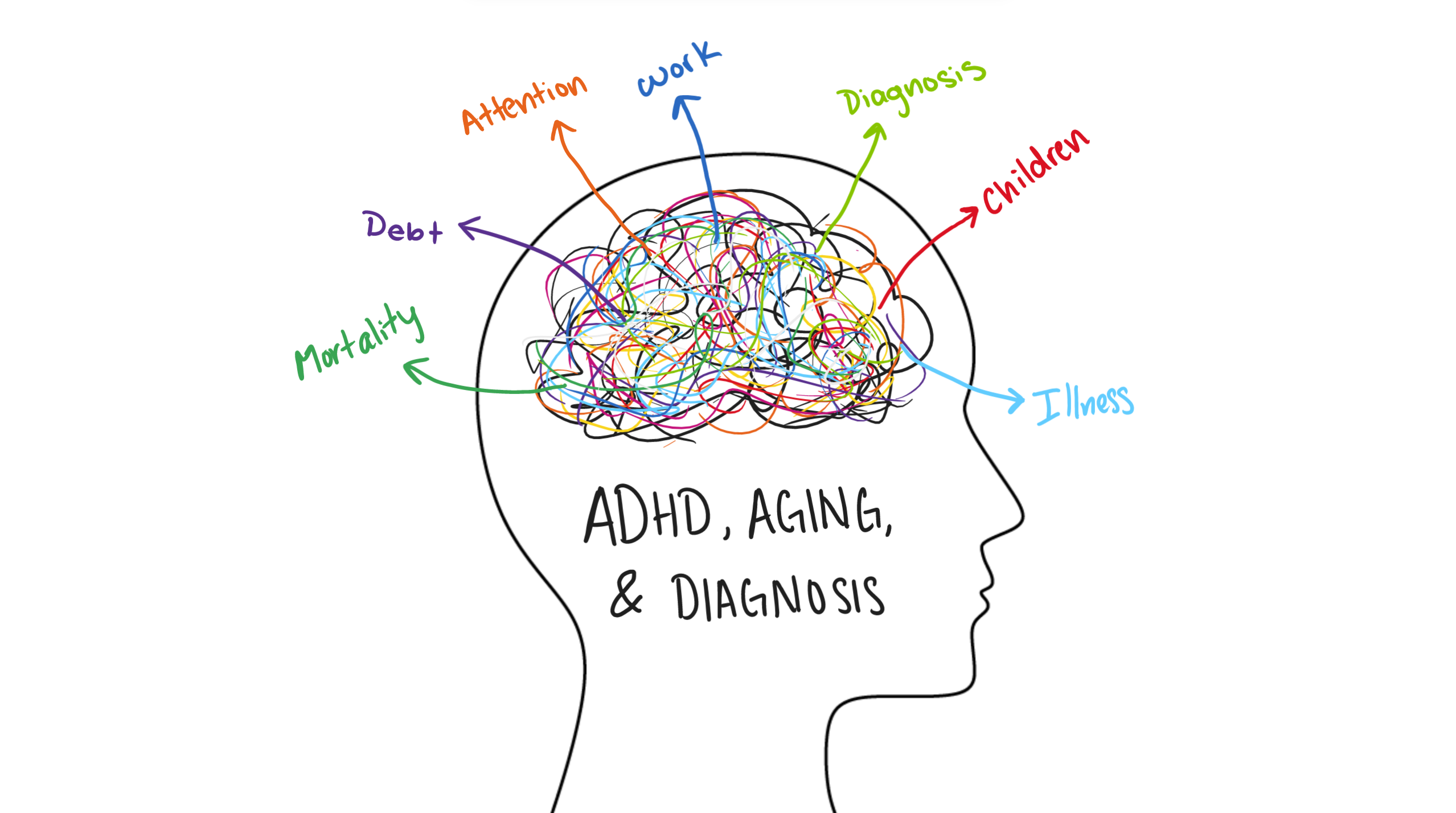
ADHD, or Attention Deficit Hyperactivity Disorder, is commonly viewed as a diagnosis given to children – as already seen in the definition provided above by the CDC – which can lead to negative stigma and a lack of diagnosis in adults. One of the main reasons for this, is that only recently has research proven that the symptoms of ADHD actually present differently as individuals age. Typically, ADHD in children is exhibited through “inattentiveness, impulsivity, and hyperactivity.” However, it has been found that overtime these symptoms can begin manifesting in different ways. For example, what was once viewed as inattentiveness turns into disorganization and memory issues. Hyperactivity develops as an ‘inner’ hyperactivity which is expressed as restlessness. Impulsivity lends itself to anger outbursts or impatience. These dramatic changes in the way symptoms are expressed means that oftentimes they will go unnoticed, or even misdiagnosed as a consequence of regular aging.
On another note, those that are diagnosed as children or manage to get successfully diagnosed later in life feel the negative effects of the comorbidity of ADHD and aging. For one, the changing nature of symptom expression leads to a need for adaptation. Those that have found successful ways to manage their ADHD may need to adjust their methods to accommodate for such changes. Seeing as they have utilized certain strategies to manage their symptoms for a large portion of their life, it is obvious that this could be a difficult change. Additionally, there are the other potential ailments that come with aging that now add onto their burden. For one, since memory typically declines into older adulthood, it is possible that the effects of ADHD would only compound that, leading to even worse cognitive effects.
Nonetheless, there are still ways that those diagnosed with ADHD can manage their symptoms, even later in life. While there are some medications such as methylphenidate or dextroamphetamine that have been proven to work to treat ADHD in older adults as well as children, there are also non-pharmacological methods that can be effective. These include things that help create structure and organization to one’s life such as calendars, planners, alarms, etc. Additionally, there are therapeutic options which can lower stress and aid in achieving greater life satisfaction.
Alpha hydroxy acids. Beta hydroxy acids. These sound like complicated and possibly dangerous chemical compounds you would learn about in high-level chemistry classes, right? Have no fear; these organic compounds will make you beautiful.
Both alpha hydroxy acids and beta hydroxy acids are used in many skincare products as chemical exfoliants. Alpha hydroxy acids, or AHAs, when used in low concentrations, can be used to treat dry skin and keratosis pilaris. At higher concentrations, AHAs cause epidermolysis, which causes the top layer of skin to peel away, revealing new and healthy skin underneath. This can improve the appearance of photoaged skin by reducing wrinkles and lightening dark spots. Common AHAs include glycolic acid and lactic acid. Beta hydroxy acids, or BHAs, act as a peeling agent and can be used to treat acne, photoaging, and calluses. Common BHAs include salicylic acid, citric acid, and malic acid.
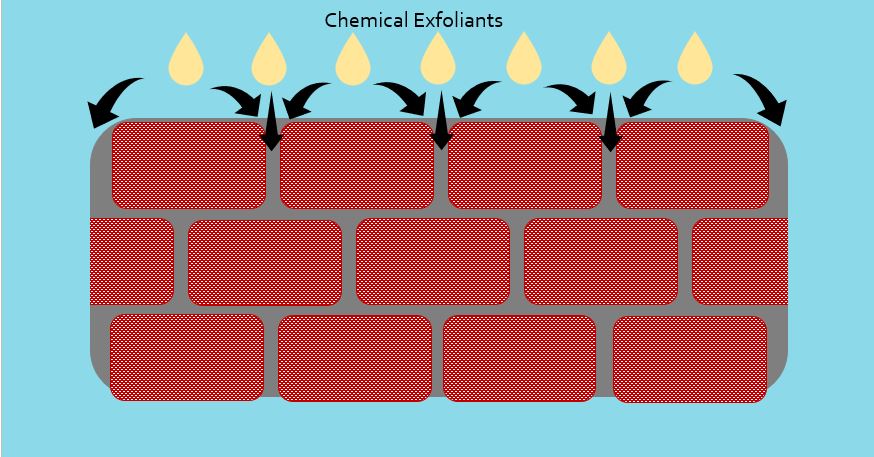
These chemical exfoliants sound great, but how do these acids work? The top layer of your skin is called the epidermis. The very top layer of the epidermis is the stratum corneum. This layer consists of dead skin cells known as corneocytes that are ready to slough off with exfoliation. These corneocytes are held together by intracellular bonds. Chemical exfoliants such as AHAs and BHAs break these bonds and encourage desquamation, otherwise known as skin peeling. If the stratum corneum consisted of bricks stacked on each other and held together by cement, these acids would dissolve that cement and allow bricks to easily be removed.
When used correctly, chemical exfoliants such as AHAs and BHAs cause very little irritation and have no lasting negative effects. When used incorrectly, however, chemical exfoliants might leave you worse off than you started. If an acid is too strong for your skin, it might penetrate too deep into lower layers of your skin, breaking too many intracellular bonds and causing healthy, living skin cells to slough off. You could be left with chemical burns and scars once your skin heals. Additionally, AHAs and BHAs can increase photosensitivity, causing sun damage to occur faster than usual. However, this effect can be mitigated by wearing sunscreen daily, and as a bonus, you can prevent the need for chemical exfoliants in the future because photoaging will decrease with the use of sunscreen.
Scary-sounding chemical exfoliants like alpha hydroxy acids and beta hydroxy acids are nothing to be afraid of when you understand how they work and the effects they have. Do your research and you too can be beautiful!
Kornhauser, A., Coelho, S. G., & Hearing, V. J. (2010, November 24). Applications of hydroxy acids: Classification, mechanisms, and photoactivity. Retrieved October 2, 2018, from https://www.ncbi.nlm.nih.gov/pmc/articles/PMC3047947/
Van, E. J., & Yu, R. J. (1984, November). Hyperkeratinization, corneocyte cohesion, and alpha hydroxy acids. Retrieved October 2, 2018, from https://www.ncbi.nlm.nih.gov/pubmed/6096420
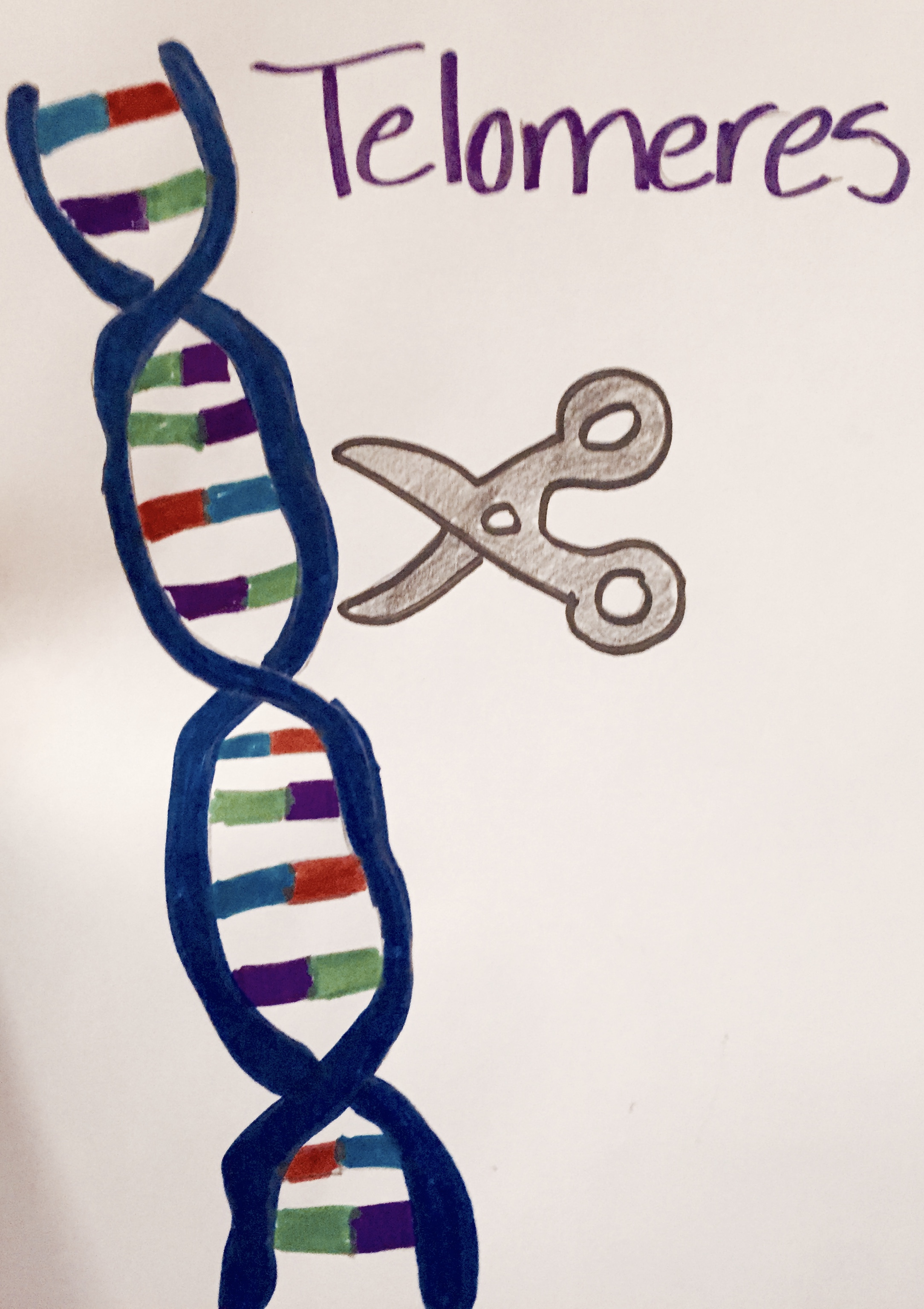
Many people are shocked when they find out that the concept of aging can be explained by genetics through telomeres. Telomeres are 8000-10000 nucleotide protective caps on the ends of strands of DNA. They protect the genome from degradation, repair and unnecessary recombination. In normal cellular processes, telomeres shorten with each cell division, but when the length reaches a critical limit, the cell stops dividing and most likely dies. Therefore, many scientists think that telomere length acts as an “internal clock” to determine the lifespan of a cell and organism.
Does this mean that if you prevent shortening of telomeres, cells won’t die?
In fact, research shows that this is what allows cancer cells to continuously divide and survive. Cancer cells contain human telomerase genes that code for an enzyme called telomerase. Telomerase regulates telomere length. This is a function that normal, non-cancerous cells lack.
Telomere research has been increasing in the past few years, along with research about cancer and aging. People are finding that the life span of cells can be increased experimentally by increasing telomere lengths, but are also connecting lifestyle choices with telomere lengths.
Scientists at the Stanford University School of Medicine have found a way to lengthen telomeres by as much as 1,000 nucleotides by using modified messenger RNA, that contains a coding sequence for the active component of telomerase. The scientists found that cells with lengthened telomeres were able to divide up to 40 times more than untreated cells. A professor of microbiology and immunology even said that this is a way to “[turn] back the internal clock in these cells by the equivalent of many years of human life.”
Outside of these methods to increase telomere length, research has also been done in how lifestyles with obesity, smoking, and stress affect telomere shortening. A researcher, Masood, has shown that obesity is associated with oxidative stress, due to the deregulated production of products by adipose tissue, that can further induce DNA damage and expedite telomere shortening. Another study in the medical journal Preventive Medicine, finds that people who have high levels of physical activity have significantly longer telomeres than those with sedentary lifestyles. Although the exact mechanism of this is unknown, it is predicted to also be tied with inflammation and oxidative stress over time.
Research in this area is ongoing, and it is believed that telomeres will provide significant breakthroughs in the areas of cancer treatments but also preventing aging.
References:
Shammas, Masood A. “Telomeres, Lifestyle, Cancer, and Aging.” Current Opinion in Clinical Nutrition and Metabolic Care 14.1 (2011): 28–34. PMC. Web. 26 Sept. 2017.
Jafri, Mohammad A. et al. “Roles of Telomeres and Telomerase in Cancer, and Advances in Telomerase-Targeted Therapies.” Genome Medicine 8 (2016): 69. PMC. Web. 26 Sept. 2017.
Brigham Young University. “High levels of exercise linked to nine years of less aging at the cellular level: New research shows a major advantage for those who are highly active.” ScienceDaily. ScienceDaily, 10 May 2017. <www.sciencedaily.com/releases/2017/05/170510115211.htm>.
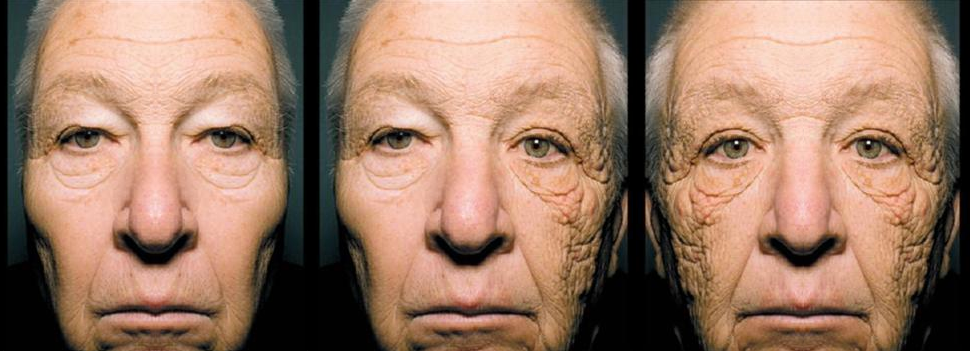
A few weeks ago, a friend of mine showed me an article on MSN about a man whose face was obviously more wrinkled on one side than the other. Mr. McElligott, the gentleman featured in the article, drove a delivery truck for 28 years, exposing the left side of his face to the sun for several hours each day. I have heard several times throughout the years about the importance of sun protection, but hadn’t ever dwelled on the topic for much time. Once I read about Mr. McElligott, though, I was quite intrigued and started thinking about the whys and hows of sun damage, UV radiation, and wrinkles.
In the pictures above, you can see Mr. McElligott’s original picture in the middle with an altered image on either side. I transposed one side of his face to that of the same side in an attempt to make the difference between the two sides of his face more apparent.
Here you can find an “up-close and personal” version of the center picture. (How cool are his eyes?!?)
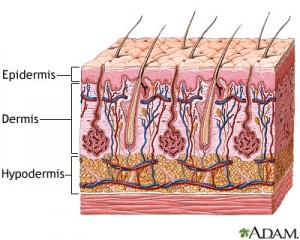
As you may already know, skin is made up of three major layers: the epidermis, dermis, and subcutis (also known as the subcutaneous layer or the hypodermis). As in the diagram below, the epidermis is on top, then the dermis, and lastly the hypodermis. Freckles and moles, as well as sunburns, appear in the epidermis. The dermis houses the structural elements in skin which keep it firm and elastic. This is the section of skin where wrinkles form.
Sunlight is known to negatively affect skin. This is because UV radiation (part of sunlight) can suppress the immune system, damage DNA, and alter skin texture, blood vessels and skin pigment. While conditions like thin skin and easy bruising are usually associated with old age, they are often lasting effects from UV damage as the majority of skin damage comes from the sun and not from Father Time.
The Sun emits three types of ultraviolet radiation: UVA, UVB, and UVC, with wavelengths of ~315 to 400 nm, ~290 to 315 nm, and ~100 to 290 nm, respectively. UVC radiation is absorbed by the ozone layer and doesn’t reach ground level. UVB radiation makes its way through the ozone layer and is the type of UV that hits the epidermal layer of skin and causes sunburns or tans; it is also known to cause skin cancer. Unlike UVA radiation which is relatively constant all year long, UVB radiation is stronger during the summer months. UVA is unique in its ability to pass through glass. Thinking back to Mr. McElligott, UVA radiation’s ability to penetrate glass led him to have a build up of UVA damage of the course of his career. Even on days when he drove with his window up, he would have been protected from UVB rays, perhaps not getting a sunburn or tan, but would have still received the negative effects of UVA. UVA rays cause damage to the dermis, destroying elasticity and potentially causing mutations in DNA. Out of all of the UV radiation that reaches us from the Sun, there is over 20 times more UVA than UVB.
Harm to the skin caused by the Sun’s UV radiation is often referred to as photoaging, or dermatoheliosis.Photoaging is caused when UVA and UVB rays enter the skin, negatively affecting two of skin’s structural proteins, elastin and collagen. Radiation damages elastin and causes a build-up of altered metalloproteinase enzyme. Normally, metalloproteinases (also known as collagenases) help reverse skin damage by creating new collagen. Unfortunately, the metalloproteinase from the damaged elastin does the exact opposite— it breaks down collagen, leaving the skin with a broken collagen structure and wrinkles. (For a study on the effects of metalloproteinase, check out this article.)
Exposure to UV radiation in sunlight, in addition to air pollution and smoking/second-hand smoke, can also subject the skin to free radicals. Free radicals are molecules (or atoms) with a single, unpaired electron. Because a free radical lacks the second electron, it is unstable and thus seeks out another electron. When it reaches another molecule, the free radical takes an electron, completing its electron pair while leaving the second molecule with an unpaired electron (a new radical). This snowball effect continues throughout the skin, activating altered metalloproteinase and causing damage to collagen.
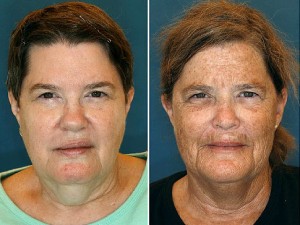
Jeanne (left) and Susan (right), identical twin sisters, serve as a great example of how lifestyle choices can determine a person's skin aging. As children, the two women had an uncanny resemblance, but now it's easy to see that Susan's decision to sunbathe and smoke led her skin to age more rapidly. (Department of Plastic Surgery, University Hospitals Case Medical Center)
Well, I hope you enjoyed learning more about wrinkles and UV radiation! Remember, prevention is key! Make sure to slather up in some good ol’ broad spectrum SPF 70 next time you go shoot some hoops (or do whatever it is that you do) and enjoy this fine video about why we need the Sun (even though it hurts us sometimes):
Sources:
Heather Brannon, MD (About.com)
Jennifer R.S. Gordon, MD and Joaquin C. Brieava, MD (The New England Journal of Medicine)
De Gruijl, Frank R. “Photocarcinogenesis: UVA vs. UVB Radiation.” Skin Pharmacology and Physiology 15.5 (2002): 316-20. <http://www.ncbi.nlm.nih.gov/pubmed/10907526>.