Tag: art

  • Origami 101

    What is Origami?

    Origami does not originate from a sole inventor, it was crafted over centuries by many different hands for various ceremonial purposes in Japan and even China (Robinson, 2026). The word we use today, origami, is derived from the Japanese words ori which means folded and kami which translates to paper. While paper itself was first developed in China before spreading to Japan, folding paper into decorative and symbolic forms became especially refined in Japanese culture over time. Early uses of folded paper included religious ceremonies, gift wrapping, and formal exchanges, where presentation held great meaning.

    Fast forwarding centuries, today origami is seen worldwide. A simple YouTube search nowadays can teach even the newest of the new how to craft an origami chameleon, like how I learnt! What was once a traditional practice has now grown into a global hobby, mathematical practice, and even an area of scientific research.


    Math, Science, and Folds

    It comes to no surprise when we see the intricate works by masterful artists, that the art within folding comes from mathematical roots. For example, take the common fold that basically all origami pieces start with: the square piece of paper folded diagonally corner to corner and then along the sides, top to bottom and left to right. These folds create lines of symmetry and reference points that help guide more intricate folds later on. Mathematically, these folds create either a valley or mountain based on the value of the angle between the two adjacent planes created by the fold (Kunz, 2024). A valley fold bends inward like a “V,” while a mountain fold rises outward like a mountain. By combining these two simple fold types in different orders, locations, and sizes, folders can create highly detailed animals, flowers, and geometric structures. 

    Additionally, origami also has strong roots in more of a geometric application of math, with many models and folds often relying on fractions, bisectors, symmetry and so much more. In the scientific world, origami has received its share of the spotlight from inspiring compact folded solar panel designs for satellite use to shaping medical stents used in patients. 


    My Folds and Why I do it

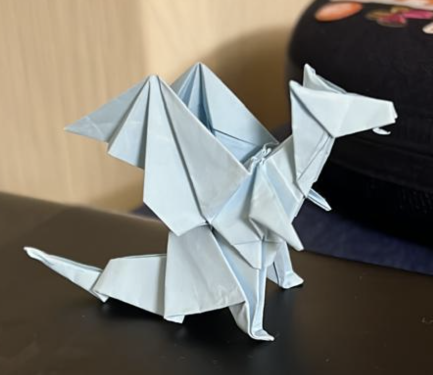
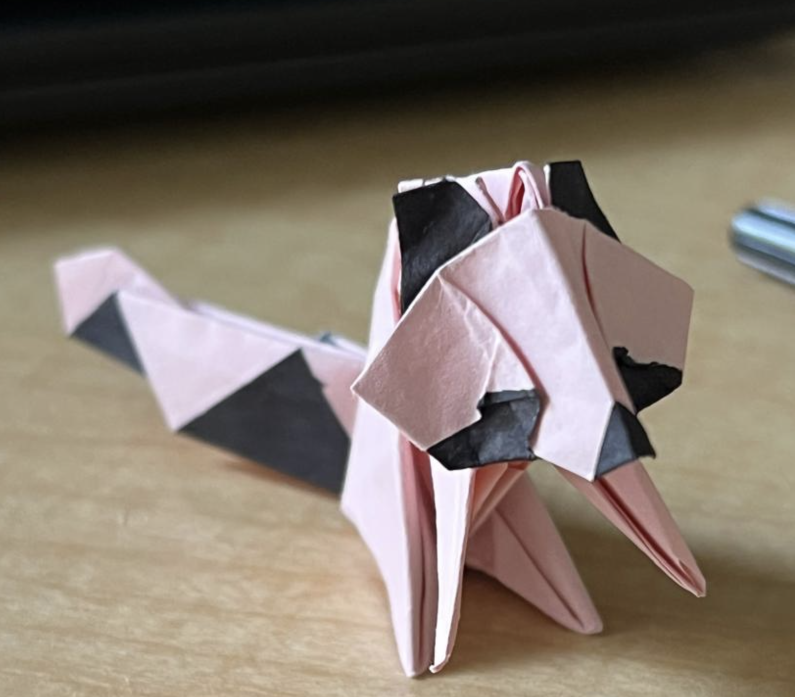
    My goal when folding is simple: just don’t make it ugly. I find my inspiration, to recreate art through online tutorials, to be fueled by the passion and creativity of others. I folded the blue origami dragon below to surprise one friend, and the raccoon for another. I trace my folding skills back to one main motivation: wanting my creations to be as perfect as possible for the people around me. I have made plenty of lousy folds, but never when I feel a real sense of purpose behind them. When I fold for someone else, I tend to care more, focus more, and try as hard as I can. I am happy to say I will keep carrying on origami traditions. Mine may not be embedded in ceremonial, mathematical or even scientific purposes, but they still come from a place of creativity, curiosity, and humanity.
    References

    Origami created and photographed by Kristina Siju

    Origami with Jo Nakashima. (2021, September 14). ORIGAMI CHAMELEON (Jo Nakashima ). YouTube. https://www.youtube.com/watch?v=if7iSuzNn38

    Nakashima, J. (2015). Origami Dragon (Jo Nakashima) [YouTube Video]. In YouTube. https://www.youtube.com/watch?v=kUsxMXwCW8A

    Muneji Fuchimoto ORIGAMI CHANNEL. (2020, December 8). 「折り紙」アライグマ(racoon origami)の折り方. YouTube. https://www.youtube.com/watch?v=X2FYuvt-U80

    Geometry – Ancient geometry: abstract and applied. (n.d.). Encyclopedia Britannica. https://www.britannica.com/science/geometry/Ancient-geometry-abstract-and-applied

    Thesis, B., Kunz, C., & Cannas Da Silva, A. (2024). Mathematics of Origami. https://people.math.ethz.ch/~acannas/Student_Papers/BSc_Theses/2024_bsc_kunz_mathematics_of_origami.pdf
  • A Picture Can be Worth a Thousand Words…or Dollars

    Whether you dabble in it or appreciate it, we come across art in any shape or form several times in our daily lives– especially the visual kind. For most, we came into contact with making art in some art class in elementary school, using nontoxic watercolors and, if they let us, acrylic. These paints, obviously, are very different from those that professionals use in their lives, but in what ways? Why don’t professional artists use Crayola watercolors for their work? The answer may lie in the science and chemical composition of the paint itself. 


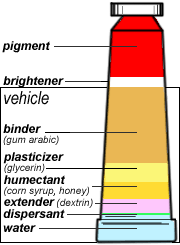
    For starters, paints contain binders, solvents, and pigments. The pigment is the actual color part that we see, and the more light that’s absorbed by it, the deeper the color. Binders are what help the pigment stick to the surface of a painting and can vary depending on whether the pigment is organic or inorganic, but most paints use a gum arabic binder. 

    handprint.com


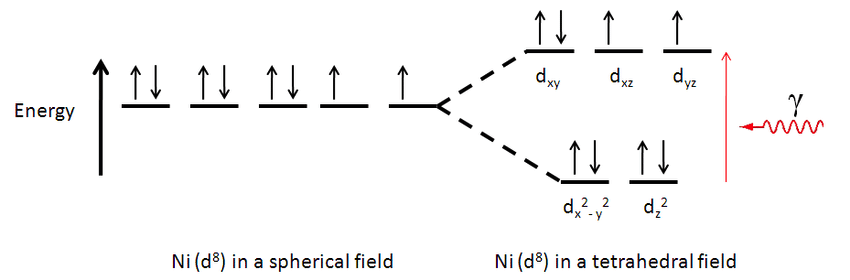
    Typically, organic pigments are more preferred due to their more vibrant colors and their increased stability. These paints will use a turpentine binder. Inorganic pigments, however, are more affordable and are heat and light stable. These pigments are made of metal oxides, usually transition metals that can sometimes be toxic, so these aren’t commonly used. These elements usually have their bonding electrons in d-orbitals, and when bonded, can lead to these orbitals splitting into 2 levels of energy which allow electrons to absorb energy and move between the two levels, but the wavelength they absorb can be different depending on how large the gap between the 2 energy levels are. The light that is not absorbed and reflected is what we perceive. 

    Gamma represents the wavelength that’s absorbed (ResearchGate)


    Staying with pigments, the more pigment, the more it will cost. Typically, artist-grade paint will have a higher concentration of finely-ground pigment, increasing surface area of the pigment and its vibrancy. Another factor that will raise the cost is if the pigment is organic or inorganic. Organic pigments, which can be more expensive since they are naturally-found colors and can be rare, are more vibrant and retain color over time when exposed to light. 


    A more expensive, higher quality watercolor may have smaller, more concentrated pigment. Due to the smaller particle size of the pigment (which can get as low as 0.05 microns), the color will literally seep into the fibers of the paper and will stain (stick to the paper better after it has dried) more effectively, which can be better or worse depending on your art style. However, this pigment concentration and permanence also implies that the paint is suspended in fewer fillers and uses a more effective binder, which also increases the price.

    AhmadArt, YouTube (2018)


    As someone who likes to dabble in watercolors and has used paints of all different quality, learning specific aspects such as these helps with understanding why it may be sometimes worth it to invest in a more expensive watercolor palette. Because sometimes, the price can be translated into its quality. However, it can be easier to see it in person, or maybe under a microscope because after all, a picture is worth a thousand words. 


    References

    acrylgiessen. (2022, February 16). Best Watercolor Paints – All About Professional Watercolor Paints. acrylgiessen.com. Retrieved March 4, 2022, from https://acrylgiessen.com/en/best-watercolor-paints/

    Compound Interest. (2014, March 21). Inorganic Pigment Compounds – The Chemistry of Paint. Compound Interest. Retrieved March 4, 2022, from https://www.compoundchem.com/2014/03/21/inorganic-pigment-compounds-the-chemistry-of-paint/

    Guide, S. (2021, May 19). Best Watercolor Paints – How to Choose the Right Watercolor Paint Set. craft-art.com. Retrieved March 4, 2022, from https://craft-art.com/best-watercolor-paints/

    MacAvoy, B. (n.d.). handprint : how watercolor paints are made. Handprint. Retrieved February, 2022, from https://www.handprint.com/HP/WCL/pigmt1.html

    McArdle, T. (2008-2022). Watercolor Paint Buyers Guide: Learn What to Look For When You Buy Watercolors — Art is Fun. Art is Fun. Retrieved March 4, 2022, from https://www.art-is-fun.com/watercolor-paint

  • Biology bucket list: algal blooms

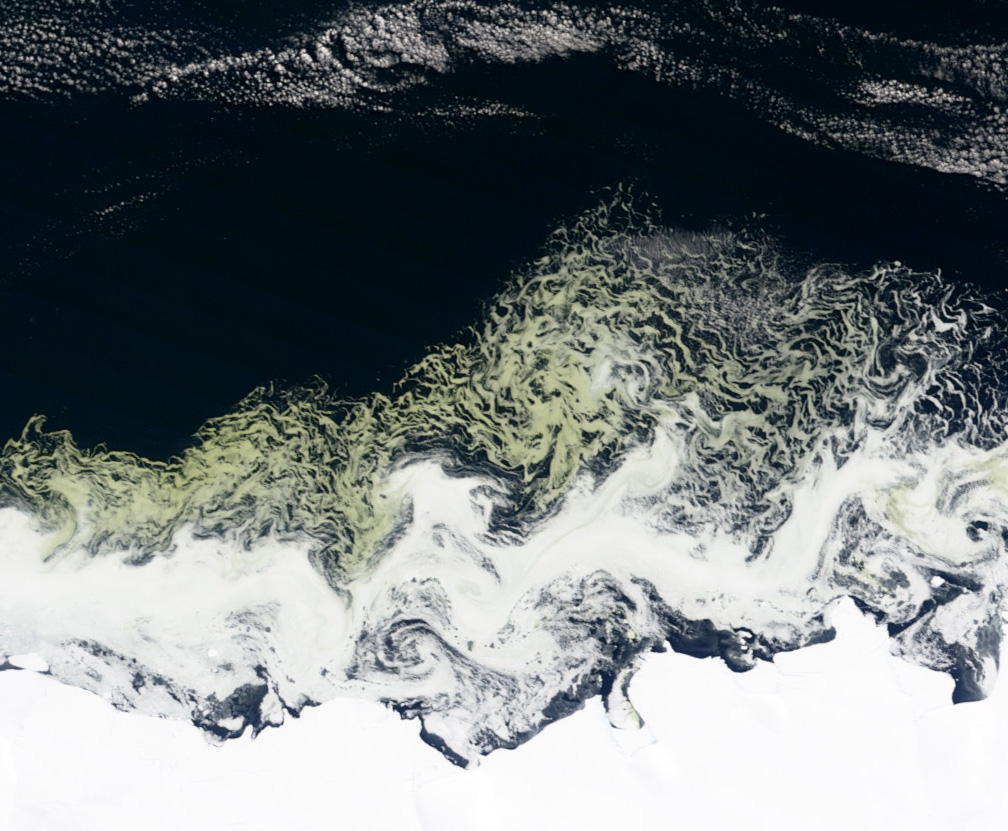
    An algal bloom appears off the Princess Astrid Coast in East Antarctica.
    NASA image courtesy Jeff Schmaltz, LANCE/EOSDIS MODIS Rapid Response Team at NASA GSFC.
    Greetings biophiles! What do algal blooms, great white sharks, and okapis all have in common? They’re all absolutely fascinating and they’re all on my list of events and animals I would jump at the chance to observe. This ever growing list of biology-related items has evolved into something of a bucket list, hence the title, and includes biological phenomena around the globe that I hope to one day see for myself!
    So what ‘s first up on my biology bucket list? Algal blooms.
    First some background: Algal blooms are basically just the growth of aquatic algae at a hyper fast pace, resulting in washes of discoloration over bodies of water. These artworks of nature generally occur due to favorable conditions such as availability of resources like minerals, nutrients, warmth, and sunlight. The algae, usually referred to as phytoplankton, are microscopic, single-celled organisms that make their home in the upper layers of both fresh and marine waters. They serve as vital components of aquatic ecosystems due to their powers of photosynthesis, as they provide food (directly or indirectly) for everything from penguins to blue whales.  Phytoplankton even feed you, as they are used as feed in aquaculture. We depend on these little guys!
    However, I not only appreciate them for their hard work in the upkeep of our oceans, but also for their aesthetic value on both a microscopic and macroscopic level. If you do an image search of either “phytoplankton” or “diatoms” (go, click on it!), you’ll see that these guys come in all kinds of wacky shapes, sizes, and colors. Looking at them under a microscope (and I would love to take my own sample from an algal bloom) is pretty much like walking through an art gallery (except better) because the artwork is made out of living organisms just hangin’ out,  powering an entire ecosystem and being funky shaped. Ahhh, that is the life.
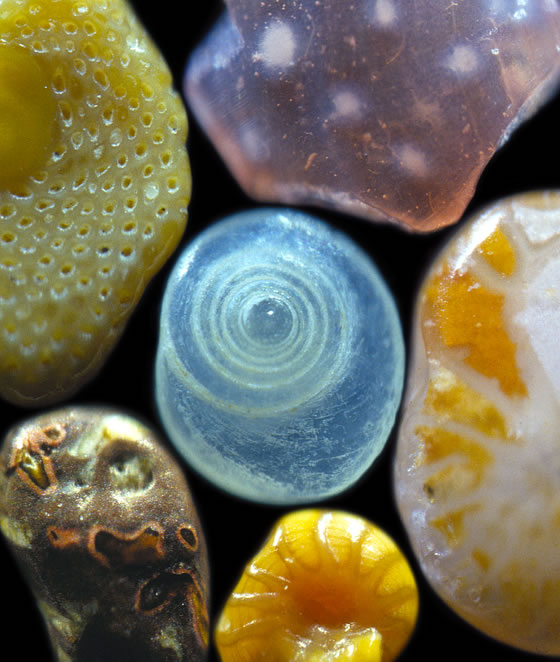
    (Side note: lots of ordinary things look crazy awesome when looked at close up, sand for instance. Oh nature, your beauty reveals itself on so many levels. *swoon*)
    Bits of sand made up of shell, coral, and volcanic rock bits.
    Image Copyright © 2008 Dr. Gary Greenberg, All Rights Reserved.
    How do I plan on experiencing an algal bloom you may ask? By swimming in one of course!* (Or looking at them from the International Space Station, as most algal blooms can be seen from space. NASA, if you want to make dreams come true, hit me up!)

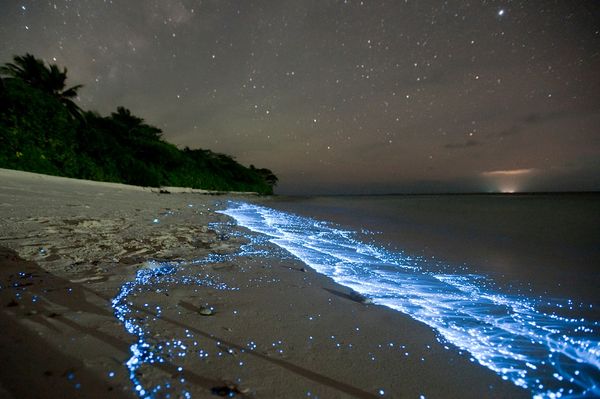
    And no, I’m not talking about taking a dive in the pond scum of the poorly-kept neighborhood pool. Instead, I hope to travel to what are known as bio-bays: bodies of water where bioluminescent phytoplankton, or more specifically dinoflagellates, light up the waters at night and create waves dotted with glowing spots to match the starry night sky. There are several locations around the world where tourists can experience the glowing waters- Puerto Rico, Vietnam, and the Maldives to name a few.

    However, these kinds of trips cost money and, alas, I am a poor college student, so until I can save up to travel to Puerto Rico (or the ISS), I’ll continue looking at satellite photos (like the ones from NASA, linked below). Other types of algal blooms can occur in bodies of water around the world and vary depending on seasonal and causal factors.

    Glowing blue waves on Vaadhoo Island in the Maldives.
    Photograph by Doug Perrine, Alamy

    I like to keep my eye out for new photos of algal blooms, such as this one, which displays Impressionist-esque swirls of green and yellow atop the waters off the Princess Astrid Coast in Antarctica, taken by NASA’s Terra Satellite this past February. Antarctic blooms generally occur in December (the start of summer for Antarctica) as the increased sunlight favors the growth of these photosynthesis superstars and kickstarts the rest of the marine ecosystem in time for baby-making season. This particular algal bloom’s late season appearance excited scientist to the possibility that it was caused by a more unusual factor: nutrients blowing off of a nearby ice shelf. This is just one example of how algal blooms can come about.

    Year round you can find news of all types of algal blooms being spotted in different places around the world, so keep a lookout for this fascinating biological phenomena! If you would like to see more of their intoxicating beauty I would recommend perusing through Visible Earth, a catalog of photos from NASA, or checking out this gallery from Wired magazine, which will also tell you about regional types of algal blooms.

    So, dear readers, what do you think? Would you go swimming in a bioluminescent ocean? I hope you’ll take a look through some of the galleries linked throughout (some of these photos make great wallpapers!), and of course I’d love to know what’s on your biology bucket list via the comments section below. (Also, keep a look out for our next installment of our biology bucket list series!)

    *It should be noted that some algal blooms are harmful (HABs), and certain species, about 2% of the 5000+ species of marine phytoplankton, are associated with toxins and can actually harm an ecosystem through the release of neurotoxins and the depletion of oxygen in water. These HABs can arise naturally and in predictable patterns, but have also increased in frequency due to human activity like agricultural run-off. So please do not just go jumping into any old discolored water and be sure to look out for notifications from your local health and marine departments if you plan on participating in any recreational activities in or near your local lakes or beaches.
    Here are the places I got my information from:
    Diersing, Nancy. “Phytoplankton Blooms: The Basics.” (May 2009). Florida Keys National Marine Sanctuary.
    “Greening the Princess Astrid Coast.” (March 2012). Earth Observatory by NASA.
    Landsberg J.H. “The effects of harmful algal blooms on aquatic organisms.”  (2002). Reviews in Fisheries Science.
    Than, Ker. “Picture: Glowing Blue Waves Explained.” (March 2012). National Georgraphic.