Tag: chemistry

  • Anxiety

     Exams……projects……homework assignments, it never ends! In turn, the anxiety begins to manifest. According to the National Institute of Mental Health, an estimated 19.1% of U.S. adults had any anxiety disorder in the past year.

    Sadly, for many yellow jackets, anxiety has become a normality. This emotional response is mostly associated with the fear of not doing well academically at Georgia Tech. Most of us don’t know why we can’t stop worrying. Many of us look past our anxiety and think this is normal, especially when you hear other students complaining about the same things you are. However, when it gets to the point of where the anxiety interferes with your life, it’s time to take action and understand your neurological chemistry.

    Anxiety AnxiousEmojiis a feeling that lingers ling after a stress (external stimulus that signals danger often by causing pain) has lifted and the threat has passed. The factors that trigger anxiety grow out of a response that is hardwired in our brains. For example, thinking you won’t be successful if you don’t do well and pass a class. When in reality, one class doesn’t determine our future. But why do we think this way? Are we born this way or do our experiences cultivate our thinking?

    Kenneth Kendler, a psychiatric geneticist, decided to approach this question by studying groups of identical twins who share virtually all their genes, and fraternal twins, who, like any other siblings, share only some of them. What Kendler’s group found was that both identical twins were somewhat more likely than both fraternal twins to suffer from generalized anxiety disorder, phobias or panic attacks. The correlation isn’t 100%, however. “Most of the heritability is in the range of 30% to 40%,” Kendler says. That’s a fairly moderate genetic impact, so your genes set your general vulnerability. But your upbringing and your experiences still have a major role to play.

    Being that we have no control over our genetic makeup, how can we turn their negative anxiety into positive anxiety? Using it as a tool to focus the mind. Think about it, when you’re worried, anxious, or fearful, whatever you’re associating these feelings with consume your thoughts and you can only focus on that discomfort. To change this, one would need to explore their amygdala and hippocampus. The amygdala tells the body what to do while the hippocampus is a cluster of nerves that help the brain learn and form new memories. These new memories will activate the prefrontal cortex which sends out an “everything is ok,” message, and lets the amygdala know that there is no reason to worry or cause anxiety. So instead of thinking negatively, think something positive no matter the situation or circumstance. Just like any habit, it’s easier to stop than it is to start, so it will require intentional effort to clear your mind of negativity. Understanding this neural circuitry can be the key to reduce the anxiety of students at Georgia Tech and increasing the jubilation of students.

    Gorman, C. (2002). The science of anxiety. Time Magazine, 47-54.

  • What’s behind your screen?

    chargedarticleartwork

    One of the most popular displays today is an LCD display. They come in televisions, computer monitors, phones, and more, but do you know that chemistry and physics are the fundamental to create these screens?

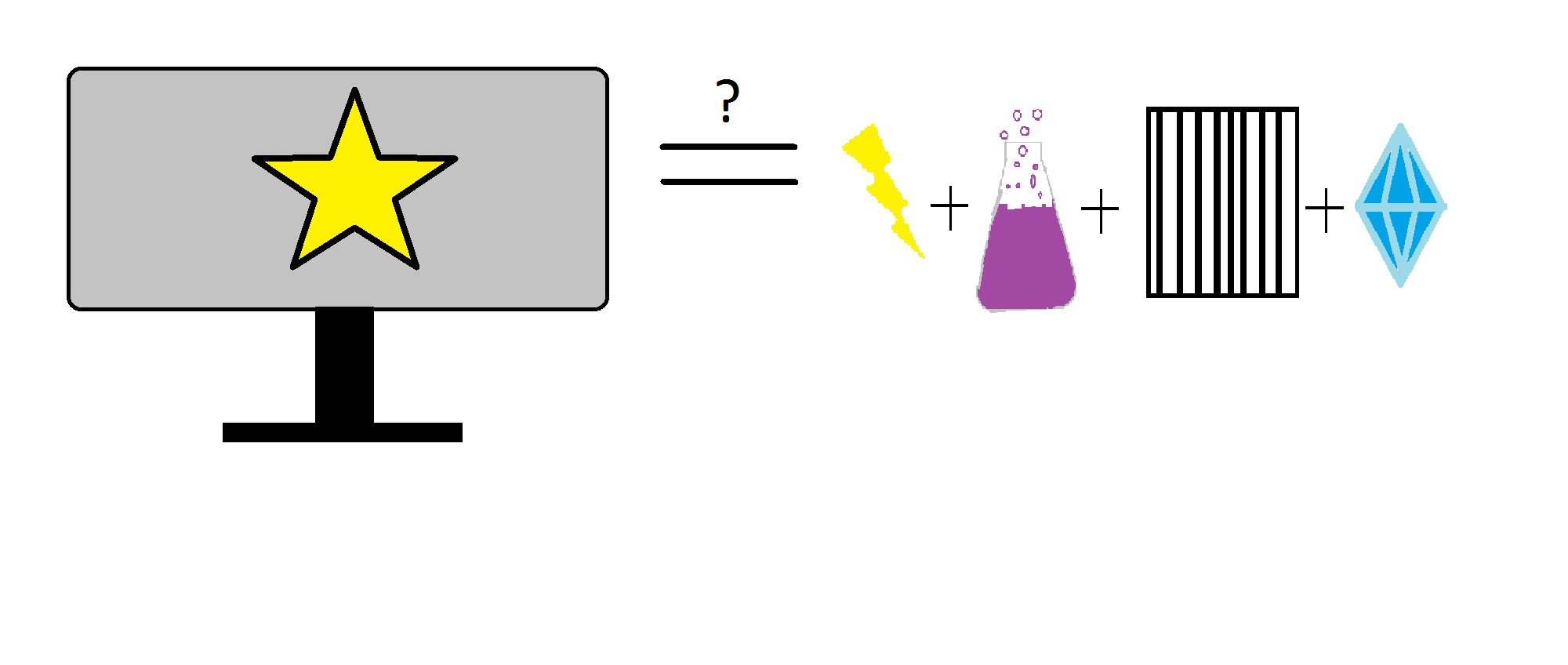
    LCD stands for Liquid Crystal display and were used to replace Cathode Ray Tube displays because the CRTs were too bulky making televisions and computer monitors huge. Inside of an  LCD display there are multiple layers: a thin filmed transistor, an electrode pattern, a liquid crystal and some level of polarization.

    The thin filmed transistor is a very specific form of glass known as Borosilicate glass, made up of around 13% boron trioxide and around 80% silicon dioxide. Its physical properties due to its compound make up allows the glass to be more shock resistant and heat resistant than your average piece of glass. The electrode pattern uses metals like copper and titanium to transfer electrons. The polarizer mainly works with filtering light. Previously, light was just projected onto the television. Now a polarizer filters light waves by direction reducing the amount of power required to use a lit up display. It also allows for smooth picture transition. Finally the liquid crystal is used to produce the crisp look of an LCD screen. This crystal starts out as a liquid and when it comes into contact with the average atmospherics on the surface of the earth, this liquid crystallizes, like a spiders silk. It has the unique ability based on its shape and structure to show or not show various light rays. The polarizer prepares the light for this liquid crystal making its job possible.

    So there you have it, now you know whats behind that magic box in your living room!

  • Graph Paper: Golden Nuggets

    Graph Paper 1
    Every now and again, the professor surprises you.


  • Chemistry at Home: Exploring the MEL Chemistry Kit

    MEL Science is on a mission to make mail-order chemistry kits for kids big again. They’ll deliver two sets per month right to your door containing 1 – 3 chemistry experiments. From their website: “I don’t know about you, but we are very worried about our children. They often spend more time with computer games than science. And we are trying to do everything to make science as interesting as possible.”

    We got a chance to check out the MEL Chemistry Kit and Tin experiments. Take a look!

  • Why Does Hot Water Freeze Faster?

    1

    PROFESSOR: Hello class! Welcome to “Advanced Application of Math and Logic in Natural Philosophy” class. Look to your left and look to your right. One out of five in this room will not pass the class.
    2

    STUDENT A: Sir, but there are only four of us.3
    PROFESSOR: (ignoring the student) Ahem. During our first lecture, we will exercise the use of logic and thought experiments to unveil one of the greatest mysteries in the history of science. Even Aristitotle struggled solving this mystery. For centuries many scientists attempted to solve but failed. (drum roll) Why does hot water freeze faster than cold water?

    STUDENTS B & C: (smile nervously not knowing whether he is joking or not)

    STUDENT A: But sir, hot water needs to be cooled down before it can freeze. So shouldn’t cold water freeze faster?

    PROFESSOR: Good point. However, that is not always true. It’s called the (writing on the board) Mpemba effect. Can anyone guess why? It’s okay even if you are wrong. Don’t be shy – that is why I am here.

    STUDENTS A, B, C, & D: (silence)

    (Satisfied with his authority and the full attention of his students, the professor continues)

    PROFESSOR: Actually, experiments showed that hot water will cool faster than water at 60°C. But this is not the case with water below 60°C. Mpemba effect is a combination of multiple factors. Now let’s figure out each of them together. First, tell me what are the characteristics of hot water?

    STUDENT B: It has higher average kinetic energy.

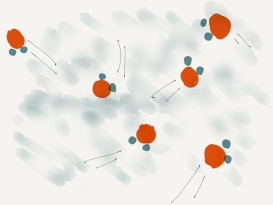
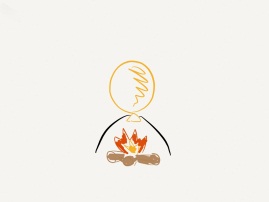
    The water molecules move faster, which means that they occupy greater volume, similar to how an air balloon expands at higher temperature.
    4

    56

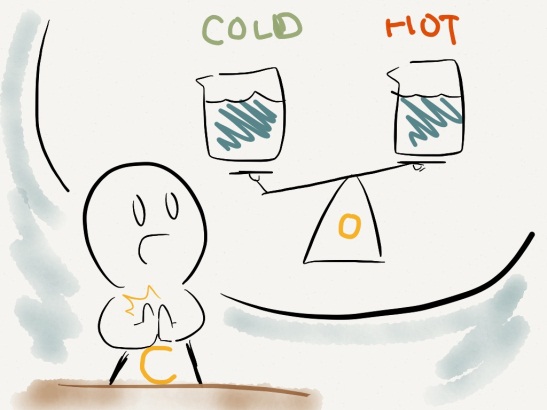
    STUDENT C: Wait, that means that if cold water and hot water have the same volume, the mass of hot water will be less. This is because the evaporation is taking place and dissolved gases in hot water escape at a higher rate.
    7

    PROFESSOR: Great answers. Water is most dense at 4 degrees Celsius and its density changes according to its temperature. Yes, so 1L of water does not always hold the same amount of mass. 1L of hot water will weigh less compared 1L of water near 4°C. However, the mass difference is slim even when we considering the evaporation of water molecule. So there has to be another factor that contributes to Mpemba effect.

    STUDENT: But sir? What about supercooling of water and nucleation? Doesn’t lack of impurities and gases in water lead to supercooling, in which water forms crystal ice at temperatures below 0°C? It has been observed that water can remain liquid at -40°C. If hot water doesn’t have dissolved gas, shouldn’t it be hard to make it freeze?
    8

    PROFESSOR: (as if expected) Good point. Except Mpemba effect has been observed in both hot water and cold water removed of dissolved gases. Dissolved gas does not seem to contribute to the process of freezing. You could, however, make beautiful and clear crystal ice by removing dissolved gas before freezing. So what else? What else does hot water do?

    STUDENT C: It evaporates faster than cold water..?

    PROFESSOR: Yes, the water evaporates faster. But why? And so what?

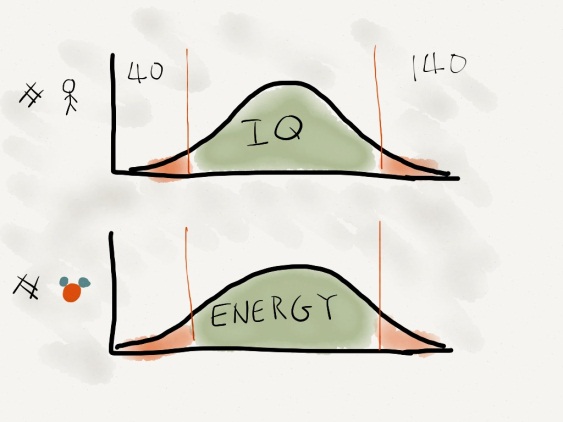
    STUDENT B: Well umm… the temperature of water is the average kinetic energy. At any time, liquid water has molecules with a range of energies. Although most of them have the average kinetic energy of the system, very few have enough energy to escape intermolecular forces such as hydrogen bonds and dipole-dipole attractions. If we were to look at a graph of number of molecules versus energy, it would look similar to a current IQ graph, in which the majority of the population has an IQ of 100 and few have over 140 and under 40.
    9

    STUDENT A: (towards student B) Hydrogen bond and dipole-dipole forces are too weak to contain water molecules in liquid form. It’s actually the atmospheric pressure doing all the work.

    PROFESSOR: Please let him continue.

    STUDENT B: So molecules with higher energy escape, lowering the average energy within the system, and this is evaporative cooling.

    STUDENT C: Oh! So the hot water is not only being cooled through evaporative cooling but also from heat conduction and convection inside the freezer.

    PROFESSOR: Good answers class. But that is not enough.  According to Dr. Takamasa Tkahashi at St. Norbert College, it takes 540 calories to vaporize one gram of water. At above 80°C, the rate of cooling by evaporization is high as vapor draws massive energy from water left behind. To give you an idea how much 540 calories worth, it takes 100 calories to heat up 1 gram of water to 100°C from 0°C.

    STUDENT A: (excited) 1 Calorie is the energy required to raise 1 gram of water 1°C! In fact, scientists measured food calories by burning them and heating up water back in old days.

    STUDENT D: Wow…is that why greasy foods have high calories?10
    PROFESSOR: If we neglect heat transfer through radiation or conduction, water will freeze on a desert purely from evaporation. Interesting, isn’t it? We can use zeolites which facilitate evaporation through adsorption to make ice as well. A team of engineers at Rice University built a prototype of ice machine that uses nothing but zeolites and vacuum pump.

    STUDENT D: (perplexed) But professor, when hot water reaches the temperature of the cold water, don’t both of them have the same evaporation rate?

    PROFESSOR: (impressed and amused) Very good point. I might actually consider allowing one A+ in this class. To answer your question, let’s first consider extreme cases to facilitate our thought experiments. Imagine placing an ice cube onto a very hot plate. What happens?

    STUDENT A: (desperate to not embarrass himself) Uh…The ice melts immediately? And while some water molecules evaporate, others boil around the remaining ice cube, making noise from gases and vapor escaping. Noise is also another form of energy transfer.

    PROFESSOR: Yes but melting the process does not happen instantly. While the ice is melting, what is the average kinetic energy? It is somewhere in between that of boiling water and ice.

    Now, we learned that the energy of liquid water is not perfectly uniform. The faster the change of temperature is applied the greater inconsistency of the energy. Hence, hot water being cooled down to cold temperature has a higher evaporation rate than cold water that remained cold for a prolonged period of time. I think you’ll need to elaborate on this one…

    STUDENT A: Also, Newton’s law of cooling dictates that hot water will cool down faster regardless of the evaporation.

    PROFESSOR: Yes, of course, faster moving molecules will bounce off of each other more frequently, giving and losing energy through these interactions.

    STUDENT D: So that means… initially, cold water has a more uniform temperature. But when hot water is cooled, although the average temperature is cold, there are greater discrepancies of temperature among molecules?

    STUDENT A: (being impatient) Yes, and that is why the hot water will be more likely to have molecules with higher energy, which escapes and cools the liquid faster.

    PROFESSOR: Like washing a car with hot water during winter, evaporative cooling is more evident with larger surface area. So what else? Does anyone else have any more idea?

    STUDENT C: Well… this may seem stupid, but what if Mpemba effect is caused by other effects such as the environment?

    PROFESSOR: (intrigued) What do you mean?
    11

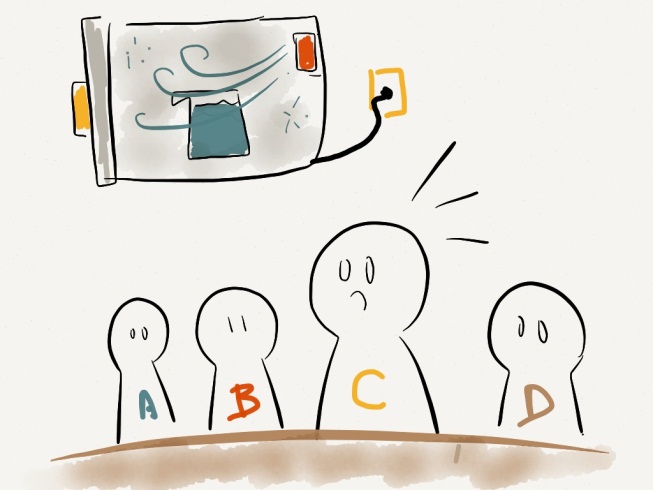
    STUDENT C: The freezer keeps the temperature below zero all the time. But when the temperature increases, cold air is introduced in order to keep the temperature constant. So if we place hot water inside the freezer, and due to heat conduction, radiation, and evaporation, the internal temperature increases, it will trigger the freezer to blow cold air. You need to elaborate on this… And thus, hot water will freeze faster.

    PROFESSOR: Hmm…I like your creative way of thinking.
    12

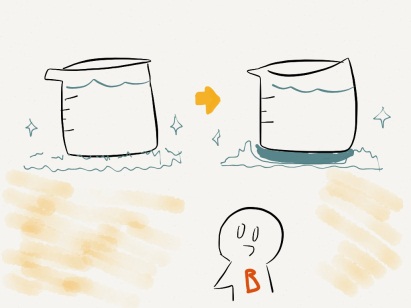
    STUDENT B: Also, freezers have ice dusts inside. And hot water may melt these ice particles within the compartment at contact points of the bowl and the surface. Since water is dense and thus conducts heat faster, hot water will cool down at higher rate. The effect is similar to how ice water cools beer bottles faster than ice cubes.

    PROFESSOR: Excellent point! Water is 829 times denser and transfers heat 25 times faster than air. Hot bowl of water sitting on slightly melted ice will definitely cool faster than cold bowl of water sitting on ice dust. Water covers more surface area as well. But aren’t you slightly underage to know how to cool beer bottles?

    STUDENT A: (hungry for attention) Sir, what about infrared radiation? We know hot objects emit electromagnetic radiation and thus release energy at a faster pace. A combination of this and everything we discussed today will make hot water cool faster.

    PROFESSOR: Now, do you guys remember how water changes its density? Due to heat conduction at contact points, a bowl of water will be colder at the bottom. Let’s consider a cold bowl of water. Cold water near freezing point at the bottom of the bowl will have lower density than water at near 4°C on top. Low density water will rise up switching position with water near 4°C. Neither upper nor lower part of water will freeze until that 4°C temperature is brought to 0°C.13
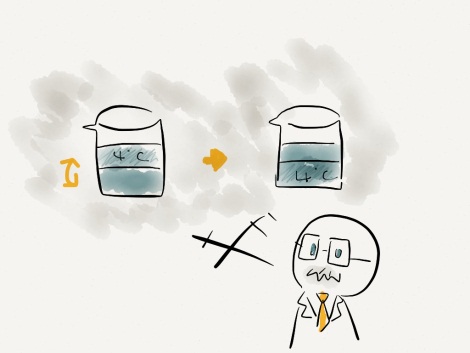
    Now what about hot bowl of water? Hot water at the top has lower density than cold water at the bottom. Thus, cold water near freezing point won’t rise up. This means the water at the bottom can freeze before hot water is cooled to 4°C. This effect will freeze hot water faster.

    STUDENT C: Whoa… there seem to be a lot of factors that play in Mpemba effect. We discussed mass difference, evaporation rate, freezer compartment effects such as more frequent cold air and melting ice at contact points, and how density can slow or speed up the freezing rate. I don’t think we can come up with anymore explanations.

    PROFESSOR: Aha but we are not done! There are more. What are we forgetting class?

    STUDENT D: (as if he had more than enough to learn) Not a clue sir…

    PROFESSOR: (excited) The internal air pressure of the freezer compartment~!

    STUDENT D: But how..?

    PROFESSOR: (showing a video clip on a TV) Do you guys watch a BBC TV series called “Bang Goes the Theory”?

    STUDENT C: Oh my gosh! I absolutely love that show!!

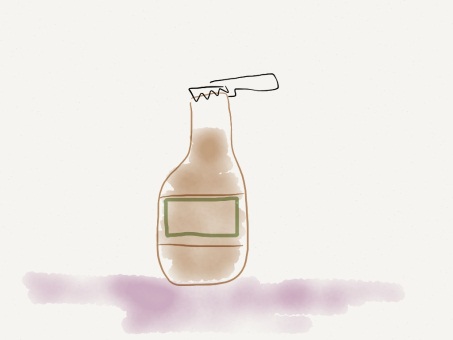
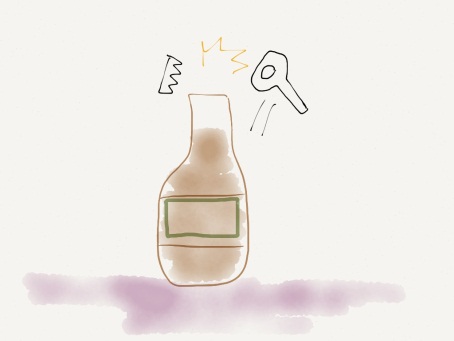
    PROFESSOR: Let’s look at season 2 episode 4. In this episode Dr. Yan shows that when you quickly open a bottle there’s a cloud of white air at the opening. This effect is the opposite of how diesel engine ignites a spark by compressing air. (Professor demonstrates by opening a beer bottle). The air between the liquid and the cap is quickly expanded and loses energy. At this very instant, the temperature drops to around -30°C and this white gas you see is the condensed water molecules in the air.
    14

    1516

    STUDENT A, B, C&D: (intrigued) wow…

    PROFESSOR: As the ideal gas law states, hot air has lower density than cold air under equal pressure and volume. If hot water and cold water were placed in a separate freezer compartments, the one with hot water will have less air molecules inside.

    STUDENT D: But professor, why?17
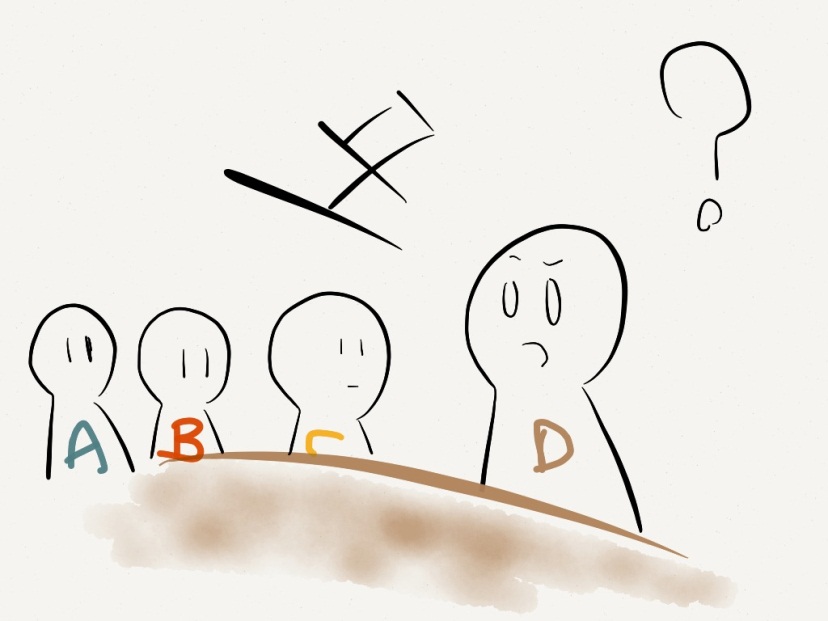
    PROFESSOR: Because hot water will heat up the air inside the compartment. Of course, the longer you wait before closing the door, the more evident the effect would be. You all saw how quickly air cooled down when I opened the beer bottle. (Takes couple of sips of beer). You can create the same effect by opening the freezer compartment. Now when you open both hot and cold water compartments, the one with hot water will experience greater decrease in temperature; air with lower density will lose more energy when expanded at the same volume as air with higher density. This gives the last minute boost of freezing air to hot water compartment.18
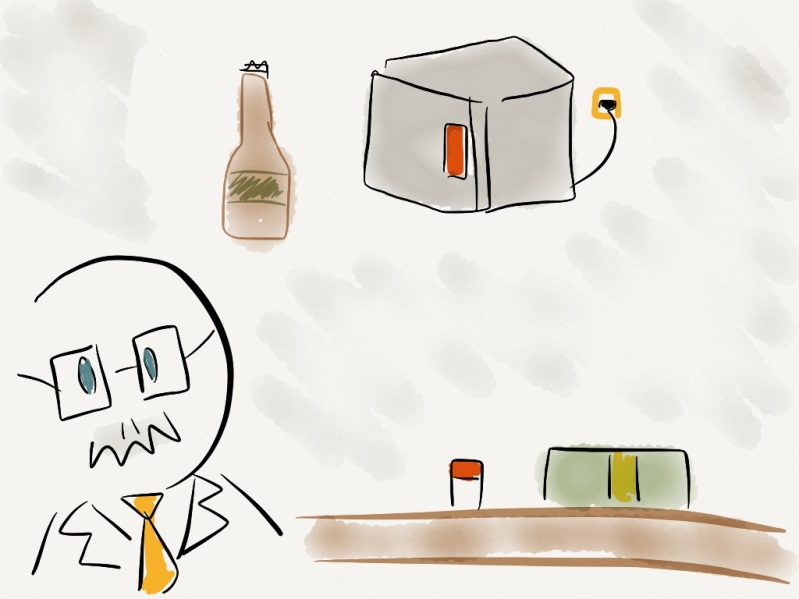
    But even if you don’t open the freezer, lower pressure will facilitate freezing. Can anyone guess why?


    STUDENT A: As we can see on the phase diagram, the freezing point of water is higher at lower pressure. Hence, by lowering the pressure, hot water will freeze at higher temperature than cold water.19
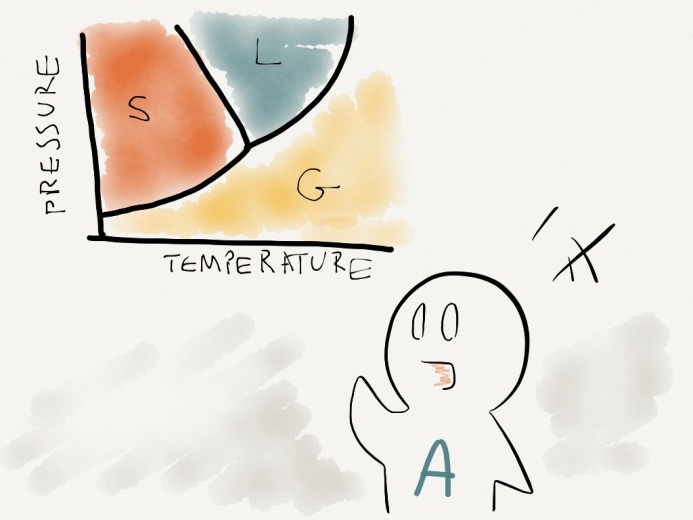
    PROFESSOR: Excellent! Although the boiling point is lower at low pressure, freezing point is higher. Since ice occupies greater volume than liquid water, applying pressure to ice cubes will turn solid into liquid. Not only does lowering pressure increase evaporation rate, it helps to crystalize ice!

    STUDENT C: I see… Mpemba effect isn’t magic. It’s science.!

    STUDENT D: (frustrated) But professor, none of these answers answer any questions at all! Why must water evaporate? How come its temperature is not uniform? How come its density changes with the temperature? Why all this?
    20

    PROFESSOR: This class is a natural philosophy class for a reason. Science is a study and observation of the universe, finding pattern in its chaotic behavior and thereby hypothesizing the answer with logic. And we test our hypotheses to come up with a prediction. We, scientists, ask the question ‘why?’ and dwell on solving the mystery. But the answer we find is the answer to the question ‘how?’  We observe the mechanism and apply it, but we still don’t know why the universe behaves in the way it does. For example, why does Earth create gravitational attraction? Einstein explained that it is because mass curves the space. But why does mass create a distortion of space and why does the distortion cause attractive forces? We don’t know. All we know is how mass creates gravity

    Class, I encourage all of you to pursue knowledge with an inquisitive mind. Scientific knowledge is what shapes our future.

    Class dismissed. Write me 50 pages on Mpemba effect by tomorrow.   It should be easy now that we discussed it in class.
    21

  • Creepy costumes: radioactive Madame Curie

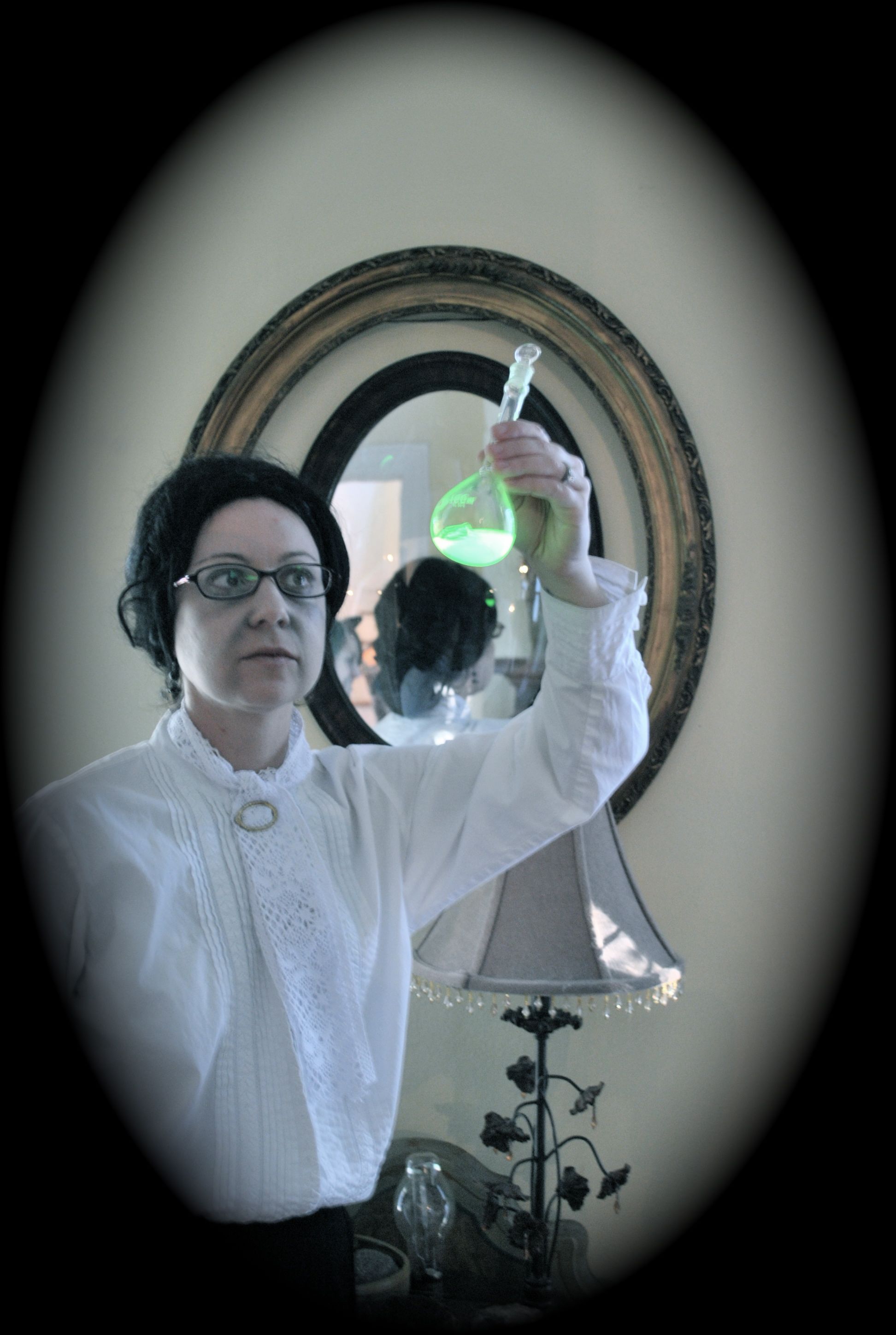
    This year for Halloween, why not celebrate Marie Curie, the first woman to win the Nobel Prize?  The good news (for you, not for her) is that she died a gruesome death as a result of exposure to the radioactive chemicals she studied so she makes for a spooky costume.  Even now, her lab notebooks are so radioactive that researchers that want to look at them have to wear lead aprons!  Madame Curie’s official cause of death was anemia, so a little yellow or gray makeup would be appropriate.  You can mimic radium by cutting open an activated glow stick and pouring it in a test tube or flask (she used to like to carry her chemicals around in her pocket).  I found a Victorian-era skirt at a vintage clothing store, but any dowdy dress will do….creepy AND geeky! Happy Halloween!!!

  • Celebrate DNA Day with a Chocolate Smoothie!

    Celebrate DNA Day with a Chocolate Smoothie!

    Happy DNA Day!!!!

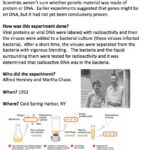
    So, it’s April 20th and you want to celebrate DNA day, but aren’t sure how?  What about making chocolate smoothies in honor of Alfred Hershey and Barbara Chase, the rockin’ scientists whose experiment finally convinced everybody that the information for your traits (i.e. genes) was contained in DNA rather than in protein, which was the other contender .  They made their discovery 60 years ago so now’s a good time to call them out.

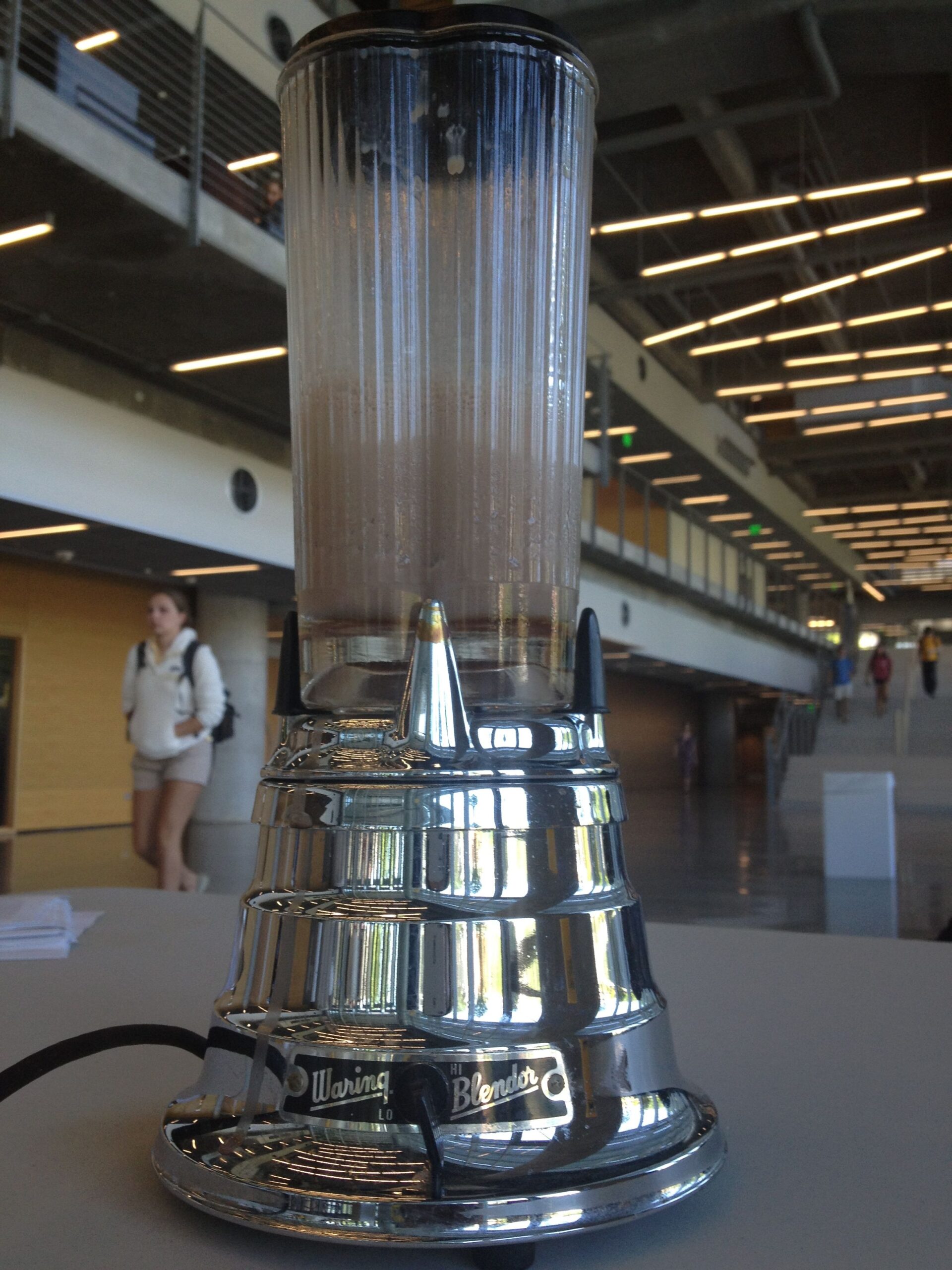
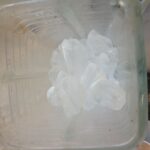
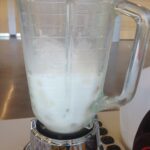
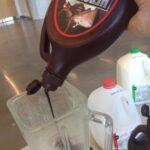
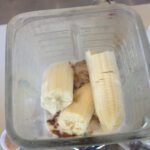
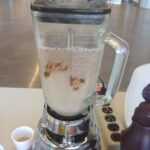
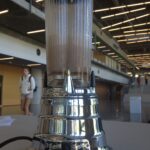
    Now, 1952 was a prosperous time in America and while folks were makin’ babies, watching TV and buying $0.20/gallon gasoline to fuel their big, beautiful cars, Hershey and Chase were hanging out on Long Island at the Cold Spring Harbor Laboratory, mixin’ up phage (bacteriophage) and E. coli.  Phage are viruses that infect bacteria and when they do that they bring genetic information along with them.  Hershey and Chase had the genius idea that if they labeled the different parts of the phage with radioactivity and then tracked which parts went INTO the bacteria, they could figure out what genes were made of.  So, they labeled the phage protein with radioactive sulfur or the phage DNA with radioactive phosphorous and added it to the bacteria for a little while.  Then they used a blender (like the vintage Waring blender pictured here) to knock off any parts of the phage stuck to the outside of the bacteria and, lo and behold, the radioactive DNA was inside the cells carrying the genes and the radioactive protein got knocked off of the cells and floated away.

    The results of the Hershey Chase experiment paved the way for the golden era of molecular biology and actually made people care about the big paper Watson and Crick put out the next year that proposed the structure of DNA.

    So, HAPPY DNA DAY! Here’s how you can use YOUR blender to pay delicious tribute to these important scientists.

  • Water: Prankster of the Natural World Part 2

    Water: Prankster of the Natural World Part 2

    If you haven’t read part 1 (why would you do that?), here is a review of the scenario we are considering in part 2:


    Two identical containers of water (same volume, same container size and material) are placed into a freezer. One container contains water at just below its’ boiling point (< 100 °C) and the other at roughly room temperature (21 °C). Which will freeze first?


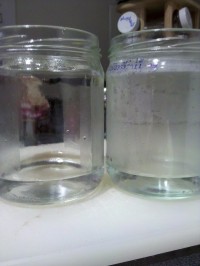
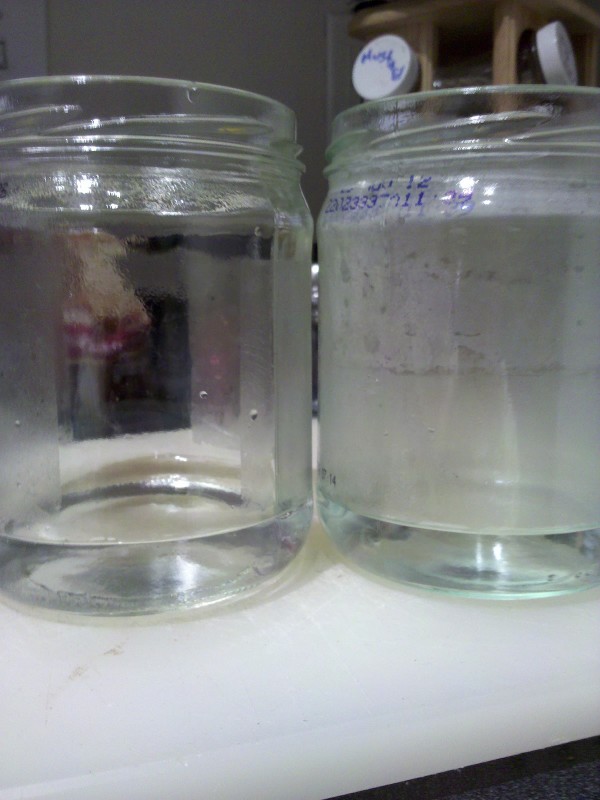
    Well I have two jars right here!

    In part 1 I discussed the Leidenfrost effect, named after a guy named Leidenfrost. In part 2 I will discuss the Mpemba effect named after, you guessed it, a guy named Mpemba. Interestingly, Erasto Mpemba was a young student when he made the initial observation that hot water can freeze faster than cold water. While he was not the first to make this discovery, his observation led to the first scientific study of the topic so it bares his name.


    At first glance, the second scenario is decidedly less exciting. No boiling, no sizzling, and unfortunately no shoddy videography, but unlike the Leidenfrost effect the mechanism behind the Mpemba effect is still hotly debated. During the boiling experiment the lower thermal conductivity of a trapped steam layer prevented efficient heat transfer to the remaining liquid droplet. Several competing explanations are offered for the Mpemba effect, but I will only consider the influence of variation in heat transfer upon freezing. In general “heat transfer” can be considered to explain both the Mpemba and the Leidenfrost effect, and there are three modes of heat transfer. Last time I described conduction which is the transfer of heat within a solid material or between two physically connected bodies. Conduction assumes that the atoms involved in the transfer of heat are fixed in space, like they would be in the solid pan from the Leidenfrost scenario or the walls of the container for the Mpemba effect. Thermal conductivity as described in part 1 is a measure of heat conduction. In a fluid convection is the major mode of heat transfer and implies that atoms or molecules are free to move around. Convection is the reason a bath of cold water with hot water poured into it will eventually reach a single homogenous temperature or opening the front door on a cold day will “let the cold in”. When dealing with both solids and “fluid” phases (a fluid means a non-solid phase) both conduction and convection can be considered. A more detailed explanation of conduction and convection can be found here.

    The third mode of heat transfer is radiation, which is the transfer and absorption of electromagnetic radiation. This was indirectly discussed in a previous article but is not important for these scenarios. A nice animation of each of the three modes mentioned here can be found on the web.

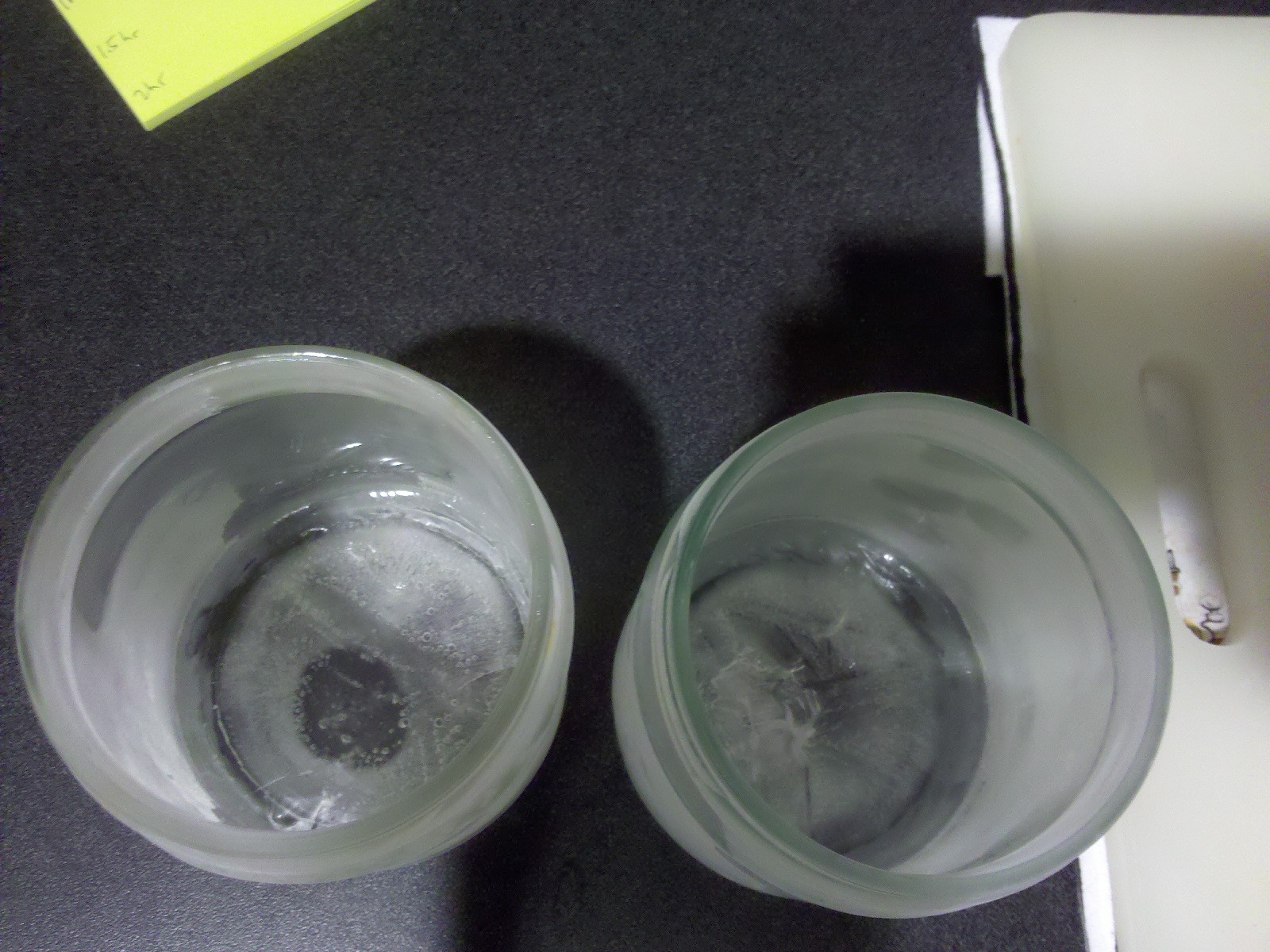
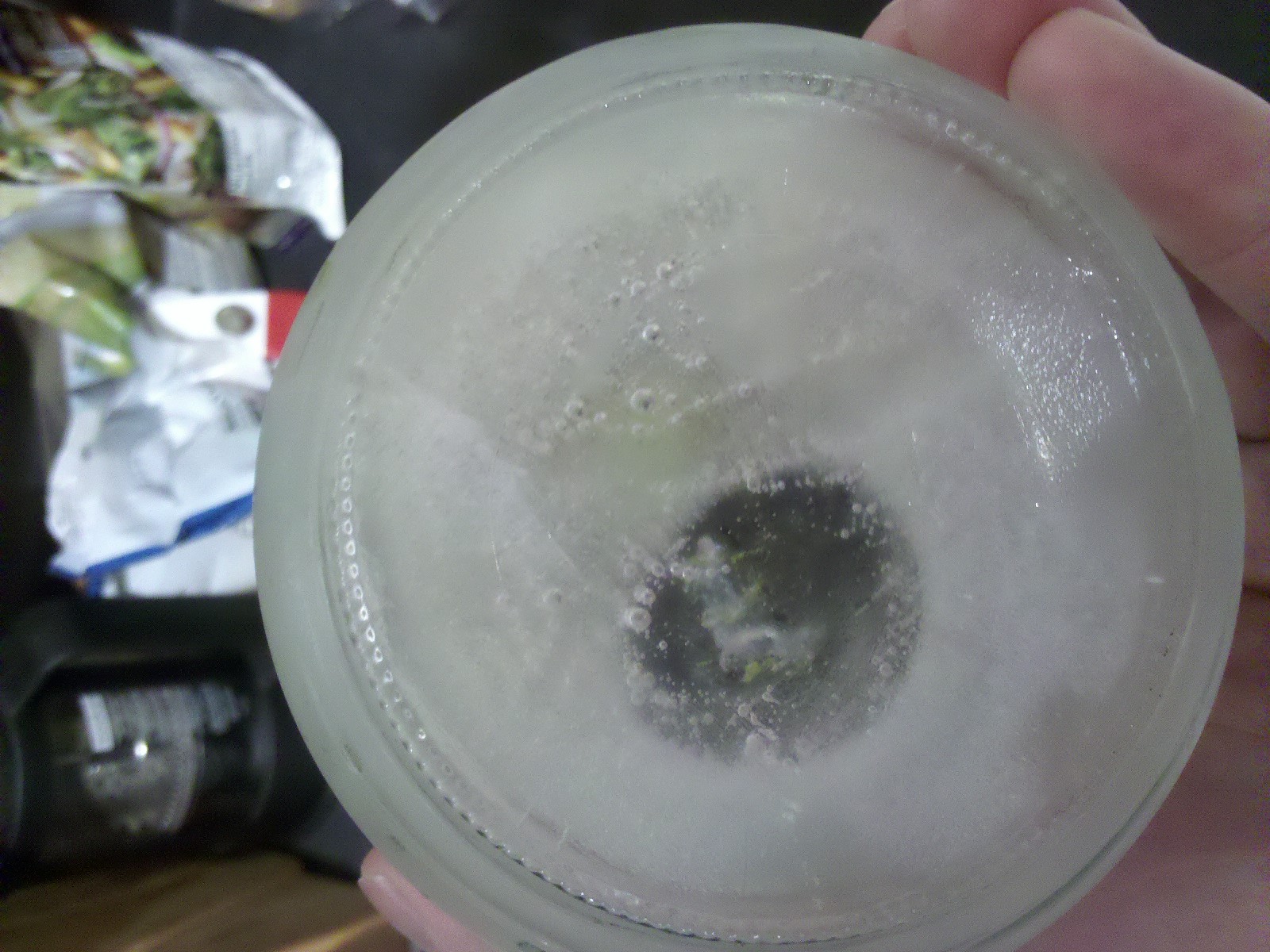
    To observe the Mpemba effect I took two identical salsa jars and ate their contents. This did not result in the Mpemba effect so I cleaned the jars and set about a second experiment. In one jar I put ¼ cup of tap water and allowed the water to reach room temperature by setting it on the counter for a few minutes. The temperature of my room was about 24 °C (75 °F). In the second jar I put ¼ cup of boiling water. By the time I poured the water it had cooled slightly from the boiling point (100 °C or 212 °F) to about 88 °C (190 °F). I checked these temperatures with a meat thermometer intended for porkchops and roasted chickens so the accuracy is not perfect but for this experiment it doesn’t matter – we only want to confirm that one container has water at a significantly higher temperature than the other. I placed both containers into my freezer which according to the same thermometer is somewhere around -15 °C (5 °F). After two hours I took the containers out and had a look-see. The room temperature water was mostly frozen except for a cavity between the ice at the top of the jar and the bottom of the jar itself. The boiled water was frozen solid. If I moved both jars around motion of the remaining liquid water in the tap water jar was obvious. From left to right below is both jars from the top after freezing, the room temperature jar from the bottom, and the boiling water jar from the bottom. The opening image for this article shows both jars unfrozen.


    Both jars after freezing – tap water on left
    Boiled water frozen
    Frozen tap water


    The heat transfer explanation that fits my results goes something like this: due to a difference in density between hot and cold water, hot water in the boiled container rises to the top and delays freezing. When the hotter water cools slightly it sinks to the bottom of the jar and stirs the rest of the container, keeping the temperature in the container homogenous. These movement within the water due to relative density differences are called convective currents. The convective currents are strong enough to keep the average temperature in boiled hot water jar above freezing until the entire container freezes simultaneously. Convective currents due to temperature differences are responsible for many naturally occurring events like the movement of an atmosphere around a planet. Meanwhile, the initially cooler tap water freezes at the top of the container preventing convective heat transfer between the water and the cold air in the freezer. Convective currents are also present in the tap water jar, but the remaining heat distributed by them is not enough to prevent a top layer of ice from forming.


    I feel obligated to admit that I had some difficulty getting this experiment to work. At first I tried using a whole cup of water in the same jars, checking the temperature in each container every five minutes. In this test I found that the boiled water dropped in temperature very rapidly at first whereas the tap water changed temperature very slowly. Both jars reached around 34 °F, just above the freezing point, at about the same time. The tap water jar froze on the top first making subsequent measurements of the underlying liquid difficult. Eventually both containers were mostly frozen but I couldn’t tell when the interior of either jar had frozen. Repeatedly opening the freezer door to inspect the jars also manipulates the experimental conditions, so when trying this at home I recommend you only check the freezer once an hour or so to see if anything is frozen. Transparent containers like my glass salsa jars make a quick inspection easier, but using containers of different materials could lead to some interesting results. It is this apparent sensitivity to experimental conditions that makes the mechanism responsible for the Mpemba effect subject to question. You can read more about some of these on the Wikipedia article for the Mpemba effect, but I encourage you to try some of your own tests and see what you find!

  • Zinc has bigger game than you do

    Zinc has bigger game than you do


    Still struggling to pick out that one in a million Valentine’s Day gift? Worry no longer, because I have the perfect gift idea sure to make anyone melt. No – it’s not superhot plasma from your favorite star gone supernova (the Biebs?) – We’re talking zinc baby. Baby. Baby. Baby. Oh baby.

    Zinc coatings on steel to be exact, through the process of “hot dip” galvanization.  The hot dip part is literal – pieces of steel are dunked in a bath of molten zinc metal and when they are removed a thin layer of zinc is atomically attached to the surface of the steel. The “galvanized” part belies the true function of the coating, considering this word is derived from a certain Italian who took liberties with dead frogs.

    “Why bother?” Your significant other may ask.  “Here I had this nice piece of steel and now you’ve gone and hot dipped it. I think we’re at two different places in our relationship.” We’ve all been there.

    The role of the zinc is to protect the iron in iron alloys (most importantly steel) from rusting. Like a proverbial knight in shining (preferably hot dipped) armor, zinc prevents the steel from rusting by selflessly doing all the rusting itself. As I describe it, this is starting to sound a lot less romantic and more like zinc has wandered into the friend-zone. Poor zinc.

    If you read my last article, you know that natural corrosion resistance is rare among the elements, but ironically zinc protects steel by being less good at resisting the undesirable reactions with oxygen and water that cause the formation of rust on steel. A good analogy for this process is if both zinc and iron open lemonade stands on the same block and oxygen is the customer. Every time iron is trying to seal the deal zinc unleashes a humorous ad campaign and slashes their prices, so naturally oxygen buys lemonade from zinc instead. Now replace lemonade with electrons and you’ve got a half-decent understanding of how zinc does its job – as far as oxygen is concerned it came to this two bit lemonade town to buy lemonade from somebody (form an atomic bond), and zinc sure is looking pretty good right now. The only discrepancy with this analogy is that in the business world iron would have to resort to foul play and steal all of zinc’s lemons or deface their billboards or something. Probably shouldn’t write that on your next chemistry exam though. But don’t feel bad for zinc – the corrosion products of zinc with the environment (zinc oxide and zinc carbonate), actually prevent continued corrosion of the underlying zinc. This is called “passivation” which is the way that many other metals, like aluminum, avoid needing a hot dip.

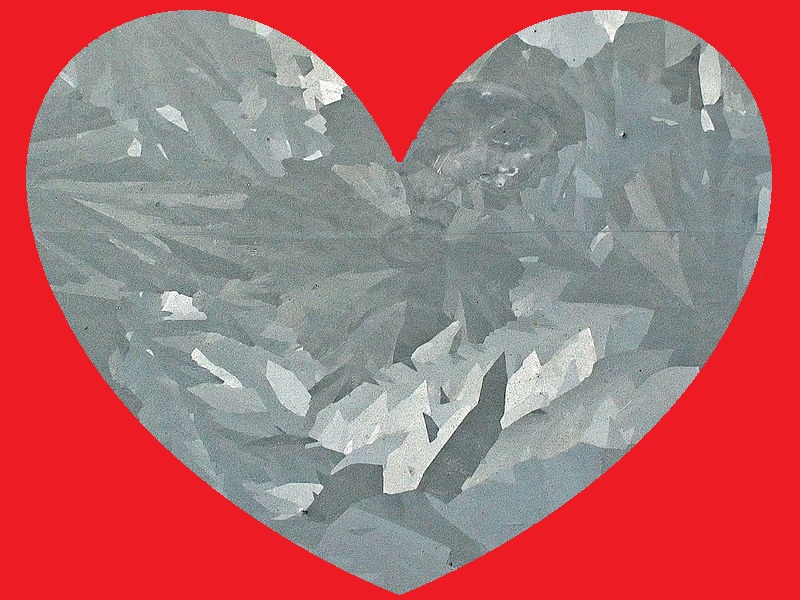
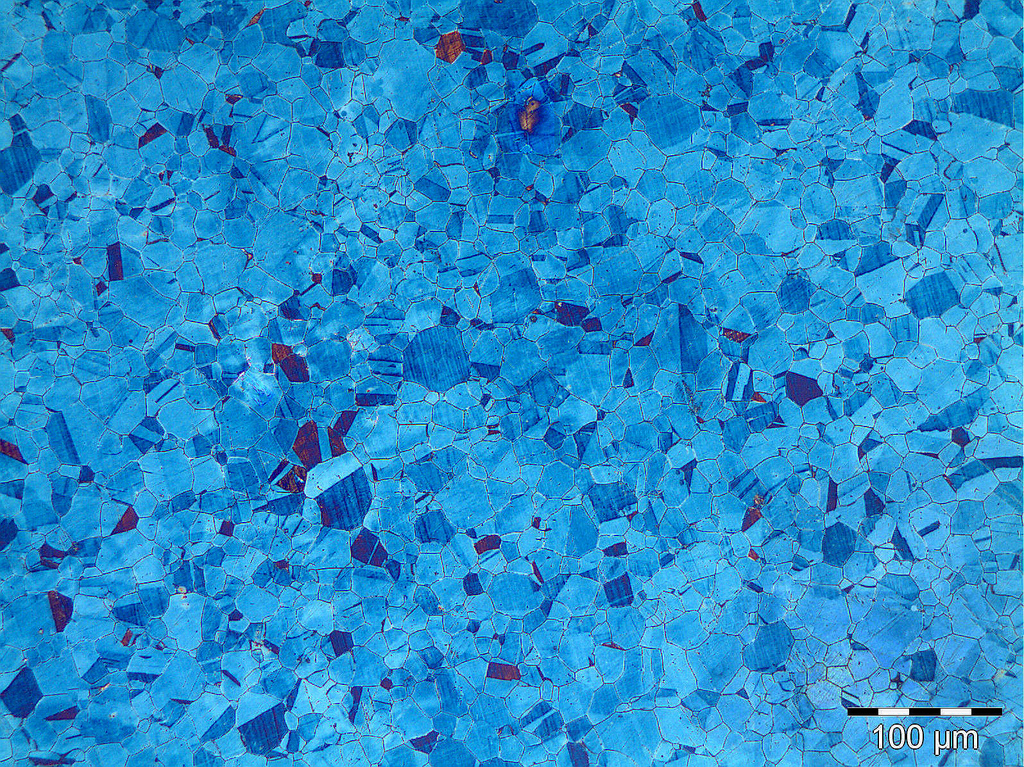
    So we’ve covered the “from the heart” part of a good V-day gift, but a box of galvanized nails might not send the right message to the apple of your eye. The good news is hot-dip galvanized steel looks really cool. The next time you’re passing a guard rail, street light pole or the like, you might notice a kind of patchwork series of flecks on the surface of the steel. No, that’s not art deco, those are the macro-sized crystalline grains of zinc busy oxidizing away. You can see some of these flecks inside the heart at the beginning of this article. In fact, all metals crystallize in this way, but because of how the zinc coating is applied the crystals of zinc that form on the surface of the steel are able to grow very large. If you were to take a high powered microscope and have a look at the surface of un-galvanized steel you would see a very similar grain structure but about 1000 times smaller. A good example is shown below from the Flikr photostream by the department of engineering at the University of Cambridge –  I admit I am a little jealous at all the cool science photos they have. Do yourself a favor and check them out.  The grains in this image are about 30-50 micrometers, which is about half the width of a human hair.

    Normally the grain size in so called “engineering materials” like steel is intentionally kept very small because it improves strength. Zinc, whose only role is as a sacrificial coating, can flaunt its’ big ole’ grains. The only other example I can think of where crystal grains are visible like this is in polycrystalline silicon solar cells. The fact that all three of these materials have the same general appearance is not by chance, but more on that another time.


    If love is sacrifice, then zinc has got it down. I will close with a poem that you can use with your gift:

    Roses are red,

    Rust is red too,

    A coating of zinc,

    says I – LOVE – YOU


    And don’t I just.


    – Gordon


    Original image sources:

    hot dip galvanized

    grains of steel