Tag: climate change

  • Mandai Bird Paradise: Asia’s Biggest Aviary Sanctuary

    The Mandai Bird Paradise is the biggest bird conservatory in Asia, inaugurated back in May 2023. As one of the six pillars of the Mandai Wildlife Reserve, the incredible sanctuary covers over 42 acres of land on Mandai Island in Singapore. The reserve houses around 3,500 birds encompassing over 400 different species. Mandai Nature is the conservation arm of the Mandai Wildlife Group, which is dedicated to providing a haven for all these species through the Mandai Bird Paradise and to preserving Southeast Asia’s incredible biodiversity through conservation efforts, with a focus on averting species extinction (Temasek Trust, 2024). 

    Such a variety poses a rather obvious question: How? In order to answer this question, we must chart our way through the science behind conservation, biodiversity and rehabilitation!

    Conservation

    Conservation, as defined by the Merriam-Webster dictionary, is to carefully preserve and protect something. In a wildlife context, it is orchestrated management of natural resources to prevent exploitation, destruction, or neglect. Conservation efforts to preserve biodiversity are not just about protecting animals in isolation, but in our context, it is about the creation of an entire ecosystem where species can thrive naturally.

    At Mandai Bird Paradise, conservation takes an approach similar to this article on biodiversity conservation by diversity (Ramón et al., 2020). In-situ conservation focuses on protecting species in their natural habitats, whereas, ex-situ conservation, which is practiced at Mandai, provides controlled environments where vulnerable or endangered species can be bred, monitored, and protected from immediate threats such as habitat loss or poaching.

    The sanctuary also participates in international breeding programs and collaborates with global conservation organizations to ensure genetic diversity is maintained among species. This is critical because reduced genetic diversity due to issues such as environmental changes from global warming can make populations more susceptible to disease. Through these coordinated efforts, Mandai Bird Paradise becomes more than just a sanctuary, but a cornerstone in the Mandai Wildlife Group’s stand as an active contributor to global conservation science.


    Biodiversity

    Biodiversity refers to the variety of life in a particular habitat or ecosystem, encompassing differences in species, genetics, and ecological roles. The presence of over 400 bird species at Mandai Bird Paradise highlights not only the richness of different avian life present but also the complexity of maintaining such diversity within a single environment. This maintenance is done by separating the 42-acre land into around 10 unique habitats that each suit a certain group.

    Each species then gets to play its unique role in its ecosystem, from seed dispersal to pollination and pest control. By housing a wide array of species, the sanctuary effectively simulates interconnected ecological networks, allowing researchers and conservationists to better understand how these systems function.

    Maintaining biodiversity in a controlled setting requires careful planning. Factors such as diet, climate conditions, nesting environments, and social groupings must all be tailored to meet the needs of different species. For instance, tropical birds such as the Andean cock-of-the-rock (yes, you read that right) require high humidity and dense vegetation, while others may need open spaces or specific nesting structures. This level of detail ensures that the birds are not only surviving but thriving in conditions that closely resemble their natural habitats.
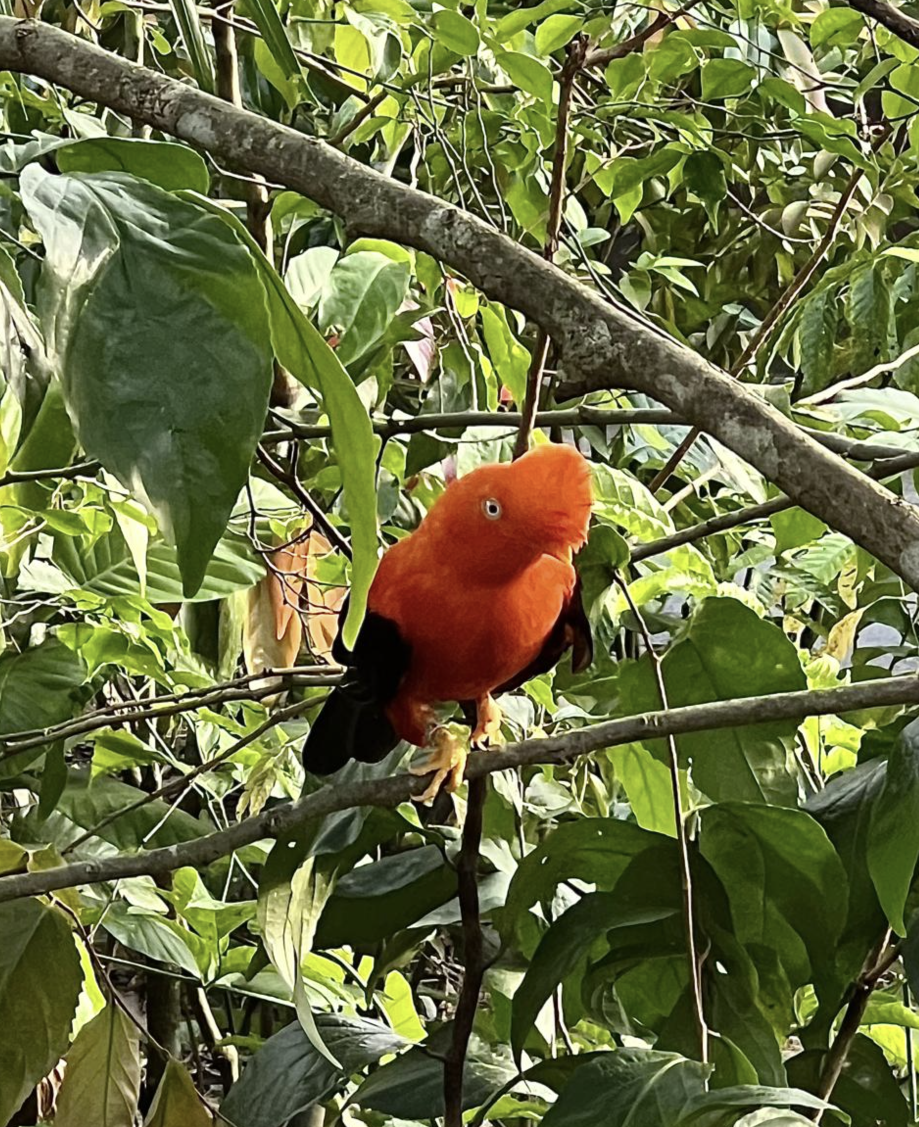
    Andean cock-of-the-rock


    Rehabilitation

    Rehabilitation is another crucial component that involves the care and recovery of injured, displaced, or trafficked birds with the goal of reintroducing them into the wild whenever possible.

    Birds that arrive at rehabilitation centers often suffer from injuries caused by habitat destruction, illegal wildlife trade, or human interference. At Mandai, veterinary teams and specialists provide medical treatment, nutritional support, and behavioral conditioning to help these birds regain their strength and natural instincts.

    One of the key challenges in rehabilitation is ensuring that birds do not become overly dependent on human care. To address this, caretakers minimize human interaction and design enclosures that encourage natural behaviors such as foraging and flight. Only when a bird demonstrates sufficient recovery and independence is it considered for release. Even when release is not possible, rehabilitation still plays an important role. These birds may become part of educational programs, helping to raise awareness about conservation issues and inspiring visitors to take action in protecting wildlife.


    Mandai Bird Paradise – Sanctuary & Conservation Magic

    Mandai Bird Paradise is more than the visually stunning attraction you see through my lens, it is a living example of how science, conservation, and education can come together to protect our planet’s biodiversity. By integrating conservation strategies, maintaining diverse ecosystems, and supporting rehabilitation efforts, this sanctuary embodies what modern wildlife preservation should look like. In doing so, Mandai Bird Paradise not only safeguards thousands of birds but also inspires future generations like yours and mine to value and preserve the delicate balance of life on Earth.
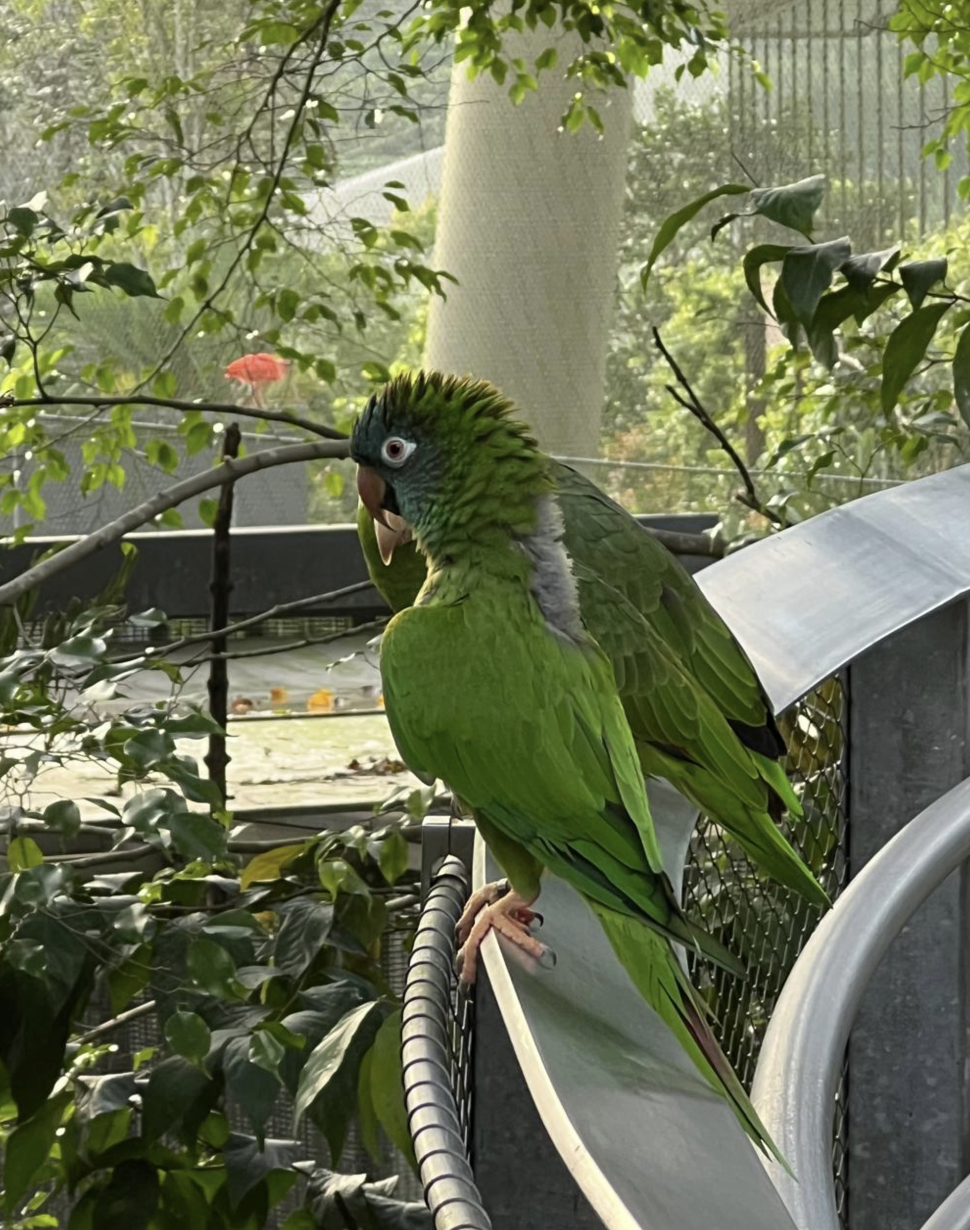
    Blue-crowned Parakeet

    Bits of My Time

    This reserve is one of the most beautiful places on Earth! Walking out into the Crimson Wetlands zone of the park felt like a scene straight out of a movie. There were colorful macaws soaring overhead, bright American flamingos dancing by the pond, Scarlet ibis carefully balancing on the hand rails and so much more. My exploration of the Mandai Reserve taught me so many fun facts about birds and this experience rekindled my love for all things nature. It truly gave me a fond memory to recall for the rest of my lifetime.

    References

    All Photography/Illustrations by Kristina Sarah Siju

    Mestanza-Ramón, C., Henkanaththegedara, S. M., Vásconez Duchicela, P., Vargas Tierras, Y., Sánchez Capa, M., Constante Mejía, D., Jimenez Gutierrez, M., Charco Guamán, M., & Mestanza Ramón, P. (2020). In-Situ and Ex-Situ Biodiversity Conservation in Ecuador: A Review of Policies, Actions and Challenges. Diversity, 12(8), 315. https://doi.org/10.3390/d12080315 

    Protecting Wildlife, Preserving The Future. (2023). Temasek Trust Revamp. https://www.temasektrust.org.sg/what-we-do/impact-hub/article-details/mandai-nature-impact-report-2023-2024

    Speiran S. I. M. (2025). The ‘Sanctuary Gap’: Reviewing the Research on Captive Wildlife Sanctuary Tourism. Animals : an open access journal from MDPI, 15(4), 496. https://doi.org/10.3390/ani15040496
  • What’s Up (Literally) With Cloud Seeding?

    Dubai, one of the richest and driest cities in the world, is flooding. Many have been quick to blame cloud seeding, a climate-engineering strategy the city uses to wrench every drop of moisture it can from its dry air.

    Is cloud seeding really to blame? And regardless of if it is… what even is it?


    What is Cloud Seeding?

    Clouds form around nuclei, small particles that cool the area around them, causing water to condense and form the early wisps of clouds. These clouds then grow and take shape as more water condenses in the atmosphere, forming larger clouds. Eventually, clouds break, giving way to a deluge of rain.

    It stands to reason then, that if there were more of these small particles in the atmosphere, more clouds would form and there would be more rain. Governments in dry areas, like state governments of the American Southwest and city, state, and national governments in the Middle East and South Asia have been quick to turn to cloud seeding as an opportunity to increase rainfall and bring more moisture down from the atmosphere. Specifically, governmental cloud seeding programs tend to use planes and cannons to seed clouds with dry ice and liquid iodine, creating more cloud nuclei and thus more and denser clouds (Borenstein and Peterson, 2024).

    While the practice makes sense in theory, weather scientists disagree on whether or not it actually works (Al Hosari et al., 2021). In particular, the difficulty of proving anything weather related due to the complexity of cloud formation processes and shifting climatic patterns has made cloud seeding a difficult to test subject (Bruintjes, 1999).

    Some studies, like this one by the United Arab Emirates’ National Center for Meteorology, argue in favor of cloud seeding, highlighting results that prove an average increase in annual rainfall by 23% over seeded areas (Al Hosari et al., 2021). The center reports that cloud seeding practices have increased storm volume by over 150%, area cover by just over 70% and lifetime by roughly 65% (Al Hosari et al., 2021). Surely such explosive results are significant?

    And yet, many scientists still cast doubt. A study by the American Meteorological Association argues against cloud seeding, stating that the variation in “precipitation formation mechanisms” between locations and at a location given shifting climatic patterns weaken the scientific credibility of cloud seeding’s reported progress (Bruintjes, 1999). As AP News reports, “cloud seeding, although decades old… has been hard to prove [to do] very much” (Borenstein and Peterson, 2024).


    Did Cloud Seeding Cause Dubai’s Floods?

    The resounding consensus: no.

    According to AP News, while many blame cloud seeding, it certainly is not the cause of Dubai’s recent floods. The record breaking storm was “forecast days in advance” and more or less expected by climate scientists (Borenstein and Peterson, 2024). Cloud seeding, while potentially effective, can not create water out of moisture-less air, and to state that cloud seeding could cause the deluge is “akin to [believing in] perpetual motion technology” (Borenstein and Peterson, 2024). At its best, cloud seeding can bring more water from the atmosphere down to the ground, but it cannot create moisture where there wasn’t any before. Regardless of whether cloud seeding works – the storm must’ve gotten moisture from somewhere.

    Where did that moisture come from? Scientists blame climate change. As the climate warms, so does the atmosphere, and warmer air can hold more moisture (Borenstein and Peterson, 2024). The strangely large concentrations of moisture in an otherwise dry region are likely due to a warming global climate, one that allows for larger build-ups of moisture and stronger storms. These storms, termed “whopper storms” have been predicted (with statistical significance) to increase over the southeastern Arabian Peninsula, forewarning of more storms to come (Borenstein and Peterson, 2024).

    At the end of the day, cloud seeding did not cause Dubai’s record-breaking storm. Climate change did.


    Citations

    Al Hosari, T., Al Mandous, A., Wehbe, Y., Shalaby, A., Al Shamsi, N., Al Naqbi, H., Al Yazeedi, O., Al Mazroui, A., & Farrah, S. (2021). The UAE Cloud Seeding Program: A statistical and physical evaluation. Atmosphere, 12(8), 1013. https://doi.org/10.3390/atmos12081013

    Borenstein, S., & Peterson, B. (2024, April 18). Here’s why experts don’t think cloud seeding played a role in Dubai’s downpour. AP News. https://apnews.com/article/dubai-united-arab-emirates-oman-flooding-cloud-seeding-2f8c12854017e11ac7438579646b3758

    Bruintjes, R. T. (1999).  A Review of Cloud Seeding Experiments to Enhance Precipitation and Some New Prospects. Bulletin of the American Meteorological Society, 80(5), 805–820. https://doi.org/10.1175/1520-0477(1999)080<0805:AROCSE>2.0.CO;2

  • Tiny Organisms Solve Giant Problems

    The Plastic Problem

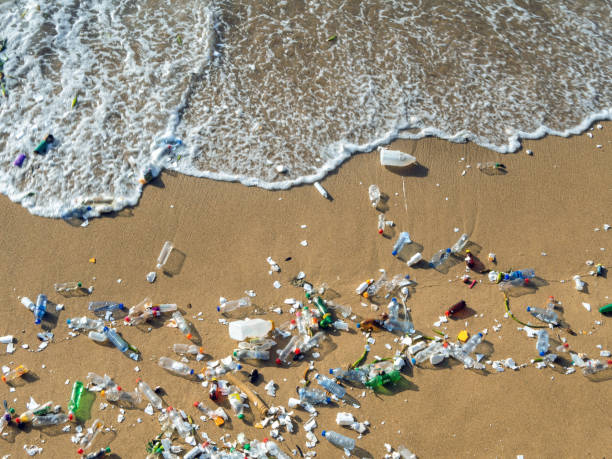
    A pressing issue our world is facing is “The Plastic Problem.” Humans have been creating harmful, non-biodegradable plastics and other materials for hundreds of years and polluting the planet with them. Scientists have been working to come up with reasonable solutions to waste management. While creating environmentally friendly alternatives is instrumental in preserving our planet, something must be done about the waste produced in years past.

    A natural solution?

    Who could have guessed that the Earth has been working to solve this itself? Some microorganisms have evolved and adapted to consume different types of plastic and convert their components into something good for the environment.

    Plastic-Eating Bacteria

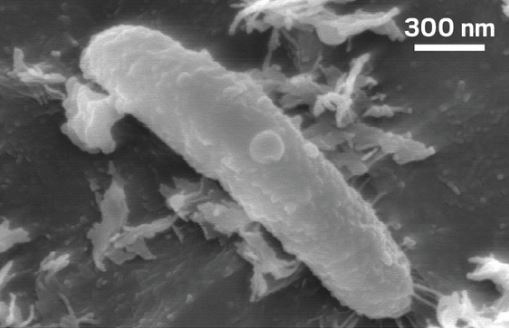
    Ideonella Sakaiensis is a bacteria discovered in Osaka, Japan. It secretes enzymes that break down harmful PET plastics into biodegradable PHB plastics. This bacteria could break down plastics in around 6 weeks when studied in a lab setting.

    Plastic-Eating Fungi

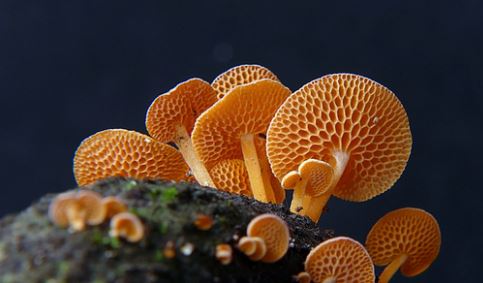
    Aspergillus Tubigensis, a naturally occurring fungus, was discovered by scientists at a waste disposal site in Islamabad, Pakistan. This fungus is also capable of breaking down plastic by secreting special enzymes. These enzymes destroy the bonds between molecules in the plastic.

    Plastic-Eating Larvae

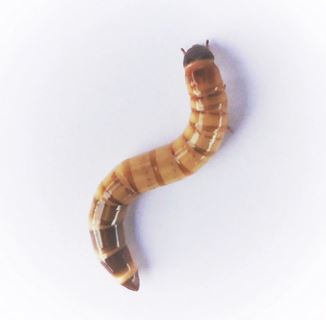
    Zophobas Morio, or “super worms”, are larvae of the darkling beetle. This creature can decompose polystyrene (AKA Styrofoam) through its digestion. The larvae’s gut microbiome is being studied to learn how to replicate the process of breaking down plastics and learn how to produce more efficient larvae.

    Is This Sustainable?

    For something to be sustainable, it must account for three things: ecology, equity, and economy. In other words, something must be good for people, nature, and the economy.

    While these organisms are all naturally-occurring, they are not the most efficient. In order for these organisms to become viable solutions to our plastic problem, they must be bio-engineered to be hundreds of times more efficient. Large-scale commercial use would be very expensive. The “willingness to pay” philosophy addresses how people will only choose sustainable products if they are willing to pay for them. More expensive endeavors are backed less by the average person. These organisms are only sustainable as long as researchers are given proper funding.

    References: