Tag: ecology

  • A day in the life of a field ecologist

    Details from my summer experience conducting fieldwork in the Colorado Rockies
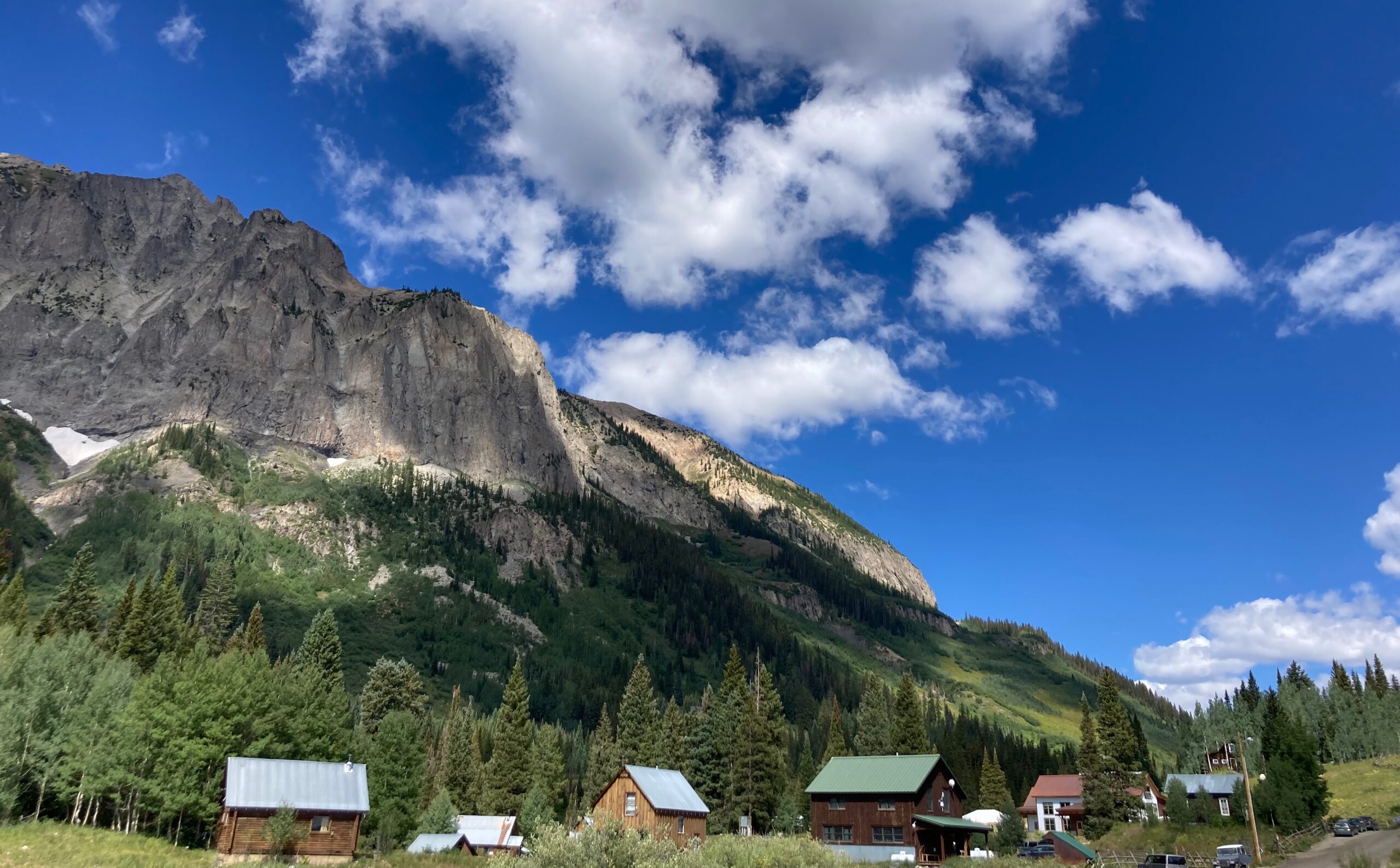
    Photo caption: View of the Rocky Mountain Biological Laboratory, with Gothic Mountain towering above.

    4:30 AM: Good morning! To arrive at my research sites in time to start my bird species surveys by 6 AM, I often have to wake up long before the sun rises. I get dressed, refill my water bottles, collect the snacks and PB&J sandwiches I prepared the night before, and grab my pack. Inside my pack I have my binoculars, data collection sheets, a handheld GPS unit, and of course a first aid kit and extra warm layers. Field research requires that you always be prepared for the unexpected!

    This summer I am investigating how birds in the southern Rocky Mountains are responding to climate change. To do this, I am conducting a resurvey of bird species along an elevational gradient. I have six research sites ranging from 8,100-11,200ft in elevation, and I will visit each site three times throughout the season to conduct a point count survey of bird species. A point count survey involves standing in one spot for a specific amount of time and recording all bird species I observe by sight or sound. Another student conducted these surveys in 2011, so I am repeating their methods to be able to compare the data from 2011 and 2023 and examine how bird communities have changed over the 12-year period.

    6:00 AM: After biking 3 miles along a gravel road to the base of Snodgrass Mountain and hiking another 3 miles up the slope (including a break halfway to enjoy my PB&J for breakfast), I am ready to begin the point counts. I use the GPS unit to locate the coordinates of each survey point, and record all of the species that I hear and see during a five-minute period. These surveys require me to be very familiar with the songs and calls of bird species in the region, as the majority of my detections are auditory. I audio record all of my point counts so that I can go back and verify observations later if I am not certain about my real-time identification in the field. 

    8:00 AM: After I finish the point counts, I sit down to eat a snack and enjoy the beautiful views around me. I begin my bike ride down the mountain, whizzing through fields full of blooming wildflowers.
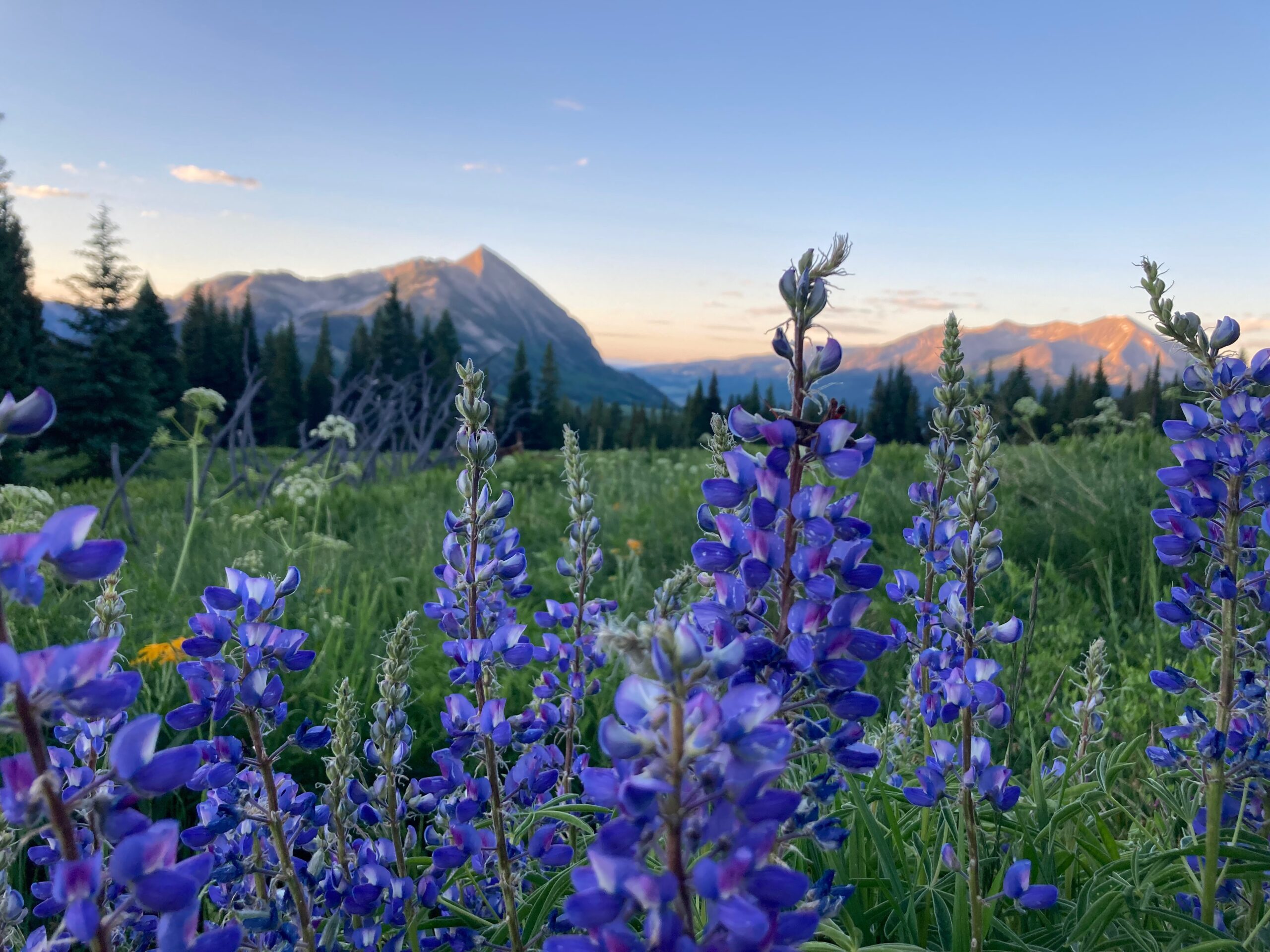
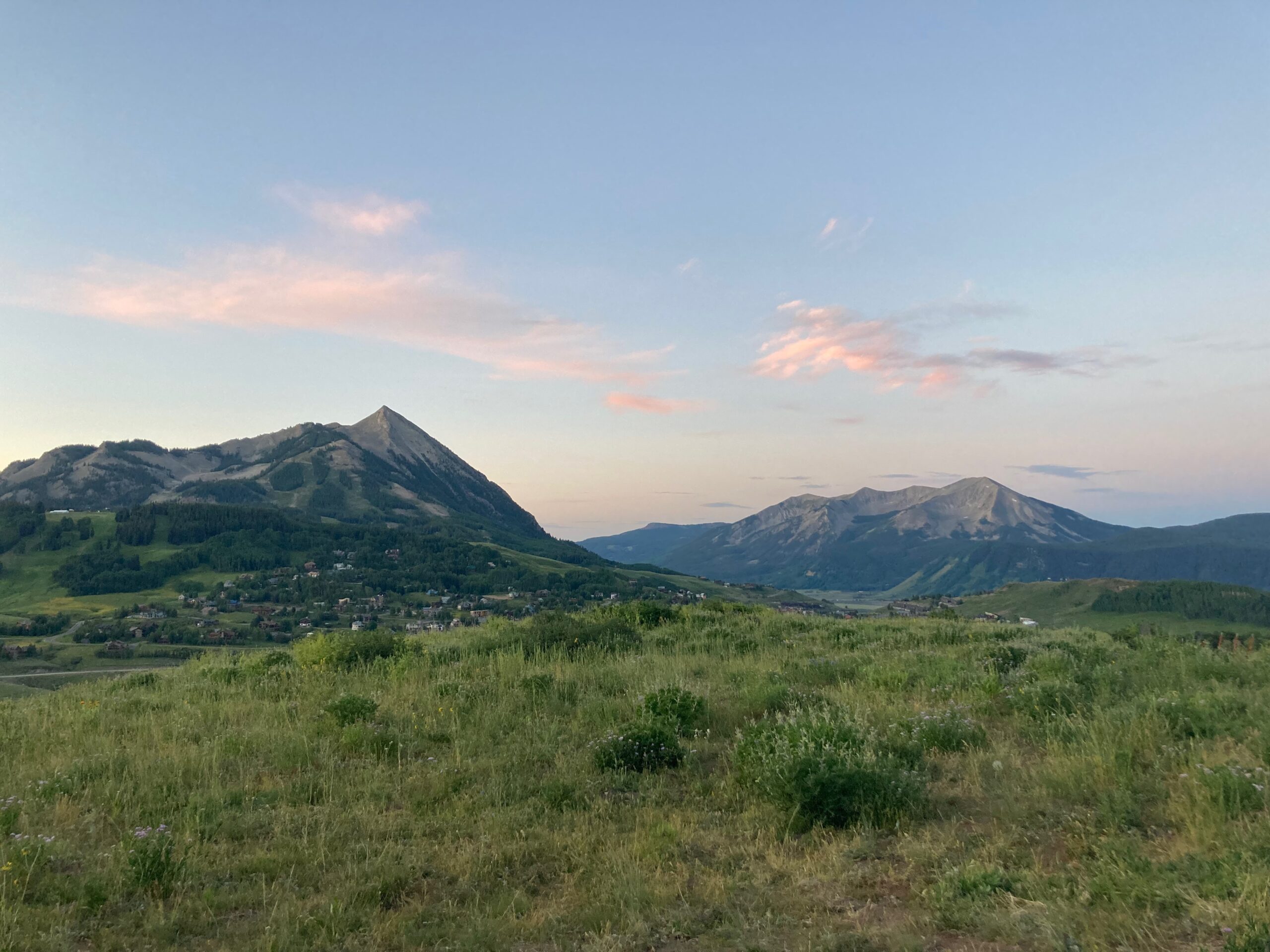
    Photo caption: Views of the sunrise and wildflowers from my trek up Snodgrass Mountain.

    9:30 AM: I make it back to my home for the summer: the Rocky Mountain Biological Laboratory (RMBL), a thriving community of almost 200 field biologists, each studying one component within the greater ecosystem of the southern Rocky Mountains, united with the goal of recording long-term ecosystem responses to climate change. I head to the dining hall to grab more snacks and refill my water—field work can be exhausting and it’s especially important to stay hydrated.

    10:00 AM: I head back to my cabin to enter my point count data from the morning. This involves transcribing my handwritten field notes on paper datasheets into a spreadsheet on my laptop. This is important for multiple reasons: it serves as a backup in case my paper datasheets are lost or damaged, and formatting an electronic file is the first step to performing statistical analyses to uncover trends and relationships in one’s data.

    11:00 AM: Now it’s naptime! With a wake-up call before sunrise, I almost always need a nap to recharge after morning fieldwork. 

    12:00 PM: I nap until lunchtime, and then I head down to the dining hall. RMBL has a great kitchen staff that makes sure the researchers are well fueled for their fieldwork, and the dining hall is a perfect place to meet other scientists and learn about all of the cool research taking place.

    1:00 PM: After lunch, I take some time to look over my research report draft and make some edits to the methods section because a couple of aspects have changed since I began my surveys out in the field. Keeping good records on the methods used for surveys and experiments is very important because it ensures future researchers will be able to reproduce the experiments.

    2:00 PM: Most afternoons, I work as part of the golden-mantled ground squirrel (GMGS) team on a long-term behavioral and spatial ecology project. This involves making rounds around the RMBL townsite looking for squirrels and recording their behavior in 10-minute periods. GMGS resemble chipmunks, but they are larger and can run faster. Another big component of the squirrel project is live trapping, where we bait small wire traps with peanut butter and place them around known squirrel territories. When we capture a squirrel, we put them into a special canvas bag for safe handling and we record morphological measurements such as weight and take hair samples for genetic analysis. The most exciting time is mid-summer when the squirrel pups emerge from their burrows. We try to trap pups every couple of weeks to monitor their growth.
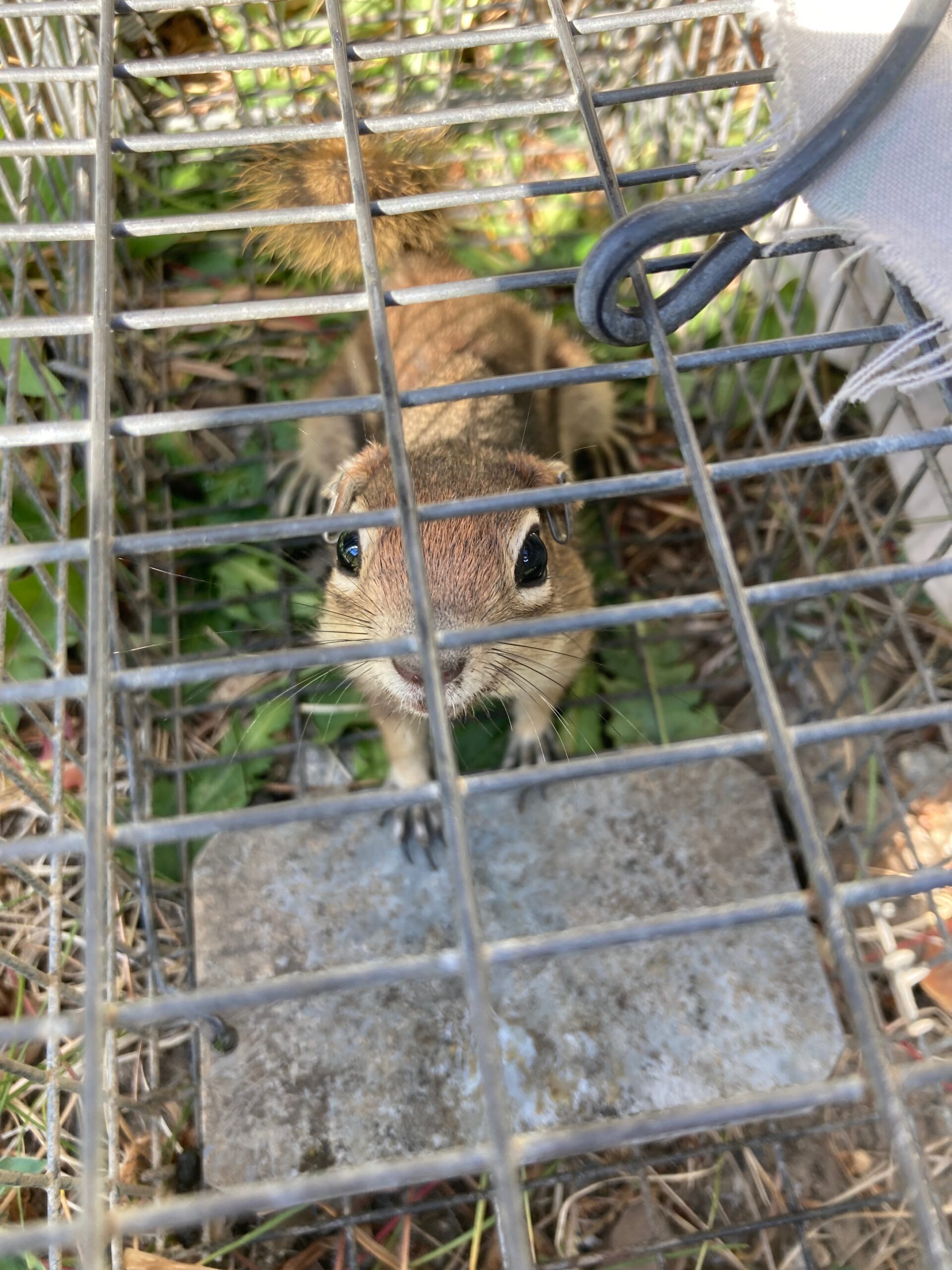
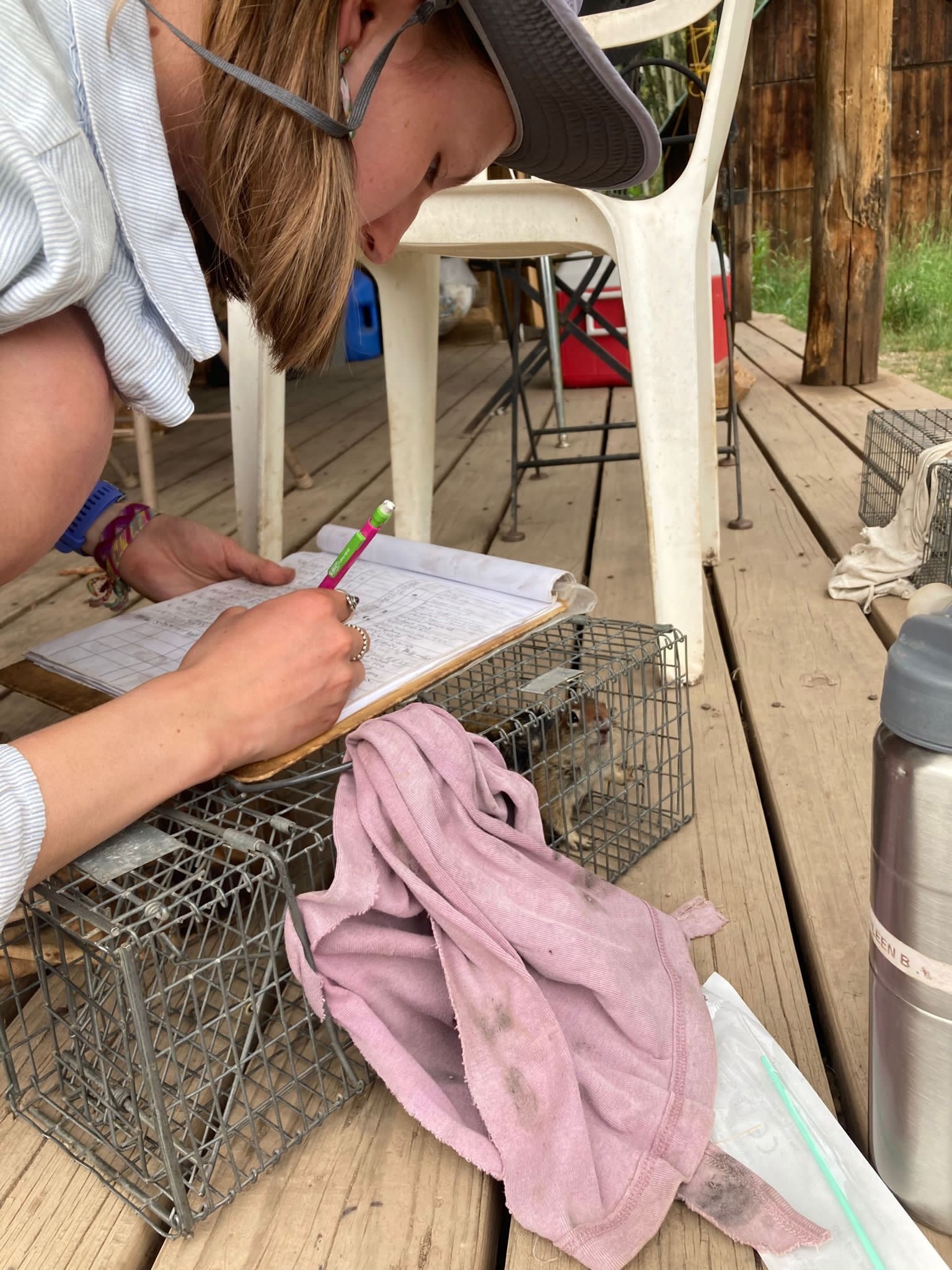
    From left to right: A GMGS inside a trap, data collection during GMGS trapping.

    5:00 PM: After my shift with the squirrel team, I head back to my cabin to rest and relax until dinner. I also must pack up my camping gear, because the site I am surveying tomorrow morning is several miles up the valley from the field station, and it requires an overnight backpacking trip to get there. I pack a sleeping bag, sleeping pad, small 2-person tent, extra layers, water filter, and my survey equipment in a backpacking pack. At the dining hall during dinner, I will grab extra snacks and make a couple of PB&Js to carry with me. 

    7:00PM: After dinner, myself and two of my fellow student researchers borrow a vehicle to drive to the beginning of the hiking trail that will take us to the research site. We park next to a beautiful alpine lake and begin the 3-mile hike. We will gain 1500 ft in elevation over the course of the hike, so the majority of the trail is unrelentlessly steep. The gorgeous views of the sunset over the mountains around us serve as a good distraction from the strenuous hike. Two miles into the hike, we reach a river crossing. We take off our hiking boots and socks and roll up our pants to wade through the ice-cold water. Once across the river, we know there’s only a mile left to climb, and the sunlight is fading fast so we push onwards to try and make it to the site before dark.

    Once we get to the site, which consists of a series of ponds located along a rocky mountain slope, we quickly set up our tents and get ready for bed. The stars are incredible here—we can even see the outline of the milky way.
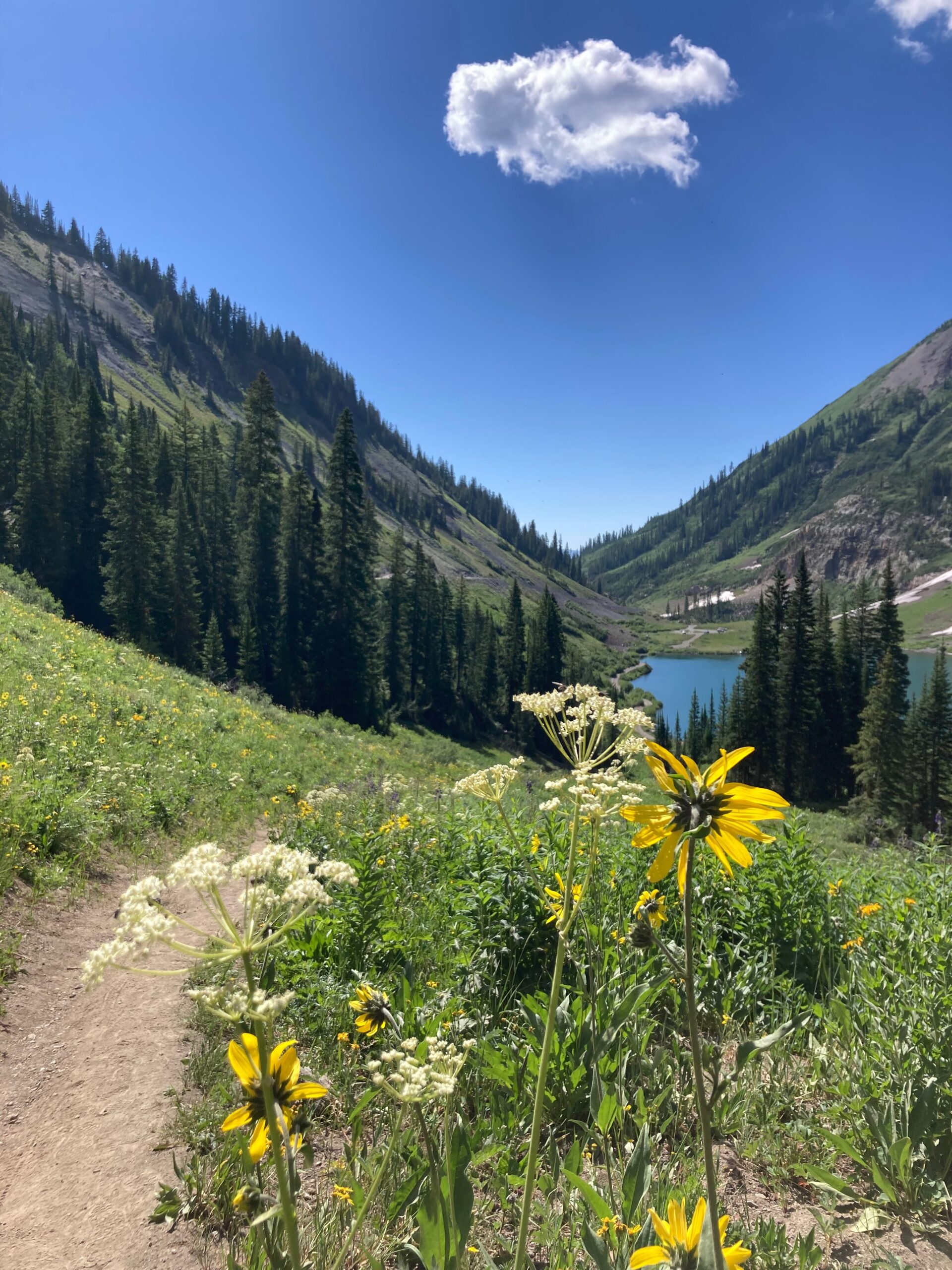
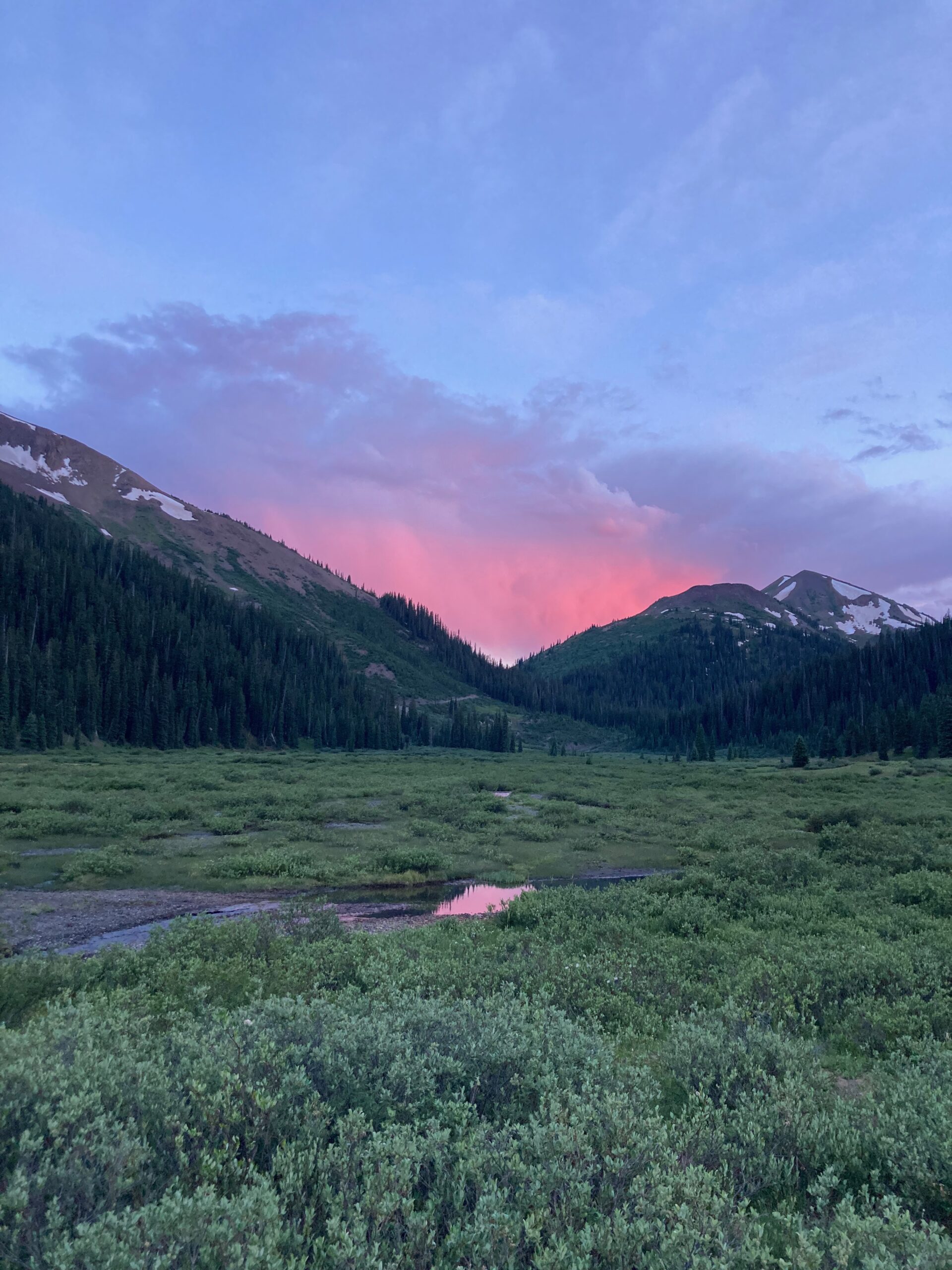
    Left: View of Emerald Lake from trail above. Right: Sunset over the valley after the river crossing.
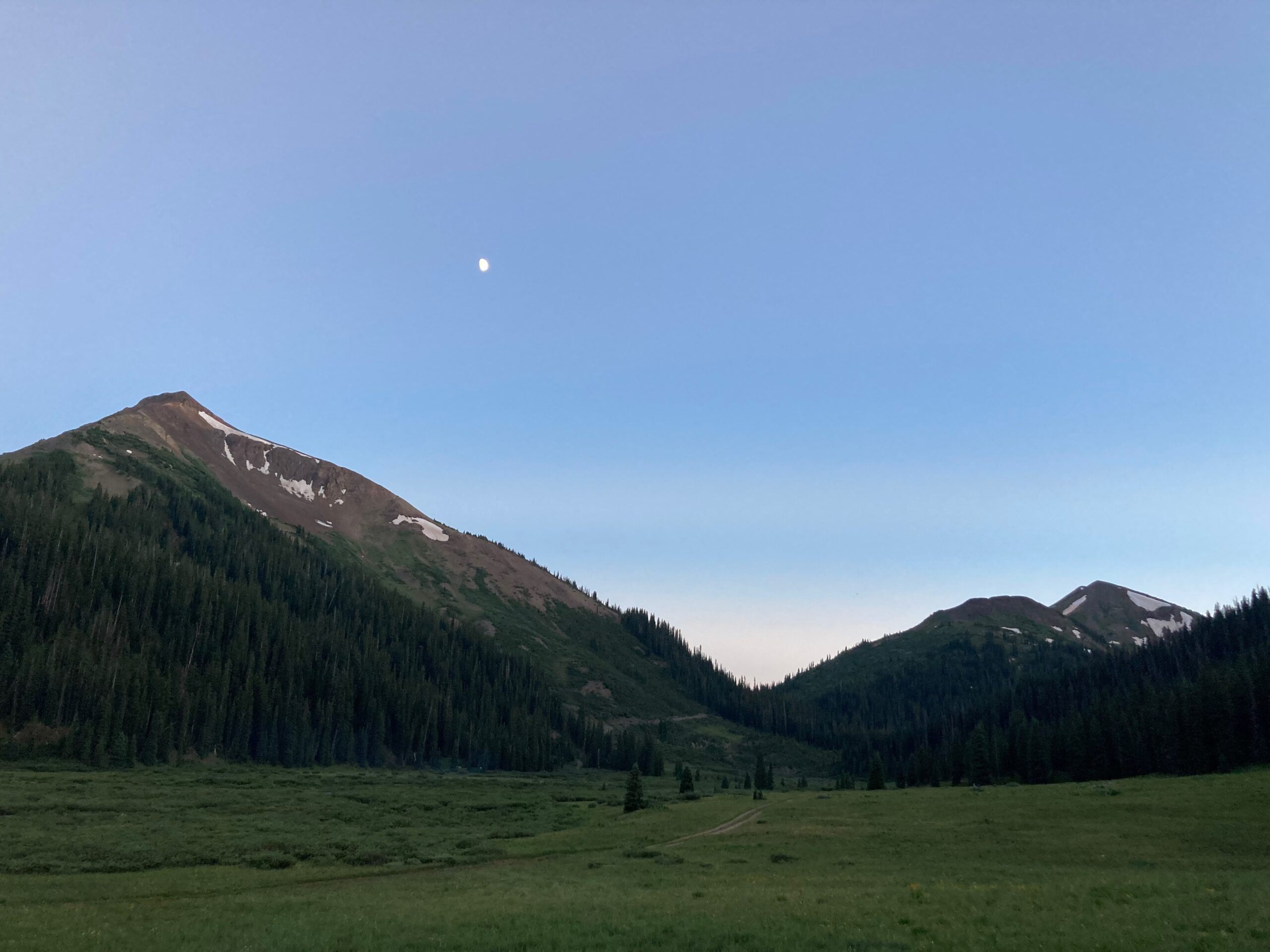
    Photo caption: View down into the river valley at twilight.

    9:30PM: Time for bed! After the sun sets, it gets very cold at this high elevation, and the most comfortable place to be is inside my warm sleeping bag. I set my alarm for 5:30AM and make sure all of my survey equipment is ready for the morning.

    This summer I learned a lot about how to effectively design and conduct a field ecology research study—especially how to be flexible and creative when problems arise. Field research is challenging but it is so refreshing to work outside in such beautiful places, and it’s especially rewarding to explore the trends in one’s data after a season of hard work. That’s how I’ll be spending the winter months, as do many field ecologists outside of field season—crunching the numbers in order to reveal the mechanisms of change in the ecosystems around us.
  • Where do Great Blue Herons catch their snacks?

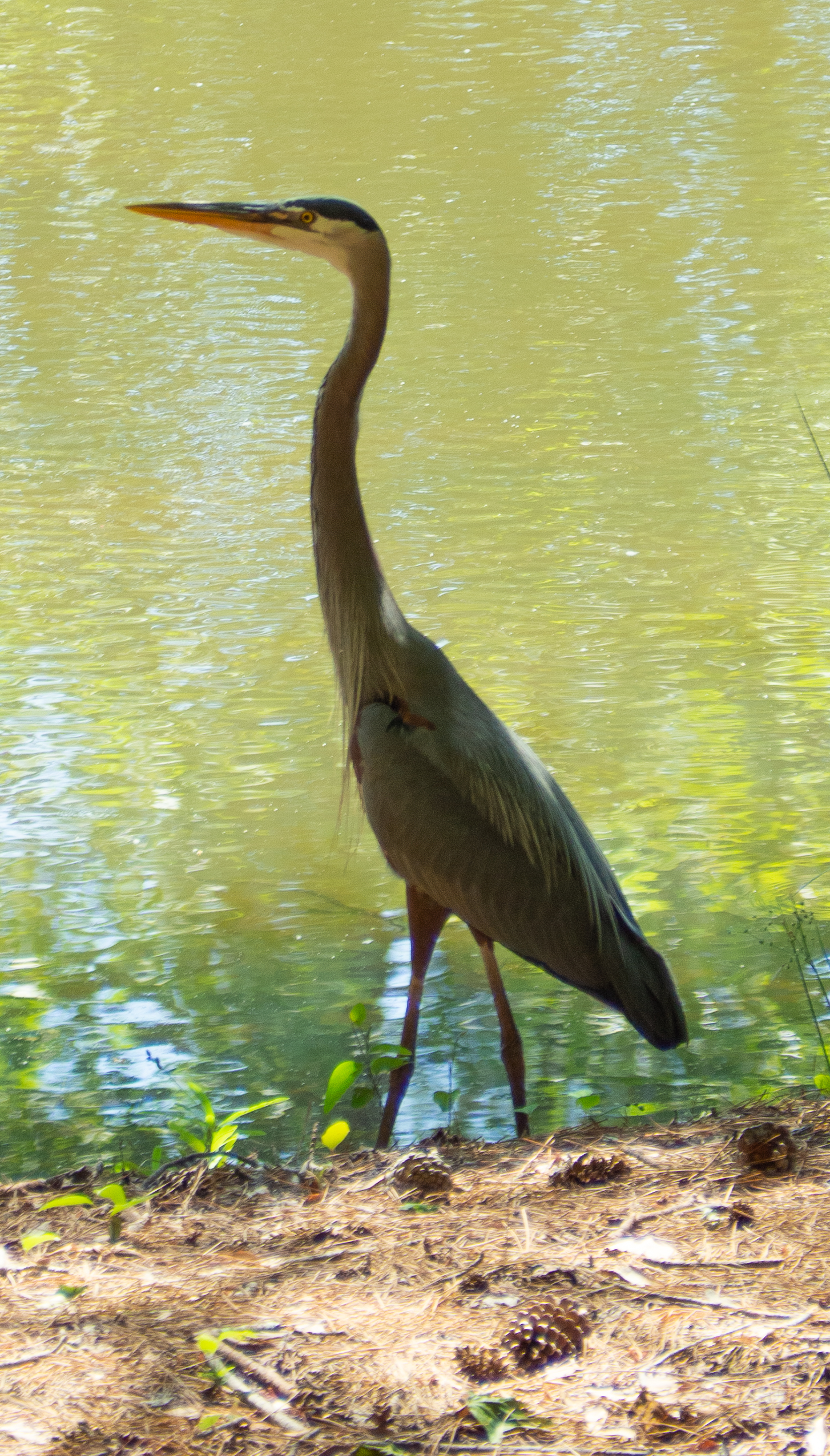
    A picture of a great blue heron. The heron is standing on the edge of a pond.

    Introduction

    Great blue herons are part of the Ardea genus, which is a genus of birds that includes the herons, egrets, and bitterns. These birds are typically pretty large in size, with lengths usually greater than 80–100 cm. You’re most likely to find members of this genus in wetlands and other partially aquatic habitats.

    Feeding Behavior

    Great blue herons are carnivores, and they eat a variety of aquatic, semi-aquatic, and terrestrial prey. Their diet consists of predominantly fish, but they will eat pretty much anything that they can catch in their beaks. Fish are supplemented by amphibians, reptiles, small ground mammals, and even other birds. Great blue herons catch smaller prey in the jaws at the back of their beak, although they prefer to stab larger prey with their beaks.

    There are 38 total feeding behaviors that have been recorded by members of the Ardea family. Each species in this genus uses multiple feeding methods — they’re creative hunters. Twelve of these strategies have been observed in great blue herons. The most commonly observed feeding behavior for the great blue heron is standing and waiting, where the heron simply stands still and waits for its prey to come to it. Herons also will move slowly, either through the water or through a field, in search of prey. More dramatically, the great blue heron will occasionally plunge-dive, diving down quickly and with force, to catch its prey. A particularly interesting feeding behavior of the great blue heron is to stick its bill in the water, and vibrate it. The underwater vibrations create ripples, attracting fish and other aquatic prey.

    Habitat

    Great blue herons prefer to live in wetlands, especially when nesting. Rather than nesting alone, great blue herons nest in colonies. Colony nesting is particularly common for birds that live in aquatic environments. Colonies can have over 500 nests (so easily over a thousand birds) all relatively close together. For large scale habitats and especially for colony nesting, great blue herons have preferences for certain types of habitats over others. The lacustrine wetlands is a particular favorite of Illinois great blue herons. Lacustrine wetlands are any wetland or deepwater area that has these three characteristics:

    1. Located in a valley/depression in the ground
    2. Lacking trees, shrubs, and other plant life that covers more than 30% of the area
    3. At least 20 acres in surface area

    Biologists believe that herons may prefer this biome for their habitats due to the easy access to their preferred prey of small bodied vertebrates. Additionally, large wetlands tend to be isolated from human activity, which great blue herons tend to avoid if possible.

    References

    Combs, B. P. (2021). Great Blue Heron Forages for Fish by Bill-Vibrating. Western North American Naturalist, 81(2), 280–284. https://doi.org/10.3398/064.081.0213

    Gibbs, J. P., & Kinkel, L. K. (1997). Determinants of the Size and Location of Great Blue Heron Colonies. Colonial Waterbirds, 20(1), 1–7. https://doi.org/10.2307/1521757

    Knight, E. C., Vennesland, R. G., & Winchester, N. N. (2016). Importance of Proximity to Foraging Areas for the Pacific Great Blue Heron (Ardea herodias fannini) Nesting in a Developed Landscape. Waterbirds, 39(2), 165–174. https://doi.org/10.1675/063.039.0207

  • The Undersea Bone Devourer

    Osedax, from the Latin os, oris (bone) and edāx, edācis (devourer), is a genus of undersea worms that consumes bone. A genus (which is more Latin, this time for a family group) is a group of species that are similar. More distantly, the genus Osedax belongs to the family Siboglinidae. Siboglinidae is a family (a level above in the biological categorization hierarchy from genus) composed of segmented worms, all of which have chitin bristles. Chitin is a natural substance that is found in all sorts of bugs, and it’s similar to the material that makes up your fingernails. Another prominent species in this family are the undersea tubal worms that live at the hydrothermal vents at the bottom of the ocean. It turns out there is a surprising amount of diversity of species of undersea bone eating worms. The worms range in size and in behavior. You can find members of the Osedax genus in all seven oceans, and in all sorts of depths (21 – 4000 m). Some of them are generalists, whereas others specialize in large bone deposits often found on the ocean floor. Whalefalls (you can read more about them here: http://chargedmagazine.org/2012/06/whale-fall-2/) are one such source of large bone deposits on the ocean floor.

    Osedax worms were first discovered in 1994. Biologists were initially baffled at what exactly they were. The worms evaded classification until molecular DNA analysis showed that they were related to the tube worms that live in hydrothermal vents on the ocean floor. This breakthrough allowed biologists to finally place the Osedax genus into the Siboglinidae family. Later, fossils were discovered of Osedax worms inhabiting a large, dead reptile, dated to the early-Late Cretaceous period, about 100 million years ago. This led to several revelations about the history of Osedax worms. Firstly, there was now a historical precedent for being generalists, rather than whale specialists. Osedax worms were initially discovered and identified on whale falls, and there was some debate in the scientific community about whether or not they occupied other niches. Well, giant dead reptiles certainly weren’t whales, so this find cleared that up nicely. The fossil finding also illustrates something about the history of Osedax worms and the Siboglinidae family. This finding confirmed an earlier theory that the Siboglinidae family originated somewhere in the mid-Cretaceous period. It also means that the weird bone eating worms under the sea outlasted the dinosaurs, which is neat.

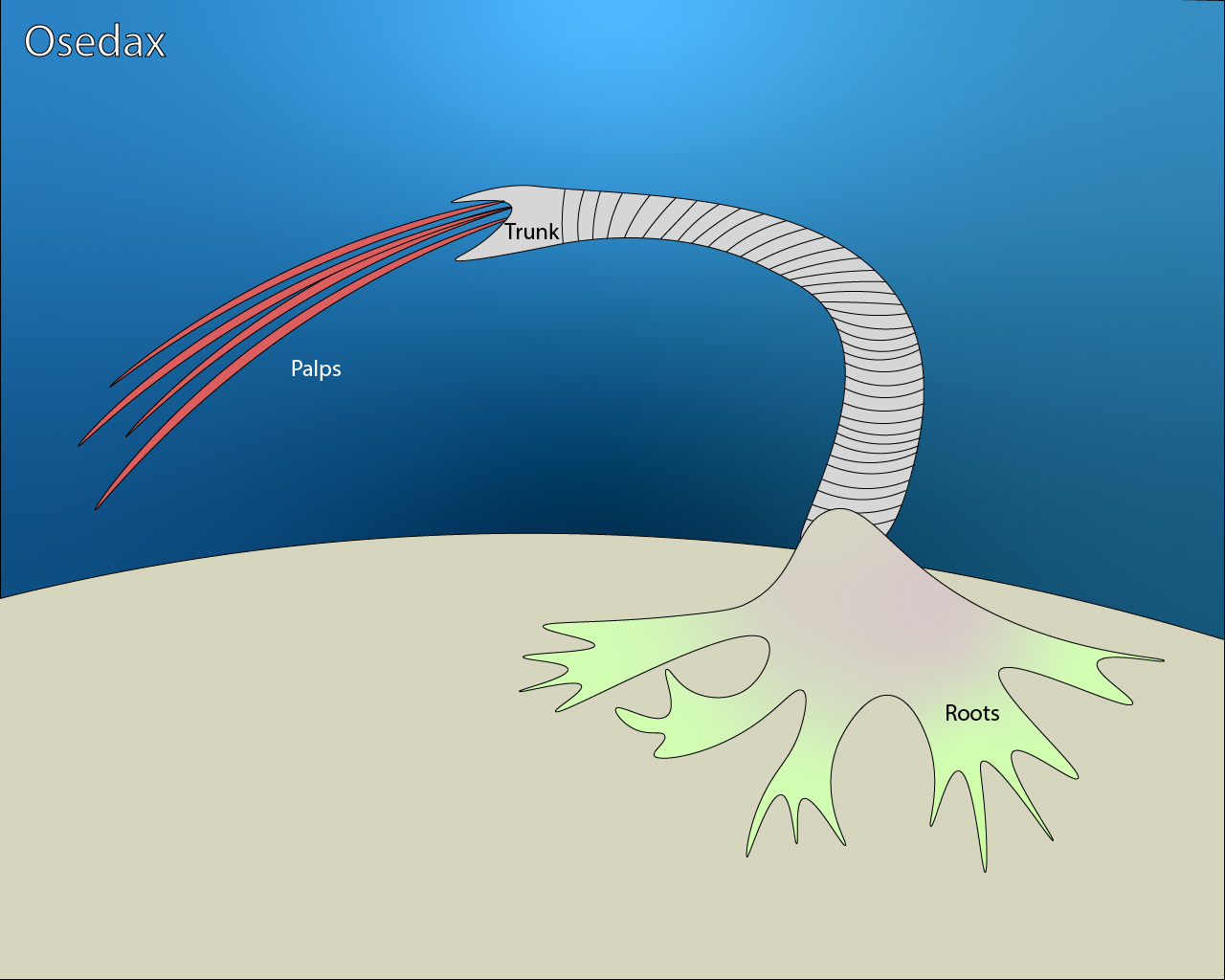
    A labeled illustration of an Osedax worm.
    A labeled illustration of an Osedax worm.

    Physically, Osedax worms are strange looking creatures. Red, string-looking bits float out from one side of the main worm body. On the other side, there are green, root-like structures sticking out back. These roots secrete acids to dissolve the bones where they lodge. Their middle is a white, segmented tube. It doesn’t get any more regular on the inside, either. Osedax worms don’t have a digestive system – they just host a wealth of bacteria inside of them to digest the bones they consume. Another strange thing about the inside of an Osedax worm is that the male worms live inside the females. As in, every picture of an Osedax worm you see will be of a female, as the males are teeny tiny and live inside of the females. Dwarf males, as this phenomenon is called, occurs when the males of a species are much smaller (and usually simpler anatomically) than the females. In species where dwarf males exist, the males typically reside somewhere inside or attached to the female members of the species. Osedax worms are at least as odd as you were expecting worms that ate bones to be, at very least.


    References

    • Smith, Craig R, Glover, Adrian G, Treude, Tina, Higgs, Nicholas D, & Amon, Diva J. (2015). Whale-Fall Ecosystems: Recent Insights into Ecology, Paleoecology, and Evolution. Annual Review of Marine Science, 7(1), 571-596.
    • Rouse, G. W. (2004). Osedax: Bone-Eating Marine Worms with Dwarf Males. Science (American Association for the Advancement of Science), 305(5684), 668-671.
    • Danise, S, & Higgs, N. D. (2015). Bone-eating Osedax worms lived on Mesozoic marine reptile deadfalls. Biology Letters (2005), 11(4), 20150072.
  • The Art of Getting Robbed with Gringo Perdido

    Hanks RobbedAs a US citizen who travels internationally to conduct research, I’m well aware of the perception that gringos = $$. Sometimes that perception is true and you have money on your person or have access to it. But sometimes you simply represent wealth in some sociocultural way. Regardless of the reason, the fact is that I get robbed sometimes. Getting robbed is no fun, but it does make for some good stories.

    Robbers are opportunistic, and travelers are, by definition, out of their element, so opportunities arise to rob travelers. Robberies are also about communication, i.e., “Give me your money now.” Pretty simple, huh? Well, sometimes the solution (i.e., not getting robbed) can be just as simple. If the robber doesn’t speak English and the robbee pretends not to understand the phrase “Give me your money now” then the would-be robbery is at a communications standstill. This dumb gringo trick works great, and I’ll use it as long as no weapons or physical assaults are involved. Before I developed this trick, however, I did wind up engaging a robber in a conversation in his native language.

    I was out in the Neotropical boondocks very late one night alone in the rain, catching toads (it’s what I do). A guy on a horse came up behind me and startled me. Yeah, I get really focused on toads, so scenarios like this can happen; and, I don’t hear well. I assumed that I had accidentally trespassed onto his land, so I initiated the conversation of apologizing if I had done so, and promising to leave immediately if I was out of place. Turns out he did not care at all where I was, but he did want to rob me. Immediately, I was kicking myself for making the evidently poor decision a few hours earlier, to put my entire research-travel grant funds in my pocket, rather than leave them in the truck on the highway. Eventually, after a long conversation, I convinced him that my boss (who did not exist) had all of the funds back in the fancy hotel in the capital city because no one with lots of money would ever trust it to some schmuck pathetic enough to be hired to catch toads on a rainy night with all these mosquitoes around. I showed him my bag full of toads as evidence of the veracity of my story. He agreed that this made sense, and then demanded my flashlight. So, I asked him please not to take my flashlight, because then I couldn’t even do my shitty job and I’d get fired. He got off the horse, gave me a hug, and said something to the effect of, “I’m sorry for you my friend, as your lot in life is even worse than my own.” Of course he had a machete, because he was an actual cowboy, but he never raised it at me. If he’d raised that machete, he would have had a few hundred dollars instantly.

    So, not all robbers are necessarily bad people. But I’ll tell you who are bad people: corrupt government officials. As robbers, they have a huge advantage and they know it. They have, ironically, the authority of law on their side, and the mere threat of being arrested during my travels is scarier than any gun I’ve had shot in my direction. These guys always have guns. They also have the mandate to set up roadblocks and stop all cars in the name of programs like the War on Drugs. For the corrupt ones, their day job is to make sure that the only people carrying drugs and weapons on that road are the people from the pre-approved local cartel. So they are not kidding when they search or grill you hard about carrying unauthorized drugs or weapons; just don’t conflate their diligence with caring about preventing drug trafficking. Once they clear you at the roadblock, they sometimes settle into robber mode. This authoritarian backdrop makes for some effective robbing. The game becomes a push-and-shove of “how little can I give them” vs. ”how much do I think this guy has on him.” To their credit, they are smart enough to realize that they have to be practical and discrete about all of this because if they just carjack you and take everything, then well it would be awkward to have you sitting there on the curb, and they have the keys to your truck, but they can’t take off with your truck until the end of their shift. These guys are not dumb thugs. They are fully aware of their advantage and thus are really impatient with any attempts you may make to stall the obvious outcome. In other words, I tried the dumb gringo trick at a roadblock exactly once. It escalated very badly, and they got all my money. Lesson learned.

    The wandering toad-seeker runs into other brands of robbers as well. Gas station attendants can make a great cover for a top-class grifter. These folks have all day every day to figure out new, and often ingenious, tricks to rip off the customer. Again, they have an advantage on their side. You stopped and engaged them in this transaction, you need the gas that only they can access, and at some point you are going to give them the amount of money that they say you owe them. Add in the ever-bumpy cultural and language barrier plus, in my case, raging dyscalculia, and they definitely have the upper hand. If you do not pay them what they say you owe them, then you are stealing which is illegal (see “getting arrested” above). What are you going to do…drive off without paying? I dare you. The solution is to learn the more obvious scams and block them before they can play out.

    Hookers are a complex reality. I want nothing to do with hookers, but, as a male gringo, they come to me. Remember gringo = $$ and, I usually wind up spending a lot of time politely declining the well-crafted and earnest sales pitches of hookers who assume I am rich. One night, however, the terms hookers and robbers became synonymous. After a moderate round of drinking in a large tropical city, my gringo colleague and I were walking back to our shabby hotel. He picked the route back, I argued against it because it seemed sketchy, but he won the argument. So I’m crossing the dark lonely back alley that people like me know to avoid and suddenly I am physically surrounded by three hookers who are busily putting their hands in my delicate areas and busily cramming my own hands into their delicate areas. There are eight hands involved here. My two hands are “occupied” against my will and the other six hands are occupied with violating my privacy and rifling through my pockets. Take-home advice: don’t wear baggy shorts in sketchy neighborhoods at night. It was over in seconds and they were gone. I’m not dumb, so I didn’t have my passport or watch or anything like that on me. They got my six leftover dollars that I had not spent on beer. Ok, so I got mugged or whatever, and they got six dollars. No one got physically hurt, and it was far less terrifying than the threat of getting arrested by corrupt cops.  What was really terrifying was my first response to the assault: I launched into my rote spiel politely declining their sales pitch. That is how off-guard I was to the actual situation; it didn’t even occur to me to fight back, or run, or scream or anything remotely more rational than essentially saying “no, thank you.”

    Afterwards, and to this day, the truth slaps me hard. I wasn’t being solicited, I was getting robbed. And whether the robber is a street thug, an official, a grifter, or a lady of the night, the victim is always the same: the hapless gringo perdido.

  • The Ballad of Gringo Perdido

    Herpetology and getting lost. These are the two driving themes of my life. They have shaped my career and enabled me to discover species new to science, but they have also cost me relationships, frustrated everyone close to me, and nearly cost me my life. Without them I would be a different person, so this is a ballad to the lost art of getting lost.

    After college, I left Santa Barbara, California to go to graduate school in Texas and study under a mid-career hotshot who specializes in Central American herpetology. He is a gringo North American but was raised in Guatemala and moving in-and-out of that culture is the norm for him. In the first year of my grad program I got the assignment of my dreams. I was to be delivered to a coffee plantation in a remote region Guatemala to conduct a survey of amphibians and reptiles. I was to do an ecological transect of herpetological diversity up the face of a very steep mountain in the Sierra de las Minas, in the state of Alta Verapaz. Although the area had certainly been populated since at least the Classic Maya Era, no biologist had ever worked anywhere near the region. If you look at a map of Guatemala, you’ll see a huge lake (Lago de Izabal) in the eastern part of the country. I was about 20 miles west of the lake, in the Polochic Valley, at the base of the north slope of a mountain called Cerro Raxon.  The village/plantation is called Pueblo Veijo (Old Village) in reference to the fact that the site had been inhabited by native Maya for millenia.  The problems turned out to be: 1) I spoke not a word of Spanish; 2) although I grew up in Europe (army brat) and was accustomed to being immersed in foreign cultures, I’d never been to Latin America beyond a couple family fishing trips to Baja California; and 3) Guatemala was embroiled in a horrific genocidal civil war (that was purposefully instigated by the US-CIA in the 50’s, by the way).

    The day before I went to the airport my mentor gave me some topographic maps of my study site and said “If you get pulled over by anyone that looks like police or army, don’t let them see these maps because they will assume you are there to inform the indigenous insurgency and you will be arrested. Oh, and don’t bring those Vietnam-era military field boots you wear. They are US-Military issue. Get some boots that look more like a tourist would wear.” So I borrowed money from my parents and bought some brightly colored boots from the local REI. I put the maps in the bottom of my bag of gear.

    I swear never again to travel so ignorant of my situation.  It turned out that speaking Spanish would have been only of partial utility, as I was sufficiently remote that most people there spoke Q’eqchi’, one of the many dozens of very distinct Maya languages in the region, and only a bit of Spanish. Every time I ventured beyond the main part of the coffee plantation (as was my task as a herpetological surveyor),  I encountered Mayan villagers who would drop everything and run away from me.  I was terrified. If they were scared of me, then there must be something that I should be scared of as well. Since my return, I have built a small library on the recent history of Guatemala, and I now know what I did not know then. It turns out that the chinks I saw in the concrete-block walls in the nearby town of Telemán were from a massacre only a couple of years prior to my trip.  Genocidal civil wars are real, and they are incredibly ugly.

    I had an ecological transect to conduct, and I finally got myself up to the highest village on that slope of the sierra, a tiny Mayan village they called Peña Blanca (“White Stone” because there was a big one there) in Spanish, or some other name I never managed in Q’eqchi’ (Mayan dialects include glottal-stops in mid-syllable, so they are essentially impossible for the non-native speaker). The people seemed nice in Peña Blanca, and they did not run away from me. I set up a camp outside their village, with their implied permission. The first two nights I had a small crowd of people around me watching as I made a crappy camp dinner and prepared my specimens, samples, and notes. None of us could really talk to one another, but I managed to get across that I hoped to camp there, wished them no trouble, and planned to wander around outside the village looking for snakes and frogs and such. They were cool with that, and even brought me all the snakes they killed in their cornfields every day (very useful specimens for me).

    After a few days I hiked back down to my main camp on the plantation and got read the riot act by the fascist, racist Guatemalan manager for having “anything to do with those rebels on the mountain” (recall there was a civil war going on, essentially between aristocrats like this guy and the Mayans in the mountains). About a week later I went back up the mountain to my camp, but this time not a single person would come anywhere near me. I was there for about three days when it dawned on me that I was doing a bad thing—my self-serving data collection for my degree was severely compromising their daily life. No kids were playing outside, and the men were sneaking off before sunrise to tend the corn.  I assumed they returned from the fields, but I never saw them. Evidently, someone had spread word that I was not what I seemed. I felt terrible, but packing up camp and leaving was not such a simple affair because I was so far up on the mountain. So I had to spend that night there, and planned to leave the next morning—carrying what I could on one trip (it took about three trips to get all my stuff up there), and leaving everything else for them; things I naively hoped could be useful (e.g., sleeping bag, not a bottle of formaldehyde).

    Evening set, it began to rain, and I realized that this was my best and last chance to sample the highest part of the mountain because I never intended to return. Nocturnal amphibians and reptiles move in the rain, and it started to rain to rain really, really, really hard so I did get some good samples. Around 1:00 am I was exhausted and turned to go back to my camp. On the way back I took a wrong fork in the trail (it was still really raining and, if you wear glasses like I do, one cannot look around during a rainstorm; you look straight down, at your feet) and I wound up not in my little encampment, but smack in the middle of this village. I was disoriented, wet, cold, and scared. As I looked around, my mega-flashlight (standard issue in my line of work) was beaming through the twig huts and wakeing everybody. I could hear commotion coming out of the huts. My first thought was of regret—oh, darn, now I’m waking everybody up! Then I started to hear machetes tinging, guns being loaded and cocked, and saw barrels sticking through the slats. I’ve since learned that it was standard practice for Guatemalan Army squads to wipe out “rogue” villages by sending in troops in the middle of the night—with mega flashlights—to massacre and set fire to entire villages. I was mortified, and terrified. So, I just started yelling “Gringo perdido, no hay problema” and “Culebra! Rana! Sapo!” at the top of my lungs. That all translates essentially into “Lost white-boy, there is no problem. Snake! Frog! Toad!”  Meanwhile I dashed in the nearest direction that did not have a hut. I clawed my way up through a steep muddy corn field and finally found my camp. At the first glimmer of daylight I left and never went back up there. I regret that I caused them so much distress, I really do. I’m glad they did not shoot me. But given what I’ve learned since then, I’m amazed that they did not. I’m convinced that those few words in Spanish, “Gringo perdido, no hay problema” and “Culebra! Rana! Sapo!” saved my life.

    I’ve returned to Guatemala many times since then, but things have changed. The war mellowed out, even if the original tensions remain. I never travel alone. I’ve learned Spanish (but no Mayan dialects, beyond a couple of animal names).  And I am not so naïve. To be sure, there were many more adventures and misadventures over the years, including a murder right in front of my face, but nothing since, anywhere, has been so personally transformative as that particular night. I have a one-man punk band called Gringo Perdido and some friends use the phrase as a nickname for me. No one wants to be known for being an uninformed, unintentionally inconsiderate, disoriented boob, but a colleague of mine returned from Guatemala recently and said,  “Joe, do you realize that every young biologist in that country knows that story?” Gringo perdido, no hay problema.

  • Let’s Go!: Costa Rica

    As a supporter of the “Let’s stop wearing shoes” movement that seems to be taking over the mentality of both young adults and shoe manufacturers alike (that is a later story, though), I often find myself lamenting the amount of shoes I am required to pack when going on vacation with my mother. As a supporter of traveling and not destroying the environment in the process, those same trips with my mother tend to stress me out. Previous trips have found us in France and Ireland in GIANT tour buses that make me cringe when I think of the carbon emissions coming from my enjoyment of a new country.

    I have newly found faith in my mother’s traveling compulsion these days. Immediately upon finishing my first year of college, my mother and I hopped on a plane and flew to San Jose, Costa Rica to join a trip with G Adventures, an eco-friendly tour company based in Canada (and one where I was only required a pair of flimsy sandals in order to be comfortable).

    The highlights of the trip included white water rafting, ziplining, and a safari with a whole lot of monkeys. So let’s go into picture heavy post, because I very honestly cannot encompass this trip in words.

    G Adventures offers many kinds of tours. My mother and I took a YOLO trip, which is a budget-style trip kind of perfect for us. The trip style that interested me the most, and is how our tour guide Jorge started in this line of work, is a “Volontour” trip. Jorge worked at a biology research center studying leatherback sea turtles. Volunteers, through G Adventures, were able to work alongside the biologists, protecting the sea turtles as they hatched.

    I’m still a bit in awe of the fact that I got to be in Costa Rica, sharing the tree tops with howler monkeys. I’ll be back when I get over that awe and talk to you guys about college (yes, yes, it is that time).

    sciseekclaimtoken-4fd6551a0640c