The Mandai Bird Paradise is the biggest bird conservatory in Asia, inaugurated back in May 2023. As one of the six pillars of the Mandai Wildlife Reserve, the incredible sanctuary covers over 42 acres of land on Mandai Island in Singapore. The reserve houses around 3,500 birds encompassing over 400 different species. Mandai Nature is the conservation arm of the Mandai Wildlife Group, which is dedicated to providing a haven for all these species through the Mandai Bird Paradise and to preserving Southeast Asia’s incredible biodiversity through conservation efforts, with a focus on averting species extinction (Temasek Trust, 2024).
Such a variety poses a rather obvious question: How? In order to answer this question, we must chart our way through the science behind conservation, biodiversity and rehabilitation!
Conservation
Conservation, as defined by the Merriam-Webster dictionary, is to carefully preserve and protect something. In a wildlife context, it is orchestrated management of natural resources to prevent exploitation, destruction, or neglect. Conservation efforts to preserve biodiversity are not just about protecting animals in isolation, but in our context, it is about the creation of an entire ecosystem where species can thrive naturally.
At Mandai Bird Paradise, conservation takes an approach similar to this article on biodiversity conservation by diversity (Ramón et al., 2020). In-situ conservation focuses on protecting species in their natural habitats, whereas, ex-situ conservation, which is practiced at Mandai, provides controlled environments where vulnerable or endangered species can be bred, monitored, and protected from immediate threats such as habitat loss or poaching.
The sanctuary also participates in international breeding programs and collaborates with global conservation organizations to ensure genetic diversity is maintained among species. This is critical because reduced genetic diversity due to issues such as environmental changes from global warming can make populations more susceptible to disease. Through these coordinated efforts, Mandai Bird Paradise becomes more than just a sanctuary, but a cornerstone in the Mandai Wildlife Group’s stand as an active contributor to global conservation science.
Biodiversity
Biodiversity refers to the variety of life in a particular habitat or ecosystem, encompassing differences in species, genetics, and ecological roles. The presence of over 400 bird species at Mandai Bird Paradise highlights not only the richness of different avian life present but also the complexity of maintaining such diversity within a single environment. This maintenance is done by separating the 42-acre land into around 10 unique habitats that each suit a certain group.
Each species then gets to play its unique role in its ecosystem, from seed dispersal to pollination and pest control. By housing a wide array of species, the sanctuary effectively simulates interconnected ecological networks, allowing researchers and conservationists to better understand how these systems function.
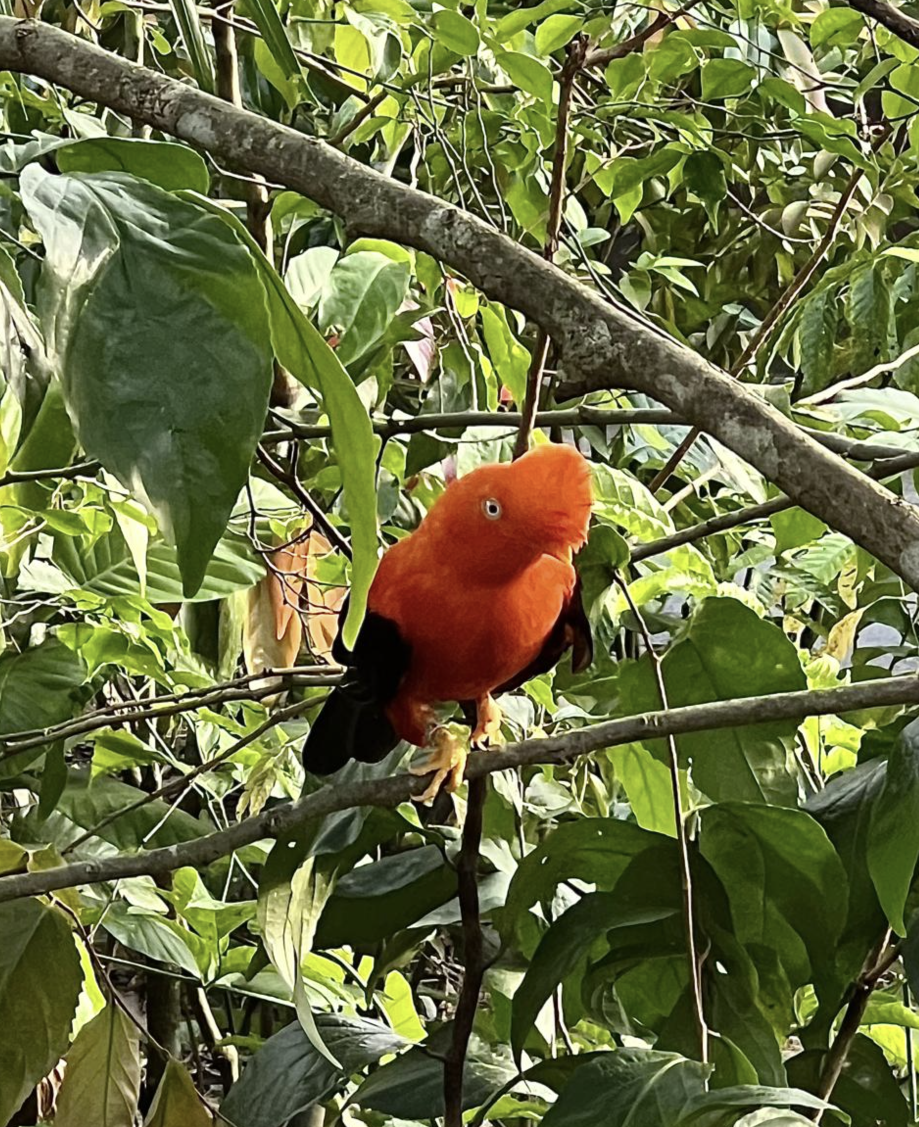
Maintaining biodiversity in a controlled setting requires careful planning. Factors such as diet, climate conditions, nesting environments, and social groupings must all be tailored to meet the needs of different species. For instance, tropical birds such as the Andean cock-of-the-rock (yes, you read that right) require high humidity and dense vegetation, while others may need open spaces or specific nesting structures. This level of detail ensures that the birds are not only surviving but thriving in conditions that closely resemble their natural habitats.
Andean cock-of-the-rock
Rehabilitation
Rehabilitation is another crucial component that involves the care and recovery of injured, displaced, or trafficked birds with the goal of reintroducing them into the wild whenever possible.
Birds that arrive at rehabilitation centers often suffer from injuries caused by habitat destruction, illegal wildlife trade, or human interference. At Mandai, veterinary teams and specialists provide medical treatment, nutritional support, and behavioral conditioning to help these birds regain their strength and natural instincts.
One of the key challenges in rehabilitation is ensuring that birds do not become overly dependent on human care. To address this, caretakers minimize human interaction and design enclosures that encourage natural behaviors such as foraging and flight. Only when a bird demonstrates sufficient recovery and independence is it considered for release. Even when release is not possible, rehabilitation still plays an important role. These birds may become part of educational programs, helping to raise awareness about conservation issues and inspiring visitors to take action in protecting wildlife.
Mandai Bird Paradise is more than the visually stunning attraction you see through my lens, it is a living example of how science, conservation, and education can come together to protect our planet’s biodiversity. By integrating conservation strategies, maintaining diverse ecosystems, and supporting rehabilitation efforts, this sanctuary embodies what modern wildlife preservation should look like. In doing so, Mandai Bird Paradise not only safeguards thousands of birds but also inspires future generations like yours and mine to value and preserve the delicate balance of life on Earth.
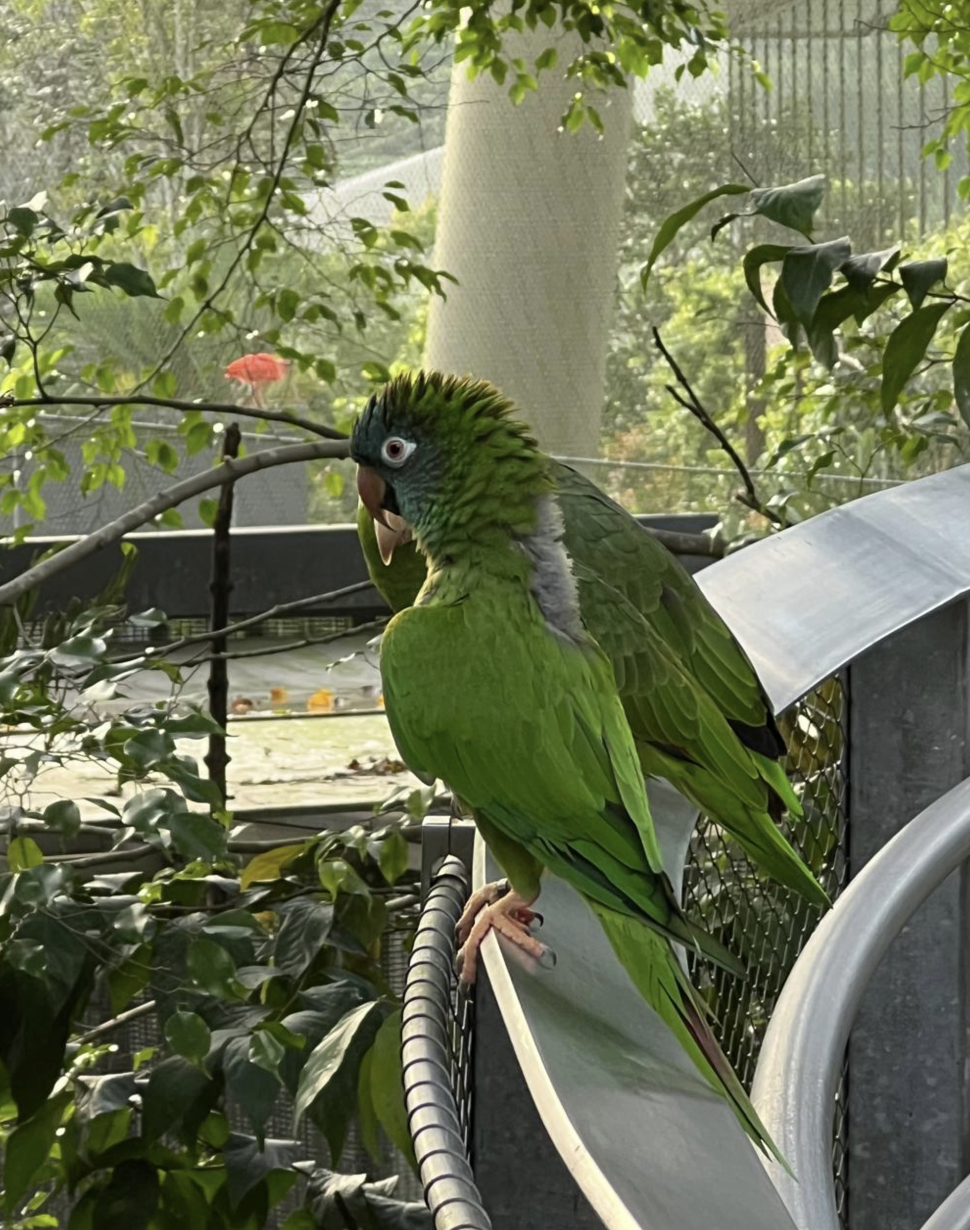
Blue-crowned Parakeet
Bits of My Time
This reserve is one of the most beautiful places on Earth! Walking out into the Crimson Wetlands zone of the park felt like a scene straight out of a movie. There were colorful macaws soaring overhead, bright American flamingos dancing by the pond, Scarlet ibis carefully balancing on the hand rails and so much more. My exploration of the Mandai Reserve taught me so many fun facts about birds and this experience rekindled my love for all things nature. It truly gave me a fond memory to recall for the rest of my lifetime.
References
All Photography/Illustrations by Kristina Sarah Siju
Mestanza-Ramón, C., Henkanaththegedara, S. M., Vásconez Duchicela, P., Vargas Tierras, Y., Sánchez Capa, M., Constante Mejía, D., Jimenez Gutierrez, M., Charco Guamán, M., & Mestanza Ramón, P. (2020). In-Situ and Ex-Situ Biodiversity Conservation in Ecuador: A Review of Policies, Actions and Challenges. Diversity, 12(8), 315. https://doi.org/10.3390/d12080315
Protecting Wildlife, Preserving The Future. (2023). Temasek Trust Revamp. https://www.temasektrust.org.sg/what-we-do/impact-hub/article-details/mandai-nature-impact-report-2023-2024
Speiran S. I. M. (2025). The ‘Sanctuary Gap’: Reviewing the Research on Captive Wildlife Sanctuary Tourism. Animals : an open access journal from MDPI, 15(4), 496. https://doi.org/10.3390/ani15040496
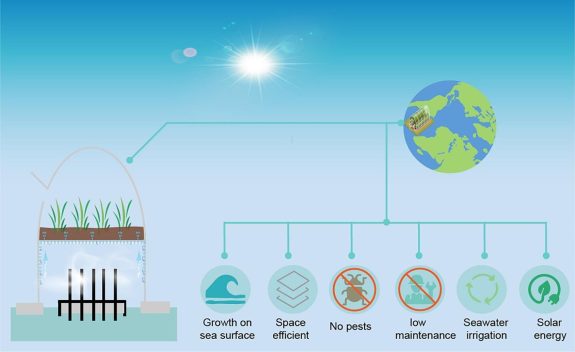
There is a new technology on the horizon that claims to have the potential to solve two of the biggest global issues: world hunger and freshwater supply. These two problems are, of course, inextricably tied together, as 70% of the world’s freshwater withdrawals are used for agriculture. Professor Haolan Xu and Dr. Gary Owens have developed a design for a “floating sea farm” which would address this problem by producing agriculture without the use of freshwater. In short, the farms sit on top of the ocean, collecting and evaporating seawater that is then used to water crops. The entire system is powered by solar energy, and can potentially be self-sustaining, requiring little to no intervention during crop growth.
The ability to grow crops over the ocean unlocks a vast potential of usable agricultural space, as oceans make up 70% of the Earth. Moving agriculture overseas could immensely relieve the pressure we are putting our land under and allow us to designate agricultural areas to other purposes. Additionally, these stable systems would reduce farming labor, and drastically reduce global freshwater usage.
So how exactly do these floating sea farms work? The current model of the double-layered vertical solar sea farm (or DVSSF) is divided into three subsystems: the bottommost solar evaporation chamber, a water condensation and transfer system, and a greenhouse-like plant cultivation chamber on top of the structure. The solar evaporation chamber consists of photothermal evaporators which convert sunlight into heat energy, powering the evaporation of sea water. These devices are partially submerged under the surface of the sea and are supported by floating polystyrene foam. Condensed water vapor is then absorbed by vertically-oriented strips of bamboo paper and transported upwards to the upper soil chamber, where plant irrigation will occur.
Floating sea farms sound like a utopian dream, but how feasible are all of these promises? Floating sea farms are still in their early stages, and it will likely be years until we see this technology implemented on a large scale. In May 2022, large, open-air experiments were conducted using lettuce, broccoli, and Pak Choi. The growth of all of these plants was successful, demonstrating a real potential of the technology, but also highlighting areas in need of improvement. For instance, these experiments revealed that a surplus of clean water was being produced, and efforts are now being made to design a system that will store this water and use it for other applications. Additionally, the current prototype has only been tested with these three common crops, and much more testing would need to be done to integrate the diversity of agriculture that would be necessary to truly make an impact on global food production. As of right now, the DVSSF has a strong proof of concept, but is still in the experimentation stages. As more work is done improving the prototype and scaling up the project over the next few years, it is certainly possible that this technology could lead to a complete shift in agricultural production as we know it.
References:
Floating sea farms: A solution to feed the world and ensure fresh water by 2050. (2023, September 11). ScienceDaily. https://www.sciencedaily.com/releases/2023/09/230911141045.htm
Pan, W., Wu, X., Yu, H., Zhao, J., Wang, Y., Pi, K., Owens, G., & Xu, H. (2023). An interfacial solar evaporation enabled autonomous double-layered vertical floating solar sea farm. Chemical Engineering Journal, 473, 145452–145452. https://doi.org/10.1016/j.cej.2023.145452
The AIM Network. (2023, September 11). Floating sea farms: An ingenious solution to feed the world and ensure freshwater by 2050. https://theaimn.com/floating-sea-farms-an-ingenious-solution-to-feed-the-world-and-ensure-freshwater-by-2050/
Details from my summer experience conducting fieldwork in the Colorado Rockies
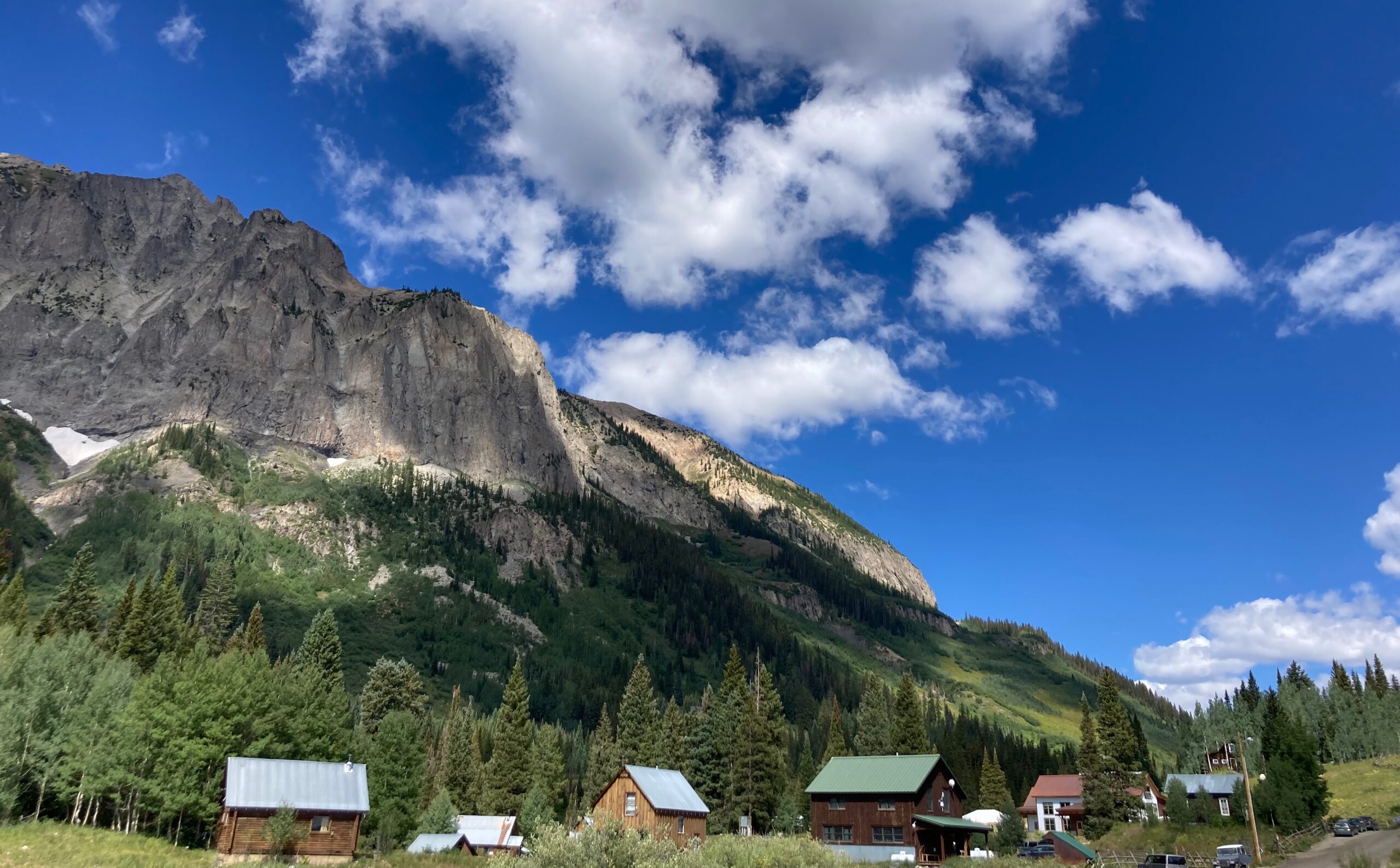
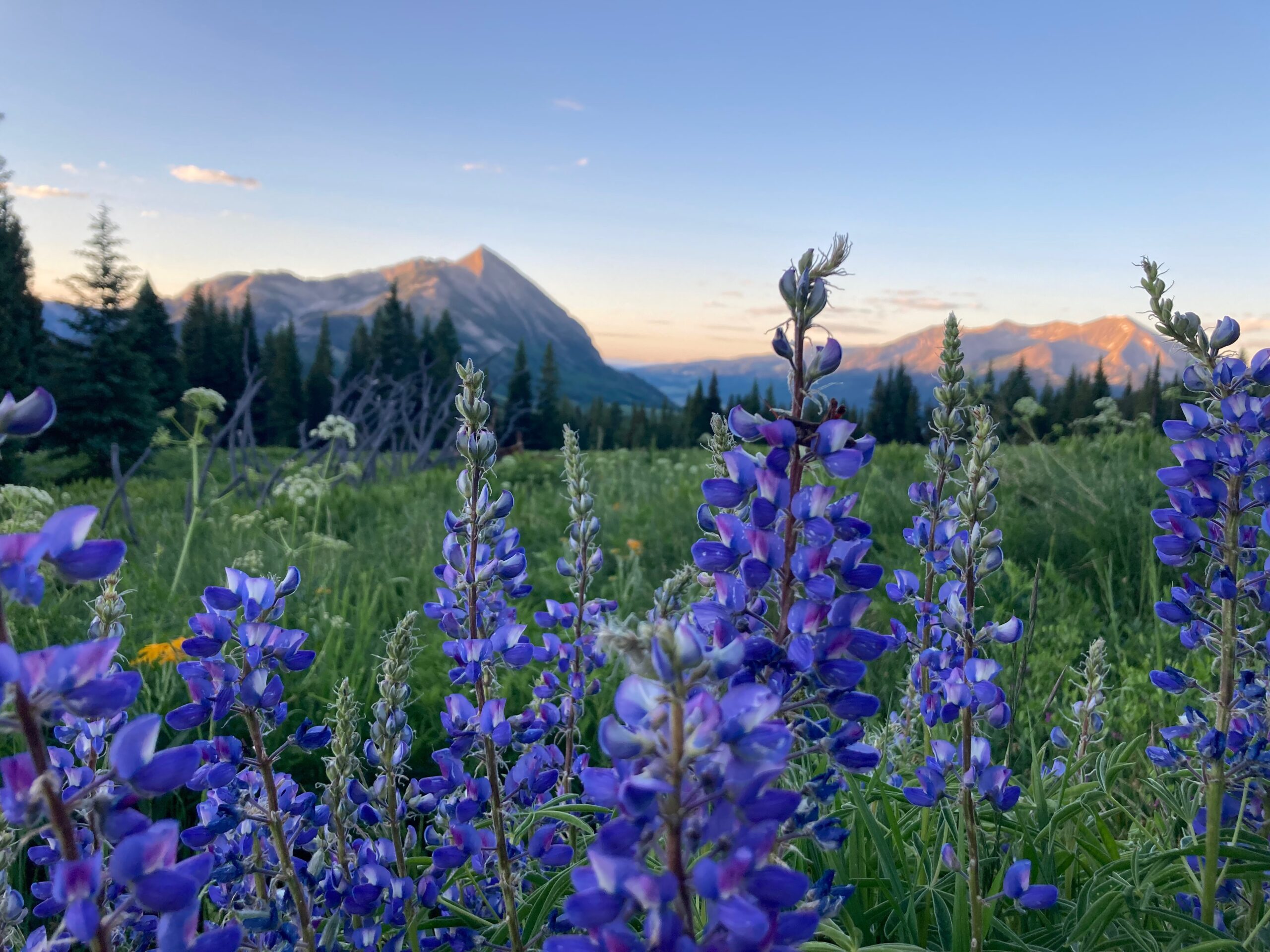
Photo caption: View of the Rocky Mountain Biological Laboratory, with Gothic Mountain towering above.
4:30 AM: Good morning! To arrive at my research sites in time to start my bird species surveys by 6 AM, I often have to wake up long before the sun rises. I get dressed, refill my water bottles, collect the snacks and PB&J sandwiches I prepared the night before, and grab my pack. Inside my pack I have my binoculars, data collection sheets, a handheld GPS unit, and of course a first aid kit and extra warm layers. Field research requires that you always be prepared for the unexpected!
This summer I am investigating how birds in the southern Rocky Mountains are responding to climate change. To do this, I am conducting a resurvey of bird species along an elevational gradient. I have six research sites ranging from 8,100-11,200ft in elevation, and I will visit each site three times throughout the season to conduct a point count survey of bird species. A point count survey involves standing in one spot for a specific amount of time and recording all bird species I observe by sight or sound. Another student conducted these surveys in 2011, so I am repeating their methods to be able to compare the data from 2011 and 2023 and examine how bird communities have changed over the 12-year period.
6:00 AM: After biking 3 miles along a gravel road to the base of Snodgrass Mountain and hiking another 3 miles up the slope (including a break halfway to enjoy my PB&J for breakfast), I am ready to begin the point counts. I use the GPS unit to locate the coordinates of each survey point, and record all of the species that I hear and see during a five-minute period. These surveys require me to be very familiar with the songs and calls of bird species in the region, as the majority of my detections are auditory. I audio record all of my point counts so that I can go back and verify observations later if I am not certain about my real-time identification in the field.
8:00 AM: After I finish the point counts, I sit down to eat a snack and enjoy the beautiful views around me. I begin my bike ride down the mountain, whizzing through fields full of blooming wildflowers.
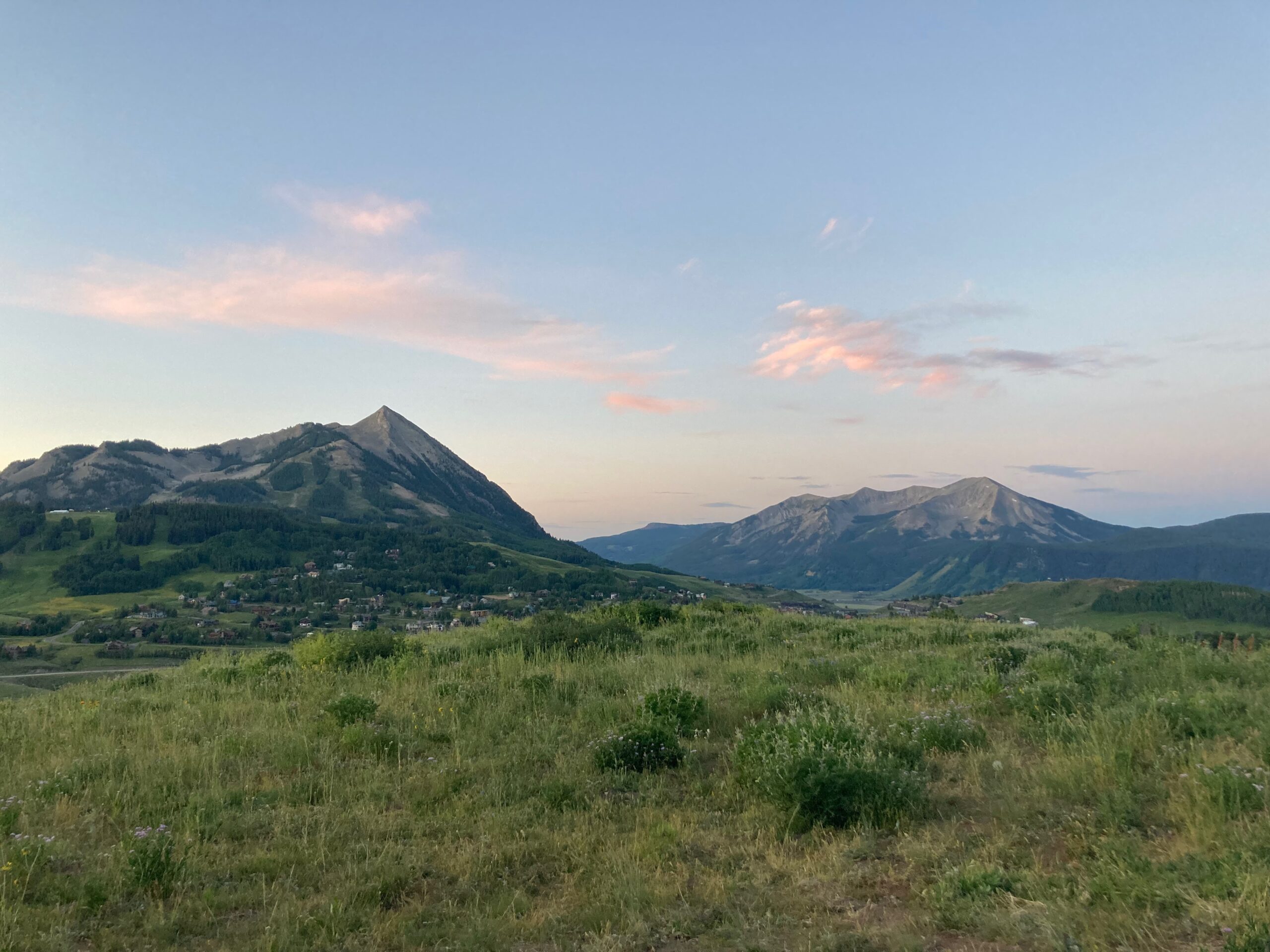
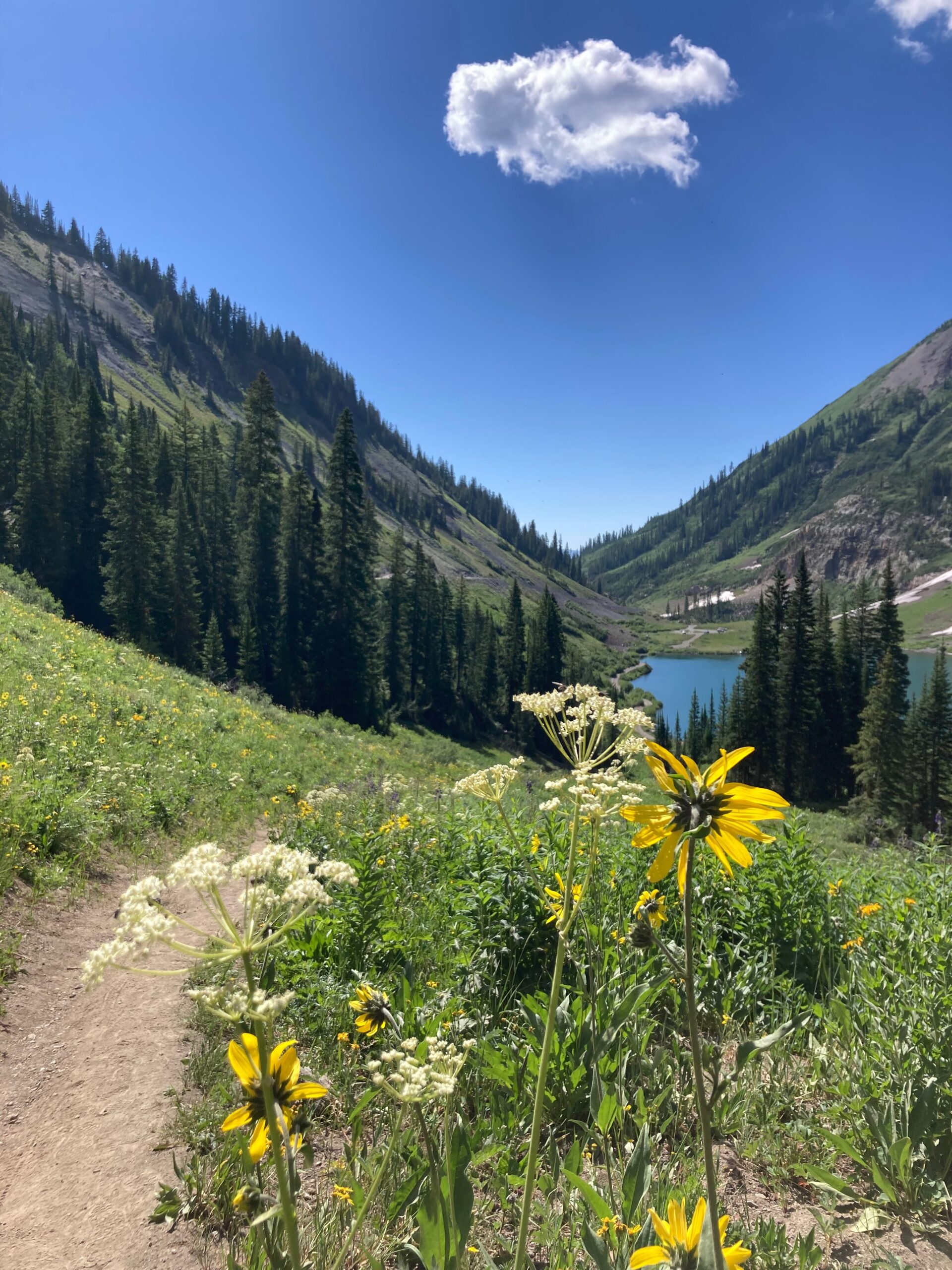
Photo caption: Views of the sunrise and wildflowers from my trek up Snodgrass Mountain.
9:30 AM: I make it back to my home for the summer: the Rocky Mountain Biological Laboratory (RMBL), a thriving community of almost 200 field biologists, each studying one component within the greater ecosystem of the southern Rocky Mountains, united with the goal of recording long-term ecosystem responses to climate change. I head to the dining hall to grab more snacks and refill my water—field work can be exhausting and it’s especially important to stay hydrated.
10:00 AM: I head back to my cabin to enter my point count data from the morning. This involves transcribing my handwritten field notes on paper datasheets into a spreadsheet on my laptop. This is important for multiple reasons: it serves as a backup in case my paper datasheets are lost or damaged, and formatting an electronic file is the first step to performing statistical analyses to uncover trends and relationships in one’s data.
11:00 AM: Now it’s naptime! With a wake-up call before sunrise, I almost always need a nap to recharge after morning fieldwork.
12:00 PM: I nap until lunchtime, and then I head down to the dining hall. RMBL has a great kitchen staff that makes sure the researchers are well fueled for their fieldwork, and the dining hall is a perfect place to meet other scientists and learn about all of the cool research taking place.
1:00 PM: After lunch, I take some time to look over my research report draft and make some edits to the methods section because a couple of aspects have changed since I began my surveys out in the field. Keeping good records on the methods used for surveys and experiments is very important because it ensures future researchers will be able to reproduce the experiments.
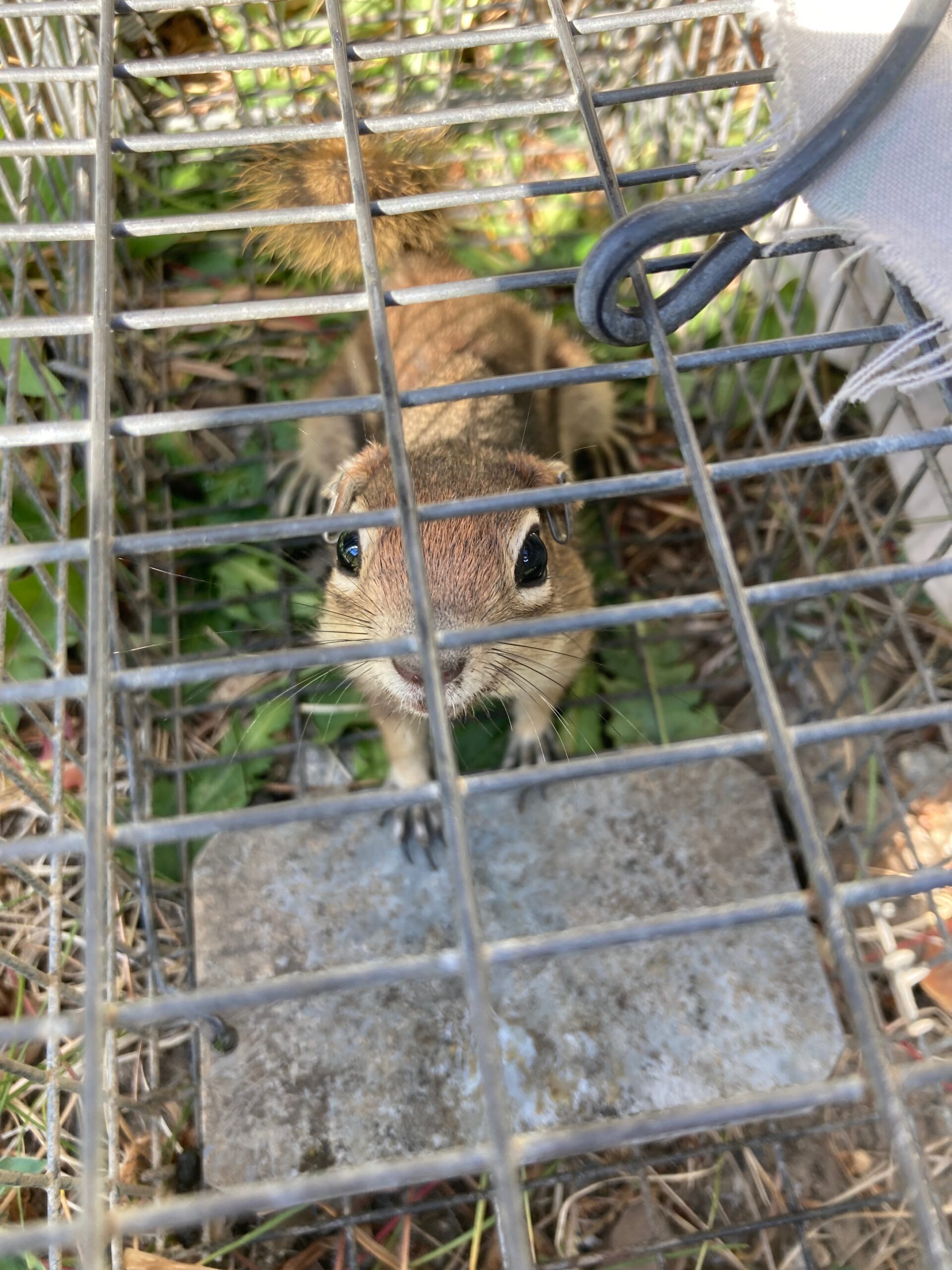
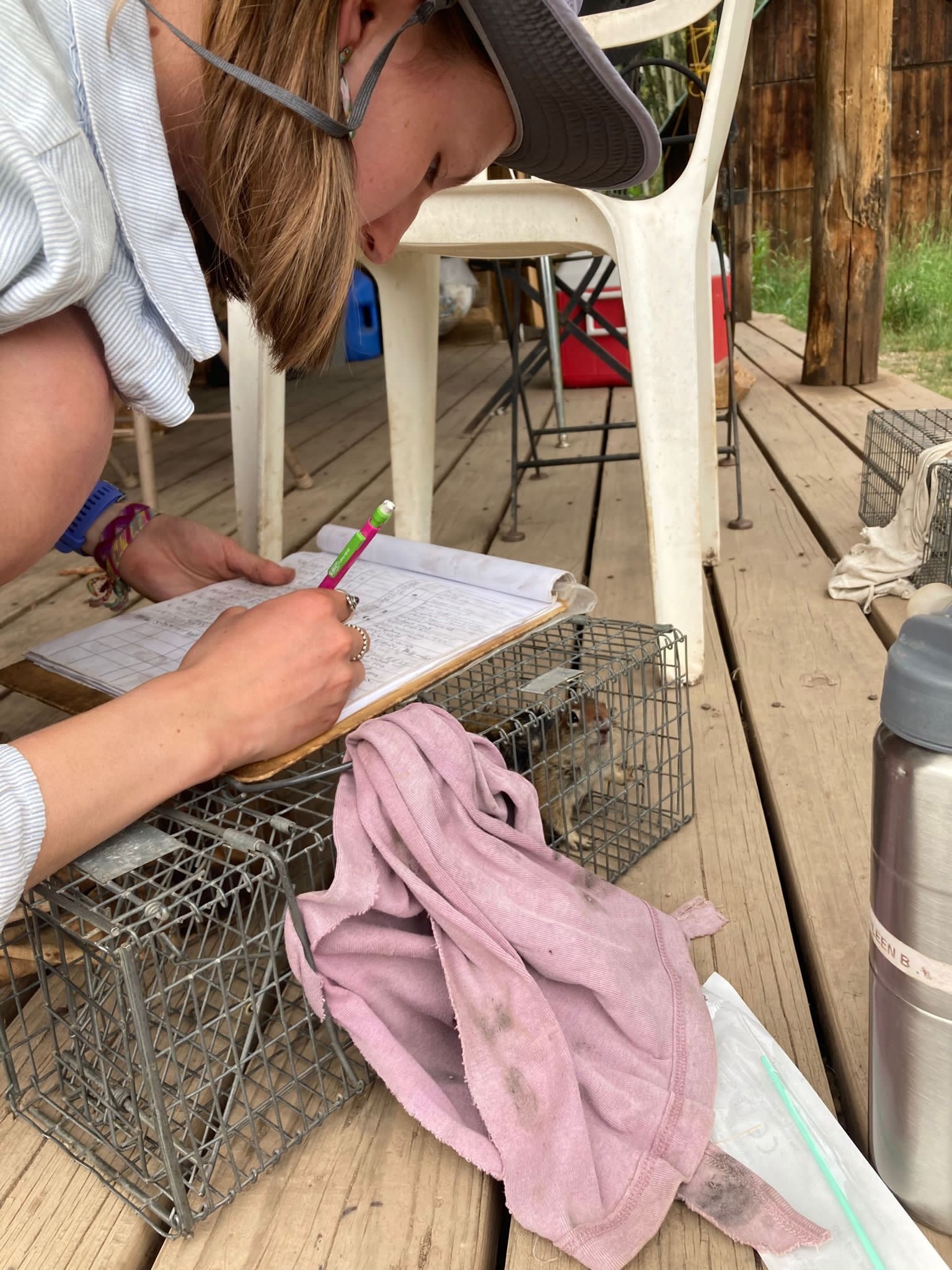
2:00 PM: Most afternoons, I work as part of the golden-mantled ground squirrel (GMGS) team on a long-term behavioral and spatial ecology project. This involves making rounds around the RMBL townsite looking for squirrels and recording their behavior in 10-minute periods. GMGS resemble chipmunks, but they are larger and can run faster. Another big component of the squirrel project is live trapping, where we bait small wire traps with peanut butter and place them around known squirrel territories. When we capture a squirrel, we put them into a special canvas bag for safe handling and we record morphological measurements such as weight and take hair samples for genetic analysis. The most exciting time is mid-summer when the squirrel pups emerge from their burrows. We try to trap pups every couple of weeks to monitor their growth.
From left to right: A GMGS inside a trap, data collection during GMGS trapping.
5:00 PM: After my shift with the squirrel team, I head back to my cabin to rest and relax until dinner. I also must pack up my camping gear, because the site I am surveying tomorrow morning is several miles up the valley from the field station, and it requires an overnight backpacking trip to get there. I pack a sleeping bag, sleeping pad, small 2-person tent, extra layers, water filter, and my survey equipment in a backpacking pack. At the dining hall during dinner, I will grab extra snacks and make a couple of PB&Js to carry with me.
7:00PM: After dinner, myself and two of my fellow student researchers borrow a vehicle to drive to the beginning of the hiking trail that will take us to the research site. We park next to a beautiful alpine lake and begin the 3-mile hike. We will gain 1500 ft in elevation over the course of the hike, so the majority of the trail is unrelentlessly steep. The gorgeous views of the sunset over the mountains around us serve as a good distraction from the strenuous hike. Two miles into the hike, we reach a river crossing. We take off our hiking boots and socks and roll up our pants to wade through the ice-cold water. Once across the river, we know there’s only a mile left to climb, and the sunlight is fading fast so we push onwards to try and make it to the site before dark.
Once we get to the site, which consists of a series of ponds located along a rocky mountain slope, we quickly set up our tents and get ready for bed. The stars are incredible here—we can even see the outline of the milky way.
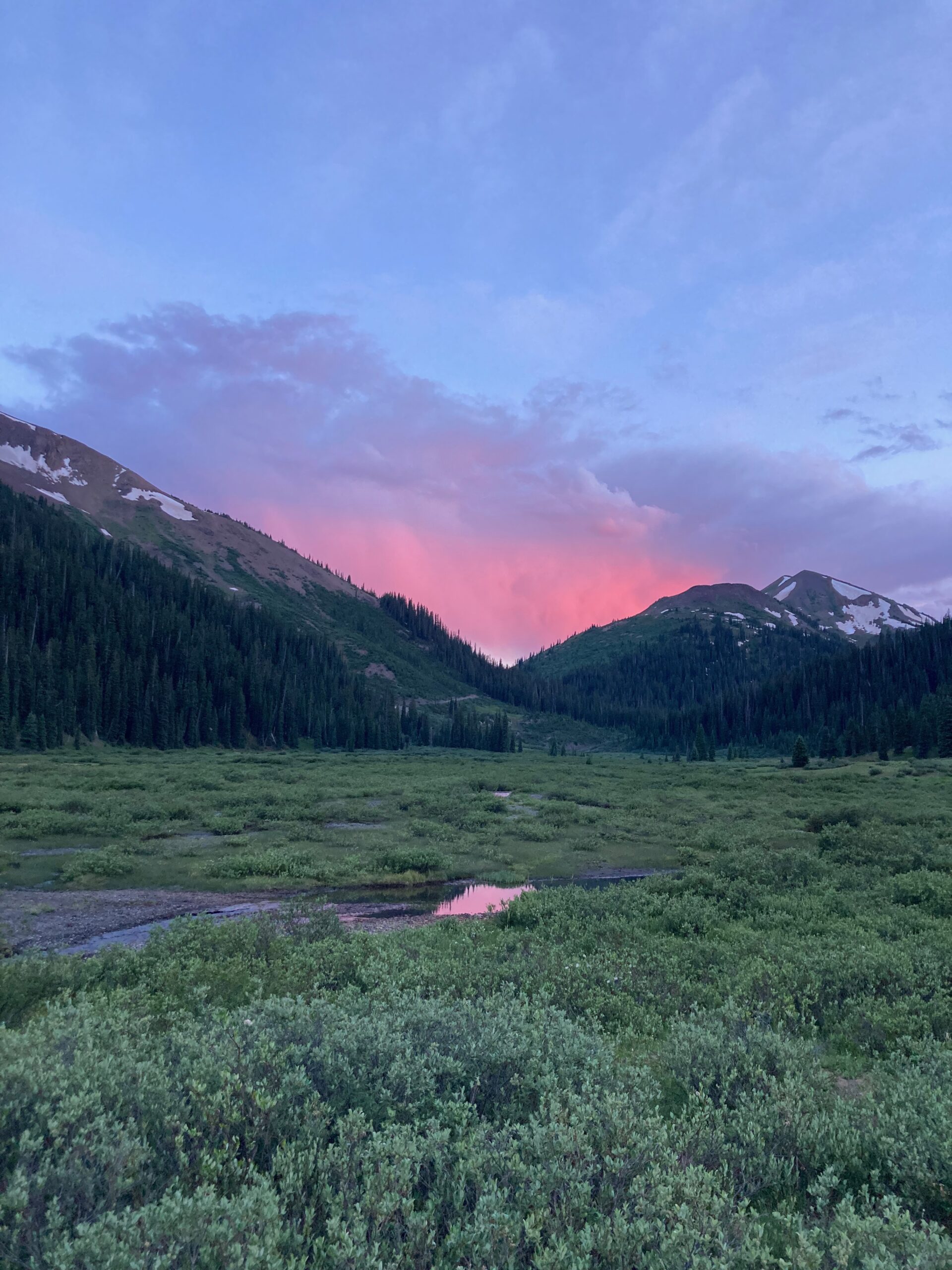
Left: View of Emerald Lake from trail above. Right: Sunset over the valley after the river crossing.
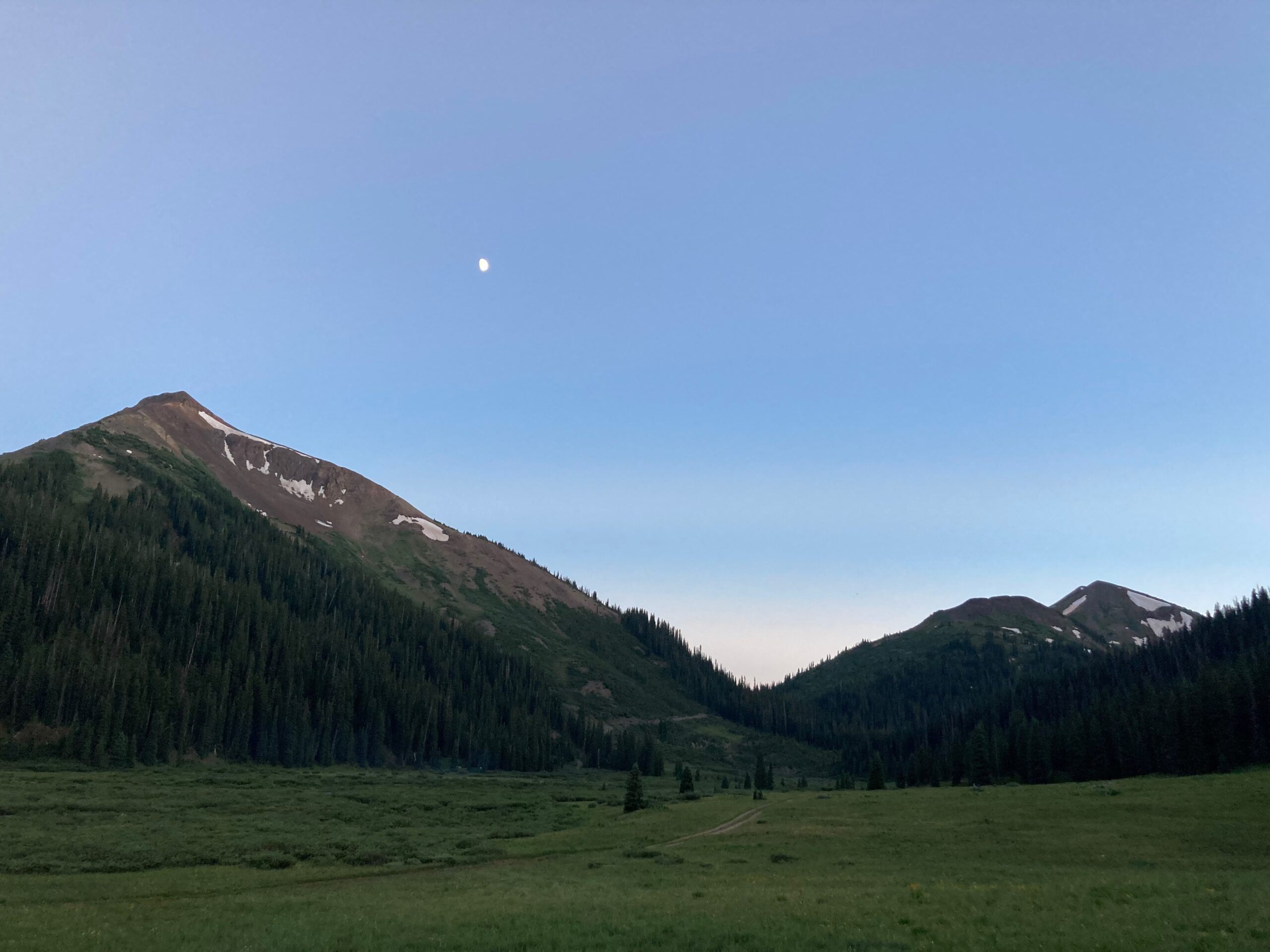
Photo caption: View down into the river valley at twilight.
9:30PM: Time for bed! After the sun sets, it gets very cold at this high elevation, and the most comfortable place to be is inside my warm sleeping bag. I set my alarm for 5:30AM and make sure all of my survey equipment is ready for the morning.
This summer I learned a lot about how to effectively design and conduct a field ecology research study—especially how to be flexible and creative when problems arise. Field research is challenging but it is so refreshing to work outside in such beautiful places, and it’s especially rewarding to explore the trends in one’s data after a season of hard work. That’s how I’ll be spending the winter months, as do many field ecologists outside of field season—crunching the numbers in order to reveal the mechanisms of change in the ecosystems around us.
A pressing issue our world is facing is “The Plastic Problem.” Humans have been creating harmful, non-biodegradable plastics and other materials for hundreds of years and polluting the planet with them. Scientists have been working to come up with reasonable solutions to waste management. While creating environmentally friendly alternatives is instrumental in preserving our planet, something must be done about the waste produced in years past.
A natural solution?
Who could have guessed that the Earth has been working to solve this itself? Some microorganisms have evolved and adapted to consume different types of plastic and convert their components into something good for the environment.
Plastic-Eating Bacteria
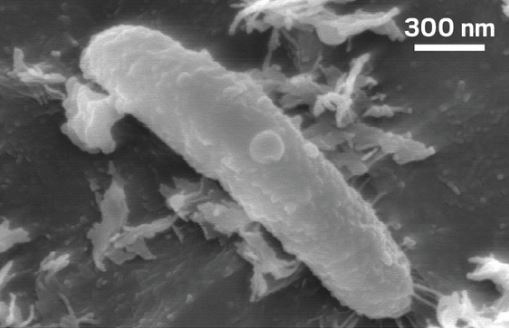
Ideonella Sakaiensis is a bacteria discovered in Osaka, Japan. It secretes enzymes that break down harmful PET plastics into biodegradable PHB plastics. This bacteria could break down plastics in around 6 weeks when studied in a lab setting.
Plastic-Eating Fungi
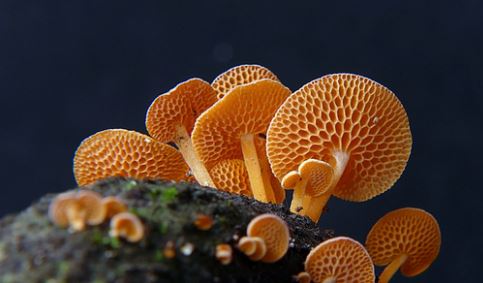
Aspergillus Tubigensis, a naturally occurring fungus, was discovered by scientists at a waste disposal site in Islamabad, Pakistan. This fungus is also capable of breaking down plastic by secreting special enzymes. These enzymes destroy the bonds between molecules in the plastic.
Plastic-Eating Larvae
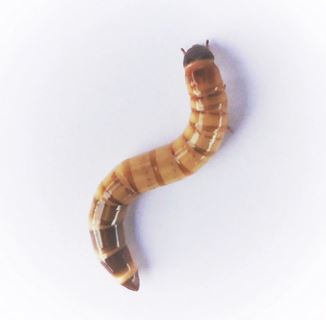
Zophobas Morio, or “super worms”, are larvae of the darkling beetle. This creature can decompose polystyrene (AKA Styrofoam) through its digestion. The larvae’s gut microbiome is being studied to learn how to replicate the process of breaking down plastics and learn how to produce more efficient larvae.
Is This Sustainable?
For something to be sustainable, it must account for three things: ecology, equity, and economy. In other words, something must be good for people, nature, and the economy.
While these organisms are all naturally-occurring, they are not the most efficient. In order for these organisms to become viable solutions to our plastic problem, they must be bio-engineered to be hundreds of times more efficient. Large-scale commercial use would be very expensive. The “willingness to pay” philosophy addresses how people will only choose sustainable products if they are willing to pay for them. More expensive endeavors are backed less by the average person. These organisms are only sustainable as long as researchers are given proper funding.
The effort to bring greenspace and restore natural ecology to the Georgia Tech campus can be seen in the EcoCommons, a park built near the Keneda building and the Center Street Apartments. One of the goals of the EcoCommons is to restore Georgia’s natural plant life to Atlanta. Today, we’re going to look at some of the native plants which have been brought back to the EcoCommons.
Bald Cypress Trees
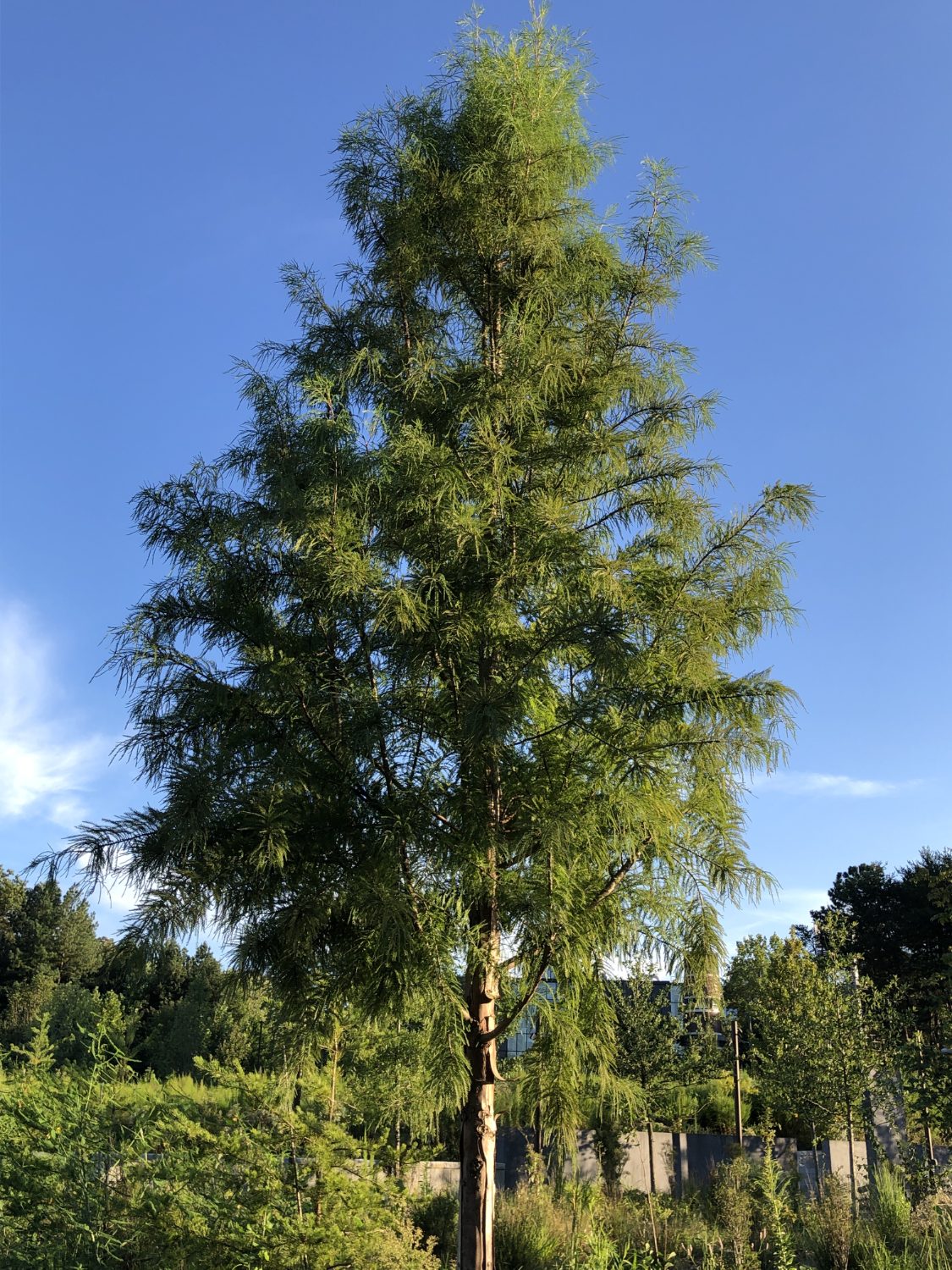
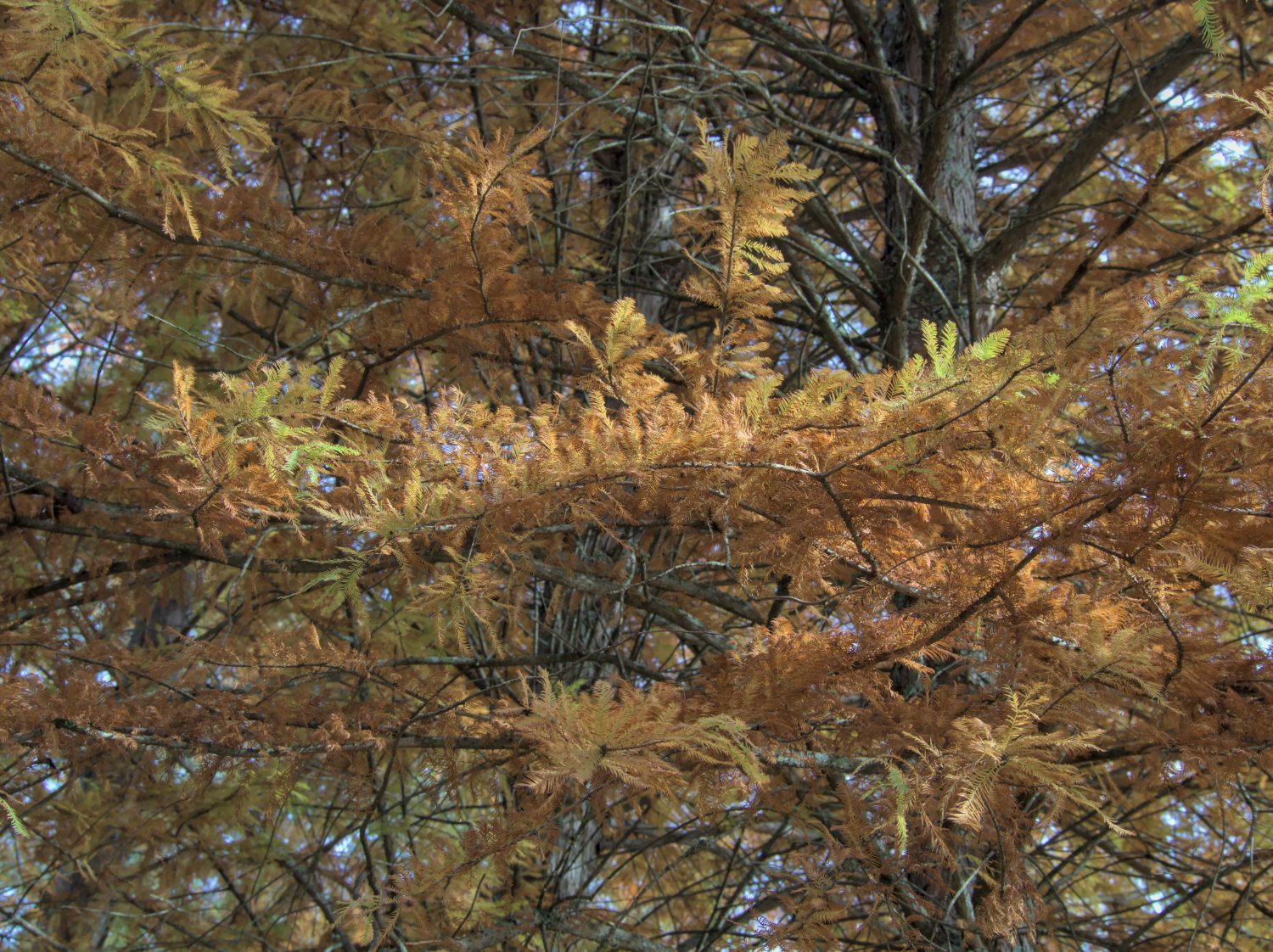
Bald cypresses are trees native to much of the southeastern United States. They’re hardy and versatile, and can grow in all kinds of soil environments. This, along with their lovely red and orange needles during the fall, makes them popular plants for decorative purposes. Other common names for the bald cypress include swamp cypress, white cypress, tidewater red cypress, gulf cypress and red cypress.
In the wild, bald cypresses are typically found in wet, swampy areas. They can be identified by their large, spread out needles.
FUN FACTS
The oldest bald cypress tree (that we know of) has been alive since 605 BCE. That’s a 2627 year old tree!
The site of the tree is actually a secret – park rangers don’t want visitors vandalizing it.
The bald cypress is the state tree of Louisiana.
Bald cypress wood has historically been marketed for its resistance to water, which makes it useful in wet areas.
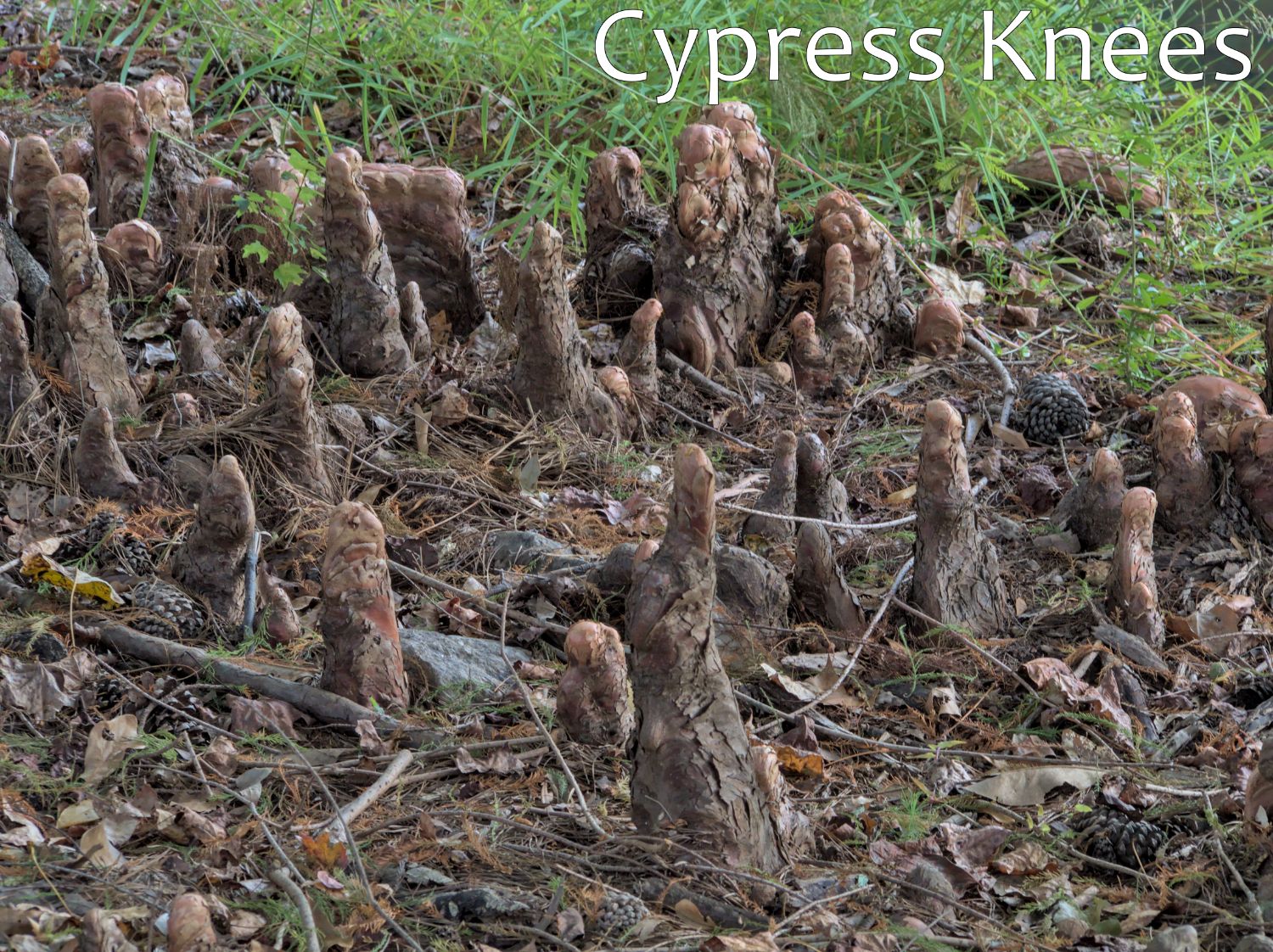
Around a bald cypress tree, it’s common to see what are called cypress knees – wooden outgrowths from the ground. They actually extend upward from the main trunk’s root system. They look like small stumps coming out of the ground, although they’re still connected to a “main” tree.
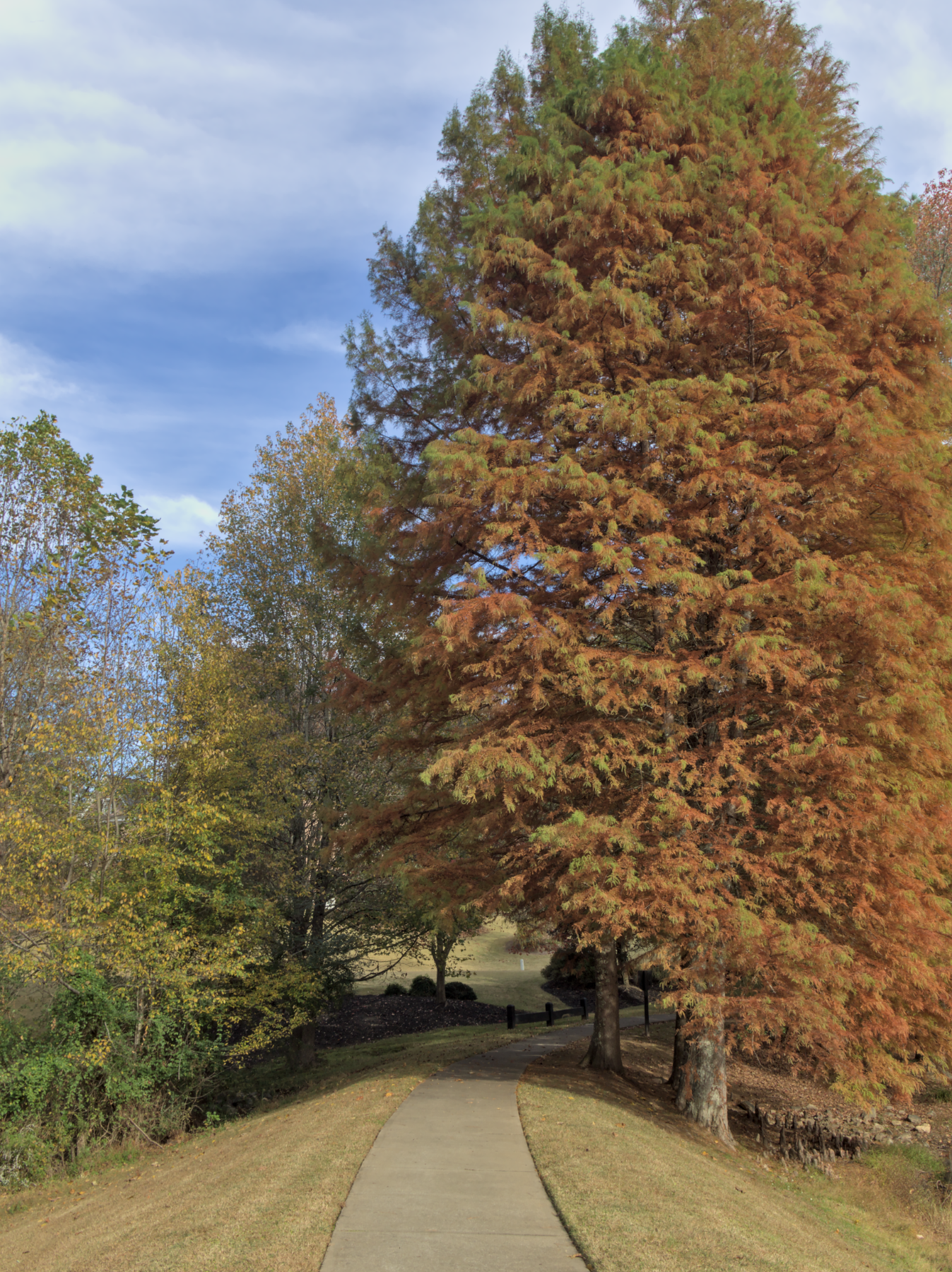
Bald cypress trees are famous for their fall colors – here’s a larger bald cypress off of the Georgia Tech campus in November. These native plants are a great choice for people looking for decorative trees that are ecologically beneficial to the local environment.
Cardinal Lobelias
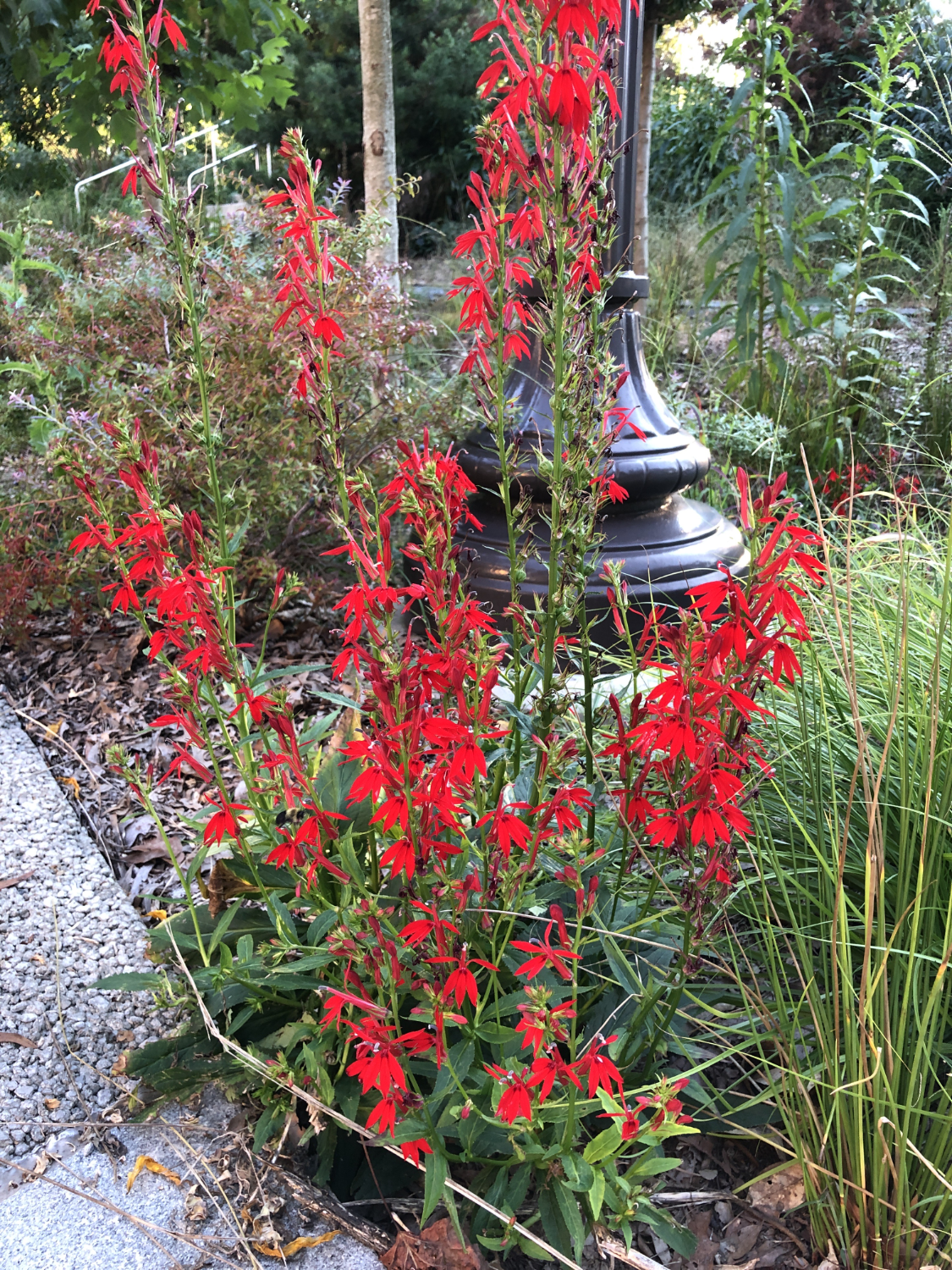
The cardinal flower, lobelia cardinalis, is a red flower, belonging to the bellflower family, that is native to most of the United States (except for far Northwestern states). It primarily lives in moist areas, such as stream banks, ditches, and lake shores.
FUN FACTS
Excellent for hummingbird and butterfly gardens. This plant attracts many native pollinators, so it’s a great addition to your yard or garden if you’d like to see more hummingbirds and butterflies.
You can find varieties of the cardinal flower with pink and white flowers, although these are mostly sold in nurseries for decorative plants.
Every part of the cardinal flower is poisonous when ingested – don’t eat it!
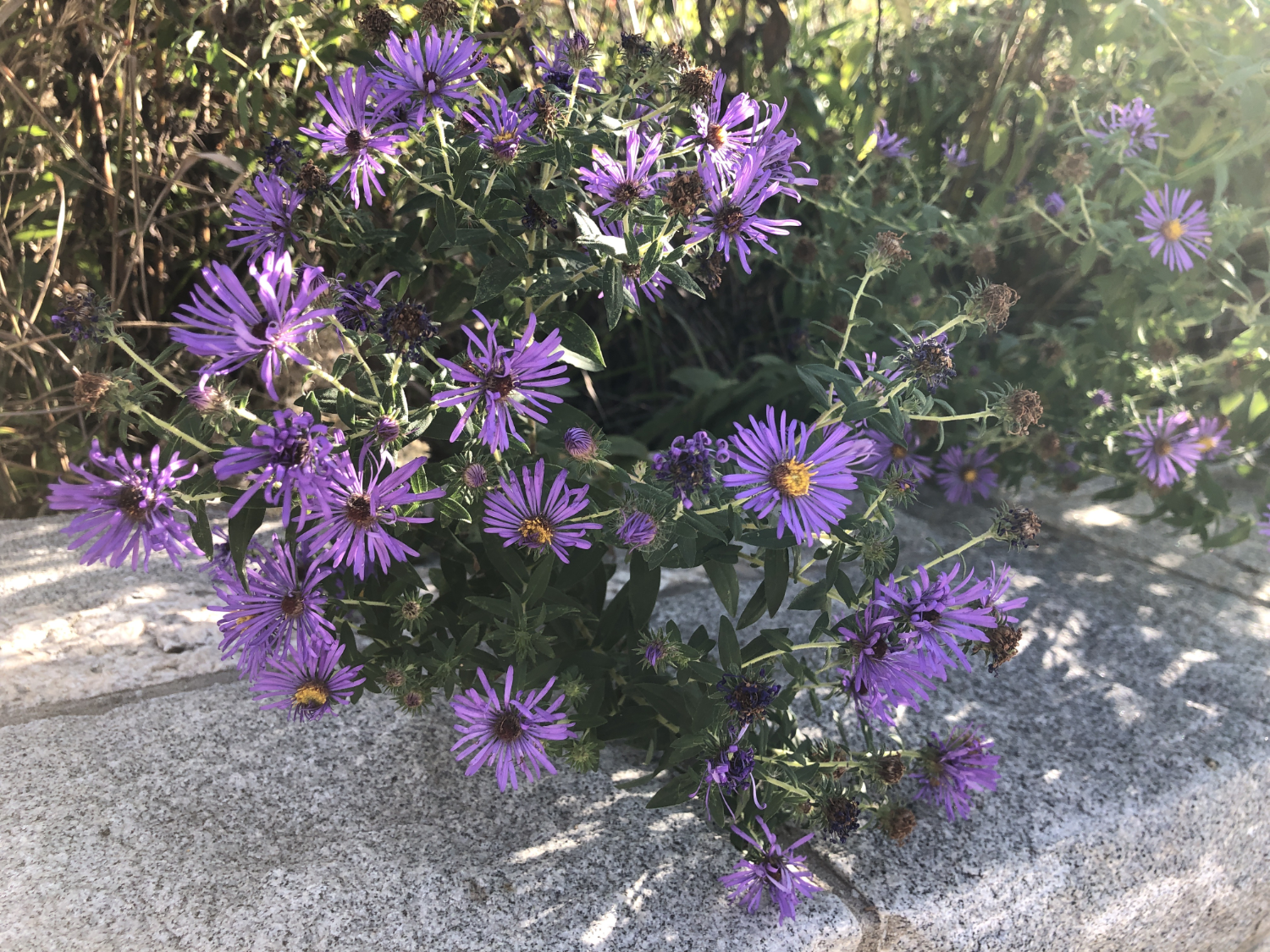
New England Aster
The New England aster, Symphyotrichum novae-angliae, is a perennial flower that is a native plant to much of the northeastern United States. It typically blooms from late summer through fall, with asters blooming in late August to early November depending on the region. New England asters are typically found in moist environments, particularly in wetlands. However, it has been found in dry soils as well.
FUN FACTS
New England asters are a favorite flower of the monarch butterfly! These flowers are known to attract the monarch butterflies during their migration south for the winter.
The word “aster” comes from the Greek word ἀστήρ, meaning “star”. Aster shares a language history with astronaut and astronomy.
Here in Georgia, New England asters are considered “Critically Imperiled” by NatureServe – this means that their natural range has been reduced significantly by human activity.
Domestically, you can find New England asters in all sorts of pinks and purples at nurseries for your garden or yard.
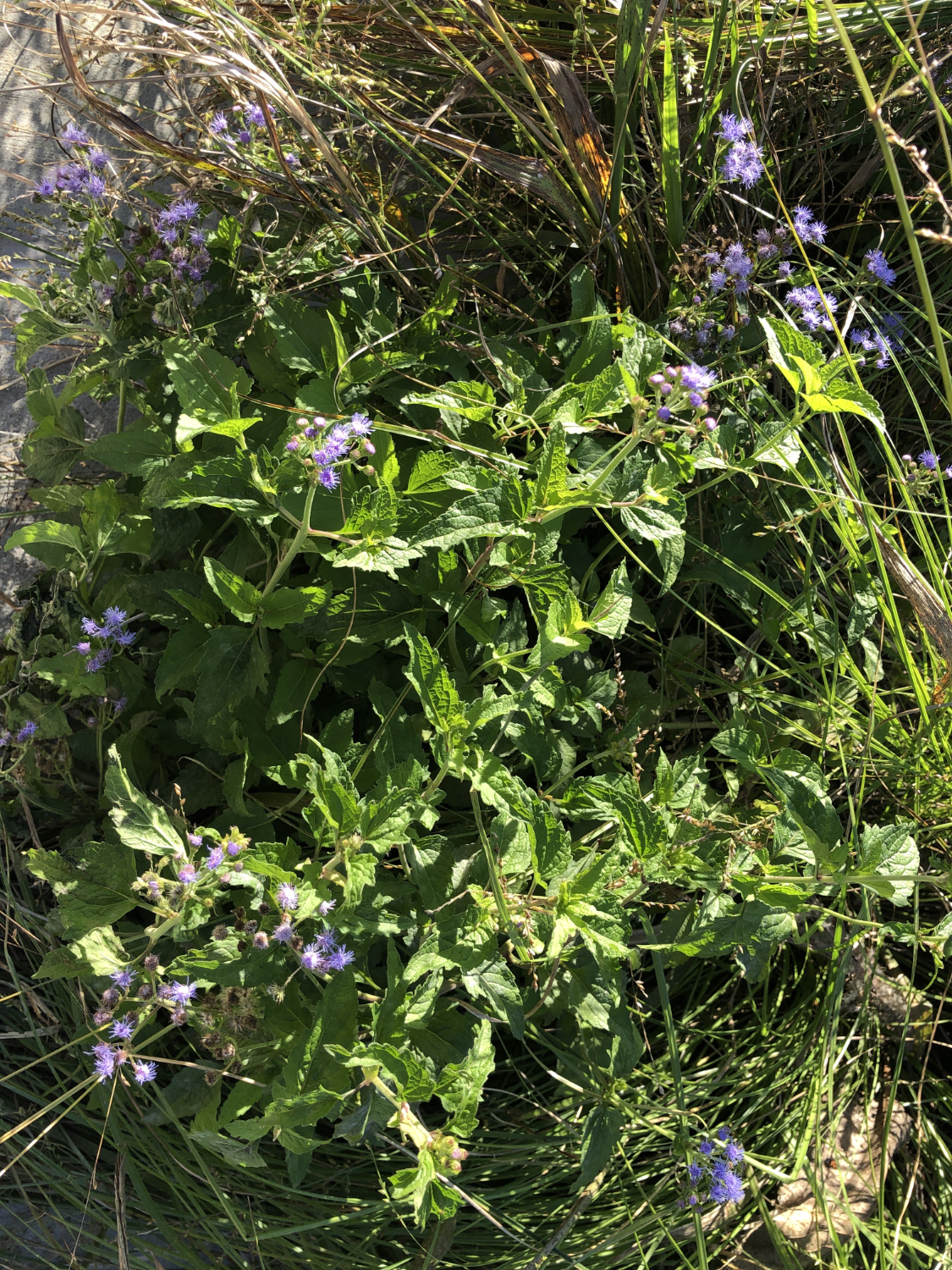
Blue Mistflower
The blue mistflower, conoclinium coelestinum, is a perennial flowering plant in the Asteraceae family. Blue mistflowers are widespread throughout North America, and can be found from Ontario, Canada to Tepoztlan, Mexico. It’s commonly grown in gardens, and flowers from July through November each year.
FUN FACTS
Blue mistflowers are hardy plants that can spread quickly – be warned if you want them in your garden! They’re very capable of choking out their neighbors because their root systems spread out.
These flowers are known for their ability to attract pollinators, which makes them great for supporting local ecology.
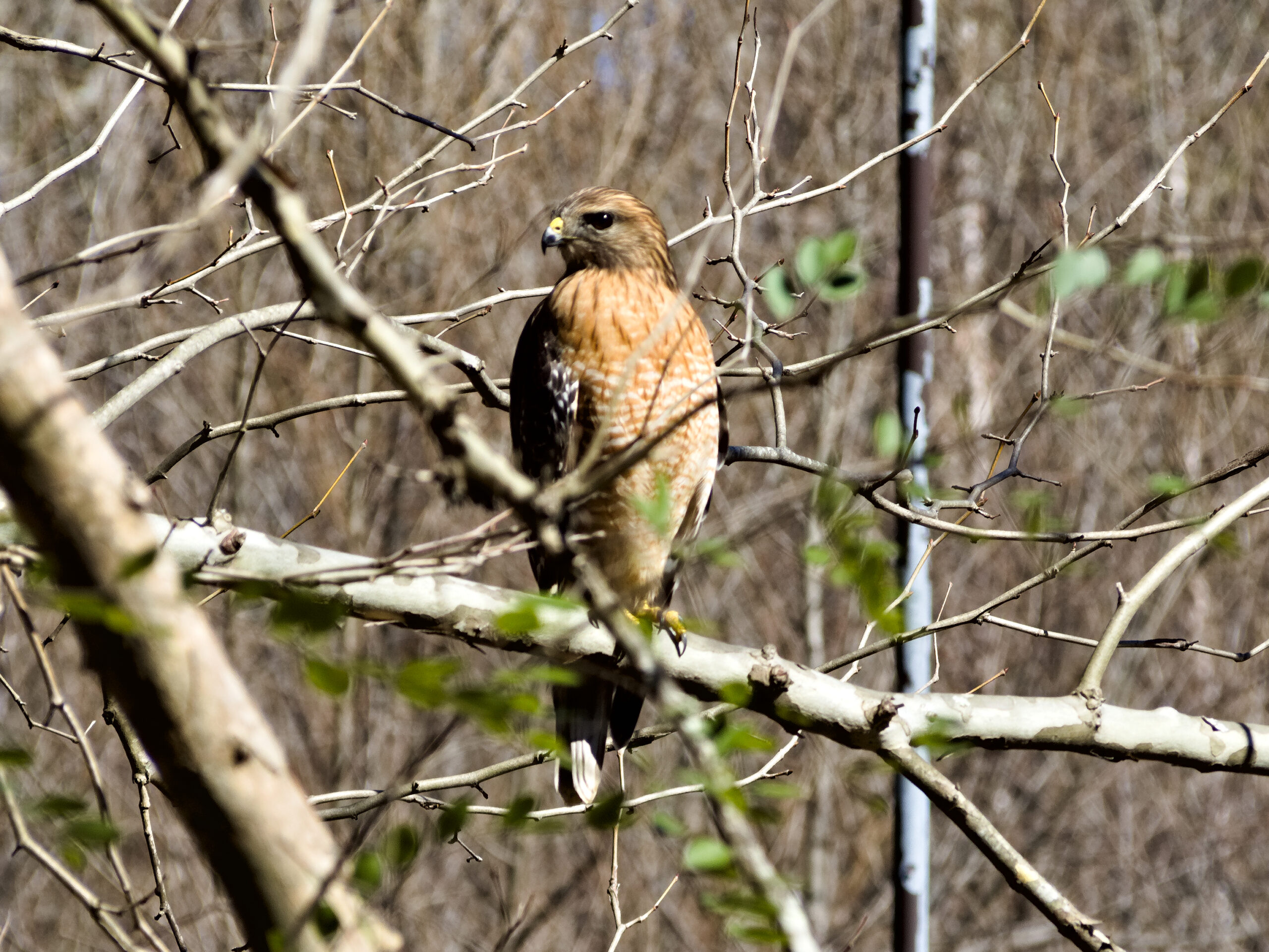
The red-shouldered hawk (Buteo lineatus) is a raptor that is found in forests throughout North America. Year round, the red-shouldered hawk is found throughout much of the Eastern and Midwestern United states. During their breeding season, they can be found in both the northeastern and western United States as well as part of Atlantic Canada. They also have a non-breeding range in Mexico, where they are found for some parts of the year. Red-shouldered hawks can be identified by their medium size and reddish-brown feathers on their chests and shoulders. Hawks from the western part of their range tend to be a deeper red than those found in the eastern part. As for their wings, the feathers are banded black and brown from the underside, with black and red being predominant on the outside. Their tails are also banded, which is another identifying trait of the species.
Sexual Dimorphism in Red-shouldered Hawks
Red-shouldered hawks do show some sexual dimorphism in their appearance. Sexual dimorphism occurs when males and females of the same species show different traits on average, such as average size and weight. Mass is one of the traits that is sexually dimorphic for red-shouldered hawks. Females are larger than males, with the average male being only 85% of the mass of the average female. Researchers recently have tried to establish other ways of determining the sex of red-shouldered hawks morphologically. Determining sex by morphology is used by biologists to guess at the sex of an animal without needing to check for sure with DNA testing. Sex determination based on morphology is more convenient than determining sex based on molecular testing, and can be done by biologists in the field without access to DNA testing equipment. Other features of red-shouldered hawks that are sexually dimorphic are toepad length, length of secondary feathers, bill length, mass, and wing chord length. However, mass remains the most reliable way to morphologically determine the sex of a red-shouldered hawk.
Diet and Habitat of the Red-shouldered Hawk
The diet of the red-shouldered hawk is mostly made up of small mammals, lizards, snakes, and amphibians, and these hawks typically live in riparian forests. Riparian forests are forests that are on or near the bank of a river or stream. There is evidence that the composition of the red-shouldered hawk’s diet varies depending on where in their range they are living. One study split red shouldered-hawks into two groups. The first group was the northern hawks, which live above 38o N latitude. This is the latitude line passing just south of Charlottesville, VA, and through Lexington, KY. Interestingly, northern hawks preferred more mammalian prey and less amphibian prey. The opposite was true for southern hawks. Researchers noticed that diets were more mammalian in drier conditions, whereas hawks that lived in wetter conditions relied more on invertebrate and amphibian prey. It’s possible that hawks that live in drier areas will be less affected by wetland degradation than hawks in wetter areas.
Nesting Preferences of the Red-shouldered Hawk
Where red-shouldered hawks choose to nest is another area of interest for researchers. Typically, red-shouldered hawks prefer to nest in large tracts of mature forest, although they can also be found in more fragmented forested areas, such as those found in suburban areas. One study found that nests were more likely to be located near a lake or treeless wetland than not. Nests were also more likely to be near a trail or stream than not for both cases. Researchers believe that open trails might make good hunting grounds for the hawks, without trees and underbrush to hide prey. We can guess similarly about hawks’ proximity to lakes and treeless wetlands. The lack of trees gives hawks easier access to their prey, which they detect primarily via eyesight. Red-shouldered hawks’ positive association with wet areas is a well known feature – amphibians make an important component of the diet of the red-shouldered hawk, especially while nesting.
References
Cheryl R. Dykstra, Herman L. Mays Jr, Jeffrey L. Hays, Melinda M. Simon, & Ann R. Wegman. (2012). Sexing Adult and Nestling Red-Shouldered Hawks Using Morphometrics and Molecular Techniques1. Journal of Raptor Research, 46(4), 357–364. https://doi.org/10.3356/JRR-11-84.1
Brad N. Strobel, & Clint W. Boal. (2010). Regional Variation in Diets of Breeding Red-Shouldered Hawks. The Wilson Journal of Ornithology, 122(1), 68–74. https://doi.org/10.1676/09-071.1
Landenberger, James F, Roosa, Dean M, Stravers, Jon W, Ehresman, Bruce, & Patterson, Rich. (2013). The Raptors of Iowa. University of Iowa Press.
James E. Woodford, Carol A. Eloranta, & Anthony Rinaldi. (2008). Nest Density, Productivity, and Habitat Selection of Red-Shouldered Hawks in a Contiguous Forest. Journal of Raptor Research, 42(2), 79–86. https://doi.org/10.3356/JRR-07-44.1
Red-shouldered Hawk Overview, All About Birds, Cornell Lab of Ornithology. (2019). allaboutbirds.org. https://www.allaboutbirds.org/guide/Red-shouldered_Hawk/
The city of Atlanta is constantly growing. With new apartment complexes, new buildings and more companies coming to the city, the metropolitan of Atlanta is currently the “fourth fastest growing area in the country” (Carnes, 2019). These changes that are occurring within the city are having dramatic changes to the demographics and economy of the city, but these changes are causing detrimental environmental effects as well.
Atlanta has become one of the fastest growing cities in the Southeast of the United States. The demographic of Atlanta has been evolving over this time of constant growth. With the constant growth, the average age of the population of Atlanta has decreased and is lower than the average age of the population of the state of Georgia. In 2019, the median age of Georgia is 36.2, while in Atlanta, the median age is 33.5 (“Atlanta Georgia Population 2019”). The city has a lower median age compared to the entire state due to reasons that younger individuals are moving to the city. According to the NFIB, young people are moving to the city “because of the low cost of living, the growth of the job market, and diversified economy” (“Atlanta is top 20…”). These age differences can have adverse effects on the population that could be good or bad. Within Atlanta, the lower median age can “impact the economy significantly” with negative repercussions. (Majaski, 2019).
The economy of Atlanta is growing as well with the influx of people. The construction industry has a huge influence in the city. In order to accommodate these needs, various construction projects are constantly being started. As of June 2019, the job growth of construction is greater than any other industry in Atlanta (US Dept. of Labor, 2019). These construction projects include housing as well as corporate buildings as well. According to RealPage, the “demand for apartments outstripped new supply in Atlanta by nearly two-to-one with more than 4,200 units being rented while 2,700 new units delivered into the market” (Shchenke, 2019). This signifies that the general young population of Atlanta, constantly needs housing and in order to accommodate this, many constructions occur to provide housing for such. Although there is a huge number of construction projects occurring and benefits the city and people, these construction projects are having negative environmental effects.
Despite the construction and growth of the city being a good thing for the city, it can negative effects on the city as well. The city of Atlanta is a major city that is being affected by urban sprawl. According to Britannica, urban sprawl is the “rapid expansion of the geographic extent of cities and towns” (Rafferty, 2019). With this rapid expansion of Atlanta, it is having adverse effects on the environment and has led to drastic deforestation within the city. In order to clear space for new construction, “sprawl-fueled deforestation occurs at the rate of 50 acres per day” (Bullard). This leads to less tree cover for the area which can lead to effects such as more pollution, flooding and soil erosion (“Urban Sprawl”). Along with the effects of general pollution, flooding and soil erosion, a huge impact of urban sprawl within Atlanta is that the overall quality of air in the city will drop.
Air pollution is one of the biggest problems that is caused by urban sprawl. With urban sprawl, many individuals have an “increased dependence on automobiles and other vehicles, and high energy and water use” (“Urban Sprawl: Your Health…”). In this case, the number of cars on the highways or streets essentially increases because people are spread out and do not have sufficient public transport to get to their destination. According to the Atlanta Regional Commision, “Atlantans drive a total of more than 100 million miles per day” (“Facing the facts…”) This means that people spend a long time in their cars due to traffic and general commutes. Along with the general increase in the number of vehicles on the road, the general idea of deforestation caused by urban sprawl would be a huge effect on air pollution. Trees are a huge factor in helping in releasing water vapor and taking in carbon dioxide and other pollutants(“Urban Spawl”). WIth deforestation, there are less factors in helping in decreasing the pollutants and essentially ruin the general air quality. Over the past 15 years, Atlanta has averaged 40 ‘code orange’ days over the past Summers. These ‘code orange’ days can cause specific lung and heart disease and people are advised to stay inside. Along with the ‘code orange’ days, metro Atlanta area fails to meet national health standards for both soot and smog, and likely won’t meet these standards for at least 10 years (“Facing the facts…”). This level of air quality for Atlanta is very bad for the inhabitants and with such expansion, the city of Atlanta needs to look at the effects and find ways to help fix such environmental issues.
With the growth of the city, the city of Atlanta needs to implement solutions that allow the city to accommodate the growth, but also be able to solve specific environmental problems. Being able to connect the overall city through different means of transportation, will be a huge factor in helping the air quality of city and prevent further expansion of the city.
(2019, August 5). Retrieved from https://www.bls.gov/regions/southeast/news-release/2019/pdf/areaemployment_atlanta_20190805.pdf
Facing the Facts about Atlanta’s Air Quality. (n.d.). Retrieved from https://www.southernenvironment.org/cases-and-projects/fact-sheets/facing-the-facts-about-atlantas-air-quality.
Urban Sprawl: Your Environment, Your Health | National Library of Medicine. (n.d.). Retrieved from https://toxtown.nlm.nih.gov/sources-of-exposure/urban-sprawl.
Throughout your week, take note of how many plastic straws you use. Do you use one when you go to eat at a restaurant, or when you buy an iced coffee? Is it possible you use plastic straws at home? If you use so much as one plastic straw in the next week, you could make one small change in your life to contribute to a drastic change in the environment.
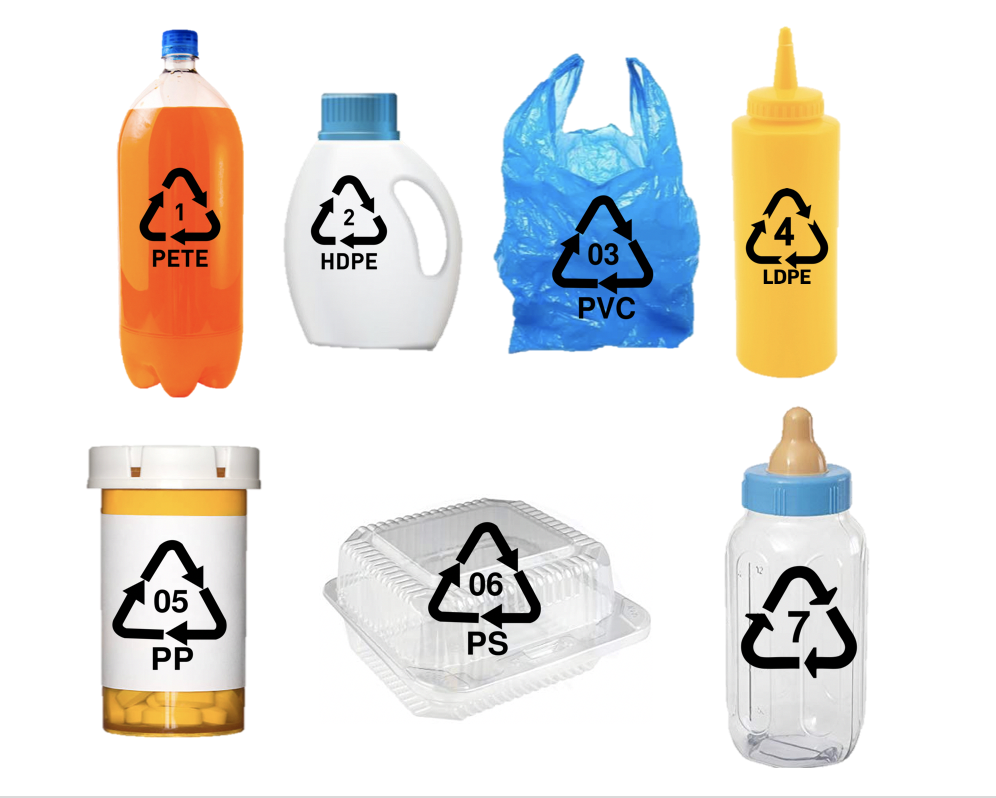
Made from petroleum, plastics are made into thermoplastics and thermosets (McGehee). Thermoplastics can be recycled and include items such as soft drink and water bottles, shampoo bottles, and shopping bags. These can be identified by locating the recycling symbol with either a “1”, “2”, “3”, or “4” label. These correspond to polyethylene terephthalate (PETE), high-density polyethylene (HDPE), polyvinyl chloride (PVC), and low-density polyethylene (LDPE), respectively. Thermosets include items such as liner in cereal boxes, styrofoam egg cartons, and baby bottles. These are identified with the recycling symbol containing a “5”, “6’”, or “7” which correspond to polypropylene (PP), polystyrene (PS), and other. Thermosets cannot be recycled because they would scorch in attempt to reheat and remold the plastic (Cowan).
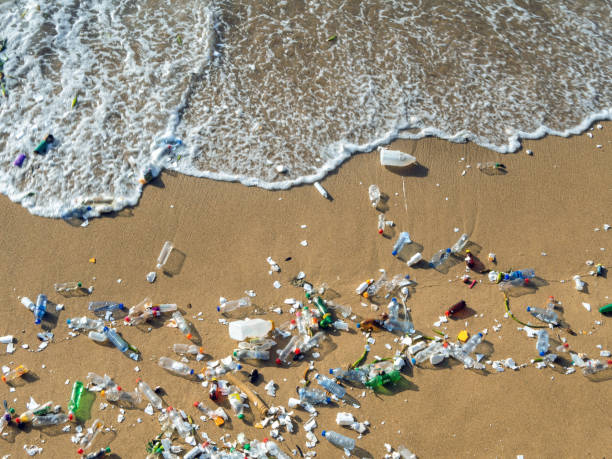
Plastic straws are usually a polypropylene – they can’t be recycled. Additionally, over 500 million plastic straws are used by Americans daily, they are the 11th most found ocean trash, and it can take a plastic straw up to 200 years to fully decompose (Hugh). Because they are on the smaller side of non-recyclable plastics, they can do more harm: “The smaller those pieces get, the more places they can go” (Science News for Students). As these plastics become smaller and smaller, they become what it known as “microplastics”, making them more likely for marine life to ingest. In a recent study, it was found that zooplankton, that had swallowed plastic in algae, laid smaller eggs that were less likely to hatch (Science News for Students). If we do not start cleaning up our act, there will be more plastic than fish in the ocean by 2050. Although that may sound futuristic, it is just over a few decades!
If the environment isn’t important enough, plastic straws also have a negative effect on you – they cause bloating, cavities, ingesting chemicals, wrinkles, and excess sugar and alcohol consumption (Perspective).
Now that you’re convinced, how do we fix this problem? There’s an obvious solution: simply stop using straws. Although this may not affect you directly, there are people who have no choice but to use straws due to medical reasons. And, of course, some people simply prefer to use straws. Therefore, the absence of straws is not necessarily the best option for the majority. What about compostable straws? Although there is a good intention behind the creation of these, there is still the issue of whether people correctly compost the straws – unfortunately, this is not the best solution either. So, what is?
Buy a metal straw (or multiple)! They can be found online for only a few dollars, and typically come with a straw cleaner. They are a great alternative to typical plastic straw – they’re reusable, they protect our environment, and they prevent ingestion of chemicals (although, you may still end up with wrinkles). Go plastic straw-less today to protect our home!
Resources:
Cowan, S. (n.d.). Plastics by the Numbers. Retrieved from https://learn.eartheasy.com/articles/plastics-by-the-numbers/
Hugh. (2018, September 24). Environmental Impact of Plastic Straws (2018 Facts & Statistics). Retrieved from https://get-green-now.com/environmental-impact-plastic-straws/
McGehee, A. (2006, Nov). There are plastics and there are bioplastics-how much do you know? Countryside and Small Stock Journal, 90, 86-89. Retrieved from http://prx.library.gatech.edu/login?url=https://search-proquest-com.prx.library.gatech.edu/docview/197239104?accountid=11107
Perspective | Plastic straws aren’t just bad for the environment – they can be bad for your body. (2018, July 03). Retrieved from https://www.washingtonpost.com/lifestyle/wellness/plastic-straws-arent-just-bad-for-the-environment–they-can-be-bad-for-your-body/2018/07/02/d682fdfe-7964-11e8-aeee-4d04c8ac6158_story.html?noredirect=on&utm_term=.354afd959b55
Tiny plastic, big problem. (2015, Apr 10). Science News for Students, Retrieved from http://prx.library.gatech.edu/login?url=https://search-proquest-com.prx.library.gatech.edu/docview/1672359979?accountid=11107
Why This Matters. (n.d.). Retrieved from https://www.strawlessocean.org/faq/
Look, we humans are awesome. We own this planet. If we really wanted to, we could spill every barrel of oil we have into the ocean, light it all into one gigantic fiery blaze, get on fire-proof boats in robot suits, somehow put on war paint inside the robot suits, build obnoxiously large metallic middle fingers, and shout to the heavens “TRY TO IGNORE THIS, MOTHER EARTH!!” Then, if we try really really really hard, we could clean it all up again, because some of us are actually sorry and some of us like to keep our marine food webs and all.
Why orchestrate such a display of power? Because we are the all-powerful movers of earth, the masters of fire and brimstone, and the makers of Haribo Gold Bears because holy freaking balls those things are really freaking delicious. We also have days of the year set aside where we butcher and devour different animals in front of children, purely because that’s what we’ve done for centuries. That right there is true power.
Point is, we are masters of everything we see. Remember in the Lion King where Simba is sitting with Darth Vader, who I guess came back to life to inhabit the form of a lion, and Vader is all “everything the light touches is our kingdom”? Yeah, we humans are exactly that. The only difference between humanity and Darth Vader is this: while the lions behave at the whim of the team of animators and writers that brought them to movie stardom, we are being toyed with by a tiny microscopic parasite that enter our guts, hitchhike a one-way ticket to our brains, and deliberately try to kill us by making us do really stupid and risky things.
I bet if you were eating a sandwich right before that last sentence, you probably aren’t anymore. It’s hard to eat something that’s been catapulted by your own shocked reaction, sending sandwich chunks to the opposite wall mid-chew. Even then, the walls may be really dirty, and that’s just not sanitary. I have no idea when I washed my walls last, and I keep my room relatively clean.
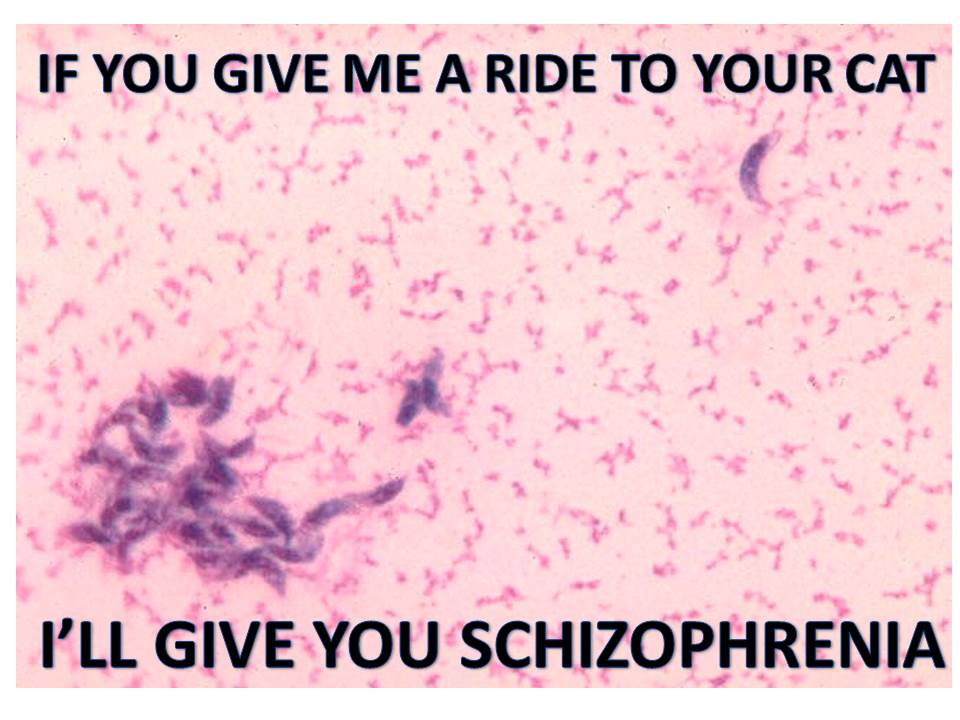
Why is this parasite trying to kill us? Simple. They want to get to our cats.
DAMMIT, MR. SCRUFFLES!!!
One of the reasons I wanted to write this article was to make myself look amazing. This isn’t hard, considering my creative wit and depth of scientific knowledge is nearly endless. The main reason I wanted to write this, though, was to talk about some badass ways that parasites can take over the minds of their hosts. It’s actually not uncommon to find mind-controlling parasites in nature. In fact, there is an entire field, called neuroparasitology, focusing on the effects a parasite can exert on host biochemistry, neurophysiology, and ultimately behavior and ecology.
Science jargon aside, there are some pretty badass parasites out there that tend to turn hosts into zombies. For instance, a genus of fungus called Chordyceps invades the mind of its insect host, forces it to climb to a high place, orders its newly-induced slave to latch on with a deathly grip, and busts out of the host all Alien-styled to shower its lethal spores onto unsuspecting insect hosts below.
Huuuugggghshhh, gross. I’m sorry I did that to you. I even feel a little dirty describing that. So, in an effort to make you and me feel less creeped-out and anxious, I’m going to comfort you by giving you increasingly creepy and troubling examples.
So there’s this non-sarcastically beautiful creature called the jewel wasp that wrestles cockroaches into submission and bites them in the neck to inject a mild dose of venom. This venom paralyzes the roach, and after a short time, causes the roach to move with absolutely no will of its own. The wasp then literally starts a one-float cockroach parade, leading the roach to the wasp’s burrow like a Siren leads a ship’s crew to the abyss to be eaten by mermaids or something. Gotta admit, I don’t fully understand the Sirens’ intentions. The wasp seals the roach inside the burrow with a single egg and a comically large timer counting down the exact moment until the egg hatches. When the timer goes off, the cockroach is devoured to death by the larvae and pupae of the wasp, giving rise to another generation of the most beautiful thing in the universe made entirely of cockroaches. Technically, these kinds of parasites are called parasitoids because they live on or within the organism for a long while, but they ultimately lead to the sterilization or death of their hosts.
The jewel wasp: made from 100% real cockroaches!! Holy balls, I just shuddered. Like, that seriously just happened.
Another badass parasitoid wasp, called Glyptapanteles, lays its eggs in a caterpillar to develop and consume the host. This time, however, the host does not die. IT DOES NOT DIE. No, these tenacious caterpillar hosts, half-devoured and all, cling to life like that chip I just dropped into my bowl of homemade salsa.
However, the wasp is not yet finished with its host. The caterpillar, after having live wasp pupae burst from its insides, spins a web of silk over the developing cocoons, stands upright on its back legs, puts on a lucky Japanese headband, and guards the cocoons with its life. Seriously, I wouldn’t dare screw with a half-eaten caterpillar sentinel, not even if I got a tummy full of wasp bodies as a treat afterwards. Eventually, the caterpillar starves to death, and that sucks, but at least– OK seriously curtains, what the hell are you doing?! Get it together!!!
OK, so I just bought one curtain yesterday, and not only is the color subtly different than the other curtains in my room, but they’re about a foot shorter, too. It keeps moving and I keep staring at it thinking “I can’t wait to give you back to the store”. I have never hated a curtain so much in my entire life. Please, curtain, quit moving and let me write.
Anyway, the point is that there are some pretty bitchin’ parasites and parasitoids that turn their hosts into zombies. You’ll notice though that all of the host examples I’ve used so far are from insects. Insects are little and dumb, and their tiny dumb stupid heads are really easy to invade. I mean, we’ve got huge brains! HUUUGGEEE!!! And they’re so complex, too! I mean damn, your visual cortex is so complicated that if you took every grain of sand on a 50-meter stretch of beach beach and lined them end to end, I’d be really disappointed because you decided to do that instead of listen to me talk about the visual cortex.
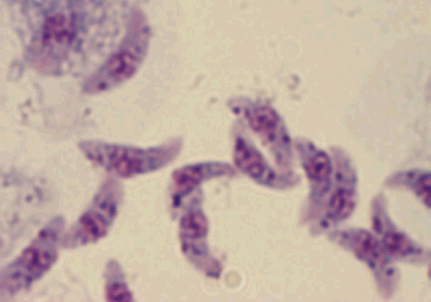
No, we are not immune. You read the first couple of paragraphs, so I assume you knew that already. So let’s just jump right into things and talk about Toxoplasma. This little protozoan is microscopic, but somehow it’s able to hijack the most complex brain on the planet like it ain’t no thang.
Braaaaainnnssss. Rat Amygdalaaaaaaaasssss.
Much like a forgotten old woman with nothing to live for, Toxoplasma loves cats. I’m not sure why Toxo loves cats so much, but in reality this is not very strange. See, parasites often have to infect several hosts in order to reach the one it’s really out to infect, called a primary host. All the hosts it infects in order to reach the primary hosts are called secondary hosts, or intermediate hosts. Secondary hosts often don’t feel the full effects of infection because the parasite isn’t reproducing inside of them, but occasionally a secondary host can have its behavior manipulated in order to reach the primary host. This is what Toxoplasma does. In fact, Toxo does this very very well.
The most clear-cut example of Toxo behavioral hijacking comes from the changes it can make to the brains of rats. Since Toxo is out to infect cats, it often causes the prey of cats to become more apparent in hopes that its current host will end up in the cat’s belly, the perfect place to make little Toxo babies. How does it cause rats to become more apparent? It forms cysts in the rat’s brain. In particular, Toxo cysts form near a region called the amygdala, a tiny region that controls fear and aggression. These inhibit the function of the amygdala, and basically cause rats to get sexually turned on by cat odors and actively seek cats by tracking their urine. Seriously not kidding.
Toxo gets really really interesting when we start talking about humans. The tiny protozoan can cause the formation of brain cysts just as it does in rats, though the damage is very subtle at first. These cysts aren’t as selective in their real estate options, so they just kinda form wherever. They release enzymes that convert a dopamine precursor into dopamine itself, triggering the action of receptors of a group of neurotransmitters called catecholamines (which include dopamine, epinephrine, and norepinephrine). Ultimately, this causes people to do some wonky things.
What kind of wonky things? Well, for one, do you remember the Beatles? Well, John Lennon once saw a newspaper article about a car crash and wrote a song about it, which isn’t really relevant but does serve as a good segue into talking about how Toxo can make you crash your car. Just as in rats, Toxo can induce reckless behavior. So basically…man, I gave it away. Gimme a second to recover.
What else can Toxo do, you ask?? Well, it’ll deform your babies, of course!! Apparently Toxo can cause some pretty terrible damage to babies while they’re in the womb, causing deformities that I cannot describe to you. Let’s just say that I googled “Toxoplamodium babies” and it’s not likely that I’ll sleep tonight because of that decision. You’re going to google it anyway, aren’t you?? You heartless bastard.
See? It’s a real problem because this floating baby head appears on a banner with the name of the disease. That means it’s dangerous.
These things all seem pretty obvious. Sure, Toxo can cause people to be reckless, and babies are easy to injure as it (Anderson and May, 1967) is so the damage from Toxo seems a bit expected. What else can Toxo do that’s more unexpected? To find out, let’s take a quiz.
Question: Which of the following facts about Toxo is true?
A) Toxo can cause adult humans to become incredibly attached to their cats
B) Toxo can spread through dog semen, and can help upregulate testosterone to increase the odds of infecting a female
C) You’ll have no symptoms of Toxo in the later stages of infection
D) Toxo is associated with causing schizophrenia.
Answer: all of the above.
I find it absolutely mind-blowing that a tiny protozoan can increase a human host’s risk of schizophrenia. This isn’t some brain augmentation to an ancient area like the amygdala. Inducing hallucinations is not simple to do. On top of that, Toxo can cause humans to acquire ADD, OCD, and can even increase suicide risk. Just read this link. Your mind will be blown too.
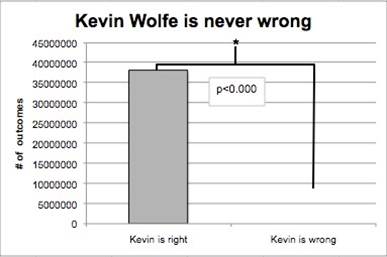
Nature is truly out to kill us. How do I know? I am never wrong.
Dat p-value.
How else do I know? Toxo exists. We think we’re so high and mighty, immune from crazy zombie-inducing parasites.We are clearly not. Here’s where I make a point that we are not so different from components of the greater aggregate of beings we call “nature”, and that we ourselves are indeed a part of that. Then, here’s where I get really preachy, talking about how things we do affect the natural world, and here I mention the circle of life and make a funny quip about the Lion King and the irony therein that my argument of the circle of life has referenced an earlier part of this article.
Want to hear me talk about an animal, plant, bacterium, or whatever the hell else that you think is awesome? Leave me a message in the comments! I’ll probably ignore it, unless it’s actually really good. It’s worth a shot to try though.
Come on. Comment. Go for it.
To view the really interesting article most of this information came from, click this link!
Imagine you are in your last semester at college. You’ve done well academically, studied business, and you have a job offer lined up. Your parents are letting up on the constant brow beating about expectations and preparing for the future. The light at the end of the tunnel that opens up to the real world is as close as you have ever seen it. Just a few more classes to get through and you are home free. But, say, during one of those classes the professor says something that catches your attention.
“And believe it or not boys and girls, you could potentially grow gourmet mushrooms from recycled coffee grounds.”
You sit up, stop your doodle and look around. Did everybody just hear that? The professor just told us how we could make money on waste! Free money! Mushrooms! You approach the professor after class as all but one other student in the lecture file out of the auditorium. Though you probably wouldn’t know it at the time you are looking your future business partner in the face. Another light blinks on in the tunnel, and this one is green.
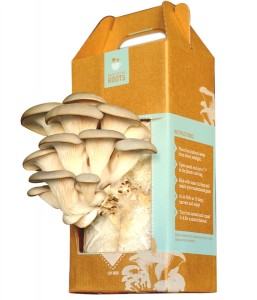
Sound far-fetched? It’s not. That is exactly how “Back to the Roots”, a startup enterprise centered on bringing consumers in touch with their food in a sustainable way – all while turning a profit and benefiting their community of Oakland, California – began. Nikhil Arora and Alejandro “Alex” Velez met for the first time after a lecture at UC Berkeley during their last semester in college in which the professor made the same proclamation I wrote above. Just as the professor had said, you can grow gourmet mushrooms off of waste like used coffee grounds, which is exactly what the pair did. First by experimenting in a frat-house kitchen after watching videos on YouTube on how the process should go, then to selling their mushrooms at a farmers market in Berkeley, California and eventually to their debut product the Back to the Roots at-home mushroom kit which features coffee grounds collected and re-purposed from Peet’s Coffee & Tea, a Berkeley based café, into do it yourself mushroom kits. Just add water at home to grow over a pound of gourmet mushrooms ready to eat!
The Back to the Roots grow-at-home mushroom kit
Within three years of their founding in 2009 Nikhil and Alex who are self-described “urban mushroom farmers” have secured distribution deals with massive retailers including Whole Foods, Bed Bath & Beyond and the Home Depot. They went from collecting coffee grounds headed for the landfill to being paid to haul it away by Peet’s Coffee & Tea, an early supporter of the young startups. As of 2012 they had diverted millions of pounds of coffee grounds destined for landfills. At roughly 3.6 million pounds in 2012 alone, that’s the equivalent of 175 dump trucks of material.
I first became aware of Back to the Roots through their recent Kicstarter campaign to launch a new product – the Aquaponics Garden – which like the mushroom kit is a “grow-at-home” concept herb garden using hydroponics. Growing herbs at home using this method is an old trick, but the mushroom wielding duo (Mario and Luigi?) added an interesting twist of a live fish in the nutrient bath. In this way, feeding the fish encourages it to… “feed” the plants which in turn clean the water for the fishy. The Aquaponics Garden has the same closed loop low waste ethos as the mushroom kit and is thus very much in line with the mushroom kit using recycled coffee grounds.
But I couldn’t avoid the nagging feeling that there was more afoot than delicious herbs and modern architecture inspired fish tanks. Around the same time that the Berkley grads were gearing up to take the DIY culinary world by storm, I began my PhD studies in Atlanta, GA. My new apartment with sweeping views of the side of a building and a dumpster covered in puke didn’t produce the kind of urban living I had expected when moving from rural Virginia where I went to college. Determined to spruce the place up, I wanted some potted plants. After all, there was a spacious balcony from which to enjoy to aforementioned scenery with a cool glass of sweet-tea (Atlanta, remember?). But lo – no direct sunlight. My first batch of plants withered soon after sprouting and becoming spindly, yellowed baby plants.
I turned to the internet – the font of all knowledge – to seek a remedy. Hydroponics was the logical solution. With hydroponics I didn’t need sun or warm weather. Hell, I didn’t even need soil. I settled on one branch of hydroponics – pardon the pun – called “aquaponics” in which the roots of the plant are interwoven into a passive binder, usually clay pebbles, and dangle into a nutrient rich solution. Through my research I found an easy design using a spray-painted plastic storage bin with holes drilled in the top and a fish tank aerator hot-glued to the bottom, a few feet of aluminum flashing to make a reflective enclosure, and a couple of 20 watt CFL bulbs plugged into the sockets of a “make a lamp kit”. Make a lamp indeed. A grow lamp.
Unfortunately, some of the critical supplies I needed couldn’t be found anywhere. I remember inquiring in the garden section of a home improvement store for things like “netpots” and “hydroton” and “rock wool” and “grow max powdered plant nutrients”. After a few minutes of listing name brands to a dumbfounded employee in an orange apron, I told him my intended application.
“I am trying to make an herb garden in my living room. Like basil and stuff.”
I felt it was a reasonable claim. After all, I had just put a few packets of seeds for exactly that – basil and stuff – in my basket.
A knowing look came over the clerk’s face.
“Oh. We don’t have that here.” he said with a little grin.
Back to the internet. It had to be done. A specialty store. I searched everywhere I thought was reasonable – head shops with fluorescent posters and glass “tobacco” pipes, local hardware stores serving as fronts for the mob, Jerry who lived behind the dumpster. Nobody had even heard of the stuff. When I finally found what I was looking for it was on the edge of the city in a run down industrial park. I called the store.
“Do you guys have…” I paused, remembering the clerk at the home improvement store, “Net pots?”
The clerk, “What size?”
This was the place.
When I arrived I found a brightly lit sign over the top of a small warehouse. Inside was every manner of tubing, pots, nutrient and testing apparatus that I had never heard of. They also had camouflaged “grow room tents”. It was an odd mix of completely legitimate looking industrial equipment – hydroponics is a great choice for farming organic produce in otherwise unsuitable locations – and everything I imagine I would need if I was looking for a great way to get kicked out of school.
I bought my supplies and a small booklet on hydroponic gardening. I paid in cash.
Is this aquaponics garden thing legit? I interviewed Nikhil, one of the co-founders of Back to the Roots to learn more. Nikhil and I discussed their recent success with a Kickstarter campaign to raise capital for production of the Aquaponics Garden, lessons learned from development of their grow-at-home mushroom kit, and the business philosophy that has helped them gain recognition.
—
Charged Magazine (CM): So, How’s it going?
Nikhil (N): Doing good. Just wrapping up the year so it’s been crazy. Comes to an end all of a sudden, Ya’ know?
CM: First, I wanted to congratulate you on the Kickstarter thing. You guys were asking for $100K and I think it closed a little less than week ago and you guys cleared almost two-hundred and fifty thousand dollars?
N: Yeah. Two-forty-eight. Almost 250 but it was crazy. It was really cool seeing the response from the community. It was the first time I’d really done something like that, the whole crowd sourcing thing, it just works! People we’ve never met before and don’t know who they were just coming out with their support. It was really cool.
CM: I think you’ve hit on something important – you’re talking about, I guess, the community involvement in your project. Is that the reason you guys decided to go with something like Kickstarter?
N: Yeah. I think we knew had a lot of support for the mushroom kit from our community and we felt that the aquaponics kit could be something similar. And I think to do really well on Kickstarter, and we were like studying it for a while before, you have to try to hit people on a different level. It wasn’t just a transactional thing. People felt more like they were supporting a movement, and they were supporting something bigger than themselves, and that’s why when we launched this product we felt it was something like that. It was something that inspired people and hit the right chord on Kickstarter so it kind of took on a life of its own. It was really cool to see and we got our product improved so much man, the 30 days from where it started off we got thousands of messages from people just out of good will giving us awesome ideas and suggestions. We just signed off on our final design yesterday to send off to the manufacturers and we made so many changes based on feedback we got from people.
CM: Right. And uh, speaking of that feedback, I read in a little bit on your Facebook page regarding this particular product and I definitely see what you mean as far as people who are very interested and passionate about the idea – but of course there was a little bit of negative feedback as well – specifically regarding the fact that you guys would have a live fish in the Aquaponics Garden. But you guys handled it surprisingly gracefully. You know, you said “yeah, we are definitely aware that this is something we need to build into our design” and it seemed you owned it right off the bat and the product is not even on the shelves yet, so I have to commend you on that.
N: Thank you man. It was a big design constraint for us. According to PETA and the most common standards, 1” of fish needs 1 gallon of water. That was our reasoning that for our 3 gallon tank you could have one beta fish in there or two smaller fish so we kept to that. One cool thing about aquaponics and why it’s totally different is that most of the time the health of fish is determined not by the size but more the toxicity of the water. You’re supposed to change the water in regular tanks really frequently, like once a week, to make sure it’s clean and ammonia is not building up but the cool thing with aquaponics is the plants are constantly cleaning the water out so it’s more about the constant quality of water for the fish.
CM: And definitely having the opportunity to grow yourself some fresh herbs at home is a driver.
N: Yeah. I think when you put something like that out into the world, on that kind of platform, we knew were going to get a lot of feedback, and we got some negative feedback and we got a lot of positive feedback that we were able to apply and make changes from. Overall it was a really cool experience and it would have taken us so long to get this data back if we had just launched into retail, because here you have such a direct communication with people I thought it was an awesome way to launch a new product.
CM: So, I think you guys mentioned this during an interview or something, but the connotation with two kids from Berkeley trying to grow mushrooms has a certain connotation – so I thought it was somewhat ironic that the second choice you guys pick is something with an equally, somewhat seedy I guess connotation, that is hydroponics and the whole growing plants in your closet kind of thing. I wonder if that thought occurred to you or what you think of that?
N: Yeah, you know it’s funny we never even thought about it that way. We had been kicking the idea around for a month or two before somebody said to us, “First you guys were growing mushrooms and now you’re selling hydroponics systems?” We just started cracking up and it hit us that we hadn’t even considered that both products have that same stereotype.
CM: Regardless of the stereotype though, I think the market you are attracting is a mix of DIY enthusiasts and people interested in knowing their food and on top of that doing something good for the environment and education. That’s the next thing I wanted to talk about, I think it’s pretty impressive what you guys are doing in the schoolrooms. You guys are doing product demos and have a program where you donate the mushroom kit to classrooms. Do you have similar plans to do that with the hydroponics kit?
N: We are. Actually, for the mushroom kit, every kit that you post a picture of on our Facebook page we donate one to a classroom of your choice. With the Aquaponics Garden we are trying to think how we can make that work. Now we’re thinking because we saw such a cool response to the whole Kickstarter idea, we thought, “Why don’t we implement that on our website?” We are thinking of having people who want to get a kit to a school of their choice can post that school on our website and they can get friends and family to pledge a dollar or two dollars and they can crowd source their own kits for schools or something like that. We are trying to think right now how to incorporate that because we are not launching them until late February or early March. We know this stuff would be amazing for schools because with the mushroom kit, it lasts for maybe a couple crops so maybe you get a month out of it, but with the Aquaponics Garden you buy it once and it lasts you for a lifetime, so teachers can have it for like 10 years you know? We want to see it in every classroom so we are trying to figure out what is the best way to make that happen right now.
CM: It’s way cooler than the class hamster.
N: Yeah!
CM: You and Alex are quite young, and I thought what is particularly interesting is that you guys are kind of wrapped up in the era of the startup culture. I would say some of your contemporaries in the tech fields go a completely different direction. It’s basically they have a handful of guys who work until they spin out an idea and they are seeking venture capital for like a million bucks. You guys every step of the way it seems said “How can we not only build our business and build a community involvement in our business? How can we build these connections where things that are good for our business are also good for getting jobs to the Oakland area?” For example in an interview you guys were talking about trying to find a domestic producer for your fish tanks.
N: Which we did. They are like 20 minutes away from us right here in northern California.
CM: Yeah, which I think is fantastic. I guess do you have a comment regarding your own education or maybe people who would be in your age group as far as the typical way of approaching a startup company?
N: Yeah, I just think for us it’s just been the right thing to do based on our values and I think it goes back to the environment we were in, how we were raised, things like that all played a part into that. But it’s hard to just pitch it to everyone saying “it’s the best thing to do based on our values, based on the environment” but at the end of the day it’s the right thing you do for your business too I think. There has been this transformation towards transparency and community in helping companies grow, and if you are not engaged in community from the start and giving back and being a positive part of that community then you are stunting your own growth. There has been a shift in the kind of companies people want to support and people are really looking for companies that are doing good. That’s the one message we really try to tell people. If you are not going do it because you love the environment or something like that then do it because it’s good for your bottom line. Being open to your community is the next wave of marketing and transparency. There is a really cool movie actually called “The Naked Brand” that talks about how it’s not about clever marketing anymore, it’s about transparent marketing and how transparency is the new clever in how to grow a business. It’s something we’ve become really passionate about and I think us being open about our flaws and what we were doing right and what we were doing wrong has actually helped us grow faster. Admitting mistakes has helped us grow faster. We’ve all graduated in the middle of this whole financial crisis, I think with a sense of “there has got to be a better way to do this.” I think people, consumers, are thinking the same thing that there has got to be a better way to do business and are looking to support companies that they feel are doing it the right way. I just think it makes sense all the way around.
CM: Another thing I thought was interesting is that when you guys were talking about originally doing product research for the mushroom kits you turned to YouTube, and when you were trying to find buyers for your leftover coffee grounds you turned to Craigs List. I am kind of going back to what I was talking about before with the tech startups where of course their business wouldn’t exist without the internet but it’s because their business is on the internet. How has the internet shaped your company?
N: Yeah. That’s dead on. We graduated having no clue about anything to do with mushrooms so we just watched every single YouTube video and found all these articles and books on different websites. It’s just cool how you can teach yourself anything now. There is no longer an excuse of “I didn’t know that, or I didn’t know how to do that.” You can just log on and teach yourself anything. We taught ourselves mushroom farming on coffee grounds from YouTube. It democratizes business and startups and education because you can go to a library and long online and just figure it out.
CM: What are your goals for the launch of the Aquaponics Garden?
N: For us, so much about the Aquaponics Garden has to do with inspiration and education. Our big vision is to see how many classrooms we can get this into. We’ve taken it to some classrooms right now, this one prototype we have, and honestly it is incredible the response you get from kids. I think it’s maybe the combination of the fish, the bubbles going up from the pump or the sound of water coming back down, but it’s so stimulating for them that they just rush to it and ask all these questions. It’s crazy how fast they understand what’s going on with the whole ecosystem. That’s our biggest goal. We want to build this thing out so we can literally get this into every classroom. We feel like for every classroom you can get this in, you are changing 30 kids perspective on food and the environment. You are teaching them that things work together and there is no such thing as “waste” because the fish waste is making the plants grow. That’s our big vision. We really want to get this into schools.
CM: Sure. So my background is in engineering, and actually I have attempted to do my own hydroponics before. I moved into an apartment that had no sunlight, so I really couldn’t do any window planters so I made the whole enclosure with some CFL lightbulbs. When I was building my own design I spent a lot of time online to see what other people had done but I ran into a lot of kind of technical hiccups that I had to work through. So out of curiosity, I’m wondering what are some of the biggest technical issues you guys have run into trying to bring something like this to market?
N: The biggest thing for us has been bring this whole system down to a smaller scale – aquaponics is normally done on a larger scale – we took months of experimentation into how to get the ratios down, looking at flow rates to make sure the system was still functional at such a small scale, how many fish do you need, how many plants can you grow, things like that. It was constant learning, and we finally got to the point where we had produced a ton of these and put them in different households and it we had functional prototypes. Once we saw the basil popping up we got so pumped because we had figured it out. We were always tweaking along the way and we wanted to encourage communal learning around this where people are sharing tips on what worked. We want this to be a platform for people to get really creative with it – people want to try and grow flowers, different foods. One guy emailed us saying he wanted to put shrimp in there. It’s like people hacking into their own creativity.
CM: I’m interested in some of the manufacturing aspects. You mentioned you were able to find a local provider. Was that difficult given the way that everything – at least when you are trying to do it cheaply and in huge quantities – goes overseas? What did you learn from that experience?
N: It was a big learning curve all around. We talked to dozens of manufacturers. It’s funny, because you design something, and then you realize the first go-round when you take it to engineers who tell you “you can’t do this, you can’t do that” or it’ll cost you thousands of dollars so there was a lot of back and forth between design and engineering.
CM: Did you find a lot of pressure from existing industry to abandon your business philosophies as far as sustainability and local design are concerned?
N: We had a really good design partnership and at the end of the day I think Alex and I knew what we wanted to do and we wanted to keep it domestic – we wanted to keep it local – and there is kind of a statement about that so we shopped around until we found a partner who believed in that same vision. It’s tough. It is cutthroat, because every dollar of cost (in manufacturing) ends up being like 4 more dollars of retail because of markups and stuff like that, but we really wanted to keep it at a $50 price point. That was our big goal and we are working our butts off to do that. With that we had to compromise a lot, because we could have added a lot more features, but for us it was more important to get something out of $50 and leave room for people who really want to get into it with add-ons, but we wanted it to be available and accessible to everyone, at least to a lot wider market than having like a $100 price point.
CM: When you project into the future, how do you guys imagine you are going to maintain the regional impact you have in the Oakland area. Eventually you are going to need more space. What’s the plan?
N: Yeah, we are looking at a new space now but we want to stay in Oakland. We see a massive opportunity to connect people to their food and we want to work our butts off to take that on and be the brand that people think about when trying to connect to their food. We want people to feel good that our company is doing stuff in the right way. For us, were not afraid of scale, were not afraid of size so we are working to grow and meet really ambitious goals along the way. The more we grow the more good we can do in the world is how we see it. The more we can develop a platform for our products the more capacity we have to do good and I think the community is going to help us get there. We’re maintaining an open door policy. I’m really pumped. I’m excited for this new year.
—
For more information on Back to the Roots products, and a look at their growing list of accolades, you can visit their website: http://www.backtotheroots.com/