Tag: friends

  • Makin’ Biscuits

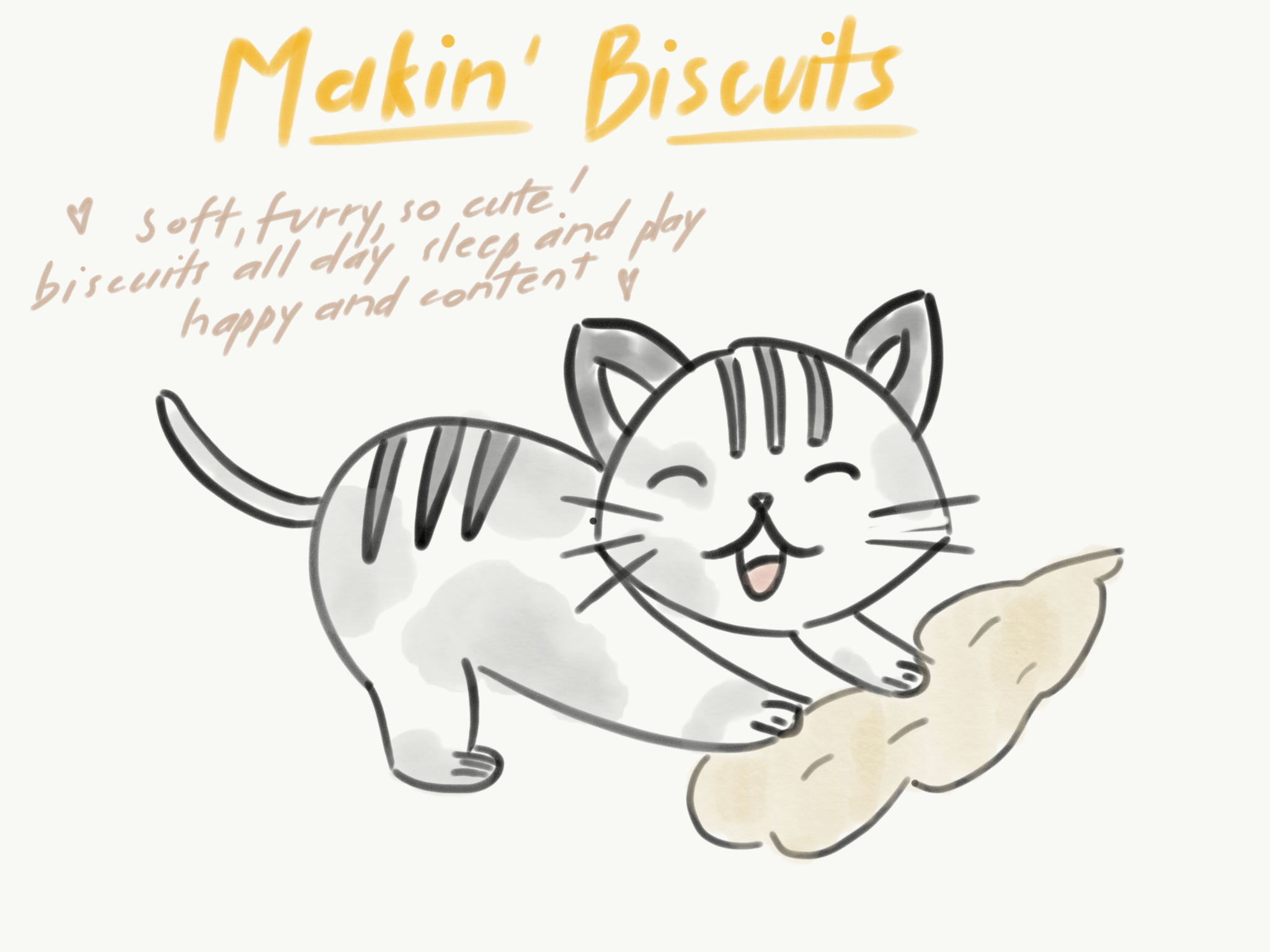
    Some cats are oftentimes seen engaging in a rhythmic motion of pushing their paws back and forth on a soft surface, which is referred to as “kneading.” This behavior is not universal across all cats and can be distinctive among cats (“Why Do Cats Knead?, n.d.). The exact reason behind this behavior is a mystery, but there are a few explanations to rationalize this behavior (Castro, 2013).

      1. Kittens knead their mother while nursing to stimulate milk flow. This behavior may be carried on into adulthood when cats are feeling happy, associating kneading with the comfort of its mother (Castro, 2013).
      2. Cats may be marking their territories with their scent (“Why Do Cats Knead?, n.d.).
      3. Female cats knead as a mating signal to males (“Why Do Cats Knead?, n.d.).
      4. Kneading is a form of stretching (“Why Do Cats Knead?, n.d.).

    Regardless of the reason why cats knead, we can all agree that they are super cute when they do so!


    References
    _______________________________________________________________________________________________________________

    Castro, J. (2013, October 18). Why Do Cats Knead? Retrieved from https://www.livescience.com/40548-why-do-cats-knead.html

    Why Do Cats Knead? (n.d.). Retrieved from https://www.petmd.com/cat/behavior/evr_ct_why_do_cats_knead

  • Strange Cat Things

    Cats are one of the most popular choices as human friends, and I absolutely adore them! I hope to have a feline friend in the future and hopefully, you will too if you don’t have one already. Among all the cute actions that these creatures engage in daily, there are some anomalies that make their human friends ponder. These fun facts may answer a question or two you’ve had and enlighten you with the uniqueness and awesomeness of cats.
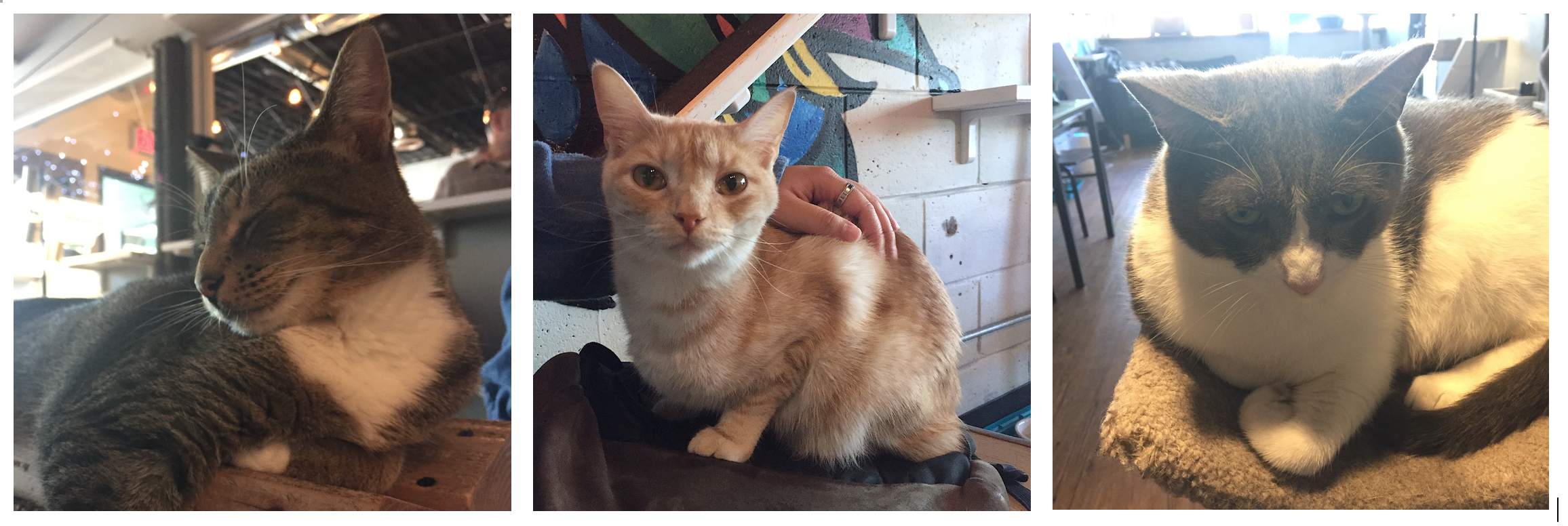
    The cats we have in our homes are really similar to wild cats!
    Compared to dogs, cats have been domesticated for only half as long and still engage in behaviors similar to wild, big cats such as lions and tigers. Their genes have not changed much from that of wildcats, except for one distinguishing factor: the coat patterns seen on the tabby cat (“Cats Domesticated Themselves, Ancient DNA Shows,” 2018).

    Cats cannot taste sweetness. 
    Like humans, cats are able to taste saltiness, bitterness, sourness, and umami! The genes Tas1r2 and Tas1r3 allow sweet tasting in mammals by encoding sweet sensing receptors. Cats have both of these genes, but their Tas1r2 gene, however, is a pseudogene, or nonfunctional copies of a functional gene (Li, Li, Wang, Bayley, Cao, Reed, Bachmanov, Huang, Legrand-Defretin, Beauchamp, and Brand, 2006).

    Why do cats kill unbelievable amounts of mice and birds?
    As natural-hunters, cats still carry unstoppable instincts that they’ve had thousands of years ago. Female cats are also found to engage in hunting more often to teach their young how to acquire food and feed (Palermo, 2013).

    Cats will bite in response to being overstimulated, not because they hate you!
    Overstimulation typically occurs in attention-seeking, friendly cats. When these felines are continuously being pet, it appears that there can be a buildup of stress for these animals leading to aggressive behaviors. Cats may give some warning signs before their impending aggression such as a continuous, whipping tail, flattened ears, and a tense body (“Overstimulation in Cats,” n.d.).

    Cats meow only to communicate with humans!
    Meows are usually found in kittens that need to communicate with their mother. However, communication between older cats consists of growling and hissing. Meowing is exclusively used by felines to tell their humans if they may be hungry, stressed, or needing attention (“Cats and Excessive Meowing,” n.d.).

    Cats sleep a lot, but why?
    Cats sleep up to 16 hours a day – that’s 67% of the day! This is because they need energy for hunting-like behaviors such as pouncing and chasing (Cespedes, n.d.).

    Cats are crepuscular, so their schedules are completely different from humans.
    They are most active at dawn and dusk, and often nap during the day while basking in the sun (Cespedes, n.d.). Though this is their natural schedule, cats may adjust their sleeping to fit their owner’s schedule.

    Why do cats bury their excretions?
    Burying waste is an instinct that cats have in order to mark their territory and avoid attention from predators (Melina, 2011). Their excretions have unique pheromones, making it possible for other cats to differentiate it from their own waste.

    _____________________________________________________________________________

    References

    Cats and Excessive Meowing. (n.d.). Retrieved from https://pets.webmd.com/cats/guide/cats-excessive-meowing#1

    Cats Domesticated Themselves, Ancient DNA Shows. (2018, April 24). Retrieved from https://news.nationalgeographic.com/2017/06/domesticated-cats-dna-genetics-pets-science/

    Cespedes, Y. (n.d.). Retrieved from https://www.petmd.com/cat/behavior/evr_ct_why_do_cats_sleep_so_much

    Li, X., Li, W., Wang, H., Bayley, D. L., Cao, J., Reed, D. R., Bachmanov, A. A., Huang, L., Legrand-Defretin, V., Beauchamp, G. K., … Brand, J. G. (2006). Cats lack a sweet taste receptor. The Journal of nutrition, 136(7 Suppl), 1932S-1934S.

    Melina, R. Why Do Cats Bury Their Poop? (2011, March 23). Retrieved from https://www.livescience.com/33147-why-do-cats-bury-their-poop.html

    Overstimulation in Cats. (n.d.). Retrieved from http://www.treehouseanimals.org/site/PageServer?pagename=caring_ccg_overstimulation

    Palermo, E. Why Do Cats Bring Home Dead Animals? (2013, March 29). Retrieved from https://www.livescience.com/34471-cats-dead-animals.html

    Surprising Things You Never Knew About Your Cat. (2015, December 03). Retrieved from https://news.nationalgeographic.com/2015/12/151203-cats-animals-science-communication-pets/



  • The Science behind ‘Frenemies’

    The Science behind ‘Frenemies’

    High school can be very painful for anyone who is the slightest bit different.  Thankfully, I’m 5 years removed from it but my little sister is a freshman so I get to sit back and observe this social phenomenon as an objective outsider.  When you’re in high school (specifically a teenage girl in high school), it seems that every social situation is a CRUCIAL moment in your life.  Not abiding by the invisible rules of pubescent social etiquette could result in getting shunned from the clique.  This, by the teenage spectrum of standard exaggeration, is death.  Girls strive to fit in and seek reassurance that they are ‘secured’ in their pack.  This essentially creates an army of mini tyrants disguised in pink twill.

    This brings me to introduce the concept of a ‘frenemy.’  A ‘frenemy’ is someone who you’re friends with by all appearances, but is actually someone who you would like to squirt ketchup on.  In the high school scenario, she might be characterized as the bully of the group or perhaps the arrogant leader of it.  Either way, you find yourself supporting her terrible behavior because you’re too afraid to speak out and risk losing your social standing.

    There’s a biological reason for this behavior.  According to Dr. Louann Brizendine, who wrote the fantastic book ‘The Female Brain,’ the main job of a girl brain is to keep social harmony.  The teen girl’s brain circuits are wired so that social rejection actually triggers a neural stress response (Brizendine 35).  When a relationship is threatened, the female’s feel-good brain chemicals drop (such as serotonin, dopamine and oxytocin) and the stress hormone cortisol takes over.  Now this has become a matter of life or death.  She’ll start feeling anxious and fearful of being rejected.  She’ll become cranky to family members.  She soon begins to crave that feeling of closeness again, for that great intimacy drug oxytocin.  She’ll eventually decide to stick to her clan of frenemies to keep that utterly important social harmony.

    This can also explain why girls go to the bathroom together.  Those girls hanging out in the bathroom are reinforcing their most important relationships- with other girls.  Many women find biological comfort in one another’s company and language is the glue that connects them together.  Talking and sharing secrets activates even more oxytocin release.  The oxytocin reinforces the desire to gossip and connecting then brings a sense of pleasure and well-being (Brizendine 37).

    Why exactly are girls built this way?  One plausible reason goes back to primitive basics.  Remember- our modern female brain still has the circuitry of our most successful foremothers.  Studies have shown that female mammals in a bonded social group are more likely to come to another’s aid in a threatening situation, such as if a male is overly aggressive to a female.  Members of a group can alert one another of conflict ahead of time, enabling them to move away from potential danger and to continue safely tending dependent children.  This pattern of behavior is called ‘tend and befriend,’ and it is particularly a female strategy (Brizendine 42).  Since teen girls are biologically reaching optimal fertility, their primitive brain begins to stress the importance of this strategy.  It’s saying, “Lose that bond with your peer, and both you and your offspring are toast.”  No wonder girls find it unbearably hard to cope with feelings of being left out.

    There’s even a biological reason for why some teen girls can become so evil to one another.  Hormonal surges can turn these girls mean but so can sexual competition.  This competition is much different in girls than in boys. When females are competing with other females, they often use subtle tools, such as spreading rumors, to undermine a frenemy.  That way she can cover her tracks.  Instead of using force, which is the male’s standard protocol, the female uses her best set skill-language- to get what she wants.  Such tactics lessen the risk of destroying the bond that the teen girl brain sees as essential to survival.

    The teenage girl brain is drowning in estrogen and other chemicals that make it pretty difficult to survive these years. It’s always drama, drama, drama. That’s not to say that teenage boys aren’t dealing with an insurgence of hormones- they are and they have their own set of embarrassing problems.  But research findings like these can reassure a gal that her feelings of mayhem are only temporary.  So if you are a teenage girl, remind yourself that you will mellow out.  Then remember to tell your frenemy that it is not her fault she’s acting like a jerk but that it is just her cortisol coming out to play.

    Brizendine, Louanne. The Female Brain.  New York: Broadway Books, 2006.


    Image: photostock / FreeDigitalPhotos.net


  • Facebook Friends: Why We Have So Many

    Facebook Friends: Why We Have So Many

    Me and my friends in a tour group in Amsterdam.

    You meet that hot rocker guy/girl at that concert you really like, and you guys trade names. You say, “Find me on Facebook”, and the next day or so, he/she adds you. You talk about wishing you were closer to the stage, the length of the concession lines, and why on Earth the T-shirt prices are so expensive. Typically, the conversation blossoms into a beautifully uninteresting synopsis of your daily routine: how tired you are despite normal hours of sleep, what YouTube links you think they’ll absolutely enjoy watching (because you do), and figuring out ways to make money without actually having a job.

    The chatter dwindles to a few comments or posts on one’s wall, then a “like”, and finally you’re down to that yearly “Happy Birthday (insert name here)” because you know they know its their birthday, and you don’t want to be that one guy/girl who doesn’t say anything. Why do we do this? Why don’t we talk to our friends anymore, and why have they forgotten us? Weren’t our YouTube links interesting?

    In the social media powerhouse we know as Facebook, I use the term “friend” lightly. Discussed by David McRaney in his blog, You Are Not So Smart, acquiring hundreds of friends on Facebook becomes a zero sum numbers game, with 150 as its approximate cap. You will typically be able to maintain a personal relationship with 150 people at any given time.

    The seemingly magical amount is the Dunbar number, developed by Robin Dunbar, a renowned anthropologist who correlated the size of the brain with the amount of potential social connections within a group. Even at this physiological limit, you’ll actively (on a daily or semi daily basis) talk to about 20. This doesn’t mean you’re a bad friend. You just have a limited neocortex.

    This cranial region takes into account social nuances and personal relationships. As your circle of friends increases, your maintenance of existing friendships increases several fold. Also, friends that have left your circle (be it geographic separation or interpersonal reasons) are harder to keep in contact with, as they require a portion of your processing power to keep the connection.

    The average person has 130 friends on Facebook (close to the Dunbar number), but there are people out there with +2,000. Do they talk to every single person they’ve ever friended? Of course not. It’s nearly impossible to do so with every other aspect of our lives screaming for attention. That’s not to say our social network isn’t a good thing. Facebook, Twitter, LinkedIn, and numerous other platforms for social networking are making communication easier than ever.

    We can have a great many loose connections to people, through our fascination with franchise coffeehouses, the latest Rube Goldberg contraption, or even that band that you like so much. 1 out of every 13 people on Earth is playing this never-ending game to increase their “friend stock”. Take solace in the fact that regardless of the number of Facebook friends we acquire, biologically, we’re basically average.