Tag: history

  • The Hidden World of the Piano Action

    The cover image was taken by the author.

    In my humble opinion, the best way to unwind after a long, arduous day is to pour out all your stresses onto the beautiful white and black keys of a grand piano.

    (Of course, that’s a little hard to do if you’ve never learned to play… I digress, though.)

    During my time at Georgia Tech, I’d find myself sitting at the piano located in the West Village Dining Hall almost every night – and while I wouldn’t say the piano there is especially well maintained, it still produces a sound that’s pleasant to my ears. In the end, isn’t that all that matters?

    “Enough with the preamble! What’s the point of all these ramblings?” You might be asking. Well, to answer that hypothetical question – I often think about the acoustics of a piano. That, of course, naturally leads to how it works… and believe it or not, there happens to be a surprising amount of physics under the (metaphorical and literal) hood of the instrument!

    The story of the piano begins with the clavichord, developed in the 14th century. The clavichord action was as simple as could be – a key lever with a hammer on one end. After the key is depressed, the hammer is immediately lifted until it hits the string, remaining in contact until the key is released (Russo & Robles-Linares, 2020).
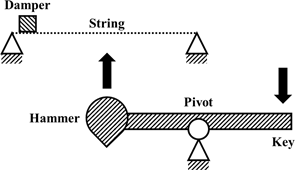
    Figure 2 Source: (Russo & Robles-Linares, 2020)

    While this action enables volume dynamics, vibrato, and control over the attack and duration of one’s sounds, there remained one large problem: the string would be damped for as long as the key was held down.

    The harpsichord attempted to address this issue, while sacrificing some of the finer benefits of the clavichord.

    For its action, when a key is pressed, the jack is lifted along with the plectrum and damper, the latter immediately releasing the string. Right after, the plectrum hits the string, generating sound. At some point, the jack meets a rail up above that stops its motion, allowing the string to resonate for as long as the key is held down. When the key is finally let go, the jack falls such that its plectrum does not hit the string a second time (Russo & Robles-Linares, 2020).
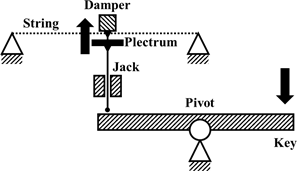
    Figure 3 Source: (Russo & Robles-Linares, 2020)

    Even though this solves the major issue with the clavichord, the harpsichord, in turn, has almost no volume dynamics, nor can vibrato be performed with it!

    That takes us to the mid-17th century, where Bartolomeo Cristofori would invent what was known as the fortepiano – named because of its ability to play forte (loud) and piano (soft).

    The action of the fortepiano is far more complex than both the clavichord and the harpsichord. When the key is first pressed, it lifts an intermediate lever; a damper connected to that lever releases the string. After a small period of time, the jack on the intermediate lever pushes the hammer up. The hammer lifts off the jack halfway to the string and uses its existing momentum to hit the string.

    If the key was immediately released, the string is immediately damped, making a staccato (short) sound, as the mechanism returns to its resting position. If the key is held down, the string is undamped and free to resonate; the hammer falls back down onto the jack. After the key is released, the hammer returns to its resting position and the string is damped, muting the sound (Russo & Robles-Linares, 2020).
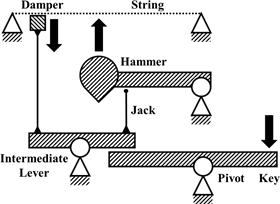
    Figure 4 Source: (Russo & Robles-Linares, 2020)

    In essence, the fortepiano was the combination of the good of both the clavichord and harpsichord – dynamics and vibrato, along with volume and an ability to sustain sound. In many ways, the fortepiano is similar to the grand pianos of today, but with a few key differences…
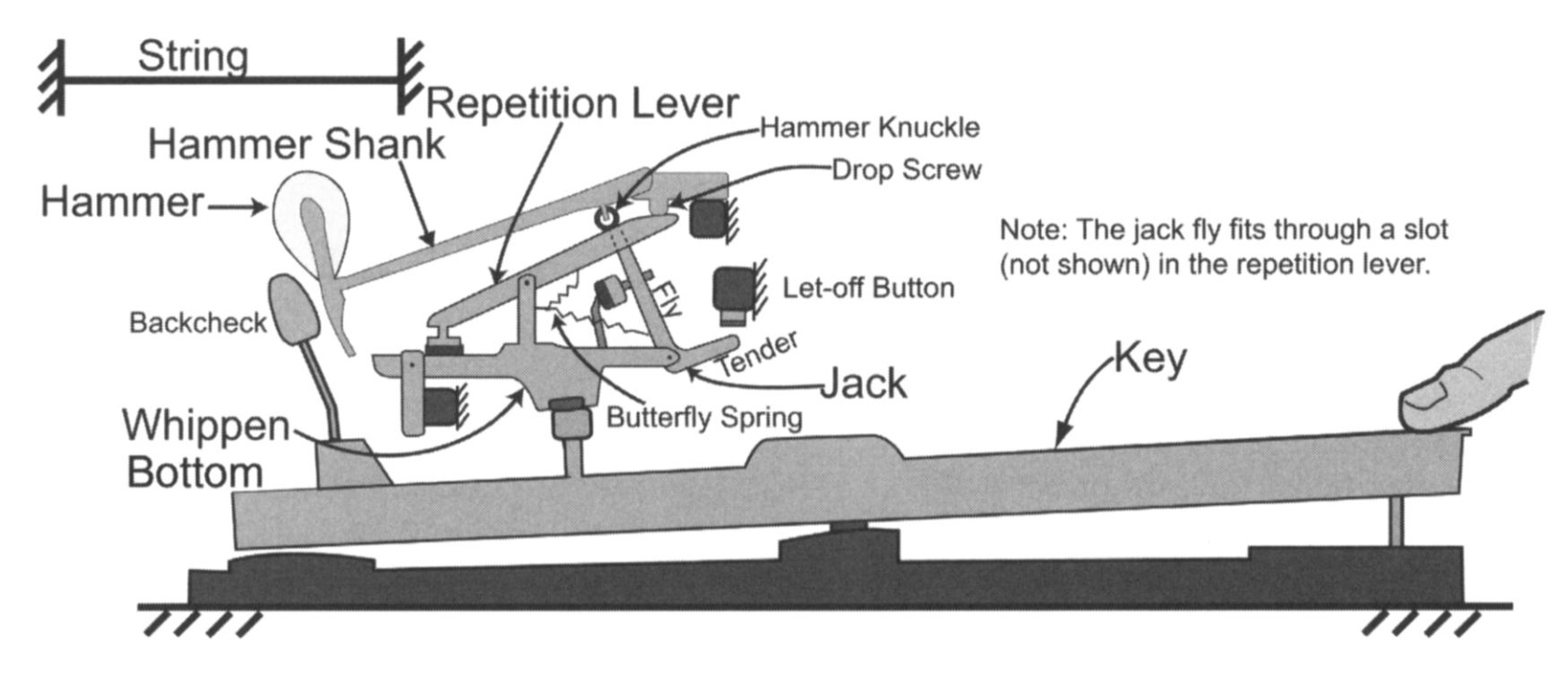
    Figure 5 Source: (Brent et al., 2011)

    …Quite a lot of differences, in fact. From a first glance, this diagram seems far removed from the likes of the fortepiano, but most of the underlying theory remains the same.

    To put it simply, the goal of the grand piano action is to let the hammer hit the string to create vibration – but, most importantly, it should be fast enough that it doesn’t damp the string. Efforts to reduce that time have resulted in the complex system seen in Figure 5… each part of that mechanism plays its own role in giving as much control to the pianist as possible (Brent et al., 2011).

    Control is an important part of playing the piano, in my own experience. The difference between a grand piano and an electronic MIDI keyboard is like night and day. Even the smallest, involuntary actions when playing a grand result in minor yet noticeable changes – and the best of the best (which, unfortunately, doesn’t include me) are able to manipulate each and every facet of control given to them.

    As we close the hood on the fascinating world of the piano action, I hope you’ve gained a proper appreciation for the instrument! The fact that we’ve been able to manufacture such a sleek design, fitting in all the complex mechanisms into such a small area, all while ensuring it works to perfection… it’s an engineering miracle, to be honest.

    When I inevitably return to that piano in West Village, I’ll surely be thinking about the action that I’m invoking with every press.

    Reference List

    Brent, G. R., Yu, B., Grijalva, R., & Awtar, S. (2011). Characterizing the Feel of the Piano Action. Computer Music Journal, 35(1), 43–57. JSTOR. https://www.jstor.org/stable/41241706

    Russo, M., & Robles-Linares, J. A.  (2020). A Brief History of Piano Action Mechanisms. Advances in Historical Studies, 09(05), 312–329. https://doi.org/10.4236/ahs.2020.95024


  • The science and history of the PB&J sandwich

    The PB&J sandwich is a humble combination of sweet, salty, and creamy. Where exactly did this classic sandwich originate, and what are the details behind its nutritional value?

    Before the invention of the PB&J, its three essential ingredients had to be born, beginning with the peanut butter. In 1895, Dr. John Harvey Kellogg patented a process for creating peanut butter, and marketed it as a protein-rich source for patients who couldn’t chew solid food very well. In 1903, Dr. Ambrose Straub patented a peanut-butter-making machine. Peanut butter made its debut at the 1904 St. Louis World Fair, where its popularity skyrocketed [1, 2]. 

    Peanut butter was considered a delicacy during this time, and the first PB&J sandwich recipe was published by Julia Davis Chandler in the Boston Cooking School Magazine of Culinary Science and Domestic Economics. However, this recipe was intended to be served as delicate finger sandwiches at parties and in tea rooms [2, 3].

    Next comes the jelly. Marmalade and jam had been around for a long time, but the familiar purple jelly component of the PB&J was created when Paul Welch patented a method for pureeing grapes into jelly in 1917, naming it Grapelade [2].

    The final piece of the puzzle: sliced bread. The bread slicer was invented in 1928 by Otto Frederick Rohwedder. The availability of pre-sliced bread and the commercialization of the peanut butter industry increased the accessibility of the PB&J ingredients and popularized the sandwich across the nation [2, 3].

    Now that we know its origin story, let’s move on to the science of the PB&J. The nutritional breakdown: a typical PB&J has 15 grams of protein, 13 grams of fat, and 12.5 grams of sugar [4]. While a lot of sugar is never a good idea, for an active individual it can provide a needed burst of energy, and the combination with protein and fat ensures one feels full and satisfied. 

    According to a 2021 study from the University of Michigan School of Public Health, eating a PB&J can add up to 33 minutes to your life span [5]. This study assigned a health nutritional index that measured the health effects from the consumption of over 5,800 different foods, quantifying the results in minutes of healthy life gained or lost. The authors mention that this apparent health benefit of the PB&J is driven by the nut content of the sandwich, which is the source of the protein and fat. Therefore, while the PB&J is not a superfood, it is a much better option than some other processed foods, like hot dogs, which scored notoriously low during the study.

    I can personally attest to the PB&J’s standing as great adventure fuel (all of the photos in this article are from the variety of lunchtime views I’ve shared with a PB&J). It is my go-to for hiking and backpacking trips for a number of reasons: it’s affordable, portable, and customizable. Purchasing the ingredients won’t break the bank, and it doesn’t need to be refrigerated (honestly, I think PB&Js taste even better when they’re a little bit squished…). Additionally, PB&J customization is endless. I personally like to toast the bread or add a layer of plain potato chips to up the crunch factor, but one can also make changes to boost health benefits. Using whole-grain bread, swapping jelly for real fruit slices (banana is particularly delicious), or using natural nut butter are all ways to make the PB&J a little bit healthier.

    Now you know a little bit about the history and science behind a PB&J sandwich, as well as ways to customize it to make it healthier or even more delicious. 


    References

    [1] National Peanut Board. (2023). Who invented peanut butter? Retrieved from https://nationalpeanutboard.org/news/who-invented-peanut-butter/

    [2] National Peanut Board. (2023). Who invented the peanut butter and jelly sandwich? Retrieved from https://nationalpeanutboard.org/news/who-invented-the-peanut-butter-and-jelly-sandwich/

    [3] Dean, S. (2013). History of the PB&J, from spa food to school lunch. Retrieved from https://www.bonappetit.com/entertaining-style/trends-news/article/history-of-the-pbj

    [4] National Peanut Board. (2023). 5 reasons PB&J is the best sandwich ever. Retrieved from https://nationalpeanutboard.org/news/5-reasons-pbj-is-best-sandwich-ever/#:~:text=A%20PB%26J%20has%2015%20grams,of%20energy%20that%20athletes%20need.

    [5] Stylianou, K. S., V. L. Fulgoni III, and O. Jolliet. (2021). Small targeted dietary changes can yield substantial gains for human health and the environment. Nature Food, 2, 616-627.

  • Written on the Walls

    Since my first year at Georgia Tech, I’ve loved the campus’s architecture. There’s a perfect blend of old highlights that are the landmarks you think of when you think of GT, like Tech Tower and the Einstein statue, to newer buildings that represent the modern and futuristic side of campus, like the Kendeda Building for Innovative Sustainable Design and the renovated Price Gilbert Library and Crossland Tower.

    Inside the Kendeda Building for Innovative Sustainable Design.

    When I lived in 8th Street Apartments last year, I noticed some exciting designs on each building’s entrance. Outside of 8th Street East, where I lived, there is a model of our solar system with the word “EXPLORATION” under it. I felt that the image was a beautiful tribute to the discovery of how the concept of our solar system developed since 1543. When I was walking near my old apartment a few weeks ago, I rediscovered that etching, and I wanted to take a deep dive into how many similar etchings were on campus. So with my friend, fellow Charged Magazine writer, and uber-talented photographer Steven Yang, we took a fun walk around West Campus, documenting everything we could find.

    The Charged Dream Team, Steven Yang (back) and Jalen Borne (front) ready to explore GT’s campus.

    During our journey, we found six different etchings at the entrances and the backs of student apartments on West Campus. Included were the solar system model mentioned earlier, the Georgia Tech seal, Leonardo da Vinci’s Vitruvian Man (with the word “HUMANITY”), the Earth representing “CIVILIZATION,” the Milky Way for “DISCOVERY,” and a beautiful but simple model of the atom, with “EXISTENCE.” At the Nelson-Shell apartment, there weren’t drawings, but the words “KNOWLEDGE” and “TECHNOLOGY” were marked. Finally, we found a plaque showing when Nelson-Shell was constructed for the 1996 Olympic Games.

    What I loved about this adventure was discovering all of the etchings and gaining a deeper appreciation for what the pieces all together mean to me as a growing scientist. The etchings represent all the discoveries that have become the foundations of almost every STEM field and what they mean to society. Including knowledge and technology in the apartments perfectly complements the other buildings by considering the Georgia Tech motto: Progress and Service. We take the knowledge of the past, build new technology that improves the world, and further the values shown in the other campus etchings. 

    Campus etchings that Steven and I found throughout West Campus.
    Top row (left to right): Eighth Street East (back), Eighth Street South (front), Eighth Street South (back)
    Middle row: Nelson, Eighth Street West (back), Shell (back)
    Bottom row: Eighth Street East (back), Shell (front), Eighth Street West (front)

    If you ever walk around campus and see a weird or cool sculpture or marking on the building, don’t just think about why it was added there, but what it means to you as a student. The etchings have become my favorite place to reflect on just how much campus has changed to become a place where its students work to bring the next generation of computer science, medical devices, and energy technology, all pushed by the motto of Progress and Service.