Tag: hunger

  • Is eating late at night really bad for you?!?!

    Food and Sleep a good combination?

    Imagine this, its been a long day of exams and work and you really want to just hang out with your friends for the night to simply relax. You and your friends are hanging out and time passes fast and next thing you know, it is 2 AM. Out of thin air, one of your friends says “I’m hungry, you guys want to go eat some Waffle House?”. You give in after a few minutes and decide to go get some food. After your Waffle House escapade, you return and are getting tired and go to bed when you enter your apartment door.  After you wake up the next morning, you realize that you shouldn’t have eaten before sleeping and regret your decision. After regretting such decision, you decide to not eat late at night due to the occurrence and instead sleep on an empty stomach. If you have been in a similar situation, it is time to evaluate possible decisions on what to do because certain decisions could lead to potential risks.

    If you decide to sleep on an empty stomach, the decision might not be the best decision to make. Sleeping on empty stomach could lead to certain effects such as weight gain, loss of muscle mass, less energy, changes in mood, low insulin, and lack of sleep (The Sleep Advisor, 2020). However, you probably have been told that eating late at night could lead to weight gains. This idea has been an idea in many peoples’ heads for numerous of times and is a common misconception among many people. This idea of weight gains due to eating at night is based off studies that were conducted on animals rather than humans. This notion is supported by animals, but it doesn’t reflect how humans react to such thing. In fact, in 2016, a study was conducted on children in the UK that checked the association of the time of evening meals as well as the weight status of children. The results of the study indicated that there was no evidence that late eating habits led to excess weight in children (Meixner, 2018). With the study in mind, it is essentially better to watch what you eat before sleeping rather than when you eat. If you decide to eat a huge meal though before sleeping, examine the risks.

    One of the major risks of eating large meals at night is the potential risk of Acid reflux (“This Is what Happens…”, 2018). In general terms, “Acid reflux occurs when contents from your stomach move up into your esophagus” (Healthline Editorial Team & Cruikshank, 2019). Acid reflux can essentially provide discomfort in an individual in their chest area and if commonly occurred, it will lead to other issues. In a study conducted in 2005, different scientists researched the association between gastro-esophageal reflux disease (GERD) and the intervals between bedtime and a huge meal. In this case study, about 147 GERD patients and 294 Non-GERD patients were examined. With different comparisons made, the study concluded that if there is a small-time interval between your last huge meal and bedtime, then there is a significant change you could potentially develop GERD (Fujiwara et al., 2005, p. 2634). This study reflects the idea of eating a huge meal before sleeping. In no way it is saying that you cannot eat at all before sleeping. In fact, eating small healthy snacks before sleeping can be beneficial to one’s sleep as it may help one sleep better, may stabilize blood sugar in the morning, as well as aiding in weight loss (Jones, 2016). Before you sleep, think of the potential things you can do to get a good night’s rest.

    If it is almost bedtime and you are feeling a bit hungry, think about what you can do to make sure you go to bed in a healthy manner. If you are very hungry at night, do not grab your bag of chips and chow down on that, instead eat a healthier snack. If you do not have any healthy snacks, don’t even bother going to your nearest fast food and eating that, instead cook something small and healthy and eat that instead. Again, it isn’t about when you eat, it is about what you eat!

    Citations:

    Fujiwara, Y., Machida, A., Watanabe, Y., Shiba, M., Tominaga, K., Watanabe, T., … Arakawa, T. (2005). Association Between Dinner-to-Bed Time and Gastro-Esophageal Reflux Disease. The American Journal of Gastroenterology, 100(12), 2633–2636. https://doi.org/10.1111/j.1572-0241.2005.00354.x

    Healthline Editorial Team, & Cruikshank, H. (2019, March 22). Everything You Need to Know About Acid Reflux and GERD. Retrieved from https://www.healthline.com/health/gerd

    Jones, R. T. D. (2016, October 28). Is It Bad to Eat Before Bed? Retrieved from https://www.healthline.com/nutrition/eating-before-bed#section4

    Meixner, M. (2018, October 2). Does Eating Late at Night Cause Weight Gain? Retrieved from https://www.healthline.com/nutrition/eating-at-night#circadian-rhythm

    The Sleep Advisor. (2020, January 8). Going To Bed Hungry – Is It A Good Or Bad Thing? | Sleep Advisor. Retrieved from https://www.sleepadvisor.org/going-to-bed-hungry/

    This Is what Happens to Your Body if You Eat Right Before Bed. (2018, December 6). Retrieved from https://www.vice.com/en_us/article/kzvnjz/just-how-bad-is-it-to-eat-before-bed
  • One Piece of the Pie


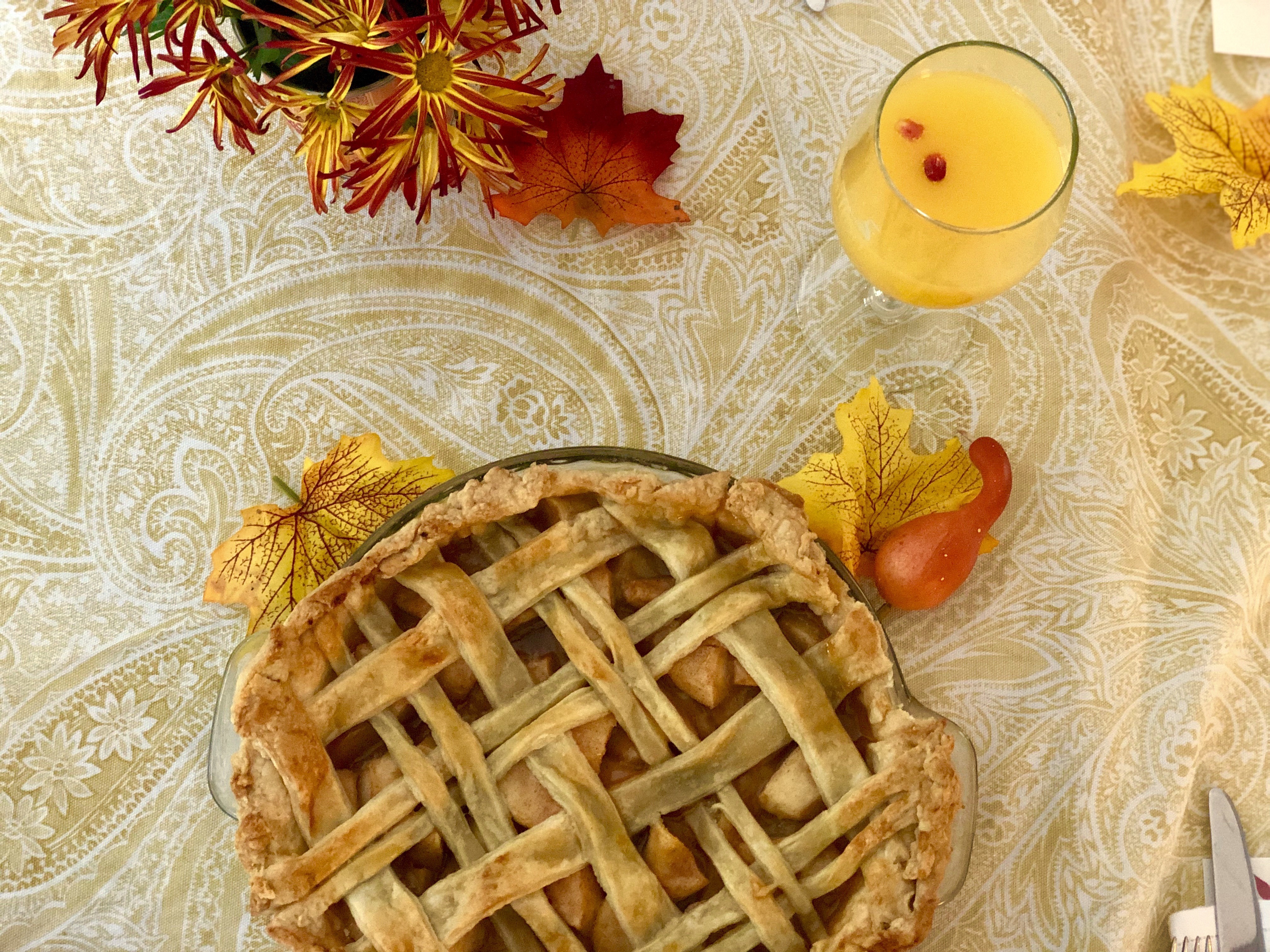
    Each year at Thanksgiving, I find myself with a heaping plate of absolutely everything available to me. Time and time again I work my way through the plate and end up full beyond belief. However, when the desserts start coming out, I can’t help but to snag a slice of sweetness. Despite what my stomach is telling me, and regardless of the fact that I could easily save a piece and eat it later, I still help myself to the sugary treat… but why?

    First let’s begin by distinguishing between hunger and appetite. There are several definitions in circulation among scholars, but, generally, hunger has been defined as the conscious sensation urging us to eat and appetite refers to food intake, selection, motivation and preference.

    Researchers traditionally break the neuroendocrinology of appetite into 3 parts: feeding and energy expenditure, glucose control and hedonic value. The first two parts factor in a model that looks at energy intake, energy expenditure and our body’s drive to keep our blood glucose levels in check. When I begin to fill my plate with food at the Thanksgiving table, this is due to the hormone ghrelin being released as a result of low blood glucose levels. Ghrelin is released from the stomach and stimulates hunger. As I’m eating delicious mashed potatoes, stuffing, and green beans, two other prominent hormones, cholecystokinin and peptide YY, detect the food and act on the hypothalamus and vagus nerve to start to suppress hunger. Leptin will then be released, further reducing appetite and even pleasure, causing the thought of more food consumption to be aversive. 

    However, these hormones are intertwined with another path: the reward circuit. Activation in the reward circuit, which has been linked to addictive drug use and compulsive behaviors, is involved when we eat particularly palatable foods, like a slice of pumpkin pie. Studies show that even the sight of foods high in sugars, fats and sodium activate our reward circuit. The main culprit scientists attribute these feelings of pleasure with is the neurotransmitter dopamine. Neurons in the part of the brain called the arcuate will project to orexin neurons, which are located in the lateral hypothalamus of the brain. These neurons project to two major areas of the reward circuit involved in dopamine release: the ventral tegmental area and the nucleus accumbens. So when the cookies and pies are assembled in front of me at the table, you best believe my brain is glowing with dopamine activity.

    It is possible to become addicted to the pleasure derived from eating sugary and fatty foods. Amazing right? You can get a rush from delicious foods! While this can be great in doses, overeating these types of foods can lead to a desensitization of the dopamine release. This is very similar to what occurs with drug addiction. Over-activation of these chemicals, whether it be dopamine or a substance that mimics it, will cause a reduction in the chemical receptors. This is our brain’s attempt at moderation, however, it means we don’t just want but require more of the substance to derive the same pleasure. The reward circuit could be why it is very difficult to stop eating the chips once we’ve dipped our hand into the bag once.

    So how do we combat our body and brain to prevent finishing the the family size bag of chips? The short answer is there is no magical solution. Scientists are looking into the role of gut microbiota and how this interacts with our hormones and appetite. It is possible that the foods we eat influence the microbiomes responsible for digestion, and this can affect the types of food we crave. Researchers have also found that when the body is in a fasting state, ghrelin levels are not only elevated, but we are also more sensitive to reward and impulsive feeding behaviors. This suggests we are more likely to reach for less nutritious foods on an empty stomach. Orexin is the primary player in the connection between reward and appetite. While knocking out receptors that sense this hormone prevent the temptation of eating high fat diets, it could also be the reason why we have five star restaurants and how they can even stay in business. All that to say, I think overdoing it one day of the year to make your brain (if not your stomach) happy can be worth it. 


    References:

    Berridge, K et al.“Food reward: Brain substrates of wanting and liking” Neuroscience and Biobehavioral Reviews vol. 20,1 (1996): 1-25. 

    Blundell, J et al. “Appetite control: methodological aspects of the evaluation of foods” Obesity reviews : an official journal of the International Association for the Study of Obesity vol. 11,3 (2010): 251-70.

    Choi, D.L et al. “Orexin signaling in the paraventricular thalamic nucleus modulates mesolimbic dopamine and hedonic feeding in the rat” Neuroscience vol. 210 (2012): 243-248.

    Hernandez, L et al. “Food reward and cocaine increase extracellular dopamine in the nucleus accumbent as measured by microdialysis” Life Sciences vol. 42,18 (1988): 1705-1712.

    Ralevski, E., et al. “Ghrelin is related to personality differences in reward sensitivity and impulsivity” Alcohol and Alcoholism vol. 53,1 (2017): 1-5

    Volkow, N et al. “Reward, dopamine and the control of food intake” Trends in Cognitive Sciences vol. 15, 1 (2011): 37-46.

    Wise, R. “Role of brain dopamine in food reward and reinforcement” Philosophical Transactions of the Royal Society B vol. 361,1471 (2006).