Tag: light

  • The Primary Colors are What?!

    It’s about that time of the year where projects are due. You want to create a fantastic looking poster to present your research in a neat editing software. Yet you’re having trouble choosing the correct colors. Or wait, is it just your computer that’s having trouble choosing the correct colors? What is this section under the “edit colors” tab that says “RGB values”? You just want to make the perfect shade of orange using red and yellow, but the computer only understands RGB. It turns out that when it comes to computer science, red, blue, and green are the primary colors.

    Let’s break down this computational color system. The RGB (red, blue, and green) is known as an additive color system. The additive system was given its name because when wavelengths of light are added together, the color values approach white light. This system makes use of the physics of light to create the colorful (or colorless) pixels on your screen. To understand this further we have to break down the concept of light.

    On a spectrum of radiation, known as the electromagnetic spectrum, light composes the visible part of the spectrum. Light has two natures, but for now, let’s just focus on its wavelike nature. Each range of wavelength corresponds to a different color, with around 700nm (nanometers) being red light, and 400nm being violet light.
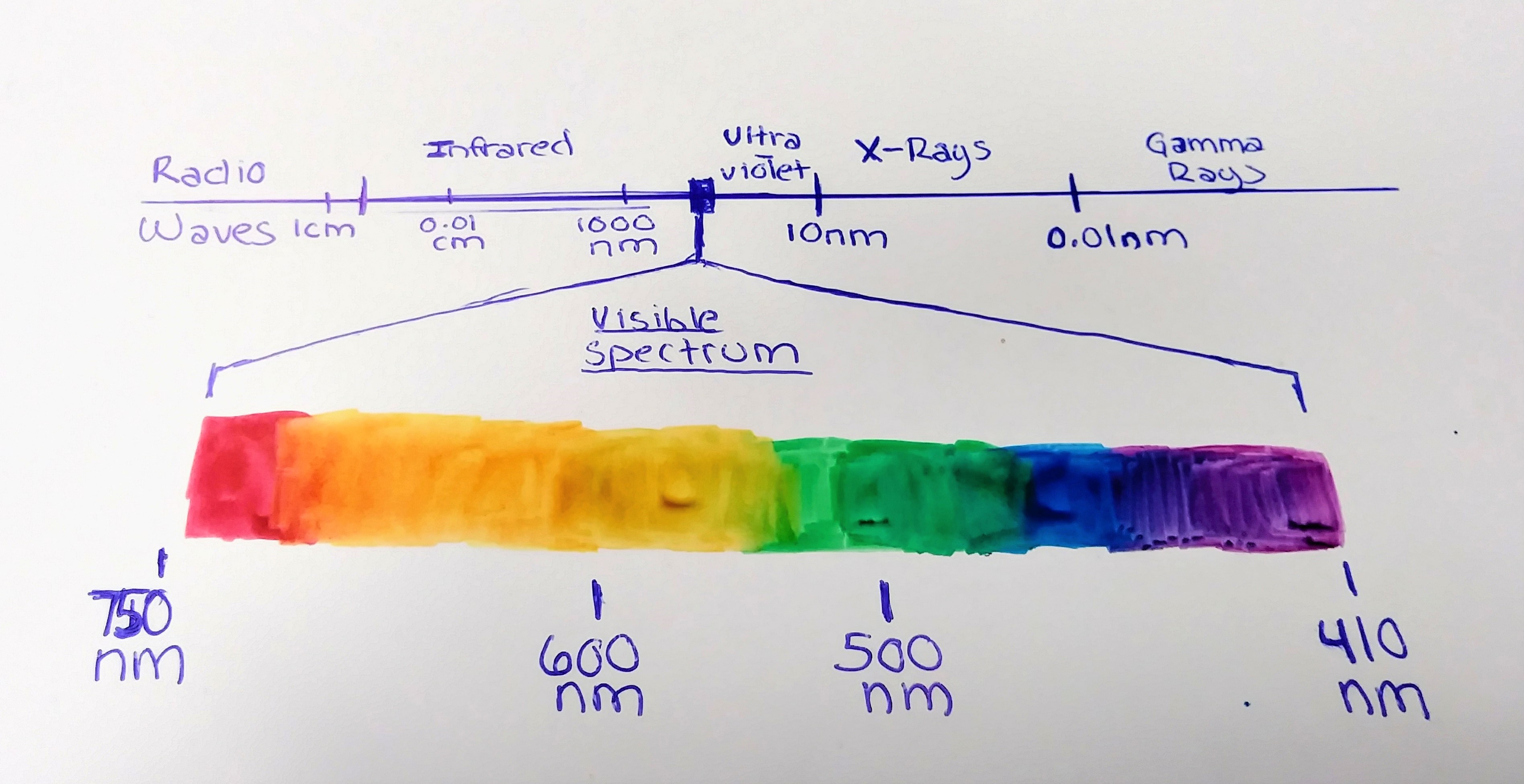
    Electromagnetic Spectrum
    Electromagnetic Spectrum

    The height of the wave from its center point, or it’s amplitude, determines how bright the light shines, or how close the value is to white. This means that the colors on your computer screen are not actually programmed into your computer as red, green, or blue. Rather, your computer makes colors by shining specific wavelengths of red, green, and blue lights with different amplitudes through the pixels, tricking your eyes into seeing specific mixes of colors. Neat, right?
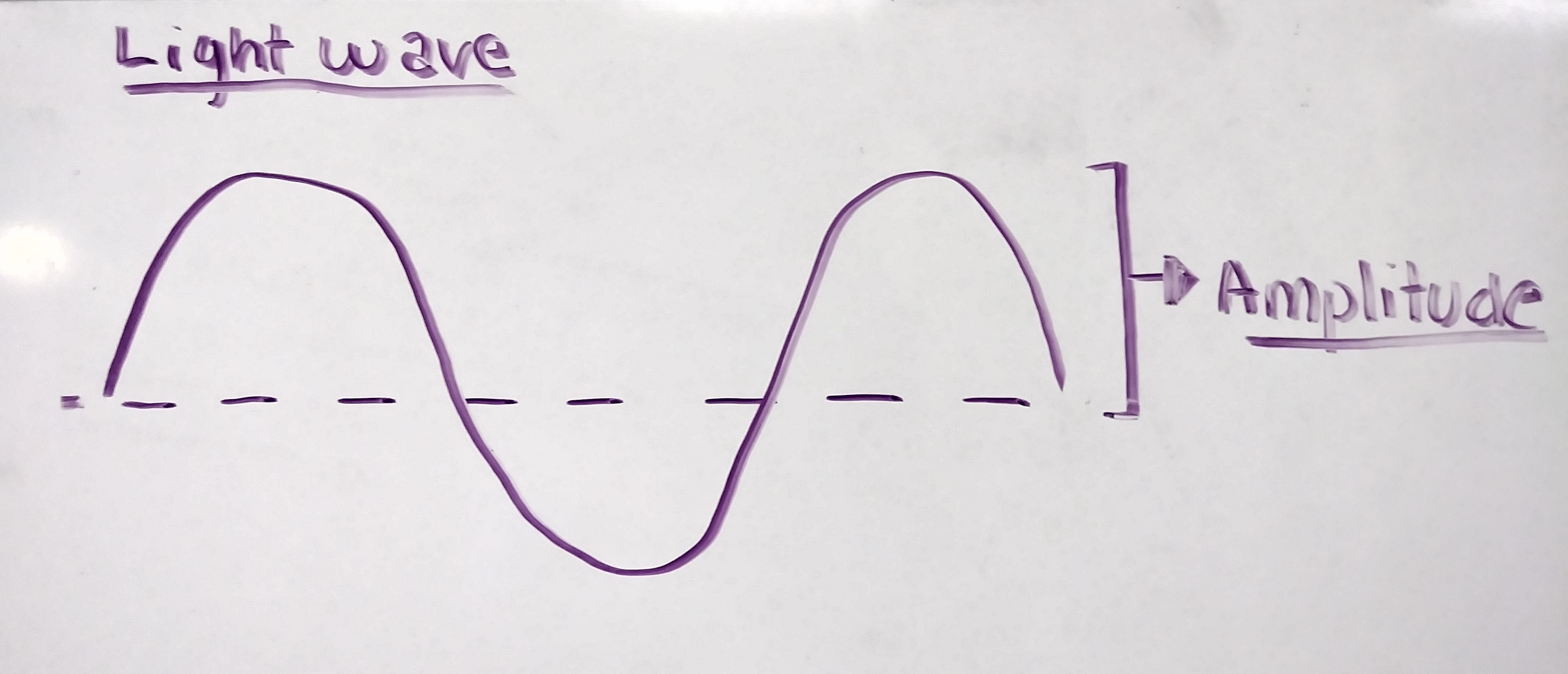
    Light waves. The amplitude of the wave is from it's midpoint to the top (crest) of the wave!
    Light waves. The amplitude of the wave is from it’s midpoint to the top (crest) of the wave!

    The colors that you might have learned as primary in your childhood, red, blue, and yellow, follow the subtractive system. This means that as these colors are mixed they approach darker values going towards black. As paints they do not emit wavelengths of energy, like the pixels on your screen. These paints have pigments which reflect the color they show, and absorb all others. For example, a red apple reflects red light, but absorbs all other color wavelengths. Unlike paints, the pixels on your computer screen do not have pigments.

    Now that you know some more about the physics of color on your computer, making that science fair poster should be a breeze! Knowing how to manipulate your red, green, and blue wavelengths of light could save you a ton of time and give you some fantastic looking results! Happy poster making!


    References:

    Stroh, C. (Jul 1997). Basic color theory and color in computers. Art Education; Reston, 50(­4).

  • Sequins + Dress + Spotlights = Laserdress

    Sequins + Dress + Spotlights = Laserdress

    I had a chance to catch some of the Golden Globes the other night. By had a chance I mean, I elected to watch the Golden Globes. For a little bit. You know how it is, when you have a choice between watching celebrities clap or watching reruns of M*A*S*H you have to ask yourself, “When is the next time I can watch M*A*S*H?”

    When I did stick around, it wasn’t just because I think Emma Stone is a stone cold fox (I do), or because I thought Ricky Gervais is particularly funny (I didn’t), and it’s not because I really care what the celebrities are wearing (I don’t). It was all the dang sequins.

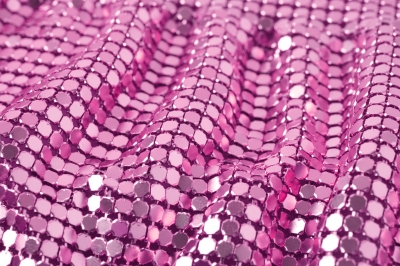
    Maybe this is just from a fashion uninitiated, but there were a lot of sequins going on at the Golden Globes. But then I thought about it – why not? Sequins do a pretty good job of catching the eye, and that’s kind of the red carpet Modus operandi, right? Sequins’ secret lies in their ability as a reflector of incident light. Much like a signal mirror used to reflect the sun towards a rescue plane, sequins sewn onto a dress (or a pair of hideous shoes at DSW) reflect any light that hits their surface at an angle equal in magnitude to the incident angle reflected through a plane perpendicular to the reflecting surface. This is analogous to bouncing a ball off of a smooth surface. If the ball is dropped straight down the angle of incidence is 0° and so the ball bounces straight back up. Meanwhile, if the ball is bounced at an angle like a basketball being bounce-passed between two players, after striking the ground the ball will travel towards the second player at an angle identical to that thrown by the first player. This is called specular reflection (with light not basketballs). When considering this concept from the viewers perspective of a be-sequined dress, the dress appears to shimmer and flash. If the light-source comes from a single direction (like a spotlight) then the incident angle is fixed and the relative angles of the sequins change with the motion of the wearer. The result is flashes of light as individual sequins pass through an orientation which places the reflection angle directly towards your eyeballs!

    Maybe that’s not that surprising to you, given that you have observed this phenomenon first hand dozens of times in mirrors. However consider this – not all light is made equal. Light can be described as wave traveling through space from the source. These waves have the shape of the trigonometric sine function when visualized in two dimensions, and have an associated wavelength that is related to the energy of different forms of light. To humans and many other species, our eyes detect this difference in wavelength as color, but only in a relatively narrow range of wavelengths. This is referred to as the “visible spectrum” , and the acronym ROYGBIV known by many a grade-schooler as the colors of the rainbow actually orders the visible spectrum correctly from longest to smallest wavelength!


    Thus, while sequins are reflecting the crap of out the visible spectrum, light waves with appreciably longer or shorter wavelengths will have different interactions. For this reason, reflectors designed to reflect these different wavelengths can require drastically different shapes and materials. Some examples include a satellite dish whose curved edges reflect microwaves (these are of similar wavelength to the ones used in microwave ovens!) towards central antenna (the prong in the middle) increasing the signal, and metal coated Mylar (a type of flexible plastic) used in space blankets and on satellites (the ones in space, not the dish on your roof) to reflect infra-red radiation. In the case of space blankets, these reflect infra-red radiation (light waves with wavelengths just above the color red in the visible spectrum responsible radiative heat transfer – this is why heat lamps in restaurants are red!) emitted by the wearer back to their body. On satellites this wavelength is emitted by the sun and reflected away from heat sensitive electronics. In the case of metalized Mylar, the reflection is diffuse rather than specular, meaning the reflection takes place at many angles.


    So we’ve learned that sequins are sparkly because they reflect light at discrete angles. If they operated with diffuse reflection, the entire dress would appear to glow rather than sparkle. Fingers crossed that the fashion community will one-up themselves at next years GGs. A simple experiment you can try at home can be done with a mirror, a yard stick, and a flashlight (or ideally a laser pointer). Measure one yard from a wall and place the mirror on the ground, then place yourself one yard away from the mirror facing the wall. Hold the flashlight at the top of the yardstick pointing towards the mirror. The reflected light should strike the wall at the exact height you are holding the flashlight! This is specular reflection in action!


    Image: m_bartosch / FreeDigitalPhotos.net