Tag: music

  • Lament of a Musician’s Hearing

    Cover image was taken by the author and edited in Picsart.

    Sometimes, what is most important to us is what we take for granted. For a musician, that is their hearing, although most of us don’t take many steps to preserve it, often going to rehearsal or lessons without any form of hearing protection. For a school musician, this means going a few hours a week being exposed to loud noises without any way to block them, and for a professional, this duration is even longer. If we don’t want to lose our hearing to the piercing sound of a piccolo in our ears, it’s possible we might have to make some changes to the way we rehearse.

    Hearing Loss in Musicians Compared to Other Professions

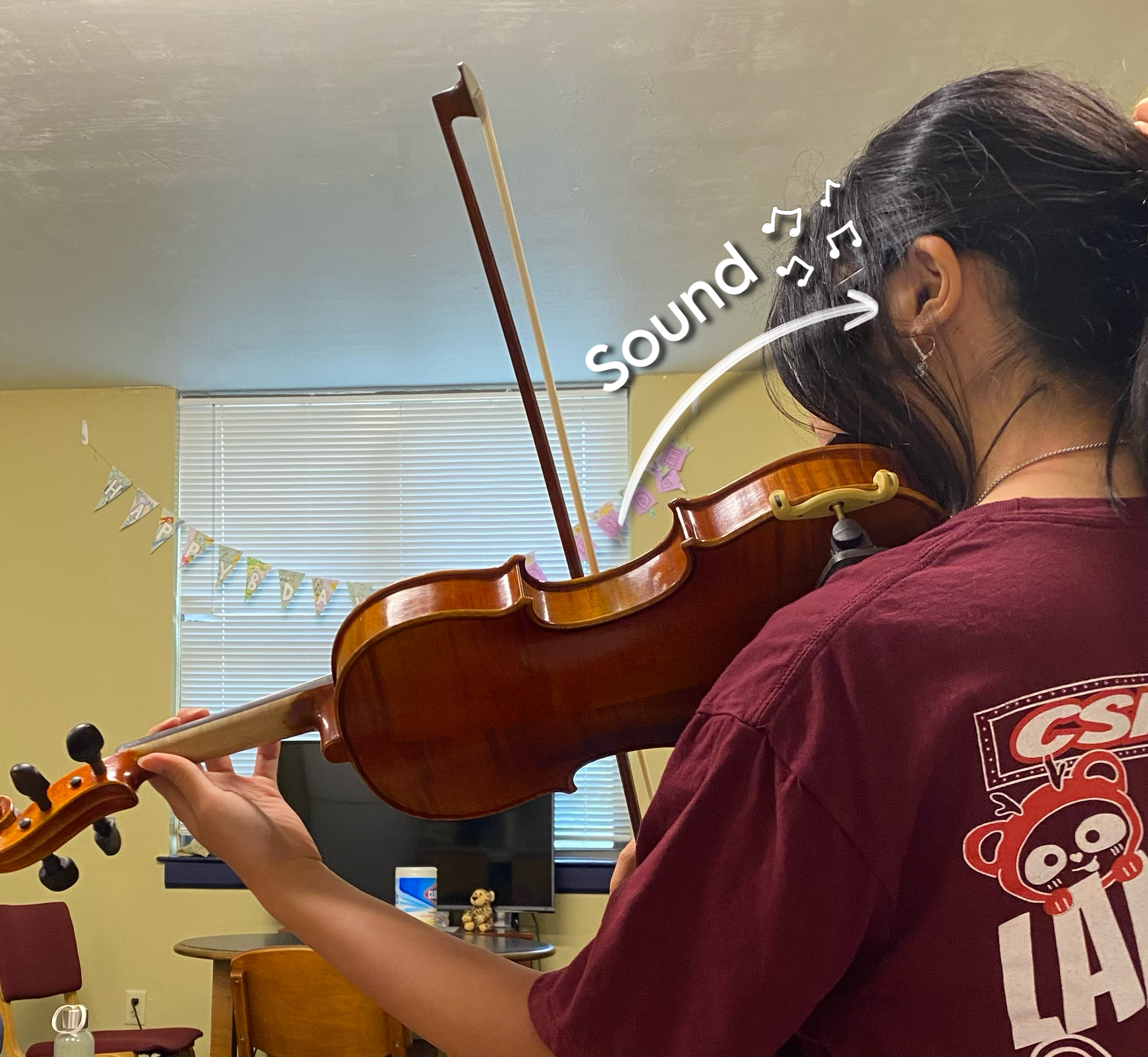
    Some might question whether playing an instrument actually increases hearing loss or if there is a larger outside factor at play. To investigate this, a study was conducted comparing the hearing loss of people with a variety of different backgrounds and found that professional musicians were 3.51 times more likely to have noise induced hearing loss and 1.45 times more likely to have tinnitus (Schink et al., 2014), which suggests that the job that someone works in has a large impact on that person’s hearing. This makes sense considering the significant amount of time the average adult spends working. Musicians tend to get the short end of the stick here as a good portion of that time is spent listening to loud music, which oftentimes when playing is right in your ear.
    Source: taken by author and edited in Picsart.

    Reducing Ear Damage

    Since the consequences of continued exposure to loud noise can become severe over time, it is important to take steps in order to prevent excessive damage. First and foremost, musicians should be aware of the risks that long periods of practice can have on their hearing; they should be able to watch for warning signs and know what safe sound levels are (85 dB TWA (time-weighted average) for eight hours in one day, which is around the noise level of a food blender, heavy traffic, busy restaurant, or movie theater (How Loud Is 85 Decibels | What Does 85 DB Sound Like, 2021)). It is also beneficial to get an audiogram and have access to a sound-level meter to make sure you aren’t exceeding the safe sound levels (Chesky, 2008). Also, most students have some sort of hearing protection device or HPD (around 69% percent according to one study) that they can use during rehearsal to block some of the sound (Olson et al., 2016).

    Source: (Lowery, 2023)

    The Great Balance

    If the measures to be taken are seemingly so obvious and simple, why aren’t they more common? Even if the resources are readily available, it turns out that protecting one’s hearing still comes with its downsides. According to several music students, even though there are clear advantages to using things like HPDs, such as hearing preservation, reduction in noise exposure, and the ability to play longer without taking breaks, there are also significant disadvantages to consider like decreased auditory perception, issues with communication, less comfort, and many reported improved performance when not using HPDs (Olson et al., 2016). The goal of an ensemble is to make music that sounds good (well, and have fun, hopefully), so naturally, the musicians in an ensemble would not want to sacrifice their sound to protect their hearing, which is something they might not even be conscious of because damage happens gradually.

    So how do we balance the desire to play well with the desire not to go deaf before we get old? Perhaps this will be a question better answered in the future, maybe even by someone reading this article, and we’ll have a device that still lets us hear everything we need to without all of the damage. Maybe we’ll have a way to reverse hearing loss that’s as easy as drinking medicine to cure a cold. But for now, while maybe not during performances, we can just do what we can, however little it may seem, to protect one of our precious senses. We only have five, after all.

    References

    Chesky, K. (2008). Preventing Music-Induced Hearing Loss. Music Educators Journal, 94(3), 36–41. https://www.jstor.org/stable/4623689

    How Loud Is 85 Decibels | What Does 85 dB Sound Like. (2021, November 18). Decibel Meter App | Best Digital Sound Level Meter for Your Smartphone. https://decibelpro.app/blog/how-loud-is-85-decibels/

    Lowery, K. (2023). How to choose the best hearing protection [Online Image]. In audibel.com. https://www.audibel.com/preventative-care/the-best-hearing-protection/

    Olson, A. D., Gooding, L. F., Shikoh, F., & Graf, J. (2016). Hearing Health in College Instrumental Musicians and Prevention of Hearing Loss. Medical Problems of Performing Artists, 31(1), 29–36. JSTOR. https://www.jstor.org/stable/48714485

    Schink, T., Kreutz, G., Busch, V., Pigeot, I., & Ahrens, W. (2014). Incidence and relative risk of hearing disorders in professional musicians. Occupational and Environmental Medicine, 71(7), 472–476. JSTOR. https://www.jstor.org/stable/43869897

  • To Vibe or Not to Vibe

    We’ve all been there: your friends pass you the aux cord at a party and you play your favorite songs only to be met with sighs and groans or –even worse– silence. These are some bangin’ tunes that make you smile. Why do others find those same songs to be boring or “not their cup of tea?” When we like a certain song, dopamine is released into the brain and makes us feel happy or euphoric. This causes us to like a song a little more than your friends and makes you want to listen to more songs in that genre. But what causes our brain to release this chemical? Psychology may provide the answer regarding the inner machinations of the human mind. 

    Jon Lieff, MD via grok.com.au

    Our Emotions:

    Music affects us in three major ways: it serves as a nice distraction, stimulates internal curiosity, and can affect our emotional state. For example, people might listen to music to destress or have as background noise– meanwhile, other people could use those same songs to hype themselves up for a workout. These differences lead us to choosing different genres and songs.

    Music is also interpretive and allows us to choose our own meaning and significance for a certain song. This subjectivity allows different people to determine that in different ways. The same line that means nothing to you may make your friend very emotional. Take your favorite song: is there any reason why you really appreciate the song? Do you associate an emotion with the song? This may be a reason as to why there isn’t a favorite universal genre or song. Since music typically appeals to the emotions, people may associate a certain feeling with a song and grow attached to it. For instance, some of my favorite songs are those that I’ve listened to with my friends and raved about or the ones that my former piano teacher introduced me to. 

    Identity:

    In addition to personal emotions, our perceptions of others and ourselves also influences our taste in music. People have often used music as a way to express themselves and their identity. Because of that, people have associated some songs with certain archetypes of people. According to one study that asked participants to map certain traits to genres, they associate genres like pop and country were more extroverted. On the other hand, jazz and classical were thought of as more reflective.

    ResearchGate, 2016

    Culture:

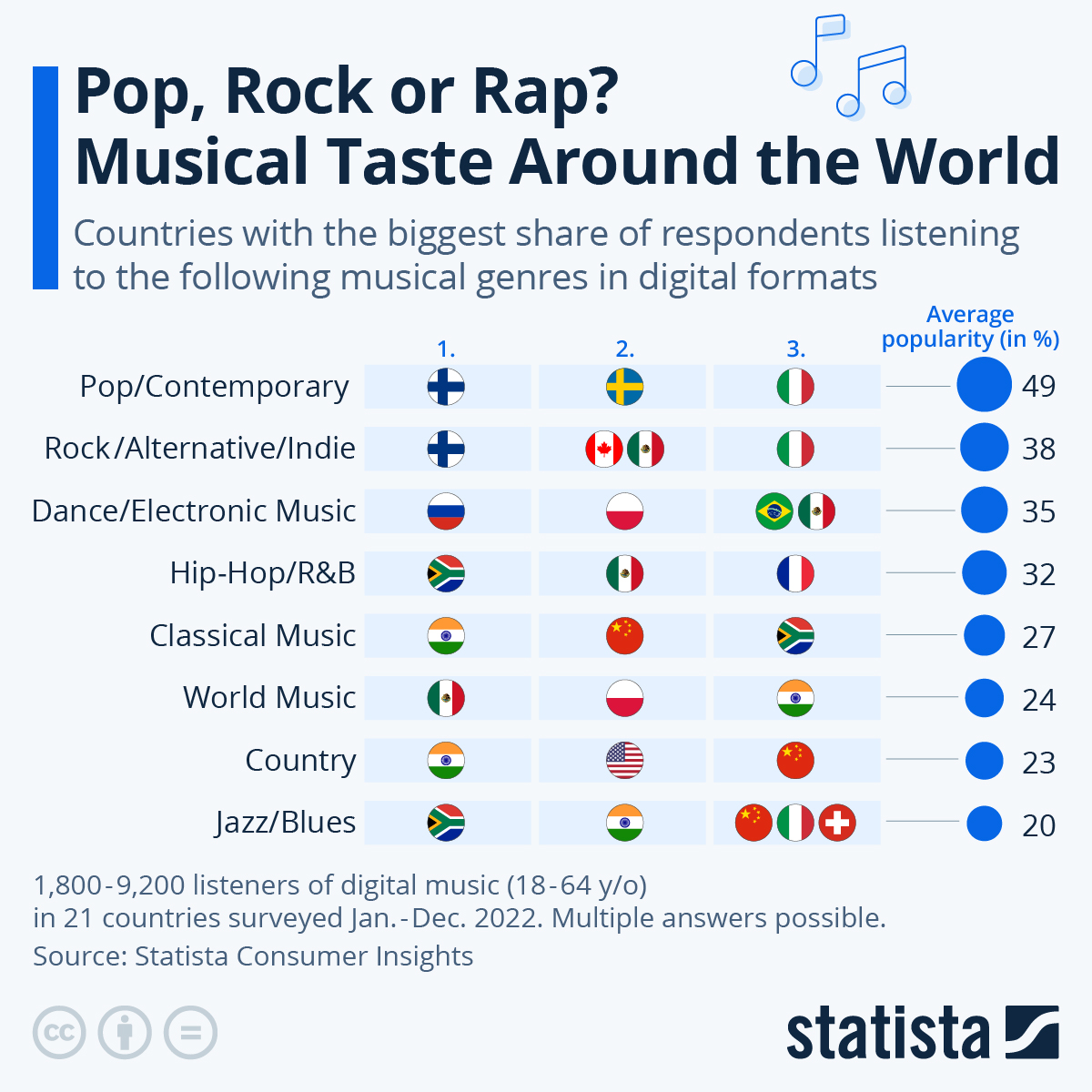
    Our preferences for certain songs may also be cultural. If we’re exposed to a lot of a certain type of music, we may lean towards more songs that contain those same elements. There are two forms of chords: consonant and dissonant. Consonant chords contain frequencies that are different enough that they don’t seem to clash. Meanwhile, dissonant chords sound a bit more chaotic for lack of better terms. Western music (like pop) usually contains a lot of consonant chords, and Americans have a strong preference for these sounds. However, some other cultures do not show that same, strong preference.

    Statistica 2021

    Whether it be because of what we were exposed to growing up or our self-identity, music tends to distinguish us from others. Although not much research has been done to see if it is truly connected to our personalities, we still manage to label people according to the music they listen to. Perhaps the real question is if the songs we vibe to influences if people vibe with us.

    Resources:

    Anne Trafton, Anne. “Why We like the Music We Do.” MIT News | Massachusetts Institute of Technology, Massachusetts Institute of Technology, 13 July 2016, https://news.mit.edu/2016/music-tastes-cultural-not-hardwired-brain-0713.

    Chamorro-Premuzic, TomasPsychology. “The Psychology of Musical Preferences | Psychology Today.” Psychology Today, 14 Jan. 2011, https://www.psychologytoday.com/us/blog/mr-personality/201101/the-psychology-musical-preferences.

    Clark, Katelyn, et al. “Why Do We like (or Dislike) Certain Music?” Grok, 30 Jan. 2021, https://grokonline.com.au/2021/01/31/why-do-we-like-or-dislike-certain-music/.

  • Music & Emotions: A Series (Part 3 – Indignant/Defiant)

    Album Songs:

    1. You’ve Seen the Butcher – Deftones
    2. Links 2 3 4 – Rammstein
    3. Psychosocial – Slipknot
    4. I Stand Alone – Godsmack
    5. Ride the Lightning – Metallica
    6. The Last Ten Seconds of Life – The Face
    7. Smells Like Teen Spirit – Nirvana
    8. Duality – Slipknot
    9. Walk – Pantera
    10. Dark Entries – Bauhaus


    Welcome to Music and Emotions: A Series (Part 3)! In this part, we continue our series with the category of “Indignant/Defiant.” For a quick recap, an interesting study conducted by professors at the University of California Berkeley was conducted on how music evokes different emotions (Cowen et al., 2020). They decided upon 13 categorizations of music, one of which was “indignant/defiant.”  They found that the way that individuals classified music based on emotions was relatively similar. All of the songs included in the above album were utilized in this study and were some of the songs that participants most frequently categorized as “indignant/defiant.”


    Here, it was found that music that typically landed in this category was characterized by a “growl-like timbre” (Cowen et al., 2020). This is something often seen in music that is perceived as aggressive. In addition, there is an interesting, brief, mention of the potential connection between the threatening vocal expressions used in these songs and that of various animal species. For example, the growl of the black jaguar. This could be why there is a clear male bias in the song choices in the album since males tend to have deeper voices which are more likely to mimic the growl of an animal.

    Conversely, some examples of female-centric songs that could also fall into this category could be Shitlist by L7, Rebel Girl by Bikini Kill, and Ignorance by Paramore.


    As mentioned previously, they decided upon 13 categories and even included an interactive audio map where you can go in and see all of the songs used and see how you match up. Stay tuned for more of this series… 3 categories down, 10 more to go! Which other category would you want to hear about? Comment below any songs you may think hit the mark for the “Indignant/defiant” category and how you matched up to others in the interactive audio map! 


    Bibliography:

    Cowen, A. S., Fang, X., Sauter, D., & Keltner, D. (2020). What music makes us feel: At least 13 dimensions organize subjective experiences associated with music across different cultures. Proceedings of the National Academy of Sciences, 117(4), 1924–1934. https://doi.org/10.1073/pnas.1910704117 

  • Music & Emotions: A Series (Part 2 – Amusing)

    Album Songs:

    1. The Streetbeater (Sanford and Son Theme) – Quincy Jones
    2. Grass Land – Super Mario Bros. 3 (Koji Kondo)
    3. Sugar Zone – Silent Partner
    4. Frolic (Curb Your Enthusiasm Theme) – Luciano Michelini
    5. The Good Egg (Warner Bros Cartoons) – The Carl Stalling Project
    6. Benny Hill Theme – James Rich, Randolph Boots, Leslie Mark Hill
    7. I Write Sins Not Tragedies – Panic! At The Disco
    8. Jockey Full of Bourbon – Joe Bonamassa
    9. Issues – Julia Michaels
    10. Love and Happiness – AI Green


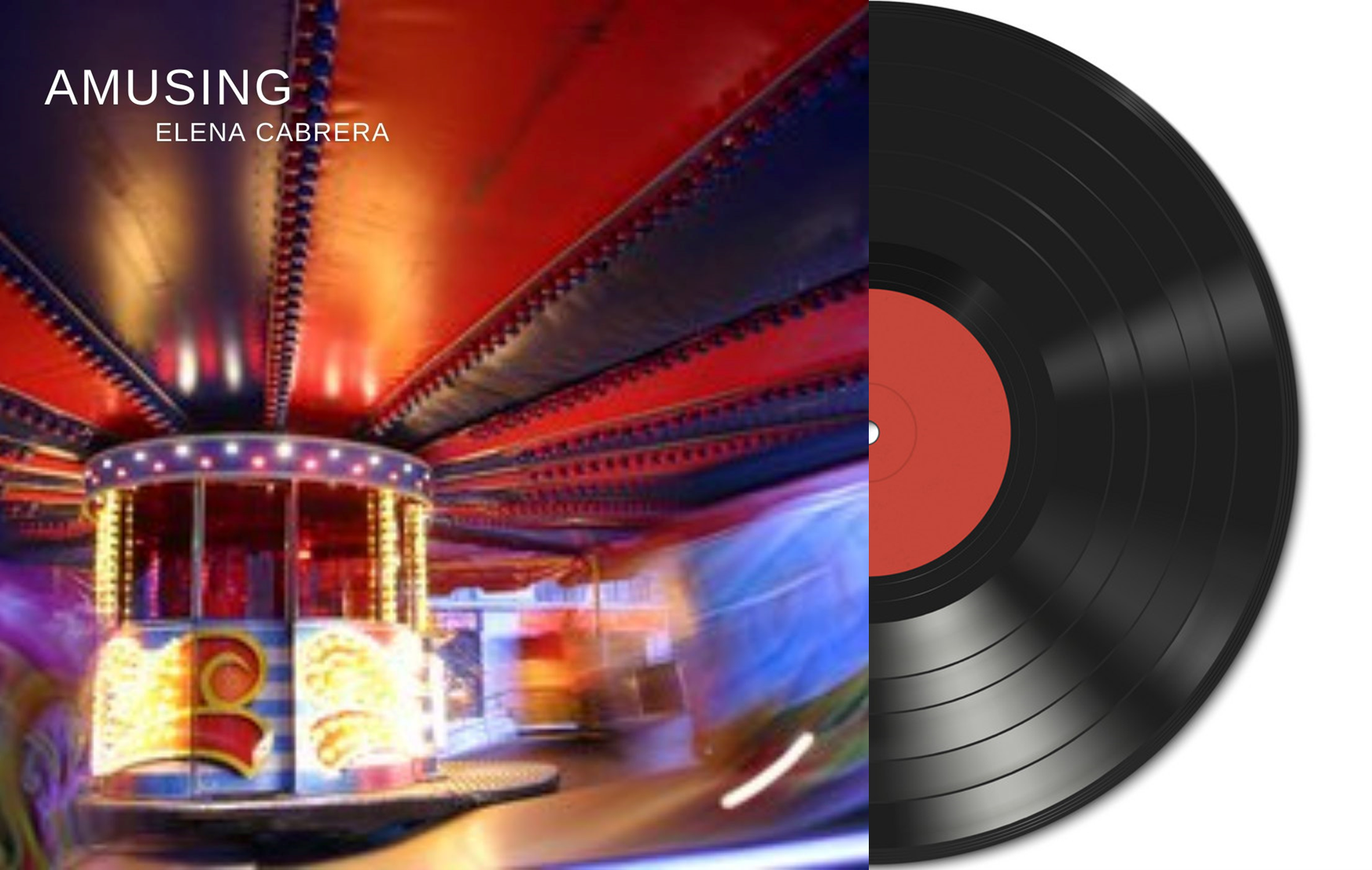
    Welcome to Music and Emotions: A Series (Part 2)! In this part, we continue our series with the category of “Amusing.” For a quick recap, an interesting study conducted by professors at the University of California Berkeley was conducted on how music evokes different emotions (Cowen et al., 2020). They decided upon 13 categorizations of music, one of which was “amusing.” Within this study, the researchers had participants from the US and China listen to over 2,000 music samples and report the specific feeling they felt (“angry, “dreamy,” etc.) as well as the broad affective features they noticed (valence, arousal, etc.). This allowed them to create a pool of data which they analyzed with large-scale statistical tools in order to identify 13 distinct types of subjective experiences attached to music among both cultures (Cowen et al., 2020). All of the songs included in the above album were utilized in this study and were some of the songs that participants most frequently categorized as “amusing.”


    In this study, it was found that emotions such as “amusement” and “triumph” were among those that were better translated cross-culturally. They tested both American as well as Chinese individuals which led them to this conclusion. It was also suggested that the categories dealing with subjective experiences, including “amusement,” may be more directly related to the music itself, meaning that certain features may be analyzed in a more culture-specific way among these (Cowen et al., 2020).


    As mentioned previously, they decided upon 13 categories and even included an interactive audio map where you can go in and see all of the songs used and see how you match up. Here you can also toggle through the USA and China participants to see the cross-cultural translation of music and emotions.  Stay tuned for the next part of this series where I will create an album on the “Indignant/Defiant” category! Comment below any songs you may think hit the mark for the “Amusing” category and how you matched up to others in the interactive audio map!


    Bibliography:

    Cowen, A. S., Fang, X., Sauter, D., & Keltner, D. (2020). What music makes us feel: At least 13 dimensions organize subjective experiences associated with music across different cultures. Proceedings of the National Academy of Sciences, 117(4), 1924–1934. https://doi.org/10.1073/pnas.1910704117 

  • Music & Emotions: A Series (Part 1 – Scary/Fear)

    Album Songs:

    1. Flow – Peder B. Helland
    2. FSO – Jaws “The Shark Theme” – John Williams
    3. Halloween 1978 (main theme) – John Carpenter
    4. The Murder – Bernard Herrmann
    5. Crawling – Linkin Park
    6. Toccata in D Minor – Bach (1709)
    7. The End (It’s Near) – Noctilucant
    8. Pier to Nowhere – Charlie Spring
    9. Emperor’s New Clothes – Panic! At The Disco
    10.  Piano Concerto 1 in B Flat Minor – Tchaikovsky


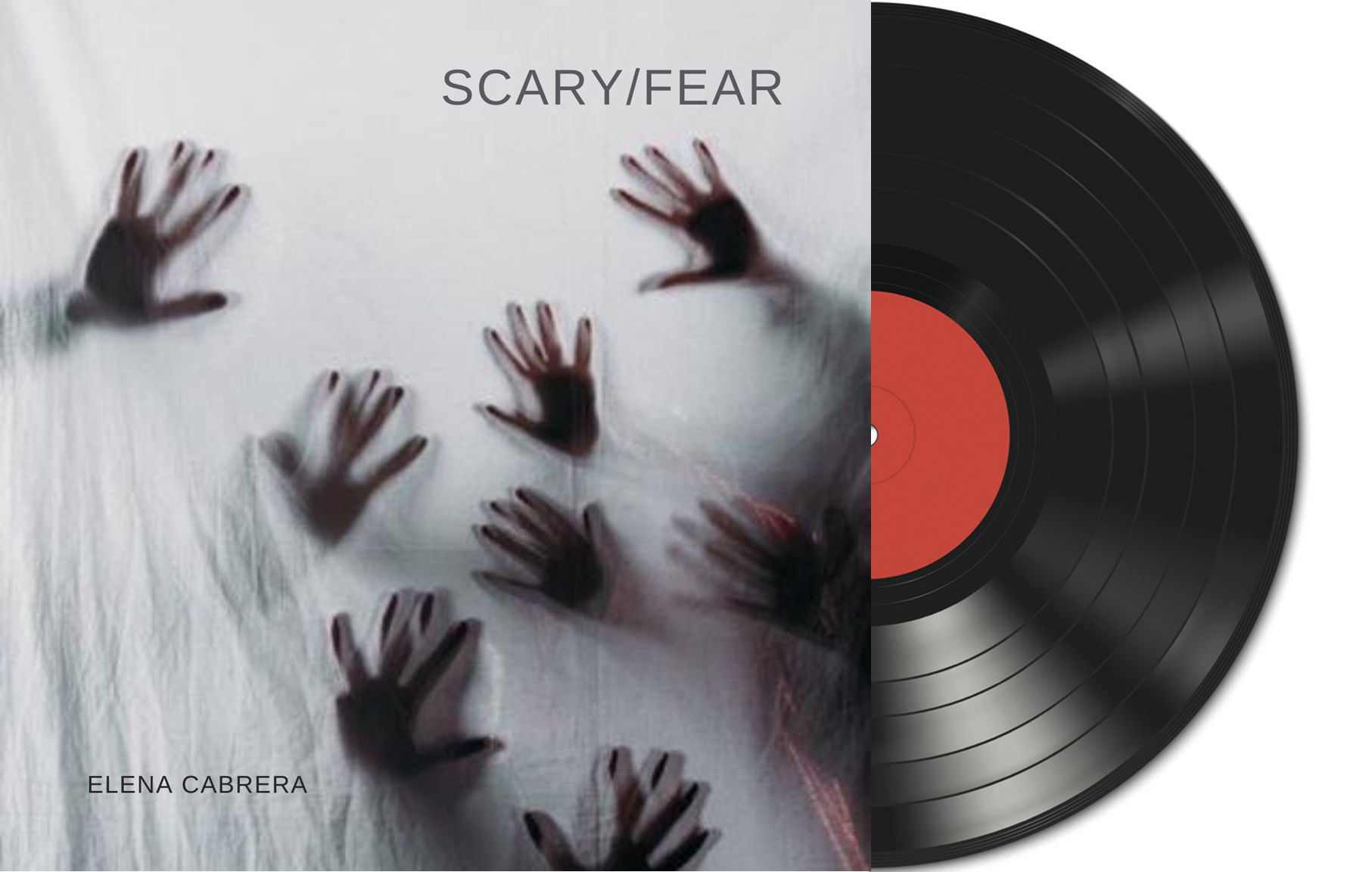
    Welcome to Music and Emotions: A Series (Part 1)! This series will be delving into an interesting study conducted by professors at the University of California Berkeley in which they investigated how music evokes different emotions (Cowen et al., 2020). They decided upon 13 categorizations of music, one of which was “scary/fearful.” They found that the way that individuals classified music based on emotions was relatively similar, even cross-culturally. All of the songs included in the above album were utilized in this study and were some of the songs that participants most frequently categorized as “scary/fearful.”

    According to the research, “scary/fearful” typically incorporates harmonic dissonance (Cowen et al., 2020). This emphasizes how some of the emotions people experience may have associations to specific melodic/harmonic intervals. For instance, the Herrmann piece included above is the soundtrack from the famous shower scene in Psycho! Here you can see a clear example of the tension and fear that arises from the use of harmonic dissonance. If you want to see a more in depth explanation of the genius music theory behind Herrmann’s song, here is a link to a very interesting analysis on YouTube.

    As mentioned previously, they decided upon 13 categories and even included an interactive audio map where you can go in and see all of the songs used and see how you match up. Stay tuned for the next part of this series where I will create an album on the “Amusing” category! Comment below any songs you may think hit the mark for the “Scary/fear” category and how you matched up to others in the interactive audio map!


    Bibliography:

    Cowen, A. S., Fang, X., Sauter, D., & Keltner, D. (2020). What music makes us feel: At least 13 dimensions organize subjective experiences associated with music across different cultures. Proceedings of the National Academy of Sciences, 117(4), 1924–1934. https://doi.org/10.1073/pnas.1910704117 

  • Let’s Get Physical – a pumpin’ playlist to get you moving

    Let’s Get Physical – a pumpin’ playlist to get you moving

    Picture a typical 1985 aerobic dancersize class at the local YMCA.  Bright spandex, side pony-tails, colored leg warmers, metallic leotards.  Lots of makeup, minimal sweat and sex appeal were the 80’s requirements for a good work out.  Gym culture has evolved since the Era of Questionable Fashion but one aspect will never change- music.  LOUD music.  There’s no way those 80’s women could do a rhythmic 8-count of floor kicks so enthusiastically without Cyndi Lauper’s motivation.  Nowadays, I don’t even bother to work out if I don’t have access to music.  There are a lot of reasons why I don’t bother to work out but even when I’m feeling particularly motivated to exercise, I still need my IPOD!  And judging by the number of headphones I spot at the gym, most people like working out to their tunes as well.

    So why the dependency?  Not only is music fun to listen to but music can actually make our adrenaline surge.  Several studies have indicated that music tempo correlates to changes in heart rate, blood pressure and breathing rate.  When the tempo (the rate of speed) of a song and athletic performance are synced up, an average person’s endurance is prolonged.  Some athletes even claim music is like a legal drug because of its effect on their endurance.

    It makes sense that listening to fast-paced music can increase your heart rate but a study at Virginia’s Hampden-Sydney College actually proved it.  The study showed that participants who listened to music while riding bikes actually traveled 11% farther than those who rode with no music (McCook 2005).  In another study, dance music at 142 beats per minute (BPM) was used in a 10-kilometer trial and the results were compared to the same study without music.  Average speed, power and heart rate were higher in the group who had music (Harmon 2007).  However, the effect of listening to music while working out is not completely hypnotic; the test subjects cycling at higher speeds also had higher perceived exertions.  This suggests that they were fully aware of how hard they were working, despite the use of music (Harmon 2007).  Therefore music does not reduce the recognition of effort during exercise but it does improve the experience by providing a fun distraction.

    Research also shows that the distraction of music can reduce up to 10% of perceived exertion during treadmill running at moderate intensity (Karageorghis 2008).  One study published found that basketball players prone to performing poorly under pressure during games were significantly better if they listened to catchy, upbeat music (Reynolds 2010). “The music seemed to distract the players from themselves, from their audience and from thinking about the physical process of shooting,” said Christopher Mesagno, a lecturer at the University of Ballarat in Victoria, Australia, and the study’s lead author.  The music let the body work from muscle memory without interference from the brain. “The music was occupying attention that might have been misdirected otherwise,” Mesagno said.

    Another reason music may help you exercise is because of something called “synchronization.”  Music is conceived by our brains, played through our bodies, perceived through our sensory organs and then interpreted back by our brains.  You’re already tapping your foot to the beat before you realize what you’re listening to.  Same with exercising- you want to pedal at the rate of the music or tread to every dominant beat.   Research has shown that the synchronization of music to repetitive exercise (like rowing, cycling and running) is associated with increased levels of output (Karageorghis 2008). The tempo can regulate movement and also create an attainable flow.

    I’m not saying listening to music while working out creates miracles; the body does have its limits.  Research finds that the effect of music seems to decline when exercising at an already intense level (Reynolds 2010).  For example, if running at an intense pace, increasing the music’s tempo will not have an effect on your speed or heart rate because they are already at a high level of intensity.  Which is fine since you wouldn’t want your heart rate to increase indefinitely until it explodes in the middle of spin class.  That’s not exactly the goal, don’t push it.  In conclusion, music can help during moderate exercise but when you increase the intensity of exercise, the feelings of fatigue will eventually override the music.

    There are a couple of other exceptions.  “Background music typically reduces a person’s perception of effort by about 10%,” says Costas Karageorghis, head of research at the School of Sport and Education at Brunel University in West London.  Meaning, don’t forget your headphones.  Listening to the gym’s complementary radio will make you think you are working HARDER than you actually are!

    That said, what’s the best song to work out to?  An exerciser whose goal during warm-up is to elevate the heart rate to 120 beats per minute should select accompanying music that has a tempo in the range of 80–130 beats per minute.  Successive tracks should create a gradual rise in music tempo to match the intended gradual increase in heart rate- tempos of 120 to 140 beats per minute are ideal.  That’s roughly the heartbeat of a casual exerciser who’s been on the treadmill for 20 minutes.

    As obvious as this may be, choose songs you like.  Emotional ties to music can help performance even more (NPR 2011).  For example, Kanye West’s “Stronger,” lifts my mood and pushes me a bit harder, even though the tempo isn’t particularly fast.  I have friends who start every workout listening to Rocky’s theme song “Gonna Fly Now,” by Bill Conti.  Listen to whatever you gotta listen to in order to get motivated!  Start singing on the treadmill if you need to; who cares about a room full of people staring at you sweating profusely and gasping for oxygen as long as you’re feeling good, right?

    I’ve compiled a list of example songs along with their beats per minute.  Try making your own playlist according to your heart rate goals and see if you can tell a difference in your work out.  If you can’t, try wearing a metallic leotard.


    Yoga/ Pilates, 85-95 bpm

    Beck- “Loser,” 85 bpm [soundcloud url=”http://api.soundcloud.com/tracks/346441″ iframe=”true” /]

    Walking, 3.0-4.5 mph (miles per hour), 76- 120 bpm

    Nirvana- “Smells Like Teen Spirit,” 117 bpm [soundcloud url=”http://api.soundcloud.com/tracks/5968275″ iframe=”true” /]

    Elliptical/ Stair-climbers, 124-128 bpm

    MGMT- “Kids,” 124 bpm

    Jogging, 5.2-6.0 mph, 120-150 bpm

    Florence & The Machine- “Dog Days Are Over,” 150 bpm

    Cycling, 60-80 rpm (revolutions per minute), 139-150 bpm

    The Killers- “Mr. Brightside,” 148 bpm [soundcloud url=”http://api.soundcloud.com/tracks/26159719″ iframe=”true” /]

    Running, 6.0-8.0 mph, 147-170 bpm

    Scissor Sisters- “Take Your Mama,” 155 bpm

    TV On The Radio- “Will Do,” 161 bpm

    High Intensity Training, 168 bpm & above

    Beck- “Gamma Ray,” 168 bpm


    Harmon, Nicole M., and Len Kravitz. “The Beat Goes On: The Effects of Music on Exercise.” IDEA Health & Fitness Association. IDEA Fitness Journal, Sept. 2007. Web. 20 Feb. 2012. <http://www.ideafit.com/fitness-library/beat-goes-effects-music-exercise>.

    Karageorghis, Costas, and David- Lee Priest. “Music in Sport and Exercise : An Update on Research and Application.” United States Sports Academy. The Sport Journal, 2008. Web. 20 Feb. 2012. <http://www.thesportjournal.org/article/music-sport-and-exercise-update-research-and-application>.

    “Maximizing Your Workout With The Right Tunes.” NPR, 13 Sept. 2011. Web. 20 Feb. 2012. <http://www.npr.org/2011/09/13/140438368/maximizing-your-workout-with-the-right-tunes>.

    McCook, Alison. “Music Helps Exercisers Go Further with Less Effort.” Hampden Sydney College News & Events. 2005. Web. 20 Feb. 2012. <http://www3.hsc.edu/news/archive/herdegenmeeks.html>.

    Reynolds, Gretchen. “Phys Ed: Does Music Make You Exercise Harder?” Well Blog. New York Times Health, 25 Aug. 2010. Web. 20 Feb. 2012. <http://well.blogs.nytimes.com/2010/08/25/phys-ed-does-music-make-you-exercise-harder/>.