“It appears a colonization of the moon could become a reality,” state Cornell University researchers R. W. Langhans and D. R. Dreesen hopefully in 1988 – and it would only be a “true colony [if] food could be produced” (Langhans and Dreesen, 1988).
The quest for interplanetary travel and colonization is one that, in the modern day, remains far-fetched and distant. While governments and research organizations have landed robots on Mars and mapped much of the Moon, the dream of a permanent, or at least self-sustaining, Moon base is still far off in the distance. One of the largest barriers to that dream is the challenge of growing food in space.
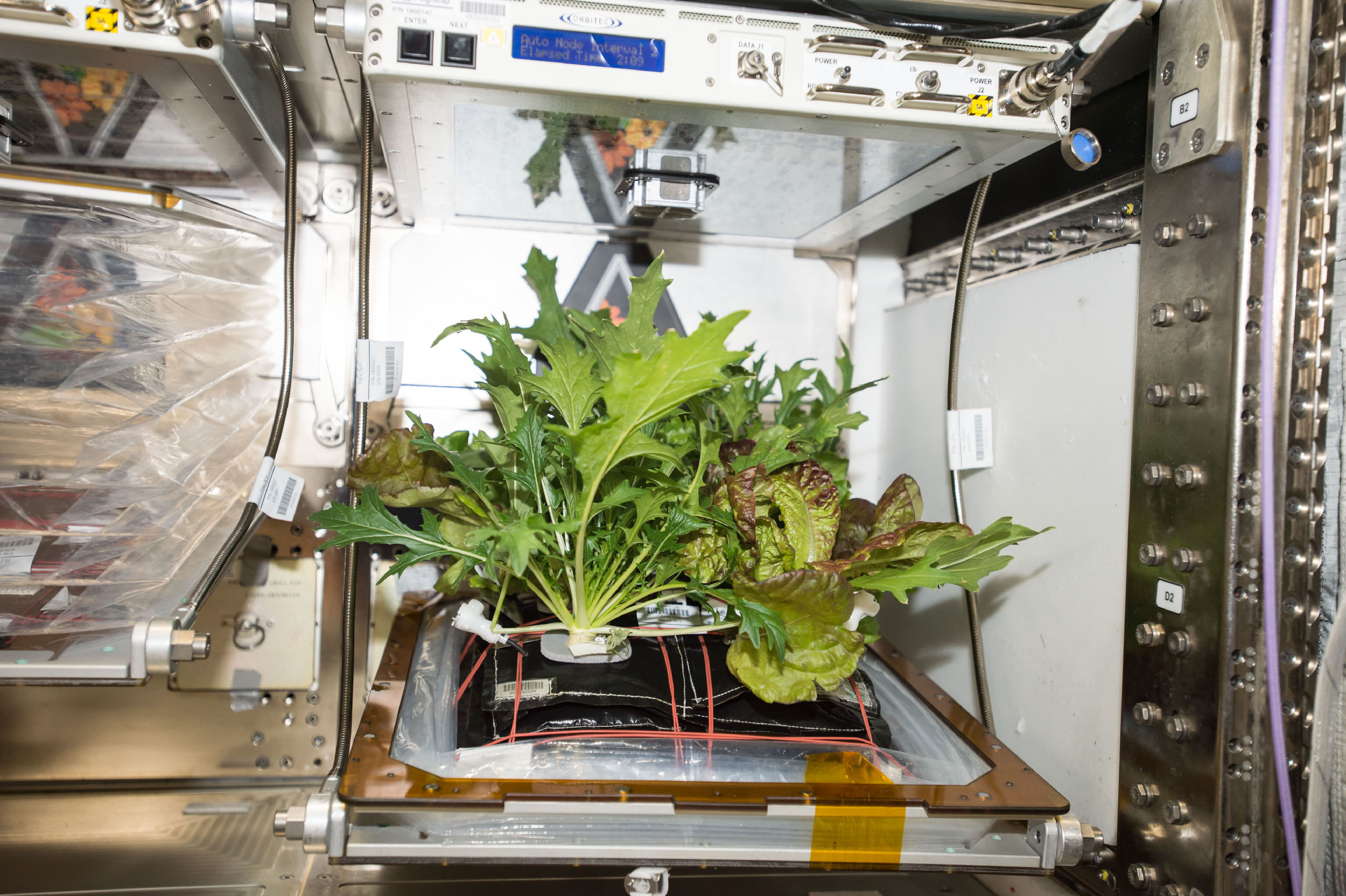
Image Credit: NASA/ISS
“The opportunities are exciting and almost unlimited in scope” (Langhans and Dreesen, 1988)
Plant growth in space is challenging for a number of reasons due not only to the harsh conditions of space, but also the harsh design and engineering conditions of the spacecraft. Plants in space need to be able to survive radiation, microgravity, and low-light conditions, while also being physically compact, non-disruptive to the spacecraft’s oxygen and carbon-dioxide levels, and unable to produce excess waste, toxins, and dangerous microbes (Musgrave, 2008; Langhans and Dreesen, 1988; Reed and Vanden Bosch, 2023). Beyond those requirements, these compact space-grown plants must provide all the essential nutrients required for a human diet in the absence of animal products and larger plant products like large fruits (Langhans and Dreesen, 1988).
While difficult, growing plants in space is extremely rewarding. NASA has determined that only eight species of plants – wheat, rice, white potato, sweet potato, soy bean, peanut, lettuce, and sugar beet – contain all the essential elements, carbohydrates, oils, and amino acids for a balanced human diet (Langhans and Dreesen, 1988). Vitamins, while not fully covered by these eight species of plants, can be supplemented for shorter missions, although they break down when prepackaged for longer ones (Langhans and Dreesen, 1988; and NASA, 2023). In addition, plants have been shown to be positively correlated with psychological well-being on Earth and in space (NASA, 2023). Plants then, are not only beneficial for the astronauts physical health, but their mental health too.
Currently, NASA employs two growth habitats: the Vegetable Production System (nicknamed Veggie) and the Advanced Plant Habitat (APH) (NASA, 2023). Both Veggie and the APH use enclosed microbiomes with simulated radiance from LED lights and carefully controlled gas content, temperature, and moisture levels (NASA, 2023). While not all eight of the ideal plants identified in 1988 have been successfully grown, the advancements of Veggie, APH and other new technologies shine a light on a hopeful future of plant-filled space exploration.
Credits
Langhans, R. W., & Dreesen, D. R. (1988). Challenges to plant growing in space. HortScience, 23(2), 286-293.
Musgrave, M. E. (2008). Growing plants in space. CABI Reviews. https://doi.org/10.1079/pavsnnr20072065
NASA. (2023, December 8). Growing plants in space. NASA. https://www.nasa.gov/exploration-research-and-technology/growing-plants-in-space/
Reed, D. W., & Vanden Bosch, C. A. (2023). Engineering perspectives of growing plants in space. Journal of the Indian Institute of Science, 103(3), 797–805. https://doi.org/10.1007/s41745-023-00369-6
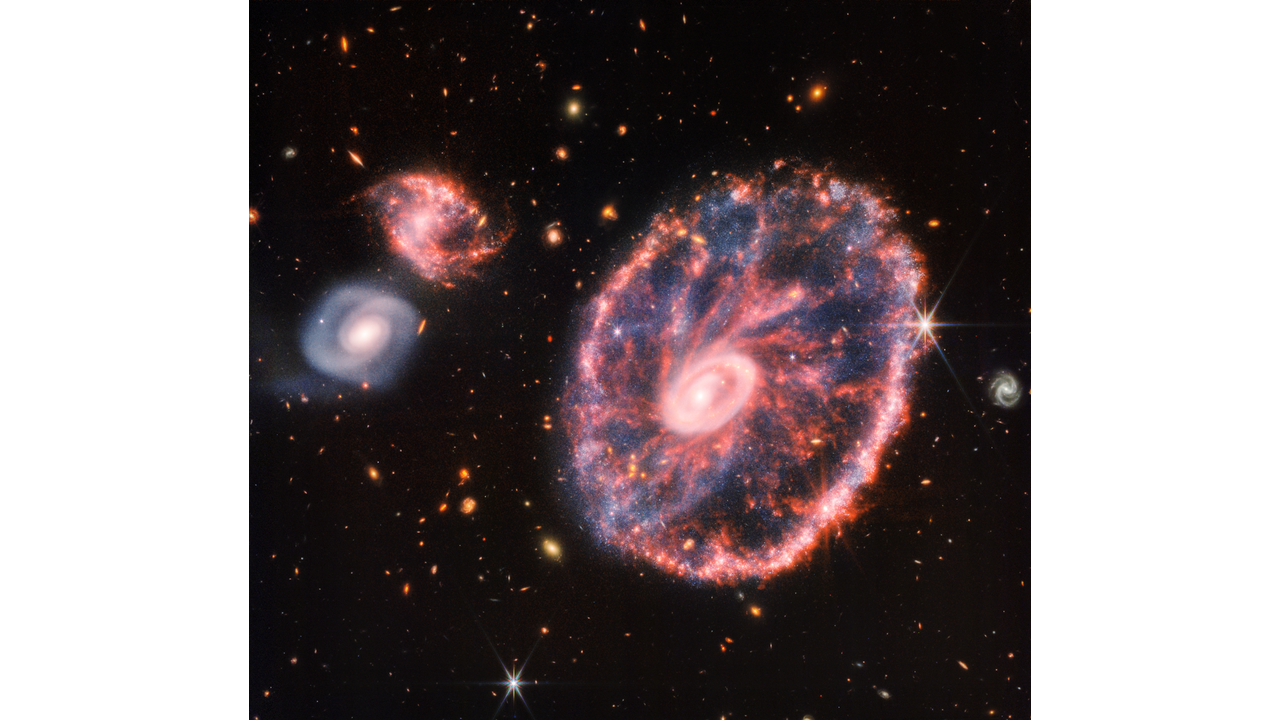
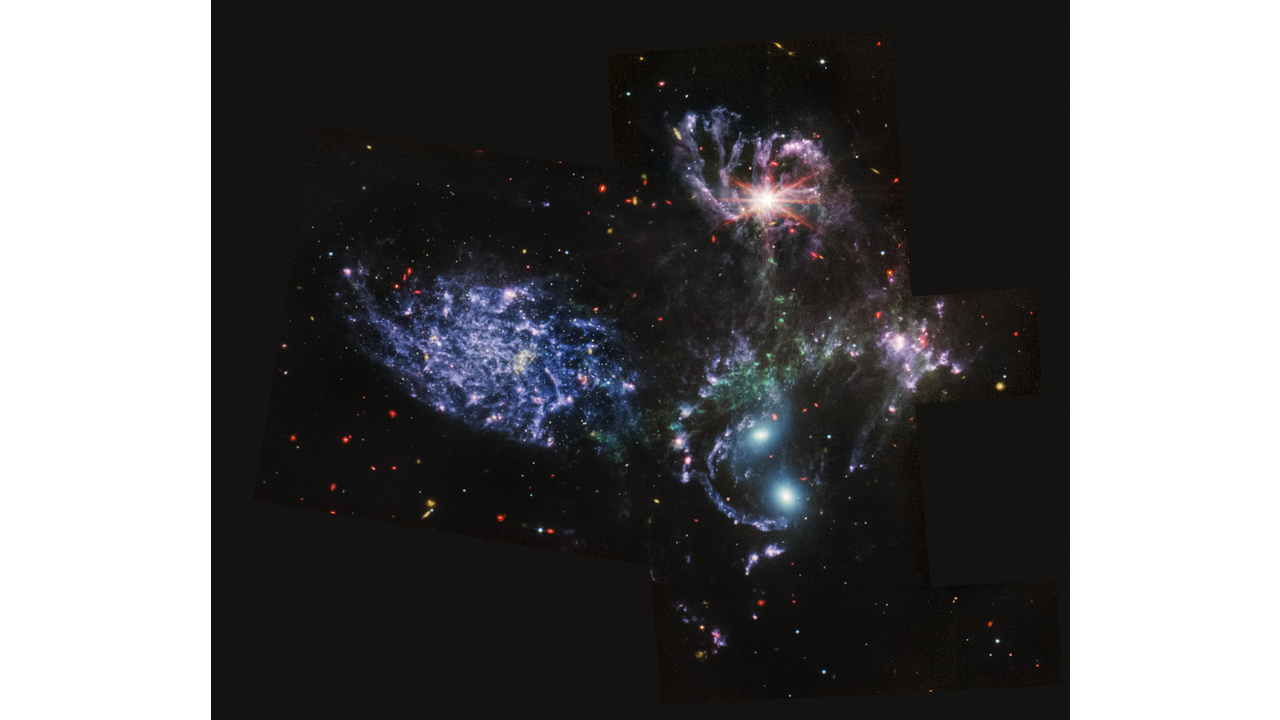
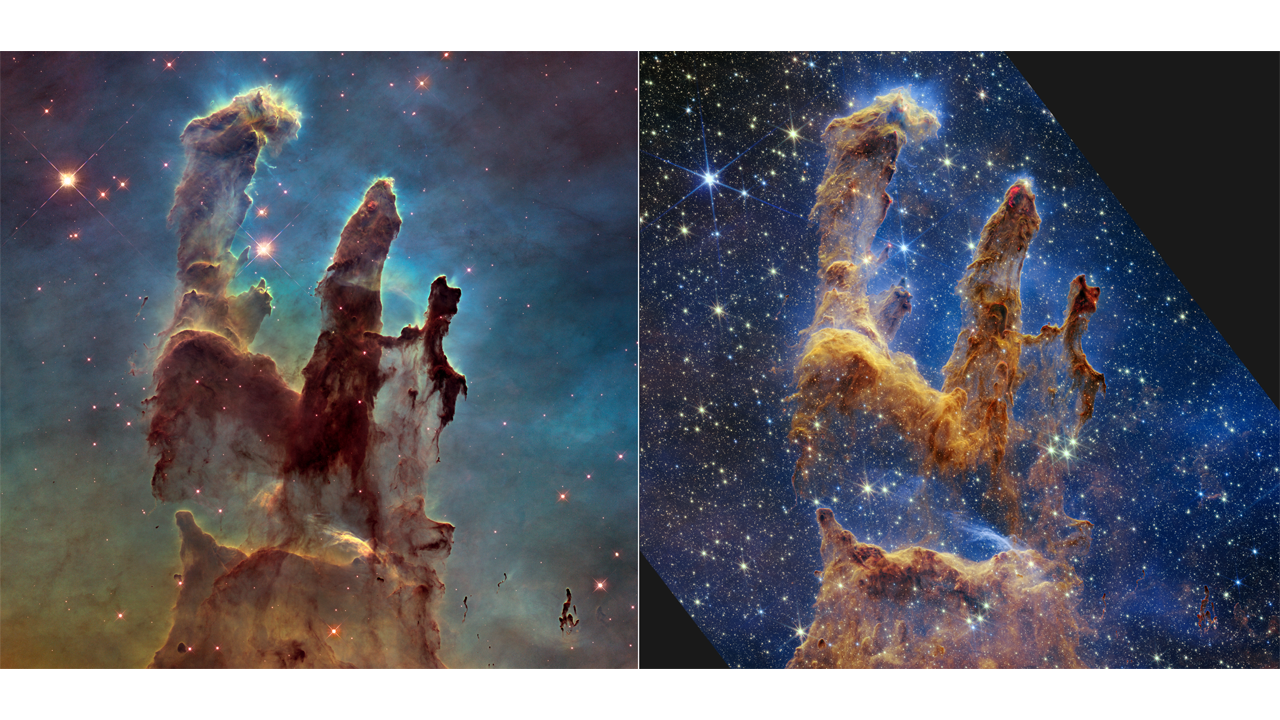
With the recent launch almost a year ago of the James Webb Space Telescope [JWST], alongside the beautiful pictures released from this grand telescope, you may have seen some exciting hype around the “premier observatory of the next decade” (NASA – JWST). In case you have missed out, here are some of the images from JWST!
Cartwheel Galaxy (NIRCam and MIRI Composite Image). CREDIT: [2]Stephan’s Quintant (MIRI Image). CREDIT: [2] Pillars of Creation (Hubble and Webb Images Side by Side). Hubble image on Left, Webb image on right. CREDIT: [2]
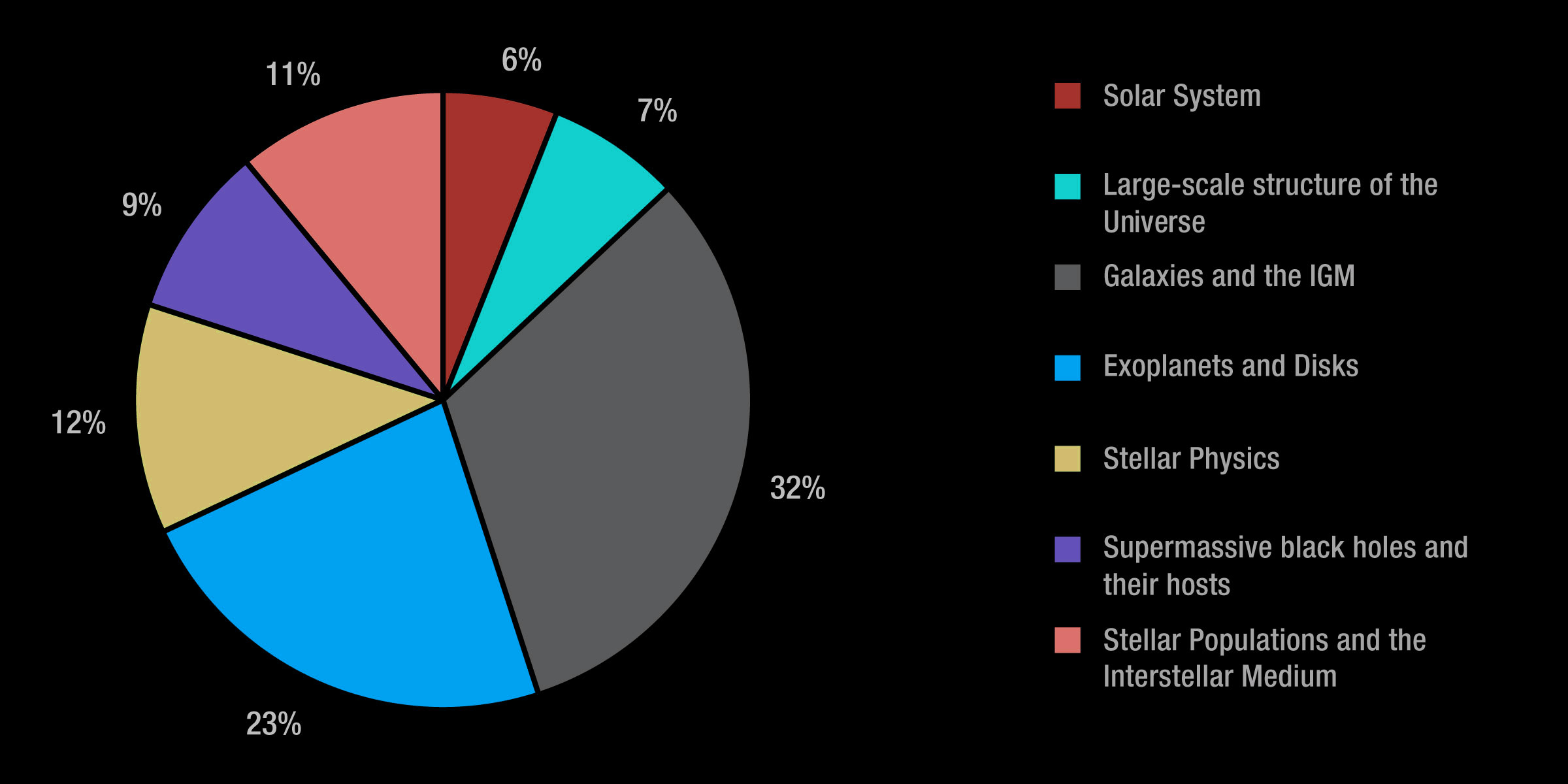
Though it is incredible to be able to view space in such detail, the telescope is more than just an incredibly expensive camera. For astronomers, physicists, and enthusiasts/curious minds alike, I will detail the mission of JWST, how it got its name, and the great feat of engineering that this telescope symbolizes. The James Webb Space Telescope is the result of an international collaboration between many space agencies, namely NASA, ESA (European Space Agency), and the CSA (Canadian Space Agency) [1]. The JWST is expected to last a minimum of 5 years, though there is hope that it can last at least twice that long. Be sure to temper your expectations for that longevity, as this telescope is much further away from us than Hubble, meaning that though we can service Hubble should issues arise, JWST is much too far away to be able to fix it manually. We simply must trust that the engineering that has gone into its creation is enough to protect it from all that may happen to it so that it can last as long as possible. The longer the JWST lasts, the more information on our universe we can collect! Many researchers, at all levels, interested in our universe have slated time with the telescope. In general, the JWST is largely able to explore the early universe, galaxies over time, the lifecycle of stars, and other worlds/exoplanets. In its first cycle, the largest category that JWST will spend its time on is galaxies and the inter-galactic medium (IGM), as shown in this pie chart created by NASA and P. Jefferies (STSCI). But, with all this time and all there is hidden in the universe for us to discover, the possibilities for JWST are essentially limitless.
Fractions of time allocated in Webb Cycle 1, by science category. CREDIT: NASA and P. Jeffries (STScI).
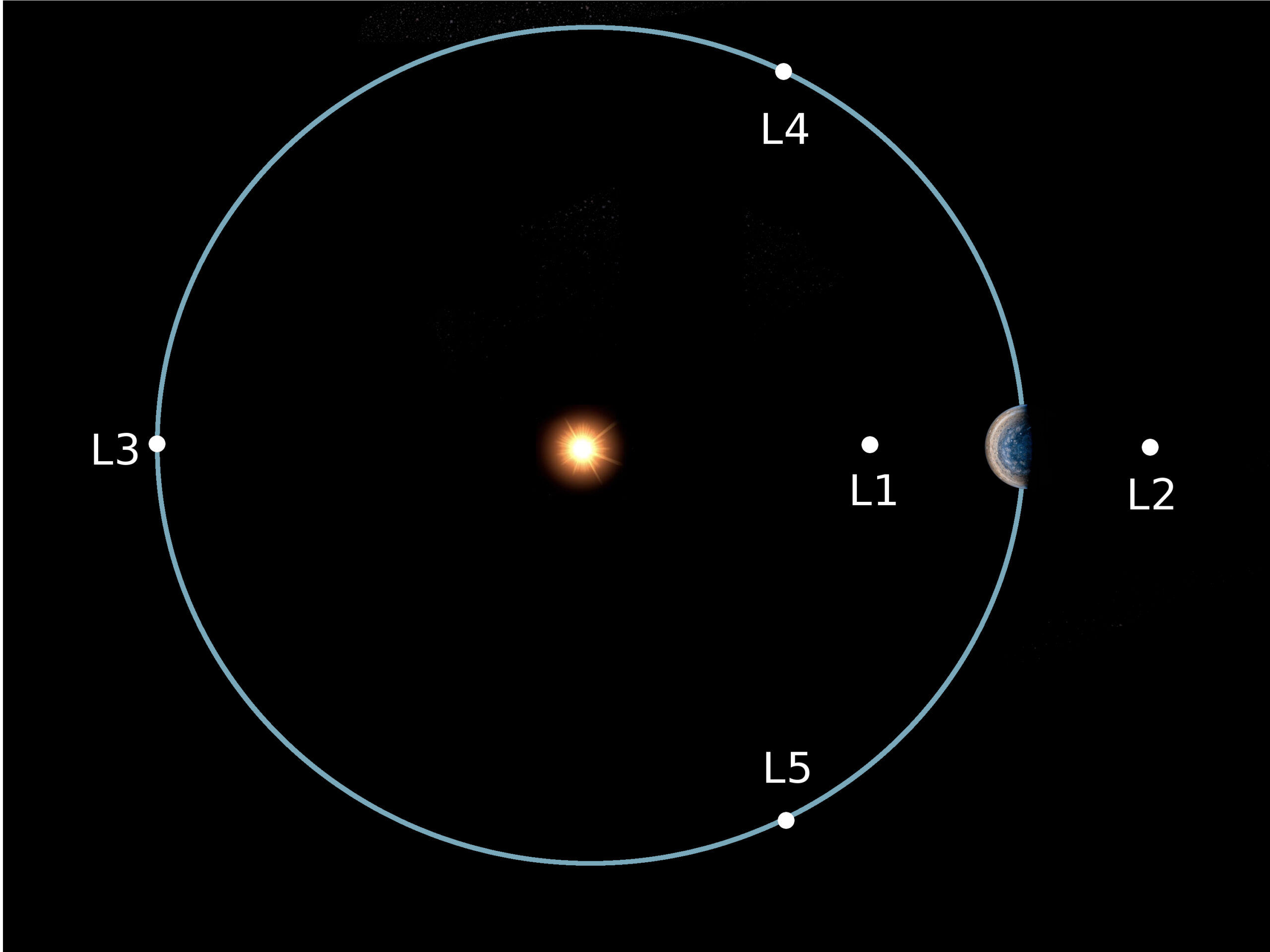
Previously, one of the most known telescopes was the Hubble Space Telescope, named after Edwin Hubble – a notable astronomer that elevated the field of astronomy and cosmology with his observations. Another key observatory of our time is the Chandra X-Ray Observatory, named after Subrahmanyan Chandrasekhar, who from my studies here at Tech, was key in our understanding of the lifecycle of stars and how mass plays a role in their evolution. In his study of white dwarfs, he discovered what is known as the Chandrasekhar Limit – an upper limit on the mass of a white dwarf. With such key figures having their names associated with these feats of engineering, the question is: Who is James Webb, and what has he done to have this telescope named after him? Surprising as it may be, James Webb is actually not an astronomer (or physicist or scientist, for that matter). James Webb was a director of NASA, and according to Webbtelscope.org, he is “best known for leading Apollo, the series of exploration programs that landed the first humans on the Moon” [2]. He played a crucial role in getting public and governmental morale for the program, even through tough situations, such as the unfortunate deaths that occurred during the Apollo 1 mission. James Webb is credited for NASA being as huge as it is today, as he laid the groundwork for it to expand into so many missions even past Apollo. Despite this, the naming of the telescope after James Webb was not without its opposition. From history, you may remember that during the era of the Space Race where we sought to “outrun” Russia with our STEM programs, especially that of leaving Earth, there was also a great fear around communism, leading to the “Red Scare”. Less well known, but with similar animosity and paranoia, was the “Lavender Scare”. The Lavender Scare was essentially the paranoid masses wanting to purge any LGBTQ+ individuals from the rest of society due to homophobic thoughts on the morality and deserved (in)equality of certain people. In fact, during Webb’s reign as a director, a budget analyst was fired for indecent conduct, solely based on the assumption of homosexuality. Many argue that even if he did not directly influence this firing, he as Director had enough influence on the agency to encourage the moral obligation of taking a stance against homophobia. Petitions were made hoping to strike Webb’s name off the telescope, with many suggestions for replacement, such as Sally Ride – the first American woman and lesbian in space – among many other suggestions. Though investigations have not shown strong evidence that these claims are true, it is considered by many at best a complicated history with other figures and ideals that could replace the name. Though the name is not changing, I personally prefer calling it the “Jelly Welly Space Telly” as a fun and exciting name that does not relate to possibly homophobic individuals. More formally, I will always refer to it as JWST, as you will see in this article due to my personal stance on the matter. Moving onward, we have a glimpse of the possibilities of what this telescope can accomplish, or at the least, some amazing images of what it can see in space, but what makes this telescope so much more intense and exciting than others, like our good ole’ Hubble Telescope? Other than being almost 10x as expensive at 10 billion dollars, the JWST is extremely precise in many aspects, and an intense thermodynamical achievement as the instruments require. Along with the distinct gold hexagonal mirrors and its sun-shield base, the cameras/instruments carried by the JWST are the NIRCam (Near-Infrared Camera), NIRSpec (Near-Infrared Spectrograph), NIRISS (Near-Infrared Imager and Slitless Spectrograph) and the MIRI (Mid-Infrared Instrument). You may have noticed that each of these instruments are focused on the infrared. This is a key component that should allow us to see a different perspective and farther into our universe – ideally around 13.5 billion years into the Reionization Epoch, which I will cover more in a future article. For now, it is important to understand that essentially, looking in the infrared region is similar to looking at heat – meaning that the telescope itself must remain incredibly cool to avoid any corruption of its images by surrounding heat. The JWST is an incredible collection of work from the launch vehicle, its image processing units, its electromagnetic systems, cooling systems, and its unmistakable golden mirrors and sunshield. This system – originally folded for storage before it launched into space – will be at a special point in space called L2. L2 is a Lagrange Point 1.5 million kilometers from Earth. For reference, our Hubble telescope is around 570 kilometers from Earth, and our Moon is around 384,000 kilometers from Earth. Though far away, it is a crucial point in space that allows for a long-life for our special telescope. The Lagrange point, which is not a reference to my hometown surprisingly enough, is a point in space where a satellite may remain in orbit relatively stable due to the balance of gravitational energy between 2 objects. With this stable orbit, the JWST is able to conserve fuel usage by using very minimal amounts to remain in one area. This area specified by L2 uses Earth to block the light from the Sun, to help with the cooling required by the telescope. Other points are key for different missions. The L1 point would be incredibly damaging to JWST but is an ideal spot for a telescope that would be used to study our Sun.
Lagrange Points in Space. CREDIT: [6]
If it hasn’t been emphasized enough, the JWST must be kept at EXTREMELY cool temperatures. In order to operate correctly, the dark side of the telescope must be at -233॰ C, or -388॰F. Even with the Earth blocking some sunlight, it is expected that the Sun will still dump about 200,000 watts of power onto the sunshield, and the engineers had the tough goal of ensuring that no more than 1 watt would get past. In order for a sunshield like this to work, it has a list of requirements, and ideally is also lightweight for the launch into space to go smoothly. The desirable properties of the sunshield are for it to be strong, resistant to degradation from solar radiation, stable over a large range of temperatures, and reflective [3]. The solution is apparently a high-performing plastic called Kapton, rolled into extremely thin sheets. This material crosses off each requirement except for its reflectivity. Luckily, the material was easily able to be coated in a thin layer of aluminum to add the reflective property to counteract the radiation. Layers of this material were created very specifically, with gaps to utilize the insulating and cold nature of space to help cool down the telescope even more. Additionally, these layers were angled relative to each other such that sunlight is deflected away from the dark side of the telescope and less heat is absorbed by the solar radiation. These layers also need to be protected from tears of possible impacts from micrometeorites. The tension in the layers is quite high, meaning that any rip that occurs could easily expand and ruin the integrity of the telescope, allowing heat to escape to the precious equipment. To prevent this, rip-stop seams were molded into the sunshield. Every possible parameter was thought of by the team of engineers that worked on this amazing telescope. Yet, the difficulty here isn’t over. In order to be stored in the rocket that would launch the telescope into space, many parts of the telescope were folded and meant to unfold in space. For a 10 billion dollar telescope, it is quite the gamble to risk it unfolding incorrectly, ruining the engineering put into place over 25 years. In just unfolding the sunshield, there are “over 300 single points of failure in this unfolding sequence,” [3]. Luckily enough, I can spoil it for you that indeed no failures occurred, but is an intense situation nonetheless. Yet, the coolest part of the telescope is yet to come, and I mean that literally. From before, I mentioned that one of the instruments was named MIRI. This instrument is extremely sensitive, requiring an intense cryocooler to keep it at a mere 7॰K. This insanely cool temperature is achieved by intense physics. The cryocooler needs minimal to no vibrations and some electricity. To minimize vibrations, many pulleys and balanced weights are included so that every movement is precise and calculated. With electricity comes heat, and thus a need to separate some cool and warm air. Using basic principles of acoustics, the cryocooler involves a complex system. This complex system can be conceptually simplified using thermoacoustics, which utilizes the pressure and temperature relations in air and a standing wave to create a piston inside of horizontal cylinders. These cylinders contain a stack, which separates the cool and warm air, which allows attachments to expel the warm air into the sunshield which can dissipate the heat. This system is quite the expensive unit itself, and just an incredible physical process. It is shocking to me that we are capable of creating a system that can reliably keep something just a few degrees above absolute zero temperature. Now, for one of the most distinct parts of the telescope. The golden mirror, composed of 18 hexagonal segments, at 6.5 meters in diameter. The hexagonal shape was chosen because it is “roughly circular, segmented mirror” with few gaps and six-fold symmetry [8]. Essentially, due to the necessary folding requirement, NASA needed a shape that could eventually be roughly circular so the image wouldn’t distort in any one direction, and that was symmetrical so that precise optical calculations could be made easier, thus the interesting shapes. The materials chosen for this were also quite different than that of Hubble, and much lighter to make its launch easier for such a far distance. The mirror surface is made of Beryllium, a material that is much easier to break than steel, but much harder to deform at a young’s modulus of 300 Gpa. Though it is not a reflective material, requiring a coating of gold that is 0.1 micron thick. Learning from past mistakes, the JWST mirror is programmable to avoid unserviceable optics issues. In the past, Hubble had major optics issues that were only able to be fixed due to its close nature. JWST does not have this advantage, so the ability to adjust on a scale of wavelengths of light to keep the primary and secondary mirror aligned is crucial to the mission being operable at all. The mirrors also have a Cassegrain focus hidden in the center, using a fine guiding system that almost constantly adjusts to remain focused on a guiding star that is always in its center of field of view. This image stabilization tool is incredibly precise, and is another key aspect of the amazing engineering that goes on in this telescope. This new observatory has touched so many people and will inevitably lead to so many discoveries about our universe. The level of excitement that I and so many others have for what there is to discover from the data we can now collect is at such an all time high, there was no way I couldn’t write and share this with you. Indeed, this is just the start of what I will be sharing; I couldn’t fit all that excitement into one article! Honestly, I can basically write a textbook solely on this topic because there is so much information hidden in every release and I want it all to astound everyone else as much as it has for me. Here, I discussed how its made and the purpose of this new telescope, and soon I can’t wait to discuss in depth what this technology is actually bringing to the science table.
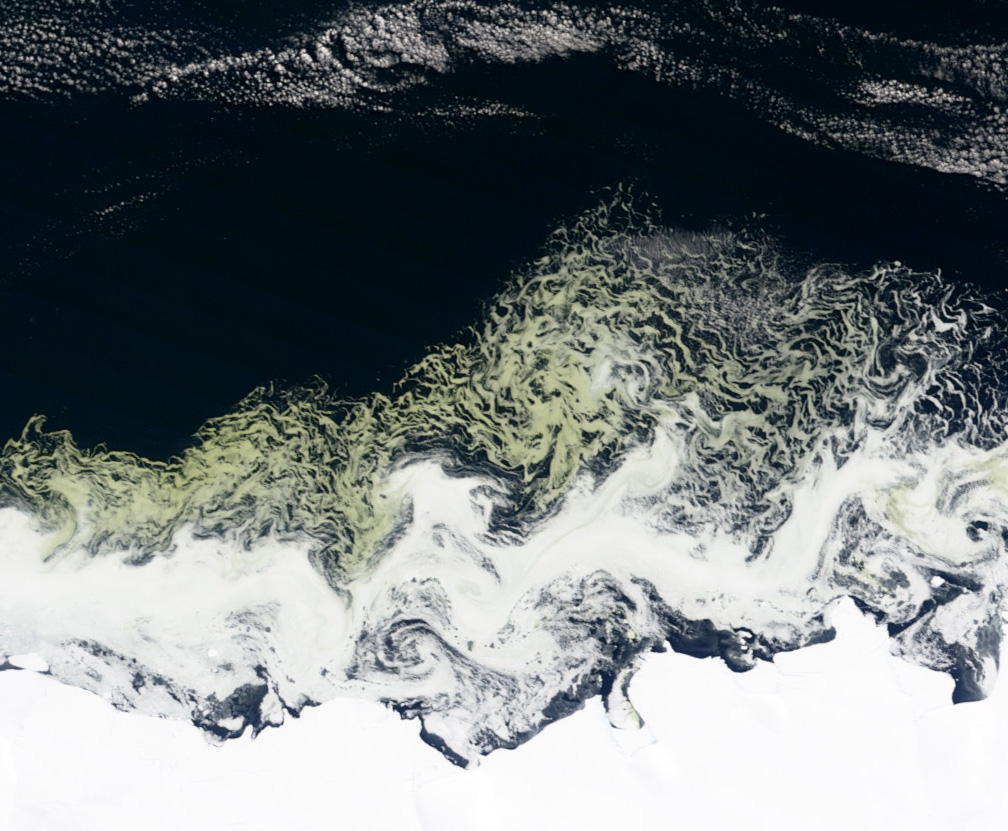
An algal bloom appears off the Princess Astrid Coast in East Antarctica. NASA image courtesy Jeff Schmaltz, LANCE/EOSDIS MODIS Rapid Response Team at NASA GSFC.
Greetings biophiles! What do algal blooms, great white sharks, and okapis all have in common? They’re all absolutely fascinating and they’re all on my list of events and animals I would jump at the chance to observe. This ever growing list of biology-related items has evolved into something of a bucket list, hence the title, and includes biological phenomena around the globe that I hope to one day see for myself!
So what ‘s first up on my biology bucket list? Algal blooms.
First some background: Algal blooms are basically just the growth of aquatic algae at a hyper fast pace, resulting in washes of discoloration over bodies of water. These artworks of nature generally occur due to favorable conditions such as availability of resources like minerals, nutrients, warmth, and sunlight. The algae, usually referred to as phytoplankton, are microscopic, single-celled organisms that make their home in the upper layers of both fresh and marine waters. They serve as vital components of aquatic ecosystems due to their powers of photosynthesis, as they provide food (directly or indirectly) for everything from penguins to blue whales. Phytoplankton even feed you, as they are used as feed in aquaculture. We depend on these little guys!
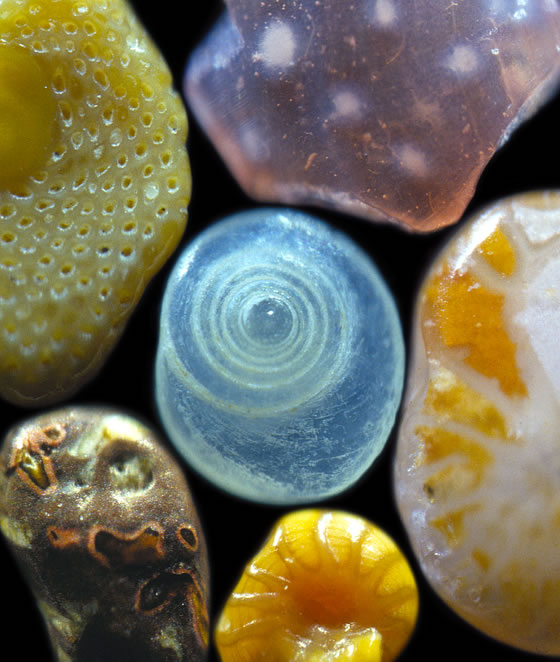
However, I not only appreciate them for their hard work in the upkeep of our oceans, but also for their aesthetic value on both a microscopic and macroscopic level. If you do an image search of either “phytoplankton” or “diatoms” (go, click on it!), you’ll see that these guys come in all kinds of wacky shapes, sizes, and colors.Looking at them under a microscope (and I would love to take my own sample from an algal bloom) is pretty much like walking through an art gallery (except better) because the artwork is made out of living organisms just hangin’ out, powering an entire ecosystem and being funky shaped. Ahhh, that is the life.
(Side note: lots of ordinary things look crazy awesome when looked at close up, sand for instance. Oh nature, your beauty reveals itself on so many levels. *swoon*)
How do I plan on experiencing an algal bloom you may ask? By swimming in one of course!* (Or looking at them from the International Space Station, as most algal blooms can be seen from space. NASA, if you want to make dreams come true, hit me up!)
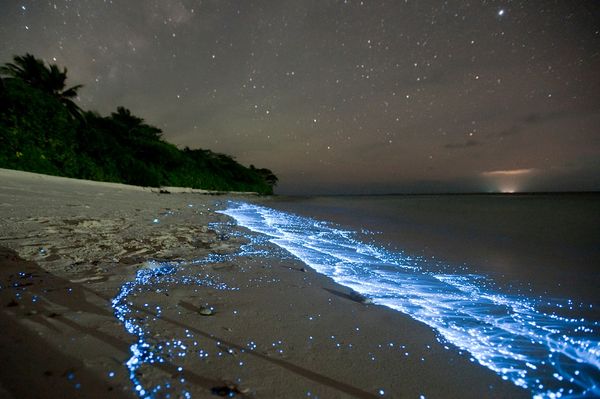
And no, I’m not talking about taking a dive in the pond scum of the poorly-kept neighborhood pool. Instead, I hope to travel to what are known as bio-bays: bodies of water where bioluminescent phytoplankton, or more specifically dinoflagellates, light up the waters at night and create waves dotted with glowing spots to match the starry night sky. There are several locations around the world where tourists can experience the glowing waters- Puerto Rico, Vietnam, and the Maldives to name a few.
However, these kinds of trips cost money and, alas, I am a poor college student, so until I can save up to travel to Puerto Rico (or the ISS), I’ll continue looking at satellite photos (like the ones from NASA, linked below). Other types of algal blooms can occur in bodies of water around the world and vary depending on seasonal and causal factors.
Glowing blue waves on Vaadhoo Island in the Maldives. Photograph by Doug Perrine, Alamy
I like to keep my eye out for new photos of algal blooms, such as this one, which displays Impressionist-esque swirls of green and yellow atop the waters off the Princess Astrid Coast in Antarctica, taken by NASA’s Terra Satellite this past February. Antarctic blooms generally occur in December (the start of summer for Antarctica) as the increased sunlight favors the growth of these photosynthesis superstars and kickstarts the rest of the marine ecosystem in time for baby-making season. This particular algal bloom’s late season appearance excited scientist to the possibility that it was caused by a more unusual factor: nutrients blowing off of a nearby ice shelf. This is just one example of how algal blooms can come about.
Year round you can find news of all types of algal blooms being spotted in different places around the world, so keep a lookout for this fascinating biological phenomena! If you would like to see more of their intoxicating beauty I would recommend perusing through Visible Earth, a catalog of photos from NASA, or checking out this gallery from Wired magazine, which will also tell you about regional types of algal blooms.
So, dear readers, what do you think? Would you go swimming in a bioluminescent ocean? I hope you’ll take a look through some of the galleries linked throughout (some of these photos make great wallpapers!), and of course I’d love to know what’s on your biology bucket list via the comments section below. (Also, keep a look out for our next installment of our biology bucket list series!)
*It should be noted that some algal blooms are harmful (HABs), and certain species, about 2% of the 5000+ species of marine phytoplankton, are associated with toxins and can actually harm an ecosystem through the release of neurotoxins and the depletion of oxygen in water. These HABs can arise naturally and in predictable patterns, but have also increased in frequency due to human activity like agricultural run-off. So please do not just go jumping into any old discolored water and be sure to look out for notifications from your local health and marine departments if you plan on participating in any recreational activities in or near your local lakes or beaches.