Tag: psychology

  • What Even Is Cuteness?

    Have you ever seen something so cute you want to squeeze it? Maybe it was a puppy or kitten, or perhaps a teddy bear or doll. You may wonder why you feel this way – after all, it seems rather strange to mimic violence against something endearing. What makes cute things just so emotionally powerful, and what makes them cute in the first place?


    Cuteness as Affect

    In an article by the University of Oxford, Associate Professor Morten Kringelbach explains that cute things draw in our senses, attract our attention and spark rapid brain activity in the orbitofrontal cortex – a region associated with emotion in pleasure. In fact, the presence of something cute (in the case of this research article, a baby’s face) can activate the orbitofrontal cortex in 140 ms, or just under a seventh of a second (Kringelbach, 2016). Cuteness overloads the emotional state of the brain, drawing in mental attention and the five senses.

    The feeling of cuteness, what researchers call its “affect,” has very interesting roots. From a biological perspective, an emotional response to cuteness may be derived from an evolutionary need to protect babies from harm. As Dr. Kringelbach explains, the evolved instinct to protect and care for babies may drive our wider perceptions of cuteness. Humans tend to express affection not only for babies and small children, but also for animals with baby-like features, and even dolls, teddy-bears, and miniature objects. These animals and objects trigger similar evolutionary protective desires – as well as a drawing in of attention and a general increase in emotional pleasure.

    If cuteness is an evolutionary instinct to care and protect, why do we feel “cuteness aggression” – the “urge to squeeze or bite cute things” without causing harm (Alba and Stavropoulos, 2018)? Researchers at the University of California, Riverside, took on this challenge and made some interesting findings. Summarizing greatly, cuteness aggression was found to be an evolutionary response to the overwhelming emotions of experiencing cuteness (Alba and Stavropoulos, 2018). Evolutionarily, it would be less than ideal if early humans were “incapacitated” with emotion (as the researchers put it) in the presence of cuteness, and thus experienced a counter-emotion (scientifically called a “dimorphous expression” – when human action expresses the opposite feeling as to what they feel, like laughing when you cry). In the case of overwhelming cuteness, this dimorphous expression of playful harm held an evolutionary role to stop early humans from being too affected by cuteness.


    Cuteness as Aesthetic

    While this simple definition of cuteness – an evolutionary instinct to care for and be emotionally attached to babies (and by extension, baby-like animals and objects) – contains an incomplete and shallow understanding of how cuteness exists as a concept in society. As Joshua Paul Dale writes in his academic publication, The Aesthetics and Affects of Cuteness, “cuteness occupies both the aesthetic and affective realms” – and the modern extent of research places extensive focus on the affective side and avoids discussing the aesthetic. Note that in this usage, Dale does not mean aesthetic to mean cottage-core or punk – instead, the word is used within its sociological background, to understand how cuteness exists in the modern world.

    Dale writes that the emotional response of cuteness is “manipulated for a variety of purposes” – including commercial, artistic, and social (Dale, 2016). The feeling of cuteness is emotionally powerful, and for that reason, is manipulated (malevolently and selfishly at times, yes, but also largely in acts of self-expression) to produce action. As Dr. Kringelbach discovered in her article for the University of Oxford, cuteness invites such powerful emotions that it drives the subject to action, causing them to put in work to continue to be able to receive and engage with the source (Kringelbach, 2016). Socially, cuteness has further effect than its core, biological and evolutionary response. In the modern world, cuteness causes the subject “catharsis” (as Dale writes) that fosters a need to protect a vulnerable object from harm (Dale, 2016). This effect of cuteness links it to vulnerability, a link that Dale dives into (in more depth than is relevant for this article) to understand the connections between violence and cuteness. Remember that cute thing you wanted to squeeze? The association between cuteness and vulnerability may be why. As Dale writes, cuteness is disarming and tender, but also “involves a cognitive reaction in which the power differential between subject and object comes into play” (Dale, 2016). Cuteness is, in many ways, an expression of a power dynamic.

    So… what is cuteness? There’s the affective component: baby-like things trigger a biological response that draws attention and fosters feelings of care, and there’s the aesthetic component: cuteness is linked with vulnerability, intensity of emotion, and power dynamics, defining its socially constructed half. Together, these components create the feeling of cuteness that we understand today. It’s youthful, tender, disarming, attention-grabbing, and (in large part, but not entirely) biological.


    References

    Dale, J. P. (2016). The Appeal of the Cute Object: Desire, Domestication, and Agency. In The Aesthetics and Affects of Cuteness (1st ed., pp. 35–55). essay, Taylor & Francis Group.

    Kringelbach, M. L. (2016). How cute things hijack our brains and drive behaviour University of Oxford. How cute things hijack our brains and drive behaviour. https://www.ox.ac.uk/research/how-cute-things-hijack-our-brains-and-drive-behaviour

    Stavropoulos, K. K., & Alba, L. A. (2018). “It’s so cute I could crush it!”: Understanding neural mechanisms of cute aggression. Frontiers in Behavioral Neuroscience, 12. https://doi.org/10.3389/fnbeh.2018.00300
  • Mechanical Keyboards and the Psychology of ASMR

    What are your hobbies? Do you participate in a sport, or do yoga, or grab a paintbrush and make some art? How about something that literally sounds amazing – mechanical keyboards, anyone?

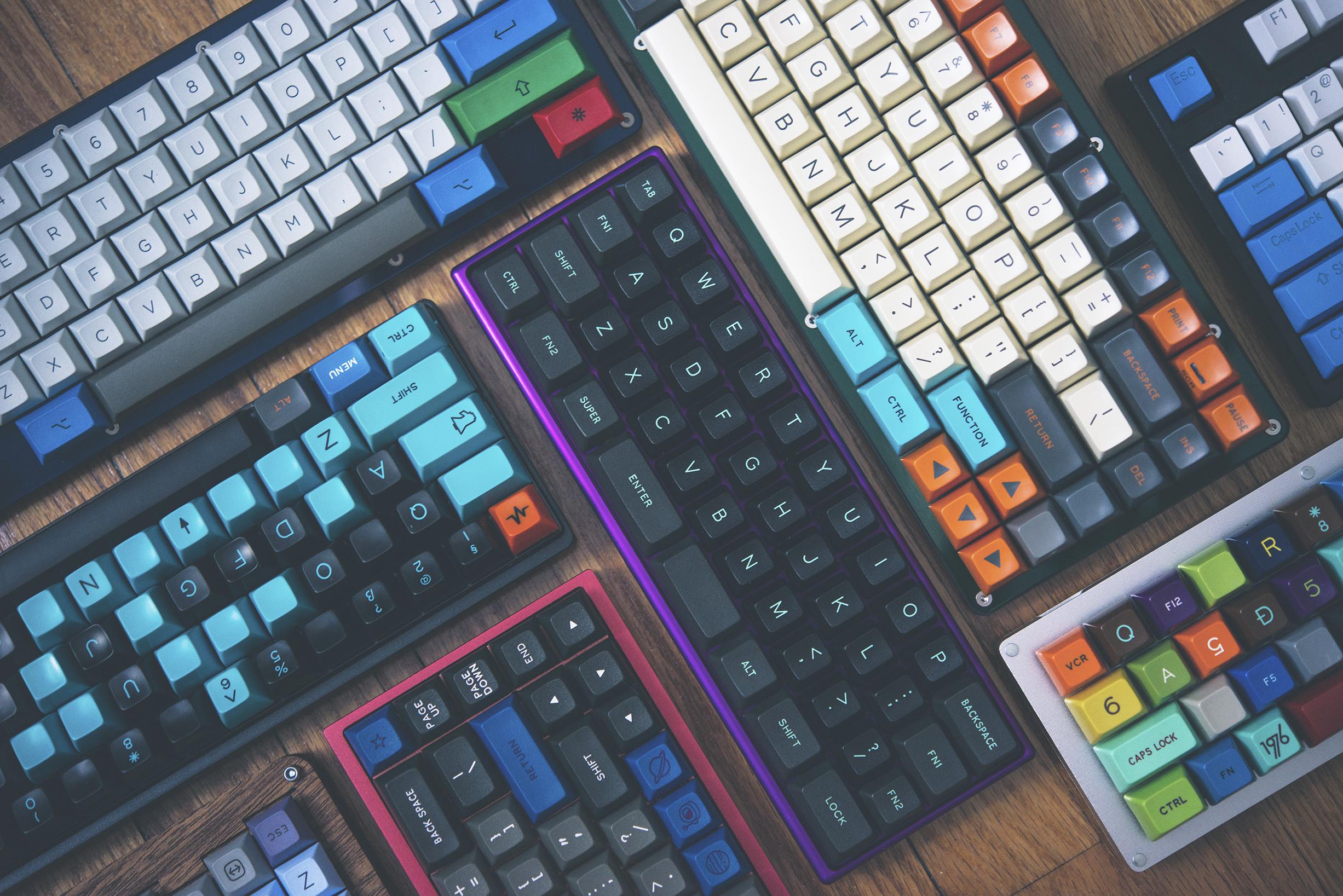
    An image showing muliple mechanical keyboards in different sizes, colors, etc.

    You’ll have to trust me, psychology will be incorporated soon, but first – for those unaware of the magic of mechanical keyboards – let me explain my newest hobby, pictured above,  adapted from one of my presentations. Throughout the slides, you’ll see slides I used for the presentation to allow you to experience it as well!

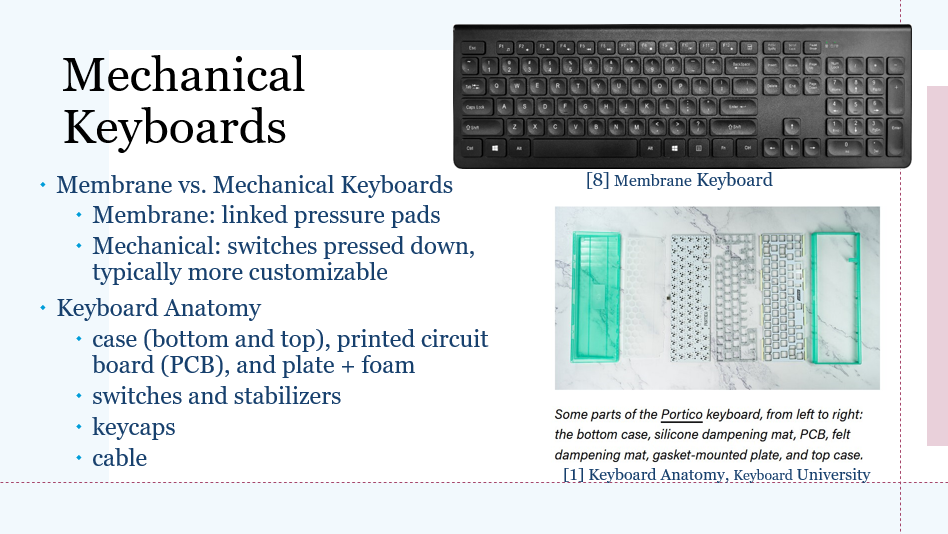
    To start, you are likely using what is known as a “membrane” keyboard. A membrane keyboard, such as those on laptops or the keyboards you’ll see waiting at the computers in a library, use linked pressure pads that result in the key press to allow you to type. A mechanical keyboard utilizes switches, which are connected to a printed circuit board (PCB) that allow the key press to be registered and result in the typed character. There are thousands of switches, each that provide unique sensory responses, sound characterizations, and aesthetic options. Soon, we’ll delve into the intricate engineering of this important aspect of the mechanical keyboard.

    Focusing on the mechanical keyboard, though there are many modifications and options to add, there are a few basics to create the mechanical keyboard. The keyboard encases a printed circuit board, a plate to mount the switches upon, and typically some foam to help dampen the sounds of the keyboard. With these layers, the switches and stabilizers (used for longer keys, such as the space-bar and shift keys) connect to the PCB, and then are topped with key caps. The top case is put on, plug in the cable, and if all goes well, you have a working mechanical keyboard!

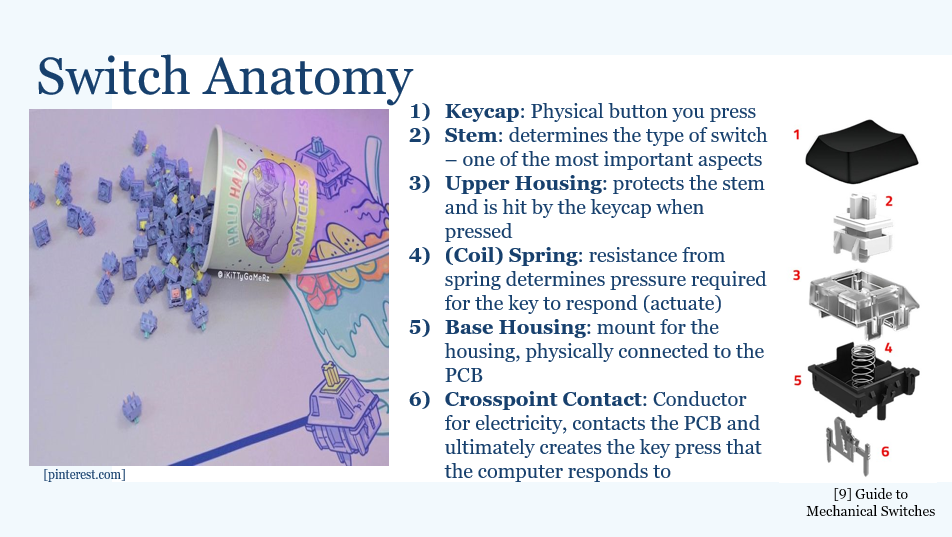
    Given how defining the switches are, it is important to discuss their general anatomy as well. The keyboard switches are made of 6 main parts, with small changes that can be made to create a customizable experience.

    Most commonly, you’ll see switches in three main categories: linear, tactile, and clicky. The differences between these three are mostly noise levels and the smoothness of the switch. The stem of the switch largely affects this as the switches stem can be made to a certain actuation and travel distance, affecting how much force is needed to complete a key press and how quickly the key press can happen. This not only affects the feeling of smoothness or lack thereof, but is often an important aspect for those in eSports or the gaming community due to the need for lightning fast responses. For this group, linear switches tend to be the most ideal to use.

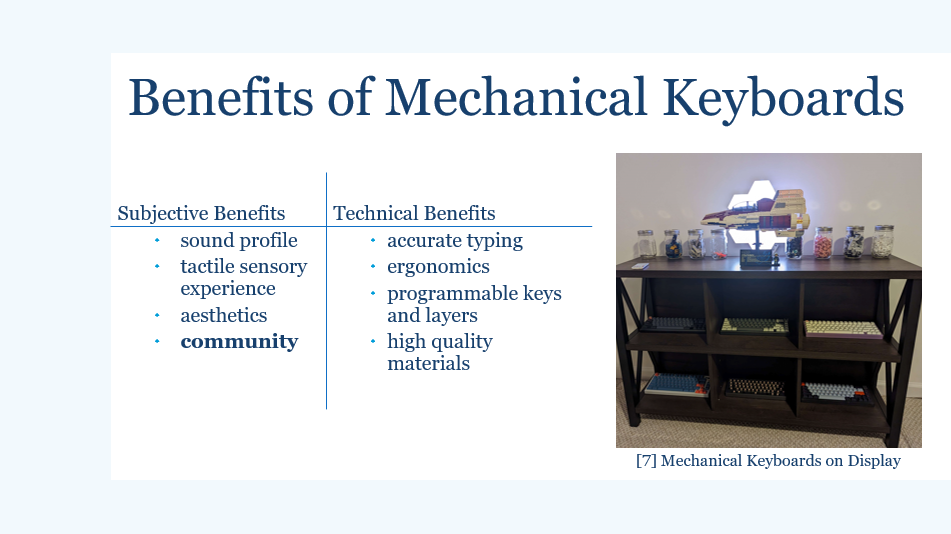
    So, why do people want to make or buy these mechanical keyboards? The customization may be nice, but this can be quite the expensive hobby. According to Switch and Click, a popular website and YouTube channel centered on mechanical keyboards), “the average cost comes out to be around $200 – 600 per board,” [5]. And yet, despite how expensive this can be and how silly it may sound to have multiple keyboards, it is quite common for people in this hobby to build multiple anyway. With this in mind, I generally split the reasoning of why into two main categories: subjective and technical.

    Slide on the Benefits of Mechanical Keyboards

    The community aspect in the mechanical keyboard sphere is unbelievable. With the amount of trial and error that may come with building a personalized keyboard, there are plenty of people that want to help others and share what they have created. In fact, even here at Georgia Tech we have a student-run Mechanical Keyboard Club for people to share their builds and enjoy the hobby together! I have no doubt that the expensive aspect actually brings about more community, as people search for such a wide variety of builds to get an idea of what they enjoy the most in terms of sound and looks before shelling out some Benjamins for their ideal keyboard. The previously mentioned Switch and Click YouTube, as of late April 2023, supports 701K subscribers, which has increased about 15K subscribers since I last checked almost two months ago. The community is huge, and only continues to grow as it reaches more people.

    So, how do people typically first find the mechanical keyboard community? The ‘First Contact’ is not necessarily through someone you know showing off their keyboard. In fact, I think one of the most common ways to venture into the hobby is first by seeing Keyboard ASMR. For those that enjoy or who have never heard of it, I encourage you to watch at least a minute of this 1 hour ASMR video from “The Way ASMR” channel – who may be referred to as an ‘ASMRtist’.

    https://youtu.be/xAVoQx2hUpk

    Now, as I have promised, we delve into the realm of psychology.

    What is ASMR? ASMR stands for Autonomous Sensory Meridian Response. According to Psychology Today, ASMR is “[the] name given to a tingling sensation, typically on the scalp, neck, or back, that some people report feeling in response to certain visual or auditory stimuli,” [3].

    For the reader, I have a question. Have you experienced ASMR? I encourage you to submit your answer in the poll below, and see what others have said!

    https://strawpoll.com/polls/eNg69l8EAnA

    ASMR is a relatively new psychological phenomena, with few peer-reviewed articles on the subject, and even fewer that employ empirical data to analyze. Not to worry, I have dug through all the academic tunnels to find a few for this article. From a psychological perspective, many psychologists and researchers may be curious to answer questions on ASMR, such as: ‘is this a common experience?’, ‘how do we define ASMR?’, ‘who is helped by ASMR content the most?’.

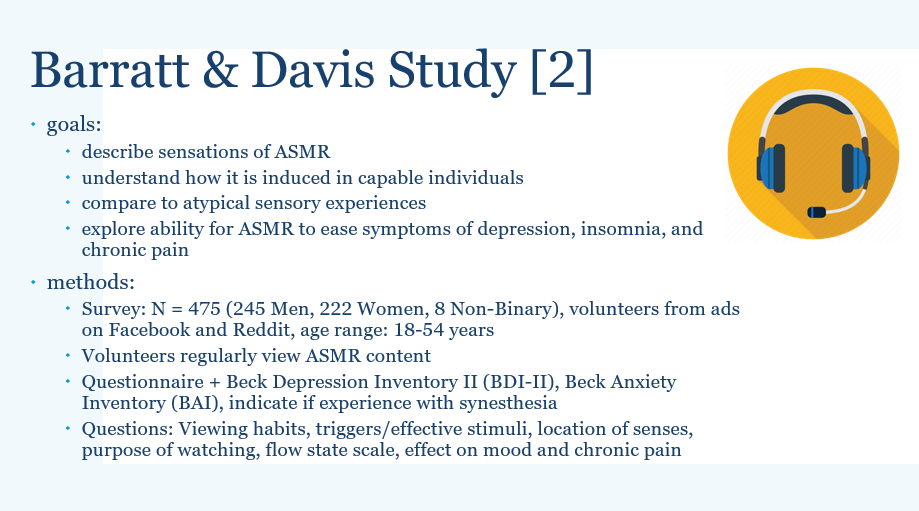
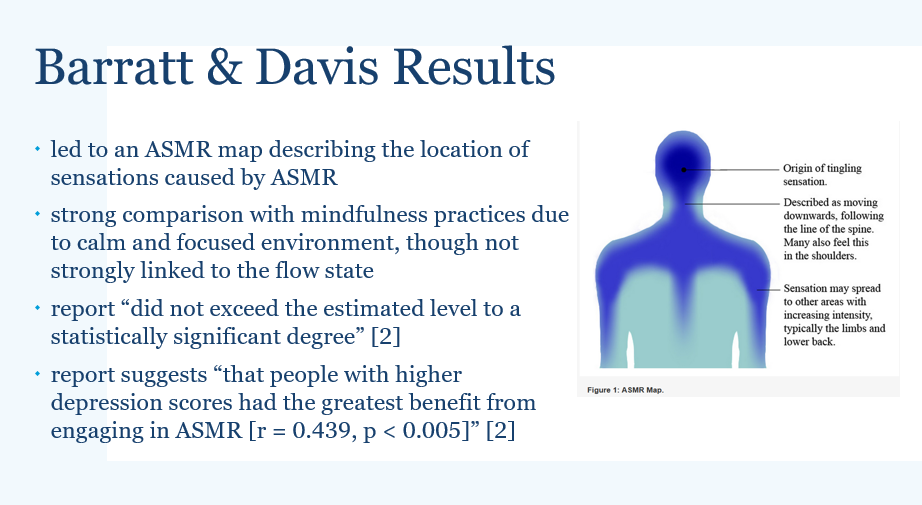
    In one article, from authors Dr. Barratt and Dr. Davis, I have outlined their goals and methods on their research of the ASMR experience.

    IMPORTANT NOTE: This study discusses ASMR, occasionally in the context of mental health issues such as depression, and chronic illness. The analysis or results of this study is not meant to provide any diagnosis, cure, or medical advice, and is only meant to identify any patterns or gather data on perceived helpfulness from study participants. If you or anyone else you know is struggling with chronic pain or mental health issues, please reach out to licensed professionals for help in coping and health management.

    The methods employed in this study aim to yield a mix of both qualitative and quantitative results. Additionally, the study wanted to draw comparisons with other sensory disorders and states such as synesthesia and a ‘flow’ state – which you may have experienced while studying. Small spoiler alert, there wasn’t a strong connection of ASMR with either synesthesia experiences nor the flow state, indicating that ASMR is its own psycho-neurological experience.

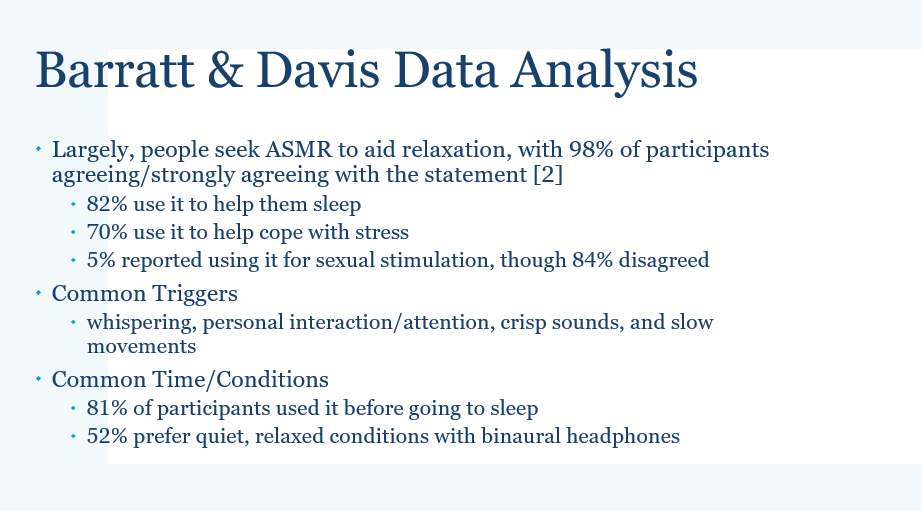
    Ultimately, ASMR is something comforting and relaxing to watch and listen to for those that experience the sensations associated with ASMR. People enjoying the customization of their keyboard may find satisfaction in their work and the ability to almost create their own ASMR by utilizing the keyboard they have made. Though we understand that ASMR can be as a temporary way to boost mood and relaxation, especially those experiencing depression, more research is needed to fully understand how ASMR works in individuals. Without a significant connection to other known sensory disorders, other than effects of mindfulness, the neural underpinnings of ASMR and the extent of the selection of people that can experience ASMR are still a mystery.


    Citations:

    [1] Keyboard University, url:  https://www.keyboard.university/100-courses/intro-to-mechanical-keyboards-p6brj

    [2] Barratt EL, Davis NJ. 2015. Autonomous Sensory Meridian Response (ASMR): a flow-like mental state. PeerJ3:e851. https://doi.org/10.7717/peerj.851

    [3] Psychology Today, url: https://www.psychologytoday.com/us/basics/asmr

    [4] Stephen D. Smith, Beverly Katherine Fredbord & Jennifer Kornelsen (2017). An examination of the default mode network in individuals with autonomous sensory meridian response (ASMR), Social Neuroscience, 12:4, 361-365, DOI: 10.1080/17470919.2016.1188851

    [5] Switch and Click. Article. Url: https://switchandclick.com/what-is-the-average-cost-for-a-custom-mechanical-keyboard/

    [6] The Way ASMR. “Cozy ASMR Typing for 1 HOUR / No Talking / Mechanical Keyboard Sounds / Gateron Red Switches”. Online Video (YouTube). Url: https://www.youtube.com/watch?v=xAVoQx2hUpk

    [7] kane#6661. Image from Discord. ‘mechanical keyboard display station example’.

    [8] Image of Membrane Keyboard. Url: https://www.bestbuy.com/site/best-buy-essentials-be-pkrfkb-full-size-wireless-membrane-switch-keyboard-black/6460659.p?skuId=6460659

    [9] Ultimate Guide to Mechanical Keyboard Switches for 2020, Dygma, url: https://dygma.com/blogs/stories/the-ultimate-guide-to-mechanical-keyboard-switches-for-2020


  • The Caring Relationship Between Marlin and Dory from Finding Nemo

    The Caring Relationship Between Marlin and Dory from Finding Nemo

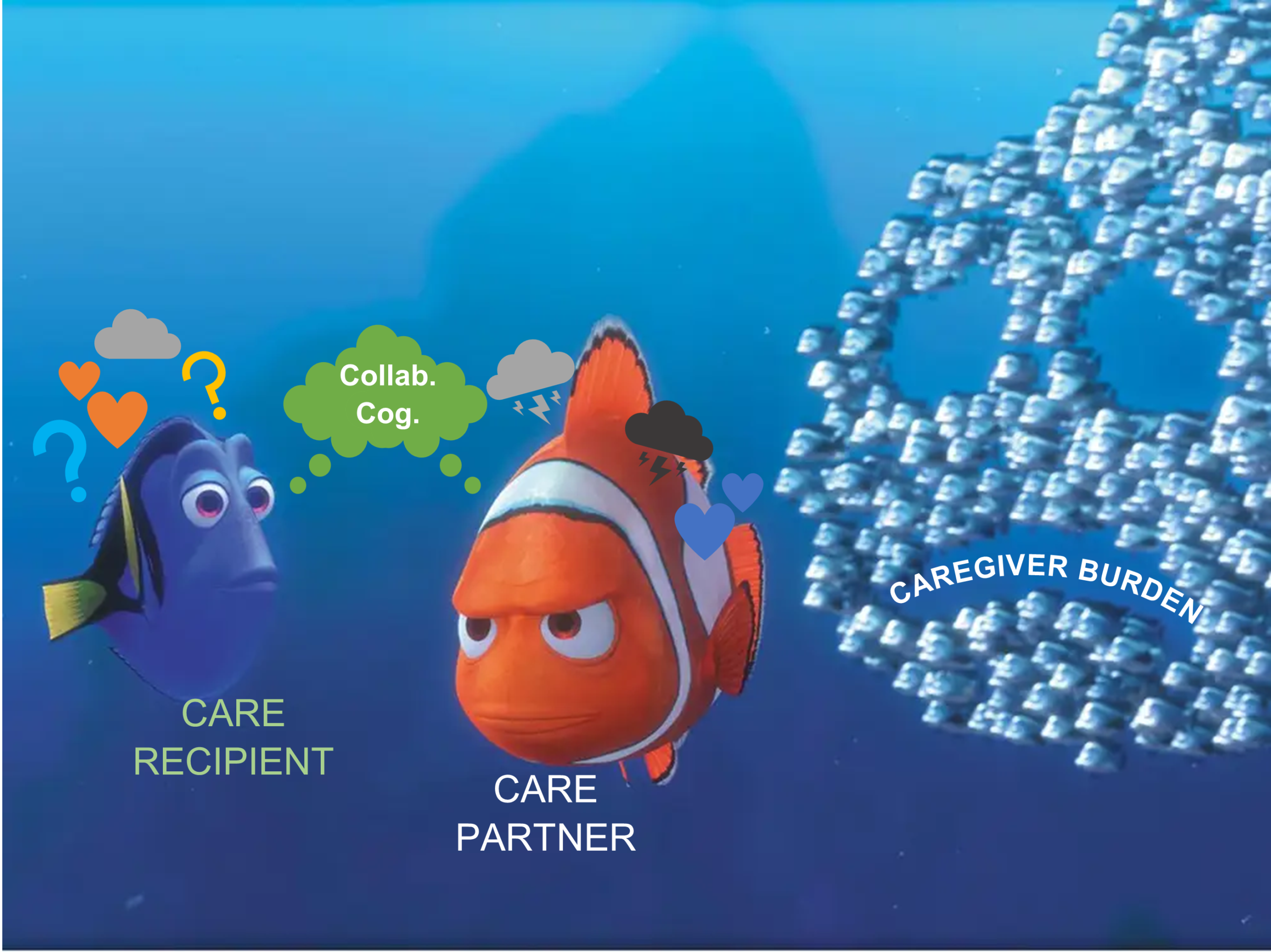
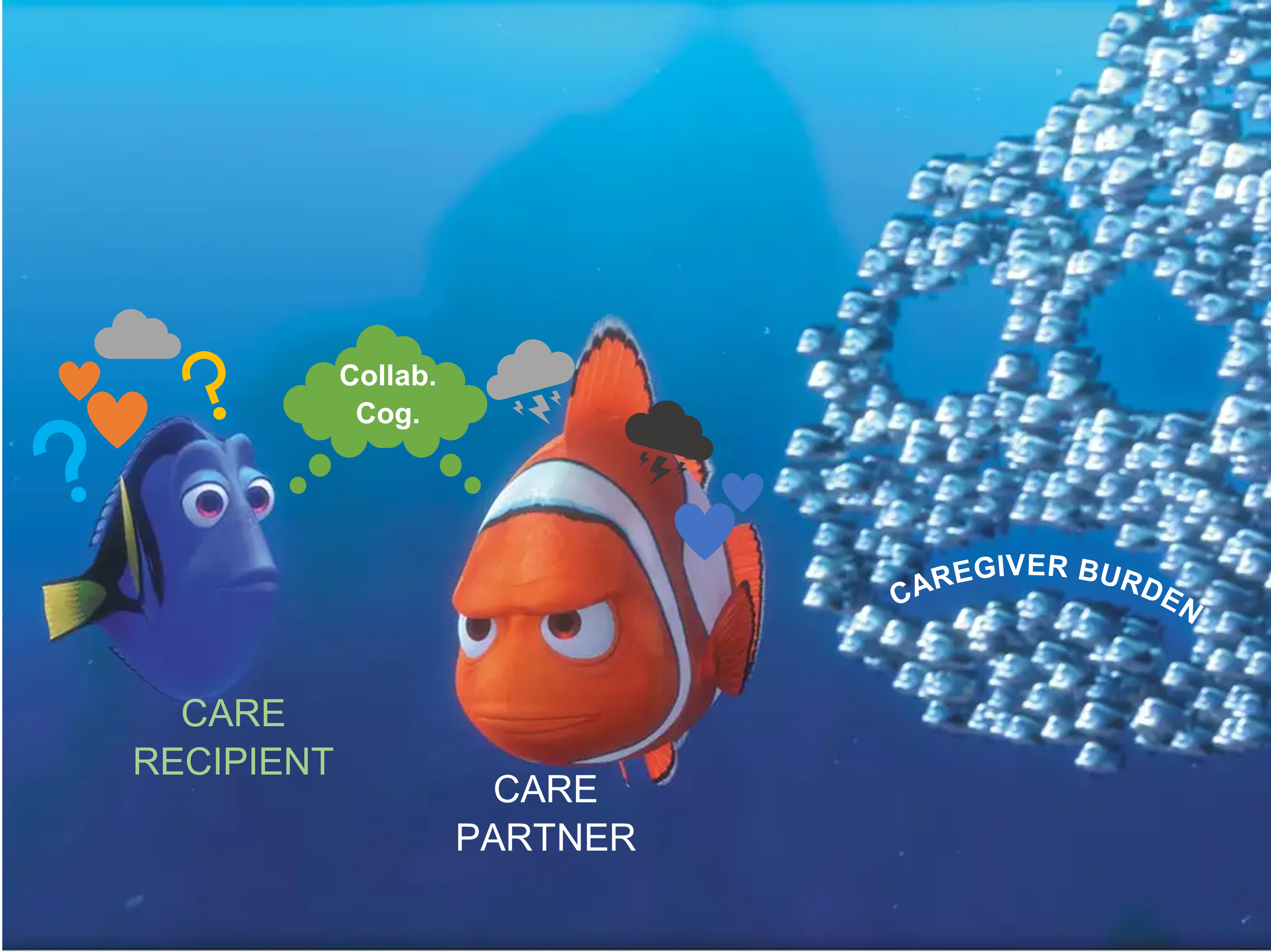
    It is the common, but unfortunate, truth of aging that everyone’s memory slowly decays. With this comes lapses in memory in various forms, whether that be for events of the past, or for in-the-moment decisions, like Dory from Finding Nemo. This loveable fish is known for her forgetfulness and inability to retain new information.

    Similarly, certain neurodegenerative diseases such as Mild Cognitive Impairment, or MCI, cause older adults to experience what are referred to as memory “blips,” or errors, which can cause inconveniences and difficulties for that individual (Petersen, 2011; Gauthier et al., 2006). Because of this, typically individuals diagnosed with MCI who are also in a romantic relationship end up forming a care partner and care recipient dynamic with their spouse (Hoppman & Gerstorf, 2016). Much like Dory and Marlin, they work together and the care partner assists the recipient on a daily basis (Lara-Ruiz et al., 2019; Paradise et al, 2015). Throughout their adventure, it is seen how Marlin regularly steps in to give her a helping “fin,” by giving her reminders or working collaboratively with her to remember important information.

    This is characteristic of something known as collaborative cognition, which refers to a strategy employed by couples to remember and approach daily tasks in a manner that is interactive by nature (Barnier et al., 2008; Harris et al., 2019; Rogoff, 1998). Such techniques can have implications in relationships and how effective they are. There are many components to consider regarding interactions between the couple, as depending on each other can have effects on both the individual with MCI, as well as their caregiver, such as increased stress and potential frustration – known as caregiver burden.

    These daily interactions between couples are important to capture, even if it is as simple as the encouragement to “just keep swimming,” as this could lead to information to incorporate into interventions and the bettering of the quality of later life.


    References

    Barnier, A.J., Sutton, J., Harris, C.B., & Wilson, R.A. (2008). A conceptual and empirical framework for the social distribution of cognition: The case of memory. Cognitive Systems Research, 9(1-2), 33-51. doi.org/10.1016/j.cogsys.2007.07.002 

    Gauthier, S., Reisberg, B., Zaudig, M., Petersen, R C., Ritchie, K., Broich, K., … & Winblad, B. (2006). Mild cognitive impairment. The lancet, 367(9518), 1262-1270. https://doi.org/10.1016/S0140-6736(06)68542-5

    Harris, C.B., Barnier, A.J., Sutton, J., & Savage, G. (2019). Features of successful and unsuccessful collaborative memory conversations in long‐married couples. Topics in cognitive science, 11(4), 668-686. DOI: 10.1111/tops.12350 

    Hoppmann, C.A., & Gerstorf, D. (2016). Social interrelations in aging: The sample case of married couples. In Handbook of the psychology of aging (pp. 263-277). Academic Press. 

    Lara-Ruiz, J., Kauzor, K., Gonzalez, K., Nakhla, M. Z., Banuelos, D., Woo, E., … & Razani, J. (2019). The functional ability of MCI and Alzheimer’s patients predicts caregiver burden. GeroPsych. 32(1), 31-39. doi: 10.1024/1662-9647/a000200

    Paradise, M., McCade, D., Hickie, I.B., Diamond, K., Lewis, S.J., & Naismith, S. L. (2015). Caregiver burden in mild cognitive impairment. Aging & mental health, 19(1), 72-78. https://doi.org/10.1080/13607863.2014.915922 

    Petersen, R. C. (2011). Mild cognitive impairment. New England Journal of Medicine, 364(23), 2227–2234. https://doi.org/10.1056/nejmcp0910237 

    Rogoff, B. (1998). Cognition as a collaborative process. In W. Damon (Ed.), Handbook of Child Psychology: Vol. 2. Cognition, perception, and language (pp. 679–744). John Wiley & Sons Inc.

    Unkrich, L., & Stanton, A. (2003). Finding Nemo. Buena Vista Pictures.

  • Top 5 Tips for Applying to Graduate School

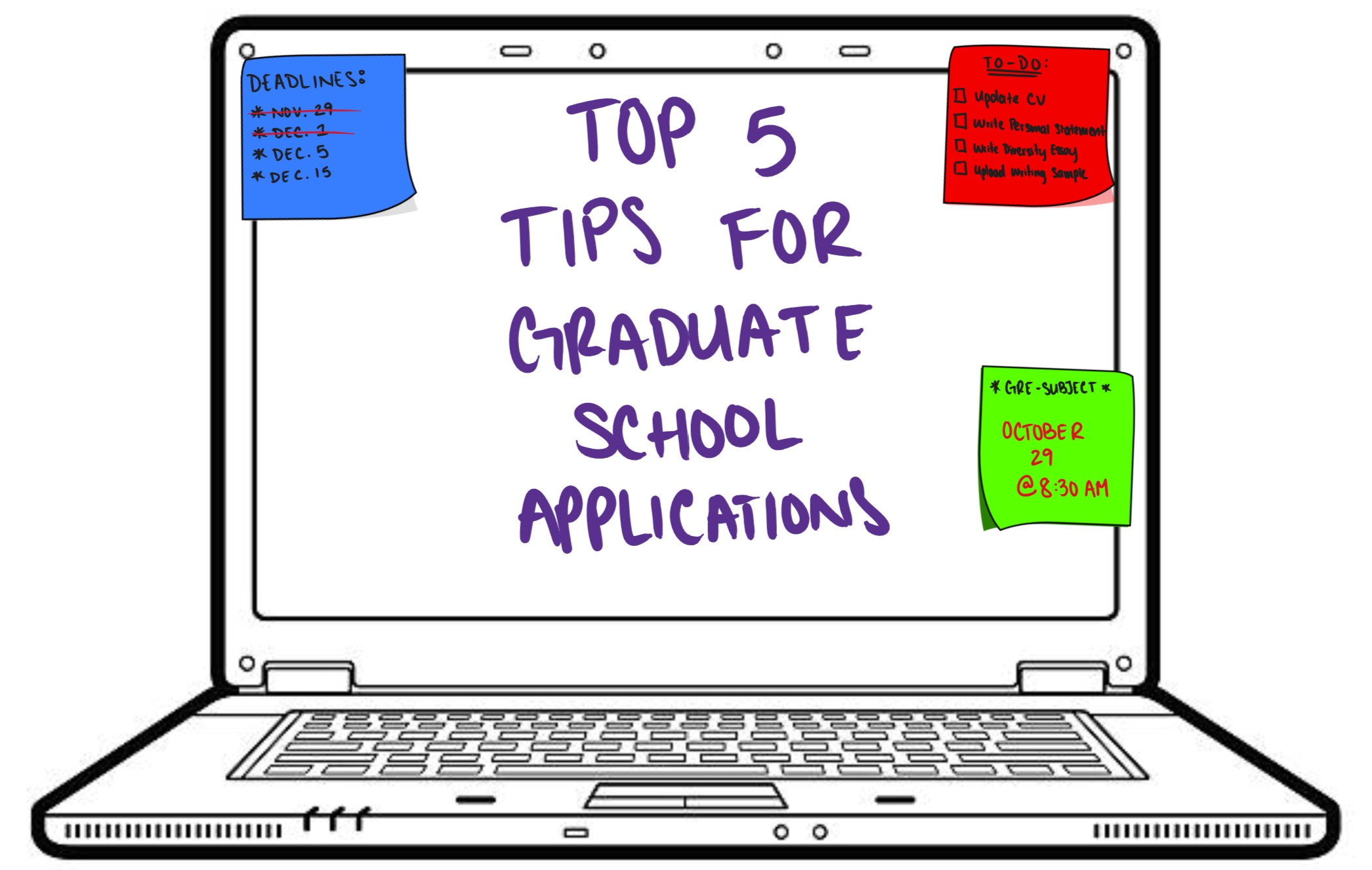
    Hi! My name is Elena, and I am a third-year psychology major at Georgia Tech. I graduate this coming Spring (2023) and have hopes to continue my education in grad school. After finally submitting all (14) of my applications, I came up with the following list of tips for future grad school applicants. Hope these help!

    1. The time commitment for applying to grad school is the equivalent of a 3-credit course.
      1. Keep this time commitment in mind when choosing your courses for the semester in which you will be applying to grad school.
    1. Find a current graduate student who can help you revise your CV/resume.
      1. Graduate students have an insider look to the application processes and know what professors are looking for. They are the perfect people to assist you in creating/editing your CV/resume.
    2. Keep a comprehensive document of everything you need for each application.
      1. Have a single document that lists all of the schools you are applying to, the sections you need to complete for each application, the essay prompts (and word limits), etc. This will allow you a single place where you can see what you still need to complete for each application and see where you can double-dip on application sections from one school to another.
    3. Organize! Organize! Organize!
      1. There will be several application components – essays, short answers, CVs, writing samples, etc. – so keeping them organized in your computer is a necessity. Create a “Graduate School” folder on your computer and then create further folders within that one for each school you are applying to.
    4. Look into GRE testing early.
      1. GRE subject tests are only offered 3 times a year, therefore, you need to look into this early so you can have ample time to take it before your applications are due (and potentially retake it if desired). There also may not be testing centers near you, so you may have to plan to stay at a hotel near the testing site.  Additionally, you can only take the general GRE every 21 days. You may want to take it in the summer so that you do not have to worry about studying while taking classes in the Fall.


    Helpful Resources!

    Five Tips to Perfect Your Graduate School Application | Columbia University School of Professional Studies

    How to Prepare a Strong Graduate School Application | The Graduate School (duke.edu)

    Five tips for nailing your US-based graduate-school applications (nature.com)

  • ADHD, Aging, & Diagnosis

    “ADHD is one of the most common neurodevelopmental disorders of childhood. It is usually first diagnosed in childhood and often lasts into adulthood.”

    – Centers for Disease Control and Prevention

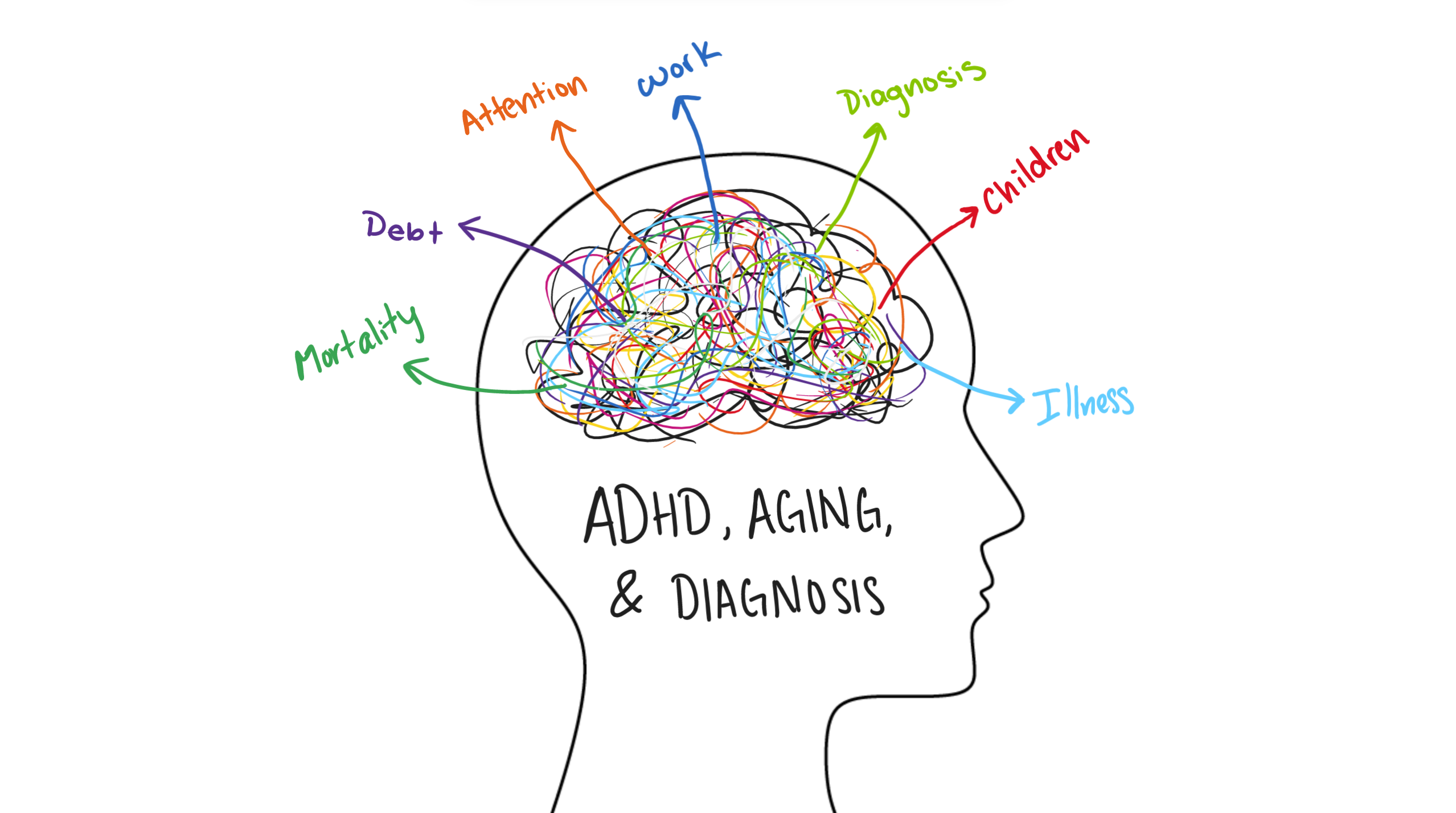
    ADHD, or Attention Deficit Hyperactivity Disorder, is commonly viewed as a diagnosis given to children – as already seen in the definition provided above by the CDC – which can lead to negative stigma and a lack of diagnosis in adults. One of the main reasons for this, is that only recently has research proven that the symptoms of ADHD actually present differently as individuals age. Typically, ADHD in children is exhibited through “inattentiveness, impulsivity, and hyperactivity.” However, it has been found that overtime these symptoms can begin manifesting in different ways. For example, what was once viewed as inattentiveness turns into disorganization and memory issues. Hyperactivity develops as an ‘inner’ hyperactivity which is expressed as restlessness. Impulsivity lends itself to anger outbursts or impatience. These dramatic changes in the way symptoms are expressed means that oftentimes they will go unnoticed, or even misdiagnosed as a consequence of regular aging.

    On another note, those that are diagnosed as children or manage to get successfully diagnosed later in life feel the negative effects of the comorbidity of ADHD and aging. For one, the changing nature of symptom expression leads to a need for adaptation. Those that have found successful ways to manage their ADHD may need to adjust their methods to accommodate for such changes. Seeing as they have utilized certain strategies to manage their symptoms for a large portion of their life, it is obvious that this could be a difficult change. Additionally, there are the other potential ailments that come with aging that now add onto their burden. For one, since memory typically declines into older adulthood, it is possible that the effects of ADHD would only compound that, leading to even worse cognitive effects.

    Nonetheless, there are still ways that those diagnosed with ADHD can manage their symptoms, even later in life. While there are some medications such as methylphenidate or dextroamphetamine that have been proven to work to treat ADHD in older adults as well as children, there are also non-pharmacological methods that can be effective. These include things that help create structure and organization to one’s life such as calendars, planners, alarms, etc. Additionally, there are therapeutic options which can lower stress and aid in achieving greater life satisfaction.


    References:

    What is ADHD? | CDC

    Optimal management of ADHD in older adults – PMC (nih.gov)

    Struggling with attention and organization as you age? It could be ADHD, not dementia – Harvard Health

  • Coffee Chemistry

    Written by Julia Raver and Lauren Mellinger

    Coffee – an integral part of your morning routine. You wake up and groggily walk to the kitchen to make your morning cup. It has become so integral to our morning routine that a lot of people can’t function without it. Especially in the mornings, having your order messed up at Starbucks or Dunkin Donuts can change the trajectory of your entire day. But how does coffee keep you awake all day? Caffeine is the secret to coffee’s success. 


    Part 1 – The Chemistry

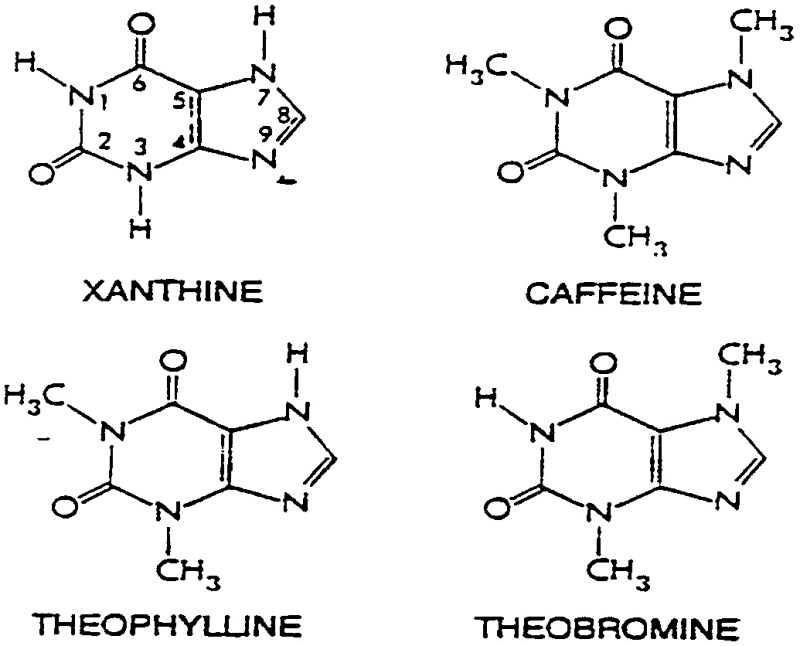
    Caffeine, or C8H10N4O2, is a drug known for its ability to give you energy and boost metabolism. It functions very similarly to xanthine, which is a crystalline drug that is often found in chocolates and teas. This provides an increase in stimulation and wakefulness, the ability to sustain intellectual activity, and decrease in reaction times. In the image below, you can see the similarities between the xanthine and caffeine molecules. The main differences are that caffeine has extra methyl (or CH3 groups) attached to its two rings (National Academy Press, 2001).

    Due to the polarity in caffeine molecules, or difference in strength between the nitrogen and oxygen bonds, caffeine exhibits unique bonding forces. It can bond via dipole-dipole forces, where positive and negative atoms of different molecules bond together. Caffeine also bonds via hydrogen bonding with water, which is a strong bonding of hydrogen atoms with carbon atoms of water and caffeine respectively. In layman’s terms, caffeine reacts in the bloodstream by bonding via its nitrogen and oxygen atoms. 

    Absorption in the Bloodstream

    We can now dive deeper into how caffeine is absorbed in the bloodstream. People absorb caffeine within 45 minutes of ingestion but has an elimination half-life of anywhere from 1.5 to 9.5 hours. This means that if you drink your morning coffee at 8 am, it could still be in your system at 5:30! When absorbed, caffeine undergoes the hepatic first-pass effect, meaning it is not removed by the liver and heads straight for the bloodstream. There, due to the presence of carbons within the structure, caffeine acts as a hydrophilic (or water-liking) molecule and can bond with the water in your tissues. Once bonded with this tissue water, caffeine works with proteins and begin to give you that energy boost you so desperately needed when you drank it at 7am (National Academy Press, 2001). 

    Now remembering that caffeine is in fact a drug, it is important to note that it also comes with a certain toxicity level. Luckily for coffee drinkers however, caffeine only becomes fatal when around 10-14g are ingested daily. To get an idea of how much this really is, divide 150 or 200 by your total body weight in kilograms. This gives the toxicity level based on your weight per day (National Academy Press, 2001). For example, if you weigh 110 pounds (or 50kg), 7500 milligrams or 7.5 g of caffeine is your daily toxic dosage of caffeine. An average cup of coffee contains around 100 mg of caffeine so you would need to drink 75 cups of coffee in a day to die of caffeine overdose (Dews, 1982).

    Caffeine Appearance

    Caffeine is what helps coffee give you energy in the morning but what makes coffee look and taste how it does? Melanoidin, or heterogeneous polymer with a brown pigment, is formed when sugars and amino acids combine at high temperatures (Merriam-Webster). This melanoidin is what gives coffee its nice rich brown color. Depending on the temperature to which the coffee beans are heated, the coffee can taste differently. Once heated above 180 °C, exothermic reactions (that release heat) within coffee beans occur (Rao, Fuller, & Grim, 2020). 

    The reactions occurring at these high temperatures are called Maillard reactions, which are defined as reactions between amino acids and sugars. Basically, sugars and amino acids reacted at high temperatures produce brown products, or these melanoidin molecules that create brown pigments (Ellis, 1959). Therefore, different roasting temperatures cause these reactions to go to either more or less completion and are responsible for both the color and taste of your morning beverage. Now that we understand the chemistry behind caffeine, we can look at flavor preferences.


    Part 2 – The Psychology

    Cold beverages have accounted for 75% of Starbucks’ sales in the past quarter (Creswell, 2022). All across the world, coffee drinkers prefer the mellow, balanced flavors of cold coffees. Hot coffee, on the other hand, can only be enjoyed for the fleeting moments between scalding and sour. But why is it that the same beans can produce such different flavors?

    The Making

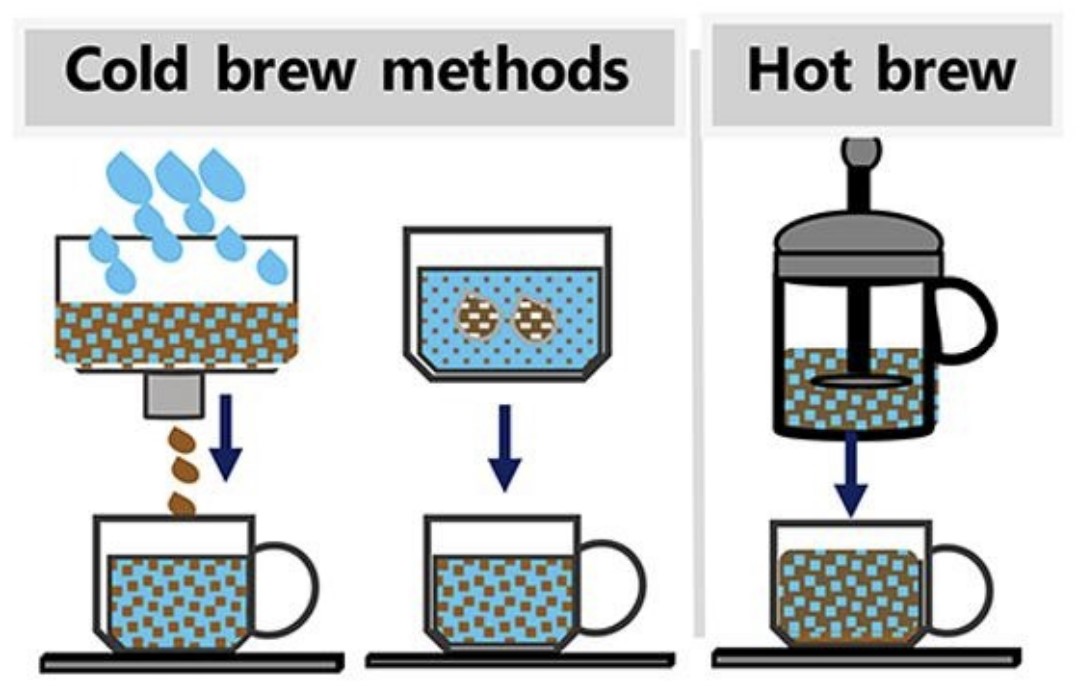
    The final cup of coffee is affected by the extraction method — the way water pulls flavor, aroma, and caffeine from the grounds. This is strongly influenced by temperature and time.

    For example, in a pour over, water moves over the coffee and produces a brighter tasting coffee. Immersion brews result in a fuller extraction leaving more body in the cup (Kelly, 2018). The cold brew method taking the coffee world by storm involves lower temperatures than your typical drip coffee. To compensate, it needs a much longer extraction time (between 8 and 24 hours) (Córdoba et al., 2021).

    Coffee and the Senses

    The ability of substances to dissolve out of the grounds and into the water increases with temperature. This causes acids to extract more efficiently in hot brewing. In turn, more sour and bitter elements are released. (Córdoba et al., 2021). Using a lower temperature better retains those delicate flavor components that would degrade or evaporate with exposure to heat (Lane et al., n.d.). Plus, hours of contact with water causes the fats in the beans to emulsify, creating that creamy mouthfeel. Therefore, higher temperatures lead to more nutty, roasty notes — and possibly some unsavory ones as well. Colder temperatures retain flavor compounds and generate a smoother, sweeter beverage (Córdoba et al., 2019).

    When you walk into a coffee shop, you are guaranteed to be welcomed by the scent of roasted beans. But you might notice that your cup of cold brew doesn’t smell very strong at all. Since the oils that carry aromas remain in the water, they stay in your coffee. You’ll perceive these as cold brew’s characteristic floral and fruity flavor (Oden, n.d.). Your drink might not have a strong fragrance or bite, but cold brew rewards those who wait (Alkin, 2014).

    Is Cold Brew Better?

    The novel brewing method also extracts more caffeine with time, which means cold brew is a concentrate. This allows coffee drinkers to adjusted it to their preferred strength and endlessly customize it to their liking. In addition, the lack of acidity may mean cold brew is a better alternative for those with sensitive teeth, heartburn, or GI issues (Rao & Fuller, 2018).

    Whether you crave the smokiness of an automatic drip, or the natural sweetness from an hours-long immersion, ultimately, the choice of brew is up to you.


    Reference List

    • https://www.scienceandfood.org/coffee-brewing-chemistry-hot-brew-and-cold-brew/
    • https://www.sciencedirect.com/science/article/pii/S0924224419305692
    • https://www.nytimes.com/2022/08/02/business/starbucks-quarterly-earnings.html
    • https://www.sciencedirect.com/science/article/pii/S0963996921000387
    • https://www.sciencedirect.com/science/article/pii/S0023643821005168
    • https://doi.org/10.1146/annurev.nu.02.070182.001543
    • https://doi.org/10.1016/s0096-5332(08)60223-4
    • https://blog.lacolombe.com/2018/09/19/brewing-method-affects taste/#:~:text=Immersion%20and%20pourover%20brewing%20each,%E2%80%9D%2Dtasting%2C%20brighter%20coffee
    • https://journals.uvic.ca/index.php/arbutus/article/view/16816
    • https://www.merriam-webster.com/medical/melanoidin
    • https://www.ncbi.nlm.nih.gov/books/NBK223808/
    • https://www.javapresse.com/blogs/cold-brew/hot-brewed-vs-cold-brewed-coffee
    • https://www.nature.com/articles/s41598-018-34392-w
    • https://doi.org/10.3390/foods9070902


  • To Vibe or Not to Vibe

    We’ve all been there: your friends pass you the aux cord at a party and you play your favorite songs only to be met with sighs and groans or –even worse– silence. These are some bangin’ tunes that make you smile. Why do others find those same songs to be boring or “not their cup of tea?” When we like a certain song, dopamine is released into the brain and makes us feel happy or euphoric. This causes us to like a song a little more than your friends and makes you want to listen to more songs in that genre. But what causes our brain to release this chemical? Psychology may provide the answer regarding the inner machinations of the human mind. 

    Jon Lieff, MD via grok.com.au

    Our Emotions:

    Music affects us in three major ways: it serves as a nice distraction, stimulates internal curiosity, and can affect our emotional state. For example, people might listen to music to destress or have as background noise– meanwhile, other people could use those same songs to hype themselves up for a workout. These differences lead us to choosing different genres and songs.

    Music is also interpretive and allows us to choose our own meaning and significance for a certain song. This subjectivity allows different people to determine that in different ways. The same line that means nothing to you may make your friend very emotional. Take your favorite song: is there any reason why you really appreciate the song? Do you associate an emotion with the song? This may be a reason as to why there isn’t a favorite universal genre or song. Since music typically appeals to the emotions, people may associate a certain feeling with a song and grow attached to it. For instance, some of my favorite songs are those that I’ve listened to with my friends and raved about or the ones that my former piano teacher introduced me to. 

    Identity:

    In addition to personal emotions, our perceptions of others and ourselves also influences our taste in music. People have often used music as a way to express themselves and their identity. Because of that, people have associated some songs with certain archetypes of people. According to one study that asked participants to map certain traits to genres, they associate genres like pop and country were more extroverted. On the other hand, jazz and classical were thought of as more reflective.

    ResearchGate, 2016

    Culture:

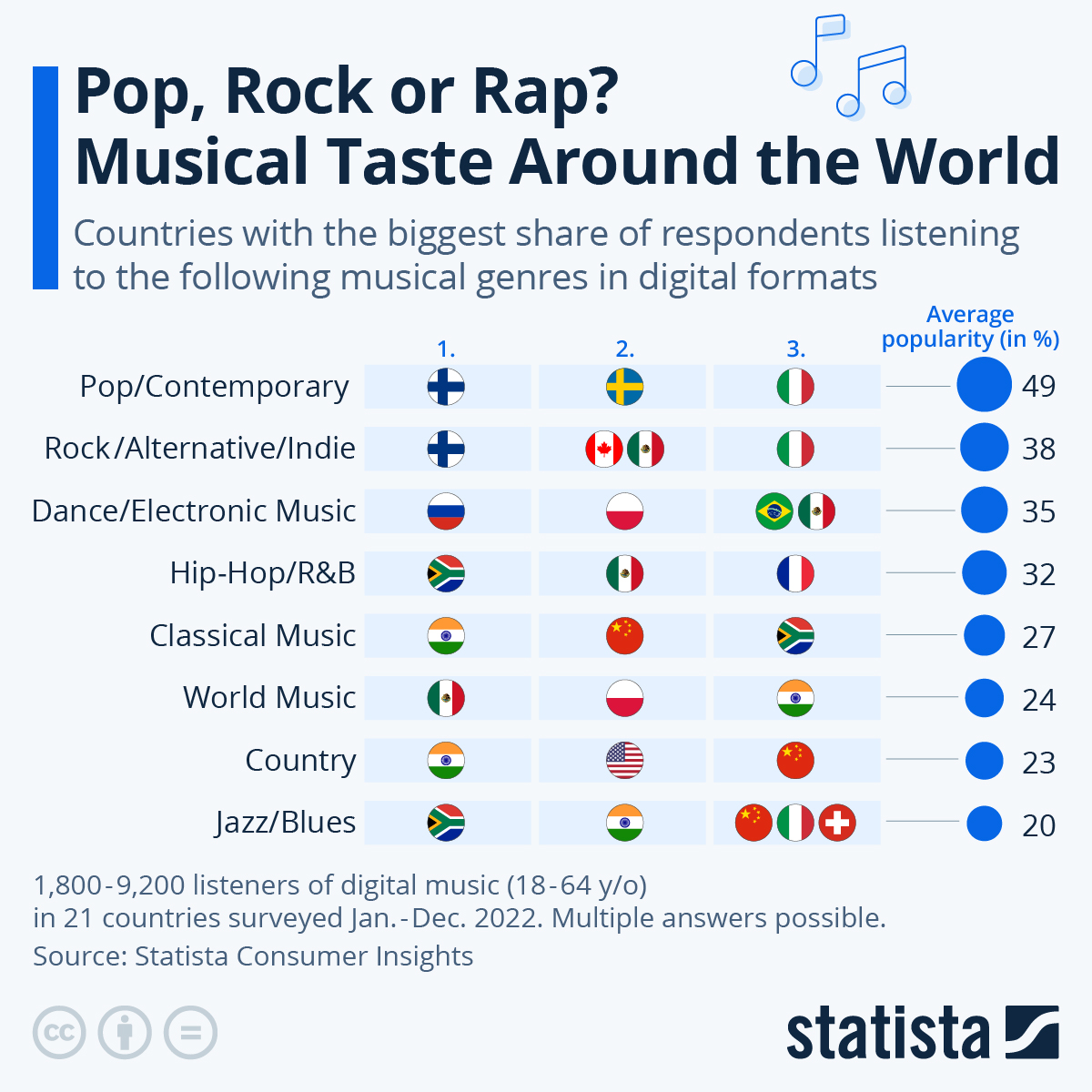
    Our preferences for certain songs may also be cultural. If we’re exposed to a lot of a certain type of music, we may lean towards more songs that contain those same elements. There are two forms of chords: consonant and dissonant. Consonant chords contain frequencies that are different enough that they don’t seem to clash. Meanwhile, dissonant chords sound a bit more chaotic for lack of better terms. Western music (like pop) usually contains a lot of consonant chords, and Americans have a strong preference for these sounds. However, some other cultures do not show that same, strong preference.

    Statistica 2021

    Whether it be because of what we were exposed to growing up or our self-identity, music tends to distinguish us from others. Although not much research has been done to see if it is truly connected to our personalities, we still manage to label people according to the music they listen to. Perhaps the real question is if the songs we vibe to influences if people vibe with us.

    Resources:

    Anne Trafton, Anne. “Why We like the Music We Do.” MIT News | Massachusetts Institute of Technology, Massachusetts Institute of Technology, 13 July 2016, https://news.mit.edu/2016/music-tastes-cultural-not-hardwired-brain-0713.

    Chamorro-Premuzic, TomasPsychology. “The Psychology of Musical Preferences | Psychology Today.” Psychology Today, 14 Jan. 2011, https://www.psychologytoday.com/us/blog/mr-personality/201101/the-psychology-musical-preferences.

    Clark, Katelyn, et al. “Why Do We like (or Dislike) Certain Music?” Grok, 30 Jan. 2021, https://grokonline.com.au/2021/01/31/why-do-we-like-or-dislike-certain-music/.

  • The Psychology of Marketing: A Series (Part 1 – Introduction)

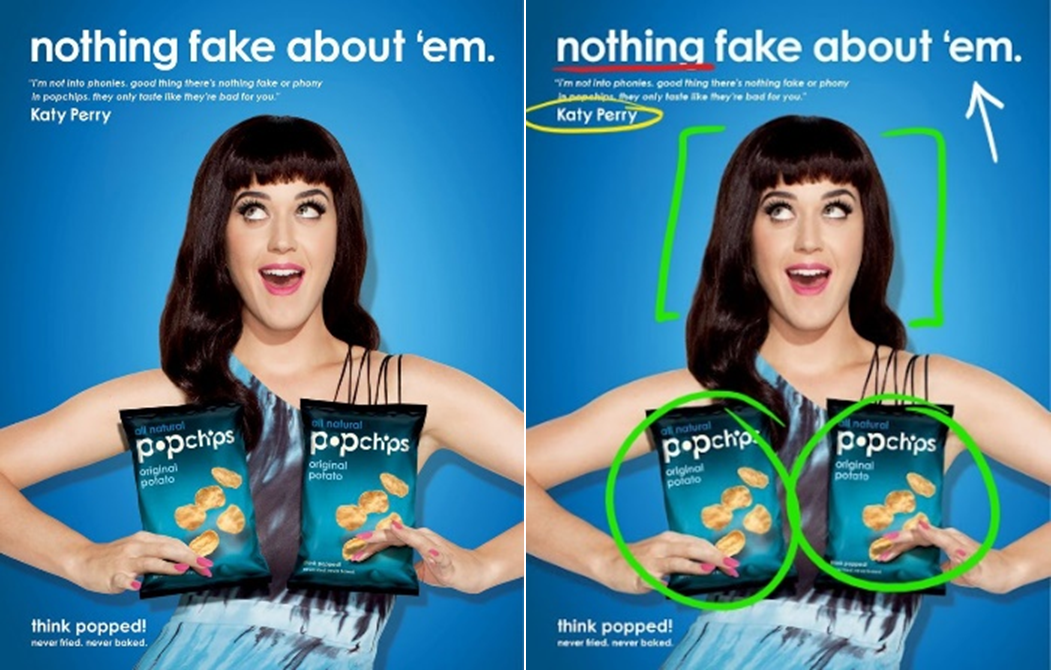
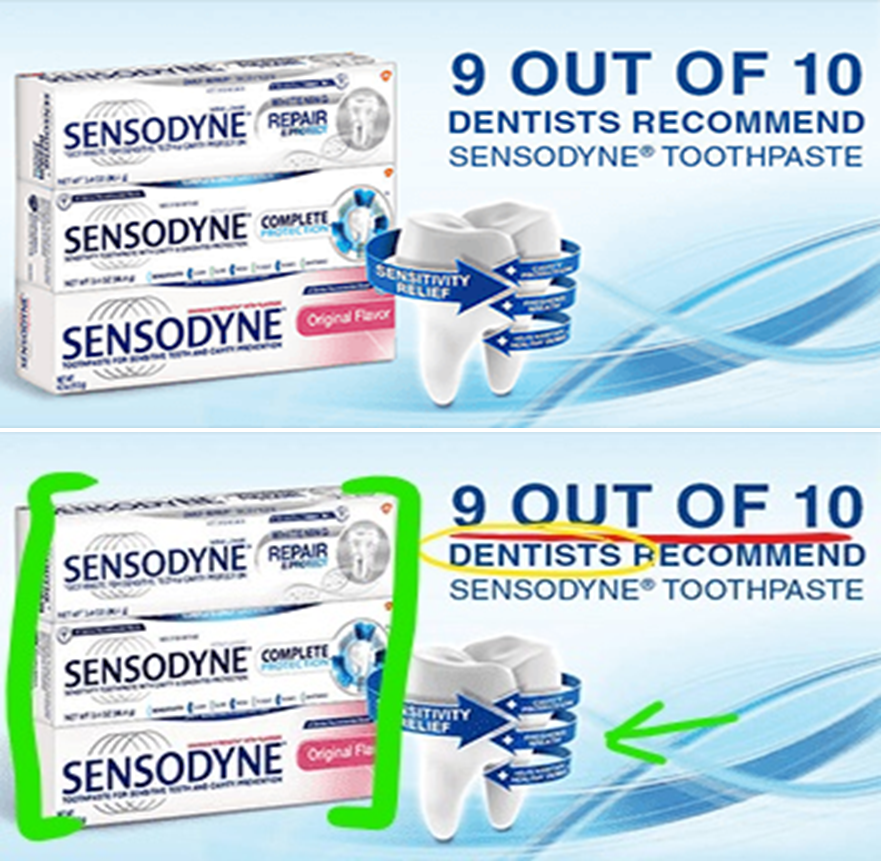
    We are bombarded by advertising and marketing techniques every day, everywhere we go. Knowing how these methods work can help people sort out what they actually want to buy or support and what they are simply being persuaded and convinced to buy through subliminal means such as a color, celebrity endorsements, voices, music, etc. All of this ties into a topic known as marketing psychology which will be examined in parts within this series. We begin with some background information to express how information is taken in and how this should be considered for different advertising strategies. Additionally, we will evaluate two advertisements to see what aspects are considered “good” or “bad” in terms of marketing persuasion.

    Such strategies can be separated into source characteristics and message characteristics. Source characteristics refer to facets of the person/thing presenting the information (i.e., attractiveness, credibility of individual, brand name, etc.), whereas message characteristics look into the information itself (Gilovich et al., 2018). Subsequently, these topics go hand-in-hand with the Elaboration Likelihood Model (ELM) which is a model that, when applied to persuasion, states that there are two routes – central and peripheral – that people can take when presented with persuasive pieces. Essentially, some “persuasive appeals will be more effective when the target audience is largely on “autopilot” [peripheral route], and other types will be more effective when the target audience is alert and attentive [central route]” (Petty & Cacioppo, 1896). In order to evaluate and apply these concepts, I hunted down two advertisements (both pictured below) that highlight different components of these source/message characteristics. I will also evaluate which type of route would be more effective when looking at these forms of persuasion.


    The first advertisement for Pop Chips features celebrity Katy Perry. This ties into source characteristics. To begin, attractiveness comes into play. This form of persuasion is particularly effective in terms of the peripheral route but also for the central route as it increases one’s favorability of effortful thinking. In addition, there is certainty in her quote as she states that there is “nothing phony or fake” about this product. Then, we can look at the characteristics of the message itself. It is of high quality since it is clear, the product is visible, the message is in bold letters, etc. It is also vivid as expressed by the bright blue background and Katy Perry’s facial expression. In addition, since she is looking towards the message at the top, the audience is drawn to look at it. They also strategically place the bags of chips over her breasts to once again entice the audience to look at the product. This advertisement, since it is stagnant, would be more effective when presented via the peripheral route such as on a billboard or poster.

    For the second advertisement, the product of Sensodyne toothpaste is being marketed as good for one’s teeth. We begin with the source characteristics as it clearly says “9 out of 10 Dentists Recommended” which indicates credibility and certainty for this product. In addition, the message itself showcases once again good quality and vividness in much the same way the first advertisement did. This can be seen in the use of colors once again, even though it is not as bright and vivid as the first one. In addition, the product is visible, and the message is in big bold font. All of these components go into making a good or bad advertisement.

    Now you too can look at advertisements and point out their marketing tactics to help differentiate between the important information and the subliminal persuasion techniques being employed!

    References:

    Gilovich, T., Keltner, D., Chen, S., Nisbett, R. (2018). Social Psychology (5th ed.). New York, NY: W. W. Norton & Company

    Petty, R. E., & Cacioppo, J. T. (1986). The elaboration likelihood model of persuasion. Advances in Experimental Social Psychology, 123–205. https://doi.org/10.1016/s0065-2601(08)60214-2

  • Music & Emotions: A Series (Part 3 – Indignant/Defiant)

    Album Songs:

    1. You’ve Seen the Butcher – Deftones
    2. Links 2 3 4 – Rammstein
    3. Psychosocial – Slipknot
    4. I Stand Alone – Godsmack
    5. Ride the Lightning – Metallica
    6. The Last Ten Seconds of Life – The Face
    7. Smells Like Teen Spirit – Nirvana
    8. Duality – Slipknot
    9. Walk – Pantera
    10. Dark Entries – Bauhaus


    Welcome to Music and Emotions: A Series (Part 3)! In this part, we continue our series with the category of “Indignant/Defiant.” For a quick recap, an interesting study conducted by professors at the University of California Berkeley was conducted on how music evokes different emotions (Cowen et al., 2020). They decided upon 13 categorizations of music, one of which was “indignant/defiant.”  They found that the way that individuals classified music based on emotions was relatively similar. All of the songs included in the above album were utilized in this study and were some of the songs that participants most frequently categorized as “indignant/defiant.”


    Here, it was found that music that typically landed in this category was characterized by a “growl-like timbre” (Cowen et al., 2020). This is something often seen in music that is perceived as aggressive. In addition, there is an interesting, brief, mention of the potential connection between the threatening vocal expressions used in these songs and that of various animal species. For example, the growl of the black jaguar. This could be why there is a clear male bias in the song choices in the album since males tend to have deeper voices which are more likely to mimic the growl of an animal.

    Conversely, some examples of female-centric songs that could also fall into this category could be Shitlist by L7, Rebel Girl by Bikini Kill, and Ignorance by Paramore.


    As mentioned previously, they decided upon 13 categories and even included an interactive audio map where you can go in and see all of the songs used and see how you match up. Stay tuned for more of this series… 3 categories down, 10 more to go! Which other category would you want to hear about? Comment below any songs you may think hit the mark for the “Indignant/defiant” category and how you matched up to others in the interactive audio map! 


    Bibliography:

    Cowen, A. S., Fang, X., Sauter, D., & Keltner, D. (2020). What music makes us feel: At least 13 dimensions organize subjective experiences associated with music across different cultures. Proceedings of the National Academy of Sciences, 117(4), 1924–1934. https://doi.org/10.1073/pnas.1910704117