Tag: water

  • Butterfly Pea Flower Tea

    A cup of tea brings feelings of peace and serenity to mind.  Whether it be a rainy day or cold evening, drinking a warm cup of tea has never failed to help me feel calm and happy.   There’s an amazing selection of tea for all types of different palates to choose from like your classic green, black, and white tea, but my personal, newfound favorite is butterfly pea flower tea!  Befitting its exquisite name, this tea also has an appearance like no other.

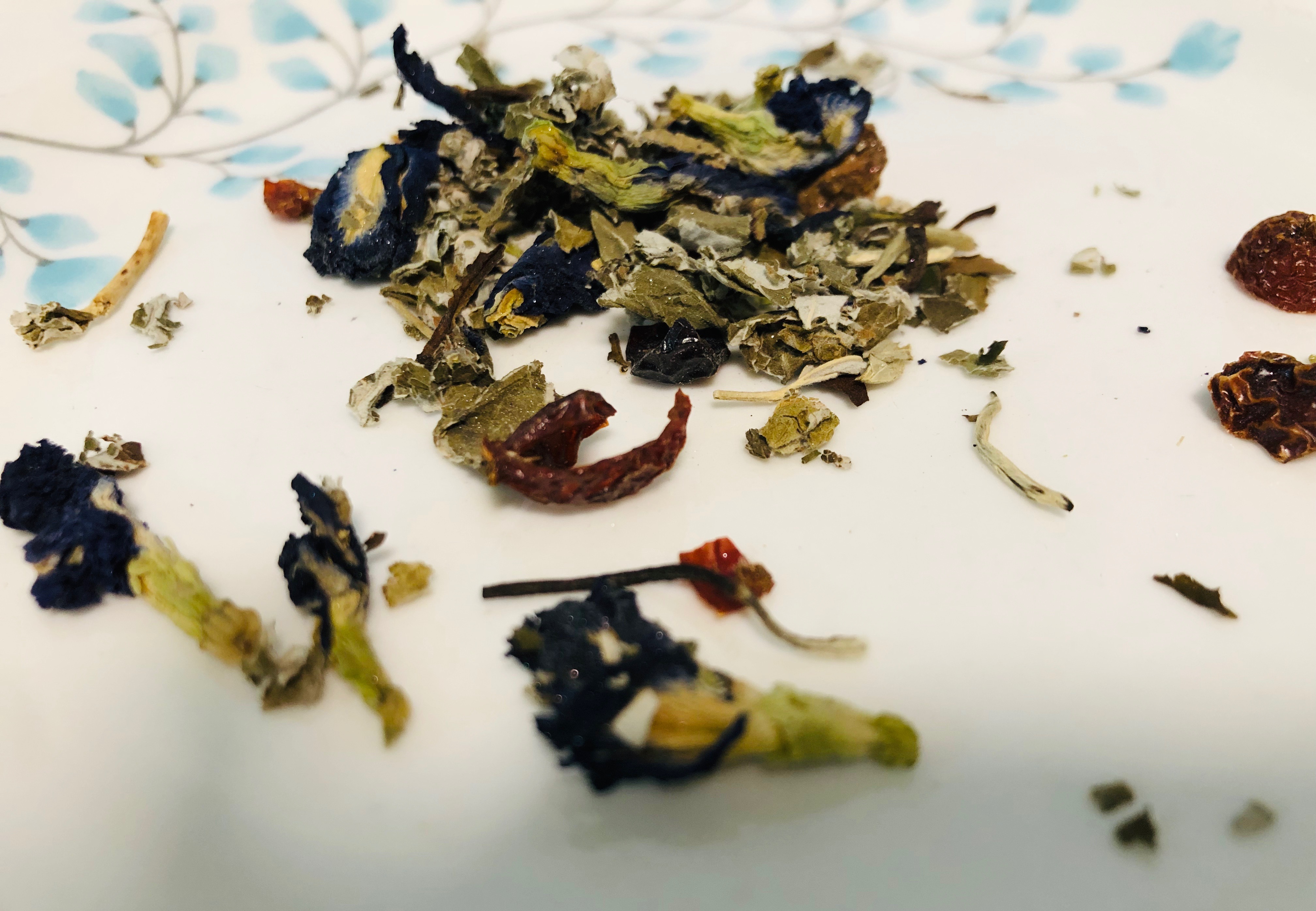
    Butterfly pea flower tea may seem like a new and recent addition to tea shelves, but this tea has been consumed in Southeast Asian countries like Thailand and Malaysia for centuries.  It is a caffeine-free beverage made from oftentimes dried lemongrass and blue flowers and leaves of a plant known as Clitoria ternatea (Centeno, 2018).  It is said to have an earthy taste similar to green tea despite its color (Goldberg, 2016).

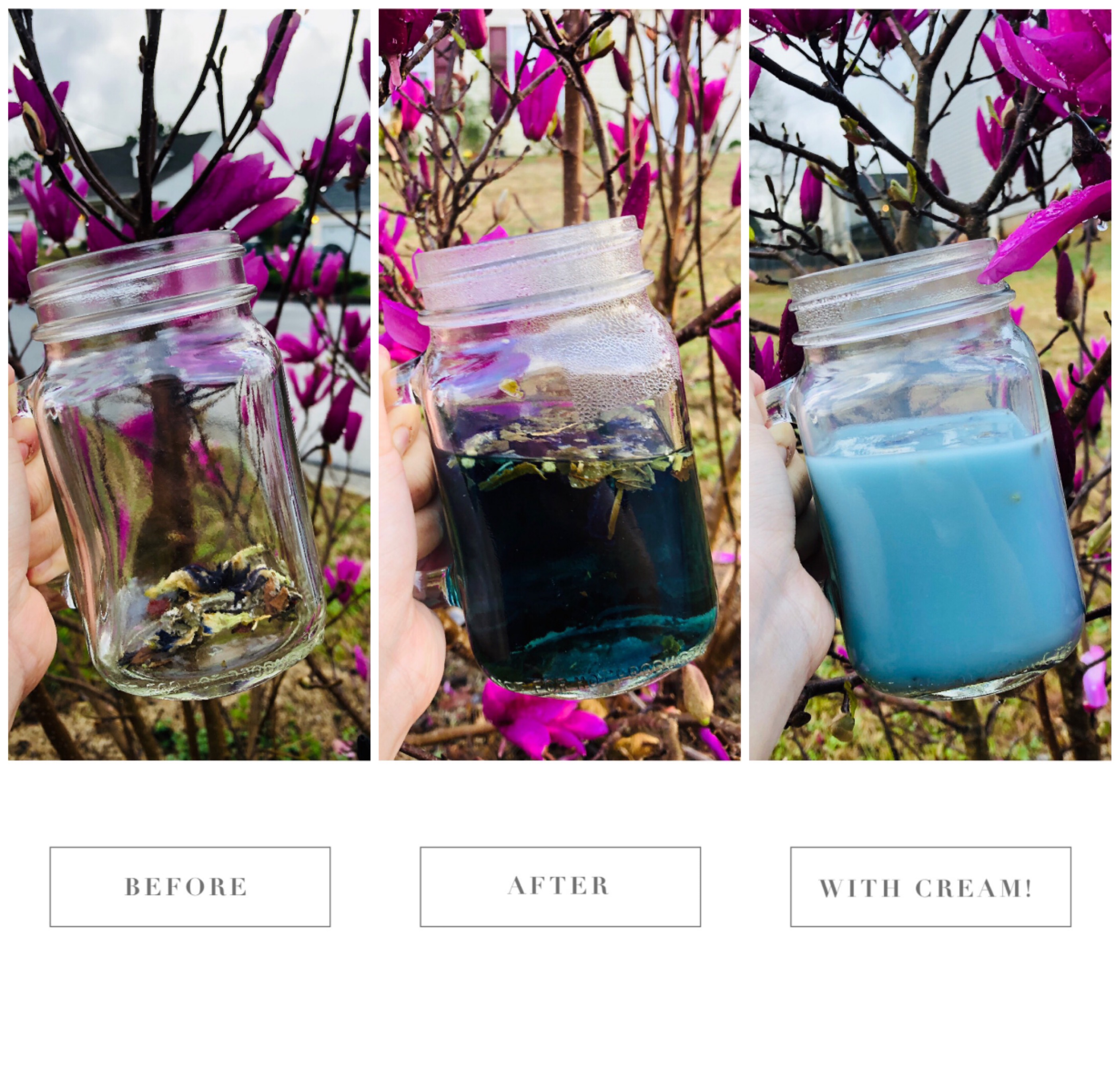
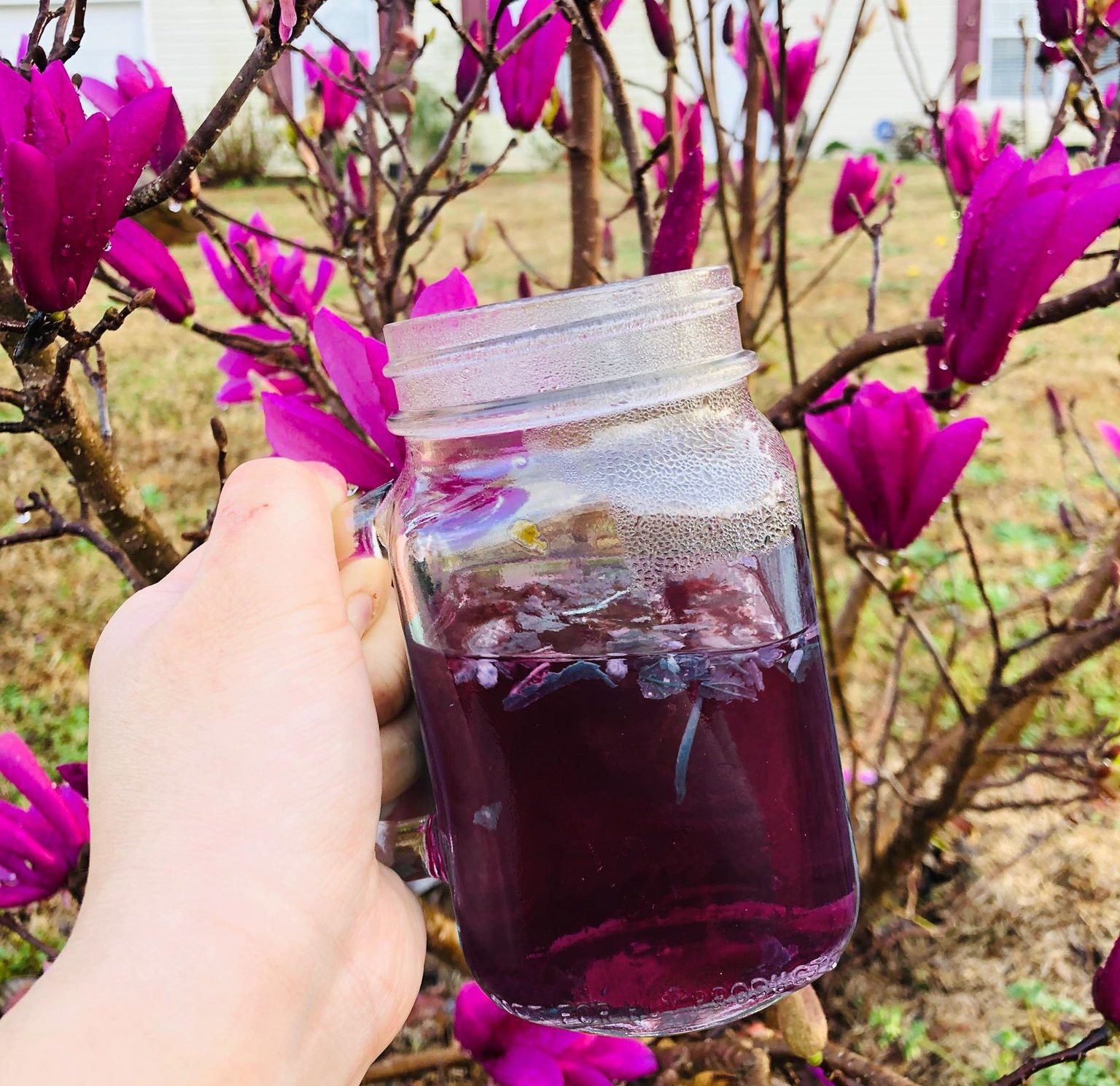
    What makes this tea unique, however, is not just its natural, blue color, but its ability to change color depending on pH.  Adding lemon will allow this beverage to take on a purple color (see below).  Add more and it’ll turn hot pink, adding a perfect and mesmerizing ombre. Like other plants that function as pH indicators, butterfly pea consists of anthocyanins, allowing it to change color.  The plant has been tested as a pH indicator to successfully differentiate pH levels between 2-12 (Amaolo, 2017).

    Anthocyanins also contain high amounts of antioxidants, making blue tea a common use in traditional medicine and a source of many health benefits (Kungsuwan, Singh, Phetkao, & Utama-ang, 2014).  Butterfly pea flower extract has been found to have anti-inflammatory and pain-relieving abilities (Kumar and Ishwar, 2012) as well as the potential to relieve diabetic complications caused by advanced glycation end products (AGEs).  AGEs are compounds that can clog vessels and form more often in diabetics when sugars combine with particular amino acids (Barone, 2017).  Clitoria ternatea extract has also been found to improve memory and acetylcholine levels (Taranalli & Cheeramkuzhy, 2011) and has anti-depressant, anti-stress, anti-convulsant, and anti-microbial properties (Jain et al., 2003).   Its antioxidant activity has also been applied in cosmetics (Kamkaen & Wilkinson, 2009).

    Try making your own tea by seeping 1-2 teaspoons of butterfly pea flower with a cup of water and add honey, lemon, juice, or milk for more flavor.  You can also make ice cubes with the tea to add color to any drink!


    References
    _______________________________________________________________________________________________________________

    Amaolo, A. (2017). The Butterfly Pea Flower as a pH Indicator. Retrieved from http://isjos.org/ISJOSv11p2-ButterflyPeaIndicator.pdf

    Barone, J. (2017, February 28). What Are AGEs (Advanced Glycation End-Products)? Retrieved from http://www.berkeleywellness.com/healthy-eating/food-safety/article/abcs-ages-advanced-glycation-end-products

    Centeno, E. (2018, July 03). What is Butterfly Pea Flower Tea? Retrieved from https://spoonuniversity.com/lifestyle/what-is-butterfly-pea-flower-tea-hint-it-changes-color

    Goldberg, E. (2016, January 31). The Science Behind This Mesmerizing Color-Changing Tea. Retrieved from https://www.bonappetit.com/drinks/non-alcoholic/article/butterfly-pea-flower-color-changing-tea

    Jain, N. N., Ohal, C. C., Shroff, S. K., Bhutada, R. H., Somani, R. S., Kasture, V. S., & Kasture, S. B. (2003, June). Clitoria ternatea and the CNS. Retrieved from https://www.ncbi.nlm.nih.gov/pubmed/12895670

    Kamkaen, N., & Wilkinson, J. M. (2009, November). The antioxidant activity of Clitoria ternatea flower petal extracts and eye gel. Retrieved from https://www.ncbi.nlm.nih.gov/pubmed/19367668

    Kumar, S. & Ishwar, B. (2012, March 19). Anti Inflammatory, Analgesic and Phytochemical Studies of Clitoria Ternatea Linn Flower Extract. Retrieved from https://irjponline.com/admin/php/uploads/935_pdf.pdf

    Kungsuwan, K., Singh, K., Phetkao, S., & Utama-ang, N. (2014). Effects of pH and anthocyanin concentration on color and antioxidant activity of Clitoria ternatea extract. Retrieved from https://www.tci-thaijo.org/index.php/fabjournal/article/view/77397

    Taranalli, A., & Cheeramkuzhy, T. (2011, January 10). Influence of Clitoria Ternatea Extracts on Memory and Central Cholinergic Activity in Rats. Retrieved from https://www.tandfonline.com/doi/abs/10.1076/1388-0209(200001)3811-BFT051

  • Carbon Negative Concrete???

    As Industrial Design major who’s future career will most likely consist of creating a wide variety of products, something that is a big concern for me is creating environmentally friendly products. I don’t want to just create things that will eventually just create more waste and end up in a landfill polluting our Earth. I also don’t want to help perpetuate environmentally harmful manufacturing processes like those used to make cement that release tons of greenhouse gases into the atmosphere.  So when I heard about the Calera process I was very interested and wanted to look into it more to see if this was actually an effective and sustainable method for capturing and storing carbon.

    The Calera Corporation developed the Calera process to sequester CO2 from our environment in a way that is actually sustainable and effective over time. They then used this process to create a superior form of concrete that mimics the form of calcium carbonate that marine animals use to create their hard shells. The Calera process results in the production of the vaterite polymorph which is stable when stored in the absence of water. When water and other proprietary additives are added to the vaterite polymorph, a cement reaction occurs in which the vaterite transforms via a dissolution and reprecipitation reaction to form another polymorph of calcium carbonate known as aragonite. This conversion of vaterite to aragonite results in a material with high strength, just as natural systems like mother of pearl are also constructed from the aragonite polymorph of calcium carbonate.

    Concrete is the most widely used man-made material in the world. Concrete is made of roughly 80% aggregate (sand and gravel), 10-15% cement, and the remainder air, water, and additives. The Calera process can permanently mineralize carbon into either fine or coarse aggregates or a supplementary cementitious material that can be used to create building materials such as concrete. The standard process for manufacturing Portland cement generates large amounts of CO2 both from the fuel used to heat the raw materials as well as from the conversion of CaCO3 to CaO, which releases CO2. Because of this, concrete made from Portland cement carries a CO2 footprint of approximately 0.8-1.5 ton CO2/ton cement, translating to roughly 537 pounds of CO2/cubic yard of concrete! Calera SCM both captures carbon from one source and avoids carbon emissions from another. Concrete made with 20% cement replacement with Calera SCM, and 20% cement replacement with fly ash would have carbon footprint of negative 1146 pounds of CO2/cubic yard of concrete. This is a carbon savings of 1683 pounds of CO2/cubic yard of concrete compared to standard concrete. “With projected U.S. Portland cement consumption at nearly 200 million metric tons by 2020, a 20% market penetration with a SCM replacement level of 50% would reduce CO2 emissions by 30 million metric tons.” Which is far more than the reduction that would be accomplished by supplementing fly ash as a replacement for some portions of Portland cement used in regular concrete mix.

    The carbon capture method employed by Calera, is also unique because it has many possible inputs including: fly ash, brines, waste water, and flue gas. In capturing CO2 and other emissions from flue gas, Calera’s carbonate mineralization technology uses solid and liquid sources of alkalinity, such as fly ash, wastewaters, and brines. The outputs of the process are clean air, fresher water, and solid materials that can be used as an aggregate or supplementary cementitious material. Another concern that often comes up in the conversation of carbon capture is how efficient is it, especially since you are trying to capture and manipulate a gas in this process. In its pilot landing facility, the Calera process regularly observes Carbon capture rates greater than 50% and has even reached rates of over 90%.


  • Raindrop Cake, Not a Cake?

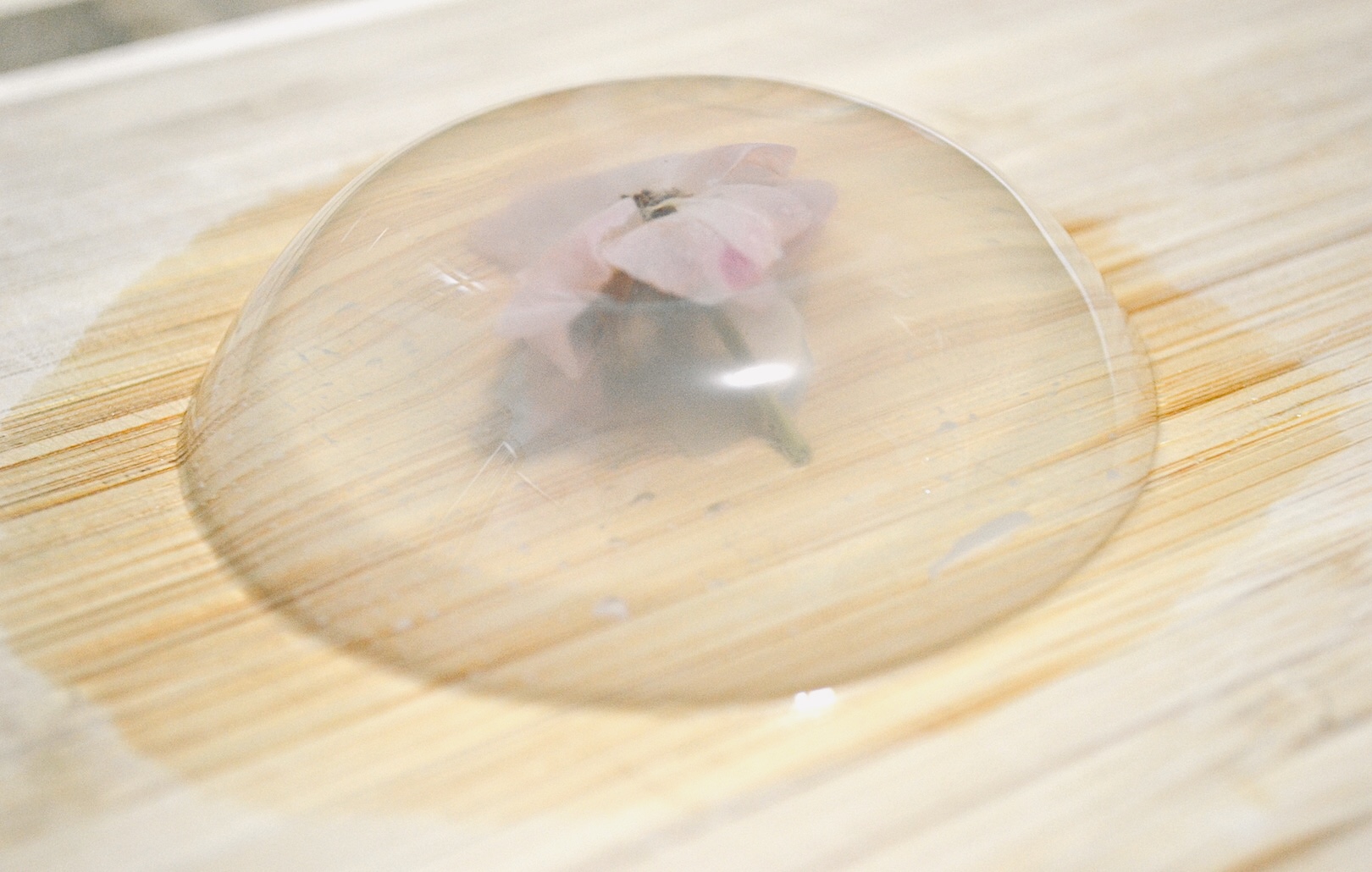
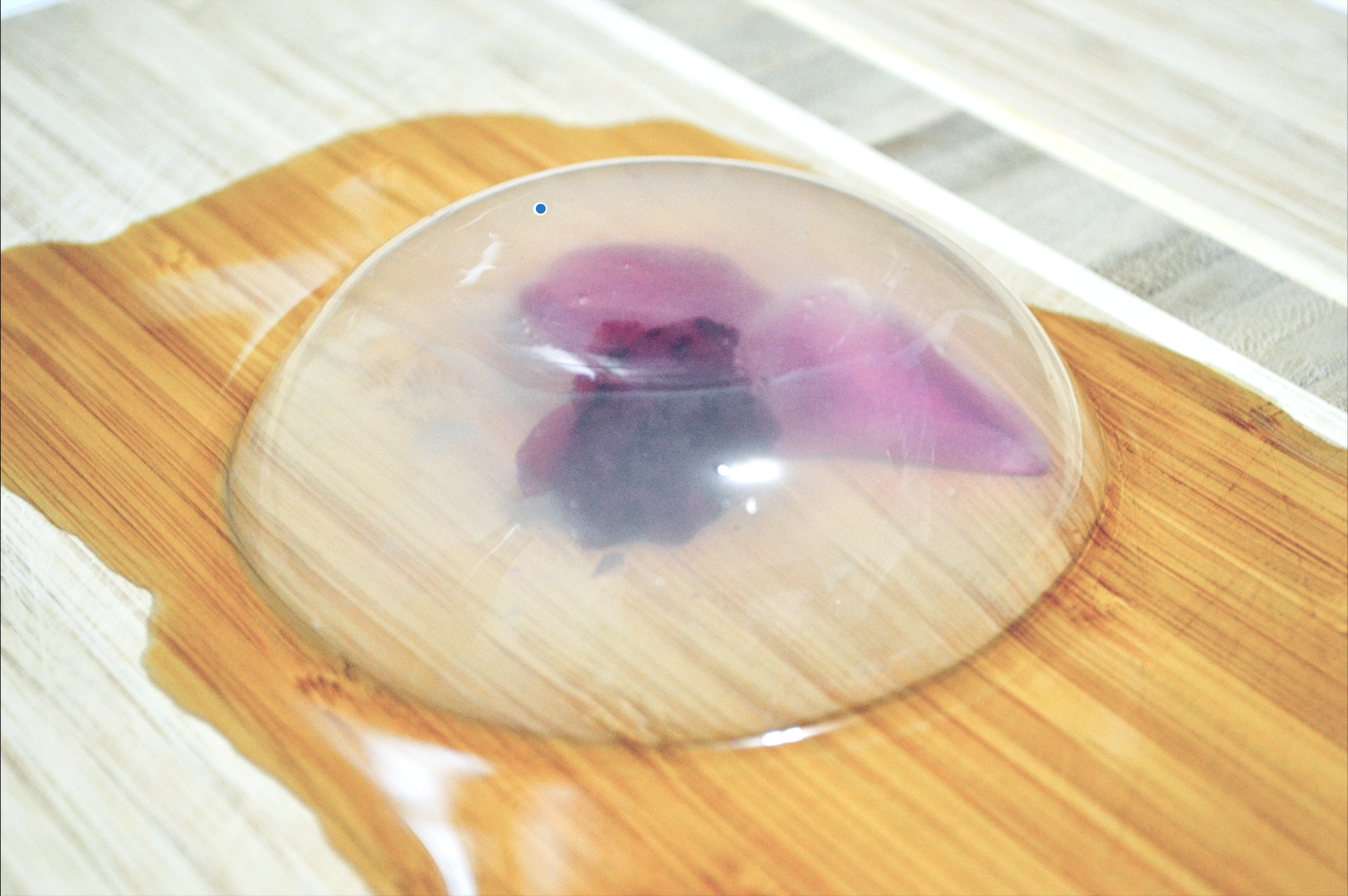
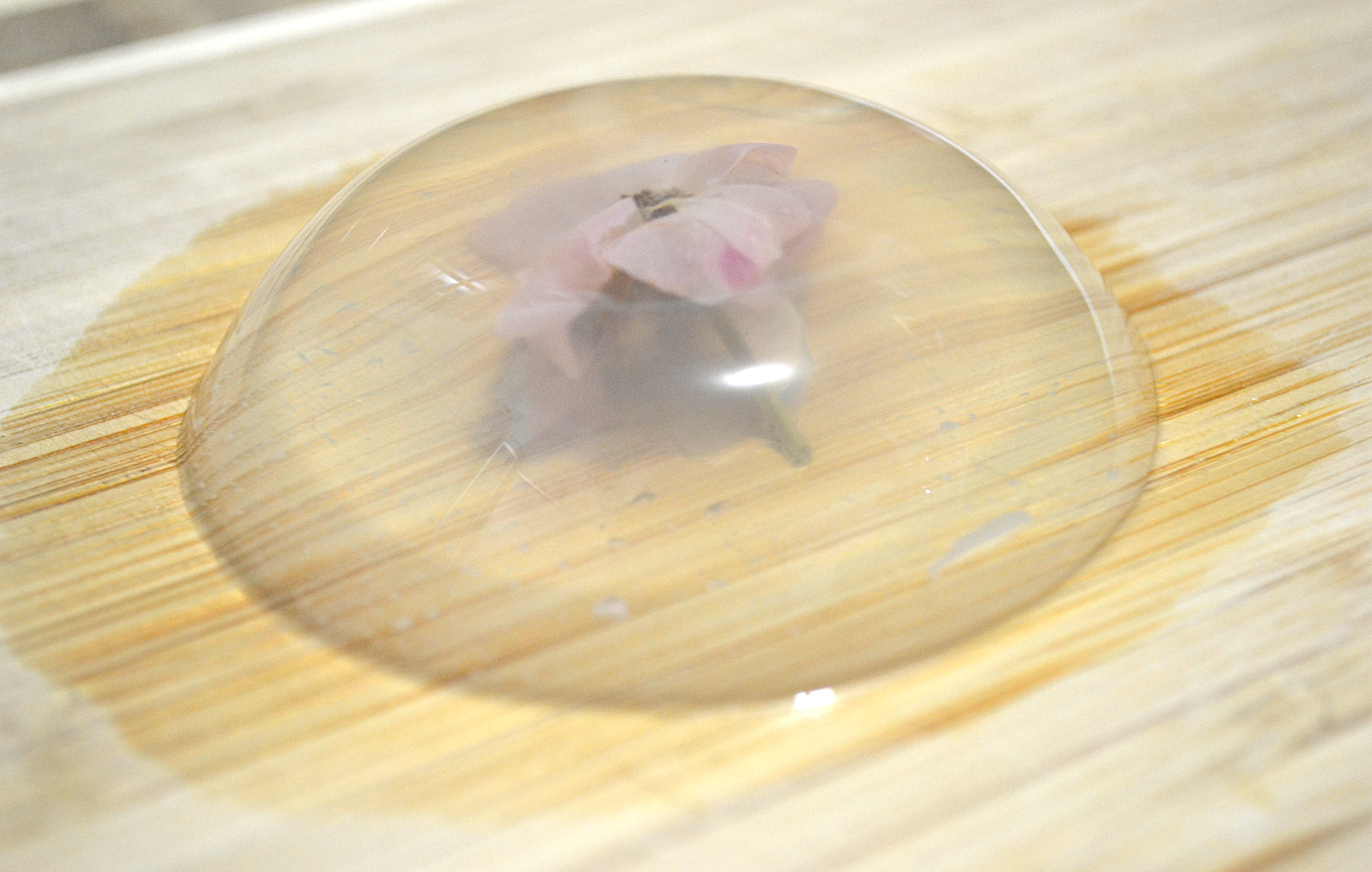
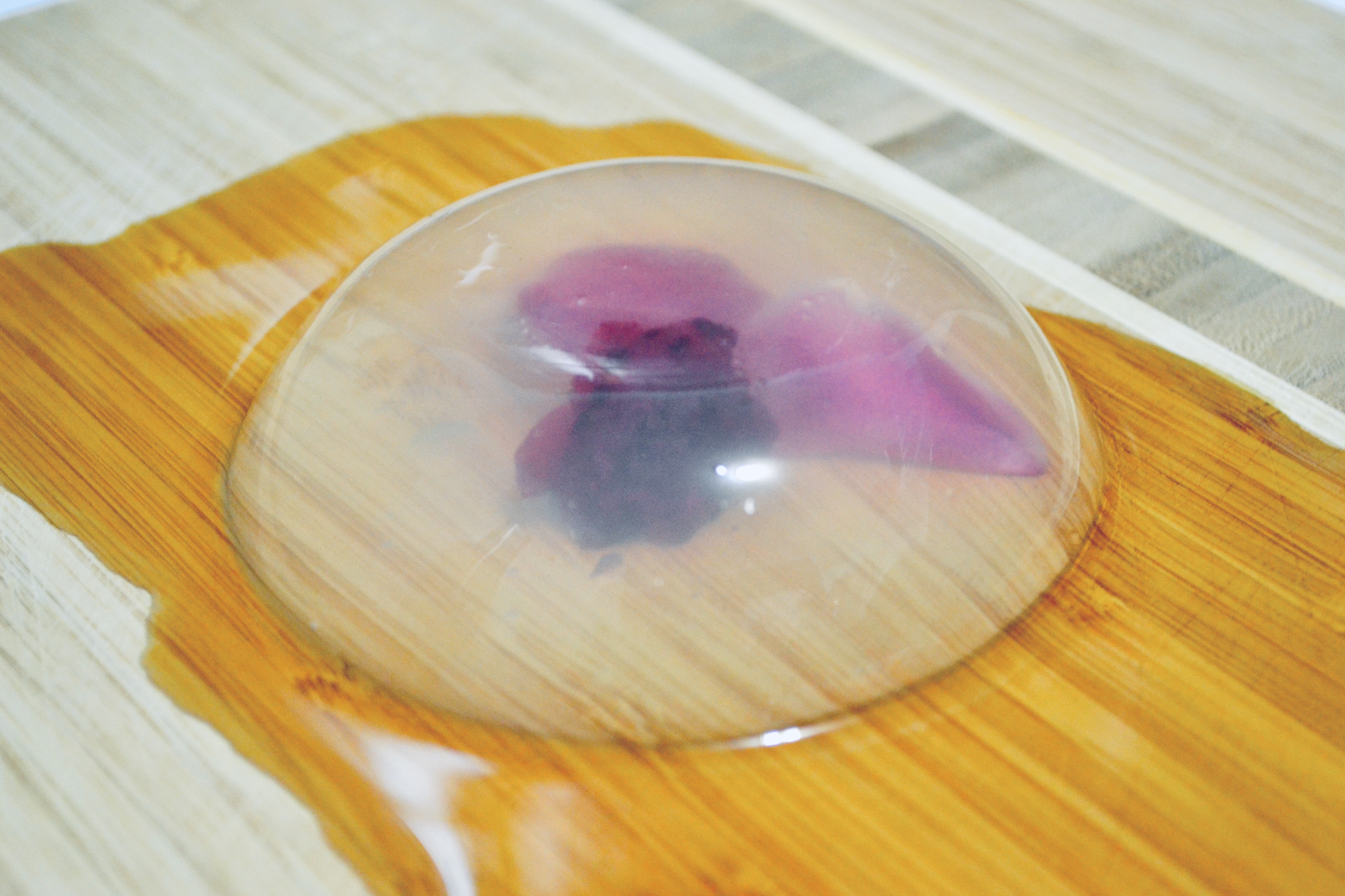
    Have you ever wondered what a raindrop would taste like if it was transformed into cake form? Look no further! Raindrop cake, albeit very different from your typical, traditional cake, will let you have a truly magical experience.

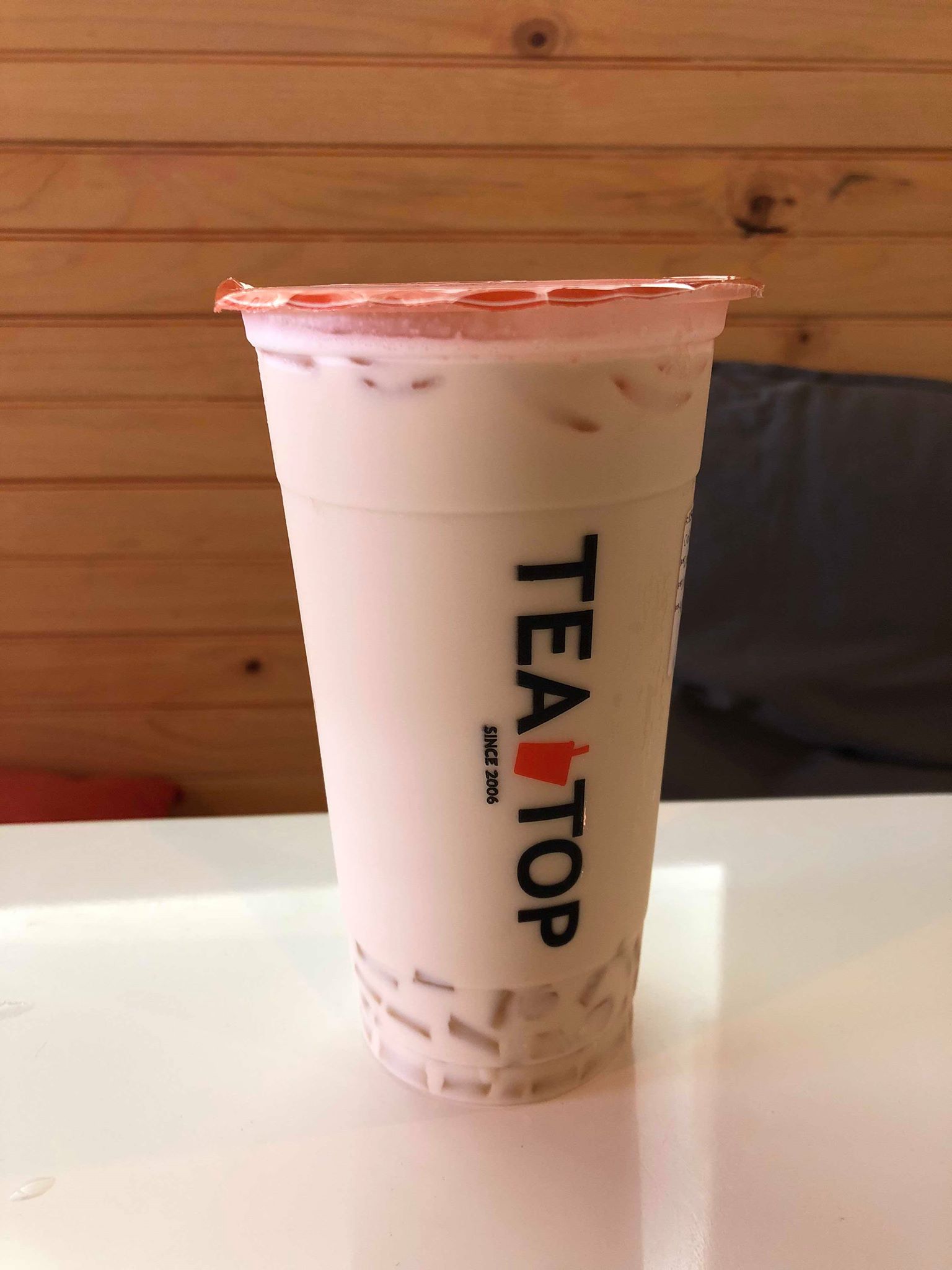
    IMG_1885                                                         My first attempt!

    Screen Shot 2018-11-01 at 8.50.37 PM

    My second attempt!

    I’ve always loved scrolling through food reviews and videos. One trend that emerged in recent years caught my eye. It was a clear, beautiful jelly bubble resembling a raindrop. It seemed so unique that I set out on a journey to try creating it myself, and it was definitely not an easy task. Being able to set the cake while trying to keep it light, soft, and bouncy and to where you’re able to feel like you’re eating a drop of water took many trials and errors. Keep reading to discover more about the secret ingredient and how you can make your own raindrop cake!

    Raindrop cake, also known as Mizu Shingen Mochi, was first created by the Kinseiken Seika Company in Japan, using two main ingredients: fresh, mineral water from the Japanese Alps and agar. This light, refreshing delicacy resembles a jiggly, blob of jello, but will melt in your mouth and fill it with a hint of sweetness and nuttiness when paired with brown syrup and roasted soybean flour. But beware! If not eaten immediately, this dessert will dissolve and vanish within 30 minutes as recipe calls for the minimal amount of agar.

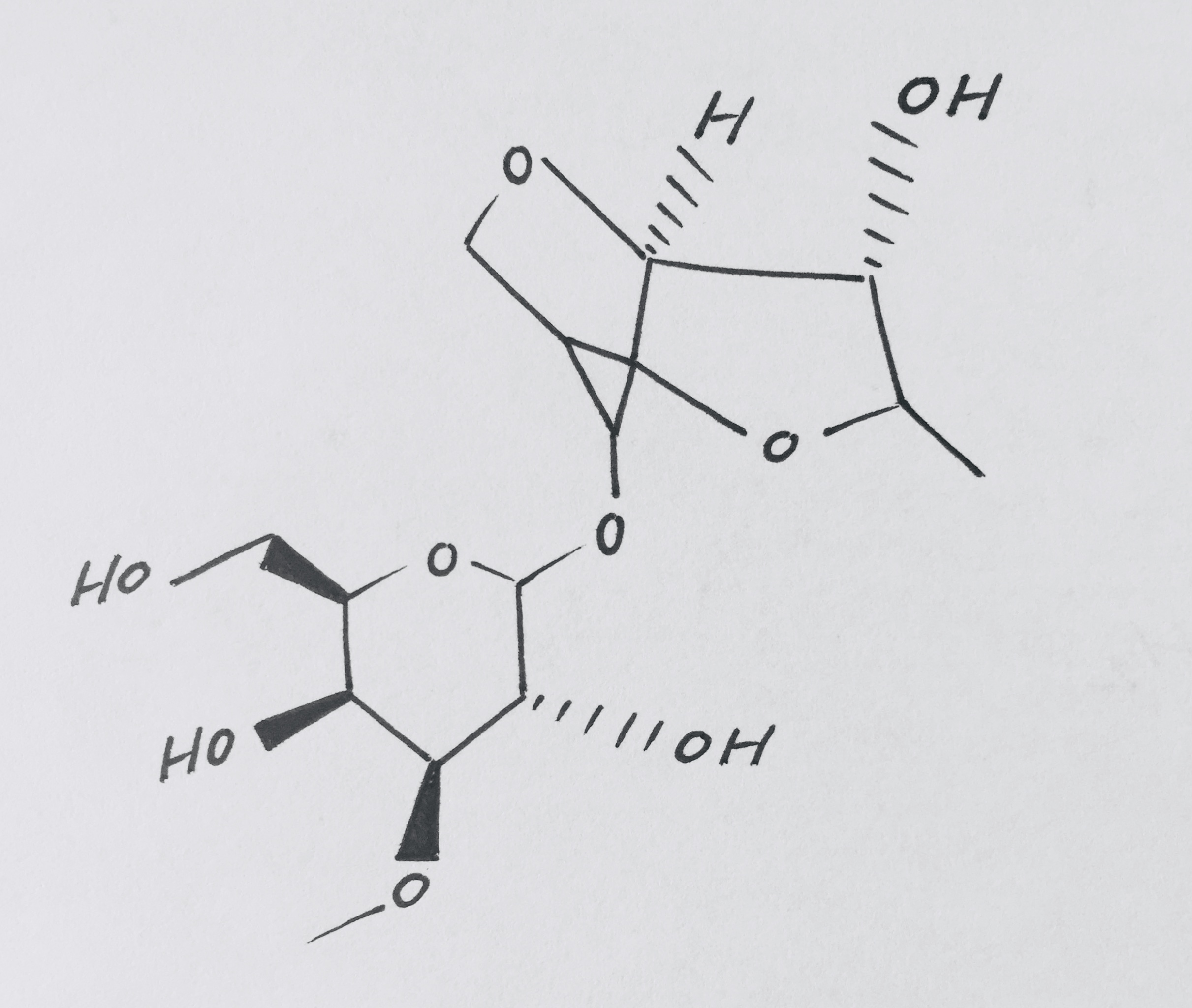
    The key ingredient that solidifies water into a raindrop cake is a polysaccharide known as agar-agar. Agar is made from seaweed or red algae, Gelidium amansii. It was first introduced in Japan over 350 years ago, in 1658, and is still commonly used to this day due to the hydrocolloid properties and agarose composition that allow it to form gel-like substances using hydrogen bonding in the presence of water. Agar is also unique in that its thickening properties are reversible; disintegration occurs when temperatures are varied.

    IMG_1883The structure of agar.

    Due to agar’s gelling ability and the ease at which substances can be gelled, melted, and reformed, agar has numerous uses. One of the most common applications of agar can be found in the food industry. Agar is used in canning foods and is also tasteless, making it a perfect addition to foods and desserts that need thickening such as ice cream, icings, puddings, cookies, jelly, and pie fillings. It can also be found as an agar jelly or as a crystal boba topping in many bubble tea drinks. It has also been used as a laxative and in diets due to its ability to stimulate fullness using low calories.

    bubbleAgar jelly used as a topping for bubble tea.
    This was the first time I’ve ever had agar jelly, and I haven’t looked back since! Yum!

    Application in biology labs as a medium to breed insects like silkworms and fruit flies or to culture bacteria and yeasts is also common.

    IMG_1118     Here an agar plate was used to culture Serratia marcescens, a Gram-negative bacteria. 

    Agar is a valuable ingredient for many reasons such as being extremely low in calories and containing fiber. Agar also does not require sugar to solidify, which is highly beneficial in food preparation for diabetics. It is also known as a vegan and vegetarian gelatin substitute, and best of all, it is an environmentally friendly product.

    Here’s how you can make your own raindrop cake that has swept the internet in recent years!

    Ingredients

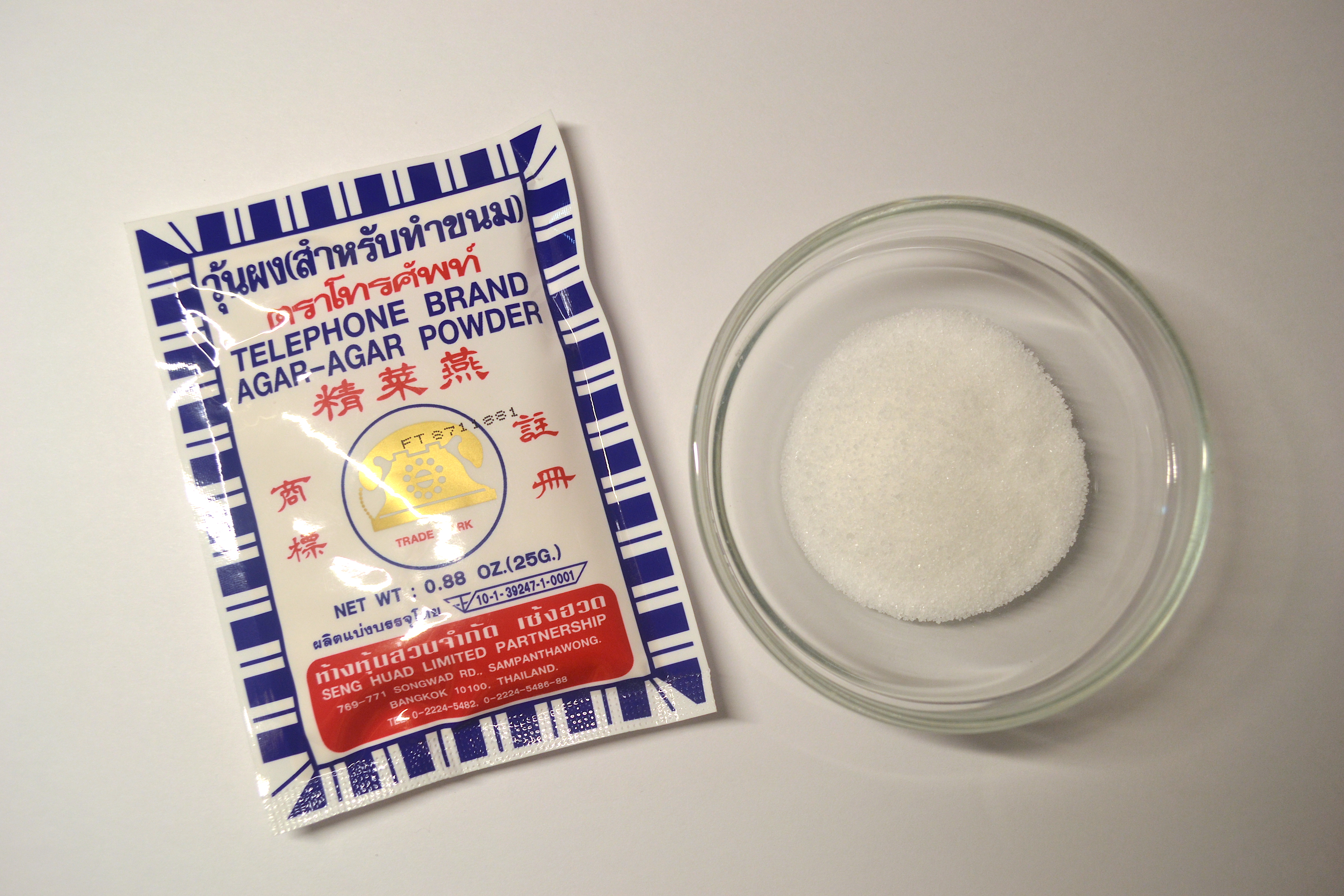
    DSC_0452

    • 1 cup of mineral water
    • 1/4 tsp agar-agar
    • 3 tsp of granulated sugar (optional)

    Optional toppings

    • 1 tbsp roasted soybean flour
    • brown sugar syrup (1 cup of brown sugar + 1/2 cup of water)
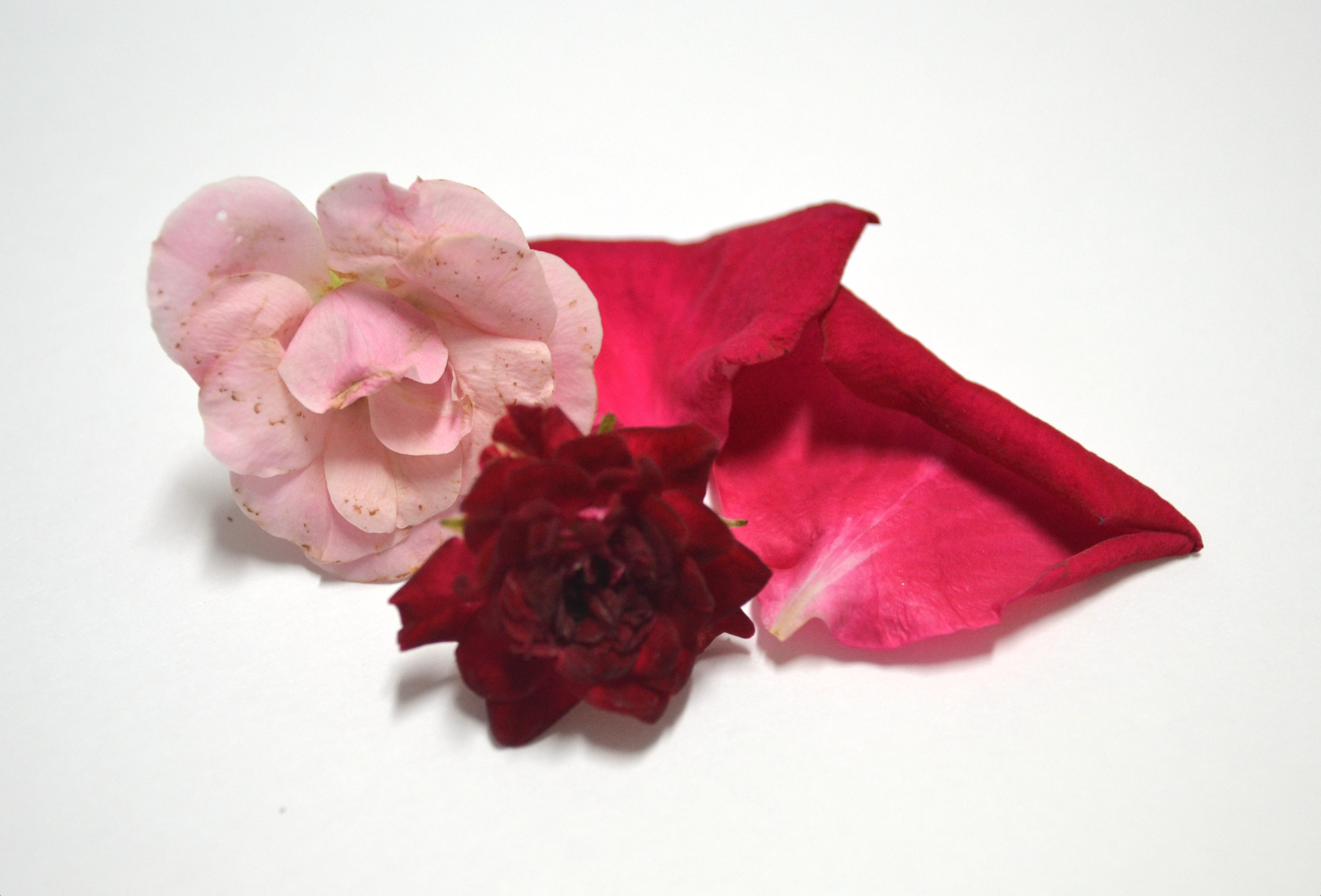
    • flowers, petals, fruits

    flowers

    1. Dissolve agar and water in a small pot.
    2. Allow mixture to come to a boil over medium-high heat. Continue boiling over a medium heat for 1-2 minutes.
    3. Pour mixture into any round-bottom mold. (Optional: Add light fruit/flower toppings to the mixture.)
    4. Let mixture cool and place in the fridge overnight or until it sets.
    5. To make syrup, dissolve the brown sugar in water over medium-high heat until mixture boils. Maintain a rolling boil for 1 minute.
    6. Remove mixture and let cool. Serve with raindrop cake along with optional soybean flour. *Consume your raindrop cake upon taking it out the fridge. May melt if left out for over 20-30 minutes.

    References

    Giant Raindrop Cake Recipe by Tasty. (n.d.). Retrieved from https://tasty.co/recipe/giant-raindrop-cake

    K. (2018, September 15). Raindrop Cake. Retrieved from https://kirbiecravings.com/raindrop-cake/

    Maitland, H. (2017, August 02). Everything You Need To Know About Raindrop Cakes. Retrieved from https://www.vogue.co.uk/article/everything-you-need-to-know-about-raindrop-cake

    National Center for Biotechnology Information. PubChem Compound Database; CID=71571511, https://pubchem.ncbi.nlm.nih.gov/compound/71571511 (accessed Sept. 28, 2018).

    Phillips, G.O. Williams, P.A.. (2009). Handbook of Hydrocolloids (2nd Edition).Woodhead Publishing. Retrieved from
    https://app.knovel.com/hotlink/toc/id:kpHHE00002/handbook-hydrocolloids/handbook-hydrocolloids


  • Why Does Hot Water Freeze Faster?

    1

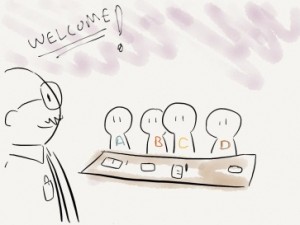
    PROFESSOR: Hello class! Welcome to “Advanced Application of Math and Logic in Natural Philosophy” class. Look to your left and look to your right. One out of five in this room will not pass the class.
    2

    STUDENT A: Sir, but there are only four of us.3
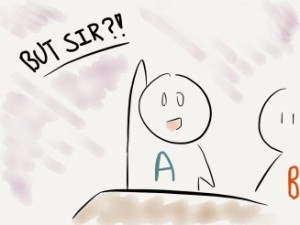
    PROFESSOR: (ignoring the student) Ahem. During our first lecture, we will exercise the use of logic and thought experiments to unveil one of the greatest mysteries in the history of science. Even Aristitotle struggled solving this mystery. For centuries many scientists attempted to solve but failed. (drum roll) Why does hot water freeze faster than cold water?

    STUDENTS B & C: (smile nervously not knowing whether he is joking or not)

    STUDENT A: But sir, hot water needs to be cooled down before it can freeze. So shouldn’t cold water freeze faster?

    PROFESSOR: Good point. However, that is not always true. It’s called the (writing on the board) Mpemba effect. Can anyone guess why? It’s okay even if you are wrong. Don’t be shy – that is why I am here.

    STUDENTS A, B, C, & D: (silence)

    (Satisfied with his authority and the full attention of his students, the professor continues)

    PROFESSOR: Actually, experiments showed that hot water will cool faster than water at 60°C. But this is not the case with water below 60°C. Mpemba effect is a combination of multiple factors. Now let’s figure out each of them together. First, tell me what are the characteristics of hot water?

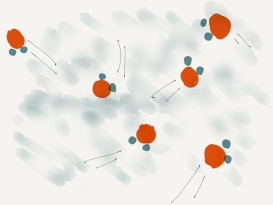
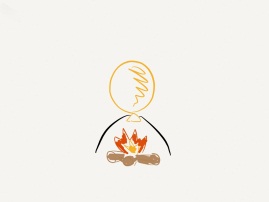
    STUDENT B: It has higher average kinetic energy.

    The water molecules move faster, which means that they occupy greater volume, similar to how an air balloon expands at higher temperature.
    4

    56

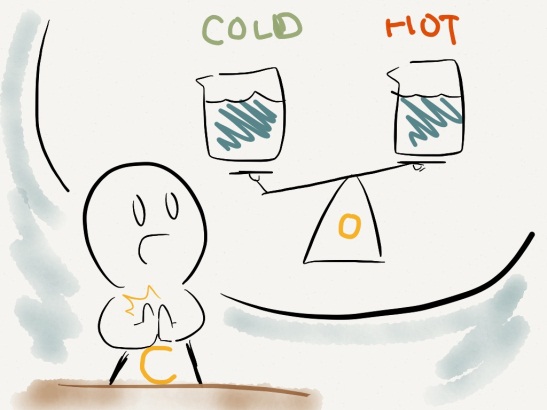
    STUDENT C: Wait, that means that if cold water and hot water have the same volume, the mass of hot water will be less. This is because the evaporation is taking place and dissolved gases in hot water escape at a higher rate.
    7

    PROFESSOR: Great answers. Water is most dense at 4 degrees Celsius and its density changes according to its temperature. Yes, so 1L of water does not always hold the same amount of mass. 1L of hot water will weigh less compared 1L of water near 4°C. However, the mass difference is slim even when we considering the evaporation of water molecule. So there has to be another factor that contributes to Mpemba effect.

    STUDENT: But sir? What about supercooling of water and nucleation? Doesn’t lack of impurities and gases in water lead to supercooling, in which water forms crystal ice at temperatures below 0°C? It has been observed that water can remain liquid at -40°C. If hot water doesn’t have dissolved gas, shouldn’t it be hard to make it freeze?
    8

    PROFESSOR: (as if expected) Good point. Except Mpemba effect has been observed in both hot water and cold water removed of dissolved gases. Dissolved gas does not seem to contribute to the process of freezing. You could, however, make beautiful and clear crystal ice by removing dissolved gas before freezing. So what else? What else does hot water do?

    STUDENT C: It evaporates faster than cold water..?

    PROFESSOR: Yes, the water evaporates faster. But why? And so what?

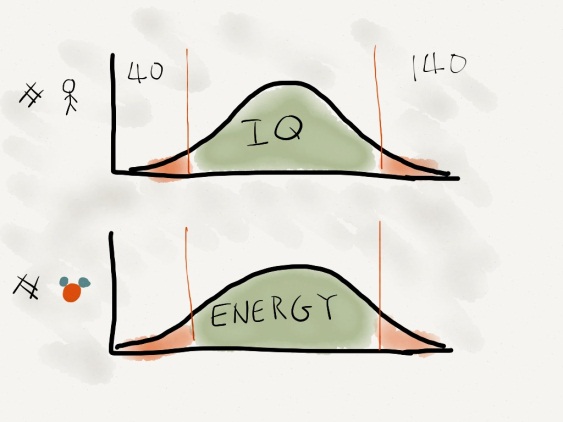
    STUDENT B: Well umm… the temperature of water is the average kinetic energy. At any time, liquid water has molecules with a range of energies. Although most of them have the average kinetic energy of the system, very few have enough energy to escape intermolecular forces such as hydrogen bonds and dipole-dipole attractions. If we were to look at a graph of number of molecules versus energy, it would look similar to a current IQ graph, in which the majority of the population has an IQ of 100 and few have over 140 and under 40.
    9

    STUDENT A: (towards student B) Hydrogen bond and dipole-dipole forces are too weak to contain water molecules in liquid form. It’s actually the atmospheric pressure doing all the work.

    PROFESSOR: Please let him continue.

    STUDENT B: So molecules with higher energy escape, lowering the average energy within the system, and this is evaporative cooling.

    STUDENT C: Oh! So the hot water is not only being cooled through evaporative cooling but also from heat conduction and convection inside the freezer.

    PROFESSOR: Good answers class. But that is not enough.  According to Dr. Takamasa Tkahashi at St. Norbert College, it takes 540 calories to vaporize one gram of water. At above 80°C, the rate of cooling by evaporization is high as vapor draws massive energy from water left behind. To give you an idea how much 540 calories worth, it takes 100 calories to heat up 1 gram of water to 100°C from 0°C.

    STUDENT A: (excited) 1 Calorie is the energy required to raise 1 gram of water 1°C! In fact, scientists measured food calories by burning them and heating up water back in old days.

    STUDENT D: Wow…is that why greasy foods have high calories?10
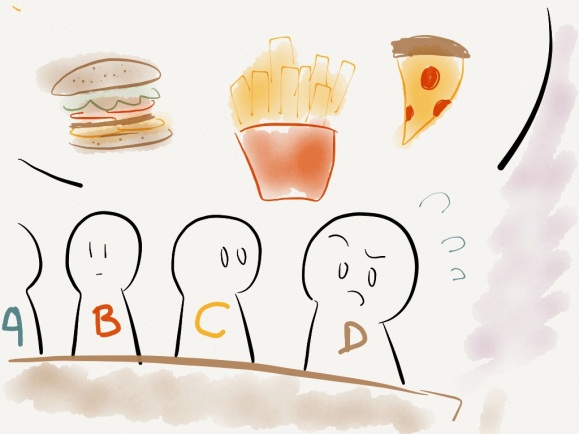
    PROFESSOR: If we neglect heat transfer through radiation or conduction, water will freeze on a desert purely from evaporation. Interesting, isn’t it? We can use zeolites which facilitate evaporation through adsorption to make ice as well. A team of engineers at Rice University built a prototype of ice machine that uses nothing but zeolites and vacuum pump.

    STUDENT D: (perplexed) But professor, when hot water reaches the temperature of the cold water, don’t both of them have the same evaporation rate?

    PROFESSOR: (impressed and amused) Very good point. I might actually consider allowing one A+ in this class. To answer your question, let’s first consider extreme cases to facilitate our thought experiments. Imagine placing an ice cube onto a very hot plate. What happens?

    STUDENT A: (desperate to not embarrass himself) Uh…The ice melts immediately? And while some water molecules evaporate, others boil around the remaining ice cube, making noise from gases and vapor escaping. Noise is also another form of energy transfer.

    PROFESSOR: Yes but melting the process does not happen instantly. While the ice is melting, what is the average kinetic energy? It is somewhere in between that of boiling water and ice.

    Now, we learned that the energy of liquid water is not perfectly uniform. The faster the change of temperature is applied the greater inconsistency of the energy. Hence, hot water being cooled down to cold temperature has a higher evaporation rate than cold water that remained cold for a prolonged period of time. I think you’ll need to elaborate on this one…

    STUDENT A: Also, Newton’s law of cooling dictates that hot water will cool down faster regardless of the evaporation.

    PROFESSOR: Yes, of course, faster moving molecules will bounce off of each other more frequently, giving and losing energy through these interactions.

    STUDENT D: So that means… initially, cold water has a more uniform temperature. But when hot water is cooled, although the average temperature is cold, there are greater discrepancies of temperature among molecules?

    STUDENT A: (being impatient) Yes, and that is why the hot water will be more likely to have molecules with higher energy, which escapes and cools the liquid faster.

    PROFESSOR: Like washing a car with hot water during winter, evaporative cooling is more evident with larger surface area. So what else? Does anyone else have any more idea?

    STUDENT C: Well… this may seem stupid, but what if Mpemba effect is caused by other effects such as the environment?

    PROFESSOR: (intrigued) What do you mean?
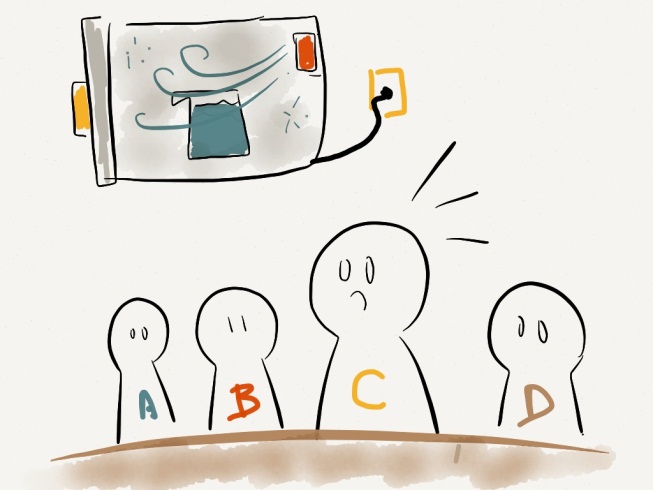
    11

    STUDENT C: The freezer keeps the temperature below zero all the time. But when the temperature increases, cold air is introduced in order to keep the temperature constant. So if we place hot water inside the freezer, and due to heat conduction, radiation, and evaporation, the internal temperature increases, it will trigger the freezer to blow cold air. You need to elaborate on this… And thus, hot water will freeze faster.

    PROFESSOR: Hmm…I like your creative way of thinking.
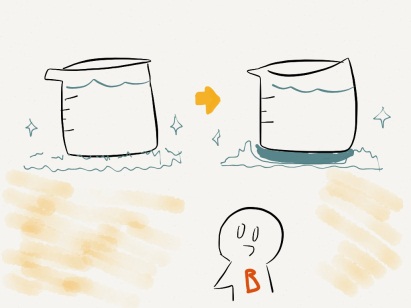
    12

    STUDENT B: Also, freezers have ice dusts inside. And hot water may melt these ice particles within the compartment at contact points of the bowl and the surface. Since water is dense and thus conducts heat faster, hot water will cool down at higher rate. The effect is similar to how ice water cools beer bottles faster than ice cubes.

    PROFESSOR: Excellent point! Water is 829 times denser and transfers heat 25 times faster than air. Hot bowl of water sitting on slightly melted ice will definitely cool faster than cold bowl of water sitting on ice dust. Water covers more surface area as well. But aren’t you slightly underage to know how to cool beer bottles?

    STUDENT A: (hungry for attention) Sir, what about infrared radiation? We know hot objects emit electromagnetic radiation and thus release energy at a faster pace. A combination of this and everything we discussed today will make hot water cool faster.

    PROFESSOR: Now, do you guys remember how water changes its density? Due to heat conduction at contact points, a bowl of water will be colder at the bottom. Let’s consider a cold bowl of water. Cold water near freezing point at the bottom of the bowl will have lower density than water at near 4°C on top. Low density water will rise up switching position with water near 4°C. Neither upper nor lower part of water will freeze until that 4°C temperature is brought to 0°C.13
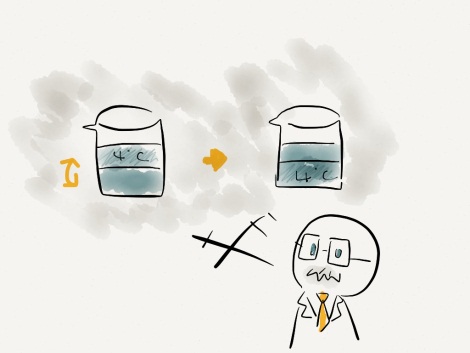
    Now what about hot bowl of water? Hot water at the top has lower density than cold water at the bottom. Thus, cold water near freezing point won’t rise up. This means the water at the bottom can freeze before hot water is cooled to 4°C. This effect will freeze hot water faster.

    STUDENT C: Whoa… there seem to be a lot of factors that play in Mpemba effect. We discussed mass difference, evaporation rate, freezer compartment effects such as more frequent cold air and melting ice at contact points, and how density can slow or speed up the freezing rate. I don’t think we can come up with anymore explanations.

    PROFESSOR: Aha but we are not done! There are more. What are we forgetting class?

    STUDENT D: (as if he had more than enough to learn) Not a clue sir…

    PROFESSOR: (excited) The internal air pressure of the freezer compartment~!

    STUDENT D: But how..?

    PROFESSOR: (showing a video clip on a TV) Do you guys watch a BBC TV series called “Bang Goes the Theory”?

    STUDENT C: Oh my gosh! I absolutely love that show!!

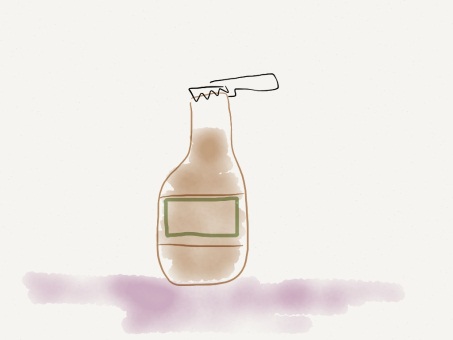
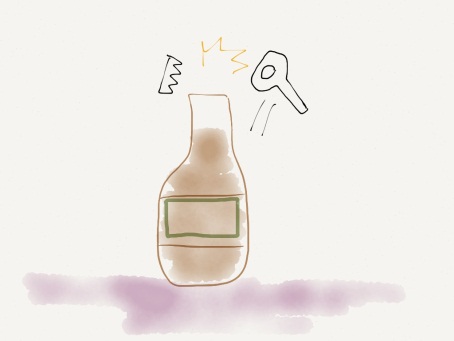
    PROFESSOR: Let’s look at season 2 episode 4. In this episode Dr. Yan shows that when you quickly open a bottle there’s a cloud of white air at the opening. This effect is the opposite of how diesel engine ignites a spark by compressing air. (Professor demonstrates by opening a beer bottle). The air between the liquid and the cap is quickly expanded and loses energy. At this very instant, the temperature drops to around -30°C and this white gas you see is the condensed water molecules in the air.
    14

    1516

    STUDENT A, B, C&D: (intrigued) wow…

    PROFESSOR: As the ideal gas law states, hot air has lower density than cold air under equal pressure and volume. If hot water and cold water were placed in a separate freezer compartments, the one with hot water will have less air molecules inside.

    STUDENT D: But professor, why?17
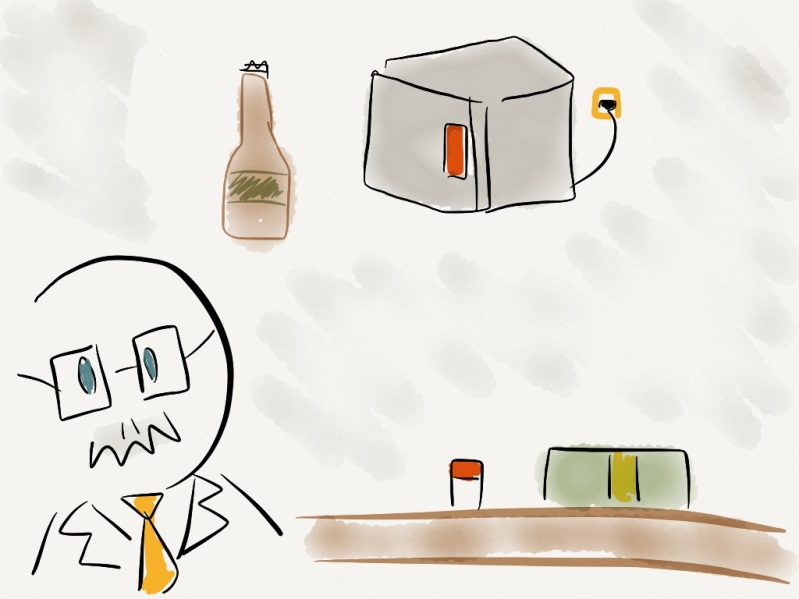
    PROFESSOR: Because hot water will heat up the air inside the compartment. Of course, the longer you wait before closing the door, the more evident the effect would be. You all saw how quickly air cooled down when I opened the beer bottle. (Takes couple of sips of beer). You can create the same effect by opening the freezer compartment. Now when you open both hot and cold water compartments, the one with hot water will experience greater decrease in temperature; air with lower density will lose more energy when expanded at the same volume as air with higher density. This gives the last minute boost of freezing air to hot water compartment.18
    But even if you don’t open the freezer, lower pressure will facilitate freezing. Can anyone guess why?


    STUDENT A: As we can see on the phase diagram, the freezing point of water is higher at lower pressure. Hence, by lowering the pressure, hot water will freeze at higher temperature than cold water.19
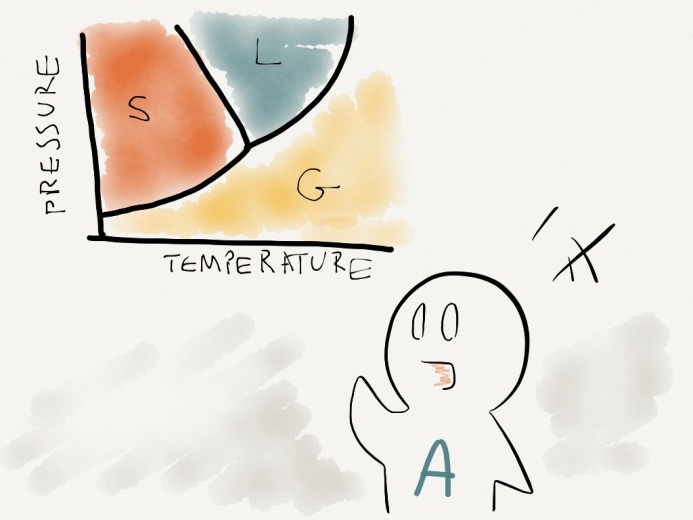
    PROFESSOR: Excellent! Although the boiling point is lower at low pressure, freezing point is higher. Since ice occupies greater volume than liquid water, applying pressure to ice cubes will turn solid into liquid. Not only does lowering pressure increase evaporation rate, it helps to crystalize ice!

    STUDENT C: I see… Mpemba effect isn’t magic. It’s science.!

    STUDENT D: (frustrated) But professor, none of these answers answer any questions at all! Why must water evaporate? How come its temperature is not uniform? How come its density changes with the temperature? Why all this?
    20

    PROFESSOR: This class is a natural philosophy class for a reason. Science is a study and observation of the universe, finding pattern in its chaotic behavior and thereby hypothesizing the answer with logic. And we test our hypotheses to come up with a prediction. We, scientists, ask the question ‘why?’ and dwell on solving the mystery. But the answer we find is the answer to the question ‘how?’  We observe the mechanism and apply it, but we still don’t know why the universe behaves in the way it does. For example, why does Earth create gravitational attraction? Einstein explained that it is because mass curves the space. But why does mass create a distortion of space and why does the distortion cause attractive forces? We don’t know. All we know is how mass creates gravity

    Class, I encourage all of you to pursue knowledge with an inquisitive mind. Scientific knowledge is what shapes our future.

    Class dismissed. Write me 50 pages on Mpemba effect by tomorrow.   It should be easy now that we discussed it in class.
    21

  • Tap That

    Conservation is not a commonly exercised word for most Americans.  A booming economy once offered us blissful ignorance from contributing our share of frugality and it prevented us from joining the rest of the world in maintaining a conscience.  However, as vital resources such as freshwater diminish and global population continues to propagate, Americans should begin to choose conservation despite the fact that most financially don’t need to.

    Drinking water is already a precious resource in some countries and climate change will only increase pressure on freshwater supplies1.  The city of Delhi is short on water supply this summer by about 50 million gallons2; children in sub-Sahara Africa drink out of waterholes where animals bathe in from lack of any other water3; and the UN reports that a third of the world’s population is enduring some form of water scarcity4.  Considering other looming water wars across the globe, it seems immoral of us to purchase a plastic water bottle that takes 3 times as much freshwater to produce than what’s in the actual bottle5.  Now more than ever, every drop counts.

    The bottled water industry, although perhaps not the most environmentally hazardous industry in our country, is one of the cleverest for it seems to have duped us all. It made a $10.6 billion profit in 20106 on something we can all attain for free.  It has managed to “manufacture a demand for water as a commodity to be bought and sold for profit,” stated Gigi Kellet5, director of the Think Outside the Bottle Campaign, by costing consumers $1,400 per year for eight glasses a day versus the $0.49 per year that eight glasses of tap water a day would cost7.

    Not only are bottled waters sneakily detrimental to bank accounts, their production uses 17 million barrels of oil annually – enough to fill one million cars for a year7.  Extracting water for bottling places strain on flows to natural rivers, streams, springs, as well as ecosystems and groundwater levels5.  Also account for the fact that plastic takes hundreds of years to decompose and only 13% of the 29 billion purchased water bottles annually are recycled8, and one might ponder choosing tap water over bottled.

    Most Americans are aware of the world’s water crisis and the environmental consequences of consuming plastic-encased water, yet some still adamantly refuse to drink anything but bottled water.  The largest misapprehension for most people is that bottled water is cleaner than tap water.  Consider though that the bottled water industry spends tens of millions of dollars a year ($162.8 million in 20065) advertising their pristine water sources, falsely leading consumers to believe that it must, in fact, be cleaner than tap.

    The fact of the matter is, 47.8% of all bottled water is derived from tap water9, including Glaceau SmartWater, Nestle Pure Life, Alaska Premium Glacier and Yosemite10.  Pepsi was forced to change their Aquafina label in 2007 to accurately describe that their source came from a public water system11.  Coca Cola’s Dasani is also derived from a municipal source.  In 2003, Nestle’s Poland Spring was sued for false advertising in a class action lawsuit charging that their water, which supposedly came from springs, was actually just heavily treated ground water12.  The suit also stated that another Nestle source “stands over a former trash and refuse dump, and below an illegal disposal site where human sewage was sprayed as fertilizer for many years.”

    The Natural Resources Defense Council (NRDC) reports that the source for Spring Water, the bottle with a picture of a lake surrounded by mountains on the label, was from an industrial parking lot next to a hazardous waste site.  Brands such as Artic Falls Bottled, Glacier Mountain Bottled, and Everest are all bottled in New Jersey, Ohio and Texas, respectively10.

    Not only does bottled and tap water generally come from the same place, the municipal water board purifies these sources more than the bottle manufacturers.  Regulated by two different agencies, the Environmental Protection Agency (EPA) requires more stringent testing and purity standards for tap water13 than the Food and Drug Administration (FDA) does to bottled water.  In fact, bottled water rules actually allow for some contamination by E. Coli or fecal coliform while tap water rules prohibit any contamination.  There are also no requirements for bottled water to be disinfected or tested for parasites, unlike the rules for big city tap water systems.13

    Several cases have been made for contamination in bottled water, including carcinogenic chemicals.  The NRDC tested 103 bottled waters in 1999 and concluded that 4% of the bottles violated the excessive coliform bacteria standard, 21 bottles contained more bacteria than allowed, and 8 bottles had levels of arsenic that tested at a level of potential health concern.13

    According to the Environmental Working Group (EWG), lab tests for Walmart’s Sam’s Choice brand conducted in 2008 found bromodichloromethane, a cancer-causing chemical, at levels that exceed safety standards under California’s Safe Drinking Water and Toxic Enforcement Act of 1986.  The analyses conducted by the University of Iowa Hygienic Laboratory revealed disinfection byproducts, pharmaceuticals, heavy metals including arsenic and radioactive isotopes, fertilizer residue (nitrate and ammonia), plasticizers, and propellants within 10 popular water bottle brands they tested, reported EWG.

    The FDA’s seemingly negligent rules are completely exempt for waters that are packaged and sold within the same state, which account for 60-70% of all bottled water sold in the United States13.  If the product is declared on the bottle simply as “water,” “carbonated water,” “filtered water,” “seltzer water,” “sparkling water,” or “tonic water,” then it is not considered drinking water by the FDA and their quality standards are not required for these labels.13

    On a side note, the vice president for communications of the International Bottled Water Association (IBWA) is Tom Lauria, the former lobbyist for the tobacco industry.  EWG points out that he “has had extensive experience distorting the facts and misleading consumers in an attempt to hide the truth about the industry that pays his salary.”  The man who once denied that smoking was addictive14 is now communicating that bottled water is a beacon of health.  Do you see the parallels?

    Others argue that bottled water is just more convenient than tap water.  Sadly, we have come to confuse a plastic bottle’s disposability with “convenience” but there’s nothing more “convenient” than clean EPA-regulated free water running from your kitchen faucet.  Is the issue an unwillingness to stand at the sink with a reusable bottle for 10 seconds?  Bottles such as Hydros come equipped with a filter so that you don’t even have to pour from a Brita filter pitcher anymore.  Being on-the-go is not a noteworthy excuse either since there are public sources in every park, school, office, and stadium in the United States.

    Although taste is highly subjective, arguments were also made that bottled water tasted better than tap water.  Consumer’s tastes have been shaped by cunning marketing and the erroneous belief that bottled water is healthier than tap water.  However, in taste test after taste test, people can’t tell the difference between the two.  The University of Maryland’s Student Government Association (SGA) conducted a taste test between tap water and Pepsi’s Aquafina, their school’s official bottled water, and found that twice as many students preferred tap over bottled15.  The hosts of Showtime’s television series Penn & Teller: Bullshit conducted a blind taste test comparing waters that showed 75% of New Yorkers preferred city tap water to bottled waters16.  The hosts of the show conducted another test where a sommelier handed out water menus with $7 bottles of “L’eau du Robinet” (French for “tap water”), “Agua de Culo” (Spanish for “ass water”), and “Amazone” (“filtered through the Brazilian rainforest’s natural filtration system”) on them.  The patrons had no idea that all of the extravagant bottles were filled with the same water from a hose in the back of the restaurant.

    In the end, tap water tastes the same as bottled water, is more convenient, is less expensive (about 500 times less expensive17), and is purer than bottled water.   Over 50 universities across North America have joined the Ban the Bottle movement that seeks to eliminate plastic water bottles from campuses.  These campuses have recognized our country’s unspoken responsibility, a responsibly that comes with affluence and the ability to set precedents for other prosperous countries.   They’ve recognized that we need to start conserving whatever we can because we share the world’s resources with 9 billion other people.  They’ve recognized that corporation’s privatization of water has lethal consequences for those less fortunate than us and that tap water is the environmentally noble choice.  It’s time for everyone else to opt for tap water too.


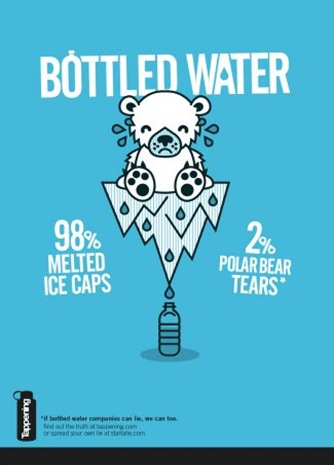
    Image courtesy of Tappening.com


    1  Kundzewicz, Z.W., L.J. Mata, N.W. Arnell, P. Döll, P. Kabat, B. Jiménez, K.A. Miller, T. Oki, Z. Sen and I.A. Shiklomanov, 2007: Freshwater resources and their management. Climate Change 2007: Impacts, Adaptation and Vulnerability. Contribution of Working Group II to the Fourth Assessment Report of the Intergovernmental Panel on Climate Change, M.L. Parry, O.F. Canziani, J.P. Palutikof, P.J. van der Linden and C.E. Hanson, Eds., Cambridge University Press, Cambridge, UK, 173-210.

    2  “Delhi Water Crisis to Worsen.” Gulf News. Al Nisr, 21 June 2012. Web. 31 July 2012. <http://gulfnews.com/news/world/india/delhi-water-crisis-to-worsen-1.1038737>.

    3  “New Straw to Kill Disease as You Drink.” BBC News. BBC, 04 Apr. 2006. Web. 01 Aug. 2012. <http://news.bbc.co.uk/2/hi/africa/4967452.stm>.

    4  “The Global Water Crisis.” UN News Center. UN, n.d. Web. 31 July 2012. <http://www.un.org/works/sub2.asp?lang=en>.

    5  Gies, Erica. “Rising Sales of Bottled Water Trigger Strong Reaction from U.S. Conservationists.” NYTimes.com. The New York Times, 19 Mar. 2008. Web. 31 July 2012. <http://www.nytimes.com/2008/03/19/business/worldbusiness/19iht-rbogbottle.html?_r=1>.

    6  Burnham, Ted. “Battling The Bottle: Students And Industry Face Off Over Water.” NPR. NPR, 12 Feb. 2012. Web. 31 July 2012. <http://www.npr.org/blogs/thesalt/2012/02/12/146692656/battling-the-bottle-students-and-industry-face-off-over-water>.

    7  Bosque, Tomas. “7 Bottled Water Myths Busted.” Ban the Bottle. N.p., 1 Mar. 2012. Web. 01 Aug. 2012. <http://www.banthebottle.net/articles/7-bottled-water-myths-busted/>.

    8  Didier, Suzanna. “Water Bottle Pollution Facts.” Green Living on National Geographic. National Geographic, n.d. Web. 01 Aug. 2012. <http://greenliving.nationalgeographic.com/water-bottle-pollution-2947.html>.

    9  Shapley, Dan. “Almost Half of All Bottled Water Comes from the Tap, but Costs You Much More.” The Daily Green. Hearst Communications, Inc., 12 Aug. 2010. Web. 01 Aug. 2012. <http://www.thedailygreen.com/environmental-news/latest/bottled-water-47091001>.

    10  “6 Types of Bottled Water You Are Drinking.” Reader’s Digest. N.p., Aug. 2011. Web. 01 Aug. 2012. <http://www.rd.com/health/wellness/6-types-of-bottled-water-you-are-drinking/>.

    11  “Aquafina Labels to Spell out Source – Tap Water.” CNN. Reuters, 27 July 2007. Web. 01 Aug. 2012. <http://www.cnn.com/2007/HEALTH/07/27/pepsico.aquafina.reut/>.

    12  “Nestle Sued for Falsely Advertising Poland Spring Water.” Water & Wastes Digest Magazine. Scranton Gillette Communications, n.d. Web. 01 Aug. 2012. <http://www.wwdmag.com/nestle-sued-falsely-advertising-poland-spring-water>.

    13  “Bottled Water.” Natural Resources Defense Council. N.p., 25 Sept. 2000. Web. 01 Aug. 2012. <http://www.nrdc.org/water/drinking/bw/chap4.asp>.

    14  Landman, Anne. “Lauria Quit Cigarettes, But Now He’s on the Bottle.” PR Watch. Center for Media and Democracy, 3 Sept. 2010. Web. 02 Aug. 2012. <http://www.prwatch.org/node/9415>.

    15  Saravia, Claire. “Bottled Water Loses to Tap in Taste Test.” Diamondback Online. The Diamondback, 10 Nov. 2010. Web. 01 Aug. 2012. <http://www.diamondbackonline.com/news/bottled-water-loses-to-tap-in-taste-test-1.1770525>.

    16  The Truth About Bottled Water. Perf. Penn and Teller. YouTube. Showtime Television, 28 Feb. 2009. Web. 01 Aug. 2012. <http://www.youtube.com/watch?v=JdvJOF-2mm0>.

    17  Derbyshire, David. “Tap Water as Healthy and Far Cheaper than Bottled, Says Watchdog.” The Telegraph. Telegraph Media Group Limited, 29 June 2006. Web. 1 Aug. 2012. <http://www.telegraph.co.uk/news/uknews/1522617/Tap-water-as-healthy-and-far-cheaper-than-bottled-says-watchdog.html>.

  • Water: prankster of the natural world part 1

    Water: prankster of the natural world part 1

    If you’ve ever taken a life sciences course your teacher probably mentioned one of several properties that make water particularly interesting. Water is cohesive meaning it sticks to itself, adhesive meaning it sticks to other things (superhydrophobic surfaces notwithstanding), and is considered the “universal solvent” because it readily dissolves many other substances. These properties are some of the most critical that allow water to function as the key to most terrestrial forms of life. Another interesting fact about water is that it is one of the few substances that exists in all three states of matter (solid, liquid and gas) in fairly non-extreme locals on earth. Furthermore, these phases exist within a relatively narrow range of temperatures – the entire transformation from solid to gas spans only 100 degrees Celsius (from melting of ice at 0 °C to boiling of liquid water at 100 °C). Compare that to ethyl alcohol (the alcohol in “alcoholic” beverages) which solidifies at -114 °C  and boils at 78 °C (a range of only about 200 °C, but with freezing occurring at a temperature below the coldest temperature ever recorded on earth) or a pure metal like iron with a melting temperature of 1538 °C and boiling temperature of 2862 °C  – that’s a phase range of over 1000 °C!

    It is important at this point in my introduction to define a phase: a phase is one of several atomic or molecular configurations for a given composition. When considering melting and boiling points, we are observing only the transition between the three states of matter mentioned above, however it is equally correct to consider multiple crystal structures for one composition of solid as different phases. Some of these solid phases are not easily distinguishable without sophisticated analytical techniques, while others have characteristic changes in physical properties.  No one would confuse graphite and diamond though they are in fact different phases of the same element. Plasma, also known as a superheated gas, is considered a fourth phase of matter but not one normally observed in nature with a notable exception being bolts of lightning. However, when heated to the point of being a plasma the atoms defining a given composition become ionized and for this reason plasma is normally considered separate from the more conventional states of matter. Fun fact for gamers: this is the plasma in all your favorite late game super-weapons.

    This is where things get weird for our old friend agua.

    Consider the following scenarios:

    1) Two identical pans are pre-heated to temperatures above the boiling point of water. The first pan is heated to 150 °C and the second pan to 300 °C. If drops of water at room temperature are placed into each pan, which drop will undergo the phase change from liquid to gas (boil) first?


    2) Two identical containers of water (same volume, same container size and material) are placed into a freezer. One container contains water at just below its’ boiling point (< 100 °C) and the other at roughly room temperature (21 °C). Which will freeze first?


    If considering only the energetics of each scenario, the logical conclusion is that a higher temperature pan means faster boiling, and a lower starting temperature means faster solidification. But if you were to perform these exact experiments at home (which I hope you do!) the opposite would occur.


    So whats going on? Is water playing by the rules (of thermodynamics)? Fortunately for us, Gibbs will remain stationary in his grave. As it turns out, both of these scenarios are good examples of how the properties of matter can change dramatically after a phase change. In both of these cases, variations in heat transfer between phases is likely to blame.


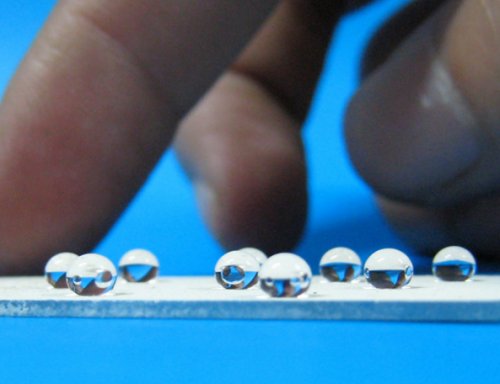
    For the water in the pan scenario, there exists a temperature above which water is so quickly vaporized upon hitting the pan a thin layer of steam is trapped below the liquid droplet, causing it to literally levitate above the surface of the pan on cushion of water vapor. Think air hockey table, but droplets of boiling water replacing the plastic puck. This temperature is called the “Leidenfrost point”, which according to unreferenced figure from Wikipedia is about 200 °C. Steam has a thermal conductivity roughly 10-100 times lower than that of liquid water depending on the temperature. In an idealized example, thermal conductivity is a measure of how easily a quantity of heat in a high temperature region can travel from one side of a 100% dense (no porosity) slab of material to the other. Thermal conductivity has units of energy per length per degree per second (Joules/(meter*°C*seconds)), meaning for a fixed length and temperature a material with lower thermal conductivity will take more time than a material with higher thermal conductivity to transfer the same amount of energy.

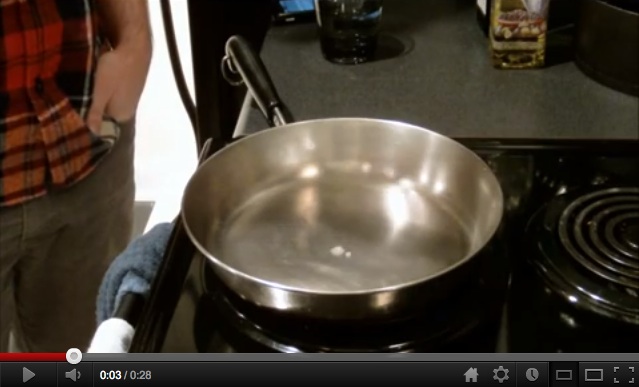
    At temperatures above the Leidenfrost point the Leidenfrost effect is observed and drops of water on a pan will take longer to boil because the steam trapped below the liquid water takes more time to transfer heat to the droplet from the pan. The videos below demonstrate drops of water into a pan below (top) and above (bottom) the Leidenfrost point. Above the Leidenfrost point, the droplets can barely be heard to sizzle as they zoom around on cushions of steam. For the pan heated above the Leidenfrost point, occasional contact with the edges of the pan, which are actually at a lower temperature or placing drops repeatedly in the same area which leads to local cooling will lead to momentary sizzling as the entire droplet boils. For the videos below, I used a nonstick pan and an eyedropper to put a few drops of tapwater onto the pan at a time. For the lower temperature I set my range to setting of 2 out of 10 and for the higher temperature I set it to about 6 out of 10 and waited a few minutes at each temperature for the pan to heat up.


    You may have heard of ole’ Leidenfrost’s namesake before associated with dipping things (namely one’s hand) into boiling lead after placing it in water. The Myth Busters did it after significant deliberation and preliminary testing, but somehow the alpha geeks at PopSci seemed to think it would make a good “DIY” project. I have to say, I can understand why dipping digits is the sexier version of the Leidenfrost effect demonstration, but the pan + water trick seems a little less invasive. In their defense, PopSci also covered this demo and the equivalent effect with boiling Nitrogen instead of steam as well.

    However you plan to enjoy the Leidenfrost effect, do so under proper supervision and be careful.

    Check out part 2 for a discussion on the second scenario!