Tag: winter

  • Battle of the Hands: Mittens vs. Gloves

    Tis the season for frozen fingers and numb thumbs trying to type on a small phone keyboard. If you’re like me, you like We can wear puffy coats but our hands are unprotected from the wintry winds. So how should we keep our hands warm? Are gloves better at keeping our fingers warm or should we shift our attention to mittens? In order to answer these questions, we need to understand a few things about how the body and the world work.
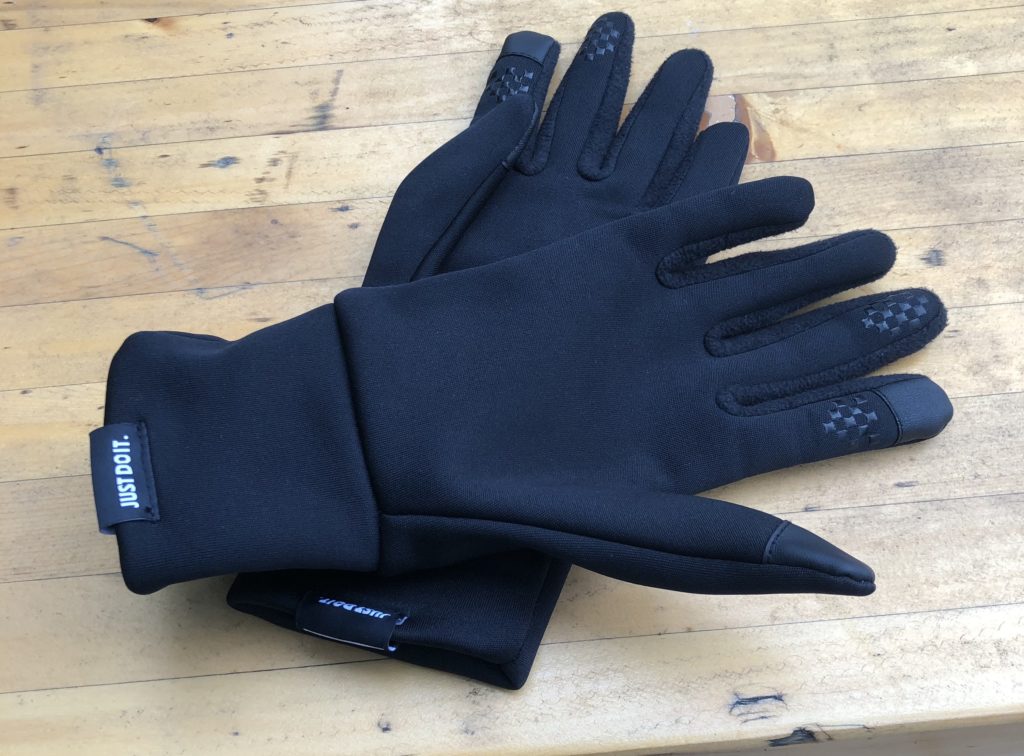
    If you were to lose a part of your body, which part would you want to go first? Probably a toe, a finger… but probably not your head or heart. Our bodies have evolved to preserve the important parts (vital organs), so our appendages get cold first. This is great and all, you know, living, but it does mean we are faced with popsicles for fingers.

    And the winner is…

    Gloves provide individual protection for each finger, while mittens encase most of your fingers in one compartment. What are the advantages and disadvantages of these differences? Heat is continuously generated in the body through various metabolic processes (a topic for another time) and is exchanged within our body as well with our external surroundings. Generally, heat is transferred in four ways: conduction, convection, evaporation and radiation. In a system, heat cannot be created or destroyed: this is the First Law of Thermodynamics. So if our fingers are individually separated, like in the case of gloves, heat from our fingers is being transferred to the surface of the gloves themselves. Heat is moving to the gloves because heat will move from a hotter object to a cooler one. On the other hand (Ha!), mittens allow the fingers to come into contact with each other. This means that heat that is lost from one finger can be transferred to another finger. It’s a win-win-win-win, thank you physics! This heat can be “trapped” and provides insulation.

    So if you find yourself at a store asking yourself “Should I get mittens or gloves?” Here is your answer: Mittens if your goal is warmth, gloves if you want to be able to carry out complex tasks at hand and glittens (fingerless gloves with a mitten flap) if you are fancy! If going to a store is too much trouble, keeping your hands in your coat pocket will do the trick and your thumb can get in on the heat transfer party. 

    A Look Backstage (Sources)

    Fox, R.H., Wyatt, H.T. (1962). Cold-induced vasodilation in various areas of the body surface of  man. Journal of Physiology, 162, 289-297.

    Holmer, I. (1985).Heat exchange and thermal insulation compared in woolen and nylon    garments during wear trials. Textile Research Journal, 55(9), 511-518.

    Huizenga, C. (2004). Skin and core temperature response to partial and whole body heating and  cooling. Journal of Thermal Biology, 29(7), 549-558. 

    Iserson, K. (2016). Glove and mitten protection in extreme cold weather: an Antarctic study.   International Journal of Circumpolar Health, 75, 33564. 

    Thermopedia. Body (human) heat transfer. Retrieved from http://www.thermopedia.com/content/ 587/

  • Ain’t No Sunshine When She’s Gone

    Frazer_Park_(Portland,_Oregon)Before I moved away from Florida I never realized how much I depended on good weather to motivate me.  I’d always believed that optimism and happiness came from within, but now I know this is only half true.  Moving to an area that gets less sunshine than from where you came from is a real downer.  Atlanta gets a relatively median amount of sunshine per year (compare Atlanta GA at ~217 days; Tampa FL at ~244 days; Seattle WA at ~164 days) but the pitiful winter here harbors few sunny days.  Gray skies can last for 3 days straight, the harsh cold wind is relentless, and February seems like the longest month of the year despite having the least amount of days.

    What bugs me most is that threatening clouds hover over the city for days but never DO ANYTHING.  At least in Florida when clouds come, they produce rain, thunder and lightning for an hour, then get the hell out and the ordeal is over.  But here, when the weather wants to be gloomy, it’s taking you down too.  It doesn’t help when my family, still in Florida, tells me they’ve taken the boat out every weekend since the beginning of February.

    It’s amazing how the weather can be a source of depression.  I’m sure you’ve heard of seasonal depression, which is technically called Seasonal Affective Disorder.  If you haven’t, it is a type of depression that occurs when bright light and sunshine is limited, most often during the winter months.  Sunshine is the obvious treatment for the disorder but just how effective is sunshine?  Especially when every dermatologist and health magazine advises you to block the sun?

    Studies have shown that the brain produces more of the natural antidepressant serotonin on sunny days than on darker days.  This is regardless of the season.  Not only are serotonin levels higher on bright days than on overcast ones, but the rate of serotonin production is directly related to the duration of bright sunlight.  No other atmospheric conditions are related to serotonin levels (article from WebMD Health News).

    When sunlight interacts with our skin, Vitamin D is produced through photochemical reactions.  Of course, prolonged UV exposure can be harmful for your skin, but some exposure is extremely beneficial.  (DO: Be active in sunlight when possible, with at least 25 SPF on.  DO NOT: Lay by the beach all day without lotion).  Vitamin D works together with calcium to build strong bones and maintain bone strength.   It also has a preventative effect for some cancers including colon, breast, ovarian and prostate.  A deficiency in Vitamin D is linked to these types of cancer as well as to depression, lowered immunity, osteoporosis, and arthritis.

    You might have been aware that sunshine was positive for you, but here are some fun facts that maybe you didn’t know:

    • According to Healthkicker, people tend to buy more lottery tickets on cloudy days because weather-induced bad moods deplete self control, making us vulnerable to temptation.  (Ladies, think Ben & Jerry’s ice cream pint intakes – were those ever on bright sunny days?)
    • People use more alcohol, coffee, tobacco and chocolate when there’s less sunshine because they feel the need to compensate artificially as means to elevating their mood.
    • Getting a daily dose of sunshine increases your number of white blood cells, which in turn enhances your immune system, stated by Natural Health Restored.
    • Sunshine encourages healthy circulation by also stimulating the production of red blood cells, which increases the amount of oxygen in your blood.
    • A study performed at the University of Michigan proved that sunshine is strongly correlated with daily stock returns.  Stocks traded on sunny days yielded nearly 25% more money than those traded during cloudy periods.  Psychologists attribute this to people’s tendency to view situations more optimistically when it’s sunny, and less likely to scrutinize an investment they might cast aside when feeling grumpy.

    March is only a few weeks away, which means warmer weather is coming.  Besides the fact that spring is my favorite season, I am SO excited to shed my layers of fuzzy clothes and to enjoy Atlanta’s parks again.  When the time comes, do yourself a favor and GET OUT of the library, frolic in the daylight like a fool high on Vitamin D and always wear some sunscreen!

    In the spirit of things: [soundcloud url=”http://api.soundcloud.com/tracks/44617965″ params=”” width=” 100%” height=”166″ iframe=”true” /]

    Photo by Maria Fiala courtesy of Creative Commons.