Category: Funny Bone

  • How To Prove That You Are Psychic

    Throughout history, many people have claimed to be able to perform amazing feats that defy science and logic. Such claims continue today in many different flavors. There are claims of dowsing, psychic spoon bending, telekinesis, miracle healing, telepathy, x-ray vision, contacting the dead, electricity detection, cloud moving, and much, much more. When a person claims to have amazing abilities, usually one of two things happen. The person’s story is laughed off or ignored by the public, or they are seen as legitimate, gain a significant following, and make lots of money from public demonstrations of their powers. Both scenarios have an interesting common element: A deliberate exclusion of science. Many news reports that cover alleged psychics, for instance, maintain a skeptical tone but avoid mentioning the fact that psychic powers have not been proven to exist. On the opposite end of the public belief spectrum, people who fully believe in the reality of superpowers brush aside little things like the laws of physics and are always ready with an explanation of how their favorite psychic is not obligated to prove that their powers are real. This phenomenon of silence on the intersection of science and superpowers begs the question of how a person with superpowers could scientifically prove them to be real.

    Luckily, we don’t have to speculate about this topic. There is a clear pathway for an individual with psychic or paranormal powers to prove themselves and gain scientific acceptance of the existence of their abilities. If you are such an individual, read on for a list of dos and don’ts that will help you on your quest for scientific acceptance.

    Do work with experts to investigate your ability

    One of the harshest realities of proving the existence of superpowers is that public acceptance means nothing. Large numbers of people routinely fall for fake psychics, political propaganda, and Nigerian prince emails. The number of people who believe in your powers does not constitute strong evidence in your favor. What you actually need is the acceptance of experts who have education and experience in a field of study that is closely related to your claims. Willingness to have an expert test your powers will earn you goodwill with the scientific community, and participating in an experiment designed by someone with knowledge of the workings of science increases the likelihood of acceptance of your powers if you pass the test. If you are telekinetic or psychic, go find a physicist or psychologist and ask them about testing your powers. If you can alter the brightness of a lightbulb, approach an expert in electricity. If you have the power to make someone urinate with your mind (yes, a person has claimed to have this ability), ask a doctor or medical researcher. Expertise comes in many forms; professional magicians are a frequently overlooked group of experts on superpowers. Since magicians make their living by fooling people, they are experts in distraction, deception, and performing the seemingly impossible on command. If you can demonstrate an ability that a magician cannot replicate with magic tricks, it greatly lessens the likelihood of fraud on your part.

    Now, most individual scientists and magicians have busy schedules and may not be available to test your claims. However, there are a few professional groups that hold contests or challenges related to unusual abilities (Wikipedia Contributors 2025). Generally, the way the challenges work is that if someone is able to demonstrate superpowers under scientific testing conditions and passes both a preliminary demonstration and a final test, they will win scientific recognition of their ability and a monetary prize. One of the most prominent is held by the Center for Inquiry Investigations Group. The CFIIG’s Paranormal Challenge invites people with superpowers to participate in a two-part test of their abilities and offers a $500,000 prize to winners (Kreidler 2012). (A smaller $5,000 amount is also available to anyone who refers a winner to the CFIIG.) To accept the challenge, an applicant simply fills out an online application. Once the application is received, the CFIIG contacts the applicant to ask for further details and negotiate a testing protocol that both parties can agree on.

    Don’t refuse to be tested by skeptics

    The inverse of the first piece of advice is obvious, and yet it is frequently ignored. Don’t refuse tests of your powers! Science relies on repeated testing to prove the existence of any particular phenomenon, so anything that cannot be tested will not be accepted by science. This is a fact that most public psychic mediums choose to ignore. (James Randi, a famous magician, once offered a million-dollar prize to psychics who could prove their powers to him, but the most famous psychics of his day, including Uri Geller and Sylvia Browne, never took up the challenge [Higginbotham 2014].) Since a person who publicly claims to have amazing powers has nothing to lose and much to gain by getting tested, refusal makes one look suspicious at best and intentionally deceptive at worst.

    Here’s a quick primer on how an experiment works. The gold standard for many areas of science is replicable experiments that are both controlled and double blinded. A “control” in an experiment is a factor that is kept the same throughout the test; it helps establish that the test procedure is working properly. (You may remember the “C” bar on a COVID-19 at-home test, which signaled that the test was invalid if it did not appear.) In addition, the use of experimental controls helps reduce the effects of chance and any variables other than the one being tested. For example, in a test of the ability to move clouds across the sky, a participant would focus on a single cloud and move it to a certain part of the sky or near a particular landmark that had been decided on before the start of the test. The researchers could keep track of the wind speed and weather at the location of the cloud mover and schedule the test for a date when low winds and no significant changes in weather are forecasted.

    A double blinded experiment is one in which neither the participant nor the researcher knows crucial information about the condition or treatment that the participant receives until after the test ends. Blinding is very important in scientific research, as there are many areas of study in which the expectations of the people involved can bias results and reduce the accuracy of experiments, including paranormal research. For a person who claims to be able to predict future events, such as knowing the next playing card in a deck, an example of double blinding would be measures to keep the deck hidden and random. The researcher could replace old cards and shuffle the deck before each trial, then remove a new card from the deck and present it to the participant facedown on a table. The participant would then predict the card’s number and suit without having any information about it. Because the researcher would also be unable to see the card, they would not be able to accidentally give away any hints via body language, facial expressions, or other gestures. Furthermore, the constant replacement of cards and reshuffling of the deck would mean that the participant would not be able to make guesses that were informed by the knowledge of which cards had already appeared. In a scenario like this one, correct predictions are much more likely to be due to a genuine paranormal skill than in a situation in which, say, the cards weren’t replaced and the participant could have made accurate predictions via card counting.

    Finally, all established facts in science must be replicable. This criterion is simple: If an experiment produces certain results, and someone else later runs the same experiment with the same protocol, it should produce similar results to the original. Groups of studies are more reliable than single ones, since the effects of chance and poor experimental design become diluted as the topic is studied more. Moreover, the replication of results by people who are unconnected to the original researcher reduces the likelihood of experimenter bias. Replicability is why many paranormal contests ask participants to successfully complete two tests to win. If a participant is able to demonstrate a superpower multiple times on demand in well-designed experiments, researchers can be significantly more confident in deeming the results to be truly due to the claimed power and not a statistical fluke.

    Demonstrating a willingness to complete scientific tests includes not refusing controls, blinds, or repeats. The actions of one applicant to the CFIIG Paranormal Challenge, Toni M., provide an excellent example of what not to do when creating test protocol and performing demonstrations. Toni initially suggested that the CFIIG should simply take her at her word that she could perform miracle healings, exorcise demons, and speak to the dead. When informed that testimony was not sufficient and that she needed to be tested, she responded, “OK so this means no lol thank you i guess [errors in original text]” (Underdown 2022). Months later, after reapplying, negotiating, and receiving suggestions for test protocol, Toni reversed course and agreed to a demonstration in which she would determine the birth dates of eight dead people from photographs. All parties agreed that she only needed to determine months and days of birth, not years. However, she failed to show up for the preliminary demonstration three times, resulting in weeks of delays. When Toni finally attended, she told CFIIG personnel that she was confident in her abilities and would be able to correctly identify each birth date, but turned out to be incorrect on all eight people. If you are ever within reach of scientific acceptance of your powers, don’t reject rigorous testing or fail to keep your appointments. Such behavior will draw the suspicion of the people who are investigating your ability, make you look lazy and entitled, and give the impression that you want to be given scientific acceptance without having to put in the work to provide evidence.

    Do create a specific claim that can be tested in a practical manner

    A frequent problem relating to the scientific acceptance of unusual abilities is that the claim cannot be tested. There are a number of pitfalls that can make a claim untestable. Sometimes a person has a claim that is very vague. (“I can send thoughts to people.” Can you send words, images, or both? How lengthy or complex can they be? Do you need to sit close to a person, or can you send them thoughts from a distance?) Once in a while, a claim is unfalsifiable, meaning that it is so arbitrary and expansive that it can never be proven wrong under any circumstances. (“I am capable of remote viewing – describing a given location that I have never seen with my eyes.” In these cases, even the most vague and common details can count as a hit, such as the statement that one can see grass, trees, and fields of crops when challenged to describe a particular farm.) Occasionally, a claimed superpower is not tested because an experiment would be too dangerous for participants. (According to Jim Underdown, one of the main investigators for the CFIIG, a man once tried to enter the Paranormal Challenge with the claim that he could stop bullets with his mind. Underdown’s legal consultant immediately nixed the test [Center for Inquiry 2024].)

    To avoid these issues, work with researchers to craft a specific claim about a single ability. If you have more than one power, they can each be tested in separate experiments. Think about the questions that you might be asked. If you can predict the future, what kinds of events can you predict? If you can move objects with your mind, how far? If you can sense electricity, do you see, hear, feel, or smell it? Does your ability work under any circumstances, or do you need certain conditions to use it? How much time does it generally take for you to get results? Do you need particular items or other participants for a demonstration? Answering these questions can both help you learn more about your powers and aid in creating a test that you are sure is both fair and a good demonstration.

    Don’t ignore the realities of mental illness

    On the CFIIG’s Paranormal Challenge application webpage, there is a section labeled “Please Read Before Applying.” It includes a video and few paragraphs for people who apply to the challenge with the claim of telepathy. Here is the most important excerpt.

    “If your telepathic claim involves hearing voices that those around you don’t hear, reading other people’s thoughts, or believing others can hear your thoughts, please consider the following:

    What you are experiencing is consistent with recognized illnesses of the mind that are known to cause symptoms like what you are experiencing. Conditions like schizophrenia and other disorders are not paranormal ability, they are chemical imbalances in the brain, and there may be treatment available to help you.” (CFIIG 2012)

    This warning touches on an important issue that is relevant to the scientific testing of psychic abilities: mental health. Although the majority of paranormal believers and people who believe they have unusual powers are not mentally ill, there are specific alleged abilities that include symptoms of mental illness. If you (or someone you know who claims to have such abilities) experience these symptoms, it’s important to get checked by a licensed professional, even if only to check off an alternative explanation for your powers.

    The presence of mental illness also has significant implications for certain social dynamics in situations where unusual abilities are involved. There are cases where a person is both mentally ill and is encouraged in their belief of their powers by the people around them, raising the possibility of abuse and exploitation. The CFIIG once tested a young man named Phillip L. who claimed that he had clairaudience, the ability to hear sounds from very far away and even through soundproof barriers (Kreidler 2011). Phillip participated in a preliminary demonstration in which he attempted to listen in on words and phrases that were spoken by a person in a room a floor above him. After he proved unable to tell what they were saying, the CFIIG interviewed him and discovered that he had been diagnosed with schizophrenia, and that his parents and church had directed him to stop taking his medication. This scenario is extremely concerning. Instead of supporting him and encouraging him to stay in treatment, Phillip’s community likely misled or pressured him into the belief that he was clairaudient, which is unlikely to help him and could cause him significant harm. At best, this was a misguided attempt at using religion to erase a real and serious medical condition. At worst, Phillip’s parents were focused on earning monetary benefits from his “powers,” either by receiving the $5,000 referral award or by controlling the way Phillip spent his own prize money. If you are ever in such a situation, recognize the red flags and get out!

    Despite the problematic nature of mental illness in testing superpowers, the CFIIG has a rule that they will not refuse to test a person due to mental illness (or any altered state of mind, including intoxication)(Center for Inquiry 2024). After all, if psychic powers or paranormal abilities truly do exist, there is no reason why a person could not have a mental illness in addition to such an ability, and it is not the CFIIG’s place to give unsolicited diagnoses. Nonetheless, anyone who believes they have a superpower or knows someone who does should know the relevant facts and be prepared to rule out mental health as an explanation.

    Do remain open to scientific and alternative explanations for your powers

    Not every amazing power will turn out to be real. In fact, to this day, no one has ever successfully demonstrated such an ability under scientific testing conditions. Therefore, the odds of your particular power being a genuine paranormal ability are very low. This isn’t a bad thing, but it does mean that you should be willing to explore alternative hypotheses.

    Sometimes, a proposed superpower is actually an ordinary human ability or a byproduct of known physics. The CFIIG once received an application from a Jon G., who claimed to be able to “circumvent Newton’s Laws of Motion” (Underdown 2020). As evidence, Jon sent in a video showing a glass top that spins counterclockwise, then stops, turns clockwise, and then reverses again and spins counterclockwise once more. The video surprised CFIIG personnel, and they asked Jon to add controls and brainstormed various ways of cheating, but these measures did not affect the top’s motion in repeated experiments. Finally, they called in some physics experts, who told them that a slight tilt in the table and an irregular top shape would produce the effect. The CFIIG was able to create a top of their own and replicate the three turns, demonstrating that the effect that Jon observed was unlikely to be due to any superpowers on his part.

    Another possible explanation for many superpowers is the Dunning-Kruger Effect, a psychological phenomenon in which a person believes they are much more skilled or competent than they actually are (Wikipedia Contributors 2025). The amusing event that inspired the original research on this topic was a series of 1995 bank robberies. Two men named McArthur Wheeler and Clifton Johnson robbed two Pittsburgh banks at gunpoint, and for some reason, they didn’t seem to take any measures to hide their faces or disguise themselves. They were caught relatively quickly due to the fact that their faces were visible on security camera footage. When asked for an explanation for their apparent lack of precautions, the men claimed that they had covered their faces with lemon juice to make themselves invisible to cameras and were shocked when they saw photos of themselves that had been taken from the camera footage. Wheeler said that he had even tested their theory by putting lemon juice on his face and photographing himself and claimed that he hadn’t appeared in the resulting photo. (This result probably occurred due to bad film or user error.) The fact that the robbers were willing to bet their freedom on the paranormal properties of lemon juice demonstrates how easy it is to become overconfident in oneself, no matter how outlandish or nonsensical one’s ideas are.

    There are a host of other physics, psychological, and statistical nuances that produce results similar to many alleged psychic powers, too many to list here. However, they all demonstrate the same facts: That our perception, memory, and reasoning are flawed, and that it is entirely possible for ordinary people to believe that they have supernatural powers or have witnessed an unexplainable event when nothing out of the ordinary actually happened. These phenomena have fooled countless individuals, from Nobel Prize winners and powerful heads of state to average Joes. It’s perfectly plausible that you may have been tricked as well, and that doesn’t mean you are unintelligent or not observant; it just means that you are human.

    Don’t make excuses for failure

    One last piece of advice: If your abilities are tested and fail, don’t try to make excuses or ask for extra opportunities. Agreeing to a test means confirming that you believe you are capable of successfully completing the tasks involved. Success in a test provides evidence that your powers are real, and failure is evidence against their existence. If you refuse to admit this fact in the event of failure, your claims become unfalsifiable and you will not gain scientific acceptance.

    The case of Natasha Demkina illustrates this fact well. Hailed by believers as “the girl with X-ray eyes,” the 17-year-old claimed to be able to see inside peoples’ bodies well enough to identify organs and make medical diagnoses (Hyman 2005). She alleged that she could see through a person’s clothing (though not through cloth screens, for some reason) and diagnose via photographs as well as in person. There were plenty of people willing to offer anecdotal evidence in her favor, but she did not participate in any formal tests until the Discovery Channel became interested in making a program about her story.

    Natasha was tested in 2005 by the Center for Inquiry, the CFIIG’s parent organization, as part of the material for the television program. The issue in Natasha’s claim (and any claim involving medical diagnoses) was that it’s possible to know a person’s medical information via means other than X-ray vision. As a result, the test included measures to prevent the following phenomena:

    • Good Luck and the Texas Sharpshooter Fallacy: It’s easy to claim high accuracy when only your best results are reported. Natasha had given diagnoses for so many people by the time she agreed to be tested that she had a high probability of being surprisingly accurate in at least a few cases just by luck. Her supporters then argued that her powers were real by publicizing those “accurate” cases and downplaying or ignoring instances in which she turned out to be wrong. To prevent this fallacy from coming into play during the test, the CFI personnel simply kept track of all of her stated diagnoses, whether they were accurate or not.
    • Post Hoc Hypotheses: An experiment rarely yields relevant information if a specific hypothesis and test criteria aren’t constructed beforehand. A major issue in the testimony in favor of Natasha’s ability was that no one ever took the time to craft hard rules for what counted as “accurate” diagnoses and what counted as “inaccurate” ones. This failure meant that Natasha could make any reasonably likely diagnosis and clients and supporters would decide after the fact that everything she said was correct. If Natasha told a person that they had a health issue in an area of the body where they were suffering or that they had previously experienced difficulty with, they would claim that she successfully detected a problem that they knew all along was a significant health issue. If Natasha told them that they had a disease or injury in a part of the body that they had not had problems with, on the other hand, she would be credited with discovering a brand new health issue that had mysteriously escaped the notice of both the client and their doctor. The CFIIG’s test dodged this issue by settling on specific test criteria for clear-cut medical issues, and they enlisted test volunteers who had known internal medical conditions. Natasha agreed that she would view the volunteers and write down her diagnoses for the absence or alteration of organs, since such conditions were easy to verify. (The test was even made easier because the CFIIG gave her test papers asking for certain organs: Heart, skull, esophagus, lung, hip, appendix, and one control volunteer with no changes to any of these body parts. Each paper included an anatomical diagram in addition to a written prompt.) In addition, all parties agreed on the bar for success beforehand. If Natasha was able to successfully identify the organ status of five or more of the seven volunteers, the test would be considered evidence in favor of her claimed superpower.
    • Cueing and Reinforcing Feedback: When hearing about Natasha from her supporters, one can easily fall into the trap of assuming that her readings were made in a vacuum and that her accurate diagnoses “just can’t be explained” by anything other than a genuine psychic power. In reality, Natasha frequently interacted with her clients, and those interactions included both verbal exchanges and nonverbal communication such as eye movements, facial expressions, and body language. This context posed a major challenge, because any communication, no matter how subtle, could give Natasha clues about a person’s health. If they asked her to look at their heart, for example, she would easily be able to diagnose a heart problem by simply guessing common issues associated with that organ. Furthermore, a person’s appearance and the nonverbal information they communicated (unconscious on the part of the communicator and sometimes even the receiver) were also likely to make a difference in diagnosis. Limping, posture, breathing, and many other actions all hint at the state of a person’s health, and an interested expression or a nod would indicate that Natasha’s predictions were close. Even the situation would have given Natasha information; after all, most people who came to see her did so because they were already sick or injured. To eliminate the effect of cues and feedback, the volunteers were given opaque glasses to wear to obscure their eye movements. They were also instructed not to speak to Natasha and to stand still and keep their hands at their sides or in their pockets during the test. As a further control measure, the test was double blinded, so that the personnel who conducted the test were ignorant of each volunteer’s medical conditions and could not give any cues to Natasha or to her interpreters.

    Natasha seemed to do everything correctly. She and her supporters negotiated with the CFIIG and developed a test protocol that everyone agreed on. The CFIIG was satisfied with the scientific rigor of the test, Natasha confirmed that it was within her power to complete and pass it, and the Discovery channel was happy to get a scientific demonstration on video. On the day of the test, Natasha showed up early. She asked clarifying questions about the organs she was going to look for and spoke up for herself in an instance where she was uncomfortable with the testing environment. She took as much time as she needed to make predictions that she felt certain were accurate.

    Ultimately, she correctly identified the people with metal staples from a heart surgery, part of a lung removed, a hip replacement, and no medical conditions, but these four correct predictions fell below the test’s threshold of 5/7 accuracy. In addition, Natasha failed to correctly identify the people with a metal plate in their head, a shortened esophagus, and a missing appendix. All of those conditions should have been extremely obvious and easy to spot if she truly had the ability to see their organs. After learning that she had failed, she asked the test personnel for permission to diagnose them in the hopes of getting an extra chance to prove her powers (Skolnick 2005). When one tester, Andrew Skolnick, consented, she informed him that he had problems in an astonishing eleven different organs and body parts! Skolnick did not have any of these conditions, and amazingly, despite the massive number of his organs that Natasha claimed were diseased, she missed all seven of the medical issues that Skolnick truly had been diagnosed with.

    Despite the reasonable test measures, Natasha’s supporters immediately began complaining. The test had been too hard; the winning grade was too restrictive; the CFIIG had intentionally manipulated the protocol to discredit Natasha and prevent her from winning! Natasha herself claimed that four out of seven was close enough and that the test should have been declared a success. The CFIIG responded to these grievances by noting that Natasha and her supporters had co-written the test protocol and agreed that she was capable of passing the test under scientific conditions. Furthermore, since people were relying on Natasha’s diagnoses to make real-life medical decisions (and paying her their real-life money in the process), didn’t she have a responsibility to disclose to her clients the fact that her accuracy was barely higher than 50%? Incorrect medical diagnoses can cause serious harm; people may deal with unnecessary stress and fear, take superfluous medication with unwanted side effects, and undergo invasive tests and even surgeries that they don’t need to. Natasha’s publicly claimed accuracy rates were close to 100%, which no doubt attracted clients and led many people to believe in her powers. Those people had the right to know that her powers had not been proven and weren’t as accurate as they thought.

    The complaints also induced the CFIIG to take a closer look at the volunteers whose conditions had been correctly identified and at the test as a whole. On further inspection, the appearance of multiple volunteers whose status had been accurately predicted by Natasha could have served as clues as to their health status. The man with the staples in his heart was the oldest volunteer and looked the most ill out of everyone in the group. In contrast, the volunteer who Natasha correctly identified as having no medical issues was the youngest and looked the healthiest. Furthermore, Natasha and her interpreters and supporters had ignored protocol on multiple occasions during the test. As a result of their early arrival, they had been able to view two of the volunteers walking into the building via a flight of stairs, which could have given Natasha clues to whether either of those people had the hip replacement. Later, during the test, Natasha’s interpreter Svetlana Skarbo announced in front of the volunteers (in English) that Natasha was looking for the person with part of a lung removed. This act increased the possibility of that volunteer giving cues to Natasha, since they would now have known that Natasha was looking for them at that time. Finally, Skarbo broke the rules again by pulling out her cell phone and sending messages during the test despite the protocol’s ban on use of electronic devices in the testing room.

    The results of this second look at the test are devastating to the case for Natasha’s powers. The fact remains that Natasha did not pass the test, and now it seems that her accurate diagnoses were not made with the aid of any supernatural abilities. Furthermore, a person very close to Natasha may have tried to cheat by communicating with outside parties as Natasha was deciding on the diagnoses. If Natasha really had X-ray vision, she shouldn’t have needed clues from a person’s appearance or behavior to diagnose them, and would have given correct diagnoses for all seven volunteers. Her complete failure even when given an extra attempt under much looser conditions is the icing on the cake. The most likely conclusion, considering the evidence, is that Natasha either has no superpowers, or her powers are so weak that her diagnoses are no more accurate than a coin flip. In either case, it was disingenuous for her and her supporters to claim near-perfect accuracy with medical diagnoses, and makes the fact that she charged money for her readings look like an outright scam. The irony of all this is that the CFIIG wouldn’t have reexamined the test or allowed her to attempt to diagnose their people if Natasha and her supporters hadn’t tried to force acceptance of her claims despite her failure.

    Ultimately, scientific testing of psychic powers is a complicated venture, but a necessary one. Public claims of paranormal abilities currently encourage a wide variety of anti-scientific beliefs and discourage critical thinking and requests for solid evidence. This atmosphere allows people to be taken advantage of by paranormal scams, expensive “psychic” demonstrations, and medical misinformation. Scientific testing of such abilities helps clear the air and establish whether they truly work or not, while demonstrating the principles behind science and showing how facts are tested in the real world. It’s also possible, though not very likely, that there are a few people in the world with genuinely extraordinary abilities. Their existence would be extremely important for science, and experts from a wide variety of fields would be able to learn a lot by testing them and exploring how their powers worked. If this is the case, we can only hope that one of these individuals plucks up the courage to seek scientific acceptance. Will it be you?

    References:

    Center for Inquiry. (2024, August 9). Sci vs. Psi: Testing Superpowers | Jim Underdown on Skeptical Inquirer Presents. YouTube. https://www.youtube.com/watch?v=k0139t6nEvs

    Higginbotham, A. (2014, November 7). The Unbelievable Skepticism of the Amazing Randi. The New York Times. https://www.nytimes.com/2014/11/09/magazine/the-unbelievable-skepticism-of-the-amazing-randi.html

    Hyman, R. (2005, May). Testing Natasha. Skeptical Inquirer. https://skepticalinquirer.org/2005/05/testing-natasha/

    Kreidler, M. (2011, February). Phillip Lee | CFI Investigations Group. Cfiig.org. https://cfiig.org/phillip-lee/

    Kreidler, M. (2012, April 8). The CFIIG Paranormal Challenge | CFI Investigations Group. Cfiig.org. https://cfiig.org/paranormal-challenge/

    Underdown, J. (2022, August 26). Deciphering the Dead | CFI Investigations Group. Cfiig.org. https://cfiig.org/deciphering-the-dead/

    ‌Underdown, J. (2020, September 15). Top Physics | CFI Investigations Group. Cfiig.org. https://cfiig.org/top-physics/

    Wikipedia Contributors. (2025, August 17). 1995 Greater Pittsburgh bank robberies. Wikipedia; Wikimedia Foundation.

    Wikipedia Contributors. (2025, May 22). List of prizes for evidence of the paranormal. Wikipedia; Wikimedia Foundation.

  • What Organelle Are You Based on Your Favorite 2000s Movie?

    Have you ever wondered what organelle you’d be in a cell? Just like characters in iconic 2000s movies, organelles have unique roles that contribute to the cell’s life story. Take a look at the movies below and find out which one matches your style. From managing all the work in the cell like “The Devil Wears Prada,” to keeping everyone energized like “The Incredibles,” here’s your ultimate guide!

    1. Mean Girls (2004) – Nucleus

    Quote: “That’s why her hair is so big; it’s full of secrets.”

    If Mean Girls is your jam, you’re definitely the Nucleus. Just like Regina George, you’re the center of attention, calling the shots and directing everyone around you. The nucleus is where all the DNA is stored, holding the key to the cell’s identity and future. Just as Regina’s word determines who’s “in” or “out,” the nucleus controls which genes are expressed, setting the tone for everything the cell does.

    1. The Devil Wears Prada (2006) – Endoplasmic Reticulum (ER)

    Quote: “Details of your incompetence do not interest me.”

    Love The Devil Wears Prada? Then you might be the Endoplasmic Reticulum (ER)! Like Miranda Priestly’s finely tuned office, the ER is responsible for protein and lipid synthesis, making sure everything runs smoothly. The rough ER even has ribosomes attached—just like Miranda has assistants—to help with the workload. Your organizational skills are unmatched, and everyone in the cell (or office) depends on you to get things done.

    1. Finding Nemo (2003) – Mitochondria

    Quote: “Just keep swimming!”

    If Finding Nemo is your favorite 2000s movie, you’re definitely the Mitochondria! Known as the powerhouse of the cell, the mitochondria provide energy, keeping everyone going, just like Dory’s endless optimism. You’re always there to keep things running smoothly, and you don’t give up, even when the current gets strong. Adventure and resilience are your strong suits—just like Dory’s!

    1. The Incredibles (2004) – Golgi Apparatus

    Quote: “We get there when we get there!”

    Fans of The Incredibles are a perfect fit for the Golgi Apparatus. This organelle sorts, packages, and ships proteins to their final destinations, making it just as dependable and versatile as the Parr family. You’re all about teamwork and keeping everything organized, just like how Mr. Incredible and Elastigirl manage their superhero family. Plus, you know how to handle the pressure of saving the day (or cell).

    1. Pirates of the Caribbean: The Curse of the Black Pearl (2003) – Lysosome

    Quote: “You best start believing in ghost stories, Miss Turner… you’re in one!”

    If you’re a Pirates of the Caribbean fan, you’re the Lysosome! The lysosome’s job is to break down waste and unwanted material, a bit like Captain Jack Sparrow sailing through rough seas and obstacles. Just as Jack finds clever ways to solve problems, the lysosome is like the cell’s cleanup crew, digesting whatever needs breaking down. You thrive in chaos and love a good challenge, no matter how messy things get.

    1. Shrek (2001) – Cell Membrane

    Quote: “Ogres are like onions; they have layers.”

    If you’re a Shrek fan, you’re the Cell Membrane. Like Shrek’s swamp, the cell membrane has layers and acts as a boundary, deciding what can come in and out. It keeps the cell safe, much like Shrek’s protective nature, and is essential for maintaining stability. You’re a no-nonsense protector who values boundaries and has no problem saying, “This is my swamp!”

    1. Legally Blonde (2001) – Ribosome

    Quote: “What, like it’s hard?”

    If you love Legally Blonde, you’re definitely the Ribosome. The ribosome is the site of protein synthesis, which means it’s constantly producing new things, just like Elle Woods is always working toward her goals. No challenge is too big for you, and you can handle multitasking like a pro. You’re both hard-working and underestimated, always ready to prove yourself with a “bend and snap!”

    1. High School Musical (2006) – Cytoplasm

    Quote: “We’re all in this together!”

    If High School Musical is your top pick, you’re the Cytoplasm. The cytoplasm is like the cell’s main environment, where everything happens. It supports the organelles, keeps everyone connected, and ensures that the cell is functioning properly. Just like the Wildcats, you’re all about teamwork and unity, providing a safe space for everyone to thrive. Your mantra? We’re all in this together!

    Each organelle has a role to play, just like each character in a classic 2000s movie. So, which organelle are you?

  • Cell Organelle Tier List

    Cells, Cells, They’re Made of Organelles!
    Remember that song from 7th grade? It’s stuck in my head, and I’m dragging you along for the ride. Today, I’m ranking organelles from most important to least (in my opinion), with tiers ranging from S (top) to D (bottom).


    S TIER

    1. Nucleus
      The nucleus is the cell’s brain—where all the critical decisions happen (well, metaphorically). It houses DNA, which contains the instructions for building and maintaining the organism. Without the nucleus, cells wouldn’t know what to do, and life as we know it would cease to exist.

    Why it’s in this tier: It literally controls everything. Plus, mitosis? All nucleus. You and I would not be here if not for the nucleus.

    Source: National Human Genome Research Institute

    1. Plasma Membrane
      The unsung hero! The plasma membrane acts as the bodyguard of the cell, regulating what gets in and out. Its phospholipid bilayer—with hydrophilic heads and hydrophobic tails—is a masterpiece of natural design. Me personally, I’d love to have a hydrophilic head. Well, I guess I do when it rains. Fun fact: genetics can determine the integrity and capacity to repair the plasma membrane if damaged is inflicted on such as muscle contraction, inflammation, etc(BMC Biology).Why it’s here: The plasma membrane is my intracellular bodyguard, I have no choice but to put it here.

    Source: BMC Biology;Science Direct 


    A TIER

    1. Ribosome

    Calling all Gym Bros, this one’s for you! They take mRNA instructions and churn out amino acids, which then turn into proteins—aka the building blocks of muscle, enzymes, and pretty much everything else. They’re attached to the endoplasmic reticulum, which we will discuss later, and there are many of them. According to Britannica Online, “A single actively replicating eukaryotic cell, for example, may contain as many as 10 million ribosomes”(2024).Why it’s here: No ribosomes = no protein = no gains. Ribosomes are very important, even if you don’t frequent the gym. A (Tier) for effort!

    Source: Britannica

    1. Vacuole
      In plant cells, the vacuole is like a storage locker, holding water, nutrients, and even waste. In animal cells, it’s smaller but still handy. It’s kind of like a trash can with multiple cans: trash, recycle, compost, save for later..? Substances enter the vacuole through endocytosis, and exit through exocytosis. Endo- meaning enter, Exo- meaning exit. In endocytosis, a vesicle(sac filled with water and whatever else is entering the vacuole) fuses to the membrane of the vacuole and then releases its contents inside. Exocytosis: the vesicle forms itself around the substance that needs to be exited and then fuses back to the membrane and releases the substance into the cytoplasm(Stillwell, 2016).

    Why it’s here: It’s like a bubble of life, and trash. It’s cool, but not S Tier cool.

    Source: Science Direct; BYJUs


    B TIER

    1. Golgi Apparatus
      The Golgi is like Amazon for the cell. It packages proteins and lipids from the ER, labels them, and ships them out. No Prime option here, unless you have some sort of genetic mutation. Maybe that’s how Quicksilver got so fast! They’re kind of shaped like stacked membranes, it kind of looks like a maze. Fun fact: The Golgi Apparatus is also known as the Golgi Body.

    Why it’s here: They’re important for logistics so they get some recognition, but they’re not the most astounding organelle. B Tier.

    Source: National Human Genome Research Institute

    1. Endoplasmic Reticulum (ER)

    The ER is split into two teams, the Rough ER and the Smooth ER.Rough ER: ribosomes create proteins here. It’s called the rough ER because the ribosomes are actually attached to it. If you were to run your hand along it, it’d be a little bumpy. If proteins are made improperly, they stay within the ER. Sometimes it can get “constipated” if too many proteins stay within it and functioning is slow.Smooth ER: No bumps here. This is where lipids such as steroids are made. The smooth ER makes phospholipids, ya know, like the ones that make up the plasma membrane? And since the plasma membrane is in the S Tier, the smooth ER must be pretty important.

    Why it’s here: Smooth ER: super cool! Rough ER: has flaws. The compromise: B Tier. Also, the name’s kinda long.

    Source: National Human Genome Research Institute

    1. Cytoskeleton
      Gives the cell structure and helping with transport and movement. The backbone of the cell. It’s “composed of protein filaments and microtubules in the cytoplasm, and has a role in controlling cell shape, maintaining intracellular organization, and in cell movement”(Biology Online). It extends from the nucleus to the plasma membrane.

    Why it’s here: It’s pretty important, but I had a traumatic high school project on it back in the day. B Tier, that’s all I can do.

    Source: Biology Online


    C TIER

    1. Mitochondria

    Okay okay I get it, it’s the powerhouse of the cell. But the mitochondrion(single) is so overused and overhyped. It converts glucose(sugar) to ATP(energy). This is the reason for sugar rushes! The mitochondrion has a lot of moving parts, all of which are too complex in my humble opinion. The process of cellular respiration, the intake of oxygen and the output of carbon dioxide, takes place in the mitochondrion. The Mitochondrion has its own DNA, and its own ribosomes. Drama queen. Prokaryotes, organisms like bacteria, don’t have mitochondria. They don’t even have a nucleus.

    Why it’s here: Overhyped. Sick of hearing it. Pick another organelle! Please.

    Source: Biology Online

    1. Centrioles
      Essential for cell division, they help organize the microtubules that pull chromosomes apart during mitosis and meiosis. They kind of look like churros if you ask me.

    Why it’s here: They’re important, but not exciting.

    Source: British Society for Cell Biology

    1. Lysosome
      The cell’s janitor, breaking down waste and worn-out organelles. They contain digestive enzymes, specifically hydrolase. An enzyme that breaks down bonds using water. Lysosomes aid with phagocytosis, the destruction of pathogens. Vesicles take in the pathogen and then fuse with a lysosome, which then destroys it.

    Why it’s here: Just not as good as the previous ones really.

    Source: LibreTexts Biology

    1. Cell Wall
      This organelle is only in plants. Provides rigidity and protection, but as someone who’s not a plant, I’m indifferent. However, what’s cool is that that the cell wall is the reason veggies are crunchy! You eat cell walls every day and you don’t even know it. The cell wall is made of cellulose(a large chain of polysaccharides) and peptidoglycan(made up of other sugars).

    Why it’s here: Thanks for the oxygen, but I don’t need cellulose.

    Source: LibreTexts Biology


    D TIER

    1. Peroxisome
      The last “-some”. This organelle handles oxidative reactions and detoxification processes(Alberts B, Johnson A, Lewis J, et al., 2002). It’s made up of small vesicles It’s probably working hard, but I barely notice it. I honestly didn’t know what is was until recently.

    Why it’s here: Reminds me of hydrogen peroxide. Wait…

    Source: National Library of Medicine

    1. Cytoplasm
      It’s the goo(semifluid substance) that holds everything in place. External to the nuclear membrane, internal to the cellular membrane. Functional? Yes. Exciting? No. It reminds me of Jell-o. What flavor? Cellular.

    Why it’s here: Not a fan of Jell-o.

    Source: Britannica


    Final Thoughts

    All of these organelles are vital in cellular function, even if they’re not cool like the nucleus. Remember all of these organelles are working simultaneously to keep cells functioning, and to help replicate and divide.

    References:
    1. Alberts B, Johnson A, Lewis J, et al. Molecular Biology of the Cell. 4th edition. New York: Garland Science; 2002. Peroxisomes. Available from: https://www.ncbi.nlm.nih.gov/books/NBK26858/
    2. Ammendolia, D.A., Bement, W.M. & Brumell, J.H. Plasma membrane integrity: implications for health and disease. BMC Biol 19, 71 (2021). https://doi.org/10.1186/s12915-021-00972-y
    3. Biology Online. (2023, May 29). Cytoskeleton. Biology Articles, Tutorials & Dictionary Online. https://www.biologyonline.com/dictionary/cytoskeleton
    4. British Society for Cell Biology. (n.d.). Centriole. British Society for Cell Biology. https://bscb.org/learning-resources/softcell-e-learning/centriole/
    5. BYJU’S. (2020, October 13). What are vacuoles? – definition, structure and functions. BYJU’S. https://byjus.com/biology/vacuoles/
    6. Encyclopædia Britannica, inc. (2024, October 30). Cytoplasm. Encyclopædia Britannica. https://www.britannica.com/science/cytoplasm
    7. Libretexts. (2024, November 23). Lysosomes. Biology LibreTexts. https://bio.libretexts.org/Bookshelves/Microbiology/Microbiology_(Boundless)/04%3A_Cell_Structure_of_Bacteria_Archaea_and_Eukaryotes/4.08%3A_Other_Eukaryotic_Components/4.8B%3A_Lysosomes
    8. National Human Genome Research Institute. (2024). Nucleus. Genome.gov. https://www.genome.gov/genetics-glossary/Nucleus#:~:text=A%20nucleus%2C%20as%20related%20to,and%20out%20of%20the%20nucleus.
    9. Wayne, R. (2019). Plasma membrane. Plasma Membrane – an overview | ScienceDirect Topics. https://www.sciencedirect.com/topics/agricultural-and-biological-sciences/plasma-membrane
  • Why Does Mars’s Moon Look Like That? A Dive into Moon Formation

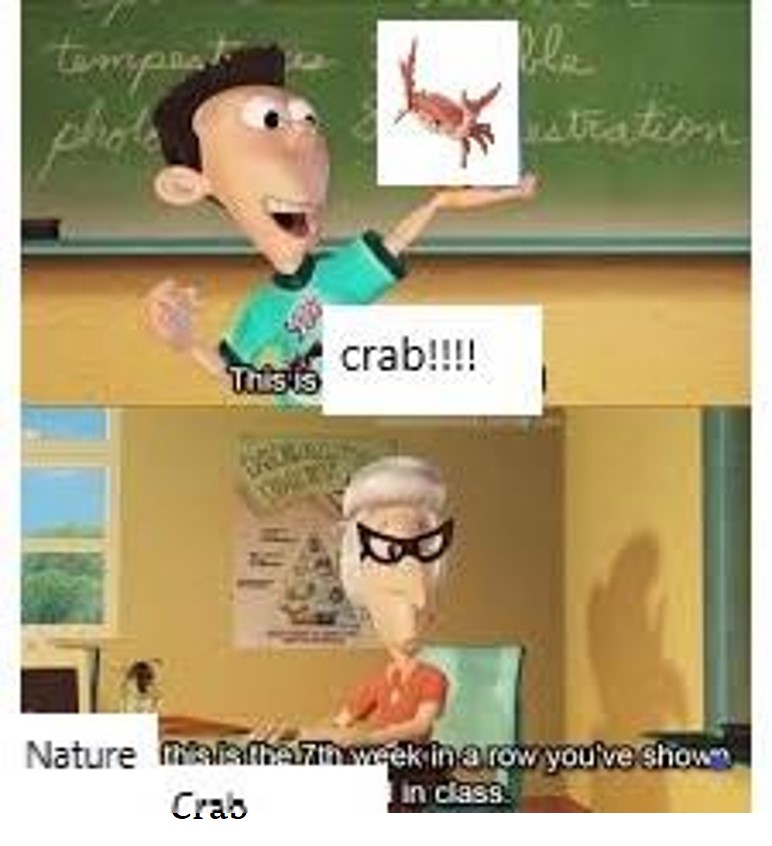
    The other day, I came across a funny meme on Instagram.


    I laughed, I gave it a like, and I moved on with my life- kind of. As I continued with my day, one thought kept creeping up in the back of my mind- “Why does Mars’s moon look like that?” It doesn’t even look like a moon, from the standards of as average Earth-dweller, who is so used to the beautiful, spherical, and almost perfect moon that we have been spoiled by. Why is Earth’s moon so perfect, while Mars’s moon looks like it just hopped off the nearest asteroid belt into Mars’s orbit?


    Mars has two moons, Phobos and Deimos. There is no absolute consensus among the scientific community on how these two moons came to be, but there are two main theories. The first theory, known as the Capture Theory, is that Mars’s moons are captures asteroids, meaning debris created during the early formation of the solar system were pulled into Mars’s orbit by the planet’s gravitational pull. The fact that the two moons are so small and irregularly shaped supports the Capture Theory, along with the fact that they are visibly much darker in color than the Red Planet. The opposing theory is known as the Impact Theory, proposes that Mars underwent some impact from some collision during its early years, uplifting debris that aggregated into two moons. Recent photographic evidence has suggested that Deimos is composed of a rocky material, very similar to what makes up Mars, which supports the Impact Theory and opposes the Capture Theory, which would expect the moons to be made of a more carbon-rich material. There is also debate to whether or not these two moons are even made of the same material, or moreover, were even formed in the same event.

    There are a great deal of unknowns about how Mars’s moons were formed, but however they came to be, they sure look a lot different from our moon. While formation process may play a role in this, the main reason for this difference, is mass. Our moon has an approximate mass of 7.348 × 10²² kilograms, while Mars’s larger moon, Phobos, has a mass of only 1.060×10¹⁶ kilograms. While these both seem like huge numbers, the masses of these two moons are on vastly different scales, with Phobos being about 0.000014% the mass of Earth’s moon. In summary, Mars’s moons are tiny, and this accounts for the fact that they look so nonuniform.


    When the Earth’s moon was forming, it became rounded due to the same principle that causes every other sizable celestial body to become spherical- self gravity. Self-gravity is the gravitational force that an object exerts on itself. Once a body accumulates enough mass, this force will pull in towards its center, forming a spherical shape. This final stage is known as hydrostatic equilibrium. Every object that has mass has some amount of self-gravity, even people! But of course, we do not have nearly enough mass for our self-gravity to pull us into a sphere. So that’s the main reason Mars’s moons are so misshapen; they’re too small to exert a strong enough self-gravitational pull on themselves. But, there is one more piece to the puzzle. Mass isn’t the only things that cause celestial bodies to become rounded. The other secret ingredient is material.


    For bodies to reach a spherical state, their self-gravity must be strong enough to warp and squish the physical material that they are composed. For example, a hypothetical body made of only liquid water would not need much mass in order to achieve hydrostatic equilibrium, because water molecules can be moved around with very little force. There are other materials, such as iron, that resist gravitational pulls even more, and require even more mass to become spherical. The smallest known celestial body that has reached hydrostatic equilibrium is Saturn’s moon, Mimas, which has a diameter of only 396 km. This moon has a very low density, and is composed of mainly ice, and a small amount of rock. This composition gives Mimas a low resistance to its own self-gravity, hence allowing it to become spherical, even with its small mass.

    While the answer to my original question turned out to be pretty simple, topics involving space always have a way of becoming more complex. I hope you were able to learn something from this article, or maybe find a topic that you would like to learn more about. There are still so many unknowns in this topic, including exactly what Mars’s moons are even made of, but there is also new and exciting research coming out every day.


    Sources

    Coffey, D. (2023, November 13). Why are things in Space round?. LiveScience. https://www.livescience.com/space/why-are-things-in-space-round#:~:text=Gravity’s%20rounding%20effect%20is%20a,into%20a%20sphere%2Dlike%20shape.

    Giant impact may explain origin of martian moons phobos and deimos. Smithsonian Insider. (n.d.). https://insider.si.edu/2010/12/giant-impact-may-explain-origin-of-martian-moons/

    Jonti Horner                          Professor (Astrophysics). (2024, March 5). I’ve always wondered: Why are the stars, planets and Moons Round, when comets and asteroids aren’t? The Conversation. https://theconversation.com/ive-always-wondered-why-are-the-stars-planets-and-moons-round-when-comets-and-asteroids-arent-160541

    Metcalfe, T. (2023, May 18). A new look at Mars’ Moon Deimos highlights its mysterious origin. Astronomy Magazine. https://www.astronomy.com/space-exploration/a-new-look-at-mars-moon-deimos-highlights-its-mysterious-origin/


  • Is Love Truly Blind? An Analysis of the Popular Dating Show

    \

    From its initial debut on Netflix in 2020, Love is Blind has captured audiences and secured itself as one of the most popular dating reality shows of the 21st century. What makes Love Is Blind different from other popular dating shows is that the contestants date and propose to their prospective partner from behind a wall, without every seeing each other. It isn’t until they solidify their engagement that the contestants are able to see what their partners look like. Another difference between Love Is Blind other reality shows? Love Is Blind takes itself extremely seriously. The hosts, Nick and Vanessa Lachey, are notorious for referring to their show as “an experiment”. Instead of a hypothesis for this “experiment” the hosts simply repeat the leading question: “Is love truly blind?”.

    In this article, I attempt to analyze Love Is Blind as an experiment from a scientific perspective, in an effort to answer the question, “does the inability to see your partner during a dating stage increase the viability of a long term relationship compared to a typical dating scene where both parties can see one another?”. To do this, I will compare Love Is Blind another popular reality dating show, Love Island. In Love Island, contestants are not only able to see each other, but they are encouraged to judge their fellow contestants by their physical appearances. We can compare the outcomes of each of these shows to conclude which dating strategy is more effective in forming successful, lasting relationships.

    Because this is an experiment, we will need to analyze our variables. It is imperative to account for the major differences between these shows, and note that our comparison will be far from perfect. For one, Love Is Blind is a marriage-focused show. Contestants (allegedly) sign up for the show in hopes of finding a husband or wife. Most of the contestants on Love Is Blind are in positions in their life where they are ready to commit to long-term relationships. This is much different than Love Island, which engages in a culture of flirtatiousness, changing partners, and employs a cast of younger contestants, who are less likely to want to pursue a long-term relationship. Love Is Blind is unique in that it involves such a large cast of singles from both sexes, and follows multiple couples’ pursuit of marriage. There are no shows quite like Love Is Blind, which makes it difficult to assess it as a true experiment. An ideal scenario would involve recreating the show perfectly, but with face-to-face dating instead of blind dating. Of course this is impossible, so our comparison to Love Island, is the next best option. To eliminate cross-cultural variables, we will be analyzing the slightly less popular US version of Love Island.

    I will now present the data that I collected from each reality show. To start, Love Is Blind has been running for 6 seasons, each with 30 contestants. Out of these 180 contestants, 61 contestants have become engaged on

    the show, or 31 couples (One contestant was engaged twice to two different partners). Out of these 31 couples, 20 couples broke up on the show, 9 couples are still together, and 2 couples married each other on the show, but eventually broke up. This adds up to a 29% long-term success rate out of all the couples engaged on the show, and an overall 10% success rate out of all the contestants over all 6 seasons.

    In comparison, Love Island, US has taken place over 5 seasons, each with 25 contestants, for a total of 125 contestants over the whole show. Out of these contestants, 15 couples have continued to date after the show. Out of these 15 couples, only three are currently together. This adds up to 20% chance that a couple formed on the show will stay together, and an overall success rate of 4.8%. This number is also likely generous, as Love Island typically introduces new contestants in the middle of seasons, some seasons almost doubling in cast size before the end.

    Based on these numbers, it is clear that Love Is Blind is more successful than Love Island at forming lasting relationships. In fact, Love Is Blind’s statistics of forming 9 married couples after only a 6 season runtime is unprecedented in dating shows. No other show comes close to Love is Blind in the sheer number of successful relationships formed. Even marriage-focused shows like The Bachelor pale in comparison to the success rate of Love is Blind. After 28 seasons of the Bachelor, and 20 seasons of The Bachelorette, only 9 couples from the shows are still together to this day. This means that if you are the “Bachelor” or the “Bachelorette” you have an approximate 18.75% chance of forming a lasting relationship during your time on the show. While this is better than the 10% success rate of Love Is Blind, it isn’t much better. Considering the fact that the bachelors and bachelorettes are dating 25-30 potential partners, and have no competition, it makes sense that there would be a decently high success rate. Additionally, most seasons of The Bachelor and The Bachelorette end in an engagement, so it would be reasonable to expect more than 9 lasting couples after 48 seasons.

    Given the data and considering the variables, it seems evident that Love Is Blind has an impressively high success rate compared to similar reality dating shows. Love is Blind has an overall success rate of more than 2x that of Love Island, US. While it does have an 8.75% lower success rate than The Bachelor/Bachelorette franchise, the average contestant on Love Is Blind has an unprecedentedly high chance of finding love than the average contestant on these shows. It seems very probable that the factor contributing to this high likelihood of success is the blind-dating style. There is evidence in support of blind dating that suggests that deeper, and more lasting bonds are formed when physical appearance is taken out of the equation. It is also possible that age, sociodemographic factors, time frame, and casting decisions could also be contributing to the show’s success. Whatever the reason, there is absolutely evidence that blind dating can lead to a comparatively high relationship success rate in a reality TV format. In other words, there is evidence that love is, (or certainly can be) blind.


    Sources


    Delbyck, Cole. “Which Couples Are Still Together from Every Season of Love Is Blind?” Netflix Tudum, Netflix Tudum, 28 Mar. 2024, www.netflix.com/tudum/articles/love-is-blind-who-is-still-together-every-season.

    “Love Is Blind (TV Series).” Wikipedia, Wikimedia Foundation, 2 Apr. 2024, en.wikipedia.org/wiki/Love_Is_Blind_(TV_series).

    “Love Island (American TV Series).” Wikipedia, Wikimedia Foundation, 7 Apr. 2024, en.wikipedia.org/wiki/Love_Island_(American_TV_series).

    Siwak, Miranda. “Love Island USA Couples: Who Are Still Together and Who Broke Up?” Us Weekly, 29 Mar. 2024, www.usmagazine.com/entertainment/pictures/love-island-usa-couples-who-are-still-together-and-who-broke-up/.

    “Stop Swiping, Start Talking: The Rise and Rise of the Blind Dating App.” The Guardian, Guardian News and Media, 8 Nov. 2022, www.theguardian.com/lifeandstyle/2022/nov/08/stop-swiping-start-talking-the-rise-and-rise-of-the-blind-dating-app.


  • Rating Neurotransmitters by (Personal Preference?)

    What is a neurotransmitter? 

    Neurotransmitters are the chemical messengers used for communication between neurons. They are released into the synapse (gap between neurons) by the neuron referred to as the presynaptic neuron and then cause some sort of response (generally excitatory, inhibitory, or modulatory) on the postsynaptic neuron (Hook et al, 2019). 

    Some traditionally recognized neurotransmitters include serotonin, dopamine, and adrenaline.

    However, the scope of what a neurotransmitter is has been expanding to include a broader range of signaling chemicals. Now, substances like Nitric Oxide (NO) and ATP (yes, adenosine triphosphate, the one made in the powerhouse of the cell) are beginning to be included as well. 

    Now let’s make a tier list…

    For the purposes of this list, we will be focusing on some of the more traditional neurotransmitters.

    Serotonin

    To start off, we’ll go with one that is pretty well known: serotonin. This monoamine is involved in the signaling for a huge variety of systems including regulation of mood, sleep, digestion, and more. It is commonly associated with depression and a common treatment for depression for decades has been SSRIs (Selective Serotonin Reuptake Inhibitors) which essentially stop processes that clear serotonin from the synaptic cleft (Preskron, 1997). So serotonin is pretty cool, pretty popular, and I guess with it being linked to our ability to be well, not depressed, it should be pretty high up. 

    But to put it in the S tier feels too basic. And recent advances in depression treatments support a new theory of depression involving a different neurotransmitter (more on this coming soon). So I say serotonin gets a solid A. 

    Acetylcholine

    Acetylcholine is one of my personal favorites. It’s most commonly known for being used by pre synaptic neurons at the neuromuscular junction which is where nerve meets muscle. This means the release of acetylcholine is essential for movement. My favorite acetylcholine fact is that botulinum toxin can be used to inhibit its release at these junctions which is actually what botox does (Nigam, 2010). Can’t wrinkle if those muscles can’t move. I’m giving acetylcholine an A!

    GABA

    Ah, the primary inhibitory neurotransmitter in the central nervous system. Inhibition is so important and honestly quite underrated. Without GABA, there would be too much activity which  could lead to a whole host of consequences. Low GABA levels are linked to diseases like epilepsy, motor disorders like stiff person syndrome, and even schizophrenia (Levy & Degnan, 2013). And of course, this inhibition is also crucial for sleep which is a personal favorite activity of mine. So, for the essentialness of inhibition, I think we have our first S tier neurotransmitter.


    Epinephrine 

    I may or may not be wearing my epinephrine (aka adrenaline) necklace as I write this; however, I can not say I am a huge fan of this molecule, at least, not as a neurotransmitter. It’s associated with sympathetic nervous system activity which is the part of our autonomic nervous system that responds unconsciously to stressful situations, often referred to as the fight or flight response (C.C medical). When epinephrine is released in my body, I generally want to get out of whatever situation I am in. I almost want to put this guy in D tier, but I guess the responses in my body due to epinephrine helps me get out of that situation so I’ll cut it some slack and put it in C. 

    Norepinephrine 

    Norepinephrine (Noradrenaline) is also involved in that fight or flight response and is generally important for arousal and alertness (Tank, 2015). I’m going to go ahead and put this one near its very chemically similar friend epinephrine in the B row. 

    Glutamate 

    Now we have our primary excitatory neurotransmitter (the anti-GABA). Glutamate is essential for learning and is believed to be essential in neuroplasticity (aka our brains ability to change which is very cool). Recently, glutamate has been theorized to have a role in depression and ketamine is being utilized as a way to treat treatment resistant depression (Pal, 2021). The results are very impressive and cause long term positive impacts from small doses. I like learning and I like treating depression, so S tier! 

    Dopamine

    Ok, I admit, I have a favorite. Dopamine is extremely important and one of the key processes it is involved in is motivation (Olguín et al, 2016). Its role in reward makes it an important molecule in guiding our behaviors as the presence of dopamine is associated with pleasurable feelings. It is also involved in movement; Parkinson’s disease, a movement disorder, is actually attributed to a decrease in dopamine production in a region called the substantia nigra.

    In my eyes, dopamine is a great example of the complexities of the nervous system because it has involvement in multiple systems and its dysregulation can have a huge range of impacts. Its association with pleasurable feelings displays how in moderate amounts dopamine offers positive feelings but in excess we see how it can become harmful like in the case of addictions. So with that I say, S+ tier!!! 

    To sum it up…

    While creating this list, I thought long and hard about how to compare these neurotransmitters and found myself using the approach of, ‘which one could be removed’. The answer: none of them. Each of these neurotransmitters is involved in multiple systems and some dis-regulation of them can cause widespread consequences. So to completely remove any neurotransmitter would be detrimental. This demonstrates how fine tuned our brains are to function in a way where the production and use of neurotransmitters is precise and modulated. All this to say the rankings of these neurotransmitters was quite arbitrary and are based essentially on just my own opinions, but I hope you learned a little bit about the epic chemicals that allow neurons to communicate along the way! 


    References

    C. medical. (n.d.). Epinephrine (adrenaline): What it is, function, deficiency & side effects. Cleveland Clinic. https://my.clevelandclinic.org/health/articles/22611-epinephrine-adrenaline 

    Hook, V., Kind, T., Podvin, S., Palazoglu, M., Tran, C., Toneff, T., Samra, S., Lietz, C., & Fiehn, O.. (2019). Metabolomics Analyses of 14 Classical Neurotransmitters by GC-TOF with LC-MS Illustrates Secretion of 9 Cell–Cell Signaling Molecules from Sympathoadrenal Chromaffin Cells in the Presence of Lithium. ACS Chemical Neuroscience, 10(3), 1369–1379. https://doi.org/10.1021/acschemneuro.8b00432

    Juárez Olguín H, Calderón Guzmán D, Hernández García E, Barragán Mejía G. The Role of Dopamine and Its Dysfunction as a Consequence of Oxidative Stress. Oxid Med Cell Longev. 2016;2016:9730467. doi: 10.1155/2016/9730467. Epub 2015 Dec 6. PMID: 26770661; PMCID: PMC4684895.

    Levy, L. M., & Degnan, A. J.. (2013). GABA-Based Evaluation of Neurologic Conditions: MR Spectroscopy. American Journal of Neuroradiology, 34(2), 259–265. https://doi.org/10.3174/ajnr.a2902

    Nigam, P. K., & Nigam, A. (2010). Botulinum toxin. Indian journal of dermatology, 55(1), 8–14. https://doi.org/10.4103/0019-5154.60343

    Pal M. M. (2021). Glutamate: The Master Neurotransmitter and Its Implications in Chronic Stress and Mood Disorders. Frontiers in human neuroscience, 15, 722323. https://doi.org/10.3389/fnhum.2021.722323

    Preskorn S. H. (1997). Clinically relevant pharmacology of selective serotonin reuptake inhibitors. An overview with emphasis on pharmacokinetics and effects on oxidative drug metabolism. Clinical pharmacokinetics, 32 Suppl 1, 1–21. https://doi.org/10.2165/00003088-199700321-00003

    Tank, A. W., & Lee Wong, D. (2015). Peripheral and central effects of circulating catecholamines. Comprehensive Physiology, 5(1), 1–15. https://doi.org/10.1002/cphy.c140007


  • Human Brain Regions Tierlist (NOT CLICKBAIT)

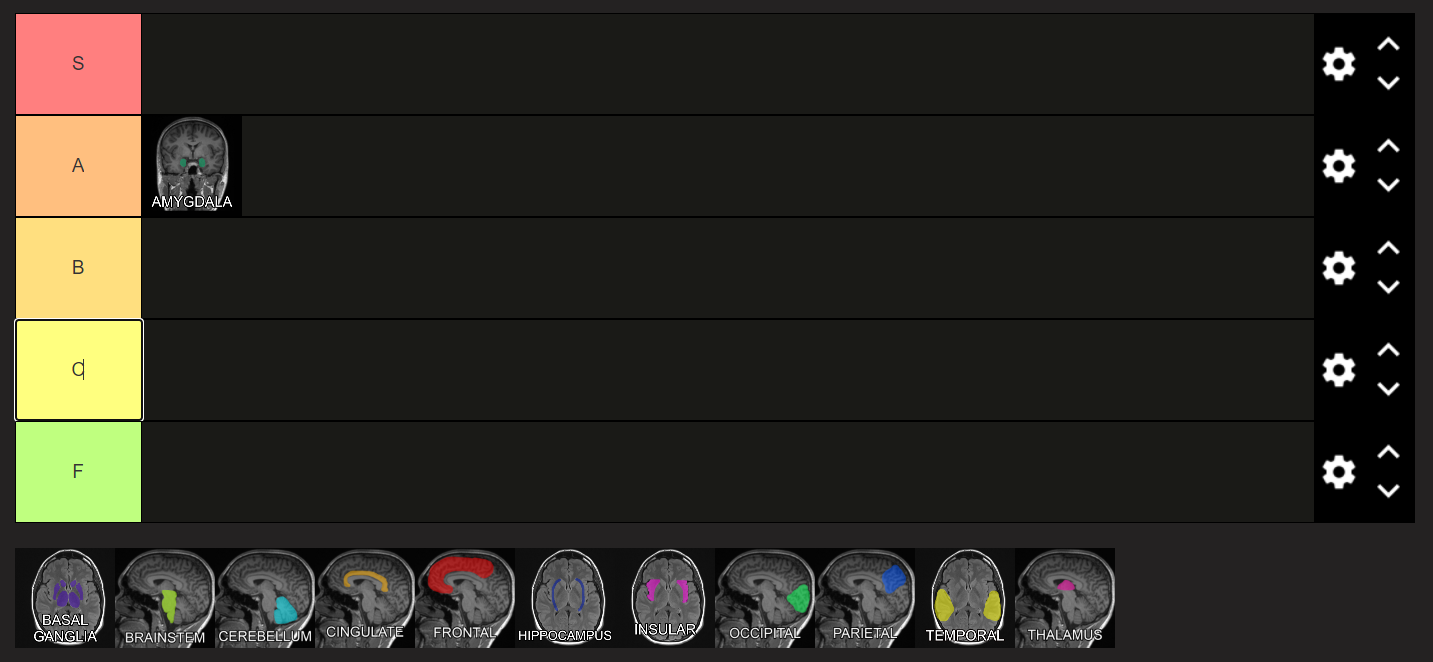
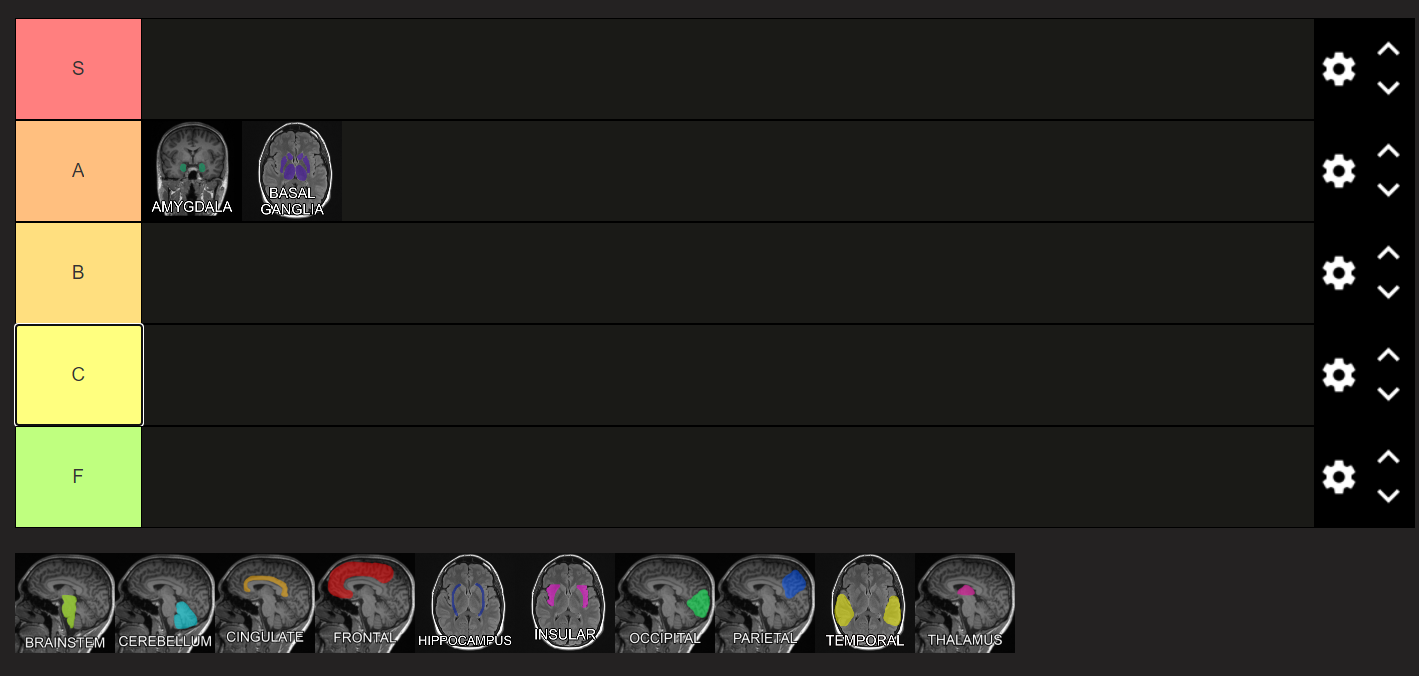
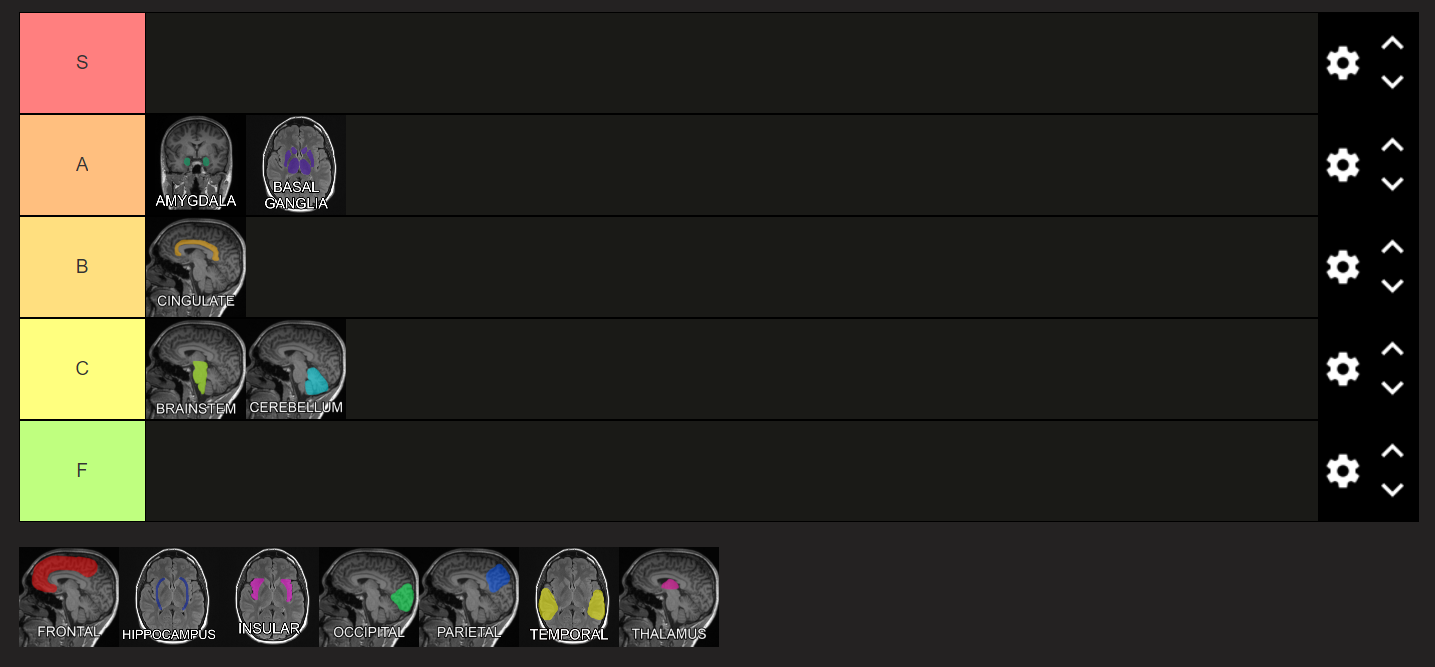
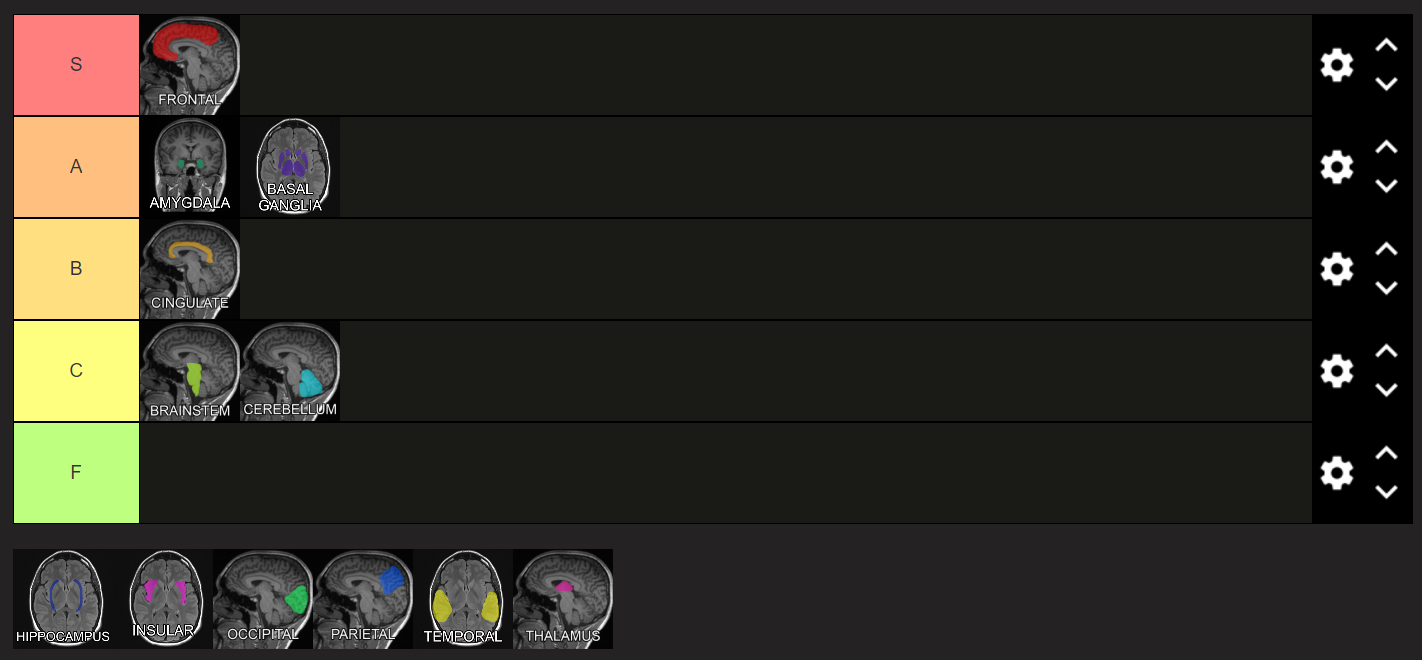
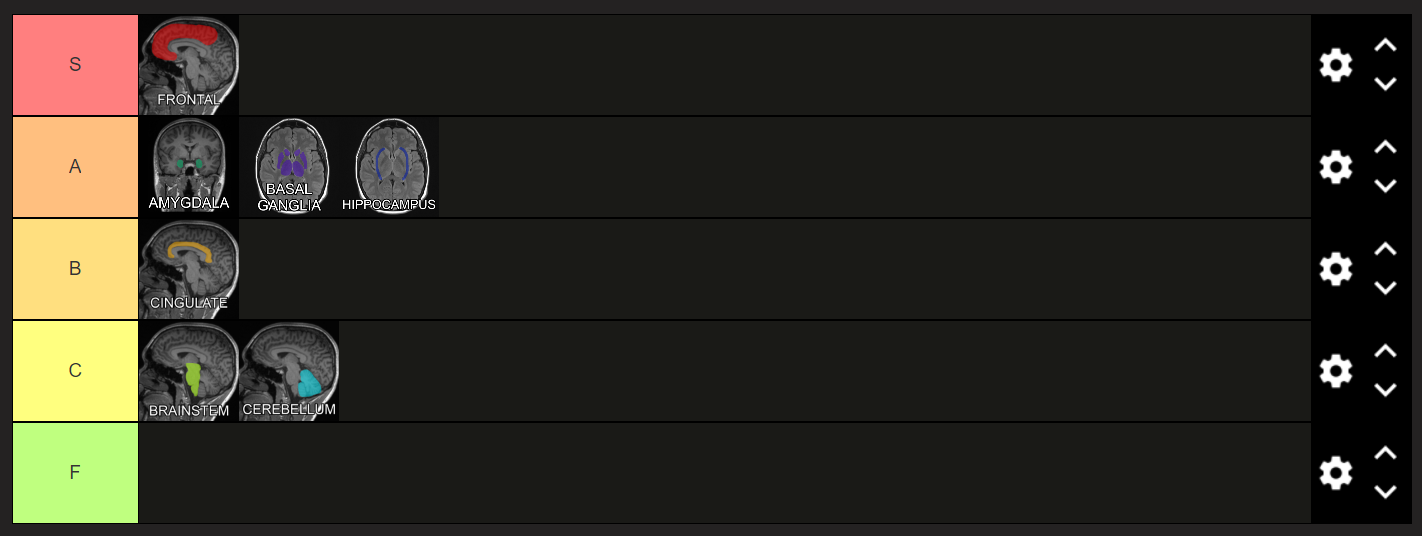
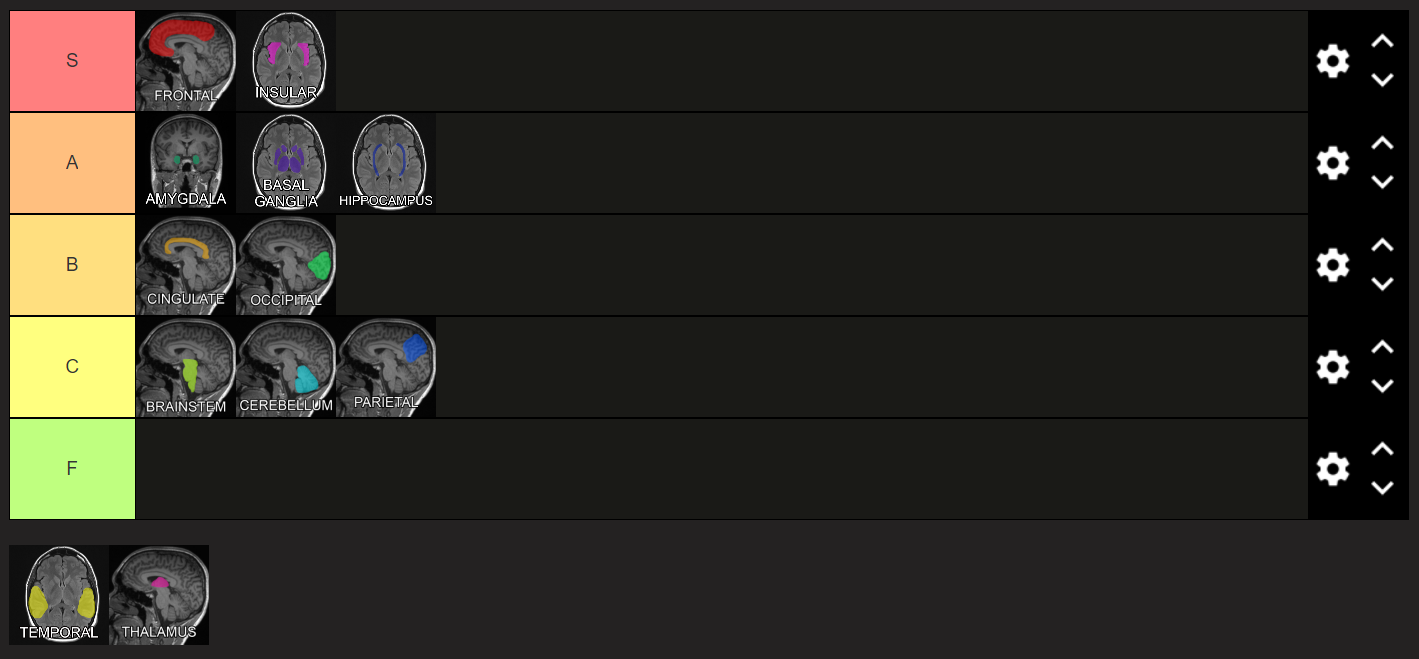
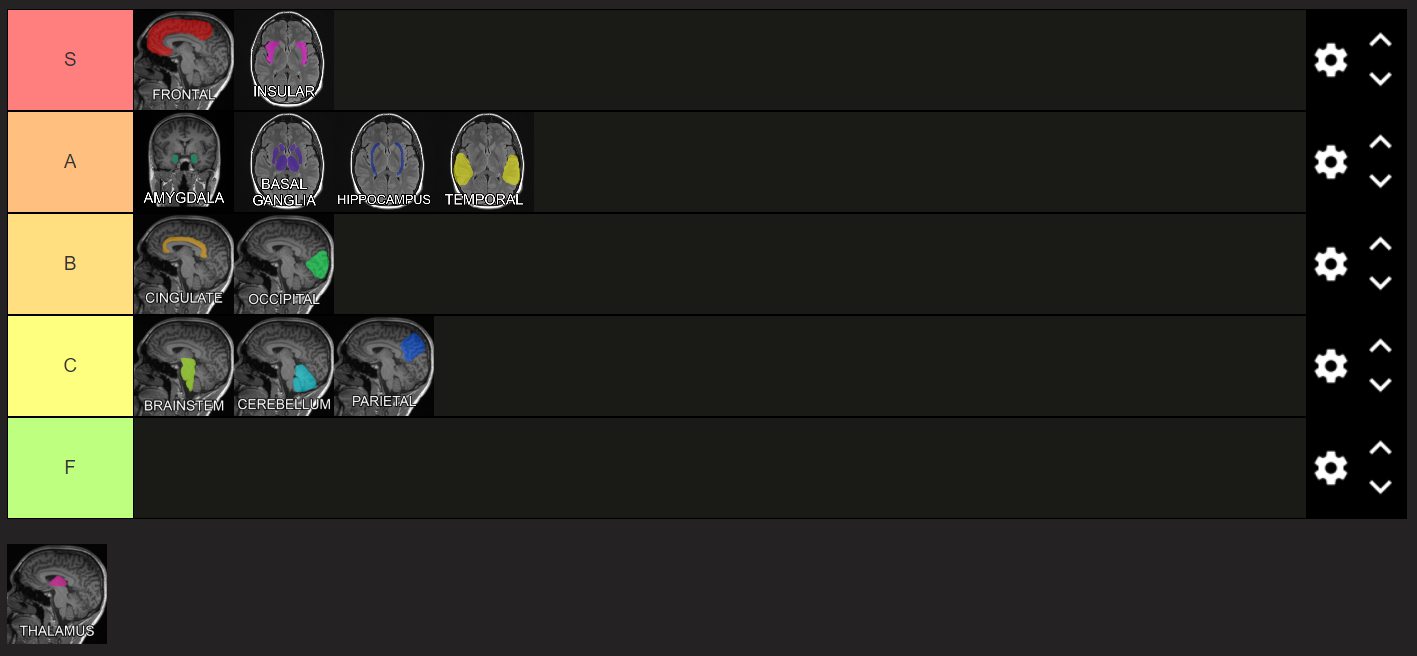
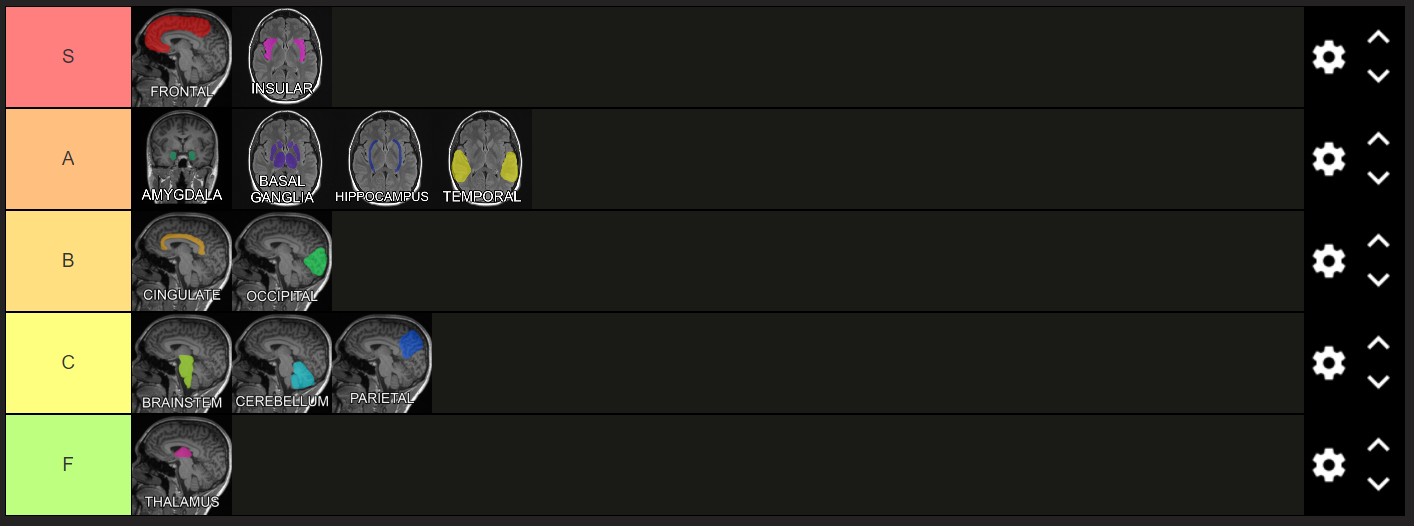
    Okay, guys. It’s the end of the semester and my brain is kind of fried. That being said, it would be fun and informational to rank the human brain regions. I used Tiermaker, and this is how I define the different categories. Feel free to make a tierlist yourself before you read the rest of the article to see how our rankings match up.

    S tier: coolest brain regions. iconic amazing perfect

    A tier: pretty interesting but just missing that star quality, y’know?

    B tier: it’s fine. a little boring maybe

    C tier: boooooooring

    F tier: I have personal beef against this mound of fatty squishy brain tissue

    Let’s go!

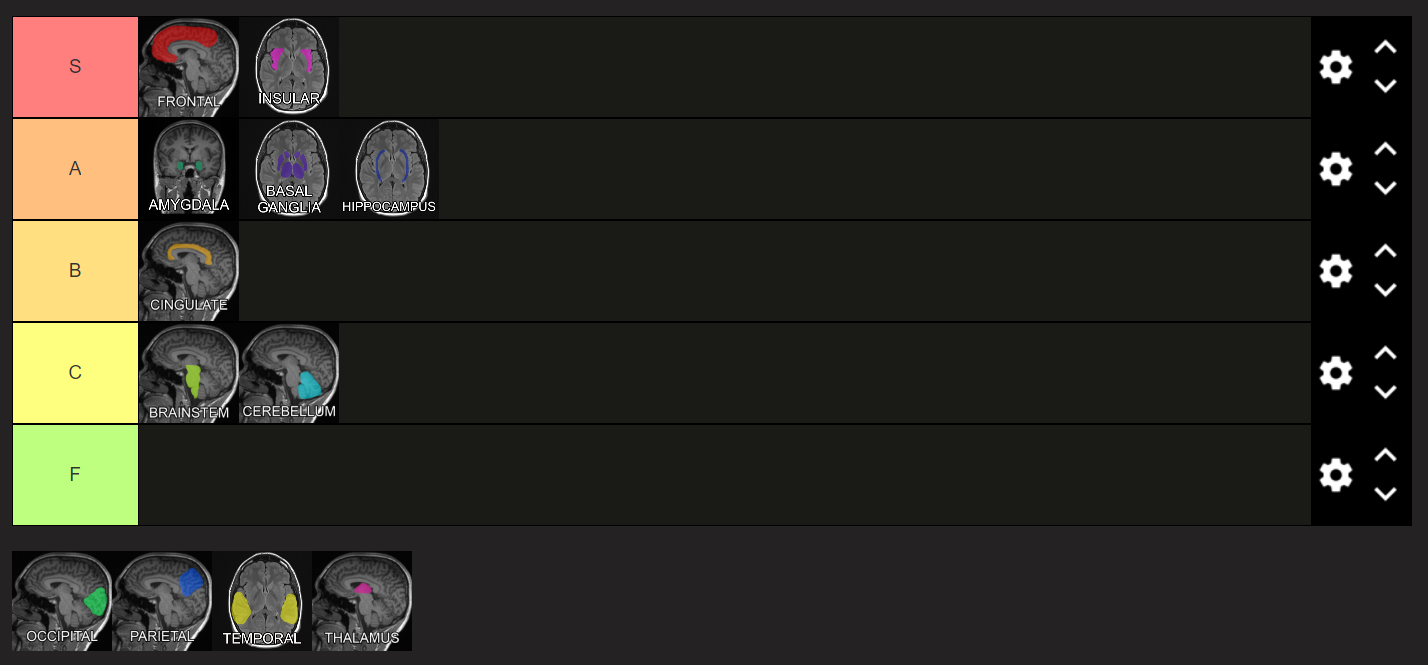
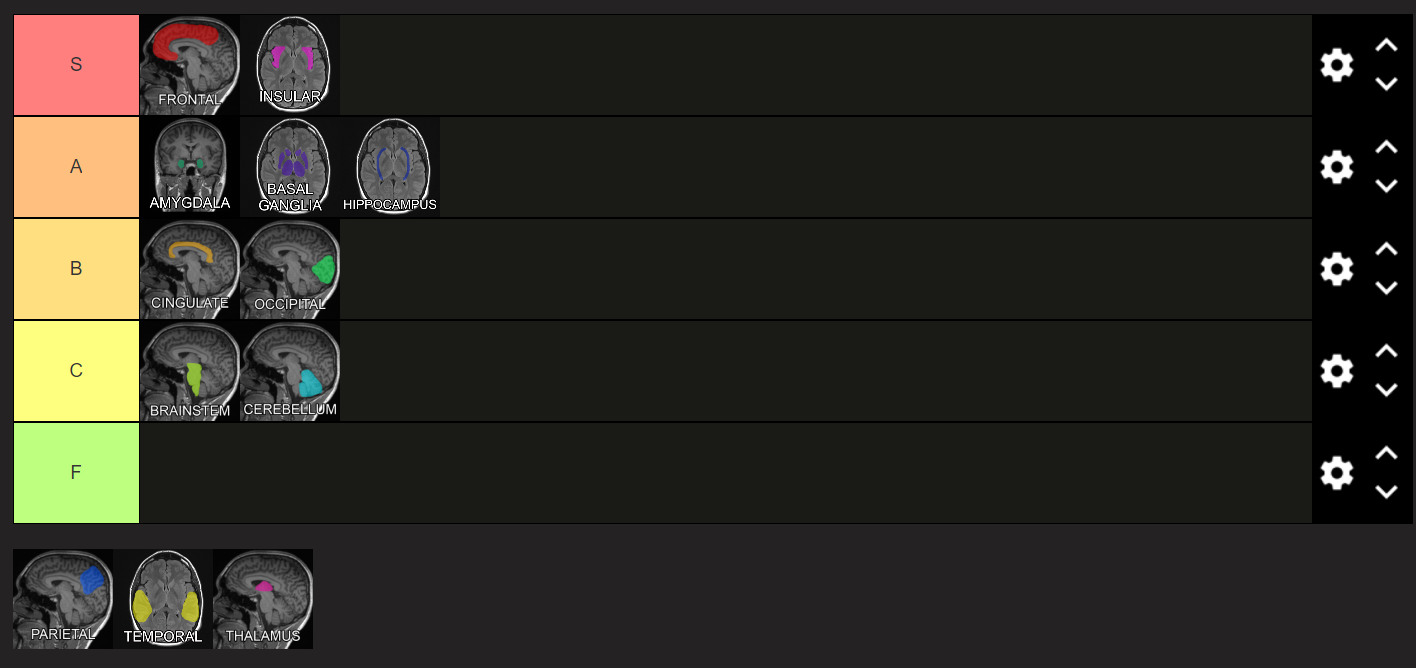
    Amygdala

    A tier. Really interesting in that it’s involved in so many circuits (fear, memory, even smell!). If you didn’t have it, you wouldn’t be able to avoid harmful situations–famous patient S.M. had her amygdalae removed and she wasn’t able to get scared at movies or notice when people were robbing her! She’s kinda been pop cultured to death, though…everyone kinda already knows her deal. She needs to bring something new to the table.

    Basal Ganglia

    A tier! Okay, I’m gonna say it, I’m biased! This is the area of the brain I research in lab. The basal ganglia isn’t well known outside of neuro circles, but ganglia just means a collection of nodes. This little string of pearls is near the center of our brain and controls voluntary movements while stopping unwanted movements. When things go awry, you can get tics, difficulty moving, or tremors. Think Parkinson’s disease or Huntington’s disease. The basal ganglia is a beautifully complex brain region, but she’s a little hard for beginners to understand. God knows I’ve had many headaches trying to wrap my head around what goes on in here.

    Brainstem and Cerebellum

    Grouping these 2 together in C tier feels right. Sure, these two play crucial roles doing (brainstem) and coordinating (cerebellum) movements, but these are pretty basic hardware found in pretty much any animal with a centralized brain. These were the first brain areas of the brain to evolve, after all, and they’re the first parts of the brain to form in a human embryo. I’m just saying that you praise basketball players for dunking, not for knowing how to dribble. Too simple.

    Cingulate (cortex)

    B tier because while I’m really intrigued by it, I always forget all the bajillion things it’s involved in. This gyrus stretches from where the frontal cortex is to the somatosensory cortex (senses), motor cortex (movements), and corpus callosum (connects the two halves of your rain). So, it’s involved in a ton of circuits relating to the way you behave and feel. It’s a part of this cool club called the limbic system, which makes you feel emotions and effects your motivation, learning, and memory. This system also includes the amygdala and its origins are also pretty far up the evolutionary tree, so it’s got retro vibes. Groovy.

    Frontal Lobe S tier! What is there to say about the frontal lobe? She’s pretty much the it girl in pop psychology at the moment, and it’s hard not to see why. Young Gen Z on the internet love to use the fact that their frontal lobes aren’t mature yet as an excuse for everything–and can you blame them? This area of your brain controls decision-making, goal-setting, and is also involved in self awareness, cognition, and memory too. She can do it all! Your frontal lobe helps determine your personality and controls pretty much any voluntary movements you do (that’s pretty much everything that isn’t hearts beating or intestines squelching). And she is definitely not making me rank her at the top. Absolutely not. I have control. But if my sense of self is determined by my frontal lobe then can I truly be separ–

    Hippocampus

    A classic girlie! One of the first to be really understood, so an A tier feels right. Don’t underestimate the svelte size of this structure in this picture–this area may have been named after the Greek word for “seahorse”, but he has a mighty function. Our memories are formed in the hippocampus, which also acts as a hub for us to remember stuff later. He specialized in one thing, and he does it well! Would be S tier, but I seem to misplace mine around finals.

    Insula

    This one’s an underrated classic! The insula is a region inside the brain under the cortices that’s involved in smell and taste. It is also the area of our brain that helps us feel our organs and know what’s going on under our skin, a “sixth sense” called interoception. This area is still poorly understood, which means it has an air of mystery about it. But what we do know is really cool and spooky. S-tier.

    Occipital Lobe

    B tier. Not much to say about this one. It helps you see!

    Parietal Lobe

    Out of the “big four” lobes of the brain (frontal, occipital, temporal being the others), the parietal lobe is the most forgotten one. Every time I think of what it does, I think sensory, maybe? And that is what the parietal lobe does. A lot of sensory information is processed here–in particular, touch, temperature, and pain. All three together are called somatosensation. But honestly, “processing” sensory information is not the most interesting to me. C tier.

    Temporal Lobe

    This lobe is best known for housing the language centers of the brain (Broca’s area and Wernicke’s area), but it’s involved in so much more! The amygdala and hippocampus are inside this lobe, so fittingly, this one also goes into A tier. This lobe is not just language, but also memory, social functions, emotions, and even some vision! This is because this lobe is just so large and connects with so many regions. The back end of the temporal lobe is right next to the occipital! If you’ve ever heard of synesthesia, people who have it often have more connections between their temporal and occipital lobes. Accordingly, the most common subtype of synesthesia, where sounds are associated with colors, is colored hearing. This lobe is just really cool–and as much as we know about it, we’re still finding new things out all the time!

    Thalamus

    F-tier. F-tier! Look–I love the brain. That’s why I decided to spend 4 years studying it. That’s why I want to research it when I graduate. But this tiny tiny area is the whole reason I wanted to add an F tier. This area of the brain is like a relay hub where pretty much every area of the brain connects to. That sounds great, until you realize there are hundreds of nuclei (neuron groups) that scientists have identified that do all sorts of different things with about six or seven different separate pathways. There are so many that we’ve had to group them into the anterior nuclear group, the medial nuclear group, midline nuclear group, intralaminar nuclear group, the lateral nuclear group (not to be confused with the ventral lateral group), and so on. Confused yet? This is the most annoying thing about neuroscience to me, and the thing that I feel like puts people off studying the subject. Because who wants to memorize all that? Anyway, if you disagree, you drill all that into your brain for a Neuroanatomy class and get back to me. Take it up with my 97 card “Thalamic Nuclei Groups” Anki set.

    Well, here’s my final ranking! How did it match up to yours? Did you learn something new? At least, I hope it made you think of the jelly stuff in your skull a little differently.

  • Why can’t I tickle myself?

    I admit it. I am SUPER ticklish. The slightest touch from both man and machine alike will have me squirming and giggling like a child. However, I am immune to the touch of one particular entity – myself. See, I’ve never been able to tickle myself. Trust me, I’ve tried (I had way too much free time as a kid.)

    Tickling is often described as an uncontrollable reflex response that occurs when a sensitive area of the body is stimulated in a certain way. This response is thought to be related to the fact that tickling is often associated with social interaction, and is therefore more likely to occur when someone else is tickling us.

    It is important to distinguish that there are two types of tickling:

    • Gargalesis, which is tickling that causes laughter when areas of the body are touched, and
    • Knismesis, which is tickling caused by light motion on the skin, which usually just feels like an itch.

    The kind of tickling I’m talking about today is Gargalesis, which is what we usually think of when we think of tickling. Knismesis can actually be self-induced! To experience it, try to touch your skin suuuper lightly. (I also did this as a kid. I had WAYYY too much free time.)

    When we try to tickle ourselves, we are essentially anticipating the sensation that we are about to feel. This anticipation of the sensation reduces the tickling response, making it less intense or completely absent. The brain is able to predict the sensation and to some extent, suppresses the ticklish feeling that we would normally experience when someone else tickles us.

    Additionally, when we try to tickle ourselves, we are able to predict the timing and location of the tickling stimulus. This makes the sensation less unpredictable, and thus, less ticklish. On the other hand, when someone else tickles us, we are unable to predict the timing or location of the tickling, making it more unpredictable and therefore, more ticklish.

    So, in summary, we can’t tickle ourselves as effectively because our brain is able to anticipate the tickling sensation and suppress the tickling response, making it less intense or completely absent.

  • How to breathe FIRE! (Don’t Try This At Home!)

    If you clicked on this link, you may be, like me, a bit of a pyromaniac. Unfortunately for us, playing with fire is quite dangerous, so…

    Disclaimer: The activity of breathing fire is extremely dangerous and should only be attempted under the strict supervision of a trained professional. The techniques and practices involved can result in serious injury or even death if not performed correctly. The information provided in this article is for educational purposes only and should not be used as a guide for attempting the activity. The author, Charged Magazine, and the Georgia Institute of Technology do not endorse or encourage the practice of breathing fire and assume no liability for any actions taken by readers as a result of this article.

    With all that out of the way, let’s talk about fire breathing. As awesome as it looks, fire breathing is undoubtedly dangerous. To lower the risk of injury, professional fire breathers use of fuels with a high flash point of at least 50° Celsius. In scientific terms, flash point is the lowest temperature that a substance will naturally evaporate into a flammable gas. One of the most popular fuels among professionals is paraffin oil, which is a highly purified lamp oil. Paraffin oil is ideal as it has a fairly high flash point of ~90° Celsius.

    One should absolutely avoid using any fuel with a lower flash point. Especially dangerous fuels include:

    • Ethanol – Ethanol can be absorbed into the bloodstream without ingestion, leading to unwanted intoxication (drunk + fire = bad!)
    • Methanol – Methanol can be absorbed into your body via a variety of methods, and can lead to blindness and neurological disorders. Fun fact, methanol is often a natural byproduct of alcohol distillation, and a lot of care is usually taken to make sure none of it gets into the final product. It’s also why distilling alcohol is so dangerous!
    • Fuels with very low flash points (e.g. butane, propane, etc.) – These fuels are prone to a build-up of flammable vapors in the oral cavity, which can combust inside your mouth (yikes!)
    • Common fuels (e.g. gasoline, kerosene, etc.) – Fuels like gasoline and kerosene often contain carcinogens and additives which can lead to health complications, and are much easier to ignite (which is bad.)

    Now that I’ve hopefully scared you into not trying this on your own, I’ll tell you about my preferred method of fire breathing. Unlike all of the examples outlined above, my favorite – instead, I like to use cornstarch. As crazy as it sounds, your typical supermarket cornstarch can be used to breathe fire! Although the flame isn’t quite as spectacular as a liquid-fuel flame, cornstarch is a (relatively) safe option as the powder doesn’t ignite unless it is suspended in air, so the flame has a hard time reaching your mouth after igniting.

    The process is super simple:

    Step 1: Safety. Make sure you are outside and away from anything flammable. Make sure it isn’t windy, as the wind can blow the fire back into your face (I’m speaking from experience here.) A fire extinguisher and a way to call 911 is a must. Water can be nice too (to rinse out your mouth.)

    Step 2: Put a spoonful of cornstarch in your mouth.

    Step 3: Light a lighter or torch.

    Step 4: Blow!

    If everything has gone to plan, congratulations! You are still alive, and your friends are probably mildly impressed with the small fireball that’s come out of your mouth.

    So there you have it! Have fun not trying this at home!

  • Carcinization: Evolution’s Favorite Shape is Crab

    Evolution is a very complicated field – and one of the bigger long-standing questions is crabs! Specifically, why animals keep evolving into them!

    The phenomenon of animals, or specifically crustaceans, evolving into a crab-like shape has occurred so often it has a name: carcinization. The term was coined way back in 1916, by evolutionary biologist Lancelot Borradaile, and today it has risen back into public vocabulary through the power…of memes.


    “Either die a hero, or live long enough to become crab”

    But memes aside, this phenomenon raises several questions:

    Question 1: What is a crab?

    (Wolfe et al., 2021)

    Crabs – the animals we call crabs at least – are all a part of the evolutionary order Decapoda (meaning literally “ten feet”), under the phylum Arthropoda, subphylum Crustacea, and clade Meiura (Kazlev, 2022). “True crabs” all fall under the infraorder Brachyura. They include species such as the Japanese spider crab, blue land crabs, ghost crabs, snow crabs, etc., and can be most easily differentiated by having 4 pairs of walking legs.

    Question 2: What is not a crab?

    Or at least, who are the fakes?

    “False crabs” are largely on the neighboring Anomura branch – hermit crabs, porcelain crabs, coconut crab, king crabs even, are all false crabs. They tend to have 3 visible pairs of walking legs, with the 4th pair often smaller or hidden under their shell.

    To put it shortly, these are crabs:

    These are not:

    Get it? Nope

    Question 3: How does one become a crab?

    The process of carcinization is characterized by the crustacean’s carapace becoming flat and wide, while it’s abdomen or “pleon” shorten and curves underneath. The appendages that would normally form the tail of a lobster either shrink or disappear. Additionally, the plates that make of the underside, or ventral, part of the animal’s shell become fused into one. It’s important to note too, that not all these steps have to occur – many undergo “partial” carcinization, such as the hermit crab, who keeps their tail (Wolfe et al., 2021).

    Final question: Why?

    Why become a crab? Potentially, the crab form provides more protection and, surprisingly, flexibility for crustaceans (Green, 2020). With the pleon tucked under the carapace, there’s less surface area for predators to grab; and with a more compact body, crabs can scuttle around pretty quickly. They can get into smaller cracks than their more lobster-like compatriots.

    Why are scientists studying this? Right now, carcinization serves as a frequent and recognizable pattern of evolution – AKA convergent evolution, where animals of a similar niche evolve similar features. For evolutionary biologists, this provides a potential wealth of data for seeing trends in how several species evolved, and predicting how even more may evolve in the future. Additionally, as noted by Wolfe et al., the fact that the widening of the carapace and curling of the abdomen evolves together so frequently implies that the two phenotypes may be linked developmentally, or even genetically!

    Why is this a meme???

    To be frank, this quirk of evolution is just…funny! Crabs are such a random, funky little animal – they alone are a sort of meme! So when people find out that this strange little creature, for some reason, keeps popping up in nature, it surprises them. Not only does a seemingly random process like evolution apparently have a pattern – the pattern is crabs; and it’s happened so often that there’s a name for it!

    So in short:

    Sources:

    C_Mill24. (2022, October 20). Carcinization. Know Your Meme.  https://knowyourmeme.com/memes/carcinization

    Green, H. (2020). Why Do Things Keep Evolving Into Crabs? PBS Eons. YouTube. https://www.youtube.com/watch?v=wvfR3XLXPvw.

    Kazlev, M. A. (n.d.). Decapoda: Anomura. Palaeos Arthropods: Crustacea: Decapoda: Meiura. http://palaeos.com/metazoa/arthropoda/decapoda/meiura.html

    Wikimedia Foundation. (2022, November 20). Carcinisation. Wikipedia. https://en.wikipedia.org/wiki/Carcinisation#:~:text=Carcinisation%20(or%20carcinization)%20is%20an,Nature%20to%20evolve%20a%20crab%22.
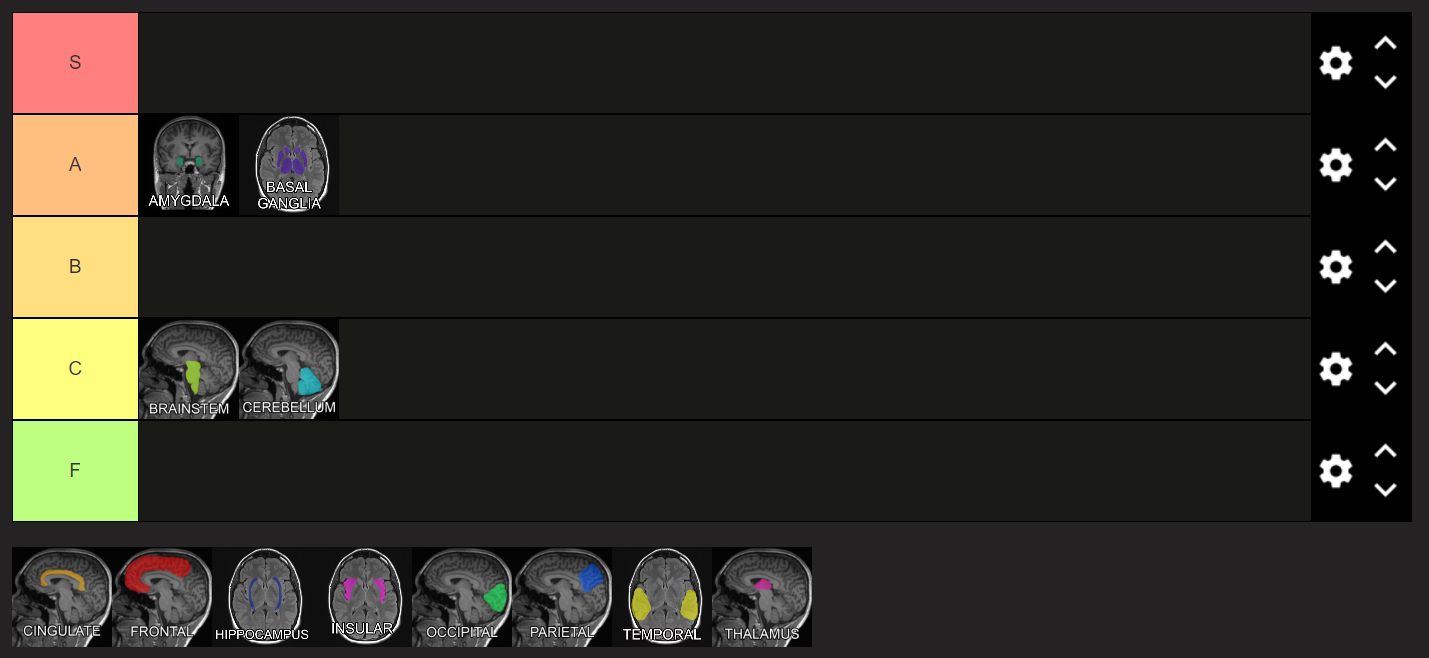
    Wolfe, J. M., Luque, J., & Bracken‐Grissom, H. D. (2021). How to become a crab: Phenotypic constraints on a recurring body plan. BioEssays, 43(5), 2100020. https://doi.org/10.1002/bies.202100020