Category: Funny Bone
-
The Lab 1: Hard at Work
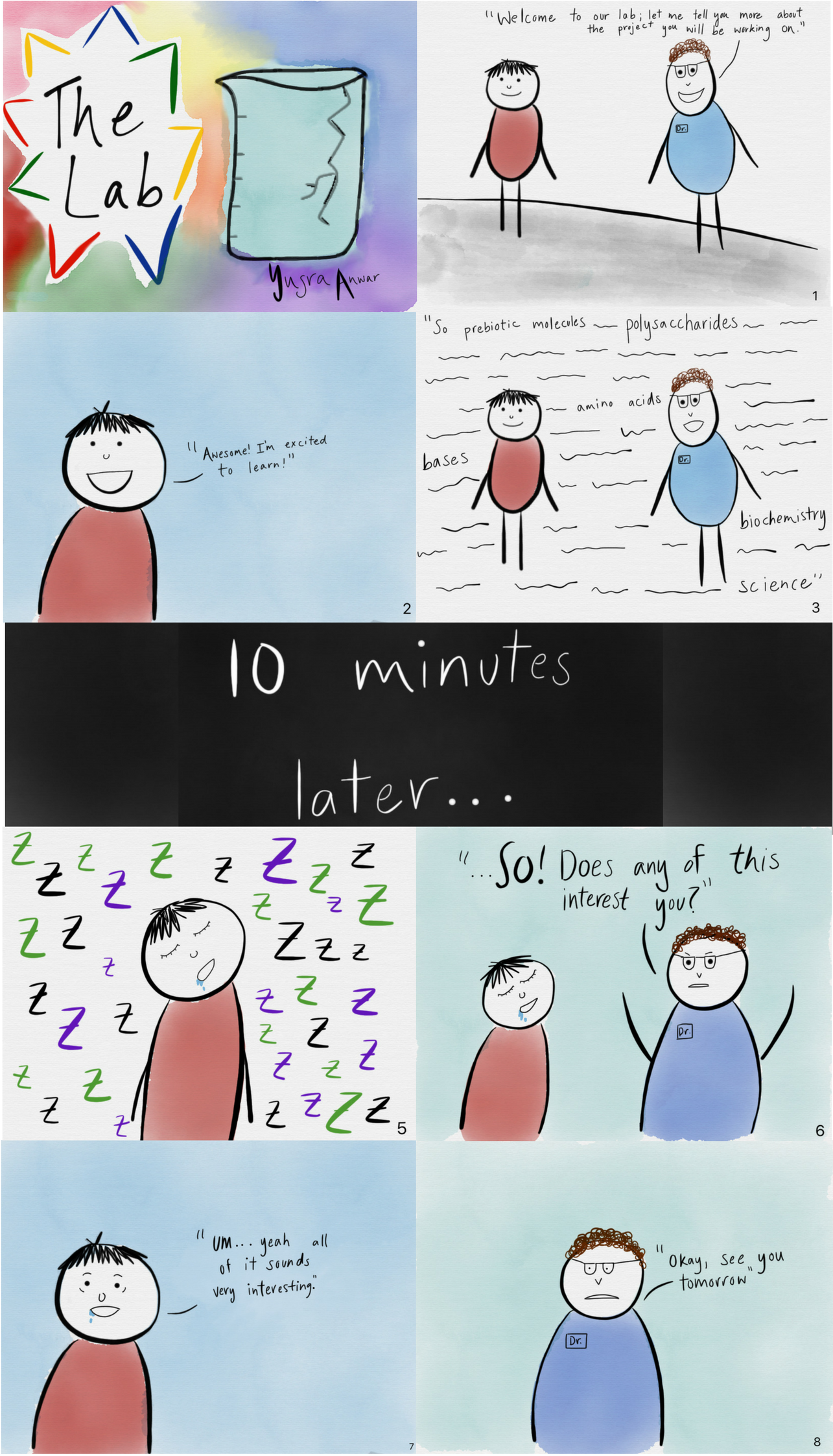
The majority of science majors, at least the ones that I know, work in a lab as an undergraduate researcher at some point during their college experience. Those of us that have, know very well the amazing, fun time that is working with post-doc fellows and grad students, absent PI’s and PI’s that are always around. There is a problem though, and that is that we never really get to share our stories with people outside of our labs. Our non-scientist friends don’t always get it. Our scientist friends are busy in their own labs. I present to you, the solution to all of your problems (…okay at least one of your problems), The Lab. The Lab is a comic series unraveling the adventures that come with working in a research lab. Enjoy and share with your friends to spread some understanding about scientist struggles!
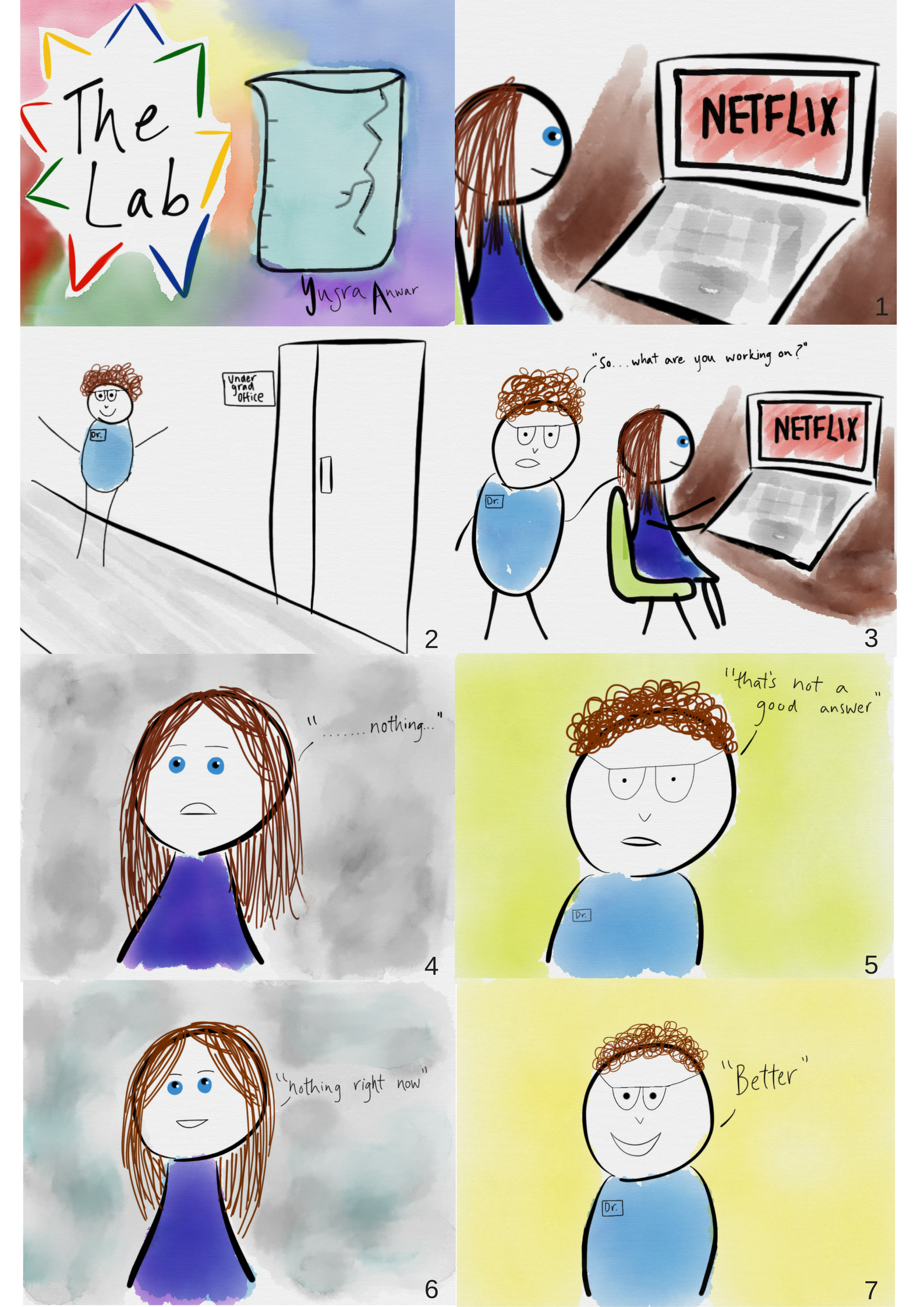
Stay tuned for more adventures with The Lab!
-
Badass Biology: Humanity’s Most Important Adaptation
Badass Biology: Humanity’s most badass adaptation
At some point, modern humans started believing that we are somehow special, that we are the center of creation and of the universe and that God loves us most. My point isn’t to argue against such divine egocentricity; we are indeed very special. Hell, no other species has made guns and missiles and stuff. And we are special even from a biological perspective. The reason we’ve done so well as a species is because we have adaptations that have allowed us to do so. So what are they?
We have many. Vertical skeletal structure, opposable thumbs, massive frontal cortexes, and unlimited salad and breadsticks are all commonly cited as being necessary for our species to thrive and dominate. These are all important morphologies. I believe, however, that there is one very overlooked adaptation in our evolution, one thing that, if it weren’t just right, would negate all of the benefits from these other lesser adaptations. So if it’s not our massive brain or our dexterous hands, what is it? Turns out it’s guns and missiles.
Guns and missiles have allowed humanity to reach far beyond our former niche. We now own the planet with such unchecked power that one person can say “I want to blow up that bit of the surface right there”, and his buddy thousands of miles away can instantly reply, “done!”. This adaptation has caused an evolutionary cascade of intermittent……………..ok, I can’t keep this up. I’m full of it. Our most important adaptation is actually our size.
I guarantee that human size was not the first adaptation that would have popped into your brain, but it is arguably the most important. Am I suggesting that all animals our size are evolutionarily successful? Of course not. Am I saying that tiny or huge people are somehow inferior biologically? Nope. However, if we were, on average, significantly larger or smaller, like ten times as large or small, the course of earth’s history probably would have played out very differently.
Much like the famous fairytale porridge, we benefit from being “just right”. Being the right size means there’s space for a brain that prioritizes and categorizes and tells the body to act judiciously. We stand vertically because we’re small enough not to battle gravity as ferociously as we would if we were the size of elephants. We can offer unlimited salad and breadsticks because we’re large enough to farm yet small enough to be incapable of eating the planet’s supply of breadsticks in one sitting. In this article of Badass Biology, I hope to convince you that our dominance stems from our ideal size. Had we been much larger or smaller, the evolution of our intelligence would have played out much differently, meaning no guns and missiles.
Bigger is better, unless you’re Godzilla
What does size have to do with anything? As animals grow larger in size, they tend to become more metabolically efficient. A cornerstone of evolutionary theory lies in Kleiber’s “3/4ths power rule”, stating that for every added unit of mass, metabolic rate only increases as a rate of mass^(3/4) [1]. While the value of the exponent and its real-world meaning is debated, one thing is clear: grow larger, and you’ll use less energy for your size, a comment you also hear regularly from your disappointed girlfriend.
Humans are damn gigantic; 99% of all animal species on earth are smaller than we are [2]. Does the power rule work to our advantage? Yep. Because math. The average human male (7700g) weighs roughly 457 times that of a typical field mouse (15g). Raise both to the ¾ power, divide one by the other, and you’ll find that the human has only about 100 times the metabolic demand of a field mouse despite the 457 fold increase in mass. I’d say that gives us a pretty big advantage in terms of having to spend less time and energy feeding, replacing tissues, respiring, etc. More time for guns!

ENDOTHERMS!! WOOOOO!!! This sounds great, but if bigger is better, why isn’t every animal huge? Again, because math. Think back to high school geometry. Among the suppressed memories of sitting behind that brunette you thought was cute but wouldn’t pay attention to you unless you were captain of a team sport but that you later reconciled with because she ended up being a relatively heartless and shallow person despite her extreme self-professed piety, or that guy across the room you thought was an asshole to other people because he had a giant triangular face and douchey long blonde hair and a name not unlike “Brittney” until he confirmed his assholiness by being an asshole directly to you about something that absolutely did not matter at all, surely you must remember the formulas for surface area and volume. Basically, a shape that grows larger and keeps its form expands its volume in three dimensions (side x side x side), whereas surface area expands only into two (side x side). Big objects, like animals or guns or missiles, have relatively low surface area compared to their volume because volume mathematically outpaces surface area as objects grow bigger.
This is a really big deal. Think about every process that keeps you alive. Breathing, eating, sensing your environment, playing Civilization 5. All of these processes rely on tissues with some kind of exposure to the outside environment. Oxygen is absorbed as air rushes across alveoli in the lungs. Nutrients are absorbed through countless tiny folds of the small intestine. Tastants and odorants absorb through fluid media in the mouth or nose to trigger sensory receptors. Civilization 5 enters your brain through tiny refractive holes in the middle of your face. These are all parts of your surface area.
The point is this: if we were a lot bigger, like Godzilla-sized, we’d have a lot of trouble performing these same basic functions given our current body shape. This would suck for the most part. We’re already pretty specialized as is; a lot of animals don’t have folds in the lungs or intestines like we do because they’re small enough (thus having enough surface area for their volume) not to need them. But not absorbing things would be only one of our many worries if we were larger.
The earth’s gravity is not all that strong in a cosmic sense, but its impact on surface-dwelling body forms is huge. Let me put it simply: stuff caint grow too big because aint no way they caint get strong enough to stand up. Fighting gravity is hard unless you’re a gun or missile, especially when you’re giantic. Our skeletons would have to be quite different in order to support our huge stature. Bones would need to be thicker yet more pliable.To be Godzilla-sized would be risky, not only because of the inevitable bone weakness and joint decay, but because of imbalance and falling. Even at twice our current size, tripping over a gun or missile would cause a tumble with 16 to 32 times more kinetic energy than it would now.
This all sounds like a recipe for disaster.Suppose that our bodies do adjust. We grow to Godzilla size, have super-efficient perforated lungs, guts that absorb enough to get by, and bones capable of supporting a small skyscraper that can walk and build guns and missiles. Imagine the caloric demand a body like that would require. How many hamburgers would we need to eat in a day?
Godzilla is, at lowest estimates over his career, 164 feet tall, or about 50m. A quick foray into ideal body weight calculations yields that a 25-year old male this height should weigh around 8106.8 pounds, or 3676ish kg. Plug that into the ¾ power formula, and the daily metabolic demand of our gargantuan is around 84,000 calories per day. The power rule certainly works into this huge person’s favor, because I certainly was disappointed by how low that caloric count was. So what does 84,000 calories look like? Imagine 81 quarter pound hamburgers with white wheat buns, ketchup, and a tomato slice. And that’s only just breakfast; imagine eating that three times per day. BIG PEOPLE PROBLEMS. I’m sure I’ve made my point. The earth would strain to support life of that magnitude. Here’s the kicker: I didn’t even account for added bone mass and musculature necessary to become that tall. Let’s add another 100,000 hamburgers per meal to the calculation just to be safe.
The worst part of being tall would be this: it would be really hard to fit as many people onto airplanes. The airline industry wouldn’t see as much profit from airfares, thus flying would be a privilege only for the super-rich, limiting my ability to go to places like Switzerland. And I really want to go to Switzerland.

I am convinced that Mürren is one of the most beautiful places ever. I encourage my rich philanthropist readers to take note. Did I mention how starving I am? Why Ant-man is the worst superhero ever.
What if we were much smaller? Well, there’s good and bad news. The good news is that we could adopt simpler body forms, but that’s about it. The bad news? Pfft.
First. we would probably be much dumber than we are. Zoom in closely on the brain of every animal and you’ll find neurons, cells that communicate to one another using electrical or chemical signals. Hundreds to thousands of these neurons form dense and complicated circuits with one another in the vertebrate brain. Such circuits form pathways that tend to perform specific functions in the body. For instance, there are specific regions of the brain designated for movement, for regulating sleep, for hunger, for balance, for typing “guns and missiles”, and for interpreting the sights, sounds, and smells from the world. Our bodies may be able to shrink in size and still function to some degree, but our neurons cannot only be miniaturized and still function with such complex synchrony and elegance. As we grow significantly smaller, we run out of room for neurons very rapidly.
“But Kevin, I’ve always heard that a big head doesn’t mean make you smarter”. Don’t you sass me. But you are right, anonymous naysayer. There is admittedly weak evidence that intelligence correlates with head volume, yes, but that’s among humans of relatively the same size [3]. For example, my fiancée is tiny and adorable, though she’s likely smarter than I am (Fiancée et al, 2014). However, when we’re talking about a difference in scale between us and a mouse, size matters. We have nearly half the number of neurons as the U.S. military has guns and missiles, something around 86 billion neurons [5]. Mice have around 10 million. Ants have around 200,000. To put this into perspective, if each neuron were a person, our brains would outnumber earth’s human population 12 times over. A mouse’s would be constrained to the size of North Carolina. An ant’s would be Laredo, Texas. It’s hard to grow intellectually when you’re Laredo, Texas.
I apologize to anyone from or living in the city limits of Laredo. I did not mean to say your city is dumb. However, it certainly looks that way. I’ve visited your website. It looks terrible.

Come to Laredo and visit our…moon. Being the size of an insect would present a number of other challenges. The interactions we have with things in our environment (like the water we drink and the food we eat) conform to the laws of physics. As we shrink in scale, these interactions change. To an ant, water seems as viscous as maple syrup. Gravity takes a backseat to air turbulence. As Steven Jay Gould writes, “An ant-sized man might don some clothing, but surface adhesion would preclude its removal. The lower limit of drop size would make showering impossible; each drop would hit with the force of a large boulder. If our homunculus managed to get wet and tried to dry off with a towel, he would be stuck to it for life. He could pour no liquid, light no fire…” [2].
Could an ant-sized version of early man have developed civilization even if intelligence were not a factor? Probably not, at least not at the same rate or with the same level of success. I imagine cultivating agricultural crops, one of the supposed precursors for civilization, would have been near impossible, not to mention cross-breeding them for good yield. Our meat-based diet would be replaced with who knows what, but I suppose it would include plant material and any nearby organism that decides to die. For that matter, hunting would be folly; spears and bows would be completely ineffective because we probably couldn’t put enough force behind the blow. Guns and missiles wouldn’t exist. Our predators would vastly rise in number, distancing us from the top of the food web. We’d be stomped into submission by the elements, by other creatures, and by our own ineffectiveness. Switzerland would be near impossible to get to. So long, Mürren.
What about food? Shouldn’t food be more abundant since, you know, one kernel of corn could feed an entire village of people? That’s true, but there’s a much bigger caveat to this than you’d think. The world’s food is spatially patchy. I don’t just mean that bananas only grow in the tropics or that rice grows best in silty soil. I mean that, when you’re the size of an ant, getting a bug from the ground nearby is a marathon. Food sources are really f**king far apart, but plentiful once they’re found. Many animals that live upon such food sources adopt life strategies to cope with smorgasbord-style resources. Some insects that exploit huge but infrequent foods, including flies like the gall midge, have adaptations that allow them to exploit them quickly. Gall midges typically reproduce sexually, though it takes a long time for larvae to develop this way. When midges find a mushroom, a gold mine on their scale, females reproduce without a male through a process called parthenogenesis. These offspring are formed more quickly than doing things via the sexual route, though it comes at a cost to the mother. Instead of developing externally, the larvae grow inside the mother, eventually liquefying her insides and bursting from her lifeless husk [4]. However, immature as they may be, they are ready to start chomping away on some sweet sweet mushroom bits and rotting parts of their mommah. D’awww. Overall, the flies have more successful babies this way, thus the need for bursting out of their moms and such.
Will humans do that? I dunno. That sounds desperate. But food would likely be lacking for most humans on earth. Maybe we’d be as successful as ants and develop complex chemical signals to communicate the locations of food, bypassing any other weird adaptations like the ones midges have . Maybe we wouldn’t, and we’d fill just another tiny niche in the complex world which we inhabit.
So, I hope you now understand how important our size is for our survival. We are big and scary creatures, and that’s allowed us to hunt and kill and eat meats and make pizzas and build guns and missiles. But we’re not so large that joint damage, eating entire herds of cattle per day, and toppling over and breaking bones would be a daily norm. We’re also not so small either that we can’t take showers or cultivate food. So, here we stand, results of the goal-less, powerful, yet delicate hands of natural selection. Just right.
Nobody comments on my stuff. You should comment on my stuff. Get your friends to comment on my stuff. I will then comment. We can all comment. It will be a great world full of comments.

WE HAVE GUN AND MISSILE CONFERENCES!!! HUMANITY, BITCHES!!! Literature Sources:
[1] http://en.wikipedia.org/wiki/Kleiber’s_law
[2] “Ever Since Darwin” by Steven Jay Gould, Norton & Co. 1977
[3] http://science.howstuffworks.com/life/inside-the-mind/human-brain/brain-size2.htm
[4]http://www.sjgarchive.org/library/text/ontogeny/p0306.htm
[5] http://journal.frontiersin.org/Journal/10.3389/neuro.09.031.2009/full#B24
Image sources:
http://upload.wikimedia.org/wikipedia/commons/1/13/Apollo_17_The_Last_Moon_Shot_Edit1.jpg
http://images.gadmin.st.s3.amazonaws.com/26758/images/buehne/Muerren_054-1.jpg
http://img.docstoccdn.com/thumb/orig/124825385.png
http://universe-review.ca/I10-83-metabolic.jpg
http://pics4.city-data.com/cpicv/vfiles25324.jpg
-
Badass Biology: Bat Echolocation
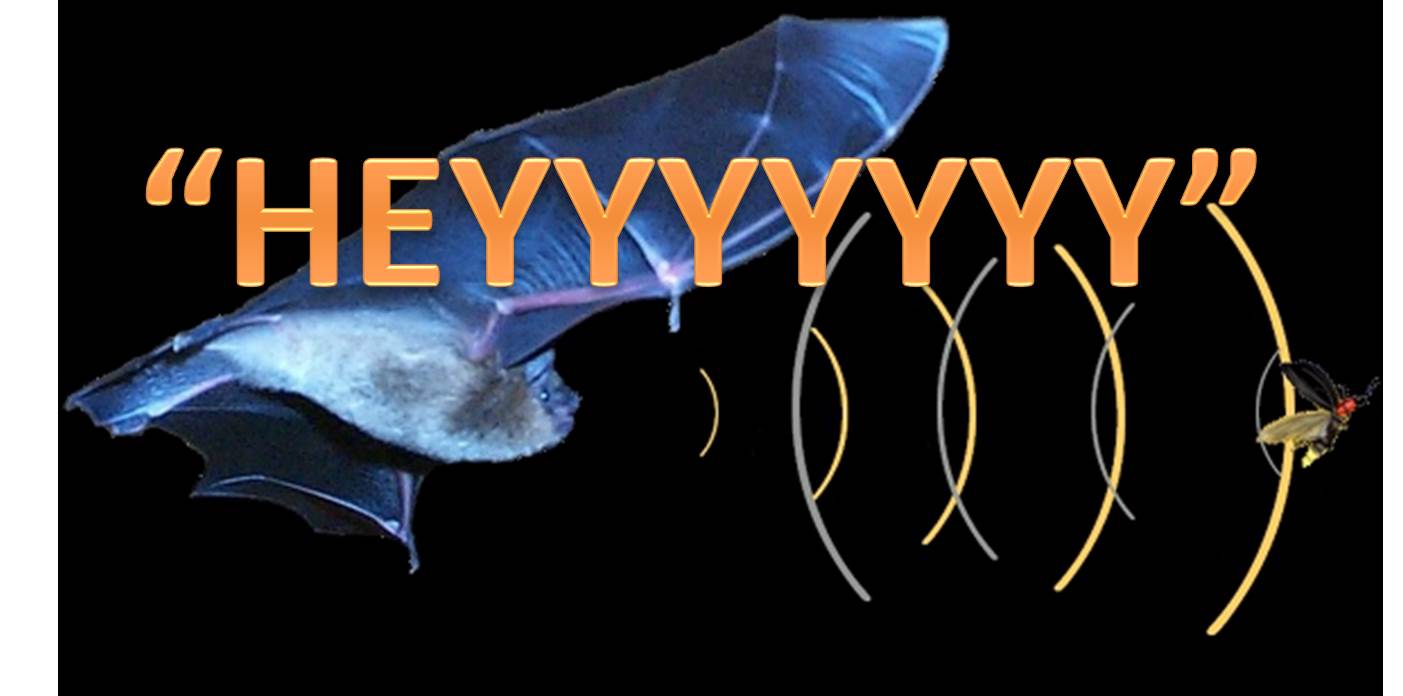
Vision is awesomely complicated. A lot of animals, like the hawk, use vision to detect important environmental cues from vast distances. They use complex eyes and even more complex brains to locate prey, or figure out where the ground starts, or I dunno, check out lady hawks. Hearing is like vision’s less-popular but talented younger brother, the often-forgotten Luigi to evolution’s Mario. Hearing is amazing, yes, but our hearing kinda sucks. We’re not good at it, and so we discount its importance. Instead, we glorify vision as the pinnacle of evolutionary achievement, the ultimate sensory weapon against a hostile world. Yes, vision is awesome, and it is reliable, and it is useful for things like looking at steak. I f**king love steak. But other animals use hearing to see their steaks oh man that sounded really stupid so now it’s a run-on sentence now I don’t know how to end it oh no I’m embarrassed lol. The bat is one of the few animals that can accomplish this awkwardly-written steak hearing, and it does so using methods that absolutely amaze me.
It must not come to a shock to you that bats use echoes from their own calls to create a mental picture of the world around them. Bats hear with the precision of a rocket-tipped arrow, which sounds totally stupid because that implies the rocket should blow the arrow backwards and that’s not where the pointy end is, but this is not important. I will explain to you how they use variable auditory frequencies, interaural timing, Doppler shift, and badass brain parts to make a map of their world. In short, they use magic. Bottom line, bats are badass.
PARTS OF THE ECOCHOLOCATION PROCESS THAT ARE BALLS-OUT INSANE BECAUSE THEY GIVE BATS THE HEARING PRECISION OF A ROCKET-TIPPED ARROW.
1-The call
Did you also know that bats are really damn good at determining object size, velocity, shape, and even if it’s fluttering? I bet you didn’t, Mr. Fact Learner. You need to learn up all of your facts except that fact because you know for a fact that this fact is a fact, and that’s a fact.
Small bats usually emit two types of calls. First up are frequency-modulated (FM) sweeps, and bats use these to locate objects in the space around them. These calls are usually quick, and the pitch rapidly drops. This allows bats to emit a range of frequencies to the nearby area. The amount of time an FM sweep takes to return to the bat allows the bat to determine distance. Bats also use the time disparity between frequencies in the left and right ears to tell where objects are on the azimuth, or how left/right they are relative to the head. The pointy shape of their ear also allows bats to use FM pulses to gauge the elevation of objects.
We got three properties down in one paragraph: azimuth, elevation, and distance. Isn’t that enough? Hells nah. They use some of them AT THE SAME TIME. For instance, bats can tell the size of an object by determining how loud the echo is. They can then use all of this information to tell the difference between something like a bird that’s far away and a moth that’s up close. FM calls are sweet.
The second type of call allows bats to tell how fast an object is moving. Constant-frequency (CF) pulses are typically longer, though the pitch does not drop. This allows, and yes I’m serious, bats to determine slight deviations in pitch due to the Doppler effect; a CF echo from an approaching object is slightly higher in pitch. This raises a good question: How can a bat do this if it’s flying toward an object? Wouldn’t the act of approaching an object make the CF pitch higher simply because the bat is moving towards it?
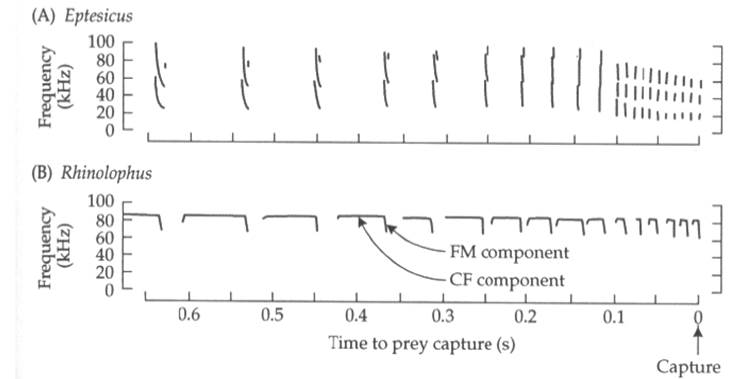
FM and CF calls from two species of bats. Notice how quickly the pitch decays in the FM calls, whereas the CF calls sustain one pitch for some time. Some species even have FM and CF components within one call. Pretty sweet. This next experiment sounds kind of insane, but I promise it really happened.
Scientists strapped a bat to a swing, pointed the swing at a wall, hooked up some microphones, and let loose. Sure enough, a bat swinging at a wall lowers the pitch of its emitted call. So, bats can compensate for their own movement through space by dropping the pitch of their call, making the pitch of the echo ALREADY ACCOUNT FOR DOPPLER SHIFT BY THE TIME IT GETS BACK TO THE BAT. Totally. Friggin. Badass.
2-The ear and auditory pathway
“Auditory pathway? Ughsheesh. That sounds boring. I don’t want to read about that.” said nobody awesome ever.
Our inner ears are pretty complicated. Without getting stained with details, sound transduction works basically like this:
1) Sounds, which are essentially air pressure waves, vibrate tiny bones in the middle ear that then convert those vibrations into pressure for the inner ear.
2) The basilar membrane, a bendy flap of tissue in the cochlea that looks like an industrial-strength file, vibrates in different spots based on the frequency of these vibrations.
3) The bending basilar membrane causes tiny hair cells adjacent to the cochlea to bend. These hair cells are connected to neurons that can detect when these hair cells bend.
What did we learn here? Basically, pitch matters. Low pitches vibrate different hair cells than high ones. Bats are crazy though. Really crazy. I once saw one bite the head off a human.
Bat basilar membranes, the part of the ear that transduces sounds into nerve impulses, are wider on the part of the cochlea where they detect the frequencies of their echoes. This helps for a number of reasons: 1) It increases the volume of noise in this frequency range, 2) It allows bats to become more sensitive to their own echoes, and 3) it helps reduce sensitivity to their own calls, reducing the odds of confusing those calls (or other sounds) with echoes. It’s also pretty cool to point out that bats contract muscles in their ears when they screech, dampening the sound of their calls further. All in all, bats are pretty much deaf to their own calls but highly sensitive to their echoes. Also, different bats are sensitive to different frequencies, limiting the odds of cross-talk between species.

Left: Bats are sensitive to different frequencies. More hair cells at certain spots along the basilar membrane increase sensitivity. Right: The bat inner ear and auditory pathway. Alright, this is about to get nuts. I recommend not reading this if you’ve just had a heavy meal, because you may be so amazed that you’ll spew half-digested mush all over your keyboard.
3- The brain
I’m so excited to tell you about bat brains that I’m literally going to get some Oreos. It turns out I was actually excited about the Oreos all along.
The auditory cortex is the part of the brain where auditory information is processed. You and I both have auditory cortexes. This is where information from the ears is organized and sent to other parts of the brain to aid in functions like cerebral processing, speech, and motor function. It’s also the part of the brain that allows us to differentiate between a high E flat played by a piano and a high E flat played by a chainsaw.
Bats have auditory cortexes too. Theirs do many of the same things as ours. But there’s got to be a reason I’ve decided to spend an entire section on their brains. Trust me, there is.
Remember how the cochlea can organize sounds by frequency? We tend to keep nerve impulses of similar frequencies bundled together as we send sound information from our ears to the auditory cortex through various brain structures. So, different parts of the auditory cortex become active when we hear different pitches, giving us somewhat of a tonal map of our sounds. Bats do this too, as do many animals. Here’s the difference: bat brains are capable of producing an ACTUAL map based on sounds.
The bat auditory cortex has two pretty badass regions. One is the FM-FM region. Remember FM pulses? Those are the calls bats use to determine where things are in the space around them. This function is done here. Neurons in the FM-FM area respond to the amount of time in the delay of a call and the harmonics of the call’s echo? What is a harmonic? Click here to find out.
Think of the FM-FM area of the auditory cortex like a 2-D map. Each harmonic excites different horizontal sections from top to bottom, while the left-right axis responds to different delays. So, if the bat detects an echo from the 2nd harmonic after 8ms, neurons in a specific area of the FM-FM area will start firing. Enough of these allow a bat to tell how the large size and distance of the object is.
Bats auditory cortexes can also produce a mental map of sounds based on their velocity. Recall that bats use CF-CF calls to detect the Doppler Shift of sounds and tell whether they’re moving. They process this information in the CF-CF area of the auditory cortex. Like the FM-FM area, certain cells become active when sound properties are just right. Bands of cells respond to certain CF frequencies, and other bands respond to the velocity, or Doppler shift, of the sounds encoded. What bats end up with is a map of awesome.
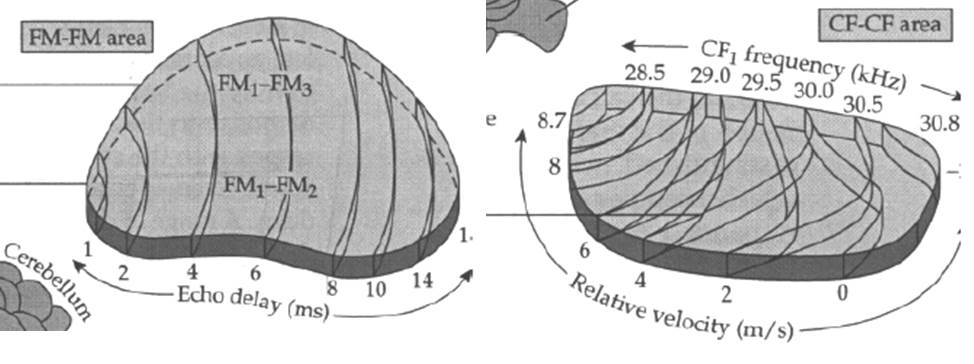
Left: FM-FM area from the auditory cortex of the mustached bat Pteronotus. Right: CF-CF area. So what’s the point? Oreos can get me really excited. And to be specific, I’m talking about the golden ones. For some reason the regular Oreos get stuck in my teeth and I can never seem to get them out. Not that regular Oreos aren’t good, I’m just a little bit more partial to the ones that don’t annoy me. And bat brains, those are cool too. I wonder how they make the crème on the inside of the cookie. DO they keep it in big vats? I wonder how much would I have to bribe a guard to swim in that vat for 20 minutes.
Could you imagine if I ended the article that way? Hahahahaha. I am so funny. But seriously, I am actually going to end the article this way. You don’t get a summary of what I said earlier.
Want to suggest a topic for Badass Biology? Want to tell me how awesome a person you think I am? Interested in funding me? I didn’t think so. Anyway, leave a comment below and I might talk to you about stuff.
A big shout-out to “Behavioral Neurobiology” by Thomas Carew for much of the information and figures used in this article. Dr. Carew, if you’re reading this, you seem like a cool guy. Email me and we will go grab a beer and some Oreos.
-
Badass Biology: Toxoplasma gondii
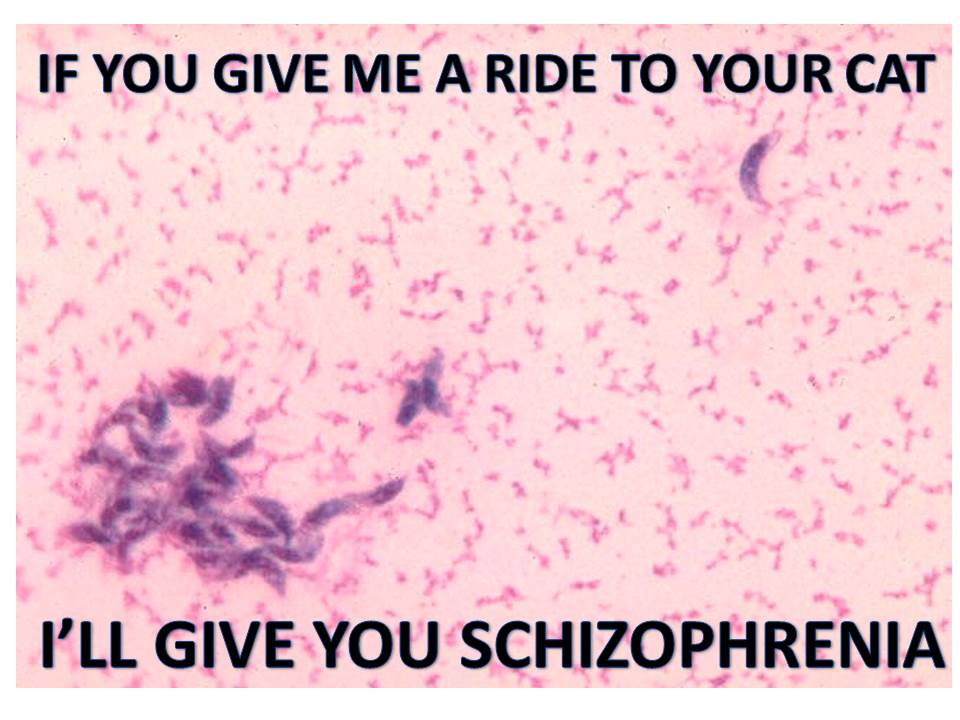
Look, we humans are awesome. We own this planet. If we really wanted to, we could spill every barrel of oil we have into the ocean, light it all into one gigantic fiery blaze, get on fire-proof boats in robot suits, somehow put on war paint inside the robot suits, build obnoxiously large metallic middle fingers, and shout to the heavens “TRY TO IGNORE THIS, MOTHER EARTH!!” Then, if we try really really really hard, we could clean it all up again, because some of us are actually sorry and some of us like to keep our marine food webs and all.
Why orchestrate such a display of power? Because we are the all-powerful movers of earth, the masters of fire and brimstone, and the makers of Haribo Gold Bears because holy freaking balls those things are really freaking delicious. We also have days of the year set aside where we butcher and devour different animals in front of children, purely because that’s what we’ve done for centuries. That right there is true power.
Point is, we are masters of everything we see. Remember in the Lion King where Simba is sitting with Darth Vader, who I guess came back to life to inhabit the form of a lion, and Vader is all “everything the light touches is our kingdom”? Yeah, we humans are exactly that. The only difference between humanity and Darth Vader is this: while the lions behave at the whim of the team of animators and writers that brought them to movie stardom, we are being toyed with by a tiny microscopic parasite that enter our guts, hitchhike a one-way ticket to our brains, and deliberately try to kill us by making us do really stupid and risky things.
I bet if you were eating a sandwich right before that last sentence, you probably aren’t anymore. It’s hard to eat something that’s been catapulted by your own shocked reaction, sending sandwich chunks to the opposite wall mid-chew. Even then, the walls may be really dirty, and that’s just not sanitary. I have no idea when I washed my walls last, and I keep my room relatively clean.
Why is this parasite trying to kill us? Simple. They want to get to our cats.

DAMMIT, MR. SCRUFFLES!!! One of the reasons I wanted to write this article was to make myself look amazing. This isn’t hard, considering my creative wit and depth of scientific knowledge is nearly endless. The main reason I wanted to write this, though, was to talk about some badass ways that parasites can take over the minds of their hosts. It’s actually not uncommon to find mind-controlling parasites in nature. In fact, there is an entire field, called neuroparasitology, focusing on the effects a parasite can exert on host biochemistry, neurophysiology, and ultimately behavior and ecology.
Science jargon aside, there are some pretty badass parasites out there that tend to turn hosts into zombies. For instance, a genus of fungus called Chordyceps invades the mind of its insect host, forces it to climb to a high place, orders its newly-induced slave to latch on with a deathly grip, and busts out of the host all Alien-styled to shower its lethal spores onto unsuspecting insect hosts below.
Huuuugggghshhh, gross. I’m sorry I did that to you. I even feel a little dirty describing that. So, in an effort to make you and me feel less creeped-out and anxious, I’m going to comfort you by giving you increasingly creepy and troubling examples.
So there’s this non-sarcastically beautiful creature called the jewel wasp that wrestles cockroaches into submission and bites them in the neck to inject a mild dose of venom. This venom paralyzes the roach, and after a short time, causes the roach to move with absolutely no will of its own. The wasp then literally starts a one-float cockroach parade, leading the roach to the wasp’s burrow like a Siren leads a ship’s crew to the abyss to be eaten by mermaids or something. Gotta admit, I don’t fully understand the Sirens’ intentions. The wasp seals the roach inside the burrow with a single egg and a comically large timer counting down the exact moment until the egg hatches. When the timer goes off, the cockroach is devoured to death by the larvae and pupae of the wasp, giving rise to another generation of the most beautiful thing in the universe made entirely of cockroaches. Technically, these kinds of parasites are called parasitoids because they live on or within the organism for a long while, but they ultimately lead to the sterilization or death of their hosts.

The jewel wasp: made from 100% real cockroaches!! Holy balls, I just shuddered. Like, that seriously just happened. Another badass parasitoid wasp, called Glyptapanteles, lays its eggs in a caterpillar to develop and consume the host. This time, however, the host does not die. IT DOES NOT DIE. No, these tenacious caterpillar hosts, half-devoured and all, cling to life like that chip I just dropped into my bowl of homemade salsa.
However, the wasp is not yet finished with its host. The caterpillar, after having live wasp pupae burst from its insides, spins a web of silk over the developing cocoons, stands upright on its back legs, puts on a lucky Japanese headband, and guards the cocoons with its life. Seriously, I wouldn’t dare screw with a half-eaten caterpillar sentinel, not even if I got a tummy full of wasp bodies as a treat afterwards. Eventually, the caterpillar starves to death, and that sucks, but at least– OK seriously curtains, what the hell are you doing?! Get it together!!!
OK, so I just bought one curtain yesterday, and not only is the color subtly different than the other curtains in my room, but they’re about a foot shorter, too. It keeps moving and I keep staring at it thinking “I can’t wait to give you back to the store”. I have never hated a curtain so much in my entire life. Please, curtain, quit moving and let me write.
Anyway, the point is that there are some pretty bitchin’ parasites and parasitoids that turn their hosts into zombies. You’ll notice though that all of the host examples I’ve used so far are from insects. Insects are little and dumb, and their tiny dumb stupid heads are really easy to invade. I mean, we’ve got huge brains! HUUUGGEEE!!! And they’re so complex, too! I mean damn, your visual cortex is so complicated that if you took every grain of sand on a 50-meter stretch of beach beach and lined them end to end, I’d be really disappointed because you decided to do that instead of listen to me talk about the visual cortex.
No, we are not immune. You read the first couple of paragraphs, so I assume you knew that already. So let’s just jump right into things and talk about Toxoplasma. This little protozoan is microscopic, but somehow it’s able to hijack the most complex brain on the planet like it ain’t no thang.
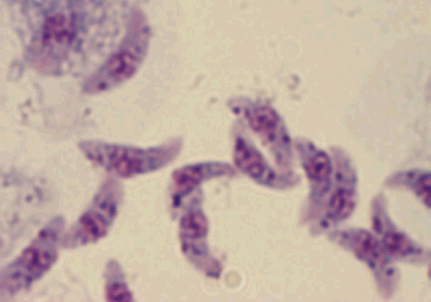
Braaaaainnnssss. Rat Amygdalaaaaaaaasssss. Much like a forgotten old woman with nothing to live for, Toxoplasma loves cats. I’m not sure why Toxo loves cats so much, but in reality this is not very strange. See, parasites often have to infect several hosts in order to reach the one it’s really out to infect, called a primary host. All the hosts it infects in order to reach the primary hosts are called secondary hosts, or intermediate hosts. Secondary hosts often don’t feel the full effects of infection because the parasite isn’t reproducing inside of them, but occasionally a secondary host can have its behavior manipulated in order to reach the primary host. This is what Toxoplasma does. In fact, Toxo does this very very well.
The most clear-cut example of Toxo behavioral hijacking comes from the changes it can make to the brains of rats. Since Toxo is out to infect cats, it often causes the prey of cats to become more apparent in hopes that its current host will end up in the cat’s belly, the perfect place to make little Toxo babies. How does it cause rats to become more apparent? It forms cysts in the rat’s brain. In particular, Toxo cysts form near a region called the amygdala, a tiny region that controls fear and aggression. These inhibit the function of the amygdala, and basically cause rats to get sexually turned on by cat odors and actively seek cats by tracking their urine. Seriously not kidding.
Toxo gets really really interesting when we start talking about humans. The tiny protozoan can cause the formation of brain cysts just as it does in rats, though the damage is very subtle at first. These cysts aren’t as selective in their real estate options, so they just kinda form wherever. They release enzymes that convert a dopamine precursor into dopamine itself, triggering the action of receptors of a group of neurotransmitters called catecholamines (which include dopamine, epinephrine, and norepinephrine). Ultimately, this causes people to do some wonky things.
What kind of wonky things? Well, for one, do you remember the Beatles? Well, John Lennon once saw a newspaper article about a car crash and wrote a song about it, which isn’t really relevant but does serve as a good segue into talking about how Toxo can make you crash your car. Just as in rats, Toxo can induce reckless behavior. So basically…man, I gave it away. Gimme a second to recover.
Ah, screw it. Here’s an article on how car accidents are caused mostly by Toxo victims.
What else can Toxo do, you ask?? Well, it’ll deform your babies, of course!! Apparently Toxo can cause some pretty terrible damage to babies while they’re in the womb, causing deformities that I cannot describe to you. Let’s just say that I googled “Toxoplamodium babies” and it’s not likely that I’ll sleep tonight because of that decision. You’re going to google it anyway, aren’t you?? You heartless bastard.

See? It’s a real problem because this floating baby head appears on a banner with the name of the disease. That means it’s dangerous. These things all seem pretty obvious. Sure, Toxo can cause people to be reckless, and babies are easy to injure as it (Anderson and May, 1967) is so the damage from Toxo seems a bit expected. What else can Toxo do that’s more unexpected? To find out, let’s take a quiz.
Question: Which of the following facts about Toxo is true?
A) Toxo can cause adult humans to become incredibly attached to their cats
B) Toxo can spread through dog semen, and can help upregulate testosterone to increase the odds of infecting a female
C) You’ll have no symptoms of Toxo in the later stages of infection
D) Toxo is associated with causing schizophrenia.
Answer: all of the above.
I find it absolutely mind-blowing that a tiny protozoan can increase a human host’s risk of schizophrenia. This isn’t some brain augmentation to an ancient area like the amygdala. Inducing hallucinations is not simple to do. On top of that, Toxo can cause humans to acquire ADD, OCD, and can even increase suicide risk. Just read this link. Your mind will be blown too.
Nature is truly out to kill us. How do I know? I am never wrong.
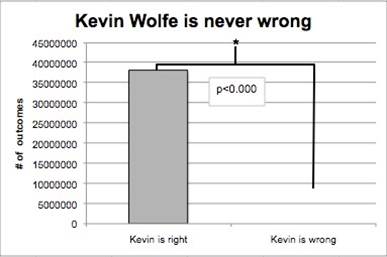
Dat p-value. How else do I know? Toxo exists. We think we’re so high and mighty, immune from crazy zombie-inducing parasites.We are clearly not. Here’s where I make a point that we are not so different from components of the greater aggregate of beings we call “nature”, and that we ourselves are indeed a part of that. Then, here’s where I get really preachy, talking about how things we do affect the natural world, and here I mention the circle of life and make a funny quip about the Lion King and the irony therein that my argument of the circle of life has referenced an earlier part of this article.
Want to hear me talk about an animal, plant, bacterium, or whatever the hell else that you think is awesome? Leave me a message in the comments! I’ll probably ignore it, unless it’s actually really good. It’s worth a shot to try though.
Come on. Comment. Go for it.
To view the really interesting article most of this information came from, click this link!
Photo credits:
-http://listvisit.com/wp-content/uploads/2012/12/grey-american-shorthair-cat-3.jpg
-http://pcdn.500px.net/7757320/7090f93b289604fab91e62214d1243b8f13ae184/4.jpg
-http://media.tumblr.com/tumblr_lfp2sreXdv1qc9f5v.gif
-http://kidshealth.org/parent/infections/parasitic/headers_92320/P_infectionB_toxoplas_1.jpg
-
Who doo? You do.
**Disclaimer: This post is about poop.
A few days ago I stumbled upon this webpage and couldn’t stop laughing. I don’t think I have ever laughed so hard in my entire life. I was crying, a stitch in my side. Any time I would regain my composure, I would lose it again within 0.237 seconds of reading another line. So of course, after struggling through the page, I decided to consult my trusty friend YouTube for some poop-themed videos. Here’s one of my favorites: 3 Types of Girlfriends Based on Pooping Habits (it’s a little vulgar). Now, I’m not entirely sure why I find these types of things so entertaining, but I think I find them funny because they are usually true. Some people don’t like to admit they poop, and they definitely don’t want to talk about it, but why is that so? Everyone poops!
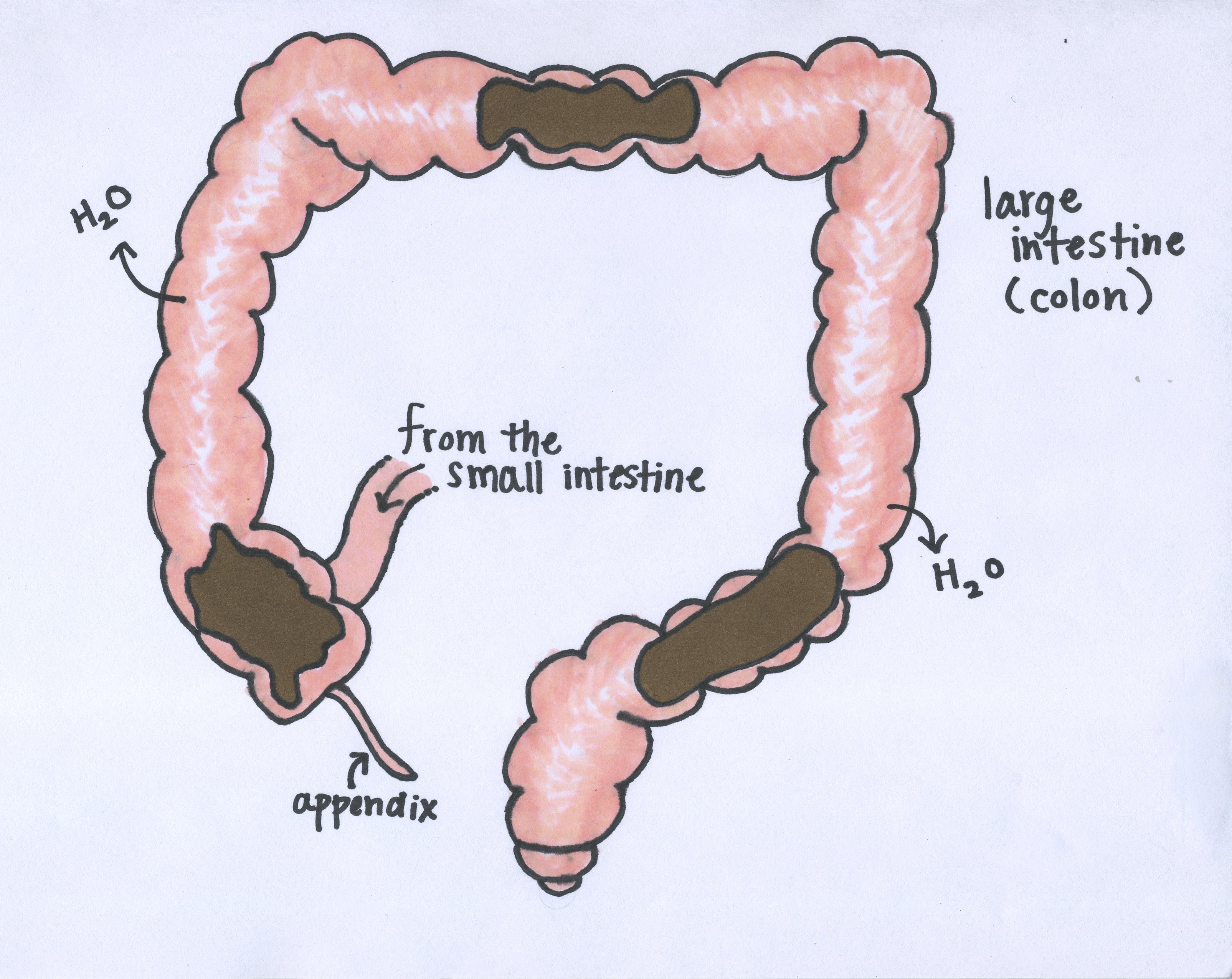
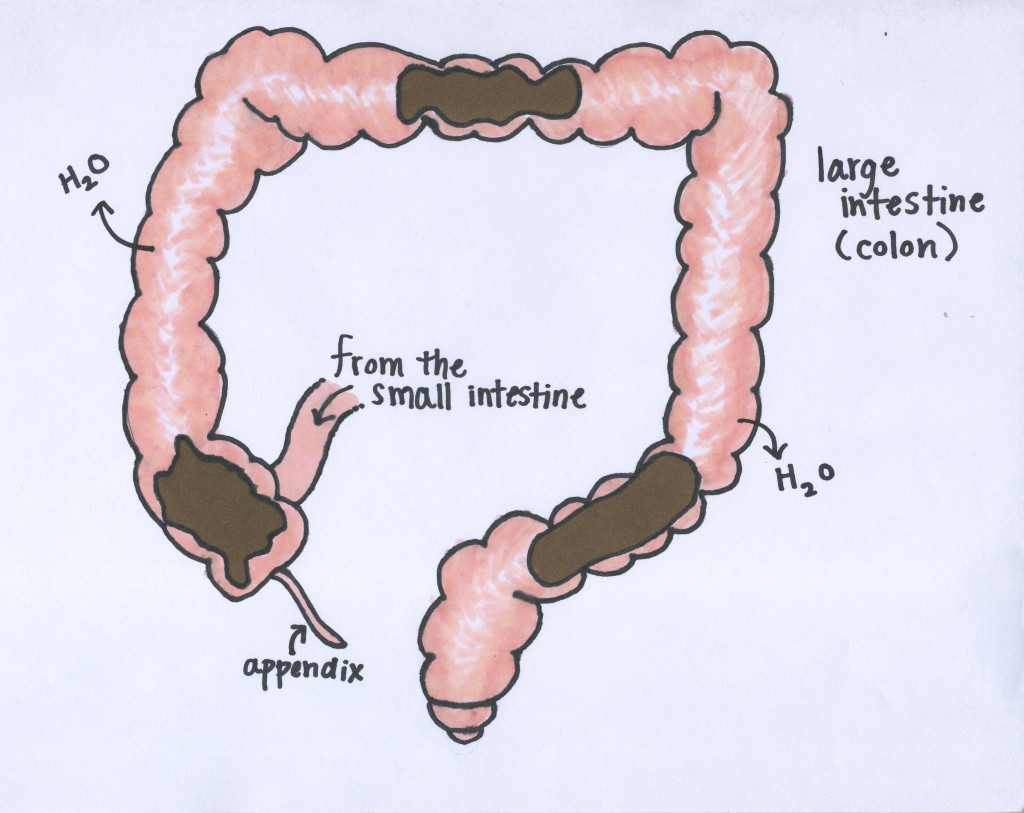
Have you ever wondered how poop is formed, or why it comes in different shapes and sizes? Well, let me enlighten you. After food passes through the mouth, esophagus, and stomach, being digested by various amylases and gastric juices, it makes its way into the small intestine where the majority of the fluid and nutrients from the digestive process and from the food you eat are reabsorbed by the body. An additional amount of fluid is reabsorbed in the large intestine, also known as the colon.
This is where the magic happens.
Digested food moves through the colon via a type of smooth muscle contraction called peristalsis. As it moves along, the poop starts to take shape as the fluid (referred to as H2O in the diagram below) is drawn out. As more fluid leaves, the poop becomes more solid. During times of viral or bacterial infections, fluid may not be properly reabsorbed, causing the common side effect of diarrhea. Have you ever been constipated? This is a result of poop moving too slowly through the colon, causing too much fluid to be reabsorbed. Depending on what you eat, your poop may vary in appearance. If you eat some corn, you may see it again since our bodies can’t digest the cellulose outer layer. Ever drink a brightly colored slushy saturated with food coloring? Your poop likely changed color.
The digestive tracts of carnivores differ from those of herbivores due to the different digestive requirements each type of animal has. Take a koala for example, whose cecum (the section of colon below the attachment point of the small intestine) is about 2 meters long! This longer cecum enables the koalas to digest leaves and provides a greater amount of surface area for nutrients to be absorbed. Check out this koala who, instead of eating leaves, is chomping on an apple. I wonder how long it took for that apple to become poop…
Sources:
Campbell, Neil A., and Jane B. Reece. Biology. San Francisco: Benjamin Cummings, 2002. Print.
-
A Scientist’s Perspective on Why Pie is Yummy and Delicious and Deserving of Your Respect and Admiration
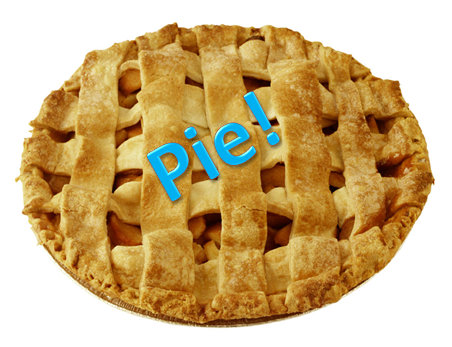
 It is an indisputable fact that I am deeply, irreversibly, head-over-heels in love with pie. Apple. Pumpkin. Blueberry. Banana Cream. You name it, I’ll eat it.
As Thanksgiving approaches, I find myself longing for a slice of warm apple pie with a big scoop of vanilla ice cream. I also find myself contemplating the scientific majesty that is an apple pie.
What majesty, you say? Well, friend, allow me to take you on a journey — from orchard to oven, from farm to table. Prepare yourself. Cozy up. Grab your snuggie. A tall glass of hot chocolate wouldn’t hurt either. Of course you’ll need some marshmallows. Got the marshmallows? Good! Let’s begin.
There are few evolutionary success stories as impressive as the apple’s. Think about it. This fruit was able to evolve a trait so desirable (its deliciousness) that we humans have taken it from its ancestral home in the mountains of Kazakhstan to every populated continent on Earth. We have immortalized the apple in art; we have juiced them, fermented them, sliced them, bobbed for them, dipped them in caramel, engineered machines for the sole purpose of coring them and, yes, made them into delicious pies.
You might think with all its uses that the apple must be a simple, easy fruit to grow. Humans are lazy, right? Surely we wouldn’t grow a fruit like the apple so much if it weren’t an easy thing to do. Wrong. False. Incorrect. Lies!
Apples are incredibly complex. Apples are extreme heterozygotes, meaning that the genes they inherit from their parents can be radically different between one apple and another apple on the same tree. If you were to grow a tree from a seed taken from a Granny Smith apple, you would most certainly, not obtain a tree filled with Granny Smith apples. Your apple tree would likely produce “spitters” — nasty, sour apples meant only to be spit out. Every so often a sweet apple would be grown by chance, but not with consistency.
So how do we manage consistency today? How do we grow a Granny Smith apple tree? Well, in order to produce a Granny Smith apple tree, you would need to graft one. Grafting is a horticultural surgical procedure whereby the tissues from one plant are transplanted into another, allowing for asexual reproduction of the primary tissue. As a result of this process, the tissues from the donor plant fuse with the tissues of the host plant and the resulting fruits are born from the genes of the donor tissue.
Without this process, apples would never have been domesticated; planting an apple tree would be like opening a box of chocolates — you’d just never know what you’d get. It would be an adventure, yes, but 99 times out of 100, it’d be an unhappy one. Through grafting we have become slaves to the apple, spending billions of dollars per year on pesticides aimed at keeping the sweet apples we love away from the dark precipice of extinction. And for what? For pies. And to be perfectly honest, that’s all the reason we need.
The next thing you’ll need for your pie is a crust. There are many recipes that one can use to make a pie crust. But so far as it is an indisputable fact that I am deeply, irreversibly head-over-heels in love with pie, it is also a fact that the best pie crust recipe is indisputably my great-grandmother’s recipe. But I will not be supplying you with this recipe. This is not a “how-to” guide. Get over it. I will however, confide in you, my dear reader, the identity of one crucial ingredient. It’s flour. I know. Revolutionary! But don’t tell anyone. It’s a secret. Now that you know this deep, dark secret, you probably have some burning questions. If you’re like me, the first question you are probably asking yourself is “What are the explosive properties of flour?” Lucky for you, I have the answer!
As it turns out, flour is, indeed, an explosive substance. Flour is composed primarily of starch, which is, in turn, composed primarily of glucose. Glucose is highly combustible — it reacts with oxygen to produce carbon dioxide and water. When ignited by a flame, the sugars explode! Boom! Normally, this process is highly controlled — cells convert glucose into pyruvate through glycolysis and that pyruvate is then converted to carbon dioxide and water through the citric acid cycle and oxidative phosphorylation.
Through these processes animal cells produce the energy needed for carrying on with their day-to-day metabolic processes and that’s all good and well, but it’s probably not the type of combustion you were thinking of. Where are the explosions? Where’s the excitement? Well … this is the excitement. Your cells have the ability to carry out explosive reactions in a manner so intricate and organized that they cause no harm to you whatsoever — in fact, they help you. On a second-to-second basis, your body is “exploding” sugars and harnessing their energy. So put that energy to good use. Invest it in digesting more pie.
Of course there are many other ingredients that go into making the perfect apple pie (cinnamon, nutmeg, sugar, butter), but we will not address those here. We will, instead, end our journey with a discussion on ice cream — apple pie’s obligatory sidekick. Ice cream is a dairy product, meaning it is derived from mammalian milk. Humans have been consuming milk since the Neolithic revolution, but it wasn’t until Louis Pasteur invented pasteurization that dairy products such as ice cream could be made and stored for extended periods of time. Pasteurization is the process by which milk is heated and cooled in order to reduce the amount of pathogenic microorganisms in the product. Once pasteurized the milk is free to be used as an ingredient for whatever ice cream your heart desires! But as for me and my heart, we will desire vanilla.
If you’ve stuck with me this far, congratulations, your dedication is about to pay off! How, you ask?! Why with a discussion on the colligative properties of rock salt, of course! If you wanted to make your own ice cream, you could do it by filling a bag with milk (1/2 cup), sugar (1 Tbs), and vanilla (1/2 tsp), sealing that bag, and placing it in a larger bag filled with ice (4 cups) and rock salt (4 Tbs). Gently massage your bag for 5 minutes, or so, and voila, you’ve made yourself ice cream!
Witchcraft! You exclaim. No, silly! It wasn’t witchcraft. It was science. You see, salt has the ability to lower the freezing point of water (meaning that it enables water to remain liquid beneath its freezing point). For your ice cream, this means your ice/salt mixture will keep your milk/sugar mixture sufficiently cool for it to freeze into ice cream despite the fact that it’s sitting in your warm, cozy hands in your warm, cozy room. It also means you have a quick, easy way to make yourself a side dish for your apple pie!
By now you’ve probably finished your tall glass of hot chocolate and are wondering what to do next. This article is almost over; you’ll soon be left on your own. What will you do? Well, if I may make a suggestion; go make an apple pie and some vanilla ice cream. Bake it. Eat it. Respect it. Admire it. After all, it came a long way to get where it is today. Also, pie is yummy and delicious.
-
Baaah Bye, Kudzu!
Would you ever think sheep could be used in the place of a lawn mower? How could an animal do the same job as a piece of lawn equipment?! Well, in the case of managing kudzu, sheep (and goats) are doing a great job of keeping the invasive species at baaah. Uh… I mean bay.
A couple of weeks ago, I joined a few members of my learning community on a trip to visit some live action kudzu eating. The sheep we visited were part of a company named Ewe-niversally Green (clever, eh?) which specializes in the removal of invasive plants, particularly kudzu. The company is currently working with Trees Atlanta, clearing multiple acres of kudzu from the metro area each week.
What is an invasive species and why are they bad, you ask?
An invasive species can be any organism (both native and non-native) in an environment which grows at a rate which impedes the natural order. Every ecosystem is comprised of multiple types of organisms in balance, and if a new species is introduced or if a native species begins to dominate the system, this balance can be thrown off. Kudzu, like other invasive species, intrudes on the naturally occurring species by out competing them for resources. Over time, if the invasive species is left to prosper, a decrease in biodiversity could result and the ecosystem could crash if the invasive species caused too much damage to the natural order of the ecosystem.
So how are invasive plant species typically removed?
Usually, kudzu is maintained via mowing or by the use of chemicals. By using sheep instead of traditional methods, the natural habitat is conserved in a more sustainable, “eco-friendly” fashion. The risk of funky herbicides seeping into the soil or water supply is greatly decreased, or potentially eliminated completely. Plus, the sheep are supplied with yummy vegetation which makes them quite content.
Sheep Fun Facts:
The sheep we visited (there were about 100 of them, including a few goats) could easily clear an acre of kudzu a day! They can also clear foliage off trees up to about seven (7) feet from the ground!
One sheep dog (a super cute Border Collie where we went) can herd around 1,000 sheep/goats by itself. The shepherd uses different whistle patterns to direct the well trained pup where to go and what to do. It’s quite spectacular!
And poison ivy? They love it! It’s their equivalent of a tasty candy bar! Azaleas and rhododendrons, though, are poisonous to the sheep.
If you would like to learn more about the sheep we visited, check out Ewe-niversally Green’s website here, or find them on Facebook here.
Sources:
Brian Cash at Ewe-niversally Green
http://eweniversallygreen.com/home
http://www.treesatlanta.org/SheepProgram.aspx
http://en.wikipedia.org/wiki/Invasive_species
Photos taken by Taylor James
-
Badass Biology: The Pistol Shrimp

“Wtf, shrimp!!? I make it all the way to this website from who knows what part of the internet, and I see ‘Badass Biology’. Man, Kevin, you flip my brain out with possibilities of flying sharks, rabbits of doom, or a half-honeybee half-unicorn rainbow pollinators. And what do you deliver? A stupid shrimp??! I hate you, and I quit this website. (╯°□°)╯︵ ┻━┻)” To which I reply, “Charles Barkley, I think you’re over-reacting. Please repair my table at once”.
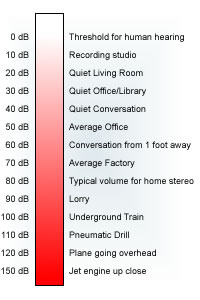
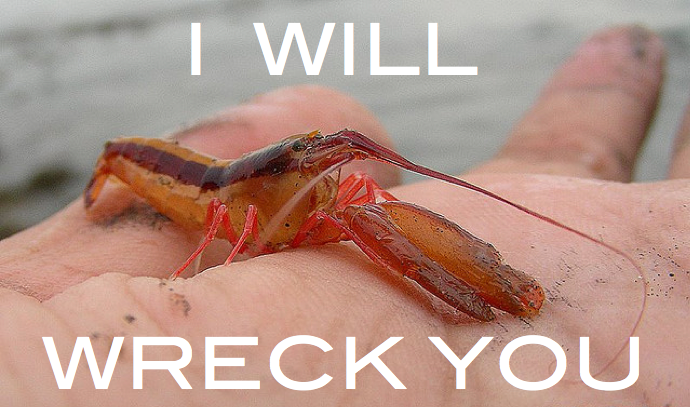
It was hard to find a chart that even went up to 150dB, let alone the 220 these guys produce. Yes, it’s a shrimp. A measly two-inch-long shrimp. But you don’t understand. This one single stupid shrimp is just about the coolest thing I’ve ever heard. Trust me, and when you hear one too, you’ll probably go deaf, because this one little shrimp IS ONE OF THE LOUDEST ORGANISMS ON THE PLANET. I’m talking 220+ decibels, much louder than a gunshot and louder than standing next to a jet engine at take-off. O_o.
First, I want to talk about some other wicked cool stuff this little guy does apart from being a tiny walking firework of sonic pain. These shrimp garner lots of attention from ecologists because of their symbiotic, or mutually-beneficial, relationship with gobies, a type of small marine fish. The coral reef populations of this shrimp build burrows and recruit the help of a goby to stand guard out front while being no more than an antennae’s distance from the shrimp, using the goby’s well-developed vision to watch for danger. Once danger comes, the goby flicks its tail to signal a threat, and both the goby and the shrimp retreat into the same burrow. Then they start slapping five. It’s flippin sweet.

The mutualisms don't just end at gargoyle-ing. From an ecologist’s point of view, this is totally mutualistic, and some scientific literature lists this interaction as “totally f-ing amazing” [citation needed] (Good luck with finding THAT reference -ed.). Yeah, both the goby and the shrimp live to see another day should a shark, barracuda, squid, rogue buoy, really fast snail, very-misplaced land predator, sinking boat part, cloud of wasps, or sentient shrimp-hating spear come around to threaten them. The goby gets a burrow, and the pistol shrimp gets a gargoyle. Selection at work.
I like to think of the goby as the pistol shrimp’s pet, kinda like me buying a falcon and parading it around the neighborhood on a leash. And once danger comes, the falcon goes “Hey yo, Kevo, you might need to reconsider this route”, we split, we don’t find danger, and I buy the falcon ribs for a job well done (and because I really want ribs right now). So in a sense, pistol shrimp are danger shepherds equipped with sun-blasting cannons of glory that we’ll get to in a moment.
I need to take a break to collect myself. Holy balls, these shrimp own everything own-able. Next time I see one, I’m buying it ribs. The whole rack.
Let’s get to that “pistol” thing, why don’t we? Pistol shrimp have one very distinct set of front appendages, like two arms extending outwards from its body. Only, one of these arms is disproportionately larger than the other, and it’s quite a contrast. Like no foolin’ man, this one arm alone can be as long as half the entire length of the shrimp’s body. Imagine walking around with one of your arms the size of the Hulk’s and you get the idea. This may look pretty stupid, but this powerful musculature operates one of the most badass weapons nature can offer.

Yeah, kinda like this When in serious danger or when hunting, the pistol shrimp cocks its massive claw backwards into a 90o position. Once the claw snaps shut, it produces a jet of water propelled forward at 60mph. Yeah, woo, a fast water jet. Big deal. But here’s the amazing part. Are you ready to have your mind blown? If you have ever listened to me before, now is a pretty good time, too: This jet of water creates a bubble that cavitates, or implodes, generating a pressure wave that creates a sound loud enough to break glass in an instant. Not only that, but once the bubble cavitates, the heat generated by the force of the implosion causes the temperatures inside the bubble to reach about 18,000 degrees Fahrenheit. Yes. Eighteen. Thousand. Oh, and to top it off, the whole process takes three tenths of a second.
THIS TINY SHRIMP MAKES A BUBBLE SO AWESOME THAT IT’S LOUDER THAN A JET AND MORE THAN TWICE AS HOT AS THE SURFACE OF THE SUN.

You can imagine the horribly bubbly doom the pistol shrimp’s enemies must face. Stunned (or killed) by the force of that kind of pressure change, the pistol shrimp’s prey has basically just become lunch in an instant. The shrimp pulls its quarry into its burrow, and goes to town, just how I could go to town on some ribs right about now. I dug up a video about this whole process in case what I said wasn’t convincing enough:
http://www.youtube.com/watch?v=eKPrGxB1Kzc
If you want me to write about any other badass biological bosses, leave a comment. I may talk about them, or I may just tell you that your suggestions are awful. Probably not the latter though. I like people.
Well, I like most people except you, Charles Barkley. I really miss that table. Now I’ve got nothing to rest my wine on when Glee’s on.
Photo credits:
http://www.airpowered.co.uk/images/dbachart.jpg
http://loyalkng.com/wp-content/uploads/2009/11/arm_wrestling_champion_03.jpg
-
Zinc has bigger game than you do
Still struggling to pick out that one in a million Valentine’s Day gift? Worry no longer, because I have the perfect gift idea sure to make anyone melt. No – it’s not superhot plasma from your favorite star gone supernova (the Biebs?) – We’re talking zinc baby. Baby. Baby. Baby. Oh baby.
Zinc coatings on steel to be exact, through the process of “hot dip” galvanization. The hot dip part is literal – pieces of steel are dunked in a bath of molten zinc metal and when they are removed a thin layer of zinc is atomically attached to the surface of the steel. The “galvanized” part belies the true function of the coating, considering this word is derived from a certain Italian who took liberties with dead frogs.
“Why bother?” Your significant other may ask. “Here I had this nice piece of steel and now you’ve gone and hot dipped it. I think we’re at two different places in our relationship.” We’ve all been there.
The role of the zinc is to protect the iron in iron alloys (most importantly steel) from rusting. Like a proverbial knight in shining (preferably hot dipped) armor, zinc prevents the steel from rusting by selflessly doing all the rusting itself. As I describe it, this is starting to sound a lot less romantic and more like zinc has wandered into the friend-zone. Poor zinc.
If you read my last article, you know that natural corrosion resistance is rare among the elements, but ironically zinc protects steel by being less good at resisting the undesirable reactions with oxygen and water that cause the formation of rust on steel. A good analogy for this process is if both zinc and iron open lemonade stands on the same block and oxygen is the customer. Every time iron is trying to seal the deal zinc unleashes a humorous ad campaign and slashes their prices, so naturally oxygen buys lemonade from zinc instead. Now replace lemonade with electrons and you’ve got a half-decent understanding of how zinc does its job – as far as oxygen is concerned it came to this two bit lemonade town to buy lemonade from somebody (form an atomic bond), and zinc sure is looking pretty good right now. The only discrepancy with this analogy is that in the business world iron would have to resort to foul play and steal all of zinc’s lemons or deface their billboards or something. Probably shouldn’t write that on your next chemistry exam though. But don’t feel bad for zinc – the corrosion products of zinc with the environment (zinc oxide and zinc carbonate), actually prevent continued corrosion of the underlying zinc. This is called “passivation” which is the way that many other metals, like aluminum, avoid needing a hot dip.
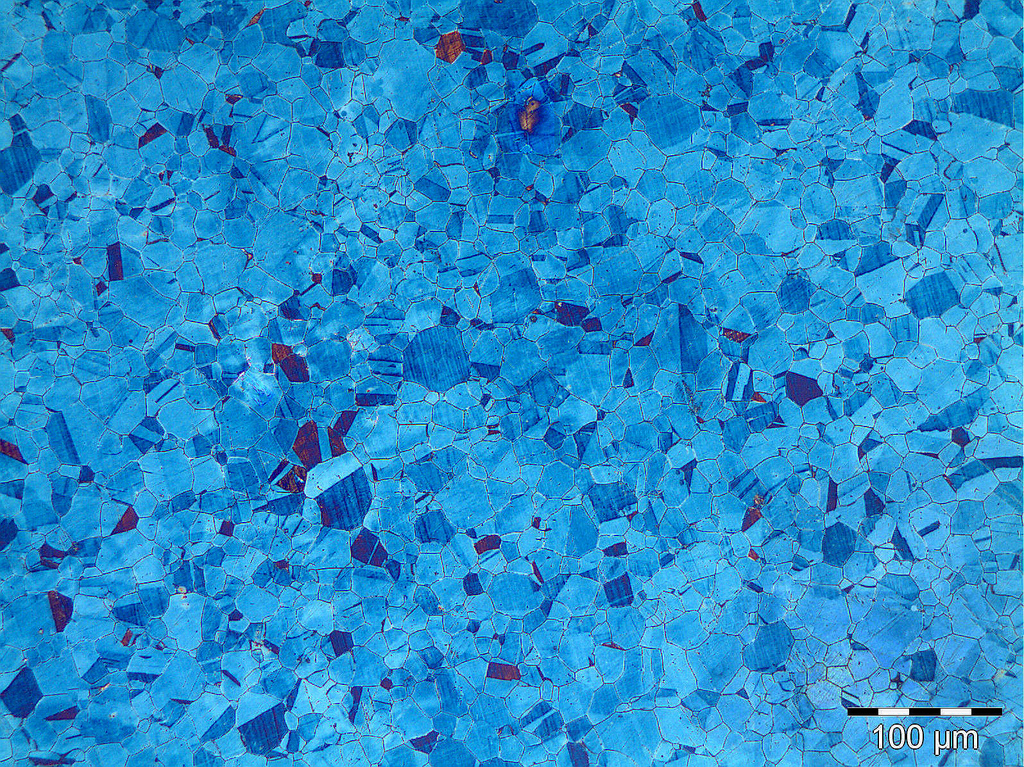
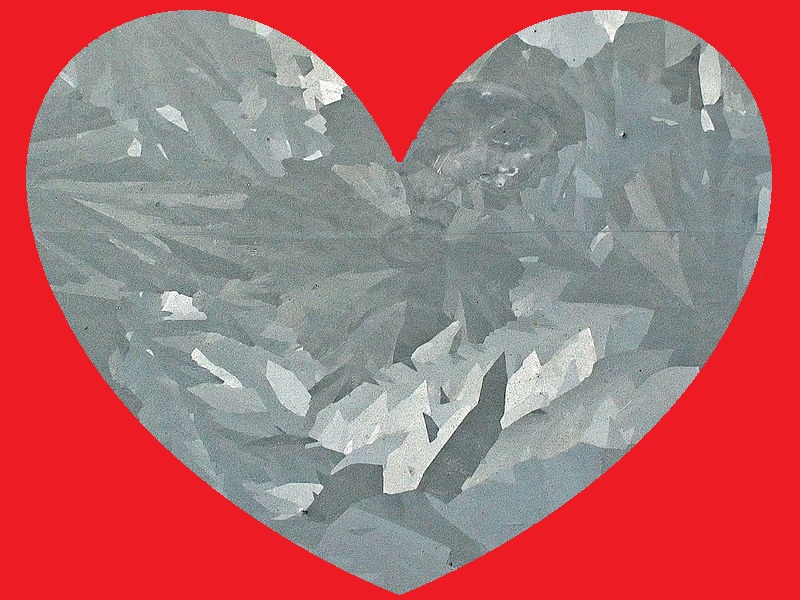
So we’ve covered the “from the heart” part of a good V-day gift, but a box of galvanized nails might not send the right message to the apple of your eye. The good news is hot-dip galvanized steel looks really cool. The next time you’re passing a guard rail, street light pole or the like, you might notice a kind of patchwork series of flecks on the surface of the steel. No, that’s not art deco, those are the macro-sized crystalline grains of zinc busy oxidizing away. You can see some of these flecks inside the heart at the beginning of this article. In fact, all metals crystallize in this way, but because of how the zinc coating is applied the crystals of zinc that form on the surface of the steel are able to grow very large. If you were to take a high powered microscope and have a look at the surface of un-galvanized steel you would see a very similar grain structure but about 1000 times smaller. A good example is shown below from the Flikr photostream by the department of engineering at the University of Cambridge – I admit I am a little jealous at all the cool science photos they have. Do yourself a favor and check them out. The grains in this image are about 30-50 micrometers, which is about half the width of a human hair.
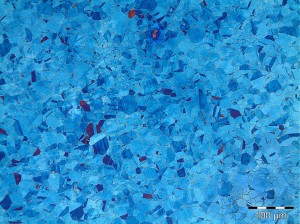 Normally the grain size in so called “engineering materials” like steel is intentionally kept very small because it improves strength. Zinc, whose only role is as a sacrificial coating, can flaunt its’ big ole’ grains. The only other example I can think of where crystal grains are visible like this is in polycrystalline silicon solar cells. The fact that all three of these materials have the same general appearance is not by chance, but more on that another time.
If love is sacrifice, then zinc has got it down. I will close with a poem that you can use with your gift:
Roses are red,
Rust is red too,
A coating of zinc,
says I – LOVE – YOU
And don’t I just.
– Gordon
Original image sources: