Category: Story Time

  • The Conspiracy of the 12 Scientists!

    Missing and dead. Where did they go, and what happened? That is probably what you are wondering, and so am I. Say their names: Carl Grillmair, Nuno F. G. Loureiro, Monica Reza, Frank Maiwald, Michael David Hicks, Amy Eskridge, Jason Thomas, William “Neil” McCasland, Steven Garcia, Melissa Casias, Matthew James Sullivan, and Zobaidul Amin. Reports say that lawmakers and federal officials are looking into several deaths and disappearances involving people with ties to nuclear, space, or other scientific programs, which has now become widespread news across the country (Lubin, 2026; USA TODAY, 2026). Some of these individuals had connections to nuclear and space programs, which is interesting because it raises questions about whether they were involved in a revealing discovery. However, some family members of these scientists do not believe there are major concerning factors connecting their deaths or disappearances to a larger mystery (Lubin, 2026). Republican lawmakers raised this red flag, although they have not provided much context.

    You may be wondering what my opinion is. I do not understand why lawmakers would inform the public about this situation but not give clear context. So much of the government is hidden in ways we do not always understand, and certain files and pieces of information are only released years later. These cases span from the beginning of 2023, yet not many people have been talking about them recently. I walk around campus and hear many other conversations involving the government and politics, yet I cannot believe this has not been mentioned once. Science is extremely important because it forms the foundation of information, discovery, and growth around the world. Research supports the idea of how public trust in science depends heavily on clear communication, especially when uncertainty is involved and that communicating uncertainty can affect how communities perceive scientific information. (Kerr et al., 2023) However, others argue that misinformation can destroy public understanding and trust in democratic decision-making with our government. (Lewandowsky et al., 2023) These officials giving concerning information without explanation raises a huge flag of confusion, frustration and fead which leads everyone into the question: What did these people know?

    Did they find extraterrestrial life or a chemical that could potentially save lives on another planet? The possibilities feel endless, and yet nothing clear has been revealed. Was it our own government, or another country, that did not want life-changing information to come out? It does not add up that one of the deaths has been linked in reports to a mass shooter, while other cases involve missing people, suicides, or deaths with limited public information (Lubin, 2026). The story seems to move in many different directions, which makes the situation feel messy and confusing overall. Some people argue that it is unnecessary to release this kind of information if officials do not even have the full context themselves.

    Personally, I will be waiting for day-by-day updates on this situation. Could it possibly be connected to powerful people or hidden networks, which may explain why some of these individuals disappeared? I think that if I were involved in this as an aspiring dentist who wants to work in biotech, I would be scared about the direction the world is heading. Our world is moving quickly, not only in science but in many other fields as well, and it often seems as though people with power are controlling how these advancements are handled. I am scared, and this is not me trying to scare others. I simply want to raise awareness.

    Kerr, J., van der Bles, A. M., Dryhurst, S., Schneider, C. R., Chopurian, V., Freeman, A. L. J., & van der Linden, S. (2023). The effects of communicating uncertainty around statistics, on public trust. Royal Society open science, 10(11), 230604. https://doi.org/10.1098/rsos.230604

    Lewandowsky, S., Ecker, U. K. H., Cook, J., van der Linden, S., Roozenbeek, J., & Oreskes, N. (2023). Misinformation and the epistemic integrity of democracy. Current opinion in psychology, 54, 101711. https://doi.org/10.1016/j.copsyc.2023.101711

    Lubin, R. (2026, April 24). 12 US scientists have gone missing or died. The mystery has become the talk — and worry — of Washington. The Independent. https://www.the-independent.com/news/world/americas/scientists-missing-dead-fbi-investigation-b2963785.html

    USA TODAY. (2026, April 23). Deaths and disappearances of US scientists: See the list. USA TODAY. https://www.usatoday.com/story/news/nation/2026/04/23/deaths-disappearances-of-us-scientists-see-the-list/89732321007/

  • Children Response to Conflicting Information

    <Featuring image is drawn by the author>

    Ghost Tour Observation

    Recently, the STEMComm VIP team took part in the Atlanta Science Festival in March 2026. We presented the Ghost Tour, featuring scientists who have died because of their inventions, passion, or major founding respective to their science field. I was part of the Zenith hot air balloon tragedy team as a NPC ghost actor. If you are interested, you can look up the three main characters: engineer Joseph Crocé-Spinelli, navy officer Théodore Sivel, and Gaston Tissandier. Two of them died on their flight into the death zone (high altitude), while Gaston survived to tell the story with the price of being deaf. 

    Our team was assigned a big room. As guests come in from the door, they will be blocked by a big board sign of “death zone”, suggesting the death zone is ahead. The guide of the tour – Einstein, will lead them to the sign and leave them there. In the meantime, the NPC ghost will sneak in between the tour group, surprise the guests, and walk them past the sign, closer to the actual scene featuring the actors.

    <Picture is taken by the author>

    However, a small issue arised.There was a mix of reactions when the NPC ghost took the lead to walk over the Death Zone sign. Most people stayed still behind the sign, some hesitated to walk over, and very few actually followed the ghost.


    Mixed Behaviors to Conflicting Information

    Apparently, at first, the guide – Einstein, told the guests to not cross over the death zone. Then, the ghost NPC told them “follow me” as the ghost moved past the sign. Even with the actual dead scientists signaling and inviting the guests to come closer, it takes some time for them to actually move.

    • First information: Do not cross the death zone – Guide Einstein said
    • Second information: Follow me (crossing death zone) – NPC ghost moved
    • Third information: Come closer – Dead scientists in the death zone, with obvious hand signals to come closer

    There were different tour groups. The reactions are also mixed between these groups. Groups with more children tend to follow the NPC ghost at first, with young children being the first to move. In groups with more adults, the hesitation is very obvious. Even when children start walking over, they are stopped by the guardians. It takes the three actors’ effort to invite them over.


    How Children Reaction to Conflicting Sources

    Lili Ma and Patricia Ganea (2009) suggest that children often learn about the world through direct observation, but their knowledge can also be acquired through others’ testimony. This is validated as children often trust what they see, but they also recognize adults as trustworthy sources. Furthermore, some experiments suggest that children might accept false testimony that contradict their first-hand observation. This aligns with the classic Asch study where adults’ judgement was influenced by the social pressure and testimony of others, even though their visual perception suggests otherwise (Ma & Ganea, 2009). This explains why young children who were ready to walk over stopped along with their guardians. Parents are the more trustworthy source of information.

    In addition, the three studies done by Ma and Ganea (2009) confirms that children can outweigh one source of information more than another. This aligns with another study by Baer and others (2025), suggesting that children endorse confident informants over hesitant ones when faced with conflicting testimony. The intention of one ghost to walk over might not have been as clear compared to a group of familiar adults staying in place. On a side note, in the age of the Internet, even if the confident informants previously gave false testimony, it is unlikely they will lose credibility. This is true for both children and adults as they still follow Einstein the guide after the hot air balloon room (Guerrero et al., 2020). 

     Interestingly, studies also show that young children can accept both sources, even if there is a contradiction (Ma & Ganea, 2009). Over time, children learn to distinguish reliable sources over misleading testimony. This is crucial to their development of selective trust and skepticism. At one point, children can conclude new understanding of the situations based on contradiction sources. This might happen around the age of 8 (Baer et al., 2025). With the second piece of information contradicting the first (and their trustworthy informants), then the last information supporting the second, the young guests were able to resolve the tricky situation and take the lead to start the scene.


    Afterthought

    Adults tend to apply the situation in their thought process. Given it was a Ghost Tour, they might assume to not just listen to the wandering ghosts. In addition, did Einstein’s credibility as the guide play in his favor? Einstein was the original source of information for the guests.  Guests might assume the ghosts are just acting out the script. What would you do in their shoes?


    References:

    Baer, C., Engelmann, J. M., & Kidd, C. (2025). Children use the relative confidence of people with conflicting perspectives to form their own beliefs. Developmental Science, 28(4). https://doi.org/10.1111/desc.70027

    Guerrero, S., Sebastián-Enesco, C., Morales, I., Varea, E., & Enesco, I. (2020). (in)sensitivity to accuracy? children’s and adults’ decisions about who to trust: The teacher or the internet. Frontiers in Psychology, 11. https://doi.org/10.3389/fpsyg.2020.551131

    Ma, L., & Ganea, P. A. (2009). Dealing with conflicting information: Young Children’s reliance on what they see versus what they are told. Developmental Science, 13(1), 151–160. https://doi.org/10.1111/j.1467-7687.2009.00878.x 


  • Strange Insect Encounter: The Human Instinct

    Labor Day Encounter

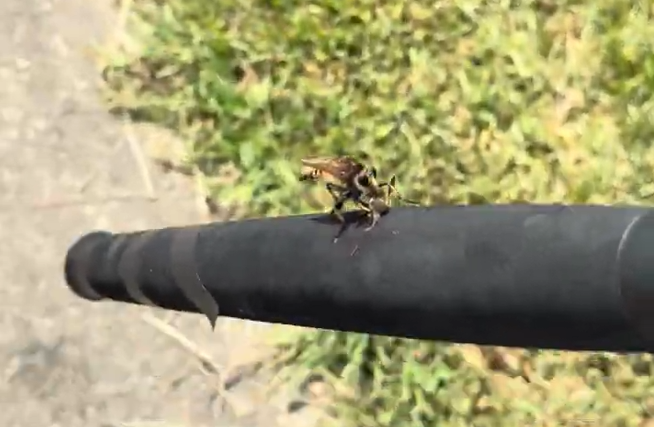
    On Labor Day this year, I visited West Point Dam, Georgia for a small family picnic. It’s supposedly a good spot for fishing, but I didn’t catch any. However, an uninvited guest took a liking to my fishing rod. It was a fellow Yellow Jacket, or so I thought!


    Figure 1. Encounter at West Point Dam, Georgia. Video by Diemmy Dang, 2025.

    From my survival instinct, half of me wanted to shoo the strange-looking guest away; The other half of me took over and let the guest take the free ride. Perhaps sensing my intense glare, the guest left after approximately fifteen minutes. I guessed it is a bee based on the obvious appearance traits: the black and yellow stripes. The surrounding withered flower fields also contribute to this thought. However, what is it to be exact? Surely, there are so many species of them. 

    Figure 2. Zoomed in Image of Encounter at West Point Dam, Georgia. Image by Diemmy Dang, 2025.

    A Small Investigation

    My best friend – Google, helped me get started on the investigation. I used the inefficient and brute-force way to search for “bee” and keep looking at the ones that strike the familiarity. The closest one I have gotten to is Hoverfly (flower fly). Hoverfly is a beneficial insect for ecosystems, pollinating plants and eating pests. As their round shapes suggested, Hoverfly are friendly and harmless to humans, and they are unable to sting. However, the guest never struck me as a friendly type.

    As the investigation continued, Kayla – a fellow member of STEMComm VIP team, introduced me to Google Lens. Surprisingly, it gave me a solid answer right away – Robber fly. To be more exact, the guest belongs to the species Promachus rufipes (red-footed cannibalfly).

    Figure 3. Flipped image horizontally from File:Promachus rufipes 314724260.jpg by Anne, 2023, Wikimedia Commons. CC0 1.0 Universal Public Domain Dedication.

    Despite the rhyme names with Hoverfly, Robber fly is an insect hunter. They are beneficial to the ecosystem by controlling pest populations, but they are also aggressive predators. Robber flies can cause painful bites if they feel threatened by humans. 

    As the fun investigation came to an end, I was left with curiosity. Why did I have conflicted reactions and emotions that day?

    The Negative Human Emotion

    A potential cause is that human instincts regarding insects have been passed down from ancestors. Fear of contamination, fear of being bitten, and fear of infestation can manifest into disgust as an emotional adaptation to help humans increase likelihood of survival (Jose, 2019). Small stings and bites can trigger an unknown allergy to a minority of people, threatening a good health body. 

    Growing up in the countryside, I was once chased by a group of wasps (?) when I was a child. Though the painful experience doesn’t last long in my memory, I have learned to avoid messing with bee kinds. Lockwood (2013) stated that “people consistently overestimate the likelihood that fear-relevant stimuli (e.g, an image of a spider) will be associated with a painful experience (e.g, an electric shock) compared to neutral stimuli” (p. 23). Humans survive by learning to avoid dangers. Survival of the fittest theory is still holding strongly.

    Surprisingly, appearances can also contribute to human’s negative emotions toward insects. In cartoons, dangerous wild animals are commonly represented as cute creatures. Unlike them, small and harmless insects are usually depicted as ugly, visually unappealing, and sometimes villainous (Jose, 2019). According to psychologists, fear can be triggered by visual cues: “the ugliness of antennae … the oddly proportioned eyes and bodies, … discomfort of hairiness and sliminess … the more divergent a creature is from the human form, the greater its capacity to evoke fear” (Lockwood, 2013, p. 23). Jose (2019) suggests this has something to do with rejection response, which is a mechanism to keep human safe. The presence of insects has been associated with the threat of sickness, and disgust seems to be an evolutionary response to disease’s prevention. This idea is tied back to the survival of fitness theory.

    The Positive Human Reaction

    So, was my decision of letting the guest stay purely due to fear and disgust?

    Despite the fear of an unknown insect, my original impression of the guest is a bee – an insect providing well known benefits. An experiment with different age groups, with the youngest in elementary school, and expert beekeepers found that all subgroups perceive bees as useful and worthy of conservation (Schönfelder & Bogner, 2017). Bee products and the importance of pollination for the ecosystem are remarked upon. Perhaps I was just letting a friendly insect take a break on Labor Day.

    Final thoughts

    Human instincts can be contributed by many factors. Although it’s not fair to fear insects differently from other wild animals, it’s important to keep oneself safe and healthy. Insect allergy can be severe, so if anyone is planning a trip to somewhere with a potential of bee family mass attack, wearing white or light-colored clothing might reduce the risk (Greene & Breisch, 2005).

    As I conclude this article, it happens to be Thanksgiving as well. Happy holidays and stay safe out there!


    References

    Anne. (2023). File:Promachus rufipes 314724260.jpg. [Photograph] Wikimedia Commons. Wikimedia Foundation. Retrieved November 27, 2025, from https://commons.wikimedia.org/wiki/File:Promachus_rufipes_314724260.jpg.

    Greene, A., & Breisch, N. L. (2005). Avoidance of bee and wasp stings: An entomological perspective. Current Opinion in Allergy &amp; Clinical Immunology, 5(4), 337–341. https://doi.org/10.1097/01.all.0000173781.58154.53

    Jose, V. (2019). Why are humans so afraid of insects. International Journal of Trend in Scientific Research and Development, 3(2), 1027–1029. https://doi.org/10.31142/ijtsrd21564

    Lockwood, J. A. (2013). Chapter 2: Evolutionary Psychology: Survival of the Scaredest. In The infested mind: Why humans fear, loathe, and Love insects (pp. 20–34). essay, Oxford University Press.

    Schönfelder, M. L., & Bogner, F. X. (2017). Individual perception of bees: Between perceived danger and willingness to protect. PLOS ONE, 12(6). https://doi.org/10.1371/journal.pone.0180168

  • The Future of Touch: How Neural Networks are Revolutionizing Prosthetics

    You might be familiar with The Amazing Spiderman where Dr. Connors, the villain, has an amputated arm. He tests reptilian DNA to see how to regenerate tissue. Instead of simply regrowing his arm, he becomes the Lizard and terrorizes New York City. This story was focused on the dangers and corruption of greed, but also reflects a human desire and reveals a sympathetic side: to restore something that was lost. 

    Nowadays, scientists are following the same dream that Dr. Connors was pursuing, minus the whole turning into a villain issue. People are developing something even more incredible: bionic limbs that can think, feel, and move just like a biological limb can. Welcome to the world of neuroprosthetics, where the line between humans and machines is slowly merging. 

    What are Prosthetics and Why Do they Matter?

    Prosthetics are appliances designed to replace missing body structures for those who were born without or have gone through a traumatic experience. In history, prosthetics used to be purely mechanical and used available resources like wooden legs, hook hands, and other contraptions that are able to grab and hold objects. While these prosthetics had some functionality to it, they had many issues from skin irritation to pressure discomfort. Imagine trying to pick up an egg and you can’t feel how hard you are squeezing it. That is the feeling for millions of people suffering with this disability. 

    Now, the field is evolving rapidly. There has been new prosthetic research completely restoring the human experience of touch, movement, and sensation . Researchers and scientists are asking more questions to further the impact of this field like: Can we create limbs that directly interact with the brain? Can prosthetics perceive temperature, texture, and pressure?

    The answer is, increasingly, yes.

    Training Machines to Speak like the Brain

    The most exciting aspect of this new generation of prosthetics are neural networks. This includes our brains and AI systems that are still learning how to process similar thoughts and actions. At the core of the revolution are BCIs or brain-computer interfaces establishing a connection between neural signals and prosthetic devices.  

    How it works begins with our hands. Once we conduct a hand movement, our brain sends electrical impulses to our muscles and these nerves will always release to the according limb even if it is amputated. Today, scientists are developing brain-computer interface systems that can detect and interpret nerve impulses immediately (Willsey et al., 2025). With these methods, scientists were able to find that prosthetics were responsive and even reached 97-98% accuracy in individual finger and wrist motions using artificial intelligence agents (Diu et al., 2022). These results reveal a major step towards restoring the limb as an extension of the body through AI systems and actively work as a biological device again for the patient. 

    At Stanford’s Neural Prosthetics Translational Lab, scientists try to take their research to the next level where they attempt to translate neural activity to speech on the screen in front of them (NPTL, 2025). This kind of technology uses machine learning and advanced computational methods to learn the specific patient’s neural patterns and then creates a personal movement dictionary connecting the brain activity to the patient’s speech and movement.  

    Making Prosthetics Feel

    Going back to our Spiderman reference, Dr. Curt Connors was able to feel with his one hand. He could sense temperature, feel textures, and experience pressure, all of which he missed out on with his amputated limb. Early prosthetics lacked this sensory dimension, but now, the movement is changing that. 

    Prosthetics today directly connect with brains to provide live sensory data. Studies show that they are able to recreate the nuanced feeling of hands through electrical stimulation (Greenspon et al., 2024). Researchers conduct these experiments by placing electrodes in certain parts of the brain in order to trigger the response for sensation and tactile feedback in the respective limbs. This is revolutionary for patients as it proves to reduce phantom limb pain for patients, where they still feel pain sensation despite the loss of a limb. The future of neuroprosthetics aims to make artificial touch as immersive and intuitive as possible and now scientists are on the path to finding a way. 

    Osseointegration

    Perhaps the most impressive breakthrough in this field is figuring out how to implement this into the body for it to coexist with the patient comfortably. Conventional prosthetics often cause discomfort, limited control and even skin irritation. Osseointegration is the integration of titanium implants into the skeletal tissue, a method to attach artificial limbs without discomfort and allows for machine learning control through embedded electrodes and sensors (Ortiz-Catalán et al., 2023). This innovation is crucial for pushing towards products that are more viable for daily use among patients. 

    In a critical clinical trial, researchers experimented on a patient with a traumatic injury to her right hand. Surgeons implemented a prosthesis which then attached the bionic hand to her forearm bones by placing the titanium implants directly on there. The result proved successful allowing the patient to control all five phantom fingers at a completion rate of 95% in the post motion test given (Ortiz-Catalán et al., 2023). Additionally, her sensations prompted consistent neural responses revealing exceptional sensory feedback. This surgery proved to be very helpful as it substantially reduced patient pain as phantom limb pain decreased as well as discomfort from the prosthetics. This allowed the patient to use the prosthesis for over three years improving her overall quality of life and independence. 

    Conclusions

    Scientists from so many varied fields are merging to accomplish something incredible in the field of neuroprosthetics, going above and beyond biological capabilities. The goal is to design something that doesn’t wear out, use sensors and processors, and beautifully blend human and computer communication. 

    This has shown how possibilities are endless and can immensely improve the lives of those struggling without body parts. Dr. Connors was wrong to turn the whole city into lizards, but his pain and suffering can be empathized with across the world. Advanced technology today is able to help amputees and paraplegics communicate with others, move again, and reestablish their neural networks. 

    In the future, prosthetics may even become so progressive that its biological counterparts will be indistinguishable. Machines will be controlled by our thoughts and actions in the split of a second and move so effortlessly that people will forget they are even wearing a prosthetic. Restoring something so significant in our daily lives is truly life-changing for these individuals and merging it with technology can help us achieve that goal faster and make movement more accessible everywhere. 


    References

    Diu, K., Luu, Nguyen, A., Jiang, M., Drealan, M., Xu, J., Wu, T., Tam, W.-K., Zhao, W., Lim, B., Overstreet, C., Zhao, Q., Cheng, J., Keefer, E., & Yang, Z. (3 C.E.). Artificial Intelligence Enables Real-Time and Intuitive Control of Prostheses via Nerve Interface.

    Greenspon, C. M., Valle, G., Shelchkova, N. D., Hobbs, T. G., Ceci Verbaarschot, Callier, T., Berger-Wolf, E. I., Okorokova, E. V., Hutchison, B. C., Efe Dogruoz, Sobinov, A. R., Jordan, P. M., Weiss, J. M., Fitzgerald, E. E., Prasad, D., Driesche, A. V., He, Q., Liu, F., Kirsch, R. F., & Miller, J. P. (2024). Evoking stable and precise tactile sensations via multi-electrode intracortical microstimulation of the somatosensory cortex. Nature Biomedical Engineering. https://doi.org/10.1038/s41551-024-01299-z

    NPTL. (2025). NPTL; Stanford University. https://nptl.stanford.edu/

    Ortiz-Catalán, M., Zbinden, J., Millenaar, J., D’Accolti, D., Controzzi, M., Clemente, F., Cappello, L., Earley, E. J., Enzo Mastinu, Justyna Kolankowska, Munoz-Novoa, M., Stewe Jönsson, Njel, C., Paolo Sassu, & Rickard Brånemark. (2023). A highly integrated bionic hand with neural control and feedback for use in daily life. Science Robotics, 8(83). https://doi.org/10.1126/scirobotics.adf7360

    Willsey, M. S., Shah, N. P., Avansino, D. T., Hahn, N. V., Jamiolkowski, R. M., Kamdar, F. B., Hochberg, L. R., Willett, F. R., & Henderson, J. M. (2025). A high-performance brain–computer interface for finger decoding and quadcopter game control in an individual with paralysis. Nature Medicine. https://doi.org/10.1038/s41591-024-03341-8


  • Don’t Fall for the Galileo Gambit

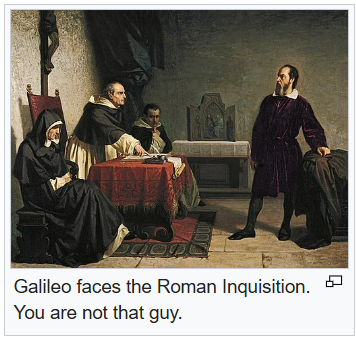
    Image Credit: Galileo gambit. (2018). RationalWiki. https://rationalwiki.org/wiki/Galileo_gambit

    Lots of new ideas are introduced to science all the time. Many of these ideas are accurate and make great contributions to our body of knowledge. At the same time, many don’t hold up to scrutiny and are rejected by the scientific mainstream. Discarding inaccurate ideas is a normal part of the scientific method, and it happens all the time. However, the promoters of a rejected idea don’t always want to admit that their idea is a bad one, and they feel the need to come up with reasons for why their idea is special, no matter how poor the evidence in its favor or how many qualified experts disagree with it.

    Enter the Galileo Gambit, a rhetorical device whose entire purpose is the promotion of rejected ideas (RationalWiki 2018). When an idea promoter uses it, you can expect them to say something like this:

    “Scientists won’t accept the fact that I have proof that the earth is flat! Well, they laughed at Galileo too, and look how that turned out for them!”

    The clear implication is that science as an institution is dogmatic and closed-minded. Scientists won’t accept firm evidence in favor of a belief you hold, but this means you are probably right! All great scientific discoveries were initially rejected, but over time, the enlightened public and a brave few intellectuals came around to the correct way of thinking and forced those stubborn scientists to accept the truth!

    Arguments that rely on the Galileo Gambit most often use Galileo as an example of the oppressed discoverer of revolutionary information, hence the name, but other famous historical figures may also be used. Ignaz Semmelweis, who advocated for doctors to wash their hands before delivering babies, is also a favorite name drop, since his ideas were not accepted until after his death (RationalWiki 2018). In addition, promoters may refer to Pasteur, Einstein, Mendel, and anyone else whose work was not recognized immediately upon publication or faced even mild critique or disapproval from the scientific community.

    The basic idea behind the Galileo Gambit seems reasonable at first, especially since people who use it are often able to recite long lists of persecuted geniuses such as the above figures. However, there are serious flaws in this type of argument, and it acts as a smoke screen to distract you from the fact that the “persecuted” idea is probably too weak to speak for itself. Here are five reasons, in order of increasing severity, for why you should not take a Galileo Gambit argument at face value.

    1. A Misplaced Persecution Complex

    Before we get into the logical and scientific minutiae, there’s something relevant to discuss about the circumstances of Galileo’s story: He wasn’t persecuted by scientists. Despite the fact that the Galileo Gambit is used to complain about science and its practitioners, Galileo’s big conflict was actually with the Catholic Church (RationalWiki 2018, Wikipedia Contributors 2019).

    The dispute that became known as the Galileo Affair started when Galileo published a book called The Starry Messenger in 1610, which gave details of observations he had made while studying the solar system through telescopes. Some of this data, such as the phases of Venus, provided support for heliocentrism, the idea that the sun is located at the center of the solar system and the planets, including Earth, revolve around it. Heliocentrism had first been proposed by Nicolaus Copernicus, but Galileo was its most open promoter.

    At the time, the official church doctrine on the subject supported geocentrism, a model that held that Earth was located at a fixed point in the center of the universe and that the sun, stars, and other planets revolved around it. This view was based on the opinions of ancient Greek philosophers and a literal reading of the Bible. The Roman Inquisition, after hearing about The Starry Messenger and Galileo’s private debates with church officials on the topic, declared in 1616 that heliocentrism was heretical. Galileo was ordered not to continue promoting his ideas and evidence, and a ban was set on heliocentric books. However, he defied the ban in 1632 by publishing a new book, Dialogue Concerning the Two Chief World Systems, that was clearly in favor of heliocentrism. As a result, Galileo was tried the following year for suspicion of heresy and sentenced to house arrest, which he remained under for the rest of his life.

    In contrast, most contemporary scientists agreed with Galileo’s claims once they had the chance to look through their own telescopes and see what he had seen. Even scientists with religious affiliations, such as a group of Jesuit astronomers, accepted that his observations were strong evidence for heliocentrism. Criticism from the scientific community tended to discuss minor points or express small caveats in approval of the conclusions that Galileo had drawn from his work. For instance, an astronomer named Christopher Clavius responded that he didn’t believe there could be mountains on the moon, a critique unrelated to heliocentrism (Wikipedia Contributors 2019).

    This is a minor but important point to consider when weighing the merits of the Galileo Gambit. What institution is the user arguing against, and how well does it really fit the charge of being hostile to new ideas? Religion tends to change slowly, if at all, so the argument that people unreasonably rejected Galileo’s ideas can be applied to the actions of religious leaders in this situation. It does not, however, apply to science, which is constantly changing, highly democratic, and accepting of many new ideas.

    1. Even Galileo Wasn’t Right About Everything

    One idea that Galileo promoted around the time of the heliocentrism debate was his belief that ocean tides were caused by Earth’s motion (Wikipedia Contributors 2019). This made sense to him, but it later turned out to be completely false; tides are actually caused by the gravitational pull of the moon. Galileo also believed in astrology and created horoscopes as a side job, and he refused to accept Kepler’s evidence that planetary orbits have the shape of ellipses, instead believing that they were circles (New York Times 2025, Gardner 1957). Galileo held and promoted a great number of ideas, but he is known primarily for heliocentrism today.

    Plenty of other prominent scientists have promoted bad ideas. In fact, there is a well-known phenomenon in which inaccurate or pseudoscientific hypotheses are supported by Nobel Prize winners! “Nobel Disease” (AKA “Nobelitis”) is something like an inverse impostor syndrome (Felton 2025). Instead of feeling insecure in their achievements and worrying that they are frauds, the awarding of a Nobel Prize seems to encourage prizewinners to consider themselves experts on a wide variety of topics, including areas they have no experience or training in and are therefore not qualified to issue advice on. Nobel Disease has led otherwise intelligent figures to endorse a significant range of inaccurate ideas with effects ranging from the scary (eugenics, lobotomies, and AIDS denialism) to the bizarre (astrology, parapsychology, and the belief that Vitamin C will prevent all diseases) to the amusing (one prizewinner believed that he had been visited by a talking raccoon riding a motorcycle).

    These faults are not exclusive to Galileo or to Nobel Prize recipients, but they demonstrate an important fact about the nature of science: No individual person has all the answers or is correct all the time, so science cannot rely on the opinions of a single person or even a group of authorities. By upholding a few people as misunderstood geniuses, the Galileo Gambit fails to recognize that these people won acceptance of their ideas because they were able to support said ideas with quality evidence. The fact that a person was right before has no bearing on the accuracy of whatever new idea they are promoting, hence each new idea must be proven just as old ideas were. The claim that all of a person’s ideas must be 100% accurate because they are an expert or because they were correct in the past is an argument from authority and fails a basic reality check.

    1. Failure to Distinguish Between Valid and Invalid Criticism

    A significant problem with the Galileo Gambit lies not in its theoretical premise or qualities, but in how people use it in practice. In theory, scientists are just as capable as any other group of engaging in persecution of ideas that they dislike or people that they enjoy having power over. In the real world, however, most ideas that science rejects are rejected due to valid scientific criticism, and there is a clear difference between criticism and persecution.

    When an idea is proposed (to science, the general public, or both), it will face plenty of arguments against it. In general, science-based criticism by people knowledgeable about a subject is valid, while criticism motivated by ideology or bias is not. The case of Einstein’s proposal of relativity is great at illustrating the difference, especially since Einstein is often held up as an example of someone who promoted a revolutionary idea and attracted criticism from scientists despite being right. Here’s what happened: Einstein proposed his theories of Special Relativity and General Relativity in 1905 and 1915, respectively, and they were not immediately accepted and incorporated into the field of physics (Wikipedia Contributors 2019). The early relativity deniers even included three scientists who had won Nobel prizes in physics. Sounds like a clear-cut case of evil scientists rejecting the ideas of a genius because he challenged their knowledge, right? However, this narrative falls apart when one considers that two of those three Nobel prize winners were Nazis and the third had won his prize in an area of physics that had nothing to do with relativity (Hansson, 2017). These critiques, though made by scientists, were clearly not scientific because they were probably motivated by antisemitic ideology (Einstein was Jewish) and compromised by a lack of expertise in the specific subject area. So although Einstein can be described as a persecuted genius, much of the criticism he received was unscientific, and hence not supportive of the Galileo Gambit. In addition, after an early period of disagreement and debate, the vast majority of scientists were won over to Special Relativity by the 1920s and General Relativity by the 1960s (Wikipedia Contributors 2019). There are no major physicists today who are relativity deniers.

    Despite there being a clear delineation between valid and invalid criticism, and despite scientific and professional criticism being valid, users of the Galileo Gambit indiscriminately reject all criticism regardless of its merits. This is exactly the wrong way to approach disagreement; if someone issues a reasonable critique of your idea, you need to address that critique by revising or even discarding the idea. It’s perfectly fine to ignore criticism that takes the form of personal attacks, illogical complaints, or denialism, or criticism that is made by an unqualified person, but brushing aside serious issues with your idea won’t help get it accepted and will instead work against you. It’s much more difficult to persuade people that your idea has merit if you refuse to address obvious problems!

    One more point: It’s worth noting that an idea promoter’s personality or manner of promotion may invite criticism, and thus discourage people from accepting the idea because they find the promoter repugnant rather than because of persecution or objections to the idea itself. Galileo was genuinely persecuted, but he also had a habit of insulting people who disagreed with him, and he alienated powerful figures who might have been willing to help him in his conflict with the Inquisition. A new pope, Urban VIII, had been elected after Galileo’s first trial and was initially sympathetic to him, even granting him limited permission to publish heliocentrist works, but their relationship crashed and burned upon the publication of Dialogue Concerning the Two Chief World Systems (Wikipedia Contributors 2019). The Pope pressured Galileo to include the church’s position in the book, which was written in the format of a fictional debate between a heliocentrist character, a mediator character, and a geocentrist character. The premise sounds neutral and inoffensive, but Galileo consistently portrayed the heliocentrist character as intelligent and heroic and the mediator as wise and fair, while the clownish geocentrist was given the name “Simpleton.” Throughout the book, the heliocentrist arguments are hailed as the best and most rational, while Simpleton’s arguments are all portrayed as stupid and ape the Pope’s position on the heliocentrism/geocentrism debate. This mocking led Pope Urban to believe that Galileo was caricaturing him, and he reacted poorly, banning the Dialogue and not offering support for Galileo during his heresy trial. Galileo would probably have been in trouble regardless of how he presented his argument, but he could have written the book in a less provocative manner. What if the Dialogue had resembled a real debate, in which well-reasoned arguments and solid evidence are supposed to lead to a win, rather than having an incompetent opponent? What if Galileo had crafted a plot in which the geocentrist character is won over by the strength of the evidence for heliocentrism? What if all the characters had considered the religious arguments for geocentrism, thought them through, and then calmly decided that such arguments were insufficient or that acceptance of heliocentrism did not conflict with being a good Christian?

    Sometimes, respectfully communicating one’s ideas is enough to avoid criticism of them, and criticism is a crucial component of the Galileo Gambit. Indeed, criticism is the part of the Galileo Gambit is supposed to prove the user’s correctness. If the promoters of inaccurate ideas did not make their arguments in an arrogant or provocative manner, might they face as much criticism as they do? And if they face no criticism, how could they argue that being persecuted makes them correct? This leads us to the next issue.

    1. Hypocrisy and Double Standards

    In the world of the Galileo Gambit, any idea with mainstream acceptance must be wrong if opposed by a minority idea, including ideas that were previously persecuted, disbelieved, or ignored but ultimately won people over. This means that whether an idea is “right” is based on the number of people who believe it, not how strong the evidence is in its favor, whether it can stand up to testing, or how closely it matches real-world observations. The logical endpoint of this premise is a world where “reality” is constantly in flux, as ideas gain acceptance by a majority of people, only to magically become wrong the instant a smaller group of people or even a single person decides to think something different. Needless to say, this isn’t how the world works.

    In addition to this obvious pitfall, users of the Galileo Gambit often apply a heavy double standard to any conflicts between their ideas and ideas accepted by science. Since the Galileo Gambit is based on the premise that any resistance to an idea is proof that it is correct, surely that means that facing no criticism means an idea is wrong? Nope! If an idea is not criticized by scientific authorities (generally due to scientists considering the idea to be so obviously inadequate that it’s not worth the time and effort it would take them to debunk it), the promoter will claim that this also proves them correct. In other words, there is no scenario in which the promoter will admit that he or she may be wrong. Harsh criticism and no criticism at all are made to appear equally supportive of the idea’s veracity.

    The inverse of such a gaping logical hole appears in the promoter’s treatment of mainstream science, especially fields or facts that oppose their own treasured ideas. Since their idea (by their logic) is unfalsifiable and therefore can never be disproved under any circumstances, it follows that whatever scientific evidence contradicts it will always be inadequate and is automatically inferior to what the promoter thinks. The promoter dismisses science out of hand and treats it as if it has no way to prove itself – the same unfair attitude that the promoter accuses scientists of holding!

    The situation worsens the more this hypocrisy is interrogated. Users of the Galileo Gambit charge scientists with engaging in persecution and controlling what ideas are accepted by the general public, but apparently it’s perfectly reasonable for them to do the same thing. After all, most people who promote pseudoscientific ideas via appeals to the public are not doing so because ordinary people can validate the scientific aspects of their claims. Rather, these idea promoters are engaging in a cynical attempt to win support of their ideas without having to actually prove themselves correct, because they know ordinary people are more likely to fall for fallacious claims and rhetorical dodges than experts are. If someone tries the Galileo Gambit on you, keep in mind that they’re insulting your intelligence!

    Furthermore, by the standards of these idea promoters, scientists face more persecution than the promoters do. In addition to being under metaphorical fire by every Galileo Gambit user under the sun attempting to force public acceptance of their quack ideas, scientists and scientific ideas have faced a disturbing number of attacks from many corners of society, especially in recent years. Anti-science influencers, companies selling bogus supplements and unproven drugs, and even governments peddling pseudoscientific policy all work to undermine science, misrepresent its positions, and deny its benefits to the people who could benefit from it most. During the COVID-19 pandemic, scientists who participated in good-faith efforts to find treatments and vaccines and communicate the science behind them to the public were rewarded with online harassment, bullying from popular politicians, and even death threats (Nogrady 2021). Some scientists required bodyguards to protect them from physical attacks from people who didn’t accept the science behind disease and inoculation. These actions go far beyond the debunking, dismissal, and refusal to publish that users of the Galileo Gambit complain about. Again, according to the gambit, the greater resistance an idea faces, the more correct it is likely to be. Thus, by users’ own logic, scientific ideas are the correct ones, because scientists face much more persecution than people who promote vaccine conspiracies, flat Earth theories, and climate change denialism. Yet no matter how often the news runs stories on the prevalence of science denialism or the risks faced by scientists when taking an action as simple as publicly claiming that science is real, anyone who uses the gambit will maintain no matter what that the suffering of science promoters is invalid and that pseudoscience promoters, conspiracy theorists, and misinformation peddlers are the real victims.

    1. Reliance On the Association Fallacy

    The book in my hand is a story about an action hero and its cover is blue; therefore, all blue books must have action hero protagonists. That restaurant has great food and amazing customer service, so all restaurants in the same chain must be of similar quality. My neighbor likes to garden and is mean to me, so all people who have a gardening hobby must be jerks.

    What is wrong with the above statements?

    If you said, ”the logic they use,” you are correct! At its core, the Galileo Gambit relies on faulty logic, specifically a flaw known as the Association Fallacy. The structure of the fallacy goes like this (RationalWiki 2018):

    A is X and Y. (Galileo was persecuted, and he was right.)

    B is X. (I am persecuted.)

    Therefore, B is Y. (I am right.)

    The fallacy lies in assuming that the fact that two things are alike in one way means they are the same in all ways. Translated to the Galileo Gambit, it invites the user to assume that they are correct solely because they resemble, in a single way, a famous historical figure who turned out to be correct. The problem, of course, is that similarity in one way does not guarantee that two things will be alike in any other respect. Two people who like to garden may have similar personalities, but given that humans are so diverse and that everyone has unique experiences, worldviews, and environments, the odds that you could pick two gardeners at random and discover that both of them hate you are small. In the same way, people who claim persecution in an attempt to identify themselves with Galileo cannot rely on that statement alone. To truly be like Galileo, they must also prove themselves correct as he did, with scientific evidence. This second criterion reveals the fatal flaw of the Galileo Gambit: users are desperate to be considered scientific and identify themselves with Galileo to further this goal, but the entire purpose of deploying the Galileo Gambit is to conceal the fact that they cannot produce any scientific evidence in their favor.

    What about people who really did resemble Galileo in both ways? How did Semmelweis, Einstein, and others who were both persecuted and correct react to the news of their rejection by the establishment? Such individuals are rare to begin with; after all, despite the claims of the Galileo Gambit, science doesn’t usually reject worthy ideas. From the examples we have, though, it seems that when someone knows that they have an important idea that needs to be shared with the world and is being unfairly held back, their first course of action is to . . . not compare themselves to Galileo. When faced with a setback, true persecuted geniuses continue to argue the merits of their work based on the evidence they have collected, because they know their evidence is strong enough to merit consideration. They don’t need to rely on the Galileo Gambit to get their views accepted.

    Consider Semmelweis’ story. In the 1840s, he began keeping statistics on the incidence of puerperal fever, a devastating infection contracted by women who had just given birth (RationalWiki 2023, Zoltán 2019). Semmelweis observed that new mothers contracted the fever and died at a much greater rate when they gave birth while attended by doctors and medical students than when they gave birth in the presence of midwives, and he kept detailed records on many cases. His breakthrough came after a friend attended an autopsy of a woman who had died of puerperal fever, cut his hand on a surgical instrument, and died of an identical disease. Semmelweis theorized that doctors were transmitting small particles that caused illness to the women they examined from the corpses they autopsied and suggested that doctors wash their hands prior to assisting with the births. (In this time period, doctors frequently performed autopsies and then attended births soon afterward.) He began washing his hands before delivering babies and required that his subordinates also do so, while continuing to keep track of the health of each mother in his hospitals. Soon, infection and mortality rates plummeted in multiple maternity wards that Semmelweis oversaw, and they remained high in hospitals that did not require hand washing. However, upon hearing about Semmelweis’ data and experiences, other doctors refused to believe his ideas or follow his advice. They didn’t want to believe that their hands could be dirty and acted as if Semmelweis had personally insulted them. Despite the rejection, he continued to argue for antiseptic practices based on his evidence, which was genuinely strong. Semmelweis fought for handwashing until his death (caused by an infection), and he did not do so by using the Galileo Gambit. Within a few decades, the state of medicine began to change, and other scientists and doctors who had been inspired by him began to promote the germ theory of disease and advocate for hygienic practices in health care. Today, Semmelweis is remembered as a pioneer of medical statistics.

    Semmelweis’ example can be seen as a template for how things really go when a worthy idea is rejected by the establishment. In the first place, such worthy ideas are based on solid scientific evidence, and their proponents have made a good-faith effort to request scientific acceptance and display how well they fit observed phenomena in the real world. Generally, the rejection of an accurate idea happens as a result of non-scientific attitudes or the state of a field that is just starting to become scientific. The promoter may feel discouraged by the setback, but he or she almost never copes by attacking science or indulging their delusions of grandeur. Instead, they emphasize the merits of the evidence for their hypothesis, ask for additional consideration, and continue to engage with science and the scientific community.

    References:

    Bhatia, A., Paris, F., & Taylor, R. (2025, September 7). Your Zodiac Sign Is 2,000 Years Out of Date. Nytimes.com; The New York Times. https://www.nytimes.com/interactive/2025/upshot/zodiac-signs.html

    Felton, J. (2025, August). What Is “Nobel Disease”, And Why Do So Many Prizewinners Go On To Develop It? IFLScience. https://www.iflscience.com/what-is-nobel-disease-and-why-do-so-many-prizewinners-go-on-to-develop-it-80240

    Galileo gambit. (2018). RationalWiki. https://rationalwiki.org/wiki/Galileo_gambit

    Gardner, M. (1957). Fads & Fallacies in the name of Science : the curious theories of modern pseudoscientists and the strange, amusing and alarming cults that surround them. A study in human gullibility. Dover.

    Hansson, S. O. (2017). Science denial as a form of pseudoscience. Studies in History and Philosophy of Science Part A, 63, 39–47. https://doi.org/10.1016/j.shpsa.2017.05.002

    Ignaz Semmelweis. (2023). RationalWiki. https://rationalwiki.org/wiki/Ignaz_Semmelweis

    ‌Nogrady, B. (2021). “I hope you die”: how the COVID pandemic unleashed attacks on scientists. Nature, 598(7880), 250–253. https://doi.org/10.1038/d41586-021-02741-x

    Sternberg, R. J., Roediger, H. L., & Halpern, D. F. (2007). Critical thinking in psychology. Cambridge University Press.

    Wikipedia Contributors. (2019, March 6). Galileo affair. Wikipedia; Wikimedia Foundation. https://en.wikipedia.org/wiki/Galileo_affair

    Wikipedia Contributors. (2019, March 3). Theory of relativity. Wikipedia; Wikimedia Foundation. https://en.wikipedia.org/wiki/Theory_of_relativity

    Zoltán, I. (2019). Ignaz Semmelweis | Biography & Facts. In Encyclopædia Britannica. https://www.britannica.com/biography/Ignaz-Semmelweis

  • What’s with the Rising Egg Prices?

    On a particularly cold night after hours of studying at a cafe, me and my friends are standing in the empty parking lot trying to plan dinner. We see a Tofu House nearby, and decide that a warm bowl of tofu soup is just what we needed. Each of us took off, beating the cold air to rush into the Tofu restaurant. As we sit down, we familiarize ourselves with the restaurant and the menu, eager for some warm soup and watching that raw egg cook in the Korean earthenware bowl they would serve the tofu soup in. 

    There were small conversations from other customers in the restaurant, but I distinctly remember hearing one of my friends call out, “they’re not serving any eggs here.” I mean, how could you serve tofu soup without eggs? I instantly felt the disappointment creeping in, but as I looked up and saw the sign that my friends were pointing at. It read, “Bird Flu, No Eggs.”

    Bird flu? No eggs? Is it some kind of salmonella? Eggs can’t be that expensive. I quickly wiped out my phone and searched for bird flu in Georgia. The news reports didn’t look too bad, so certainly this would pass in a few weeks, right? I don’t think a lot of people know about this right now either. Plus, I can tolerate no eggs now, and I’ll just go get some at the store later. That was what I had thought. But the following week, I would end up realizing that it had affected eggs prices too. I knew then that this bird flu could not be taken lightly.

    So where did this bird flu come from? This bird flu is a type of avian influenza A virus, also H5N1, that causes a highly infectious and severe respiratory disease in birds (Mahase, 2023). First detected in chickens in Scotland in 1959, and then discovered in geese in Southern China and Hong Kong in 1996 (Mahase, 2023). And then in 2003, HPAI A/H5N1 had been identified in poultry and wild birds across Asia, Africa, and some parts of Europe (Sellwood et al., 2007). An outbreak of the bird flu on a poultry farm in the east of England led to the culling of over 150,000 birds in 2007 (Sellwood et al., 2007). And finally, the first report of the virus in the US wasn’t until January 2022. The bird flu strand, H5N1 2.3.4.4b, affected 58 million commercial poultry and backyard flocks (Mahase, 2023). Of course this raises one question: with this history of bird flu, should there be any concern? 

    One thing about this bird flu is that this virus seems better adapted to infecting wild birds, and that there are potential antiviral drugs that have been approved to treat seasonal flu if you get infected (Mahase, 2023). And according to Ian Brown, the head of virology at UK’s Animal and Plant Health Agency, actions traditionally means detecting and killing infected folks, leading to a limited supply of eggs. With the demand for eggs rising, prices have been rising. The average price for a dozen grade A large eggs have reached a high of $6.23 as of March 2025. It has been reported that there are hopes of cheap eggs by Easter and egg prices have indeed been slowly decreasing. For the meantime though, I will just appreciate my tofu soup in its natural form and get my protein from the tofu and beef.

    Sources Cited

    Sellwood, C., Asgari-Jirhandeh, N., Salimee, S. (2007). Bird flu: if or when? Planning for the next pandemic, Postgraduate Medical Journal, 445-450. https://doi.org/10.1136/pgmj.2007.059253

    Mahase, E. (2023). H5N1: Do we need to worry about the latest bird flu outbreaks? BMJ : British Medical Journal (Online), 380 doi:https://doi.org/10.1136/bmj.p401


  • A Tiny Frog with a Mighty Voice – The Puerto Rican Coqui

    On my spring break trip to Puerto Rico, I had the opportunity to explore El Yunque National Forest and listen to the calls of the coquí. Afterwards, I began to become more aware of their calls while exploring Puerto Rico, particularly hearing them in less city-like areas. These tiny frogs are not only common in Puerto Rican rainforests, but are also an important part of the island’s cultural identity. 

    The Puerto Rican coquí (Eleutherodactylus coqui) is a small arboreal frog, typically brown, yellow, or green in color, and they measure about one to two inches in length (National Wildlife Federation, n.d.). Despite their size, coquíes are well known for their loud and distinctive nighttime calls, which sound like “co-kee.” These calls produced by males are used to attract females and establish territory among competing males. According to researchers, the “co” part of the call is intended to repel males, while “quí” serves to attract females (Discover Puerto Rico, n.d.).

    Native to Puerto Rico, the coquí lives in the island’s forests, particularly in El Yunque. The coquí’s reproductive method is different from other amphibians. Unlike many frog species that lay eggs in water, coquís lay their eggs on land, often in moist leaf litter or bromeliads. The male coquí plays an important role in parental care by guarding the eggs and keeping them moist through his moist skin. This is vital for their development as it prevents the frogs from drying out or desiccation. In addition, these frogs do not undergo a tadpole stage. Instead, they hatch directly into tiny frogs with short tails (National Wildlife Federation, n.d.). 

    While the coquí seem harmless and are beloved in Puerto Rico, their introduction to other regions, such as Hawaii in the late 1980s, has caused ecological disruption due to their high population density and loud calls. In Hawaii, the absence of natural predators and favorable climatic conditions have allowed coquí populations to reach densities three times the estimates reported from native populations in Puerto Rico (Woolbright, 2006). This overpopulation has led to the consumption of many native invertebrates, and as a result, disrupting local ecosystems and threatening endemic species (Beard & Pitt, 2005). Additionally, the loud calls of male coquíes, reaching up to 100 decibels, have become a source of noise pollution, affecting the life for residents and impacting property values (Beard et al., 2005). There are also 13 species of coquí, each with its own unique call, and they sing at different times throughout the day. As you might imagine, the constant chorus can become quite loud and even overwhelming at times.

    In Puerto Rico, coquíes have profound cultural importance that goes beyond their biological characteristics. They are often honored in mythology, song, and art, and many Puerto Ricans identify the sound of coquíes with home. It’s clear the Puerto Rican coquí is far more than a small frog. Whether heard echoing through the rainforest or symbolized in island art, the coquí continues to be a defining voice of Puerto Rico.

    Video of Coqui Sounds Taken from Puerto Rico


    Sources cited

    Beard, K. H., & Pitt, W. C. (2005). Potential consequences of the coqui frog (Eleutherodactylus coqui) invasion in Hawaii. Diversity and Distributions, 11(5), 427–433. https://doi.org/10.1111/j.1366-9516.2005.00178.x

    “Coquí in the Rainforest.” Discover Puerto Rico, https://www.discoverpuertorico.com/coqui. Accessed 2 Apr. 2025.

    “Puerto Rican Coqui.” National Wildlife Federation, https://www.nwf.org/Educational-Resources/Wildlife-Guide/Amphibians/Puerto-Rican-Coqui.

    “The Sounds of the Coquí Explained!” Discover Puerto Rico, https://www.discoverpuertorico.com/article/sounds-coqui-explained. Accessed 2 Apr. 2025.

    Westrick, S. E., Laslo, M., & Fischer, E. K. (2022). The big potential of the small frog Eleutherodactylus coqui. eLife, 11, e73401. https://doi.org/10.7554/eLife.73401

    Woolbright, Lawrence & Hara, Arnold & Jacobsen, Christopher & Mautz, William & Benevides, Francis. (2006). Population Densities of the Coquí, Eleutherodactylus coqui (Anura: Leptodactylidae) in Newly Invaded Hawaii and in Native Puerto Rico. Journal of Herpetology – J HERPETOL. 40. 122-126. 10.1670/79-05W.1. 

  • Atlanta Science Festival – The Amazing Race

    It’s interesting that my journey with STEMComm began with a reflection on the Atlanta Science Festival, and now, as I wrap up my final semester, I find myself doing the same. This time, I’m writing from the perspective of a two-time coordinator of this event. It’s been a full-circle moment: challenging, rewarding, and meaningful.

    This semester, our VIP team decided to theme the event around The Amazing Race, a reality show where teams compete in various challenges across the globe. We adapted the concept to create a science-themed race, where participants completed interactive challenges that taught them about various scientific topics such as light, conductors, and encryption. The idea was to make learning fun through friendly competition.

    I worked with Christie and Qiaoni on our subteam, Speed of Light, to design a physical and mental activity based on light and color. Our physical challenge, Prism Effect, introduced participants to concepts in optics, specifically refraction and dispersion. Refraction is the bending of light as it moves from one medium to another and dispersion is where different wavelengths bend differently (Biggs, 2024). Using laser pointers and glass prisms, participants had to manipulate the light to create a path hitting a certain number of prisms. Along the way, they learned how white light splits into a spectrum of colors as it bends through different media, and how laser beams, being monochromatic, behave differently.

    Our mental challenge focused on the Stroop Effect, a psychological phenomenon that reveals how our brains process conflicting information, referring to a delay in reaction times between congruent and incongruent stimuli (MacLeod, 1991). Participants had to name the color of a word, not the word itself, which became surprisingly difficult when the two didn’t match. For instance, the word “purple” written in green ink, showing an example of incongruent stimuli. On the other hand, congruent stimuli is when the two aspects align, like seeing the word “blue” written in blue ink (Ruhl, 2023). This task demonstrated how cognitive interference affects reaction time, and it opened up conversations about how the brain, like the anterior cingulate cortex, manages conflict.

    Example of congruent stimuli

    Example of incongruent stimuli

    Like any large event, it came with challenges such as managing multiple teams, and directing participant flow. However, our team adapted quickly and it was cool to see how enthusiastic participants were, especially with the hands-on activity involving prisms. I also learned how to tailor communication styles when interacting with younger children, making the experience both educational and fun for a wide range of ages. Through this event I felt fulfilled watching people engage with our activities. Seeing kids light up as they bent laser beams or raced against the Stroop challenge timer reminded me why we coordinate events. It’s about sparking curiosity, making science engaging, and creating meaningful experiences.


    Sources Cited

    Davidson, Douglas J., et al. “Stroop Interference, Practice, and Aging.” Neuropsychology, Development, and Cognition. Section B, Aging, Neuropsychology and Cognition, vol. 10, no. 2, June 2003, pp. 85–98. PubMed Central, https://doi.org/10.1076/anec.10.2.85.14463.

    Biggs, Kelvin. “Understanding Optical Prism Types, Functions & Uses – UQG.” UQG Optics, 11 Nov. 2024, https://www.uqgoptics.com/understanding-optical-prism-types-functions-and-uses/.

    MacLeod, Colin M., and Penny A. MacDonald. “Interdimensional Interference in the Stroop Effect: Uncovering the Cognitive and Neural Anatomy of Attention.” Trends in Cognitive Sciences, vol. 4, no. 10, Oct. 2000, pp. 383–91. ScienceDirect, https://doi.org/10.1016/S1364-6613(00)01530-8.

    Okayasu, Moe, et al. “The Stroop Effect Involves an Excitatory–Inhibitory Fronto-Cerebellar Loop.” Nature Communications, vol. 14, no. 1, Jan. 2023, p. 27. www.nature.com, https://doi.org/10.1038/s41467-022-35397-w.

    Prism | Definition, Refraction, Types, & Facts | Britannica. 6 Feb. 2025, https://www.britannica.com/technology/prism-optics.

    Stroop Effect Experiment in Psychology. 2 Oct. 2023, https://www.simplypsychology.org/stroop-effect.html.

  • Electrophysiological … Age? – The Implications of an Observed Age-Induced Decline of Electrophysiological Readability


    Every year, Georgia Tech’s STEMcomm Vertically Integrated Project (VIP), a project group centered around enhancing public understanding and enthusiasm for science through writing, exhibits, and events, partners with organizations like Science ATL and hosts an event at the Atlanta Science Festival, with the 2025 event being the Amazing Race; STEM Edition. With different legs of the race centered around 4 main focus areas in STEM, involving Physics in the Speed of Light, Chemistry in Shocking Conductors, Computer Science in the Cyber Quest, and Neuroscience in the Reflex Relay, groups of participants raced through Georgia Tech’s campus to complete interactive hands-on STEM-related tasks and objectives as quickly as possible.

    Focusing in on the Reflex Relay, which involved 2 stations where participants had to successfully perform a ruler drop experiment centered around reaction time and then move into an experiment centered around the electrophysiological activity associated with motor command. At this 2nd station, participants took turns exploring the electrophysiology of the nervous system through the usage of a Backyard Brains Human-Human Interface to “control” each other’s arms. A common neuroscience experiment performed in many intro neuroscience courses and labs, as described by Greg Gage’s Ted Talk, How to Control Someone Else’s Arm with Your Brain, the human-human interface arm control experiment is a fun and interactive way for people to explore neuroscience in a more hands-on fashion through directly participating in the transmittance of information from one person’s arm into another person’s arm using the Human-Human Interface to do so (Backyard Brains, n.d.).

    Throughout the race, however, to everyone’s surprise, a major issue arose regarding the Human-Human Interface’s ability to read certain older individuals. This observed age-related decline in electrophysiological readability was especially shocking for many of the neuroscience group members as well as VIP team leads because much of the group in general had prior experience with the kits as well as a neuroscience background and had never experienced or even heard of this issue before. However, this unexpected linkage between electrophysiological readability and age can be described as electrophysical age and is ultimately something that, while not typically even thought of in neuroscience, is a studied topic of interest and is an interesting byproduct of neuronal noise.

    Aging in general is typically associated with some form of mental decline and/or detriment on a more cognitive level, and this generally understood age-related decline in cognitive functioning isn’t typically observed until far later in life. However, some niche research related to changes in electrophysiological noise, specifically what is considered 1/f noise, has proven that, similar to many of the neurobiological precursors linked to typical cognitive decline, there are similar electrophysiological precursors associated with age-related cognitive decline. Electrophysiology is the study of electrical properties associated with biological systems, and since the nervous system is bioelectric, electrophysiology is often very heavily intertwined with the discipline. Through data collected by using intracranial electroencephalography (EEG), a technique neuroscientists use to read the electrophysiological activity in the brain, Voytek et al.’s study titled Age-Related Changes in 1/f Neural Electrophysiological Noise done in 2015 ultimately defines characteristics of 1/f neural noise. Neural noise is interesting in that it is a byproduct of the brain’s constant processing of stimuli; however, in being a ‘noisy’ system, the nervous system can sometimes be challenging to record through devices such as EEG. In defining that the frequency of 1/f neural noise can fall rapidly to what can be considered “white noise” due to the reciprocal nature of the function (f), Voytek et al.’s study is really interesting in that it connects and applies mathematical concepts to neurobiological principles. It was also found that even at rest, the 1/f noise mediated many aspects of cortical functioning like memory, which is especially interesting considering that it directly supports the electrophysiologically based neural noise hypothesisc of aging “that the signal-to-noise ratio of the central nervous system degrades during aging, leading to deficits in processing speed”  first proposed by Robert Kail in 1997 (McCormick et al., 2023). Furthermore, neuroelectrophysiological studies have shown that electrophysiological changes that occur due to age happen as a result of decreases in cellular excitability or the rate in wich neurons can communicate with eachother, which in turn constraints intraneuronal communication by limiting the rate at which neurons can commintate with eachother through the alteration of parameters that are integral to neural functioning (Cepeda et al., 1992). Ultimately, these observed electrophysiological changes can contribute to many of the cognitive and behavioral effects that are commonly associated with aging.

    Overall, understanding the key neurobiological functions that degrade over time and lead to cognitive decline is a topic that has been continually researched over the past decade, and more often than not, due to complexity, the electrophysiological components associated with these processes are not thoroughly explored within neuroscience. Even though many computational neuroscientists can contextualize these long-standing problems through different models, such as computational models, much of neuroscience in general looks at noise as troublesome, especially regarding the long-standing issues in computational cognitive modeling where noise is typically thought to indicate a deficit within intraneural communication and is therefore filtered out extensively. Ultimately, however, this phenomenon, known as stochastic resonance, may not always be a bad thing as it is a signaling process that naturally occurs with age in non-linear systems (McDonnell & Abbott, 2009). In a dynamic system, such as the nervous system, extra noise can end up playing a somewhat counterintuitive role as systematically, the noise generated can cause deterministic and predictable changes that end up leading to an overall improved quality of neuronal signaling on a microscopic level while making the signals themselves harder to read on a macroscopic level.

    Overall, what the Reflex Relay group found, while unexpected, is a great example of the many neural processes that go unrecognized due to the overall complexity of a continuing, evolving, and relatively newer field. Ultimately, this unexpected realization linking age to a decline of electrophysiological readability is just another example of where we may initially perceive something as abnormal or inefficient, but it may, in turn, actually be an unknowing observation of an eloquently nuanced solution not typically considered.


    References

    Backyard Brains. (n.d.). Human-human interface. Human-Human Interface. https://backyardbrains.com/products/human-human-interface?srsltid=AfmBOopmTALs9blNPlYVv8nNty1nJUDUmp5rtV5m2wH9T8Tc8lcWJJhC

    Cepeda, C., Lee, N., Buchwald, N. A., Radisavljevic, Z., & Levine, M. S. (1992). Age-induced changes in electrophysiological responses of neostriatal neurons recorded in vitro. Neuroscience, 51(2), 411–423. https://doi.org/10.1016/0306-4522(92)90325-v

    McCormick, E. M., Cambridge Centre for Ageing and Neuroscience, & Kievit, R. A. (2023). Poorer White Matter Microstructure Predicts Slower and More Variable Reaction Time Performance: Evidence for a Neural Noise Hypothesis in a Large Lifespan Cohort. The Journal of neuroscience: the official journal of the Society for Neuroscience, 43(19), 3557–3566. https://doi.org/10.1523/JNEUROSCI.1042-22.2023

    McDonnell, M. D., & Abbott, D. (2009). What is stochastic resonance? Definitions, misconceptions, debates, and its relevance to biology. PLoS computational biology, 5(5), e1000348. https://doi.org/10.1371/journal.pcbi.1000348

    TED. (2015, April 28). How to control someone else’s arm with your brain | Greg Gage. YouTube. https://www.youtube.com/watch?v=rSQNi5sAwuc

    Voytek, B., Kramer, M. A., Case, J., Lepage, K. Q., Tempesta, Z. R., Knight, R. T., & Gazzaley, A. (2015). Age-Related Changes in 1/f Neural Electrophysiological Noise. The Journal of neuroscience: the official journal of the Society for Neuroscience, 35(38), 13257–13265. https://doi.org/10.1523/JNEUROSCI.2332-14.2015

  • What is Computational Media? – Retrospective from a Graduating Senior

    What is Computational Media? This is a question I have been asking myself for practically every year I’ve been at Georgia Tech. The truth I have come to realize, however, is that Computational Media is truly whatever you make of it. Let me explain.

    I came to Georgia Tech with the goal of becoming an animator, someone who works at an animation studio like Disney or Pixar. I chose Georgia Tech rather than an art school because I wanted to know the technical background of animation software so that one day I may even be able to make my own. Since I wanted to combine both a technical aspect and an artistic aspect, I believed Computational Media would be the perfect fit for me, and luckily, I still do!

    To go into more detail about what this degree is, Computational Media is a combination of Georgia Tech’s Computer Science degree and Literature, Media, and Communications (LMC)  degree. This allowed me to learn the technical know-how of a Computer Science degree while also still learning the film principles and background for the more artistic side of animation.

    In my opinion, there are two ways to approach this degree. One, you know exactly what you want and because of that you are easily able to tailor your schedule and the types of classes you want to take to those goals. For example, since I know I want to do animation, I took classes like LMC 2730, Construction of the Moving Image, to further my skills in that area. The second way, I would say, is that you don’t know what you want. Believe it or not, I would say that Computational Media is a fantastic degree to have if you know you want to be involved in some sort of media or artistic field but are not sure which angle to approach it at. In my case, even though I knew I wanted to pursue animation, I took many classes in live action film production, video editing, general media studies, video game creation, etc. All of these studies were adjacent to the goal of animation and honestly helped me consider other fields in which I could use this skill. Because of this, I would say I’m a jack of all trades when it comes to different forms of media production.

    Now the hardest part of Computational Media is the smallness of the degree. As someone who is currently searching for jobs / applying for internships / applying for grad school, I find myself constantly having to sell myself with my degree and my skills simply because no one knows what Computational Media is or means. I really had to research different fields that my degree applied to and made sure my resume backs my computing skills. Building up both personal projects and class projects so that they look fantastic on a resume is crucial if you want a Computer Science job as a Computational Media major. The same goes for if you want a job in the film industry. You will have a lot of very different types of projects to put on a resume but a lot of times they don’t overlap, meaning you will absolutely need to tailor your resume to the job / internship you are applying for because that’s where recruiters can get confused about what your degree means.

    Despite that previous paragraph, I must say that I love my degree. It truly allowed me to experiment in different careers and fields that I have even the slightest bit of interest in and even opened me up to new possibilities that I might not have considered before. We may not have many active alumni, in fact the most famous Computational Media major that I know of is a YouTuber, Danny Gonzalez, but the alumni who do remain connected have a strong passion for helping other Computational Media students find their way in this strange but exciting major. You can truly make this degree anything you want. Whether you want to pursue video game design or animation or UI/UX or even film production, you will find what you need here at Georgia Tech. Heck, if you feel as though you were lacking in any expertise in what you’re pursuing, there are numerous clubs on campus that are here to back you up, such as VGDev and Animation Club.

    If you are someone who is applying to Tech and is considering a degree in Computational Media, I hope this gives you some more context. I will be graduating very soon, and I hope to be a very active alumni once I get my feet on the ground. I wish you the best of luck in your Computational Media endeavors, and I hope that you encounter the same joys of exploration and the same kindness of the people around you in this major as I have.


    References

    Computational Media @ Georgia Tech. (2019). CM Promo Video 2019. Georgia Tech. https://youtu.be/412sCbbiPf8?feature=shared