Category: Story Time

  • So You Hate Your Major… Now What?

    Imposter syndrome is a phrase that many people in academia are uniquely familiar with. The feeling that maybe you aren’t smart enough for your major or that you were accepted into your college by mistake is fairly common in these spaces. For me personally, I had always had an interest in engineering and knew that I wanted to pursue it, but I was confronted with a rude awakening during my freshman year as a mechanical engineer. What if engineering just wasn’t for me?

    Rose Clance and Suzanne Imes coined the term imposter phenomenon in their 1978 study regarding how high-achieving women often “maintain a strong belief that they are not intelligent; in fact, they are convinced that they have fooled anyone who thinks otherwise.” They describe reasons why this phenomenon is highly present in women, usually involving societal stereotypes and familial pressure, and in the STEM field, this pressure is often intensified. I know that in my case, it was always apparent that I was one of the few girls interested in engineering, making me question my belonging, and this feeling was not aided once I was accepted to Georgia Tech, where conversations around affirmative action amplified my doubts.

    Besides the societal pressures around being a woman of color in the STEM field, I also found myself doing worse in my math and science classes while succeeding in social sciences and literature. Not only was I not enjoying the coursework that was foundational to my major, but I was bad at it.

    I started to feel out of place around my peers and began to doubt that I was qualified to be an engineer after I graduated. I felt that if I couldn’t “overcome” a physics class or personal doubts, I would be better off switching majors to cater to my academic strengths. This idea is not uncommon, as highlighted by Rosaling Gill and Ngaire Donaghue and defined by them as the “hidden injuries of academia.” The stress was discouraging me, and the only advice I was offered was individualistic self-help.

    However, many of my feelings changed when I took the course on engineering ethics. It was a social science class that combined all of the things I enjoyed and had a passion for. I was able to write, identify problems in the engineering process, and review case studies that involved analyses only an engineering professional could perform. From here, I knew the direction I intended to go with my degree. I was not the hands-on woodworking girl boss that I had convinced myself I needed to be as a woman in engineering. Instead, I was better at design, programming, and risk analysis. This process of discovery was not easy, but it was very worth every minute.

    The psychological and societal aspects associated with imposter syndrome are hard to identify, defy, and sometimes understand. However, one solution on a larger scale may be to retract from individualism. Imposter syndrome is often and most notably associated with isolation, which can fester irrational feelings of self-doubt. Building community and exploring different avenues related to your passions are valuable tools for finding your place and contributing to the constantly adapting world. It is okay to feel like an imposter, and you are not alone, but your individualism is how you present new perspectives to your field, not your isolation from it.

    Sources

  • Diary of an Undergraduate Thesis: The Finale

    This is a continuation of my first article from last semester where I started my undergraduate thesis writing process. You can find that here.

    ———————————

    January 24nd, 2024

    Just submitted my methods and materials section. Honestly, at this point I’m a bit more stressed about actually finishing data collection than the actual writing. I’ve kind of reached a “well it’s just an undergraduate thesis and not the end of the world” mentality, which is helping a little. To be honest, I did have a couple stress dreams last week (one was where I was scrolling through an endless Excel sheet of data that I had to analyze), so just accepting that it’s not that deep is good to me. But we keep working. 

    I also had to peer review one of my classmates’ methods section. We had this set up last semester too, where we had to peer review other people’s proposals. This semester, I’m paired with a group of other neuro students, so I feel like there’s a lot more back and forth I can actually have with them and their research. For this student, since we had similar experimental setups, I was able to see what she did well, and it also reminded me of things that I need to add to my section.

    One thing I’m trying to do this semester is to work on my thesis stuff more consistently, rather than pushing it all to the few days before the deadline. For that reason, I’ve blocked off an hour every workday on my calendar as a reminder to work on my thesis, even if it’s just for 15-30 minutes. I’ll let you all know whether this is helpful or if it stresses me out more to have my thesis on my mind all the time.

    ———————————

    February 27, 2024

    As always, problems come up right when you don’t want them to. The stereotaxic frame got broken, so we had to send it in for servicing. This means no surgery practice this month, which sets me back on my deadlines. Luckily, I’ve figured things out with my PI and my thesis class professor, but it’s still disappointing.

    Still, the time will pass anyway, and I did practice with perfusions and drop fixing in the meantime. It turns out that I had gotten rusty with these basic skills, so the time spent on that still felt worthwhile.

    While I’ve been waiting on unforeseen circumstances to clear up, I’ve continued working on my thesis results and discussion section. You might ask how I could write those parts without having data, but I did a method my professor calls “Mad Libs” writing, where you leave blanks where you don’t have the information yet. This has been helpful, since I have been able to get an outline of what my results and discussion sections will look like.

    So, I’ll see you in a month, when I hopefully have some data I can cut my teeth on.

    ———————————

    March 30, 2024

    Well, I’ve gotten pretty comfortable with surgeries, and next week I’m planning on doing my first optical implant. If all goes well, I can hopefully collect some data in two weeks. I’ve definitely been stressed about completing this thesis, and part of the process for me this semester is learning to deal with/live with the stress. This isn’t something I can finish in a weekend, after all, so I need to learn to work with this “unfinished task” bell dinging in my head until I turn this thing in. I really really want to have data collection done by the second week of April so we can do data analysis and I can submit the drafts to my readers. It feels like this semester has flown by faster than I thought, and I am worried about the deadline.

    In terms of what else I can do on the writing side, I am working on the schematics that will take up part of my figures in my results section. This is something you never really think about when you think of writing a thesis, but working on making good figures is difficult and time intensive. However, it feels good to be able to make those to have in my paper for now.

    There’s a lot going on outside of this thesis too–I’m getting ready for graduation, writing term papers, studying for tests, and looking at housing after graduation. It’s a lot to juggle, and I hope I’m doing okay. I’ve been reminding myself that I’m basically in the final lap of this process, and that I can do it.

    ———————————

    April 23, 2024

    Finally got some data this month, and I was able to write it all up and make a complete thesis of it all. It was stressful surrounding the data collection, but actually doing it went pretty smoothly. I typed everything up today and sent it off to my first and second readers.

    Really, I don’t know what to say here. After actually sending it off, I felt a little relief, but it wasn’t a super big change. That being said, I think I’m still focused on my work because I plan to continue it after graduation, and so my work doesn’t really feel finished. Still, I’m really happy that I was able to turn everything in with time to spare. By having it done about two weeks before I have to submit, this gives my readers enough time to give me feedback and turn in everything to UROP (undergraduate research office that approves undergrad theses).

    Now, it’s time to focus on everything else I need to complete before the end of the semester: term papers, exams, and graduation. But tonight, instead of working on it all, I gave myself the evening off. It’s something I deserve after all this, I think.

    Am I happy I did all this? Was it all worth it? I think it might be too early to tell, but I think it was well worth my time. I learned so much about research, working on a long term project, and scientific writing. But if I could go back in time and do one thing better, I would try not to stress as much about it. I think during this past year I’ve given myself so much unneeded pressure that never helped make my thesis better in the end. But I doubt that August 2023 me would have taken that advice to heart anyway. In any case, this is my last entry, because I consider this chapter of my life complete. I hope you enjoyed this mad little journal. I’m out.

  • Is Love Truly Blind? An Analysis of the Popular Dating Show

    \

    From its initial debut on Netflix in 2020, Love is Blind has captured audiences and secured itself as one of the most popular dating reality shows of the 21st century. What makes Love Is Blind different from other popular dating shows is that the contestants date and propose to their prospective partner from behind a wall, without every seeing each other. It isn’t until they solidify their engagement that the contestants are able to see what their partners look like. Another difference between Love Is Blind other reality shows? Love Is Blind takes itself extremely seriously. The hosts, Nick and Vanessa Lachey, are notorious for referring to their show as “an experiment”. Instead of a hypothesis for this “experiment” the hosts simply repeat the leading question: “Is love truly blind?”.

    In this article, I attempt to analyze Love Is Blind as an experiment from a scientific perspective, in an effort to answer the question, “does the inability to see your partner during a dating stage increase the viability of a long term relationship compared to a typical dating scene where both parties can see one another?”. To do this, I will compare Love Is Blind another popular reality dating show, Love Island. In Love Island, contestants are not only able to see each other, but they are encouraged to judge their fellow contestants by their physical appearances. We can compare the outcomes of each of these shows to conclude which dating strategy is more effective in forming successful, lasting relationships.

    Because this is an experiment, we will need to analyze our variables. It is imperative to account for the major differences between these shows, and note that our comparison will be far from perfect. For one, Love Is Blind is a marriage-focused show. Contestants (allegedly) sign up for the show in hopes of finding a husband or wife. Most of the contestants on Love Is Blind are in positions in their life where they are ready to commit to long-term relationships. This is much different than Love Island, which engages in a culture of flirtatiousness, changing partners, and employs a cast of younger contestants, who are less likely to want to pursue a long-term relationship. Love Is Blind is unique in that it involves such a large cast of singles from both sexes, and follows multiple couples’ pursuit of marriage. There are no shows quite like Love Is Blind, which makes it difficult to assess it as a true experiment. An ideal scenario would involve recreating the show perfectly, but with face-to-face dating instead of blind dating. Of course this is impossible, so our comparison to Love Island, is the next best option. To eliminate cross-cultural variables, we will be analyzing the slightly less popular US version of Love Island.

    I will now present the data that I collected from each reality show. To start, Love Is Blind has been running for 6 seasons, each with 30 contestants. Out of these 180 contestants, 61 contestants have become engaged on

    the show, or 31 couples (One contestant was engaged twice to two different partners). Out of these 31 couples, 20 couples broke up on the show, 9 couples are still together, and 2 couples married each other on the show, but eventually broke up. This adds up to a 29% long-term success rate out of all the couples engaged on the show, and an overall 10% success rate out of all the contestants over all 6 seasons.

    In comparison, Love Island, US has taken place over 5 seasons, each with 25 contestants, for a total of 125 contestants over the whole show. Out of these contestants, 15 couples have continued to date after the show. Out of these 15 couples, only three are currently together. This adds up to 20% chance that a couple formed on the show will stay together, and an overall success rate of 4.8%. This number is also likely generous, as Love Island typically introduces new contestants in the middle of seasons, some seasons almost doubling in cast size before the end.

    Based on these numbers, it is clear that Love Is Blind is more successful than Love Island at forming lasting relationships. In fact, Love Is Blind’s statistics of forming 9 married couples after only a 6 season runtime is unprecedented in dating shows. No other show comes close to Love is Blind in the sheer number of successful relationships formed. Even marriage-focused shows like The Bachelor pale in comparison to the success rate of Love is Blind. After 28 seasons of the Bachelor, and 20 seasons of The Bachelorette, only 9 couples from the shows are still together to this day. This means that if you are the “Bachelor” or the “Bachelorette” you have an approximate 18.75% chance of forming a lasting relationship during your time on the show. While this is better than the 10% success rate of Love Is Blind, it isn’t much better. Considering the fact that the bachelors and bachelorettes are dating 25-30 potential partners, and have no competition, it makes sense that there would be a decently high success rate. Additionally, most seasons of The Bachelor and The Bachelorette end in an engagement, so it would be reasonable to expect more than 9 lasting couples after 48 seasons.

    Given the data and considering the variables, it seems evident that Love Is Blind has an impressively high success rate compared to similar reality dating shows. Love is Blind has an overall success rate of more than 2x that of Love Island, US. While it does have an 8.75% lower success rate than The Bachelor/Bachelorette franchise, the average contestant on Love Is Blind has an unprecedentedly high chance of finding love than the average contestant on these shows. It seems very probable that the factor contributing to this high likelihood of success is the blind-dating style. There is evidence in support of blind dating that suggests that deeper, and more lasting bonds are formed when physical appearance is taken out of the equation. It is also possible that age, sociodemographic factors, time frame, and casting decisions could also be contributing to the show’s success. Whatever the reason, there is absolutely evidence that blind dating can lead to a comparatively high relationship success rate in a reality TV format. In other words, there is evidence that love is, (or certainly can be) blind.


    Sources


    Delbyck, Cole. “Which Couples Are Still Together from Every Season of Love Is Blind?” Netflix Tudum, Netflix Tudum, 28 Mar. 2024, www.netflix.com/tudum/articles/love-is-blind-who-is-still-together-every-season.

    “Love Is Blind (TV Series).” Wikipedia, Wikimedia Foundation, 2 Apr. 2024, en.wikipedia.org/wiki/Love_Is_Blind_(TV_series).

    “Love Island (American TV Series).” Wikipedia, Wikimedia Foundation, 7 Apr. 2024, en.wikipedia.org/wiki/Love_Island_(American_TV_series).

    Siwak, Miranda. “Love Island USA Couples: Who Are Still Together and Who Broke Up?” Us Weekly, 29 Mar. 2024, www.usmagazine.com/entertainment/pictures/love-island-usa-couples-who-are-still-together-and-who-broke-up/.

    “Stop Swiping, Start Talking: The Rise and Rise of the Blind Dating App.” The Guardian, Guardian News and Media, 8 Nov. 2022, www.theguardian.com/lifeandstyle/2022/nov/08/stop-swiping-start-talking-the-rise-and-rise-of-the-blind-dating-app.


  • Science Fiction – A Blessing or Curse to Emerging Discoveries?

    When you think of robots, does your mind jump first to ABB Robotics and Mitsubishi Electric, or to R2-D2, HAL 9000, and WALL-E? If someone asked your opinion on the advancements in robotics and AI, do you think of OpenAI’s Figure or the dangers posed by the Terminator?

    Public perception of new technology shapes and is shaped by mass media – especially science fiction. From Isaac Asimov’s I, Robot to Gene Roddenberry’s Star Trek, science fiction has played a major role in how the public builds mental frameworks to understand emerging technologies. In a 2008 Working Paper for the Social Contexts and Responses to Risk Network (SCARR) journal, researchers at Cardiff University discovered that participants frequently referenced Frankenstein, Gattaca, and Brave New World, among other science fiction sources, to explain and form perspectives on emerging technology (Hughes, Kitzinger, 2008). Phrases like “Frankenstein foods” and “nano Robocop threat” were cited as examples of science fiction influencing public perception of GMO crops and nanobots (Hughes, Kitzinger, 2008).

    So how exactly does science fiction impact the public’s perspective?


    HAL 9000, a “rogue” AI from Stanley Kubrick’s 2001: A Space Odyssey


    Science Fiction as Cautionary Tale

    One perspective, touted by scientists and policy makers alike, is that science fiction narratives serve as cautionary tales that teach audiences to mistrust science through imagery of unchecked curiosity, mad scientists, and unethical experimentation. In a 2003 study, researchers discovered that “individuals who frequently watch television are more likely than infrequent viewers to lack confidence in the scientific community” (Kirby, 2003). Clearly, fictional representations of science have eroded trust between the public and science.

    In this perspective, science fiction serves the role of a cautionary tale. Stories like 2001: A Space Odyssey caution the audience at the dangers of artificial intelligence, amplifying existing fears of antagonistic AI software. Coupled with films like The Terminator and even pulp fiction like Avengers: Age of Ultron narratives of human-robot conflict and betrayal from artificial intelligence emerge. Through such fictional representations, scientific advancement is demonized and mistrusted.


    Science Fiction as Inspiration

    While the narrative of science fiction as a cautionary tale is held by many in both the scientific and policy communities, including even the National Science Foundation, it is not the only perspective (Hughes, Kitzinger, 2008 and Kirby, 2003). In fact, in the aforementioned working paper, only one research group “clearly confused fact and fiction in the way so often highlighted by scientists and policy makers” (Hughes, Kitzinger, 2008). Science fiction then, was not entirely negative – instead, science fiction served as entertainment, a reference point, and a source of inspiration when discussing scientific advancements.

    This more positive perspective of science fiction is clearly visible in the researchers’ discussions with participants about nanotechnology. Participants “routinely identified” science fiction as a reference point when discussing nanotechnology, and for many, it was the only reference point they could find (Hughes, Kitzinger, 2008). Images of nanotechnology in science fiction were largely positive, “with a strong association with useful inventions and radical medical treatments”, leading to a positive image among the participants (Hughes, Kitzinger, 2008). Unexpectedly, of the topics the researchers discussed with participants, the one with the most science fiction references (nanotechnology) had the best image, while the one with the least references (GMO crops) had the most fears. For some, science fiction was even “treated with amusement” when discussing nanotechnology, rather than fearmongering (Hughes, Kitzinger, 2008).

    As another scientist concluded, concerns about misuses of technology “are often combined with an extremely optimistic view of technical possibilities… grounded in an underlying positive discourse about progress” (Kirby, 2003). Science fiction, while introducing fears of misuse and unethical practice, ultimately proved to be an inspiration of scientific progress.


    In Conclusion

    As we now know, science fiction can hold both positive and negative implications for the public’s perception of technology. For some, science fiction is cautionary and mistrustful, playing on the public’s fears to sow distrust between the audience and the scientific community. For others, science fiction is an inspiration, providing the audience with a vision into the many possibilities at their fingertips.

    Taken as a whole, science fiction is neither strictly positive nor strictly negative. Some technologies (like GMO crops) are feared regardless of science fiction representations, while other technologies (like nanobots) are viewed more positively due to the reference points posed by science fiction. Other technologies still (such as artificial intelligence) are feared in part due to science fiction, in which case science fiction plays a more negative role on public perception.

    Science fiction is ultimately neither a blessing nor a curse. It is, like other forms of science media, to be examined individually, rather than generalized as a whole. So the next time you flip to the newest episode of Star Trek or The Expanse, consider the show’s perspective on science and form your own opinions.


    Citations

    Hughes, E., Kitzinger, J. (2008). Science Fiction Fears? Social Contexts and Responses to Risk Network (28). https://orca.cardiff.ac.uk/id/eprint/17529/1/HughesKitzingerWkPpr28.pdf

    Kirby, David. (2003). Scientists on the Set: Science Consultants and the Communication of Science in Visual Fiction. Public Understanding of Science – PUBLIC UNDERST SCI. 12.261-278. 10.1177/0963662503123005.

    Kubrick, Stanley. 1968. 2001: A Space Odyssey. Warner Bros.

  • A science communicator takes a communications class?!

    Even though I have been involved with the STEMComm VIP team for almost four full years now, I have never taken the time to learn about science communication properly and ways to go about it. Taking a communication class has been long overdue for me because it’s something that I’ve always been interested in improving about myself and my skill set as a graduate student and as a budding scientist. So, I finally leaped into MSE 8200: Advanced Presentation Skills.


    The Warm Up

    MSE 8200 had six students in a classroom meant for 40, so I needed to connect with my classmates to go through the class. We started with some surprisingly deep icebreaker questions about where we came from and what drove us to become engineers. From there, we began our warm-up exercises, where we went over problems of writing in science and how we can improve our communication. We all related to the feeling when we finally found an article with a title that might help us with our projects, but then we came to find out that the paper was impossible to understand. Since writing is the most significant thing that non-scientists see, it’s one of the things that should be practiced to be understandable and intriguing!

    After discussing the basics of science writing, we reviewed different science stories, what they did well in communicating their science, and what could have been done better. We finished the warm-up also talking about how to communicate with younger audiences, reading some different stories from well-known scientists, and how we can improve on explaining technical issues to a non-technical audience (with some pretty cool Ted Talks). After writing our versions of how to explain some of the foundations of our research, it was time to make our presentations!


    Speaking Up

    After the warm-up, we switched between learning about different methods of presentations and creating presentations for the class with peer and instructor feedback. Our first style (and probably the easiest for me) was the elevator pitch, where we gave a short 90-second pitch on the research we do, why it matters, and what we learned from our work. It was an easy assignment since I love telling people what I do, whether they’re other materials scientists or a friend who wants to listen. The 3 Minute Thesis presentations were also fun to practice, summarizing my work and learning more about what my classmates do. It also gave me a fun challenge to take my research from my summer internship and condense seven research slides into one slide that explains three months of work!

    My most challenging communication style was long-form oral presentations for a technical audience. Essentially, they were presentations a researcher would give to other scientists at an academic conference. I realized that I’ve never attended an academic conference, so I wasn’t sure what would be the best information from my internship to explain further or delete. I also realized that since my Master’s research experience is from my internship, it was difficult to talk about my work for 15 minutes when I’ve been used to presenting it for 3-5 minutes. We closed out the course with a poster presentation, where we gave a brief pitch of our work once more, with some final comments on our experience in the class.


    Did Jalen learn to communicate better?

    Yes. 1000%. Absolutely (and any other words you can think of). Even though I have a good amount of experience creating science-related content, what I learned in this class will make me a better communicator. With the help of my instructor and my peers, I got a lot of feedback on what I could improve on in my presentation style and what I could do better. I learned that even though my long-form presentations were shorter than I would have liked, I did a great job presenting my work’s complicated terms and concepts in a way for both technical and non-technical audiences to understand and engage. With the use of animations and analogies in my work, I could put a clear image in the audience’s mind of what I was doing and put a lot more emphasis on the why; if a scientist cannot explain why their work matters, then it becomes even more challenging to engage with a non-technical audience, especially in fields like renewable energy, electric vehicles, and artificial intelligence.

    What I want to work on and improve is including more conciseness in my presentations. Though my explanations were clear, I spent more time elaborating on small details than I probably needed to, especially for a non-technical audience. I think if I improve on this, then I will be able to create more accessible presentations. I also hope to practice with more resources like “Academics Suck at Writing” to learn more ways that I can improve my STEM communication skills.

    MSE 8200 has been one of the most enjoyable and engaging experiences of my Master’s. Not only did I learn skills to make me a better science communicator, but I also realized that my communication style is more robust when it includes visuals or oral presentations. It also gave me a path to move forward with my STEM communication journey as I prepare to graduate and move on to the next career step. I plan to attend a science communication conference in the spring and use the lessons from this class to grow even further. If you can take a science writing or presentation class in your program or work, I highly recommend it!


    Note: If you want to see my research (and my communication skills in action ), I posted my 3 Minute Thesis presentation from my class below.

  • HackMITea: A Hackathon From the Eyes of a Physics Major

    Recently, I’ve had the opportunity to visit a friend up north and experience my first ever hackathon, hosted by none other than MIT. Every year, undergraduate students from all over the world gather to Cambridge to attend this student-run event. The goal of a hackathon is to get as far as possible in realizing an innovative project that aligns with an overall theme. For HackMIT, we had 24 hours to design a tech-based project focused one of four areas: sustainability, education, health and accessibility, and interactive media. In working on my project, I developed my coding skills a bit while getting to witness firsthand what life is like for both a CS major and an MIT student.

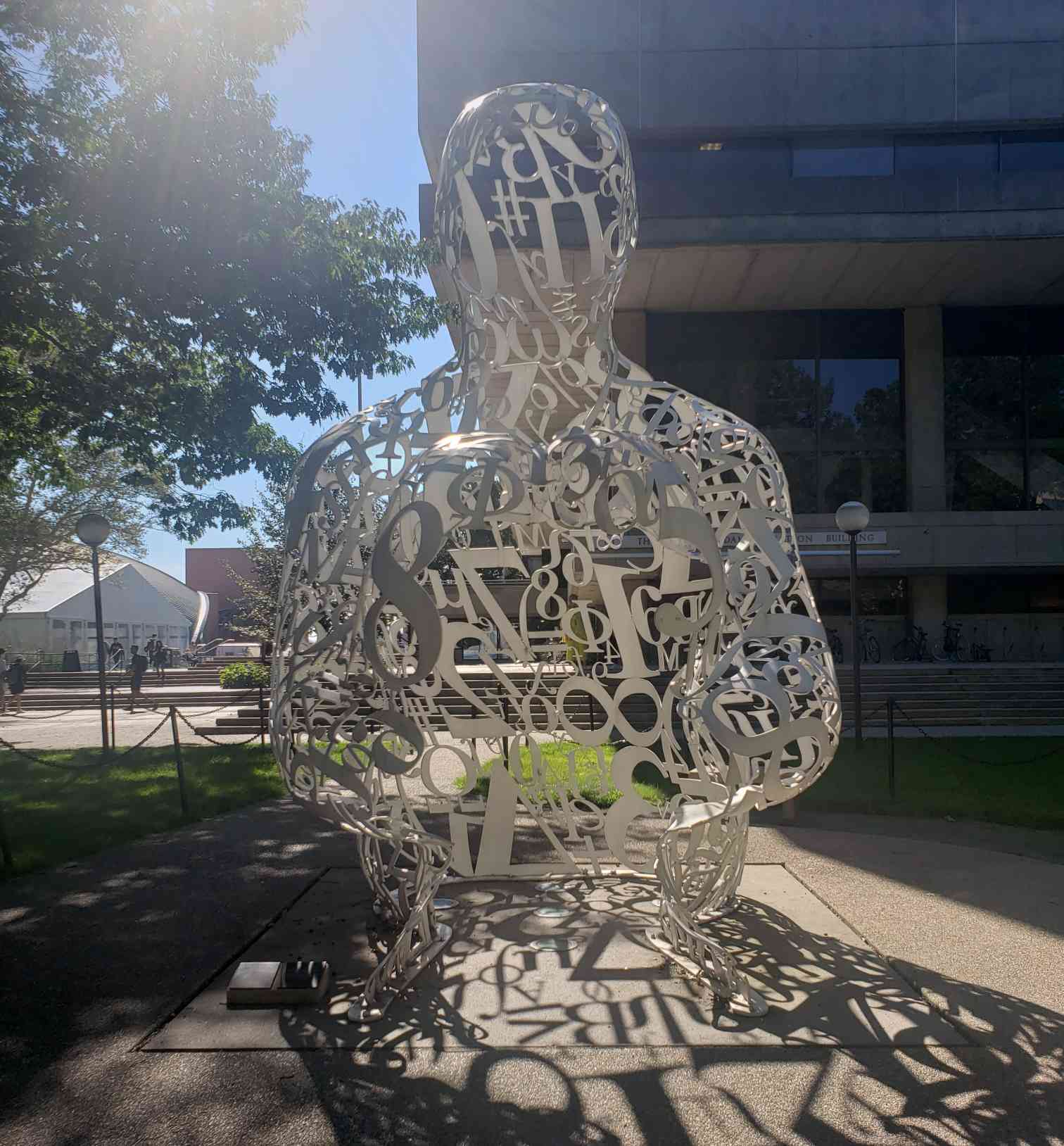
    This piece is called Alchemy, and it was my favorite statue at MIT

    The Opening Ceremony

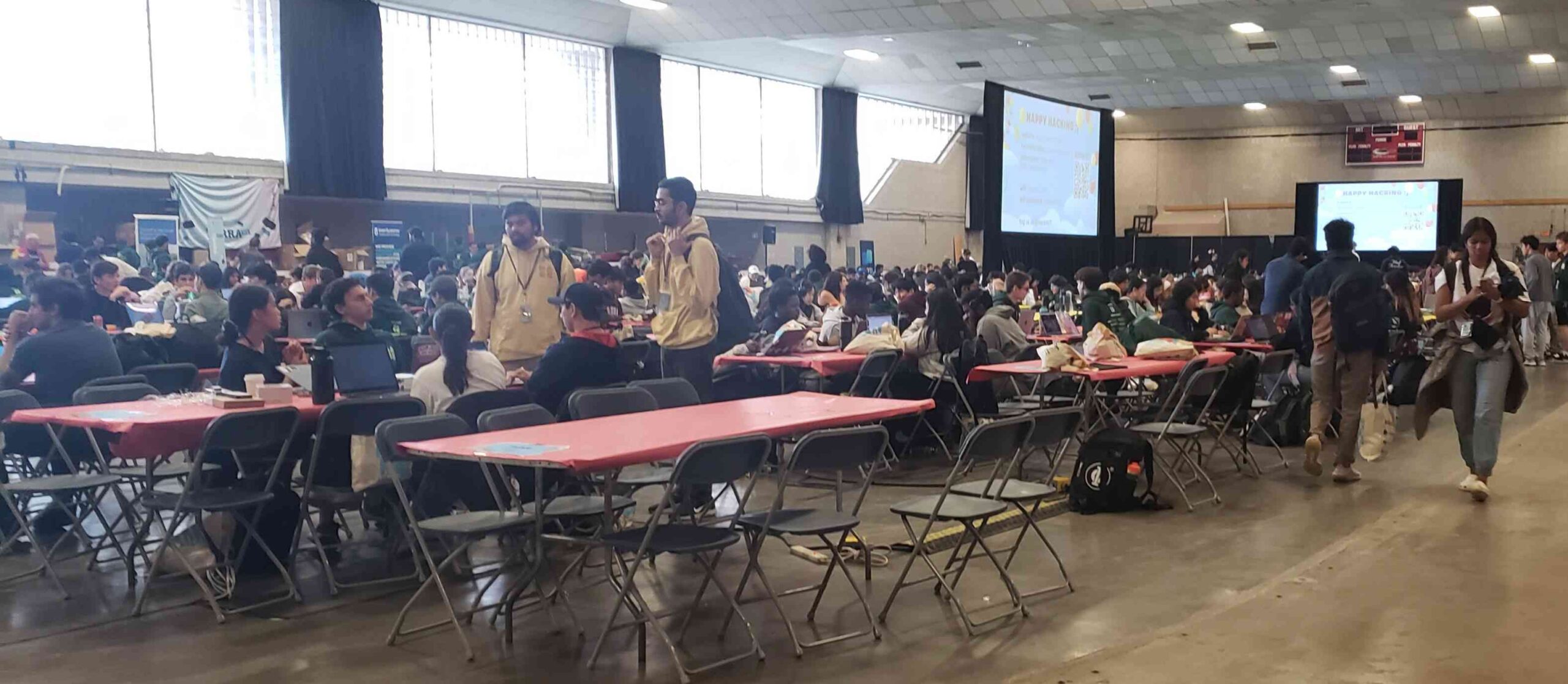
    On the day of the competition, we all gathered in a huge gymnasium for the opening ceremony. I was immediately blown away by the sheer number of competitors lining the bleachers in preparation for the our guest speaker, Ali Partovi, to kickoff the hackathon.

    Endless tables of competitors planning out their course of action for the next 24 hours.

    When the ceremony finally began, we were introduced to all the sponsors, and at this point, I gained my first piece of insight into the computer science community. All of the sponsors at the event appeared to be tech-based companies, with some of them, including Partovi, being representatives of mentorship programs designed to facilitate the innovation process for aspiring computer scientists. This along with sponsors ranging from cryptocurrency to health technology painted a picture for me of a community that fostered ambition in achieving goals teetering between wealth and altruism.

    After the sponsors were introduced, Partovi began his speech, which was, interestingly enough, one of the highlights of my time in Cambridge. Apparently an avid Matrix fan, Partovi attempted to kick off his talk by sharing several scenes and quotes from The Matrix, but he was met with technical difficulties, resulting in a few awkward yet entertaining minutes of Partovi adamantly trying to resolve the issues and share with us the masterpiece that is the 1999 original version of The Matrix. Eventually, he succeeded and we were rewarded with a geeky adoration of the classic film, with Partovi confessing that he even named his mentorship company Neo after the movie’s main character. Partovi highlights a conversation between two characters in the film that discusses the idea of not having to “dodge bullets.” And from this, he segues into his main discussion.

    The rest of the speech was centered around Partovi’s experience in the tech industry and about not being afraid of failure, which he calls “bullets.” Though outside of that primary purpose, there were some questionable decisions in his talk. He began by discussing a time when he failed to close a deal with Steve Jobs because he acted dishonestly, which appeared to be a valuable lesson on its own, but he then followed this discussion with a time he lost out on a deal for being too honest. I will leave it to the reader to decide the moral of this story. Afterwards, Partovi took the opportunity to promote his mentorship program Neo and in the process make a comment that later sparked a feud with another mentorship program sponsoring the event.

    The Project

    After the ceremony, my team took a moment to explore the MIT grounds before beginning our project. Within the gymnasium itself, there were sponsors hosting independent coding challenges and offering freebies. I recognized this as a so-called “networking opportunity” that I always hear CS majors talking about. There were also various workshops, including one on how to work with Hugging Face AI models, which was interesting, and one on how to mint NFT’s, which was less interesting.

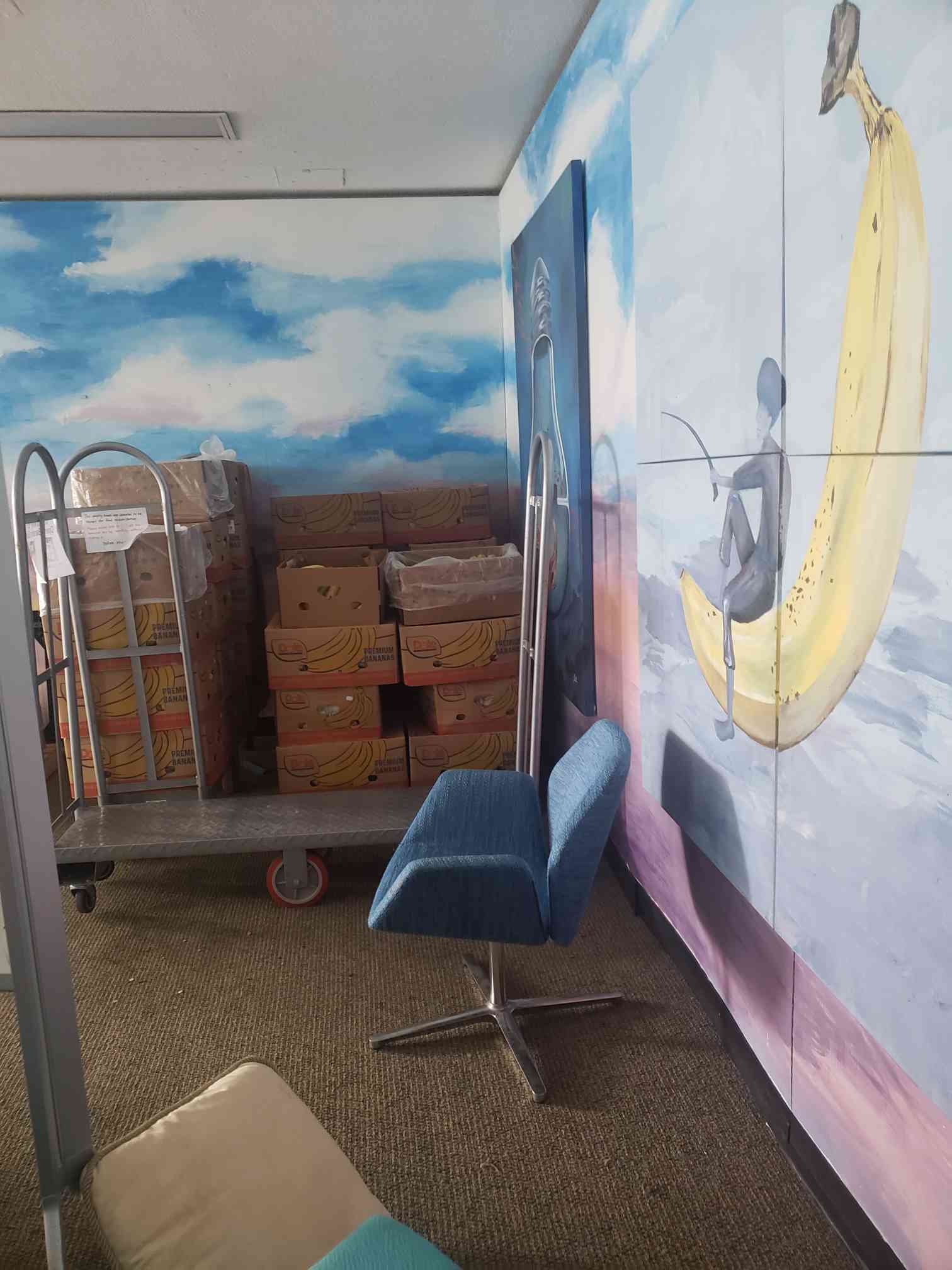
    Although many groups stayed in the gym, we decided to leave and find a more quiet place on campus to work instead. Our journey led us all throughout MIT, which had a very interesting layout. The entire campus was a vast network of buildings and hallways with an interconnected basement system. One hallway in Building 17 can lead you to Building 22. It was as if the entire school were its own small indoor city. This was not what I expected when I heard the rumor that MIT students don’t go outside. Eventually, our journey led us to the MIT banana room, a room that provides students with an endless supply of bananas as they slave away on their homework assignments or prepare for their next exam. We sat down on some brightly colored bean bags amidst a wall of banana paintings and got to work.

    The banana crates in MIT’s banana room, providing much needed potassium to the students of MIT.

    We chose to work in the interactive media category. Our initial goal was to design a game using a large language model. The premise of the game involves two parties, guessers and pretenders. The guessers would have to choose a prompt for the pretenders to answer, but among the pretenders is an AI that will also respond to the prompt. The goal of the guessers is deduce which response was AI generated, while the pretenders’ goal is to fool the guessers into choosing incorrectly. In challenging the guessers to distinguish an AI from real people, the game highlights how far AI has come in mimicking human speech and thought. On the other hand, pretenders are challenged to “act like an AI” in the sense of thinking on their feet and producing a seeming clear and cogent response according to various prompts.

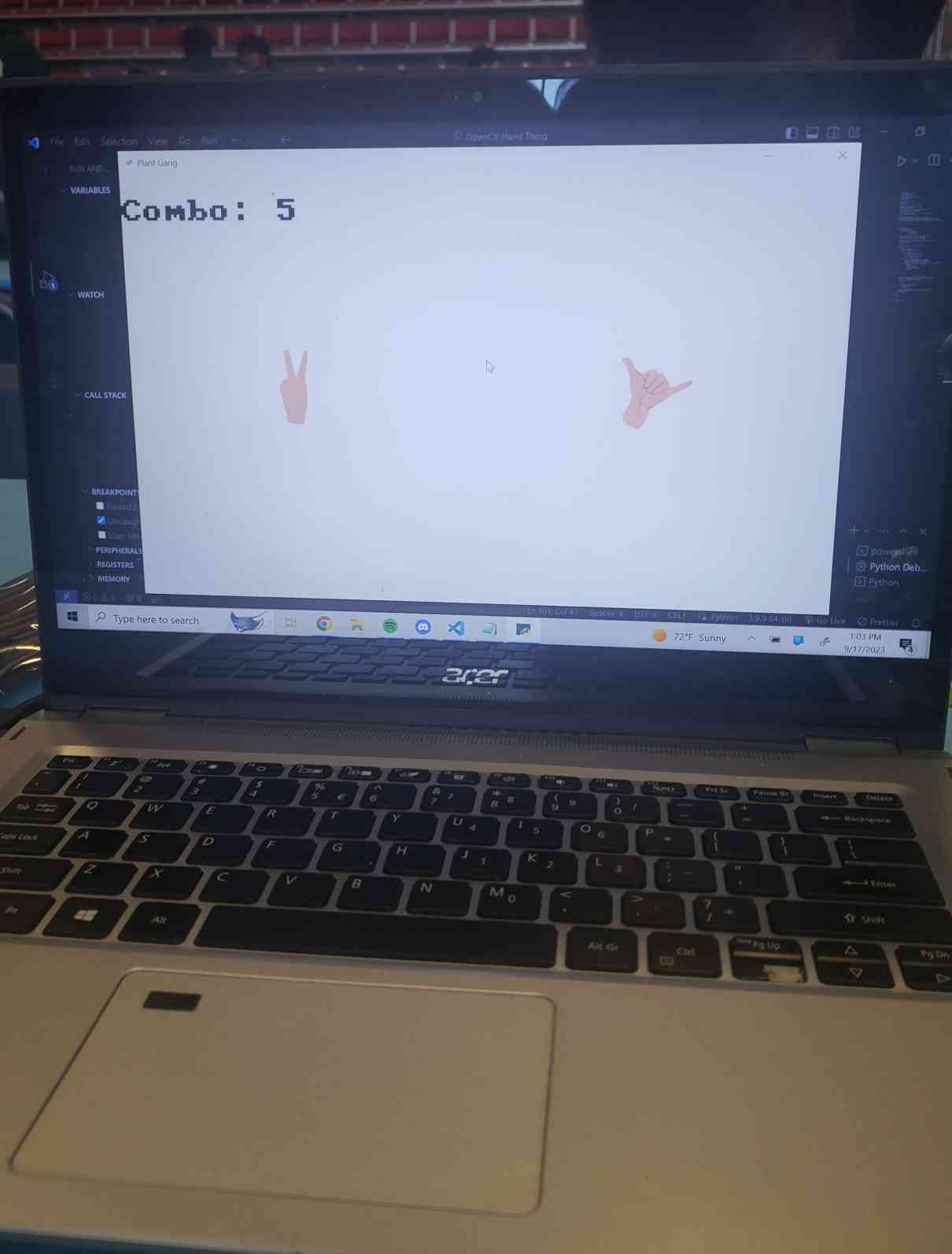
    Unfortunately, late into our project, we realized that we were too ambitious and would not be able to create a presentable program in time, so we decided to scrap the project in favor of a rhythm game involving hand gestures, aptly titled Hands Dance Revolution. By feeding data of different hand poses to a convolutional neural network, we were able to train the network to identify when those poses were being made on camera. We then used the Pygames library to create a basic game that kept a count of how many times the hand gestures were correctly matched in a given time limit. This game was a basic proof of concept of our actual idea, which would have been a game similar to a hybrid if Just Dance and Dance Dance Revolution in which hands would be positioned and posed to the beat of a song to score points.

    The Conclusion

    The creation of this project required several new skills. Although I had experience in Python with data science, using Python to make games was entirely new to me. My friend spent hours watching countless tutorials on convolutional neural networks. It was not until 6 in the morning that I went to bed for an hour, shortly before it was time to turn in our project. When the moment of truth came, we did not make as much progress as we had wanted, but we at least had a presentable project for the judges.

    The fruits of our labor, the interface of our project. It’s not much, but it’s honest work.

    After the window for projects closed, we had about an hour to prepare for our presentation on our project. During that time, we spoke with other teams, one of which had a project that I particularly liked. They designed an web extension that used an large language model trained on lecture transcripts in order to answer questions for students watching the lecture and redirect them to the appropriate timestamp in which relevant information is discussed.

    When it was time to present our project, I spoke enthusiastically about our game idea and the next steps for our program. However, the judges did not seem too interested in the video game angle. It was not until one of my group members improvised and discussed the potential that our project had in helping people learn sign language or recover motor functions that the judges began to get excited. What I had not realized was that it was not just the project that the judges were assessing but us and our ability to sell our project. Throughout the presenting period, we were given advice by the judges on how we could better market our project and make it seem more appealing to potential investors. Once again, I was reminded that CS majors were very externally motivated and ambitious people.

    A picture of my team with one of the judges. We turned something in, and that is all that matters.

    Unfortunately, we did not make it to the second round of presentations, but this experience is something that I will never forget. Overall, I had fun seeing the sights in Cambridge and immersing myself in something new, but as a physics major interested in becoming a researching professor, I could not match the energy of most of the other competitors, who were more interested in working for big companies and creating startups. However, because of my different interests, the stress of the project was not as bad for me as it seemed for many other people. As an avid seeker of new experiences, I would definitely recommend doing most things at least once. But in particular, attending HackMIT or another hackathon appears to be an excellent way of deciding if the atmosphere of the computer science world is right for you.

  • Diary of an Undergraduate Thesis

    The Georgia Tech Research Option is available to all undergraduate students in the College of Sciences. It includes the completion of an undergraduate thesis. Students who choose to take on all this additional work are generally considered a bit sick in the head. Through these diary entries, I hope I can provide some insight into the joys and trials of completing this process. Particularly, for those who (for some reason) want to take on the same path.

    August 24, 2023

    Finally figured out the direction that I want my thesis to go in! This has been stressing me out quite a bit, so I’m glad I’m able to figure things out. I talked with my PI and we sort of figured out that I can do a project that combines the calcium sensors our lab has been developing and the dopamine recordings in freely moving mice that we’ve been doing. There’s still a lot of directions this project can go, but this sounds like a good place for me to start thinking (and just as importantly, looking at sources for the background section of my thesis). What I found super helpful is that my PI gave me a set of next steps if I want to pursue this project, which alleviated a lot of my uncertainty. Here they are:

    1. Get trained on stereotactic surgery (mouse brain surgery)
    2. Learning how to run and handle mice in our behavior rig
    3. Injecting mice with whichever thing we want to test (probably dopamine and the sensor at first)
    4. Running in vivo experiments

    As you can see, running experiments is step 4, after having to learn a lot of other stuff. Hopefully, I’ll be able to start that step in October/November, but if not I should be able to do it in spring. 

    We also discussed how there’s a huge gap in the literature that I honestly hadn’t really considered: we don’t really know how dopamine impacts the excitability of neuron populations. This seems like something really basic to the field, but we haven’t really had the tools to measure it until very recently. I don’t want to get too deep into the particulars of the field, but basically I’m glad that we’ve found something that I can reasonably say fills a need in this field of research. In addition to that being a required part of my thesis’ introduction, it makes me feel a lot more passionate about the work. I think a big challenge of this thesis will be staying motivated as the going gets tough, so this is good.

    My next steps will be to get trained on the techniques I’m planning to use and look at some papers for background.

    ——————————————

    October 6, 2023

    I have been super busy this past month and change. I have been practicing stereotactic surgery, which has proven to be really hard. While I’ve been working on experimental techniques, I’ve also been reading a ton of articles.

    Right now, I have around 25 articles in my Zotero (research sorting app), and I’ve read about 7. Although I’m improving in my ability to read research articles, it’s still taking such a long time. 

    Now, my literature review is due in two days, and I haven’t read all the papers yet. However, since it’s just a draft, I’ll try to use the background section of my PURA proposal as a base for it. I’m going on a trip tomorrow, so I really don’t want to work on it during my trip.

    I’m going to work on it now and just submit the draft. This thesis process has taught me to just turn something in, even if it isn’t perfect.

    ————————————–

    November 4, 2023

    Well–I think I’m at the point of the semester where it all feels like I’m fighting an uphill battle. Looking at my 4 step plan from August, I’m still working through step 1. My plan of conducting actual experiments in October was a little too rosy. One thing that’s slowed my progress is that although I’ve been practicing mouse surgery, I can only pretty much do one mouse per week. I share the surgery room with other people in the lab, and with scheduling around classes and other lab tasks, that’s all the time I have for practice. 

    Still, I feel like I’m making progress, slow as it is. This week, I’m going to be doing my first survival surgery, which is one step closer to being able to put in implants and biosensors into mice.

    On the writing side, it’s time for me to revise my lit review, introduction, and work plan and put them together. It’s also necessary for me to get all three (all together they’re called the proposal) signed off by my research advisor and second reader. Honestly, this part kind of scares me because I feel like I haven’t gone in depth enough for my lit review in particular. I’m meeting with my advisor later this week to show him my proposal, so I’ve got to get working on this today and tomorrow (the weekend). Currently feeling stressed out. But I keep telling myself that it’ll pass.

    The thing is–I really like doing research, and I find reading articles and learning more information about the topic interesting. But deadlines and expectations always scare me. Even so, I’m trying to tell myself that I have all the tools I need to succeed. I just need to be patient with myself.

    ———————————–

    December 1st, 2023

    Well, I’ve basically done all my revisions. My readers gave me some really helpful feedback, and it turned out that my proposal was in better shape than I originally thought. I just need to check some of the formatting, and then I’ll wait for the approval form to come out so I can submit it. 

    One thing I noticed–that I also talked to my advisor about–is the fact that when I’ve been working on my thesis, it’s made me think about why I am doing what I’m doing. Like it’s simple enough to say I’m working on a project that uses a biosensor, but when I started writing, I started thinking more about the details in a way that I never really did while just doing bench work. Why do we choose this type of biosensor? What gives our approach the advantage over another? In what way does our experimental setup even work?

    I think as undergrads, a lot of stuff is technically really complex and hard to grasp. So the researchers who are mentoring us simplify things so we can get a general gist of what’s going on. But when you’re writing your own thesis, or even making a presentation on your research, you’re encouraged to delve deeper into the reasoning behind what you do. And in that way, I think I finally kind of understand why a thesis was put into the curriculum of the research option. 

    As the semester is nearing its end, I’ve been thinking a lot about what I’ve done so far. And I feel like while I’m behind on my work plan, I still feel proud about what I’ve accomplished. It’s just an undergraduate thesis–I’m not really expected to produce groundbreaking. Still, I feel like the skills I’m learning (reading journal papers, scientific writing, study design, coordinating with my research advisor) are going to be really helpful in the future.

    Or, maybe I just feel like this because the pressure is off, for now. I’m going to put the final touches on my proposal now–see you next semester!


    Here is my followup to this article–the finale of my undergrad thesis journey!

  • Stem-Tober 2023 | Cereal or a Rock?

    StemComm’s Fall 2023 event was Stem-tober Block Party! We invited everyone to join us for a fun evening with science-based activities, prizes, and more! We had our event near where the physics students have their annual pumpkin drop. 

    Ideation & Brainstorming: 

    In the ideation process, we split into groups to come up with some ideas for what we wanted our fall event to be. We came up with over 10 ideas. To narrow them, I made a google form that had everyone rank their top 3 choices. After looking at the results, we decided on these activities:

    Group 1: Liquid Nitrogen Ice Cream and dragons Breath Candy

    Group 2: Gene-Tic-Tax

    Group 3: Dragon’s Beard Candy

    Preparation:

    I was part of Group 1, so we got together and discussed what some of the materials were required. We originally wanted to do ice cream, so we made this list:

    • Materials Needed for Ice Cream
      • Liquid Nitrogen from Chem Department
      • Gloves
      • Ice Cream Base
        • Milk (4 cups)
          • Oat milk
        • Sugar (1 cup)
        • Vanilla extract (1 teaspoon)
        • Corn Starch (3 tablespoons plus 2 teaspoons)
      • Metal Bowl (large)
      • Hand mixer

    We quickly decided not to do the liquid nitrogen ice cream and to just focus on the dragons breath candy because it would be easier to make as people came up to our table.

    We had some options as to what we wanted to dip into the liquid nitrogen that would give participants “dragon breath.” We were thinking of dipping cereal, so we requested to order large spherical cereal, but it wasn’t going to come on time, so we ordered regular Fruit Loops and marshmallows instead. We also ordered bamboo skewers and contacted a professor to get access to liquid nitrogen canisters. 

    The last thing we had to get ready was our poster. We had a poster designed on Figma with a fun dragon and fire visual. We also had some more informational posters that would describe what liquid nitrogen was and how we were using it in our experiment demonstration. 

    Day of the Event:

    Before the event, I went to the library to print out the poster. After, I met up with all the StemComm people near the Howey building where our event was taking place and helped set up the table, liquid nitrogen setup, and posters. It was a little slow in the beginning, some people who came up to our table were just students passing by, or people who were trickling in for the Pumpkin Drop event. Soon, more people pulled up to our event and we were dipping cereal in liquid nitrogen to give to as many people as we could. 

    It was really fun to see people’s reactions to the texture, taste, and density of the liquid nitrogen-dipped cereal. After trying it myself, I found the cereal to be almost the same density as a rock. It was tougher to bite on and made a really big crunch sound. 

    If I could change one thing about what we did for the event, it would be make it more apparent that the usage of liquid nitrogen can be hazardous and to partake in our activity at your own risk.

  • The Mask Against COVID-19

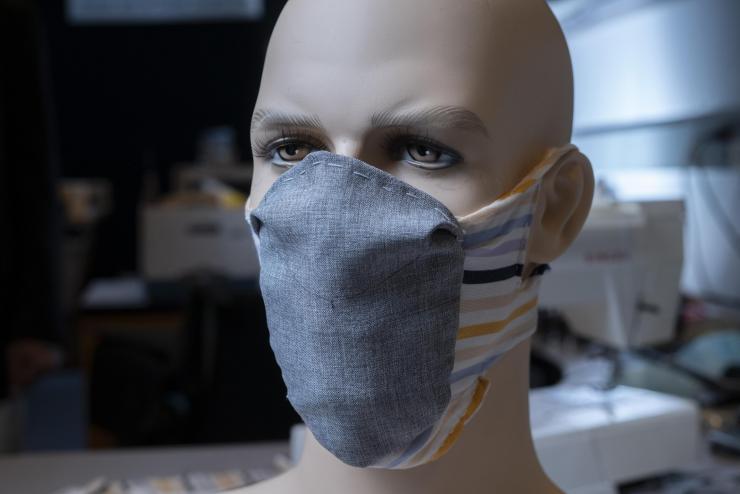
    Dr. Sundaresan Jayaraman, a professor in the School of Materials Science and Engineering, here at Georgia Tech worked on finding a form-fitting mask that provided superior protection against respiratory viruses like COVID-19. These masks, which have been in development even before the COVID-19 pandemic, aim to provide a comfortable way to wear masks and still provide the most protection against foreign particles. The masks use a combination of barrier filtration material and stretchable fabric in order to hold their shapes and be form-fitting for their users. The barrier filtration is made from a moisture-wicking material that allows for the material to fit the user’s face without causing any restriction to the nasal airways and speech. The stretchable material provides holds for the ears and positions the mask on the face correctly. The mask also uses electrospun nanofibers to filter out the smallest particles, which makes it more effective than the N95 respirators. The main flaw that N95 respirators have is that it leaks air around the edges allowing for virus particles to be breathed in by the users. The leakage problem also causes discomfort to the user, where users eyeglasses would fog up and constant adjustment of the mask can dissuade users from wearing a mask in public. 

    The Form-Fitting Mask created by Dr.Jayaraman and his team Photo Credit: Christopher Moore, Georgia Tech

    I got the pleasure to work with Dr.Jayaraman and his colleague Dr.Sungmee Park when creating presentations for The Devil Wear Science event. As the event was a part of the Atlanta Science Festival, we got to showcase the true effectiveness and design of the mask to the viewers. During the event, the models for the event which included my partner, Carrera Ortiz, wore masks that were connected to a device that showcased the effectiveness of the air filtration system that the mask had. The device showcases how little to no particle was able to get through. It was exciting for me to get to be so up close and personal with what the mask can do and its effectiveness of it. 

    During the show, Dr.Jayaraman shared the way, design, and thought process of creating the mask and his reason for doing so. Though the importance of a highly effective mask might not seem like a big thing today, as more and more countries are getting rid of mask-wearing policies, it was not the same that could be said about two years ago. When COVID-19 was at its peak around April and May of 2020, many countries started to notice the importance of the mask and funded a project that could lead to a more effective mask. Dr.Jayaraman and his past research placed him in a perfect position to fight against COVID-19. Overall, the work of Dr. Jayaraman and his team serves as a testament to the power of science in solving real-world problems. By creating a mask that is effective, comfortable, and sustainable, they have made a significant contribution to the ongoing fight against the COVID-19 pandemic and beyond.

    Sources: 

    Premium vector: People wearing medical mask: Vector illustration design, medical masks, nurse art. Pinterest. (2020, March 25). Retrieved May 3, 2023, from https://www.pinterest.com/pin/premium-vector–757378862321960976/

    Researchers redesign the face mask to improve comfort and protection. News Center. (n.d.). Retrieved May 3, 2023, from https://news.gatech.edu/news/2020/09/03/researchers-redesign-face-mask-improve-comfort-and-protection

    Tech researchers recruit for CDC Mask Study. News Center. (n.d.). Retrieved May 3, 2023, from https://news.gatech.edu/news/2021/08/27/tech-researchers-recruit-cdc-mask-study

  • Collaboration is Key!

    As a senior in college, about to graduate with an engineering degree, I’ve come to actually appreciate the dreaded “group project” – and trust me, working with others can be very challenging. But on reflection, I can really see how they also build key skills in collaboration and communication, that are especially important in STEM fields believe it or not.

    In classes: working with different people, even if you all have the same major, can offer different perspectives, ideas, ways of thinking that you wouldn’t have thought up alone. The benefits of working in a group are not just division of labor – although that’s also important, as you quickly learn that one person can’t do everything without burning out – Group projects also teach the art of compromise (and it is a tough one to learn).

    One of my biggest projects in my undergrad has been my senior Capstone project: a more practical application of the things we’ve learned in our undergraduate classes. For me in particular, working in an interdisciplinary group and coming up with our own idea for a product, even with all my experience working in groups, it was a bit mind-opening to see what could be done with everyone offering different skills.

    It let me see how other majors approach the same sort of problem from different angles, with different concerns. It also opened my eyes to how you never really know where which skills will come into play, going into a project. Despite being an engineer myself, I learned to lean a lot more on my colleages who had deeper expertise or were more comfortable with actual manufacturing – instead, I found myself unexpectedly using a lot of my intersocial and organizational skills; understanding that this was an area that I excelled in, that my teammates in turn had less experience with.

    For our group in particular, our chosen project of making a new device and app that would potentially be brought to market required a large range of skills: some people were devoted to marketing and aesthetic design, some were focused on the coding of the app and device itself, some were focused on customer outreach and feedback, while others focused more on making the device itself.

    Everyone did their part, but communication was absolutely key to make sure the rest of the team was kept up to date on your own progress, as well as making sure your aspect’s concerns were known. For example, if someone on the coding team knows that it’d be practically impossible to code for some function, then it’s key that they communicate that to the marketing team before they claim that function is an important feature. Or if someone conducting interviews with customers learns that they absolutely won’t want a product that’s too heavy, it’s important that that gets passed along to the group members handling manufacturing so they know not to use heavy materials.

    Outside of normal class projects, like for this group, STEMComm and Charged Magazine, I’ve seen how through collaboration you can learn and be exposed to so much more than you would normally – from reading the articles on new topics from my teammates, to learning about the varied projects research labs completely removed from my field are making, and presenting that to the public.

    And even outside of a school environment, out in the real world, you can find some pretty nifty examples of science happening from collaboration.

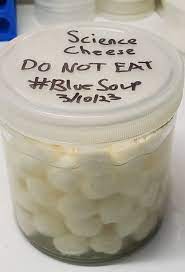
    Take the ongoing “#BlueSoup” saga over on microbiology-Twitter, where a microbiologist shared her amazement at how some old soup she had in the back of the fridge had turned blue – then, through encouragement of her fellow scientists, decided to take a sample of the soup to take back to the lab, to find out just what bacteria or microbe caused the color change. And from there, other labs requested samples, different experiments were conducted, DNA is being sequenced, and now several researchers are involved and collaborating on this interesting little question – potentially even working towards publishing their findings in the future!

    Collaboration is so very important for many things in life, and especially in STEM fields – so for any aspiring scientists, try not to shy away from learning it!