Category: today i learned (til)

  • Inside the Helmet

    Inside the Helmet

    The Hidden Psychology of Football

    Rishi Sukumar


    What Fans Never See

    Every Sunday, Monday and Thursday of every single week from September  to February, millions of eager fans, fanatics, and fun-lovers alike all gather in front of their televisions. What they see isn’t an emergency broadcast, or a new Pope being sworn in. Some would even say that this is more important than either of those things; Football. Viewers see their favorite players score touchdowns, make big hits, record highlight reel moments, and dramatic nail biting finishes. But what the fans don’t see is what goes on behind the helmet. Hours, and even sometimes, days before the kickoff happens, athletes spend their time managing nerves, reviewing game plans, building confidence, and preparing themselves to perform under the pressure of hundreds of thousands of viewers watching them from all over the country – and that is ignoring any physical injuries that players may have sustained. This lingering effect that the mental aspect has on the game is the reason why the most important collisions in football don’t even happen on the field – they happen within the player, mentally, where focus goes head to head with distractions, and confidence is intertwined with enormous doubt. 


    Football is often described as a physical game – some may even say the most physical game – and that is true to many extents. Abnormal strength and size, lightning fast speed and reflexes, inhumane physical attributes and abilities, and endurance are all a must if you even want to step foot on  a professional football field. But football also demands intense emotional control, and mental resilience. In many cases, the better team is simply the one that has better strategy and an advantage mentally compared to their opponents. 


    Football as a Cognitive Science

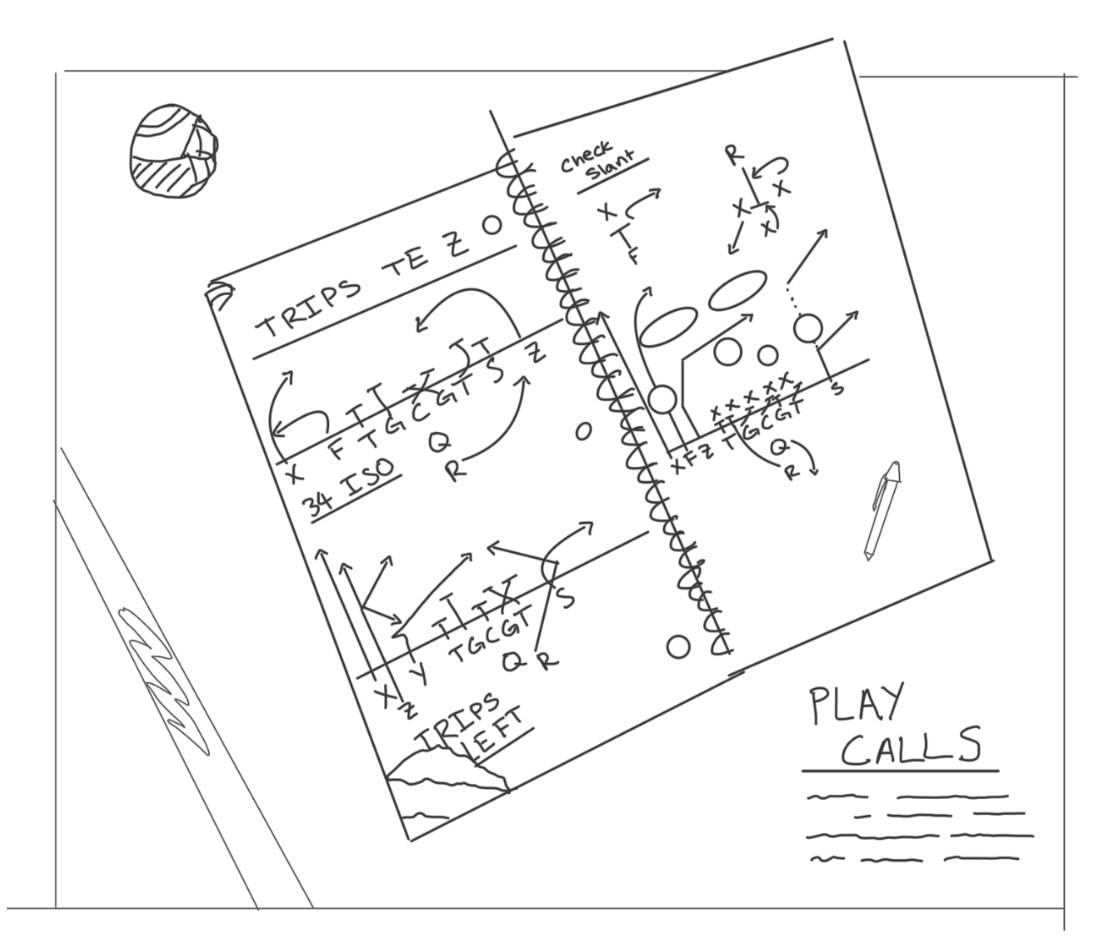
    The game of football moves fast. Lightning fast. But it’s designed on decision making, down to the most precise detail. Athletes are forced every play to process various pieces of information and react correctly – often in sync with their teammates. A quarterback may have only a few seconds to recognize the defensive coverage, adjust protection, scan receivers, and make an accurate throw before pressure arrives. Simultaneously, linemen have to handle blitzes (or sometimes a lack thereof), receivers must adjust routes, and running backs must read blocks protecting them from 300lbs steamrollers in real time.


    On the defensive side of the ball players must face the same challenges. Linebackers must analyze and decide if the play is to run or pass within seconds. Safeties must scan the quarterback’s eyes while covering the deep space. And cornerbacks need short memory to recover from mistakes and lightning fast reaction speeds after every snap to guard the receiver.

    Because of all these moving pieces, the game of football depends heavily on reaction time, concentration, memory, and pattern recognition (Craft et al.). Almost like a game of chess where every play involves every piece moving at the same time. These mental demands show that football performance depends heavily on cognitive processing and focus, not just athletic ability (Craft et al.). Physical ability can create opportunities, but mental mistakes are often the deciding factor for many games. One missed assignment, one blown coverage, or one incorrect decision by anyone can completely change momentum and be catastrophic or fortuitous (depending on which side of the ball you’re on).

    The Science Behind Split-Second Decisions

    Football players are required to make elite decisions under extreme pressure within split seconds. This places an enormous demand on the brain. Neuroscientists have found that reaction time is heavily dependent on the ability of an individual’s brain to process visual stimuli, predict movement, and then to send signals throughout the body – Do I run? How hard do I throw? How should I contort my body? Etc. etc. For a quarterback, this means reading defenders and making a precise throw in typically under 3 seconds. Stress can also lead to an increase in cortisol levels – a hormone that can sharpen alertness in short bursts but harms decision making in the long term when levels get too high. This further explains why athletes that are calm and have extensive experience often perform better within these chaotic moments than younger or more mentally rattled players (Craft et al.).


    Training the Mind Like a Muscle

    Players, as they are forced to train their bodies through the weight room, many athletes spend excessive amounts of time through psychology and therapy. Mental Imagery, one of the most common methods used, is utilized a lot by players who envision a game in their head through multiple variations just to prepare themselves. Although this works across many fields, these mental reps help athletes feel more prepared when the real moment arrives.

    Sports psychologists have proven that imagery can help boost confidence, concentration, and performance (Weinberg). When players picture themselves in situations, pressure situations feel more familiar and less overwhelming. Pre-game routines serve a similar purpose. Athletes will put on a familiar song, or think of a specific memory, or repeat personal affirmations, all for the same reason. While these habits seem miniscule from the outside, after repeating this process across hundreds of games, athletes fall into a rhythm where they know what works and doesn’t work for them, to really fine tune this process, to be most effective in game. 

    Pressure Changes Everything

    In high intensity games, pressure can completely change a player, and therefore an entire team’s performance. A simple throw made in practice feels herculean when having to do so on third down in front of 80,000 fans. There are instances where pressure helps athletes perform better, through sharpening focus, or increasing their energy or stimulating situations. But too much pressure can have the opposite effect causing players to panic, rush decisions, limit their physicality, or lose confidence (Craft et al.). One of the first examples of this obsessive approach to preparatory habits in the NFL is Tom Brady, whose emotional control under pressure set his film study apart. Brady’s discipline is also attributed to his longevity in the league, showing that mental discipline can set one apart and extend their success well beyond their physical prime. This perfectly explains why even the best of the best can struggle in their biggest moments. A kicker who’s made dozens of kicks during practice may miss a critical kick in game, with the game being entirely in their hands. In football, managing pressure is just as important a skill as throwing, tackling, blocking, or catching. 


    Confidence and Momentum

    Momentum in football is a critical concept, which isn’t even tangible. There is no set play, or route to run, or pep talk to have that can physically give or take momentum. Many things contribute towards this concept. The current score, the effectiveness of the opposing teams offense/defense, the fans (with their taunting), past rivalries, etc. When a team is down by multiple scores, winning can seem impossible, causing players to feel dejected, or play less than their full limit. The same is done for the opposite, when a team is winning by a lot. But more importantly, a momentum swing can happen at any time. A team that was playing flawlessly can start making mistakes when the opposing team does something big. It could be as simple as gaining one yard sometimes, but even then affects how ALL the players including the fans who voice their support through loud cheering and roaring, all see the same. 


    While mistakes happen all the time, it’s important for an athlete to shake the mistake off and come back bouncing. When a quarterback throws an interception, the next throw becomes mentally important. In his head, the game is still back to before he threw the interception, as he’d be recollecting how he could have played differently. But the difference between winning and losing players is not how many mistakes they make, but how they react and move forward after the mistake. Thousands of games have been played at every level where a costly mistake is made by one player, then within the same game that player redeems themselves, as well as boosting the momentum for their entire team. Football constantly tests a player’s ability to move on, stay composed, and focus on the next snap instead of the last one.


    Recovery Is Mental Too

    Top-tier performance in football covers multiple factors that are not just talent and training, and that includes the quality of one’s sleep, level of hydration, and recovery habits, since they are tied to the mental sharpness of the athlete. Increased sleep, for example, has been shown to improve an athlete’s reaction time, mood, and physical performance (Mah et al.). In football, mental fatigue is detrimental because one delayed reaction or slow read can impact the entire outcome of the game. For this reason, NFL teams monitor sleep schedules and recovery data as closely as they do weight room progress (Mah et al.).


    The Off-Field Battle

    A lot of football’s toughest mental challenges happen away from the stadium. Injuries, especially, can be emotionally difficult because they disrupt a player’s routine, identity, and purpose (Mah et al.). This most recent season, Cincinnati Bengals quarterback Joe Burrow suffered an injury called turf toe where he was not able to do the job he does best for 3 months. In those 3 months, his entire mental schema could have been completely shattered. Especially when you are getting paid $400 million dollars to be one of the best, and now your elite skillset can’t even be put to use. Many athletes spend years building their lives around football. When injury suddenly takes the game away, frustration, anxiety, and depression can often easily follow. 


    Additionally, there are external and personal problems. Athletes dealing with past mistakes, family drama, death/divorce, financial issues and extortion, and a plethora of other problems, can all affect a players performance. Former NFL Tight End Aaron Hernandez (despite his legal encounters), was a legendary player who was set to break multiple records. Unfortunately, in his past he was heavily involved within gangs and that followed him into his career as an NFL player. People would often attempt to threaten or extort him by threatening his family, unless he met their demands. Things like this can all mentally mess up a player, which in turn causes them to limit their performance on the field. 


    There is also pressure from outside sources. Players feel extensive pressure from coaches, fellow teammates, family members, and most critically the media. The media over-analyzes every single move and action a player does, as the concept of privacy is something traded away for the fame and glory of being an elite player. Athletes consistently need to “prove” themselves to fans and media critics, who realistically cannot play at the level these athletes play at, yet completely dictate their actions both on AND off the field. A player who is involved in a scandal, or with allegations (whether true or not), may lose fan support causing them to be affected mentally, which reflects onto their game. Every missed pass, or dropped ball, or lost tackle is a subtle reminder to the athletes of what the critics say about them all the time. Because of this, mental health has become a larger topic in sports. Studies across athletics have increasingly shown that emotional well-being directly impacts performance and recovery (Mah et al.). More teams now recognize that emotional well-being matters just as much as physical health. Athletes – who are forced to maintain a rough, nonchalant, and cold demeanor – are realizing that asking for help is slowly becoming accepted, and asking for sympathy is seen as strength rather than weakness. 


    The Real Scoreboard

    Football is often remembered through the final scores, championships and conference trophies, and unforgettable plays. After all, who doesn’t love a player that can seemingly do it all or break the laws of physics. While these moments are always nice to see, they are usually built on qualities that no camera or reporter can ever fully capture. Confidence, failures, and mental health is a facet of sports all over the world that is never seen on the field or the court. To be a successful athlete, one must keep believing under pressure, because mindset often shapes outcomes more than raw talent ever could. The physical side of football may draw an audience, but the psychological side reveals the humanity behind elite athletes. Behind every ball that is played, is a person – just like anyone else – managing insane stress, expectation, fear, and pain, while trying to perform at the most elite level. In that sense, football transforms into more than just a game. It becomes a reflection of how resilient these athletes are and how they respond when everything around them demands their 110% as they are physically and mentally breaking. In football, the strongest players are not always the biggest. They  are often the ones who refuse to break mentally.


    Inside the Helmet

    Sources Used to Analyze the Hidden Psychology of Football


    Anxiety and Performance

    Craft, Lynette L., et al. “The Relationship between the Competitive State Anxiety Inventory-2 and Sport Performance: A Meta-Analysis.” Journal of Sport & Exercise Psychology, vol. 25, no. 1, 2003, pp. 44–65.


    Sleep and Athletic Performance

    Mah, Cheri D., et al. “The Effects of Sleep Extension on the Athletic Performance of Collegiate Basketball Players.” Sleep, vol. 34, no. 7, 2011, pp. 943–950.


    Visualization And Mental Imagery

    Weinberg, Robert S. “Does Imagery Work? Effects on Performance and Mental Skills.” Journal of Imagery Research in Sport and Physical Activity, vol. 3, no. 1, 2008. 

  • A Skillet, Some Eggs, and a Story of Migration

    I didn’t know what shakshuka was until my partner moved to Boston and convinced me to try a bite during brunch one weekend when I was visiting town. Suddenly, I felt like I was seeing it everywhere- from Harvard students huddling in tiny cafés searching for the best skillet in the city to popular chain restaurants selling T-shirts that said “Let’s Shakshuka”, it raised a question for me: how did a North African one-pan meal end up with such a strong cultural presence in a city like Boston?

    To answer that, it helped to stop thinking about shakshuka as just a dish, but rather to see it as part of a much larger story about African food culture, movement, and adaptation.

    One of the most important insights from African food scholarship is that cuisine is not static. Rather than rigid recipes, many African dishes are better understood as flexible systems of cooking, shaped by environment, trade, and daily life (Chastanet, 2016). Historians of African foodways emphasize three key ideas in their writings:

    1. Adaptation to available ingredients
    2. Influence of trade and migration
    3. Communal methods of preparation and eating

    Shakshuka specifically reflects all three. It is built from simple, accessible ingredients to make a base of tomatoes, peppers, spices, and eggs and cooked in a single pan meant for sharing. But shakshuka can contain anything from spicy sausage, fresh jalepeños, beets, carrots, or feta cheese, depending on what is available at the time based on what traders bring to the area. Interestingly, even its core ingredient, the tomato, is not indigenous to Africa, but arrived through this global trade after the Columbian Exchange. In this sense, shakshuka is not an “unchanged tradition,” but a product of historical exchange and adaptation (Chastanet, 2016).

    Scholars argue that this kind of flexibility isn’t purely circumstational, it is foundational. Food evolves alongside people, responding to shifting environments and cultural influences.

    In many African culinary traditions, food is not defined solely by ingredients, but by how it is prepared and consumed. Communal eating, or sharing from a single vessel and using bread as a utensil, is central to the experience (Mintz & Du Bois, 2002).

    Shakshuka also fits this pattern. It is typically served in the same pan it is cooked in, with sourdough bread used to scoop the sauce and eggs. This style of eating reinforces social connection, emphasizing food as a shared activity rather than an individual one, which is paramount to relationship-building and social structure in Africa.

    The spread of shakshuka beyond North Africa follows patterns that scholars identify in diasporic food systems. When North African communities migrated, they brought their food traditions with them. In these new contexts, dishes often change. Food studies research shows that migrant communities adapt recipes based on new ingredients, social settings, and cultural expectations. Shakshuka’s transformation into a café and brunch dish reflects this process of cultural negotiation and identity preservation (Gabaccia, 1998).

    Beyond its cultural significance, shakshuka also aligns with the growing interest in health-conscious eating, particularly through its tomato-based foundation. Tomatoes are rich in lycopene, a carotenoid antioxidant associated with anti-inflammatory and cardiovascular benefits (Collins et al., 2022). Research suggests that regular consumption of tomato products may contribute to reduced risk of heart disease, lower blood pressure, and protection against oxidative stress due to the antioxidant properties of lycopene and related compounds . Importantly, cooked tomato dishes, like shakshuka, may provide even more available lycopene than raw tomatoes because heating tomatoes increases lycopene absorption in your body. This connection between traditional food practices and contemporary nutritional science helps explain why shakshuka fits naturally into modern food trends.

    By the time shakshuka arrived in the United States specifically, it had already undergone multiple transformations. Its popularity in cities like Boston reflects what scholars describe as the global circulation of food, where dishes move across borders and are reinterpreted to fit new cultural frameworks (Appadurai, 1988).

    In the United States, shakshuka aligns with existing trends of brunch foods centered around eggs, interest in Mediterranean and plant-forward diets, and desire for foods with cultural narratives. Boston provides a particularly strong environment for this kind of culinary adoption, in which large academic institutions scattered around the city house students from many different nations and cultures. Studies show that such environments accelerate the spread of diasporic foods (Mintz & Du Bois, 2002).

    What makes shakshuka compelling is that its journey to Boston is not necessarily an uncommon story, it is representative. African foodways have long been shaped by movement, trade, and adaptation, even if those histories are often underrepresented in mainstream narratives (Chastanet, 2016). Seen this way, shakshuka is not a fad, it’s a part of a much larger system of cultural exchange.

    And for me, it started with a simple question: why is everyone here so obsessed with this dish? The answer lies not only in the fact that it is very tasty, but in the history and cultural systems that made it possible.

    References

    Appadurai, A. (1988). How to make a national cuisine: Cookbooks in contemporary India. Comparative Studies in Society and History, 30(1), 3–24. https://doi.org/10.1017/S0010417500015024

    Chastanet, M. (2016). Towards a history of foodways in Africa. Afriques, 7. https://doi.org/10.4000/afriques.1857

    Collins, E. J., Bowyer, C., Tsouza, A., & Chopra, M. (2022). Tomatoes: An extensive review of the associated health impacts of tomatoes and factors that can affect their cultivation. Biology, 11(2), 239. https://doi.org/10.3390/biology11020239

    Gabaccia, D. R. (1998). We are what we eat: Ethnic food and the making of Americans. Harvard University Press.

    Mintz, S. W., & Du Bois, C. M. (2002). The anthropology of food and eating. Annual Review of Anthropology, 31, 99–119. https://doi.org/10.1146/annurev.anthro.32.032702.131011

  • Psychology’s Replication Crisis

    One of the cornerstones of modern science is the criterion of replicability. Replicability is the idea that if a phenomenon is real, it should be possible to demonstrate it repeatedly and on demand. If a team of researchers conducts an experiment to test a hypothesis and finds a positive result, then other researchers should get similar results if they conduct experiments on the same topic. This is the basis of almost any scientific field that uses experiments to test hypotheses. For instance, we can be reasonably sure that gravity exists because many studies on the orbits of planets, gravity’s relationship to weight, and other aspects of the phenomenon have generally produced consistent observations and data.

    Replication is essential to the process of science because it allows scientists to separate good hypotheses from bad ones. Individual studies may yield inaccurate results for a number of reasons. Sometimes a study is biased, skewing the results and making them appear more or less significant than they actually are. Sometimes the participants don’t reflect the overall population, leading to results that can’t easily be applied to all people. Sometimes the study simply finds an illusory correlation that doesn’t exist in the real world. Replication of original studies helps researchers confirm that an effect is real and further examine how it works. If an idea is accurate, many replications will produce consistent evidence of its existence. If not, replications will show weak or conflicting information, leading researchers to drop the original idea and explore other ones.

    However, within roughly the last decade and a half, the concept of replication has caused quite a bit of turmoil in the field of psychology. Researchers have looked back on the history of psychology research and realized that many psychology studies, including some for concepts that define major ideas in the field, have not been successfully replicated or failed to replicate as often as expected (Shrout and Rodgers 2018). In some cases, replication studies were performed but produced results that conflicted with the original findings. Other phenomena have been given replication studies, but the replications didn’t use the methods of the original study, leaving open the possibility that the original results may have been effects of experimental design. Finally, for a few concepts, there have been no attempts to replicate at all! How did this situation come to be?

    History

    Lack of replication has been noted for decades in psychological research (and in some other fields as well). However, several events in the early 2010s put psychology in the spotlight and made the problem impossible to ignore.

    The first event to make headlines was the academic response to a 2011 study on precognition, the idea that some people have the ability to predict the future (Wiggins and Christopherson 2019). The study’s author claimed that he had produced clear evidence in favor of precognition’s existence, which other researchers found questionable due to the claim’s outlandish nature and apparent errors in how the experiment was conducted. A few replication studies were done and found no evidence for precognition. However, the replications were rejected by several scientific journals because they weren’t perceived as being important, despite providing clarification on the likelihood of a controversial idea. Had a person looked through the psychology literature on precognition at that time, they would have seen only the poorly conducted initial study in favor of precognition and not the more numerous replications that rejected its findings.

    Later that year, Diedrik Stapel, a scientist who had authored many psychology studies, was proven to have committed fraud in most of them (including faking data). Although not directly related to replication, this event shocked the psychology community and demonstrated how easy it was for bad data to become a part of the overall scientific literature (Wiggins and Christopherson 2019). How had Stapel been able to lie for so long? Where had research and publication protocols had failed? Perhaps if someone had checked his research more thoroughly, such as by trying to replicate it, the fraud would have been discovered as soon as it started.

    Finally, several researchers realized that many psychology studies had issues with problematic research practices, including the manipulation of negative results to appear significant. They took it upon themselves to expose these problems by publishing an article appropriately titled “False Positive Psychology: Undisclosed Flexibility in Data Collection and Analysis Allows Presenting Anything as Significant in Psychological Science.” In the article, they used studies and statistics to “prove” the idea that a person can de-age themselves by listening to a Beatles song (Wiggins and Christopherson 2019). Despite the ridiculous conclusion, the studies had been conducted according to the norms of research at the time and their statistical methods were all common and accepted practices. The article demonstrated how easily ordinary research practices could be misused.

    These events opened the floodgates to a wave of doubt about the validity of psychology research, and the more people looked at the problem, the more issues they found. One report estimated that the field has a replication rate as low as 36% (and only as high as 47%) (Wiggins and Christopherson 2019).

    One area of psychology that was hit particularly hard was the concept of priming. Priming is the idea that exposure to certain sights or events make people more likely to respond in ways that relate to what they just experienced. For instance, if a person saw a picture of a couch and was asked to fill in the blank letters in the word “S_ _ a,” they would likely say “sofa” instead of “soda,” “saga,” or other words that would also fit the letters given. Basic effects like this are relatively uncontroversial, but many proponents of priming have claimed to find much more extensive influences. One study published in the 1990s claimed that participants who were exposed to words associated with old age walked more slowly afterwards, as if affected by the stereotype that old people are slow (Lunbeck 2025). Academics were quick to conclude that this meant that people are so heavily influenced by the environment that even simple actions like walking are predetermined and not under our control! However, follow-up experiments found nothing of the sort.

    One more thing: It’s worth noting that although the most famous examples of failed replication involve hypotheses that are particularly extreme or unlikely, more ordinary research can also fall afoul of reproducibility norms. In fact, one of the most worrying implications of the replication crisis is that other, more mundane inaccuracies are flying under the scientific method’s radar, and researchers don’t realize the need to weed them out. It’s easy to doubt that humans are mindless robots programmed by the words they read but harder to reconsider ideas that seem intuitive and logical.

    Potential Solutions

    So how can this issue be fixed? There is no one solution, but a number of measures can greatly improve the reliability of psychological research and end the replication crisis.

    • Preregistration of studies: Some academic journals now require researchers to “register” their experiments before actually conducting them. The researchers have to share their topic, methods (the protocols they will use for the study), and hypotheses and stick to them during the testing period. If they change any of the details, especially in their methods, the study may be rejected and not published by the journal. This measure encourages transparency in how data is collected and discourages unscrupulous authors from changing the methods partway through the experiment to manipulate results. Because it means that studies are published before the results are known, it also cuts back on the practice of choosing studies for publication because they support ideas that are popular.
    • Better measurement and statistical hygiene: This reform is only related to replication indirectly, but it is nonetheless extremely important. Using more precise measurements when collecting data and analyzing that data more honestly will cut down on errors and yield more realistic conclusions. These measures can create more honest and accurate results, which go hand in hand with replicability.
    • Sharing of specific methods: A major critique of psychological research papers is that they don’t always include enough details about their methods to allow for replication. As a result, follow-up studies may not be close enough to the original to accurately test the phenomenon under study. A simple fix for this issue is to require more specific reporting of data collection procedures, allowing any lab to perform exact replications.
    • Publishing more replications and rewarding researchers for replicating significant studies: At the institutional level, there needs to be a significant change in what scientific journals consider to be worth publishing. Currently, many journals are much more willing to accept studies that show new and interesting findings than replications of those findings, and research that disproves or fails to find evidence for particular hypotheses is often rejected even if the methods are sound (a phenomenon called the “file drawer effect”). This issue is severe enough that the replication crisis probably cannot be solved without a new commitment to publishing replication studies, including ones with negative results. Proposed fixes include rewarding researchers for transparency in their methods (allowing for replication), relaxing publication standards to include more replications and negative studies, and even requiring journals to publish replications of studies that they previously accepted.

    It’s also worth noting that some observers argue that the replication crisis was never very serious in the first place, or point to the positive changes that are being made. This is why the replication crisis is sometimes referred to as a “credibility revolution” instead (Korbmacher et al. 2023). Although the situation may look bleak, researchers have begun implementing reforms. Various actors are encouraging open access research, incentivizing high-quality studies while deemphasizing the study quantity, creating new guidelines for journal editors who make the decision to accept or reject research, creating better reviews that summarize many studies, and more. There is still a long way to go, but these measures can ameliorate many of the problems that plague psychology and other fields and create a better future for science.

    Ultimately, the replication crisis in psychology demonstrates many of the challenges that science is facing today and points toward ways that it can be improved. There are serious issues in academia’s publication practices and ability to prevent fraud, but these problems are not unfixable. Better research practices and a unified effort by scientific journals can end the replication crisis and work towards ensuring a psychological science that is more replicable, accurate, and open for all.


    Sources:

    Korbmacher, Max, et al. “The replication crisis has led to positive structural, procedural, and community changes.” Communications Psychology, 25 July 2023, https://doi.org/10.1038/s44271-023-00003-2.

    Lunbeck, Elizabeth. Failure to replicate: A historian confronts the complicated origins and uncertain future of priming research, Review of Anatomy of a Train Wreck: The Rise and Fall of Priming Research Science, vol. 387, no. 6730, 9 Jan. 2025, pp. 145–145, https://www.science.org/doi/10.1126/science.adu0370.

    Shrout, Patrick E., and Joseph L. Rodgers. “Psychology, Science, and Knowledge Construction: Broadening Perspectives from the Replication Crisis.” Annual Review of Psychology, vol. 69, no. 1, 4 Jan. 2018, pp. 487–510, https://doi.org/10.1146/annurev-psych-122216-011845.

    Wiggins, Bradford J., and Cody D. Chrisopherson. “The Replication Crisis in Psychology: An Overview for Theoretical and Philosophical Psychology.” Journal of Theoretical and Philosophical Psychology, vol. 39, no. 4, Nov. 2019, pp. 202–217, https://doi.org/10.1037/teo0000137.

  • Why do I sneeze when I step out into the sun?

    Have you ever stepped out into the sun after a long day of sitting inside and suddenly felt the urge to sneeze?

    Usually, sneezing is caused by irrigation in the nose, but how does the sun irritate your nose? This phenomenon is called the photic sneeze reflex. The cross-wire between the visual pathway and the sneezing pathways of your brain and nose could be caused by the sudden exposure to bright light.

    This has also recently been named the ACHOO syndrome and has been seen in some genetically predisposed families. It is a polygenic trait that has been seen on the ZEB2 regions of chromosome 2 and 3. This area is involved with the development of the nervous system so any changes will cause the cross-linked reaction that we see in the ACHOO syndrome. Robust associated at these locations also indicate that the mutation is seen across multiple populations and ethnic groups.

    Overall, the sun doesn’t directly “cause” you to sneeze, but rather triggers a chang within the visual and trigeminal response pathway. We still do not know how light can become a sneeze signal so quickly, especially considering this is not the average path for light input in the nervous system. Is the cortex driving this system or simply modulating it?


    There is still so much more to learn about this reflex. Keep this in mind next time you step outside and feel your nose start to twitch!


    References

    Songu, M., & Cingi, C. (2009). Sneeze reflex: facts and fiction. Therapeutic Advances in Respiratory Disease, 3(3), 131-141.

    Whitman, B. W., & Packer, R. J. (1993). The photic sneeze reflex: literature review and discussion. Neurology, 43(5), 868-868.


  • Procrastination Reflection

    Have you ever questioned yourself why it felt so natural to delay things that need to be done? This happens to everyone at all ages. Children want to finish chores later. Adults want to put off cleaning the houses in the next few days instead. Most, if not all, people have done something similar. In particular, it’s the most obvious for students. For example, it’s me. Since Spring break, I have been completing tasks very near the end of the deadlines. Eventually, I ran out of time for the charged articles that I put off until the last week before finals. As I’m writing this article, I was very confident this is the consequence of “procrastination” (which I am not exactly happy about). Or perhaps it wasn’t just procrastination?


    What Exactly is Procrastination?

    According to educators Ramadhani and others, procrastination is defined as “the tendency to delay important tasks despite knowing the negative consequences” (Ramadhani et al., 2026). It is an occurrence where people delay doing what they want to do or what they have to do by a certain deadline, potentially leading to loss of productivity, poor performance, and increased stress (Rad et al., 2025). Psychology Today, the world’s largest mental health and behavioral science destination online, added to the definition that procrastinators may deliberately look for distractions and it tends to reflect a person’s struggles with self-control. These definitions explain what happened to me.


    What Leads to Procrastination?

    Students procrastinate for different reasons. Based on 27 studies, procrastination might be contributed by fear of failure, perfectionism, test anxiety, low motivation, and difficulties with emotional regulation (Ramadhani et al., 2026). In a different study in Iran, procrastination is a behavior observed in 80-95% of the 290 students (Rad et al., 2025). The study concluded that academic procrastination is correlated with academic self-efficacy and emotional regulation. Students who had better academic self-efficacy show less academic procrastination, and vice versa for those who had problems regulating their emotions. Other reasons include we do not enjoy doing the tasks, want to avoid making ourselves unhappy, or we fear that we won’t do them well (“Psychology Today”, n.d). In contrast, I found these hard to apply on myself. During my first year in college, I experienced all these feelings, yet I don’t think procrastination occurred to me until later semesters. This made me wonder whether submitting assignments just minutes or seconds before the deadline had given me the impression that I was doing things “right” under pressure.

    Others suggested that procrastinators believe they perform better under pressure. However, research shows otherwise; instead, procrastinators form “habit of last-minute work to experience the rush of euphoria at seemingly having overcome the odds.” (“Psychology Today”, n.d) This is true on a personal level as I convinced myself the same thing. 


    Why is It Not Just Procrastination?

    What happens when there are too many tasks at hand? We make a priority queue (CS joke). Clémence Prosen, a French educator and creative worker, believed it is not procrastinating when a person chose to prioritize certain tasks, rest, and finish all those delayed tasks later (2021). This is true for Georgia Tech students. I have heard how students taking too many classes weigh their coursework and prioritize some over the others. For example, if one project is worth 10% in a course and a homework assignment worth 5% in a different course due the same night, students prioritize the first one. However, if they need a better grade in the second class, the latter might be prioritized. This ends up with basically sacrificing those with low priority. Unless, they are perfectionists and want to keep both.  

    Historically, I used to work on my assignment over the breaks to have an easier time with deadlines. However, over the last Spring break, I made the decision to not work on my coursework, believing I will have enough time for them. I ended up catching up with deadlines as soon as we came back to school. Everything would have been fine if not for more tasks to come up unexpectedly outside of schoolwork. So, a cycle began. I have to catch up on delayed tasks in the queue. According to Psychology Today, “habitual procrastinators can experience reduced well-being in the form of insomnia or immune system and gastrointestinal disturbance.” Those late-night sleeps catch up and tire me out, causing my body to seek rest. Then, as I took my sweet time to rest (or eventually being distracted), the next tasks are due. It is worse when I try to perfect those works (draw it versus using a pre-existing image) and end up spending too much time on one assignment. This puts a strain on my body, leading to me needing even more time to rest. 


    Personal Reflection

    I figured the reason was due to my change in responsibilities in recent semesters. Procrastination with or without the priority queue wasn’t a problem before when my other responsibilities have a fixed schedule. Now, I cannot predict my schedule for next week. My rest time might have taken more time than needed as I got too comfortable with delaying work at a reasonable pace. Changes are needed to my time management and bad habits on account of these unexpected tasks.  Hopefully I can work this out over the summer and you will not see another procrastination reflection in the next few months. Finally, I have found a few strategies that might keep me going forward:

    1. Set soft deadlines a day before the real one (or even earlier for time-consuming projects)
    2. Use time-block for coursework periods with limited access to distracting sources
    3. Allow daily daily buffer time for unpredictable responsibilities outside of coursework


    References:

    Hassan, M. M. (n.d.). Time Management. Public Domain Pictures. Retrieved 2026, from https://www.publicdomainpictures.net/en/view-image.php?image=613653&picture=time-management.

    Prosen, C. (2021, February 3). Resting or procrastinating? that is the question. Clémence Prosen. https://www.clemenceprosen.com/post/resting-or-procrastinating?srsltid=AfmBOorvKggPmnD-5vCd8JBgnmNg09V8y7uZvyOMvY4vBrSrSOk3eoac

    Rad, H. F., Bordbar, S., Bahmaei, J., Vejdani, M., & Yusefi, A. R. (2025). Predicting academic procrastination of students based on academic self-efficacy and emotional regulation difficulties. Scientific Reports, 15(1). https://doi.org/10.1038/s41598-025-87664-7

    Ramadhani, E., Setiyosari, P., Indreswari, H., Setiyowati, A. J., & Putri, R. D. (2026). Academic procrastination: A systematic review of causal factors and interventions. Journal of Behavioral and Cognitive Therapy, 36(1), 100552. https://doi.org/10.1016/j.jbct.2025.100552

    Sussex Publishers. (n.d.). Procrastination. Psychology Today. https://www.psychologytoday.com/us/basics/procrastination


  • Your All In One Companion

    Regardless of time or location, entertainment has always thrived because people instinctively seek ways to take care of their mental well-being. Unlike robots, humans need to rest. It’s not just about physical relaxation, but also emotional recovery. Some people empty their minds through sports. Others escape into alternative reality in books, movies, or games. Some enjoy spending their time alone, while others seek kinship and companionship. However, what happens when other people (even family and friends) are the sources of their problems?

    For many, the answer is pets! Pets offer different types of comfort through companionship. But how did this relationship start?


    The First Pets

    According to National Geographic, domestication first started around 10,000-12,000 years ago in the Middle East; humans started to grow wild plants that are useful for food and clothing (‘National Geographic”, n.d). As the idea spread across Europe, Africa, and other continents, useful animals were chosen to be bred and domesticated. Dogs and horses helped in hunting and transportation. Sheep, goats, and cows provide high-valued products. Domestication makes life easier – and not so long later, survival is no longer the only goal.

    As civilization advanced, the relationship between humans and animals shifted. Aside from those still used in wars like horses and elephants, domesticated animals such as dogs moved from hunting tasks to guarding home. Cats, interestingly, might have chosen humans first. Around 7,500 years ago, cats moved into human villages because they liked the good source of rodents. Eventually, humans embraced the idea because they found cats less destructive than previous pest control animals such as weasels or stoats (Holz, 2021). In some cultures such as ancient Egypt, cats (and their relatives) were even associated with divinity, royalty, or nobility. In a way, it feels like cats domesticated humans, not the other way around. 


    Pets in Recent Decades

    With urbanization and advanced technology, humans no longer need animals for survival tasks. We have security technology instead of dogs, traps against rodents work as efficiently as cats, and mail delivery which works with more accuracy than messenger birds. Yet, why would pets still be found around the neighborhood and inside houses? Pets remain for their companionship and emotional support.

    In general, continuity plays a role. If someone’s great-grandparents, grandparents, and parents have been growing up with pets, they likely will too. The descendants of those pets likely become that person’s siblings. In a study done by Leora Lawton, a researcher from University of California, 97% of pet owners in the United States see their pets as family members (2025). Humans have lived with them for way too long to part ways. After thousands of years together, pets are now part of the family.


    Pets in 20th Century and Beyond

    Today, pets can fill in the absence of household members. They can substitute for the lack of a partner, children, siblings, or guardians as social companions and emotional support (Lawton, 2025). This is rather important as different types of households only get more diverse over time. Among pet owners, many of them are families with children where pets can comfort, protect, and teach them just like an older sibling or a guardian. However, when raising children has become an expensive luxury, pets are the affordable substitutions (but not exactly without parenthood duties!). In particular, households without children such as single adults or couples cannot have children treat pets as children or an understanding companion (Lawton, 2025). The boundary between human and pet is now blurry.

    As more humans view pets as family, the concern about their wellness has grown. Surprisingly, this idea has been going around for a while. Just like humans, there are clinics, shelters, and adoption centers for pets. There were an increasing number of spaces designated for pets, such as streets and dog parks (Lawton, 2025). Grocery stores and even restaurants now allow pets to be inside and offer healthy food options. Pet (usually cat) cafes are also gaining popularity. First store opened in Taiwan in 1998, then to Japan, other Asian countries and spread to the rest of the world (Lawton, 2025). They are cafes that provide interactions with pets, and for some, work as an adoption center. Pets’ health is being taken care of by those that love them, and their presence always has a place in society.


    Pets and Their Owners

    Research also suggests that pets improve physical and mental health. Martins and colleagues from Portugal researched how pets improve quality of life. Data from 49 of their studies conclude that pets influence their owners’ physical activity. In particular, owners show a higher frequency of physical activity than non-owners (Martins et al., 2023). Increasing physical activities are strongly linked with improving the owners’ mental wellness.

    Different pets have different lifestyles. Dogs are social animals, so they fit well in families with children or individuals who participate in regular activities. Most cats are independent and like to be indoors, leaving owners with flexible career choices (Lawton, 2025). Mixed-pet households (most common is cat and dog), usually happen when two households with pets become one family. These pets and their interaction bring enormous joy to other family members.

    Unfortunately, many people cannot own pets due to career, finance, housing, or not having energy to take care of another living being. Much like children, pets cannot take care of themselves and require a fitting environment. Pets have personalities and preferences too! For these people, they can cope by different means. Alternative choices are pet cafes, caring for stray animals, or even watching animal videos. Some studies suggest that pet videos and images may influence mental health via modulation of emotion processing (Zhu et al., 2026). In fact, there are many young people who were inspired by these contents to adopt pets. Fortunately, educational videos help introduce responsibilities of pet owners, reducing the risk of pet negligence and abandonment.


    Afterthought

    Every semester, Georgia Tech hosts a pet therapy event in collaboration with GT parents and their pups. That was a very considerate gesture to students with stressful academic life who cannot keep pets in dorms. These events highlight how pets are powerful contributors to mental wellness.

    Though dogs and cats are the most common companions, nowadays pets can be any legal animals – birds, reptiles (snake, lizards), fish, horse, or even spiders! The list went on and there’s always at least one that would surprise you. The bonding between the human and that animal can be formed not just based on their species, but rather their connection and understanding of one another. If you ever own a pet, or if a pet chooses you, which one do you imagine it would be?


    References:

    Holz, S. (2021, March 23). Animal House: Pets of the ancient world. Sarah Holz. https://sarahholz.com/2021/03/23/animal-house-pets-of-the-ancient-world/

    Lawton, L. E. (2025). All in the family: Pets and family structure. Populations, 1(2), 8. https://doi.org/10.3390/populations1020008

    Martins, C. F., Soares, J. P., Cortinhas, A., Silva, L., Cardoso, L., Pires, M. A., & Mota, M. P. (2023). Pet’s influence on humans’ daily physical activity and Mental Health: A meta-analysis. Frontiers in Public Health, 11. https://doi.org/10.3389/fpubh.2023.1196199

    National Geographic. (n.d.). Domestication origins. Education. https://education.nationalgeographic.org/resource/domestication-origins/

    YukiKoKo. (2010). Dog and Cat. Wikimedia Commons. Retrieved from https://commons.wikimedia.org/wiki/File:Dog_and_cat_(4985392932).jpg.

    Zhu, X., Shi, X., Liang, J., Sun, B., Lin, W., & Lin, J. (2026). The impact of pet videos on emotional face processing. European Journal of Investigation in Health, Psychology and Education, 16(2), 21. https://doi.org/10.3390/ejihpe16020021


  • Turning a Creature into a Cute Character Design

    If your Instagram discover page is full of posts from digital artists like mine is, there’s a decent chance you may have come across posts by an artist named Feefal (@feefal). Feefal is a very popular illustrator on Instagram, with 1.2 million followers and most of their posts gaining tens of thousands of likes and hundreds of thousands of views on Reels. Feefal describes herself as a lover of biology and cute women, which is reflected in the subject matter of the bulk of her illustrations. For example, one of her pinned posts, and the first post of hers I came across in 2023, can be described as “plant, animal, and fungi cells but they’re personified as women.”

    There are many artists who do the same types of illustrations as Feefal where they turn creatures, objects, or even vague ideas into a personified character design. As someone with an interest in both biology and drawing, I wanted to try my own hand at creating an illustration where I turn a creature into a character. 

    In keeping with my theme about sea creatures from my previous post, I chose to base my character design on Pelagia noctiluca, a species of jellyfish that is referred to by many common names, the most popular being “mauve stinger”. A fun nickname I’ve also seen for it is the “purple people eater” (yes, like the song).

    Taking both morphology and cool facts I read about them into account, this is what I came up (with with the help of my boyfriend, who asked to help and I couldn’t refuse):

    Illustration by Priyanka Singh and Kojo Ching

    This is the part where I explain my design decisions while telling you cool facts about P. noctiluca. 

    • Hat: Obviously, this is meant to represent the bell, or umbrella, of the jellyfish. It is the main body of the jellyfish where the tentacles branch off from. A jellyfish’s mouth lies in the center of the underside of its umbrella, surrounded by oral arms (we’ll get to those in a second) (Macpherson & Gordon, 2023). You’ll notice that jellyfish have no eyes, so I made the bell-hat cover her eyes. I accept criticisms of this choice as lazy, as I basically just draw a jellyfish on this woman’s head. But will you dare tell her it’s not a look?
    • Dress: Along with the hair-tentacles coming out from the “hat”, this is supposed to be somewhat evocative of the tentacles of the jellyfish with its flowy nature. The mermaid dress silhouette is also supposed to evoke a nautical theme. The mauve stinger has two types of tentacles: thin, string-like ones called statocysts and thicker, frilly ribbon-like ones called oral arms. It has 8 statocysts and 4 oral arms. Statocysts are used for sensing movement and orienting the jellyfish. Oral arms extend from the mouth, contain nematocysts, and aid in prey capture (Macpherson & Gordon, 2023). The sting of a mauve stinger is somewhat severe, although there have not been any fatalities due to their stings (Mariottini et al., 2008).
    • Skin: The skin and the dark parts around the cap are supposed to represent the semi-translucent, soft body of the jellyfish, with the darkness being the ocean showing through.
    • Sharp teeth: I took some creative liberties with this part. No, jellyfish don’t have razor-sharp fangs. Instead, this is supposed to represent the purple people-eater’s predatory nature. They’re said to be opportunistic predators that mainly feed on small phytoplankton, although they can eat prey of various sizes. They can even eat over 1.5 times their body weight in a day. (Larson, 1987). Don’t worry, at least they don’t actually eat people!


    References:

    Macpherson, D., Gordon, D. (2023). Jiggling Jellyfish: a guide to the jellyfish of New Zealand. (Version 2). National Institute of Water and Atmospheric Research (NIWA). 

    Mariottini, G.L., Giacco, E., Pane, L. (2008). The Mauve Stinger Pelagia noctiluca (Forsskål, 1775). Distribution, Ecology, Toxicity and Epidemiology of Stings. A Review. Mar. Drugs, 6(3): 496-513. doi: 10.3390/md20080025

    Larson, R.J. (1987). A Note on the Feeding, Growth, and Reproduction of the Epipelagic Scyphomedusa Pelagia noctiluca (Forskal). Biological Oceanography, 4(4). 

  • The Price of Being Too Good Too Soon

    As sports have become increasingly globalized, the race to become the best has intensified, with athletes from across the world competing against each other, many training year-round, every day to sharpen their craft and become the next great success story. Personally, I began playing soccer at three. I played in high-level tournaments across the country, traveling to states like Texas and California and playing against the best amateur and youth players the country had to offer. I practiced daily up until high school, and hundreds of thousands of people share similar experiences, dedicating thousands of hours to their favorite sports.

    Youth Sports Environment

    In basketball, AAU circuits now push athletes as young as 10 into professional-like schedules where they train with NBA trainers, do NBA drills, play with multiple teams, and play in tournaments every weekend. In football, kids hit the weight room as early as middle school, training daily to become the strongest and the fastest versions of themselves. Olympic skater Alysa Liu recalls that her childhood training regimen at times prevented her from drinking water and ultimately prompted her to retire from skating at 16, illustrating how early specialization can push athletes beyond healthy limits (Yahoo Sports, 2024).

    Science Behind Excess Training

    You may think this intensive, clear‑cut training style produces the best athletes and leads to the greatest amount of success, as Alysa Liu has two Olympic gold medals, and LaMelo Ball (the figurehead of modern AAU basketball has enjoyed great success in the NBA); however, pediatric biomechanics and physiology research illustrates that early sports specialization increases the risk of overuse injuries chronic fatigue, and psychological burnount. According to studies by Luo et al. (2025) and Post et al. (2021), younger athletes who focus on a single sport before age 14 sustain twice as many joint or tendon injuries as their multisport peers.

    Children have different musculoskeletal systems, so early practices pose a greater risk. Children have open growth plates, more elastic tendons, and incomplete neuromuscular coordination. Repetitive movements, such as pitching, sprinting, jumping, or kicking, cause micro-damage to accumulate faster than it can be repaired (Johns Hopkins Medicine, 2024). In baseball, pitchers are explicitly warned against pitching too often because throwing stresses the rotator cuff of the shoulder and the ulnar ligament attachment, which can lead to Tom John injury (A Tommy John injury is a tear or damage to the ulnar collateral ligament (UCL) in the elbow), which can end a pitcher’s career (Johns Hopkins Medicine, 2024). In gymnastics, I have personally seen stress fractures happen to my sister and her teammates due to the constant impact from flipping and tumbling. 

    Regarding explosiveness, the ability to generate force for rapid acceleration depends on motor unit recruitment and intermuscular coordination (Enoka & Duchateau, 2017). Overuse injuries and fatigue worsen one’s ability to recruit motor units and coordinate activity. Furthermore, early specialization prevents young athletes from exposing their nervous systems to diverse movement patterns, thereby narrowing their motor capabilities.

    Physiological Impacts

    Physiologically, the human body is not meant to handle the year-round training that adolescent athletes face. Early-specialized athletes do not receive enough recovery. Recovery not only allows athletes to perform as well in the next session but also helps muscles, tendons, and the nervous system adapt to stress and facilitate growth. Chronic training can also affect growth, with training stress increasing cortisol, which suppresses immune function, growth hormone, and muscle protein synthesis, leading to poorer tissue repair and greater accumulation of fatigue (Meeusen et al., 2010). In fact, a study found that among highly specialized youth basketball players younger than 14, over half reported feeling physically exhausted and getting less than 8 hours of sleep, which can impair energy replenishment and muscle recovery (Meisel et al., 2022). A case study of the physiological impact of stress comes from soccer, where the greatest teenager to ever touch a soccer ball, Lamine Yamal, has experienced chronic groin injuries and, as of recently, tore his hamstring logging more minutes than any soccer player his age ever. His injury illustrates that even generational talents cannot best unsustainable loads.

    Mental Health in Youth Athletics

    The immense training of young athletes affects them beyond the physiological level, as the constant pressure to perform, the increased competitiveness of youth sports, and the limited autonomy of athletes have created a toxic environment that breeds burnout and emotional exhaustion. According to a study, early-specialized athletes report lower enjoyment and higher dropout rates in their respective sports, suggesting that the mental strain of youth competitive sports diminishes athletes’ intrinsic motivation  (Luo et al., 2025). The pressure placed on these young athletes can rob us of special talents, as in the case of the aforementioned Alysa Liu; her intense training regimen nearly robbed the world of her talents, as she has won two Olympic gold medals. 

    Conclusion

    The increased mental strain and physiological issues that have accompanied the ever-growing competitiveness and intensity of youth sports illustrate that talent cannot overcome biology. Humans have physiological limits, and while early specialization may lead to more refined skills, it causes athletes to reach those limits earlier, worsening muscle wear and motivation. The emotional burnout and fatigue among youth athletes are predictable outcomes of excessive training. To protect the next generation of athletes, society must prioritize rest and recovery to support their mental health and performance. In the end, the cost of being good too soon is rarely worth paying.

    References:

    Enoka, R. M., & Duchateau, J. (2017). Rate coding and the control of muscle force. Journal of Physiology, 595(9), 2853–2864. https://doi.org/10.1113/JP273196 

    Johns Hopkins Medicine. (2024). Ulnar collateral ligament (UCL) injury of the elbow. https://www.hopkinsmedicine.org/health/conditions-and-diseases/ulnar-collateral-ligament-ucl-injury-of-the-elbow 

    Luo, Z., et al. (2025). Early sport specialization in a pediatric population: A rapid review of injury, function, performance, and psychological outcomes. Clinics and Practice, 15(5), 88. https://www.mdpi.com/2039-7283/15/5/88 

    Meeusen, R., et al. (2010). Prevention, diagnosis, and treatment of the overtraining syndrome: Joint consensus statement of the European College of Sport Science and the American College of Sports Medicine. European Journal of Sport Science, 10(1), 1–24. https://doi.org

    Meisel, C., et al. (2022). Age of early specialization, competitive volume, injury, and sleep habits in youth sport: A preliminary study of U.S. youth basketball. Sports Health, 14(1), 1056301SPHXXX10. https://pubmed.ncbi.nlm.nih.gov/3475333

    Post, E. G., et al. (2021). Sport specialization behaviors are associated with a history of reported injury in youth athletes. Journal of Pediatric Orthopaedics, 41(8), 507–513. https://doi.org

    TrueSport. (2019, January 1). How to avoid athlete burnout in youth sports. https://truesport.org/preparation-recovery/avoid-athlete-burnout-youth-sports

    Yahoo Sports. (2024, March 17). Alysa Liu reveals “insane” training rule that once stopped her from drinking water. https://sports.yahoo.com/articles/alysa-liu-reveals-insane-training

  • The Dangers of Dye

    Today, one of the most common issues someone will find scrolling through social media is with fashion. One of the problems lies in overconsumption, where people are buying way more clothes than they need, and throw out perfectly good pieces because they no longer like them.

    However, it is also important to consider the processes that it takes to make those clothes and the effect that those processes may have on the environment as well.


    Dyes in Textiles: Why is it an Issue?

    Clothes sold in stores can come in a plethora of colors. However, it is quite obvious that the fabric does not always start off that color. Fabrics must be dyed to be made into clothing, but the dying process can actually be harmful to the planet.

    However, dying fabric requires its own process; color is not simply added to a garment. First, the fabric must be stripped of its impurities and prepared with a chemical solution to ensure that the fabric can maintain an even color (Khattab, Abdelrahman, & Rehan, 2020). Only then can dye be added to the product, where it is later finished to ensure that the clothing maintains its color. 

    How is this possibly an issue? Well, not only is the dye in fabrics harmful to the planet, but it is directly harmful to consumers as well. While some customers have reported irritated skin due to their clothing, others who work as employees in the textile industry have reported developing contact dermatitis and asthma from prolonged exposure to the dye materials (Khattab, Abdelrahman, & Rehan, 2020). Additionally, the amount of water used in the fabric dyeing process has also resulted in a large amount of wastewater, which has found its way into streams. This has caused harmful chemicals to spread to the soil, which in return has caused harm to plants and animals in these areas. (Khattab, Abdelrahman, & Rehan, 2020).


    Dyeing with Algae

    One of the main solutions to this issue involve the use of algae, a group of photosynthetic organisms commonly found in the water. This means that they are capable of making their own food, consuming the carbon dioxide in the environment and releasing oxygen as a byproduct.

    According to one research article, algae reproduces rather quickly, taking mere hours to produce large populations (Ayyanar et al., 2023). Additionally, algae would not compete for the same resources that typical plants would, since it can grow in sea water and waste water. This means that producing algae could possibly take fewer resources than the typical agriculture used for textiles. 

    The article also writes about how algae has a large number of uses, so producing a large amount would not go to waste. Not only can algae be used to screen the waste water that is so harmful to our environment, but it can also be used to make plastics, yarn, fertilizers, and even cosmetics (Ayyanar et al., 2023). Moreover, algae is biodegradable, decomposing at a rate that is even faster than the cotton that is traditionally used to make fabrics (Ayyanar et al., 2023). This means that farming algae could serve as a potential solution to reducing the major environmental effects of the clothing industry in today’s world.

    Although it does not hold the answer to all of the problems with the industry, it can be a great stepping stone towards progress.


    Works Cited

    Khattab, T.A., Abdelrahman, M.S. & Rehan, M. (2020). Textile dyeing industry: environmental impacts and remediation. Environ Sci Pollut Res 27, 3803–3818. https://doi.org/10.1007/s11356-019-07137-z 

    Ayyanar, I., Bharathi, S.J. G., Ravindran, A., Rajendran, R., Arulprakasam, A., Vellaisamy, B. (2023) Chapter 14 – Algae materials for textile industries,In Developments in Applied Microbiology and Biotechnology, Algae Materials, Academic Press, 231-246, ISBN 9780443188169, https://doi.org/10.1016/B978-0-443-18816-9.00018-6. 

  • The Conspiracy of the 12 Scientists!

    Missing and dead. Where did they go, and what happened? That is probably what you are wondering, and so am I. Say their names: Carl Grillmair, Nuno F. G. Loureiro, Monica Reza, Frank Maiwald, Michael David Hicks, Amy Eskridge, Jason Thomas, William “Neil” McCasland, Steven Garcia, Melissa Casias, Matthew James Sullivan, and Zobaidul Amin. Reports say that lawmakers and federal officials are looking into several deaths and disappearances involving people with ties to nuclear, space, or other scientific programs, which has now become widespread news across the country (Lubin, 2026; USA TODAY, 2026). Some of these individuals had connections to nuclear and space programs, which is interesting because it raises questions about whether they were involved in a revealing discovery. However, some family members of these scientists do not believe there are major concerning factors connecting their deaths or disappearances to a larger mystery (Lubin, 2026). Republican lawmakers raised this red flag, although they have not provided much context.

    You may be wondering what my opinion is. I do not understand why lawmakers would inform the public about this situation but not give clear context. So much of the government is hidden in ways we do not always understand, and certain files and pieces of information are only released years later. These cases span from the beginning of 2023, yet not many people have been talking about them recently. I walk around campus and hear many other conversations involving the government and politics, yet I cannot believe this has not been mentioned once. Science is extremely important because it forms the foundation of information, discovery, and growth around the world. Research supports the idea of how public trust in science depends heavily on clear communication, especially when uncertainty is involved and that communicating uncertainty can affect how communities perceive scientific information. (Kerr et al., 2023) However, others argue that misinformation can destroy public understanding and trust in democratic decision-making with our government. (Lewandowsky et al., 2023) These officials giving concerning information without explanation raises a huge flag of confusion, frustration and fead which leads everyone into the question: What did these people know?

    Did they find extraterrestrial life or a chemical that could potentially save lives on another planet? The possibilities feel endless, and yet nothing clear has been revealed. Was it our own government, or another country, that did not want life-changing information to come out? It does not add up that one of the deaths has been linked in reports to a mass shooter, while other cases involve missing people, suicides, or deaths with limited public information (Lubin, 2026). The story seems to move in many different directions, which makes the situation feel messy and confusing overall. Some people argue that it is unnecessary to release this kind of information if officials do not even have the full context themselves.

    Personally, I will be waiting for day-by-day updates on this situation. Could it possibly be connected to powerful people or hidden networks, which may explain why some of these individuals disappeared? I think that if I were involved in this as an aspiring dentist who wants to work in biotech, I would be scared about the direction the world is heading. Our world is moving quickly, not only in science but in many other fields as well, and it often seems as though people with power are controlling how these advancements are handled. I am scared, and this is not me trying to scare others. I simply want to raise awareness.

    Kerr, J., van der Bles, A. M., Dryhurst, S., Schneider, C. R., Chopurian, V., Freeman, A. L. J., & van der Linden, S. (2023). The effects of communicating uncertainty around statistics, on public trust. Royal Society open science, 10(11), 230604. https://doi.org/10.1098/rsos.230604

    Lewandowsky, S., Ecker, U. K. H., Cook, J., van der Linden, S., Roozenbeek, J., & Oreskes, N. (2023). Misinformation and the epistemic integrity of democracy. Current opinion in psychology, 54, 101711. https://doi.org/10.1016/j.copsyc.2023.101711

    Lubin, R. (2026, April 24). 12 US scientists have gone missing or died. The mystery has become the talk — and worry — of Washington. The Independent. https://www.the-independent.com/news/world/americas/scientists-missing-dead-fbi-investigation-b2963785.html

    USA TODAY. (2026, April 23). Deaths and disappearances of US scientists: See the list. USA TODAY. https://www.usatoday.com/story/news/nation/2026/04/23/deaths-disappearances-of-us-scientists-see-the-list/89732321007/