Category: today i learned (til)

  • The Science Behind AI

    When I wrote my first line of code in 8th grade, I found a passion that would grow with me through high school and beyond. But as I delved deeper into both scientific concepts and artificial intelligence, I realized something profound: science builds AI, and AI transforms science right back. This two-way relationship creates a cycle of innovation that’s reshaping our world faster than ever before.

    The foundation of modern AI isn’t just computer science – it’s a blend of mathematics, neuroscience, psychology, and computational theory all working together in harmony. This mashup of disciplines creates something greater than its parts. Every AI breakthrough begins with scientific principles and the same process of hypothesis, testing, and refinement that powers all scientific discovery.

    With classes like Data Structures and Machine Learning Principles, “universities are preparing students to continue this scientific tradition” (Frueh). The principles that scientists like Alan Turing (look at the evolution of programming languages article to learn more!) developed decades ago still form the backbone of today’s most advanced AI systems. The mathematics of linear algebra and calculus provide the quantitative tools for modeling complex relationships, while neuroscience contributes insights about how biological neural networks function, inspiring artificial ones.

    But the relationship goes both ways. AI has become science’s most powerful tool, scanning astronomical data to find celestial objects human researchers might miss or predicting protein structures to accelerate drug discovery. It excels at seeing patterns in massive datasets that would take humans lifetimes to analyze. Climate scientists employ neural networks to improve weather forecasting, while medical researchers use deep learning to detect cancer in medical images with unprecedented accuracy.

    As a student studying Computer Science, these applications fascinate me because they show how AI isn’t just about creating smart assistants or recommendation systems – it’s about expanding human capabilities in every scientific domain. The research opportunities in this field seem endless, from artificial intelligence to warehouse-scale computing systems.

    Most intriguing is how AI transforms scientific discovery itself. While traditional science follows hypothesis-driven research where scientists form theories and then test them, AI introduces a complementary data-driven approach where algorithms identify patterns first. Systems like AlphaFold solve 50-year scientific challenges independently by accurately predicting protein structures from amino acid sequences. This represents a fundamental shift in how discovery happens.

    This partnership raises big philosophical questions. If an AI predicts phenomena accurately but can’t explain its reasoning in human terms, have we truly gained scientific understanding? Is prediction equivalent to explanation? These questions reflect deeper tensions about what knowledge really means in an age of increasingly capable but opaque AI systems.

    Looking ahead, science and AI will continue evolving together, creating new forms of inquiry that blend human creativity with machine intelligence. This partnership will enable us to tackle humanity’s most pressing challenges – from climate change to disease – with previously unimaginable capabilities. The possibilities and opportunities in this field are truly endless.


    Citations


    Frueh, Sara. “How AI Is Shaping Scientific Discovery.” Nationalacademies.org, 6 Nov. 

    2023, www.nationalacademies.org/news/2023/11/how-ai-is-shaping-scientific-discovery.


    “Science in the Age of AI | Royal Society.” Royalsociety.org, 2024, royalsociety.org/news-resources/projects/science-in-the-age-of-ai/.


    Wang, Hanchen, et al. “Scientific Discovery in the Age of Artificial Intelligence.” Nature, vol. 620, no. 7972, 1 Aug. 2023, pp. 47–60, www.nature.com/articles/s41586-023-06221-2, 

    https://doi.org/10.1038/s41586-023-06221-2.
     

  • How Ink Becomes Art

    A Brief History of Tattooing

    Tattoos have been part of history for thousands of years, serving as cultural markers, expressions of identity, and art. There are many methods of tattooing, such as stick and poke with a mallet and needle and machine tattoo guns. While styles and meanings have changed, one question many people may have is how do tattoos actually work?

    The Permanence of Tattoos

    The nature of tattoos lies in the body’s response to injury and pigment. In essence, tattoos are an open wound when first done. When a tattoo needle pierces the skin, it inserts pigment into the dermis, the second layer of skin that lies beneath the outer epidermis, which is composed mainly of the cell called keratinocytes. Unlike the epidermis, which renews itself every few weeks, a process called skin turnover, the dermis remains relatively stable, allowing ink to stay in place (Magnum Tattoo Supplies, 2024).

    Macrophages, a type of immune cell, rush to the area to absorb the foreign ink particles. Some of these macrophages remain in the dermis with the ink trapped inside, while others die, releasing the pigment again and restarting the cycle. This immune response is important for the tattoo’s visibility and permanence (Mimzi Pma, 2023).

    Skin Layers and Needle Depth

    Tattooing requires precise depth control. The epidermis, which sheds over time, cannot hold ink permanently. If the needle deposits pigment too shallowly, the ink will fade as the skin regenerates. On the other hand, if the needle penetrates too deeply into the hypodermis (subcutaneous fat layer), it can cause a “blowout”. This is a smudged or blurry effect as ink disperses into fat tissue and can cause scarring (Mykhalevych, 2025).

    Daemon, a practicing tattoo artist, explains: “Needle depth is kind of complex depending on the type of skin you’re tattooing and how thick the skin is in certain types of the body… you can tell when you’re going too deep when you see the ink starts to bleed into the vein.” In hand-poked methods, she relies on feeling and auditory cues like a soft “pop” to gauge correct penetration depth.

    Pigment Chemistry: What’s in Tattoo Ink?

    Tattoo inks are composed of pigments in a carrier solution. Black ink commonly contains carbon or iron oxide. White inks may use titanium dioxide, which can cause allergic reactions in some people. Lastly, colored pigments vary widely. Red often contains mercury sulfide or azo dyes, while greens and blues may include copper-based compounds (Miranda, 2019).

    Some inks use organic pigments, especially in vegan or eco-conscious formulations. These pigments can be less stable and may break down faster. Moreover, different skin tones and types can influence how pigments appear and heal. As Daemon notes, “Certain ink might not show up as well on darker skin types… and sometimes ink or healing products can cause mild skin reactions.”

    Healing and Aftercare

    A fresh tattoo is an open wound, vulnerable to infection and irritation. The aftercare process is crucial to both healing and the tattoo’s long-term appearance. As Daemon emphasizes, “Don’t touch it, don’t scratch it… [because] you’re going to pick the scab off and the ink is going to fall out with it.”

    She recommends gentle cleansing with unscented soap, using a thin layer of ointment, and limiting sun exposure. New technologies like second skin bandages offer a breathable barrier during the healing process but must be used with care to avoid excess moisture buildup. Additionally, moisturizing remains important even after healing, as dry skin can cause fading and distortion.

    Aftercare is not only about preventing infection but preserving the artwork. “It’s a piece of art,” Daemon says. “Taking care of it and taking care of yourself will make it look super good.”

    Concluding Remarks

    Tattooing is a combination of biology, chemistry, and craftsmanship. From understanding skin anatomy to mastering pigment behavior and immune responses, both science and skill are important aspects in the art of tattooing. As tattoos continue to grow in popularity and cultural significance, so too does our scientific appreciation for them.


    Sources Cited

    Mykhalevych, Alina. (2025). “Physico-Technical Basis for Needle Depth Control in Fine Line Technique”, Universal Library of Innovative Research and Studies; 2(1): 01-06. DOI: https://doi.org/10.70315/uloap.ulirs.2025.0201001.

    Kapoor, Sky. (2021, October 31). From machines to macrophages: Breaking down the science of tattooing. The Varsity. https://thevarsity.ca/2021/10/31/science-of-tattooing/

    mimzipma. (2023, July 5). The science of tattooing—Mimzipma. https://mimzipma.com/science/

    Miranda, M. D. (2019). Tattoos and tattoo inks: Forensic considerations. WIREs Forensic Science, 2(1), e1360. https://doi.org/10.1002/wfs2.1360

    The science behind why and how are tattoos permanent. (2024, February 12). Magnumtattoosupplies. https://www.magnumtattoosupplies.co.uk/blogs/article/the-science-behind-why-and-how-are-tattoos-permanent

    Weiß, K. T., Schreiver, I., Siewert, K., Luch, A., Haslböck, B., Berneburg, M., & Bäumler, W. (2021). Tattoos – more than just colored skin? Searching for tattoo allergens. JDDG: Journal der Deutschen Dermatologischen Gesellschaft, 19(5), 657–669. https://doi.org/10.1111/ddg.14436

  • Mind the Tentacles: How Octopuses Outsmart Scientists (and Aquariums)

    Mind the Tentacles: How Octopuses Outsmart Scientists (and Aquariums)

    When you first think of an octopus, you’re probably picturing an animal with 8 tentacles floating around in the ocean. As unseeming these creatures may seem, they are one of the smartest animals in the ocean! Octopuses have a nervous system, which controls their movements, thought processes, memory, and more (Carls-Diamante, 2022). Octopuses are said to have two brains – one in their head and a complex net of massive nerves in each of their tentacles (Carls-Diamante, 2022). About 2/3 of an octopus’ nerves are in their tentacles, and this allows each tentacle to act independently or jointly with the others (Shamilyan et al., 2021). Let’s explore the capabilities and intelligence of an octopus!


    Flexibility:

    Octopuses use their flexibility in the natural environment to escape and hide from predators by squeezing into very tight spaces. For example, scientists have put a small octopus in a jar with a closed screw-lid. The challenge for the octopus was to escape the jar from the inside, which the octopus managed to do using its incredible flexibility (Mather, 2021). Since octopuses are immensely flexible, some octopuses have managed to escape from aquarium tanks by opening the top lid! In addition to their amazing flexibility, they have several other surprising abilities to survive in the wild.


    Camouflage:

    Octopuses are known for their abilities to blend in with their surroundings by changing their color to match that of their surroundings (Young, 2023). This ability to camouflage into their surroundings is a key survival mechanism to prevent predators from spotting them. However, octopuses also use their color-changing abilities to communicate with each other (Young, 2023). An octopus’ color changes based upon its mood and can be used to warn other octopuses of potential danger (Carls-Diamante, 2022). Octopuses often go on hunting trips together, but how do they remember their way back home? That’s where their navigational memory comes in!


    Spatial and Navigational Memory:

    Octopuses make their homes in holes in the seabed or coral reefs. They go on long hunting trips for food, often for days or weeks at a time for long distances before returning back home. They frequently take different paths home each time they go hunting, indicating they have incredible spatial memory on how to return home (Carls-Diamante, 2022). In addition, some octopuses have been seen putting rocks near their home as an identifier, like how people put numbers outside their homes or apartments to identify which residence is theirs (Carls-Diamante, 2022). Octopuses are more like humans than we originally thought!


    In conclusion, octopuses are amazingly intelligent ocean creatures whose wit should not be underestimated. They are able to escape closed spaces using their flexibility, change colors at will to disguise themselves or communicate with other octopuses, and use spatial memory to identify where their homes are. Next time you go to an aquarium, check out the octopuses and see their tricks in action!


    Citations:

    Carls-Diamante, S. (2022). Where Is It Like to Be an Octopus? Frontiers in Systems Neuroscience, 16. https://doi.org/10.3389/fnsys.2022.840022

    Mather, J. (2021). Octopus Consciousness: The Role of Perceptual Richness. NeuroSci, 2(3), 276–290. https://doi.org/10.3390/neurosci2030020

    Shamilyan, O., Kabin, I., Dyka, Z., Kuba, M., & Langendoerfer, P. (2021, June 1). Octopuses: biological facts and technical solutions. IEEE Xplore. https://doi.org/10.1109/MECO52532.2021.9459727

    Young, N. (2023, December 27). Exploring Problem-Solving Skills through the Octopus Mind – West Coast Centre For Learning. West Coast Centre for Learning. https://www.wccl.ca/problem-solving-skills/

  • The Science Behind JaPow


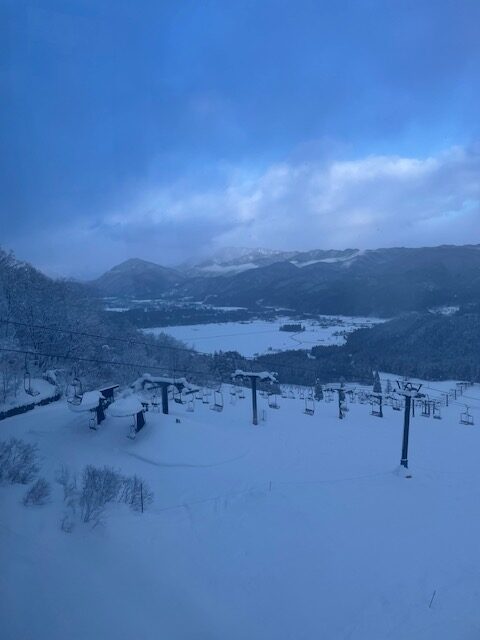
    This past winter break, I had the pleasure of returning to the beautiful country of Japan. This trip was different from the other ones because this time, I was getting to see Japan in winter. Every season brings a different feel to the country, with different emphasises on its culture, like hot spring for winter. Another addition to this trip includes going skiing. This was a non-negotiable for my boyfriend, as he develops an insatiable desire for the slopes once December hits. I was a bit intimidated when I first found out since I had not gone skiing since more than a decade ago. The blurred memories of skiing with an instructor came to mind, and the one word I heard all too often:  “Pizza!”. 

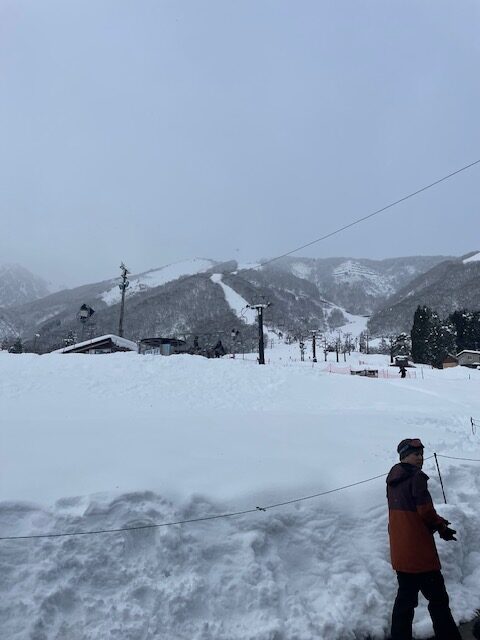
    Fast forward the long flight, train ride, and hike up to the ski resort– it was time. Since the train arrived in the afternoon, we got to the resort midday- there were already set tracks in the snowy mountains. Skiing down the mountain was terrifying with my limited experience. What surprised me was how much lighter and easier it was the next day. We got to the ski resort right when it opened- 8am on the dot. Skiing down was just as nerve inducing, but it seemed like I was floating a bit on the snow. My turns were slower, and therefore easier to execute. Coming to a stop was also more gradual as the snow easily piled behind my skis. This led me to do some research behind the science of snow and the effects it has for the slopes.

    For snow in the Niseko region of Japan, there are special weather conditions that cause its special snow conditions. It is comically referred to as “Japow” for its powdery snowfall which gives an airy and light conditions for skiing. Snowfall for skiing is rated for its quality, quantity, and consistency, and Japan happens to have the perfect conditions for snow.


    Snowfall in the Japanese Alps takes place under two distinct meteorological scenarios. One scenario involves snowfall associated with synoptic cyclones, while the other is influenced by the northwest winter monsoon, which originates from the frigid Asian continent and moves over the warmer waters of the Japan Sea (Maejima 1980). The Japan sea scenario brings heavy snowfall because of the temperature difference between the water body and the air mass over the Japan Sea (Ninomiya, 1976). The distribution of snowfall associated with the Japan Sea effect is predominantly influenced by orographic lifting  (Estoque and Nimomiya, 1976).. As a result, the northern region of the Northern Japanese Alps experiences significantly greater snowfall compared to the southern regions of the Northern, Central, and Southern Japanese Alps.


    Even with all this information about how the snow should be the best for skiing, I fell many times during my trip. Even the green trails would put my balance and concentration to the test. All in all, come to Japan to ski and hopefully you are skillful enough to enjoy it!


    Estoque, M.A. and Ninomiya, K. (1976) ‘Numerical simulation of Japan Sea effect snowfall’,   <i>Tellus A: Dynamic Meteorology and Oceanography</i>, 28(3), p. 243-253. Available at: https://doi.org/10.3402/tellusa.v28i3.10285.


    Maejima, I.. (1980). Seasonal and regional aspects of Japan’s weather and climate.. 54-72. https://www.researchgate.net/publication/293128007_Seasonal_and_regional_aspects_of_Japan’s_weather_and_climate


    Takami, Kazuya & Kamamoto, Rimpei & Suzuki, Kenji & Yamaguchi, Kosei & Nakakita, Eiichi. (2024). Relationship between Newly Fallen Snow Density and Polarimetric Parameters Obtained from X-Band Radar Observations along the Sea of Japan Coast in January 2021. Journal of Atmospheric and Oceanic Technology. 41. 10.1175/JTECH-D-23-0114.1. 

  • How to Publish a HTML and JavaScript Game on GitHub

    Recently, I took part in the Atlanta Science Festival 2025 STEM edition. The STEMcomm VIP team organized a version of Scavenger Hunt, and I was part of the CyberQuest Team. I was responsible for the Scavenger Hunt game, which needed an online interactive site. I figure that GitHub Page is a good free platform to do this. However, GitHub Page has had quite a few updates in recent years and the guide sites have not updated accordingly. I spent quite some time trying to figure it out, and here I am wanting to share how I did it.

    In the past week I published an article about how to beat the popular 2048 game. You can take a look if you are interested!

    https://2026.chargedmag.org/2025/04/how-to-become-an-expert-at-2048/

    So, in this example, we are publishing a variant of 2048. Credit the codes to

    https://www.geeksforgeeks.org/design-a-2048-game-in-javascript/

    1. Install a code editor like Visual Studio Code. If you already have one then just use yours. Choose the best one for your Operating Systems (OS). I’m using Windows for this tutorial.

    https://code.visualstudio.com/

    2. Create a GitHub account and make a public repository. You can choose or use alternative platforms that are able to host an HTML site.

    https://github.com/

    https://github.com/ddang37/ChargedMagazineGame2

    3. Clone this repository onto your local computer. There are alternative ways to do it. I recommend using GitHub Desktop which makes things easier. Follow the corresponding guide below if you are new to GitHub.

    https://docs.github.com/en/repositories/creating-and-managing-repositories/cloning-a-repository

    If you use GitHub Desktop:

    https://docs.github.com/en/desktop/adding-and-cloning-repositories/cloning-a-repository-from-github-to-github-desktop

    4. Open the local repository folder in your Code Editor.

    Create a HTML, CSS, and JavaScript file. Let’s name them game.html, style.css, and dynamic.js. You can change the names and have additional files for more complicated games.

    5. Write the codes into the files. HTML with elements, CSS with stylings, and JavaScript with animation and interaction. 

    For starters, you can search online for sample code and modify from there (make sure to credit the sources!). There are plenty of variants and implementations. You can also create your own!

    You can also fork from the original popular 2048 code:

    https://github.com/gabrielecirulli/2048

    The codes we are using is a much simpler implementation, but still difficult:

    https://www.geeksforgeeks.org/design-a-2048-game-in-javascript/

    6. If your codes are not original from scratch, make sure your game.html file is referring to the correct style.css and dynamic.js. 

    7. Save the codes. Double click the HTML file from file explorer, it should open a chrome site of your HTML game.

    8. When you are satisfied with the result, commit your changes to the online repository. You can do this multiple times, even after you publish the site.

    https://github.com/git-guides/git-commit

    If you use GitHub Desktop:

    https://docs.github.com/en/desktop/making-changes-in-a-branch/committing-and-reviewing-changes-to-your-project-in-github-desktop

    9. When you are ready to publish your code, go to your repository online. Go to Setting > Pages > Build and deployment > Branch, change None to main. An option for the folder will appear, just keep the default. Click Save.

    10. After a few minutes the page will go live. It will show up at the top under GitHub Pages.

    11. Click on the URL or Visit site. Add the extension of the HTML file name and the game will show up!

    https://ddang37.github.io/ChargedMagazineGame2/game.html

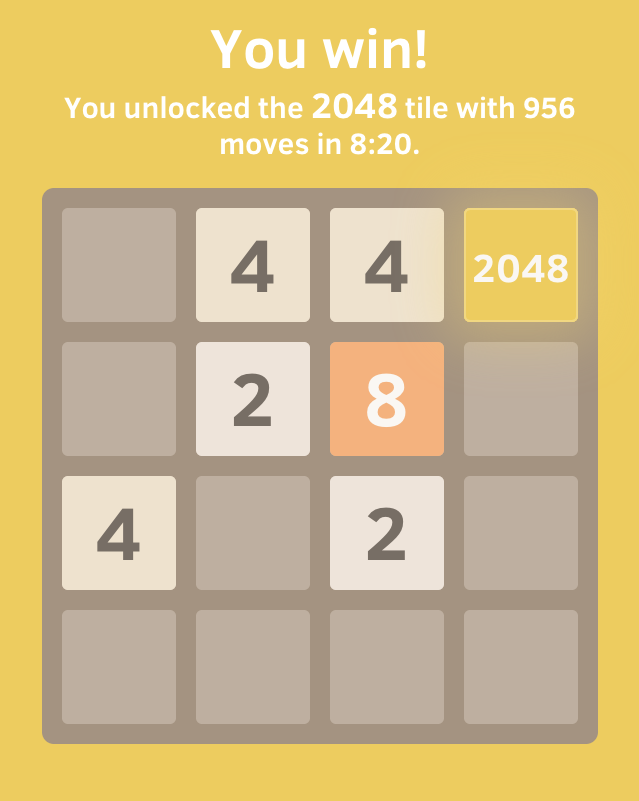
    For this 2048, the game do not autogenerate a tile of 2 or 4 upon making a move, but rather based on time. The random generated tiles can be 2, 4, 8, or higher based on the current tiles on the board. This make the game much harder to win.

    Fun fact: If you left this game alone, except for sliding, the game could play by itself!!!

    [iframe src="https://ddang37.github.io/ChargedMagazineGame2/game.html" width="1000" height="600" ]

    Note: The website might take up hours to update if you commit new changes after publication. If CSS stylings are not working like it did locally, double check if there’s any Chrome extension blocking it. If the website takes forever to update, try making the repository private and then public again. Refer to GitHub information sites if otherwise.

    https://docs.github.com/en/pages/getting-started-with-github-pages/github-pages-limits

    References:

  • The Power of Music Therapy

    When we listen to music, our moods and minds are influenced in ways we might not notice. Listening to music activates different parts of our brain, which has been shown to positively affect brain development, learning, and functioning (Areas, 2005). Some of these functions include “attention, listening, speech production, emotions, motor skills, memory, coordination, and decision making” (Areas, 2005).

    I noticed that I gravitate towards certain music depending on my mood or the time of day. And for the longest time, I struggled with finding the perfect genre of music to listen to when I study or get academic work done.

    I found I couldn’t listen to my favorite songs or music because my brain quickly developed a negative association between my favorite songs and whatever I’m doing. For example, I thought listening to my favorite songs could help me get through the work, but when I go back and listen to the songs again weeks or months later, I would be reminded of the time I was stressed and anxious from studying or completing a major project.

    So, I experimented with different genres: piano, lofi, classical, meditation, music with nature sounds, video game music, movie/show soundtracks, but they never stuck. One day, I came across hour-long videos on YouTube of binaural beats and ‘bilateral stimulation music’. It turns out this ‘bilateral stimulation music” is used for a therapy method called EMDR (eye-movement desensitization and reprocessing).

    Brief Overview of EMDR

    EMDR is a therapeutic approach based on the adaptive information processing (AIP) model (Oren & Solomon, 2012). Sometimes thought of as a variant of cognitive-behavioral therapy, EMDR involves an eight-phase approach that helps a person perceptual information (memories) that have been ‘maladaptively stored’ (Shapiro, 2002). Research has found EMDR therapy to be an effective treatment of trauma (Oren & Solomon, 2012). With EMDR therapy, we can process disturbing events, especially ones that we aren’t aware of. Other goals of EMDR includes “facilitates resolution of memories, …, desensitize stimuli that trigger present distress as a result of second-order conditioning, and incorporate adaptive attitudes, skills, and behaviors for enhanced functioning within larger social systems” (Shapiro, 2002).

    When we listen to bilateral stimulation, the brain can process negative or traumatic experiences which leads to memory reconsolidation (Oren & Solomon, 2012). Some other methods of EMDR besides bilateral stimulation music (alternating auditory tones) includes side-to-side eye movements and alternating hand taps (Oren & Solomon, 2012).

    However, van den Hout and Engelhard (2012) argue that these bilateral stimulation techniques may not be essential for the therapeutic effect. Instead, they suggest that what makes EMDR effective is the taxing of working memory during trauma recall. In other words, van den Hout and Engelhard claim that EMDR works best when we make our brain do two things at once.

    What is bilateral stimulation music?

    For bilateral music to be effective, listeners should hear the music using headphones. The music alternates between the right and left ear stereo channels. This bilateral music helps a person process stressful or traumatic memories without triggering severe stress (“Bilateral Music fo Anxiety, Stress and Trauma”).

    Listening to this music engages both hemispheres of our brain, which then activates the parasympathetic nervous system. The parasympathetic nervous system is responsible for our “rest-and-digest” response, which helps our mind transition from a state of anxiety to a state of calmness (“How Bilateral Stimulation Works to Reduce Anxiety“). The superior colliculus and the mediodorsal thalamus tune in, resulting in the recollection of happy memories.

    Screenshot 2025-04-14 233122.png

    This screenshot is of the video from YouTube that I’ve been listening to regularly for the past few months. When I listen to this kind of music, it feels like the auditory stimulation scratches an itch in my brain.

    As someone who becomes anxious often, listening to bilateral stimulation music has been extremely beneficial for me!


    Featured image credits: https://www.bansalneuro.com/discover-the-benefits-of-emdr-therapy-at-a-ray-of-hope-in-libertyville-il-and-kenosha-wi.html

    References:

    AREAS, I. T. (2005). Music Therapy.

    Bilateral music for anxiety, stress and Trauma. eMentalHealth.ca Resource Directory. https://primarycare.ementalhealth.ca/Ottawa-Carleton/Bilateral-Music-for-Anxiety-Stress-and-Trauma/index.php?m=article&ID=84502

    How bilateral stimulation works to reduce anxiety. Bay Area CBT Center. (2024, April 19). https://bayareacbtcenter.com/how-bilateral-stimulation-works-to-reduce-anxiety/

    Oren, E., & Solomon, R. (2012, October 3). EMDR therapy: An overview of its development and mechanisms of action. European Review of Applied Psychology. https://www.sciencedirect.com/science/article/pii/S1162908812000692?casa_token=mVz1zHojkoAAAAAA%3AJ5j4PhCogXtXhY11ATj3mwypOG0zBVHLICbxs5kCMQZ7Sr-S_d-qFCkTyou7WLmMRoBMpR85GQ

    Shapiro, F. (2002). EMDR 12 years after its introduction: Past and future research. Journal of clinical psychology, 58(1), 1-22.

    van den Hout, M. A., & Engelhard, I. M. (2012). How does EMDR work? Journal of Experimental Psychopathology, 3(5), 724–738. https://doi.org/10.5127/jep.028212

  • Artificial Intelligence Space Travel

    Artificial Intelligence Space Travel
    In the ever-growing universe, artificial intelligence (AI) is becoming a pivotal tool for space exploration. While on Earth, the role of AI in science—most significantly through large language models (LLMs)—is transforming the pace of research and discovery, off Earth, its role is equally significant. AI is now at the cutting edge of how we explore the solar system and beyond, pushing boundaries once deemed impossible due to time, geography, and technology limitations.

    Space travel has uniquely complex issues: enormous communication delays, dangerous environments, unmapped terrain, and thin real-time monitoring. In flights spanning millions of miles, the time a signal takes to reach Earth, and back is too long to employ human micromanaging. To offset this, scientists and engineers have turned to AI as a helper, vital decision-maker, and data processor in real time.

    The Martian Testbed: Autonomy and Perseverance in Action
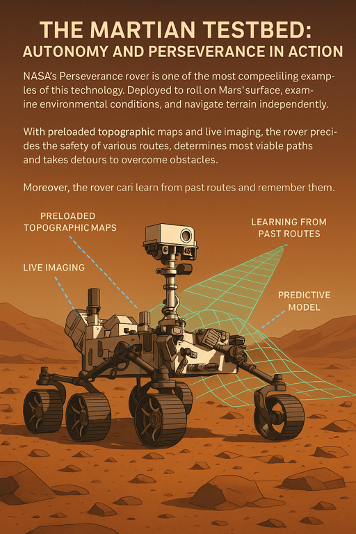
    NASA’s Perseverance rover is one of the most compelling examples of this technology. Deployed to roll on Mars’ surface, Perseverance isn’t just driving around according to commands from Earth. Its sophisticated AI system allows it to read sensor data, examine environmental conditions, and navigate terrain independently.

    With preloaded topographic maps and live imaging, the rover predicts the safety of various routes, determines the most viable paths, and takes detours to overcome obstacles. The predictive model enables the rover to optimize its mission objectives—cover more distance, sample more, and minimize risk. Perseverance can think and learn while it moves.

    Moreover, the rover can learn from its past routes and remember them. Navigation through learning like this, which conceptually is close to how LLMs train their answers to be better after repeated cycles, makes Perseverance an increasingly efficient vehicle the longer it runs.

    The Edge of Intelligence: From Mars to the Outer Moons
    Mars is just the beginning. AI is designed to play an even more significant part in the next wave of missions—to Jupiter’s frozen moon Europa, Saturn’s ethane-rich Titan, and farther out. These destinations provide more hostile and alien conditions than Mars, with more risks and fewer opportunities for in-time human interference.

    On these missions, spacecraft must do everything from data analysis and route planning to system checks and equipment deployment. AI models must determine what data to return to Earth, what anomalies are worth investigating, and even potentially re-routing missions in flight if new challenges arise.

    AI is also transforming orbital science. Space telescopes now generate more data than any human community hopes to review. AI programs trained on this information can spot patterns, remove distracting noise, and highlight phenomena, like exoplanets or black hole candidates, worthy of further investigation. As we build more capable observatories, AI’s function as a research assistant in the sky will continue to grow.

    Intelligent Exploration: The Next Generation of Intelligence Beyond the Cosmos
    The actual breakthrough of AI in space isn’t one of technology but philosophy. They are no longer passive tools but are becoming active agents in the pursuit of discovery. They sometimes read, predict, and act before human researchers know of a new finding.

    This is a shift in how we think about exploration. Instead of human beings at the center of every moment, we now share that place with intelligent systems that reach further than we can, respond faster than we can, and carry our curiosity into places we can’t yet go to ourselves.

    For scientists and engineers, this alliance with AI is more than a convenience—it’s a necessity. The more hazardous our destinations become, the greater our dependence on machine intelligence to light the way.

    The Future: AI as Our Celestial Colleague
    As space travel heightens and the industry of AI becomes more revolutionized, more things are to be learned when it comes to AI. Where every decision counts in extreme environments, AI systems may monitor life support, recommend maintenance, or enable communication among multicultural crews.

    Here on Earth, the same AI platform can simulate missions, train astronauts, and analyze mission outcomes at a speed and scale never imagined.

    No less than the LLMs are rewriting the way we do research in every field, from literature to biology, and autonomous AI is rewriting the rulebook for space science.

    References

    ESA. (2023, September). Artificial intelligence in space. ESA. https://www.esa.int/Enabling_Support/Preparing_for_the_Future/Discovery_and_Preparation/Artificial_intelligence_in_space

    Gómez-Pérez, J. M. (2022, October 7). Artificial Intelligence and Natural Language Processing and Understanding in Space: A Methodological Framework and Four ESA Case Studies. arXiv. https://arxiv.org/abs/2210.03640?utm_source=chatgpt.com

    Mars 2020: Perseverance Rover. (2021, February 18). NASA Science. https://mars.nasa.gov/mars2020/

    Oche, P. A. (2021, December). Applications and Challenges of Artificial Intelligence in Space Missions. ResearchGate. https://www.researchgate.net/publication/356771832_Applications_and_Challenges_of_Artificial_Intelligence_in_Space_Missions


  • Multicellular Archaea?

    All life is classified into three overarching domains: archaea, bacteria, and eukarya. We are all familiar with eukarya, seeing that humans fall under this domain, and bacteria, but archaea are often forgotten. They are defined as single-celled prokaryotes, meaning they exist as a cell without a defined nucleus. Archaea inhabit extreme environments, such as hydrothermal vents or salt lakes, and highly acidic or alkaline conditions. This is the main reason there is not as much information on archaea as there is on bacteria and eukarya. It is difficult to isolate these species from such environments and recreate the conditions in a lab setting.

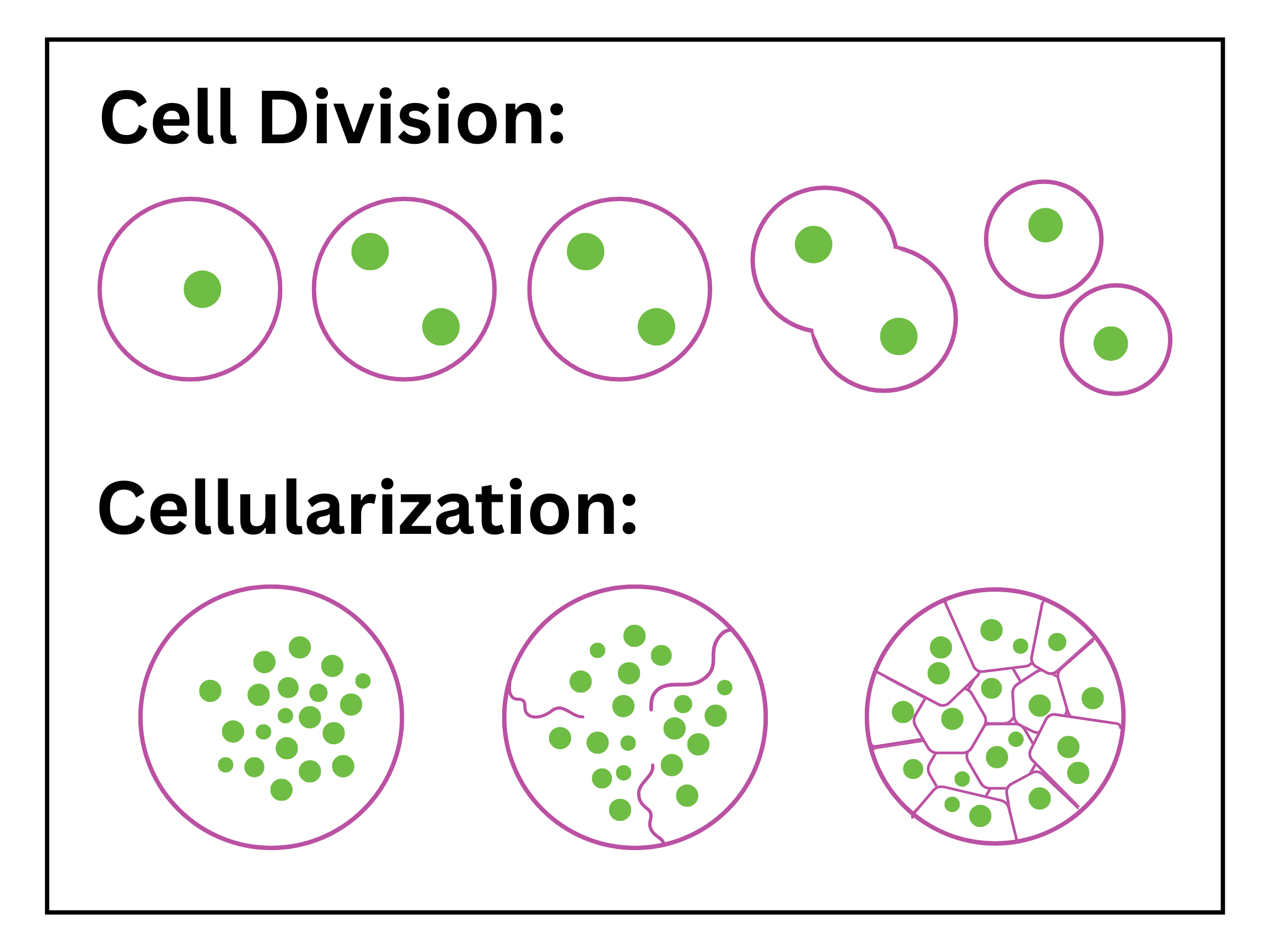
    But new findings in cell biology have put the single-cellularity of archaea into question. Normally, when under excessive pressure, cells will halt all cell division as a protective mechanism to ensure all cells have adequate volume and are without genetic defects. Recently, a species of archaea found in hypersaline environments, H. volcanni, was found to undergo a process closely resembling cellularization instead of regular cell division when under pressure. Cell division is the more common and orderly process, usually mitosis and cytokinesis, where a single cell replicates its DNA once and increases in size until it splits into two daughter cells. Cellularization, on the other hand, is when a single cell replicates its DNA until it has multiple nuclei, then splits into many smaller cells. Archaea do not have nuclei, but the process they underwent in the experiment strongly resembled that of eukaryotic cellularization.

    In animals, cellularization is rare, primarily found in the early development of fruit fly embryos. In this case, the process forms tissues, which are the basis of multicellular organisms, defined as a group of cells that work together for a common function. The multicellular archaea can’t quite be defined as tissue, since they don’t have the connection and interaction that tissue does, but it is definitely an interesting new find. This also serves as evidence for the theory that multicellularity evolved before the teamwork seen in multicellular organisms.

    H. volcanii also has certain traits that make this process favorable. They naturally contain multiple copies of their DNA spread throughout the cell, and their cell division is influenced by the pressure of their surroundings, which they recognize through their membrane tension. The cellularization also produces two types of cells, peripheral and central scutoid cells, each with distinct structural protein patterns. Further implications of this are unknown, but it will be exciting to watch this newfound trait of archaea unfold.

    Pillai, E., & Brunet, T. (2025). Archaea go multicellular under pressure. Science, 388(6742), 28-29. https://www.science.org/doi/10.1126/science.adw6689?utm_source=sfmc&utm_medium=email&utm_campaign=ScienceAdviser&utm_content=distillation&et_rid=1095835014&et_cid=5579756
    Niederberger, T., & et al. (1998). Archaea. Encyclopedia Britannica, https://www.britannica.com/science/archaea
    Rados, T., Leland, O., Escudero, P., Mallon, J., Andre, K., et al. (2025). Tissue-like multicellular development triggered by mechanical compression in archaea. Science, 388(6742), 109-115. https://www.science.org/doi/10.1126/science.adu0047#:~:text=The%20advent%20of%20clonal%20multicellularity,at%20a%20critical%20cell%20size
    Liu, C. (2017). Archaea. Innovative Genomics Institute (IGI). https://innovativegenomics.org/glossary/archaea/

  • Nature’s Puppeteers: When Fungi Take Control

    The Last of Us video game and its live-action adaptation follow a fictional post-apocalyptic story about surviving in a world where a mutated Cordyceps fungus evolves to survive in human bodies, turning people into violent zombies. According to the chief of the Mycotic Diseases Branch at the Centers for Disease Control and Prevention, Tom Chiller, this idea that a fungi species can mutate to survive the high temperatures of a warm-blooded body is “far-fetched” (Parshall, 2023). We are inhaling fungal spores all the time, but because of our immune system and high body temperatures create inhospitable conditions for fungal species to live (Beckham, 2023). 

    Ellie (Bella Ramsey) and Tess (Anna Torv)
    Photograph by Liane Hentscher/HBO: https://press.wbd.com/us/image/bella-ramsey-anna-torv

    Photograph by Liane Hentcher/HBO: https://press.wbd.com/us/image/bella-ramsey-anna-torv

    Luckily for us, Cordyceps (Ophiocordyceps unilateralis) does not affect humans, but insects—Cordyceps are a parasitic fungus that takes control of the brains of insects such as ants and spiders.

    The spores of Cordyceps—zombie-ant fungus—take control of the mind and motor functions of their host, paralyze them, grow in them, and reproduce (Stone, 2023). The fungus will exhaust the host of all nutrients, spreading spores in the host’s body. It then makes the insect go to a higher location, where the direct sunlight makes optimal conditions for the spores to continue spreading. The Cordyceps infection to other insects is airborne, whereas in The Last of Us, the infection is transferred through bites.

    Ant killed by Ophiocordyceps fungus
    “Ant killed by Ophiocordyceps fungus”
    Taken By: Katja Schulz
    https://www.flickr.com/photos/treegrow/29867355174/in/photolist-swe1Eu-hnxMQY-dsinf4-mCtuwz-MvgZQu-Mvh1kh-Mvh18y

    Image taken by: https://www.flickr.com/photos/treegrow/29867355174/in/photolist-swe1Eu-hnxMQY-dsinf4-mCtuwz-MvgZQu-Mvh1kh-Mvh18y

    Fungi can spread in two ways: “vertical transmission from mothers to their offspring and horizontal transmission through spores in the environment” (Stone, 2023). This means that spores can be inhaled or land on surfaces of the body and infect that area of the body. 

    Are there Fungi that can affect humans?

    According to Perlin, about one billion people suffer from hair, skin, or nail infections, e.g. ringworm or Athlete’s foot. While treatable, fungal infections carry major health risks. He adds that over 1.5 million people globally die from fungal infections. Discovered in 2009, a multidrug-resistant fungus, Candida auris, and has been placed on the World Health Organization’s list of ‘priority pathogens’. This is the first fungus to be able to spread from person to person and survive in higher temperatures (Beckham & Roberts, 2023). Candida auris and Aspergillus fumigatus are now global threats, according to the CDC.

    Besides that, environmental fungi, e.g., mold, spread by emitting spores in the air, while others spread in the water and food supply (Perlin, 2023).

    Rest assured, we know that fungal infections originate from the environment through inhaling spores or an exposed wound, and unlike viral infections that can easily be spread person-to-person, the risk of spreading a fungal infection is extremely low (Beckham).

    Scott Roberts, MD warns that while a fungal apocalypse like The Last of Us is unlikely, there has been an increase in the risk of fungal disease because of the increased dependency on antibiotics. He explains that antibiotics kill all the good bacteria, which makes it easier for fungi to spread.

    It’s challenging to make antifungal medication that doesn’t harm humans because fungi are more closely related to humans than viruses and bacteria (Beckham, 2023).

    While it’s unlikely that a fungus-driven pandemic could occur in humans, we must take measures to respond to rising fungal infections or dangers.

    The Last of Us brought awareness to the lack of antifungal vaccines or research on fungal infections. These fungal infections are difficult to treat due to fungi’s nature to mutate and evolve—many of the current drugs used to treat fungal infections are ineffective towards certain strains (Pires, 2024).


    Sources Cited:

    Backman, I. (2023, February 5). “The Last of Us” apocalypse is not realistic, but rising threat of fungal pathogens is. Yale School of Medicine. https://medicine.yale.edu/news-article/the-last-of-us-apocalypse-is-not-realistic-but-rising-threat-of-fungal-pathogens-is/

    Parshall, A. (2024, February 20). Could the zombie fungus in TV’s the last of US really infect people? Scientific American. https://www.scientificamerican.com/article/could-the-zombie-fungus-in-tvs-the-last-of-us-really-infect-people/

    Perlin, D. (2023, Feb 16). Zombie fungus from “The Last of Us”: Is it real? New Jersey’s Top-Ranked Hospital Network. (2023, February 16). https://www.hackensackmeridianhealth.org/en/healthu/2023/02/16/zombie-fungus-from-the-last-of-us-is-it-real

    Pires, T. C. S., & Pires, Y. M. S. (2024). From Candida Auris to The Last of Us Cordyceps: Addressing Fungal Infections before it’s too late. Int J Allergy & Imm, 2(1), 1-2.

    Stone, L. (2025, April 6). Distinguishing between fungal fact and fiction in “The last of us” . NETEC. https://netec.org/2023/05/02/distinguishing-between-fungal-fact-and-fiction-in-the-last-of-us/


  • How to become an expert at 2048!

    Have you ever heard of 2048? If you memorize the powers of 2, then you would know this is simply 2 to the power of 11. However, that’s not how most people react. My first impression was “What’s with this random number? A satisfying number with even digits?” Soon, I learned it’s a game. Not long later, I got addicted to beating it.

    About 2048

    2048 was released back in 2014. It is a single-player sliding tile puzzle video game written by Italian web developer Gabriele Cirulli over the weekends (Wikipedia). 2048 has an easy concept with great animation and a goal where players can beat, and even surpass. It soon became a global hit! The first time I heard about the game was a decade ago when I was in Vietnam. I fell in love with it. Thanks to that, I actually memorized the powers of 2 before I actually learned about the concept of exponents in school! 2048 is a great educational game by all means.

    In an interview with Hey.gg, 19-year old Gabriele revealed that 2048 was influenced by Saming’s 1024. The gameplay is similar except that 2048 has initial tiles of 2 and 4, while 1024 only has 2s. If we dig in further, the 1024 game was influenced by Threes, a game with the goal of sums or multiples of 3, starting with 1 and 2 tiles. Threes was also influenced by Drop7, which in turn was influenced by… (Wikipedia) Let’s stop here since it could go forever. It’s amazing how game development can be about creativity and improving your childhood games.

    2048 Gameplay

    The game has a simple and clean design with 4 x 4 tile board. Initially, the player is given two randomly placed tiles. There is a 90% chance of a  2 and a 10% of a 4. In total there are 3 combinations; (2, 2), (2, 4), or (4, 4). Players can use the four arrow keys to slide the tiles in the corresponding direction. When a tile collides with an identical tile, they merge and become a new tile with a higher power of 2. One single move can merge many tiles, but tiles can only merge once in a move. This can be confusing, so let’s look at an example. 

    If there are 4 tiles of number 2 at the bottom, and the player presses <-, then there are 2 tiles of 4 on the bottom rows to the left, and an additional new tile can be anywhere. In order to get a new tile of 8, another move needs to be made. The goal is to reach 2048, but players can continue if they want to beat the game. The maximal tile is 2^17 = 131072 if the last new tile is 4 (Goel, 2017). I actually had the honor to see someone achieve this a decade ago! Now it’s time for the math behind the game!

    Mathematical Induction

    Mathematical induction is a method to prove a statement or formula is true for all natural numbers or integers. It first proves this is true for the lower bound, i.e the base case number. Then it proves that if it is true for arbitrary numbers k where k >= base case, then it also is true for any k + 1. The latter is called an inductive step. According to Hoang Le, a Vietnamese Mathematics enthusiast, we can use mathematical induction to prove why 2048 always and only has tiles of power of 2.

    Problem: In 2048, the new tiles are either 2 or 4, and two identical tiles can sum and merge into one new tile. Using mathematical induction, prove that 2048 can only have tiles of power of 2.

    Tiles are either randomly generated or merged. The randomly generated tiles are the base cases.

    Base case 1: the new tile 2 = 2^1.
    Base case 2: the new tile 4 = 2^2.
    The base cases hold true.

    Induction: Assume that at any moment there are tiles in the form of 2^k, where integer k >= 1 (because smallest tile is 2), then after the next move the new tiles are still power of 2.

    There are 2 cases.
    1. There is no merge, then the board still has the existing tiles with power k and the new tile 2 = 2^1 or 4 = 2^1. The new board state still only has power of 2 tiles.
    2. There are merges, then for each tile 2^k that could merge, 
    2^k + 2^k = 2 * (2^k) = 2^(k+1). 
    Some of the existing tiles merge into a new tile with a higher power of 2, and the newly generated tiles of 2 or 4 are also powers of 2.

    By mathematical induction, when 2048’s randomly generated tiles are 2 and/or 4, and tiles can only merge if they are identical as a sum, then the board can only contain tiles that are powers of 2.

    Markov Chain and Markov Decision Processes

    Overleaf is a London-based startup that builds collaborative authoring tools for scientists, including support for the LaTeX language that allow users to present mathematical symbols. Today we are not talking about Overlead, but rather John Lees-Miller, a Cofounder and CTO at Overleaf. John studied 2048 and published an article series about how Markov Chain and Markov Decision Processes can be used to understand the game. 

    Based on the concepts of Markov Chain, through complex mathematical samplings and calculation, John concludes that the average number of moves to win the game is 939. This aligns with Bhargavi Goel’s, a student from Delhi Public School Vasant Kunj, India, conclusion about the move range to win the game [519, 1032]. The bounds are for extreme lucky cases with all tiles of 4 or extreme unlucky with just tiles of 2 (Goel, 2017). However, since the game also involves human’s decisions when facing the probabilities and random location of the tiles, Markov Chain is a better approximation. In addition, John works with Markov Decision Processes to find the optimal way to play 2048.

    He divided the game into three dynamic concepts: states, actions, and transition probabilities (Lees-Miller, 2018). States refer to the current tiles and their positions. Actions are named after the 4 choices of directions. There are different probabilities of getting 2 or 4 at different positions, hence transition probabilities.

    Another three concepts are rewards, values, and policies which are used to understand a player’s goal and how to achieve that goal (Lees-Miller, 2018). Rewards refer to the goal of achieving the state that has a 2048 tile. At each state, there is a value assigned to represent how close the current tile board is to reaching 2048. In addition, to win the game, the player needs to play optimally, in which John called the set of optimal states the optimal policy.

    Below is the image of John’s formula and the states the computer generated to get to the losing or winning state.

    Please refer to John’s article series for more details if you are interested about what these symbols stand for and how to use them.

    After various chains of states with 2×2 and 3×3 boards, John figures that in order to arrive at the winning state, the optimal way is to minimize the direction choices to 3, so that the tiles are ordered and do not go all over the place. This will end up looking like a snake filling the tile board.

    Topology for optimal strategy

    Not only John, other 2048 enthusiasts also agree to some degree. In order to merge tiles as soon as they are identical, the tiles need to be adjacent before the merge move. If there is a sequence of merging continuously, like 64, 32, 16, 4, 2, followed by a new tile of 2, the biggest tiles after merging (multiple turns) would be 128. In order to minimize the moves, they need to be adjacent in order from largest to smallest. Hoang says that there are alternative paths where the head can be anywhere as long as the tiles are ordered (Le, 2014). Bhargavi concludes the optimal path is a snake line through the tiles with the largest tile at the corner and the next largest adjacent to it, continuing to all tiles (Goel, 2017). Hence, the optimal strategy is to have the largest at the corner and order from largest to smallest tiles in the snake-like line. This can only be done by playing with three directional moves (unless you are very unlucky). This is actually the only way to achieve 131072! 

    https://www.youtube.com/watch?v=MDkZkweB5lM&list=LL&index=1

    AI attempts at 2048

    In 2019, Stanford University’s students Yun Nie, Wenqi Hou, and Yicheng An attempted Machine Learning with 2048. They program an AI to play 2048 using different advanced approaches, and record the scores of 100 trials for each approach. The difference between average and highest scores was significiant. They conclude at the end that the randomness of 2 and 4 make it hard for AI to beat the game.

    Afterword

    At first 2048 looks like a simple game, but once you get to know it from an academic perspective, it’s pretty complicated. Do not feel bad if you find the game hard to win. You see, even AI could not beat the game easily. If you’ve never played the game — give it a try — I promise you will like it (and become addicted to it). What are the chances that you come across this article? Here is your chance to apply what you learned and show off to your friends how to reach 131072!

    https://play2048.co/

    References