Category: vintage science

  • Stop Blaming Your “Aura”: the thermodynamic truth behind Mood Rings

    Step inside any novelty shop or theme park souvenir stand and you’re likely to find an assortment of rings that claim to do the impossible: reveal your innermost moods. But how in the world would a ring be able to tell? 

    Inside the ring

     The magic inside a prototypical mood ring lies underneath a protective glass or plastic dome: a sealed capsule containing a thin layer of thermochromic liquid crystals (U.S. Patent No. 3,802,945, 1974). Liquid crystals exist at the border between liquid and solid phases, flowing and pouring like a liquid, but are structured as a crystalline, ordered, molecular arrangement. The liquid crystals in mood rings are thermochromic (thermo meaning heat and chromic meaning color), meaning the substance changes color on the macroscopic scale as heat is added to or taken away from the ring (University of Cambridge, n.d.). 

    The color change

    There are many kinds of thermochromic liquid crystals, all with different applications e.g. display monitors and thermometers. However, the ones used in mood rings are specifically cholesterol-derived esters such as cholesteryl benzoate, cholesteryl nonanoate, and cholesteryl oleyl carbonate (Brown & Wolken, 1979).

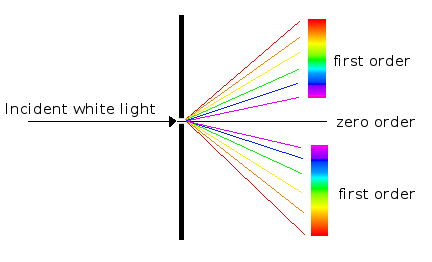
    Housed within a gel suspension inside the ring (LLNL, 2018), the molecular structure of these cholesterol derivatives acts as a microscopic diffraction grating, splitting incident white light into a variety of colors, as shown below.

    When heat from your body is transferred through the ring into the liquid crystal suspension, it causes the bonds within the molecule to twist, expand, and contract. As the bond lengths within the molecule shift, different wavelengths of light are reflected back to your eyes.

    How are temperature and mood related?

    While our bodies’ core temperatures remain a consistent 98.6°F, the slight shifts in temperature displayed within the mood rings are related to peripheral body temperature, the body temperature recorded at extremities. The temperature here fluctuates constantly depending on blood flow and environment (Campbell, 2008). For example, when you’re anxious, blood vessels in your hands become smaller (vasoconstriction), cooling your fingers down and causing the liquid crystal molecules to reflect amber or darker colors. When you’re relaxed or warm, blood rushes more freely to your fingertips (vasodilation), raising your skin temperature and allowing the liquid crystal display to reflect bright purples, greens, and blues (in a cholesterol-derivative based system). 


    Below is a video of thermochromic liquid crystals being prepared for use in heat-sensing films:

    Sources

    Brown, G. H., & Wolken, J. J. (1979). Liquid crystals and biological systems. Academic Press.

    Campbell, I. (2008). Body temperature and its regulation. Anaesthesia & Intensive Care Medicine, 9(6), 259–263. https://doi.org/10.1016/j.mpaic.2008.04.009

    Lawrence Livermore National Laboratory. (2018). A look back: LLNL and the mood ring. https://st.llnl.gov/news/look-back/llnl-and-mood-ring

    National Center for Biotechnology Information. (n.d.). PubChem compound summary for CID 10874, Cholesteryl benzoate. PubChem. Retrieved from https://pubchem.ncbi.nlm.nih.gov/compound/Cholesteryl-benzoate

    Reynolds, M. R., & Gruber, J. L. (1974). Liquid-crystal containing jewelry (U.S. Patent No. 3,802,945). U.S. Patent and Trademark Office. https://patents.google.com/patent/US3802945A/en

    University of Cambridge. (n.d.). Liquid crystals [Teaching and Learning Package]. Dissemination of IT for the Promotion of Materials Science (DoITPoMS), Department of Materials Science & Metallurgy. Retrieved June 14, 2026, from https://www.doitpoms.ac.it/tlplib/liquid_crystals/printall.php


  • Fabrican: Taking a Piece of Chemistry onto the Catwalk

    One of the most valuable experiences for any designer or innovator is the process of mastering new fields of knowledge to better guide and inform creative decisions. Almost every new problem or project requires designers to think of new ways to approach their solution or design. Manel Torres is the perfect example of this approach as he had to immerse himself in chemistry to develop what is now known as spray-on clothing. His work demonstrates how expanding beyond traditional design boundaries can lead to groundbreaking results with multiple applications! Torres’s invention really highlights how impactive ideas often emerge when disciplines intersect.

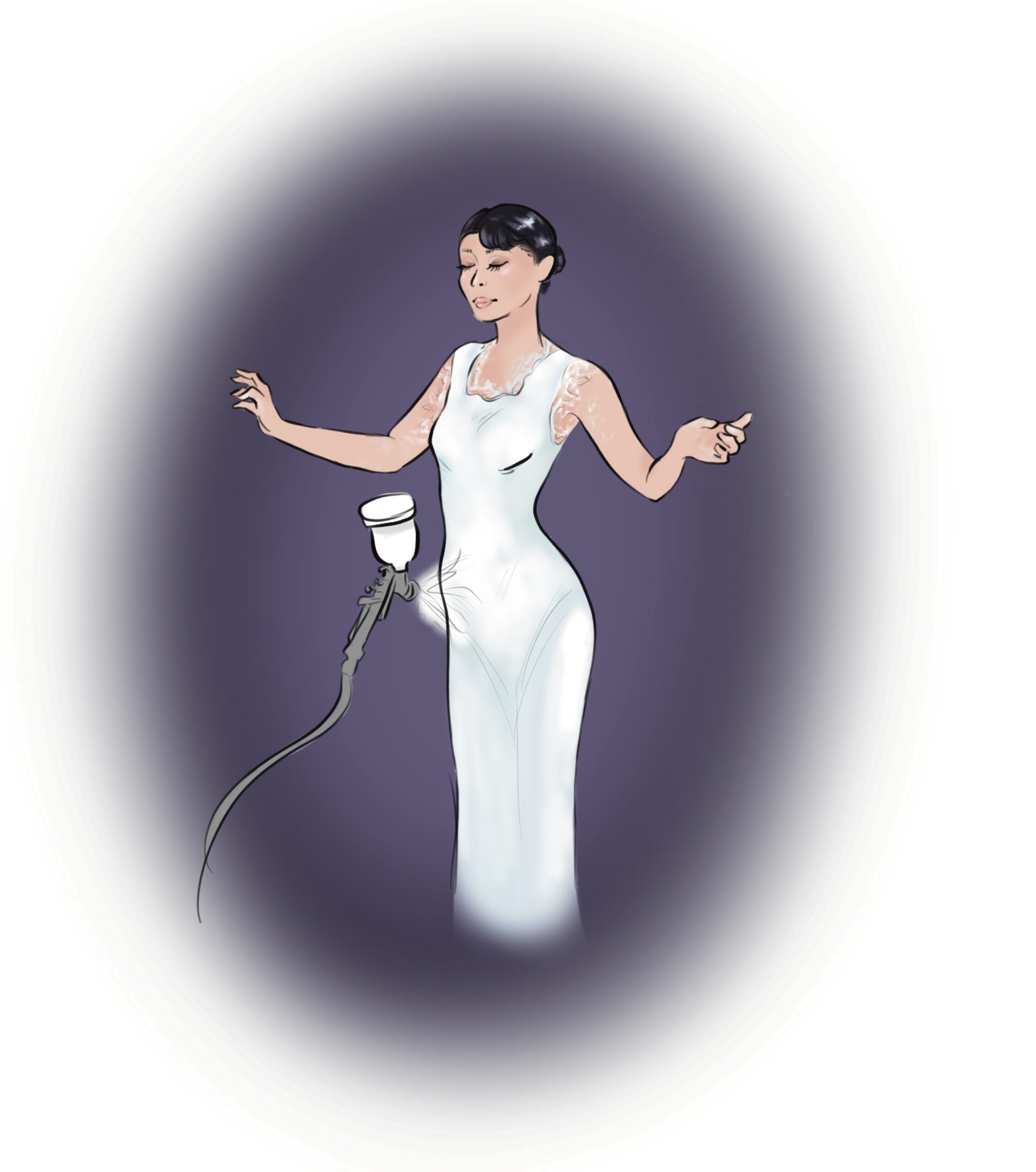
    During Paris Fashion week in 2022 at the Coperni runway, Bella Hadid made a stunning performance as she stood there practically naked, while being sprayed with some white liquid material. Well, this material so happened to originate from the works of Manel Torres’ Fabrican. Inspired by silly string spray cans, Torres wanted to create a spray-on T-shirt from an aerosol can during his doctoral years at the Royal School of Art in London. With the help of Professor Paul Luckham from Imperial College’s department of Chemical Engineering and Chemical Technology, Torres was able to create the right formulation to produce something that can spray thin fabric onto a model (Melton, 2023). A featured article years back on the home page of the Guardian Newspaper, highlights the work of fashion designer Dr. Manel Torres who invented a spray that “forms a seamless fabric on contact with the body” (Amato, 2011). Along with the article was a video, showing Torres in a lab coat demonstrating his new innovation by spraying the torso of a male model with a liquid mix of fibers and polymers that instantly dried and solidified upon contact with the skin. The results came out to be a skintight t-shirt!

    (source: drawn by An Truong)

    So how is it possible for a liquid material to become something that you can actually wear? 

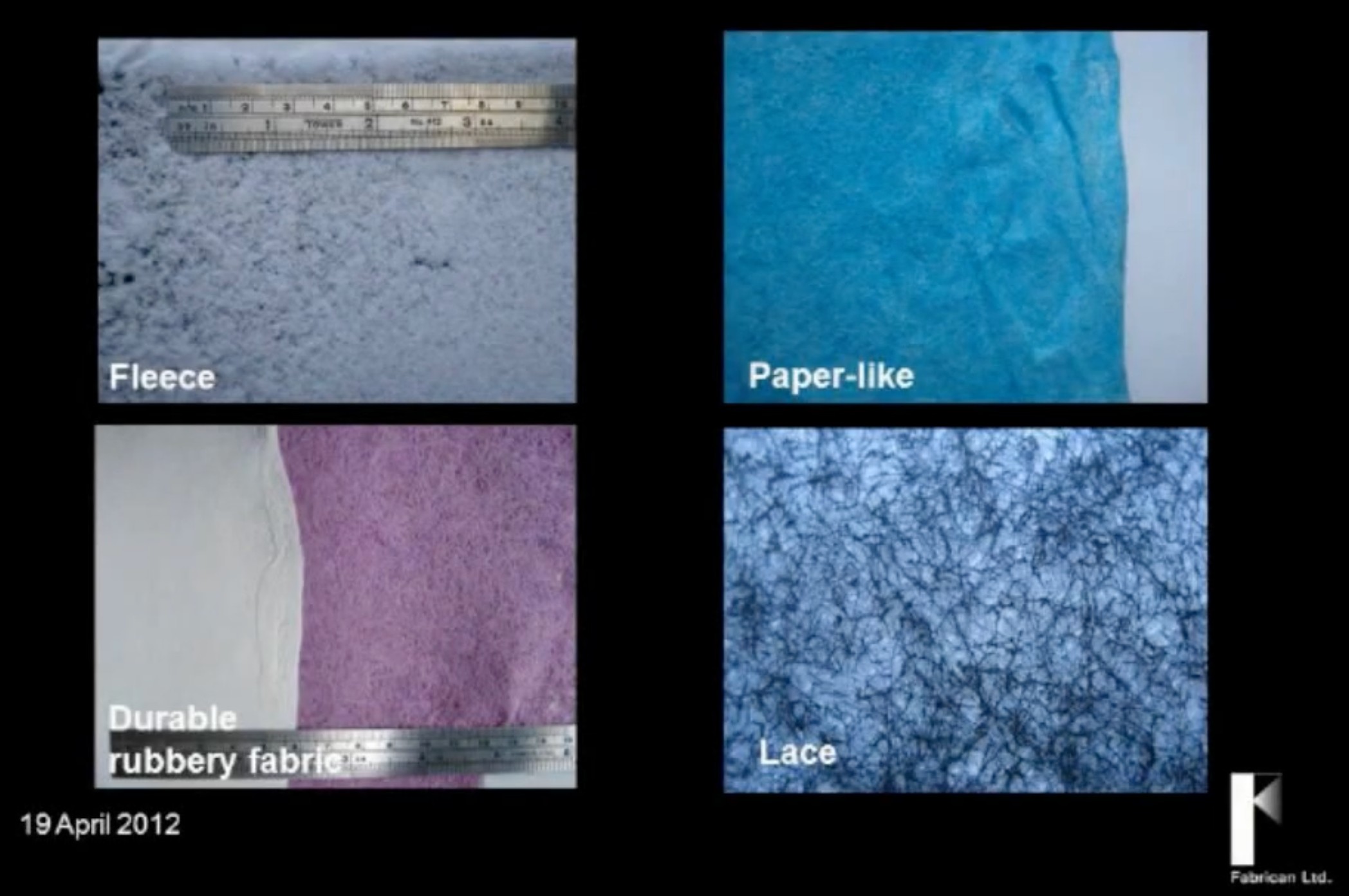
    Torres’ invention consists of a liquid mixture of short fibers that are suspended in a solvent that evaporates when exposed in the air, so that the spray turns into a solid non-woven non-knit material upon contact (Melton, 2023). It was made to be applied using an aerosol can or a spray gun that would be sprayed directly onto a person or onto a mannequin or mold, forming a fabric layer that can be thickened and strengthened by applying multiple layers. With this, you would be able to style, peel off, and shape the fabric as needed. The fibers themselves are biopolymers created from natural or synthetic sources such as corn starch, wool or mohair based keratin, hemp, or even collagen (Amato, 2023). Torres also experimented with various other kinds of fabrics and textures such as a paper-like texture, fleece, rubber, and lace. These fabrics and textures were able to be embossed, molded, and essentially patterned in any ways a designer wishes. 

    (source: TEDxTalk)

    Further Application

    Torres believes that his invention should be and can be used to create a wide range of products, including fashion, automotive components such as dashboards and interior fabrics, and for medical application such as bandages, instant sterile dressings, or drug delivery patches. 

    As any great designer and innovator would do, Manel Torres continues developing and improving his own works. In a TED TALK Torres gave in 2012, he mentions how he wants to push Fabrican to be fully reusable and sustainable as well as incorporate some kind of smart technology in the future. This is a great practice for designers and innovators alike as they should all reflect on their designs and continue to improve them even after its final outcome is presented.

    Conclusion

    Manel Torres’s work with Fabrican shows how innovation in design is truly never finished. It should evolve alongside new ideas, technologies, and needs. By continuing to refine his spray-on fabric with goals of sustainability, material and cost efficiency, and integration of smart technology, Torres sets a perfect example for future designers and innovators that creativity should not end at just the final invention or outcome, it instead continues to grow through constant iteration. Manel Torres’ process demonstrates how science and design can merge to create materials that are functional and adaptable. As Fabrican develops, it has great potential to reshape industries starting from fashion and expanding to fields such as medicine. Ultimately, Torres’s process and work encourages designers to think beyond traditional materials and to embrace experimentation and iteration. His brilliant vision for the future of clothing and textiles challenges the next generation to design with both imagination, experimentation, and research!

    Citations:

    Amato, Sarah. (2011). Fit to a T: Spray-On Clothing, Craft, Commodity Fetishism, and the Agency of Objects. Utopian Studies, 22(2), 285–302. https://doi.org/10.5325/utopianstudies.22.2.0285

    Coperni. (2023, September 14). The making of a dress [Video]. YouTube. https://www.youtube.com/watch?v=YxObP6-ovdk

    Melton, Lisa. The instant spray-on dress. Nat Biotechnol 41, 743 (2023). https://doi.org/10.1038/s41587-023-01829-1

    TEDx Talks. (2012, April 26). Spray-On Fabric: Manel Torres at TEDxImperialCollege [Video]. YouTube. https://www.youtube.com/watch?v=EW6Gv-IoErw


  • The Future of Touch: How Neural Networks are Revolutionizing Prosthetics

    You might be familiar with The Amazing Spiderman where Dr. Connors, the villain, has an amputated arm. He tests reptilian DNA to see how to regenerate tissue. Instead of simply regrowing his arm, he becomes the Lizard and terrorizes New York City. This story was focused on the dangers and corruption of greed, but also reflects a human desire and reveals a sympathetic side: to restore something that was lost. 

    Nowadays, scientists are following the same dream that Dr. Connors was pursuing, minus the whole turning into a villain issue. People are developing something even more incredible: bionic limbs that can think, feel, and move just like a biological limb can. Welcome to the world of neuroprosthetics, where the line between humans and machines is slowly merging. 

    What are Prosthetics and Why Do they Matter?

    Prosthetics are appliances designed to replace missing body structures for those who were born without or have gone through a traumatic experience. In history, prosthetics used to be purely mechanical and used available resources like wooden legs, hook hands, and other contraptions that are able to grab and hold objects. While these prosthetics had some functionality to it, they had many issues from skin irritation to pressure discomfort. Imagine trying to pick up an egg and you can’t feel how hard you are squeezing it. That is the feeling for millions of people suffering with this disability. 

    Now, the field is evolving rapidly. There has been new prosthetic research completely restoring the human experience of touch, movement, and sensation . Researchers and scientists are asking more questions to further the impact of this field like: Can we create limbs that directly interact with the brain? Can prosthetics perceive temperature, texture, and pressure?

    The answer is, increasingly, yes.

    Training Machines to Speak like the Brain

    The most exciting aspect of this new generation of prosthetics are neural networks. This includes our brains and AI systems that are still learning how to process similar thoughts and actions. At the core of the revolution are BCIs or brain-computer interfaces establishing a connection between neural signals and prosthetic devices.  

    How it works begins with our hands. Once we conduct a hand movement, our brain sends electrical impulses to our muscles and these nerves will always release to the according limb even if it is amputated. Today, scientists are developing brain-computer interface systems that can detect and interpret nerve impulses immediately (Willsey et al., 2025). With these methods, scientists were able to find that prosthetics were responsive and even reached 97-98% accuracy in individual finger and wrist motions using artificial intelligence agents (Diu et al., 2022). These results reveal a major step towards restoring the limb as an extension of the body through AI systems and actively work as a biological device again for the patient. 

    At Stanford’s Neural Prosthetics Translational Lab, scientists try to take their research to the next level where they attempt to translate neural activity to speech on the screen in front of them (NPTL, 2025). This kind of technology uses machine learning and advanced computational methods to learn the specific patient’s neural patterns and then creates a personal movement dictionary connecting the brain activity to the patient’s speech and movement.  

    Making Prosthetics Feel

    Going back to our Spiderman reference, Dr. Curt Connors was able to feel with his one hand. He could sense temperature, feel textures, and experience pressure, all of which he missed out on with his amputated limb. Early prosthetics lacked this sensory dimension, but now, the movement is changing that. 

    Prosthetics today directly connect with brains to provide live sensory data. Studies show that they are able to recreate the nuanced feeling of hands through electrical stimulation (Greenspon et al., 2024). Researchers conduct these experiments by placing electrodes in certain parts of the brain in order to trigger the response for sensation and tactile feedback in the respective limbs. This is revolutionary for patients as it proves to reduce phantom limb pain for patients, where they still feel pain sensation despite the loss of a limb. The future of neuroprosthetics aims to make artificial touch as immersive and intuitive as possible and now scientists are on the path to finding a way. 

    Osseointegration

    Perhaps the most impressive breakthrough in this field is figuring out how to implement this into the body for it to coexist with the patient comfortably. Conventional prosthetics often cause discomfort, limited control and even skin irritation. Osseointegration is the integration of titanium implants into the skeletal tissue, a method to attach artificial limbs without discomfort and allows for machine learning control through embedded electrodes and sensors (Ortiz-Catalán et al., 2023). This innovation is crucial for pushing towards products that are more viable for daily use among patients. 

    In a critical clinical trial, researchers experimented on a patient with a traumatic injury to her right hand. Surgeons implemented a prosthesis which then attached the bionic hand to her forearm bones by placing the titanium implants directly on there. The result proved successful allowing the patient to control all five phantom fingers at a completion rate of 95% in the post motion test given (Ortiz-Catalán et al., 2023). Additionally, her sensations prompted consistent neural responses revealing exceptional sensory feedback. This surgery proved to be very helpful as it substantially reduced patient pain as phantom limb pain decreased as well as discomfort from the prosthetics. This allowed the patient to use the prosthesis for over three years improving her overall quality of life and independence. 

    Conclusions

    Scientists from so many varied fields are merging to accomplish something incredible in the field of neuroprosthetics, going above and beyond biological capabilities. The goal is to design something that doesn’t wear out, use sensors and processors, and beautifully blend human and computer communication. 

    This has shown how possibilities are endless and can immensely improve the lives of those struggling without body parts. Dr. Connors was wrong to turn the whole city into lizards, but his pain and suffering can be empathized with across the world. Advanced technology today is able to help amputees and paraplegics communicate with others, move again, and reestablish their neural networks. 

    In the future, prosthetics may even become so progressive that its biological counterparts will be indistinguishable. Machines will be controlled by our thoughts and actions in the split of a second and move so effortlessly that people will forget they are even wearing a prosthetic. Restoring something so significant in our daily lives is truly life-changing for these individuals and merging it with technology can help us achieve that goal faster and make movement more accessible everywhere. 


    References

    Diu, K., Luu, Nguyen, A., Jiang, M., Drealan, M., Xu, J., Wu, T., Tam, W.-K., Zhao, W., Lim, B., Overstreet, C., Zhao, Q., Cheng, J., Keefer, E., & Yang, Z. (3 C.E.). Artificial Intelligence Enables Real-Time and Intuitive Control of Prostheses via Nerve Interface.

    Greenspon, C. M., Valle, G., Shelchkova, N. D., Hobbs, T. G., Ceci Verbaarschot, Callier, T., Berger-Wolf, E. I., Okorokova, E. V., Hutchison, B. C., Efe Dogruoz, Sobinov, A. R., Jordan, P. M., Weiss, J. M., Fitzgerald, E. E., Prasad, D., Driesche, A. V., He, Q., Liu, F., Kirsch, R. F., & Miller, J. P. (2024). Evoking stable and precise tactile sensations via multi-electrode intracortical microstimulation of the somatosensory cortex. Nature Biomedical Engineering. https://doi.org/10.1038/s41551-024-01299-z

    NPTL. (2025). NPTL; Stanford University. https://nptl.stanford.edu/

    Ortiz-Catalán, M., Zbinden, J., Millenaar, J., D’Accolti, D., Controzzi, M., Clemente, F., Cappello, L., Earley, E. J., Enzo Mastinu, Justyna Kolankowska, Munoz-Novoa, M., Stewe Jönsson, Njel, C., Paolo Sassu, & Rickard Brånemark. (2023). A highly integrated bionic hand with neural control and feedback for use in daily life. Science Robotics, 8(83). https://doi.org/10.1126/scirobotics.adf7360

    Willsey, M. S., Shah, N. P., Avansino, D. T., Hahn, N. V., Jamiolkowski, R. M., Kamdar, F. B., Hochberg, L. R., Willett, F. R., & Henderson, J. M. (2025). A high-performance brain–computer interface for finger decoding and quadcopter game control in an individual with paralysis. Nature Medicine. https://doi.org/10.1038/s41591-024-03341-8


  • Don’t Fall for the Galileo Gambit

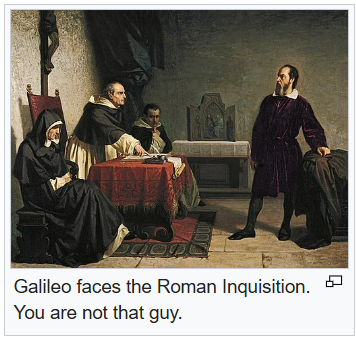
    Image Credit: Galileo gambit. (2018). RationalWiki. https://rationalwiki.org/wiki/Galileo_gambit

    Lots of new ideas are introduced to science all the time. Many of these ideas are accurate and make great contributions to our body of knowledge. At the same time, many don’t hold up to scrutiny and are rejected by the scientific mainstream. Discarding inaccurate ideas is a normal part of the scientific method, and it happens all the time. However, the promoters of a rejected idea don’t always want to admit that their idea is a bad one, and they feel the need to come up with reasons for why their idea is special, no matter how poor the evidence in its favor or how many qualified experts disagree with it.

    Enter the Galileo Gambit, a rhetorical device whose entire purpose is the promotion of rejected ideas (RationalWiki 2018). When an idea promoter uses it, you can expect them to say something like this:

    “Scientists won’t accept the fact that I have proof that the earth is flat! Well, they laughed at Galileo too, and look how that turned out for them!”

    The clear implication is that science as an institution is dogmatic and closed-minded. Scientists won’t accept firm evidence in favor of a belief you hold, but this means you are probably right! All great scientific discoveries were initially rejected, but over time, the enlightened public and a brave few intellectuals came around to the correct way of thinking and forced those stubborn scientists to accept the truth!

    Arguments that rely on the Galileo Gambit most often use Galileo as an example of the oppressed discoverer of revolutionary information, hence the name, but other famous historical figures may also be used. Ignaz Semmelweis, who advocated for doctors to wash their hands before delivering babies, is also a favorite name drop, since his ideas were not accepted until after his death (RationalWiki 2018). In addition, promoters may refer to Pasteur, Einstein, Mendel, and anyone else whose work was not recognized immediately upon publication or faced even mild critique or disapproval from the scientific community.

    The basic idea behind the Galileo Gambit seems reasonable at first, especially since people who use it are often able to recite long lists of persecuted geniuses such as the above figures. However, there are serious flaws in this type of argument, and it acts as a smoke screen to distract you from the fact that the “persecuted” idea is probably too weak to speak for itself. Here are five reasons, in order of increasing severity, for why you should not take a Galileo Gambit argument at face value.

    1. A Misplaced Persecution Complex

    Before we get into the logical and scientific minutiae, there’s something relevant to discuss about the circumstances of Galileo’s story: He wasn’t persecuted by scientists. Despite the fact that the Galileo Gambit is used to complain about science and its practitioners, Galileo’s big conflict was actually with the Catholic Church (RationalWiki 2018, Wikipedia Contributors 2019).

    The dispute that became known as the Galileo Affair started when Galileo published a book called The Starry Messenger in 1610, which gave details of observations he had made while studying the solar system through telescopes. Some of this data, such as the phases of Venus, provided support for heliocentrism, the idea that the sun is located at the center of the solar system and the planets, including Earth, revolve around it. Heliocentrism had first been proposed by Nicolaus Copernicus, but Galileo was its most open promoter.

    At the time, the official church doctrine on the subject supported geocentrism, a model that held that Earth was located at a fixed point in the center of the universe and that the sun, stars, and other planets revolved around it. This view was based on the opinions of ancient Greek philosophers and a literal reading of the Bible. The Roman Inquisition, after hearing about The Starry Messenger and Galileo’s private debates with church officials on the topic, declared in 1616 that heliocentrism was heretical. Galileo was ordered not to continue promoting his ideas and evidence, and a ban was set on heliocentric books. However, he defied the ban in 1632 by publishing a new book, Dialogue Concerning the Two Chief World Systems, that was clearly in favor of heliocentrism. As a result, Galileo was tried the following year for suspicion of heresy and sentenced to house arrest, which he remained under for the rest of his life.

    In contrast, most contemporary scientists agreed with Galileo’s claims once they had the chance to look through their own telescopes and see what he had seen. Even scientists with religious affiliations, such as a group of Jesuit astronomers, accepted that his observations were strong evidence for heliocentrism. Criticism from the scientific community tended to discuss minor points or express small caveats in approval of the conclusions that Galileo had drawn from his work. For instance, an astronomer named Christopher Clavius responded that he didn’t believe there could be mountains on the moon, a critique unrelated to heliocentrism (Wikipedia Contributors 2019).

    This is a minor but important point to consider when weighing the merits of the Galileo Gambit. What institution is the user arguing against, and how well does it really fit the charge of being hostile to new ideas? Religion tends to change slowly, if at all, so the argument that people unreasonably rejected Galileo’s ideas can be applied to the actions of religious leaders in this situation. It does not, however, apply to science, which is constantly changing, highly democratic, and accepting of many new ideas.

    1. Even Galileo Wasn’t Right About Everything

    One idea that Galileo promoted around the time of the heliocentrism debate was his belief that ocean tides were caused by Earth’s motion (Wikipedia Contributors 2019). This made sense to him, but it later turned out to be completely false; tides are actually caused by the gravitational pull of the moon. Galileo also believed in astrology and created horoscopes as a side job, and he refused to accept Kepler’s evidence that planetary orbits have the shape of ellipses, instead believing that they were circles (New York Times 2025, Gardner 1957). Galileo held and promoted a great number of ideas, but he is known primarily for heliocentrism today.

    Plenty of other prominent scientists have promoted bad ideas. In fact, there is a well-known phenomenon in which inaccurate or pseudoscientific hypotheses are supported by Nobel Prize winners! “Nobel Disease” (AKA “Nobelitis”) is something like an inverse impostor syndrome (Felton 2025). Instead of feeling insecure in their achievements and worrying that they are frauds, the awarding of a Nobel Prize seems to encourage prizewinners to consider themselves experts on a wide variety of topics, including areas they have no experience or training in and are therefore not qualified to issue advice on. Nobel Disease has led otherwise intelligent figures to endorse a significant range of inaccurate ideas with effects ranging from the scary (eugenics, lobotomies, and AIDS denialism) to the bizarre (astrology, parapsychology, and the belief that Vitamin C will prevent all diseases) to the amusing (one prizewinner believed that he had been visited by a talking raccoon riding a motorcycle).

    These faults are not exclusive to Galileo or to Nobel Prize recipients, but they demonstrate an important fact about the nature of science: No individual person has all the answers or is correct all the time, so science cannot rely on the opinions of a single person or even a group of authorities. By upholding a few people as misunderstood geniuses, the Galileo Gambit fails to recognize that these people won acceptance of their ideas because they were able to support said ideas with quality evidence. The fact that a person was right before has no bearing on the accuracy of whatever new idea they are promoting, hence each new idea must be proven just as old ideas were. The claim that all of a person’s ideas must be 100% accurate because they are an expert or because they were correct in the past is an argument from authority and fails a basic reality check.

    1. Failure to Distinguish Between Valid and Invalid Criticism

    A significant problem with the Galileo Gambit lies not in its theoretical premise or qualities, but in how people use it in practice. In theory, scientists are just as capable as any other group of engaging in persecution of ideas that they dislike or people that they enjoy having power over. In the real world, however, most ideas that science rejects are rejected due to valid scientific criticism, and there is a clear difference between criticism and persecution.

    When an idea is proposed (to science, the general public, or both), it will face plenty of arguments against it. In general, science-based criticism by people knowledgeable about a subject is valid, while criticism motivated by ideology or bias is not. The case of Einstein’s proposal of relativity is great at illustrating the difference, especially since Einstein is often held up as an example of someone who promoted a revolutionary idea and attracted criticism from scientists despite being right. Here’s what happened: Einstein proposed his theories of Special Relativity and General Relativity in 1905 and 1915, respectively, and they were not immediately accepted and incorporated into the field of physics (Wikipedia Contributors 2019). The early relativity deniers even included three scientists who had won Nobel prizes in physics. Sounds like a clear-cut case of evil scientists rejecting the ideas of a genius because he challenged their knowledge, right? However, this narrative falls apart when one considers that two of those three Nobel prize winners were Nazis and the third had won his prize in an area of physics that had nothing to do with relativity (Hansson, 2017). These critiques, though made by scientists, were clearly not scientific because they were probably motivated by antisemitic ideology (Einstein was Jewish) and compromised by a lack of expertise in the specific subject area. So although Einstein can be described as a persecuted genius, much of the criticism he received was unscientific, and hence not supportive of the Galileo Gambit. In addition, after an early period of disagreement and debate, the vast majority of scientists were won over to Special Relativity by the 1920s and General Relativity by the 1960s (Wikipedia Contributors 2019). There are no major physicists today who are relativity deniers.

    Despite there being a clear delineation between valid and invalid criticism, and despite scientific and professional criticism being valid, users of the Galileo Gambit indiscriminately reject all criticism regardless of its merits. This is exactly the wrong way to approach disagreement; if someone issues a reasonable critique of your idea, you need to address that critique by revising or even discarding the idea. It’s perfectly fine to ignore criticism that takes the form of personal attacks, illogical complaints, or denialism, or criticism that is made by an unqualified person, but brushing aside serious issues with your idea won’t help get it accepted and will instead work against you. It’s much more difficult to persuade people that your idea has merit if you refuse to address obvious problems!

    One more point: It’s worth noting that an idea promoter’s personality or manner of promotion may invite criticism, and thus discourage people from accepting the idea because they find the promoter repugnant rather than because of persecution or objections to the idea itself. Galileo was genuinely persecuted, but he also had a habit of insulting people who disagreed with him, and he alienated powerful figures who might have been willing to help him in his conflict with the Inquisition. A new pope, Urban VIII, had been elected after Galileo’s first trial and was initially sympathetic to him, even granting him limited permission to publish heliocentrist works, but their relationship crashed and burned upon the publication of Dialogue Concerning the Two Chief World Systems (Wikipedia Contributors 2019). The Pope pressured Galileo to include the church’s position in the book, which was written in the format of a fictional debate between a heliocentrist character, a mediator character, and a geocentrist character. The premise sounds neutral and inoffensive, but Galileo consistently portrayed the heliocentrist character as intelligent and heroic and the mediator as wise and fair, while the clownish geocentrist was given the name “Simpleton.” Throughout the book, the heliocentrist arguments are hailed as the best and most rational, while Simpleton’s arguments are all portrayed as stupid and ape the Pope’s position on the heliocentrism/geocentrism debate. This mocking led Pope Urban to believe that Galileo was caricaturing him, and he reacted poorly, banning the Dialogue and not offering support for Galileo during his heresy trial. Galileo would probably have been in trouble regardless of how he presented his argument, but he could have written the book in a less provocative manner. What if the Dialogue had resembled a real debate, in which well-reasoned arguments and solid evidence are supposed to lead to a win, rather than having an incompetent opponent? What if Galileo had crafted a plot in which the geocentrist character is won over by the strength of the evidence for heliocentrism? What if all the characters had considered the religious arguments for geocentrism, thought them through, and then calmly decided that such arguments were insufficient or that acceptance of heliocentrism did not conflict with being a good Christian?

    Sometimes, respectfully communicating one’s ideas is enough to avoid criticism of them, and criticism is a crucial component of the Galileo Gambit. Indeed, criticism is the part of the Galileo Gambit is supposed to prove the user’s correctness. If the promoters of inaccurate ideas did not make their arguments in an arrogant or provocative manner, might they face as much criticism as they do? And if they face no criticism, how could they argue that being persecuted makes them correct? This leads us to the next issue.

    1. Hypocrisy and Double Standards

    In the world of the Galileo Gambit, any idea with mainstream acceptance must be wrong if opposed by a minority idea, including ideas that were previously persecuted, disbelieved, or ignored but ultimately won people over. This means that whether an idea is “right” is based on the number of people who believe it, not how strong the evidence is in its favor, whether it can stand up to testing, or how closely it matches real-world observations. The logical endpoint of this premise is a world where “reality” is constantly in flux, as ideas gain acceptance by a majority of people, only to magically become wrong the instant a smaller group of people or even a single person decides to think something different. Needless to say, this isn’t how the world works.

    In addition to this obvious pitfall, users of the Galileo Gambit often apply a heavy double standard to any conflicts between their ideas and ideas accepted by science. Since the Galileo Gambit is based on the premise that any resistance to an idea is proof that it is correct, surely that means that facing no criticism means an idea is wrong? Nope! If an idea is not criticized by scientific authorities (generally due to scientists considering the idea to be so obviously inadequate that it’s not worth the time and effort it would take them to debunk it), the promoter will claim that this also proves them correct. In other words, there is no scenario in which the promoter will admit that he or she may be wrong. Harsh criticism and no criticism at all are made to appear equally supportive of the idea’s veracity.

    The inverse of such a gaping logical hole appears in the promoter’s treatment of mainstream science, especially fields or facts that oppose their own treasured ideas. Since their idea (by their logic) is unfalsifiable and therefore can never be disproved under any circumstances, it follows that whatever scientific evidence contradicts it will always be inadequate and is automatically inferior to what the promoter thinks. The promoter dismisses science out of hand and treats it as if it has no way to prove itself – the same unfair attitude that the promoter accuses scientists of holding!

    The situation worsens the more this hypocrisy is interrogated. Users of the Galileo Gambit charge scientists with engaging in persecution and controlling what ideas are accepted by the general public, but apparently it’s perfectly reasonable for them to do the same thing. After all, most people who promote pseudoscientific ideas via appeals to the public are not doing so because ordinary people can validate the scientific aspects of their claims. Rather, these idea promoters are engaging in a cynical attempt to win support of their ideas without having to actually prove themselves correct, because they know ordinary people are more likely to fall for fallacious claims and rhetorical dodges than experts are. If someone tries the Galileo Gambit on you, keep in mind that they’re insulting your intelligence!

    Furthermore, by the standards of these idea promoters, scientists face more persecution than the promoters do. In addition to being under metaphorical fire by every Galileo Gambit user under the sun attempting to force public acceptance of their quack ideas, scientists and scientific ideas have faced a disturbing number of attacks from many corners of society, especially in recent years. Anti-science influencers, companies selling bogus supplements and unproven drugs, and even governments peddling pseudoscientific policy all work to undermine science, misrepresent its positions, and deny its benefits to the people who could benefit from it most. During the COVID-19 pandemic, scientists who participated in good-faith efforts to find treatments and vaccines and communicate the science behind them to the public were rewarded with online harassment, bullying from popular politicians, and even death threats (Nogrady 2021). Some scientists required bodyguards to protect them from physical attacks from people who didn’t accept the science behind disease and inoculation. These actions go far beyond the debunking, dismissal, and refusal to publish that users of the Galileo Gambit complain about. Again, according to the gambit, the greater resistance an idea faces, the more correct it is likely to be. Thus, by users’ own logic, scientific ideas are the correct ones, because scientists face much more persecution than people who promote vaccine conspiracies, flat Earth theories, and climate change denialism. Yet no matter how often the news runs stories on the prevalence of science denialism or the risks faced by scientists when taking an action as simple as publicly claiming that science is real, anyone who uses the gambit will maintain no matter what that the suffering of science promoters is invalid and that pseudoscience promoters, conspiracy theorists, and misinformation peddlers are the real victims.

    1. Reliance On the Association Fallacy

    The book in my hand is a story about an action hero and its cover is blue; therefore, all blue books must have action hero protagonists. That restaurant has great food and amazing customer service, so all restaurants in the same chain must be of similar quality. My neighbor likes to garden and is mean to me, so all people who have a gardening hobby must be jerks.

    What is wrong with the above statements?

    If you said, ”the logic they use,” you are correct! At its core, the Galileo Gambit relies on faulty logic, specifically a flaw known as the Association Fallacy. The structure of the fallacy goes like this (RationalWiki 2018):

    A is X and Y. (Galileo was persecuted, and he was right.)

    B is X. (I am persecuted.)

    Therefore, B is Y. (I am right.)

    The fallacy lies in assuming that the fact that two things are alike in one way means they are the same in all ways. Translated to the Galileo Gambit, it invites the user to assume that they are correct solely because they resemble, in a single way, a famous historical figure who turned out to be correct. The problem, of course, is that similarity in one way does not guarantee that two things will be alike in any other respect. Two people who like to garden may have similar personalities, but given that humans are so diverse and that everyone has unique experiences, worldviews, and environments, the odds that you could pick two gardeners at random and discover that both of them hate you are small. In the same way, people who claim persecution in an attempt to identify themselves with Galileo cannot rely on that statement alone. To truly be like Galileo, they must also prove themselves correct as he did, with scientific evidence. This second criterion reveals the fatal flaw of the Galileo Gambit: users are desperate to be considered scientific and identify themselves with Galileo to further this goal, but the entire purpose of deploying the Galileo Gambit is to conceal the fact that they cannot produce any scientific evidence in their favor.

    What about people who really did resemble Galileo in both ways? How did Semmelweis, Einstein, and others who were both persecuted and correct react to the news of their rejection by the establishment? Such individuals are rare to begin with; after all, despite the claims of the Galileo Gambit, science doesn’t usually reject worthy ideas. From the examples we have, though, it seems that when someone knows that they have an important idea that needs to be shared with the world and is being unfairly held back, their first course of action is to . . . not compare themselves to Galileo. When faced with a setback, true persecuted geniuses continue to argue the merits of their work based on the evidence they have collected, because they know their evidence is strong enough to merit consideration. They don’t need to rely on the Galileo Gambit to get their views accepted.

    Consider Semmelweis’ story. In the 1840s, he began keeping statistics on the incidence of puerperal fever, a devastating infection contracted by women who had just given birth (RationalWiki 2023, Zoltán 2019). Semmelweis observed that new mothers contracted the fever and died at a much greater rate when they gave birth while attended by doctors and medical students than when they gave birth in the presence of midwives, and he kept detailed records on many cases. His breakthrough came after a friend attended an autopsy of a woman who had died of puerperal fever, cut his hand on a surgical instrument, and died of an identical disease. Semmelweis theorized that doctors were transmitting small particles that caused illness to the women they examined from the corpses they autopsied and suggested that doctors wash their hands prior to assisting with the births. (In this time period, doctors frequently performed autopsies and then attended births soon afterward.) He began washing his hands before delivering babies and required that his subordinates also do so, while continuing to keep track of the health of each mother in his hospitals. Soon, infection and mortality rates plummeted in multiple maternity wards that Semmelweis oversaw, and they remained high in hospitals that did not require hand washing. However, upon hearing about Semmelweis’ data and experiences, other doctors refused to believe his ideas or follow his advice. They didn’t want to believe that their hands could be dirty and acted as if Semmelweis had personally insulted them. Despite the rejection, he continued to argue for antiseptic practices based on his evidence, which was genuinely strong. Semmelweis fought for handwashing until his death (caused by an infection), and he did not do so by using the Galileo Gambit. Within a few decades, the state of medicine began to change, and other scientists and doctors who had been inspired by him began to promote the germ theory of disease and advocate for hygienic practices in health care. Today, Semmelweis is remembered as a pioneer of medical statistics.

    Semmelweis’ example can be seen as a template for how things really go when a worthy idea is rejected by the establishment. In the first place, such worthy ideas are based on solid scientific evidence, and their proponents have made a good-faith effort to request scientific acceptance and display how well they fit observed phenomena in the real world. Generally, the rejection of an accurate idea happens as a result of non-scientific attitudes or the state of a field that is just starting to become scientific. The promoter may feel discouraged by the setback, but he or she almost never copes by attacking science or indulging their delusions of grandeur. Instead, they emphasize the merits of the evidence for their hypothesis, ask for additional consideration, and continue to engage with science and the scientific community.

    References:

    Bhatia, A., Paris, F., & Taylor, R. (2025, September 7). Your Zodiac Sign Is 2,000 Years Out of Date. Nytimes.com; The New York Times. https://www.nytimes.com/interactive/2025/upshot/zodiac-signs.html

    Felton, J. (2025, August). What Is “Nobel Disease”, And Why Do So Many Prizewinners Go On To Develop It? IFLScience. https://www.iflscience.com/what-is-nobel-disease-and-why-do-so-many-prizewinners-go-on-to-develop-it-80240

    Galileo gambit. (2018). RationalWiki. https://rationalwiki.org/wiki/Galileo_gambit

    Gardner, M. (1957). Fads & Fallacies in the name of Science : the curious theories of modern pseudoscientists and the strange, amusing and alarming cults that surround them. A study in human gullibility. Dover.

    Hansson, S. O. (2017). Science denial as a form of pseudoscience. Studies in History and Philosophy of Science Part A, 63, 39–47. https://doi.org/10.1016/j.shpsa.2017.05.002

    Ignaz Semmelweis. (2023). RationalWiki. https://rationalwiki.org/wiki/Ignaz_Semmelweis

    ‌Nogrady, B. (2021). “I hope you die”: how the COVID pandemic unleashed attacks on scientists. Nature, 598(7880), 250–253. https://doi.org/10.1038/d41586-021-02741-x

    Sternberg, R. J., Roediger, H. L., & Halpern, D. F. (2007). Critical thinking in psychology. Cambridge University Press.

    Wikipedia Contributors. (2019, March 6). Galileo affair. Wikipedia; Wikimedia Foundation. https://en.wikipedia.org/wiki/Galileo_affair

    Wikipedia Contributors. (2019, March 3). Theory of relativity. Wikipedia; Wikimedia Foundation. https://en.wikipedia.org/wiki/Theory_of_relativity

    Zoltán, I. (2019). Ignaz Semmelweis | Biography & Facts. In Encyclopædia Britannica. https://www.britannica.com/biography/Ignaz-Semmelweis
  • So You Hate Your Major… Now What?

    Imposter syndrome is a phrase that many people in academia are uniquely familiar with. The feeling that maybe you aren’t smart enough for your major or that you were accepted into your college by mistake is fairly common in these spaces. For me personally, I had always had an interest in engineering and knew that I wanted to pursue it, but I was confronted with a rude awakening during my freshman year as a mechanical engineer. What if engineering just wasn’t for me?

    Rose Clance and Suzanne Imes coined the term imposter phenomenon in their 1978 study regarding how high-achieving women often “maintain a strong belief that they are not intelligent; in fact, they are convinced that they have fooled anyone who thinks otherwise.” They describe reasons why this phenomenon is highly present in women, usually involving societal stereotypes and familial pressure, and in the STEM field, this pressure is often intensified. I know that in my case, it was always apparent that I was one of the few girls interested in engineering, making me question my belonging, and this feeling was not aided once I was accepted to Georgia Tech, where conversations around affirmative action amplified my doubts.

    Besides the societal pressures around being a woman of color in the STEM field, I also found myself doing worse in my math and science classes while succeeding in social sciences and literature. Not only was I not enjoying the coursework that was foundational to my major, but I was bad at it.

    I started to feel out of place around my peers and began to doubt that I was qualified to be an engineer after I graduated. I felt that if I couldn’t “overcome” a physics class or personal doubts, I would be better off switching majors to cater to my academic strengths. This idea is not uncommon, as highlighted by Rosaling Gill and Ngaire Donaghue and defined by them as the “hidden injuries of academia.” The stress was discouraging me, and the only advice I was offered was individualistic self-help.

    However, many of my feelings changed when I took the course on engineering ethics. It was a social science class that combined all of the things I enjoyed and had a passion for. I was able to write, identify problems in the engineering process, and review case studies that involved analyses only an engineering professional could perform. From here, I knew the direction I intended to go with my degree. I was not the hands-on woodworking girl boss that I had convinced myself I needed to be as a woman in engineering. Instead, I was better at design, programming, and risk analysis. This process of discovery was not easy, but it was very worth every minute.

    The psychological and societal aspects associated with imposter syndrome are hard to identify, defy, and sometimes understand. However, one solution on a larger scale may be to retract from individualism. Imposter syndrome is often and most notably associated with isolation, which can fester irrational feelings of self-doubt. Building community and exploring different avenues related to your passions are valuable tools for finding your place and contributing to the constantly adapting world. It is okay to feel like an imposter, and you are not alone, but your individualism is how you present new perspectives to your field, not your isolation from it.

    Sources

  • Is Love Truly Blind? An Analysis of the Popular Dating Show

    \

    From its initial debut on Netflix in 2020, Love is Blind has captured audiences and secured itself as one of the most popular dating reality shows of the 21st century. What makes Love Is Blind different from other popular dating shows is that the contestants date and propose to their prospective partner from behind a wall, without every seeing each other. It isn’t until they solidify their engagement that the contestants are able to see what their partners look like. Another difference between Love Is Blind other reality shows? Love Is Blind takes itself extremely seriously. The hosts, Nick and Vanessa Lachey, are notorious for referring to their show as “an experiment”. Instead of a hypothesis for this “experiment” the hosts simply repeat the leading question: “Is love truly blind?”.

    In this article, I attempt to analyze Love Is Blind as an experiment from a scientific perspective, in an effort to answer the question, “does the inability to see your partner during a dating stage increase the viability of a long term relationship compared to a typical dating scene where both parties can see one another?”. To do this, I will compare Love Is Blind another popular reality dating show, Love Island. In Love Island, contestants are not only able to see each other, but they are encouraged to judge their fellow contestants by their physical appearances. We can compare the outcomes of each of these shows to conclude which dating strategy is more effective in forming successful, lasting relationships.

    Because this is an experiment, we will need to analyze our variables. It is imperative to account for the major differences between these shows, and note that our comparison will be far from perfect. For one, Love Is Blind is a marriage-focused show. Contestants (allegedly) sign up for the show in hopes of finding a husband or wife. Most of the contestants on Love Is Blind are in positions in their life where they are ready to commit to long-term relationships. This is much different than Love Island, which engages in a culture of flirtatiousness, changing partners, and employs a cast of younger contestants, who are less likely to want to pursue a long-term relationship. Love Is Blind is unique in that it involves such a large cast of singles from both sexes, and follows multiple couples’ pursuit of marriage. There are no shows quite like Love Is Blind, which makes it difficult to assess it as a true experiment. An ideal scenario would involve recreating the show perfectly, but with face-to-face dating instead of blind dating. Of course this is impossible, so our comparison to Love Island, is the next best option. To eliminate cross-cultural variables, we will be analyzing the slightly less popular US version of Love Island.

    I will now present the data that I collected from each reality show. To start, Love Is Blind has been running for 6 seasons, each with 30 contestants. Out of these 180 contestants, 61 contestants have become engaged on

    the show, or 31 couples (One contestant was engaged twice to two different partners). Out of these 31 couples, 20 couples broke up on the show, 9 couples are still together, and 2 couples married each other on the show, but eventually broke up. This adds up to a 29% long-term success rate out of all the couples engaged on the show, and an overall 10% success rate out of all the contestants over all 6 seasons.

    In comparison, Love Island, US has taken place over 5 seasons, each with 25 contestants, for a total of 125 contestants over the whole show. Out of these contestants, 15 couples have continued to date after the show. Out of these 15 couples, only three are currently together. This adds up to 20% chance that a couple formed on the show will stay together, and an overall success rate of 4.8%. This number is also likely generous, as Love Island typically introduces new contestants in the middle of seasons, some seasons almost doubling in cast size before the end.

    Based on these numbers, it is clear that Love Is Blind is more successful than Love Island at forming lasting relationships. In fact, Love Is Blind’s statistics of forming 9 married couples after only a 6 season runtime is unprecedented in dating shows. No other show comes close to Love is Blind in the sheer number of successful relationships formed. Even marriage-focused shows like The Bachelor pale in comparison to the success rate of Love is Blind. After 28 seasons of the Bachelor, and 20 seasons of The Bachelorette, only 9 couples from the shows are still together to this day. This means that if you are the “Bachelor” or the “Bachelorette” you have an approximate 18.75% chance of forming a lasting relationship during your time on the show. While this is better than the 10% success rate of Love Is Blind, it isn’t much better. Considering the fact that the bachelors and bachelorettes are dating 25-30 potential partners, and have no competition, it makes sense that there would be a decently high success rate. Additionally, most seasons of The Bachelor and The Bachelorette end in an engagement, so it would be reasonable to expect more than 9 lasting couples after 48 seasons.

    Given the data and considering the variables, it seems evident that Love Is Blind has an impressively high success rate compared to similar reality dating shows. Love is Blind has an overall success rate of more than 2x that of Love Island, US. While it does have an 8.75% lower success rate than The Bachelor/Bachelorette franchise, the average contestant on Love Is Blind has an unprecedentedly high chance of finding love than the average contestant on these shows. It seems very probable that the factor contributing to this high likelihood of success is the blind-dating style. There is evidence in support of blind dating that suggests that deeper, and more lasting bonds are formed when physical appearance is taken out of the equation. It is also possible that age, sociodemographic factors, time frame, and casting decisions could also be contributing to the show’s success. Whatever the reason, there is absolutely evidence that blind dating can lead to a comparatively high relationship success rate in a reality TV format. In other words, there is evidence that love is, (or certainly can be) blind.


    Sources


    Delbyck, Cole. “Which Couples Are Still Together from Every Season of Love Is Blind?” Netflix Tudum, Netflix Tudum, 28 Mar. 2024, www.netflix.com/tudum/articles/love-is-blind-who-is-still-together-every-season.

    “Love Is Blind (TV Series).” Wikipedia, Wikimedia Foundation, 2 Apr. 2024, en.wikipedia.org/wiki/Love_Is_Blind_(TV_series).

    “Love Island (American TV Series).” Wikipedia, Wikimedia Foundation, 7 Apr. 2024, en.wikipedia.org/wiki/Love_Island_(American_TV_series).

    Siwak, Miranda. “Love Island USA Couples: Who Are Still Together and Who Broke Up?” Us Weekly, 29 Mar. 2024, www.usmagazine.com/entertainment/pictures/love-island-usa-couples-who-are-still-together-and-who-broke-up/.

    “Stop Swiping, Start Talking: The Rise and Rise of the Blind Dating App.” The Guardian, Guardian News and Media, 8 Nov. 2022, www.theguardian.com/lifeandstyle/2022/nov/08/stop-swiping-start-talking-the-rise-and-rise-of-the-blind-dating-app.


  • Isaac Newton – One Bad Apple

    Isaac Newton is one of the most well known historical figures in the world of physics, and rightfully so. As the father of classical mechanics, Newton has many discoveries to his name. He was the first falling apple victim to understand the gravity of the situation; he got things moving in classical physics with his laws of motion; he shed some light on the mysteries of, well, light. Many people know him for his vast contributions to our understanding of the natural world, and Newton’s ideas were so significant that he even became president of the Royal Society, a prestigious group of scientists with a strong influence on the European scientific community during his time.

    However, despite all his achievements, Newton was not the best role model. For a man who talks a lot about standing on the shoulders of giants, he sure had a chip on his own. Newton was a vain and vindictive individual who would often take advantage of his influence in order to punish those who got in his way. Today, we’ll be looking at three such cases of famous scientists whose lives were screwed over by the force of just one Newton.

    Victim 1: Robert Hooke

    Perhaps the most famous of Newton’s disputes was his rivalry with Robert Hooke (you may know him from Hooke’s law). The conflict between the two scientists began when Newton was at an early stage in his scientific career. Before Newton rose to power, Hooke was one of the most influential physicists of his time, so when Newton presented his findings to the Royal Society, it was Hooke whom he had to impress.

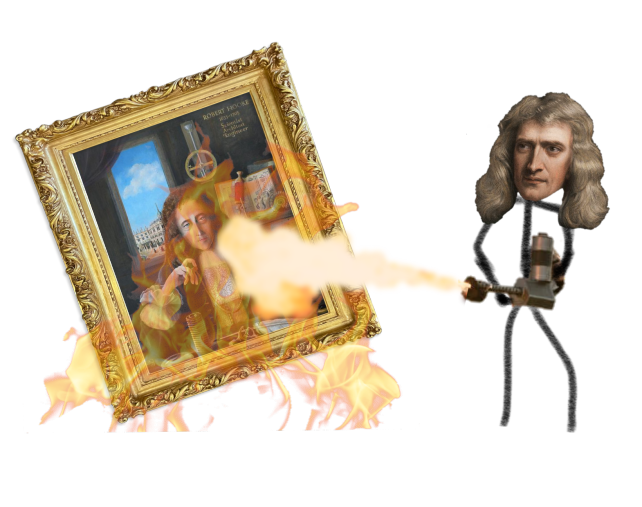
    One of Newton’s early contributions to science was his theory on the properties of light and how light, Newton thought, consisted of particles. But Hooke and many other physicists at the time were supporters of the wave theory of light, so when Newton shared his ideas with the Royal Society, he was faced with admonishment from Hooke. As one could imagine, Newton did not take criticism lightly, and he held a grudge against Hooke for a long time. Over the years, the two physicists disputed over many things, such as who deserved credit for the concept of gravity, until Hooke’s death in 1703, coincidentally the same year that Isaac Newton became Royal Society president. According to an apocryphal story, Newton even kept his grudge after his rival died and gave orders to have the only painting of Hooke destroyed in an attempt to bury his legacy.

    Note: This portrait was made centuries after Hooke’s death based on historical accounts of his appearance

    Victim 2: Gottfried Wilhelm Leibniz

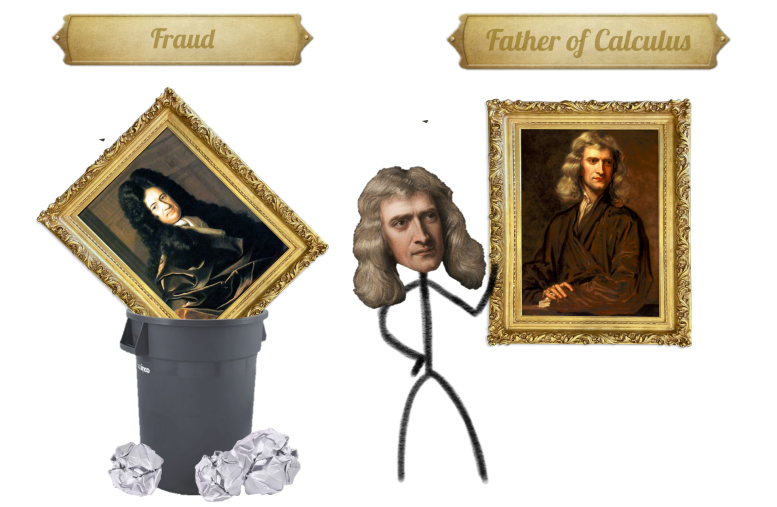
    Who was the inventor of calculus? If your answer was Newton, you’d be correct. But if you thought it was Gottfried Wilhelm Leibniz, you aren’t wrong either. Today, the general consensus is that these two men both invented calculus on their own, but in the late 17th century, the topic was one of much debate among the scientific community.

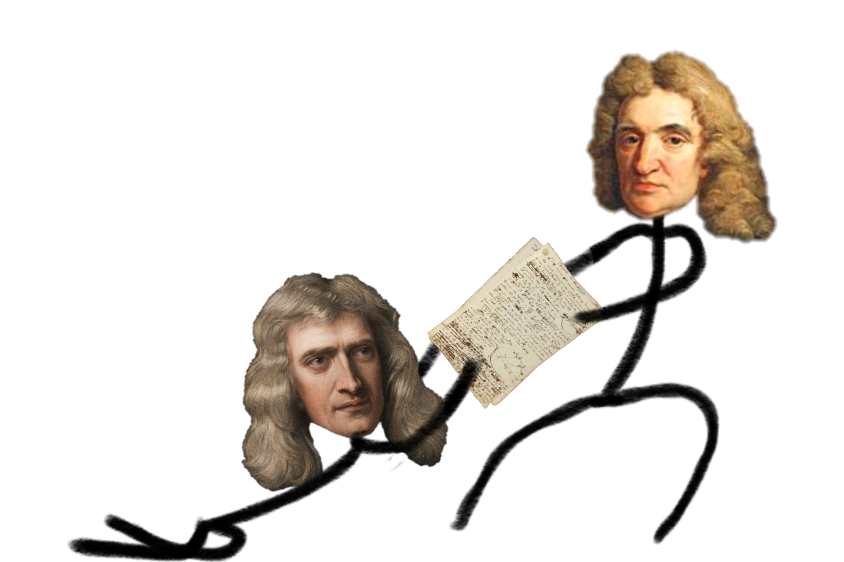
    While it is true that Newton invented calculus first, to maintain his reputation as an incredible genius, Newton had a knack for publishing his discoveries while concealing the ways in which he made them. This worked well for Newton until Leibniz independently discovered the same mathematical techniques Newton used to construct his theories and decided to share them with the rest of the world. Of course, when his techniques were no longer secret, Newton wanted all the credit for inventing calculus to himself and began a public dispute over the matter with Leibniz.

    There were supporters on both sides of the debate, but Leibniz never stood a chance against Newton’s unmatched determination. In secret, Newton pumped out article after article in defense of himself and disguised them as writings from his friends, and eventually, the debate boiled down to the decision of the Royal Society, where Newton had the upper hand, of course. As the Society’s president, Newton organized a biased committee to investigate the matter. Ultimately, not only did the committee rule in favor of Newton, but it also accused Leibniz’s work of being derivative (pun very intended) and that Leibniz had plagiarized Newton’s ideas. Even up until his death, Leibniz never got the positive recognition he deserved. But at least today, outside of physics circles, Leibniz’s calculus notation is still the most widely used.

    Victim 3: John Flamsteed

    John Flamsteed, the Astronomer Royal, was another victim of Newton’s vitriol. As head of the Royal Observatory, Flamsteed spent much of his time looking at celestial objects and was known for keeping a meticulous record of his observations. In fact, Newton used Flamsteed’s observational data to help him write his original magnum opus, the Principia Mathematica, in which he described the foundations of classical mechanics. However, between Newton’s publication of the first edition of Principia and his venture into writing the second edition, things became sour between the two scientists. According to Flamsteed, Newton never showed him any signs of appreciation or respect despite his contributions to Newton’s work. He even accused Newton of publishing some of his findings without his permission. As such, Flamsteed was intent on denying Newton access to anymore data for his research.

    However, in classic Newton fashion, in an attempt to obtain the data he needed, he used his authority as president of the Royal Society to forcefully take Flamsteed’s data and have it published by Flamsteed’s biggest rival, Edmond Halley. Luckily, in response, Flamsteed took Newton to court and had Newton’s actions nullified before any damage was done, and out of spite, Newton never acknowledged Flamsteed’s contributions to his theories ever again.

    As you can see, Isaac Newton is a textbook example of why you should never meet your heroes. From framing Leibniz while he was alive to ensuring Hooke was unframed after death, Newton was one bad apple who gave other scientists a headache. And of course, Newton isn’t the only one. With just a little digging, you’d find that physics has quite a few other problematic big shots, and maybe those can be articles for another time. But as they say in the phys-biz, every quark has its quirk (I just made that up, but I hope it’ll catch on). What’s important is separating the physics from the physicist.

    Sources

  • A Chemist, a Vegetable, and Iron Oxide Walk into a Bar

    POV: you’re a college student who lives on her own. Not only do you have to do homework and go to class, but you also have to cook your own meals. While cleaning up after making your signature pasta dish (a spin-off of Gigi Hadid’s vodka pasta), you notice that your pan is really gross and grimy on the bottom. You scrub and scrub, but only a little if anything comes off. What can you do now? Enter: Bar Keepers Friend.


    This cleaning agent comes in many different forms so that it can be used on many surfaces. Its creation is credited to a chemist named George William Hoffman who realized that cooking rhubarb cleaned up a tarnished pan of his. He ended up finding out the secret ingredient and sold a powdered version of it to his bar keeper friends to polish up any brass fixtures they may have. The secret ingredient? Lov– no it’s oxalic acid. 

    wikipedia.org

    So when it comes to cleaning, there are different ways to do so: physically and chemically. As the description entails, physically cleaning something includes scrubbing, heat, light, and sound waves to clean a surface. With chemical cleaning, a reaction is used to remove dirt or anything from a surface. However, with chemical cleaning, some corrode surfaces more than others and are more toxic. Compared with other acids like hydrochloric acid and citric acid (which are both in-organic acids), oxalic acid is less corrosive. It can also complex with metal ions more effectively (aka can loosen up any built up schmutz and make it more dissolvable). But how does oxalic acid do that?

    sciencedirect.com

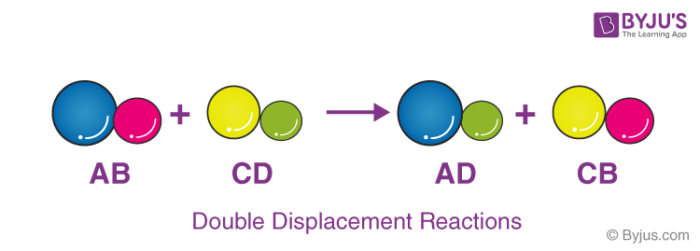
    Let’s take rust for example. Rust (iron oxide) is oxidized iron and SUPER hard to get off of any pans or metallic surfaces. Don’t even get me started on how tough rust stains are on fabric and other woven stuff like rugs. When oxalic acid comes into contact with rust, it causes a double displacement reaction. What does that mean? The double displacement  basically switches around the ions in the rust and oxalic acid, resulting in the rust to turn into iron oxalate. Iron oxalate is a salt that is water-soluble, allowing it to be washed away by water so TADAAA!!! We’ve cleaned our rusty pans and things.

    byjus.com

    Now, the brand, Bar Keepers Friend has expanded to more than just a powdered oxalic acid cleaner and takes many shapes and forms. You can use different products to clean stove tops, pans, and even your coffee machine. Of course, in order to be suitable for these places, they have to alter the formula. Their formula takes many forms, from liquids to powders to other liquids. For gentler surfaces, they’ve diluted the amount of oxalic acid. But at the end of the day, you could also just rub a piece of rhubarb on your pans and rust stains. After all, who said oxalic acid couldn’t be your friend too?

    Resources:

    Britannica, The Editors of Encyclopaedia. “oxalic acid”. Encyclopedia Britannica, 19 Dec. 2018, https://www.britannica.com/science/oxalic-acid. Accessed 20 November 2022.

    He, Y. “Liquid-Based Microextraction Techniques for Environmental Analysis.” Comprehensive Sampling and Sample Preparation, Academic Press, 10 July 2012, https://www.sciencedirect.com/science/article/pii/B9780123813732001162#s0095.

    Li, Yong-Sheng, et al. “Cleaning Effects of Oxalic Acid under Ultrasound to the Used Reverse Osmosis Membranes with an Online Cleaning and Monitoring System.” Desalination, Elsevier, 16 Apr. 2016, https://www.sciencedirect.com/science/article/pii/S0011916416301710.

    “Our Story.” Bar Keepers Friend, 11 Feb. 2021, https://barkeepersfriend.com/about-us/our-story/?param1=value1¶m2=value2&keyword=barkeepers+friend&creative=595151622440&gclid=Cj0KCQiAveebBhD_ARIsAFaAvrGcdlz4IqwndBFsUDjLp0H5Hpi3VXFwBVovW5U7WUm76vXWCD3RraUaArjIEALw_wcB.

    Renae. “Cleaning with Oxalic Acid? Here’s What You Need to Know.” CORECHEM Inc., 7 Sept. 2022, https://corecheminc.com/cleaning-with-oxalic-acid-heres-what-you-need-to-know/#:~:text=When%20Oxalic%20Acid%20comes%20in,water%20and%20easily%20rinses%20away.

  • Vinyl is Better than Digital Music

    Hear that music??? That, my friend, is the sound of classic vinyl…

    Meet Ernie. My vinyl player 🙂

    You know that round spinning thingy that plays music that your grandparents and/or parents used growing up? Well, good news – it’s not extinct! When it comes to enjoying music, one of the best ways that I have discovered is by using vinyl (aka: the record player).

    Compressed MP3 files and digital streaming services such as Spotify, Apple Music, Pandora, and YouTube have been the social norm for listening to music; however, vinyl sales have tremendously increased from under a million in 2007, to more than 8 million today in the U.S alone. According the British Phonographic Industry, vinyl sales hit a peak in the UK and the US in recent decades. Why? Because vinyl just is better!!

    Let’s delve into the reasons why vinyl records are superior to digital MP3.

    1) Simply put, vinyl sounds better than MP3:

    Vinyl is the only playback format readily available to consumers that is fully analog and fully lossless. That means that with a quality record player, you get to enjoy a high-fidelity listening experience. High-fidelity equates to high-quality reproduction of sound, that has inaudible background noise and distortion – giving a sound extremely similar to the original. Who wouldn’t want to listen to music that sounds as authentic as the source intended it to be?

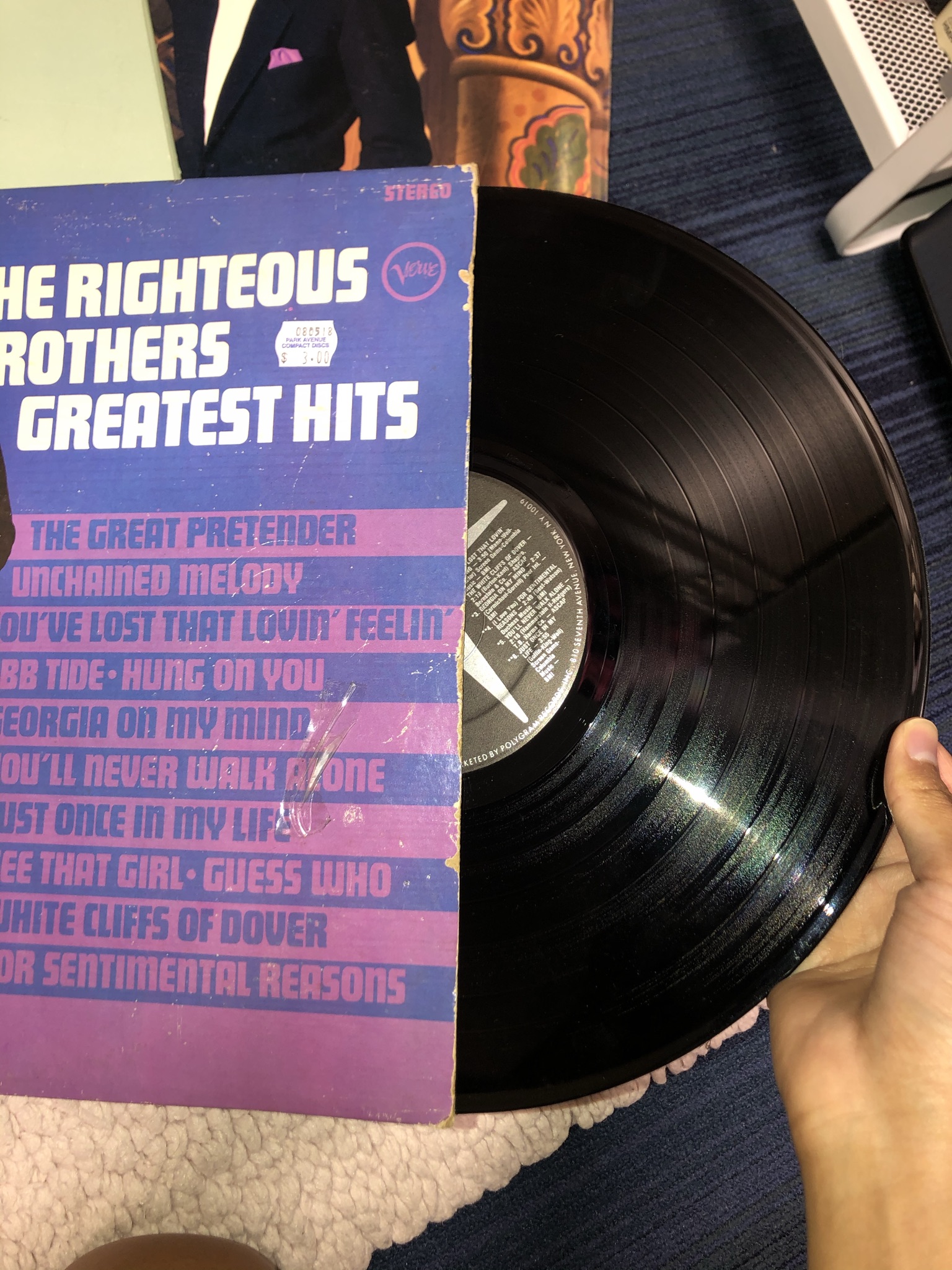
    The quality is immaculate. The song you hear playing in this article is featured above. It is a vinyl by the Righteous Brothers, with a song clip entitled “The White Cliffs of Dover” (1965).

    2) Listening to vinyl is a complete experience:

    An expanding collection of my vinyls!

    You know when you can feel the music when listening to your favorite songs? Well, with vinyl, you not only figuratively feel the music coursing through your mind and soul, but you can physically feel the music through the tangible form of the vinyl. There’s nothing like unraveling a vinyl wrapped in its cover. There’s nothing like being able to smell the music, just like the comforting smell of books in the library. With vinyl, you get to fully experience music with literally all of your senses.

    3) Going to record stores is so fun!!

    There’s nothing like the nostalgic and magical experience of entering a record store, whether it’s your first time, third time, or hundredth time! You can easily spend hours in the record store browsing, searching, and discovering music! You can mingle with other vintage audiophiles, and you can usually always get a special discount when buying vinyl in bulk! Furthermore, there is no monthly subscription to enjoy the music you want (Haha, take that Spotify and Apple Music)!

    Unraveling a shiny vinyl!

    Vinyl is an unbeatable classic that has remained relatively unchanged for the past 40 years! Since it’s creation in 1948, numerous developments and refinements within the vinyl industry have been made to perfect its technical and practical excellence. As George Plasketes, a professor of media studies and popular culture in the School of Communication and Journalism at Auburn University in Alabama, put it:

    “Vinyl is not simply a recording format, but the artefact of an age; it is an experience that embraces emotion, passion and romance”.

    Keep calm and vinyl on!

    Sources:

    Oregonian/OregonLive, David Greenwald. “Does Vinyl Really Sound Better? An Engineer Explains.” Oregonlive, 19 Nov. 2014, www.oregonlive.com/music/2014/11/does_vinyl_really_sound_better.html.

    Plasketes, George. “Romancing the Record: The Vinyl De‐Evolution and Subcultural Evolution.” Wiley Online Library, John Wiley & Sons, Ltd, 5 Mar. 2004, onlinelibrary.wiley.com/doi/abs/10.1111/j.0022-3840.1992.00109.x.

    Sarpong, David, et al. “’Vinyl Never Say Die’: The Re-Incarnation, Adoption and Diffusion of Retro-Technologies.” Technological Forecasting and Social Change, North-Holland, 29 Nov. 2015, www.sciencedirect.com/science/article/pii/S0040162515003078#bb0310.

    Zabowski, Jason. “4 Reasons Why Vinyl Is Better Than MP3.” VOX Player, 21 Nov. 2017, https://vox.rocks/blog/vinyl-is-better

  • Deep Philosophical Questions About the Universe

    Are you currently laying in bed in the wee-hours of the morning and are wondering… what even is life?? Why on EARTH am I here? If aliens exist, then why haven’t we made contact with them yet?….. Or maybe extraterrestrial life has already attempted to make contact with humans, but our technology is not advanced enough to detect them…

    Well, look no further in your search for some interesting and deep, philosophical questions. If you are scrolling through your phone in bed, these questions might help you fall asleep — but not because they are boring, rather, they will have your mind thinking deeply, to the point where your brain will be thinking so deeply that it will get tired, and thus, you might fall asleep from mental and intellectual exhaustion.

    These four questions are all about the universe, and will surely make your head spin like a spiral galaxy. Some of the questions have been supported by research, others are too complicated or abstract to conduct studies on. Hopefully some day in the future, scientists will be able to answer some of these questions with complete assurance.


    1)   WHAT CAME BEFORE THE “BIG BANG”?

    Photo Credits: @ActionVance: https://unsplash.com/s/photos/space-explosion

    Depending on your belief of how the universe became, there are two most popular beliefs: the Big Bang, or that simply God created all of the universe and life. The Big Bang hypothesis states that about 13.8 billion years ago, all of the current and past matter in the universe came into existence at the same time. But, have you ever thought of what happened before the Big Bang? If nothing existed before the Big Bang, then how can something can just come from nothing? And how did that nothing become something?? According to Stephen Hawking,

    “Asking what came before the Big Bang is meaningless, according to the no-boundary proposal, because there is no notion of time available to refer to. It would be like asking what lies south of the South Pole.”

    He proposed that there’s no  end,      or beginning,      at all.

    Take a second and try to grasp that idea… Can’t grasp it? Me neither.

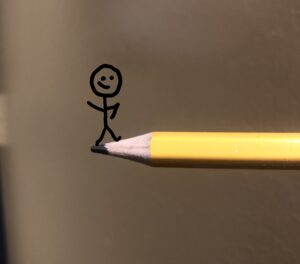
    In relation to Hawking’s “no-boundary” principle, it is like looking at the tip of a pencil. Take the example picture of my pencil below:

    “No-boundary” principle. Featuring my pencil

    Just as the tip of the pencil has a diameter of zero at its top-most point and gradually widens as you move to the right — the universe smoothly expanded from a point of zero size. Very peculiar and mind-blowing, isn’t it?!?


    2)  ARE WE ALONE IN THE UNIVERSE?

    My creepy drawing of an alien.

    To many people, there is no way that extraterrestrial beings cannot exist, even if they cannot see them. To others, aliens are a fantasy that has never, currently does not, and will never exist (except for E.T.). Dr. Zank and his colleagues from the University of Alabama in Huntsville within the Department of Space Science are among some of the scientists looking for the factors that make conditions optimal for exoplanets to fall into the “Goldilocks Zone”. The Goldilocks zone is where the planets are not too cold, nor too hot — but juuust right to possibly foster life.

    My representation of The Goldilocks Zone.

    There are lots of stars, called G-type or G-class stars, that are similar to our Sun. They radiate more light toward the infrared spectrum and they look promising for hosting exoplanetary life. Our nearest neighbors, Alpha Centauri A and Alpha Centauri B, look promising.

    The Fermi paradox offers an interesting perspective about the absence of evidence for extraterrestrial beings. Italian-American physicist Enrico Fermi created the Fermi paradox, which is the apparent contradiction between high estimates for the probability of extraterrestrial civilizations and the lack of evidence, thereof. However, various solutions to the Fermi paradox belong to different categories, such as the ones included below, regarding aliens:

        1. They Are Here: Aliens visited Earth in the past and they left evidence, via Alien Artifacts/Hieroglyphics, UFO’s, and witnesses.
        2. They Are Us: We– the humans– are the descendents of them ancient alien civilizations and we are the aliens.
        3. They Exist, But Have Not Communicated With Us, Yet: Aliens do indeed exist, but they either have not had enough time to reach us, are signaling but we do not know how to interpret the signaling, they have no desire to communicate with us (because humans are dumb, duh), their technology is too advanced, or they are all dead because of various catastrophes (that humans will eventually face).
        4. They Obviously Do Not Exist: Life is extremely rare, planets with the “perfect” conditions are rare, and humans are the superior race.

    Pick and choose your fighter as you will. I am not going to tell you which one to believe, but I will say that they can all be true — because we have not found evidence (or a lack thereof) of each possible solution.


    3)  IS THERE INHERENT ORDER IN NATURE, OR IS IT ALL JUST RANDOMNESS AND CHANCE?

    The recognition of randomness and apparent chance can be outwardly shown through things like galactic evolution (ie: the formation of the Universe), biological evolution (ie: development of early life), and geologic phenomena (ie: volcanos, mountains, rivers, etc). However, these phenomena can also be described via the perspective that there is inherent order in nature. For example, some Darwinistic-like theories suggest that through natural selection, life and everything that exists on the planet now is the result of deterministic principles.

    However, both are important to describe nature.  Nature is neither chaotic nor orderly; and neither random nor deterministic. In classical physics, things are observed as the same result every time given the same initial conditions. However, also in physics, the Big Bang theory suggests that the universe was created suddenly, by chance of the right conditions.

    So what gives? →  A paradox.

    A paradox such that chaos is deterministic, created by precise rules that do not involve any elements of chance. With this paradox, the future is completely determined by the past, but through time, small uncertainties accumulate upon each other — thus, even if a particular behavior is predictable in the short term, it remains unpredictable in the long run.

    My deck of cards with (literal) chaos surrounding it.

    “Essentially, there is order in chaos: underlying chaotic behavior there are elegant geometric forms that create randomness in the same way as a card dealer shuffles a deck of cards or a blender mixes cake batter.” — Chaos, Scientific American Journal

    Opposites truly do attract, in this case. I would have never thought of how order and chaos could mesh together so … naturally.


    4)  DO WE LIVE IN A SIMULATION?

    Are we sort of like puppets??

    The idea that we could be virtual beings living in a computer simulation means that our simulated environment would create perceptions of reality on demand, rather than simulate all of reality all the time. This is similar to a video game where only parts of a scene are rendered to be visible to a player.

    According to Neil deGrasse Tyson, “Maybe that’s why we can’t travel faster than the speed of light, because if we could, we’d be able to get to another galaxy… So the programmer put in that limit”.  A new analysis by Nick Bostrom of the University of Oxford shows that ‘the odds that we are living in base reality—meaning an existence that is not simulated—are pretty much even’.

    Bostrom’s simulation argument showed that at least one of the following scenarios must be true:

    1. Humans almost always go extinct before reaching the simulation-savvy stage.

    2. Even if humans make it to that stage, they are unlikely to be interested in simulating their own ancestral past.

    3. The probability that we are living in a simulation is close to one.

    If you think that perspective is interesting, take a look further. On November 12, 2019, professors at the Georgia Institute of Technology debated on the question: “Do we live in a simulation?”. There were lots of interesting answers, including the one below by professor Hans Klein in the School of Public Policy:

    “It’s a simulated world that we live in to the extent that we live in this world that arrives to us through media the nature of the simulation is that institutions have interests and the interests of the media corporations and the interests of the entities that are being reported on by the media corporations. They’re all actively shaping the information flows that come to the public, it’s quite significant […] A lot of effort is made to influence how our knowledge of the world is mediated and it’s done in such a way so that we will so we end up living in if we live on critically we live in a world that’s a bit of a bit of a fantasy world and it’s a fantasy world that reflects off in the interests of media institutions and powerful societal interests.”

    In a sense, Klein is saying that we, as humans, are creating our own simulating reality through the media and information we consume and the powerful interests of society that media corporations help perpetuate. With this perspective, maybe we are living in base reality after all…


    ALAS,

    As mysterious as the universe can be, hopefully one day humans will be able to answer these questions with impeccable certainty. Maybe the universe or some higher power does not want us to know the truth about our universe… Or maybe simply, humans just are not advanced enough yet to grasp the true notions of our reality, origin, or purpose. Hopefully you are asleep by now (if you wanted to be), but if not, may the Universe always be with you!


    SOURCES:

    Ananthaswamy, Anil. “Do We Live in a Simulation? Chances Are about 50–50 – Scientific American.” Scientific American, Scientific American, 13 Oct. 2020, https://scientificamerican.com/article/do-we-live-in-a-simulation-chances-are-about-50-50/.

    “Before the Big Bang: The Prehistory of Our Universe – Brian Clegg – Google Books.” Google Books, Brian Clegg, Aug. 2009, https://books.google.com/books?hl=en&lr=&id=3fZ0SM78LFsC&oi=fnd&pg=PP2&dq=what+happened+before+the+big+bang&ots=6aaH7pfy8I&sig=Gw6XKD59ZborhgRoidXqEaSqb88#v=onepage&q=what%20happened%20before%20the%20big%20bang&f=false. Accessed 10 Feb. 2021.

    C. JOHN MANN; Randomness in Nature. ‘GSA Bulletin’ 1970;; 81 (1): 95–104. https://pubs.geoscienceworld.org/gsabulletin/article-lookup/81/1/95 Accessed 2 Mar. 2021.

    Chaos. Scientific American, 1986, https://www.jstor.org/stable/pdf/24976102.pdf?refreqid=excelsior%3A9e5867f32c36ce9d2401f9b76c3af1cc. Accessed 26 Feb. 2021.

    Cvitanović, Predrag, et al., editors. Professor Debate on the Topic – Do We Live In a Simulation? Georgia Tech Library, 12 Nov. 2019, https://smartech.gatech.edu/handle/1853/62045. Accessed 3 Feb. 2021.

    Fermi’s Paradox.http://abyss.uoregon.edu/~js/cosmo/lectures/lec28.html. Accessed 18 Feb. 2021.

    “If the Universe Is Teeming with Aliens … WHERE IS EVERYBODY?: Fifty … – Stephen Webb – Google Books.” Google Books, https://books.google.com/books?hl=en&lr=&id=Kp6g79LuKWEC&oi=fnd&pg=PA2&dq=do+aliens+exist&ots=aAMZyI0X6s&sig=0DONvBxxF8VTV6N37huhr3X5M5c#v=onepage&q=do aliens exist&f=false. Accessed 6 Mar. 2021.

    “Physicists Debate Hawking’s Idea That the Universe Had No Beginning.” Quanta Magazine, Natalie Wolchover, 6 June 2019, https://www.quantamagazine.org/physicists-debate-hawkings-idea-that-the-universe-had-no-beginning-20190606/. Accessed 2 Mar. 2021.