Tag: biology

  • Ultraviolet radiation: what you can’t see can still hurt you

    A few weeks ago, a friend of mine showed me an article on MSN about a man whose face was obviously more wrinkled on one side than the other. Mr. McElligott, the gentleman featured in the article, drove a delivery truck for 28 years, exposing the left side of his face to the sun for several hours each day. I have heard several times throughout the years about the importance of sun protection, but hadn’t ever dwelled on the topic for much time. Once I read about Mr. McElligott, though, I was quite intrigued and started thinking about the whys and hows of sun damage, UV radiation, and wrinkles.
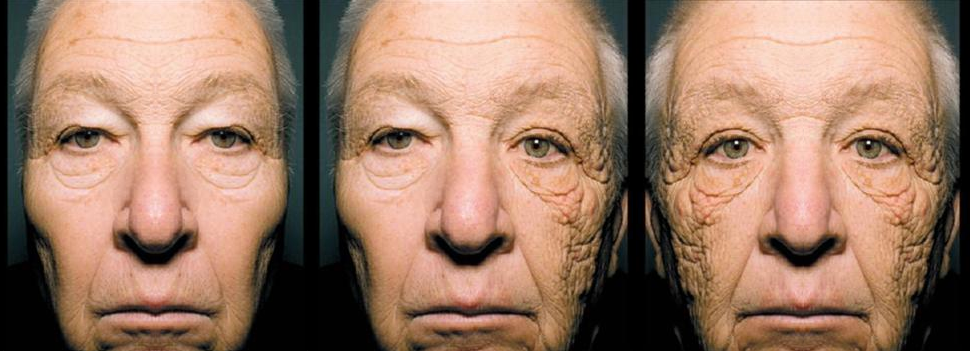
    In the pictures above, you can see Mr. McElligott’s original picture in the middle with an altered image on either side. I transposed one side of his face to that of the same side in an attempt to make the difference between the two sides of his face more apparent.

    Here you can find an “up-close and personal” version of the center picture. (How cool are his eyes?!?)

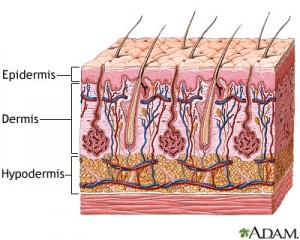
    As you may already know, skin is made up of three major layers: the epidermis, dermis, and subcutis (also known as the subcutaneous layer or the hypodermis). As in the diagram below, the epidermis is on top, then the dermis, and lastly the hypodermis. Freckles and moles, as well as sunburns, appear in the epidermis. The dermis houses the structural elements in skin which keep it firm and elastic. This is the section of skin where wrinkles form.
    Sunlight is known to negatively affect skin. This is because UV radiation (part of sunlight) can suppress the immune system, damage DNA, and alter skin texture, blood vessels and skin pigment. While conditions like thin skin and easy bruising are usually associated with old age, they are often lasting effects from UV damage as the majority of skin damage comes from the sun and not from Father Time.

    The Sun emits three types of ultraviolet radiation: UVA, UVB, and UVC, with wavelengths of ~315 to 400 nm,  ~290 to 315 nm, and ~100 to 290 nm, respectively. UVC radiation is absorbed by the ozone layer and doesn’t reach ground level. UVB radiation makes its way through the ozone layer and is the type of UV that hits the epidermal layer of skin and causes sunburns or tans; it is also known to cause skin cancer. Unlike UVA radiation which is relatively constant all year long, UVB radiation is stronger during the summer months. UVA is unique in its ability to pass through glass. Thinking back to Mr. McElligott, UVA radiation’s ability to penetrate glass led him to have a build up of UVA damage of the course of his career. Even on days when he drove with his window up, he would have been protected from UVB rays, perhaps not getting a sunburn or tan, but would have still received the negative effects of UVA. UVA rays cause damage to the dermis, destroying elasticity and potentially causing mutations in DNA. Out of all of the UV radiation that reaches us from the Sun, there is over 20 times more UVA than UVB.

    Harm to the skin caused by the Sun’s UV radiation is often referred to as photoaging, or dermatoheliosis. Photoaging is caused when UVA and UVB rays enter the skin, negatively affecting two of skin’s structural proteins, elastin and collagen. Radiation damages elastin and causes a build-up of altered metalloproteinase enzyme. Normally, metalloproteinases (also known as collagenases) help reverse skin damage by creating new collagen. Unfortunately, the metalloproteinase from the damaged elastin does the exact opposite— it breaks down collagen, leaving the skin with a broken collagen structure and wrinkles. (For a study on the effects of metalloproteinase,  check out this article.)

    Exposure to UV radiation in sunlight, in addition to air pollution and smoking/second-hand smoke, can also subject the skin to free radicals. Free radicals are molecules (or atoms) with a single, unpaired electron. Because a free radical lacks the second electron, it is unstable and thus seeks out another electron. When it reaches another molecule, the free radical takes an electron, completing its electron pair while leaving the second molecule with an unpaired electron (a new radical). This snowball effect continues throughout the skin, activating altered metalloproteinase and causing damage to collagen.
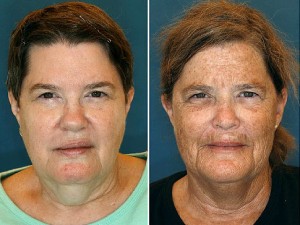
    Jeanne (left) and Susan (right), identical twin sisters, serve as a great example of how lifestyle choices can determine a person's skin aging. As children, the two women had an uncanny resemblance, but now it's easy to see that Susan's decision to sunbathe and smoke led her skin to age more rapidly. (Department of Plastic Surgery, University Hospitals Case Medical Center)

    Well, I hope you enjoyed learning more about wrinkles and UV radiation! Remember, prevention is key! Make sure to slather up in some good ol’ broad spectrum SPF 70 next time you go shoot some hoops (or do whatever it is that you do) and enjoy this fine video about why we need the Sun (even though it hurts us sometimes):


    Sources:

    Heather Brannon, MD (About.com)

    Jennifer R.S. Gordon, MD and Joaquin C. Brieava, MD (The New England Journal of Medicine)

    De Gruijl, Frank R. “Photocarcinogenesis: UVA vs. UVB Radiation.” Skin Pharmacology and Physiology 15.5 (2002): 316-20.  <http://www.ncbi.nlm.nih.gov/pubmed/10907526>.
  • Whale Fall

    Normally, the term “dead whale” reminds me of long, tedious hours slogging through Moby Dick or sad images of beached or slaughtered animals, but a “whale fall” is a whole ‘nother beast.

    When dead whales fall to the bottom of the deep sea, their bodies become food for some of the creepiest creatures out there. Normally there’s not a lot to eat down where the sun don’t shine, but whales are a mess of meaty goodness. And where there’s meat, there’s scavengers.

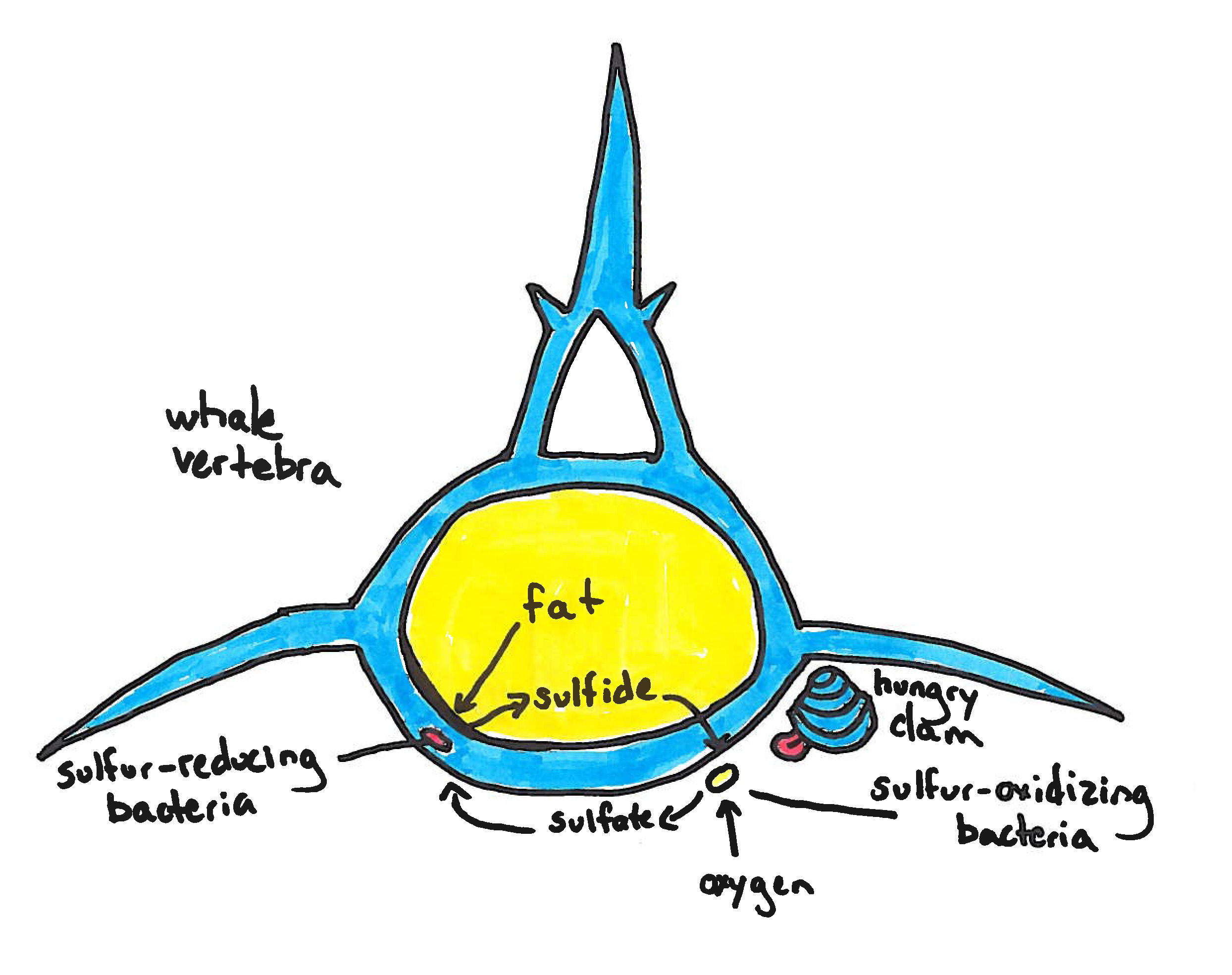
    During the first stage of the whale fall scavengers like hagfish and sleeper sharks chew all the meat off the bones of the whale and poop all over the place. That poop makes good food for things like clams and mussels, who hang around during what is called the “enrichment opportunist stage”. But the weirdest and most awesome stage of the whale fall succession comes next, the “sulfophilic” stage. Yep, you read that right, these critters love sulfur the way an anglophile loves Downton Abbey. And they don’t just love sulfur, they breathe it like oxygen. Sulfate-reducing bacteria eat the fat that is left in the whalebones and breathe sulfate, turning it into hydrogen sulfide in the process. Then sulfur-oxidizing bacteria use the sulfide to make sugar, just like plants use sunlight to make sugar. And who eats that sugar? More clams.

    So you’ve got whales feeding bacteria feeding clams feeding bacteria, all at the bottom of the sea, which is normally a cold dark void. The whole process can take over 50 years; so one whale fall can sustain a lot of critters for a long time.

    Whale falls are really beautiful, too, and inspire some beautiful art. Here is a lovely stop-motion film depicting the life of a whale fall directed by Sharon Shattuck and Flora Lichtman.


    Whale Fall (after life of a whale) from Sharon Shattuck on Vimeo.

  • Let’s Go!: Costa Rica

    As a supporter of the “Let’s stop wearing shoes” movement that seems to be taking over the mentality of both young adults and shoe manufacturers alike (that is a later story, though), I often find myself lamenting the amount of shoes I am required to pack when going on vacation with my mother. As a supporter of traveling and not destroying the environment in the process, those same trips with my mother tend to stress me out. Previous trips have found us in France and Ireland in GIANT tour buses that make me cringe when I think of the carbon emissions coming from my enjoyment of a new country.

    I have newly found faith in my mother’s traveling compulsion these days. Immediately upon finishing my first year of college, my mother and I hopped on a plane and flew to San Jose, Costa Rica to join a trip with G Adventures, an eco-friendly tour company based in Canada (and one where I was only required a pair of flimsy sandals in order to be comfortable).

    The highlights of the trip included white water rafting, ziplining, and a safari with a whole lot of monkeys. So let’s go into picture heavy post, because I very honestly cannot encompass this trip in words.

    G Adventures offers many kinds of tours. My mother and I took a YOLO trip, which is a budget-style trip kind of perfect for us. The trip style that interested me the most, and is how our tour guide Jorge started in this line of work, is a “Volontour” trip. Jorge worked at a biology research center studying leatherback sea turtles. Volunteers, through G Adventures, were able to work alongside the biologists, protecting the sea turtles as they hatched.

    I’m still a bit in awe of the fact that I got to be in Costa Rica, sharing the tree tops with howler monkeys. I’ll be back when I get over that awe and talk to you guys about college (yes, yes, it is that time).

    sciseekclaimtoken-4fd6551a0640c

  • Badass Biology: The Pistol Shrimp

    Badass Biology: The Pistol Shrimp

    “Wtf, shrimp!!? I make it all the way to this website from who knows what part of the internet, and I see ‘Badass Biology’. Man, Kevin, you flip my brain out with possibilities of flying sharks, rabbits of doom, or a half-honeybee half-unicorn rainbow pollinators. And what do you deliver? A stupid shrimp??! I hate you, and I quit this website. (╯°□°)╯︵ ┻━┻)” To which I reply, “Charles Barkley, I think you’re over-reacting. Please repair my table at once”.

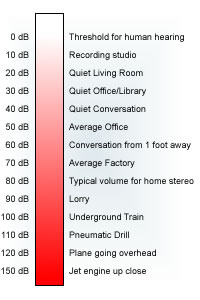
    It was hard to find a chart that even went up to 150dB, let alone the 220 these guys produce.

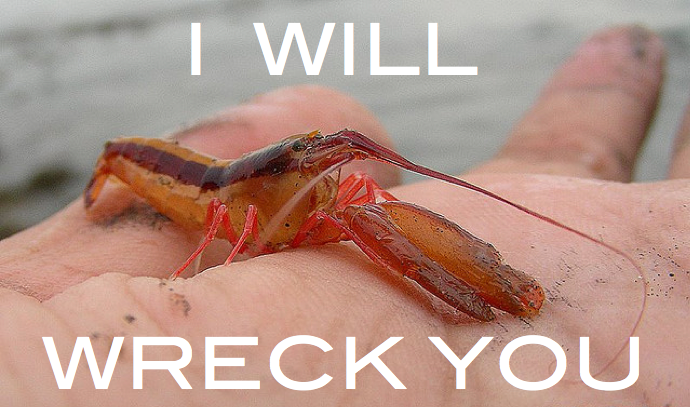
    Yes, it’s a shrimp. A measly two-inch-long shrimp. But you don’t understand. This one single stupid shrimp is just about the coolest thing I’ve ever heard. Trust me, and when you hear one too, you’ll probably go deaf, because this one little shrimp IS ONE OF THE LOUDEST ORGANISMS ON THE PLANET. I’m talking 220+ decibels, much louder than a gunshot and louder than standing next to a jet engine at take-off. O_o.

    First, I want to talk about some other wicked cool stuff this little guy does apart from being a tiny walking firework of sonic pain. These shrimp garner lots of attention from ecologists because of their symbiotic, or mutually-beneficial, relationship with gobies, a type of small marine fish. The coral reef populations of this shrimp build burrows and recruit the help of a goby to stand guard out front while being no more than an antennae’s distance from the shrimp, using the goby’s well-developed vision to watch for danger. Once danger comes, the goby flicks its tail to signal a threat, and both the goby and the shrimp retreat into the same burrow. Then they start slapping five. It’s flippin sweet.

    The mutualisms don't just end at gargoyle-ing.

    From an ecologist’s point of view, this is totally mutualistic, and some scientific literature lists this interaction as “totally f-ing amazing” [citation needed] (Good luck with finding THAT reference -ed.). Yeah, both the goby and the shrimp live to see another day should a shark, barracuda, squid, rogue buoy, really fast snail, very-misplaced land predator, sinking boat part, cloud of wasps, or sentient shrimp-hating spear come around to threaten them. The goby gets a burrow, and the pistol shrimp gets a gargoyle. Selection at work.

    I like to think of the goby as the pistol shrimp’s pet, kinda like me buying a falcon and parading it around the neighborhood on a leash. And once danger comes, the falcon goes “Hey yo, Kevo, you might need to reconsider this route”, we split, we don’t find danger, and I buy the falcon ribs for a job well done (and because I really want ribs right now). So in a sense, pistol shrimp are danger shepherds equipped with sun-blasting cannons of glory that we’ll get to in a moment.

    I need to take a break to collect myself. Holy balls, these shrimp own everything own-able. Next time I see one, I’m buying it ribs. The whole rack.

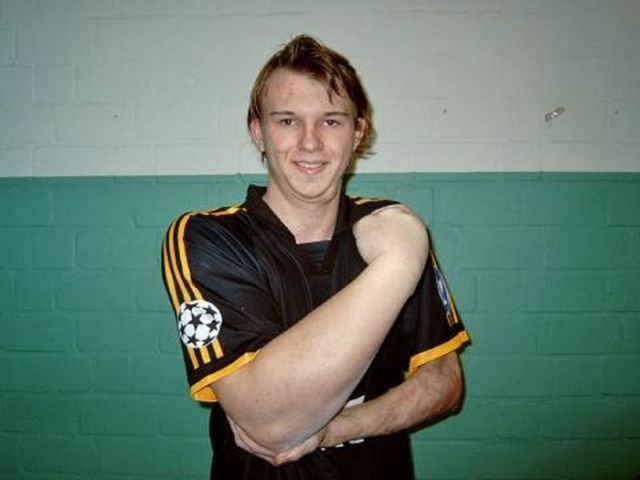
    Let’s get to that “pistol” thing, why don’t we? Pistol shrimp have one very distinct set of front appendages, like two arms extending outwards from its body. Only, one of these arms is disproportionately larger than the other, and it’s quite a contrast. Like no foolin’ man, this one arm alone can be as long as half the entire length of the shrimp’s body. Imagine walking around with one of your arms the size of the Hulk’s and you get the idea. This may look pretty stupid, but this powerful musculature operates one of the most badass weapons nature can offer.

    Yeah, kinda like this

    When in serious danger or when hunting, the pistol shrimp cocks its massive claw backwards into a 90o position. Once the claw snaps shut, it produces a jet of water propelled forward at 60mph. Yeah, woo, a fast water jet. Big deal. But here’s the amazing part. Are you ready to have your mind blown? If you have ever listened to me before, now is a pretty good time, too: This jet of water creates a bubble that cavitates, or implodes, generating a pressure wave that creates a sound loud enough to break glass in an instant. Not only that, but once the bubble cavitates, the heat generated by the force of the implosion causes the temperatures inside the bubble to reach about 18,000 degrees Fahrenheit. Yes. Eighteen. Thousand. Oh, and to top it off, the whole process takes three tenths of a second. 

    THIS TINY SHRIMP MAKES A BUBBLE SO AWESOME THAT IT’S LOUDER THAN A JET AND MORE THAN TWICE AS HOT AS THE SURFACE OF THE SUN.


    You can imagine the horribly bubbly doom the pistol shrimp’s enemies must face. Stunned (or killed) by the force of that kind of pressure change, the pistol shrimp’s prey has basically just become lunch in an instant. The shrimp pulls its quarry into its burrow, and goes to town, just how I could go to town on some ribs right about now. I dug up a video about this whole process in case what I said wasn’t convincing enough:

    http://www.youtube.com/watch?v=eKPrGxB1Kzc

    If you want me to write about any other badass biological bosses, leave a comment. I may talk about them, or I may just tell you that your suggestions are awful. Probably not the latter though. I like people.

    Well, I like most people except you, Charles Barkley. I really miss that table. Now I’ve got nothing to rest my wine on when Glee’s on.

    Photo credits:

    http://www.airpowered.co.uk/images/dbachart.jpg

    http://loyalkng.com/wp-content/uploads/2009/11/arm_wrestling_champion_03.jpg


  • Celebrate DNA Day with a Chocolate Smoothie!

    Celebrate DNA Day with a Chocolate Smoothie!

    Happy DNA Day!!!!

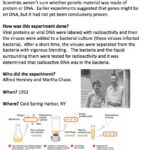
    So, it’s April 20th and you want to celebrate DNA day, but aren’t sure how?  What about making chocolate smoothies in honor of Alfred Hershey and Barbara Chase, the rockin’ scientists whose experiment finally convinced everybody that the information for your traits (i.e. genes) was contained in DNA rather than in protein, which was the other contender .  They made their discovery 60 years ago so now’s a good time to call them out.

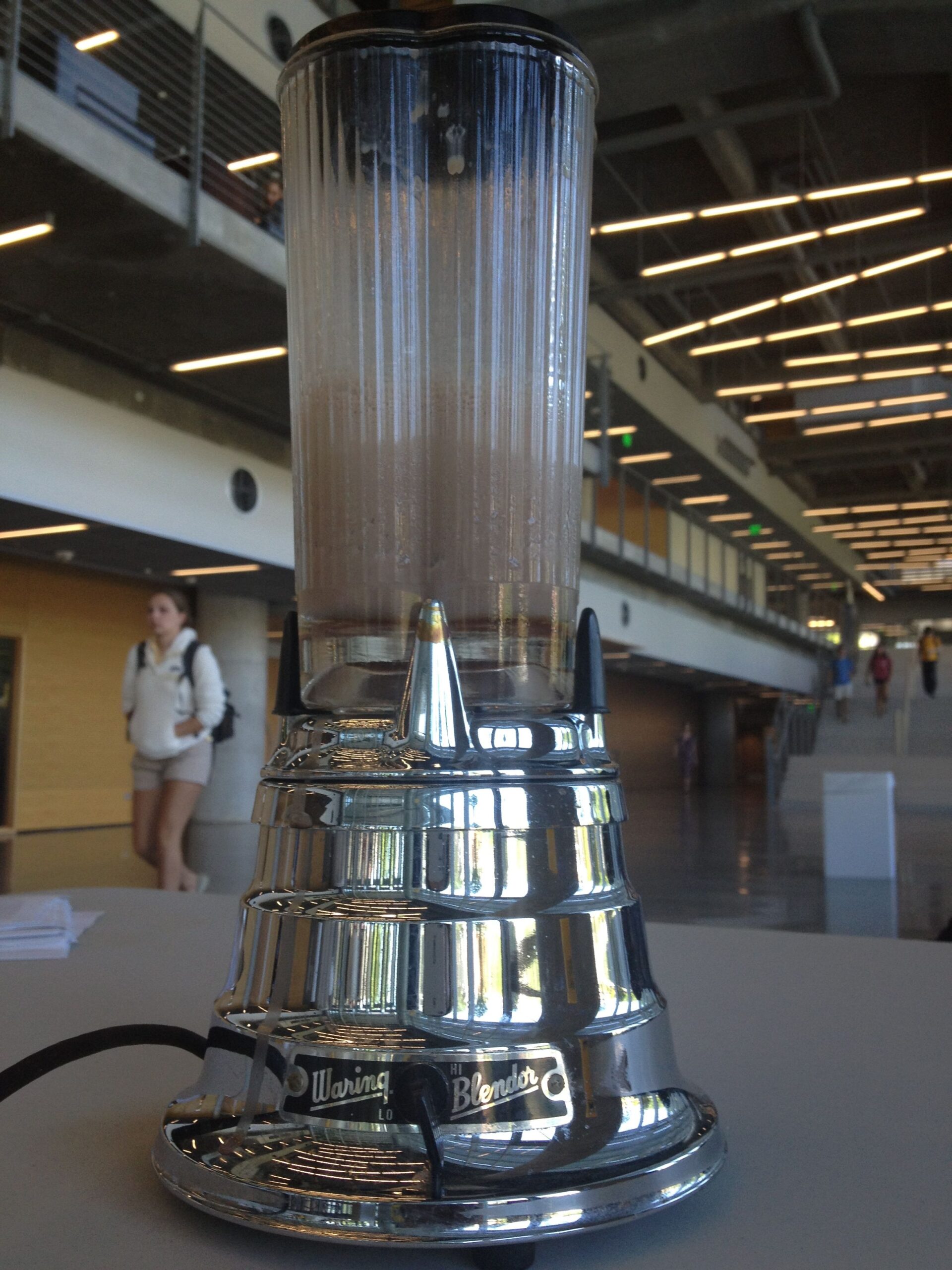
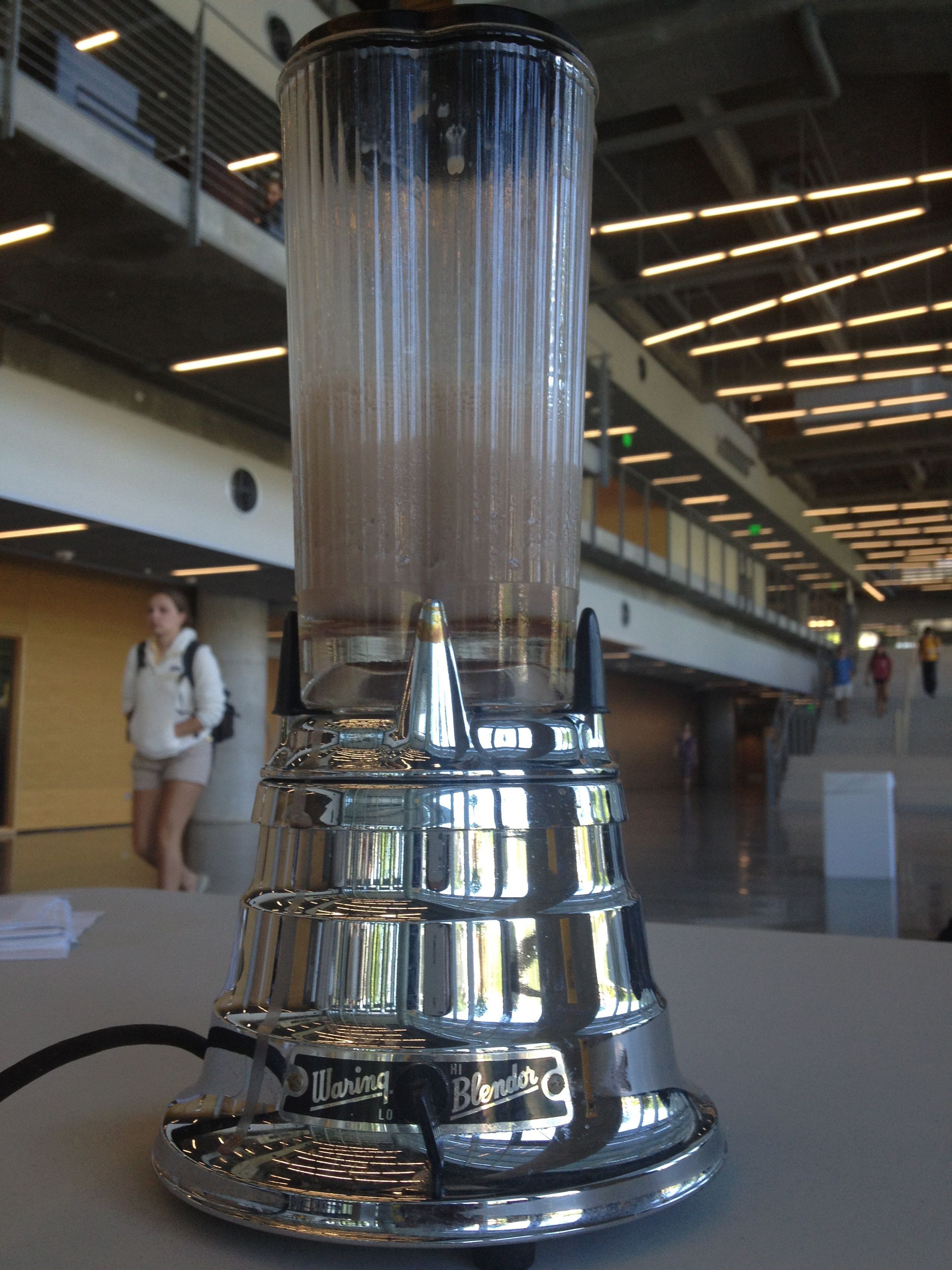
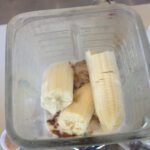
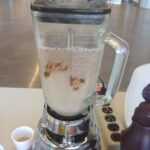
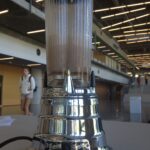
    Now, 1952 was a prosperous time in America and while folks were makin’ babies, watching TV and buying $0.20/gallon gasoline to fuel their big, beautiful cars, Hershey and Chase were hanging out on Long Island at the Cold Spring Harbor Laboratory, mixin’ up phage (bacteriophage) and E. coli.  Phage are viruses that infect bacteria and when they do that they bring genetic information along with them.  Hershey and Chase had the genius idea that if they labeled the different parts of the phage with radioactivity and then tracked which parts went INTO the bacteria, they could figure out what genes were made of.  So, they labeled the phage protein with radioactive sulfur or the phage DNA with radioactive phosphorous and added it to the bacteria for a little while.  Then they used a blender (like the vintage Waring blender pictured here) to knock off any parts of the phage stuck to the outside of the bacteria and, lo and behold, the radioactive DNA was inside the cells carrying the genes and the radioactive protein got knocked off of the cells and floated away.

    The results of the Hershey Chase experiment paved the way for the golden era of molecular biology and actually made people care about the big paper Watson and Crick put out the next year that proposed the structure of DNA.

    So, HAPPY DNA DAY! Here’s how you can use YOUR blender to pay delicious tribute to these important scientists.

  • Cholera cookies, delicious or gross?

    Cholera cookies, delicious or gross?

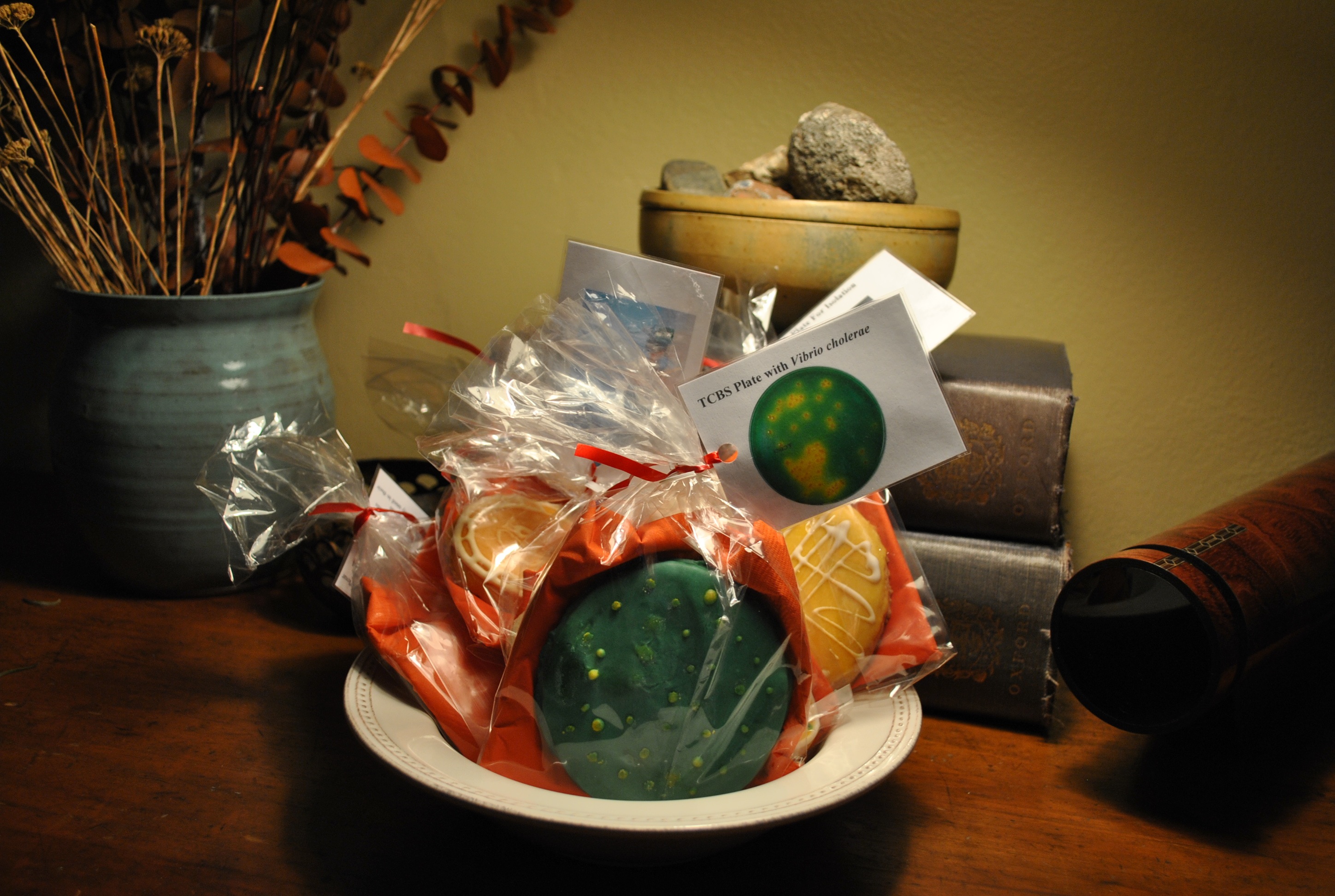
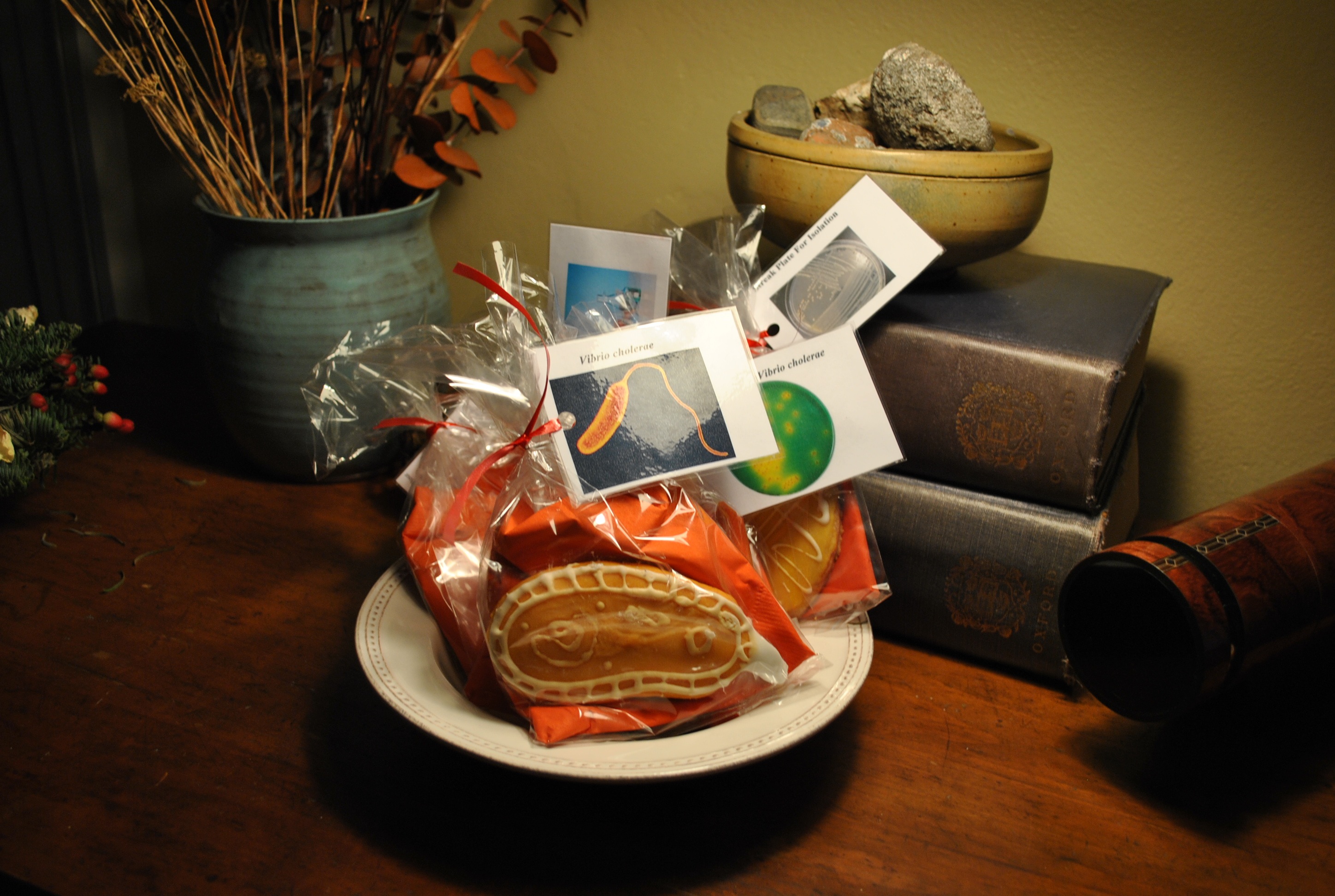
    TCBS is a selective medium for Vibrio cholerae, but this cookie didn't make me sick!


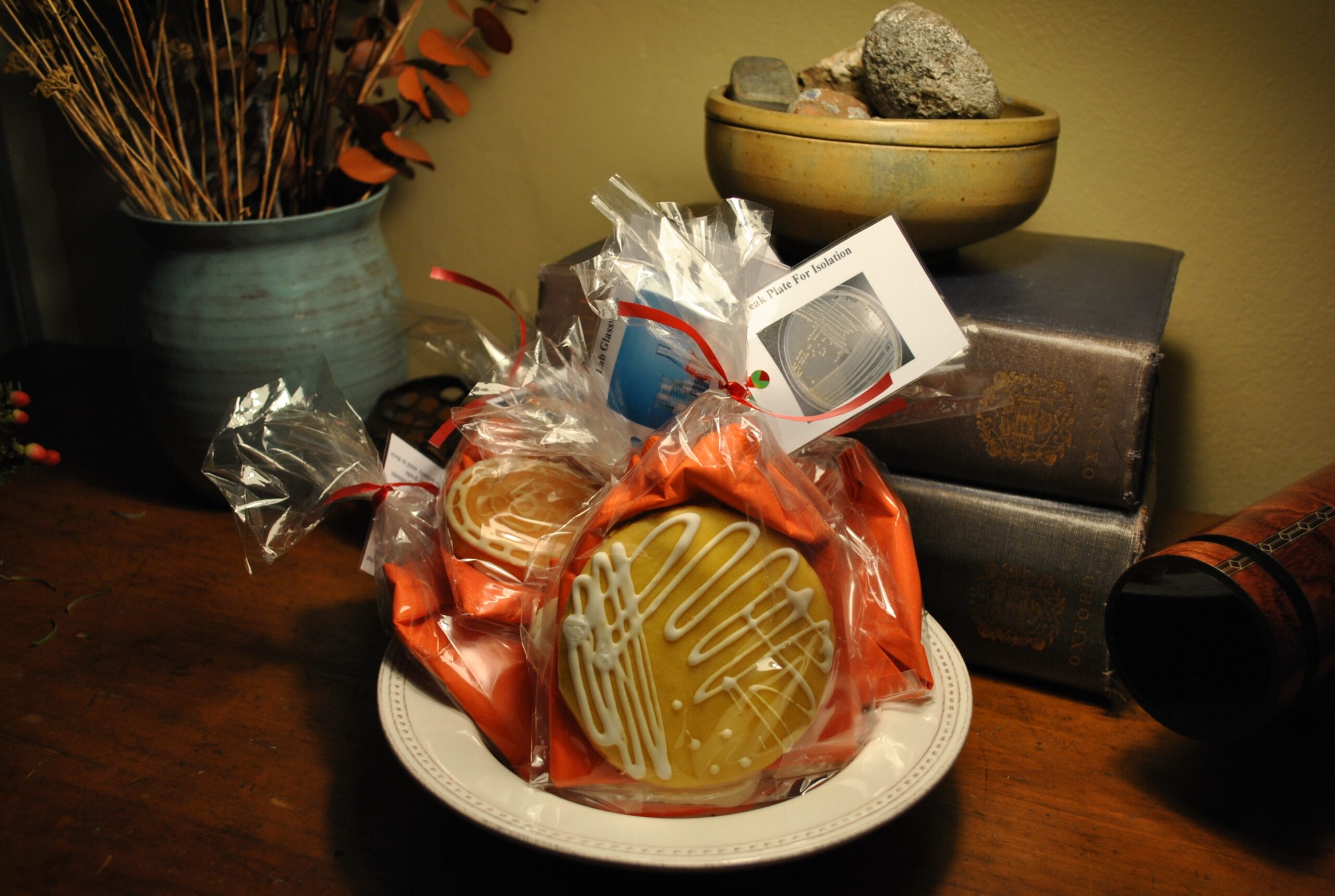
    Every December the Georgia Tech School of Biology has a holiday party with one of those never ending gift swaps.  Most of the presents are silly, and you never know if you are going to wind up taking home a ramen noodle cookbook or a puka shell necklace.  This year, every time I had a present I liked it was stolen and ulitmately I was left with the decision of whether to open the last unwrapped gift or make the game go on for another round.  I took the last gift, ending the game, and to my delight found it was filled with hilarious homemade science cookies!  Maria Nellessen, an Emory University biology major doing research in Dr. Brian Hammer’s lab at Georgia Tech made the cookies.  I recently asked her about herself and the cookies.  Read on to learn more about this budding microbiologist with a sweet tooth!

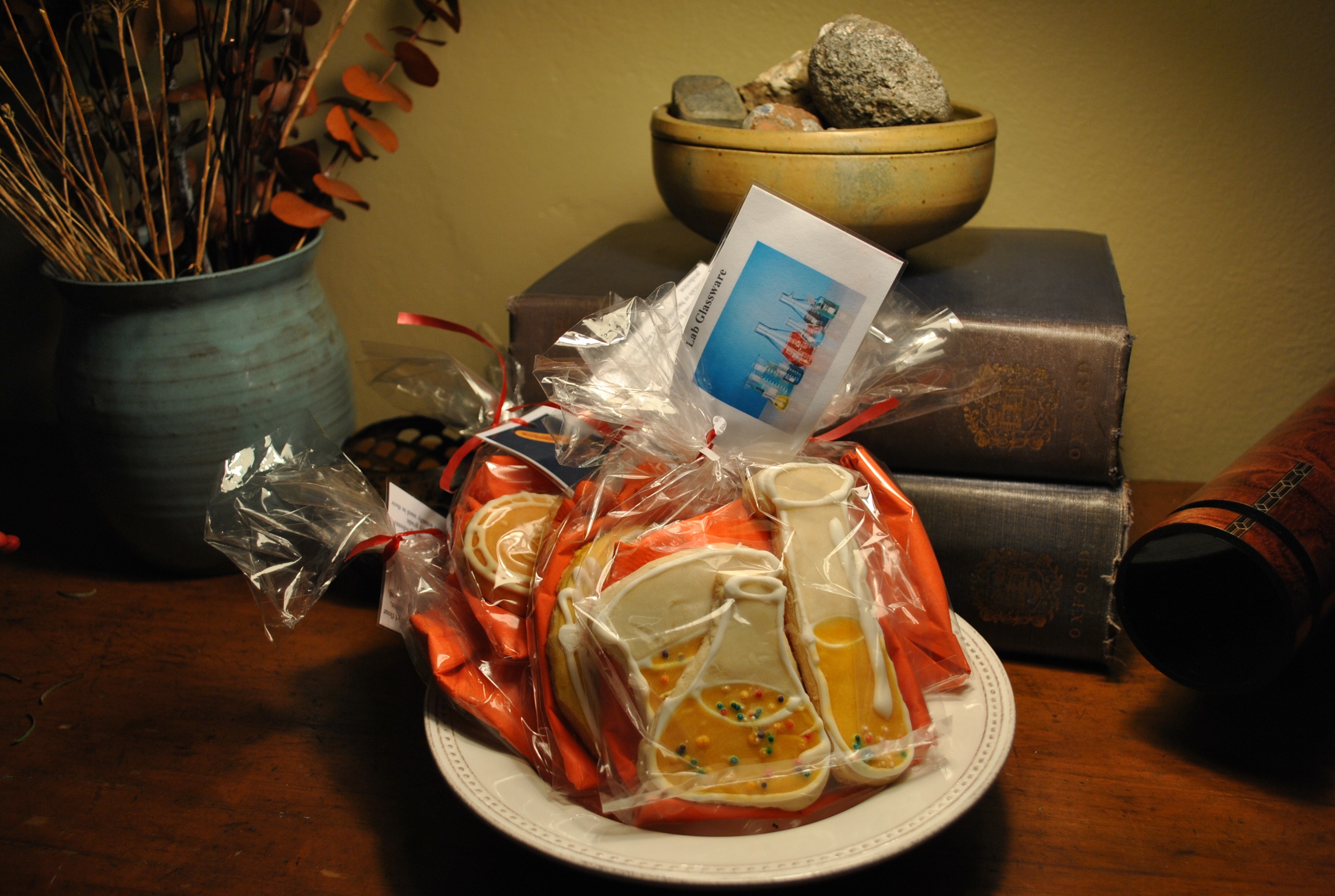
    A beaker, an erlenmeyer flask and a test tube. All edible!


    1) I understand that you go to Emory and are graduating this semester. What are you studying and what are you planning on doing after graduation?

    Yes, I am a senior biology major at Emory.  I have spent this year in Brian’s lab at Tech doing research in order to write and defend a thesis, ultimately graduating from Emory with honors.  I was initially planning on pursing a Ph.D. in Molecular Genetics immediately after graduation, however, I recently decided to act on my desire to obtain a medical education.  Part of the reason I found and fell in love with science is because of all its implications in medicine.  I truly want to make a contribution to the medical field using a strong scientific background.  Therefore, I am planning to enter a MD or a MD/PhD program in the fall of 2013.  In the meantime, I hope to find a job to keep me occupied (maybe I should add cookie making to my CV).

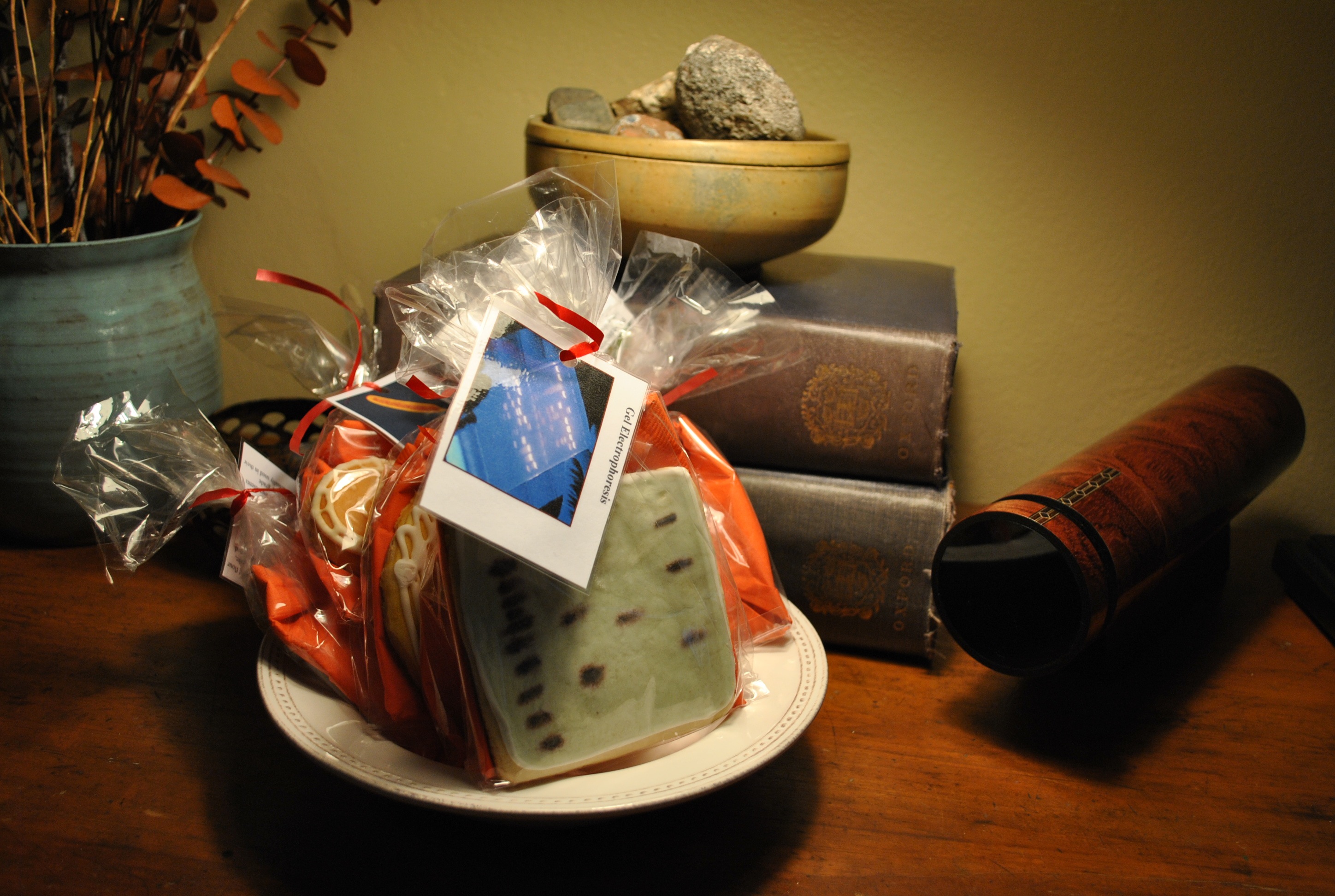
    This cookie looks like an agarose DNA gel. Hope there's no ethidium bromide in there!


    2) What inspired you to make decorated cookies depicting one of the most dangerous bacteria in the world, the causative agent of cholera? What about the other cookies? Could you describe the mice?

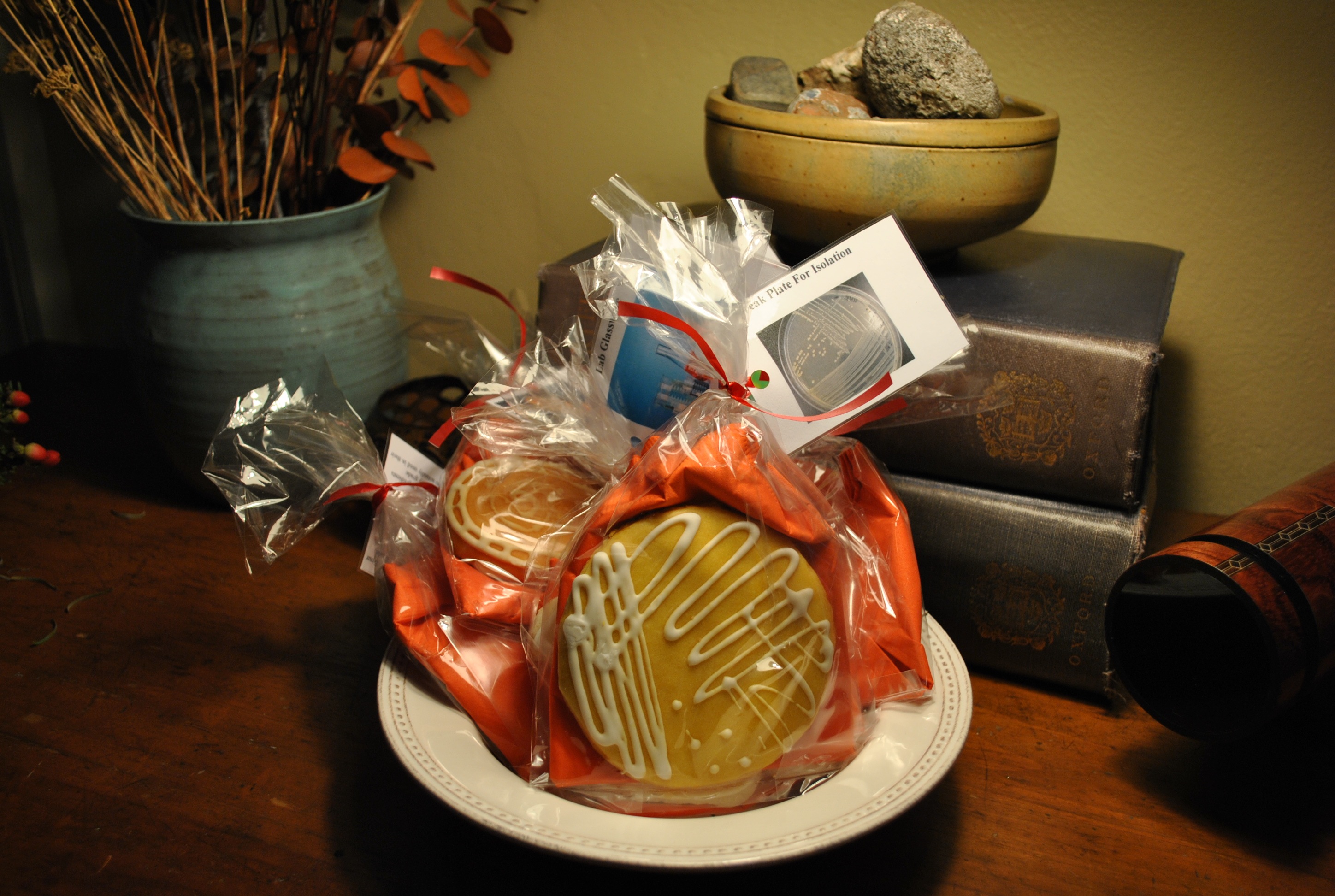
    To promote eating cholerae. Okay, not really.  Actually, I was in a grant writing course at Emory with a mix of both science and humanities students, and we were asked to give a creative presentation based on the project we were working on.  Since not everyone in the class was a biologist, or scientist for that matter, I was reminded of my first time learning about microbiology in my intro course and I distinctly remembered the proud feeling that came along with doing a streak plate for isolation.  To this day, I get that same proud feeling when I come into the lab the next day to see my plates with isolated colonies (success…I’m a scientist!).  I really wanted to share that feeling with my classmates, but I was limited by the fact that I couldn’t allow them to work with bacteria.  So I thought I would teach them the streak plate method and let them enjoy “results” through a cookie.

    I started getting practice making the streak plate cookies by making them for science related events (such as lab meetings and for my microbiology students).  I really didn’t want to go out and buy anything for the Christmas party (because I’m a poor college student), so I decided to make some science cookies, even branching out to new designs in efforts to brighten a fellow science nerd’s day.  Choosing to do a TCBS plate with Vibrio cholerae was easy because I work with V. cholerae in the lab and we use this green media (called TCBS) that causes V. cholerae to turn a bright yellow on the plate.  In a way, V. cholerae is actually quite pretty on the plate and I wanted to represent that in a cookie.  The other designs were just me thinking of other scientific designs I could do, as well as searching the internet for other ideas.  Sure enough, other people also make science cookies  I got a lot of inspiration from Not So Humble Pie (she makes streak plate cookies too!).  While I don’t research on mice, I thought they were cute, so I gave them a try.

    Uh oh, looks like one of those mutations is lethal!


    3) How did you make the cookies? Do you have any tips for the novice baker?

    For the record, I do not in any way consider myself a baker.  I don’t even have the tools that most bakers have, which would actually make decorating these cookies a whole lot easier.  I’m not going to pretend I have a secret recipe (let’s be honest here…I’m in college!).  For the cookie, I just follow the roll-out cookie recipe on a sugar cookie mix (I prefer Krusteaz) and use a cup to cut out the circle shape. Since I only made a few of the other designs, I just cut them out with a knife.  Then I throw together a powder-sugar based frosting to decorate my cookies.  I know….no big secret, right?  Anyone can make and decorate cookies.  Each time I make them, I may modify something to perfect my “recipe,” but getting the signature cookie takes time and practice.  The good thing is that your mess-ups are usually still edible and delicious!

    It must be hard to make a cookie flagellum.


    4) Have you ever made any other strangely decorated cookies or do you have plans to?

    My busy lifestyle rarely leaves time for me to bake for fun, but sometimes I’ll come across something (usually science-related) and think to myself “that’d be a cute cookie.”  I honestly have thought about perfecting recipes and publishing them along with information/instructions as I often do when I make my streak plate cookies for students.  When I made a batch of cookies for the Christmas party, I attempted to make a V. cholerae bacterium but it ultimately looked like some kind of squash.
    I’m sure my future medical education will provide me with plenty of opportunities to make all sorts of weird (and probably disturbing to most people) cookies.  I’d love to try to create a complete skeleton, where each bone is a cookie.
    Perfect technique!


    – So, it turns out making weird cookies is not as hard as I thought.  Maybe I’ll make some T cell cookies this weekend!
  • The Science behind ‘Frenemies’

    The Science behind ‘Frenemies’

    High school can be very painful for anyone who is the slightest bit different.  Thankfully, I’m 5 years removed from it but my little sister is a freshman so I get to sit back and observe this social phenomenon as an objective outsider.  When you’re in high school (specifically a teenage girl in high school), it seems that every social situation is a CRUCIAL moment in your life.  Not abiding by the invisible rules of pubescent social etiquette could result in getting shunned from the clique.  This, by the teenage spectrum of standard exaggeration, is death.  Girls strive to fit in and seek reassurance that they are ‘secured’ in their pack.  This essentially creates an army of mini tyrants disguised in pink twill.

    This brings me to introduce the concept of a ‘frenemy.’  A ‘frenemy’ is someone who you’re friends with by all appearances, but is actually someone who you would like to squirt ketchup on.  In the high school scenario, she might be characterized as the bully of the group or perhaps the arrogant leader of it.  Either way, you find yourself supporting her terrible behavior because you’re too afraid to speak out and risk losing your social standing.

    There’s a biological reason for this behavior.  According to Dr. Louann Brizendine, who wrote the fantastic book ‘The Female Brain,’ the main job of a girl brain is to keep social harmony.  The teen girl’s brain circuits are wired so that social rejection actually triggers a neural stress response (Brizendine 35).  When a relationship is threatened, the female’s feel-good brain chemicals drop (such as serotonin, dopamine and oxytocin) and the stress hormone cortisol takes over.  Now this has become a matter of life or death.  She’ll start feeling anxious and fearful of being rejected.  She’ll become cranky to family members.  She soon begins to crave that feeling of closeness again, for that great intimacy drug oxytocin.  She’ll eventually decide to stick to her clan of frenemies to keep that utterly important social harmony.

    This can also explain why girls go to the bathroom together.  Those girls hanging out in the bathroom are reinforcing their most important relationships- with other girls.  Many women find biological comfort in one another’s company and language is the glue that connects them together.  Talking and sharing secrets activates even more oxytocin release.  The oxytocin reinforces the desire to gossip and connecting then brings a sense of pleasure and well-being (Brizendine 37).

    Why exactly are girls built this way?  One plausible reason goes back to primitive basics.  Remember- our modern female brain still has the circuitry of our most successful foremothers.  Studies have shown that female mammals in a bonded social group are more likely to come to another’s aid in a threatening situation, such as if a male is overly aggressive to a female.  Members of a group can alert one another of conflict ahead of time, enabling them to move away from potential danger and to continue safely tending dependent children.  This pattern of behavior is called ‘tend and befriend,’ and it is particularly a female strategy (Brizendine 42).  Since teen girls are biologically reaching optimal fertility, their primitive brain begins to stress the importance of this strategy.  It’s saying, “Lose that bond with your peer, and both you and your offspring are toast.”  No wonder girls find it unbearably hard to cope with feelings of being left out.

    There’s even a biological reason for why some teen girls can become so evil to one another.  Hormonal surges can turn these girls mean but so can sexual competition.  This competition is much different in girls than in boys. When females are competing with other females, they often use subtle tools, such as spreading rumors, to undermine a frenemy.  That way she can cover her tracks.  Instead of using force, which is the male’s standard protocol, the female uses her best set skill-language- to get what she wants.  Such tactics lessen the risk of destroying the bond that the teen girl brain sees as essential to survival.

    The teenage girl brain is drowning in estrogen and other chemicals that make it pretty difficult to survive these years. It’s always drama, drama, drama. That’s not to say that teenage boys aren’t dealing with an insurgence of hormones- they are and they have their own set of embarrassing problems.  But research findings like these can reassure a gal that her feelings of mayhem are only temporary.  So if you are a teenage girl, remind yourself that you will mellow out.  Then remember to tell your frenemy that it is not her fault she’s acting like a jerk but that it is just her cortisol coming out to play.

    Brizendine, Louanne. The Female Brain.  New York: Broadway Books, 2006.


    Image: photostock / FreeDigitalPhotos.net