Would you believe me if I told you that you didn’t have to spend countless hours in the gym daily to see results? Well, it true. Statistics show that more 80% of people do not get enough physical exercise to meet health guidelines. Why? Time and Inconsistency. However, introducing slow-motion strength training to your lifestyle once or twice or week for at least 20 minutes has been proven to help improve fat loss and improve cardiovascular health.
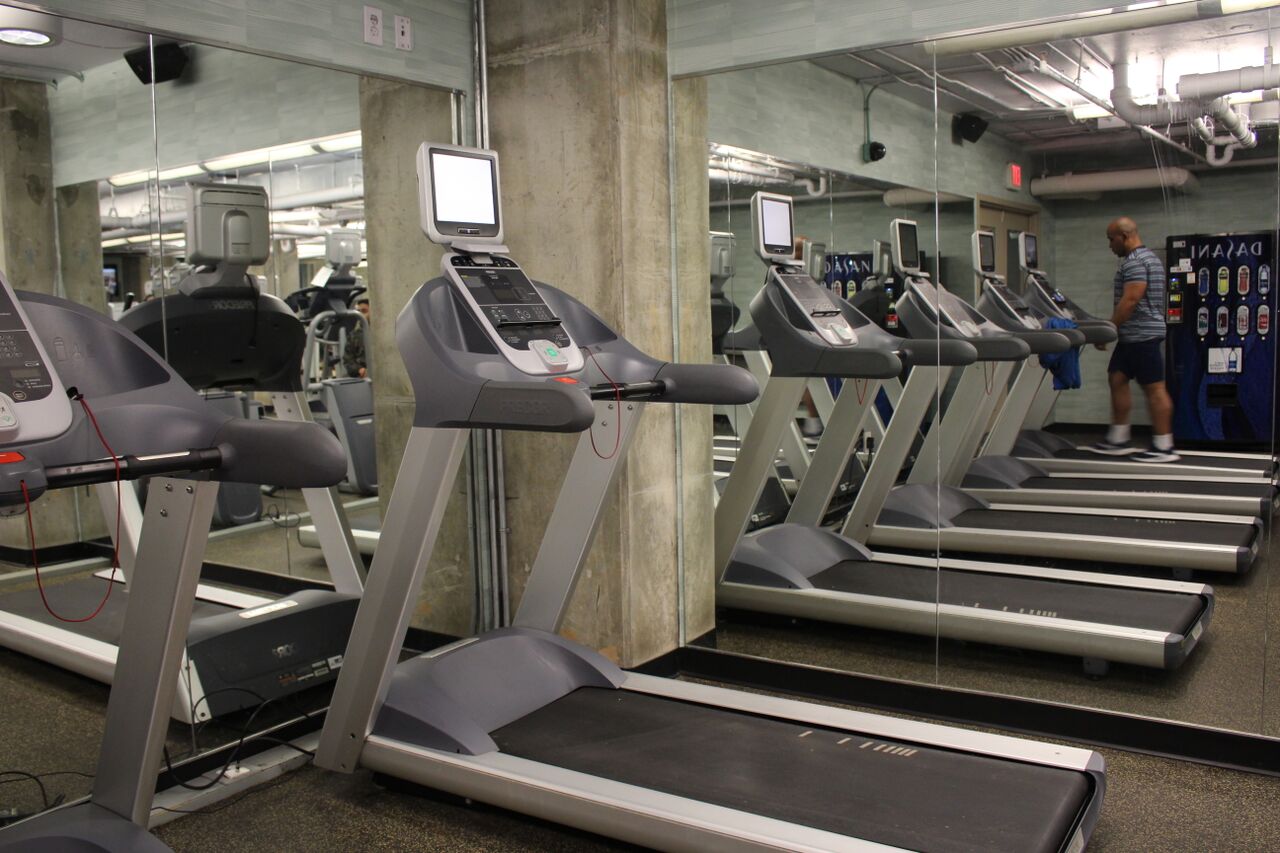
I’m sure you’re wondering why slow-motion strength training and not aerobics. Slow motion strength training focuses on intense muscle training for a brief period of time to stimulate the best results from the muscles. Essentially, slow motion strength training focuses on putting as much stress on the muscles as possible following days of rest. The human body needs enough time to recover and grow stronger between weight training, which is why many people fail to see results due to over working their muscles. Sometimes more is not better.
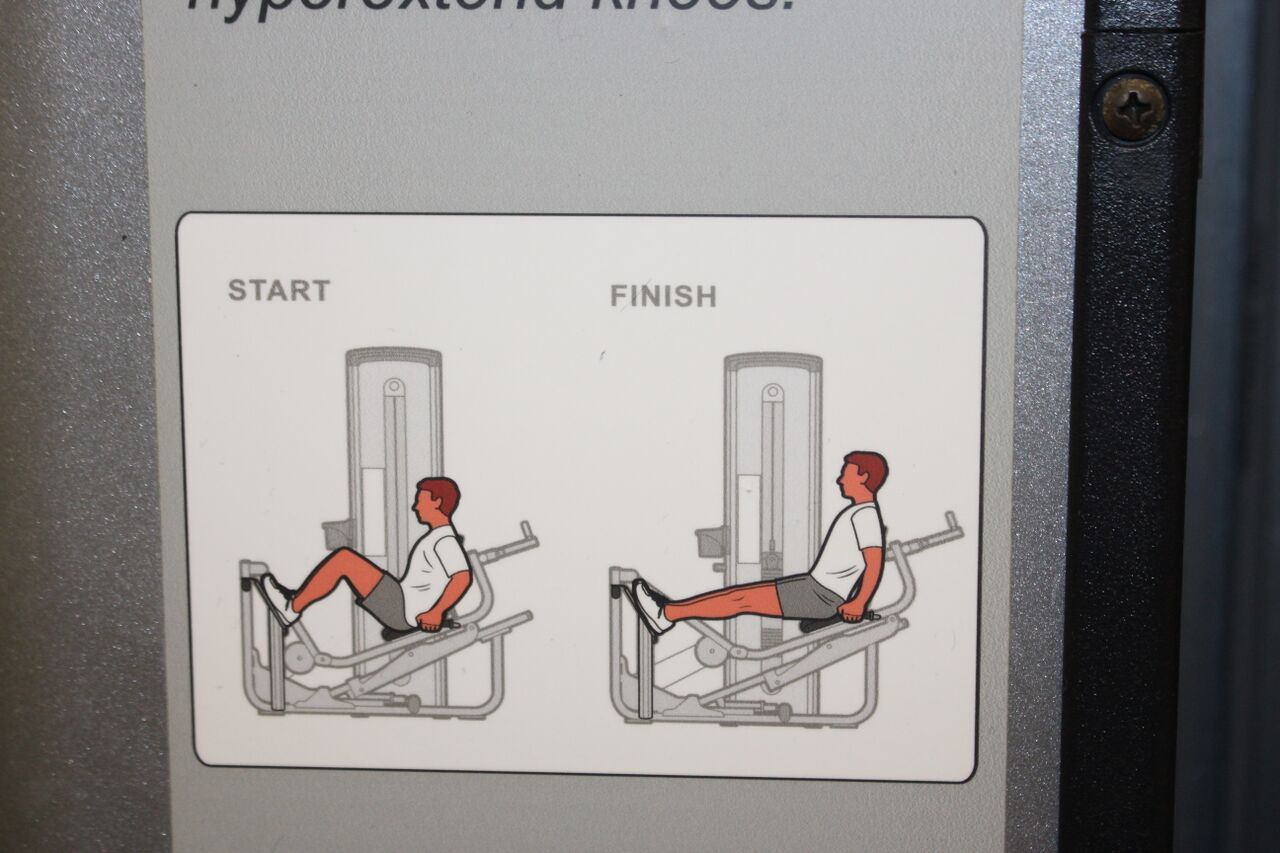
Researchers conducted an experiment with untrained men and women who trained two to three times per week for eight to 10 weeks on a 13 exercise Nautilus circuit performing one set of each exercise. Participants exclusively trained using regular speed repetitions for 8 to 12 repetitions per set at 7 sec each (2 sec lifting, 1 sec pause, 4 sec lowering) or a Super Slow training protocol where they completed 4 to 6 repetitions per set at 14 sec each (10 sec lifting, 4 sec lowering). All of the participants were tested for either the 10 repetition-maximum (RM) weightload (regular-speed) or the 5-RM weightload (slow-speed group).
The results indicated that slow-motion strength training caused about 50% greater increase in strength for both men and women than regular speed training. Hence, if you do slow motion strength training, maintain and healthy diet, and drink a substantial amount of water, research shows you will see results.
Westcott, W. L., Winett, R. A., Anderson, E. S., & Wojcik, J. R. (2001). Effects of regular and slow speed resistance training on muscle strength. Journal of sports medicine and physical fitness, 41(2), 154.
It seems like every other day, a friend of mine declares a newfound dedication to the Paleo Diet. Nicknamed the “Caveman Diet,” Paleo is this season’s slimmer, fitter (but just as raw) Atkins diet. I first learned about the elusive Paleo from my dedicated Cross-Fitter friend after asking her for an afternoon snack. I fully expected some Goldfish or hummus-like options but my friend looked carefully in her fridge and gave me a choice between freshly-watered lettuce or coconut flakes. Apparently my disturbed look alluded to what I was thinking (when did you start hating your taste buds?) because she then confessed to me that she started this Paleo Diet. She explained how she stopped eating bread, to which I replied “Dear God,” and went on to describe her new enlightened Paleo lifestyle.
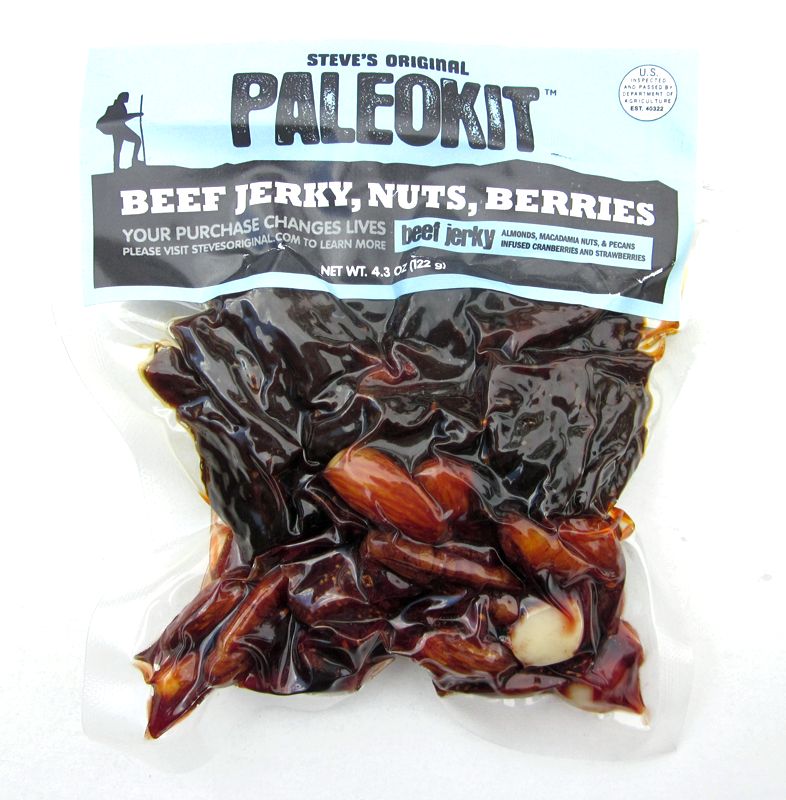
The Paleo diet theoretically takes us back to our ‘caveman’ days when we hunted rodents with rocks and scurried for nuts and berries. Protein heavy; processed foods are out of the question; dairy is for infants; and sugar is the devil. I’m not sure how the Paleo people know this, but apparently cavemen never ate any grains whatsoever, so neither can my friend now. She carries wild canned tuna in her purse, munches on dried jerky meat from a bag fit for an astronaut (right picture), and mumbles about bacon all the time.
Shocked at the idea that someone couldn’t indulge in croissants, muffins, or baguettes with chunks of melted brie, I left my friend’s place horrified. I thought of the possibility that lobbyists for the meat industry were behind the whole conspiracy and hated wheat with a passion. I needed to find out for myself. What’s the health benefit behind this fad? Is there any? How has this pandemic spread to several of my friends already? Will my love of carbs be strong enough to fight the Paleo takeover?
The premise behind the ‘Paleolithic’ eating is that humans should only eat what we’ve been genetically adapted for. For 2.5 million years, the length of the Paleolithic Era, our human ancestors were just a bunch of fit muscular naked hunters-and-gatherers. Human diets changed 10,000 years ago when agriculture was developed, but our 2.5-million-year-old genetics did not change the way we digested food. Proponents of Paleo blame ‘Industrial Era’ food such as beans, dairy, alcohol and salt for obesity, cardiovascular disease, cancer, diabetes and high blood pressure. However, I could not find any known cardiovascular benefits to becoming caveman again. There IS an increased risk of higher cholesterol because of the increased meat intake, so Paleo might not be a good idea if you have high cholesterol already.
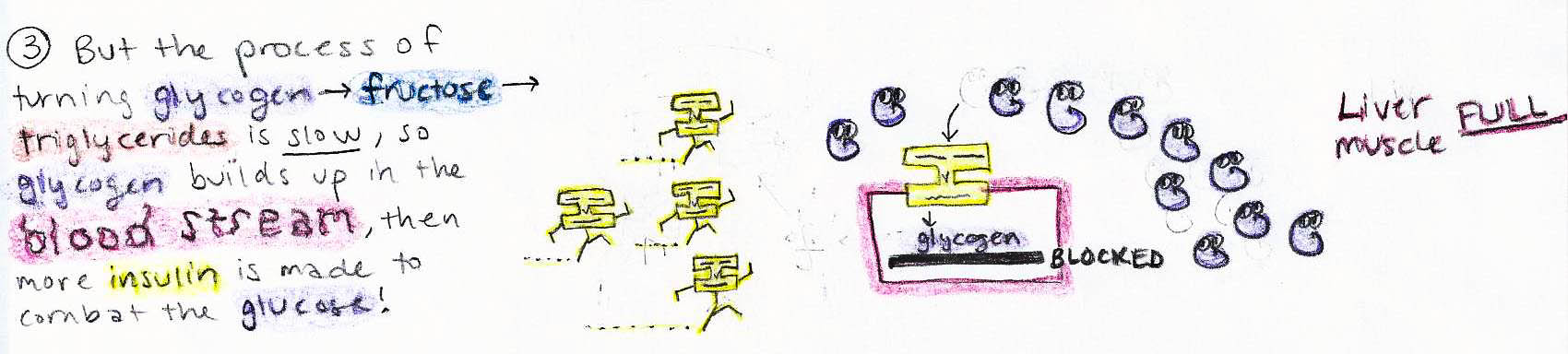
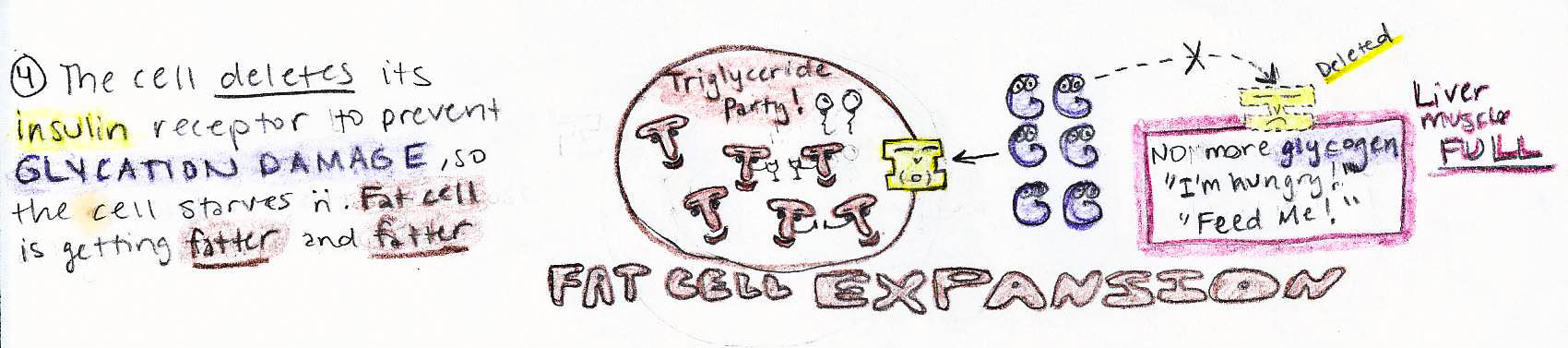
Paleo basically hates carbohydrates. They attribute carbohydrates to high blood sugar, insulin resistance and eventual morbid obesity. Doug McGuff, MD and proponent of the Paleo diet, broke it down like this (with perhaps a few more sophisticated explanations):
Paleo says that in this metabolic state, consuming high fructose corn syrup, sugar, or fructose of any kind will amplify these effects. The only way to reverse this is with high intensity exercise.
In theory, I’d say this Paleo diet sounds good. But all diets sound good in theory until you’re hungry. Examples- a few of my Paleo zombie comrades have cheated on a few occasions which they don’t want to admit. They’ll crave a banana nut muffin all week and allow a bite on an upcoming weekend. The pizza or cookie monster inside of them might emerge at 3 AM on a Saturday night. They’ve also ordered light spring salads at dinner only to reach for my deep-fried chicken finger basket after they’ve digested their lettuce in 4 minutes flat. This worries me. I do have to say, my friends look extremely fit and healthy, and probably the best looking I’ve seen them in the last 6 years I’ve known them. So something is working. It could be the strenuous Cross-Fit workouts though.
I’m very cautious about new hip diets so even after my research I was still not convinced I could get on board with the I-HATE CARBS Movement Paleo diet. I needed to do some field research. Meandering through the bookstore, I came across a Paleo Recipe Book and immediately started perusing through the pages. The recipes looked pretty delicious so I snapped 18 pictures from my iPhone when no one was looking (don’t judge, I’m on school loans) and dashed from the aisle like a bandit. I thought cooking one of the recipes would really make up my mind.
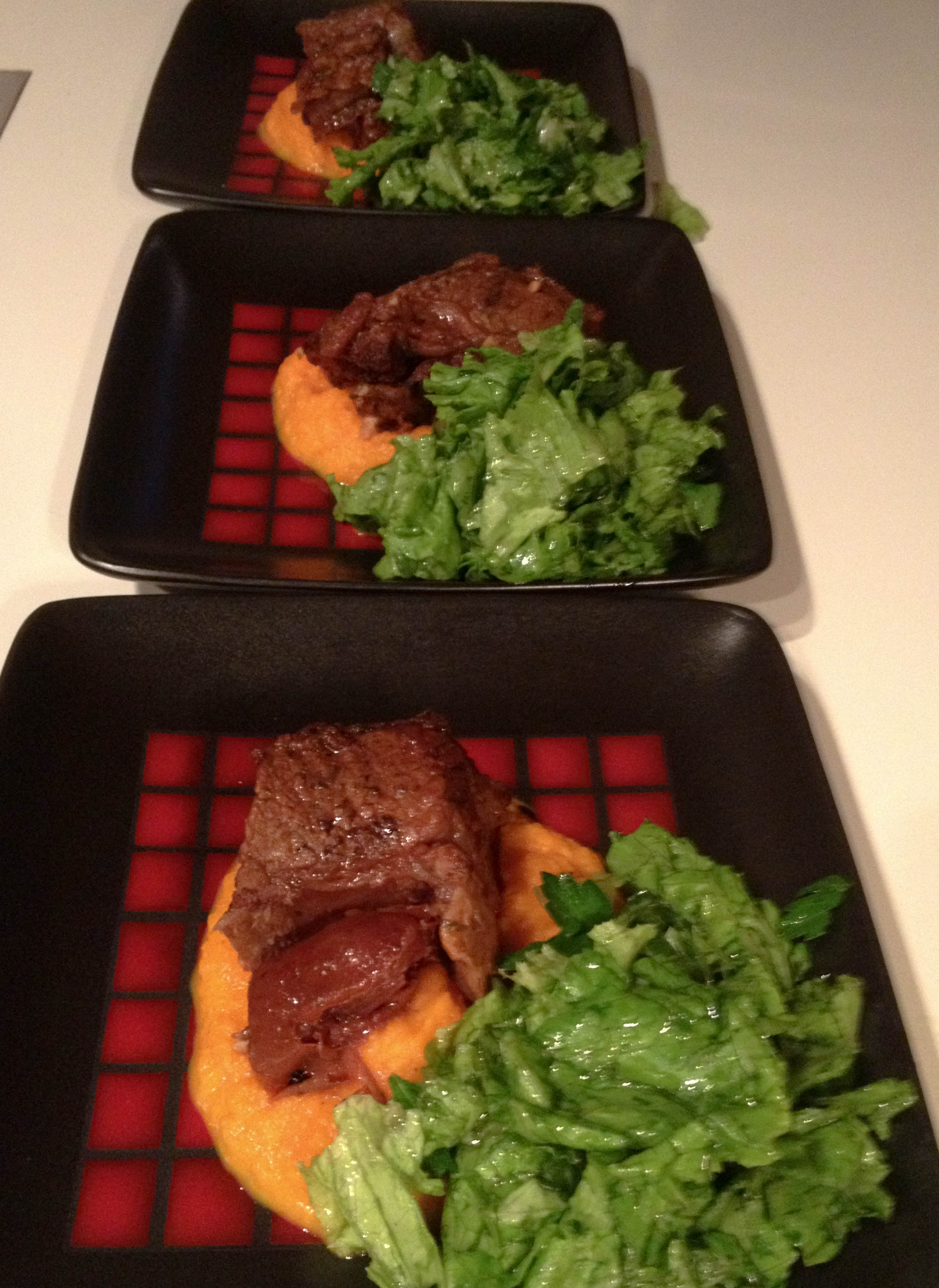
I decided to conjure up some balsamic braised short ribs with a carrot puree and frisee parsley salad. I wasn’t sure what to expect but, I have to say, it was damn good (pictured right). I started to think maybe I could ‘have Paleo and eat it too’….but only on Sundays, and with friends who could split the grocery cost with me.
All in all, I might consider going temporarily Paleo if I want to shed a few pounds but I’m gonna stick to my own health theory which is ‘everything in moderation.’ I don’t know about you, but I can’t get used to having my milk and cookies without either milk or cookies. Plus diets that completely eliminate certain food groups are difficult to follow and can get very pricey. If anything, I believe cutting red meats or the Weight Watchers diet are the best ways to go. What diet could you get on board with?
OK, kids, we need to talk. No, you’re not in trouble. The people in trouble are health, anatomy, and psychology teachers who try to teach a specific concept that is WRONG.
Any guesses about what connects those teachers? No? Well, here’s the offending diagram.
Don’t believe images like this. EVER.
That, my lovelies, is a picture of a tongue. But see those cool segments that tell you what flavor is tasted by each segment of the tongue? They’re completely and totally unnecessary. Your tongue doesn’t work that way, despite what so many teachers and even college professors would have you believe.
No, don’t try to look all cute and happy, Mr. Boring. You’re on scientific trial here.
Let’s go back a bit to Harvard University circa 1901. A psychologist, Edwin G. Boring (more like Edwin G. Mistaken-Fact-Check) misinterprets data in a German paper, leading to the belief that each region of the tongue is specialized to taste exactly one of four basic flavors.
“OH! Cool!” he says, thinking this break-through will change the way we interact with food (or something).
Trust me, it didn’t.
Let’s fast forward to 1974, when Virginia Collins discovered that all tastes are distributed equally across the tongue. Case closed, right?
NOPE! People are STILL using the tongue map to explain taste buds in 2012!
Let’s expand your knowledge a bit, though. Why is this tongue map concept so incredibly insulting to the science of taste? Here’s three big reasons why!
Well, first off, it is incorrect in the count of basic flavors. The map shows the four flavors (bitter, sour, salty, and sweet) that were known in 1901, but there are at least five that we know of now. The four that are on the map DO exist; the fifth wheel of taste we use at a wine and cheese party is actually one of the most important – umami. That’s the taste of savory things like meat and cheese, and was described as early as 1908, a mere seven years after Boring made his translational mistake.
Secondly, the map claims the receptors for each flavor only exist on the edges of the tongue, the very back, and the very tip. That leaves a HUGE bit of space that doesn’t really do much, right smack in the center… where most food hits the tongue.
Um. Science says, “Whoops?”
It’s an impractical model from the start, is what I’m trying to say.
Thirdly, our sense of taste is much more important in basic development and exploration than the map allows for. From the time we are born, we explore the world through all of our senses. Senses like sight don’t fully develop until we are between 6 and 18 months of age, but we make up for what we lack by using other senses, taste, in the case of infants.
Well, why is that particularly important, you ask? Because of chemistry. The basic correlation between chemistry and taste is that acids taste sour and bases taste bitter. The safest way of testing this is to taste a lemon, which is full of citric acid. It’s sour, right? Right.
Since things that are bitter are not necessarily desirable as food products, it’s very difficult to find them on market shelves. Egg whites and some crackers are the closest edible things you’ll find to basic foods.
Now, think back to childhood…. Do you think a baby would like something that tastes bitter? NO! That’s a natural response. It’s a safety precaution, too; bitter foods tend to contain deadly chemicals, like ammonia. According to the tongue map, those substances would have to hit the back of the tongue to be tasted, which probably means someone is going to have to call poison control because little Johnny has swallowed ammonia instead of spitting it back out because he tasted that bitterness immediately.
So, lesson of the day? Don’t think of the tongue as some city planner’s way of keeping the taste bud gangs from having turf wars. It’s much more accurate to think of it as a metro area, where everybody mixes and coexists while doing their jobs.
Picture a typical 1985 aerobic dancersize class at the local YMCA. Bright spandex, side pony-tails, colored leg warmers, metallic leotards. Lots of makeup, minimal sweat and sex appeal were the 80’s requirements for a good work out. Gym culture has evolved since the Era of Questionable Fashion but one aspect will never change- music. LOUD music. There’s no way those 80’s women could do a rhythmic 8-count of floor kicks so enthusiastically without Cyndi Lauper’s motivation. Nowadays, I don’t even bother to work out if I don’t have access to music. There are a lot of reasons why I don’t bother to work out but even when I’m feeling particularly motivated to exercise, I still need my IPOD! And judging by the number of headphones I spot at the gym, most people like working out to their tunes as well.
So why the dependency? Not only is music fun to listen to but music can actually make our adrenaline surge. Several studies have indicated that music tempo correlates to changes in heart rate, blood pressure and breathing rate. When the tempo (the rate of speed) of a song and athletic performance are synced up, an average person’s endurance is prolonged. Some athletes even claim music is like a legal drug because of its effect on their endurance.
It makes sense that listening to fast-paced music can increase your heart rate but a study at Virginia’s Hampden-Sydney College actually proved it. The study showed that participants who listened to music while riding bikes actually traveled 11% farther than those who rode with no music (McCook 2005). In another study, dance music at 142 beats per minute (BPM) was used in a 10-kilometer trial and the results were compared to the same study without music. Average speed, power and heart rate were higher in the group who had music (Harmon 2007). However, the effect of listening to music while working out is not completely hypnotic; the test subjects cycling at higher speeds also had higher perceived exertions. This suggests that they were fully aware of how hard they were working, despite the use of music (Harmon 2007). Therefore music does not reduce the recognition of effort during exercise but it does improve the experience by providing a fun distraction.
Research also shows that the distraction of music can reduce up to 10% of perceived exertion during treadmill running at moderate intensity (Karageorghis 2008). One study published found that basketball players prone to performing poorly under pressure during games were significantly better if they listened to catchy, upbeat music (Reynolds 2010). “The music seemed to distract the players from themselves, from their audience and from thinking about the physical process of shooting,” said Christopher Mesagno, a lecturer at the University of Ballarat in Victoria, Australia, and the study’s lead author. The music let the body work from muscle memory without interference from the brain. “The music was occupying attention that might have been misdirected otherwise,” Mesagno said.
Another reason music may help you exercise is because of something called “synchronization.” Music is conceived by our brains, played through our bodies, perceived through our sensory organs and then interpreted back by our brains. You’re already tapping your foot to the beat before you realize what you’re listening to. Same with exercising- you want to pedal at the rate of the music or tread to every dominant beat. Research has shown that the synchronization of music to repetitive exercise (like rowing, cycling and running) is associated with increased levels of output (Karageorghis 2008). The tempo can regulate movement and also create an attainable flow.
I’m not saying listening to music while working out creates miracles; the body does have its limits. Research finds that the effect of music seems to decline when exercising at an already intense level (Reynolds 2010). For example, if running at an intense pace, increasing the music’s tempo will not have an effect on your speed or heart rate because they are already at a high level of intensity. Which is fine since you wouldn’t want your heart rate to increase indefinitely until it explodes in the middle of spin class. That’s not exactly the goal, don’t push it. In conclusion, music can help during moderate exercise but when you increase the intensity of exercise, the feelings of fatigue will eventually override the music.
There are a couple of other exceptions. “Background music typically reduces a person’s perception of effort by about 10%,” says Costas Karageorghis, head of research at the School of Sport and Education at Brunel University in West London. Meaning, don’t forget your headphones. Listening to the gym’s complementary radio will make you think you are working HARDER than you actually are!
That said, what’s the best song to work out to? An exerciser whose goal during warm-up is to elevate the heart rate to 120 beats per minute should select accompanying music that has a tempo in the range of 80–130 beats per minute. Successive tracks should create a gradual rise in music tempo to match the intended gradual increase in heart rate- tempos of 120 to 140 beats per minute are ideal. That’s roughly the heartbeat of a casual exerciser who’s been on the treadmill for 20 minutes.
As obvious as this may be, choose songs you like. Emotional ties to music can help performance even more (NPR 2011). For example, Kanye West’s “Stronger,” lifts my mood and pushes me a bit harder, even though the tempo isn’t particularly fast. I have friends who start every workout listening to Rocky’s theme song “Gonna Fly Now,” by Bill Conti. Listen to whatever you gotta listen to in order to get motivated! Start singing on the treadmill if you need to; who cares about a room full of people staring at you sweating profusely and gasping for oxygen as long as you’re feeling good, right?
I’ve compiled a list of example songs along with their beats per minute. Try making your own playlist according to your heart rate goals and see if you can tell a difference in your work out. If you can’t, try wearing a metallic leotard.
Walking, 3.0-4.5 mph (miles per hour), 76- 120 bpm
Nirvana- “Smells Like Teen Spirit,” 117 bpm [soundcloud url=”http://api.soundcloud.com/tracks/5968275″ iframe=”true” /]
Elliptical/ Stair-climbers, 124-128 bpm
MGMT- “Kids,” 124 bpm
Jogging, 5.2-6.0 mph, 120-150 bpm
Florence & The Machine- “Dog Days Are Over,” 150 bpm
Cycling, 60-80 rpm (revolutions per minute), 139-150 bpm
The Killers- “Mr. Brightside,” 148 bpm [soundcloud url=”http://api.soundcloud.com/tracks/26159719″ iframe=”true” /]
Running, 6.0-8.0 mph, 147-170 bpm
Scissor Sisters- “Take Your Mama,” 155 bpm
TV On The Radio- “Will Do,” 161 bpm
High Intensity Training, 168 bpm & above
Beck- “Gamma Ray,” 168 bpm
Harmon, Nicole M., and Len Kravitz. “The Beat Goes On: The Effects of Music on Exercise.” IDEA Health & Fitness Association. IDEA Fitness Journal, Sept. 2007. Web. 20 Feb. 2012. <http://www.ideafit.com/fitness-library/beat-goes-effects-music-exercise>.
Karageorghis, Costas, and David- Lee Priest. “Music in Sport and Exercise : An Update on Research and Application.” United States Sports Academy. The Sport Journal, 2008. Web. 20 Feb. 2012. <http://www.thesportjournal.org/article/music-sport-and-exercise-update-research-and-application>.
“Maximizing Your Workout With The Right Tunes.” NPR, 13 Sept. 2011. Web. 20 Feb. 2012. <http://www.npr.org/2011/09/13/140438368/maximizing-your-workout-with-the-right-tunes>.
McCook, Alison. “Music Helps Exercisers Go Further with Less Effort.” Hampden Sydney College News & Events. 2005. Web. 20 Feb. 2012. <http://www3.hsc.edu/news/archive/herdegenmeeks.html>.
Reynolds, Gretchen. “Phys Ed: Does Music Make You Exercise Harder?” Well Blog. New York Times Health, 25 Aug. 2010. Web. 20 Feb. 2012. <http://well.blogs.nytimes.com/2010/08/25/phys-ed-does-music-make-you-exercise-harder/>.
 s from the muscles. Essentially, slow motion strength training focuses on putting as much stress on the muscles as possible following days of rest. The human body needs enough time to recover and grow stronger between weight training, which is why many people fail to see results due to over working their muscles. Sometimes more is not better.
 ed using regular speed repetitions for 8 to 12 repetitions per set at 7 sec each (2 sec lifting, 1 sec pause, 4 sec lowering) or a Super Slow training protocol where they completed 4 to 6 repetitions per set at 14 sec each (10 sec lifting, 4 sec lowering). All of the participants were tested for either the 10 repetition-maximum (RM) weightload (regular-speed) or the 5-RM weightload (slow-speed group).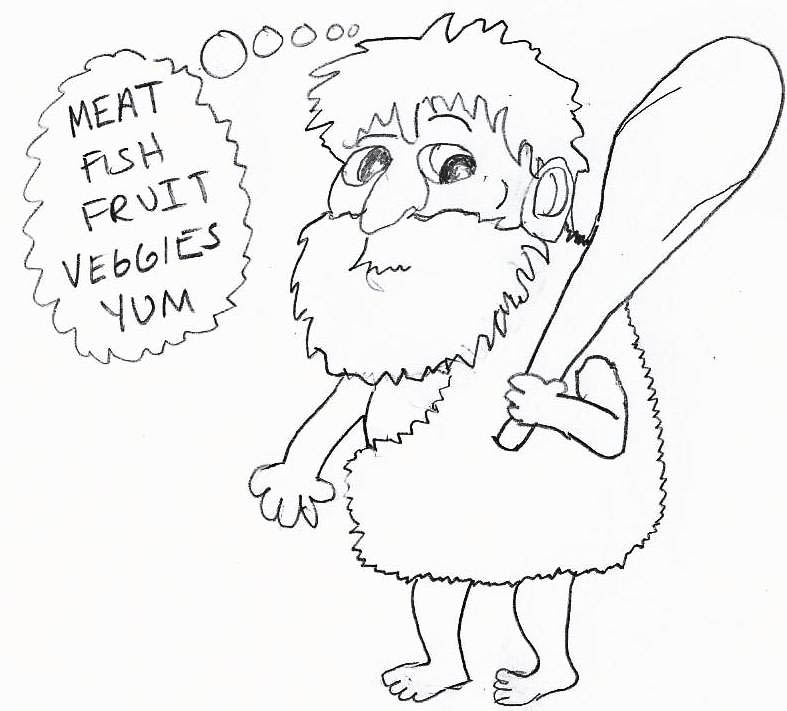
 The Paleo diet theoretically takes us back to our ‘caveman’ days when we hunted rodents with rocks and scurried for nuts and berries. Protein heavy; processed foods are out of the question; dairy is for infants; and sugar is the devil. I’m not sure how the Paleo people know this, but apparently cavemen never ate any grains whatsoever, so neither can my friend now. She carries wild canned tuna in her purse, munches on dried jerky meat from a bag fit for an astronaut (right picture), and mumbles about bacon all the time.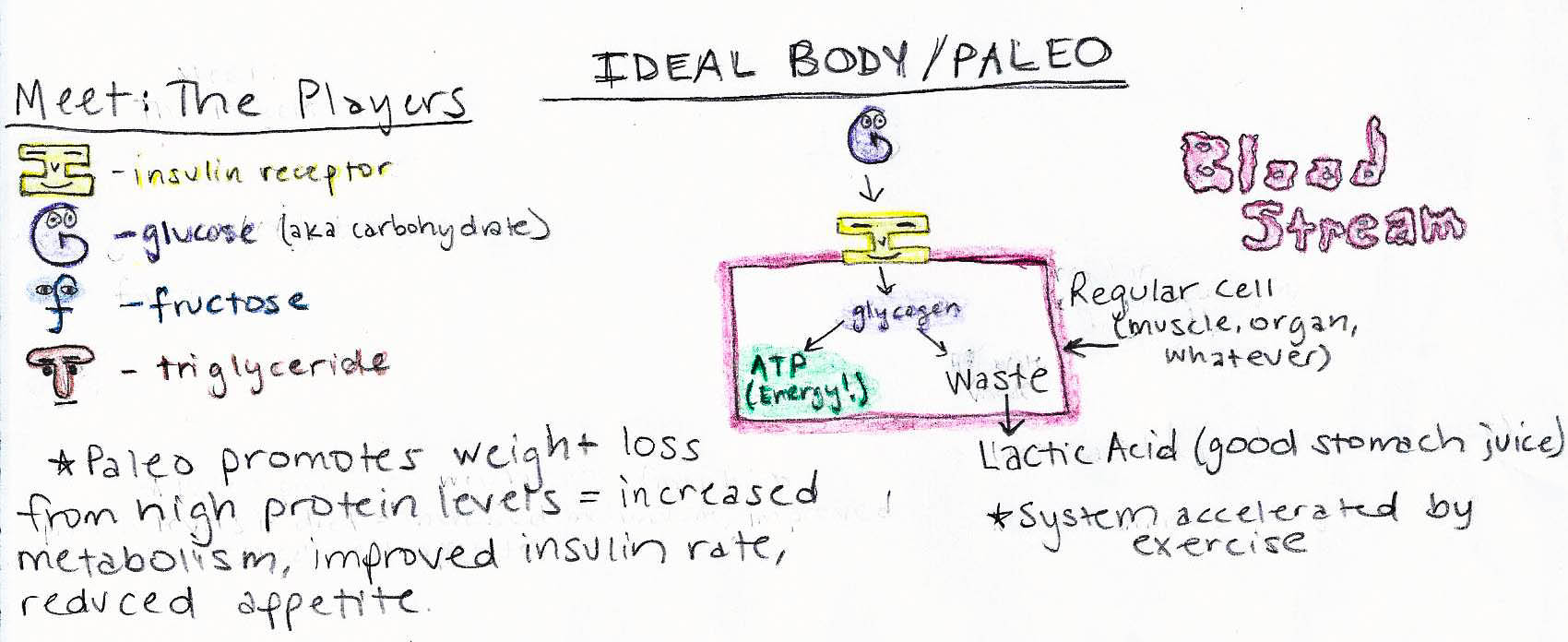




.jpg)