“One man’s making cheap booze is another man’s crafting an ecosystem in which a microorganism can thrive.” That’s my usual response whenever someone’s eyes go wide upon hearing that (a) I’ve used home brewing examples in my general chemistry class or (b) I’ve started plotting how to turn my six-week-old son into a young homebrewer. My love affair with homebrewing started in graduate school, where I was mesmerized by a group of older graduate students who were obsessed with brewing beer at home. This was back in 2010, before the “craft beer revolution” was co-opted by every dime-a-dozen hipster between Greenwich Village and The Mission. Cynical enough to be driven to drink but clever enough to apply chemistry to produce alcohol, my pioneering idols could be heard every Friday night discussing the challenges of growing hops at home or the merits of various sparging methods (read on). I was hooked.
I got started in home brewing when a Mr. Beer kit showed up under the tree one Christmas a few years back (thanks, mom). Newbies and experienced brewers alike love to read books and magazines written by a whole crew of pseudo-celebrities who regularly publish books and magazines promising the perfect brewing process, reminiscent of Calvin and Hobbes’s Chewing Gum Magazine. (Okay, we’re not quite that bad. But we’re pretty bad.) What’s the perfect mash temperature? How much Sparge water should I use? Is my local water okay, or should I add minerals to it? Usually these works are heavy on oral tradition and light on science, which is surprising for a hobby dominated by engineers.
Enter Brulosophy, a blog that demystifies homebrewing with SCIENCE! Ring leader Marshall Schott is a clinical psychologist and homebrewer (take that, engineers) on a mission to test the mountain of informal homebrewing advice that has accumulated over the years. In a typical exBEERiment (xBmt), he brews two batches side by side using identical techniques, altering only a single variable. He then gathers a group of testers and does what is called a triangle test—more or less a scientific version of “two truths and a lie.” Each tester gets three beer samples, two from batch A and one from batch B. The tester’s task is simply to identify the unique sample from batch B. The logic goes that if a significant number of testers are able to correctly identify the unique beer, changing the variable during the brewing process had a significant impact.
Marshall is careful to recognize the limitations of his approach. The triangle test does not assess which of the two batches is better, just whether changing the variable by a specified amount makes an impact on the final beer. In essence, each experiment answers the yes-no question: does changing variable X by amount Y cause a noticeable difference in the final beer? Some exBEERiments include follow-up studies that address quality, but these are generally very subjective.
Still, the folks at Brulosophy have built up an impressive body of exBEERiments addressing everything from the ideal material for fermentation vessels (PET plastic versus glass, the eternal battle) to whether clarifying agents are worthwhile (they’re nuts for gelatin but surprise, it doesn’t have a significant impact). Their table of xBmts even lists a p-value for each trial, a statistical measure of how likely it is that the two batches are not significantly different. If you’re looking for an impact, a smaller p-value is better. Below, I’ve organized some of the more notable xBmts by the relevant stage in the brewing process. For those of us familiar with the typical brewing lore passed down on stone tablets through the ages, his results contain some reassuring results but quite a few surprises. Check out the table below for some of the most interesting results.
More finely crushed grains surrender more starches; this is very consistent with the advice of the “experts.”
Water chemistry – mineral adjustments
The homebrewing demigods tend to downplay the importance of minerals in water, as it’s fairly easy to overdo it and end up with a carboy full of saltwater, but Brulosophy’s results indicate that minerals can have a big positive impact on the final beer—at least for Dry Irish Stout and Belgian Pale Ale styles. They observed an effect both before the mash and after fermentation.
Mashing
Liquor-to-grist ratio
What would brewing be without jargon? Brewers call the grains used in the mash the grist, and the water used the “liquor.” That’s right: we’re such a bunch of alcoholics that we call water liquor. Figures. Although the “grain heads” like to make a big deal about the water-to-grain ratio in the mash, this xBmt indicates no perceptible impact on the final beer.
Extract vs. all-grain
The “feud” between extract and all-grain brewers is legendary. Extract brewers use pre-mashed solid or liquid malt extract and start with the boil; all-grain brewers (they’re just the snobbiest) start from crushed grains and run their own mashes. An xBmt with pale ale showed a difference between the extract and all-grain recipes, but Marshall is careful to say that it doesn’t mean that all-grain is better.
Single infusion vs. step mashing
Different chemical reactions occurring in the mash have different ideal temperatures. The idea of a step mash is to hold the liquid at a series of temperatures to get the most out of all of these reactions. Single infusion involves using a single temperature throughout the mash. Although the difference was subtle, a significant number of testers could tell the difference between single-infused and step-mashed beers. This is in line with expectations, but the difference was more subtle than the experimenters expected.
Sparging
Fly sparging vs. batch sparging vs. no-sparge
Who knew there were this many ways to introduce water to wort? Traditionally, how sparge water is added to the grains affects the yield of starches extracted (efficiency). A series comparing these three methods in a pair-wise way confirms it: sparge method has an important impact on the final beer.
Fermentation
Rehydrated vs. sprinkled dry yeast
Some homebrew books advocate dissolving dry yeast cells in a little bit of “side wort” to beef them up before sending them into the big game—that’s called rehydration. Others warn that rehydration can introduce bacteria into the fermenting wort, especially if the side wort is not properly sterilized. I’ve never rehydrated dry yeast and it’s worked fine for me; this xBmt also supports the idea that rehydration has no noticeable impact on the final beer.
Yeast pitch rate
More yeast is generally described as better (they can grow, but they suffer in the process), and this xBmt confirms that yeast pitch rate does have an impact on the final beer.
PET plastic vs. glass fermentation vessel
Much to my own chagrin, using glass instead of plastic as a fermentation vessel did have a significant effect on the final beer. In a separate xBmt, stainless steel and glass performed equally well.
Dry hopping
Adding hops after the boil to the fermentation vessel is known as dry hopping. A series of xBmts demonstrated that the temperature, length of time, and quantity of dry hops all have a noticeable effect on the final beer. The form of hops had only a significant effect (p = 0.029).
MEL Science is on a mission to make mail-order chemistry kits for kids big again. They’ll deliver two sets per month right to your door containing 1 – 3 chemistry experiments. From their website: “I don’t know about you, but we are very worried about our children. They often spend more time with computer games than science. And we are trying to do everything to make science as interesting as possible.”
We got a chance to check out the MEL Chemistry Kit and Tin experiments. Take a look!
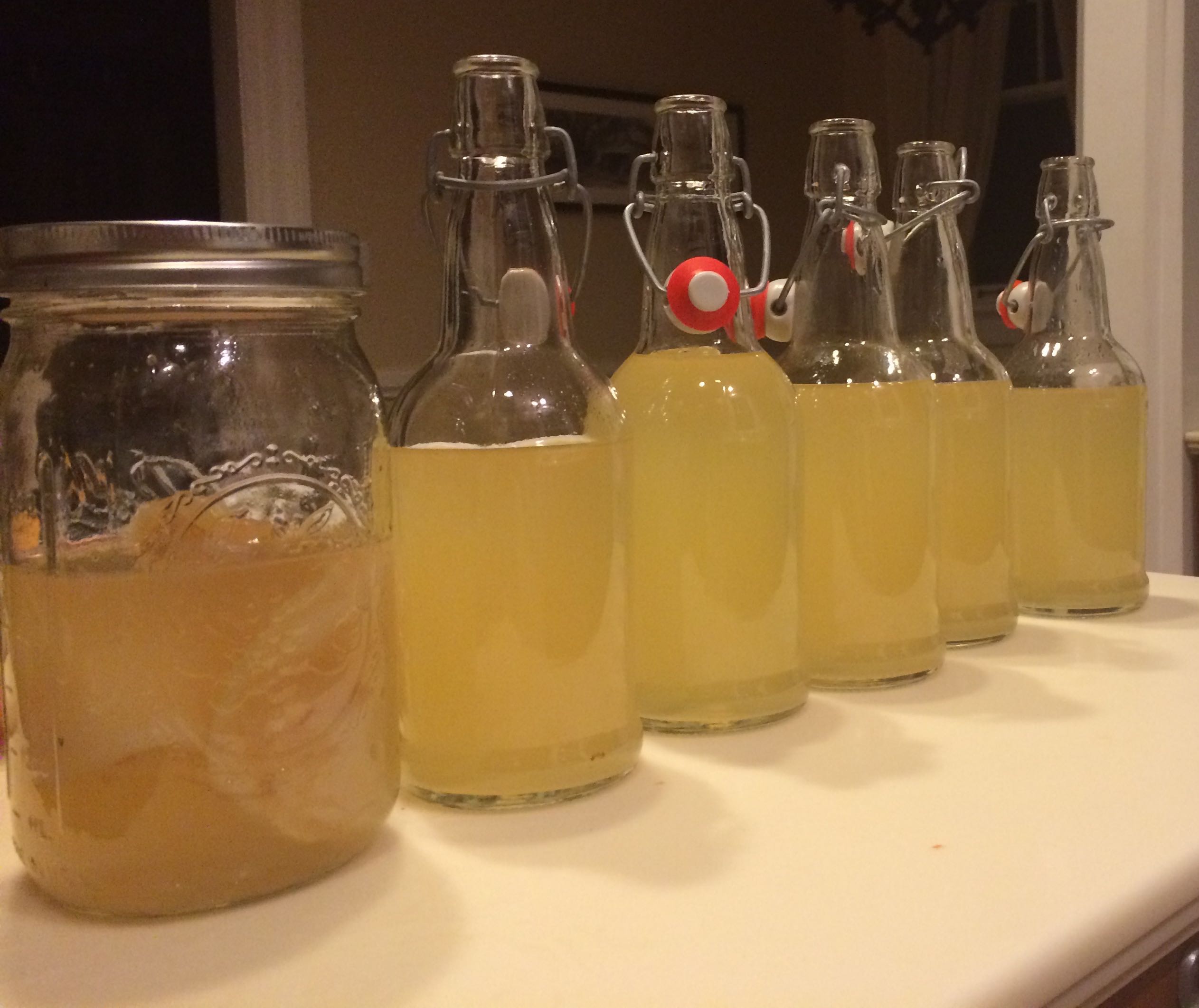
Mother and child – A Jun SCOBY with finished Jun tea.
If you’ve browsed the refrigerated section of your local natural foods store lately, you probably noticed a big case full of kombucha where the bottled water used to be. Kombucha is a fermented sweetened black tea that comes in lots of flavors including some slimy varieties that are full of chia seeds. What is kombucha, anyway? Is it really good for you? Why is this drink exploding all over my car? This, dear reader, is what we hope to answer with this article.
Kombucha is made by adding a symbiotic culture of bacteria and yeast (SCOBY) to sweetened black tea and allowing it to ferment. The SCOBY breaks down the sugar and produces organic acids like acetic acid and gluconic acid that lower the pH (Sreeramulu, Zhu, & Knol, 2000). Different parts of the culture carry out different steps in this process and quite a lot of research has been done to identify exactly which species of bacteria and yeast are present in kombucha. Recently scientists used high-throughput DNA sequencing technology (the same technology used to sequence the human genome) to show that Gluconacetobacter is the primary bacterial species and Zygosaccharomyces is the primary yeast species. There are also significant levels of Lactobacillus in kombucha. (Marsh, O’Sullivan, Hill, Ross, & Cotter, 2014). This information can be used to help researchers develop more efficient cultures and understand the ways the microbes break down sugar better.
The bacteria and yeast in kombucha transform sweet tea into something entirely different, more akin to a tangy soda. Zycosaccaromyces ferments the sugar, producing carbon dioxide and ethyl alcohol (ethanol). The carbon dioxide dissolves in water and makes the tea fizzy (and explode all over your car), while the ethanol is converted into acetic acid by Gluconacetobacter. Acetic acid is the active ingredient in vinegar and gives kombucha its slightly sour, tangy flavor. A small amount of the ethanol does not get used, and so most kombucha is about 1% alcohol. For comparison most beers are around 5% and wine is around 12%.
So is kombucha good for you? There are plenty of websites out there that will tell you that kombucha can do everything from cure cancer to make you shit on a regular basis, but well validated research on the topic is sparse. There is something in kombucha that inhibits the growth of food poisoning like Salmonella, E. coli, and Shigella (Sreeramulu et al., 2000), but exactly what it is has not been worked out yet. The antibacterial effect is not due to the pH of the tea, and the culture does not need to be alive to work. There is also other good stuff in kombucha like caffeine (Kallel, Desseaux, Hamdi, Stocker, & Ajandouz, 2012) and antioxidants (Jayabalan, Marimuthu, & Swaminathan, 2007). Antioxidants are awesome. EGCG, one of the antioxidants in tea, has been found to inhibit the development of skin cancer (Lu et al., 2002) and the brain plaques that cause Alzheimer’s disease. (Rezai-Zadeh et al., 2005).
Kombucha is also a guilt-free soft drink option. Microbes break down most of the sugar in kombucha during the fermentation process, and the finished tea usually only has about 30 calories and 2g of sugar per serving. Because it is low calorie, kombucha is a good alternative to sugar sweetened beverages like soda, which have been associated with weight gain and obesity. (Malik, Schulze, & Hu, 2006)
There may even be a future for parts of the kombucha culture that we don’t consume. During fermentation, the kombucha SCOBY produces a floating microbial mat, or pellicle, made of cellulose that looks remarkably like a jellyfish. We usually associate cellulose production with plants (paper is made of cellulose from trees), but bacterial cellulose is special. It has long, fine fibers, is strong, and can be molded to any shape. It is currently being studied for use in a variety of biomedical applications including cartilage replacements (Svensson et al., 2005).
Pellicle floating in tea
Kombucha has a relative in Jun tea, a fermented beverage made with green tea and honey. Jun may even be more healthy than kombucha because green tea and honey both have well documented benefits. (Crespy & Williamson, 2004)(Alvarez-Suarez, Tulipani, Romandini, Bertoli, & Battino, 2009) Because I keep bees and have a lot of surplus honey, I have been making jun tea for the last couple months. To make it, I just brew 4 cups of strong green tea, dilute it with two quarts of water to cool to room temperature, stir in a cup of honey, add a SCOBY (I got mine online), and allow it to culture for 5-7 days. Then I remove the pellicle along with a cup of the tea to use in the next batch. I usually bottle the finished tea with a little fruit juice or cut-up fruit for flavor (although it is delicious without it). The juice adds some extra sugar so the microbes can generate more carbon dioxide for an extra fizzy drink (just don’t open it in the car!). Making fermented tea has been a fun and delicious experiment for me, so I say we raise a glass to Gluconacetobacter and Zygosaccharomyces…….microbes you can eat!
The author samples Jun tea with fictional talk show hosts Kat Lovejoy and Olive Brandywine:
References:
Alvarez-Suarez, J. M., Tulipani, S., Romandini, S., Bertoli, E., & Battino, M. (2009). Contribution of honey in nutrition and human health: a review. Mediterranean Journal of Nutrition and Metabolism, 3(1), 15–23. doi:10.1007/s12349-009-0051-6
Crespy, V., & Williamson, G. (2004). Nutrition , and Cancer A Review of the Health Effects of Green Tea Catechins in In Vivo Animal Models 1.
Jayabalan, R., Marimuthu, S., & Swaminathan, K. (2007). Changes in content of organic acids and tea polyphenols during kombucha tea fermentation. Food Chemistry, 102(1), 392–398. doi:10.1016/j.foodchem.2006.05.032
Kallel, L., Desseaux, V., Hamdi, M., Stocker, P., & Ajandouz, E. H. (2012). Insights into the fermentation biochemistry of Kombucha teas and potential impacts of Kombucha drinking on starch digestion. Food Research International, 49(1), 226–232. doi:10.1016/j.foodres.2012.08.018
Lu, Y., Lou, Y., Xie, J., Peng, Q., Liao, J., Yang, C. S., … Conney, A. H. (2002). Topical applications of caffeine or ( ؊ ) -epigallocatechin gallate ( EGCG ) inhibit carcinogenesis and selectively increase apoptosis in UVB-induced skin tumors in mice.
Malik, V. S., Schulze, M. B., & Hu, F. B. (2006). Intake of sugar-sweetened beverages and weight gain : a systematic review 1 – 3. American Journal of Clinical Nutrition, 84(2), 274–288.
Marsh, A. J., O’Sullivan, O., Hill, C., Ross, R. P., & Cotter, P. D. (2014). Sequence-based analysis of the bacterial and fungal compositions of multiple kombucha (tea fungus) samples. Food Microbiology, 38, 171–8. doi:10.1016/j.fm.2013.09.003
Rezai-Zadeh, K., Shytle, D., Sun, N., Mori, T., Hou, H., Jeanniton, D., … Tan, J. (2005). Green tea epigallocatechin-3-gallate (EGCG) modulates amyloid precursor protein cleavage and reduces cerebral amyloidosis in Alzheimer transgenic mice. The Journal of Neuroscience : The Official Journal of the Society for Neuroscience, 25(38), 8807–14. doi:10.1523/JNEUROSCI.1521-05.2005
Sreeramulu, G., Zhu, Y., & Knol, W. (2000). Kombucha Fermentation and Its Antimicrobial Activity, 2589–2594.
Svensson, a, Nicklasson, E., Harrah, T., Panilaitis, B., Kaplan, D. L., Brittberg, M., & Gatenholm, P. (2005). Bacterial cellulose as a potential scaffold for tissue engineering of cartilage. Biomaterials, 26(4), 419–31. doi:10.1016/j.biomaterials.2004.02.049
Imagine you are in your last semester at college. You’ve done well academically, studied business, and you have a job offer lined up. Your parents are letting up on the constant brow beating about expectations and preparing for the future. The light at the end of the tunnel that opens up to the real world is as close as you have ever seen it. Just a few more classes to get through and you are home free. But, say, during one of those classes the professor says something that catches your attention.
“And believe it or not boys and girls, you could potentially grow gourmet mushrooms from recycled coffee grounds.”
You sit up, stop your doodle and look around. Did everybody just hear that? The professor just told us how we could make money on waste! Free money! Mushrooms! You approach the professor after class as all but one other student in the lecture file out of the auditorium. Though you probably wouldn’t know it at the time you are looking your future business partner in the face. Another light blinks on in the tunnel, and this one is green.
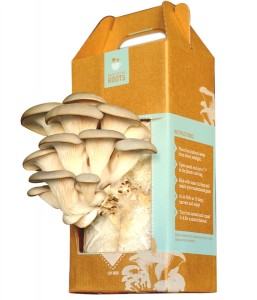
Sound far-fetched? It’s not. That is exactly how “Back to the Roots”, a startup enterprise centered on bringing consumers in touch with their food in a sustainable way – all while turning a profit and benefiting their community of Oakland, California – began. Nikhil Arora and Alejandro “Alex” Velez met for the first time after a lecture at UC Berkeley during their last semester in college in which the professor made the same proclamation I wrote above. Just as the professor had said, you can grow gourmet mushrooms off of waste like used coffee grounds, which is exactly what the pair did. First by experimenting in a frat-house kitchen after watching videos on YouTube on how the process should go, then to selling their mushrooms at a farmers market in Berkeley, California and eventually to their debut product the Back to the Roots at-home mushroom kit which features coffee grounds collected and re-purposed from Peet’s Coffee & Tea, a Berkeley based café, into do it yourself mushroom kits. Just add water at home to grow over a pound of gourmet mushrooms ready to eat!
The Back to the Roots grow-at-home mushroom kit
Within three years of their founding in 2009 Nikhil and Alex who are self-described “urban mushroom farmers” have secured distribution deals with massive retailers including Whole Foods, Bed Bath & Beyond and the Home Depot. They went from collecting coffee grounds headed for the landfill to being paid to haul it away by Peet’s Coffee & Tea, an early supporter of the young startups. As of 2012 they had diverted millions of pounds of coffee grounds destined for landfills. At roughly 3.6 million pounds in 2012 alone, that’s the equivalent of 175 dump trucks of material.
I first became aware of Back to the Roots through their recent Kicstarter campaign to launch a new product – the Aquaponics Garden – which like the mushroom kit is a “grow-at-home” concept herb garden using hydroponics. Growing herbs at home using this method is an old trick, but the mushroom wielding duo (Mario and Luigi?) added an interesting twist of a live fish in the nutrient bath. In this way, feeding the fish encourages it to… “feed” the plants which in turn clean the water for the fishy. The Aquaponics Garden has the same closed loop low waste ethos as the mushroom kit and is thus very much in line with the mushroom kit using recycled coffee grounds.
But I couldn’t avoid the nagging feeling that there was more afoot than delicious herbs and modern architecture inspired fish tanks. Around the same time that the Berkley grads were gearing up to take the DIY culinary world by storm, I began my PhD studies in Atlanta, GA. My new apartment with sweeping views of the side of a building and a dumpster covered in puke didn’t produce the kind of urban living I had expected when moving from rural Virginia where I went to college. Determined to spruce the place up, I wanted some potted plants. After all, there was a spacious balcony from which to enjoy to aforementioned scenery with a cool glass of sweet-tea (Atlanta, remember?). But lo – no direct sunlight. My first batch of plants withered soon after sprouting and becoming spindly, yellowed baby plants.
I turned to the internet – the font of all knowledge – to seek a remedy. Hydroponics was the logical solution. With hydroponics I didn’t need sun or warm weather. Hell, I didn’t even need soil. I settled on one branch of hydroponics – pardon the pun – called “aquaponics” in which the roots of the plant are interwoven into a passive binder, usually clay pebbles, and dangle into a nutrient rich solution. Through my research I found an easy design using a spray-painted plastic storage bin with holes drilled in the top and a fish tank aerator hot-glued to the bottom, a few feet of aluminum flashing to make a reflective enclosure, and a couple of 20 watt CFL bulbs plugged into the sockets of a “make a lamp kit”. Make a lamp indeed. A grow lamp.
Unfortunately, some of the critical supplies I needed couldn’t be found anywhere. I remember inquiring in the garden section of a home improvement store for things like “netpots” and “hydroton” and “rock wool” and “grow max powdered plant nutrients”. After a few minutes of listing name brands to a dumbfounded employee in an orange apron, I told him my intended application.
“I am trying to make an herb garden in my living room. Like basil and stuff.”
I felt it was a reasonable claim. After all, I had just put a few packets of seeds for exactly that – basil and stuff – in my basket.
A knowing look came over the clerk’s face.
“Oh. We don’t have that here.” he said with a little grin.
Back to the internet. It had to be done. A specialty store. I searched everywhere I thought was reasonable – head shops with fluorescent posters and glass “tobacco” pipes, local hardware stores serving as fronts for the mob, Jerry who lived behind the dumpster. Nobody had even heard of the stuff. When I finally found what I was looking for it was on the edge of the city in a run down industrial park. I called the store.
“Do you guys have…” I paused, remembering the clerk at the home improvement store, “Net pots?”
The clerk, “What size?”
This was the place.
When I arrived I found a brightly lit sign over the top of a small warehouse. Inside was every manner of tubing, pots, nutrient and testing apparatus that I had never heard of. They also had camouflaged “grow room tents”. It was an odd mix of completely legitimate looking industrial equipment – hydroponics is a great choice for farming organic produce in otherwise unsuitable locations – and everything I imagine I would need if I was looking for a great way to get kicked out of school.
I bought my supplies and a small booklet on hydroponic gardening. I paid in cash.
Is this aquaponics garden thing legit? I interviewed Nikhil, one of the co-founders of Back to the Roots to learn more. Nikhil and I discussed their recent success with a Kickstarter campaign to raise capital for production of the Aquaponics Garden, lessons learned from development of their grow-at-home mushroom kit, and the business philosophy that has helped them gain recognition.
—
Charged Magazine (CM): So, How’s it going?
Nikhil (N): Doing good. Just wrapping up the year so it’s been crazy. Comes to an end all of a sudden, Ya’ know?
CM: First, I wanted to congratulate you on the Kickstarter thing. You guys were asking for $100K and I think it closed a little less than week ago and you guys cleared almost two-hundred and fifty thousand dollars?
N: Yeah. Two-forty-eight. Almost 250 but it was crazy. It was really cool seeing the response from the community. It was the first time I’d really done something like that, the whole crowd sourcing thing, it just works! People we’ve never met before and don’t know who they were just coming out with their support. It was really cool.
CM: I think you’ve hit on something important – you’re talking about, I guess, the community involvement in your project. Is that the reason you guys decided to go with something like Kickstarter?
N: Yeah. I think we knew had a lot of support for the mushroom kit from our community and we felt that the aquaponics kit could be something similar. And I think to do really well on Kickstarter, and we were like studying it for a while before, you have to try to hit people on a different level. It wasn’t just a transactional thing. People felt more like they were supporting a movement, and they were supporting something bigger than themselves, and that’s why when we launched this product we felt it was something like that. It was something that inspired people and hit the right chord on Kickstarter so it kind of took on a life of its own. It was really cool to see and we got our product improved so much man, the 30 days from where it started off we got thousands of messages from people just out of good will giving us awesome ideas and suggestions. We just signed off on our final design yesterday to send off to the manufacturers and we made so many changes based on feedback we got from people.
CM: Right. And uh, speaking of that feedback, I read in a little bit on your Facebook page regarding this particular product and I definitely see what you mean as far as people who are very interested and passionate about the idea – but of course there was a little bit of negative feedback as well – specifically regarding the fact that you guys would have a live fish in the Aquaponics Garden. But you guys handled it surprisingly gracefully. You know, you said “yeah, we are definitely aware that this is something we need to build into our design” and it seemed you owned it right off the bat and the product is not even on the shelves yet, so I have to commend you on that.
N: Thank you man. It was a big design constraint for us. According to PETA and the most common standards, 1” of fish needs 1 gallon of water. That was our reasoning that for our 3 gallon tank you could have one beta fish in there or two smaller fish so we kept to that. One cool thing about aquaponics and why it’s totally different is that most of the time the health of fish is determined not by the size but more the toxicity of the water. You’re supposed to change the water in regular tanks really frequently, like once a week, to make sure it’s clean and ammonia is not building up but the cool thing with aquaponics is the plants are constantly cleaning the water out so it’s more about the constant quality of water for the fish.
CM: And definitely having the opportunity to grow yourself some fresh herbs at home is a driver.
N: Yeah. I think when you put something like that out into the world, on that kind of platform, we knew were going to get a lot of feedback, and we got some negative feedback and we got a lot of positive feedback that we were able to apply and make changes from. Overall it was a really cool experience and it would have taken us so long to get this data back if we had just launched into retail, because here you have such a direct communication with people I thought it was an awesome way to launch a new product.
CM: So, I think you guys mentioned this during an interview or something, but the connotation with two kids from Berkeley trying to grow mushrooms has a certain connotation – so I thought it was somewhat ironic that the second choice you guys pick is something with an equally, somewhat seedy I guess connotation, that is hydroponics and the whole growing plants in your closet kind of thing. I wonder if that thought occurred to you or what you think of that?
N: Yeah, you know it’s funny we never even thought about it that way. We had been kicking the idea around for a month or two before somebody said to us, “First you guys were growing mushrooms and now you’re selling hydroponics systems?” We just started cracking up and it hit us that we hadn’t even considered that both products have that same stereotype.
CM: Regardless of the stereotype though, I think the market you are attracting is a mix of DIY enthusiasts and people interested in knowing their food and on top of that doing something good for the environment and education. That’s the next thing I wanted to talk about, I think it’s pretty impressive what you guys are doing in the schoolrooms. You guys are doing product demos and have a program where you donate the mushroom kit to classrooms. Do you have similar plans to do that with the hydroponics kit?
N: We are. Actually, for the mushroom kit, every kit that you post a picture of on our Facebook page we donate one to a classroom of your choice. With the Aquaponics Garden we are trying to think how we can make that work. Now we’re thinking because we saw such a cool response to the whole Kickstarter idea, we thought, “Why don’t we implement that on our website?” We are thinking of having people who want to get a kit to a school of their choice can post that school on our website and they can get friends and family to pledge a dollar or two dollars and they can crowd source their own kits for schools or something like that. We are trying to think right now how to incorporate that because we are not launching them until late February or early March. We know this stuff would be amazing for schools because with the mushroom kit, it lasts for maybe a couple crops so maybe you get a month out of it, but with the Aquaponics Garden you buy it once and it lasts you for a lifetime, so teachers can have it for like 10 years you know? We want to see it in every classroom so we are trying to figure out what is the best way to make that happen right now.
CM: It’s way cooler than the class hamster.
N: Yeah!
CM: You and Alex are quite young, and I thought what is particularly interesting is that you guys are kind of wrapped up in the era of the startup culture. I would say some of your contemporaries in the tech fields go a completely different direction. It’s basically they have a handful of guys who work until they spin out an idea and they are seeking venture capital for like a million bucks. You guys every step of the way it seems said “How can we not only build our business and build a community involvement in our business? How can we build these connections where things that are good for our business are also good for getting jobs to the Oakland area?” For example in an interview you guys were talking about trying to find a domestic producer for your fish tanks.
N: Which we did. They are like 20 minutes away from us right here in northern California.
CM: Yeah, which I think is fantastic. I guess do you have a comment regarding your own education or maybe people who would be in your age group as far as the typical way of approaching a startup company?
N: Yeah, I just think for us it’s just been the right thing to do based on our values and I think it goes back to the environment we were in, how we were raised, things like that all played a part into that. But it’s hard to just pitch it to everyone saying “it’s the best thing to do based on our values, based on the environment” but at the end of the day it’s the right thing you do for your business too I think. There has been this transformation towards transparency and community in helping companies grow, and if you are not engaged in community from the start and giving back and being a positive part of that community then you are stunting your own growth. There has been a shift in the kind of companies people want to support and people are really looking for companies that are doing good. That’s the one message we really try to tell people. If you are not going do it because you love the environment or something like that then do it because it’s good for your bottom line. Being open to your community is the next wave of marketing and transparency. There is a really cool movie actually called “The Naked Brand” that talks about how it’s not about clever marketing anymore, it’s about transparent marketing and how transparency is the new clever in how to grow a business. It’s something we’ve become really passionate about and I think us being open about our flaws and what we were doing right and what we were doing wrong has actually helped us grow faster. Admitting mistakes has helped us grow faster. We’ve all graduated in the middle of this whole financial crisis, I think with a sense of “there has got to be a better way to do this.” I think people, consumers, are thinking the same thing that there has got to be a better way to do business and are looking to support companies that they feel are doing it the right way. I just think it makes sense all the way around.
CM: Another thing I thought was interesting is that when you guys were talking about originally doing product research for the mushroom kits you turned to YouTube, and when you were trying to find buyers for your leftover coffee grounds you turned to Craigs List. I am kind of going back to what I was talking about before with the tech startups where of course their business wouldn’t exist without the internet but it’s because their business is on the internet. How has the internet shaped your company?
N: Yeah. That’s dead on. We graduated having no clue about anything to do with mushrooms so we just watched every single YouTube video and found all these articles and books on different websites. It’s just cool how you can teach yourself anything now. There is no longer an excuse of “I didn’t know that, or I didn’t know how to do that.” You can just log on and teach yourself anything. We taught ourselves mushroom farming on coffee grounds from YouTube. It democratizes business and startups and education because you can go to a library and long online and just figure it out.
CM: What are your goals for the launch of the Aquaponics Garden?
N: For us, so much about the Aquaponics Garden has to do with inspiration and education. Our big vision is to see how many classrooms we can get this into. We’ve taken it to some classrooms right now, this one prototype we have, and honestly it is incredible the response you get from kids. I think it’s maybe the combination of the fish, the bubbles going up from the pump or the sound of water coming back down, but it’s so stimulating for them that they just rush to it and ask all these questions. It’s crazy how fast they understand what’s going on with the whole ecosystem. That’s our biggest goal. We want to build this thing out so we can literally get this into every classroom. We feel like for every classroom you can get this in, you are changing 30 kids perspective on food and the environment. You are teaching them that things work together and there is no such thing as “waste” because the fish waste is making the plants grow. That’s our big vision. We really want to get this into schools.
CM: Sure. So my background is in engineering, and actually I have attempted to do my own hydroponics before. I moved into an apartment that had no sunlight, so I really couldn’t do any window planters so I made the whole enclosure with some CFL lightbulbs. When I was building my own design I spent a lot of time online to see what other people had done but I ran into a lot of kind of technical hiccups that I had to work through. So out of curiosity, I’m wondering what are some of the biggest technical issues you guys have run into trying to bring something like this to market?
N: The biggest thing for us has been bring this whole system down to a smaller scale – aquaponics is normally done on a larger scale – we took months of experimentation into how to get the ratios down, looking at flow rates to make sure the system was still functional at such a small scale, how many fish do you need, how many plants can you grow, things like that. It was constant learning, and we finally got to the point where we had produced a ton of these and put them in different households and it we had functional prototypes. Once we saw the basil popping up we got so pumped because we had figured it out. We were always tweaking along the way and we wanted to encourage communal learning around this where people are sharing tips on what worked. We want this to be a platform for people to get really creative with it – people want to try and grow flowers, different foods. One guy emailed us saying he wanted to put shrimp in there. It’s like people hacking into their own creativity.
CM: I’m interested in some of the manufacturing aspects. You mentioned you were able to find a local provider. Was that difficult given the way that everything – at least when you are trying to do it cheaply and in huge quantities – goes overseas? What did you learn from that experience?
N: It was a big learning curve all around. We talked to dozens of manufacturers. It’s funny, because you design something, and then you realize the first go-round when you take it to engineers who tell you “you can’t do this, you can’t do that” or it’ll cost you thousands of dollars so there was a lot of back and forth between design and engineering.
CM: Did you find a lot of pressure from existing industry to abandon your business philosophies as far as sustainability and local design are concerned?
N: We had a really good design partnership and at the end of the day I think Alex and I knew what we wanted to do and we wanted to keep it domestic – we wanted to keep it local – and there is kind of a statement about that so we shopped around until we found a partner who believed in that same vision. It’s tough. It is cutthroat, because every dollar of cost (in manufacturing) ends up being like 4 more dollars of retail because of markups and stuff like that, but we really wanted to keep it at a $50 price point. That was our big goal and we are working our butts off to do that. With that we had to compromise a lot, because we could have added a lot more features, but for us it was more important to get something out of $50 and leave room for people who really want to get into it with add-ons, but we wanted it to be available and accessible to everyone, at least to a lot wider market than having like a $100 price point.
CM: When you project into the future, how do you guys imagine you are going to maintain the regional impact you have in the Oakland area. Eventually you are going to need more space. What’s the plan?
N: Yeah, we are looking at a new space now but we want to stay in Oakland. We see a massive opportunity to connect people to their food and we want to work our butts off to take that on and be the brand that people think about when trying to connect to their food. We want people to feel good that our company is doing stuff in the right way. For us, were not afraid of scale, were not afraid of size so we are working to grow and meet really ambitious goals along the way. The more we grow the more good we can do in the world is how we see it. The more we can develop a platform for our products the more capacity we have to do good and I think the community is going to help us get there. We’re maintaining an open door policy. I’m really pumped. I’m excited for this new year.
—
For more information on Back to the Roots products, and a look at their growing list of accolades, you can visit their website: http://www.backtotheroots.com/
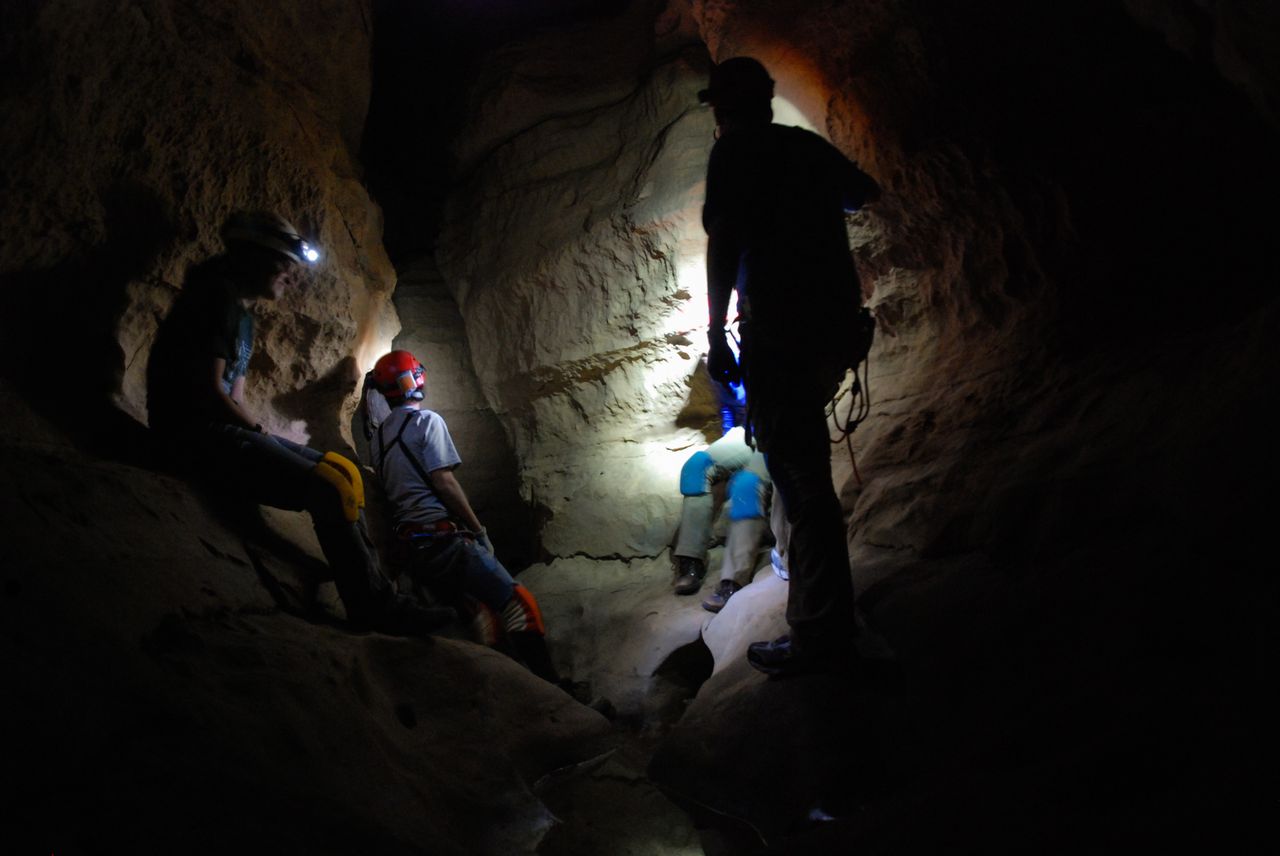
I’ve always enjoyed having fun outdoors, and recently I’ve started to branch out of my usual “going for a walk in the park” comfort zone. My latest adventure took place in the wonderful state of Alabama at a location I wouldn’t have pictured myself being had you asked me a few months ago– a cave. Not just any old, regular cave that people wander into to make-out and spray-paint the walls, but a vertical cave with a super cool 100 ft drop called Sheldon’s Cave.
Photo by Nima Yazdanpanah
For the avid caver, or spelunker if you prefer, 100 ft may not be very exciting, but to me, I was stoked… and nervous. I had gone exploring in horizontal caves before, but had never done any descending (except for my days of rock climbing several years ago). We had some practice at a rock climbing wall, but I was still nervous for the real descent. It is a very uneasy feeling having to rely on a skinny rope to hold your weight as you ease over the edge of cliff. “Oh, just lean back and trust the rope.” Trust the rope?! But we just met! So, with my left hand in a death grip on the rappel rack and my right hand in a death grip on the loose end of the rope, I (very slowly) made my way over the edge of the cave and down the side. By the time I got about half way or so, I eased up and realized how awesome it was that I was descending below ground level, about to go exploring another cave.
You may be thinking, “What the heck is this rappel rack she is talking about?” A rappel rack (see one in action here) is a J-shaped device made out of aluminum and/or steel with bars running between the two sides of the device. The rope gets woven between each bar to create a friction force which counteracts the force of gravity and slows the descent. The speed of the descent can be adjusted by either adding or removing bars or by sliding the bars up or down. Adding bars increases the surface area in contact with the rope, increasing the amount of friction between the rope and the rappel rack, decreasing speed. Sliding the bars up increases the angle of contact between the rope and bars, once again increasing the amount of friction and decreasing speed. This idea of angle of contact is best exemplified in pulleys, where the tension (pull) of one side of the rope can be calculated using the tension of the other side of the rope and the degree of contact the rope has with the edge of the pulley (Capstan equation).
The diagram above shows the amount of contact the rope has with the rappel rack for the given configuration; areas of rope within the angles shown are places where the rope is in contact with the bars and normal (contact) force is being applied. This is how I had my rappel rack set up for the descent, and being a scaredy cat, I was definitely not about to take off any bars in order go faster. I was perfectly content with my snails pace. I could have gone even slower had I slid up the bars, but I didn’t want to look TOO much like a newb.
At a stand still, the net force on the system (me and the rope) is zero, so the amount of friction supplied by the rappel rack would be equal in magnitude to the amount of gravitational force on my body (assuming an ideal situation without any deformation of the rope). Assuming the static friction coefficient for the rope against the steel rappel rack is 0.25, the minimum amount of normal force required to counteract gravity and keep the rope from sliding can be calculated. Since I weigh about 150 pounds (68 kilograms), the amount of gravitational force on my body equals about 666 Newtons. What a lucky number! Setting this equal to the amount of friction required, the amount of normal force the rappel rack must supply against the rope is 2665.6 Newtons. Dang! That’s a lot of Newtons, seeing as one Newton is about equal to the amount of weight of one apple. That’s enough apples to make a whole lot of pie!
The rappel rack doesn’t actually supply this much normal force alone, which is why I still moved down the rope even with all of the bars on the rack. This is where my hand holding on to the rope came into play. If I ever got to going too fast, I would squeeze the rope with my right hand and would stop moving (or slow down, depending on how hard I squeezed). Just like the rappel rack, my hand supplied a normal force against the rope which created friction and counter-acted the force of gravity.
Now that I have blown your minds with my awesome tale of caving and physics, enjoy these great pictures taken by cave master (joking), Colin Lehman:
Pretty foliage!Oh, don’t mind me! I’m just going down into this deep, dark hole!The inside of the majestic cave.One caver made a new friend… with a bat!The path to the cave was covered with cotton. It had all been harvested by the time we got back.The cave master making his way down.Sweet view!A fellow caver moving up!
Source:
The Mechanics of Friction in Rope Rescue by Stephen Attaway, Ph.D. (Find it here)
It is an indisputable fact that I am deeply, irreversibly, head-over-heels in love with pie. Apple. Pumpkin. Blueberry. Banana Cream. You name it, I’ll eat it.
As Thanksgiving approaches, I find myself longing for a slice of warm apple pie with a big scoop of vanilla ice cream. I also find myself contemplating the scientific majesty that is an apple pie.
What majesty, you say? Well, friend, allow me to take you on a journey — from orchard to oven, from farm to table. Prepare yourself. Cozy up. Grab your snuggie. A tall glass of hot chocolate wouldn’t hurt either. Of course you’ll need some marshmallows. Got the marshmallows? Good! Let’s begin.
There are few evolutionary success stories as impressive as the apple’s. Think about it. This fruit was able to evolve a trait so desirable (its deliciousness) that we humans have taken it from its ancestral home in the mountains of Kazakhstan to every populated continent on Earth. We have immortalized the apple in art; we have juiced them, fermented them, sliced them, bobbed for them, dipped them in caramel, engineered machines for the sole purpose of coring them and, yes, made them into delicious pies.
You might think with all its uses that the apple must be a simple, easy fruit to grow. Humans are lazy, right? Surely we wouldn’t grow a fruit like the apple so much if it weren’t an easy thing to do. Wrong. False. Incorrect. Lies!
Apples are incredibly complex. Apples are extreme heterozygotes, meaning that the genes they inherit from their parents can be radically different between one apple and another apple on the same tree. If you were to grow a tree from a seed taken from a Granny Smith apple, you would most certainly, not obtain a tree filled with Granny Smith apples. Your apple tree would likely produce “spitters” — nasty, sour apples meant only to be spit out. Every so often a sweet apple would be grown by chance, but not with consistency.
So how do we manage consistency today? How do we grow a Granny Smith apple tree? Well, in order to produce a Granny Smith apple tree, you would need to graft one. Grafting is a horticultural surgical procedure whereby the tissues from one plant are transplanted into another, allowing for asexual reproduction of the primary tissue. As a result of this process, the tissues from the donor plant fuse with the tissues of the host plant and the resulting fruits are born from the genes of the donor tissue.
Without this process, apples would never have been domesticated; planting an apple tree would be like opening a box of chocolates — you’d just never know what you’d get. It would be an adventure, yes, but 99 times out of 100, it’d be an unhappy one. Through grafting we have become slaves to the apple, spending billions of dollars per year on pesticides aimed at keeping the sweet apples we love away from the dark precipice of extinction. And for what? For pies. And to be perfectly honest, that’s all the reason we need.
The next thing you’ll need for your pie is a crust. There are many recipes that one can use to make a pie crust. But so far as it is an indisputable fact that I am deeply, irreversibly head-over-heels in love with pie, it is also a fact that the best pie crust recipe is indisputably my great-grandmother’s recipe. But I will not be supplying you with this recipe. This is not a “how-to” guide. Get over it. I will however, confide in you, my dear reader, the identity of one crucial ingredient. It’s flour. I know. Revolutionary! But don’t tell anyone. It’s a secret. Now that you know this deep, dark secret, you probably have some burning questions. If you’re like me, the first question you are probably asking yourself is “What are the explosive properties of flour?” Lucky for you, I have the answer!
As it turns out, flour is, indeed, an explosive substance. Flour is composed primarily of starch, which is, in turn, composed primarily of glucose. Glucose is highly combustible — it reacts with oxygen to produce carbon dioxide and water. When ignited by a flame, the sugars explode! Boom! Normally, this process is highly controlled — cells convert glucose into pyruvate through glycolysis and that pyruvate is then converted to carbon dioxide and water through the citric acid cycle and oxidative phosphorylation.
Through these processes animal cells produce the energy needed for carrying on with their day-to-day metabolic processes and that’s all good and well, but it’s probably not the type of combustion you were thinking of. Where are the explosions? Where’s the excitement? Well … this is the excitement. Your cells have the ability to carry out explosive reactions in a manner so intricate and organized that they cause no harm to you whatsoever — in fact, they help you. On a second-to-second basis, your body is “exploding” sugars and harnessing their energy. So put that energy to good use. Invest it in digesting more pie.
Of course there are many other ingredients that go into making the perfect apple pie (cinnamon, nutmeg, sugar, butter), but we will not address those here. We will, instead, end our journey with a discussion on ice cream — apple pie’s obligatory sidekick. Ice cream is a dairy product, meaning it is derived from mammalian milk. Humans have been consuming milk since the Neolithic revolution, but it wasn’t until Louis Pasteur invented pasteurization that dairy products such as ice cream could be made and stored for extended periods of time. Pasteurization is the process by which milk is heated and cooled in order to reduce the amount of pathogenic microorganisms in the product. Once pasteurized the milk is free to be used as an ingredient for whatever ice cream your heart desires! But as for me and my heart, we will desire vanilla.
If you’ve stuck with me this far, congratulations, your dedication is about to pay off! How, you ask?! Why with a discussion on the colligative properties of rock salt, of course! If you wanted to make your own ice cream, you could do it by filling a bag with milk (1/2 cup), sugar (1 Tbs), and vanilla (1/2 tsp), sealing that bag, and placing it in a larger bag filled with ice (4 cups) and rock salt (4 Tbs). Gently massage your bag for 5 minutes, or so, and voila, you’ve made yourself ice cream!
Witchcraft! You exclaim. No, silly! It wasn’t witchcraft. It was science. You see, salt has the ability to lower the freezing point of water (meaning that it enables water to remain liquid beneath its freezing point). For your ice cream, this means your ice/salt mixture will keep your milk/sugar mixture sufficiently cool for it to freeze into ice cream despite the fact that it’s sitting in your warm, cozy hands in your warm, cozy room. It also means you have a quick, easy way to make yourself a side dish for your apple pie!
By now you’ve probably finished your tall glass of hot chocolate and are wondering what to do next. This article is almost over; you’ll soon be left on your own. What will you do? Well, if I may make a suggestion; go make an apple pie and some vanilla ice cream. Bake it. Eat it. Respect it. Admire it. After all, it came a long way to get where it is today. Also, pie is yummy and delicious.
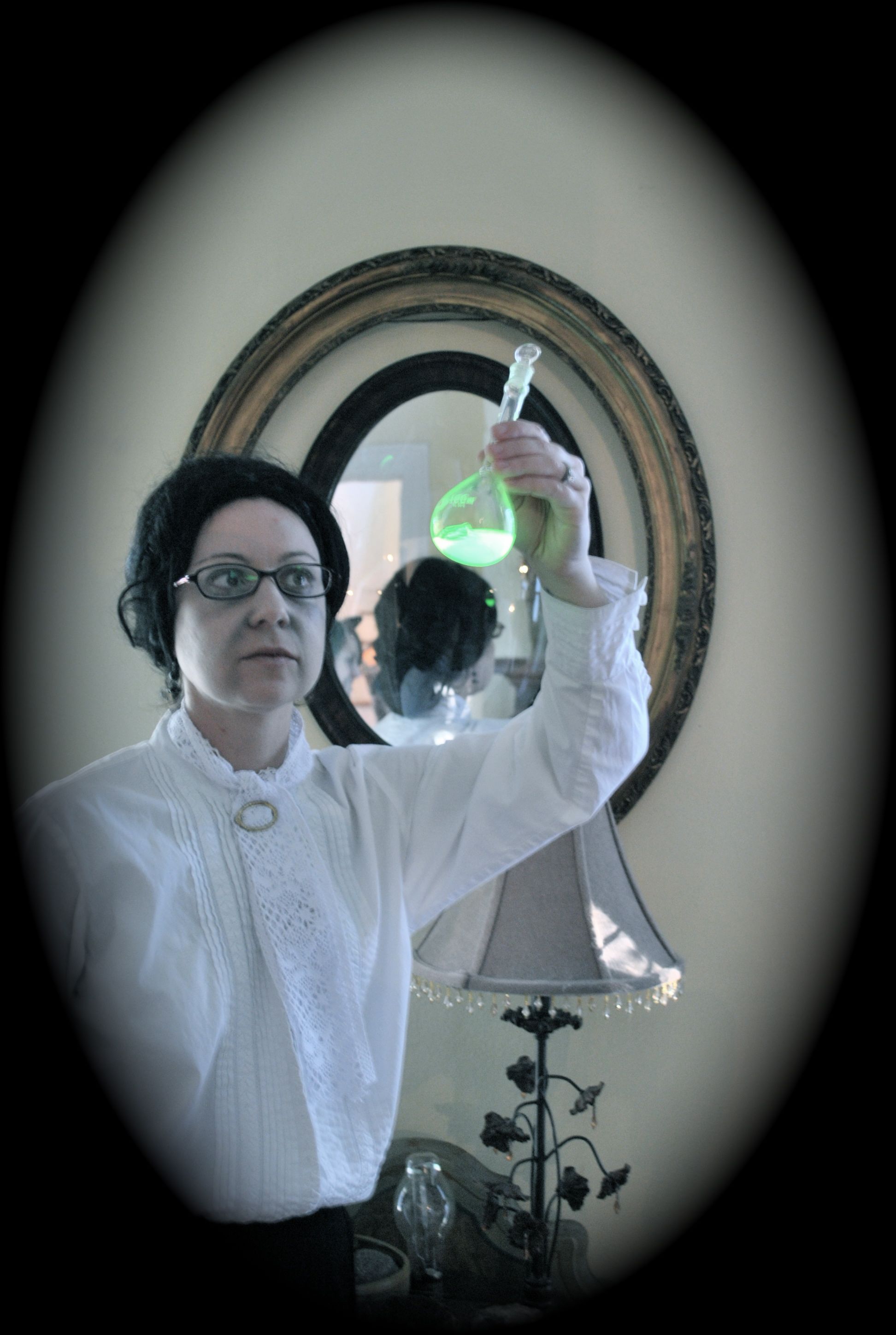
This year for Halloween, why not celebrate Marie Curie, the first woman to win the Nobel Prize? The good news (for you, not for her) is that she died a gruesome death as a result of exposure to the radioactive chemicals she studied so she makes for a spooky costume. Even now, her lab notebooks are so radioactive that researchers that want to look at them have to wear lead aprons! Madame Curie’s official cause of death was anemia, so a little yellow or gray makeup would be appropriate. You can mimic radium by cutting open an activated glow stick and pouring it in a test tube or flask (she used to like to carry her chemicals around in her pocket). I found a Victorian-era skirt at a vintage clothing store, but any dowdy dress will do….creepy AND geeky! Happy Halloween!!!
As a supporter of the “Let’s stop wearing shoes” movement that seems to be taking over the mentality of both young adults and shoe manufacturers alike (that is a later story, though), I often find myself lamenting the amount of shoes I am required to pack when going on vacation with my mother. As a supporter of traveling and not destroying the environment in the process, those same trips with my mother tend to stress me out. Previous trips have found us in France and Ireland in GIANT tour buses that make me cringe when I think of the carbon emissions coming from my enjoyment of a new country.
I have newly found faith in my mother’s traveling compulsion these days. Immediately upon finishing my first year of college, my mother and I hopped on a plane and flew to San Jose, Costa Rica to join a trip with G Adventures, an eco-friendly tour company based in Canada (and one where I was only required a pair of flimsy sandals in order to be comfortable).
The highlights of the trip included white water rafting, ziplining, and a safari with a whole lot of monkeys. So let’s go into picture heavy post, because I very honestly cannot encompass this trip in words.
G Adventures offers many kinds of tours. My mother and I took a YOLO trip, which is a budget-style trip kind of perfect for us. The trip style that interested me the most, and is how our tour guide Jorge started in this line of work, is a “Volontour” trip. Jorge worked at a biology research center studying leatherback sea turtles. Volunteers, through G Adventures, were able to work alongside the biologists, protecting the sea turtles as they hatched.
I’m still a bit in awe of the fact that I got to be in Costa Rica, sharing the tree tops with howler monkeys. I’ll be back when I get over that awe and talk to you guys about college (yes, yes, it is that time).
This past month I had the absolute pleasure of visiting the Atlanta Botanical Gardens as part of class field trip with my BIOL 4440 Plant Physiology class. Located just up the street from Piedmont Park, a quick 10 minute drive or 30-40 minute walk (for those of us without cars on campus, cough cough, me) from Georgia Tech, the Gardens offer year round awesomeness. My first visit to the Gardens was free of charge thanks to Dr. Jerry Pullman, Georgia Tech’s one and only resident plant researcher. Dr. Pullman works with the Research and Conservation division of the Botanical Gardens to study native endangered plant species such as the Georgia Aster and various types of pitcher plants. Also due to Dr. Pullman’s sweet connections with the Garden’s staff, my classmates and I received a tour of the greenhouses led by the director of Research and Conservation, the lovely and informative Dr. Jenny Cruse-Sanders.
Cruse-Sanders took us through several of the greenhouses that showcase different genres of botanical wonder. The pride and joy of the spring season is their Orchid collection, with a showcase called ORCHIDdaze which runs February through April before a “Gently Used Plant Sale” is held to sell the orchids to the public. However, the Gardens have orchids on display year-round with different seasonal displays and house an Orchid Reference Library for more bookish visitors, with public access available on Tuesdays. The Research and Conservation department runs a program for the restoration of the orchids native to Georgia. The Gardens also specialize in carnivorous plants, specifically Asian pitcher plants, Nepenthes, which can be seen in the Special Exhibits area of the Fugua conservatory. Also found in the conservatory are tropical conifers, some of which can be seen in the Tropical Rotunda, and Amborella, a rare genus of small trees native to New Caledonia and thought to be one of the earliest angiosperms.
One the most enjoyable indoor exhibits for me was the Orangerie, which allows guests with the opportunity “to see, touch and smell some of the plants which are so important in our daily lives.” The Orangerie includes common foods such as vanilla, tea, coffee, cocoa, ginger, and many others. The botanical geek in me loved seeing these foods in the context of the whole plant, rather than just the isolated products.
The Botanical Gardens work not only with plants, but also animals; in the tropical conservatory, quail and yellow saffron finches can be found among the underbrush and canopy, and snapping turtles and various types of frogs can be found in and around the water feature. My class was also treated to a tour of the amphibian displays and amphibian research lab by Amphibian Conservation Scientist, Dante Fenolio.
The outdoor areas have much to offer as well, including The Edible Garden, The Rose Garden, The Southern Seasons Garden, a children’s area, and much more. The Gardens offer several events and classes, both delicious and educational, throughout the year, as well as volunteer opportunities. The garden is having an Endangered Species Day on June 2nd, where you can learn more about the work the Botanical Gardens do with rare plants and animals. Science Cafe is something I plan checking out soon, a climate change talk series held this May through October on the third Thursday of each month. The series will feature regional speakers discussing different aspects of climate change. This month’s lecture is titled “Pandora Botanicals: What kind of plants might grow on OTHER planets,” led by Dr. Angelle Tanner from Mississippi State University. More information on these events and other information about the Gardens can be found at http://www.atlantabotanicalgarden.org. Happy Exploring!
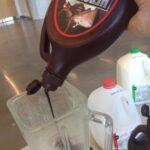
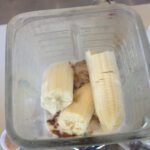
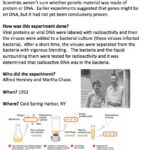
So, it’s April 20th and you want to celebrate DNA day, but aren’t sure how? What about making chocolate smoothies in honor of Alfred Hershey and Barbara Chase, the rockin’ scientists whose experiment finally convinced everybody that the information for your traits (i.e. genes) was contained in DNA rather than in protein, which was the other contender . They made their discovery 60 years ago so now’s a good time to call them out.
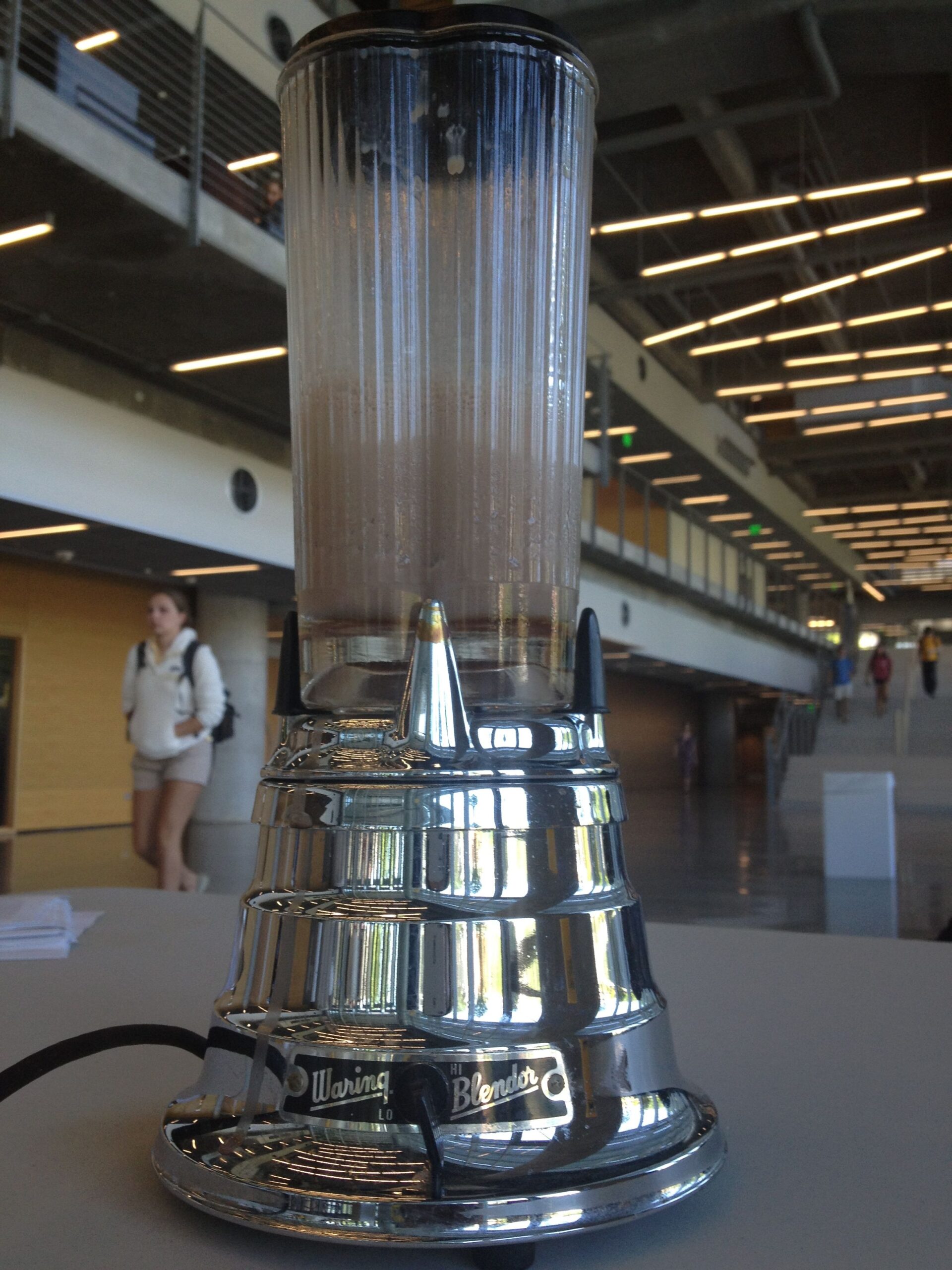
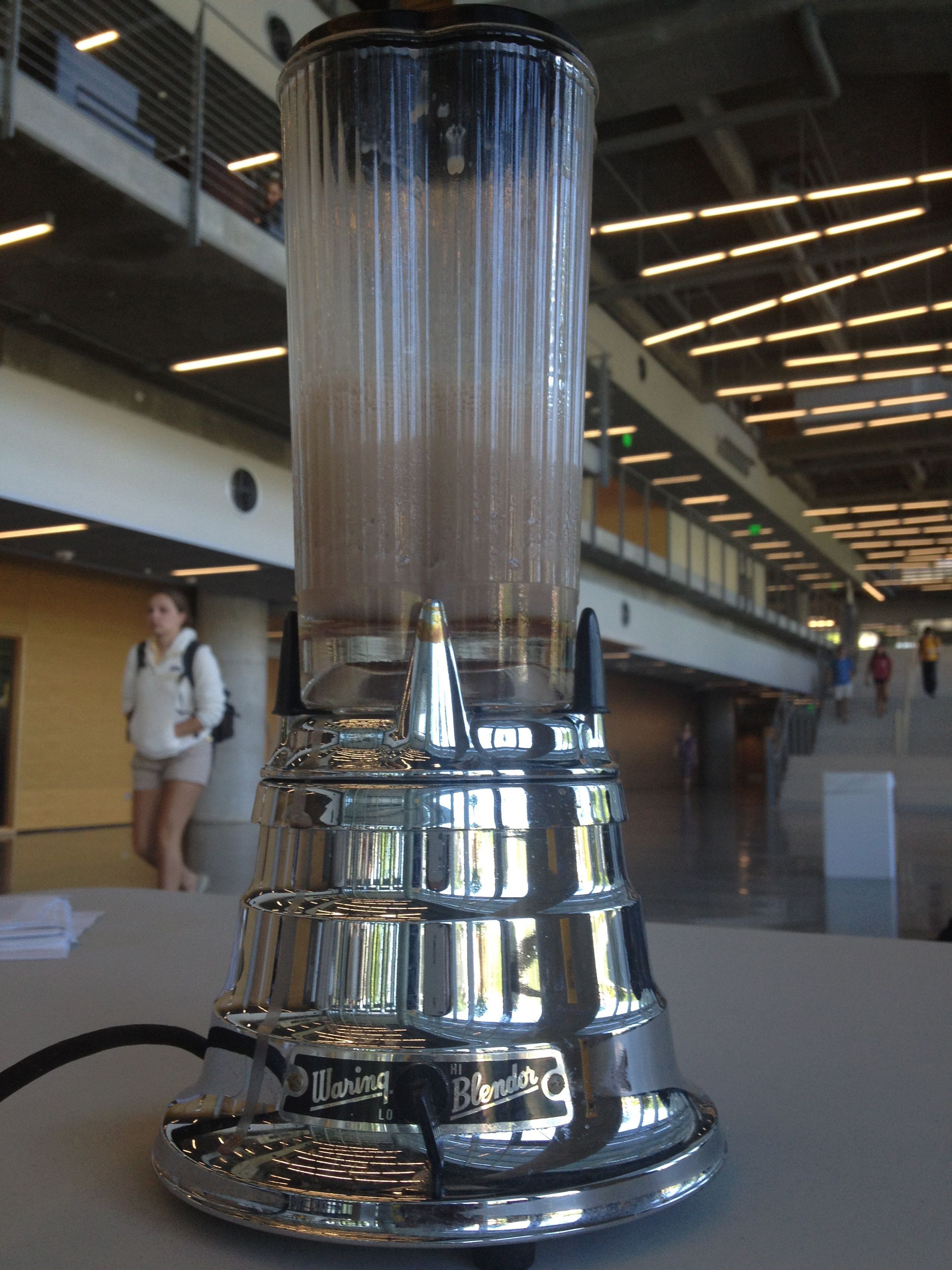
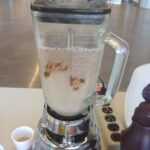
Now, 1952 was a prosperous time in America and while folks were makin’ babies, watching TV and buying $0.20/gallon gasoline to fuel their big, beautiful cars, Hershey and Chase were hanging out on Long Island at the Cold Spring Harbor Laboratory, mixin’ up phage (bacteriophage) and E. coli. Phage are viruses that infect bacteria and when they do that they bring genetic information along with them. Hershey and Chase had the genius idea that if they labeled the different parts of the phage with radioactivity and then tracked which parts went INTO the bacteria, they could figure out what genes were made of. So, they labeled the phage protein with radioactive sulfur or the phage DNA with radioactive phosphorous and added it to the bacteria for a little while. Then they used a blender (like the vintage Waring blender pictured here) to knock off any parts of the phage stuck to the outside of the bacteria and, lo and behold, the radioactive DNA was inside the cells carrying the genes and the radioactive protein got knocked off of the cells and floated away.
The results of the Hershey Chase experiment paved the way for the golden era of molecular biology and actually made people care about the big paper Watson and Crick put out the next year that proposed the structure of DNA.
So, HAPPY DNA DAY! Here’s how you can use YOUR blender to pay delicious tribute to these important scientists.
 “One man’s making cheap booze is another man’s crafting an ecosystem in which a microorganism can thrive.” That’s my usual response whenever someone’s eyes go wide upon hearing that (a) I’ve used home brewing examples in my general chemistry class or (b) I’ve started plotting how to turn my six-week-old son into a young homebrewer. My love affair with homebrewing started in graduate school, where I was mesmerized by a group of older graduate students who were obsessed with brewing beer at home. This was back in 2010, before the “craft beer revolution” was co-opted by every dime-a-dozen hipster between Greenwich Village and The Mission. Cynical enough to be driven to drink but clever enough to apply chemistry to produce alcohol, my pioneering idols could be heard every Friday night discussing the challenges of growing hops at home or the merits of various sparging methods (read on). I was hooked.