As my previous article mentioned, this will be focused on what my role in The Devil Wears Science and what my group had accomplished for everything to run smoothly. I was in the group called Too Hot to Handle along with Sachit Swaminathan and Ashmitha Aravind.
Below showcases what was going on since October 2022. You would think that it was mostly researching about the science behind our piece of clothing, you aren’t wrong, but we also had to take into mind the time limit in presenting our findings in a fashion show, why was it important, etc.
Brainstorming:
We divided into groups, one for each professor
We started to through out ideas based off what everyone was involved in on campus or what they like to do (hobbies/clubs/organizations)
We came to an agreement to focus on bees
it was also due to that Dr. Leavey was our professor and she works with the bees
Dr. Leavey is the advisor of the beekeeping club so it was like we had a foot in the door before we started
She gave us ideas on what type of science to focus on:
heat exhaustion/heat stroke
beekeepers suits pros/cons
real world examples
other professions that deal with this
GT related research work
Dividing work within our group:
We all decided to research information about heat exhaustion, heat stroke, the science behind both of these topics, examples in the real world and any experiment/research that GT might be involved in related to our topic
Some specific topics that we focused on: prevention, treatment, consequences, examples, researchers at topic
February – March:
Dividing into groups helped us obtain 5-6 different topics that we could discuss along with related clothing items.
We kept researching on our topics to focus on the main points, which eventually led to the writing of our script.
We had to keep our script within 5-6 minutes which allowed the model(s) to walk on the runway and for the audience to not get bored.
Deciding what we had to say and the time limit was harder than we thought. There was a lot of crucial information that we wanted to include but had to keep only the main points
March (me):
In addition to to the Too Hot to Handle research, I was asked to translate the Tagua nut group’s script to possibly present it in Spanish.
I received the script the week before and had time to translate it before our dress rehearsal.
Dr. Mendelson and his friend that showcased in the Tagua Nut presentation
The Day Before:
We did a dress rehearsal in class to make sure each presentation was on time and that no group missed important information.
Me personally: I researched information about heat stroke/heat exhaustion and presented a script for my classmates to edit.
I translated the script, presented them with any feedback and ran it to see if it was within the time limit.
Day of event:
We got there 3 hours before show time to set up and make sure we didn’t forget anything.
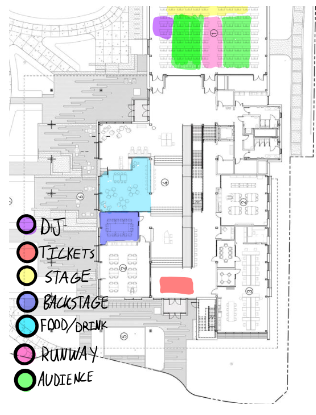
We set up the room, music (+ DJ came), the presentation/slides for timing and smoother transition
Other than minor microphone issues, each presentation ran smoothly and within the time limit
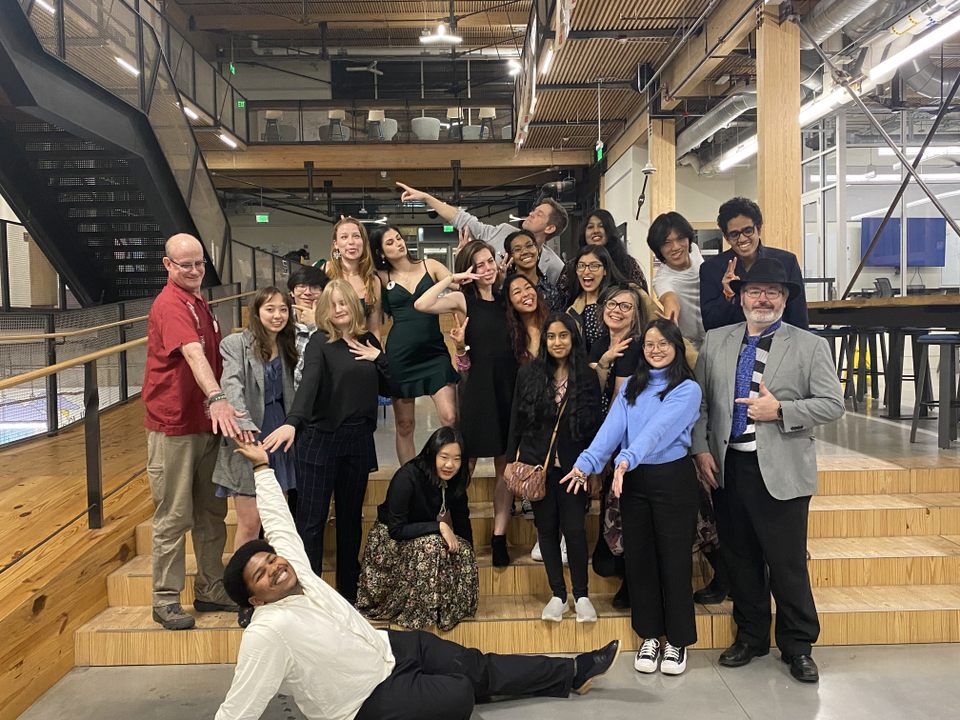
In addition to our fashion show, we let the audience have their own fashion show. I loved how our event was so interactive and hope everyone enjoyed it.
Whew! That was a rollercoaster of emotions. It has been a couple of weeks since our Atlanta Science Festival (ASF) event, The Devil Wears Science. We have been planning this fashion show since October 2022. All the hard work paid off and I couldn’t have done it without my classmates and professors.
This article will be focusing on the what was done leading up to the event (like a behind the scenes):
October: ASF idea brainstorming
We had to submit our proposal that had to include: title, teaser, price, audience, etc.
Event Description: During this event the audience will explore new scientific and technological innovations in fashion in the form of a fashion show. We will have presentations of fashion prototypes and ideas in science fields like textiles, chemistry, sustainability, engineering, and wearable devices. While presenters talk about the science and styles, models will show off these designs on the catwalk. At the end of the all the presentations, the audience will vote on their favorite designs. After the show, there will be a brief Q&A with the presenting scientists and fun networking opportunities. Audience members can participate by dressing up in their own scientific style for the opportunity to win small giveaway items like stickers, t-shirts, etc.
We adjusted our teaser to focus on the audience we wanted to bring
Teaser: Join Georgia Tech STEMComm in the fanciest and nerdiest fashion show of the year! See scientists, designers, and engineers showcase the newest innovations in fashion and wearable science on the runway. Vote on your favorite designs and strut in your own scientific style to win special event giveaways!
We vaguely outlined main deadlines up until the event date
November and December: Storyboard
Once we had our idea finalized and approved, we got started
We started to figure out main topics and clothing on what we should showcase (like clothing types)
We were also figuring out what campus organizations might be interested to collaborate or organization on/off campus. Some that we thought of are listed below:
The Hive
ID school
Beekeeper’s Club
Drama Tech
January:
With a new semester, we lost some members but we also gained new members.
We got back on track with planning the event
Created groups based on what everyone was interested in
We started dealing with advertising and marketing
We also finalized the event venue, event date/time
Kendeda Building
March 11, 2023 at 7pm
We also came to an agreement with what items of clothing we will be showcasing and what researchers would be included.
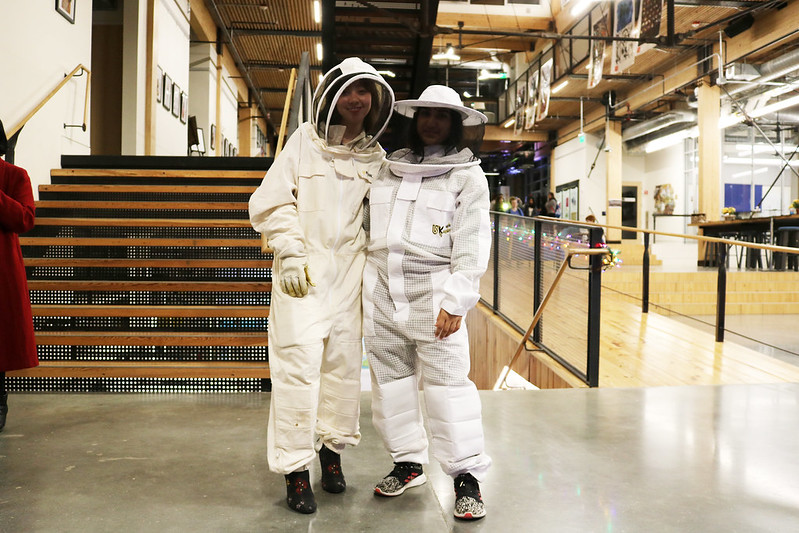
Beekeeper’s suit
3D printing on fabric
Tagua nut fashion
Wearables and Interactive Product Design Lab (Jim Budd)
We started outlining our presentation: what needs to be included, key points, science behind the clothing etc
February + Beginnings of March:
Finishing up our presentations on what we will be presenting at the event
Each group finalized their script to be within the time limit and to be able to include everything related to the item of clothing, the science behind it and anything else useful
Any last minute venue preparations and items that needed to be brought to the event (not sure who made this)
We reached out and kept in contact with our models
We kept up with the marketing and ticket sales
We then did a dress rehearsal the day before the event to make sure everything was within time, nothing left out, etc.
Be sure to tune into my next article where I’ll talk about what my group presented in the showcase and what my role was in the event. Also, what additional tasks we each had to do and help out our fellow classmates.
At the Atlanta Science Festival, me and my team members, Ashmita and Claudia, had the pleasure of getting to talk about Heat Stroke to a large audience of individuals and explain the seriousness of it, and why it’s so important to pay so much attention to it and take so much initiative to prevent it. Not only did I enjoy this experience because it gave me experience speaking in public in front of a large group of family members! But, in doing so, I myself actually became more interested in the topic and its political, social, and economic implications. Being a Biomedical Engineer, this topic also hit close to me as it reminded me of a pressing global problem, where the solutions still have significant limitations in their capabilities and how accessible they are all around the world, an issue that I commonly learn how to tackle throughout my degree. In this post, I hope to do two things. I hope to share the information and insight I learned about heat stroke with those who were unable to come to the Atlanta Science Festival. Second of all, I hope I can share with you some of the ways I have thought about solving this pressing problem of Heat Stroke and my thought process to go about solving it!
First of all, many of you are probably wondering, haven’t we all dealt with Heat Stroke? After all, Atlanta is perpetually hot all the time! Heck, it’s just the beginning of May and it already feels like it’s 140 degrees. However, as miserable as that might have been, I promise you that that was not Heat Stroke! What you likely dealt with was Heat Exhaustion, which is extremely uncomfortable, but I promise you that it is not nearly as bad as Heat Stroke! With Heat Exhaustion, at least your homeostatic mechanisms are still working. You know your Homeostatic Mechanisms, the ones that ensure that your body is still in balance, even with changes in the environment to prevent you from developing diseases or dying?! Do you remember how, for instance, when you have gone and exercised quite a bit or you have been outside in the hot sun for some time, you have sweat quite a bit? These are examples of your homeostatic mechanisms kicking in, so you do not have a detrimental response to these environmental changes. The problem, though, is that like everything in life, these mechanisms designed to protect you can fail. Eventually, the hypothalamus, which is responsible for maintaining this homeostasis gets worn out. When that happens, you are basically exposed to this significantly increasing temperature, without any defense mechanism to fight back (Garcia 6). At that point, you are essentially overheating like a computer which is something that can lead to significant consequences, including death, which I will discuss as we go forward!
So now that you know the difference, the next thing that you are probably doing is, what can we do to better deal with the increasing incidence of Heat Stroke in our society? First of all, healthcare providers in our society have to do a better job of treating Heat Stroke with the same level of urgency as other critical illnesses and have to treat it more like diseases, such as Appendicitis, where you will immediately die if you do not get the necessary surgery. This is extremely similar to that. In the case of Heat stroke, not getting treatment immediately can lead to muscle, kidney, heart and even brain damage. The other side of this argument is that more effort has to be taken by the individual to prevent the detrimental consequences of heat stroke and take early action before it is too late, and there are significant, everlasting effects. Simple steps may seem inconvenient, but they can ensure prevention of the worst outcomes from heat stroke. For instance, steps, such as drinking enough fluids, looking out for health related problems with medications, applying sunscreen, and avoidinging overworking in the heat can go a long way. Additionally, significantly more funding has to be spent by the government in investing in the protective equipment necessary to effectively prevent heat stroke as investing money in vaccines, and treatments for other diseases. While two solutions, besides just protective equipment, Neck Fan and the Ice Pack, have gone a long way in attempting to prevent and mitigate Heat stroke by helping to constantly blow cold air around a person’s neck, so as to help that person cool off and bring their body temperature down and reducing body temperature by promoting the contraction of blood vessels; thereby, ensuring that joints are less stiff and that muscle spasms are less likely to occur, these solutions have limitations in the long-term. Eventually, an issue will arise with long-term use of these interventions and something more will need to be done to prevent a significant rise in temperature in just a short period of time. This is especially true for individuals who are in jobs that exposes them to significant amounts of heat on a chronic basis (Kim 4). Additionally, while current PPE are effective in preventing certain infections, they also add to the problem of heat exhaustion and heat stroke (Steps to Put on Personal Protective Equipment (PPE).” World Health Organization, World Health Organization).
This is where research from Georgia Tech and other universities in this area has come to extremely significant use in helping to create longer-lasting and more effective solutions. The solution from Georgia Tech researchers resulted from a way of thinking that was completely outside the box of the problem, but got to the heart of what was necessary! Tech researchers have found that with the creation of a sensor system, through the utilization of a cloud based sensor system, not only can heat stroke be treated effectively, but its incidence can be significantly reduced to begin with (GTRI Helps Develop Wearable Sensor System to Prevent Heat Injuries among Soldiers). Trust me, this technology is way too much for me to understand! However, the gist is that researchers will be able to obtain information about changes in soldiers’ temperatures over significantly large distances. Too large of a heat increase in too short a time will still be a problem. Make no mistake! However, the hope is that if a rapid heat increase is detected before it becomes an extreme issue, a soldier can get the help that they need to prevent complications (Foy 2). This is especially true with the use of local networks, which should be able to tell a soldier whether there are any soldiers in close proximity to them that can assist them. In the long-term, I hope that I can build upon this work to create an internal cooling mechanism to bring down the temperature and a method to help predict baseline normal temperature, based on the thickness of the suit and the environment an individual is working in. For now, though, I hope I have at least been able to better provide insight into why Heat Stroke is such a big problem and why it is one that both more individual and societal effort is needed to solve!
Citations:
Akins, Anna. “GTRI Helps Develop Wearable Sensor System to Prevent Heat Injuries among Soldiers.” Institute Relations, https://gov.gatech.edu/node/515.
Kim, Siyeon, et al. “Frequency of Firefighters’ Heat-Related Illness and Its Association with Removing Personal Protective Equipment and Working Hours.” Industrial Health, U.S. National Library of Medicine, 4 June 2019, https://www.ncbi.nlm.nih.gov/pmc/articles/PMC6546580/.
Foy, Kylie. “New Device Detects Heat Strain in Military Trainees.” MIT Lincoln Laboratory, https://www.ll.mit.edu/news/new-device-detects-heat-strain-military-trainees.
Attending the Special Interest Group on Computer Science Education (SIGCSE) Conference in Toronto in March was truly an eye-opening experience for me. As a student research assistant in the Bridge-Up STEM program, I had the privilege of presenting my work at the conference and gained a new perspective on university-level education.
I attended the conference from March 15-March 18 with Georgia Tech researchers and researchers from the National Center for Women and Information Technology (NCWIT). The Bridge-Up STEM program, a collaborative effort between GT and NCWT, equips women and non-binary people to do computing research under the mentorship of a College of Computing professor while also mentoring high school students. I specifically attended the conference to present about my work as a teaching assistant to a cohort of local high schoolers who had a research fellowship through the program.
During the conference, I had the opportunity to understand the various aspects of planning a computer science education at the university level, as well as reflect on my own experience doing so for a high school audience.
In particular, I realized the importance of the way in which community resources are offered to younger students seeking a foundation in computer science. The panel discussion with other researchers highlighted the challenges of selecting the most suitable students for a research fellowship program aimed at students from marginalized backgrounds. While selecting only straight-A students might exclude those who are interested but haven’t discovered computer science activities yet, identifying students who don’t know much about computer science but have the potential and interest to learn can be challenging during the selection process. Such challenges encouraged me to think outside the box and come up with innovative solutions to better serve students and increase accessibility to computer science education.
Moreover, attending workshops and panels during the conference hosted by other educators allowed me to have a deeper understanding of university-level computer science education from a professor’s perspective. One panel discussion that particularly caught my attention was on the “5 things not to do when teaching.” One of the mistakes which was discussed by a Harvard professor involved their computing college’s initiative to reinvent office hours for computer science undergraduate students.
The new initiative replaced the previous format, which featured rows of desktop computers in the basement, with long dining hall tables, and created a new software program that allowed students to ask TAs for homework help. However, this initiative ultimately did not succeed as planned, as most students waited until the last two days of the weekly assignment’s deadline to come to office hours, and when the software for TA waiting times became overloaded, the students had to raise their hands, and there weren’t enough tables for everyone.
The panel audience mainly consisted of university professors who shared their experiences with implementing various office hours initiatives. However, there was still a gap between the initiatives implemented by professors and the actual learning experiences of the students. This realization prompted me to reflect on my own experience with office hours for different computer science classes. As a student, I have often experienced the issue of an unbalanced TA-to-student ratio, the resulting frustration, and the difficulties that arise when trying to complete my work.
Thinking about different ways to solve this problem, while taking into account both the student’s perspective and the logistics of professors and educators, I realized that one solution could be to have students write down their question next to their name when they come to office hours, allowing students with similar questions to sit next to each other and help each other out. TAs could also rotate every five minutes, giving each student a chance to ask their question and reducing the overall wait time. Additionally, when a TA helps a student with a particular question, all other students with the same question can sit next to the student and learn what to do.
Attending this panel made me realize that there are always new and innovative ways to approach teaching and learning, and it inspired me to think more creatively about how to solve problems in my own computer science academic work.
Imagine that you’re a Georgia Tech student. Your day starts at 8:25 AM, with your first class, Systems Physiology, which you know you have a weekly quiz in. You wake up at 8:05 AM, and by the time you finish brushing your teeth and changing into your clothes, you see that is 8:10 AM. Your class is not nearby. These are not the times of virtual classes after all! You have to make it all the way across campus, and you have barely any time to do so. You can’t take the bus because the bus is running late. So, you are unfortunately left with only one choice, to run quickly to class and skip breakfast, or eat breakfast, miss your quiz, and hurt your grade. Which do you pick? The answer that many students at Georgia Tech would pick would be to skip breakfast. After all, your stomach can wait right? Your hunger can wait? So what that you don’t eat for a few hours, what is really the worst that can happen? Eventually, skipping breakfast leads to skipping lunch because you are too busy throughout the day to eat lunch, and eventually, next thing you know, you’re skipping dinner because there’s no time to eat any dinner. You have that test to study for that’s happening in the morning that you need to ace, and you can’t even waste a second taking a break to eat. This is unfortunately the reality for many Tech students, and college students, in general, and I hope to tell you today why this reality is so dangerous and the significant harm that it can cause.
Sure, one or two days of late eating or skipping meals may not harm you. Heck, even if you do it for a few months, nothing might happen. However, what I am here to tell you and what I hope to instill in your minds today is that this is not something that you will get away with over the longer term. Contrary to what you may have been told, your digestive system is not ironclad. Just like other parts of your body, your digestive system is prone to diseases and issues. You just don’t realize it because, well, how could you? When your digestion is working as it should, you are less inclined to pay attention to it because you are not in a constant state of pain or distress. It is only when things go wrong that you start to realize how truly important eating properly is, and the impacts of not eating properly. Over time, not eating properly can wreak havoc, not just on your digestive tract, but ultimately your entire body. In fact, not eating properly can be a risk factor for many chronic diseases in the digestive tract and throughout the body that can ultimately increase the risk for cancers, autoimmune conditions, tissue damage, etc. if they continue long enough.
Perhaps, one of the most devastating consequences of chronically undereating, caused by skipping meals is the development of a condition called Gastroparesis. Gastroparesis is a condition that is caused, when the stomach empties significantly more slowly than it should. Think of it this way, normally when you eat something like a sandwich, over 90% or so of that sandwich should be gone from your stomach within 4 hours. Put another way, if someone were to take a look in your stomach after four hours, they should see almost none of the sandwich there. Contrast that to someone with Gastroparesis, where, even after 3 to 4 hours, a noticeable amount of that sandwich may still be remaining in that person’s stomach (perhaps, even as much as 40% to 50% of the meal, or, in some cases, even more). Now, you might think, surely it’s not that big of a deal that your stomach takes longer to empty? What’s the worst that’s going to happen? You’re going to feel a little more full for a little more time, so what? Unfortunately, the symptoms are usually much more severe than this and most people feel much more uncomfortable than just feeling full for a longer period of time. When the stomach does not empty as it should, many people can feel nauseous, have stomach pain, feel like their stomach is overly stretched for long periods of time, etc. (Gastroparesis).
Additionally, the discomfort of Gastroparesis does not just stop with the symptoms of the disease itself. Many people who have Gastroparesis are at risk of developing a significant complication known as a Bezoar. This is when undigested food matter essentially forms a large clump in your stomach or your intestines and effectively blocks the flow/passage of other food or fluid (Palchaudhuri 26). One example is a Phytobezoar, which is made up of matter from cellulose and other cruciferous vegetables that are poorly digested in those with impaired gut motility. There are other types of Bezoars, but the key theme with all of them is that they can be life threatening if not addressed immediately because they can prevent the delivery of nutrients to your tissues. Gastroparesis can also affect your blood sugar levels. You may not think about it, but, usually, when you eat, your stomach moves food to your small intestine throughout the day, keeping rises and falls in your blood glucose levels extremely stable. However, for someone with Gastroparesis, when food that is stuck in the stomach for so many hours suddenly moves to the small intestine all at once, all that sudden absorption of large quantities of food can cause such a significant and rapid increase in Blood Glucose levels. This can have extreme complications, such as causing Ketoacidosis, and causing rapid cell shrinkage, due to a person’s blood becoming significantly more concentrated than it was before(Shakil and Church 1699).
So now that you have heard so much about Gastroparesis, you are probably wondering, how does skipping meals cause Gastroparesis? How does my stomach suddenly lose its ability to digest food properly, just because I skip meals? Well, it turns out that the answer is actually much more logical than you might think. Just like other muscles in your body, the muscles and nerves in your stomach need to be used periodically in order to effectively work. Just like other muscles and nerves in other parts of the body, the muscles and nerves in the stomach atrophy or weaken when they are not being effectively used. For example, have you ever seen the movies about children who were in wheelchairs all their life, and then suddenly tried to walk? Did you notice how it took these children a very very long time to learn how to walk afterwards? Similarly, have you noticed how when you lift weights at the gym, you build muscle, but after a period of time, when you stop working out, you end up losing all that muscle? This is a natural consequence of muscle atrophy. Believe it or not, the same thing happens in your stomach. Moving food is essentially the work out for the muscles in your stomach, and if they stop getting this work out, they get weaker and weaker (Santonicola and Gaglidari 10). To an extent, these muscles can become stronger again by being used again, through eating properly, but it is a slow and difficult process and it is one that I don’t think anyone should have to go through, especially for something this preventable.
So why did I tell you all this information about a random health condition? Well, my intention was not to scare you, but rather just to convey that taking care of your physical health is just as important as success and grades. These days, so much stress is put on our age group to meet certain expectations that I think we forget the importance of taking care of ourselves sometimes, and that is really a significant problem in and of itself. The incidence of many diseases in young people are rising, especially in the western world, and one significant factor is that, these days, young adults are so stressed out that they do not take the time to put as much effort into their health or their physical and mental well being, as they do their success. So, I hope with this post, I have emphasized that not taking care of your health can have significant consequences and is just as important as being successful in school and other facets of life.
Citations:
Chawla, Rajeev. “Gastrointestinal Complications of Diabetes.” Complications of Diabetes, 2012, pp. 100–100., https://doi.org/10.5005/jp/books/11685_10.
Palchaudhuri, Sonali, and Carlos Rees Parrish . “Bezoars: Recognizing and Managing These Stubborn, Sometimes Hairy, Roadblocks of the Gastrointestinal Tract.” University of Virginia Journal of Medicine, 2021.
Santonicola, Antonella, et al. “Eating Disorders and Gastrointestinal Diseases.” Nutrients, vol. 11, no. 12, 2019, p. 3038., https://doi.org/10.3390/nu11123038.
The SAM-e Supplement: say goodbye to depression? TBD.
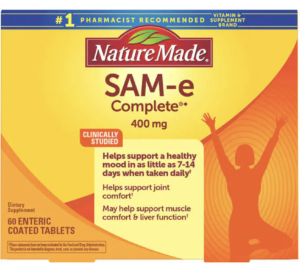
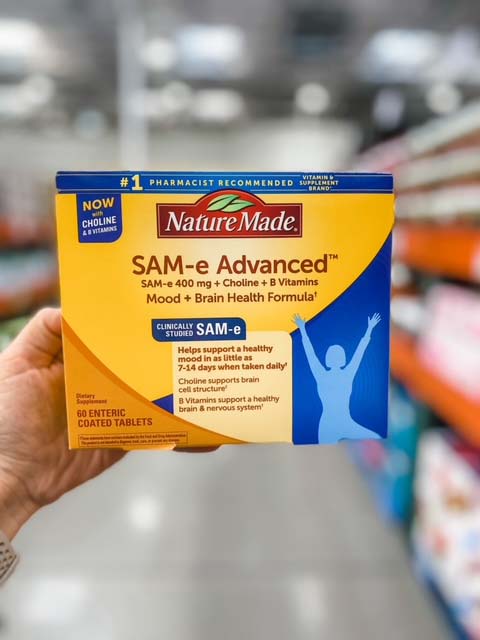
One year ago, as I was browsing the supplement aisle of Costco, a woman approached beside me. She started to fill her cart with boxes of SAM-e Complete. I was clearly contemplating whether or not to purchase some myself because she turned to me and told me that her daughter’s mood and mental health improved drastically after taking it. She couldn’t recommend it enough. Being easily swayed by others’ suggestions, I threw a couple in my cart. I took 400mg of SAM-e for 120 days — every morning before breakfast. It was with me through some of the darkest times of the semester, but looking back, I wouldn’t say it made much of difference (other than to my wallet). It might not have worked for me, but there’s a chance it could work for you.
Understanding Depression
Affecting more than 300 million people worldwide, depression is a common mood disorder that can strike at any age. Its symptoms can range from a lost of interest in activities and sleep problems to feelings of worthlessness and suicidal ideation (“Depression: Types of Depressive Disorders and Their Causes,” 2021). Depression impacts many aspects of an individual’s life and may require medication to treat. However, even with antidepressants, people continue to experience minimal responses to them. Or, they might suffer from one of its many side effects, driving them away from sticking to their medication. Situations like these have sparked the interest in natural remedies for treating depression. Research is still limited, but the over-the-counter supplement S-adenosyl-l-methionine (SAM-e) shows promise and an encouraging future.
A Little History
In Italy, Spain, and Germany, SAM-e has been available by prescription for decades. Only recently has the US started to sell it on its shelves. Still, only a handful of psychiatrists and clinicians have recommended it due to the uncertainty of its safety and effectiveness. Hopefully we’ll see more evidence come to light since many patients might be interested in an OTC option (D’Epiro, 2000).
How It Works
SAM-e is a methyl-donor molecule involved in metabolic pathways. It is found naturally in the body as a common amino acid in the blood. Amino acids are molecules that combine to make proteins, which are essential in supporting the growth and repair of tissue (Farnsworth, 2022). Unfortunately, the form of SAM-e found in food isn’t stable and our bodies can only generate a small amount.
SAM-e helps to produce and regulate hormones as well as maintain cell membranes (“SAMe,” 2020). Since it plays such an important in regulating key functions in the the body’s cells, abnormal levels can lead to depression and liver disease (“S-adenosyl-L-methionine (same): In depth,” 2017).
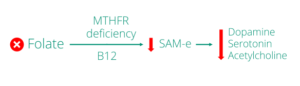
SAM-e levels in the body are dependent on Folate and B12. Depression is linked to deficiencies of these vitamins, which suggests that they could be linked to reduced SAM-e.
Simply put, a deficiency in folate → not able to metabolize folate properly → lower levels of SAM-e → less synthesis of neurotransmitters such as dopamine, serotonin, and norepinephrine.
With the help of SAM-e, depression symptoms can be reduced by stimulating the synthesis of these key neurotransmitters (Mischoulon, 2018).
The Evidence
SAM-e trials to test efficacy have ranged from 2 to 12 weeks and doses of 200mg to 3200mg. In a number of controlled experiments, SAM-e has been found to be more effective than placebo and just about equal to antidepressants when administered into veins or muscles. (Less evidence is available to support the use of oral SAM-e.) Data also suggests that SAM-e can be useful when taken in addition to antidepressants (Papakostas, 2009).
Current findings highlight the need for larger and longer studies to truly understand the value of SAM-e.
Why Could SAM-e Be Better For Me?
SSRIs, a widely used antidepressant, blocks the reabsorption of serotonin, leaving more available for the neurons to use for signaling. SAM-e aids with the actual synthesis of serotonin (Majeed, 2022).
One of the major benefits of SAM-e is its minimal list of side effects. These include digestive problems, mild insomnia, irritability, and anxiety, which tend to resolve after a couple of weeks. Typical antidepressants can cause weight gain, sexual dysfunction, sedation, or cognitive interference (“SAM-e”, n.d.).
Antidepressants typically take 6 to 8 weeks before they begin working, while SAM-e seems to begin in as little as 2 weeks time (“S-adenosylmethionine,” n.d.). Tablets can also be combined safely with other drugs since it doesn’t have many interactions.
How Is SAM-e Not More Popular?
SAM-e has been shown to have a positive effect on depression treatment, but many of those studies were poorly designed or had a small sample size. Data on long-term safety has been limited as well. The perfect dose hasn’t been established either.
Should You Take SAM-e?
Patients who would benefit most from SAM-e are those with mild to moderate depression who would prefer not to see a doctor, are taking a treatment that isn’t working, or wish to avoid the adverse side effects of common antidepressants. The cost, unfortunately, may turn some away from trying out the supplement — one 400mg pill can cost between $.75 and $1.25. Although SAM-e is available as a safe and effective supplement, it is not recommended to treat major depression without advice from a doctor and it should not be considered a replacement for prescribed medication (D’Epiro, 2000).
Even though SAM-e supplements didn’t have a noticeable effect on me, it changed the daughter of the woman at the grocery store’s life. If you are considering an OTC supplement to relieve mild depression symptoms, it could be worth a try!
Since my first year at Georgia Tech, I’ve loved the campus’s architecture. There’s a perfect blend of old highlights that are the landmarks you think of when you think of GT, like Tech Tower and the Einstein statue, to newer buildings that represent the modern and futuristic side of campus, like the Kendeda Building for Innovative Sustainable Design and the renovated Price Gilbert Library and Crossland Tower.
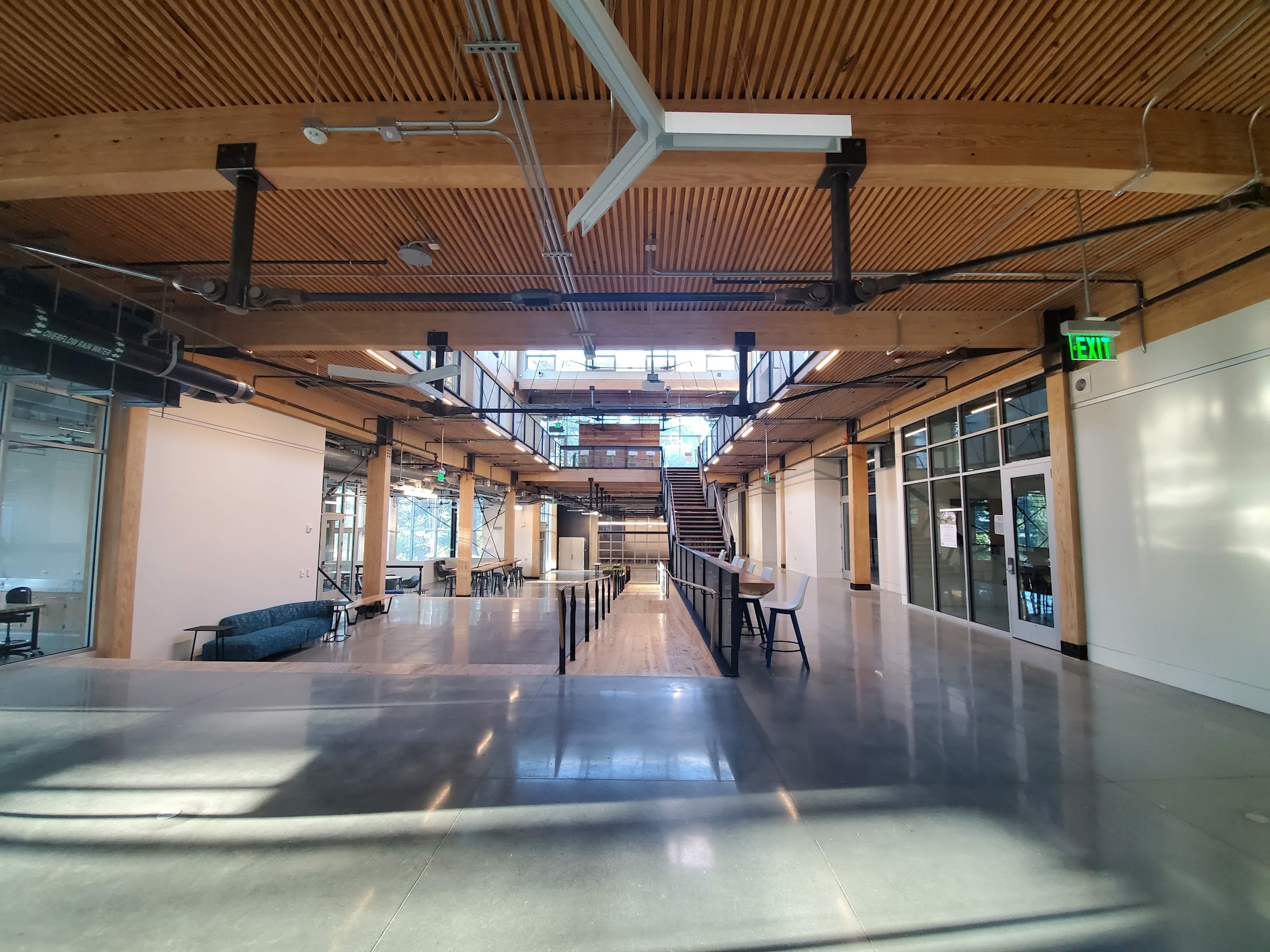
Inside the Kendeda Building for Innovative Sustainable Design.
When I lived in 8th Street Apartments last year, I noticed some exciting designs on each building’s entrance. Outside of 8th Street East, where I lived, there is a model of our solar system with the word “EXPLORATION” under it. I felt that the image was a beautiful tribute to the discovery of how the concept of our solar system developed since 1543. When I was walking near my old apartment a few weeks ago, I rediscovered that etching, and I wanted to take a deep dive into how many similar etchings were on campus. So with my friend, fellow Charged Magazine writer, and uber-talented photographer Steven Yang, we took a fun walk around West Campus, documenting everything we could find.
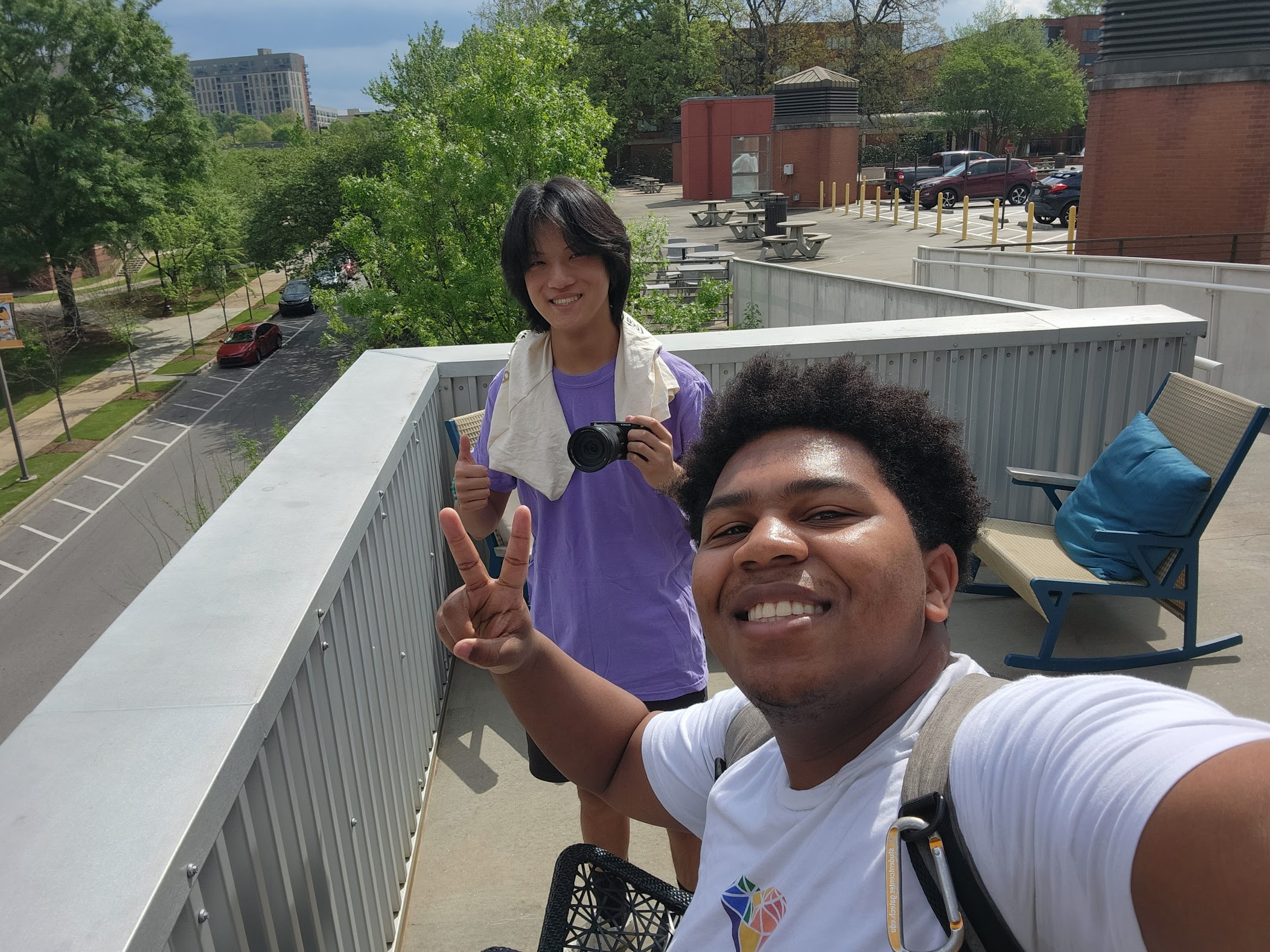
The Charged Dream Team, Steven Yang (back) and Jalen Borne (front) ready to explore GT’s campus.
During our journey, we found six different etchings at the entrances and the backs of student apartments on West Campus. Included were the solar system model mentioned earlier, the Georgia Tech seal, Leonardo da Vinci’s Vitruvian Man (with the word “HUMANITY”), the Earth representing “CIVILIZATION,” the Milky Way for “DISCOVERY,” and a beautiful but simple model of the atom, with “EXISTENCE.” At the Nelson-Shell apartment, there weren’t drawings, but the words “KNOWLEDGE” and “TECHNOLOGY” were marked. Finally, we found a plaque showing when Nelson-Shell was constructed for the 1996 Olympic Games.
What I loved about this adventure was discovering all of the etchings and gaining a deeper appreciation for what the pieces all together mean to me as a growing scientist. The etchings represent all the discoveries that have become the foundations of almost every STEM field and what they mean to society. Including knowledge and technology in the apartments perfectly complements the other buildings by considering the Georgia Tech motto: Progress and Service. We take the knowledge of the past, build new technology that improves the world, and further the values shown in the other campus etchings.
Campus etchings that Steven and I found throughout West Campus. Top row (left to right): Eighth Street East (back), Eighth Street South (front), Eighth Street South (back) Middle row: Nelson, Eighth Street West (back), Shell (back) Bottom row: Eighth Street East (back), Shell (front), Eighth Street West (front)
If you ever walk around campus and see a weird or cool sculpture or marking on the building, don’t just think about why it was added there, but what it means to you as a student. The etchings have become my favorite place to reflect on just how much campus has changed to become a place where its students work to bring the next generation of computer science, medical devices, and energy technology, all pushed by the motto of Progress and Service.
What are your hobbies? Do you participate in a sport, or do yoga, or grab a paintbrush and make some art? How about something that literally sounds amazing – mechanical keyboards, anyone?
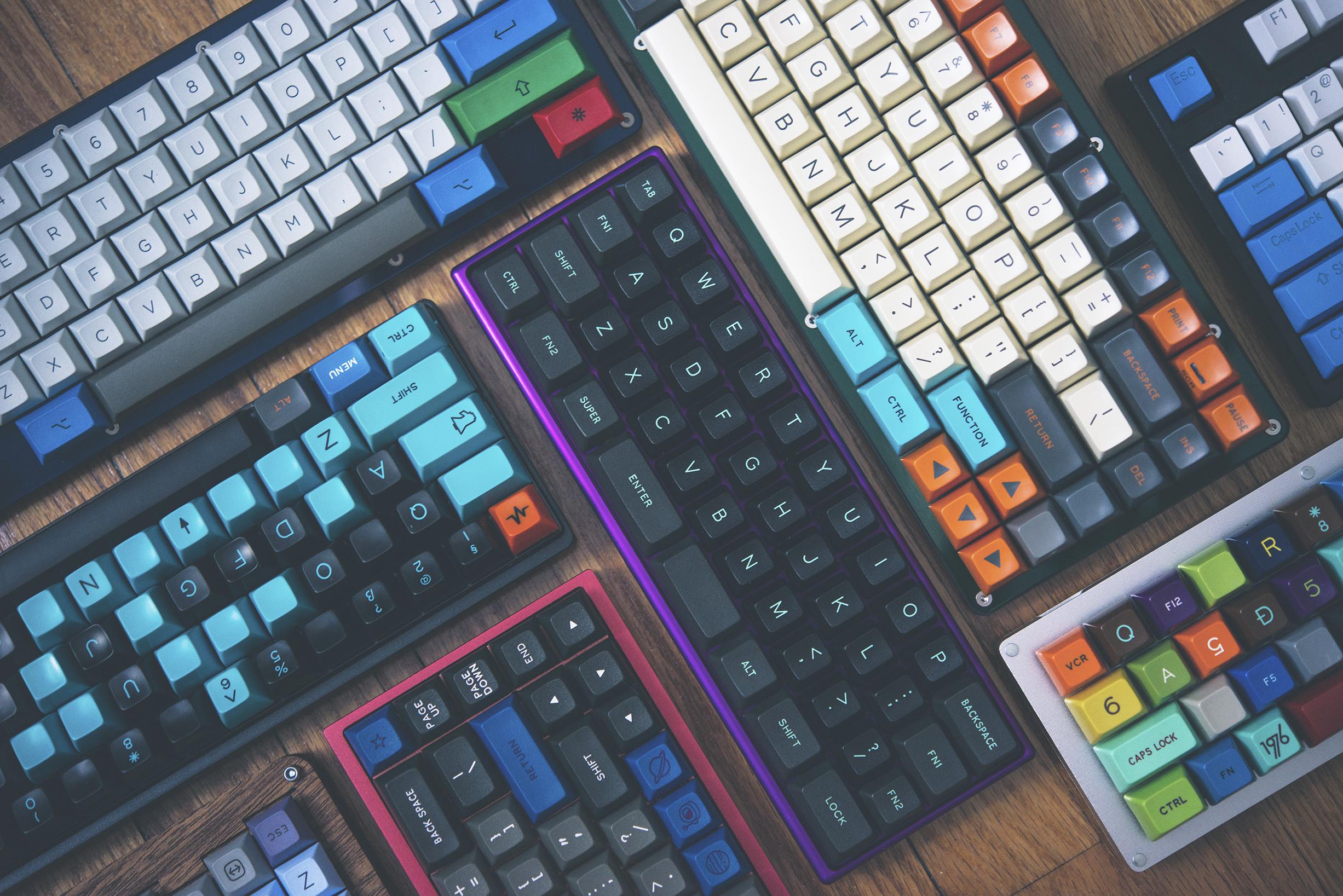
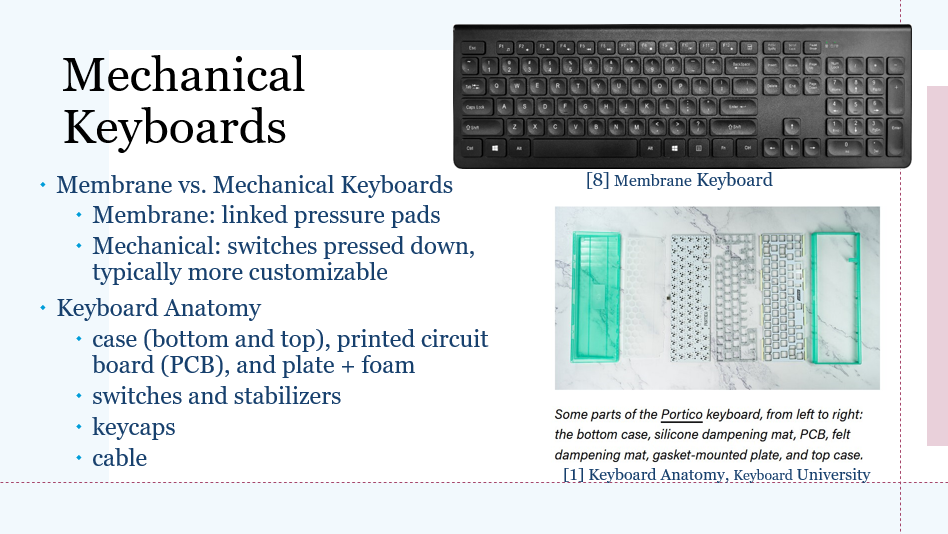
You’ll have to trust me, psychology will be incorporated soon, but first – for those unaware of the magic of mechanical keyboards – let me explain my newest hobby, pictured above, adapted from one of my presentations. Throughout the slides, you’ll see slides I used for the presentation to allow you to experience it as well!
To start, you are likely using what is known as a “membrane” keyboard. A membrane keyboard, such as those on laptops or the keyboards you’ll see waiting at the computers in a library, use linked pressure pads that result in the key press to allow you to type. A mechanical keyboard utilizes switches, which are connected to a printed circuit board (PCB) that allow the key press to be registered and result in the typed character. There are thousands of switches, each that provide unique sensory responses, sound characterizations, and aesthetic options. Soon, we’ll delve into the intricate engineering of this important aspect of the mechanical keyboard.
Focusing on the mechanical keyboard, though there are many modifications and options to add, there are a few basics to create the mechanical keyboard. The keyboard encases a printed circuit board, a plate to mount the switches upon, and typically some foam to help dampen the sounds of the keyboard. With these layers, the switches and stabilizers (used for longer keys, such as the space-bar and shift keys) connect to the PCB, and then are topped with key caps. The top case is put on, plug in the cable, and if all goes well, you have a working mechanical keyboard!
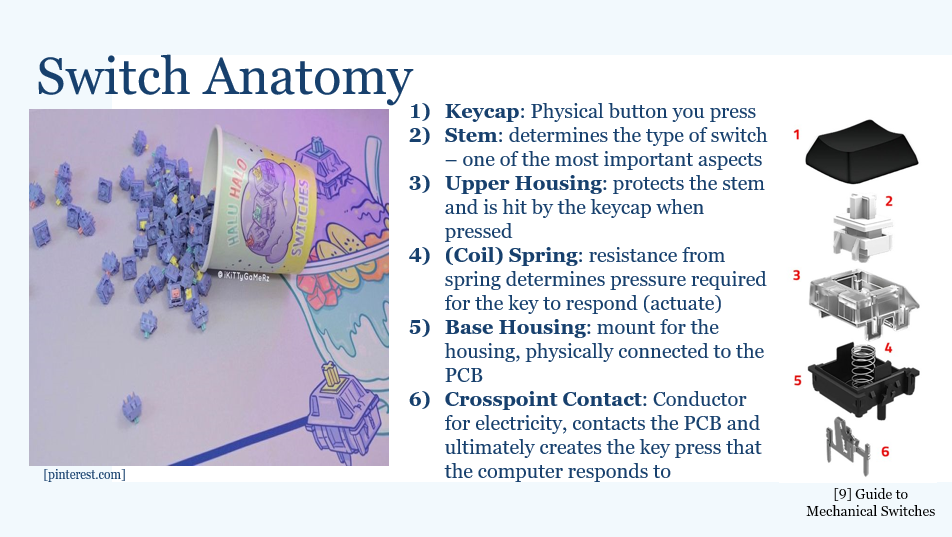
Given how defining the switches are, it is important to discuss their general anatomy as well. The keyboard switches are made of 6 main parts, with small changes that can be made to create a customizable experience.
Most commonly, you’ll see switches in three main categories: linear, tactile, and clicky. The differences between these three are mostly noise levels and the smoothness of the switch. The stem of the switch largely affects this as the switches stem can be made to a certain actuation and travel distance, affecting how much force is needed to complete a key press and how quickly the key press can happen. This not only affects the feeling of smoothness or lack thereof, but is often an important aspect for those in eSports or the gaming community due to the need for lightning fast responses. For this group, linear switches tend to be the most ideal to use.
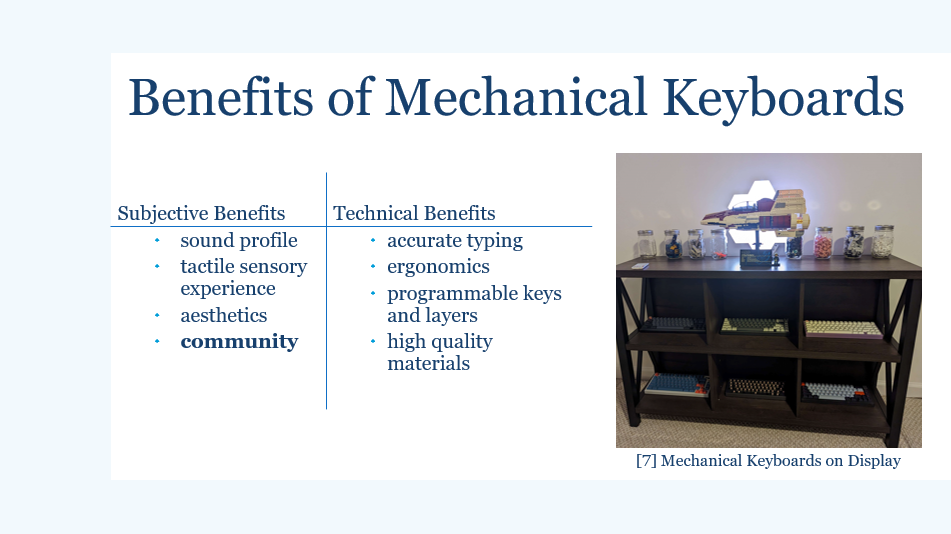
So, why do people want to make or buy these mechanical keyboards? The customization may be nice, but this can be quite the expensive hobby. According to Switch and Click, a popular website and YouTube channel centered on mechanical keyboards), “the average cost comes out to be around $200 – 600 per board,” [5]. And yet, despite how expensive this can be and how silly it may sound to have multiple keyboards, it is quite common for people in this hobby to build multiple anyway. With this in mind, I generally split the reasoning of why into two main categories: subjective and technical.
Slide on the Benefits of Mechanical Keyboards
The community aspect in the mechanical keyboard sphere is unbelievable. With the amount of trial and error that may come with building a personalized keyboard, there are plenty of people that want to help others and share what they have created. In fact, even here at Georgia Tech we have a student-run Mechanical Keyboard Club for people to share their builds and enjoy the hobby together! I have no doubt that the expensive aspect actually brings about more community, as people search for such a wide variety of builds to get an idea of what they enjoy the most in terms of sound and looks before shelling out some Benjamins for their ideal keyboard. The previously mentioned Switch and Click YouTube, as of late April 2023, supports 701K subscribers, which has increased about 15K subscribers since I last checked almost two months ago. The community is huge, and only continues to grow as it reaches more people.
So, how do people typically first find the mechanical keyboard community? The ‘First Contact’ is not necessarily through someone you know showing off their keyboard. In fact, I think one of the most common ways to venture into the hobby is first by seeing Keyboard ASMR. For those that enjoy or who have never heard of it, I encourage you to watch at least a minute of this 1 hour ASMR video from “The Way ASMR” channel – who may be referred to as an ‘ASMRtist’.
Now, as I have promised, we delve into the realm of psychology.
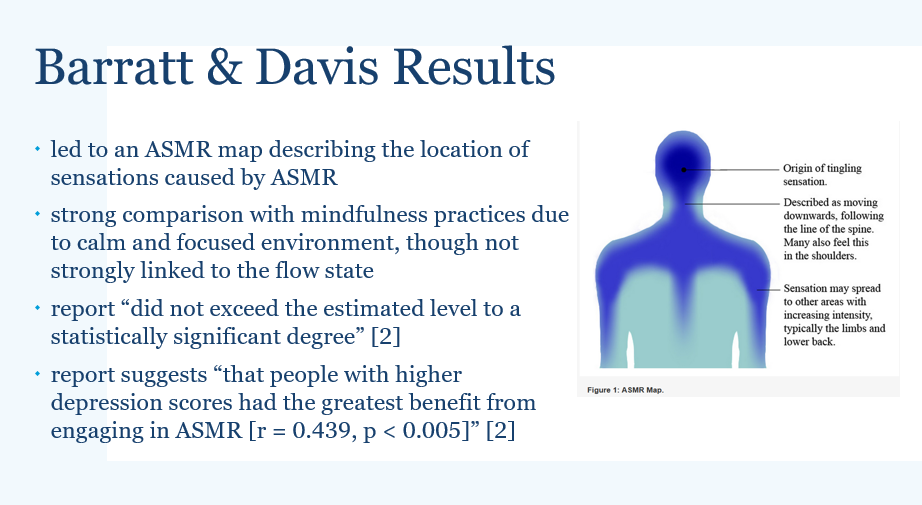
What is ASMR? ASMR stands for Autonomous Sensory Meridian Response. According to Psychology Today, ASMR is “[the] name given to a tingling sensation, typically on the scalp, neck, or back, that some people report feeling in response to certain visual or auditory stimuli,” [3].
For the reader, I have a question. Have you experienced ASMR? I encourage you to submit your answer in the poll below, and see what others have said!
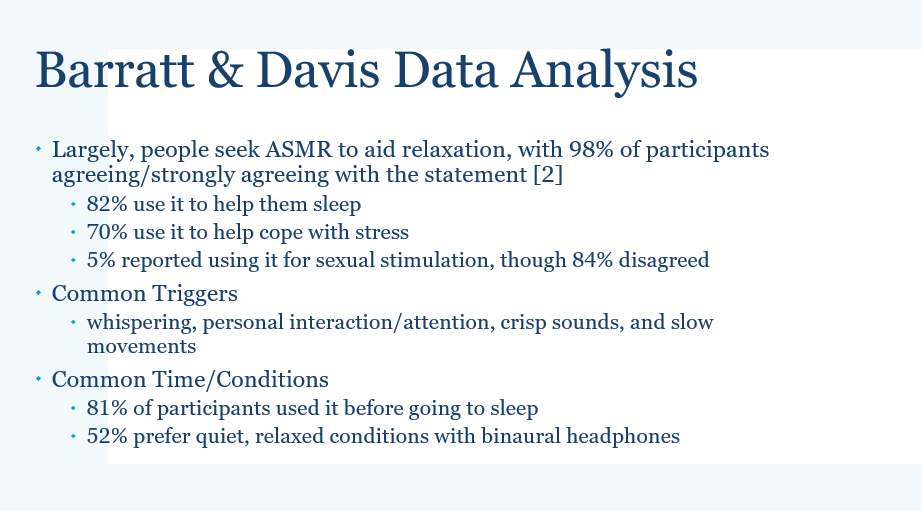
ASMR is a relatively new psychological phenomena, with few peer-reviewed articles on the subject, and even fewer that employ empirical data to analyze. Not to worry, I have dug through all the academic tunnels to find a few for this article. From a psychological perspective, many psychologists and researchers may be curious to answer questions on ASMR, such as: ‘is this a common experience?’, ‘how do we define ASMR?’, ‘who is helped by ASMR content the most?’.
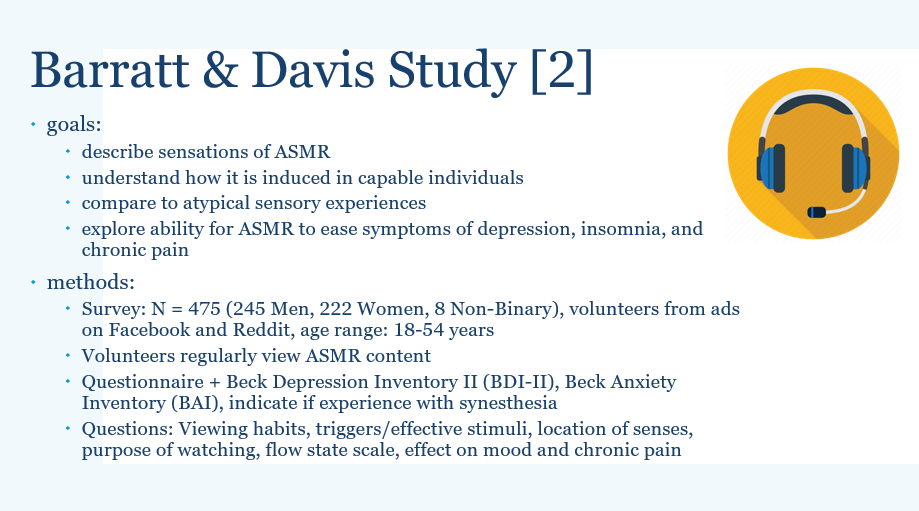
In one article, from authors Dr. Barratt and Dr. Davis, I have outlined their goals and methods on their research of the ASMR experience.
IMPORTANT NOTE: This study discusses ASMR, occasionally in the context of mental health issues such as depression, and chronic illness. The analysis or results of this study is not meant to provide any diagnosis, cure, or medical advice, and is only meant to identify any patterns or gather data on perceived helpfulness from study participants. If you or anyone else you know is struggling with chronic pain or mental health issues, please reach out to licensed professionals for help in coping and health management.
The methods employed in this study aim to yield a mix of both qualitative and quantitative results. Additionally, the study wanted to draw comparisons with other sensory disorders and states such as synesthesia and a ‘flow’ state – which you may have experienced while studying. Small spoiler alert, there wasn’t a strong connection of ASMR with either synesthesia experiences nor the flow state, indicating that ASMR is its own psycho-neurological experience.
Ultimately, ASMR is something comforting and relaxing to watch and listen to for those that experience the sensations associated with ASMR. People enjoying the customization of their keyboard may find satisfaction in their work and the ability to almost create their own ASMR by utilizing the keyboard they have made. Though we understand that ASMR can be as a temporary way to boost mood and relaxation, especially those experiencing depression, more research is needed to fully understand how ASMR works in individuals. Without a significant connection to other known sensory disorders, other than effects of mindfulness, the neural underpinnings of ASMR and the extent of the selection of people that can experience ASMR are still a mystery.
[4] Stephen D. Smith, Beverly Katherine Fredbord & Jennifer Kornelsen (2017). An examination of the default mode network in individuals with autonomous sensory meridian response (ASMR), Social Neuroscience, 12:4, 361-365, DOI: 10.1080/17470919.2016.1188851
[6] The Way ASMR. “Cozy ASMR Typing for 1 HOUR / No Talking / Mechanical Keyboard Sounds / Gateron Red Switches”. Online Video (YouTube). Url: https://www.youtube.com/watch?v=xAVoQx2hUpk
[7] kane#6661. Image from Discord. ‘mechanical keyboard display station example’.
Ten years ago, if you told me that I was going to dye my hair red when I was 21 years old, I would have told you that you were absolutely lying! I would never (according to 11-year-old me). But according to 22 year old me, yes — I absolutely did dye my hair red, and it’s here to stay for the next few years because I absolutely love it!
The first time I dyed my hair, it was in the Fall of 2022. I wanted a big change (for personal reasons I will not delve into), but I wanted to do something I never did before. Something that will make me feel new. It did not come for cheap, however. It was worth it nonetheless. This lovely thing I’m talking about is hair dyeing!!
So, what exactly goes behind hair dyeing? It all boils down to chemistry! The process is different depending on the type of hair dye you get: temporary/semi-permanent, demi-permanent, and permanent. Since I decided to get permanent red hair dye, I will discuss about the permanent hair dye process. Permanent color is what is needed for a more significant hair color change (i.e. from black to red or blond).
Your natural hair color depends on the quantities and ratios of 2 main proteins: phaeomelanin and eumelanin. Eumelanin causes hair to be brown or black while phaeomelanin causes hair to be blond and red shades. My hair is jet black, so that means my hair is mostly composed of eumelanin.
My natural hair color –> jet black.
Both ammonia and hydrogen peroxide are used. Ammonia and peroxide act to lighten the hair’s natural color to form a new base color that will allow the permanent hair dye to stay.
The cuticle, or outer layer, or the hair strand must be opened before permanent hair color can be applied into the hair. Once the cuticle is open, the dye reacts with the cortex of the hair to deposit or remove color. The cortex is the part of the hair that is the middle layer of the hair shaft which provides the strength, color and texture of a hair strand. There is usually a two-step process for permanent hair coloring: first to remove the original color of the hair, and then the second to apply a new color.
The anatomy of a hair strand.
The alkaline chemical of ammonia is used to open the cuticle to allow the hair color to enter the cortex of the hair. Additionally, it is a catalyst when the permanent hair color combines with the peroxide. Hydrogen peroxide is used as an oxidizing agent, or a developer to remove pre-existing color (it removes the melanin in the hair). Peroxide breaks chemical bonds in the hair, which releases sulfur. This is why there is such a strong odor when dying hair. As the melanin is removed from the hair, the new permanent color is bonded to the cortex of the hair.
The result of hydrogen peroxide on my hair (to lighten it)!
And voila! The hair dresser then washes your hair and styles it. I opted for a haircut and a blowout hairstyle. Shoutout to my talented hairdresser Christi at Cherry Blossom Salon!
Finished product!! I’m still so in love
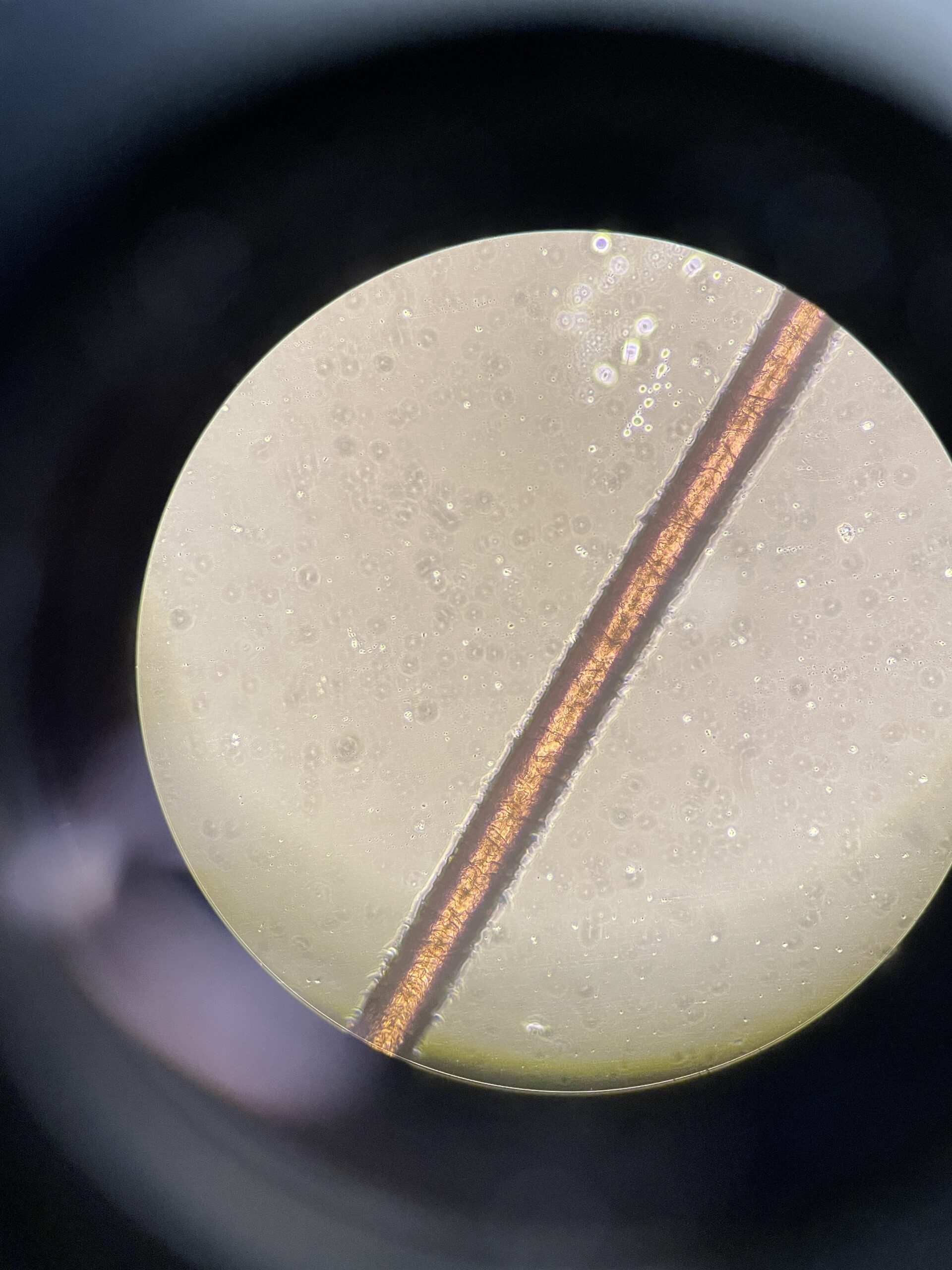
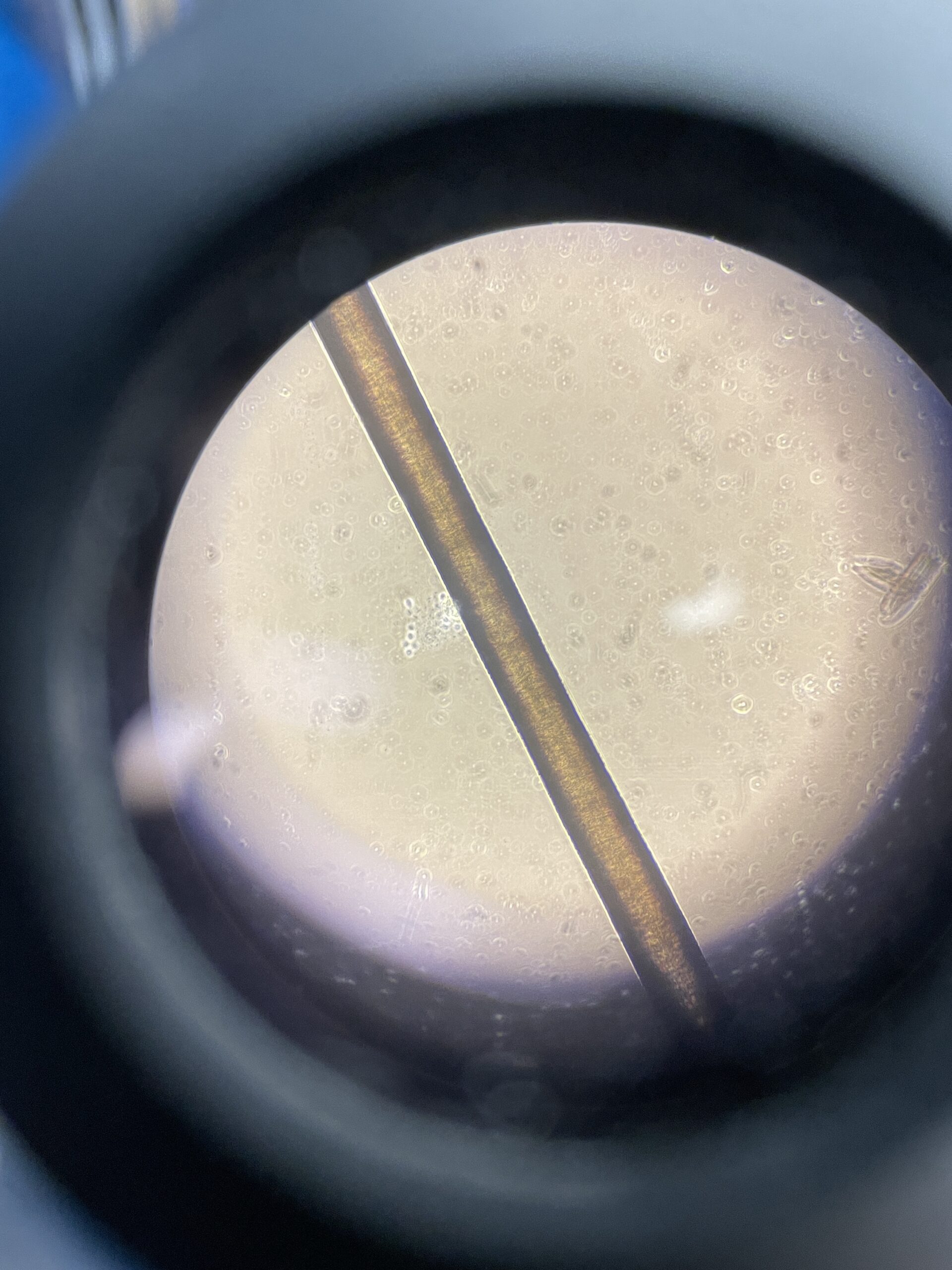
Have you ever wondered what dyed hair vs non-dyed hair looks like under a microscope?
Well look no further! With the help of Dr. Leavey, a classmate and I were able to look under the microscope of the molecules of our hair. The picture on the left is mine (red dyed hair) and the one on the right is my peer Claire’s hair (undyed black hair). As you can see, my hair cuticle and cortex are much more jagged and rough, compared to Claire’s smooth strand. This is a result of the chemical reactions that occurred to my hair – the ammonia and peroxide chemically and physically damaged my hair to allow the red color to deposit into my strands.
My red dyed hair.Claire’s undyed black hair.
What is wild is that my dyed hair is essentially permanently damaged. I will have to grow out my original black hair if I want to revert back to my undamaged hair. For now, I think I will stick with damaged dyed hair! 🙂
Sources:
Anne Marie Helmenstine, P. D. (2019, July 14). The science behind how hair coloring works. ThoughtCo. Retrieved April 26, 2023, from https://www.thoughtco.com/salon-hair-color-chemistry-602183
Brain, M. (2023, March 8). How hair coloring works. HowStuffWorks Science. Retrieved April 26, 2023, from https://science.howstuffworks.com/innovation/everyday-innovations/hair-coloring3.htm
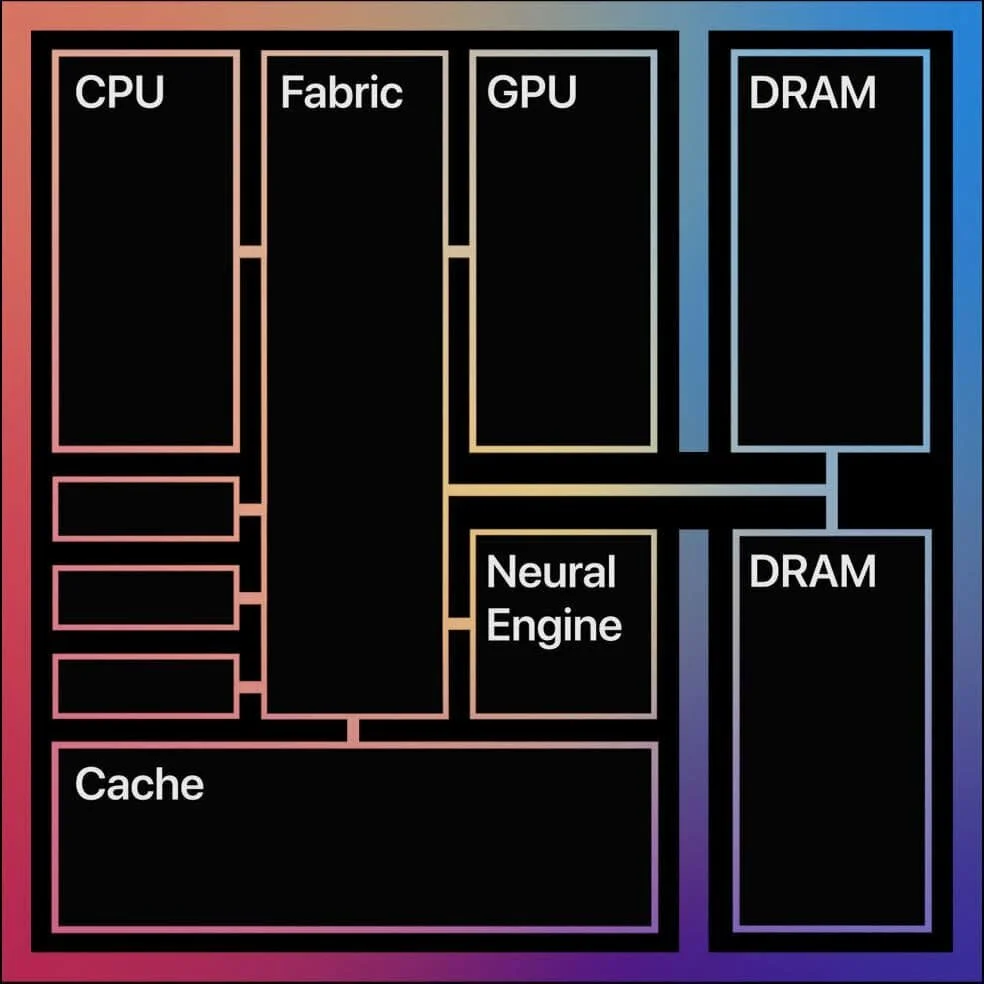
The M1 chip, a custom-designed system-on-a-chip (SoC) for Mac computers, was introduced by Apple in late 2020. This chip is based on Arm architecture and uses a 5-nanometer (very small) manufacturing process, which enables a high density of transistors on the chip, resulting in high performance and low power consumption. ARM architecture is a type of instruction set architecture (ISA) that is designed for energy efficiency. It is used in a wide variety of devices, including smartphones, tablets, and laptops. The M1 chip uses ARM architecture, which is one of the reasons why it is so energy efficient. ARM architecture is a reduced instruction set computing (RISC) architecture. This means that it uses a smaller number of instructions than other types of ISAs, such as x86. This makes ARM architecture more efficient, because it takes less time to decode and execute instructions.
One of the most notable features of the M1 chip is its eight-core CPU, which comprises four high-performance cores and four high-efficiency cores. The high-performance cores operate at a higher clock speed and deliver significant computing power for demanding tasks such as video rendering and gaming. The high-efficiency cores consume less power and handle lighter workloads, such as browsing the web and checking emails. This architecture results in a balanced approach to power and performance.
The M1 chip also provides powerful graphics processing capabilities for demanding applications such as 3D rendering and video editing. The GPU enables a seamless experience for users to render high-quality content and play graphically intensive games. Additionally, the M1 chip integrates a Neural Engine that is capable of delivering up to 11 trillion operations per second, enabling the chip to perform machine learning tasks with ease.
Another feature of the M1 chip is its unified memory architecture. This design allows the CPU, GPU, and other components to share a single pool of memory, enabling faster data transfer and improved performance. This architecture also allows for a more efficient allocation of memory resources and a better utilization of system memory.
Overall, the M1 chip is up to 3.5 times faster than the previous generation of Intel CPUs and is incredibly energy efficient, which allows Macs with the M1 chip to have up to 20 hours of battery life. The M1 chip’s design and implementation have been lauded for its energy efficiency, performance, and integration of key components onto a single chip. The M1 chip has reinvigorated the Mac line, delivering higher performance, longer battery life, and more efficient use of system resources.