Bayer AG, a multibillion dollar, German pharmaceutical company is regarded as one of the leaders in its sector, producing mild painkillers such as Bayer Aspirin and Aleve, the vitamin C supplements Redoxon and Berocca, and many other well known drugs. This reputation combined with the angelic sounding tagline on their website, “Bayer: Science For A Better Life” makes it hard to believe that in 1895, the company marketed heroin as a cough suppressant.
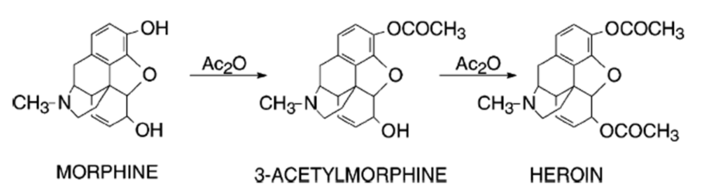
Acetylation of morphine, by way of acetic anhydride (Ac2O), to synthesize heroin.
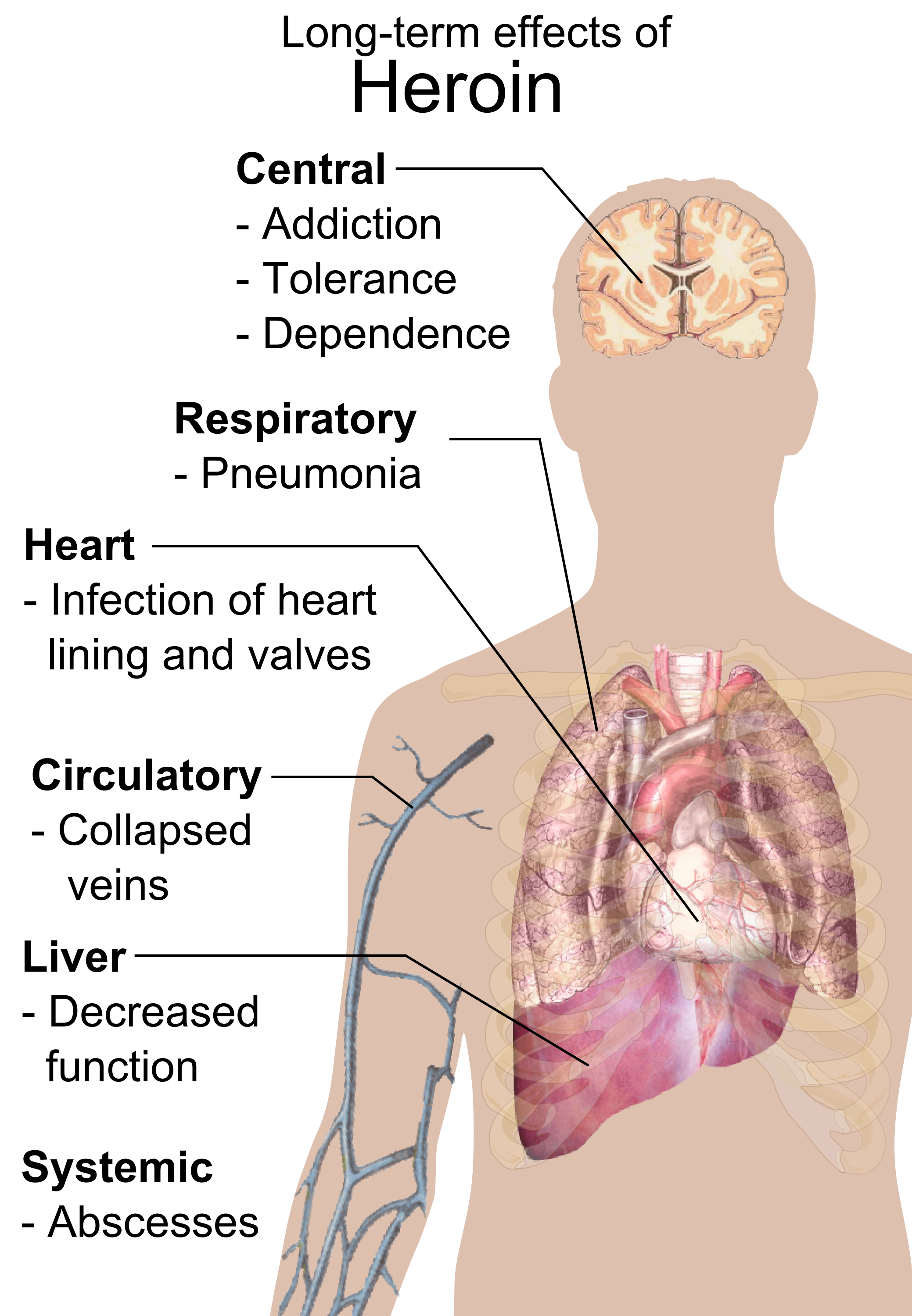
Heroin is an opiate synthesized by adding two acetyl groups to morphine, found in the opium poppy. When Bayer introduced this new drug, it was actually meant to be a non-addictive substitute for morphine, a common cough suppressant back then. Little did they know that their well intentioned discovery would eventually become one of the most abused drugs, known for its destructive effects on the human body. It turns out that heroin crosses through the blood brain barrier 100 times faster than morphine because the acetyl groups makes it highly soluble in lipids; once it crosses the barrier, it actually turns back into morphine. Essentially, heroin is a prodrug, a class of inactive drugs that are converted into active form in the body by normal metabolic processes. To the Bayer scientists, heroin may have looked less potent from morphine on the lab bench, but in the body, it ended up being a faster acting form of morphine, making it extremely dangerous and addictive. Needless to say, even though heroin actually does help stifle coughs, Bayer eventually pulled this product off of their catalog.
Though today, the possession or selling of heroin is illegal in most parts of the world, it can actually be used in the United Kingdom legally, under careful control, as an analgesic and a maintenance drug.
Herpetology and getting lost. These are the two driving themes of my life. They have shaped my career and enabled me to discover species new to science, but they have also cost me relationships, frustrated everyone close to me, and nearly cost me my life. Without them I would be a different person, so this is a ballad to the lost art of getting lost.
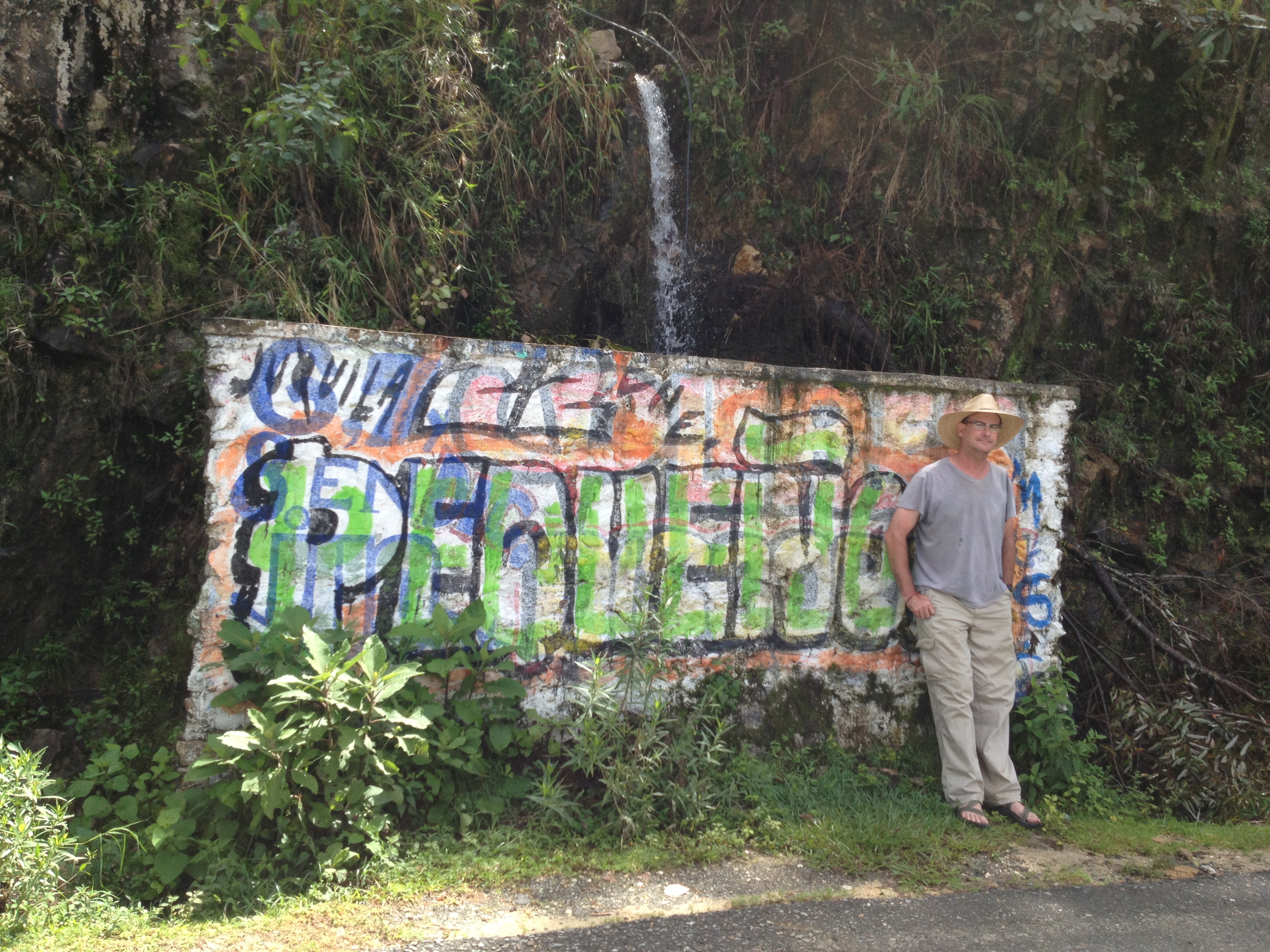
After college, I left Santa Barbara, California to go to graduate school in Texas and study under a mid-career hotshot who specializes in Central American herpetology. He is a gringo North American but was raised in Guatemala and moving in-and-out of that culture is the norm for him. In the first year of my grad program I got the assignment of my dreams. I was to be delivered to a coffee plantation in a remote region Guatemala to conduct a survey of amphibians and reptiles. I was to do an ecological transect of herpetological diversity up the face of a very steep mountain in the Sierra de las Minas, in the state of Alta Verapaz. Although the area had certainly been populated since at least the Classic Maya Era, no biologist had ever worked anywhere near the region. If you look at a map of Guatemala, you’ll see a huge lake (Lago de Izabal) in the eastern part of the country. I was about 20 miles west of the lake, in the Polochic Valley, at the base of the north slope of a mountain called Cerro Raxon. The village/plantation is called Pueblo Veijo (Old Village) in reference to the fact that the site had been inhabited by native Maya for millenia. The problems turned out to be: 1) I spoke not a word of Spanish; 2) although I grew up in Europe (army brat) and was accustomed to being immersed in foreign cultures, I’d never been to Latin America beyond a couple family fishing trips to Baja California; and 3) Guatemala was embroiled in a horrific genocidal civil war (that was purposefully instigated by the US-CIA in the 50’s, by the way).
The day before I went to the airport my mentor gave me some topographic maps of my study site and said “If you get pulled over by anyone that looks like police or army, don’t let them see these maps because they will assume you are there to inform the indigenous insurgency and you will be arrested. Oh, and don’t bring those Vietnam-era military field boots you wear. They are US-Military issue. Get some boots that look more like a tourist would wear.” So I borrowed money from my parents and bought some brightly colored boots from the local REI. I put the maps in the bottom of my bag of gear.
I swear never again to travel so ignorant of my situation. It turned out that speaking Spanish would have been only of partial utility, as I was sufficiently remote that most people there spoke Q’eqchi’, one of the many dozens of very distinct Maya languages in the region, and only a bit of Spanish. Every time I ventured beyond the main part of the coffee plantation (as was my task as a herpetological surveyor), I encountered Mayan villagers who would drop everything and run away from me. I was terrified. If they were scared of me, then there must be something that I should be scared of as well. Since my return, I have built a small library on the recent history of Guatemala, and I now know what I did not know then. It turns out that the chinks I saw in the concrete-block walls in the nearby town of Telemán were from a massacre only a couple of years prior to my trip. Genocidal civil wars are real, and they are incredibly ugly.
I had an ecological transect to conduct, and I finally got myself up to the highest village on that slope of the sierra, a tiny Mayan village they called Peña Blanca (“White Stone” because there was a big one there) in Spanish, or some other name I never managed in Q’eqchi’ (Mayan dialects include glottal-stops in mid-syllable, so they are essentially impossible for the non-native speaker). The people seemed nice in Peña Blanca, and they did not run away from me. I set up a camp outside their village, with their implied permission. The first two nights I had a small crowd of people around me watching as I made a crappy camp dinner and prepared my specimens, samples, and notes. None of us could really talk to one another, but I managed to get across that I hoped to camp there, wished them no trouble, and planned to wander around outside the village looking for snakes and frogs and such. They were cool with that, and even brought me all the snakes they killed in their cornfields every day (very useful specimens for me).
After a few days I hiked back down to my main camp on the plantation and got read the riot act by the fascist, racist Guatemalan manager for having “anything to do with those rebels on the mountain” (recall there was a civil war going on, essentially between aristocrats like this guy and the Mayans in the mountains). About a week later I went back up the mountain to my camp, but this time not a single person would come anywhere near me. I was there for about three days when it dawned on me that I was doing a bad thing—my self-serving data collection for my degree was severely compromising their daily life. No kids were playing outside, and the men were sneaking off before sunrise to tend the corn. I assumed they returned from the fields, but I never saw them. Evidently, someone had spread word that I was not what I seemed. I felt terrible, but packing up camp and leaving was not such a simple affair because I was so far up on the mountain. So I had to spend that night there, and planned to leave the next morning—carrying what I could on one trip (it took about three trips to get all my stuff up there), and leaving everything else for them; things I naively hoped could be useful (e.g., sleeping bag, not a bottle of formaldehyde).
Evening set, it began to rain, and I realized that this was my best and last chance to sample the highest part of the mountain because I never intended to return. Nocturnal amphibians and reptiles move in the rain, and it started to rain to rain really, really, really hard so I did get some good samples. Around 1:00 am I was exhausted and turned to go back to my camp. On the way back I took a wrong fork in the trail (it was still really raining and, if you wear glasses like I do, one cannot look around during a rainstorm; you look straight down, at your feet) and I wound up not in my little encampment, but smack in the middle of this village. I was disoriented, wet, cold, and scared. As I looked around, my mega-flashlight (standard issue in my line of work) was beaming through the twig huts and wakeing everybody. I could hear commotion coming out of the huts. My first thought was of regret—oh, darn, now I’m waking everybody up! Then I started to hear machetes tinging, guns being loaded and cocked, and saw barrels sticking through the slats. I’ve since learned that it was standard practice for Guatemalan Army squads to wipe out “rogue” villages by sending in troops in the middle of the night—with mega flashlights—to massacre and set fire to entire villages. I was mortified, and terrified. So, I just started yelling “Gringo perdido, no hay problema” and “Culebra! Rana! Sapo!” at the top of my lungs. That all translates essentially into “Lost white-boy, there is no problem. Snake! Frog! Toad!” Meanwhile I dashed in the nearest direction that did not have a hut. I clawed my way up through a steep muddy corn field and finally found my camp. At the first glimmer of daylight I left and never went back up there. I regret that I caused them so much distress, I really do. I’m glad they did not shoot me. But given what I’ve learned since then, I’m amazed that they did not. I’m convinced that those few words in Spanish, “Gringo perdido, no hay problema” and “Culebra! Rana! Sapo!” saved my life.
I’ve returned to Guatemala many times since then, but things have changed. The war mellowed out, even if the original tensions remain. I never travel alone. I’ve learned Spanish (but no Mayan dialects, beyond a couple of animal names). And I am not so naïve. To be sure, there were many more adventures and misadventures over the years, including a murder right in front of my face, but nothing since, anywhere, has been so personally transformative as that particular night. I have a one-man punk band called Gringo Perdido and some friends use the phrase as a nickname for me. No one wants to be known for being an uninformed, unintentionally inconsiderate, disoriented boob, but a colleague of mine returned from Guatemala recently and said, “Joe, do you realize that every young biologist in that country knows that story?” Gringo perdido, no hay problema.
A few days ago I stumbled upon this webpage and couldn’t stop laughing. I don’t think I have ever laughed so hard in my entire life. I was crying, a stitch in my side. Any time I would regain my composure, I would lose it again within 0.237 seconds of reading another line. So of course, after struggling through the page, I decided to consult my trusty friend YouTube for some poop-themed videos. Here’s one of my favorites: 3 Types of Girlfriends Based on Pooping Habits (it’s a little vulgar). Now, I’m not entirely sure why I find these types of things so entertaining, but I think I find them funny because they are usually true. Some people don’t like to admit they poop, and they definitely don’t want to talk about it, but why is that so? Everyone poops!
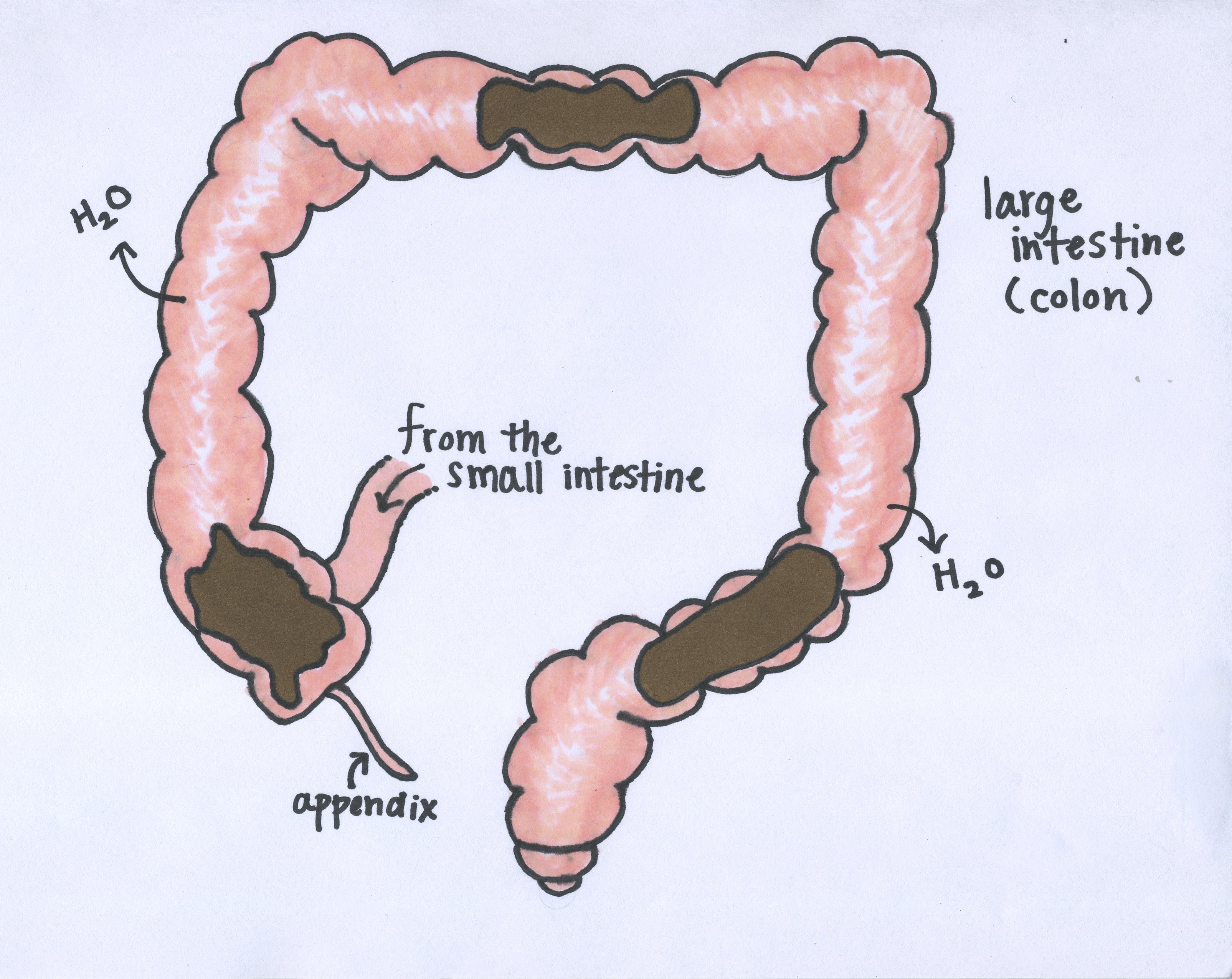
Have you ever wondered how poop is formed, or why it comes in different shapes and sizes? Well, let me enlighten you. After food passes through the mouth, esophagus, and stomach, being digested by various amylases and gastric juices, it makes its way into the small intestine where the majority of the fluid and nutrients from the digestive process and from the food you eat are reabsorbed by the body. An additional amount of fluid is reabsorbed in the large intestine, also known as the colon.
This is where the magic happens.
Digested food moves through the colon via a type of smooth muscle contraction called peristalsis. As it moves along, the poop starts to take shape as the fluid (referred to as H2O in the diagram below) is drawn out. As more fluid leaves, the poop becomes more solid. During times of viral or bacterial infections, fluid may not be properly reabsorbed, causing the common side effect of diarrhea. Have you ever been constipated? This is a result of poop moving too slowly through the colon, causing too much fluid to be reabsorbed. Depending on what you eat, your poop may vary in appearance. If you eat some corn, you may see it again since our bodies can’t digest the cellulose outer layer. Ever drink a brightly colored slushy saturated with food coloring? Your poop likely changed color.
The digestive tracts of carnivores differ from those of herbivores due to the different digestive requirements each type of animal has. Take a koala for example, whose cecum (the section of colon below the attachment point of the small intestine) is about 2 meters long! This longer cecum enables the koalas to digest leaves and provides a greater amount of surface area for nutrients to be absorbed. Check out this koala who, instead of eating leaves, is chomping on an apple. I wonder how long it took for that apple to become poop…
Sources:
Campbell, Neil A., and Jane B. Reece. Biology. San Francisco: Benjamin Cummings, 2002. Print.
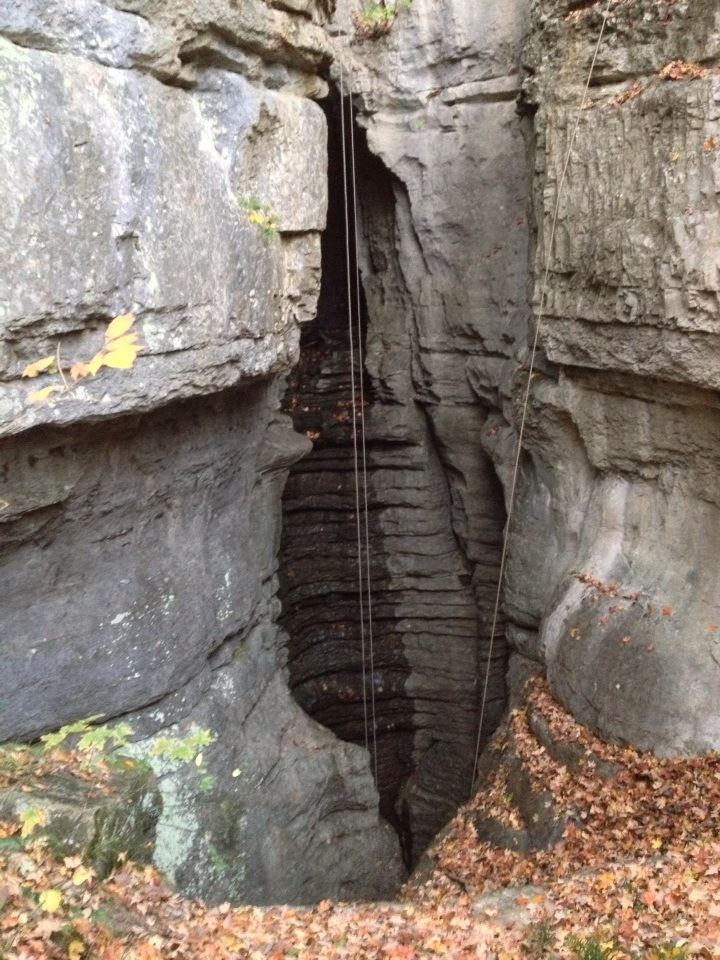
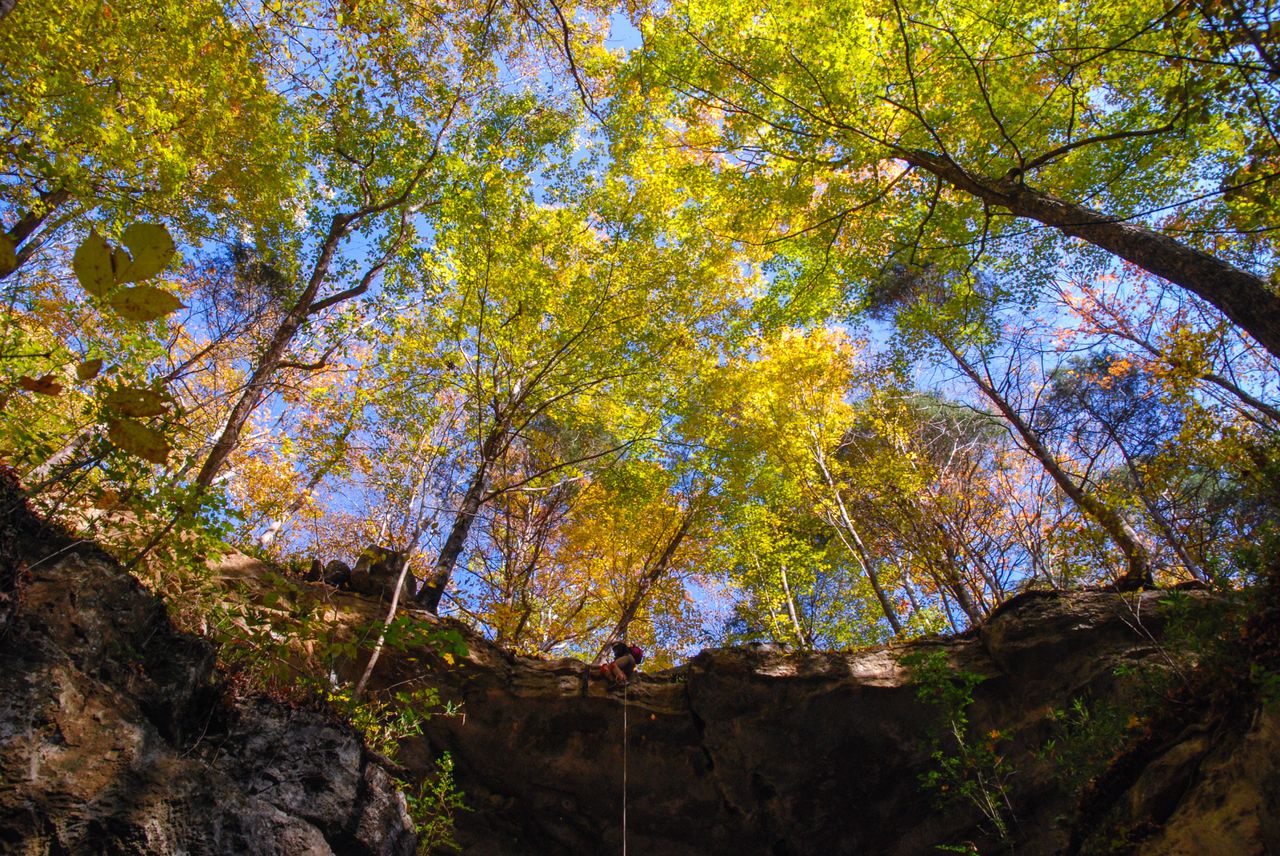
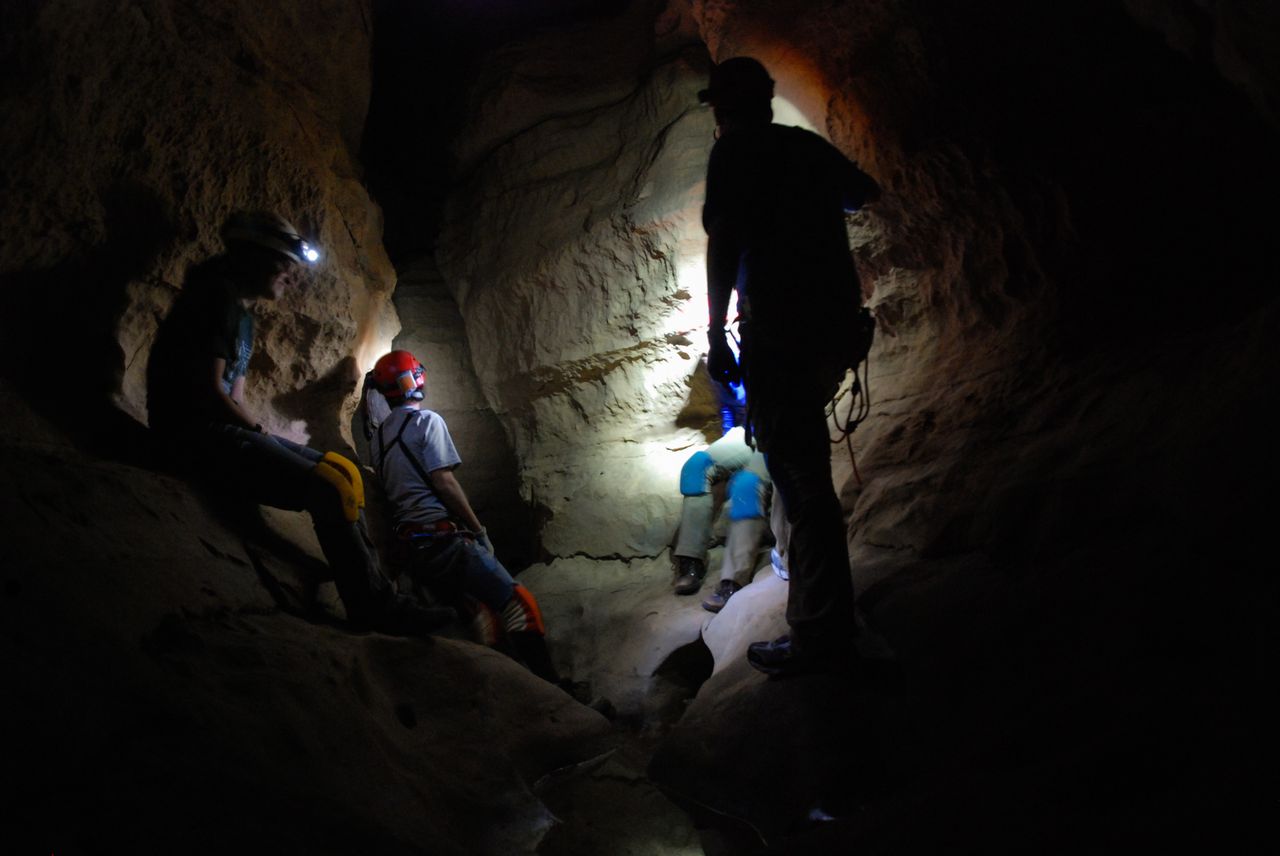
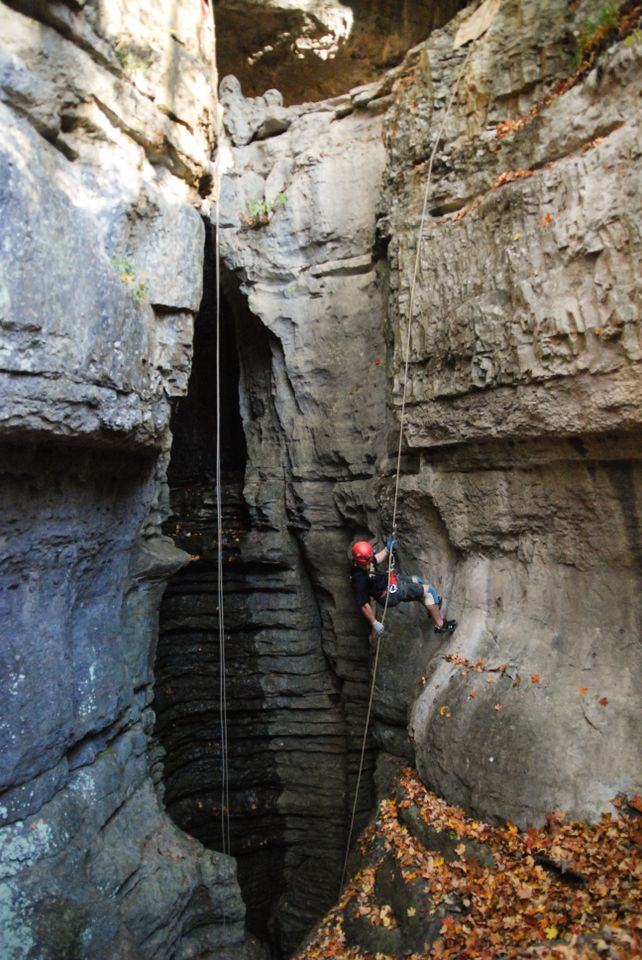
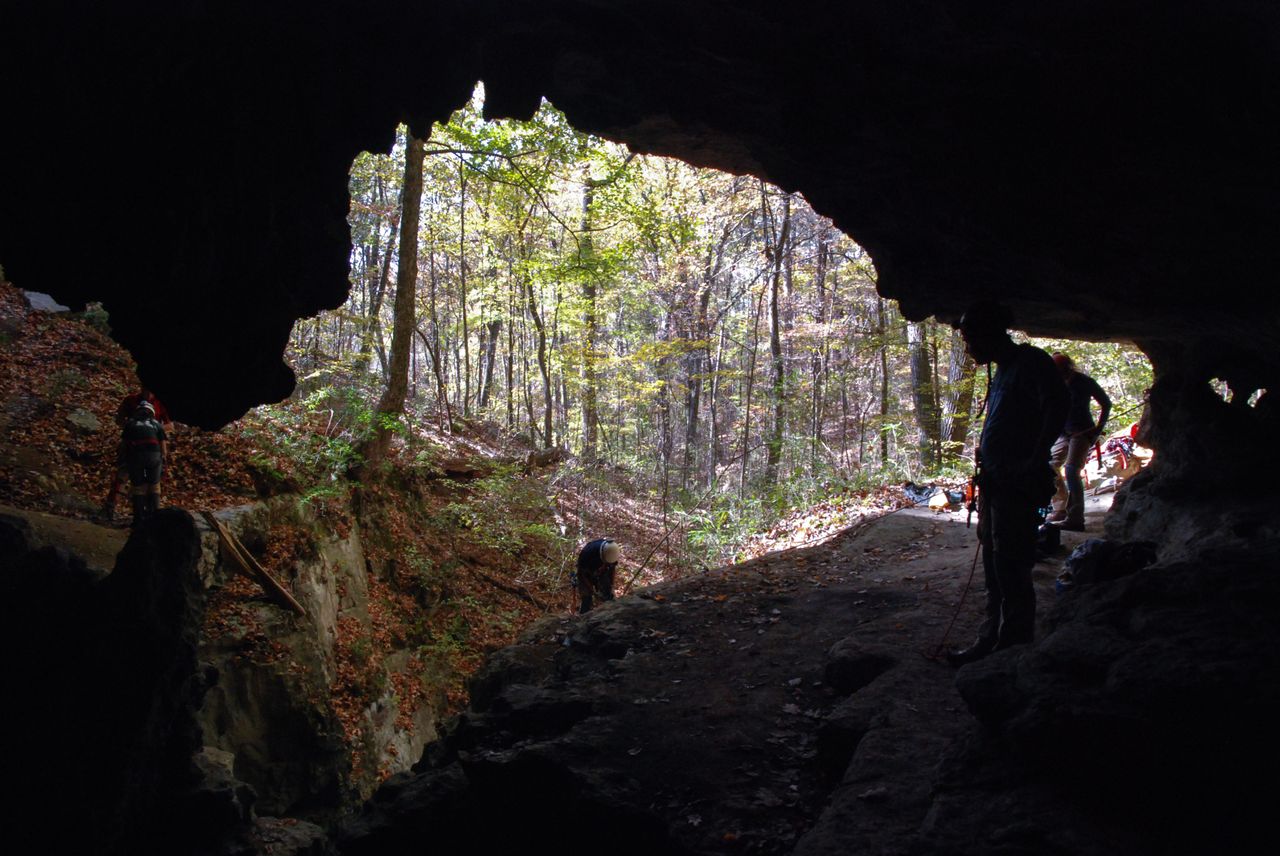
I’ve always enjoyed having fun outdoors, and recently I’ve started to branch out of my usual “going for a walk in the park” comfort zone. My latest adventure took place in the wonderful state of Alabama at a location I wouldn’t have pictured myself being had you asked me a few months ago– a cave. Not just any old, regular cave that people wander into to make-out and spray-paint the walls, but a vertical cave with a super cool 100 ft drop called Sheldon’s Cave.
Photo by Nima Yazdanpanah
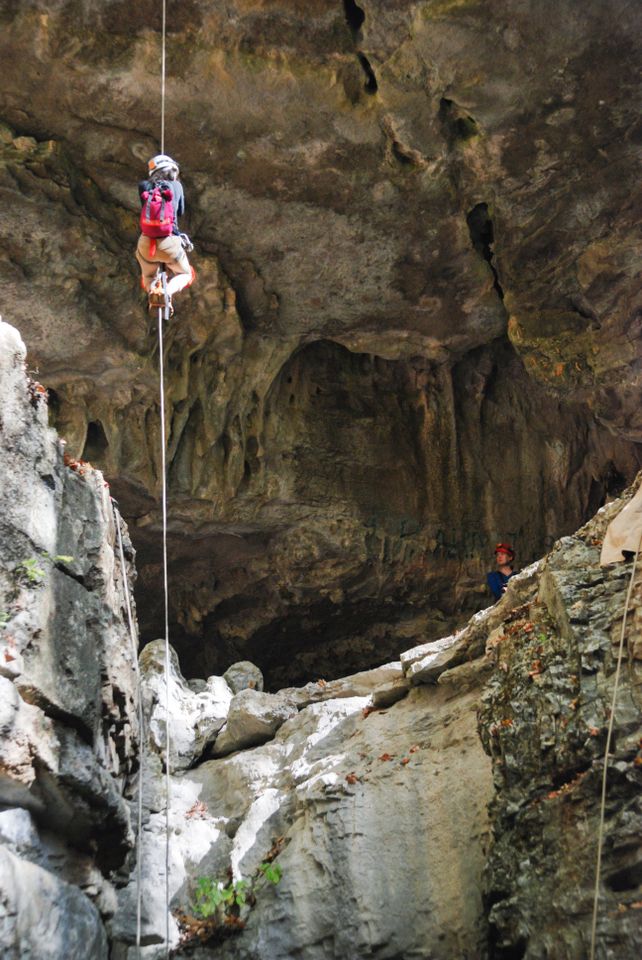
For the avid caver, or spelunker if you prefer, 100 ft may not be very exciting, but to me, I was stoked… and nervous. I had gone exploring in horizontal caves before, but had never done any descending (except for my days of rock climbing several years ago). We had some practice at a rock climbing wall, but I was still nervous for the real descent. It is a very uneasy feeling having to rely on a skinny rope to hold your weight as you ease over the edge of cliff. “Oh, just lean back and trust the rope.” Trust the rope?! But we just met! So, with my left hand in a death grip on the rappel rack and my right hand in a death grip on the loose end of the rope, I (very slowly) made my way over the edge of the cave and down the side. By the time I got about half way or so, I eased up and realized how awesome it was that I was descending below ground level, about to go exploring another cave.
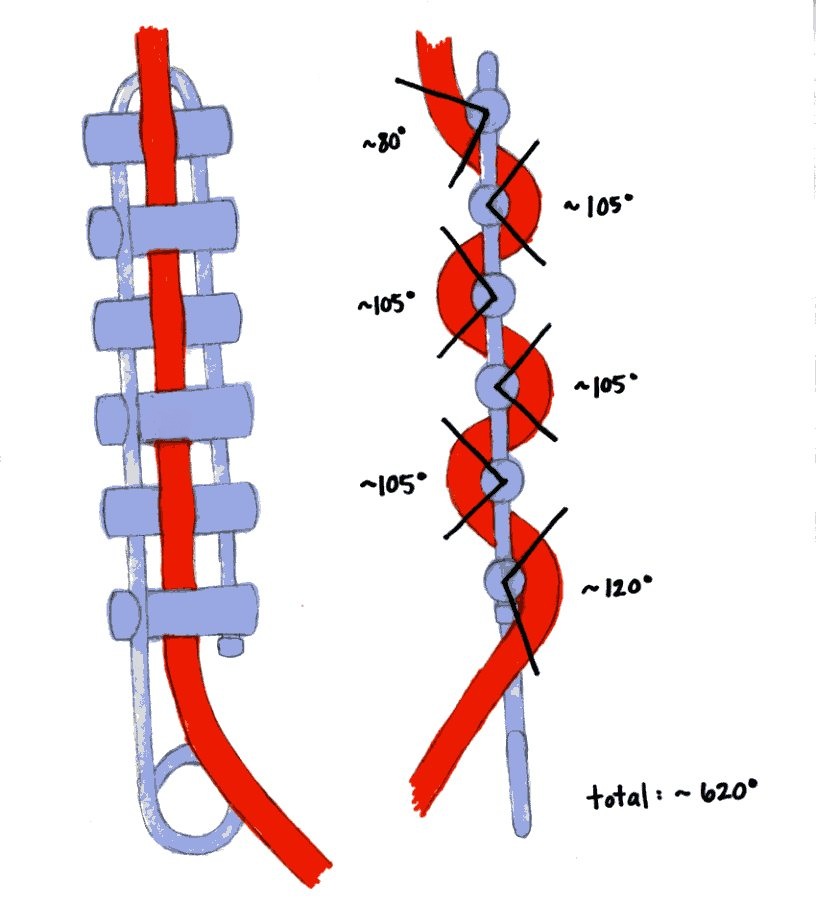
You may be thinking, “What the heck is this rappel rack she is talking about?” A rappel rack (see one in action here) is a J-shaped device made out of aluminum and/or steel with bars running between the two sides of the device. The rope gets woven between each bar to create a friction force which counteracts the force of gravity and slows the descent. The speed of the descent can be adjusted by either adding or removing bars or by sliding the bars up or down. Adding bars increases the surface area in contact with the rope, increasing the amount of friction between the rope and the rappel rack, decreasing speed. Sliding the bars up increases the angle of contact between the rope and bars, once again increasing the amount of friction and decreasing speed. This idea of angle of contact is best exemplified in pulleys, where the tension (pull) of one side of the rope can be calculated using the tension of the other side of the rope and the degree of contact the rope has with the edge of the pulley (Capstan equation).
The diagram above shows the amount of contact the rope has with the rappel rack for the given configuration; areas of rope within the angles shown are places where the rope is in contact with the bars and normal (contact) force is being applied. This is how I had my rappel rack set up for the descent, and being a scaredy cat, I was definitely not about to take off any bars in order go faster. I was perfectly content with my snails pace. I could have gone even slower had I slid up the bars, but I didn’t want to look TOO much like a newb.
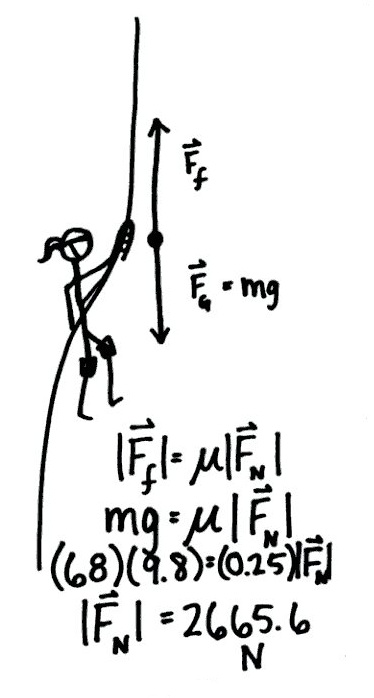
At a stand still, the net force on the system (me and the rope) is zero, so the amount of friction supplied by the rappel rack would be equal in magnitude to the amount of gravitational force on my body (assuming an ideal situation without any deformation of the rope). Assuming the static friction coefficient for the rope against the steel rappel rack is 0.25, the minimum amount of normal force required to counteract gravity and keep the rope from sliding can be calculated. Since I weigh about 150 pounds (68 kilograms), the amount of gravitational force on my body equals about 666 Newtons. What a lucky number! Setting this equal to the amount of friction required, the amount of normal force the rappel rack must supply against the rope is 2665.6 Newtons. Dang! That’s a lot of Newtons, seeing as one Newton is about equal to the amount of weight of one apple. That’s enough apples to make a whole lot of pie!
The rappel rack doesn’t actually supply this much normal force alone, which is why I still moved down the rope even with all of the bars on the rack. This is where my hand holding on to the rope came into play. If I ever got to going too fast, I would squeeze the rope with my right hand and would stop moving (or slow down, depending on how hard I squeezed). Just like the rappel rack, my hand supplied a normal force against the rope which created friction and counter-acted the force of gravity.
Now that I have blown your minds with my awesome tale of caving and physics, enjoy these great pictures taken by cave master (joking), Colin Lehman:
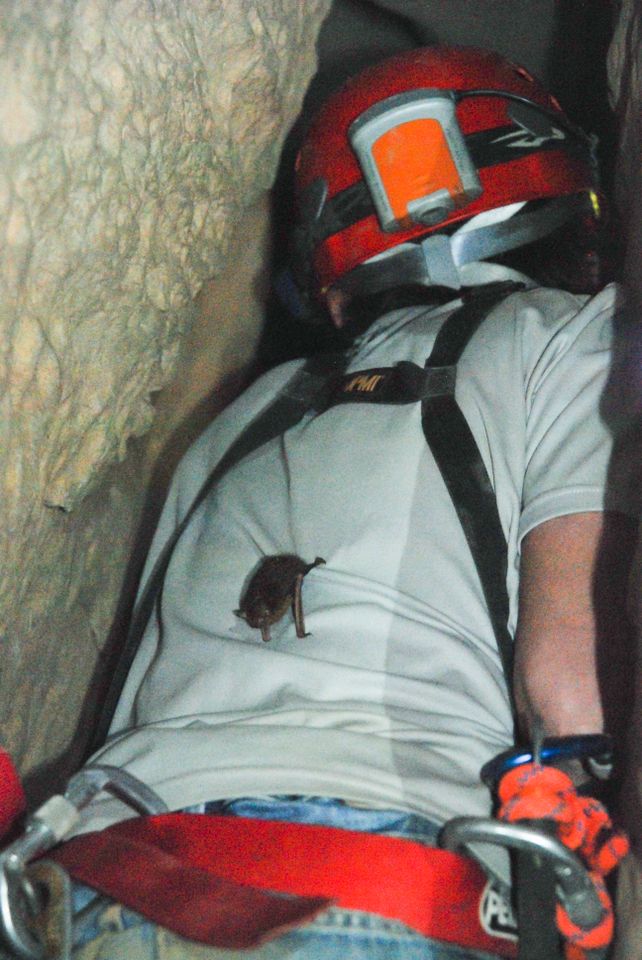
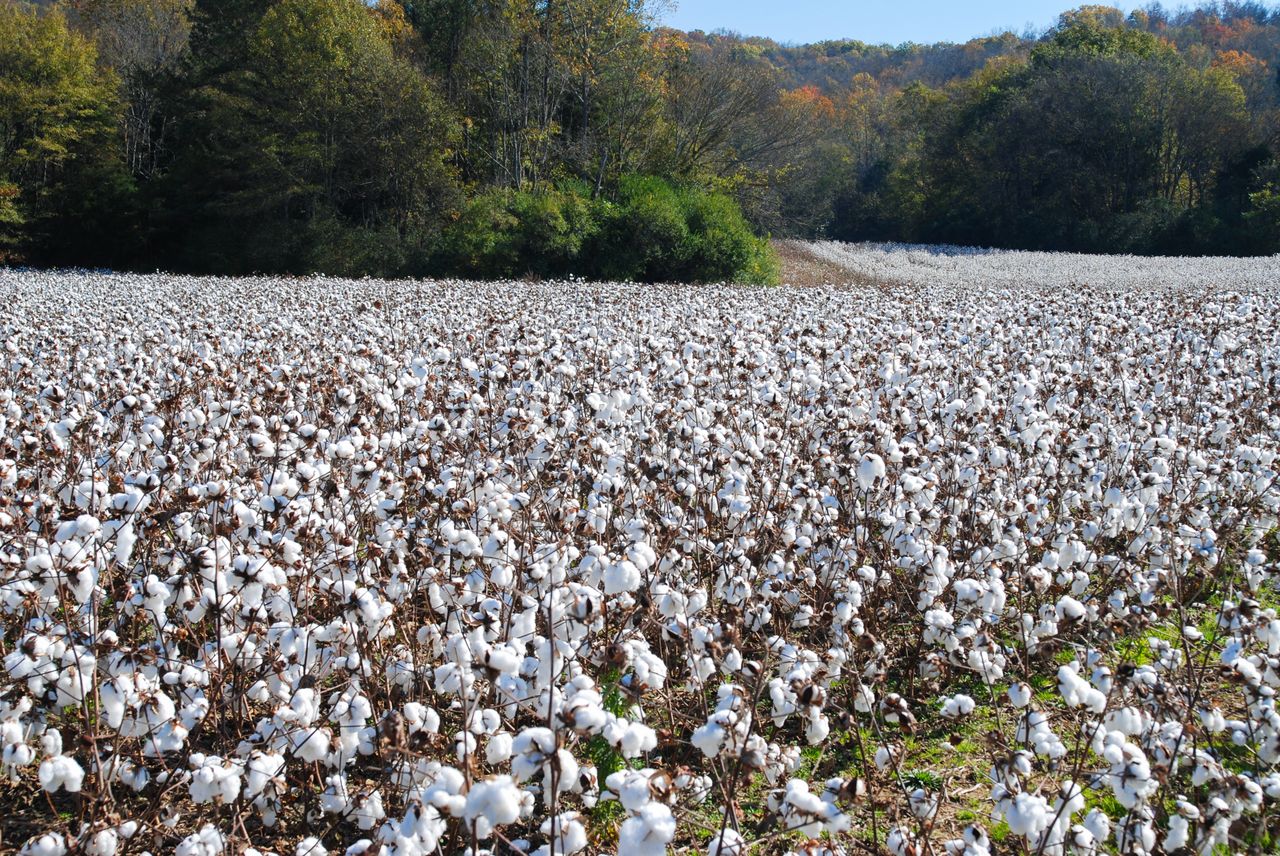
Pretty foliage!Oh, don’t mind me! I’m just going down into this deep, dark hole!The inside of the majestic cave.One caver made a new friend… with a bat!The path to the cave was covered with cotton. It had all been harvested by the time we got back.The cave master making his way down.Sweet view!A fellow caver moving up!
Source:
The Mechanics of Friction in Rope Rescue by Stephen Attaway, Ph.D. (Find it here)
Special TINGLING Sensations Spider-Man tingles when he senses danger… People with ASMR tingle when they sense…pure bliss?
You know how Spider-Man had a special spider-sense that would tingle whenever danger was lurking? (Or if you don’t know anything about Spider-Man, he was this superhero who had this special superpower called a spider-sense that would tingle whenever danger was lurking.) Well, this is going to sound weird but think I have my own type of “spider-sense” because I also feel a tingling sensation at the base of my skull at specific times. However, this feeling does not arise in response to the threat of danger. In fact, it is quite the contrary—I get this tingling feeling when most at-ease.
My personal ASMR journey: It all started when…
Since I was a kid, I would get this tingling sensation in my head and question what it was: do others feel it too, or am I the only one? Did I have a superpower or sixth-sense, or did I have a mental disease? Honestly, I never found out because explaining such a sensation to another person usually just evokes confusion and head scratching.
Today however, if I had to describe my “ASMR” it would probably sound something like this:
Basically, my brain tends to generate these intensely pleasurable sensations that flow throughout my nervous system like a wave of energy, putting me into a calm, tranquil, relaxed, euphoric, feel-good, trance-like state of mind. These sensations last for only several seconds and feel like a fuzzy, tingling, prickly, tickling, caressing physical sensory eruption spontaneously traveling like a current of electricity from my head, making its way down my spine, and fading away into the other areas of my body. It kind of feels like an army ants who march from inside my head into my hair, crawl down my spine and then jump off my skin; throughout this journey they bite me, but it does not hurt. Rather, it feels as if they are injecting small bursts of relaxing pleasure into my body.
Seeing, Hearing, Feeling in Harmony
If I had to make a crude mapping of this process I would say action potentials most likely initiate and fire from the lower back regions of the brain and then conduct distally along the spinal cord and ultimately propagate into the peripheral nervous regions of the body.The physical feeling I perceive is the complete opposite of pain and can generate goose bumps (i.e. piloerection) on the skin of my neck, arms and scalp. Initiated by cognitive or psychological processing, there seems to be a blending of central and autonomic nervous system activation. The autonomic or “involuntary/automatic” part of the nervous system controls the necessary bodily functions essential to survival, such as breathing, heart rate, body temperature, blood pressure, micturition, etc. and also responds to many types of emotional stimuli. [1]
Categorizing the Senses: A multitude of receivers (cells) within the body are programmed to respond to specific environmental stimuli.
For me, one key ingredient always produces the ASMR sensation: specific behavior or mannerisms of other people while they are engaged in rather ordinary tasks, such as giving directions on how to do something, handling objects, or just speaking. These tasks are known as triggers to people in the ASMR community. Here are some examples of triggers that stimulate the ASMR response for me:
Watching someone draw or paint (especially if they are narrating the drawing/painting process)
Listening to the narration or reading of a story
Watching someone gently scratch something or other movements of the hands and feet
Having my face painted
Being asked questions by a doctor
Having my ears checked
Having my breathing monitored with a stethoscope (like when the doctor says “take a deep breath”)
Being instructed on how to do a task such as homework problems or how to do something on a computer.
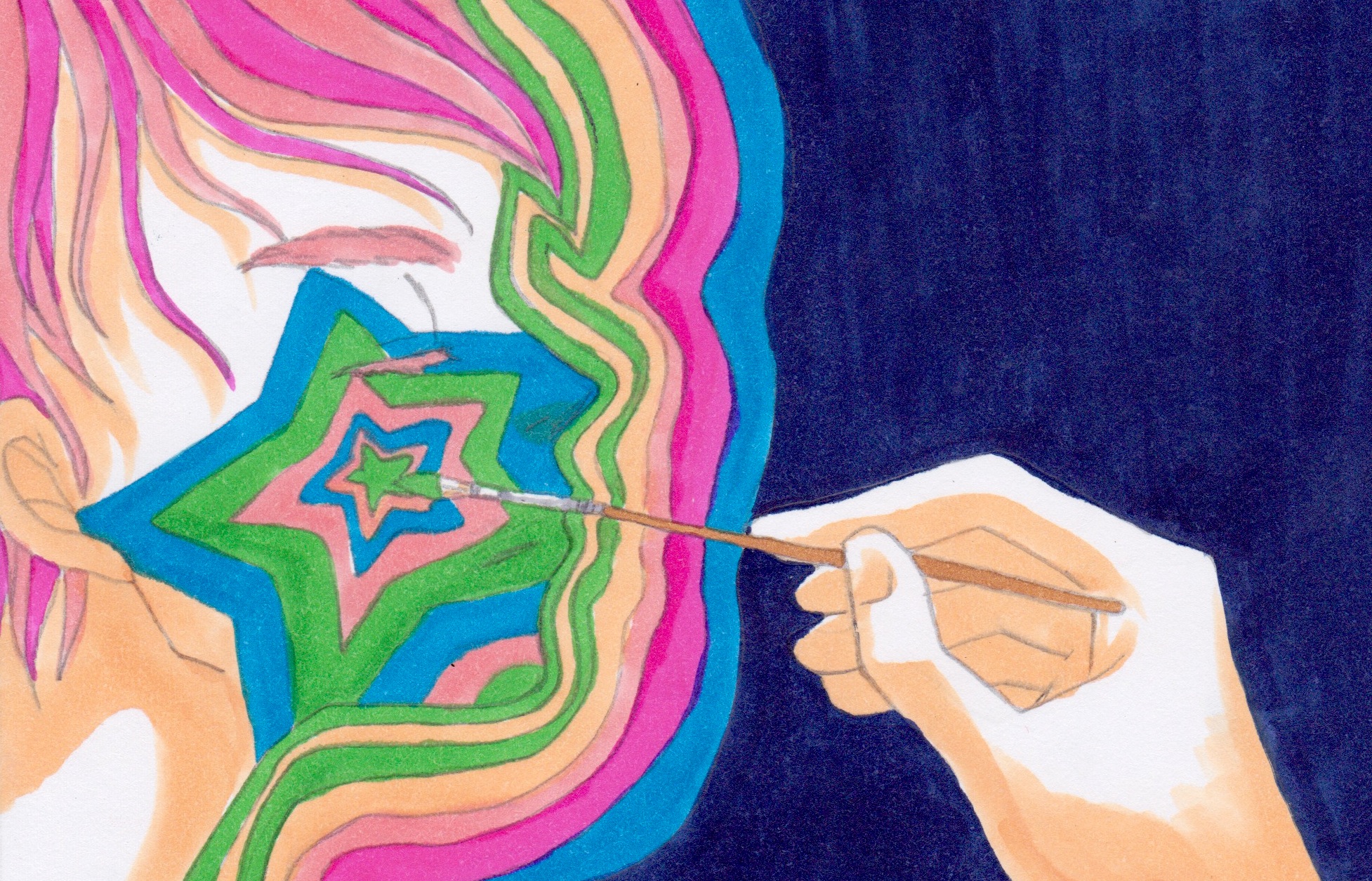
To give you an example of how ASMR feels, imagine a time when you’ve had your face painted, perhaps at a carnival or art festival. You sit comfortably in a chair and remain still while the painter slowly caresses your cheek. You begin to feel a tickling, tingling sensation as the cool paint and hairs of the paint brush gently glide across your skin. This, my friends, is what ASMR feels like.
Face painting stimulates cutaneous (skin) sensory receptors who respond to gentle, relaxing touch.
Worthy of mention is that the person who initiates the trigger exhibits a relaxed mood or speaks with a slow, mellow voice. But because I don’t really have any sentimental value attached to the event or the person involved in the trigger, it is most peculiar to why they can somehow activate my body’s pleasure circuit. Perhaps certain people just give off good “vibes.”
Back in the old days of the 1990s, my curiosity of this sensation could not be satisfied, and my dissatisfaction was intensified because no one understood it and my current go-to problem solver, the internet, wasn’t really a common option then. Today, however, the power of Google and other search engines can transport us through cyber space into virtually any destination of information, concepts or ideas. Since the few people I have talked to over the years (a few friends, a college professor, my mom…) about ASMR had never heard of the sensation and thought me a little strange, I was beginning to have a slight paranoia of having some rare neurological disease and decided to browse online for possible answers.
Luckily, the internet is full of weird people (and cats) and wacky things. This is how I found other people who experience the same mysteriously pleasant sensation as me.
Lo and behold, I can now present the name of this vague feeling. It is called “Autonomous Sensory Meridian Response,” and it is pretty awesome. You should go ahead and Google it, YouTube it, Facebook it, Reddit it, or Twitter it as you will see that I am not alone. It is wonderful to see so many forums, interest groups, blogs and other cyber-terrestrial lands scattered throughout the internet, inhabited by people who possess the exact same “spider-sense” type feeling I once believed to be my own personal superpower. There even exists an online research group who seeks to find an answer to this bizarre social phenomenon.
But….WHAT causes ASMR?
No definitive explanation for this psychophysiological phenomenon seems to exist, and though the rate of incidence is unknown as well, ASMR is probably not experienced by everyone. However, those who do notice its occurrence naturally might wonder what the tingling sensation actually is and why it happens. One could argue that most if not all sensations are encompassed by the vast, enigmatic notion of consciousness.
Consciousness, almost too abstract to define, yet it allows us to perceive and experience the universe. Just go with it….
Many concepts involved with conscious sensory perception were once thought to be some sort of myth but are now accepted as evident processing of the mind and body. For example, synesthesia, a phenomenon many skeptics dismissed because nobody could prove it, now thrives as a hot topic in neuroscience. Synesthesia is defined as “a neurological condition in which stimulation of one sensory or cognitive pathway leads to automatic, involuntary experiences in a second sensory or cognitive pathway.”
People may report perceiving a sound as purple or perhaps smelling a particular scent and claiming it smells green. This type of sensory blending demonstrates an important feature of perception: everyone thinks and feels stimuli differently because we are all wired slightly differently in the brain and our cellular architectures all have a slightly different schematic (thanks, DNA). Further investigation of the sensory evoking entities underneath our skin will likely provide insight into why many people experience tingly waves of pleasure that surge throughout the head and peripheries, aka ASMR.
Unfortunately, ASMR has not been accepted in the scientific community. In the past, some have attempted to create a Wikipedia article for this topic but have been denied by the highly scrutinizing Wiki editors due to lack of scientific evidence. If you attempt to search “autonomous sensory meridian response” or “ASMR” in a scholarly search engine such as PubMed or Web of Science you would probably find zero exact results and would be searching for a cyber-needle in a cyber-haystack. (Trust me I’ve spent hours to days attempting to find something with no such luck.)
I have found similar topics that all seem to dance around this enigma. However, I take offense and feel discriminated against that Wikipedia would kick ASMR to the curb just because the editors have no proof. How unfair that another unexplainable sensory phenomenon called “The Hum” (The Hum, seriously?) gets to stay on Wikipedia! That’s sense-ist! I will not stand for this. I have a dream….that ASMR will become accepted on Wikipedia and scientific search databases!
Searching for the answer
Oddly enough, if you go to Wikipedia to get a quick crash-course for Autonomous Sensory Meridian Response, the closest you will probably get to an answer lies at a dead end stub page termed “cold chill.” The description provided on this page does not accurately reflect ASMR and the resources at the bottom consist of two articles about the “chills” or “thrills” response one may get when listening to music perceived as “awe-inspiring” or “moving”. While this is very similar to ASMR, it is not the same, so don’t get the two mixed up. Nor is it the goose bumps you get when cold or that “shivers down the spine” feeling you may get when scared or when hearing the scratching of nails on a chalkboard.
Wikipedia took down the page about Autonomous Sensory Meridian Response due to lack of scientific evidence, so it is scientific evidence we must provide by using credible resources.
Here’s an idea of what I’ve been researching so far just to look at many possible angles on the topic.
Key words/topics: differential perception, cold chill, piloerection, goose bumps, synesthesia, psychodynamics, brain tingling, brain goose bumps, ecstatic seizures (I wouldn’t spend too much time looking into this topic I don’t think this is it), positive affect, emotions, autonomic nervous system, endogenous opiates, serotonin, oxytocin, dopamine, empathy, meditation, hypnosis, hypnoanalgesia, relaxation, (probably more that I can’t remember at the moment)
In less vague terms, search for a physical sensation that….
Invokes a (non-sexual) type of pleasure by watching other people do seemingly ordinary tasks
Acts like mirror-touch synesthesia (why some people may perceive pain when seeing somebody else getting hurt)
Or…
Explore the brain regions! (limbic system, prefrontal cortex, hippocampus, amygdala, thalamus, nucleus accumbens, reticular formation, basal ganglia, temporal lobes and auditory system would be good bets)
If you happen to know a professional such as a doctor, researcher, neurosurgeon, anesthesiologist or anyone with an advanced scientific degree, ask them!
Just describe it as a non-arousing type of tingling sensation (not associated with pain) that invokes a pleasurable, relaxing, euphoric state of mind and literally feels like a wave of electricity often resulting in goose bumps on the head, neck, arms and legs.
I’m sure it lies somewhere within the verbal menagerie listed above but I can’t seem to pinpoint it. Instead I get kind-of-like-it-but-not-really type of results. So if you are of the scientific subset of the human population or if you experience ASMR as well and know what I’m talking about, or even if you are just interested in investigating something new, then please, I need your help! Anyone interested in collaborating by finding scientific evidence to support ASMR please email devon@chargedmagazine.org. I will provide a more structured outline of relevant research topics and we could discuss our findings.
So…
Why is it that certain behaviors of others is able to induce an opiate-like affect in the body? This feeling is as good as a drug and can alleviate headaches, relax someone who is stressed out or even put them to sleep if they have insomnia. However, people who experience ASMR need not put a substance into their body; it is more like a telepathic narcotic.
Hopefully the answer can be found with diligent research into the realms of psychology, physiology, biology and neuroscience. The answer might be out there, and if not, could this be the next big scientific breakthrough?
In the meantime, I’m going to go take a 23:33 minutes per megabytes dose of ASMR by watching this video.
Artwork, Courtesy of Ai Taniguchi: Cover image (Brain), Spidey-Sense, Face Painting, Consciousness
Image, Sensational Hierarchy. Inspired by: Seeley, Rod R. “Integration of Nervous System Functions.” Seeley’s Anatomy & Physiology. 9th ed. New York, NY: McGraw-Hill, 2011. 473. Print.
[1] Kreibig, Sylvia D. 2010, Autonomic nervous system activity in emotion: A review. Biological Psychology, 84, 394-421.
White penetrating light blasted into Anna’s eyes. Her entire body felt numb from the cold and she could just barely move her toes. She lay in a glass casket, her body suspended in the air. The pressure in the casket started to change as she drifted to its bottom. The smell of rust and sweat swept into the casket as the lid popped open to release her back into civilization.
The smooth face of a man came into her field of vision. “Don’t try to move Anna,” the man’s soft voice purred in her ears. She tried to nod, but none of her muscles responded.
Anna closed her eyes and tried to remember why she was here. It felt like just moments ago that she had been hugging her mom and dad and telling them goodnight. They had promised her that they would wake her once a cure was found for her cancer, but that they would wait no more than 3 years before bringing her out of cryostasis. How much time had passed? Days, weeks, months or years?
“Try to wiggle your toes Anna,” the man instructed and she obeyed. “Very good. Now flex your foot.”
Slowly and painfully, feeling returned to her body. Her bones ached as she tried to sit up in the casket that stood in the center of the return room. Rusty cables hung from the ceiling and were connected like a spider’s web to her casket. Behind the dirty glass wall stood a bank of computers, with one red-haired smooth faced woman operating the controls.
The man that had woken her stood next to the casket holding out a tattered wool robe. He helped her out of the casket and hung the robe on her scrawny frame. The robe enveloped her into its warmth but she nearly collapsed under its weight. She would have fallen but the man placed his arm around her shoulder and held her upright. “Come, you must try to walk. Your legs and body will remember what they’re supposed to do better if you move around.”
Anna hesitantly took one step and then another. Soon she was able to stand on her own, albeit with shaky legs. Finally she mustered up the courage to try and speak, but it came out as a horse croak. The man brought her a glass of water, which she drank thirstily. “Where are my parents?”
“They’re not here,” the man replied.
Anna fought back the tears that were pushing their way to the surface. “You’re lying. They promised that they’d be here.”
“I’m sorry but they’re not,” the man repeated more gently.
“Where are they?”
“I don’t know.”
Anna took a deep quivering breath. It felt good to breathe on her own again, even though the air smelled of rust and grease. Her bones complained at the abuse she was doling out on them. A stool stood at a decrepit workbench. She slowly sagged onto it, not knowing what to make of it all. “What’s your name?”
“My name is Nick. Would you like something to eat?”
Anna nodded and Nick produced a banana, a tomato and another glass of water. Slowly Anna reached for the banana and peeled it. Breaking off small pieces at a time she ate it, stopping now and then for a sip of water. Nick had disappeared to talk with the woman in the control room, leaving her to work on her snack in solitude.
When she finished, Anna left the banana peel on the table feeling guilty. Her mom would have a fit if she just left her rubbish lying around, but she could not see a trashcan anywhere. When Nick returned, he told her not to worry, that he would take care of it.
Nick came to her side and helped her to get moving once more. “How do you feel?”
“Sore,” Anna murmured. “My bones ache and my body feels numb.”
Nick led her into an elevator and pressed a button labeled Medical Ward. “Some of that is due to being in cryostasis for so long. The rest is due to your lymphoma cancer. But then you should be used to that.”
“How long have I been in cryo?”
“Some time.”
“How long Nick?”
“Look, there is a lot that I must tell you, but I’m not going to yet.”
Anna stopped and stared at him incredulously.
“I still have to treat your cancer. In order for the treatment to work swiftly you need to be in a calm state, like you are now, or we won’t have enough time with you. Do you understand?”
Anna shook her head. “I gather that whatever you have to tell me is not going to make me feel better, so why not just tell me?”
Nick sighed as the doors to the elevator opened. He led her over to a bed where he helped her to remove the robe and slip into a night dress and then under the covers.
Anna gripped Nick’s wrist. “Just tell me, please.”
Nick bent over and kissed her on her forehead. “Later, child.”
Anna bristled at being called a child by an adult. She was nearly 14, and knew more than they thought she did. They always spoke in whispers around her about her cancer, thinking she was not smart enough to understand them. But she understood every word, which was why she also knew that her only choice to live had been to go into cryo until a cure was found. Now there was a cure, but where were her parents? Were they watching her from an observation room while they administered her cure? She hoped that they were, and that all of this was normal. But then, why would Nick not tell her anything?
Nick came over and placed a calm hand on her shoulder. “Take a deep breath Anna. Everything is going to be all right. I promise.” Nick raised a needle and injected some medicine into her arm.
No matter how many times the doctors poked her with needles, she always flinched whether it hurt or not.
Anna felt herself drifting to sleep. She reached out and Nick took her hand. “Nick, please, just tell me how long was I in cryo?”
NOTE: This post is not related in any way to the 1956 sci-fi film that depicts an extraterrestrial invasion where the invaders “steal” human bodies. This is NOT a review of the Invasion of the Body Snatchers (though I do highly recommend the film).
Rather, this is brief overview of a period when robbing bodies, often from graves, was used as a means to provide physicians with subjects for dissections.
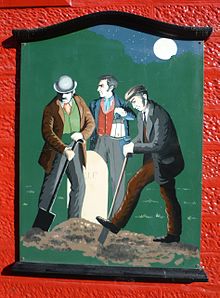
Body snatchers at work. A painting on the wall of a public house in Penicuik, Scotland.
When?
Body snatching was most prevalent during the seventeenth to nineteenth century, though there have been reports of this activity occurring as early as the fourteenth century.
Why body snatching?
– Surgical practice (High Demand): Most fifteenth century physicians scorned and considered it degrading to work with their hands; They often stood by patients they treated and ordered servants to perform what they thought should be done by hand. This disconnect between the physician and surgery created a void in anatomical and surgical knowledge. During the sixteenth century, Andreas Vesalius, a Flemish physician, led a movement to fill that gap. His efforts culminated in the publication of De humani corporis fabrica, one of the greatest anatomical textbooks. During that time, Vesalius traveled around Europe performing dissections himself, generating interest in surgery and leading physicians to embrace the values of a hands-on approach to medicine. This surge in interest in surgical practice created a great demand for bodies to be used for dissection.
– Shortage of bodies (low supply): Two centuries ago most states did not permit the use of unclaimed bodies for dissections and most of the states that did limited them to executed criminals. However, this was not enough as executions were few in the states. For example, Massachusetts executed less than 40 persons from 1800-1830. In addition, as the number of medical schools increased, so did the demand for bodies. This legal blockade created a shortage of bodies available for medical schools forcing them to turn elsewhere.
–Body decay (high turnover): Lack of refrigeration was a common problem back then; not only did it spoil food, but it spoiled bodies. This meant that there was a high turnover rate; physicians had a limited time frame to dissect and study bodies after death. This created a situation where there was a constant demand for bodies.
SOLUTION: Where can you find a large supply of bodies? Graveyards.
Who stole bodies?
-At first, grave robbers were medical professionals, students, and hospital porters who stole bodies for their own purposes. However, as time passed, medical schools advised students, faculty, and personnel to avoid engaging directly in stealing bodies. From there grew a class of individuals known as resurrectionists or body snatchers, men who made a living exhuming corpses and selling them to schools. Eventually, body snatching organizations/gangs started to appear. As laws were put in place, robbing became more profitable; their task became increasingly difficult and dangerous, and the price of their commodity increased.
-Since body snatching was an arduous task, it was often men who participated in this activity, though women were sometimes involved in non-physical tasks or snatching bodies not yet buried (falsely claiming a body to be buried).
Whose body was stolen?
-Race, sex, and social status did not matter. Nobody was safe from disinterment.
Note: Though records show that people of all race, gender, and social status were victims, the golden era of body snatching coincided with the period of racial and social inequality in the states. This meant that immigrants, blacks, and the poor were most often targeted.
The Art of Body Snatching:
Many considered body snatching an art. Some texts describe the act in lengthy detail spanning several pages, detailing tactics on how to procure bodies as efficiently as possible. I will spare you from the lengthy details without skipping over the essential techniques.
Step 1: Secure knowledge of a prospective burial: Information of a burial was usually supplied by mail or messenger. Such a message was often sent in code and not directly to the resurrectionists, but through some intermediary, such as a druggist.
Step 2: Scope the location: The grave should be accurately located during daylight hours so that a search in the dark would be unnecessary. A common method was to reconnoiter as a hunter. A stranger would appear in the neighborhood on the day of burial with a shotgun over his shoulder, apparently hunting small game.
Step 3: Wait until nighttime
Step 4: Begin the disinterment
Plan: At least two men and a watcher/driver were needed in a disinterment. One man remained with the transport; that person would drop off the other three at the location and return at a specified time. The other two removed the body.
Execute: The process of disinterment was fairly straightforward: a hole would be dug directly above the coffin, the coffin would be opened, and finally, the body would be pulled out. Since graves were dug to be about 5 ft deep (from the top of the coffin), extracting a body could be quite laborious. To make the extraction easier, resurrectionists used a modified pole to drag bodies out of graves. This pole was hooked at one end and had grips at the other (similar to the letter ‘J’). The hook would be placed under the chin of the deceased and the men would push or pull the body out using the other end of the pole. As you can imagine, this ‘hooking’ technique often caused damage to the corpse.
Step 5: Clean Up: The grave should look as it did before the disinterment to avoid suspicion and capture.
Ethics
The seventeenth to nineteenth century was a great era for medicine. Discoveries in anatomy led to improved surgical treatments and healthcare. However, people often forget that many of these advancements came at the expense of bodies being robbed. Families would go to cemeteries to pay respects for loved ones only to find the grave(s) in disarray, or would pay respects without knowing the remains of their loved were gone. Until the adoption of more coherent and stricter laws regarding body donation, many physicians considered body snatching a necessary evil.
I LOVE science. From genetics to astronomy, neuroscience to botany, this branch of knowledge endears me with its concrete facts, equations, and straightforward answers.
Engineering? It’s cool too. As an engineering major in my second year, I’m in the process of learning a ton about what engineering actually is, and I’m enjoying it! You certainly have to know the science behind the technology you’re working on, but you also get to think creatively and innovate. On paper, you can have no limitations and let your designs go wild, but I’m learning that engineering in practice poses limitations that aren’t exactly fun to think about — cost and means of production for instance.
Now, philosophy of science? That’s a whole new level for me. I’m currently taking a philosophy and public policy class on the topic of neuroethics. The problems we’re examining look at how new developments in science and technology can be implemented, with all the ethical, legal, and moral issues that come with it. These types of complex issues enter a completely grey area where there is no right answer. Until taking this class, I generally avoided these types of topics because they’re out of my comfort zone; I think of them as being “fuzzy,” whereas my beloved sciences are concrete.
However, by taking this ethics class, I realized exploring these grey areas is essential. After all, if new discoveries in science are to come to any real world importance, they need to be applied in a practical, ethically sound way.
Let me give you an example. The most recent problem my classmates and I tackled was that of using neuroimaging technology to identify students who are at risk for committing acts of violence. Specifically, we were targeting both bullying in schools and more serious matters such as school shootings.
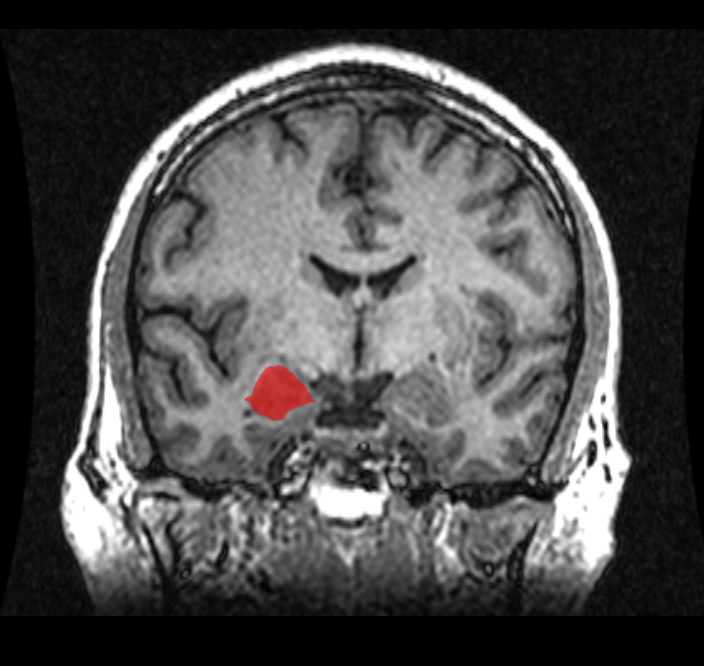
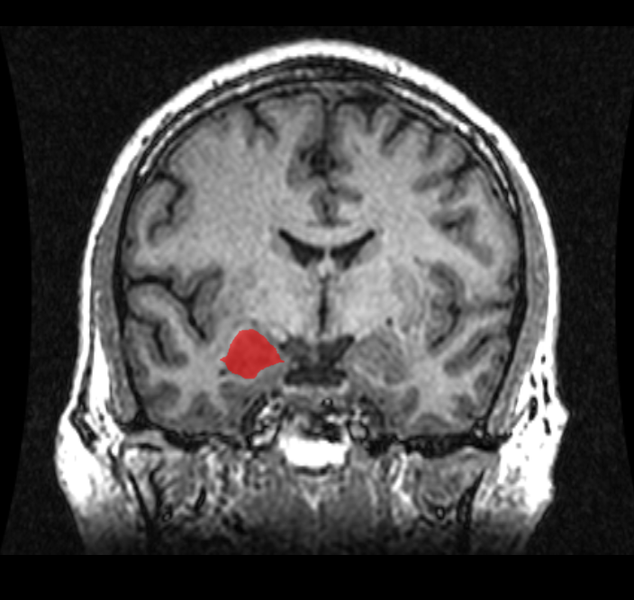
MRI coronal view of the amygdala. Taken from the Wikimedia Commons.
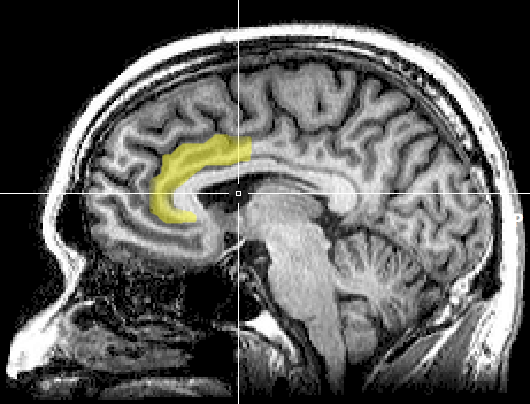
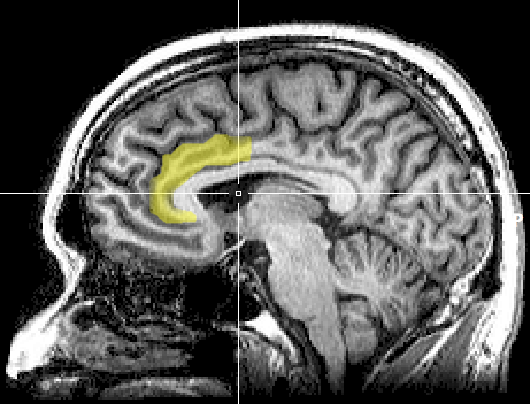
First, we examined the technology. (This part was really fun!) Recent neuroscience studies have examined the fMRI results of those who have committed various violent crimes (assault, homicide, etc.) and have been identified with various disorders (conduct disorder, antisocial personality disorder, etc.). Generally, results show the subjects to have decreased activity in certain regions of the brain as compared with the average person. These regions include the amygdala, prefrontal cortex, and the anterior cingulate cortex (ACC), all of which are part of the limbic system, or the “emotional brain.” (Sterzer, 2009). These brain abnormalities may be why some children, adolescents, and even adults do not empathize with others or even derive pleasure for putting others in pain.
Sagittal MRI slice with highlighting indicating location of the anterior cingulate cortex.
So clearly there’s an inherent difference between the brains of violent and nonviolent individuals; shouldn’t we scan everyone for these defects and have them treated? Well not so fast. There is vast range of what “normal” is for a human brain. Scans have also found those with abnormal brain structure and no tendencies toward violence whatsoever. On the flip side of things, there are many violent criminals who lack these abnormal brain structures. If a scanning requirement were put in place for schools, false positives would create unnecessary stigma and hassle, and false negatives would allow students at risk for committing violence to slip through the system.
On a related note, we need to consider that correlation does not equal causation. Just because a student may have a certain brain structure associated with violent tendencies, does not guarantee they will commit a violent act in the future. The brain is incredibly plastic, meaning it can change over time in response to experiences. An abnormal brain structure seen in a violent offender could be a result of actually committing the crime, or even a result of a negative childhood environment (Tsouderos, 2010).
Beyond reading through the studies published on neuroimaging, we also had to look whether implementation of scanning in schools is financially, ethically, and legally sound. Have any of you ever had a PET, CAT, or MRI scan? Those things are expensive, especially if you don’t have health insurance. And in the case of a state program, that cost is placed on the tax payer. How accurate and effective do these scans have to justify paying thousands of dollars per scan? Once we have identified students as having an increased risk for violence, won’t we need the resources to treat them? And how do we manage the information taken from scans? Which school personnel, medical professionals, and authorities will have access to this information? Is it right to force a student to undergo a scan?
In trying to find a solution, we ran into all of these questions and more. Ultimately, we decided against recommending using expensive neuroimaging technology (which, as cool as neuroscience is, it is still in its infancy) to combat violence in schools, instead looking at alternatives such as providing more resources for school programs to identify and treat mental disorders and promote mental health.
However, whatever decisions we reached concerning this problem or the other topics in the class (ranging from genetic modification of humans to what type of medical information can be admitted into court), the important part of this experience was the discussion along the way. Thinking about these types of complex issues has really helped expand my thinking and round out my education. In fact, I was so consumed by our ethical debates that I’m seriously considering taking a proper introductory ethics or philosophy class. And to all you students out there, I recommend you do this as well! Or if not ethics, just something outside of your major and outside of your comfort zone; you never know when you’ll discover a new academic love!
Sterzer, P., & Stadler, C. (2009) . Neuroimaging of aggressive and violent behaviour in children and adolescents. Frontiers in Behavioral Neuroscience, 3. Retrieved from http://www.ncbi.nlm.nih.gov/pmc/articles/pmc2766784/
It seems like every other day, a friend of mine declares a newfound dedication to the Paleo Diet. Nicknamed the “Caveman Diet,” Paleo is this season’s slimmer, fitter (but just as raw) Atkins diet. I first learned about the elusive Paleo from my dedicated Cross-Fitter friend after asking her for an afternoon snack. I fully expected some Goldfish or hummus-like options but my friend looked carefully in her fridge and gave me a choice between freshly-watered lettuce or coconut flakes. Apparently my disturbed look alluded to what I was thinking (when did you start hating your taste buds?) because she then confessed to me that she started this Paleo Diet. She explained how she stopped eating bread, to which I replied “Dear God,” and went on to describe her new enlightened Paleo lifestyle.
The Paleo diet theoretically takes us back to our ‘caveman’ days when we hunted rodents with rocks and scurried for nuts and berries. Protein heavy; processed foods are out of the question; dairy is for infants; and sugar is the devil. I’m not sure how the Paleo people know this, but apparently cavemen never ate any grains whatsoever, so neither can my friend now. She carries wild canned tuna in her purse, munches on dried jerky meat from a bag fit for an astronaut (right picture), and mumbles about bacon all the time.
Shocked at the idea that someone couldn’t indulge in croissants, muffins, or baguettes with chunks of melted brie, I left my friend’s place horrified. I thought of the possibility that lobbyists for the meat industry were behind the whole conspiracy and hated wheat with a passion. I needed to find out for myself. What’s the health benefit behind this fad? Is there any? How has this pandemic spread to several of my friends already? Will my love of carbs be strong enough to fight the Paleo takeover?
The premise behind the ‘Paleolithic’ eating is that humans should only eat what we’ve been genetically adapted for. For 2.5 million years, the length of the Paleolithic Era, our human ancestors were just a bunch of fit muscular naked hunters-and-gatherers. Human diets changed 10,000 years ago when agriculture was developed, but our 2.5-million-year-old genetics did not change the way we digested food. Proponents of Paleo blame ‘Industrial Era’ food such as beans, dairy, alcohol and salt for obesity, cardiovascular disease, cancer, diabetes and high blood pressure. However, I could not find any known cardiovascular benefits to becoming caveman again. There IS an increased risk of higher cholesterol because of the increased meat intake, so Paleo might not be a good idea if you have high cholesterol already.
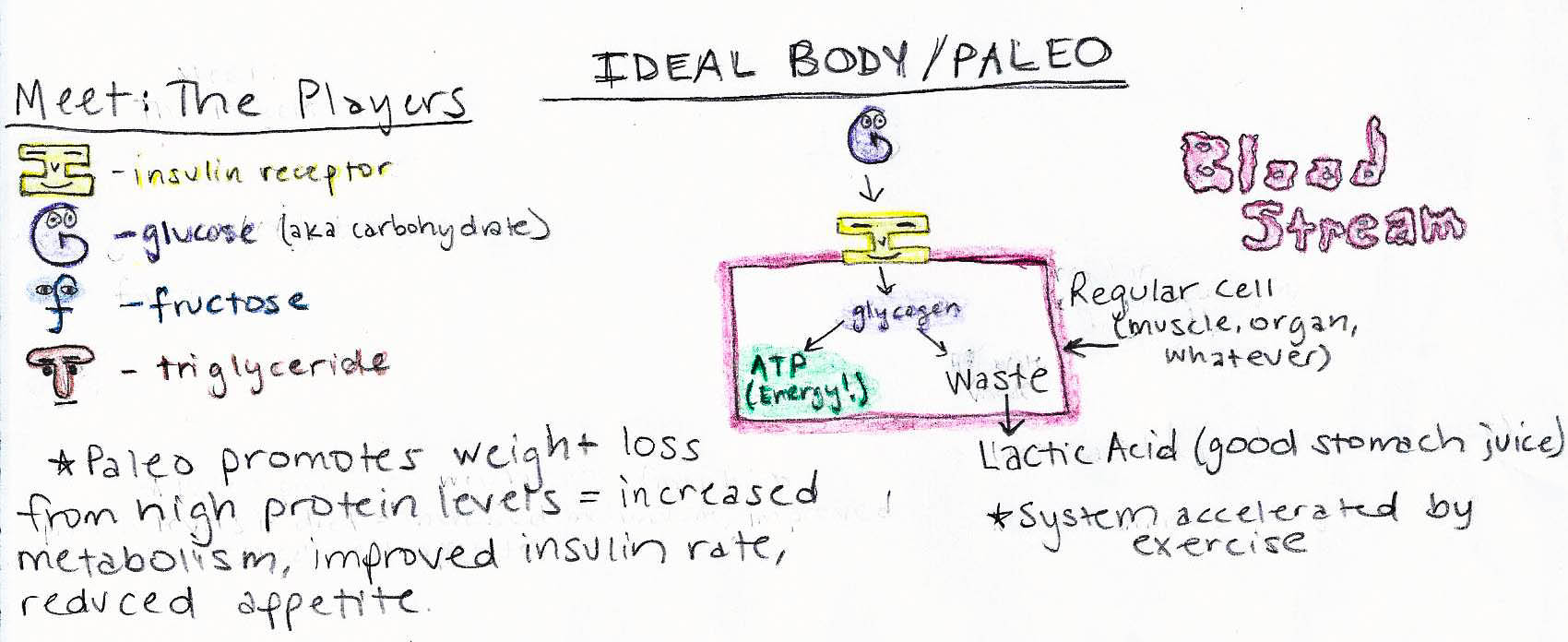
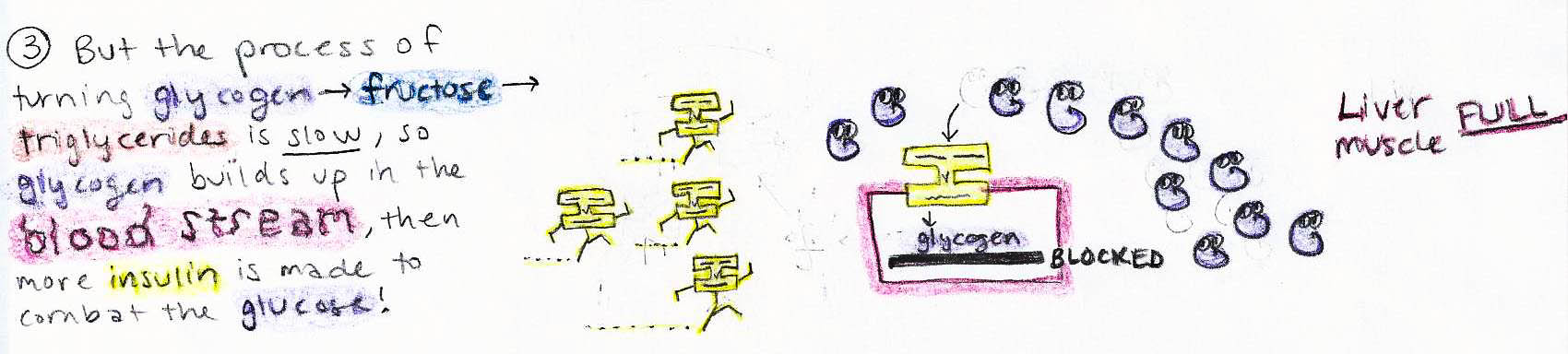
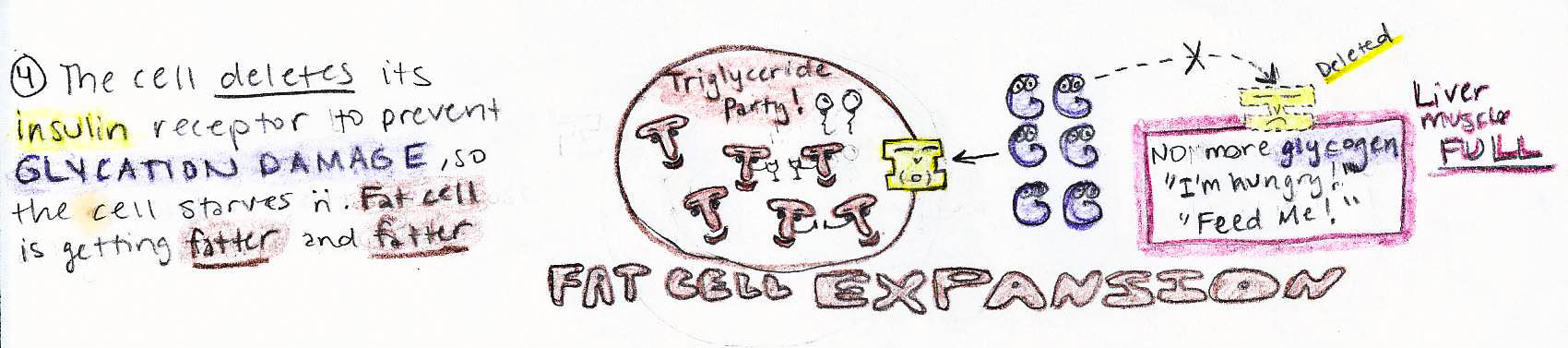
Paleo basically hates carbohydrates. They attribute carbohydrates to high blood sugar, insulin resistance and eventual morbid obesity. Doug McGuff, MD and proponent of the Paleo diet, broke it down like this (with perhaps a few more sophisticated explanations):
Paleo says that in this metabolic state, consuming high fructose corn syrup, sugar, or fructose of any kind will amplify these effects. The only way to reverse this is with high intensity exercise.
In theory, I’d say this Paleo diet sounds good. But all diets sound good in theory until you’re hungry. Examples- a few of my Paleo zombie comrades have cheated on a few occasions which they don’t want to admit. They’ll crave a banana nut muffin all week and allow a bite on an upcoming weekend. The pizza or cookie monster inside of them might emerge at 3 AM on a Saturday night. They’ve also ordered light spring salads at dinner only to reach for my deep-fried chicken finger basket after they’ve digested their lettuce in 4 minutes flat. This worries me. I do have to say, my friends look extremely fit and healthy, and probably the best looking I’ve seen them in the last 6 years I’ve known them. So something is working. It could be the strenuous Cross-Fit workouts though.
I’m very cautious about new hip diets so even after my research I was still not convinced I could get on board with the I-HATE CARBS Movement Paleo diet. I needed to do some field research. Meandering through the bookstore, I came across a Paleo Recipe Book and immediately started perusing through the pages. The recipes looked pretty delicious so I snapped 18 pictures from my iPhone when no one was looking (don’t judge, I’m on school loans) and dashed from the aisle like a bandit. I thought cooking one of the recipes would really make up my mind.
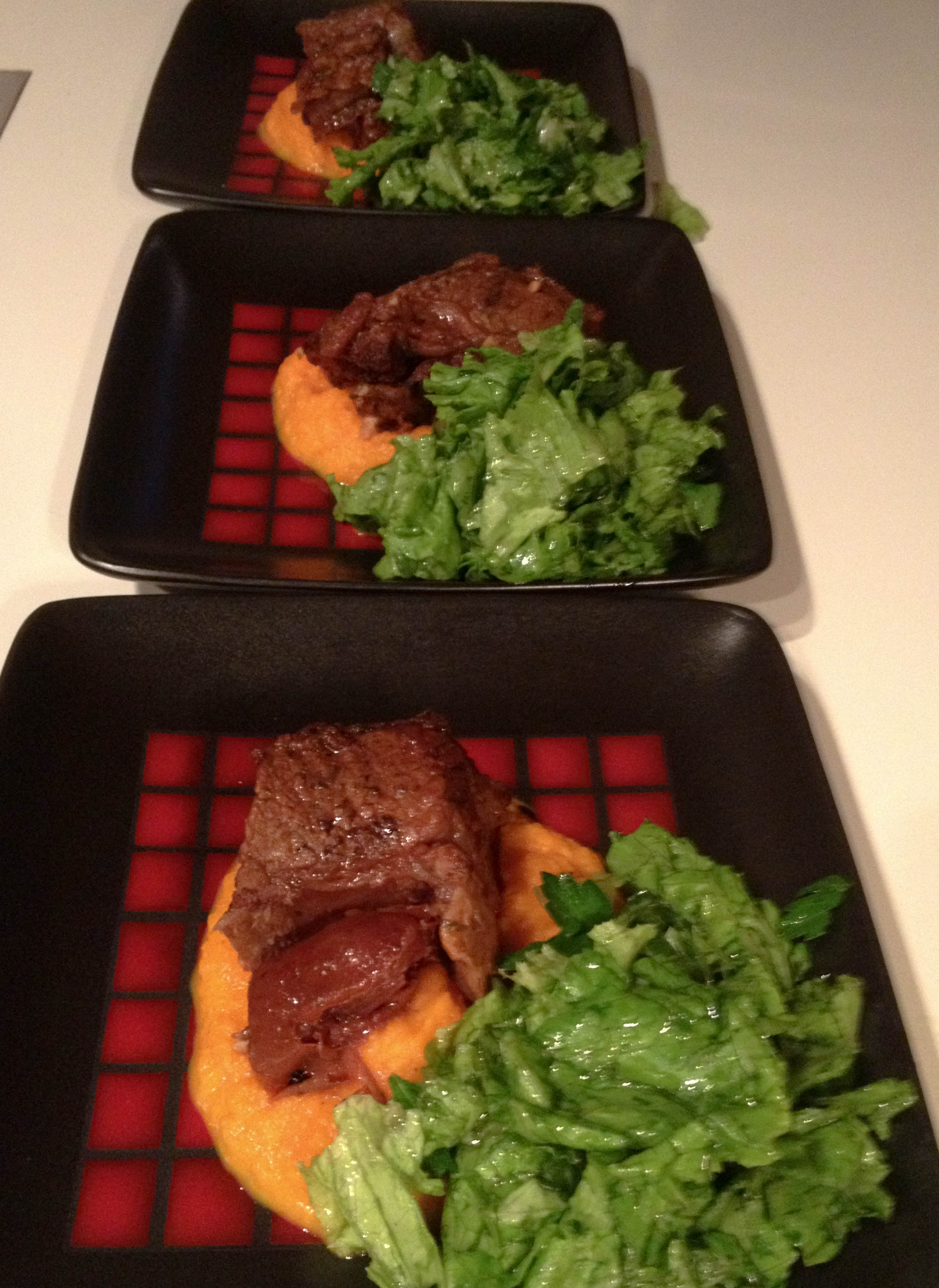
I decided to conjure up some balsamic braised short ribs with a carrot puree and frisee parsley salad. I wasn’t sure what to expect but, I have to say, it was damn good (pictured right). I started to think maybe I could ‘have Paleo and eat it too’….but only on Sundays, and with friends who could split the grocery cost with me.
All in all, I might consider going temporarily Paleo if I want to shed a few pounds but I’m gonna stick to my own health theory which is ‘everything in moderation.’ I don’t know about you, but I can’t get used to having my milk and cookies without either milk or cookies. Plus diets that completely eliminate certain food groups are difficult to follow and can get very pricey. If anything, I believe cutting red meats or the Weight Watchers diet are the best ways to go. What diet could you get on board with?
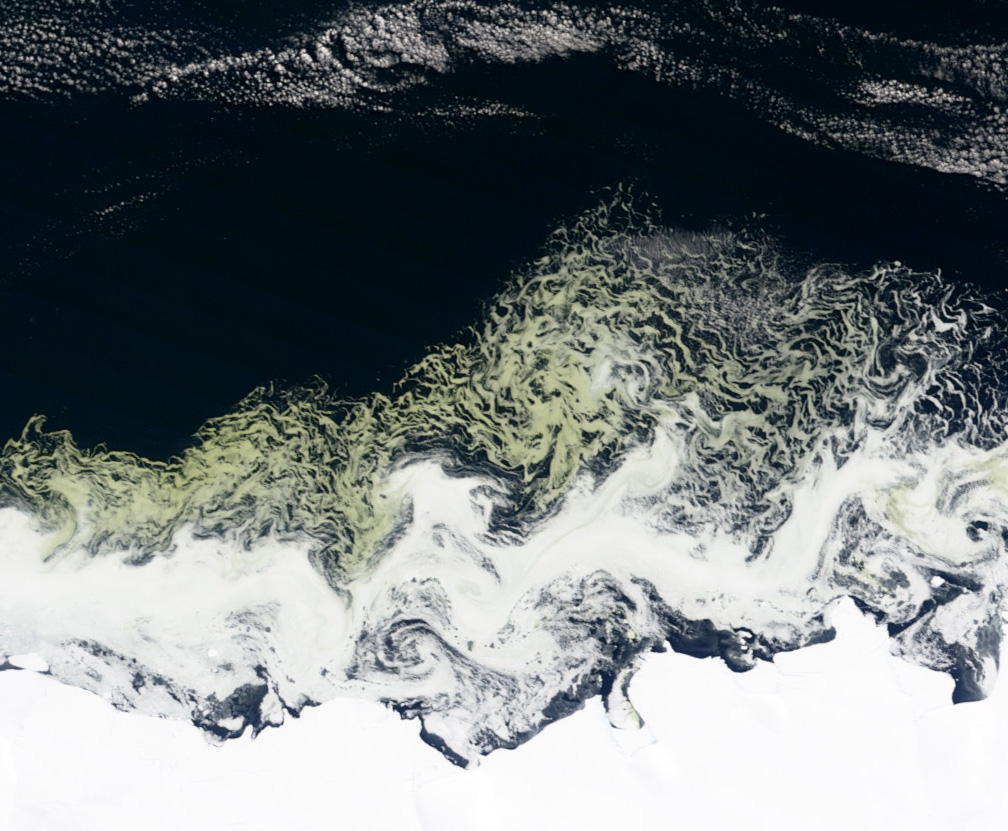
An algal bloom appears off the Princess Astrid Coast in East Antarctica. NASA image courtesy Jeff Schmaltz, LANCE/EOSDIS MODIS Rapid Response Team at NASA GSFC.
Greetings biophiles! What do algal blooms, great white sharks, and okapis all have in common? They’re all absolutely fascinating and they’re all on my list of events and animals I would jump at the chance to observe. This ever growing list of biology-related items has evolved into something of a bucket list, hence the title, and includes biological phenomena around the globe that I hope to one day see for myself!
So what ‘s first up on my biology bucket list? Algal blooms.
First some background: Algal blooms are basically just the growth of aquatic algae at a hyper fast pace, resulting in washes of discoloration over bodies of water. These artworks of nature generally occur due to favorable conditions such as availability of resources like minerals, nutrients, warmth, and sunlight. The algae, usually referred to as phytoplankton, are microscopic, single-celled organisms that make their home in the upper layers of both fresh and marine waters. They serve as vital components of aquatic ecosystems due to their powers of photosynthesis, as they provide food (directly or indirectly) for everything from penguins to blue whales. Phytoplankton even feed you, as they are used as feed in aquaculture. We depend on these little guys!
However, I not only appreciate them for their hard work in the upkeep of our oceans, but also for their aesthetic value on both a microscopic and macroscopic level. If you do an image search of either “phytoplankton” or “diatoms” (go, click on it!), you’ll see that these guys come in all kinds of wacky shapes, sizes, and colors.Looking at them under a microscope (and I would love to take my own sample from an algal bloom) is pretty much like walking through an art gallery (except better) because the artwork is made out of living organisms just hangin’ out, powering an entire ecosystem and being funky shaped. Ahhh, that is the life.
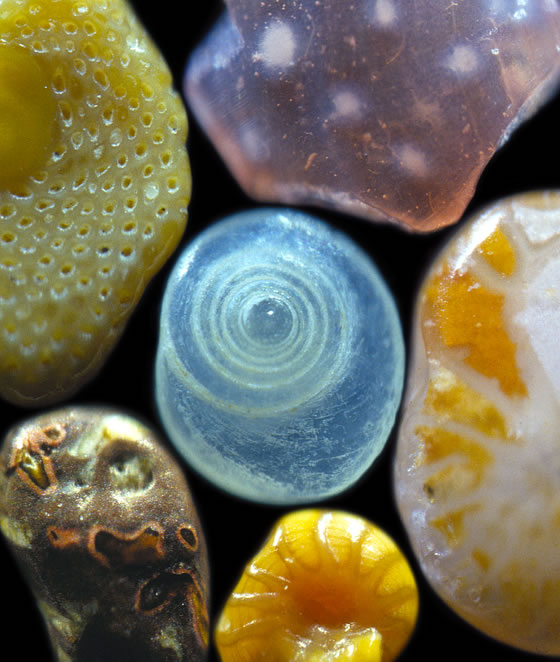
(Side note: lots of ordinary things look crazy awesome when looked at close up, sand for instance. Oh nature, your beauty reveals itself on so many levels. *swoon*)
How do I plan on experiencing an algal bloom you may ask? By swimming in one of course!* (Or looking at them from the International Space Station, as most algal blooms can be seen from space. NASA, if you want to make dreams come true, hit me up!)
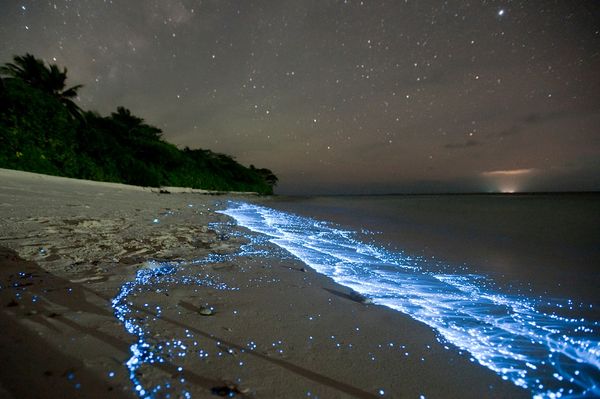
And no, I’m not talking about taking a dive in the pond scum of the poorly-kept neighborhood pool. Instead, I hope to travel to what are known as bio-bays: bodies of water where bioluminescent phytoplankton, or more specifically dinoflagellates, light up the waters at night and create waves dotted with glowing spots to match the starry night sky. There are several locations around the world where tourists can experience the glowing waters- Puerto Rico, Vietnam, and the Maldives to name a few.
However, these kinds of trips cost money and, alas, I am a poor college student, so until I can save up to travel to Puerto Rico (or the ISS), I’ll continue looking at satellite photos (like the ones from NASA, linked below). Other types of algal blooms can occur in bodies of water around the world and vary depending on seasonal and causal factors.
Glowing blue waves on Vaadhoo Island in the Maldives. Photograph by Doug Perrine, Alamy
I like to keep my eye out for new photos of algal blooms, such as this one, which displays Impressionist-esque swirls of green and yellow atop the waters off the Princess Astrid Coast in Antarctica, taken by NASA’s Terra Satellite this past February. Antarctic blooms generally occur in December (the start of summer for Antarctica) as the increased sunlight favors the growth of these photosynthesis superstars and kickstarts the rest of the marine ecosystem in time for baby-making season. This particular algal bloom’s late season appearance excited scientist to the possibility that it was caused by a more unusual factor: nutrients blowing off of a nearby ice shelf. This is just one example of how algal blooms can come about.
Year round you can find news of all types of algal blooms being spotted in different places around the world, so keep a lookout for this fascinating biological phenomena! If you would like to see more of their intoxicating beauty I would recommend perusing through Visible Earth, a catalog of photos from NASA, or checking out this gallery from Wired magazine, which will also tell you about regional types of algal blooms.
So, dear readers, what do you think? Would you go swimming in a bioluminescent ocean? I hope you’ll take a look through some of the galleries linked throughout (some of these photos make great wallpapers!), and of course I’d love to know what’s on your biology bucket list via the comments section below. (Also, keep a look out for our next installment of our biology bucket list series!)
*It should be noted that some algal blooms are harmful (HABs), and certain species, about 2% of the 5000+ species of marine phytoplankton, are associated with toxins and can actually harm an ecosystem through the release of neurotoxins and the depletion of oxygen in water. These HABs can arise naturally and in predictable patterns, but have also increased in frequency due to human activity like agricultural run-off. So please do not just go jumping into any old discolored water and be sure to look out for notifications from your local health and marine departments if you plan on participating in any recreational activities in or near your local lakes or beaches.






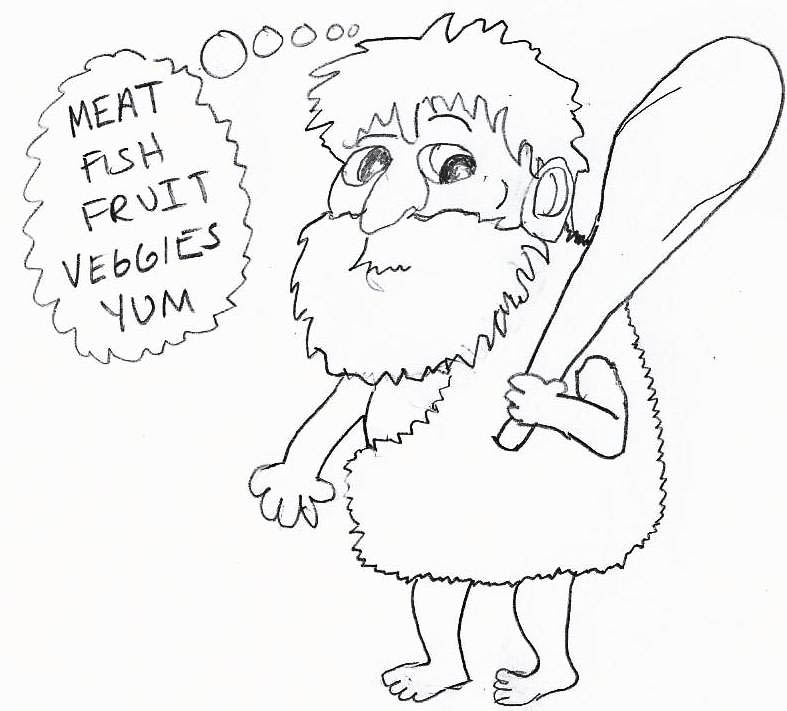
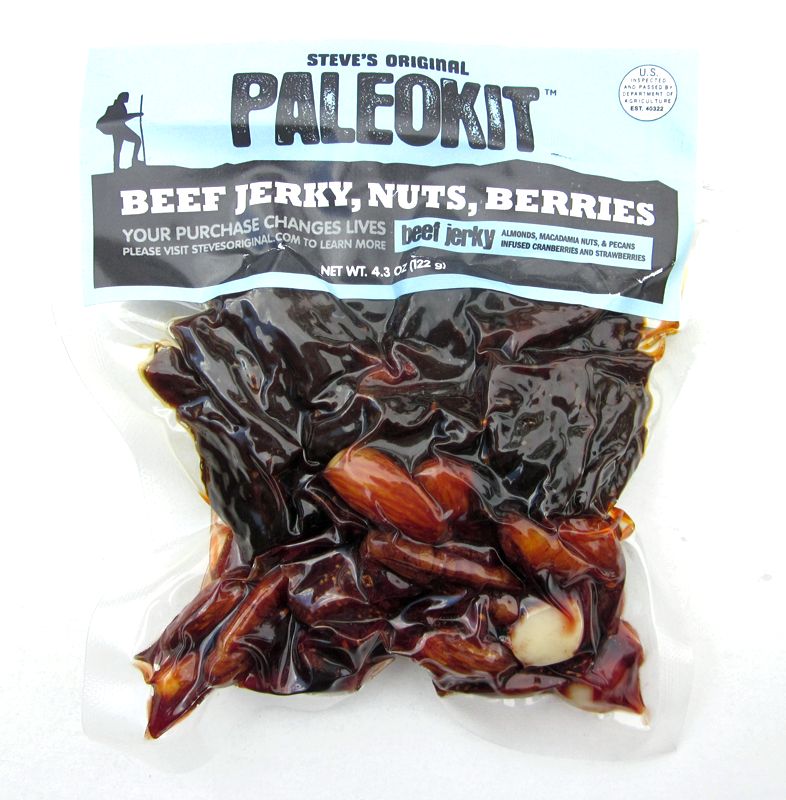 The Paleo diet theoretically takes us back to our ‘caveman’ days when we hunted rodents with rocks and scurried for nuts and berries. Protein heavy; processed foods are out of the question; dairy is for infants; and sugar is the devil. I’m not sure how the Paleo people know this, but apparently cavemen never ate any grains whatsoever, so neither can my friend now. She carries wild canned tuna in her purse, munches on dried jerky meat from a bag fit for an astronaut (right picture), and mumbles about bacon all the time.